
RUNWAY SERIES · 2026-06-30 · 2 min
Key moments - from our scoring
Substance score
15 / 100
Five dimensions, 20 points each
The financial industry's persistent fragmentation - where every institution, product, and workflow operates with distinct rules, formats, and integrations - has long been tolerable for humans who navigate through manual switching, authentication, and judgment calls. Software agents, however, require a cleaner, more standardized approach. The Model Context Protocol (MCP) presents a potential solution by creating a structured interface that lets agents access tools, data, wallets, accounts, payments, portfolio data, and other financial actions through a unified layer rather than custom point-to-point integrations. Rather than replacing existing financial infrastructure, MCP could serve as a front door for AI intelligence to interact with financial systems more efficiently. This shift from fragmented, custom integrations to a shared interface enables more composable workflows and progressive automation, ultimately changing how financial products are architected and how value flows through systems. For builders and operators, this represents a foundational infrastructure change that could redefine the usability and autonomy of the next generation of financial applications.
MCP is a structured protocol that gives software agents standardized access to tools, data, external services, and in a financial context, wallets, accounts, payments, and portfolio data - creating a cleaner interface layer than traditional one-off integrations.
Finance has always been fragmented with every institution and product operating under different rules and formats, which humans manage through manual switching and clicks, but software agents need a standardized interface that MCP provides to operate autonomously.
No; MCP doesn't replace the underlying financial stack but rather creates a usable front door that allows intelligence to interact with financial systems more efficiently and standardly.
More composable, automatable workflows that can progress toward autonomous financial behavior, as agents can interact with multiple financial actions through a unified protocol rather than disparate custom integrations.
By creating a shared interface between agents and financial systems, it shifts product design from building custom integrations to enabling more reusable, composable components that can be combined in more flexible ways.
Our reviewer’s read on each dimension, with quotes from the episode.
The episode gestures at an interesting idea - MCP as a standardized interface layer between agents and financial systems - but never develops it beyond a surface-level concept. The 2-minute runtime is almost entirely throat-clearing and high-level framing with zero actionable depth.
MCP could help provide that cleaner layer. Instead of building one-off integrations for every financial action, Builders can think in terms of a shared interface between agents and financial systems
It may end up being one of the quiet infrastructure shifts that makes the next generation of finance feel much more usable
The core framing - 'finance is fragmented, agents need a cleaner abstraction layer' - is a reasonable point but not a novel or contrarian one; it mirrors standard fintech API-layer discourse and AI agent commentary circulating widely. No first-principles reasoning or counterintuitive claims are offered.
finance has always been fragmented. Every institution, product, and workflow has its own rules, formats, and integrations
The bigger idea is not that MCP replaces the stack underneath It is that it creates a more usable front door for intelligence to interact with finance
There is no guest whatsoever - this is a solo scripted narration. There is no practitioner, operator, or domain expert sharing lived experience, making this dimension essentially inapplicable.
That is where an MCP model context protocol becomes interesting
The entire episode is abstract: no named companies, no specific MCP implementations, no metrics, no timelines, no dollar figures, and no concrete case studies of agents interacting with financial systems. Pure hand-waving.
That opens the door to more composable workflows, more automation And eventually more autonomous financial behavior
it changes how financial products are built, how agents operate, and how value moves through the system
There is no conversation - no host, no guest, no questions, no follow-ups, and no pushback. The episode is a brief scripted monologue, making conversational craft an entirely absent dimension.
That is why MCP as a financial interface layer is worth paying attention to
Computed from the transcript - who did the talking, and the words that came up most.
Today for "Agent Dispatch#1" : - When people talk about the future of software, they often focus on what the model can do. But the real shift may be in how that intelligence connects to the systems around it. That is where an MCP (Model Context Protocol) becomes interesting. At a high level, MCP is about giving software a structured way to access tools, data, and external services. In a financial context, that starts to look less like a technical protocol and more like a new interface layer, one that lets agents interact with wallets, accounts, payments, portfolio data, and other financial actions in a more standardized way. That matters because finance has always been fragmented. Every institution, product, and workflow has its own rules, formats, and integrations. Humans can deal with that fragmentation by clicking, logging in, switching screens, and making judgment calls. Software agents need something cleaner. MCP could help provide that cleaner layer. Instead of building one-off integrations for every financial action, builders can think in terms of a shared interface between agents and financial systems.
Transcribed and scored by The B2B Podcast Index.
When people talk about the future of software, they often focus on what the model can do. But the real shift may be in how that intelligence connects to the systems around it. That is where an MCP model context protocol becomes interesting. At a high level, MCP is about giving software a structured way to access tools, data, and external services.
In a financial context, that starts to look less like a technical protocol and more like a new interface layer, one that lets agents interact with wallets, accounts, payments, portfolio data, and other financial actions in a more standardized way. That matters because finance has always been fragmented. Every institution, product, and workflow has its own rules, formats, and integrations. Humans can deal with that fragmentation by clicking, logging in, switching screens, and making judgment calls.
Software agents need something cleaner. MCP could help provide that cleaner layer. Instead of building one-off integrations for every financial action, Builders can think in terms of a shared interface between agents and financial systems That opens the door to more composable workflows, more automation And eventually more autonomous financial behavior The bigger idea is not that MCP replaces the stack underneath It is that it creates a more usable front door for intelligence to interact with finance And if that works, it changes more than convenience It changes how financial products are built, how agents operate, and how value moves through the system That is why MCP as a financial interface layer is worth paying attention to.
It may end up being one of the quiet infrastructure shifts that makes the next generation of finance feel much more usable.
Other episodes covering the same guests and topics, from across The B2B Podcast Index.
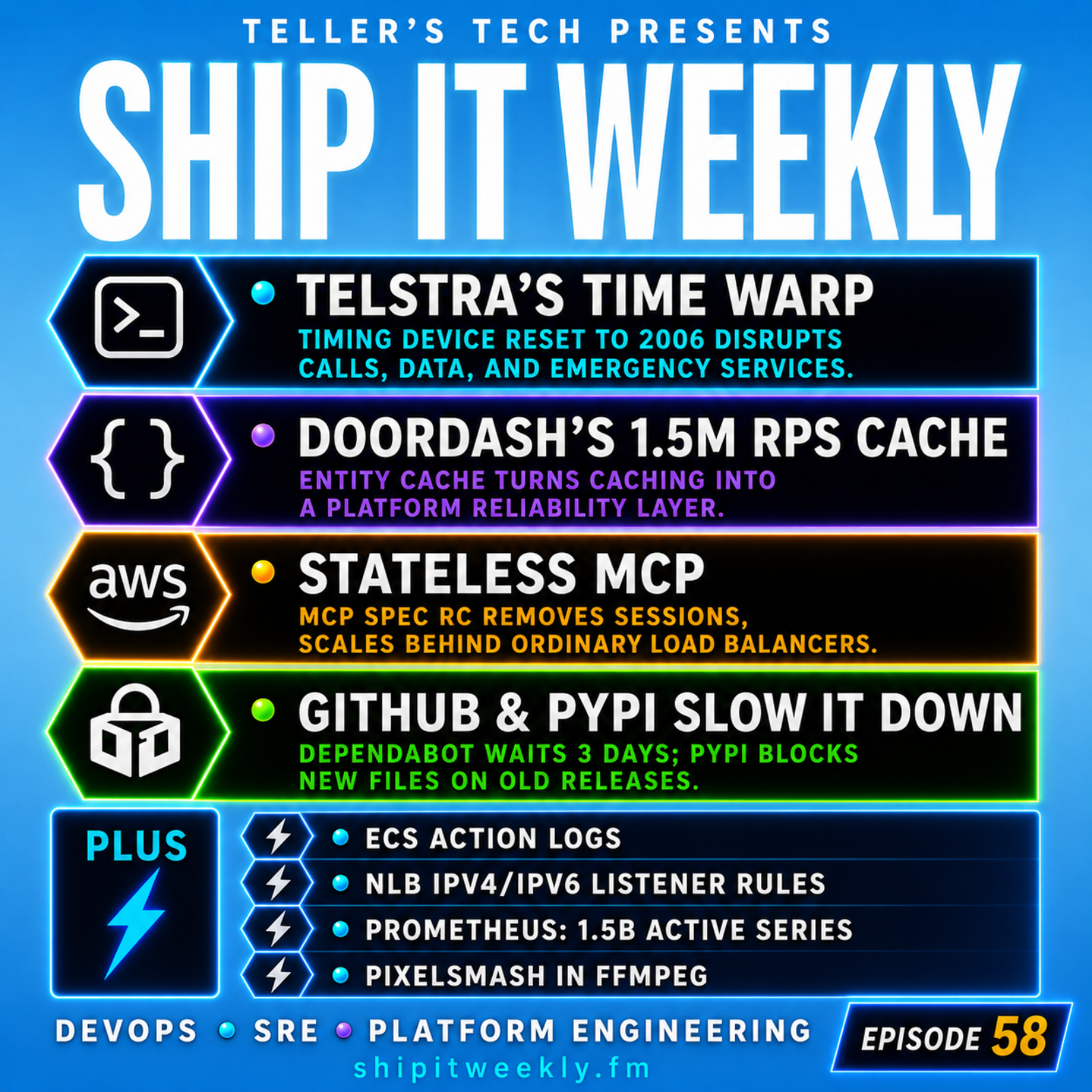 Telstra’s Time Sync Outage, DoorDash’s 1.5M RPS Cache, Stateless MCP, GitHub and PyPI Supply Chain Delays, and Why the Quietest Infrastructure Often Has the Biggest Blast RadiusShip It Weekly · on Model Context Protocol (MCP)97 / 100
 Late checkouts, AI agents and the future of guest communication with Cole Rubin of ConduitMatt Talks Hospitality: Real conversations for innovative hoteliers · on Model Context Protocol (MCP)83 / 100
 The End of Software as We Know It: How AI Agents Are Rewriting HR, SaaS, and Organizational DesignAI First with Adam and Andy · on Model Context Protocol (MCP)81 / 100
 Boilerplate in Seconds: AI Handles Setup, Engineers Handle Logic - Klaudia Dussa ZiegerSoftware Testing Unleashed · on Model Context Protocol (MCP)80 / 100
 How airfocus Is Rebuilding Product Ops Around AI AgentsProduct Team Success · on Model Context Protocol (MCP)80 / 100
 DevOps and observabilityNext in Tech · on Model Context Protocol (MCP)79 / 100[Rails Report #2] Why x402 micropayments matter more than most people realize[Disclosure #1] Why "programmable confidentiality" beats privacy regulation[Rails Report #1] What "invisible rails" actually means for a consumer finance app builder[Season 9] Everyday Finance, New Format, New Rails, New Frontiers[Farcaster Builders #3 - excerpt] Ahn.eth, building Quidli