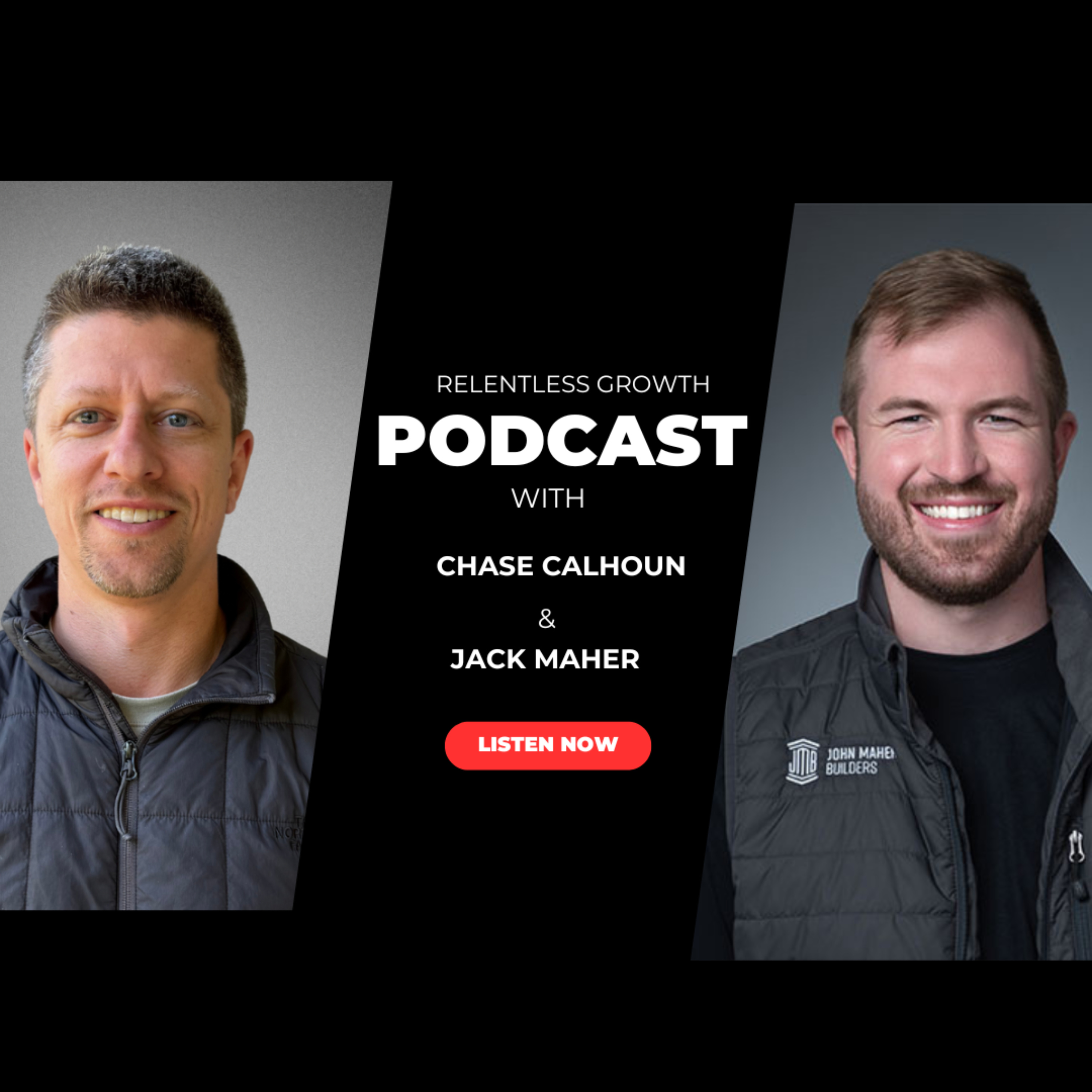
Relentless Growth Podcast · 2026-08-11 · 28 min
Key moments - from our scoring
Substance score
42 / 100
Five dimensions, 20 points each
This episode explores the systemic barriers preventing housing supply growth through the lens of two Arkansas-based builders fighting local opposition to their development projects. Chase Calhoun details his two-year battle to rezone a failed subdivision into 86 build-to-rent duplex units - designed for the same demographic as the original neighborhood but priced for renters - only to face consistent roadblocks from city officials and vocal neighbors despite the project meeting all zoning requirements. Jack Mayer contexualizes this within the broader housing crisis, arguing that a small minority of organized opposition controls local decision-making while the silent majority would benefit from increased supply. Both builders emphasize that adding housing inventory at any price point reduces overall affordability through market competition, citing Texas and Nashville as proof that rapid supply additions during COVID led to declining rents. They challenge the narrative that developers are villains, positioning themselves as risk-taking business owners addressing genuine market demand for rental housing. The episode critiques how elected officials fail their representative democracy duty by caving to vocal minorities rather than making evidence-based decisions, and advocates for property rights principles: if you don't own the land, you shouldn't control what happens on it.
Every unit added to inventory, regardless of price point, reduces competition and lowers prices across the market - studies consistently show that increasing supply anywhere in the price range makes housing more affordable for everyone through basic market economics.
His team tried to rezone a failed subdivision to allow duplex-style townhomes but faced rejection at both planning commission and city council despite meeting all density and land-use requirements, purely due to neighbor opposition and NIMBYism, delaying the project approximately two years.
The vocal opposition typically represents only 5-10% of residents who are motivated to attend meetings and complain, while roughly 90% of the population stays silent because they either support the development or don't want to get involved and risk ostracization.
Texas added tremendous housing supply through COVID, resulting in rent declines for over two years - demonstrating that when supply increases, prices fall regardless of which price tier receives the new units.
They attempt to serve their constituents by listening to who shows up, but fail to recognize that organized opposition doesn't represent the silent majority and that their representative democracy duty includes making data-driven decisions even when they conflict with the loudest voices.
Our reviewer’s read on each dimension, with quotes from the episode.
The episode covers relevant topics (NIMBYism, zoning, housing supply) but relies heavily on anecdotes from the hosts' personal projects rather than novel frameworks or data-driven insights. Key claims about supply increasing affordability are asserted without citation or nuance, and much time is spent on complaint-venting rather than exploring the underlying mechanisms or counterarguments. A few substantive points emerge (e.g., supply at any price point reduces affordability, Texas/Nashville examples) but are underdeveloped and surrounded by repetitive rhetoric.
But the ironic thing is, um, um, it's maybe 5 or 10% of the population who are talking the loudest and there's 90% who just, they don't want to get involved.
The more supply you have, the more affordable housing becomes. And we've seen this across the country. It's been a great market study over the past few years. Texas is like the best example in the world. Nashville is a great example.
The core arguments - NIMBY opposition, zoning barriers, the vocal minority problem, and supply-side solutions to housing affordability - are well-established positions in housing policy discourse. The episode does not introduce new frameworks, challenge assumptions, or present counterintuitive evidence. The hosts frame their perspective as self-evident rather than novel, and largely avoid engaging with substantive critiques of their position (e.g., density, infrastructure limits, environmental impacts).
everybody wants affordable housing. It's just they don't want affordable housing on their street, uh, or in their neighborhood.
It's a representative democracy and you elect an official and then you put trust in them to make the right decisions.
This is a two-host conversation between local real estate developers and construction operators discussing their own projects. While the hosts have hands-on experience in Arkansas real estate development, there is no external guest brought in. The episode lacks voices from city planners, economists, policy experts, housing advocates, or developers from other regions who could provide comparative perspective or challenge the hosts' assertions. The absence of external expertise significantly limits the credibility of policy-level claims.
I own and operate Apex Professional Construction which is engaged in uh, both single family and small, multifamily new construction
we sponsor a couple chamber meetings each year
The hosts provide some specific local details (86-unit build-to-rent project, 32 units with approved financing, a failed subdivision bought ~20 years ago, Central Arkansas location) but rarely anchor broader claims with concrete data. Assertions about housing policy (supply elasticity, regional examples like Texas and Nashville) lack metrics, timelines, or citations. The anecdotes about neighbor opposition are illustrative but not quantified. The discussion conflates multiple price points and market segments without specific examples or numbers.
We've got, I think we've got 32, uh, with approved financing. So we're going to kind of start slow and steady and see how the leasing velocity goes.
Texas is like the best example in the world. Nashville is a great example of. They both added a tremendous amount of supply through Covid. And we saw rents decline for two plus years because there was so much supply.
The hosts are comfortable and candid with each other, which creates an authentic conversational tone. However, there is minimal genuine interrogation or productive disagreement. Each speaker largely affirms the other's framing; follow-up questions tend to prompt longer anecdotes rather than probe assumptions. The hosts rarely challenge each other or invite alternative viewpoints. The monologues are long and somewhat repetitive, circling back to the same themes (vocal minorities, property rights, developer victimhood) without deepening the analysis.
Um, so what else have you experienced kind of like that, Chase?
Well, Chase, you, you kind of, uh, alluded to it already. Um, just dive into your experience with trying to really help the economy.
Computed from the transcript - who did the talking, and the words that came up most.
Why is housing getting more expensive - and why is it so difficult to build more of it? In this episode of the Relentless Growth Podcast , Jack Maher and Chase Calhoun dive into the real-world challenges developers and builders face when trying to create new housing, redevelop underused property, and bring growth to local communities. Chase shares the story behind an 86-unit build-to-rent development that spent nearly two years facing roadblocks, neighborhood opposition, zoning challenges, and the realities of the entitlement process. Jack and Chase explore the tension between the demand for affordable housing and the growing NIMBY (“Not In My Backyard”) movement that often fights new development at the local level. They discuss why increasing housing supply can help improve affordability, how vocal minorities can influence planning commissions and city councils, and why developers sometimes need to change projects as market conditions evolve.
Transcribed and scored by The B2B Podcast Index.
Speaker A: Hello everybody. Welcome to the Relentless Growth Podcast. I'm your co host Jack Mayer, here with my good friend Chase Calhoun. We've got a great topic coming at you today, something uh, that Chase and I are both passionate about growth, uh, and our local municipalities and how all that works together. Um, and talking a little bit about the not in my backyard movement, uh, that we've got going on across the country. But before we kind of dive into that, uh, we're gonna start every episode like we do with a win and an update. So Chase, what's going on in your world?
Speaker B: Yeah, good morning everybody. Again, my name is Chase Calhoun. I'm based here in Central Arkansas or Little Rock, Arkansas. Um, I own and operate Apex Professional Construction which is engaged in uh, both single family and small, multifamily new construction and also uh, more and more commercial construction. And uh, then we also own and operate Chase County Real Estate which is uh, internal and third party property management company. I uh, think kind of a win and update for us as we, and we've been working on a 86 unit build to rent project for probably about two years now. We bought all the failed subdivision. We bought all the lots. I don't have to look it up, but it seems like it's been about two years now, uh, and we've kind of been roadblocked, uh, left and right. Some of this is what we're getting ready to talk about today. Um, but we are actually officially going to go vertical on the first, uh, uh, six units starting hopefully next week. And we've got, I think we've got 32, uh, with approved financing. So we're going to kind of start slow and steady and see how the leasing velocity goes. But hoping to definitely get started next week on construction and uh, then hopefully we can, we can lease them quickly and get, get rolling with the rest of them. How about you?
Speaker A: That's been a long time coming. That's fantastic.
Speaker B: It has been.
Speaker A: Yeah.
Speaker B: Nice to actually go.
Speaker A: Um, uh, a, uh, good update for us, um, is we had, we sponsor a couple chamber meetings each year and so we had one yesterday and, and we kind of rolled out officially, uh, publicly for the first time all of our subcontracting areas. We rolled out H Vac Landscaping, remodeling, property management. And so we were able to give a little presentation, uh, got some good local leads on that stuff. And so we're working on delivering those businesses to uh, our local area. And so, uh, just to recap a little bit, again, Jack Mayer, John Mayer Builders is our core Business and we build new construction, multifamily and single family. But over the past couple years we've been building these businesses private primarily to serve ourselves. And now we're branching out to serve other people. And so launching those was, uh, a big deal. Um, well, Chase, you, you kind of, uh, alluded to it already. Um, just dive into your experience with trying to really help the economy. Because I think this is one of the things that I think, uh, builders, uh, creators, they get a bad name, I guess. I don't know why exactly, but you're coming in, you're buying a failed subdivision, something that is sitting there, it's not producing revenue, it's not producing tax dollars, it's not doing anything. So just kind of talk through the journey.
Speaker B: 20 years. Yeah. So this, this failed almost 20 years ago. It's. And so we, it's, uh, I think as entrepreneurs we, we can't help but like when we see stuff and this can be a problem sometimes. I think we've talked about it before, but to see the opportunity, um, in things. And so we saw this failed subdivision. I saw the opportunity in it. Um, the, the problem is, is there, there was a handful of neighbors that are directly in this subdivision. So just a couple. And then obviously it's surrounded by older, well established neighborhoods that are about 20 years old. Um, and so right now what we're seeing a lot of is kind uh, of there's not a lot of buyers in the first time. Home buyers, you know, owner occupants in the lower price ranges. There's still a lot of buyers in the higher end market. Um, and then everybody else really wants to rent right now. And so it's like we, we can't. Originally, when we had bought it, we hoped to build and sell spec homes, you know, because it's a super nice neighborhood. The problem is we built two really nice, very nice, but very affordable homes and they did not sell and there was not any interest in them. Um, um, and then, so we did what we do in that situation. We tried to lease them and they leased instantly with really great tenants. So it's just, it's. And then we've done this several times in different areas where we're trying to build. And, and, and if they won't sell, then we'll lease them. And so we realized that really there's not a high demand for home buyers in that area right now, but there is for renters. And so we attempted to go through the entitlement process to get these lots rezoned to allow for Duplexes. And when I say duplexes I mean like really nice high end townhome style units with two stories garages. Like these are going to be nice for rental properties for, for kind of this. Who would have normally been buying their first home, right? So we're going after the same demographic that this subdivision was intended for. We're just doing it with renters instead of owners. Um, and man, we were, we were, we were roadblocked nonstop. So like the people that lived around there, the city officials, like nobody wanted to rezone this. Um, it fell within the land like the designated land use density and everything like that. Like everything checked the boxes. But it was still like, because there was so much push, it was shot down at planning commission and then, and it shot down again at city council or the board of directors. And so it's just, to me, it just goes to show and like these same people I bet are people that are crying for, they're upset that homes are so expensive. Uh, they're upset that like people, you know, rents are so expensive that the problem is, in my opinion the only solution to lower both home purchase prices and rental prices have more inventory. So it's more competitive. And we've seen that recently because there has been more inventory, especially on the rental side because homes aren't selling as much, people are renting them. And that's, we've seen our rents go stagnant and, or decline a little bit. And so, and it's, we, I, I have no saying that like if, if the, if the units aren't renting and we have to reduce the prices, we have to reduce the prices. It is what, we don't, we don't dictate the rents, the market does. And so it's just, it's been, it's been an interesting experience. It's not the first time we've experienced this, but it's, everybody wants affordable housing. It's just they don't want affordable housing on their street, uh, or in their neighborhood. So the problem is, is like it's, you can't just push affordable housing into like bad parts of town. Like there's people that also want to rent like in nicer parts of town. And so it's just, it's been an interesting kind of eye opening thing for us. We're, we're getting ready to start on this project. We're kind of already prepping that like we're still going to have neighbors that are really pissed off at us for it. Uh, I know once the whole Project's complete. Uh, that these units that we're building to rent are going to be nicer than most of the houses that are already there. So like the yards and you know, we're not going to have junk and the yards are going to be nice and we're going to have parking pads or pads for the trash cans and like they're going to be, we're going to provide maintenance for the yards. Like it's going to be very nice. Uh, but again, it's just the people, they can't help but fight against that growth and where they live.
Speaker A: You know, I think that's really interesting. And um, I think the tough part about conversations like this, you know, we always want to be respectful to everybody. And I get, I get the homeowner's perspective of, you know, hey, I get it. Um, you know, it's something new coming in beside you. It's change, it's different. Um, and I get it from the elected officials perspective as well. But I think uh, the comment I would make, and Chase and I have talked about this before, but like for those elected officials, you know, I think, uh, and this may be an unpopular comment, but I'm going to make it anyway. Like we don't live in a democracy. If we lived in a true democracy, every citizen would vote on every single thing, whether it was local, national, everything. And that's not the system we have. It's a representative democracy and you elect an official and then you put trust in them to make the right decisions. And so I think, uh, in situations like this or we deal with situations all day, we faced opposition on a couple projects lately that we've gotten turned down on. Um, and there's a lot of misinformation going around. Um, and I think it falls on at the end of the day, the elected officials to do the research and understand what that project can mean for the local community and to really speak out against or in favor of it, but do it despite what your constituents say sometimes. And that sounds like an unpopular comment and it sounds like I'm saying they should do whatever they want and that's not really it. But I think like when uh, you know, Chase and I, uh, we talk about AI a lot. We talk about, you know, data centers are a big deal right now. Um, anybody who's done some in depth research on data centers can uh, debunk most of the top 10 talking points about why data centers are bad. You know, um, there's some pretty clear cut, clear cut things out there where you Know, they don't use a ton of water, blah, blah, blah, blah, blah. You could go down the line. Um, but those talking points persistent. And, um, I think you tend to see, especially right now, I think, uh, social media, I think has advanced it. You tend to see a very, very vocal, very, very vocal minority of people, and they end up unfortunately controlling the, uh, elected officials in the court of public opinion. And I get that, ah, nobody wants to be unpopular, you know, nobody wants to be viewed as going against what your constituents want. Uh, but the ironic thing is, um, um, it's maybe 5 or 10% of the population who are talking the loudest and there's 90% who just, they don't want to get involved. You know, they're, they're just trying to go about their lives. It would be good for them, but they're not going to speak up for it because they don't want to get ostracized. And so you end up with a small population ending up controlling your elected officials. And it just, it results in some unfortunate things because, you know, uh, it delayed this project by two years for Chase. Um, and we've got projects where we've gotten turned down on that would have been great for the community. They would have provided new, uh, housing stock. Again, it doesn't matter. There's tons of studies to show this. And I think it's important for everybody to know that this. Sometimes people think, all right, well, if you're bringing a class units online or more expensive houses online, how would that reduce the cost of housing? But it's 100% true. Studies have shown this time and time again. It doesn't matter where you add supply in the price point range, whether it's at the top, whether it's at the bottom, whether it's in the middle. The more supply you have, the more affordable housing becomes. And we've seen this across the country. It's been a great market study over the past few years. Texas is like the best example in the world. Nashville is a great example of. They both added a tremendous amount of supply through Covid. And we saw rents decline for two plus years because there was so much supply. And so I think all of these things are good things. But I, um, think there's a big knot in my backyard movement and a little bit of a, hey, we want things to stay the way they are. But, um, any place that's growing has such a fantastic problem because 95% of the country's not growing. And 95% of the country would kill to Have a new development, a new townhome project, a new neighborhood. They would kill for that. And so I think these places that are growing, unfortunately, Chase and I are in places that are growing, but they've gotten a little jaded to the fact that, um, man, it's such a good thing. And so, you know, that's a little bit of a diatribe, but I think it's just important to realize that, you know, we're out here to try and, uh, you know, we run a business, we're out here to make money, but we're also very involved in the communities. We're out here to do the right thing, and our projects do that. But sometimes it's hard to get that across. Um, so what else have you experienced kind of like that, Chase?
Speaker B: I think you. You kind of touched on it a little bit, but I think it's really worth mentioning. It's something I've noticed a long time. You know, I've noticed for a long time in different areas of, like, especially city government and stuff like that. But, um, it's the. The, like, few people who are the loudest seem to get the attention and can really sway, like, a lot of these city officials, but they don't necessarily, and I would say a lot of times, they don't often, uh, represent the general public. And so it's just the couple people that are being, you know, super boisterous and speaking out against this. Like, they don't represent me and the other, you know, it's like the 99 out of 100 normal people who live in that city who, like you said, don't. It's not. They don't want to get involved. They're just not. Whatever's happening or being voted on is. It just doesn't bother them. It's not a negative thing. They. They may not love, you know, and I'll give you an example. Like, a lot of these people are upset because they've. They've enjoyed a very private neighborhood with a bunch of green space because it's never been developed. Uh, but they don't own the lots and they didn't want to buy the lots. And so it's really not their say. Like, they shouldn't be swaying city officials to block a private landowner from developing a lot just because they don't. They like the trees next door to them. I have a vacant lot next to me that has not been built on. It's the only one, I think, left in our neighborh, uh, because it's not the greatest lot uh, but it'd be like me getting upset that somebody buys it and builds on. It's none of my business, right? And it's like. And we have HOAs and stuff like that. But at the end of the day, like, they can build whatever they want within reason and paint it whatever color they want. And it may bug me because I like not having, you know, a house right next to me, but it's not my choice. And if I really want to keep it that way, like I need to buy the lot and so I own the land. And it's just this weird kind of like combination of like this entitlement where it's like they, that people think that they deserve more than they're really entitled to. Um, and then combined with like it's those same people who are being the loudest and getting the attention of the neighbor or the. Some of these city officials and stuff and can really sway their decisions on things. Um, we. I've had pretty good luck like with the city we're at. Like, even though I get frustrated with the city, like some of the planning staff or planning commission, like they're, they're all pretty reasonable and I think they, A lot of them understand that. I have seen it though with other city officials where, where it's. They really like, they don't and they're, they're thinking of, uh, either what they would want, um, or maybe what their friends and family would want, but they're not looking at kind of what's best for everybody and what's best for the community as a whole. And I do, I do think that becomes dangerous and starts to become a problem. Um, and then again, like, we can do things to try to. There's a lot of stuff where I think we can do better, especially when we're talking about like re entitling projects and doing stuff like that with getting out there and getting involved. One thing that I have not done yet, that we will do probably moving forward because we're getting ready to do, it'll be a small thing. We're probably going to take a small piece of land through a pud and try to do like some zero lot line, um, affordable houses type thing, which you think people would want. But I, it's like, I can almost guarantee you somebody. It's like we've totally redeveloping this whole little piece of town that was like five years ago. You couldn't walk down the street. It was so dangerous. And now it's going to be this really nice little piece of the community. But I guarantee you somebody's going to show up or multiple people are going to show up and like, contest us wanting to build affordable, uh, houses in there. And so one thing I think we're going to do is there are a couple neighbors in there that I know very happy with what we've done and the positive impacts we've had. So it's like, but they're not going to show up. And, you know, they've got zero problem with what we're doing. And so they're not going to show up and speak in favor. And so we may like, proactively reach out and be like, hey, could you do us a favor and come and speak, speak on your experience, what it's done for the neighborhood and stuff like that. And so because, because they, they, they're just, they don't know they should or that they have to. It's just the only the people that are like, have the negative opinions and, and want to be a pain in the ass are the ones that are actually going to spend their time to show up. It's other 99 people in the neighborhood that don't either don't care or like, what's happening. They're not going to take the time to show up because they don't know that they. I don't think they know that they have to or that it would be helpful or anything. They just, it's just, it's a weird the way that local government is structured where it's like they're listening to only the people that are pain in the ass is. It's an interesting way of, of doing, doing or, or blocking business. And so I don't know.
Speaker A: No, I think you're right. And I think, yeah, and I think, um, you know, elected officials, city employees are all trying to do the right thing, you know, and they're trying to do the right thing by listening to their constituents. And I think that's fair. Um, but I think you've got to ask the question of, do these constituents represent everybody? Um, and, you know, Chase made a comment, and we get that a lot. Uh, we bought a same thing a couple years ago. We bought, uh, the last section of a failed neighborhood. And, um, you know, when we're moving dirt behind it. One of the homeowners brought out a plat that he'd been given by the former neighborhood that showed green space behind his house, but it had never been approved. It was just a drawing on a piece of paper. And I had to tell them, like, hey, look, I'M sorry, but this was never. This was never a real thing. Like, um, so we're doing something different behind your house, and, you know, it's our property, and, you know, you got to be kind and nice. But, um, I think, you know, one of the comments that I like to make is, uh, you know, it holds true for Chase and his business. And us in our business, we've never, ever bought anything that wasn't for sale. You know, and so if, uh, if there's land available and every piece of land everywhere is for sale at some price at all times, you know, that's the reality, whether it's listed or not. Um, and so if. If you are super passionate about that extra lot beside you or the green space, the only way to truly control that is to buy it. And I think that's the other problem I think that I have with, um, some of the trends, is there's a big trend of, hey, I want to control what happens on stuff that I don't own. And they're the same people that would probably hate it if you tried to tell them they couldn't. You, uh, name it, put a pool in their backyard because they wanted to, you know, and you said, well, I don't want a pool next to me, so you can't put it in, you know, but. But somehow on your property across the street, they want to have some. Some say over that. And, um, you know, I think it's a property rights issue, but I also think it's just understanding that what we do, what builders do, is take a tremendous amount of risk every day. Um, you know, Chase and I have been very open, very transparent about the last couple years. Uh, you know, it's not a great time to be doing what we're doing. You know, there's struggles, there's costs, uh, are still high. Insurance is going up. You know, uh, we got. Fuel prices are crazy right now. All of the things that we deal with. Nothing, uh, we do is a, uh, guarantee, uh, home run. Nothing's a guaranteed single. You know, uh, there's a chance that we strike out every time we go up to the plate. And so it takes a lot of risk and a lot of courage to do what we do. And we really set out to make things better. But I think the trend is to think that we're out here, you know, uh, both making a fortune and having no risk at the same time. And I'm not aware of a business that exists like that. Uh, if I was, I would be doing something different. Uh, you Know, but we take a lot of risk and sometimes we're rewarded for it and sometimes we're not. But I think that's the other part of it. We're, we're a local business like everybody else. You know, uh, we're like a retail store that sells, you know, a boutique that sells dresses and shirts. You know, you would never try and tell them how to run their business
Speaker B: when they can and can't sell.
Speaker A: Yeah. What they can and can't sell when they can open. You know, if they want to open at 10 on Saturday or 8am on Saturday. Saturday, you know, that's totally up to them. If they don't want to open at all and they think they can stay in business, great. You know, like, we would never put restrictions on these other businesses that we try and put on developers and builders. And so I, um, think sometimes you just got to compare it to other things in your community to see that, like, we're all in the same boat. Our business looks a little different, but we're all trying to do the right thing and we kind of, we deserve the same respect that's given to other local businesses.
Speaker B: Yeah, it's interesting. It does seem like, uh, maybe just developers in general kind of get a bad rap. I was, I always joke around with my wife because she's not, you know, I joke around. She's not a tree hugger, but I kind of, you know, she definitely loves like wildlife and animals and, and so it's like she'll, she'll get upset when we drive by development or something and then people are, they're like knocking trees down and she's like, the poor animals, you know, And I'm like, baby, you realize what I do. I know, I know. And so it's like, it's even, even her. It's like, you know, it's ok, feel bad and be aware and have respect for what we're doing. And the fact that we are, I mean, we're, we're doing it in field development right now. We had to take down a bunch of trees because they're just, they're in the way of what's going to be built there. And it's like we, we realize that and it's like we want to, we want to. I can see the other side of it. So like, I want to be respectful of the people that live in the neighborhood and like, and if they're upset, like, be, be kind of at least willing to, to see their side of it and realize why. But at the same time, it's like the same people who are upset that we're taking down the trees are the ones that want to live in a brand new construction rental property. So it's like they want the, they want the thing, but without what it takes to make it. And so it's just I guess being aware of uh, kind of like they don't maybe see it the way that we see it and just being like giving them a little bit of grace with that. Um, but at the same time like hoping that the, the biggest thing is hoping that the city officials do the same. And so it's just um, that that seems to be the harder thing because it's the few people again that are upset that the trees are gonna have to get taken down where the house is going to be, um, are the ones that are going to show up and make a big stink at the, you know, at the city meeting or something. And um, the city officials need to be able to realize that hey, this isn't the only person. This is just, just part of it. And if we want to see the growth and stuff, um, it's, it's important. And so I think you can be both. Like uh, is the developer builder be able to look through people's eyes and understand where they're coming from, um, but also know when it's just, it's part of what needs to be done if we're going to operate, operate this business. And like you said, just kind of, I can see both sides. Like, I can see why people would be upset if they, if they enjoyed you know, living on an entire cul de sac, uh, by themselves for 20 years and then somebody comes and clears the cul de sac to build. It's just, I can see where they're mad, but at the same time that shouldn't affect city officials decisions um, on what to do with, with the property. So it's interesting.
Speaker A: I think it's a great point and probably, probably my closing point. You know, something we see a lot locally is people get frustrated and sometimes I do too. In all honesty, with plans that change, you know, a developer may propose something and then three years later they go back and change it. And I think certainly there are some bigger developers or there are some national developers who, that's a strategy for them. You know, they get something approved that's very shiny and they know in the back of their head that in a couple years they're going to go back and get that change so that they don't have to do the most expensive part of it. But I think the other thing that people need to realize is, especially when you compare us to a local business, you know, to bring up my boutique example I talked about earlier, you buy a dress, they buy a dress to put in the store, it comes in a week, they have it in the store, the day after they get it in. Their turnaround on product is six days. You know, our turnaround on product is at a minimum two years if you're doing dirt work and then going vertical. And if it's a multi phase project, it can be 10 years. And so the economy, as we all know, is not a straight line up all the time. And so there are times when you have to do things to protect your business, to protect your project, and plans have to change. And so I think, and I get it, I get that people, uh, can get frustrated when things change or things don't happen at the pace. But Chase said it earlier when he was talking about market pricing. What I was always told my whole life by my dad was the market is the market is the market. It doesn't matter what you want it to be, it doesn't matter what your goal is, the market's always going to do what the market does. And if it supports your project, then it works. If it doesn't, then it doesn't. And so if, if that mass shifts and the market doesn't support your project or the product you planned on building. Uh, you know, there's always been times where, um, with any project we build, sometimes city officials will say, hey, do you plan on selling all the houses? The answer is always yes. You know, like Jay said, we want to sell every single house in the world. But if the economy changes, we're going to want the flexibility to rent them or lease them or do something different because we've got to have flexibility with our business. And so I, uh, think just the thing that people need to realize is when you're doing projects that take years and years and years to come to fruition, the likelihood that the economy is at the same point, that entire timeframe is virtually zero. So you're going to have to change, you're going to have to modify and just have a little bit of grace when that happens locally. And I know it can be frustrating, but if you were in that same boat, if it was your project, if you were dealing with those things, then you'd be making very similar decisions. And so I think that's just kind of my closing point that I think it's important for people to know. But uh, Chase, what would kind of be your closing point on this? We've talked about a lot of things, but this pretty broad topic.
Speaker B: I think that's great. I think one thing that, just talking through this, it makes me think of, um, and I'll be the first day. I've never done this before and so it's like maybe something I should take my own advice type thing. Uh, but I think if you live somewhere and there's. There's projects like this that are going on, um, and you don't have a problem with them and you think they would be good for the community, realizing that it, it's helpful for the, the project and the community and the developer like to take the time to go to some of these meetings, whether it's planning commission meeting or, you know, city council meeting and speaking in favor of the projects. Like, I don't. I've sat not in a ton of planning commission meetings, but I think I've yet to hear anybody come in and speak in favor of anything. It's always just like the handful again. The handful of people that are like just going to be negative about it. It's. Nobody else is showing up to like give another side of it. So it's just, it's something to think about. I would say if you live in a community and there's stuff going on and there's stuff being contested or whatever and you're not maybe against it, maybe just take the time to like learn a little bit about it. They're kind of interesting to go sit in on the meeting and if you were open to it, maybe even go in and talk about it or speak, because anybody can go in there and you fill out like a little card and you can go. It's like, hey, so and so is trying to redevelop this or change the zoning on this and does anybody want to speak about it? And it's like the developer is going to talk, uh, and then usually it's going to be a bunch of, uh, people who are just pissed off and want to say a bunch of negative stuff about it. That. So it'd be helpful for people like you and I if there, if there are other people, and I think there are that are like positive, you know, pro development and do want to see change for the good and affordable housing and other cool projects, like maybe maybe consider going and speaking for them.
Speaker A: You know, I think that's a great point and you know, I feel like that's one of our core themes throughout all of our podcast is get involved, you know, know your elected officials. Uh, knowing your local developers is not a bad thing. You know, we're not bad people. Uh, we're operating, we're doing good things, and so get to know the people in your community. And again, I think Chase makes a great point. Uh, don't be afraid to show support for something if you want to, uh, because growth and community is. It's the best possible thing to keep a community headed in the right direction. And so, um, yeah, getting involved locally, understanding what's going on, I think is fantastic. Um, but we really appreciate everybody tuning in today. I think this is, uh, it's a pretty interesting topic, and I think it's pretty salient, uh, with what's going on across the country right now. And so it may be one that we have to revisit. And so we'd love to hear people's comments or takes on what we talked about. Maybe you agree with us, maybe you disagree with us, but please let us know. And, uh, if you got something out of this episode, please leave us a rating. Thank you, guys.
Speaker B: Have a good one.
Real Estate Asset Protection: LLCs, Workers’ Comp & Insurance Mistakes That Can Cost You64 / 100The Housing Market Is Splitting: Why Luxury Homes Are Selling While Starter Homes SitNew Housing Bill Targets Institutional Investors: What It Means for Real EstateHow to Find and Manage Reliable Subcontractors in ConstructionProperty Management at Scale: How to Manage 750 Rental Units In-House