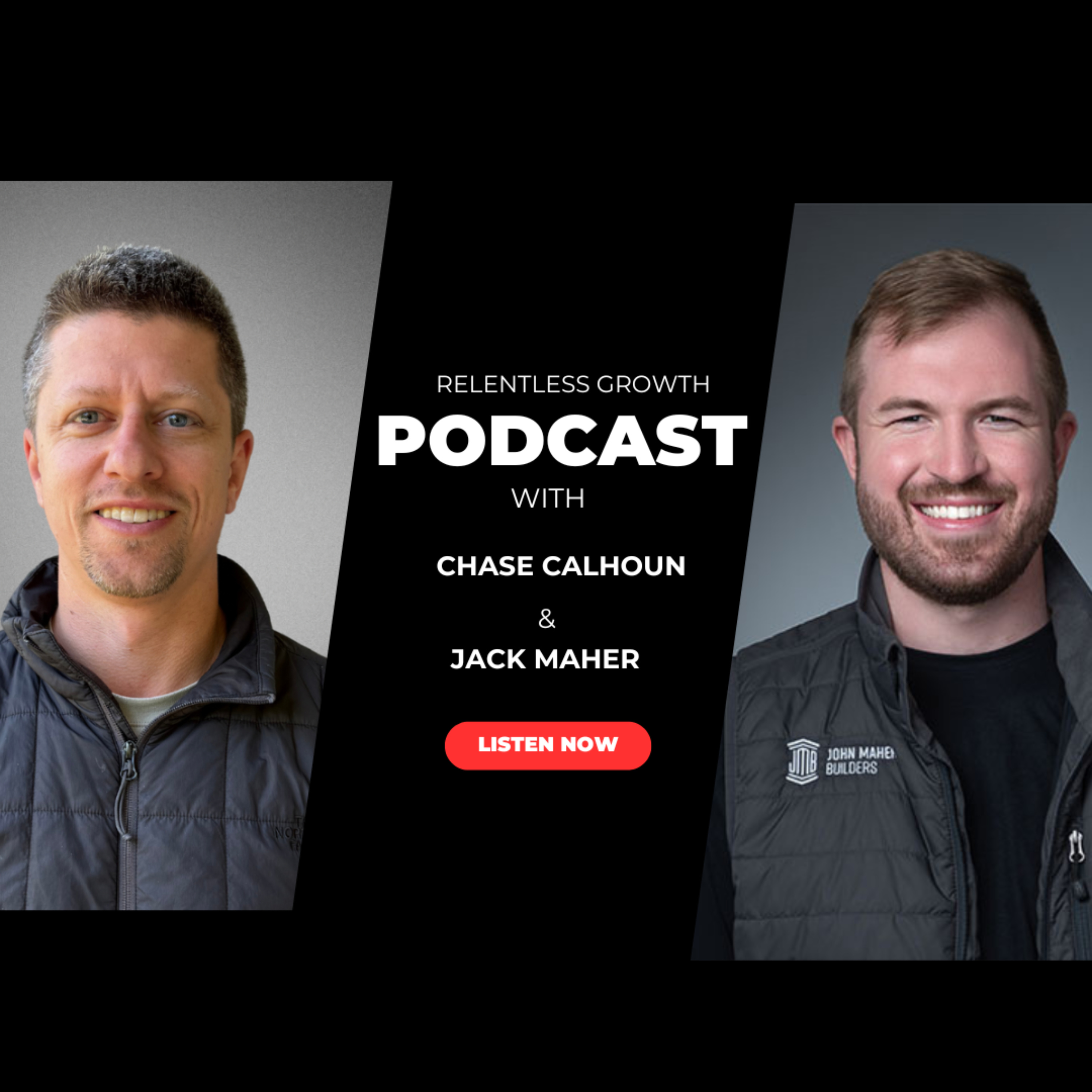
Relentless Growth Podcast · 2026-06-30 · 34 min
Key moments - from our scoring
Substance score
44 / 100
Five dimensions, 20 points each
Real estate and construction operators often delay critical asset protection measures, but Chase Calhoun and Jack Mayer of John Builders explain why getting the structure right - and keeping it maintained - is essential for staying wealthy. Calhoun, who worked in commercial insurance before entering real estate, and Mayer, who runs new construction, multifamily, HVAC, and property management operations in Tennessee, break down the practical difference between forming an LLC and actually protecting it through proper financial separation, insurance compliance, and subcontractor verification. The episode cuts through common myths: LLCs alone provide zero protection if you commingle funds; workers' comp and general liability insurance aren't optional luxuries but mandatory safeguards; and subcontractor insurance certificates must be actively monitored year-round, not just collected at the start. Calhoun shares a costly lesson from an uninsured subcontractor who falsely claimed employment after an injury, forcing litigation that proper workers' comp coverage would have handled automatically. This discussion is essential for builders, developers, property managers, and real estate investors operating through construction crews or subcontractors - anyone whose negligence in these areas could face six-figure liability exposure or personal asset seizure.
Commingling funds defeats the entire purpose of the LLC and destroys its liability protection. The LLC becomes just a name on paper with no actual legal separation between your personal assets and business liabilities, leaving you personally exposed.
Not necessarily on day one. It's better to start proving your concept and making money first, then formalize the structure later with a sole-member LLC. However, don't wait too long - establishing proper separation early saves significant reorganization work later.
Using uninsured subcontractors. If a sub isn't properly insured and the insurance company discovers it during a year-end audit, they treat the total amount paid to that sub as if it were employee payroll, potentially creating massive unexpected costs - Calhoun cited an example of $500,000 in framing costs suddenly becoming workers' comp liability.
Specialized brokers who work with builders and real estate investors at your scale understand industry-specific risks and requirements that general agents miss. They provide better guidance on coverage gaps and can tailor policies to construction and multifamily operations.
Continuously throughout the year. Certificates expire every few months to a year, and you must require subs to renew before payment. If someone's coverage lapses, stop paying them until it's reinstated - this is an ongoing compliance obligation, not a one-time paperwork step.
Our reviewer’s read on each dimension, with quotes from the episode.
The episode contains a handful of genuinely useful operational insights - the workers' comp audit mechanism, the labor/materials split tactic for GL premiums, and the claims avoidance heuristic - but these are surrounded by significant filler, rapport-building, and general platitudes most operators already know.
if you paid a framing subcontractor like a half a million dollars for the year and then found out they weren't properly insured so they had to pay workers comp insurance as if they had a $500,000 worth of payroll for the year
sometimes you can separate stuff like, uh, payroll, uh, or not payroll, but like labor versus materials. And you don't necessarily have to pay on the materials portion
The bulk of the advice - get an LLC, keep finances separate, vet subcontractors - is standard small-business content; the more original contributions are the claims-avoidance heuristic and the labor/materials invoice split, but neither is truly contrarian or first-principles thinking.
a counterintuitive approach to insurance is you really don't want to use it unless you have to use it
the second that I cashed that final check, they dropped us immediately. They canceled our policy immediately
Both hosts are genuine practitioners managing real construction and property management businesses at modest but meaningful scale (600-700 units, active new construction), not career podcast guests; however, this is a co-host format with no outside guest, and neither operator is doing things at exceptional scale or depth that would push this higher.
we're about a week away from property management takeover on, on six or 700 units
I spent a decent amount of time working in the commercial insurance industry before I got into this, specifically around workers comp and general liability insurance
The episode earns credit for real dollar figures, a personal workers' comp lawsuit story, specific audit mechanics, and a named natural disaster claim event; the numbers are sometimes approximate and the examples are anecdotal rather than systematically evidenced, keeping this from scoring higher.
your premium is only going to be twelve hundred dollars a year. That's the basis entry level premium for a new builder
I had a four unit townhome building get directly hit by an EF3 tornado
This is a two-host format where the participants almost exclusively affirm each other with no meaningful pushback, probing follow-ups, or productive disagreement; questions are loose and self-directed rather than crafted to extract deeper insight from a guest.
I think that that's a great one. Uh, I need to double check that one and make sure we're doing that
No, I think that's great
Computed from the transcript - who did the talking, and the words that came up most.
In this episode of The Relentless Growth Podcast , Chase Calhoun and Jack Maher break down one of the least flashy but most important parts of building wealth in real estate and construction: asset protection and insurance . From deciding when to set up an LLC to understanding how co-mingling funds can weaken your legal protection, they share practical lessons for investors, builders, flippers, and business owners trying to protect what they are building. Chase and Jack also dive into the realities of workers’ comp insurance, general liability coverage, subcontractor requirements, insurance audits, contractor licensing, and property insurance claims . Chase shares a real-world example of a workers’ comp claim that became expensive and stressful because the right protections were not in place, while Jack explains why staying on top of subcontractor insurance paperwork is critical as you scale.
Transcribed and scored by The B2B Podcast Index.
Speaker A: And m. Welcome back to the Relentless Growth podcast with myself, Chase Calhoun and my good friend Jack Mayer. How are you doing this morning, Jack?
Speaker B: Uh, doing great.
Speaker A: Today we've got an interesting topic for everybody. It may sound a little bit boring off the, off the top, but I think it's important. But we're going to talk a little bit about insurance and asset protection, especially in the commercial or not commercial, but the construction industry and real estate investing. Uh, but before we dive into that, why don't we start like we always do with a, maybe an update and a win and neck of the woods. What's new with you?
Speaker B: Yeah, absolutely. Um, so again Jack, Mayor John or builders, uh, were in Spring hill, Tennessee, about 30 minutes south of Nashville. We build new construction, single family, multifamily, uh, have an H Vac business and a couple other odds and ends, property management. Um, so my win and update is kind of the same thing. We're, we're about a week away from property management takeover on, on six or 700 units. And so, um, we think we're kind of ready. I'm sure we're going to figure out we're not, but it's going to be a fun, uh, a fun experience for us here to take, fully take over property management. And so it's just, it's an exciting time. Uh, it gives us a huge measure of control that we feel like we didn't have before. And so we're really excited about that. And honestly I think everybody's really excited. I, uh, think anybody who's been in business can relate to. Counterintuitively, when there's a lot of problems, man, sometimes it's really fun, you know, like we all know going into this, like the first couple weeks, we're probably going to encounter something every day that we didn't think about, probably multiple things. And it's probably going to be, you know, a little bit of our hair on fire every day. But you know, uh, every once in a while that stuff is really fun. And so I think the whole team's ready to dive in, ready to solve whatever problem and we're just kind of excited to uh, get that transition done and be able to really dive in and improve, you know, hopefully all of our properties and all of our attendants experience. So that's, that's our win for now.
Speaker A: Cool. Well, I'll do a related one just because I think it's, it's fresh. But so our, we do in house we have a third internal and third party property management company. So again I'm Chase Calhoun. I'm based out of central Arkansas, but, uh, I own and operate Apex Professional Construction, which is construction company, but also Chase Calhoun Real Estate, which is engaged mainly in property management. Um, and so one thing, you know, we've been seeing lately is just the, uh, improvements on our property management side. We finally have been seeing some traction with leasing and occupancy, uh, and then just, uh, us getting, I think, better. So one thing I would say for you is it's like, uh, sometimes it's easy for me to be like, man, we're having all these little issues that we're having to constantly be trying to fix or come up with better ways of doing things. But then, like, when I look back, uh, at where we were at last year, like, I look at, like, how much we've improved over the last year, like, it's absolutely insane. It's hard to even, like, you know, like, explain how much better we've gotten just over the last year. And so I'm sure it's gonna be
Speaker B: like that with you guys.
Speaker A: Like, it's gonna be a lot of firefighting probably right out of the gate, and there's gonna be a lot of, like, oh, I didn't realize there was all this other stuff that we had to worry about. But then, like, a year from now, you're gonna look back and be like, oh, man, we've gotten. We've just from this last year, we've got so much better, and everything's going so much, you know, so much better now. So because of that, it's very exciting. But it will be probably a little bit of. A little bit of fires out of the gate, I'm sure. Who knows?
Speaker B: Absolutely.
Speaker A: Cool. Um, well, let's go ahead and jump into it. Uh, this is kind of like, I guess maybe not the most exciting topic. Like, everyone wants to hear about the new, like, trick to get rich and real estate investing that doesn't really actually exist, but this is a trick to
Speaker B: help stay rich if you're. Yeah.
Speaker A: So we're going to talk about asset protection and then also, like, insurance. Um, I think, uh, you know, a lot of people get hung up on the, the. The asset protection, like, on the business, LLC side of things. Like, I'll get a lot of questions about, like, do I need an LLC to start real estate investing, or do I need an LLC to start a construction company? And, like, the answer is yes, but maybe not, like, maybe not even necessarily right away, but definitely at some point along the road. So maybe we can dive in a Little bit about how we structure our stuff. Um, but then the other thing is insurance. And so I've got a weird um, kind of background in that I spent a decent amount of time working in the commercial insurance industry before I got into this, specifically around workers comp and general liability insurance. And so like I tell people sometimes I know more about it even than some of the insurance agents. Um, even then I got sued for frivolous workers comp claim, uh, you know, a couple years ago, like fully understanding that I was, like, I was taking on more risk than I probably should have, but I was trying to save money by not having to pay for super expensive workers comp. And so that whole thing is just, it gets a little bit confusing even for experienced business owners. Uh, but again like if you not properly insured and you get sued, even if it's, if it's frivolous or like somebody's lying, it can still end up costing you a lot of money. So I think it's important.
Speaker B: Yeah, and I would just say I think we've all seen insurance costs, especially over the last couple years, skyrocket, um, you know, especially in the multi family world, but across the board. And so it's important to know your coverage, know what you need to be covered for, but also know what you definitely can't ever sacrifice on. You know, there's, I think sometimes the tendency when costs go way up is, well let's, let's bare bones it, like what are the, what's the least amount of policy we can do that's going to save us the most money? And some of those things you cut may be able to be cut, but some of those may be pretty essential to protecting you and yourself. And so it doesn't, it doesn't need to be something you're an expert on, but you at least need to know enough about it to where you can make sure you can have a conversation and keep yourself protected.
Speaker A: Yeah, I think uh, maybe we can start a little bit with just some simple like LLC versus sole proprietor type stuff and then we could talk a little bit about insurance. Um, people ask me all the time like, hey, if I'm gonna start investing in real estate, do I need an llc? Uh, and a lot of times I'll say like, like it's, it doesn't hurt, like it, it'll be helpful later if you have one. I'm a big proponent though of like, if you're gonna start a business or you're gonna start real estate investing or you're gonna start Anything like just start. I think people's tendency like early on they wanna start a business, but they wanna like. I'm not saying it's wasting, but it is. In my opinion it's a little bit of a waste of time. They'll waste a bunch of time like trying to do the LLC and get the bank account in a logo and like, it's just like none of that stuff really matters that much. Like, I think you're just better off getting started and like proving concept, making some money and then you can always sort that stuff out later. Now I will say personally, that's what I did. And then I waited way too long to sort that stuff out. And so I've spent the last like two or three years, um, trying to like really like separate and organize everything and establish, you know, you know, separate companies and accounting, you know, tracking good accounting principles and all that kind of stuff. And so like, don't wait too long. Um, but I would definitely say just, just get started and worry about this stuff later. But when you're ready, like just a simple sole member LLC is like a good place to start. Whether it's a construction, uh, company or for your real estate portfolio or whatever. I don't think you have to get over the top, crazy with it out of the gate.
Speaker B: I think that's, that's uh, I would have the exact same view. And then the other thing I would say that I see when I talk to people is when they get to the point and they start an llc, they just think they're protected and they're going to be protected forever. Yeah. If you don't manage the back end, right. If you don't manage the financials, right. If you don't keep your personal life and that LLC separate, it's like you don't even have one. And so it's an important step in protection. But really starting an llc, all that fun stuff, is by far the easiest part of that. It's something you have to maintain. You have to maintain the division of how you hold money, where you hold money, all those things. Like it's really easy for that LLC to become just a name on a sheet of paper. And so I feel like enough people don't talk about that, you know, they talk about, you know, some people suggest owning every single property in a different llc. And you know, I would, I would say that's overkill and a paperwork nightmare, you know, but uh, at the same thing, if you don't maintain the financials, right. And if you don't Track everything in the right way. That LLC isn't worth anything. And so you really have to dive into how do I keep that. An LLC certainly provides you a ton of protection, but only if you do your job to maintain it. And so I feel like that's, especially in real estate, that's something enough people don't think about if they've got a, uh, property or two in an llc. If you're, uh, co mingling, fun and commingling. Sounds bad. It's not bad if it's just you, but it can destroy that protection that you helped create. And so knowing how to maintain that protection is super important, especially once you get to that stage where you really have something to protect. And so I think that's just something enough people don't talk about is it's not just establishing it, it's keeping that protection in play.
Speaker A: Yeah, I think it defeats the purpose of the LLCs when you commingle your funds, which is what I was doing. I mean, I had several LLCs, but everything was so intertwined, it made zero difference. Um, when I first started, it was just Chase Calhoun. I was just buying under Chase Calhoun. Eventually I formed an LLC that was for the stabilized properties to hold under. Again, some people will say separate them all. To me that's just a nightmare. Unless you're buying huge, very expensive properties. Then I think it makes sense. Um, over time, like, I've tried doing it different ways. There, there was time where I was like buying properties under one LLC and then renovating them so that if there was a major, like, liability claim or somebody got hurt or the building burned down, like it was separated from the stabilized ones. Even then I realized that was just causing more problems and was good. Uh, especially when they wouldn't sell because I would take them and I would, I would just basically title them over with the refinance to the stabilized portfolio because they were under the construction company. The construction company was showing these huge losses. And so it was hard to explain to a bank that I wasn't going bankrupt because we were losing so much money because we weren't selling these for profit. We were just selling them basically to ourselves at Break Even. So the way I do it today is we have a LLC for the construction company. So all construction is ran through the construction company, which is properly insured. All rental properties, whether they're stabilized or being developed, are under our real estate investment company. And then more because, well, I guess keep them separated financially, but also legally we have to. The real estate, uh, the third party the real estate sales and property management company have to be their own LLC. So we're really operating under those three LLCs right now. And for example, they're all still intertwined, but they're very separated funds. So like Apex Real Estate Investments hires the construction company to build the property, but owns the property, and then hires the property management company to manage it, even though it still owns the property. And so that's why we haven't separated. I've seen other companies that, like, I don't know if you guys do this or not, but, like, it's just the construction company, but they build and own everything. Like it's all just under one entity. I think that's easier sometimes when it comes to tracking finances and going to the bank and stuff like that. So sometimes I wonder if that'd be a better way to do it. But that's how we have it separated with those three, uh, separate llc plus a couple. We're doing a big build a rent project that'll have its own llc, but it'll, it'll be owned by the real estate investment company.
Speaker B: Yeah, we, we operate in a similar manner. We've got separate LLCs for especially big properties. Um, you know, we have our main business that we build under. And so I think that's, we're very similar from a setup standpoint. Um, one of the things that I wanted to touch on there, depending on your size, and obviously Chase knows this insurance stuff really well. Um, I think it is a tough thing to get educated on, and it's a tough thing to know whether you're doing the right thing. And so I would encourage you to, especially for, you know, your, your company insurance, your builder's risk, all of that stuff, find a company that's commensurate with the level you're at to deal with. And so we recently made a switch, uh, probably two years ago now to a national, you know, a huge insurance company that I would have always thought we were with State Farm for years, and they were fantastic. But we made a switch a couple years ago to, um, a large national company, and the level of service and detail that we got was incredible. You know, I expected it to be more cumbersome, but when you get, when you get to a level, you need a little bit more sophistication. And so a local insurance broker is going to be perfect if you've got a couple of houses going, things like that. But really, you've got to find a subject matter expert that knows your business, that most of their clients are in your position, I think that's always an easy way to figure out if you're talking to the right person. Um, but it's an easy hack to, hey, if they're dealing with a hundred people that own apartment buildings, they're probably a good person to talk to. They probably know their stuff. You know, if most of their, most of their clients own five to 10 houses and you own five to 10, that's probably your perfect person because they know that market well. But I think that's the easiest way to make sure you're covered protectively. Is choosing the right broker the right company to deal with on the front end?
Speaker A: Yeah, that's awesome. I m. Think it's, it's. We could probably talk about this now that I like. At first I was like, I don't even know if there's enough to like talk about here. We probably talk about both these things separately for a long time each. Um, but when you're talking about like liability or asset protection plus like liability, I think the thing I like to tell people is I worry less about the LLCs and the. This. Are we properly insured and then are we doing everything through the lens of we're trying to do stuff. Morally correct and ethically correct mistakes are going to happen and stuff's going to happen that's out of our control. But as long as we're morally and ethically doing things the right way, you know, we have proper insurance. I feel like there's not much that's going to put us like at a huge risk where it's going to be like a, you know, kind of career ending type issue. Um, in the past we weren't doing like, I didn't have insurance. I would still argue that legally I didn't have to carry it, but I also wasn't taking all the necessary steps to protect myself operating without insurance. Um, now we carry full workers comp and general liability insurance under the construction company and the real estate investment company. Um, since Apex Real Estate Investments doesn't have any employees and they hire those two companies, it doesn't technically need to have that insurance coverage because it's covered by the other companies. And that's why we run the construction under the construction company. Um, the biggest thing if like you're a builder, uh, or you're a developer, whether you're doing work for customers or for yourself, um, having like workers comp. General liability insurance and knowing how that works, um, can save you like literally tens of thousands of dollars. Um, you got to be very careful because like workers comp insurance in our industry you're using subcontractors and you have to make sure that all the subcontractors you're using are properly insured or have, or eligible for a waiver. Um, otherwise what can happen is you sign up for the insurance and maybe they're like, oh, your premium is only going to be twelve hundred dollars a year. That's the basis entry level premium for a new builder. Um, and then at the end of the year the actual insurance costs are based on a year end audit. Sometimes they're self audit, sometimes they're physical audits where somebody comes into your office and sits down and goes through all your paperwork. But it's only $1,200 if you use all uh, fully insured subcontractors. And so where people get themselves into a ton of trouble and I've seen like experienced builders not realize this is they use uninsured subcontractors, um, sometimes unbeknownst to them, sometimes knowingly, um, sometimes they had, you know, a certificate of non coverage when they should have had insurance. Uh, but that can get very expensive very quickly because then the insurance company will take the total amount paid to them and treat them like as if they were an employee. And so if you paid a, and I've seen this like personally happen before where for example a builder paid a framing subcontractor like a half a million dollars for the year and then found out they weren't properly insured so they had to pay workers comp insurance as if they had a $500,000 worth of payroll for the year, um, for home framing. And so that can be very, very expensive. So I guess just be aware of it. I think finding the insurance agents that are experienced and understand this stuff, um, because they can really provide you and they should provide you a lot of guidance. I mean if I'm going to go out and buy uh, workers comp and GL insurance through a broker, like they better understand this stuff at least a little bit and be able to give me some advice. Otherwise just going to like a state farm agent or a uh, farmer's insurance agent may not be the best, the best bet.
Speaker B: Yeah, I think that's a great point. And I think the other thing, it's much like an LLC and the fact that requiring, requiring it on the front end is huge. But if you're using a sub for multiple years, you have to make sure that stuff stays updated. Um, because it could expire in two months, it could expire in six months. They could stop paying in three months and you'll get an alert. But you really need somebody, whether it's yourself or somebody else following up. You know, our process is we require general liability workers comp for every single sub we use. And then if that expires or drops, we do not pay them until they get it filled back out. And so it's a way to protect ourselves, but it requires a lot of due diligence. And if, you know, if you're like Chase and I and we're more, I think we like more of the physical construction side, sometimes it's easy to overlook that stuff and just say, well, they had it on the front end, I'm sure it's going to be fine. I'm sure they renewed that. But. And a lot of times I don't think subcontractors do it maliciously. It's not that paperwork and maintaining that stuff, that's not their favorite thing to do either. Um, so a lot of times it's not them being malicious or trying to hurt you or trying to skirt something. It's just they don't want to deal with that stuff either. And so you've got to stay on top of it because if you're dealing with any amount of subcontractors, every month somebody's stuff is expiring and you've got to make sure that it's back up to date before you can pay them. And generally the other thing I would say, and there are certainly exceptions to this rule, but if you're dealing with good subcontractors, they're going to be a lot more used to this process. And so sometimes it's a weed out process of. There are certainly times where great subcontractors don't have this stuff and they've managed to make a living for a huge number of years. But a lot of times the really quality guys, the guys that have been doing this for a long time that work for multiple people, they're used to jumping through these hoops. And so uh, sometimes it's a really good weed out process on the front end where, you know, if it takes you eight weeks for somebody to be able to provide paperwork on the front end to do a simple job for you, they may not be the right person to scale with you over time. And so just, just a couple things about that process that are really critical to keeping yourself protected.
Speaker A: Yeah, I think it's more, it's probably a much bigger problem. Like early on, like when I was doing a lot of remodel Work. This is like, almost like, doesn't exist world. Um, and so that's actually where I was. I was sued for a frivolous workers comp claim several years ago where we were doing remodels on properties that we own. You know, we had like a crew, like a Hispanic crew come in, and it was like, the guy had employees and all his tools and everything, but we weren't diligent on the front end. He didn't have insurance. We didn't get a W9. We probably should have had at least sign a waiver or something. We didn't do any of that stuff. And he got hurt, the owner of the company on one of our jobs and then literally went to the hospital and said that he was an employee of ours and he was just waiting for his, like, payroll and his 401k and his retirement package to all kick in. Um, and wasn't sure why I hadn't yet. It's a straight up lied and said no. Like, I was. I was employee, employee. Like, this was going to be my career moving forward. So the problem is when. And you're like, no, that's. That's B.S. that's not what happened. Um, but then, like, we went through. Because I didn't have insurance. Usually at that time, workers comp. Insurance would kick in and they would deal with fighting with them about it. And even if he wasn't insured, they would still deal with that situation. But because I didn't have that insurance, like, I had to go hire an attorney. I had to fight with him. And then when we went all the way through depositions and everything, and it's kind of like, hey, it's like he's just gonna. He's gonna. He's okay with going in there and lying under oath. Like, that's what he's gonna do. And it's gonna be hard to prove otherwise. So it's just gonna really be like a back and forth thing. Um, we ended up getting. Being able to resolve it. And it wasn't like, you know, it wasn't career ending, like, it didn't break us, but it was. It was very stressful and unnecessary. So I think, like, early on, that's where people really got to be aware of it. Um, and I know so many people who flip houses on a regular basis or they own small remodel companies or whatever, and they're not properly insured. They don't hire guys that are properly insured. And so they just have to be aware that this is like a risk that they're, they're exposing themselves to. And then as you said, as you get like a little bit bigger, like it's, it's, it's just a, uh, it's a no brainer because you don't, at this point we really don't want to use subcontractors that don't. If they're not capable of just getting really simple insurance and providing W9 like it's, they're going to be a nightmare to deal with all the way through. Um, you know, occasionally we've got guy, you know, I think like the guy that does our landscaping for the property management company. Like, I doubt he has workers comp and general liability, but then we realize that we're going to pay just like as if he was an employee. So we'll end up paying, um, you know, insurance on him. And that's okay because the price we get makes sense. And so you just have to be aware of that.
Speaker B: Yeah. And I think the other thing to consider too is if you're doing work for homeowners, if you're building houses, they can get dragged into some of these situations too. And that's not what you want to have happen. That's not a good way to do business. And so I think sometimes people think, well, if I have to deal with the consequences of this a year from now, I can figure it out. But if subcontractors file liens on property and you're working on somebody else's property, all this stuff can get complicated really quickly. And so it, it feels like a lot of work on the front end to set this stuff up and maintain it. But it can be a lot more work on the back end if, if you're exposed to some situation. And so I think, I think it's critical. And the other thing is just like we got a list from our insurance company at one of our properties the other day of hey, they did an inspection, we've got to fix these four or five things or we've got to add this thing here and add some spare parts here and you've just got to do that stuff. You know, it, it's, it's like having a HUD loan or something and the government coming in and telling you, all right, you got to change X, Y and Z. So you've got to, you've got to maintain the coverages that you put in place. And they're going to have some things that they want you to do every year and chances are they've got some math behind their, you Know, their huge data set that says these things are necessary. And so you don't look at it in a begrudging way, but you've got to do what's necessary throughout the year to keep everything in place, not just sign the paper at the beginning.
Speaker A: Yeah. I think the only other thing that I think is worth mentioning for maybe people like you guys who are a little bit bigger and. Or even bigger, there can be some stuff that sometimes you can implement that's worth doing or tracking to be able to save money on insurance. And I'll give you one example would be, like with general liability, depending on how you it's paid. So there's different types of policies. Some are based on revenue, some are based on, you know, payroll costs, some are based on subcontractor costs. A lot of times in construction, it's like a combination of payroll and subcontractor costs. One, um, thing you see, though, uh, is with, like, some of our subcontractors, like, we're. It's. It's covering. It's trying to cover liability from guys being there doing work. Right. Um, but sometimes, and not always, you have to check with your insurance company and the type of policy you have. But sometimes you can separate stuff like, uh, payroll, uh, or not payroll, but like labor versus materials. And you don't necessarily have to pay on the materials portion of that. So, like in construction, we provide most of our materials, and so it's already naturally separated. So when they ask for subcontractor costs, they really want that, like, labor subcontractor cost. Problem is there's a handful of subcontractors that will not let us provide materials. I know you guys in house H vac just so you can, you can get around that, but, like, for us, we can't yet. And so we still have to pay for labor and materials, but we will either make them split it out or we'll split it out ourselves internally under different cost codes. That way, when we go to do those audits, we're like, truly just supplying labor numbers and we're not paying insurance unnecessarily on a bunch of material costs. Again, it's not everything, but there's a couple subcontractors that we use on a regular basis who will not let us provide materials. And so there's little stuff like that. Like, it doesn't sound like a big deal, but even for us, I mean, I think we probably saved $10,000 last year on our general liability just by doing that one thing. It's a little Bit of a pain in the ass in the office to separate it because the, a lot of the subcontractors don't even separate it or can't separate it or don't want to separate it on their invoices. And so there's just a, like a general rule, like a percentage wise, you can split it, but just taking the time to split that, if it can save a decent amount of money, it's worth looking at.
Speaker B: I think that that's a great one. Uh, I need to double check that one and make sure we're doing that.
Speaker A: Yeah, I would look at it and just make sure you can. But like for the volume you guys are at, like something like that could say, I mean it could be like tens of thousands of dollars. Um, a little bit of accounting. Like you spend a little bit of time on the accounting end, but you would just assign several Costco, uh, to track it separately.
Speaker B: No, I think that's great. And yeah, just one last thing I would say is a counterintuitive approach to insurance is you really don't want to use it unless you have to use it. And so I think sometimes what people run into is, hey, I did all this work. I put this policy into place. I had a small water leak in a property where rehab and it's going to cost $2,500. I'm going to turn that in.
Speaker A: Don't do it.
Speaker B: Probably not. You know, um, and so, but I think it's a topic that people don't really talk about, you know, that, that insurance is there to protect you, but it doesn't take away you needing to leave some reserve to cover small things. Because turning in those small items usually, um, is going to cost you more in the long run. You know, whether your rates go up the next year or it creates a history of small claims. You know, we certainly have turned in insurance claims, but normally it's when things go really wrong or, you know, there's a massive water leak or something like that. And so I think it's just, it's important to have a critical eye on what you do use your insurance for. And this isn't like a, you know, we'll talk to our agent sometimes about, hey, here's what happened. What, what's your advice? You know, we can handle this, uh, you know, should we do it? So I, you know, it's not something, it's not a taboo topic, but I do think it's not talked about enough of. You don't want to use it unless you really have to because generally it's going to have an effect one way or another. You're going to end up paying for it in some cases if you turn in a bunch of claims. And so I think it's just something you've got to have a really critical eye on and not just say, hey man, I paid for this policy. I'm going to use every bit of it I can. That's going to be great for that year. But it's going to create a history and a track record that's going to follow you as well.
Speaker A: It's very much track and so it will negatively affect you. I always tell people when it comes to property insurance, we go with higher deductibles if it'll save a little bit of money because we have a construction company. There's very little situations where I think it would justify an insurance claim. They're more like huge kind of catastrophic issues. For us it'd be. But an example I'd have a couple years ago I had a four unit townhome building get directly hit by an EF3 tornado. We filed an insurance claim and so, and it was actually not that, not as damaged as everything else around it because it was built well. Um, but it was still heavily damaged and the insurance company was really in that situation. It was great. I mean they were, they were quick to work with us. Um, they paid what I thought was a reasonable amount of money for the damage. Uh, but I will say the second that I cashed that final check, they dropped us immediately. They canceled our policy immediately. Um, and then we were forced to go out and find new insurance, new property insurance after just having a huge, you know, liability claim or a, ah, property damage claim from a. Even though it was a natural disaster, our insurance jumped up substantially. And so like it is, there are negative consequences. Now they may not do that for a small water leak, I don't know. But in that situation it was like it was instantly. As soon as, as soon as the claim was 100% finalized, they, they canceled us and we had to go out and find new insurance after a major disaster. And so you do have to be aware of that.
Speaker B: Yeah, absolutely. But yeah, I mean I think to kind of, to kind of wrap it up. I think it's all, it all seems like a lot at the front end and like Chad said, I wouldn't uh, you know, if you're thinking about flipping a house on the weekends and you're just getting started, I don't know that you need to spend 80 hours putting in place the best liability protection policy in the world. But you do need to do it as you scale and you need to make sure you're protected because you know it's relatively easy for the profits from a flip to get wiped out by whether it's a workers comp claim or you know, whatever it is. And so it's something that you've got to keep front of mind as you grow. And again talk to you know, Chase and I've talked about it a lot, talk to local people. You know, chances are there's a local flipper or local builder in your area who's got it figured out and they can probably deduce what you really need to know in five minutes. Whereas talking to an insurance broker, you know, it may take a couple hours and so, so network with people but you do want to make sure you have those protections in place at the right time. Time.
Speaker A: Yeah, yeah. I think the biggest thing is just knowing that like you said, at some point it doesn't make sense to do it like when you're first getting started. But as you, as you're building an actual business, it's important to have it. And just when uh, it comes time to have it, especially like orders, comp and general liability insurance, make sure you understand how you're going to get billed for it and what could end up costing you more money. Your insurance agent should be have enough experience to be able to explain that to you. And if not another great option is like ask them uh, for maybe referrals to bookkeepers. It's about the same time you should probably have a bookkeeper helping you with your books anyways. But find a bookkeeper who has a lot of experience also working with similar companies around that work of comp, general liability stuff because a lot of times they're the ones dealing with audits and so they understand it more so than uh, the um, the insurance agents themselves and just try to find somebody who really understands it can help you with it. So you don't, what you don't want to do is buy that fourteen hundred dollar policy and then end up having to cost you 14,000 at the end of the year unexpectedly. And so you got to understand, you know, how and when you're going to be billed for stuff on it.
Speaker B: Uh, one last bonus tidbit I'll add in is make sure you understand in your jurisdiction when people need to have a contractor's license. This is something that I've seen people hit with at least in our area beneath a $25,000 job. It's not necessarily required. And then there's layers beyond that. But I've known an electrician who was on a multi hundred thousand dollar job and one of the other subs who was doing great work. There was nothing wrong with him, but his contractor's license only allowed him to do work up to 25,000 and he was doing 300,000 on this job. And so it's another aspect of it that I, I kind of forgot about until I was thinking through it. But just make sure you understand what those things are because again, it's another point of protection where you may or may not be protected. And again, you're getting into big jobs at that point. But it's something important to think about. And every state, every county, every city is a little different sometimes and stuff like that. So it's a really important thing to think about as well beyond, you know, workers comp and general liability.
Speaker A: And they do check that's. I got my contractor's license because I had pulled a big building permit. I owned the property. I was allowed to do that legally in Arkansas. Uh, but the state licensing, contractor's licensing, like investigator, just goes to the city and pulls all building permits to make sure that the contractors pulling the permits are properly licensed. And so they do look. And so it is important. All right guys, I think that's going to wrap it up. Uh, if you have any questions, feel free to leave them in the comments. And again, if you can please like rate or share the podcast and helps get it out there. And we really appreciate it.
Speaker B: Thanks guys.
Other episodes covering the same guests and topics, from across The B2B Podcast Index.
 Episode 37: Will Totten and Russ Taylor • Secure CPGThe Month End Podcast · on General Liability Insurance82 / 100
 From Wearables to Insurance: How Kinetic is Revolutionizing Workplace SafetyOver The Air Podcast · on Workers' Compensation Insurance80 / 100
 Rock Solid Estate Planning: Victoria Duke on Wills, Trusts & Protecting AssetsMaking Cents of It All · on Asset Protection75 / 100
 The Myth of the 90 Day Rule - Why Injured Workers in Pennsylvania Almost Never Have to Treat With the Company DoctorAttorney Daniel J. Siegel's Legal Tech Podcast · on Workers' Compensation Insurance61 / 100
 Settlement Isn’t The Finish Line: Protecting Your Family & Future After Injury With Priscilla CastlebaryIt’s Time For Moore Injury Funding · on Asset Protection60 / 100
 How to avoid the $300K premium trap in workers' compensation with Todd ThamsThe Canary Report: Safety & Risk Management · on Workers' Compensation Insurance60 / 100Why Housing Isn’t Affordable: NIMBYism, Zoning & the Fight for More Housing62 / 100The Housing Market Is Splitting: Why Luxury Homes Are Selling While Starter Homes SitNew Housing Bill Targets Institutional Investors: What It Means for Real EstateHow to Find and Manage Reliable Subcontractors in ConstructionProperty Management at Scale: How to Manage 750 Rental Units In-House