Rec Tech: the Recruiting Technology Podcast · 2026-08-17 · 30 min
Key moments - from our scoring
Substance score
56 / 100
Five dimensions, 20 points each
Steph Bloom brings nearly two decades of consumer brand experience to her new role at Spear, a multi-clinic physical therapy operator that positions itself as a hospitality brand delivering clinical care. She was recruited specifically to apply consumer best practices - from service design and NPS measurement to real estate strategy and curb appeal - to the healthcare environment. Her immediate priorities center on talent acquisition in a compressed labor market, where Spear sources heavily from PT school rotations and campus recruiting rather than organic inbound channels. She's working to refine the employer value proposition and integrate data across Lever (ATS) and Dayforce (HRIS) to understand the full candidate-to-employee journey. Bloom articulates a modern CPO role as a business executive first who happens to have HR expertise, using AI to automate administrative work while preserving high-touch relationship building. At Spear, she's focusing on clinical director development through an MBA-style curriculum, scaling manager capabilities, and documenting culture through playbooks as the company expands beyond its densified Manhattan footprint of 35 clinics.
Spear sources the majority of its ~300 annual therapist hires from third-year PT students completing clinical rotations at their clinics, supplemented by campus recruiting programs, residency programs, and non-traditional workforce strategies, rather than relying on job boards like Indeed or LinkedIn.
Spear uses Lever for its ATS and Dayforce for HRIS, and Bloom is prioritizing integration of these systems to track candidates from top-of-funnel through onboarding, tenure, and exit to identify gaps in the candidate and employee experience.
Spear applies hospitality principles including NPS measurement, service design (scent, wayfinding, visual merchandising), real estate strategy (curb appeal, street frontage), and patient experience design similar to retail or hotel models, alongside clinical outcomes.
Spear offers an MBA-style curriculum for emerging clinical leaders and advanced leadership development for clinical directors, teaching business management, P&L literacy, and people management skills that physical therapy school does not typically provide.
Spear has five recruiters on the TA team, plus a leader of the talent acquisition function, supporting 80+ clinics across the tristate area.
Our reviewer’s read on each dimension, with quotes from the episode.
The episode contains some useful practitioner insights about healthcare recruiting and scaling people functions, particularly around targeting PT students through rotations and building leadership curricula. However, substantial portions are devoted to soft topics (hospitality influences on clinic design, culture playbooks, team building events) and the guest acknowledges being only 94 days into the role, limiting depth. The conversation lacks novel frameworks or counterintuitive takes that would densely populate the 30 minutes with high-substance claims.
300 therapists a year. So high volume, um, still high touch
by far is our largest talent Pool by far is our third year students who are finishing up their clinical internships
The framing of healthcare as a hospitality business applying retail/hotel design principles is somewhat fresh, but the underlying people strategy concepts (leadership development, internal promotions, culture scaling through manager effectiveness) are standard playbook items. The discussion of targeting PT students at rotation time is contextually interesting but not strategically original. Most frameworks recycle common HR thinking without genuine contrarian positioning.
Spear is a hospitality brand who happens to do physical therapy and applying best in class consumer practices to the clinical world
the most value out of a CPO these days is helping advise on true business strategy
Steph Bloom is a legitimate operator with 20 years of experience scaling people functions at recognized consumer brands (Framebridge, Casper, Warby Parker) and is now a Chief People Officer at an active growth-stage business. She brings real P&L responsibility and visibility into talent operations at meaningful scale. However, she is only 94 days into the Spear role, which limits her depth of insight into the specific business challenges and reduces the value of her perspective on execution detail.
nearly 20 years of experience building and scaling people functions at high growth brands Including Framebridge, Casper and Warby Parker
about like 94 days, but it was counting. Brand new.
The episode includes concrete numbers (80 clinics in tri-state, 35 in Manhattan, 300 therapists hired annually, 5 recruiters on team, quarterly off-sites) and specific tools (Lever ATS, Dayforce HRIS). However, many claims lack quantified support: no metrics on conversion rates despite calling it a key focus, no actual data on PT talent pool decline post-pandemic, no evidence for specific EVP effectiveness, and vague descriptions of leadership programs. The guest often acknowledges not knowing key figures (applications per month, national graduate numbers).
We hire, on average about 300 therapists a year
we have 35 clinics here in Manhattan
The host asks reasonable, logical follow-up questions (tools used, team size, metrics focus, culture scaling approach) but rarely pushes for specifics or challenges claims. When the guest says they don't know application volumes or PT graduate trends despite these being foundational metrics for strategy, the host simply moves on. There is minimal probing into contradictions (e.g., guest says recruiting is critical priority but admits they're still building taxonomy to track it) or attempts to elicit concrete examples. The tone is friendly but lacks intellectual rigor.
Do you know how many applications you get a month, roughly?
What are some strategies looking to put in place there for that?
Computed from the transcript - who did the talking, and the words that came up most.
Stef Bloom is now the Chief People Officer at Spear Physical & Occupational Therapy, where she leads the company's people strategy across talent, culture, leadership development, and organizational growth. She brings nearly 20 years of experience building and scaling People functions at high-growth brands, including Framebridge, Casper, and Warby Parker. We talked about their HR tech stack, building culture and more. Learn more about your ad choices. Visit megaphone.fm/adchoices
Transcribed and scored by The B2B Podcast Index.
Speaker A: When you need to build up your team to handle the growing chaos at work, use Indeed Sponsored Jobs. It gives your job post the boost it needs to be seen and helps reach people with the right skills, certifications and more. Spend less time searching and more time actually interviewing candidates who check all your boxes. Listeners of this show will get a $75 sponsored job credit@ Indeed.com podcast. That's Indeed.com podcast. Terms and conditions apply. Need a Hiring hero? This is a job for Indeed Sponsored
Speaker B: Jobs A Conversation with Chief People Officer Steph Bloom Next on the Rec Tech Podcast.
Speaker C: Welcome to Rec Tech, the podcast for recruiting and technology intersect. Each month you'll hear from vendors shaping the recruiting world, along with recruiters who will tell you how they use technology to hire talent. Now here's your host, the mad scientist of online recruiting, Chris Russell.
Speaker B: Welcome back to the Only Podcast helps employers and recruiters connect with more candidates through technology inspired conversations. Mastering recruit technology is the key to hiring great talent. That's why this show exists. Today's episode is sponsored by Dalia, who's ready for a cold hard fact? Indeed's pricing model and all programmatic job advertising is based on driving volume and not outcomes. Job boards get paid on clicks and applies, not hires. Their incentive is to send you more volume. That's what happened with volume based pricing models, and that volume creates exactly what you'd expect mass inefficiency, mountains of unqualified applications and wasted spend. Meanwhile, TA teams know their career site is already the best source of quality applicants who get hired. TA teams invest in their career sites and employer brand, but the outdated technology makes it too hard for people to connect and apply well. Dalia fixes that. Millions of job seekers use Dalia every month to seamlessly connect to employer career sites and apply to jobs using their universal candidate profile. No reentering information over and over. It's like uh, it's like the shop pay button for buffer jobs. It's secure. It integrates directly into your ATS and works instantly on any career site. Employers using Dalia can double their conversions of career site visitors into qualified applicants and hires. Double the hires from traffic you already have. That's how you start cutting your dependence on Indeed. Learn more at Dalia Co. That's Dalia D A L I A Co. All right. Steph Bloom is the Chief People Officer at Spear Physical and Occupational Therapy, where she leads the company's people strategy across talent, culture, leadership development and organizational growth. She brings nearly 20 years of experience building and scaling people functions at high growth brands Including Framebridge, Casper and Warby Parker. She joins me now from New York City. Hello, Steph. Welcome to the show. Hello.
Speaker D: Thank you. Pleasure to be here.
Speaker B: Absolutely, absolutely. So how long have you been at Spear now?
Speaker D: Oh, about like 94 days, but it was counting.
Speaker B: Brand new. Okay.
Speaker D: Brand new. Brand new. I think I'm onboarded. Um, but yeah, no, I'm, I'm brand new to Spear. Not new to the people function, not new to recruiting, certainly, but new to Spear.
Speaker B: Okay, so let me ask you though, uh, how did you get the job? How did you learn about it? How was the experience interviewing for it? And give us a sense of that.
Speaker D: Yeah. So, you know, I have spent the last 15 years or so working for growing consumer brands. So in all candor, Spear was not on my radar because it's my first foray into healthcare. But what brought me to Spear and how I heard about it is I had really great recruiting partners in a search firm that relayed to me, and this was reiterated during the interview process by our CEO and founder, Dan Rutenberg, that Sphere is a hospitality brand who happens to do physical therapy and applying best in class consumer practices to the clinical world. And I thought that was incredibly fascinating and compelling. And it's like someone that geeks out on consumer. Applying it to a totally different industry was an opportunity that I just felt like I needed to seize. And coming from consumer and helping us think through, how do we take visual merchandising cues? How do we take cues from hotels and restaurants and apply it to a clinical spaces? Um, just like the opportunity at hand, um, my interview process was great. I got to meet several, uh, members of the leadership team. I got to meet folks that work in our clinics to understand their perspective. Um, and many members of our team. Yeah.
Speaker B: What's one way you infuse hospitality into health care? I'm curious.
Speaker D: Sure. So I think for us, bedside manner is always an important part. Right. Of medicine, um, across all disciplines and all specialties. But for us, we're really intentional about our service design. Much like when you walk into a retail store, they think about scent, they think about where you're putting product, they think about the wayfinding so you can search the store and self navigate. They think about who you hire and why you hire them and the selling journey. And those are some of the cues that we take and apply to our patient experience. Um, we measure nps, for example, which is common more in retail or in hospitality. And we take that as a measure of our success quite seriously. In addition to our clinical Outcomes. Um, so we also think about real estate, like the way a retailer would moving away from traditional medical buildings. My kids are young. We go to make it more inviting. Yeah, yeah. We think about curb appeal and street frontage and so wanting to make sure that the visual aspects, the service aspects, match that if not exceed that of the clinical outcomes as well.
Speaker B: That's interesting.
Speaker D: I really.
Speaker B: Yeah. Like that. So, okay, you've been there a few months now. What are your primary initiatives right now? What's. What's on your plate?
Speaker D: Sure. So I'm 90 days in, so, um, I'm just now really starting to set myself up with some of my key priority areas. The first, which is why I'm so excited to speak with you today, is talent acquisition. We are growing. We have about 80 clinics in the tri state area to date. Many more coming. If you know any therapists, send them my way. Um, and not just talent acquisition in terms of filling roles, but refining our value proposition in the marketplace. Health care is an interesting job market, which we could talk about and making sure that we are really crisp and why we think we are an employer of choice in a job market that is compressed. So certainly talent acquisition, um, and then another area of focus for me is making sure that we are using people analytics in a really smart way to drive our business forward. Um, which is an area that we're just now digging into.
Speaker B: Okay, do you have a tool for that you're using? What kind of analytics are you looking at too?
Speaker D: Sure. So we have several tools. I think an area for me is figuring out how our tools speak to each other. To one, make sure that it's an integrated employee experience where they don't see our feet under the water, like the duck analogy. Um, but to make sure that we're connecting data that we're collecting. So for example, our ATS is lever, um, and then our hris is dayforce. So. So certainly we're collecting a lot of data about the candidate experience, about our recruiting KPIs, and then we're collecting data on the HR front on things like turnover, exit data, engagement data. What I'm really interested in doing, which is one of my first priorities, is putting those together in a way that we understand from the time you're top of funnel, that you're here, you're onboarded, uh, throughout your employee journey from the time you exit, that we understand where there's gaps, blind spots, strengths, and that we're using similar taxonomy from the candidate experience into the employee experience.
Speaker B: Nice. What kind of metrics do you think you're going to be, you know, wanting to focus on yourself?
Speaker D: Oh, great question. From a recruiting standpoint, I'm really interested in our conversion, so our candidate to hire process. Um, and the reason for that is we spend most of our recruiting efforts going outbound. We don't get many organic candidates coming to us. Um, again, it's a challenging labor pool. It's a cyclical recruiting cycle for healthcare. Um, and so I'm really, as I said earlier, we're really trying to refine our EVP and being able to stand out across our peer set. When on paper we all articulate similar things. We, of course, think that we offer the best careers for clinicians. We have a really compelling growth story to our business. But that conversion metric helps me measure whether that's working for a candidate who really does have many choices in the outpatient physical therapy space.
Speaker B: Yeah, uh, what is your, uh, uh, slogan for your evp? Do you know it? Are you looking to change it?
Speaker D: We don't, we don't have a slogan yet.
Speaker B: Okay.
Speaker D: Um, yeah, no, that's such a fun question, though. We talk a lot from a branding standpoint. So this is more patient facing than candidate facing. We say unstuck yourself, right? That physical therapy helps you get back to a version of yourself you're striving for or a better version of yourself. So I like the idea of it being a pull forward to the candidate. Experience is a great place to build your career, a great place to build a specialty within your clinical world, etc. But we haven't, we haven't nailed that one yet, but I will let you know.
Speaker B: All right, cool. Yeah, we'll definitely talk about that again. Um, how many? Okay, so you don't get a lot of inbound, you said. Do you know how many hires you make per year, roughly?
Speaker D: Sure. So we hire, on average about 300 therapists a year. So high volume, um, still high touch, but yeah, a lot. And presumably more as we grow not only in the New York market, but elsewhere.
Speaker B: Do you know how many applications you get a month, roughly?
Speaker D: I don't know how many applications. Um, but what's interesting about our recruitment process, um, is in healthcare, so many candidates as perhaps you know. So I'm sorry, from telling you things you already know, to become a licensed PT in New York, you have to get your doctorate. Like many other, um, medical fields, you do internship, you do residency, et cetera. So. So we hire a lot of students that do their rotations with us, so that is our largest talent Pool by far is our third year students who are finishing up their clinical internships. We have an opportunity really on both sides to make it super reciprocal, where they get an opportunity to sort of vet us for a place they want to build their career. And we have an opportunity to see what their ramp time would be, what kind of cultural ad they would be to our team. And so that by far is our largest talent pool. Are those new grad students or coming up on being a new grad finishing school with us.
Speaker B: That's interesting. So it sounds like you do a lot of work then at colleges just, uh, for internships and recruiting overall, right?
Speaker D: We do, we do. We have a residency program, we have our student program. We do a lot of advocacy as well, like even in dc. So we do a lot of non traditional workforce strategies to build pipeline consistently for our future growth, in addition to more traditional, you know, recruiting strategies for, you know, filling vacancies that are more critical.
Speaker B: Yeah, I pulled your curse interrupt here. This is it, right, Spear.
Speaker D: Yes. Yeah, yeah, yeah. There's Ashley. Yeah.
Speaker B: Um, how's your team like Lever as an ats? Any, uh, any thoughts on that?
Speaker D: Yeah, so we've been using Lever. It predates me for about a year and a half. Um, and it integrates really beautifully into day four. So they really like Lever. I do think, in all candor, we have to become a little bit more sophisticated in how we are utilizing Lever. And that's because so much of our recruiting is happening offline. And so how do we marry traditional, you know, comes from LinkedIn, comes from Glassdoor, comes from. Indeed. Or ZipRecruiter. Um, with our non traditional recruiting methods, we do a lot of events, a lot of campus recruiting, a lot of upstream recruiting that again, happens offline. And so I think that's our biggest area of opportunity of how do we get that data into Lever to give us that full picture of our recruiting, like search methodologies.
Speaker B: Totally. How big is your team, by the way?
Speaker D: So we have five. Yeah, we have five recruiters on team and then a leader of the function for TA specifically, and then we have, um, other parts of the people function, but those are our TA team members.
Speaker B: All right, very nice. Okay, um, so the role of chief people officer.
Speaker D: Um, yeah.
Speaker B: How do you look at that right now in today's day and age with AI especially coming into the fold? Um, give me some general thoughts on the role of a CPO today in today's environment.
Speaker D: Yeah, so from my point of view, um, I think where CPO positions have evolved is it used to be that you were the subject matter expert in HR and that was sort of the value out of having the seat at the table that you were representing HR to me. Now it's and it's an and and and is that really where it's evolved? Is that now you were a business executive who happens to have an expertise in hr and I think that's like a subtle yet important distinction. I'd like to think I'm an expert in hr, but I would also like to thank H that the most value out of a CPO these days is helping advise on true business strategy. I have just as much business visibility as the cfo. I understand what's happening across the various disciplines within our business. I understand the push and pulls of our P and L and my job is to say these business decisions impact people through this prism and vice versa. And when we make a people decision that we understand how that could impact the business. Um, versus just having your arms around payroll and compliance and employee relations, it really is coming first with the business executive hat and then making sure the tributaries flow down to the employee experience and again vice versa.
Speaker B: Yeah. What about AI and the whole HR process or recruiting process? Any thoughts on doing some of that? There's AI interview stuff going on now, but what are your thoughts on AI and this whole process?
Speaker D: Yeah, yeah. So in all candor, um, again I'm new to Spear, so how we're leveraging it across our business I don't have full understanding of yet. Philosophically. What I will tell you is sort of regardless of industry and organization, I um, think the value that AI can lend to the people function is getting more efficient on the administrative work. So whether that's sourcing for recruiting, whether those are some of like the off boarding and payroll changes for HR and that frees up time for the work that I can't replicate. The types of work that we do that requires real empathy and relationship building, um, and building again those high touch candidate experiences where you're taking candidates out to coffee. And so it really is a time saver by doing a lot of that uh, low hanging fruit administrative work that I'm super intrigued by. I will say I use AI every single day. I like have lost my ability to write an email now because I've become over reliant on it. I fancy my myself quite smart. Um, and now I need it for like basic grammar. Um, but I do think that's where really it helps you find so much more efficiency in your day for the work that requires Face to face, like human connection and critical thinking. Um, and then broadly in the people function as well. Certainly the analysis. We talked about some data earlier that it can help me with. I went to a liberal arts degree where learning Excel was not one of the courses I took. Um, and it can really help us find um, insights in a much more thoughtful and quicker way. With engagement data, for example.
Speaker B: Yeah, totally.
Speaker D: Yeah.
Speaker B: I'll be using AI to try to uh, uh, look at this transcript and write uh, a nice blog post summary for me. Cause it does an excellent job with that. It would take me, you know, it would take me three hours to write that I can do it.
Speaker D: Exactly, exactly. So I'm definitely proponent of adopting it in a way that again frees up time for the work that you know. And again, we're a people business. We don't sell a product, we don't like. The. That's what one of the many reasons I joined Spira was like, oh, the people strategy is the business strategy. And how cool is that to be at the epicenter of all the decisions that get made. And so it just frees up quite literally your calendar, but also the like the brain space that you need to have those really thoughtful decision making conversations.
Speaker B: Well said, well said. Uh, let's talk about attraction and retaining top clinical talent stuff. Um, yeah. What are some strategies looking to put in place there for that? Looking to change something there, add something to the spirit experience.
Speaker D: Sure. So one thing that's interesting about healthcare, um, and a multi site healthcare business is again kind of coming from consumer. I'm not calling them stores, I promise as I said that into a microphone. Right. But each clinic does have its own P and L does have its own four wall and is a business. And I share that because we hire amazing clinicians that all have doctorates. Right. But something you don't necessarily learn in PT school. And my PT friends that listen to this are going to laugh at the way I describe it. Like you might learn about different exercises, you learn about recovery, you learn about biology. But what you don't necessarily learn is how to be a people manager, how to understand the P and L that impacts how many patients are coming in and out of your door to run a successful clinic. You don't necessarily learn, right. All of these leadership skills or you don't have an MBA per se. And so I share that because one thing that we are laser focused on from a retention standpoint is offering that type of curriculum to our clinical directors so they not only become experts in the clinical work that they do, which is of course the core of our business. But they also have the ability to get breadth of all the other things that are required when you move into management and you move into leadership. So we have a, uh, development program for emerging leaders. We have advanced leadership development for our clinical directors that all mirror almost like an MBA style curriculum, which is really unique I think, um, to like they put together a capstone project. They have to apply to get into the program. I'm very excited to grade the projects and uh, especially as the new person where I just get to come in with such like whimsy and without any bias about the projects. And so that is something that I think is unique about our retention measures, which is this is a great place to again sharpen your tools as a clinician and get to work with patients in the best city in the world. There again is some bias. Um, but also you can take various growth paths with us depending on what your interests are long term. And I think that is something that um, has been in place prior to me joining, but is an area of focus for me of how do we optimize it as we go outside of New York, how do we scale it, how do we make sure it matures along with us in terms of curriculum and how do we make that part of our evp, uh, and articulate it really well to a recent grad who is just trying to find an apartment and make sure that we are segmenting our EVP in a really thoughtful way when it comes to the various career paths that you can have with us.
Speaker B: I think you said you had 80 offices across the area, is that right?
Speaker D: Yeah.
Speaker B: Let's talk about culture there. How do you maintain a culture there? Because every office probably has their own culture. Right. Um, but from just scaling teams here, how do you kind of think about maintaining culture overall? Uh, for spear in the different uh, distributed offices there?
Speaker D: Sure. So we have the benefit right now of being highly densified. So we have 35 clinics here in Manhattan. I mean I can like see one out my window. And so that has been a really unique experience even for me. I've worked for retailers that are always multi site. Um, we might have 100 clinics, but, or excuse me, at that point, stores mixing up my experiences here, but across the country. So what's unique about Sphere is we have the advantage still of all like getting together, which helps us maintain culture because. Right. The apple and the tree have proximity to one another. However, as we scale, um, and not only in New York, but into Other communities that we enter or as we just simply get larger. Certainly it's top of mind for me. Something that I think about a lot of how we should best do that is we have to make sure that we have repeatable playbooks and systems in place. Right. We have a lot of tenure in the building. Spear, uh, is built on relationships where, you know, everyone. I'm in our founder and CEO Dan's office right now. Thank you, Dan, for letting me use it. Um, where so many people joined SPEAR because they met him and so they got to see how he thought about decisions, the kinds of behaviors that he rewarded. Right. And so we have to start documenting that our culture has been lived, not necessarily documented. And so I think about that a lot about how do we build playbooks, how do we make sure that culture is not spread through osmosis, but through manager effectiveness? Right. How do we make sure that we, with constant drumbeat are communicating what our North Stars are, what are our business objectives, what are our values? Uh, and make sure that there is, again, like, a clear expectation on the behaviors that we believe are critically important to us and the behaviors that we do not tolerate here. Um, and so that. That, for me, is certainly top of mind. And especially, again, as we start to get larger and scale. And that's another reason why we spend so much time on manager capabilities and management training. Because as. As you know, people experience culture through their managers. And so that's one of our best sort of methods, um, to scaling it.
Speaker B: Do you have, like, uh, you know, manager off sites all the time or which. What's your cadence around stuff like that?
Speaker D: Yeah. Oh, such a good question. So we. We do. So there are several programs that one can be a part of. So we have Spears Future leader program, where we do quarterly off sites, and then they have modules in between that are like smaller cohorts. What's really lovely about that is being a people manager can be lonely, even if we're densified. And so, you know, unless you are one clinic in Staten island, like. Right. Um, and so making sure that in addition to sort of, like, the highs, where we're all together, that they have a peer group, uh, where they have their own sort of ways of working and operating rhythms to connect and to share lived experiences, lessons learned, role play, what might be happening in their clinic. Um, so that's like one programmatic example. At the company level, we get together twice a year. Um, we have our picnic in the park, which just happened in Central park, which is really an opportunity to get A values award. We also do, um, fun game. I mean, we did, like, tug of war. My team lost bad, so it's like some fun team lost. Just, you know, we're going against a lot of D1 athletes who now are physical therapists. For us, we were. It. It was rigged. Um, it's true. We have a lot of athletes. Well, part of our residency and specialties are also, you know, sports programs. Um, so, yeah, we. We didn't stand a chance. Um, so we do a lot of team building, things like that. Um, we have a end of year award ceremony for like, our impact awards, um, where people get to get together as well.
Speaker B: Yeah, I'm looking at your benefits. Uh, you offer. Yeah, mentorship programs. You mentioned those. Get the continuing education stipend, student loan repayment. Uh, what else here? Mental health benefits.
Speaker D: Yes.
Speaker B: Um, 401k, of course. Safe harbor match.
Speaker D: Uh, yes.
Speaker B: Uh, generous PTO. So, yeah, looks like some pretty good perks there. Looking to add anything to that list?
Speaker D: You know, I think this is. As we work through our evp, um, I think our benefits and perks are super competitive. Really. Our focus on especially knowing that the talent pool is finite and most are from new, you know, uh, folks graduating from school, so giving them all of the benefits that they need to, like, transition from the classroom to practice, as we say. The one thing that I'd add, if you'll let me, and I do have a microphone here, so I think you are, um, is 100% of our promotions have been internal, which for those that again, want to grow and growth can mean different things to different people. Of course, we have the Clinical Excellence program where you can grow in specialty. But for those that want to grow in people management or business ownership, etc. Um, 100% of our clinical directors started as therapists with us. And then, you know, um, we're promoted internal. We do not hire externally for our clinical director position. So I think that's. Yeah. 100 batting 100.
Speaker C: Is that what they say?
Speaker B: Fantastic.
Speaker D: Yeah.
Speaker B: Do you know how many, uh, how many physical therapists and occupational therapists graduate every year? You know, you know, what, what is that pool like?
Speaker D: Yeah, I don't know the number nationally, what, um, I've gleaned. And, uh, I'll have to offer some fine print because again, I'm new is. It's a. In the post pandemic era, not many folks are entering healthcare at the same rates that they were prior. And that's not unique to pt. That's many medical professions, I think, right it was, I thought it was the opposite.
Speaker B: I thought like, like covet. It's kind of spurred a lot of people to go into nursing and stuff like that. You're saying it's the opposite for us,
Speaker D: it was the opposite. I think, you know, it's. It's a job that has a lot of emotional labor. Being a caretaker of any kind, um, is a challenging role. And so class sizes are small, student loans are expensive. You know, you come out of school often in a lot of debt. Um, the patient need is increasing because many folks now have to go to PT prior to getting approved for certain services that they might want or need. Um, and so we're competing with these two things that are at odds of an increase in patients that we know we can provide excellent service too, and help, you know, achieve their health goals, but a shrinking talent pool at the same time. And so that's where recruiting becomes really interesting because nyu, again in our backyard, has a very small class size. We're talking maybe a couple dozen. And all of us in the New York area come may, right? And so that's where EVP work becomes really, really important. And thinking of it for me, almost like a consumer marketer, right? You don't sell the same product to. Even though you and I might both be shopping for the same shoes, your, the copy that you might get might be very different than me. And that's how I think about recruiting in this, in this market as well. And also trying to attract folks from across the country, um, to come to New York with relocation benefits, etcetera, um, and sell them on. This is the greatest city. Again, a lot of bias here in the world. One, because it's New York, but two, because the health care systems in New York are amazing, right? The hospital networks is one of the largest in the country. World renowned. You know, surgeons refer to us. And so for those that are interested in building a clinical career in New York is just a great place to do it. But getting over that hump of moving from the Midwest or wherever it might be to New York is, is a challenging one psychologically for some.
Speaker B: Yeah, totally. Well, I think we'll end it there, Steph. I think it was a great conversation. I learned a lot about healthcare, uh, recruiting and physical, uh, therapist. And you. And thank you. I wish you good, uh, luck there in the new job and definitely come back in a year and let's, let's do this again.
Speaker D: I would love to. And I will follow up with what tag we come up with for yes, we'll even.
Speaker B: Maybe, um, we'll even write about every take media for you.
Speaker D: I would love that. I would love that. All right, well, we'd love to host you in New York. Come on down, take the train.
Speaker B: Absolutely. Yeah, absolutely. We're in Midtown. Are you Midtown or.
Speaker D: Yeah, yeah. Uh, we're on 30th and Madison, so not too far from Grand Central.
Speaker B: Yeah. Very good. All right. Well, again, nice to meet you, Steph. You as well.
Speaker D: Thank you.
Speaker B: Thanks for coming on today.
Speaker D: You too.
Speaker B: That will do for this episode of the Rec Tech podcast. Thanks again to Dalia for their sponsorship. Be sure to follow myself and Rectech Media on LinkedIn. See every podcast, video and blog we publish. Thanks for tuning in. And remember, always be recruiting.
Speaker C: Another episode of Rec Tech is in the books. Be sure to rate our review on itunes or Spotify. Connect with Chris on LinkedIn or visit rectechmedia.com where you you can find the audio and links for this show on our blog. Rectech Media's mission is to inform the modern recruiter, so be sure to check out our other sites, recruitingheadlines.com, hR newsfeed.com and HRtechfeed.com to stay on top of the recruiting world. Thanks for listening, and we'll see you soon on the next episode of Rec Tech, the recruiting technology podcast.
Other episodes covering the same guests and topics, from across The B2B Podcast Index.
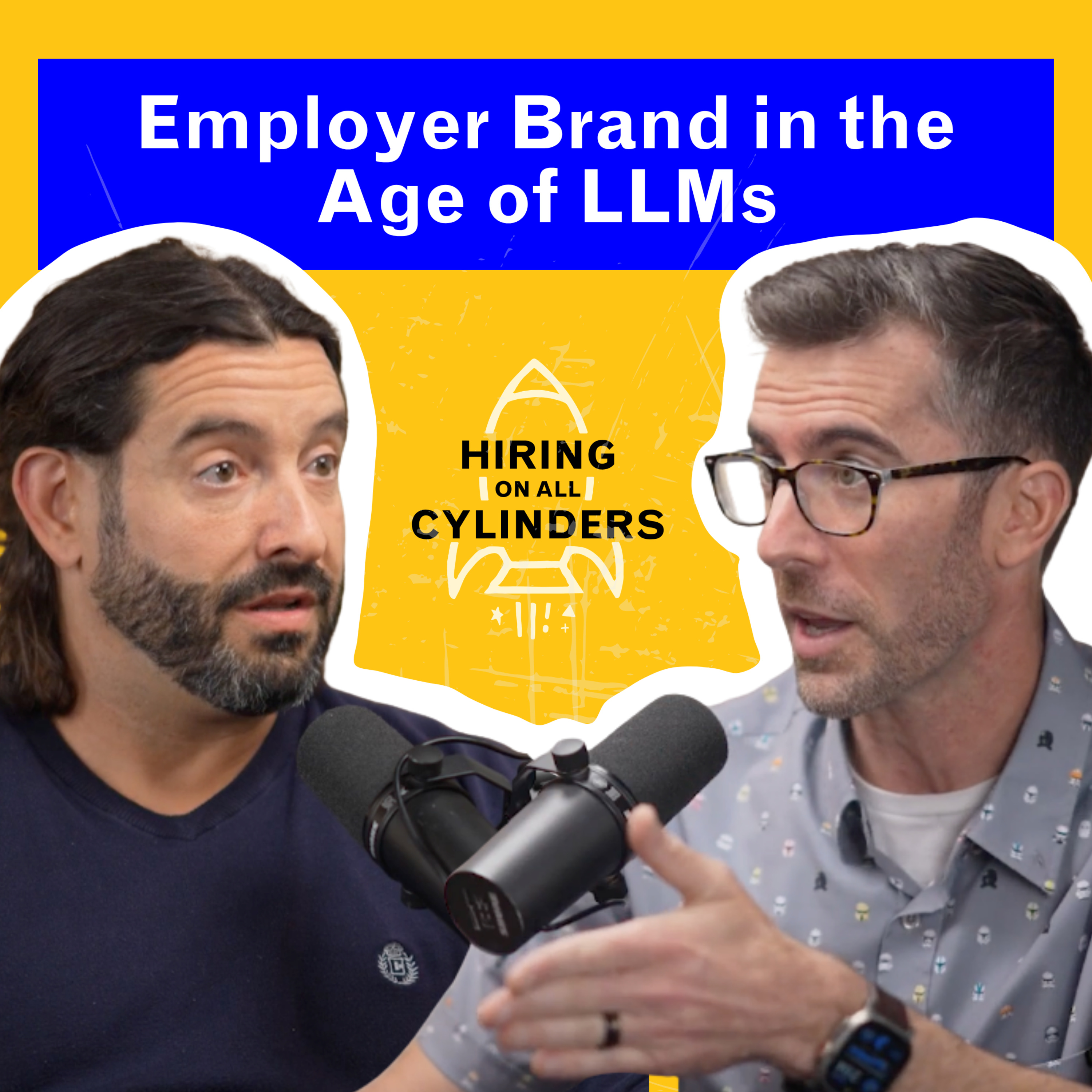 Employer Brand in the Age of LLMs with Duarte Mendonca (Director, Talent Acquisition at PayPal)Hiring On All Cylinders · on Employer Value Proposition (EVP)77 / 100
 Evolution of TA: Reactive → Strategic, with Kyle Hurley, Head of TA, Medhealth GroupThe HR Community Podcast · on Employer Value Proposition (EVP)76 / 100
 OK, But Why? The Strategic Problems Beneath Employer BrandingBlu Thread Conversations · on Employer Value Proposition (EVP)73 / 100Homegrown Employer Branding for AEO & GEO68 / 100
 Job Board News and a CEO QuitsExecThread Turns 10 with CEO Joe Meyer
 Indeed Pulls Back Auto ApplyIndeed's Rivals Need to Step Up!