
Hiring On All Cylinders · 2026-05-28 · 54 min
Key moments - from our scoring
Substance score
57 / 100
Five dimensions, 20 points each
The convergence of AI and talent acquisition is fundamentally changing how candidates discover information about employers. Duarte Mendonça reveals that LLMs source heavily from third-party platforms with built-in validation mechanisms (upvotes, comments, ratings), leaving most companies unaware that their employer brand narrative is being controlled by external sources. This mirrors the early mobile-optimization era of the 2010s - companies have roughly 12-18 months to adapt before LLMs become the dominant research method. The key difference from Google's SEO: LLMs aren't driving traffic to your career site; they're delivering answers directly via zero-click searches, now representing 60% of all employer research. Mendonça advocates for an "AIO" (AI Optimization) strategy focused on structured schema markup in job descriptions, cross-platform consistency (indeed, Glassdoor, LinkedIn), authentic employee voices rather than polished corporate messaging, and strategic FAQ creation. Trustworthiness to LLMs comes from validation across multiple platforms, not first-party authority. Companies investing solely in filtering volume applicants miss the reality that candidates' decision-making increasingly happens before they apply, shaped entirely by LLM-generated comparisons.
Research from Duarte's audit of 30 companies showed approximately 95% of citations came from third-party sites, and Televity's research indicated over 80% were third-party sources, not first-party company websites.
Zero-click searches - where candidates get answers directly from LLMs without clicking through to source sites - have grown from 20% in 2022 to 60% today, meaning candidates trust the LLM's synthesized answer and don't verify the original source.
Companies should include specific, machine-readable details like exact office schedules (e.g., '3 days in office, 2 days hybrid'), salary ranges broken down by component (base salary: $140-$180K), and benefits with duration (e.g., '16 weeks paternity leave') rather than generic descriptive language.
Those platforms have built-in validation mechanisms like upvotes and user comments that LLMs treat as credibility signals; when the same claim appears on multiple platforms with engagement, LLMs validate it as truth regardless of whether it's first-party company messaging.
SEO drives traffic to your site and converts visitors; AIO ensures your information is structured and distributed across multiple platforms so LLMs can easily parse, validate, and cite it, since 60% of candidate research now ends without clicking through to your site.
Our reviewer’s read on each dimension, with quotes from the episode.
The episode contains a genuinely useful core thesis - LLM citation optimization as a new employer brand discipline distinct from SEO - and delivers a handful of concrete tactics (markup schema, FAQ pages, cross-posting for validation). However, progress is slowed by heavy repetition of 'self-select in or self-select out,' host rambling, a sponsor break, and several stretches of obvious observation about authenticity that add nothing new.
almost 60% now of all these searches are zero point checks. So essentially people aren't clicking on links beyond that
The LLMs are auditing. They can see when it's happening, IP addresses and pinging. So they'll default you and basically penalize you for doing this astroturfing
Framing employer brand strategy around AIO (AI optimization) vs. SEO is a genuinely fresh angle for a TA audience, and the point about sycophantic LLMs amplifying negative search intent is a counterintuitive wrinkle most practitioners won't have considered. The mobile-first analogy is well-worn, and the authenticity drumbeat is recycled from years of employer brand discourse.
if I'm negatively searching about employers and doing that research and now I'm doing a search on an employer, it's naturally going to go ahead and validate my query
these LLMs are like the kiosk outside your restaurant. You can't even track if they're coming in to look at your menu
Duarte Mendonca is a working Director-level TA practitioner at PayPal with genuine hands-on authority - he ran his own multi-session LLM audit across 30 companies to generate original data points rather than citing theory. He is relevant and credible for this topic, though not a CHRO or executive whose decisions move industry at scale.
I did three different sessions of 10 companies in each one and what I just did was a simple query, what's it like to work at company X
celebrating five years this September, excited for an upcoming sabbatical here in July
The episode cites a meaningful cluster of stats - 40% of LLM training data from Reddit, 80%+ third-party citations (attributed to Televity), 60% zero-click searches up from 20% in 2022, 37% of candidates using AI pre-employment (Built In) - and names specific tools (Greenhouse+Clear, Tofu) and companies (Netflix keeper test, Google). Attribution is casual and unverified on several figures, and many claims rest on 'reasonable deduction' rather than hard evidence.
Televity recently referenced that over 80% of citations are from third party sites
That's up from 20% in 2022. Right. So it's going to double year over year
The host shows some genuine curiosity and occasionally synthesizes well ('trust is the new currency'), but he frequently over-confirms before asking the next question, monopolizes airtime with his own anecdotes (VMware beer Fridays, LA dinner), and never substantively challenges any claim the guest makes, even speculative ones. Questions are largely open-ended invitations rather than sharp probes.
Yeah, I thought that was really interesting
I remember first, you know, building the employer brand at VMware. And when I started there I started to realize, oh, wow, they do that, you know, every Friday. They have got kegs out
Computed from the transcript - who did the talking, and the words that came up most.
Candidates aren't clicking on your carefully curated career site anymore. Instead, they’re asking ChatGPT, Gemini, and Claude what it’s really like to work at your company - and the answers might surprise you. In this episode of Hiring On All Cylinders, host Matt Staney sits down with Duarte Mendonça, Director of Global Talent Systems and Operational Enablement at PayPal, to unpack a massive behavioral shift: the transition from Search Engine Optimization (SEO) to AI Optimization (AIO). Duarte shares startling data on how LLMs source employer data, why third-party sites like Reddit control 40% of the narrative, and how TA leaders can structurally adjust their infrastructure to fight back.
Transcribed and scored by The B2B Podcast Index.
Speaker A: Hi, and welcome to another episode of Hiring on All Cylinders by Hire Community. I am Matt Saini, VP of Community at Hire, and today I've got with me my friend Duarte Mendonza. And, uh, he is from PayPal and runs the TA Operational Enablement and System Design. We're going to unpack what all that means in just a second, but, uh, Duarte, welcome to Hiring On All Cylinders. Uh, tell us a little bit about yourself and your role at PayPal.
Speaker B: Thank you. Appreciate it. Um, yes, I've been with PayPal nearly going on five years, celebrating five years this September, excited for an upcoming sabbatical here in July. Um, the role that you just referenced, I just transitioned into recently in February, so overseeing operations, which include university recruitment, uh, coordination, so scheduling globally, as well as our operations, infrastructure and enablement and recruitment marketing. Awesome.
Speaker A: Uh, that's a lot. That's a. That's a bunch. And I'm noticing this trend, a lot of, uh, roles within TA getting consolidated, a lot more ownership of multiple programs. Um, and, you know, I think it creates pretty dynamic atmosphere right now. So let's jump into it. Um, you know, you've come to several of our higher leaders dinners here in New York City, and I feel like you bring some such a great broad view, but also a lot of curiosity into the discussions around AI. Uh, you know, employer branding, talent attraction, all of that's kind of converging at this moment. And so, um, you know, you actually flagged something recently that I keep thinking about. You know, candidates are now asking ChatGPT or Gemini or whatever the LLM, right. What it's like to work somewhere before they ever talk to a recruiter. And so it's not just relying on Glassdoor or Google anymore. They're having, uh, conversations with AI about your company. Can you unpack what you're seeing there with that?
Speaker B: Yeah, uh, it's dynamically evolving, certainly. And if you think about what has changed, more and more people are using LLMs to research companies. It's transforming how we think about SEO and the employer brand because we have an opportunity to go ahead and necessarily put our name at the forefront today. Um, I think there's a lot of opportunity to change that. But when you take a look at Most of the LLMs, they are sourcing from places where they have appropriate schema, where it's easy for these LLMs to digest the information and parse what's true, amplify things that are getting upvoted, which is why Reddit right now is roughly about 40% of the data being pulled for these LLMs.
Speaker A: Yeah, I thought that was really interesting. And Reddit's also deployed a lot of uh, AI apps, ad strategy and are growing rapidly because that does seem to be where alums are pulling from pretty easily. And so it's sort of a back uh, doorway of like recruitment marketers or just overall marketers to uh, get into a platform that is being kind of it's information being pulled in from LLMs. How has that changed your strategy with that citations?
Speaker B: If you actually take a look at most of this data, um, different um, sites have referenced, I think Televity recently referenced that over 80% of citations are from third party sites or not from first party sites. And so Matt, like exploring and taking a look at myself, um, I did three different sessions of 10 companies in each one and what I just did was a simple query, what's it like to work at company X? Um, and when I took a look at the most recent time of the 10 that I did, my data points came back. 95% of the citations were from third party. So you're thinking about comparably indeed Glassdoor, Reddit blind. So you're no longer in control of your EVP or your brand name if you're not focusing on citations and putting content out there. This is where again these third party sites, because Glassdoor and indeed have upvotes, people chiming in on the comments and rating it's more trustworthiness for these LLMs to validate and then distribute this content. What's even scarier is almost 60% now of all these searches are zero point checks. So essentially people aren't clicking on links beyond that.
Speaker A: So they're getting information for the word, for its word.
Speaker B: Correct.
Speaker A: Interesting. Uh, that is very different than the days of Glassware. I used to litiate at Glassdoor.
Speaker B: Right.
Speaker A: And so at that time that they were really growing and that, that was very controversial and it was like most companies weren't really paying attention to it or you know, everybody wanted to kind of get a glass door strategy on how to respond so that when candidates see those reviews they can get both sides of the story. But definitely it sounds like to me what you're saying is that what AI is doing is almost eliminating that ability. It's like whatever's on there is kind of what the answer is going to be pulled from. The algorithm is going to use to tell people what it's like to work.
Speaker B: What's scary today it's either you're there or you're not. And What I'm seeing from my research is that most companies are not, I think the best analogy to use right now of where we are with these LLMs. It's back like in the early 2010s, when you think about the iPhone came out and people were suggesting them becoming mobile optimized. Right? They weren't mobile first. They were optimizing where you can zoom in and zoom out of the webpage on their mobile phone. And companies that decided to become mobile first basically ruled a decade of technology. And so I think we're at that precipice where we have probably another 12, 18 months. And maybe that's being generous of a, of a Runway where we need to start thinking about coming LLM or aio, which is AI optimization focus versus just purely being SEO, where obviously SEO is there to drive traffic and then to be able to convert the traffic into eyes on your site. It's not happening on LLMs. They're taking word that the LLMs are regurgitating to themselves. So it's like building consensus. And naturally, human beings like to have consensus and they trust these LLMs that are serving up this information as the truth.
Speaker A: We'll pause here for a quick message from our sponsors. Talentful provides flexible recruiting solutions to the world's most ambitious companies. Are you thinking about ways to add flexibility to your talent function? With recent market volatility and hiring set to return to growth mode in the near future, there's never been a better time to choose the right partner, uh, to help you scale. Talentful's embedded sourcing, recruiting coordination and talent advisory services have been trusted by the world's leading brands. Companies such as Atlassian, Microsoft, Expedia, Pinterest, Waymo, and more. Whether you're hiring across engineering, go to market or gna, Talentful has got you covered. To find out how Talentful can help you, visit talentful.com. How does that change the shape of the candidate journey from where it was even, gosh, two or three years ago? Huh? How do you combat that?
Speaker B: It's difficult. I think we're early stages. Um, when you think about SEO, you're able to measure all these, again, what your traffic is, what the conversion was. Right now you need to start focusing on what are the citations, where are these citations coming from and what can we do to combat that? And so there's a whole host of things that people can do to try to combat that is again, start looking at markup schema. Um, and that's essentially making it easy for these LLMs to digest. So the days of which you're working in a fantastic dynamic environment where you get an opportunity to grow and is not serving you any purpose. The LLMs are not knowing how to treat that response. They're looking for data to simply say, you know, three days in office, two days hybrid, what three days are in office. Your base salary is 140 to 180. Um, your 16 weeks paternity leave. They want to know the details in which they can digest this information, be able to then validate it and then share it out to the audience doing these searches.
Speaker A: Yeah. And it wants unique information too specific to your company. It sounds like. And so if you're using very generic branding that sounds a lot like every other company, it's going to be hard for that element to distinguish what, what's uniquely you. It's, it's looking for that. So it's going to overly rely on user generated or candidate generated content. You know, third party content. Uh, as more of an authority.
Speaker B: Yeah.
Speaker A: Is what it sounds like.
Speaker B: And again, because people can up like that. I, you know how I was treated in the layoff. Right. And so it's validating that information because people are upvoting it, sharing it, it's pulling it from multiple sites. So again, if it can validate on Glassdoor. Indeed. And blind, it's then taking it as truth and that's what it's serving up higher for your audience to view. Um, I think another scary part Matt, that we're maybe not talking about and I don't have evidence, but I'm just taking it based on reasonable deduction and what we've seen with these LLMs where they can be sycophantic and they're serving what you want to hear. And so if I'm negatively searching about employers and doing that research and now I'm doing a search on an employer, it's naturally going to go ahead and validate my query. So if I'm leading it, why is X company potentially a bad place to work or were there any layoffs? It's going to serve up that content. Right. So this is where citations are going to become so important and the currency, uh, for future LLM, um, searches.
Speaker A: Do you, I mean do you think most companies even know this, are thinking about this and, or is it still flying under the radar right now?
Speaker B: It's definitely under the radar. From my observation. I've had a couple of conversation people like we haven't even started thinking about that. I think my observation is that people are so focused on how their employees are using it in the workplace. They haven't really thought about how candidates are viewing it and what's actually being served up to them. Because I can't imagine that like again from my research, uh, from 30 different companies, 95% were third party. And I know again to live it, excuse me, was suggesting that it's 80 plus that are third party sites. It tells me that people aren't yet paying attention.
Speaker A: Yeah, I think that's accurate to what I'm hearing as well. Is that there. All the focus over the last year has been around adoption. Like how do we start building that tech stamp, how we start training our recruiters on how to use this. I mean looking at our own state of TA data, uh, we went from in the US a 67% adoption rate last year to 98%. Basically a full adoption. Now how do we get this into our infrastructure? It's almost an afterthought. What would you say or what is some advice that companies can do now to audit that for themselves? Because obviously candidates aren't being that transparent in sharing where they're getting their information about, about your company. But um, how can companies start to understand a little bit better about the ways that candidates are researching them now with A.I. uh, and how they can maybe start improving that?
Speaker B: I think you said it right there. One is audit. Start by doing search on your own company, your competitors, what the citations are. And so I think that's what you're going to have to start doing as one of the most important metrics to measure is your citations. What percentage of my first party, what percentage of third party, what is coming from these third party, what is visible and then how do you go ahead about combating that? Obviously we don't want to go ahead and start doing astroturfing. Right. I think that you might appreciate this. Back in the day, Glassdoor, a lot of people and companies were going and paying for employees to go ahead and sit down and do sessions where they're writing rave reviews and greatness. Um, these LLMs are auditing. They can see when it's happening, IP addresses and pinging. So they'll default you and basically penalize you for doing this astroturfing. But now how do we combat the thing it's going to be again the most citations quickly. I think with many instances it's speed to market the first one there will win. So it's not necessarily quant quality. It's going to be more quantity in this case of getting first to a thousand citations. So this way you're controlling the narrative.
Speaker A: Yeah, I know. I don't know if I heard of a company's like paying employees, but I definitely heard, you know, there was a lot of like, of incentivization, uh, or almost like a methodical timing. You could look at a company's um, career site and see uh, or their Glassdoor and see once or twice a year, all of a sudden like a spike. And it's because like the recruiting team or HR did some sort of all hands and they said hey everybody, we're really trying to drive reviews because we're hiring right now. Um, you could intern, get some swag if you write a review today or upload your salary to Glassdoor or um, and you could see that. But that's not going to help when it comes to authority with AI. Right. And so companies have to kind of change their tactics. And so I think you're head on to auditing yourself. You know, going across the different LLMs, doing a search, uh, the way a candidate would. Um, any other tips that they can
Speaker B: do to help with that? Google. I mean you could see There's a top 10 questions of what candidates are asking employers right now. Um, once you're able to do that, you can go ahead and again as a reference schema, you could start taking a look at your job posting schema, making sure that you're including the port and details like we just discussed about like hybrid what that looks like. Make it explicitly visible and call out in office requirements detailing it being specific salary, base, wage. Instead of just putting range, be more specific of what the base range is. So this way it's easier for the LLMs to be able to digest. So you're giving it and you're feeding it intentionally. Um, with that then is again the citations working with third parties to magnify. You want other people to be able to get Personas out there. You may want to take a look at Glassdoor. Instead of asking employees to write reviews, start responding to the reviews where you're then offering a narrative of yourself from the employer, really focusing more on authentic content as well. Um, the corporate jargon is going to get lost in the mix and not get picked up by these LLMs.
Speaker A: Authenticity really matters right now and we're definitely going to dive into that. But just one more thing on the LLMs. And so what I'm hearing from you is researching yourself, but maybe going deeper with the LLM than maybe a candidate would and you know, researching yourself and then seeing where these third party citations are Coming from and saying, you know, why did you choose that like, or even asking the LLM of like, if, if somebody is doing research on my company, where are you pulling that information? Correct. How could we uh, you know, what kind of information, information should we add to our job descriptions and things to make sure that that information comes up when candidates are searching about us with you. Right. And it would give you an answer.
Speaker B: 100, 100. And take it even a step further, you can create FAQs where you're answering some of these questions. So again like I'd reference taking that top 10 list, working back with your team and answering those, making it again easily digestible for these LLMs. So we'll serve up those answers for you. And again, this is where you also want to come compound it. So good SEO is still applicable here. So follow basic SEO rules but multiply it. So this way again you're making it
Speaker A: digestible, more authoritative, authentic, real and useful information.
Speaker B: Correct.
Speaker A: Information that their, their LLM assistant. Right. Would find uh, useful for them. Right. And so making that uh, that visible on the career site. Right. Maybe an FAQ section of your career site that goes through your AI policies but also like your core benefits and everything that a candidate might ask about uh, in an LLM when considering you as an employer.
Speaker B: Yeah. I think what's going to be more important is not like the quality of the content, it's the content in which is digestible. So you're even looking at tables making it easier for these LLMs to be able to pick up and parse the information and then go validate it. So that's why it's going to be important that you're doing this across multiple platforms in your job descriptions. This way when it's scraping the data, it can validate it. So trustworthiness is also going to become a factor here.
Speaker A: I mean, and I'm wondering how these LLMs decipher trustworthiness. Is it because it's a third party and it's in its actual candidates, or do they, do they give. Google gave a lot of authority to the career site itself. In fact they started to um, disincentivize things like um, Glassdoor indeed, uh, and things like that for the actual company domain career site. When gathering information, do LLMs do the same thing?
Speaker B: Or they, they're, they're looking for multiple platforms. They want to be able to validate the information. So that's why cross posting is going to be so important. They're going to go ahead and take a look at sites like indeed. And Glassdoor and Reddit, again, where people can upvote, like put comments in. That's how they're validating this information. Again, those multiple sites where they can verify the data itself. Additionally having trustworthy Personas. So if there's trustworthy Personas that are posting and writing about it, blogs are going to equally become important. So if you have a blog that you're writing about and we're able to say, like, we're hiring for XYZ company you're posting on hire, you're going to be able to see that. And again, if it's a trustworthy site that's going to amplify the content for these LLMs.
Speaker A: Got it. Um, so, yeah, I mean, you called this out directly, which is the, uh, authenticity gap, right? M. And I love that framing companies can produce sort of polished professional messaging faster than ever with AI, Right. But candidates seem to trust it less than, uh, ever before. Right. We've been saying for years, uh, how important authenticity is and how a lot of companies sort of are using the same sort of language. But now in the age of AI, that's almost an absolute must. Right? And so where are, I guess, where are companies maybe getting it wrong right now when it comes to authenticity? And as they start to adopt AI to maybe. I think I was at a dinner, uh, a couple weeks ago in LA with a bunch of tailors, and I asked everybody to raise their hand. How many of you, three years ago, had, uh, an employer, brand leader as part of your team? It's a bunch of enterprise tailors. Everybody raise their hand, I said, but who has one? Someone totally dedicated to recruitment, marketing, employee rank, now maybe 30% of them. So that's a 70% reduction within that small sample group, um, of these people dedicated to it. And so more and more recruiters or talent ops leaders are having to kind of take this on and do it. But they're not content creators, right? And so maybe they're leveraging AI. Is. Is that maybe a bad idea?
Speaker B: I, uh, mean, the whole thing is AI is going to give you a curated message that is teed up to protect the employer. And what, people, again, can't say it enough, want to see authentic authenticity. They want to see a real message from a real person. They want to see their voice not written for them to speak to or towards. So what's really important, and which is why these LLMs are so powerful, is there's the comparison, right? Naturally, when we are looking to purchase something or make a decision, we're Usually going and doing research. These LLMs allow them to pull these multiple sites into one place and provide them a comparison in which they're comfortable by human nature deducing again, that's why zero point clicks is 60%. That's up from 20% in 2022. Right. So it's going to double year over year where people are going to start trusting these LLMs more and more to provide them the information they want. Um, so where I think they're getting wrong is they're still spending way too much time on polished messaging. Right. People want to see authentic voices, so it's actually spending more time on that curated content that comes from the individual, from employers versus executives. They want to see more of the day in the life of what they're going to be doing. They want to know what the challenges are currently with the employer and how they're going to be able to come in and be a solution to there. That's how you're going to sell people. They're going to see through the polished bluff and want to get to the story. And if you can't provide that again, these third party LLMs will.
Speaker A: Yeah. And you know, I feel like that's, that's always been the desire of canvas. Always wanted to see what it's authentically like to work, why things like Glassdoor became so important. But it sounds like the thing that is really dynamically changing this right now is with AI, there's candidate behavior change 100%.
Speaker B: They're looking at like, uh, I'm looking for a tech job in New York City that's hybrid and only requires me to be in the office two days a week. And the LLMs are going to go ahead and pull that information again. That's why I go back and talk about the hybrid model and making sure that you're putting it in a place where these LLMs can read it. Because people are searching in that fashion and then it's parsing that information, providing them answers and then they're trusting that information and making decisions based on what these LLMs are providing them. That's the power of LLMs. So to think about it even differently, these LLMs are like the kiosk outside your restaurant. Right. You can't even track if they're coming in to look at your menu. They're coming and checking in this kiosk that's managed by somebody else and you don't know what that foot traffic has done if they decided to come in or not go out. So that's what's what's crazy about it.
Speaker A: Or if it's hallucinating and confusing you with another similar employer. Right. Like, how do you even verify that, you know, as an employer, you know, and make sure these elements are, you know, are giving accurate, good information. Yeah, very interesting. Um, let's dive a little bit more into that authenticity, I think. What does that look like? Um, in practice, a lot of the conversations I've been having with TA leaders is it's almost with AI. So many people can apply very easily. A lot of the resumes are starting to look the same. Cover letters are perfectly written, uh, aligned to the JD off of their resume. Um, it's harder to differentiate candidates, but even more so, it's just the volume of candidates, applicants coming in. Some are saying, well, gosh, do we even need to invest in Player brand? We have so many applicants that come in. Like, maybe we just need to be filtering, getting better filters and help AI select the best ones. Um, but, um, on the very extreme side of that, I'm hearing them saying, you know what, we're not even posting our jobs online. We're not investing in recruitment marketing because, I mean, we're able to use AI sourcing so efficiently now that we're kind of going to the candidates that we want, engaging them in at the right time.
Speaker B: Completely.
Speaker A: Like, you, uh, know, how is the authenticity kind of showing in practice for you and the team at PayPal?
Speaker B: I think the one thing where these elements might actually help us with some of that is actually cutting through the noise because candidates are going to be able to make decisions on where they want to apply. Um, so it could be a good thing and a bad thing. So I think what you're going to see if you start doing your citations, start talking about what it is to be working at X Company, what a day in the life is with your work and what employees are going to be doing. People are going to be able to self select in or self select out. They're going to have more information at their fingertips than they ever had before. And if they see that, hey, this job requires me to be in office four days a week and I can only do two. And it's abundantly clear to them you're not going to show up. So that might lessen some of that flow. So I do see some positives here coming from these LLMs, but it's making sure that we're showing up how we want to so we can get the right people in the door. You're 100% right that candidates are using these LLMs to do queries on how to rewrite the resume to apply to 40 different positions simultaneously. They're using LLMs to help them prepare for the interview. What questions are being asked, how should I prepare for those questions? So it's on both sides when we talk about authenticity, not necessarily a bad thing.
Speaker A: Candidates that are better prepared to show their skills, they're using it. Right. But also some candidates using AI in real time to maybe sound like they have skills that they don't. But then they show up in the job and like within two weeks they're treated because they actually can't do the work. Right. That's a real risk. Right. But, um, it seems like authenticity now, uh, is almost like being completely raw and real about, you know, the good and the bad of working. And I feel like I've been beating that drum for years. But now it's even more, I think, important because there's so much talent available for a lot of these roles. Like you, I think they called it at our roundtable in SF a few weeks ago, um, the anti sell. They're actually trying to dissuade. You know what we, uh, we do a six, six, nine. You know, we work six days a week, 99 hours at this startup. You know, um, if that's not for you, like don't even apply. Right. Almost so that when they research the company, they hear the true. You know, moving away from this era of like wanting to attract everybody in to actually being okay with full transparency and uh, people sort of opting in to say, you know what, that's, that's a mess I want to help clean up.
Speaker B: Yeah, you know, yeah, I mean you're going to get more qualified candidates that way. You're going to cut through the noise. I think some companies are just afraid of perception, but people are making perceptions and decisions and coming to conclusions about you every single day that you can't always manage. So why not try to be real and get people that want to be aligned with what you just described? Right. Like we want these grinders. This is what we champion ourselves on. You want to identify those easy and make it easier for people to know what they're applying to and then what they're engaging with throughout the interview process. So help people self self select in or self select out.
Speaker A: And earlier in the process, like, why wait until after you've had to go through a recruiter screen? And then they get, they're talking to the hiring manager and they realize, oh, okay, this is, this isn't What I, what I was, thought I was signing up for.
Speaker B: You want that realistic job preview?
Speaker A: Yeah, no, that makes a ton of sense. Um, could you maybe give me an example of a company that, you know, that's, that's getting this right? Like what are they doing differently? What are companies that are truly embracing authenticity and understanding where AI plays a role in that, um, and doing it well?
Speaker B: I think there's a couple of them. Um, take a look at what Netflix and what Google do on their career page. They talk about the work environment, what it's like to be there. Netflix explicitly talks about their workplace environment and the keeper test. Right. They're abundantly clear on what it's like that. They're constantly asking their hiring managers, is this someone that you would hire again? Would you fight to keep them if you had to make a decision? They talk about their performance environment.
Speaker A: Where does ownership sit right now in most organizations? Um, or is that, you know, when it comes to like internal alignment? Um, so let's get operational for a minute. You're an ops guy. I started my career in ops as well. And this is, I think, uh, you know, employer brand sort of sits at this intersection of ta. It sits in marketing and HR comms. I'm seeing sort of employer brand folks now owning internal communications. Um, you know, for me, in my career, employer brand sort of came out of ops as a need in the infrastructure. Then it kind of went into marketing, then it went back to TA again, you know, and so, uh, it sounds collaborative. Right. Um, in that HR comms, marketing, it's very cross functional, but in practice it can sometimes create a lot of friction.
Speaker B: Right.
Speaker A: And so, uh, where do you think it, where that ownership exists now?
Speaker B: My observation, I think you hit the nail on the head earlier in the conversation where there's less individuals and people wearing multiple hats. Depending on the size of your organization is where it might sit. And how many people are involved within your recruitment, marketing. Do you have a communications team, a legal team, a PR team? What does that all do when you're talking about pulling all these voices together? Um, more large organizations, you do have your own recruitment marketing arm, but they are working in conjunction with communication and legal to address any potential risk and how we're showing up as an employer. I think more companies are conservative and that's almost to their own detriment. Like we were just talking about where they're curating a message that's so buttoned up that people can't resonate with it because they don't know what it's like to really work there. So again, they're defaulting to these third party sites to be able to get a better picture of what it's like to work in that environment, in that company.
Speaker A: Yeah, I remember first, you know, building the employer brand at VMware. And when I started there I started to realize, oh, wow, they do that, you know, every Friday. They have got kegs out and food and everybody stays after and drinks and uh, you know, kind of commiserates and networks with their, with their other colleagues. Um, and so I posted about it, you know, I was like, oh yeah, they do like a beer Fridays at the office. HR gave me a big old slap on the wrist and like, no, no, no, you can't be posting that stuff. But I said, but it's, but it's actually our environment, what our environment is. And um, I don't know about you, but I honestly, if I was, let's say a recovering alcoholic, I probably want to know that I'm going into an environment that has kegs every Friday all over the place. Right. And so like, if we don't talk about this, we may have stickier HR issues later on.
Speaker B: Oh, 100%.
Speaker A: And if we're ashamed of this part of our culture, then maybe we shouldn't do it.
Speaker B: Shouldn't be doing so.
Speaker A: Yes, I see how being too conservative actually can ruin authenticity.
Speaker B: Yeah. Both sides of it. You're missing out on the people that might again want to self select out. Those want to self select. And I apologize for sounding like a parrot repeating here, but those things are so important in today's environment of allowing people to have greater control and autonomy of making a decision on where they want to work and attracting individuals that you want to be part of the company.
Speaker A: Yeah. So let's talk a little bit about, um, employer value proposition. I think this comes up a lot even when I visit my colleagues in the community in Europe. Uh, that's almost like the word they use for employer branding is evp. Um, and at the base level for me it's always meant, um, employer value proposition. So this is like your overarching tied with your culture and your values and stuff that um, messaging, you know that everything is sort of built from uh, and it used to be something that uh, you, you need an outside firm to do a lot of external and internal research. You know, it's a six month process. They speak and survey all your employees. Uh, but with AI now almost you can, you can survey employees, upload that data into AI, you can interview, take transcripts of interviews with employees up, all that and AI and it can start to build some of those, um, you know, those EVP pillars and messaging for you as a, as a baseline. Um, I think that dynamically changes it. And so more M companies are handling the EVP side themselves. Um, and so where in the hiring process now do you think EVP is important or are we moving to more of like a candidate value proposition, something more individualized to the role or to the manager? Uh, and this is kind of where my discussions have been going with tea leaders is that, you know, people like 70% of people leave or join a company because of their direct manager. And so should we be less focused now on the overarching EVP and overall, overall culture and experience of the company brand and more on sort of these micro branding of the teams, the job, the hiring manager, like sort of the what's in it for candidates?
Speaker B: Yeah, it's both, right? I mean, I think you have to have directionally where the company's going. You want to have that messaging on, uh, what the ethos is of that company. Speaking again about Netflix, Google, they're very clear of what that EVP and that value proposition is. But at the end of the day, I want to be candidate centric. I want to know and tell that candidate what it's like to work for this leader, for this team and how they're going to be contribute. So it's a blend of both. That's why I do think AI is even more important, because you can use that in your intake session with your hiring manager to deduce craft notes that blends into your evp. And now you have appropriate messaging that's tied back to the organization's EVP and individualized for the candidate and that specific role that you're recruiting for. So to me it's a blend of both. But in the recruitment process, I think what's even more important because of LLMs and how we access this information, how much quicker we could do this research again, getting all these comparisons buttoned up into one every single touch point. If we're suggesting that we're a streamlined, efficient organization and it's taking 10 days to get an offer out, they can't make a decision on candidates. There's no interview feedback. To schedule an interview takes multiple days. Every single touch point throughout the hiring process speaks to your evp.
Speaker A: That's interesting. And so where does that typically break down then? You know, uh, if, if you know you're being intentional about putting that EVP throughout the Process, like where are you seeing that it starts? Folder is that it's when your EVP says, you know, we are, you know, highly collaborative and we get back to you quickly. But then that doesn't happen in the interview.
Speaker B: Yeah, I mean it can happen in the initial recruiter screen. It can happen when you're scheduling the candidates with managers or their on site interviews. So again, every point and stage is there when they engage the hiring manager. And the hiring manager says something different than what they read online about the evp. Right. Like they can talk about mental health and say that we're for that. And the manager comes in and says, we grind, we're working, you know, six nines and we're focusing on outcomes. Meanwhile, the EVP is focusing on mental health. There's a contradiction there. So, um, I think it's important to focus on the human component and what the message is messaging looks like there. So that's why it's important to have yes, a large evp, but understand what that microcosm is. I know so many candidates have asked me what it's like to work at PayPal or at my previous companies. I always say it's very difficult to answer that question when you're asking it that broadly. I can tell you about this team and what it's like to work for them. Because every leader has a different EVP themselves.
Speaker A: Yeah. And depending on what team or even the role within that team you're in, your experience could be very, very different. Yeah, that's a, I mean, I think that's a really good point. And so what does it cost them, the company? I think when they aren't thinking about that, when they aren't looking at their EVP and you know, and thinking about what they're saying it's like to work there and then what a candidate actually experience in the process, like what's the cost for them?
Speaker B: Everything. It's that hire that you wanted to have by not having the right message, not being honest. It's them making a decision. You know, when, when you say there's a fight for talent, um, and that we're trying to raise the bar and bring in the best they have choices. And so when that EVP and that messaging falls off, that's everything.
Speaker A: Yeah. And there is a lot of this thinking of like this is, you know, this is an employer driven market again, you know, and so, you know, we can, we can afford to, you know, to lax on some of that. Um, we're seeing even in the age of productivity and AI Candidate experiencing sort of declining in a lot of larger enterprise companies, largely because recruiting teams are a bit tighter and they're still adopting AI. But I think that's an interesting challenge, uh, to address is how do we start to, um, think thoughtfully about the EVP throughout the process, um, but then make the adjustments to what that experience is. I think a lot of companies have gone through layoffs over the last few years. And so if you're still messaging like we are a family here at X ABC Company, but six months ago you did a round of layoffs even though your company's profiting a billion a year, that's. That's hard. Like, candidates are noticing that stuff.
Speaker B: They do, right?
Speaker A: Uh, very interesting.
Speaker B: They do. It's getting served up. It's actually one of the top 10 questions that candidates are asking for 2026. How did company X treat their employees during a layoff? Or how do they treat their employees during the layoff? They want to understand what is severance. They're coming into the mindset already, protecting themselves and wanting to know what a potential layoff is in this environment where AI is taking everyone's jobs. Right? So it's scary times. And employees, or future employees want to know this information, have access to it at their fingertips.
Speaker A: Let's talk about moving from sort of reactive TA to systems, um, design that helps you start to build a proactive model with this in mind. So Your role at PayPal centers around operational enablement and systems design. And so how does the way that TA is built and run actually affect whether the employer brand feels real to a candidate? Like what changes have, maybe you've done in your process to better meet this moment with the challenges that AI is creating in that process.
Speaker B: I think what we're seeing across the industry as a whole is that employers are trying to combat, like we discussed, candidates using AI in the interview process, an influx of candidates, um, the process is broken and we're all trying to solve for it. Where you're having a thousand people apply over a week, and how do you appropriately engage that level of audience? What can we use from an artificial intelligence to be able to create better segmentation where the AI is not making decisions, but helping us categorize the group of employees that are employing and where we should be investing more time in them or redirecting them to the right roles so we could do a better job of getting people in front of leaders and making hiring decisions? So I think right now is again, messaging narrative, um, the job posting schema, ah, the FAQs giving candidates a better opportunity. Self select in, self select out. Focusing on the experience for the candidate and making sure that we're using the appropriate assessments. So this is where artificial intelligence can help and pull the job descriptions. Work with hiring managers, recruiters and build out crafted basically interview kits. So this way we can make sure everyone's equally being assessed throughout the process. So the selection criteria is and a more equal level playing field. So there's a lot of things in which AI is helping companies be able to scale and make better hiring decisions versus less. I know there's a lot of fear of AI is bias. I mean you can audit the bias. How can you audit human bias unless you're recording and tracking every single interaction? So I think with this it's democratizing more of the interview process, selection process for candidates.
Speaker A: Yeah, it's interesting uh, kind of what I'm hearing in all of our discussions so far. The main thing I'm kind of getting from this is almost like trust is the new currency. And you know, because we're, we're living in this world where we don't, we can't even trust our own eyes. Oh yes, right. When it comes to AI and what we see from news, everything, politics to our uh, you know, what we see in social media. Like I think I saw like this uh, heroic like kitten rescue the other day and it was just so heartwarming. And then I was like, oh, it's AI. Nothing's real anymore what's going on. Right. And so I think we're seeing that play out in, in the dynamic between an employer and candidates too. In one way, like candidates are starting to trust AI more in what it's showing them, but they're maybe trusting it less when it comes to it being used to uh, actually assess their own skills. And then same with, on the employer side is that recruiters are almost uh, you know, need to put in layers because they've been burned a few times from candidate fraud and ah, you know, using a deep fake. Right. I saw a video of a deepfake the other day that I, there's no way I would have known that that wasn't a human being. And then it turns out uh, it was an AI engineer who had taken somebody's LinkedIn profile, the profile picture and skinned them and literally interviewed and did technical interviews, uh, all the way through as that person. And that person didn't even know that their whole identity was being stolen. This is scary stuff. It breaks down this trust and that's the most important thing in the hiring process. So how, you know, how are employers, um, battling that, these mismatch of trust throughout the hiring process?
Speaker B: Yeah, I mean using AI to get identifiers and we're seeing this when you think about even nation state bad actors, um, being able to use multiple different data points from IP address when their email was created, where they're applying from, there's so many different data points that you're using to be able to identify that. And it's happening more and more every single day that people are trying to game the system. And so employers are using AI as a defensive mechanism to protect themselves against these bad actors. Whether it's again, deep fakes that are misrepresenting or even people cheating during the interview. Right. Naturally, most employers want people to see a representation of themselves when they're interviewing and providing their answers. Other ones obviously want you to use AI, but then they're curating an interview to see how you engage with the AI. But again, this is all still new for candidates and employers that we're in early stages here. Exciting times.
Speaker A: Yeah. And I remember just, you know, two, three years ago, uh, seeing my LinkedIn feed and recruiters complaining like, oh my gosh, every candidate is using AI on the resume. Like, you know, this, this is people calling it even cheating.
Speaker B: Right.
Speaker A: But that's sort of laxed at this point. Right. That I think we're seeing expectations change and shift and norms shift quite a bit because I think that's a little hypocritical. Like if these companies are using AI, you know, to, to filter in, in stack rating candidates, like candidates should be able to use AI as well. Um, and for a while there because of the fraud, a lot of companies were, you know, they were going to full on site interviews for technical candidates, which, that's hard when you're going after the best engineers, you think they're really going to take a day off to come and interview with you. Right.
Speaker B: Complex.
Speaker A: So yeah, it's, it's very, it's such a complex issue. Um, you, how are you all battling that at PayPal when it comes to like remote technical positions and things like how are you attracting those folks in and then actually trusting what you're learning?
Speaker B: It is difficult. One we've moved to hybrid so we do have an in office expectation. I think the employers that are seeing more of this are those that are still completely virtual, that these nation state bad actors and other deepfakes are targeting them intentionally because they know they are virtual and that's how they're Trying to attack these systems. Um, you are seeing employers that are requiring in office expectations. You are seeing employers deploy different tools, um, to go ahead and to try to track deep fakes. So this way, it's almost like a background screen. Um, you're seeing tools like tofu or going ahead and helping employers being able to monitor this in deep fakes live during the interview and providing a recommendation
Speaker A: so they can stop better before they apply.
Speaker B: Correct.
Speaker A: Yeah. No one's wasting any time.
Speaker B: If you think about what, like, I think Greenhouse has done with them, working with Clear to be able to make sure they can better identify the candidates that are coming into your funnel.
Speaker A: Is that Real id? Real id? Yeah. Uh, yeah.
Speaker B: Yeah. So more and more things are happening in order to help employers identify who is real. Again, trustworthiness is coming so important. Um, and then just having those human connections because people still want a real experience.
Speaker A: Yeah. And candidates are having the same issue where, you know, they have, you know, AI is stealing company overhead and, or, you know, actual branding. And, uh, they're doing, you know, fake recruiter emails that look so legit. And so even candidates, it's like, are you a real com, you know, a real PayPal recruiter reaching out to me or not?
Speaker B: Like, you have to take a look at that domain. Yeah, I experienced this myself. I had somebody, uh, a bad actor reach out to me as if they were working at Nike, um, and reached out to me for a director of ta role. And I'm like, what is this coming from this Gmail account? So I said, let me. Let me respond here. And responding and engaging. And the answers they're giving didn't make sense. So after a few exchanges, I'm like, all right, let me ping this recruiter on LinkedIn. He's like, it's not me. And so sent over the emails over to him so he can work with his security team to figure out how they're misrepresenting. But it happens more than we care to discuss and talk about. There's a lot of companies that won't reference how they are being targeted and people are misrepresenting you or myself and stealing money from individuals.
Speaker A: Yeah, it's. It's wild. It's just. It's such a wild time. I don't know, many of us could have, you know, seen this coming, but it sounds like there's an. There's education and adjustment needed on both sides. You know, I found myself trying to educate candidates, um, you know, on scams like, look for those domains, like, use some discernment um, and even with the recruiters needing some discernment, like ask those follow up questions, get a little bit more probing and probe in some of those questions to really make sure they know their stuff. And they didn't just kind of get a script from, from ChatGPT. Right.
Speaker B: I think it's important to obviously set the expectation for the candidates. Are you allowing them to use AI in the interview? Where is it permissible? Where is it not? And then setting the stage, walking into the interview, saying, hey, we're looking for your authentic voice. I know you could appreciate that we might be using AI in the workplace, but we want to have a real conversation with you, setting that expectation, navigating the interview process as you normally would and make a reasonable deduction at the end. Like if you're telling candidates you don't want them to use AI and you have a feeling or multiple data points in which they are. Either you have the technology to back it up, you're making the decision as an employer on whether or not someone's showing their authentic self.
Speaker A: Yeah. And I think we have to also understand like what, what can we even control? You know, when it comes to Canada's use of AI, um, you know, it's seems like, um, these tools are readily available. We have to embrace it, put in the security to help make sure there aren't major risks that happen. But we sort of have to embrace this at this point and build to it. So what is the ultimate ops system, TechStep look like that allows you to kind of, um.
Speaker B: That's a great question. I think a lot of people are trying to figure that out. Exactly. Are. I don't know if I have the answers, but I think again, if you're starting from the top, it's being able to validate who the candidate says they are. Um, making sure that you're able to validate the skills or the reflection of the interview. So having an interview process that's reflective of the job they're going to be coming in to do. What does that really look like? Having an honest, open, transparent conversation from the jump with a candidate. What it looks like. Um, but again, there's places where it's appropriate not to use AI, other places where it's not. I think each individual employer needs to make that decision for themselves on what is the best path forward and then equal, equal opportunity for everyone. Right. So you're allowed to use AI and I'm not. We're interviewing the same position. That's, that's, that's not equal Opportunity, uh, to be able to represent ourselves. But employers just need to be explicit, communicate, set that expectations and make the right decisions for themselves.
Speaker A: That makes a ton of sense. And it just, it seems we are just in a moment of misalignment almost of like what candidate expectations are, you know, what the challenges that are adding in what employers are expecting out of the process too. And uh, I know we're going to iron it out, but, you know, think about it. 70% or more of candidates want, uh, want to be able to work remotely, but more and more companies are going back to hybrid or return to office. That presents a pretty interesting challenge. Um, uh, we'll see who wins on that one over time. Uh, but, uh, in the same thing with aiu, so just. That was such a great. Thank you on that discussion. I'd love to talk, just to round us out here and talk a little bit about the future, um, and looking ahead. If you had to bet, putting in your crystal ball now, right? Uh, where does this go in the next two to three years? Does employer brand get harder to control? Um, or does the industry find new ways to adapt? Where are you seeing the patterns?
Speaker B: I hate to push here, but I say both. Um, again, this is where it's going to be. Decision of the employer on how they want to approach this. Um, going back to their early analogy of being the early 2000s and 10. Do you want to be that mobile optimized company or do you want to be that mobile first company? So I think the decision is going to be left up to the employers and how they want to approach this. Um, so it's going to be about, again, creating that authentic voice, understanding how these tools and LLMs work, creating the markup schema to make it easy for them to be able to digest. But I would suggest the increase in which candidates are going to use these tools is only going to get larger, not smaller. I think we're at the baseline. Um, I read a recent survey, uh, and this was from Built in, that said roughly 37% of candidates are using AI pre employment. That's a small number. So that's only going to grow. So it's up to you if it's easier or harder.
Speaker A: Yeah, very interesting. And so last question. If a TA leader listening to this podcast right now, uh, and they're thinking, you know, we're getting this wrong, right? We're not thinking through some of these things. Duarte is really opening my mind right now and I just, I don't even know where to start with, like, what Would your advice be to them, like where, where should they start to, you know, to begin thinking about this and making some.
Speaker B: First place is an audit. Um, and I would suggest that you have multiple recruiters or you work with a third party externally to help you start auditing. These questions and what, how it's coming back one. Because what my query is is going to be different than yours, Matt, when we ask about a company, uh, based on our own search area and criteria based by the LLM. So you're going to want to take a look at multiple alums. How are you coming up in Gemini? How are you coming up in Claude? How are you coming at Chat Beat? Perplexity. You're going to want to go ahead and start taking a look at those citations. What percentage of your M citations versus a third party? Which third parties are coming up on there again, do that audit of your job descriptions. Do you have the appropriate information to make it easier for your jobs to be parsed and readily available? I think we just continue talking about remote first or hybrid environment. You said 70% of people are still wanting a virtual place of employment or at least hybrid. So make it easier for candidates to be able to identify if you're offering that or not. Right. Why have another candidate apply when you're saying you need to be in office four days a week and they're never going to commit to more than 2
Speaker A: center in the JD.
Speaker B: Correct. So make it easier because they're going to these third party sites to be able to research your company. Um, and I think that the tail end of that again is that FAQ page. Build that out. Um, round it out. I would say blogs identify Personas or third party sites that are going to help you magnify and distribute this information. So you start searching up on there. But I think there's four to five simple things that you can go ahead and do that I just listed off that will make it that much easier. But the first foundational one is just start doing an audit and have your team come back, share the results, have a conversation, start building off talking points off of that.
Speaker A: Love it. Duarte. I really appreciate you coming and enjoying. This was such a great conversation. Conversation. Uh, I think you're so clear and honest and practical in your perspective of this. Uh, and so just really appreciate it. And I think that's exactly the kind of dialogue uh, that our industry needs right now is that we don't have all the answers right now, but like let's, let's audit, let's look at what's going on. Um, you know get into higher community, talk to other T leaders and how they're, how they're doing that, you know, listen to hiring all cylinders right and, and see what people are doing to kind of combat we are in I think times of rapid change. And so thanks for coming and having the conversation and helping other uh, folks in our industry uh, figure out this new wild world of talent attraction in the age of AI. So um, thanks so much.
Speaker B: Appreciate the opportunity for the conversation. Definitely. It's built on a community. People need to share more. Be open to that conversation. Share your learnings. We'll grow together. Awesome.
Speaker A: Love it. To everyone listening, thank you for tuning in to hiring on All Cylinders. Find us on LinkedIn. Join the hire community@hirehq.com and if you haven't already like follow and subscribe so you never miss an episode. We'll see you next time.
Other episodes covering the same guests and topics, from across The B2B Podcast Index.
 Newly Hired Chief People Officer Stef BloomRec Tech: the Recruiting Technology Podcast · on Employer Value Proposition (EVP)76 / 100
 Michael Moritz: Steve Jobs, Sequoia, and the Weight of HistoryThe Puck: Venture Capital and Beyond · on PayPal74 / 100
 Julia Hartz, Eventbrite: From 27 Rejections to IPO and the Leadership Lessons That FollowedEntreprenista · on PayPal74 / 100
 What Would It Take For Insurers To Go Fully Digital? with Ian Drysdale, CEO of One Inc. | Episode 499Leaders In Payments · on PayPal74 / 100
 Scaling Financial Operations and AI Innovation with Rohini JainSecrets of Rockstar CFOs · on PayPal73 / 100
 SPECIAL SERIES ==> 🚽 The AI Hacks We Actually Use <== | BATHROOM Break #114 COLLAB: The Marketing Millennials + Do This, Not ThatDo This, NOT That: Marketing Tips with Jay Schwedelson · on Reddit73 / 100
 Why Human Judgment Still Rules the Recruiting Process with Mary Price (VP TA at OneTrust)
 Beyond Hiring: The Evolution of Talent Acquisition with Barbara Gaillard
 Scaling the White-Glove Experience: High-Touch Hiring for Every Role with Neil Crumpton (TransUnion)The Best of Hiring on All Cylinders 2025
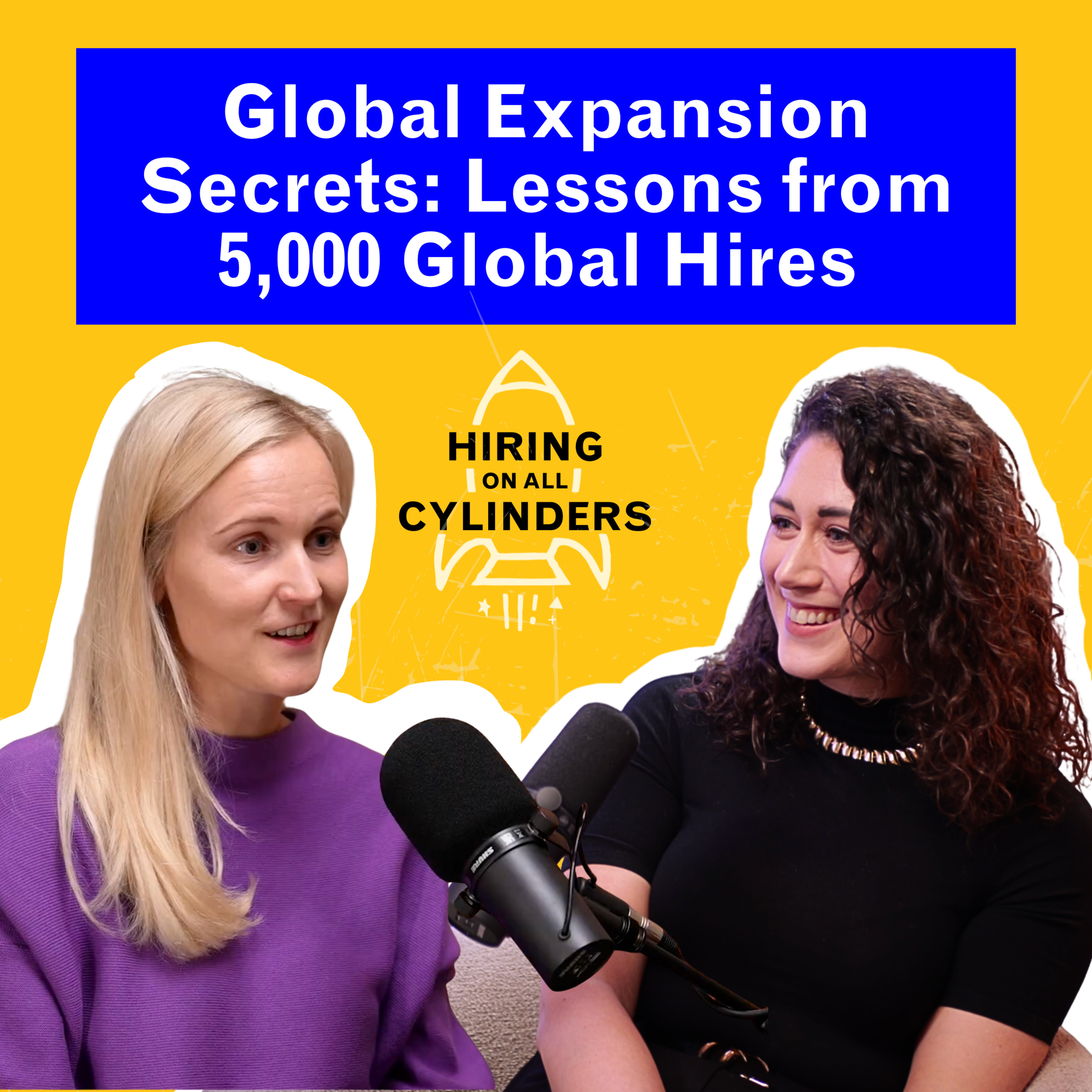 Global Expansion Secrets: Lessons from 5,000 Global Hires with Kathrin Holzfurtner