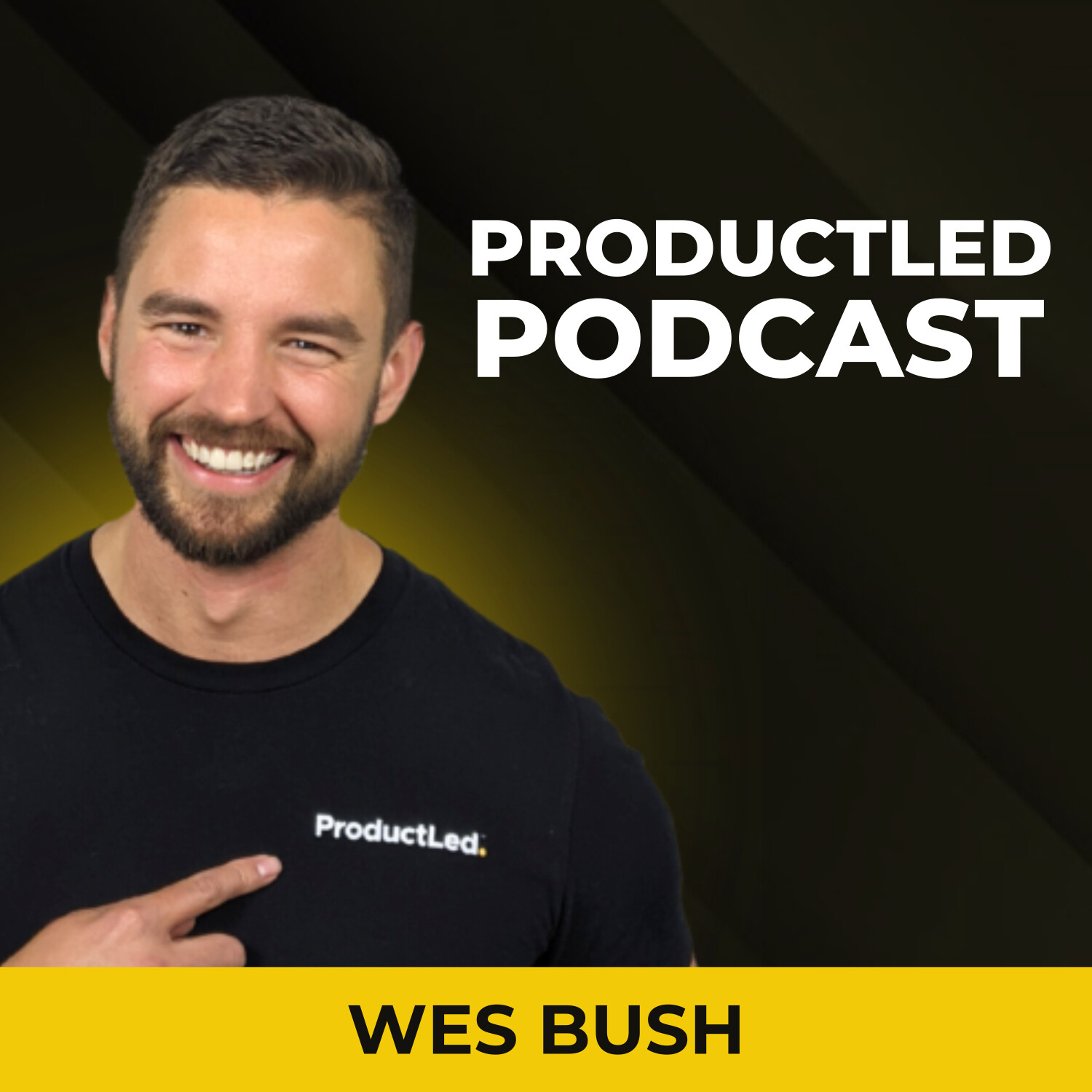
Hosted by Wes Bush
★4.6on Apple Podcasts · 11 recent reviews
The ProductLed Podcast is a weekly interview series with both product-led growth leaders and practitioners who have real knowledge to share on what it takes to use their product to grow a business.
312 episodes · publishes weekly · latest 2026-06-16 · ~37 min/episode
Rank
#660
Substance
75.0
/ 100
Breakdown
Scored 2026-07
Updated monthly
Across the index
#660 of 6181
Substance
Top 11%
outscores 89% of the index
ProductLed Podcast ranks #660 on The B2B Podcast Index with a substance score of 75.0 out of 100, scored across 1 recent episode. It scores highest on guest caliber and specificity & evidence. Tibo is a genuine practitioner with verifiable outcomes - 11 products built, Tweet Hunter scaled to $300k/month MRR, an $8M exit, and a current portfolio at $1M/month across five products - giving his claims real weight. The limitation is that this is micro-SaaS / indie-hacker scale rather than large-scale B2B operations, and some answers remain surface-level rather than revealing deep operational expertise.
Averaged across 1 recently scored episode, with cited evidence.
The episode contains a handful of genuinely useful operational insights - revenue-as-primary-validation, the creative-investor distribution model, the AI backlog inversion problem, and the earnout pressure psychology - but these are regularly diluted by the host summarizing what was just said, book-name-dropping (Good to Great, Gap vs. Gain, Blue Ocean), and extended throat-clearing between useful points. Insight rate is decent but inconsistent across 53 minutes.
“the number one mistake that most people do is thinking that having some usage of your product, having some free users is validation”
“if you have 95% free users and just 5% of paid users, the feedback that you're going to hear the most is feedback from the free users”
The 'creative investors' structure - 17 influencers each holding 0.1% with no promotion obligation - is a genuinely novel distribution mechanism not commonly discussed. Everything else largely recycles well-worn indie-hacker doctrine (ship fast, kill fast, revenue validation) and the host layers in standard business-book frameworks rather than pushing for fresh angles.
“we created this group of. I think it went up to 17 people. 17 people, which each of them own 0.1% of Twitter. And we called that group the Creative Investors”
“we were doing financial investor updates that we were sending to them with key details every month. And they, like, they were really interested in this. Like, they really. It was very different for them”
Tibo is a genuine practitioner with verifiable outcomes - 11 products built, Tweet Hunter scaled to $300k/month MRR, an $8M exit, and a current portfolio at $1M/month across five products - giving his claims real weight. The limitation is that this is micro-SaaS / indie-hacker scale rather than large-scale B2B operations, and some answers remain surface-level rather than revealing deep operational expertise.
“Tweet Hunter, when we launch it, I think it was the 11th product. It was very different like from the very first two weeks. I think it reached 1k in monthly recurring revenue”
“we recently we crossed a million per month in payouts, which feels completely insane across the five products”
The episode delivers a solid density of concrete figures - $8M exit, 75% earnout, 2-year lock-in, 25% profit/exit share to lead influencer, 17 creative investors at 0.1% each, 80% activation rate, $300k/month Tweet Hunter peak, 15k free users with near-zero paying - which is well above average for podcast interviews. Some operational claims (e.g., managing five products via 15 dashboards) are described but not fully unpacked with enough process detail to be directly replicable.
“we gave a, uh, punch point percent of the product. And, and this was super successful because every single time we had a product update... out of the group, 80% of them did”
“I built this game to teach kids how to learn about programming. And I think at one point we got like 15k monthly users... the number of paying user was like almost, almost zero”
The host lands a few productive follow-ups - drilling into the equity vs. profit-share distinction and asking about earnout mechanics - but routinely burns time summarizing what the guest just said, name-dropping previous podcast guests, and inserting business-book references instead of asking sharper questions. Challenging claims or probing weak spots (e.g., how he actually manages five co-founders, or why the earnout terms were so bad) is largely absent.
“I was going to say, is there anything that helped you overcome that? Like uh, some people call it like imposter syndrome where it's like, hey, like, I'm not okay to ship things”
“So I love that you got like five main dashboards up to 15. But so for each of those dashboards, for each business, what does that look like?”
First period on the Index - history builds from here.
1 scored on substance · 60 tracked in total.
This show has a lot of great content! Pierece and Wes do an awesome job in interviewing guests and presents the information clearly. Lots of actionable takeaways. If you are in the product space (or would like to learn more), this show MUST be on your playlist.
- Dan Balcauski
Product leaders - meet your new favorite podcast! Wes has created an incredible resource for you with ProductLed. Hear from industry experts as they discuss challenges, present solutions, and share their insights into what’s next in product-led growth and business.
- ASobering
Add this badge to your site - it links back here and updates automatically as you rank.

<a href="https://index.fame.so/show/productled-podcast" target="_blank" rel="noopener">
  <img src="https://index.fame.so/badge/productled-podcast/badge.svg" alt="Ranked #22 on The B2B Podcast Index" width="360" height="136" />
</a>Track ProductLed Podcast's rank
Get an email whenever this show moves up or down the Index. Monthly at most, no spam.
The themes that come up most across this show's episodes.
Podcasts that dig into the same topics.