
Mission One: The Executive Edge · 2026-04-16 · 24 min
Key moments - from our scoring
Substance score
50 / 100
Five dimensions, 20 points each
Nick Button-Brown, founder of Games Angels and chair of the UK Video Games Council, breaks down the often-mysterious path to early-stage board seats and the fundamental mindset shift required when transitioning from executive control to advisory influence. Having built a portfolio across companies including 10Six, Coherence, Auroc, and Adinmo - alongside exits like Roundtable Interactive - Button-Brown reveals that board roles at early stage are essentially formalized advisory positions where your job is teaching founders how not to repeat your mistakes, not dictating how they should operate. The conversation covers practical entry strategies: starting with charity trusteeships (BAFTA, school boards, research-focused charities like Ochre) to build credibility, leveraging personal networks and warm introductions, and understanding the compensation spectrum from unpaid charity work through monthly director's fees (£25-75k for funded companies) to equity stakes in bootstrapped startups. Button-Brown emphasizes the critical loss-of-control challenge many executives face, drawing parallels to coaching teenage rugby players where immediate feedback sharpens your ability to communicate influence without authority. For B2B operators considering board roles, this episode maps the actual pathway, the time commitment (half to one day monthly for traditional roles), and the maturity required to make yourself redundant within five years.
Start with charity trusteeships (BAFTA, school boards, research charities) or non-profit roles while employed to build track record without major time commitment, then leverage that credibility and personal networks. Button-Brown got his first early-stage board seat through a personal recommendation from someone he'd worked with 10 years prior who referred him to an investment fund, demonstrating the importance of relationships and reputation.
Executives control decisions directly, while board members must influence and mentor without authority - founders may ignore your advice entirely, and you have to accept that. Button-Brown emphasizes the psychological shift from 'I will fix this' to 'I will provide information and support them in their own decision-making,' which isn't sustainable for everyone.
Early-stage board roles typically require half a day to one full day per month for monthly meetings, audit committees, and strategic discussions. Button-Brown notes he initially underestimated time commitment and recommends planning conservatively when taking on multiple positions.
Startups typically cannot pay director fees since they lack capital, so board members negotiate equity stakes (a small percentage of the company) in exchange for multi-year commitment. More mature, funded companies offer monthly director fees ranging from £25k to £75k annually, though roles with major responsibility (like BBC boards) can pay significantly more.
Honesty, listening ability, offering data and perspective rather than directives, and helping founders make their own decisions. Button-Brown credits coaching teenage rugby players with teaching him this approach - immediate feedback showed him when communication landed poorly, sharpening his ability to influence without control.
Our reviewer’s read on each dimension, with quotes from the episode.
There are a handful of genuinely useful practical points (charity trustee boards as CV-building, options-not-salary at startups, the diminishing difficulty of getting subsequent board seats) but they are buried in extended origin-story digressions, Crysis North Korea anecdotes, and angel-investing tangents that consume most of the runtime. The density of actionable, non-obvious ideas per minute is low.
Getting your first one is incredibly hard. Getting your second one is a little bit easier. Getting your fifth one is a hell of a lot easier.
In most cases, a board member is just a more formalized advisor.
The 'teach them how not to do it' framing and the girls-rugby immediate-feedback metaphor are mildly fresh angles, but the core advice - network your way to the first seat, volunteer for charity boards, take equity at cash-poor startups - is conventional wisdom recycled at every executive-transition conversation.
I don't like advisors who go in and tell people how to do things. You're not helping them, you're giving them a temporary solution which means they will be reliant on you forever.
it's not telling them how to do it, it's telling them how not to do it
Nick is a genuine practitioner with multiple real board roles, a private-equity exit (Roundtable Interactive), and operator experience at Improbable, EA, and Crytek - not a career thought-leader. His niche is narrow (games industry) and the conversation fails to fully extract the depth his CV implies, but he has clearly done the thing.
I got completely lucky. I'm still thankful to this day for Rob for recommending me to that first one because that's what started me off down a different path.
My second one was trustee at bafta. That's a pretty high profile one that took a lot of effort to build towards that
The episode scores points for naming specific companies (Ten6, Roundtable Interactive, BAFTA, Ochre, Improbable), real people, an actual PE exit, and concrete compensation ranges; however, the stories are lightly detailed and numbers are given as broad ranges rather than precise data points.
I've seen people get paid kind of 25, 50k, 75k a year.
you assume between half a day to a day a month
The hosts ask competent open-ended prompts that keep Nick talking and cover the logical topic sequence, but there is no substantive pushback, no follow-through on underdeveloped claims, and the questions are largely predictable and soft - closer to a friendly biographical interview than an interrogation of expertise.
Nick, where did this passion come from to help early stage? Is it all altruism?
I don't know if that sounds a bit patronizing, but just when you think about the qualities then
Computed from the transcript - who did the talking, and the words that came up most.
How do you actually land your first board seat? In this episode of Mission One: The Executive Edge, Gerard Miles and Dan Hampton are joined by Nick Button-Brown, Chair of the UK Video Games Council, to detail the path from executive to board director. What You’ll Learn Why your first board seat is brutally hard and how to get it anyway The mental shift from executive decision-maker to strategic advisor How to match your skills to company needs at the right time The compensation spectrum from startup equity to six-figure director fees How to build a portfolio that maximizes impact without burning out If you enjoyed this episode, make sure to subscribe, rate, and review it on Apple Podcasts, Spotify, and YouTube Podcasts. Instructions on how to do this are here . This episode is
Transcribed and scored by The B2B Podcast Index.
Even if it's a great company, if your skills don't quite fit. We are not right right now, but we may be right in two years time. Ten six is an example. I talked to Susan and Lee, brilliant founders.
I told them it wasn't going to work. I told them it definitely wasn't going to work. They had no chance of making it work. They both politely thanked me and went on to talk to all the other people that told them that it was going to work.
Then six months later they came back to me and going, you were right. And I'm like, yeah, I know. But that built a relationship of trust between us. Hello and welcome to Mission One, the Executive Edge.
Today we have a special guest with us. I'm joined by my co host, Dan Hampton over in Florida, as always, but also everybody from the sunny uk and it is sunny today actually for an April day. We also have Nick Button Brown. Nick, welcome to the podcast.
Yeah, welcome. Thank you. It's kind of good to be here. Nick is joining us to talk in a special episode thinking about board positions, particularly around how do you become a board member for an early stage business, which is, I think, something that's probably a little bit anonymous to most of us, right?
Until you sort of think about it, it's something you realize you don't have a lot of context on it. It's a bit sort of mysterious, like, why do early stage companies have boards? What are they doing? Like, how could you be a board member?
Why might that be interesting for your career? So we're extremely lucky to have Nick. The man needs no introduction, I think, particularly if you're in the European early stage investing game. But we have listeners all over the world.
Nick, what are the exciting countries we get listeners from? Dan, we were in like we were seven in somewhere recently. We were number seven, I think in Ireland a couple of months ago. Sweden, Serbia was one.
You know, we're getting picked up significantly there as well. So, Nick, your guidance will be really helpful for us and our audience. But no, Katie, we actually get asked this question probably at least once a week or more, how do I get board seats? What's a playbook around that?
Any thoughts and guidance you have as we talk today will be really helpful and I think our audience is going to love it, honestly. So our US listeners or anyone else who hasn't heard of Nick before, his credentials. Nick is always careful of calling people veterans, but you're certainly a man of great experience and wisdom in the game scene. Nick Button Brown is the founder of The Games Angels, which is a collection of industry veterans who are investing in the games ecosystem early stage, running a lot of angel checks.
And I think it's both for financial reasons, but also actually because they've come from that industry and they care about it and they want to continue to support early stage companies, particularly when capital is harder to access, which we know it is right now for a lot of content studios. Nick, you're also the chair of the UK Video Games Council, you're on the board of Yuki, you're the chair of the Roundtable Interactive Group, Auroc and Coherence, and also a board member at Adinmo and 10 6.
So you're a man with a lot of experience of board positions, as well as having had a successful executive career across Improbable, Crytek, Electronic Arts. And you released one of my favorites of all time, which was Crysis, the original Crysis, which I think is a great game that will stand the test of time in terms of just its impact. And I think it's a pivotal moment. So welcome again, Nick, to the pod.
Anything we missed there in your intro or anything that's immediately we should draw attention to, thank you. I'll just mention it's kind of important why we set up the game's Angels. And I'd done a few startups and some of them had gone well, some of them had gone badly. The thing, the people that had always helped me at each stage had been the Angels.
They were the people that when you had a problem, you went and had a chat and they were like, yeah, yeah, it's not as bad as it sounds. You'll get through it. Here's some solutions that I did, here's some that didn't work. And so the Angels were always massively helpful to me.
So when I left Improbable, I didn't want to work for anybody else and I decided we should set up a group. And it took lockdown to actually make it happen. But we set up a group of games industry veterans to invest in startups to help. Not to tell them how to do it, but the very least tell them how not to do it.
We can save a company a mistake. The company may survive because of one mistake saved. It's a bunch of industry veterans who are providing some money, but mainly advice and support to help the next generation of games founders have slightly greater chance of success than they would without us. And then on Crysis, because you're talking about regionals, because you were mentioning about regional views on crisis, the first version of Crisis, we had two players in North Korea.
So I'm absolutely assuming it was Kim Jong Un and son, not just two people that put a VPN up. No, it was definitely them that were playing because there were only two computers in North Korea at the time. And to give context to that, the North Koreans are the antagonists in that game. Right.
They are the enemy forces. So you think they were sort of role playing being on the American side for a change. They were trying to defend humanity from the alien invasion. But I mean, that's a plot spoiler, I guess if you need a plot spoiler for Crisis by this st.
You think that's okay? Nick, where did this passion come from to help early stage? Is it all altruism? Like, where did it come from where you said, I'm going to take the lead here and helping this community.
That is, I think done incredibly well. But where did this come from? The games industry has been great to me. I have so many friends.
I've spent so much good times within the games industry. I talk to people. People have helped me. I went to work in tech for a while.
I kind of count improbable as tech. The level of support I had when the games industry is what drew me back. It's being able to talk to people, talk about the problems, chatting to somebody and it's like people want to help you. They want to make your life a little bit better.
And I really, really appreciate that now. So that was. I felt it was time that I started giving something back to other games companies and the number of other people that felt that as well. And that's why we got together and started doing this.
Yes, there is an investment side to it, but if you don't know much about angel investing, it's not really a rational decision. You're investing in a thing before, it's a rational decision because you're kind of really interested and want to be along the journey. So that's the nice thing about angel investing is you're seeing something early. You're like, I just want to be part of that story.
And you get to be part of that story later on. It can be a rational decision, but at the start you are betting on hope. Absolutely. I hear that a lot from Gerard as well as he's considering companies to invest in or Zachary investments and just hearing about the teams around it and kind of the stories there and it's really compelling, honestly.
I definitely recommend people to do angel investing. I think it's a great way to see a Lot of different companies quite quickly and understand different market segments. I learned so much from the companies that I'm working with. They're working in different sectors.
I'm finding out how they're operating and I'm able to see them evolve quickly over time. And when you're looking across 10 companies, if you're making your own decisions, you get to find out what that decision result is once every two years. If you're working across 10 companies, you get to find it out every couple of months. And that's your skills get better quite quickly.
And Nick, sort of. There's a lot of variety that comes with angel investing. Again, to our listeners who are thinking about that step between being an executive and being both an investor who's giving maybe advice on the sides or someone who's more formally giving advice as a member of a board. So what are the first things you sort of pick out as different when you're making that move?
And how would you sort of encourage people to think about, mentally about that change from being an executive where you're controlling everything, to being a board member who's perhaps a little bit more advisory or from the sidelines trying to help everyone along? I mean, it really isn't for everyone this. The not being able to take control at all times. When you're advising, when you're investing, you're trying to encourage and educate the people that you're working with.
You're trying to mentor them and support them, but ultimately they are going to make that decision. And their decision might be to completely ignore what you're saying, and it might be for a very good reason. And you just have to accept that what you say isn't necessarily going to happen. If they have taken your input and a bunch of other input and decided on a path, it's a good path and that's okay.
So the losing control thing is not everybody can cope with that. There are times when I do get frustrated, like, well, I just want to do this and fix it. But when you're doing an advisory position, you can't do that. You have to work with the people and encourage them and give them enough information that hopefully they make the right decision.
But it may not be the decision that you think it should be. So it isn't for everyone. And some people have tried to make that decision, that step and had to go back because they couldn't cope with it. It wasn't where they were in their lives at that stage.
I do think it's also timing. That's something you Reach a stage where it's like, I don't need to prove that I know the answers to everything, but I do know a lot of the problems. And a big part of what I do, what most people do is it's not telling them how to do it, it's telling them how not to do it. And the how not to do it is because I did it that way and it didn't work.
So don't do that. Make another mistake, make a fresh mistake, make a new generation of mistake. And, you know, you just hopefully save a couple of iterations and that's a good outcome because I've made a lot of mistakes. Let's be clear now.
I love that you're helping these companies learn from your experience and guiding them. You have many data points, I think, across all these different boards, are there any common themes or core responsibilities that you say that kind of makes the shape of a typical board role? And there's nuance here and there. But how would you best kind of describe those, what you would expect or the expectations of a board member responsibilities?
I'm going to describe an advisor and a board member. In most cases, a board member is just a more formalized advisor. That's not always true. There are, as you get to really bigger companies that become jobs in themselves, but at early stage, it's just a slightly more formalized version of an advisor.
The question is, what can you bring to a company and can you match what you bring to a company to what they need at that time? And even if it's a great company, if your skills don't quite fit, it's a, we are not right right now, but we may be right in two years time. Ten, six is, is an example. I talked to Susan and Lee, brilliant founders.
I talked to them probably six years ago. They came to me with a thing. I told them it wasn't going to work. I told them it definitely wasn't going to work.
They had no chance of making it work. They both politely thanked me and went on to talk to all the other people that told them that it was gonna work. Then six months later, they came back to me and going, you were right. And I'm like, yeah, I know.
But that built a relationship of trust between us. So when later she came back with a new thing, then that is like, well, when I'm saying, yeah, that bit works, but that bit doesn't work, that carries a credibility. So you do also have to be. You always have to be really honest and really open, but not in that I have the right answer, but I do have a selection of wrong answers.
I'm kind of harping back on that one. I don't like advisors who go in and tell people how to do things. You're not helping them, you're giving them a temporary solution which means they will be reliant on you forever. What you want to do is teach them to make their own decisions and opinions and support them and provide them new data.
But if you make yourself redundant after five years, fantastic. You've done a great job. That's good insight. I like it.
So it sounds like the qualities there, Nick, then it sounds a little bit similar to parenting. I don't know if that comparison is made right. Like you can't control what this is they make, but you're trying to influence them in the right way. I don't know if that sounds a bit patronizing, but just when you think about the qualities then of what makes a good the quality, you'd see in encouraging people to say, well, this would be helpful.
On boards, it sounds like it's being able to listen well, to be quite thoughtful, to be a sort of mental type figure. Does that sound right? Are there other types of board members? I mean, sometimes do you need to grab them and shake them a little bit or is that, Is that really.
That doesn't sound the right thing. If they're really going off a cliff, is that ever helpful to sit down, have pretty firm chat with them about, look, you've only got three months of burn rate. Don't run this ad campaign that's going to six months of bird rate. And this ad campaign is going to shorten it to one month.
That is a conversation you're having fairly frequently. Any early stage company, you're always counting down until they run out of money. So every conversation you're having with them is in that context. So yes, you're going to run out of money in June.
If you make this decision, you're going to run out of money in May. Is that okay? Maybe it is okay. If you make this decision, you're going to run out of money in September.
Does that give you another couple of bites at the cherry? Does that give you another couple of chances? When I first phrased it, it sound overly huggy and lovey. I mean, you do need to be straight, be honest, be believable, be telling the truth because you don't have that many chances.
And you're right. I like the comparison with parenting. It is very like parenting. Ultimately, you've got to let Them go out into the world on their own and sometimes they'll decide to make bad decisions, but that's okay.
One of the best things I ever did in terms of my style of working with people was I coached girls rugby. So this was my daughter's rugby team when she first started playing. I was standing on the sidelines a couple of years later on board, so I started coaching. The reason why that was fantastic is because if you're talking to a bunch of 13, 14 year old girls, the response is so immediate, there's no subterfuge.
If you tell them something and you piss them off, they will literally turn their backs on you and walk off the field. And that kind of immediate feedback and responsiveness of just understanding, actually what I said came across and pissed them off. And they will show you straight away. So you get that feedback loop so much quicker than you do in any other context.
So I recommend everybody should go out and coach girls rugby. Nick, I'm not entirely aware, maybe Gerard is, but how did you get your first board seat? Was it intentional? Was it opportunistic?
Like, how did it even come about? So I was leaving Improbable. So Improbable was big tech unicorn. Raised a lot of money, very high profile business.
A friend of a friend approached me. There was an investment fund, managed business. They were investing in a gains company. They wanted somebody that knew what they were talking about and so this was somebody I'd worked with 10 years before.
They recommended me to this investment company and I liked what was being pitched. I joined. That was my first board role that became outright, which is now Roundtable Interactive, which is the biggest exit I've managed. We sold that to private equity.
I shifted from being a pure board role into sticking my hands in a little bit more. But I got completely lucky. I'm still thankful to this day for Rob for recommending me to that first one because that's what started me off down a different path. I did then try and take it slightly more seriously.
Looked for other roles. I did some charity stuff. So I was on the board at bafta, so I was a trustee at bafta, so trustee and director, they're not exactly the same, but in the CV building point of view they are exactly the same. A trustee for a charity and a director for a company, you have very similar skill sets.
So in terms of building that cv, trustee work is great. You're finding a charity, somebody that you're helping out, you're probably doing it for free. One of the great ways to do it is school boards. So certainly in the uk, I don't know how it is in other countries, but there's lots of independent school boards who are always looking for volunteers and that's a really good.
You're learning the ropes of being a director. You are doing it for free because it's. Most of them are charities or at least set up in that way. But it's a great way to build some experience.
The thing I also did do, I signed up for some of the non exec director websites and services and things like that. They weren't fantastic for me. They may work better for other people. The reason why they weren't fantastic for me was because I'm so specialist.
I'm games industry, that's what I am. You know, I'm somebody that understands the games industry. I can give a lot of value in that space. And there weren't a lot of games industry companies on those services.
There were a few, but not many. And so they weren't brilliant for me. But I know they have worked for other people. Signing up to something like new role, being able to apply to a few different roles.
I mean, the main thing is you need to build up experience and track record. Getting your first one is incredibly hard. Getting your second one is a little bit easier. Getting your fifth one is a hell of a lot easier.
So how do you get that first one that then leverages into the second one? I got lucky with my first one. My second one was trustee at bafta. That's a pretty high profile one that took a lot of effort to build towards that and kind of going through elections and different ways to become a trustee for that.
But there are charity boards. I sit on a charity board at Ochre, which is a spin out from the Wellcome Trust and that's linking research and entertainment. And this was. I've been talking to Ian for a few years and eventually this charity was spun out.
He needed a founder trustee. I'm happy to help. I can help him get set up, I can help him get kind of started. You don't want to do too many unless you genuinely have so much time on your hands, but too many of the charity ones because you're not being paid.
You are giving your time for free. Free. But also you don't want to mix the message. Yes, I am helping this charity out.
That is what I am promoting at this time. When I'm in a conversation about it, that's where I can point people to. If you're working with a bunch of different charities, I Don't think you can be as effective. But I do think anybody that wants to be take it seriously, should have a charity trustee as part of their portfolio.
That's great advice, Nick. I think a lot of people have domain expertise. They're missing this functional level expertise. And if you can get it in these other areas while also serving a good cause, I think that's a really nice path to getting to other board seats in general.
And so you're not giving up a lot of time to do a charity board trustee. You know, maybe it's a monthly meeting. It's. They're not asking for a large time commitment.
You can do that alongside a full time job. You can do that while you're thinking about moving into this space. That's a good way to get your first one done is while you're working somewhere because your current employer, if you go to them and go, I want to be on a charity board, that's a really harsh employer that goes, no, you can't do that. You definitely question their moral positioning.
So most of them will be happy to let you. Yeah, yeah. Go out and try this. And all of a sudden you're building that track record and you're showing over time that you are able to help organizations over a period of time.
No, I appreciate that. And just one follow up as well. You mentioned kind of those, the charity ones were unpaid, but the typical board seat, how are those people typically compensated or what's the typical compensation look like for for profit organization? It very much varies on the nature of the organization.
The more monetizable end, you know, you're working on a private equity funded board. So private equity fund is invested into a company. You're sitting on that board. That was, you know, originally what I did with outright was it's not like they have an excess of money, but they are funded.
You might have a paid seat. So you're being paid a director's fee. It's normally a monthly director's fee. The levels that you can get from that, I mean I've seen people do it very cheap.
I've seen people get paid kind of 25, 50k, 75k a year. When you are hitting the levels of being on the board of the BBC, maybe that's not a great example right now you can be very, very well compensated for a board position because you're taking a responsibility as well. And perhaps people should be aware of that. When you're taking a position on a board, you have a responsibility to your shareholders.
So as a Director on a board, you are representing the shareholders, you are standing up for the shareholders rights. It's not a responsibility that should be taken lightly. You do have that responsibility. You have to take it seriously.
You have to accept that, yes, there is a legal responsibility, although in most cases the directors are protected. But you should enter into it knowing, yes, I am aware of what I'm doing and what I'm trying to do. The high end, you are being paid for your time. You're invoicing monthly or on payroll or something like that.
You are paid, you're not necessarily sharing in the upside. So that traditional non exec board director doesn't share in the upside, they receive a monthly salary. Now for that you'll have to go along to monthly board meetings, be brought into audit committee meetings from time to time. You're looking at maybe half a day a month, maybe up to a day a month.
So when you're thinking of planning this route, you do need to think about the time. And I made mistakes at the start and I thought I could do things an awful lot quicker than I could. I mean, Gerard knows me. I always underestimate how long it takes me to do something.
You'd think I would have learned by now. But if you're taking a board position on, you assume between half a day to a day a month. And at the other end of that, if you're working with startups. Startups don't have any money.
Yeah. That's why they're talking to you is because they don't have any money and you're there to help them get some money. So you can't help them to get some money and then take money back out of the business. So you are not salaried, you are not receiving a director's fee, but maybe you're receiving options that stage.
You can say, I will take a small percentage of that company for the help that I'm giving you and I'll commit to helping for a couple of years and then we'll review it at the end of the couple of years and maybe in the review the company has become bigger and has become better funded and the nature of that relationship can change. Yes, that you will not be able to charge a proper startup for your time because your time is way more valuable. The level of experience you've got over years, it's more valuable than they could pay for.
But a small amount of shares in the company, that's a reasonable compensation, particularly if that company goes on to do very well. Absolutely. Hi everyone. We had such a talent dense, content rich conversation with Nick that we cut the podcast up into two episodes.
In the first part we've covered what does a board or advisory role actually look like at an early stage company? We've covered how those differ from an executive role. Whiteboards work is more about guidance rather than control and some tips on how to get your first board seat and build credibility with that world. I think a key takeaway that we were learning from that is that being a good board member is about helping founders make better decisions, not making those decisions for them.
In part two, which will be coming out next episode, we're going to be talking to Nick from the founder perspective. How should they think about structuring a board and recruiting their first advisors and non executive directors? Thinking about what the timing is of that and then also some advanced advice for how to be a really effective advisor and board member. We look forward to joining you again on the next episode.
That's another episode of Mission 1, the Executive Edge. If you found this valuable hit, subscribe and leave us a review. Subscribe it helps other professionals discover the show, have a question about executive hiring, or want to share your own experience? Reach out on LinkedIn or visit Mission1IO podcast.
We read everything and your stories often inspire future episodes. The Executive Edge is brought to you by Mission One, where we specialize in placing senior leaders at tech, entertainment and AI companies. Learn more at Mission1io. Thanks for listening and we hope to see you again soon soon on the Executive Edge.
Other episodes covering the same guests and topics, from across The B2B Podcast Index.
 The New Rules of Early-Stage Fundraising with Charles HudsonBuild Mode · on founder-investor relationships94 / 100
 Cannes Lions takeaways: Lessons for marketers to carry through 2026Ad Age Insider · on Electronic Arts43 / 100
 Startup Funding Espresso - How To Support a FounderInvestor Connect Podcast · on founder-investor relationships34 / 100
 The Anti-Transactional Venture Capitalist: How You Get More By Giving First with Brad FeldHumanity At Scale: Redefining Leadership · on founder-investor relationships
 [Greatest Hits] Senior Director, Mobile Marketing and Growth @ Electronic Arts: Jayne Peressini- The Power of Campaign IterationHow I Grew This: Real Stories of Digital Growth · on Electronic Arts
 What EA, Atari, and Supercell Taught David Gardner About Executive Leadership74 / 100
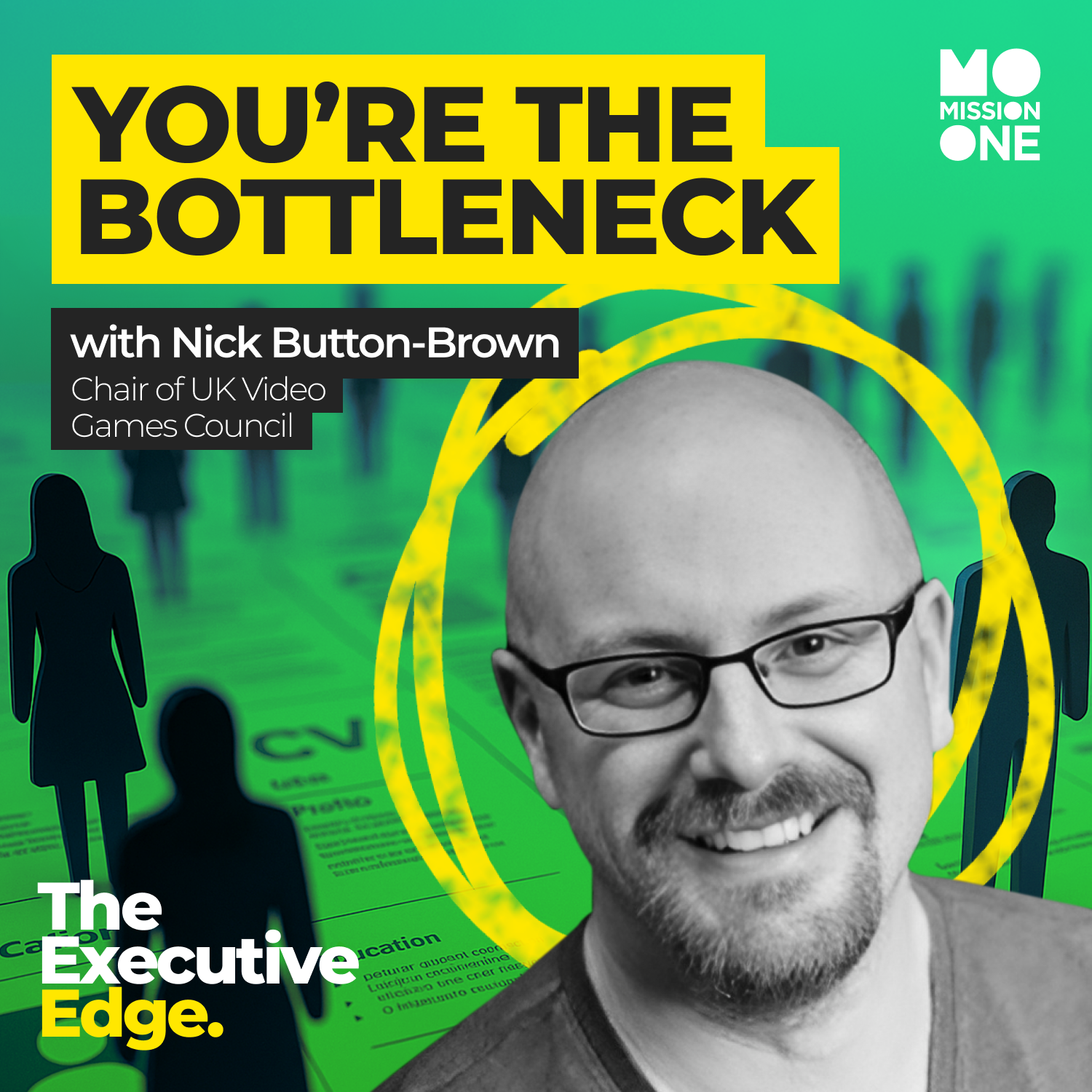 How to Be an Effective Board Member (Build Breakout Companies)65 / 100
 The AI Divide in Executive Hiring (Most Leaders Are Behind)74 / 100
 Negotiating Your Worth: The Executive Playbook for Compensation76 / 100
 How to Hire Top Product Leaders in Gaming67 / 100