
Make Music · 2026-04-01 · 13 min
Key moments - from our scoring
Substance score
26 / 100
Five dimensions, 20 points each
Indie Roots - Ian Austin, William Toll, and Haddon, collectively representing 700,000 monthly listeners - lay out a candid retrospective on the mistakes they'd avoid if starting their music careers fresh in 2026. The conversation centers on three interconnected mistakes: leading with pride and refusing feedback rather than embracing collaboration to refine your craft, obsessing over production tricks instead of developing songwriting fundamentals and a distinctive artistic voice, and chasing broad shallow growth (algorithmic Spotify playlists) without building deep fan relationships or marketing funnels. William emphasizes that great songwriting - not production polish - drives everything; Haddon warns against the delusion of releasing music without a distribution or performance strategy; Ian advocates for preserving human imperfection in recordings and prioritizing bottom-of-funnel retention over vanity listener counts. For indie artists and producers weighing technical skills against songwriting investment, or those wondering whether to pursue live performance, self-production, or publishing deals, this episode offers concrete priorities: humility, collaboration within bounds, songwriting mastery, and deliberate audience-building strategy.
According to the hosts, songwriting is the core engine of a music career - not production tricks like reverb or sound effects. Great songs drive success even with minimal production (just piano and vocals), so artists should prioritize honing their songwriting, vocal delivery, and unique artistic voice over technical production skills.
Ian recommends prioritizing deep growth and bottom-of-funnel engagement (building real fan relationships and marketing funnels) rather than chasing broad shallow growth through algorithmic playlists. Spotify's personalized recommendations incentivize passive listening, so artists need deliberate strategies to convert listeners into committed fans.
Collaboration brings different perspectives that refine your work - multiple people with diverse tastes naturally 'sand everything out' and eliminate flaws you can't see alone. However, too much collaboration can lead to watered-down music, so the goal is finding the right balance with people who push your creative boundaries.
The hosts cite an example of an artist with a Grammy-winning mixing engineer and multi-platinum producer spending tens of thousands of dollars but seeing no career results because the underlying songwriting wasn't strong. Polished production cannot compensate for weak songs, so songwriting must be the foundation.
Rather than starting with the belief that your unique style will emerge immediately, artists should first emulate the genres and artists they admire - as John Mayer advises - and let their original sound naturally develop over time through that foundation, not the other way around.
Our reviewer’s read on each dimension, with quotes from the episode.
The 13-minute episode is dominated by general life-advice platitudes (be humble, collaborate, focus on fundamentals) with almost no non-obvious operational insight. The one mildly interesting concept - bottom-of-funnel depth over broad passive listeners - is introduced but never developed into actionable mechanics.
I was just super prideful
really focusing on songwriting because for the longest time I focused on tips and tricks
The takes are almost entirely recycled music-world wisdom: emulate before you innovate (attributed to a John Mayer quote), focus on fundamentals, collaborate, build community. The Disney-movie over-collaboration analogy shows brief creative framing but the overall argument breaks no new ground.
John Mayer said that like, you know, you should emulate those who you admire at first
if you have too many people, you end up getting, like, a modern Disney movie that's just trying to cater to everyone while. And then by doing that, it caters to no one
The three co-hosts are self-described independent artists with a combined 700k monthly Spotify listeners - real practitioners with skin in the game, but operating at a modest indie scale with no crossover relevance to B2B operators, no executive or industry-shaping credentials evidenced in the transcript.
we are Indie Roots, a team of independent artists with, give or take, 700,000 monthly listeners combined
I've around 200,000 monthly listeners
A handful of concrete numbers appear (200k monthly listeners, 'probably tens of thousands of dollars' on production), and there is a real anecdote about a peer with Grammy-winning engineers but no results. However, no named artists, no platform data, no growth timelines, and no actionable metrics are provided.
I've around 200,000 monthly listeners and um, that, that's really great. That's a lot of listeners but also most of them are shallow
he's, he's got a Grammy winning mixing engineer that does his songs and, and like a multi grammy, multi platinum producer that, you know, that he pays to, you know, to do his takes
There is no real host-guest dynamic; it's a sequential round-robin where each speaker delivers a prepared monologue. No probing follow-up questions are asked, no claims are challenged, and the episode closes with an overt coaching services sales pitch rather than any substantive discussion.
Who wants to tackle it first?
Yeah, I think that's a great point
Computed from the transcript - who did the talking, and the words that came up most.
If we were starting over as independent artists in 2026, what would we do differently? In this episode, we break down the moves we’d make to grow faster in today’s music landscape. We’d focus heavily on great songwriting, because no strategy beats a song that truly connects. We'd also focus on building a deep, engaged fan base - not just chasing streams, but creating real listeners who stick around. We also talk about why we’d collaborate more and actively seek feedback, instead of trying to do everything alone. If you're an indie artist trying to figure out what actually matters right now, this episode cuts through the noise and gives you a clear direction. Indie Roots is a production company started by Haddon, William Toll, and Ian Austin. We're all independent artists and have approximately 700k combined monthly listeners on Spotify. If you're on your own journey as an independent artist but struggling to navigate the road, we would love to help guide you in our coaching program. For a free intro call, send us an email at indierootsllc@gmail.com
Transcribed and scored by The B2B Podcast Index.
Ian Austin: Hi, I'm Ian Austin. I'm joined by my co hosts, William Toll and Haddon. We are Indie Roots, a team of independent artists with, give or take, 700,000 monthly listeners combined. And today we are talking about. If we started over as music artists in 2026, what would we do? Who wants to tackle it first? Because I think we have different things, we have different strategies.
William Toll: Yeah, the main thing for me is starting off, I was just super prideful, and I, uh, thought I had just the best taste in music. And, you know, um. Yeah, like, I didn't even think my music fit into a type of genre because my music just, like, superseded genres, you know, it was just this new thing. And so, yeah, I was just really prideful. And because of that, I was very, um, I didn't take well to feedback on my music, and I found collaboration, like, extremely difficult. Um, and the further I get in my music journey, I realize that the quickest. One of the quickest ways to success is, um, leaning on others and. And having them, like, point out your flaws. And, um, now when I show a song to someone and they're like, oh, it's perfect, I'm like, no, I know it's not perfect. You need to tell me how to make it better, you know? But starting off, I couldn't deal with that because of my pride. Um, and I also didn't want to. I didn't like working with other people because that friction, I. I felt like the creative friction wasn't good. But, um. But now whenever I'm riding with other people or producing, and there's that. That battle of ideas, you know, and each person is trying to fight to come out on top, you know, all in a healthy way. But, um, you end up taking multiple people with very different tastes. And some of these tastes are extreme and abrasive, you know, but when you have two people, you kind of like two or more people, you. You kind of sand everything out. And, um, you know, obviously we talked about this. Like, if you have too many people, you end up getting, like, a modern Disney movie that's just trying to cater to everyone while. And then by doing that, it caters to no one. So you can have too much collaboration for sure. But, um, yeah, that's the first thing I would, like, start doing, um, is just asking people for feedback and working with people. And then the second thing is just really focusing on songwriting because for the longest time I focused on tips and tricks, you know, like, especially, like, production tricks, like how to do cool effects and, you know, uh, how to reverse sounds and do reverb tricks. And uh, I spent so much time on that instead of working on the songwriting. And um, you know, now I just see the power of just a great song. And even today, you know, I hear songs that are going viral that have just like a piano and vocal with none of those tricks that I've spent so much time learning. So I would definitely spend more time just honing in my songwriting and like my voice, not my singing voice, I mean that too, but like my voice as my message that I want to tell the world. So those are my two things. What about y'? All?
Haddon: Mm, mhm. Yeah, I resonate with that a lot. I think I can relate to the pride thing. Just thinking that, thinking that, you know, you've got this special hidden gift that's gonna blow everybody's minds and be different from everyone. You're gonna be a trailblazer. Um, I think that usually when that happens, it happens later on. Um, like John Mayer said that like, you know, you should, you should emulate those who you admire at first and, and, and like, as you continue to make music, your original sound, your unique sound will come out of that. It's not going to be the other way around. Um, so yeah, I would, I would say just like whoever, whoever you, you know, what genre that you grew up listening to, try to like see yourself in that genre and then make music from that lens. I also agree with the songwriting thing. I think that's the, we talk about it as the engine, uh, that, that moves the entire career. That moves, that allows any of this other stuff to be possible. Um, and it's the most important thing. It's the core of what you do and it's the core of what people hear. So it's the core of what they'll resonate with. Um, so you can have, you can have the most amazingly produced song that isn't a really well written song and it's going to do nothing and so it's going to feel like a lot of wasted energy. Um, I know someone who takes a lot of pride in uh, the fact that he has, you know, he's, he's got a Grammy winning mixing engineer that does his songs and, and like a multi grammy, multi platinum producer that, you know, that he pays to, you know, to do his takes. And he doesn't have it, he doesn't have anything to show for really, other than some seriously polished, um, productions. But the songwriting is just, isn't, isn't where it could be. And so it doesn't do anything. But he. Here he is spending like probably tens of thousands of dollars on these producers. Um, so yeah, I totally agree with the songwriting thing and I could have done that. Um, but the one thing that I would say, because I feel like I did only focus on songwriting for the first like five years. Um, and I thought that somehow that would magically, uh, start opening doors for me. Like, somebody would like, somebody would like be walking their dog in the neighborhood and hear me like, with their magical, like super powered ears and then come busting into my door and say, hey dude, like, this is the best song I've ever heard. Like, I'm gonna give you, I'm gonna make you a star. Like, um, I'm gonna give you a career in this. Like, no, like, okay, so songwriting is the first thing. But, but on. But you need to focus on like how you're going to get that. Like, what do you do after that? Because no one will ever hear it. And the point is for people to hear it. And so if you're going to make a career, the second most important thing is how are people hearing your stuff? Uh, enough people whether, whether you're going to, you know, just have, have some sort of idea, some sort of strategy, say, okay, how am I going to, am I going to, um, just go play live as much as humanly possible and just focus on writing and playing out? That's a great strategy. Um, I know a lot of people that have signed publishing deals. Strategy, or are you going to do what we've done and focus on developing the hard skills of recording your own music and um, and then releasing it? Um, because you can do that now too. It's gonna, it's gonna take a lot of hard work. Also a different kind of hard work, um, but still, still a grind. So just depending on what you see yourself as, if you see yourself more of as a self produced artist, um, which is what we would probably recommend, or if you see yourself as a songwriter, you just need to. Whether you're going to go live a lot or you're going to produce your own music and start working the social media or whatever, um, Spotify game, then you just need something. Because that's what I didn't do for the longest time. It was just like me alone writing songs, thinking that something was going to happen from it. But looking back, it's totally delusional. You need to figure out how to get it, get that stuff heard. Um, so that'd be my, my One Cent.
Ian Austin: Yeah, I think for me, I definitely Resonate with the uh, isolation piece that you guys are talking about. I was uh, just me in my room making music all by myself and I think I would have found community earlier and thankfully will reached out to me. I um, think uh, maybe six months into my. No, it was like eight months into my music releasing journey. But I think I would have um, benefited from knowing uh, just having like a, a group of peers that are doing the same thing as me to bounce ideas off of and also challenge, uh, just mindsets on how I'm making music, how I'm marketing music, all of that. I think one of the things I've learned from the producing standpoint is there's something that is more valuable uh, to your music than like perfect performances or like the perfect mix. And all of that. It's, it's preserving the humanity of the song. And so I think I would have leaned more into like wanting it to sound human rather than just like, oh, I want to do it the right way and I want it to be super, super polished because I was really, really into that. I'm a perfectionist at heart and I think I would have um, if I could start over, I would just let go of a lot of that because I think your song can actually be enhanced a lot more if you embrace human imperfection. I think that's more, that's more nuanced and beautiful than just a sterile, um, song. And uh, I think another thing I would have done is okay, I would have, I think I would have prioritized deep growth over um, like broad, shallow growth. I think uh, in the beginning I was just thinking about like, if I just get like millions uh, of people to listen, they'll all stick around. But not having a strategy for getting them to stick around, I just thought, oh well, I was kind of like, will, like I'm just going to write an amazing song and man, it's going to blow up like, like one of my first uh, songs I released, I was like, man, they're going to like, they might this in movies. Like, this is going to be amazing. And just thinking, not only are millions of people going to find my music randomly, but they're also going to stick around with no work on my part in terms of creating marketing funnels and things like that. So I would have created a, uh, if you go back to our episode talking about the marketing funnels, you'll know what I'm talking about. But it's. I would have created a bottom of funnel earlier and I would have actually prioritized the bottom of the funnel rather than shallow growth. Because I think partially um, where I'm at today with my music journey is I have a lot of um, broad growth. So I've around 200,000 monthly listeners and um, that, that's really great. That's a lot of listeners but also most of them are shallow just because Spotify. I think the, the big like selling point of Spotify is like personalized playlist and AI algorithmic stuff and that incentivizes passive listening. And so I've like, I've kind of like really done the Spotify thing but it hasn't created like a lot of bottom of the funnel people that are sticking around. So I would have prioritized the, the deep growth starting.
Haddon: Yeah, I think that's a great point. Um, to get like a, a real deep audience is something that we all should focus. Um, and just to summarize, we'll kind of end it here but we uh, what we would do differently would be, would include many things including first humility, um, don't think of yourself as like transcendent and then uh, collaborate a lot um, and focus on songwriting. That's the core of the craft. And then, and then after that um, you just, just just find a way to bring it to the market, to bring it to people's ears. Um so it's the best way to start out. Um, and just so you guys know, we do offer some one on one coaching services. So feel free to reach out to us at indie roots llcmail.com and we'd be happy to schedule a ah, free intro call with you to discuss uh, one on one services. Just, just kind of a way that you, we can walk you through this stuff and apply it to your unique situation and kind of get you to where you would like to be. Um, but yeah, feel free to reach out and don't forget to like and subscribe um to the podcast and leave a five star rating if you found it valuable and share it with a friend and we'll see you on the next one.
Other episodes covering the same guests and topics, from across The B2B Podcast Index.
 Growth Sprints’ Brendan Hufford on What’s Killing Your Content Marketing & What to Do InsteadContent Disrupted: Bold Takes on Brand Marketing · on Marketing funnels77 / 100
 From Fired to 6 Figures: Michelle Thames on Personal Branding, AI, and Digital Product HustleThe Long Game w/ Elijah Murray · on Marketing funnels57 / 100
 1563: Is patience HURTING your growth?Wantrepreneur to Entrepreneur · on Marketing funnels39 / 100
 EP.374: The Final Lesson: What Money Was Really Teaching UsMake More Money as a Dietitian · on Marketing funnels33 / 100
 Is It Time to Replace Funnels, Customer Avatars, and Cold Outreach?The Content Brief · on Marketing funnels
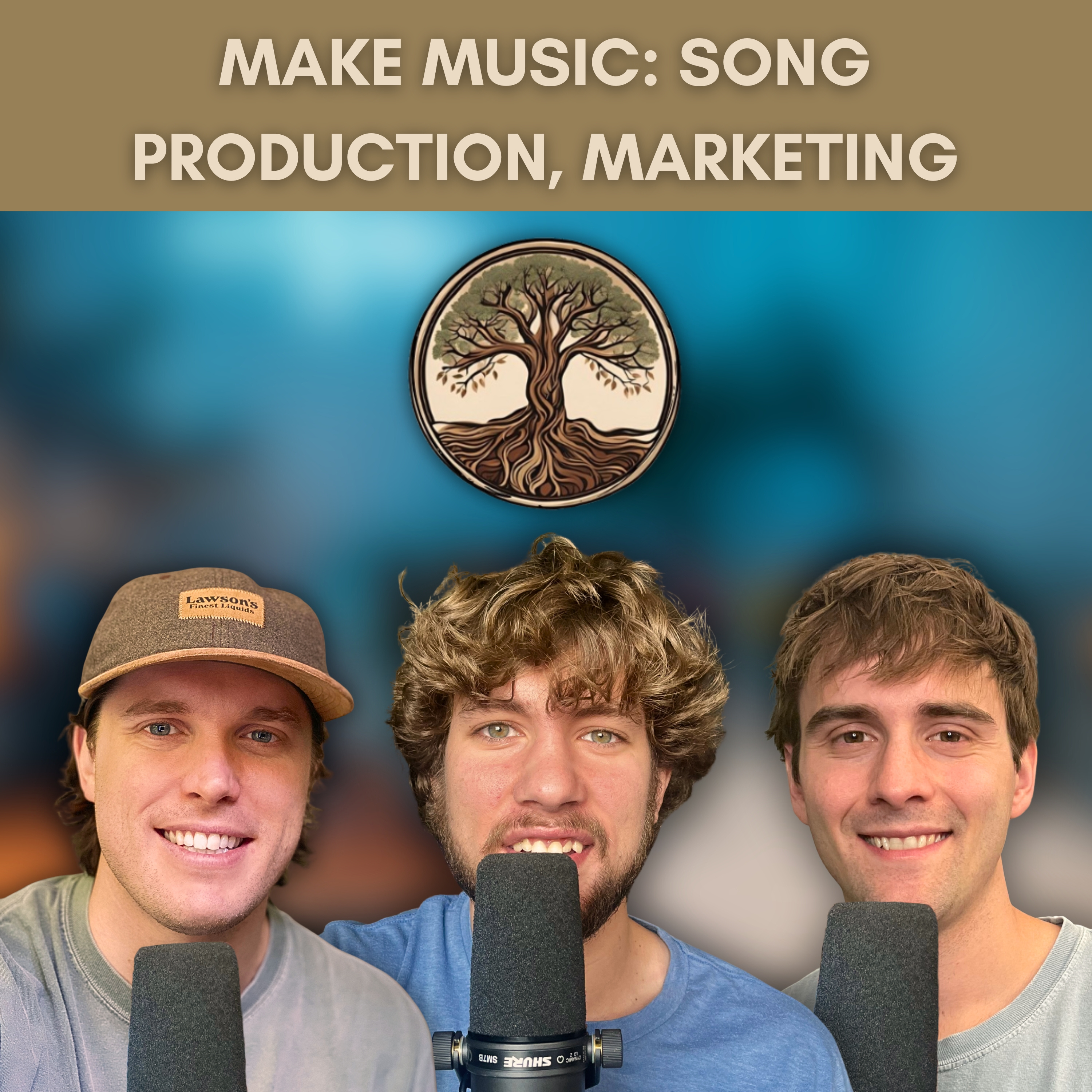 Our Biggest Regrets as Independent Music Artists (Learn From Us)38 / 100How to Make Music Faster47 / 100Refining Your Production Pallet Will Enhance Your Music54 / 100How to Adapt to Changing Algorithms70 / 100Has the Spotify Algorithm Changed?68 / 100