M365.FM · 2026-06-30 · 55 min
Key moments - from our scoring
Substance score
55 / 100
Five dimensions, 20 points each
Chris Hinch, a Cloud Solutions Architect at Microsoft, draws on years of enterprise IT experience to explain why Copilot adoption fails in most organizations and what actually drives success. The core misconception is treating AI as a magic bullet - companies deploy it broadly without clear goals, governance policies, or training, expecting users to figure it out independently. Hinch advocates for a methodical approach: start with organizational vision, then map use cases department-by-department (sales, HR, finance, legal each have different pain points), identify low-hanging fruit to demonstrate ROI, and provide targeted training on prompt formulation and AI literacy. He stresses that success requires understanding how Copilot fits into users' daily workflows, not just feature availability. He also covers the role of champions programs, the distinction between Copilot, Copilot Studio, and AI Foundry, and practical KPIs like usage rates, productivity gains, and employee satisfaction - particularly how Copilot gives users back personal time (the "5 to 9 back") by reducing after-hours catch-up work.
They treat it as a magic bullet, deploy it without clear goals or governance policies, skip proper training, and expect users to figure it out themselves - wasting time instead of saving it because users don't know how to formulate effective prompts or what they're allowed to do with company data.
Start with smaller, use-case-driven pilots in a single department (HR, sales, finance, legal) to prove value, then scale through a champions program where early adopters in each department share working prompts and scenarios with their peers.
Copilot is the consumer-facing AI tool; Agent Builder (formerly Copilot Studio Light) offers low-code agent creation directly in Copilot; Copilot Studio provides full customization but requires understanding models, instructions, and knowledge sources; AI Foundry is the developer platform - each requires increasing technical depth.
Track usage frequency and productivity gains, but most importantly measure employee satisfaction by whether users get personal time back (reduced after-hours catch-up work), which correlates with retention and moving from surviving to thriving.
Outlook's Copilot capabilities are severely underused - custom instructions for sales targeting, email summarization, and task prioritization offer significant productivity gains that most users never explore.
Our reviewer’s read on each dimension, with quotes from the episode.
The episode contains practical guidance on adoption strategy, change management frameworks, and specific use cases (HR resume screening, sales pipeline), but relies heavily on Microsoft talking points and general enterprise software deployment wisdom. While Chris provides concrete examples like the HR resume-stacking use case and discusses specific features (Copilot in Outlook, agents, governance), much of the content repeats common change management principles (pilot programs, champions, training) without novel insights into why AI adoption specifically differs from prior technology rollouts. Filler includes lengthy personal background and repetitive disclaimers about data security.
find low hanging fruit, what's some pain points and it can be, hey, if we eliminate this pain point, it will save me five minutes a day.
you're not going to go and purchase and configure a new CRM or new ERP application and just say, OK, go use it. Right. You're going to give them proper training
The core frameworks presented - pilot programs, champions models, ROI calculation via time-savings, governance-first security - are standard enterprise software deployment methodology repackaged for AI. The distinction between search-era users, Siri-era users, and GPT-native users is somewhat useful but not deeply original. Chris largely recites Microsoft's official narratives around data residency and security-first initiative rather than offering contrarian or first-principles thinking. The prompt framework (goal, context, source, expectation) is credited to Microsoft training, not original analysis.
create a policy, even if it's on paper, because if it's on paper, then you have something to point back to
there's a mixture of people and you need a level set
Chris Hinch is a credible practitioner with direct experience: he built data centers, executed early Office 365 migrations, was a CTO at an Azure/365 partner, earned an MVP, and now works at Microsoft as a Cloud Solutions Architect focusing on Copilot adoption. However, he is now a Microsoft employee speaking about Microsoft products, which introduces inherent bias. His partner-side experience is valuable, but the episode largely reflects Microsoft's organizational perspective rather than truly independent operator insight. His background is infrastructure/platform-focused rather than revenue-generating business operations (sales, marketing, finance).
I helped stand up there Medicaid or Medicare sorry Medicare data center
I was a handful of the first O 365 migrations in the state
The episode provides some concrete examples (HR resume stacking, 5-minute daily savings extrapolated to 10 hours weekly across a 20-person sales team, PowerPoint creation in 15 minutes vs. 2-hour focus blocks) but lacks named customer cases, actual ROI metrics from real deployments, or quantified adoption outcomes. Discussion of Outlook features, Purview labeling, and Entra ID integration is feature-level specific but not business-impact specific. No real customer names, industry-specific metrics, or failure case studies provided. Security claims reference 'a major electronics company' without naming, and governance examples remain abstract ('if modified date is over X months').
it will save me five minutes a day. Okay, that's great. Well, there's, you know, five normally five days in the week. So this one thing will save us approximately. I'm going to round up approximately 30 minutes. It's a start.
three prompts to reviews you know we're talking 15 minutes and I'm done
The host asks reasonable setup questions and attempts some follow-ups ('What did you think is the technology or is the change management?'), but rarely pushes back on claims or explores contradictions. When Chris makes broad assertions (AI adoption is different from prior software, organizations fail by not training users, data is always protected), the host does not challenge assumptions or ask for evidence. The 'rapid-fire' segment at the end is superficial. The host misses opportunities to probe trade-offs (cost of Copilot licensing vs. claimed ROI, tension between ease-of-use and control), to ask about failed deployments, or to challenge Microsoft's framing. The conversation feels transactional rather than investigative.
Yeah, you have worked across net networking infrastructure cloud security and now I how did this evolution happen.
Yeah, what there or is there any copilot feature you say that's still underrated actually. Oh that's underrated that's a good question um copilot itself.
Computed from the transcript - who did the talking, and the words that came up most.
Artificial Intelligence has moved beyond experimentation and into the heart of modern business. Yet while organizations are investing heavily in Microsoft Copilot, many struggle to achieve meaningful adoption and measurable business value. Simply assigning licenses is no longer enough. Successful AI transformation requires governance, training, executive sponsorship, security, and a well-defined adoption strategy that helps employees integrate AI into their daily work. In this episode, Microsoft Cloud Solution Architect Chris Hinch shares practical lessons learned from working with enterprise customers adopting Microsoft Copilot at scale. Together, we separate marketing hype from real-world implementation and explore what organizations should focus on to maximize productivity, improve employee satisfaction, and build a sustainable AI culture. WHY MOST COPILOT DEPLOYMENTS STRUGGLE Many organizations approach Microsoft Copilot expecting immediate productivity gains. They purchase licenses, enable the service, and assume employees will naturally discover how to use AI effectively.
Transcribed and scored by The B2B Podcast Index.
Hello everyone and welcome to another episode of the MC65 podcast where we explore the latest innovations across Microsoft 365, Azure AI, Power Platform security and everything, shaping the future of modern work. Today I'm excited to welcome Chris Hinch from Microsoft. Chris is has spending years helping organization designing secure and modernization modernization IT environments from networking and cloud infrastructure to Azure, Kubernetes disaster recovery and enterprise security.
Today, this focus is helping organizations unlock the future potential of Microsoft co pilot by driving successful adaption and engineering user accurately benefit from AI and that daily work. In this episode, we go beyond the product announcement and marketing headlines to explore what makes Microsoft co pilot successful in the real organizations. We'll discuss user adoption licensing governance change management productivity new futures and where Microsoft AI is heading next.
Whenever you are a 90 professional Microsoft partner, business leader or simply curious about the future of work, this conversation is packed with practical insights. So welcome Chris to the show. Hey, I appreciate it. Yeah, thanks.
Yeah, can you tell us before we start a little bit about you how you start your technology career and how you end up on Microsoft. Yeah, sure. So I mean, I started out working help desks and just kind of work my way up and then I found myself climbing that ladder pretty quickly went to work on way back. So I mean, I built data centers, built, you know, a bunch of different server actually for several companies that built some data centers for them.
Namely, I work, I was working with one of the blue crossble shields and I helped stand up there Medicaid or Medicare sorry Medicare data center, so pulling all the cabling for that. Again, that's going going way back, but then I live in the States and when office 365 came out, I was working at basically an IT kind of shop where we helped a bunch of different customers and I did. So I was a handful of the first O 365 migrations in the state that I live in, so I mean, I was kind of where I got into the cloud world, then I worked some other companies ended up being a CTO at an Azure and 365 partner.
So I went into another company and I ran their Microsoft practice in Microsoft for them was all of 365 so teams voice, you share point into defender all that stuff as well as the Azure side of the world. And then I went to another company, which is where I got my Microsoft MVP and I built their Microsoft practice up as well, and so we were doing anything and everything Microsoft there. I mean, if you put the Microsoft tag on it, we did it. Once I got the MVP kind of badge, I guess you could say I started doing a lot of speaking engagements, a lot of trainings in that and then I saw a position at Microsoft that thought was going to be a good fit and I applied and I got.
Yeah, awesome. So yeah, well, how it looked to work at Microsoft today. How is it to work? It's so I have a great team team that I'm on some of cloud solutions architect and we are role is to ensure customers use what they purchase because you know inside the bundle sets of licensing.
And there's lots of different features and functionalities and so we educate them on what's all there and we help them utilize it because why have all these products that your disposal if you're not going to use them, I understand that you might have, you know, two or three different kind of applications that do the same thing, but it's more to help them try to eliminate shelter with what they have inside their licensing and specifically right now I'm doing everything in anything and everything around copals.
Copilot chat that's agents that's co work it's governance it's you know, whatever you want to put underneath that copilot umbrella. Yeah, you have worked across net networking infrastructure cloud security and now I how did this evolution happen. So when co Valley came out. I had a friend that was at Microsoft I was on the partner side of things then and I had a friend at Microsoft and we were both kind of enamored by the marketing where it wasn't even out yet it was just the announcements right you couldn't do anything you had.
Microsoft he had a little bit of access to it, but it was still very early on and only people that were in the the EAP the early access program truly had anything that they could actually try in here. So we were just doing looking at all the videos and the marketing where we both thought like this is cool. This is where everything's going again he was at Microsoft I was at the partner side of things. We just started diving into what was available and it really fascinated me and so ever since just the marketing stuff happened I got really intrigued and so I just kind of dove head first in and every time there's announcements I try them out and now that I'm here, you know, whenever there's internal announcements I try them out.
Yeah, if you talk to our organizations what misconception do they have a still about Microsoft co pilot. Oh, I mean it's the biggest one. I think it's a magic bullet and they think it's just going to solve everything. I mean it's not just necessarily co pilot, but they think AI is it's a magic bullet and they're going to use AI for AI's sake and that's where I find most companies fill.
If you don't have a goal and that you can just take AI out of it, right? You can just put any tool you buy a tool because it's cool. So to speak and you're trying to use it and then you just put it out there and anticipate or expect the users to learn it themselves. Like put it this in this example.
You're not going to go and purchase and configure a new CRM or new ERP application and just say, OK, go use it. Right. You're going to give them proper training and how to do it, but a lot of organizations. They don't see that from any kind of AI.
They're like, oh, it's AI. They can figure it out. But then they don't understand that they're actually wasting time instead of saving time because they're not giving people the proper training or even guidance on what you're allowed to do with a company slated AI. And so, and I mean, I'm going to dovetail here a little bit.
And we talk to companies that don't know what they're wanting to do. We always say create some create a policy, even if it's on paper, because if it's on paper, then you have something to point back to that they use. You know, name your AI here and they're not supposed to and then come Asian goes where it's not supposed to as well. Then you can you have something to point back to, but if you never tell them, they're just going to do whatever they want.
And there's I think a lot of products or functions co pilot, so and Microsoft drops a lot of every is in every three day new features. How did you? Yeah, can can not not overburnt as all this information. How did you handle this?
So before I started working here, I kept up with every single blog, so I made sure that I had the first thing that I would do in the morning is I would look at all the blogs that came out from the previous day. Some days, especially if it was after a major conference or a major announcements like the ones after bill, the ones after ignite, like those those take a little bit longer. And even when they started doing the wave releases like the spring wave release in the fall wave release, those were a little bit more intense, but just trying to stay up on it in the mornings when I'm drinking my coffee, I would just say, what did they release yesterday?
And at that point, it wasn't my day job, right? It was I was helping companies do everything across the Microsoft on the partner side. So it was more making sure that I was at least aware of what was coming out. I mean, you can see it all in the roadmap too.
So it's not like it's, it's, you know, hush hush. We put it out there on the roadmap. So you can look at, you know, just open up any kind of search engine and say, you know, m365 covali roadmap. So you can look at what's coming.
And so I just kind of kept my my eyes on those things and just learned about them and then being in the MVP community too, that helped tremendously because we got a little bit of the information beforehand, because we were able to get into some of the product group conversations like they would bring product marketing or product group people into our monthly, they call them PG meetings, product meetings. So we would get information there as well. So I like to talk a little bit about the adoption.
What separates successful core pilot requirements from yeah, unsuccessful ones. What's your experience here? Kind of when I was just a living to like if they an organization needs to have an AI plan again, don't just do it for a I sake, because you're going to fail. And you're going to have, you're going to have some people that use it, but most people are going to be like, oh, this is just another thing that they bought.
It's another turning thing. I'm going to continue doing work like I work. So the organizations need to figure out how to put it in each user's flow of work on, you know, however they move throughout the day, how can it help them and they need to look at a department, the by department instead of first, first they need to org vision and then they need to look at a department by department to see how the tools are going to help them going back to this, the CRM example, you know marketing is going to use CRM completely different in sales completely different in operation.
So he's going to use tools slightly different. And so you need to figure out talk with the leaders in each department, figuring out what are some pain points because AI is fantastic about solving pain points. So you need to identify first what I always suggest. So people this helps get the ball rolling so to speak where you find low hanging fruit, what's some pain points and it can be, hey, if we eliminate this pain point, it will save me five minutes a day.
Okay, that's great. Well, there's, you know, five normally five days in the week. So this one thing will save us approximately. I'm going to round up approximately 30 minutes.
It's a start. Okay, and how many people so we'll say we'll pick on sales again sales is 20 people. All right, so 30 minutes, 20 people, you just say 10 hours. So now you're starting to get a trickle into the ROI, but that's just to get people bought in and then you start really solving some of the more complex problems.
And so if you take this very methodical approach where you have this challenge or this pain point and you're trying to eliminate it and you're giving the users the proper training on how to use it. And when you say, Chris, AI is easy, just a huge, you can just put in a question. Yeah, but are you formulating the question in a way that's going to get you to your answer quicker. Because if you're just putting a question in and then answering or asking another question and then asking another question and now you're 15 questions in and you still have an answer.
Are you saving. So normally not. That's what I'm saying. You need proper training on how to ask the questions in a way to get to the outcome that you're wanting quicker.
What did you think is the technology or is the change management, the ability to build a challenge. I think it's just change in general. I don't think it's necessarily change management. I think it's just change because the workforce today.
I mean it's always been this way. There's a mixture of ages, but more so today than you know when we were kind of growing up in the end. And in our careers, we have different people that have entered technology at different points. And so if you think about the older generations is working on, I'm not picking on anybody.
But they grew up in the search engine era where you know you're used to asking your search engines, you know your bings and your yahos and your Googles and all those. And you're used to asking questions a very specific way so you can get to a very specific set of links that you can click on to go find your answer, right. And that's that's what we call a search. And then you have some of the kind of middle people like where I grew up where we grew up in this search engine more.
And yet we were in the very infancy of AI when I and I don't mean GPT. I mean like you know Siri and Amazon like those kind of a eyes. So we grew up in that world where you're you don't when you have to say hey you know if you're on your phone and you hit Hey Siri or if you're on an Android, Hey Google, you know all these things where we understood how we could just ask a very specific question now. So we already had a little bit of that in our minds and then you have the generation after us that grew up in this GPT world.
And like they're just flying with it because they understand it, but they don't know they don't understand search like we do. So you have this mixture of people and you need a level set. And that's why I'm saying like you're going to have to train people on the best way just to put in a prompt and I'm not saying prompt engineering that word is so overdone. But there is a way how you can.
And this is any AI across the board. It doesn't matter which one you're going to use. If you ask a very question like you were in a search area, you're not going to get the answer to your one. And then you're going to like, oh, this is you so something to go back to what I was doing.
Yeah, a little miss Cortana and especially a clicky. He can't possibly the answer before you ask. And we was a great guy. Yeah, you must clicky.
How did you see when when we adapt when we start with adaption, showed a company start with pilot groups or or showed companies deployed broadly. Yeah, I mean, every works going to be slightly different. I do suggest with a smaller group. So if you're trying to prove a use case out, then yeah, just start with insert department insert HR insert finance insert legal whatever insert department here.
And because then you're very use case driven when you're trying to show them the value of a is as an example, if you're in HR, then you know if you're trying to compare. How can you speed up recruiting, right? You can have AI do some matching for you based on this job description, take all these resumes that we got and stack rank them for me. I don't want you to eliminate them.
I just want you to stack rank them based on what the resumes are according to the job description because that's what they're going to do anyways. Because normally HR doesn't have all the knowledge that the technical manager is going to have if it's a tech kind of interview. And so they're just going to go and look through keywords anyway. So have a I do it.
Now they're not opening up, you know, what 25 30 resumes, they're having an AI do it. Now they can be stack ranked and then they can say, okay, now that we have our stack ranks look to these again is there anything that doesn't necessarily match our job description, but is something that I need to call out because you want to be fair to the candidates as well. So you don't want to just take that first step, like maybe somebody has a doctorate as an example and that might rank them and their heads a little bit better.
And they need to kind of put all those parameters in there and that's where I'm talking about where the training we need to show them how to do all things, but, but they can get to this endpoint a lot quicker versus reading 25 resumes that would take them normally, you know, a little while to do versus AI could do it. And now they're there of one step closer and then, you know, you can have all the HR notes and then you can have the resumes and then you can have the manager notes and again, you can have AI come in and do another analysis for you.
Let's just help you get to the endpoint quicker and it's just an example. Yeah, yeah, I see what's interesting at the start it was, I don't know what is a plying and tell it to deployment, tell it to implement much systems are working with, yeah, with vector search and you have exactly put in the keywords and when I arrived. And then we look something for NPC technology and have I have the g rpc json rpc x and rpc all I drive and all these keywords to get that to the, I think that's something what AI can can really, really good do understand the context also not only keywords.
Let's go to the department route, I mean, but then there's the other way to you, there's another pilot you can do. And we, we call it here at Microsoft when I was on the partner side, I called it something differently because it was my own kind of framework. But we call it a champions program where you pick people that you feel like will adopt it and that are hungry and that want to use it in each department. And then we do a training for them, just a little bit more generalized because it's going to not be very specific to their day to day, but you do a little bit more generalized and then you set it up in a way where maybe this person in sales has this prompt and it got them exactly what they needed.
So you give them a scenario where they can share that prompt team chat, a loop space, whatever to everybody. And then you have weekly meetings. Hey, what's one thing that you took away this week that really helped you are really saved time now sales is going to be different than HR and it's going to be different than finance, I get that, but they're all in the same company and same industry. So there's going to be something that they do is like, oh, well, if Jason over here did this, I understand what he did because I know what he does because he works at this company.
Let me try to formulate that a little bit into what I do for this organization. And so it's one of those sharing is caring type scenarios where you're feeding all this stuff in and now you're naturally creating champions and when you go for a wider rollout, you have those champions in the departments that are basically you know waving your flag as well. And I found this champion program, I think it's a really, really good idea and I think also what I'm really impressed, actually, skills, I love skills.
So I can have my own, I don't know, project management expert and say, okay, we do project management like agile, the other, but I think that's, and I think, yeah, also to bring all these technology and see. Yeah, can they play a huge role? I think that's, it's really, really good for companies. And I think that's one of the mistakes companies do it's, yeah.
Hope it's works. I don't know, they say, yeah, you have the software or the co pilot or co pilot studio or sometimes I see also companies they give anyone access to AI foundry. Yeah, but yeah, when we talk about all these tools, co pilot, co pilot studio and AI foundry, what different roles did they play? So one of the way I tend to tell people on this because so there's two versions of studio, right?
There's used to be called co Val studio light, now it's called agent builder, but they can do that right inside co Val. So you need this low code type mindset, I guess you could say you don't have to understand topics, you don't have to understand workflows, you can just basically open up this instruction module until tell the agent what you need to do. So you can do it entry point into agents once they understand how instructions work because when you get into studio, you can do so much and it's a good thing and it's a bad thing because if you're overwhelmed, you don't know what you're doing, you can do when I say damage, you could accidentally do something that just got some focus and you know, now it's expensive.
Studio and agents, I personally feel like you definitely need to do a crawl walk run kind of method on that so make sure that they understand the different models, make sure they understand how instructions work. How that if you throw too many knowledge sources in versus precise knowledge sources in, you could get the more that's in there, right, you could get contradictions, especially if it's internal data because you could have the old problem that we still have everywhere, we have a lot, right?
You can have outdated files that nobody's updated, but you added this into a source and that's going to contradict with the new source and now you're going to say, well, this agent isn't great. No, the agent's fine. It's the knowledge that you're pointing to it. So it's more you need to understand the holistic thing of everything that you're wanting the agent to do.
What's the clear goal of the agent and how if you were a human, how would you accomplish that goal? What files would you look into? You know that if it's a file that's 10 years old, probably not one you need to look at it. So why did you include the knowledge sources?
You need to that crawl walk run because they need to understand the mentality on those and you can easily solve that by putting in the instructions, hey, if this modified date is over X amount of months, years old, it's not relevant. It's easy line that you can throw any instructions. There was when I think about adoption, there was, yeah, I think there was a little bit problems with measure success or some company's balance with, oh, you have a, I don't know, a level where you where are the people are ranked on first, they overspend the most tokens.
What are good, yeah, how to measure a roll out and what KPIs, I think you actually matter for a copilot adoption. For copilot itself, it's actually how, so there's two things you can see how much they're using it. And that's going to not 100% correlate, but if they're using it, then you'll see are they more productive and I know that's like a very subjective thing that you can look at here. But people that are not using it versus using it, there's going to be a huge difference in how they go out throughout their day when people use AI are they, are they happier and what I mean by that because one thing about copilot that I think is great is it gets you your five.
And what I mean by that is you're no longer like stop your day at five like your calendars block, but you're still working for another hour, two hours catching up on emails catching up on project catching up on one other just so you can start the next day on time. AI specifically copilot in my opinion helps you stay on top of tasks a lot quicker. So if you get your five to nine back meaning you know your personal time your family time back. What does that do for you that makes you happier as an employee and your turn starts to go away because if you have employees that are that are happy and what they do to on the day today and they have this fantastic work life balance because they now have a tool that can give them this work life balance.
You're not going to have as much churn and you're going to end up going from this mode where you're just trying to get through the day to really you know churning through your day and making it very successful and productive today and I like to call that you're going from surviving to thriving. Yeah and what there or is there any copilot feature you say that's still underrated actually. Oh that's underrated that's a good question um copilot itself. Oh man.
I would say if you if I had to pick one because if you would ask me to select six months ago there was inside the applications need to work when I say inside like word Excel PowerPoint. It did okay we have come leaps and bounds the product team is listen to all the feedback specifically in PowerPoint PowerPoint PowerPoint's pretty solid now what you can do but to answer the question. I would probably say everything you can do inside outlook I mean people just scratch the surface on what you can do with copilot and outlook I mean you can set custom instructions if you're in sales like if you're really targeting a very specific client as an example.
You can say anytime that you can go and custom instructions and say hey client XYZ is going to be priority no matter what so anytime I ask you this question to prioritize or summarize my inbox they always need to be called out if I accidentally missed an email right as an example so people are not doing that and it's easily you can go in and change those things but there's so much you can do inside copilot and outlook I mean when I do the trainings. I always try to gear my trainings for organizations around their industry like where where they work and how they work I don't want to do general because you can just go out on the line and get general training so I try to give them tips and tricks for that and I have me myself I have to pull back all the examples that I want to show them because I only have so much time in my training because there's so much you can do with it.
And if there are some yeah or is there yeah and then you can be legally that impressed you most. In CavaLin general or in my underrated one no no general. So then I mean all the work the product group is done inside PowerPoint I think they how you can use the ease of use to pull blankets in now so when you're having it create. Powerpoint from whatever it whether it's just going out and getting information from the web or if it's doing it from documents internally.
The ability to have a usable PowerPoint extremely quick you talk about if you're somebody that creates a lot of slides that is a huge benefit on being able to get those things done it's no longer I have to have a focus block for two hours to try to refine this it's three prompts to reviews you know we're talking 15 minutes and I'm done. I think that's that's pretty pretty cool now co work I don't want to I don't want to not give co work it's it's do I think co work is really really cool but.
There's also things you can do inside co work that you don't need co work for as long as you know how to use the product like with agents and just general prompting itself but if you actually use co work why it was developed. Work is it slick man it is it can do some really cool things. And yeah when we talk about prompt what yeah which prompt consciously produce great results and which prompt showed people avoid. The one that so if you've got any kind of Microsoft training we have a framework goal context source and expectation.
I think the biggest one that gets people closer I mean you're always going to have a goal right because you're always going to have a question your question is always going to be your goal. I found that if you give it the context on why you're needing it you are getting a lot closer to that final output i'm not saying that they're not all important but if you can say what like so the goal is either going to be the what or the how or the you know those that's. No the how's the expectation sorry the what or the why that this goal.
Sorry the what of the goal the context is why you need it so if you when you ask your questions. Why are you asking it to summarize your email why are you asking it to create this power point why are you creating this pivot table so if you throw that why in there you're going to get. And then the immediate results that are better than it was before. I talk a lot of with a lot of companies they have.
There's one topic in the adoption that's it's security and they say oh it's so so unsafe use AI or especially copilot in my part what should organize understand before they deploy copilot. So the one thing about copilot there's two things that they need to understand your data is always your data copilot is never Microsoft and copilot never going to do anything with your data to train that we do not do that you can read every single thing that we put out there we do not use your data to train.
So to sub processors we are sending the prompt and it's an encrypted in a way in the agreements that we have with the sub processors that they cannot use our prompts as well for training materials so our stuff that is going to be your data is your data is going to be protected so you don't have to worry about that that's that goes back to the early on example that I always use and I don't want to call anybody out specifically on what they did or do not do but there was a major.
So in fact sure that does a lot of electronics they had some developers that were trying to debug some source code and this was early on in the GPC world like early on in the GPC world and nobody knew what that meant and so they threw the source code out there and now it's public domain Microsoft is not going to do everything is protected. So another thing about copilot so that's the first thing that's just organization might the second thing is the way how Microsoft builds everything with the SFI the security first initiative that if you have access to something so does your copilot but on the flip side if you do not have access to something neither does your copilot so it's going to respect the permissions of the user that's using it and I think those are two big security features that we have inside of our product that a lot of other platforms or providers out there do not.
I think a little bit what I often hear or often get asked it can copilot expose poor governance and I say okay you ask this question you have to look at your governance but is it possible. Everybody's term a governance is going to be different so if you don't have proper permissioning so like like what I just said if you have access to something so does your copilot so if you have copied a user that's from another user from another user from another user that's for governance just in its own right that has nothing to do with AI that has to do with your user could that user search or could they go down like the file path to get to it 100% now most aren't because they don't have time but.
But can it expose poor governance 100% it can because it's going to respect the bounds of the permissions of the user that's using it and if you have sloppy I'm just going to give everybody access to everything that's on you right that means you're from an organization you're not set up in a proper way but. We have tools in place that can help you with that so when you get copilot you get SharePoint events management so if it isn't SharePoint you can say restrict this from the search queries right so all the sudden oh we didn't know that we gave everybody access to this let's just restrict it and so now that doesn't mean that the users can't get to it that just means AI copilot can't get to it.
And what role do you play does what oh purview purview is so there's there's a lot of slick things that you can do inside purview today as well so if there's um you have specific kind of labeling setup and specific terms are considered. Like prior to one which you know high confidential that nobody needs to talk about it so even if they accidentally have some type of hole in their governance for people do have access to it you can say if it's data label this or this kind of category that purview or copilot will have a response hey I see that I see this data but I'm not allowed to based on rules from our organization I'm not allowed to reason or give guidance on this.
So you can do some really cool things with with purview i mean that's we don't have enough time to talk about everything you can do inside of that um you can you can tag it into especially if you have edge is the primary browser that you have for your organizations even when they go out to the web you can prevent them from doing the whole copy pasta into any type of AI engine so there's rules in there that it will prevent you from you know putting it in. Name your AI provider right so you can do things like that as well.
Yeah to other tools are often yeah show up with copilot and security it's it's enter ID and uh defend which role do they be both tools play. So it interest going to play a more of a role than it does now especially with age 365 coming out because it's going to be extremely tied to the understack so that's going to help tremendously. More to come on that because it would it just went GA we're just on release one I think we're still on release one really suits coming out soon um but as that product gets more mature.
And what you're going to be able to do inside just from the agent ecosystem with agent 365 it's all going to be dependent on on true so make sure that the groups are controlled that way but um today you can even. You can take agent 365 out of it and just copilot studio on trades huge inside that you can give controlling access and who can do what from creating to publishing to sharing to which models you want them to have access to so if you're. If you're if you're we are wary of which models people are going to use in your concerned over token usage then you can control that with on to groups today so I mean on to is going to be the key point to it from a defender standpoint.
Oh that's that's another big topic to you I think the biggest one that I really liked it's inside defender is if you remember um we used to have a common shadow I see another we don't still have it but most people have. Become aware of shadow I see and they they have a general idea of what the organization's using them once they're not using what the tools that we have after today. Now you have shadow AI or B y away I in defender the defender platform can help you from that aspect as well that if you're on you know accompany device you're not allowed to use an AI source that has a low rating in the ratings depend on a lot of different things out there so if you don't want them to use one that's under.
Pick a random number seven as an example um you can block them so you can start getting a handle on the whole B y away I. Yeah what when I often see when I talk about security their companies there are really whoa they're really fear there there is topic in the other say oh we have pay all of this Microsoft product they do it for us. So I think that's often something yeah companies will. I don't know.
I don't know. Yeah and I mean to your point there there's lots of tools out there there are some really good companies that will just do one portion of the whole kind of journey and I'm not saying that they're not good I am that's not what I'm saying what I will say though is. The way how Microsoft has been able to piece everything together into a platform where you don't have to worry about the integrations or the plugins or the API calls and everything is like I'm going to use this security tool but now I need to connect it into.
You know the tenant so it can govern you don't have to worry about all that it's everything is inside the tenant from a management perspective and even a governance perspective it takes that. The effort in all the knowledge that you need because we've we've pieced it all together for you inside the platform so I feel like we've made it. While there's a lot of tools we make it as simple as it can be. So I just want to see one thing I don't know really what what it's mean there it's it's it's on on on laptops is on on software it's it's it's called co pilot ready or co pilot readiness what doesn't mean.
It's one of those terms that I don't necessarily this is a me thing on a Microsoft thing this is I don't like that term but I mean co pilot readiness is going to be more about how are you. So sharing rules set properly do you have the correct owners on SharePoint sites is in example is this a site that was created and maintained and then somebody left and now it's ownerless and now you have stale data. So it goes back to the something we were just saying it's only as good as the knowledge that it's going again so if you're if your internal data isn't kept up to date then yeah it's not going to be good because it's using that as the source.
So I mean just making sure some of your protected settings are out there and there's actually something that came out. How long ago it was a few months ago but baseline security mode it's a set of guidelines that you can set inside different portals being on to being defender being SharePoint that it says here's here's a baseline needs to be are your settings here and if so that's going to get to even closer to you know readiness as an example but every organization's readiness is going to be different but I would highly encourage you to go out there and look at baseline security mode and make sure that those are set up.
And there are also another yeah I think I yeah the password I don't know it's the password but okay I have this PC here it's I don't know what the workstation is five six seven years old I also have by co pilot plus laptop I don't know both work it works co pilot and now I hear there come something new it's I think that's the same. I think that's co pilot 365 or something so a complete cloud based solution so what's the different and and should I really buy all all this this stuff or what's different.
So co pilot PC and then just the way how co pilot work so co pilot today and will always be this way it's cloud based so it works in the cloud so you can you can run it on your phone you can run on a underpowered machine you don't have to have a bee key machine to run co pilot because it's done in the cloud and that's one of the benefits I think co work has over a lot of things is you can fire off the prompt to co work and let it run maybe it's a complicated task that you're wanting to do.
And you can even you can shut down your computer because it's running in the cloud where the other ones that are doing this co work that capability they require things to be on and is doing it on your computer so we're co pilot PC comes into play is we are starting to do a mix mode of computer use and cloud use so co pilot PC is going to put the required software and make sure you have the required hardware to do some of these intensive LLM type tasks on the local machines you're not having to do it in the cloud so because you're not always connected to the cloud if you're on a airplane is an example and you need to do things so co pilot PC is going to give you those controls to do certain things locally instead of in the cloud and that's what that's for But just I mean co pilot is that right it's it's it's in the cloud it's in your in your tenant so it's always has that protection and it's never meant to do your work for you it's meant to accelerate and assist you in doing your work and that's what I want people to always understand here with co pilot is it's not that magic bullet but we are working with things and how can we embed it inside the OS being windows and that's that co pilot PC that you're talking about.
Yeah okay so what did you think will I will co pilot evolve in the next few months years. So I mean if you kept up a build I mean scout scout's going to be really slick but it's it's one of the things it's still fairly new it's just in front here you do need get licensing as well with this for it to work but I mean we played around with it because we get internal access to it. It is pretty slick because it's using more of the open claw type scenarios and what it can do and what it can create especially if you say hey creep me that dashboard take all this data and I want you to create me a dashboard so I can easily see this data and a glance.
I mean that's that's significant work that it's having to do when you're saying a dashboard right this is like an HTML this pulling in things or power be out of this pulling all these connections it's really advanced stuff that it's doing. And the output added already in just the frontier release is quite amazing to be honest it's impressive so I think you're going to really start seeing some instead of I don't want to call it a novelty but where people are actually using AI to get multi-step processes.
And when I say multi I mean complex multi-step processes and actually getting tangible assets out of that not saying that you can't do that today with you know studio and all this stuff especially if you know the power plant plant the power platform so you can use some of the workflows and agent flows and all the things are actually disposal inside power plant but that's that's a limited population scout brings that to everybody. So this this garage makes I think when I understand right it's it's like mcp accessible to all people.
Yep it does. So when so some some personal questions and what's your favorite Microsoft product beside co pilot. I would probably go with loop. It took so when when we when Microsoft came up with the idea that you could collaborate inside of a document with word and you could see the edits that other people are making or PowerPoint you know you could be working on the slide and your co work could be working on the same slide and you can see that stuff working inside the camera but you had to be inside the application to do it.
So loop take us into the next level where you can just have this whole brainstorming session and you can see people working in real time and you can pull people in on just certain components where before in PowerPoint if I just wanted. Hey Kevin I just want you to update slide 16 I still had to give him update to the whole deck and inside loop I can say hey Kevin here's the component I need you to work on so I can pull everything together so from a collaboration and also security standpoint all together.
And it brings that all pretty tightly in a in a product that is very underrated I don't think people understand the power that loop can do. I have a look a little bit into the linked in open graph data and I think we have one keyword it's coming up was prompt engineering and now it's. It's not in the when we look at the yeah at the prompt crafting is what we call it a prompt framework those are the terms we use now and is it still available skill or why is it yeah leaving all the job application job description.
Oh you mean your time at the prompt lab is which I'm out right. How they just remain the prompt gallery to the prompt lab and all that stuff in the redesign is that we are referring to. Yeah so I like to be old revision of prompt gallery where you could search by job description so you can say hey I'm an exact what's there some good promise they can get me start I thought that was really cool how they organized them. You can it's now it's a freeform search in there so you can use the freeform search but it's not intuitive but I do like how they put all the categories out there where if you're just trying to create something here's a good core orchestration of create prompts for you.
But what's coming and this was this is already on the on the road map is organizations can load organizational prompts inside prompt lab as well now so if it's going to be some prompts that have been. Curated for your organization by whoever that can now easily be shared via the prompt lab as well. If your boss suddenly value accounts to you and say hey Chris you get all the money the resources and someone for a developed co-party feature what would it be. Great question oh man.
Oh man I'm not prepared to answer that one let's see. I think and this is coming to but this. Yeah I'll go with this one right now because this is kind of on the spot asking about it we see this today inside chat you can do this and cop out chat where you can have a one to one voice conversation. I would like the voice one to one to come like when I say voice one this is not talk to text this is not me talking and it's writing the text in the prompt I'm talking I'm talking to copilot and copilot is coming across in my speakers or my headset that I'm using it so it's a true on natural language.
I would like to have that turned into a more of a collaborative or I could have other people on the team as well as copilot so it's more copilot is brought into a group conversation but in an audible way because. You're typing sometimes you'll lose certain things it's the whole thing is like you can't tell tone in text right but you can tell tone when you're talking so I think if you could have a multi person collaboration type voice chat with AI I think that would be really slick especially from a team aspect when you're having like brainstorm ideas or white boarding sessions and you have that AI.
And idea there with you to not necessarily fact check but to help accelerate those sessions I think that would be really cool. Yeah that was a great question by the way. Thank you. Yeah so I make a quick fire around so I will give you a short question and you say what's come on your mind so dark motor light motor.
One co-pilot feature everyone should try today. Prior to my inbox and outlook. Right one perfect prompt or iterates into it's perfect. I don't think there's a such thing as a perfect prompt so iteration but start with as best as you can.
I like that one that's a really good one. Microsoft gave you one extra product team to work on which will it you shows. So far as co-pilot concerns I would like to work with the connector team finish the sentence the future of work is. Just getting started.
One AI with you like to bust. I've said it once it's not a miracle worker. Teams are outlook. Personally teams but I don't think it's going away but personally teams.
What what's it's more important clean data or good prompts clean data. You're a morning person or night. Oh morning 100% podcast on YouTube podcast I would rather listen. Yeah so thank you for this this great session.
So yeah then my closing question is. Yeah. Well what did you see or what's exciting you about the next 12 months. What what what did you think what coming where you most excited about.
I would say right now would probably be. Scout what you can do inside the open claw models what what's coming out in that I know it's super early and I get that. But what it's going to be able to do and create more more the ladder what it's going to be able to create is going to be. So if you're a 10 fold if not more fold then what you can do today.
Yeah then yeah Chris thank you so much for joining me today. It was a fantastic hearing your insights into Microsoft co pilot attention strategies and yeah the future of a iPod work. Yeah it looks what's happened there and so yeah also all links from Chris inch you find in the show notes and yeah so the last words are yours. Yeah just give it a chance and if you haven't.
If you used it in the past and you weren't happy with it. This is the fastest growing product ever so go out and give it a try because I think you will be impressed. Thank you, bye.
Other episodes covering the same guests and topics, from across The B2B Podcast Index.
 The Open Book Problem 1: How Your Public Records Become an Attackers' RoadmapThe Small Business Cyber Security Guy · on Microsoft 36590 / 100
 Stop Asking What AI Can Do. Ask What Your Staff Hates to Do.Small Business Big AI · on Microsoft Copilot84 / 100
 The One Thing That Makes Your Content Stand Out in 2026 | Govind Balakrishnan, SVP at Adobe ExpressSilicon Valley Girl · on Microsoft Copilot82 / 100
 EP 117: 70% of Teams Are Using AI With Zero Oversight. Here’s What HappenedEmbracing Marketing Mistakes · on Microsoft Copilot80 / 100
 Inside Target’s approach to enterprise AI deployment with Sowmya PodilaThe Ecommerce Toolbox: AI in Retail · on Microsoft Copilot79 / 100
 AI and Cybersecurity in SMBs: Insights from Bruno LecoqSecuring the Realm · on Microsoft Copilot79 / 100
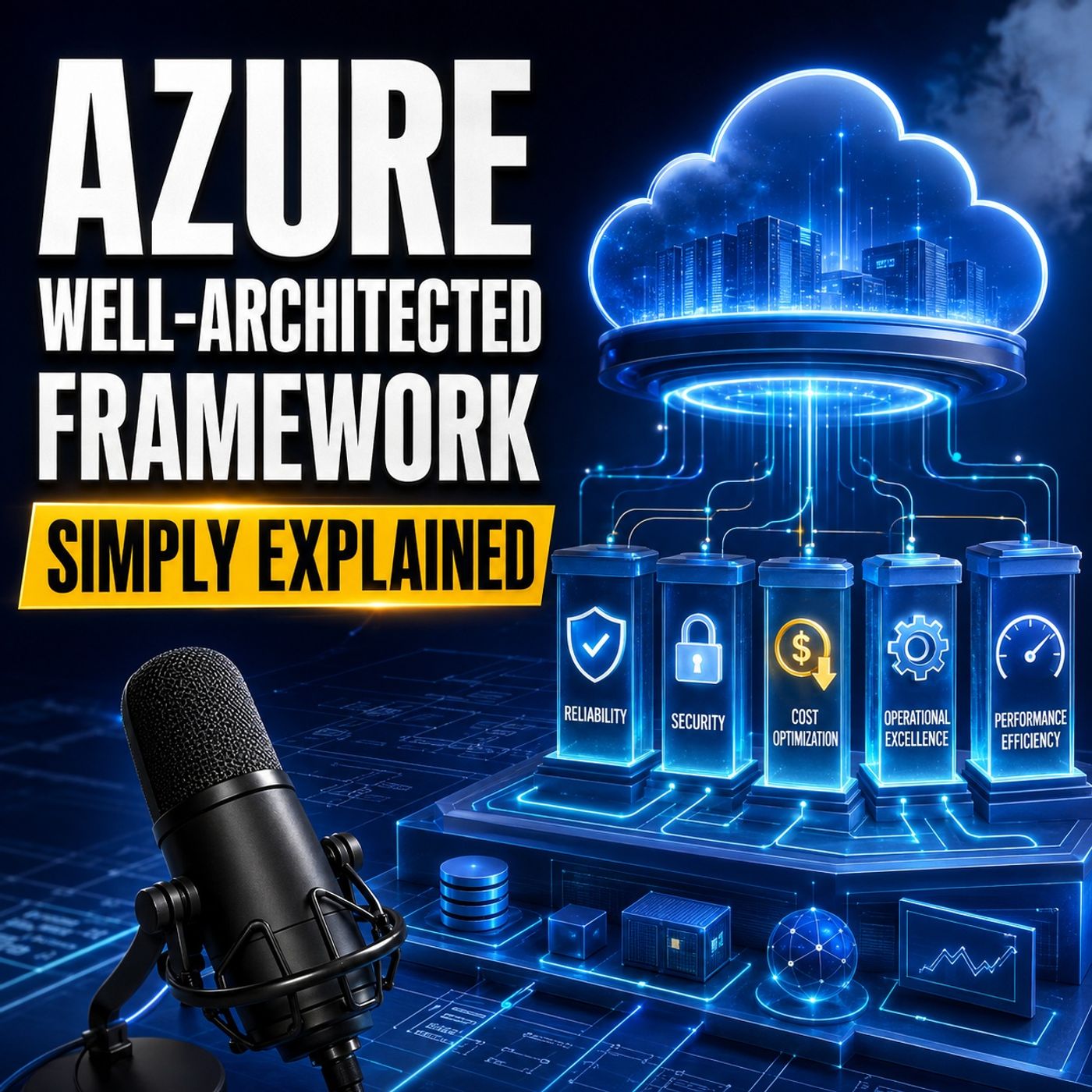 Azure Well-Architected Framework - Simply Explained63 / 100
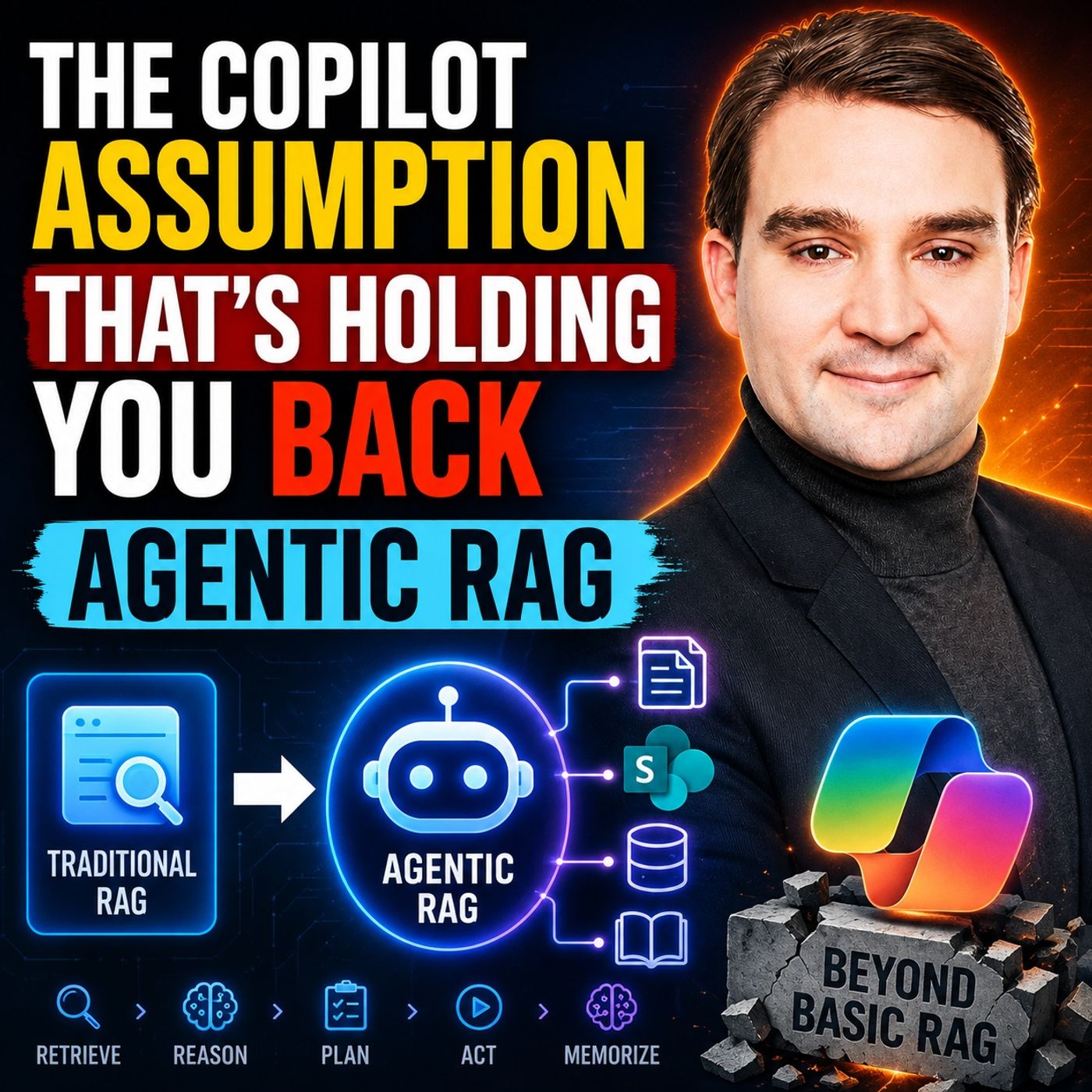 The Copilot Assumption That's Holding You Back - Agentic RAG
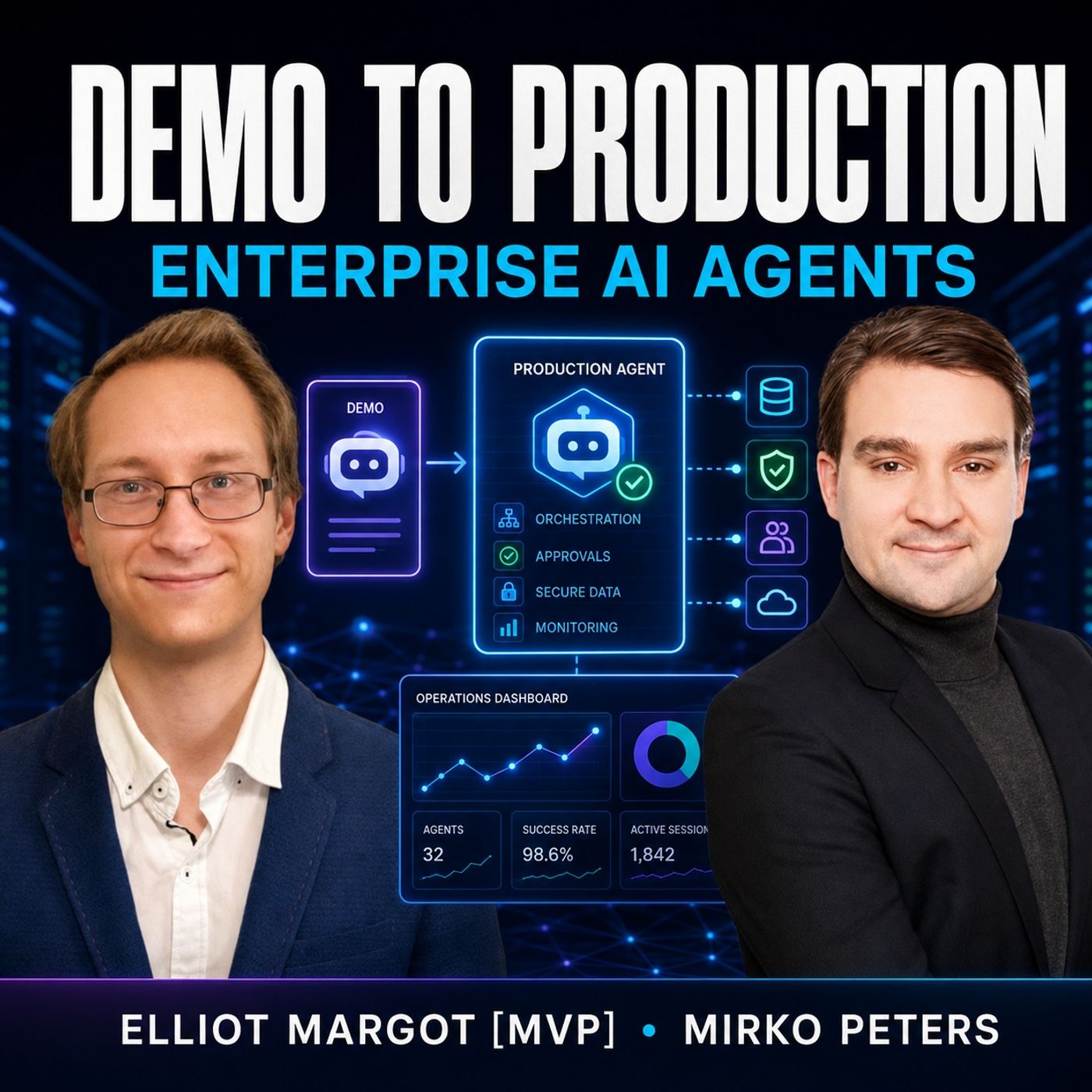 From Demo to Production- Building Enterprise AI Agents That Actually Work with Microsoft Copilot Studio with Elliot Margot [MVP]
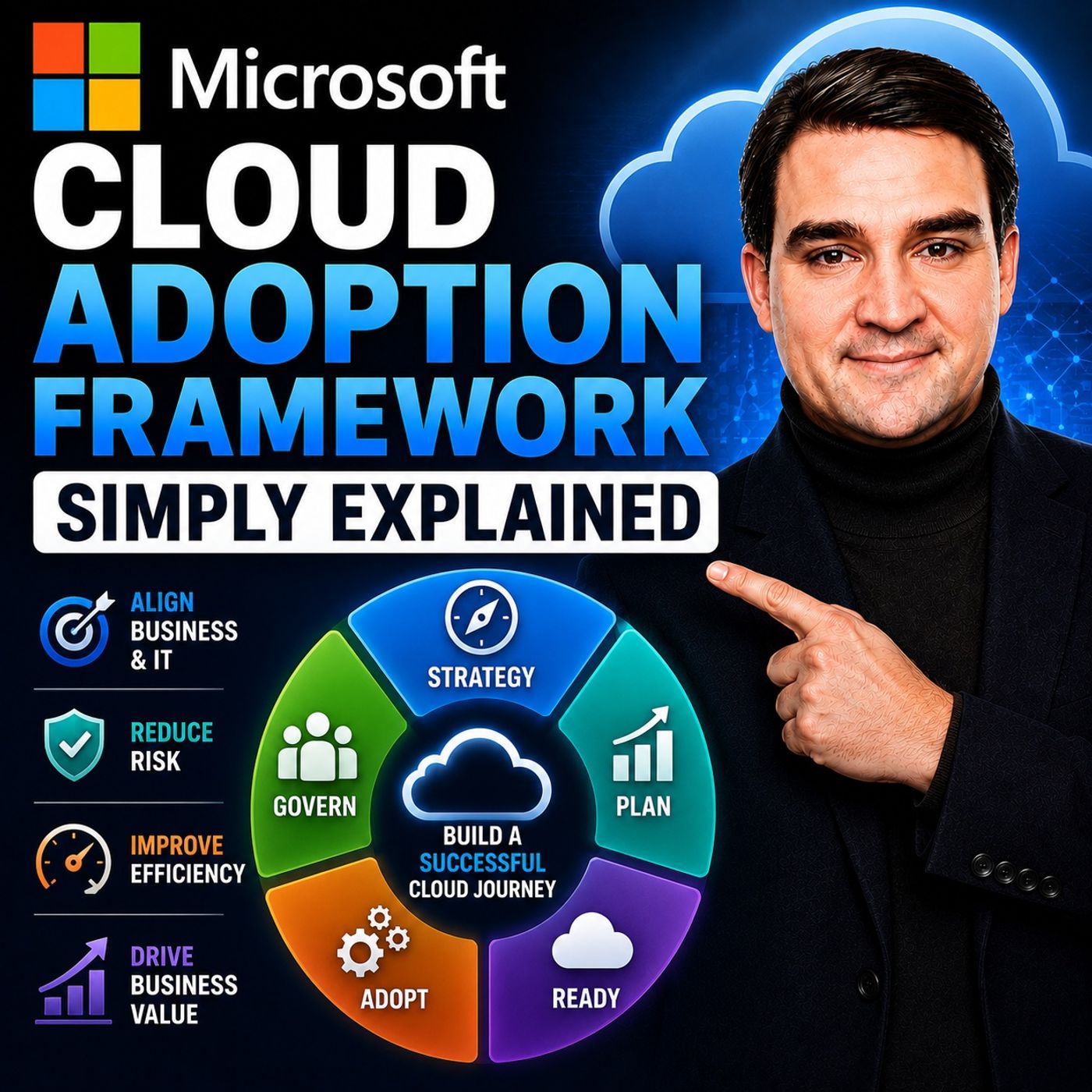 Microsoft Cloud Adoption Framework - Simply Explained
 Azure Image Builder - Simply Explained