
Long-Distance Worklife · 2024-11-25 · 22 min
Key moments - from our scoring
Substance score
57 / 100
Five dimensions, 20 points each
Sara Daw brings two decades of experience running a fully remote, globally distributed company across 17 countries to challenge conventional wisdom about remote work resistance. Rather than CFOs opposing remote work, she argues that private equity backers and office lease commitments are the real blockers - and that the fixation on office occupancy is a sunk-cost problem that most organizations are now moving past. Daw advocates for self-managed team approaches where workers determine *how* to achieve outputs rather than *where* to work, a practice she calls job crafting that increases engagement and psychological ownership. The key to making this work isn't expensive office infrastructure but deliberate relationship-building: twice-yearly all-hands conferences, monthly local team gatherings, and intentional communication ground rules. She emphasizes accessibility, co-creation of work, and intimacy as scaffolding that bonds distributed teams together - elements that can't be assumed to happen organically, even in traditional offices. This conversation will resonate with distributed operations leaders wrestling with hybrid policy design and executives questioning whether remote work actually reduces performance.
Daw found that CFOs actually measure output and productivity, not location, so they're often on board with remote work. The real resistance comes from private equity backers and business owners with office lease commitments who want visible oversight of their financial investment on-site.
Job crafting lets employees design how they work to achieve defined outputs, rather than following rigid schedules or location requirements. When workers have this agency and control, research shows they experience more joy, flow, meaning, and purpose, which increases engagement and reduces turnover.
Daw runs her company with twice-yearly all-company conferences and monthly local team meetings. She emphasizes these gatherings must focus on relationship-building and intimacy rather than transactional work, as that's where psychological ownership forms.
A fair value exchange (earning and organizational value), identity alignment (feeling good about belonging to the organization), and community (time with like-minded colleagues). These three elements create bonds that make location less relevant.
Teams must explicitly define availability windows and communication norms - when people are reachable, how to contact them, and when they're off-limits. This prevents the assumption that 'always on' is expected and requires intentional planning and clear communication.
Our reviewer’s read on each dimension, with quotes from the episode.
The episode contains some genuinely useful frameworks - particularly around psychological ownership, job crafting, and the importance of deliberate relationship-building in remote teams - but these insights are interspersed with significant filler, repetitive affirmations, and padding. Sara does articulate substantive ideas (accessibility, co-creation, intimacy as bonding mechanisms), but they are explored at a surface level without deep operational detail, and the host doesn't push for specifics on implementation or evidence.
You're giving the agents, you're giving your workers agency. You're giving them control. And those are in my opinion, and for my research, those are the elements of, being at work that enable us to get real joy and flow and meaning and purpose
So I'm in the camp of going down the, self-managed teams approach to this and saying, okay, we've got to get this output done, not this. You know, let's forget the inputs. Let's get the output done.
Sara presents some original framing - particularly the emphasis on psychological ownership through value exchange and the job-crafting lens applied to remote work - but these are positioned as grounded in her own research rather than tested frameworks. The broader themes (flexibility, trust, relationships in remote work) are now standard in the remote work discourse. The self-managed teams approach is not novel. The originality is present but not exceptional.
So my research shows that, you know, we can feel ownership towards our jobs and towards our organizations that we work with by there being a value exchange.
we're trying to solve it with a very simplistic and blunt instrument by saying it's two days in and three days out, or vice versa, and it just isn't that simple.
Sara Daw is legitimately credible as a practitioner: she is group CEO of a genuinely remote-first business operating in 17 countries for an extended period, has authored a book on her business model, and has run distributed teams under real operational constraints. This is a practitioner, not a consultant selling theory. However, her company operates in a specific niche (fractional CFO services), and her insights, while grounded in real experience, are not positioned as tested at scale across diverse industries.
I am the group CEO of, a business called the CFO Centre. And that's a business that provides fractional CFOs to growing entrepreneurial businesses. For those that don't need, don't want full time, version and can't afford a full time version, but recognize they need the skill set. It's a global business in 17 countries.
It's a global business in 17 countries. I've also written a book about the business model that sits underneath that called Strategy and Leadership.
The episode is severely lacking in concrete numbers, named examples, metrics, or evidence beyond anecdotal assertion. Sara references 'her research' but provides no data, sample sizes, or findings. The operational examples are vague (monthly get-togethers, twice-yearly conferences, but no details on ROI, turnover impact, productivity metrics). The frameworks are presented as principles rather than tested propositions with quantified outcomes. This is one of the weakest dimensions of the episode.
And when I say regularly, it might be once a month. And we would get the whole business together twice a year.
So my research shows that, you know, we can feel ownership towards our jobs and towards our organizations
The host asks reasonable opening questions but largely allows Sara to deliver prepared talking points without meaningful push-back or follow-up. When Sara makes claims (e.g., about CFOs not objecting to remote work, or the value of psychological ownership), the host doesn't challenge or probe for evidence. The host does ask for elaboration on 'job crafting,' which is good, but misses opportunities to test the frameworks or ask about trade-offs and failure modes. The interview reads as a cordial, somewhat passive conversation rather than investigative dialogue.
So you just use the term which I have not heard before, and I think I know what it means, but you know, in very small words and slowly explain to me job crafting.
Hi, Sarah. Who are you and why do we care?
Computed from the transcript - who did the talking, and the words that came up most.
Wayne Turmel sits down with Sara Daw, of The CFO Centre , to explore the nuances of remote and hybrid work from a C-Suite perspective. As a leader of a fully remote global company operating across 17 countries, Sara shares invaluable insights into overcoming challenges, fostering psychological ownership, and building meaningful relationships in distributed teams. Sara also shares her experience leading a remote-first organization and her thoughts on how trust and flexibility can transform the workplace. Don't miss her practical advice on designing team dynamics and crafting jobs that employees love. Key Takeaways 1. Navigate Financial Resistance to Remote Work: Learn how to address common concerns from funders and stakeholders about hybrid and remote work models, with actionable tips on demonstrating ROI and productivity. 2. Empower Teams with Job Crafting: Discover how giving employees the freedom to design aspects of their roles can boost engagement, flexibility, and accountability within remote teams. 3. Redefine Hybrid Work: Understand why a "one-size-fits-all" approach to hybrid work doesn't work, and how to tailor policies to meet team and individual needs effectively. 4.
Transcribed and scored by The B2B Podcast Index.
Hi, everybody. Welcome to the Long Distance Worklife, the podcast designed to help you thrive, survive and generally find your way in the crazy world of remote and hybrid work. I am Wayne Trammell. We arm wrestle us today, but that means that we have a really excellent interview to share with you.
And I'm excited to talk to Sara Daw from the CFO center. And we are going to look at some factors of remote work that maybe we haven't before. And, so I'm looking forward to that. Let me introduce Sara Daw, who's joining us from the UK today.
Hi, Sarah. Who are you and why do we care? Hi there. Thanks for having me, Wayne.
So my name is Sara Daw. I am the group CEO of, a business called the CFO Centre. And that's a business that provides fractional CFOs to growing entrepreneurial businesses. For those that don't need, don't want full time, version and can't afford a full time version, but recognize they need the skill set.
It's a global business in 17 countries. I've also written a book about the business model that sits underneath that called Strategy and Leadership. And so that's how the access economy meets the C-suite. That's me.
Look at you with the subtitle and everything in there nicely. Yeah. Sarah, I was excited to talk to you for a couple of reasons. First of all, your company is fully remote and has been for a long time, so you've got a lot of experience there.
But one of the things and we'll get there, we'll talk about that for sure. But one of the things that we haven't done on this show very much and it's not intentional, it just hasn't happened, is we haven't spent a lot of time talking about the C-suite and in particular, the CFO. And I know that for a lot of organizations, the push back on remote work or going hybrid or whatever, a lot of that pushback comes from the shell we lovingly call them the bean counters. The people in charge of the money.
Why? From a financial standpoint, what are some of the objections or concerns that get raised when people talk about wanting to do more remote work? I think I think that's really interesting because I actually haven't, come across that so much around it, coming particularly from the CFOs, that, that are measuring the return in terms of the fact that they want people to go, in the office and not be and not be hybrid or remote, but I, I would have thought that, obviously it's going to be, around productivity.
I would have thought from the CFO perspective, they're the people that are going to be measuring output and, they're going to be fully, on board with all of those concepts and making sure that, the business is moving forward. I mean, I've actually found, the most pushback that we've come across in terms of, not being full time and present has actually been from the funders. So the backers of businesses, the private equity, businesses they really wanted, someone sat in an office measuring, and looking after that financial investment full time and on site.
So I think that's where we've seen most of the pushback is had me I think quite frankly, it all comes down to the relationship. It's all about relationships. And if you can get the relationship right, it for me, I think you can prove that it does matter where you're sitting. One last question on this, because I hear what you're saying and I don't disagree with you, but how much does some cost?
The notion, we've got an office and nobody is in it, and that makes leaders crazy. Yeah. Yeah. Like, oh, absolutely.
And actually we were one of those businesses because we've always been remote. And literally just before Covid, we took on an office space, for central team members, so that we could have them in the office. And that was sort of a few weeks before Covid. And then it was empty for ages.
So I totally understand that. I mean, if we invest, if our businesses invested in space, then they are going to want to fill it. I think now, post-Covid, many businesses are realize that actually, yes, it's a sunk cost, but it's also not necessarily the cost that they need to bear anymore, at least not to the extent that before Covid and actually they can have much smaller space, and use the space more wisely for hybrid. Obviously that means that only that only happens if, you know, the management and the executive are supportive of remote and hybrid working, which some are and some aren't.
But we can get onto that in a moment. But but you know, I agree. I think we've moved away enough from Covid now that the leases have, you know, changed. And we've had a few years where it's it is possible to be more flexible about what what's an office space we've got.
Yeah. So let's talk about that flexibility in your mind. We've been talking a lot on the show about how hybrid work isn't just some people are in the office and some people not. I mean, there's more to it than that.
In your mind, what is hybrid work at its best? Yes. I mean, I think, it's around flexibility. I mean, the one thing that I hear just time and again from every single set of, workers, the knowledge workers I'm talking about that can, work remotely, every single time that I hear from surveys, from anecdotes, from conversations, it's flexibility people want.
So I wanted to have that shakes down is is sort of okay. And I think it's different for different individuals, for different roles. So different parts of the hierarchy. And so the the big issue that I see with hybrid is that it's quite a complex problem.
It's a wicked problem. Yet we're trying to solve it with a very simplistic and blunt instrument by saying it's two days in and three days out, or vice versa, and it just isn't that simple. And it depends on the person. Is that the role, etc.
and actually, I think a much better way. I mean, I'm much more in favor of letting the, workers work it out for themselves. So I'm in the camp of going down the, self-managed teams approach to this and saying, okay, we've got to get this output done, not this. You know, let's forget the inputs.
Let's get the output done. How are we going to organize ourselves as a team to do that? What are we going to do together? What do we need to be.
And where do we need to be to do that? Do we need to be online? Do we need to be, physically present and will cover for each other, when we need to, and people need more flexibility? And I think the big benefit of that is where trusting our teams to work it out, they have the best information at their fingertips to be able to do that, and then they move into job crafting, and that gives them real purpose of meaning over their work.
And, and that element of control around it being flexible. And then I think you see engagement go up. You just use the term which I have not heard before, and I think I know what it means, but you know, in very small words and slowly explain to me job crafting. Yeah.
So this is where individuals can design their jobs or elements of their job. So I'm a I'm a big fan of setting out the tramlines and the guardrails. In you know, with, with your functional leader. So the functional leader setting out the parameters, the direction of travel.
But then so essentially the what, of the job, but then leaving it up to the individuals to figure out the, how, letting them tell the management or their leaders how they're going to do it and what resources and support they need to do it. So they are crafting their job to fit the requirements of the outputs, and it's sort of up to them how they do it. When they do it, where they do it. And they're all prompt to sometimes you have to be together as team, sometimes you have to be available on a phone, to talk to customers, whatever it might be.
But we're very much then you're giving the agents, you're you're giving your workers agency. You're giving them control. And those are in my opinion, and for my research, those are the elements of, being at work that enable us to get real joy and flow and meaning and purpose, which means we really enjoy our work. And the thing is, you get quite a lot of that from going freelance.
And I'm saying we can learn from the freelance world and there's, you know, I don't see why we can't put some of those parameters into the employed world. We've got an employment contract to support it. But the way we work, we can do it. You know, we can do it in this way, too.
And that's how I've run my teams, even when they've been employed in, in, in, in the business, I've let them get on with it and decide how to get it done in the best way. Well, let's talk about that because you have been, you know, with one ill fated exception, remote since the get go, since you started your company and for you as the leader, what has been the biggest challenge? Let's start with the challenges and then we'll get to the fun stuff. So there are challenges, there's no doubt about it.
And I think because we set up as remote. And so we had, you know, in our business we would have individual C-suite professionals, CFOs, in working, they would go work, fractionally. So part time. And that would mean they were hybrid sole businesses.
So they would go one day a week, two days a month. The internal team that we have to support that we call that our central team. We never had offices to start with because we saw it as an extra cost and overheads that we just didn't really think we needed. So we were always remote as a team, and we all work from home from the start.
And there are challenges because I don't forget, we didn't have so much technology back then either. So yeah, so what we what we used to do was be very deliberate about what we were going to do and what were the reasons. So why we would need to come together. But we made sure that we did, meet physically, regularly.
And when I say regularly, it might be once a month. And we would get the whole business together twice a year. So in teams locally once a month. And we made sure that we did, things during that time that were very much around relationship building.
So we didn't, do mundane things. We didn't come together and then just do our work together. We've absolutely built relationship and we were very, very focused on that. So we would define activities, work activities, and we would design, very deliberately our time together because it was so precious.
And that meant that we when we were apart, we were in our flow doing our work. And we would communicate by, you know, text or email in those days and phone now it's it's so much easier because we've got, all the video conferencing, which we didn't have back then. We used Skype a lot, in the, in the early days that was available. So that was that was the plan.
And it was about making sure that, we brought in the elements of psychological ownership, into the relationships that we built. So my research shows that, you know, we can feel ownership towards our jobs and towards our organizations that we work with by there being a value exchange. So firstly, you know, it has to work. You know, we need to be able to earn money and, and have a living.
And our business needs to get value out of what we do. So it needs to be a good value exchange. There needs to be it needs to add to our identity. So we need to feel good about being a member of X organization and it needs to say help build us up in some way, in terms of adding to our status.
And then we need to have, a home, which means we need to be with like minded people. And if you can build those things into the relationship at work, then you start to get feelings of ownership towards the role in the job, which can, you know, which can make where you're sitting and who you're sitting with less relevant. Because you've got those, other aspects that sort of a scaffolding to hold you in your role. And there are certain things that you can do to build that ownership.
Wow. And we'll talk about that in a second. You said something, you kind of glossed it over, like everybody understands this, and I don't think they do. But this notion that if the team is working remotely, there is still a if not a need, certainly a desire to physically get together.
And that means, you know, you might not have an office, but you're going to have to rent a conference room or you're going to have to pay for some travel. And you're I mean, you just have to do that. Yes, as we did. And a lot of organizations think, well, everybody works remote, you know, that annual meeting might be enough.
And I think depending on the organization, it might not be. So I deliberately but to the, to all company conferences into the schedule per year, I didn't think one was enough. And it took a while to catch all. And I have to say, because don't forget, we were working, our team were freelancers.
So, you know, I couldn't force these people to come. But actually, over time, everyone really started to see the value of it being twice a year. And that was and and some people have to travel for that and others for that. But then the monthly get togethers in the local teams, I think were hugely important because you then get some intimacy into the relationships with coworkers and team leaders.
And that's part of, building the psychological ownership. So and you need to be able to hang out to do that, and you need to be able to do something. So often it works in an informal setting. So we might get together and, you know, discuss the business during the day or part of the day.
But then we you, we do something very much fun and different and social, which is where you can hang out together and allow the relationships to flourish, just through more casual conversations. And that's really needed, I think really needed. As we reached the end of our time, you mentioned that there were some specific things that you could do. Will you?
Let's share a couple of those with our folks so they can play. Yes. So a big one is making sure that that the parties involved feel that they can, be have access to each other. So you're accessible, approachable and available.
That's really important in, remote circumstances to build this psychological ownership. Because if you feel you can get hold of each other quickly and you're going to be responsive to each other, and it goes both ways. If you want other people to be responsive to you, you need to be responsive to that. And that helps build relationships and not.
Just for not for nothing. But in order for that to happen, there needs to be some discussions and ground rules about when are you available and. How do you absolutely people. And that doesn't happen just out of good intentions.
No. You have to be very good at planning ahead. I'm very good at communicating when you are available, when you aren't available and what are the parameters. So that's that's a really good point.
Also, another big one is co-creation. So doing things together, even if it's done remotely. Actually in the same way, investing ourselves in activities with others. And so the very nature is you have to communicate each other to do it, but then there's an investment in what you've created for the organization, which again, bonds, the individuals to the organization and their coworkers.
So that's that's another big one. And intimacy. So it's about allowing time, whether that's online or offline, but allowing time just to get to know each other and have those, those times where you share, you know, deliberately have sessions where you talk about, you know, things that about yourselves that you wouldn't normally talk about in a work situation. So allow those, those informal sessions to happen.
And I think that's where coming together physically does really help with those. So those are the sorts of things that help bond individuals to organizations and their coworkers, even if they're not, you know, physically working together in an office all day. And I have to add, by the way, that often, I think this is really important. Often we go into an office, and I'm sure you've heard this before many times you go to an office and you don't really talk to anyone anyway.
You just get on your screen and, do do your job. I mean, that can happen in office environments. So being very deliberate about the times when you're actually going to build relationships, be with others, I think you can do that even if you're remote. Sarah, thank you so much.
So much good stuff in this conversation, folks. If you want to learn more about Sarah, we will have all kinds of links and information and the CFO center and her book Strategy and Leadership as a service on our home page. Sarah, thank you so much for being with us. I really appreciate your time today.
Thanks for having me. I really enjoyed it. And folks, if you are interested, in visit long distance leader.com, like and subscribe to the show.
You know how podcasts work. It's embarrassing to have to keep begging, but we appreciate your support. If you are interested in our new book, The Long Distance Leader Revised Rules for Remarkable Remote and Hybrid Leadership, now in its second edition after six years and seven languages. Stop by and long distance workplace.
com/ldl or Kevin Eikenberry dot coms LDL and learn more. If you have comments, suggestions, guest ideas, vicious personal attacks stopped by, you can connect with Marissa and or myself on LinkedIn. Long distance work life has a page on LinkedIn. Or you can just email us at the email.
Addresses listed and that's it. Thank you so much for joining us. We hope that, this podcast gives you some ideas. Some spark gets you thinking in new ways about the way that we work today.
We will be back next week with a Marissa episode. And that's it. I'm Wayne Trammell. Don't let the weasels get you down.
Other episodes covering the same guests and topics, from across The B2B Podcast Index.
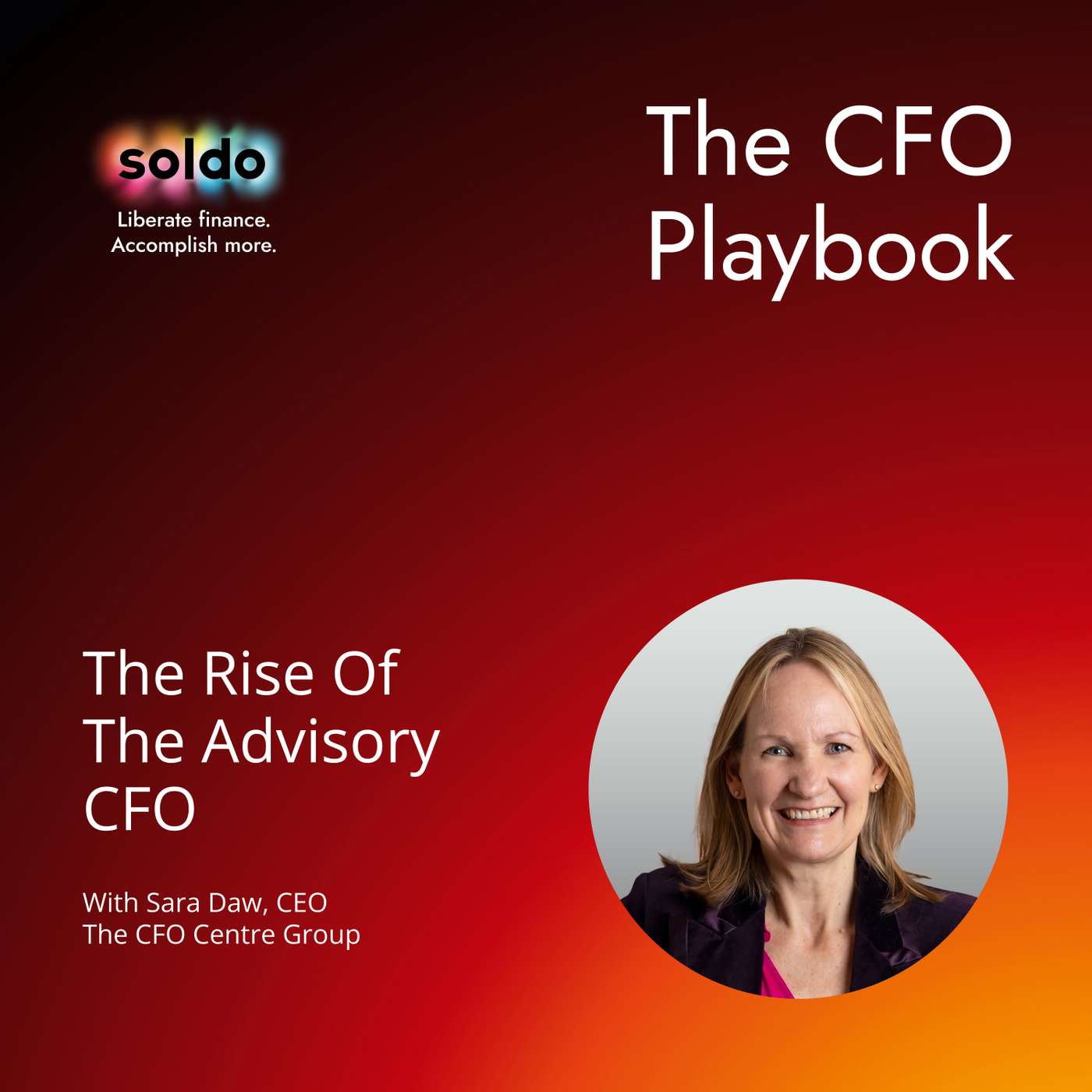 The Rise Of The Advisory CFO with Sara DawThe CFO Playbook · features Sara Daw64 / 100
 280. CFOs CFO | How to Delegate Like a CFO: Strengths, Ownership & Fractional Support with Sara DawCFO 4.0 Podcast · features Sara Daw61 / 100
 Matthias Laug from TIER on charging innovation, power of self-managed teams, and the role of technology | The Dev is in the Details #13The Dev is in the Details · on Self-managed teams90 / 100
 Decoding AQ with Ross Thornley Feat. Henrik Jarleskog - Executive LeadershipDECODING AQ · on Hybrid work models78 / 100
 Steve Odland on governing AI in an age of uncertaintyHBS Managing the Future of Work · on Hybrid work models72 / 100
 The drive toward smarter commuting solutionsCapital H Podcast · on Hybrid work models71 / 100
 Remote Work Isn't Over, But Leadership Must Evolve with Kevin Eikenberry51 / 100
 Is Giving Up Your Desk the Future of Hybrid Work?73 / 100
 Breaking Free from Screen Fatigue: A Guide to Digital Detox55 / 100
 The Remote-First Revolution: Building Borderless Teams with David Nilssen76 / 100
 Adaptability and Execution in Global Remote Teams with Enrico Menichetti76 / 100