
Long-Distance Worklife · 2025-01-20 · 23 min
Key moments - from our scoring
Substance score
53 / 100
Five dimensions, 20 points each
The hosts tackle a listener question about transitioning to hotel-style desk sharing - where employees grab available desks rather than having assigned seating. While it sounds reasonable on paper, the episode explores why this triggers genuine resistance: lack of control over workspace aesthetics, hygiene concerns (especially post-COVID), daily setup and breakdown friction, inability to personalize spaces, and the psychological disruption to routine. Russell and Wayne argue that the real issue isn't the desks themselves but how organizations implement the change. They emphasize that leaders must have honest conversations with employees about trade-offs: companies save money on square footage employees want flexibility, so something must give. The solution involves piloting programs, addressing barriers through practical measures (lockers, duplicate equipment like mice, Lysol wipes, charging stations), involving teams in planning, and recognizing that people adapt once new routines establish. The episode stresses that dismissing employee concerns only delays acceptance - acknowledging real stressors and mitigating them actually accelerates the transition to a sustainable rhythm.
Hotel model means employees don't have assigned desks; instead they grab any available workspace when they come in, similar to checking into a hotel room. It reduces needed square footage when staff only work on-site part-time, but removes the comfort of a permanent personal workspace.
Resistance stems from loss of control over aesthetics and ergonomics, hygiene concerns (especially post-COVID), daily setup/breakdown friction, inability to personalize with photos or mementos, and the psychological disruption of disrupted routine - not just one big issue but many small pinpricks.
Provide lockers for personal equipment, duplicate peripherals (mice, monitors) at desks, hygiene supplies (Lysol wipes), charging stations, and allow team-based self-selection so people working the same days can share desks together.
Frame it as an honest conversation about trade-offs: the organization saves money on underused square footage in exchange for employees gaining schedule flexibility, then discuss what's negotiable (window seats, quiet zones) versus non-negotiable and pilot the change for 2 months before full rollout.
Resistance feels significant initially but fades once people establish a new routine, typically within the pilot period; the key is acknowledging real stressors and mitigating them rather than dismissing concerns, which paradoxically speeds acceptance.
Our reviewer’s read on each dimension, with quotes from the episode.
The episode delivers several practical, applicable insights about hot desking implementation (lockers, duplicate equipment, phased rollouts, team-based approaches), but relies heavily on anecdotes and obvious observations rather than novel frameworks. The discussion of employee psychology and resistance is somewhat predictable, and the core tension between cost-saving and employee comfort is well-trodden ground without surprising depth.
spring for lockers, spring for duplicate duplicate equipment. So people have mice at their desk
it's the thousand little pinpricks that lead to war, that have a pebble in your shoe that if you can handle those, make the larger issues much easier to discuss and deal with
The episode uses established framings (hot desking, the church pew analogy, routine disruption) that are common in remote work discourse. While the pew metaphor is memorable, the underlying insights about resistance to change and the need for honest conversations are standard organizational psychology, not contrarian or first-principles thinking.
I grew up in a small town, went to a small town church, and while in churches there are no assigned seats per se, everybody knows where Mrs. Williams sits, right?
Human beings like routine. We, you know when our routines get disrupted we freak out. When do we stop freaking out? When we have established a new routine.
Wayne Trammell is positioned as a 'remote work expert' but the transcript provides no credentials, company background, scale of experience, or evidence of having implemented these policies at any organizational level. He appears to be primarily a podcast personality and author of 'The Long Distance Leader,' not a practitioner who has lived through large-scale hot desking rollouts.
joining me as my co-host and remote work expert, Wayne Trammell
we're very excited to share the second edition of The Long Distance Leader. It's now available
The episode offers minimal concrete data, numbers, or named examples. It references a listener question from 'Benjamin' and one anecdote about a $9 mouse policy, but lacks case studies, organizational data, cost savings figures, adoption rates, or metrics from actual hot desking implementations. Advice is largely abstract ('make it easy,' 'address barriers') without measurable outcomes.
Benjamin, the person who sent us this question, thank you so much for your thoughtful email
There is a $9 mouse really the issue? No. No, it's you are asking me to work in a certain way
The hosts maintain a conversational tone and occasionally follow up on points ('So how can they manage some of that?'), but the discussion rarely challenges assumptions or pushes back substantively. Most follow-ups are confirmations or expansions rather than sharp probing. The episode lacks disagreement or tension that would test the validity of claims, and both hosts largely affirm each other's points.
What's your experience? Yeah. And what's worked for you and what hasn't.
I'm with you. It's not a big deal for me. But like, now that you said it, it's like, oh yeah, okay, I can see it now.
Computed from the transcript - who did the talking, and the words that came up most.
The idea of giving up your personal desk - does it make you cringe or cheer? Many organizations are moving toward a hoteling model to save costs and accommodate hybrid work, but making it work smoothly is another story. In this episode, Wayne Turmel and Marisa Eikenberry tackle the challenges of hoteling, from loss of control and hygiene concerns to desk wars and office politics. Plus, they offer practical solutions for leaders to involve employees, test the model, and ensure a smoother transition. Thanks to listener Benjamin for inspiring this conversation! If your organization is considering hoteling, this episode is for you. Chapters 00:00 Introduction 00:48 A listener question sparks today's topic 01:21 What is hoteling? A quick definition 02:28 Why losing your assigned seat feels so personal 05:55 Hygiene concerns: Should you trust a shared desk?
Transcribed and scored by The B2B Podcast Index.
Because the idea of giving up your desk for more remote flexibility make you cringe or cheer. Many organizations are grappling with this exact dilemma. If you're considering a hotel model to save money and embrace hybrid work, you're not alone. But how do you make it work for everyone involved?
You. Welcome back to long distance Workplace. We help you live, work and thrive in remote and hybrid teams. I'm Russell.
I can be a fellow remote worker. And as always, joining me as my co-host and remote work expert, Wayne Trammell. Hi, Wayne. As always, because there's no escape.
He's freaking everywhere. But we are always here. We live in the computer. Indeed.
We live in this little box. Hello. Well, today we are actually inspired by a listener question. And today we're diving into the challenges of transitioning to a hotel and model while supporting employees who want flexibility through remote work.
So, Benjamin, the person who sent us this question, thank you so much for your thoughtful email that led us to this, the situation that many organizations are navigating as they rethink office spaces and work styles. So we're really, really excited to get into this. But, Wayne, for some of our listeners that may not be familiar. Can we just do a quick definition of what hotel room is?
It's a weird word. I don't know how it became the word. I think it's it's kind of the mental model of staying in a hotel versus having a space of your permanent space of your own, right? That when you check into a hotel, you don't know which room you're getting.
You don't really know. I mean, Hamptons all look alike, right? But but it's not your. And it's not your room.
There are things that you can do in a hotel room. There are things that you shouldn't do in a hotel room because it's not your space. Right? And I think it's as good a word as any, but it does.
It's funny. It creates far more drama than we think it should. And I'll give you the example. And not everybody will relate to this, but I do, which is I grew up in a small town, went to a small town church, and while in churches there are no assigned seats per se, everybody knows where Mrs.
Williams sits, right? And God forbid, literally. That's you take that spot at your peril. So even though officially you sit anywhere you want, everybody has their pew.
They sit in the same place every week. They sit there, they're comfortable there. They are close enough or far enough from the pastor's burning eyes. They are easy access to the exits out.
Whatever you're. Praying. For. Choosing a seat in church.
And while there are no official seats, when somebody is in your seat, it gets really uncomfortable and that's the best analogy that I can come up with. So the way that hotel I usually works is rather than, you know, there's a cube farm and you everybody has a seat assigned to them because, you know, it's Tuesday and only have two people come in on Tuesday. We have just slightly over more than half of the normal number of desks, and people kind of grab whatever's open and they set up and they do their work, and then they go home.
And on paper that sounds extremely reasonable. And what's the big deal? The problem is you are dealing with human beings who are notoriously irrational. And so there are a couple of reasons that people get freaked out about this.
And as with everything with people when I say them, a lot of people are going to go, that's not a big deal. Except it's a big deal. Human being. Humans are going to human.
Yeah. So some of it is a simple matter of lack of control. When I come in, I like what I like. I like the view out the window.
I like to see the coffee break room. I want my back to the coffee break room. Whatever it is we we have basically a set of esthetics that we like when we work and when we don't have control over that, that becomes a thing. There are a few other things, some of which make no difference to me, but they might.
Just somebody. They are going to make differences to somebody, one of which is hygiene concerns. Okay. I don't know who was at this desk last.
I don't know what cooties they had. I don't know what their personal hygiene is like. God only knows what they've done to that keyboard. Lysol was everywhere.
Yeah, exactly. So part of if you're going to bring in a hotel situation is you need to make sure that you have things like sterile wipes at every desk and bottles of Lysol and those types of things. Because while I'm pretty much, I mean, I, I clean up after myself. I'm not a complete slob, but that's not top of mind for me.
It's going to be top of mind for some people, right? Yeah, I'm with you. It's not a big deal for me. But like, now that you said it, it's like, oh yeah, okay, I can see it now.
Yeah. I mean, especially because the whole reason most of us wound up working from home was cooties. And so it's going to be part of the thinking, another thing is that and again, it sounds minor and it's really not, which is you need to set up and break down every day. Yeah.
And oh, God, I forgot the my specific pens that I really like to bring or I forgot my mouse. I've done that before and that sucks. Oh, we've all done it. And you know this idea of okay, so now I'm schlepping to the office, so I've got my backpack, which now has my laptop and my mouse and whatever else in there.
It's just a bigger deal every day. Getting ready to go to work is more hassle. It takes time to set up. It takes time to break down at the end of the day, you've got to put that backpack on, which now somehow weighs 20 pounds more than it did when you came in in the morning.
So there's what is this do to your day? What does this do to the setup? Right. And so some of that may be a loss of productivity.
I'm not using my mouse. Yeah. My horse or whatever. Yeah.
And there are simple ways to avoid this, right. Duplicate mice. Right. One at home, one at the office.
So, so this is a thing that organizations can do, and it's not quite kindergarten. Everybody has their own cubby. But I think that lockers where people can keep their equipment, that meant that they use in the office so that you don't have to schlep it back and forth so that you can have duplicates so that it's already there, and you can very easily set it up. We'll actually take some of this strain off.
It's going to require developing new routines and developing new socks. We all know that. But, you know, things like that can make it less awkward and weird. Right?
One of the one of the reasons that people don't like it as well is, you know, when I have my desk, I've got a picture of my wife and kids or, you know, Mr. Whiskers in a holiday outfit and there's stuff on my desk that is mine, and that's not going to be there, you know? Right. Situation, you know.
And what are the rules around personalization and what can you do? Yeah. You're not necessarily sitting at the same desk every time where you can have that kind of stuff. Well, and you know there are drawers.
What do we keep in the drawers. Right. Yeah. It's like, you know, there's storage or whatever is mine.
Is there. So we need to address those. And, and this means we need to address them far in advance of it being an issue. So how these conversations need to be had before the magic wand is waved.
Well, that's exactly where I was getting to is like, what are some ways that leaders can involve employees in the process? You've talked about some ways that, you know, they can already, think about doing stuff like Lysol and having cubbies for stuff and all that. But like, what kinds of things should they be doing to involve their employees in the process of doing this? There is a huge conversation which will be uncomfortable and is going to make a lot of people feel weird.
But here's the thing everybody wants their desk, but they only want to be added a couple of days a week. Well, what this means in the long run is that the organization is paying for space that is not being used right. One of the things driving the return to office is the CEO comes out of her office and looks around at all this stuff that is costing X dollars per square foot and nobody is there. And so the organization is paying for space, equipment, things that they are not getting a return on.
This is a legitimate concern. Right? Absolutely. They're not doing their money's worth.
Right. Why are we paying for three floors in a building if we could arrange our schedule, accommodate everybody two days a week, and not have to pay for all that square footage, that is a legit business conversation, right? And employees need to care. Because if it comes down to we're paying for all this space and the employees are whining, right?
Whining loose, right? It needs to be a discussion about mutual benefits and concerns. So how can they manage some of that? Well, again, it's here are the reasons we want to go to hotel.
You have said you only want to come in occasionally. You only want to come in a couple of days a week. And we can arrange this so that we clearly don't need this many desks. Right.
And you have concerns about privacy in this in that. So how do we address that? And there needs to be a real harsh conversation around what's negotiable and what's not negotiable. If you've decided as a group of employees, two days a week in the office is plenty, you can't complain about the fact that some of the things that we are paying for are going to go away, right?
It's like it's the consequences of the things that you want, right? It's like you can have your cake and eat it too. So which do you want more? And that just needs to be a real, honest conversation.
And some organizations are much better about that than others right now. Maybe this can be done on a team basis if your office is set up so that, you know, this bullpen is salespeople and this group of people are admins. And however that set up, as a team, talk about what do we need? You also need to prioritize what is important to you.
Do you need a window? Okay. Some people do. Some people they need daylight.
They need vitamin D. They need to be able to when they're thinking look out the window. Other people get distracted by looking. At the right.
Do you want to be near the bathroom? Do you not want to be near the bathroom? Those types of things, because on a small team, often we self-select anyway. Right.
If I'm in Monday and Wednesday and you're in Tuesday and Thursday and we decide we're going to share a desk and nobody else cares, great. There's your answer, right? That makes it easy. So, you know, if you can do that on a team basis, it's certainly going to be easier.
Right? Well, and I could see to the idea of, you know, this group is needs quiet work to do or quieter or work to do something. Yeah, you're web developers or something like that. Whereas you know, your sales team or your marketing team, they might be louder, but, you know, so it's like, is there a sound issue also to consider about where they sent me office, or that these two teams should not come in on the same day or whatever?
Exactly. There are ways to address this. Maybe conference rooms is the answer, right? Right.
There are rooms for conversation. Take advantage of those. Yeah. So these are the kinds of things that you need to consider.
And I would suggest just as individuals what's important to you. Right. Think about what is your routine. What is your daily routine look like when you go to the office?
What is important to you? And then talk to your teammates and say, hey, I really, really like the idea of the window. Do you mind if I have that. You know, and then fight to the death if you need to.
You know, it's it's a great it's a great team building exercise to have gladiator battles in the middle of the year. Right. Certainly. A lot of this.
The story. Oh. Well, just a lot of this is boils down to a cultural resistance to change. Which is going to happen no matter what you do.
Which is going to happen. It's going to be awkward and weird. The more we discuss it, the more we recognize what the stressors are. Right.
What is it that you're concerned about. Right. And then how do we address it. I always come back to an example in the early days of Covid that I was talking to to a team, and this almost became equitable issue.
Wow. Okay. Is they made somebody said they made me come home and I've got my laptop, I have this big tower and a desk and a keyboard and multiple screens, and it's great at work. And I came home and I've got this stupid little laptop and this little rubber dealy that I'm supposed to use instead of a mouse.
And I said, well, why don't you just buy a mouse? They're like, right, that would be. Their $9 at Walgreens. You know, just buy one.
And his issue was, I shouldn't have to be out of pocket to do work for them when this change is being driven by them. And I get, okay, I can see that. Have you talked to your manager about this? Yes.
Well, the policy is the manager is sticking by the policy that we don't pay for equipment that's not being used in the office. And so there's a showdown over a $9 mouse. Now, is the $9 mouse really the issue? No.
No, it's you are asking me to work in a certain way, and you are not giving me what I require to do my job. So you are adding to my inconvenience. And oh, by the way, it's costing me money that I don't want to pay for something that I don't want to do, right. Yeah.
The underlying issue that nobody really wants to say. So this is going to get to, you know what? You're saving $2,500 a month on square footage, spring for lockers, spring for duplicate duplicate equipment. So people have mice at their desk.
Maybe there is a camera at every desk that people can use when they're there, and they don't have to break down their own camera and bring it to work every day. It's so often we have said, it's the little things, right? It's the thousand little pinpricks that lead to war, that have a pebble in your shoe that if you can handle those, make the larger issues much easier to discuss and deal with. And so before we wrap up, I do have one last question for you, but it's so for organizations who are thinking about trying hotel and and maybe they've, you know, not done that previously, what kinds of things that they can do to like pilot these programs, test and fine tune and roll them out to their teams.
Like, I guess first steps. Yeah. Well, you use the word pilot before a policy. It's like literally, let's try this for two months and see how it works.
Rather than this is what we are going to do. And if you don't like it or you make the wrong choice or you think you want to be near the bathroom and you find that too distracting, sucks to be you, right? You make your choice. Now you have to live with it, right?
Know people don't always know what they're choosing, and they may decide. And we may decide that, you know what, the same people take the same hotel desks all the time. And it really, after the initial chaos, isn't that big a deal. Right.
I'm working with the same people every Tuesday and Tuesday we show up and we go to the desk. We always go to a, nobody has an issue with it. Right. You get used to it.
So identify the barriers, address or mitigate as many of them as you can. Make it easy for people to hotel. And then try it and see what works and what you need to fix. You need to fix and you will eventually settle into a rhythm that works for you.
Human beings like routine. We, you know when our routines get disrupted we freak out. When do we stop freaking out? When we have established a new routine.
Right? Which I mean, really is also where some of this boils down to to begin with. And and there's a paradox here. On the one hand, this is not as momentous or even insane a change as it feels like.
And at some point you will get over it and deal with it. Right. On the other hand, to diminish or to discount the very real feelings that people have, only make it harder to reach that new, that new rhythm and that new norm. Absolutely.
Wayne, thank you so much for this conversation. I really hope that it was helpful for our listeners. And I know I learned a lot more about hotel later. Hot desking or you know whatever, whatever other name remote work wants to start calling it.
Right. Well, it's so funny because the terminology changes all the time. I mean, hot desking. Who does that sound like?
Fun. I was going to say. I think that's what we called it last year. I, we did a whole episode about.
I'll have to link it in the show notes. So at first it was like, wait, what's hotel? And I know Hot Desk, who knows? So listeners, you may be listening to this a year or so from now and have no idea what we're talking about.
Or it's called something else. So it just goes to show how fast things are changing. But before we go. But tell us what what are your thoughts on this?
I mean, we're sitting here being all very wise on the mountain. Here are the things you can do. What's your experience? Yeah.
And what's worked for you and what hasn't. Tell us. Yes. Yes, absolutely.
We would love to share your thoughts and your questions. On another episode. But before we go, I do want to say that we're very excited to share the second edition of The Long Distance Leader. It's now available, and this updated guide is packed with actionable strategies to help you lead effectively in today's remote and hybrid environments.
Don't wait. Order your copy at long distance work life.com/ldl and take your leadership skills to the next level. And thank you for listening to the long distance work life for Shownotes transcripts and other resources, make sure to visit Long Distance worklife.
com if you enjoyed this episode, don't forget to subscribe so you never miss a future one. And while you're at it, leave us a rating or review on Apple or Spotify or wherever you're listening to this. It's quick and it helps us reach even more listeners just like you. And we would also love to hear from you, as Wayne already said.
So reach out to us via email or LinkedIn using the links in our show notes, and let us know that you listen to this episode, or even suggest a topic for Wayne and I to tackle in a future episode. We would love to hear from you. And again to Benjamin, who sent this in. Thank you so much for reaching out to us so that we could have this conversation.
And before we go, as Wayne likes to say, don't let the whistles get you down. Thank you.
Other episodes covering the same guests and topics, from across The B2B Podcast Index.
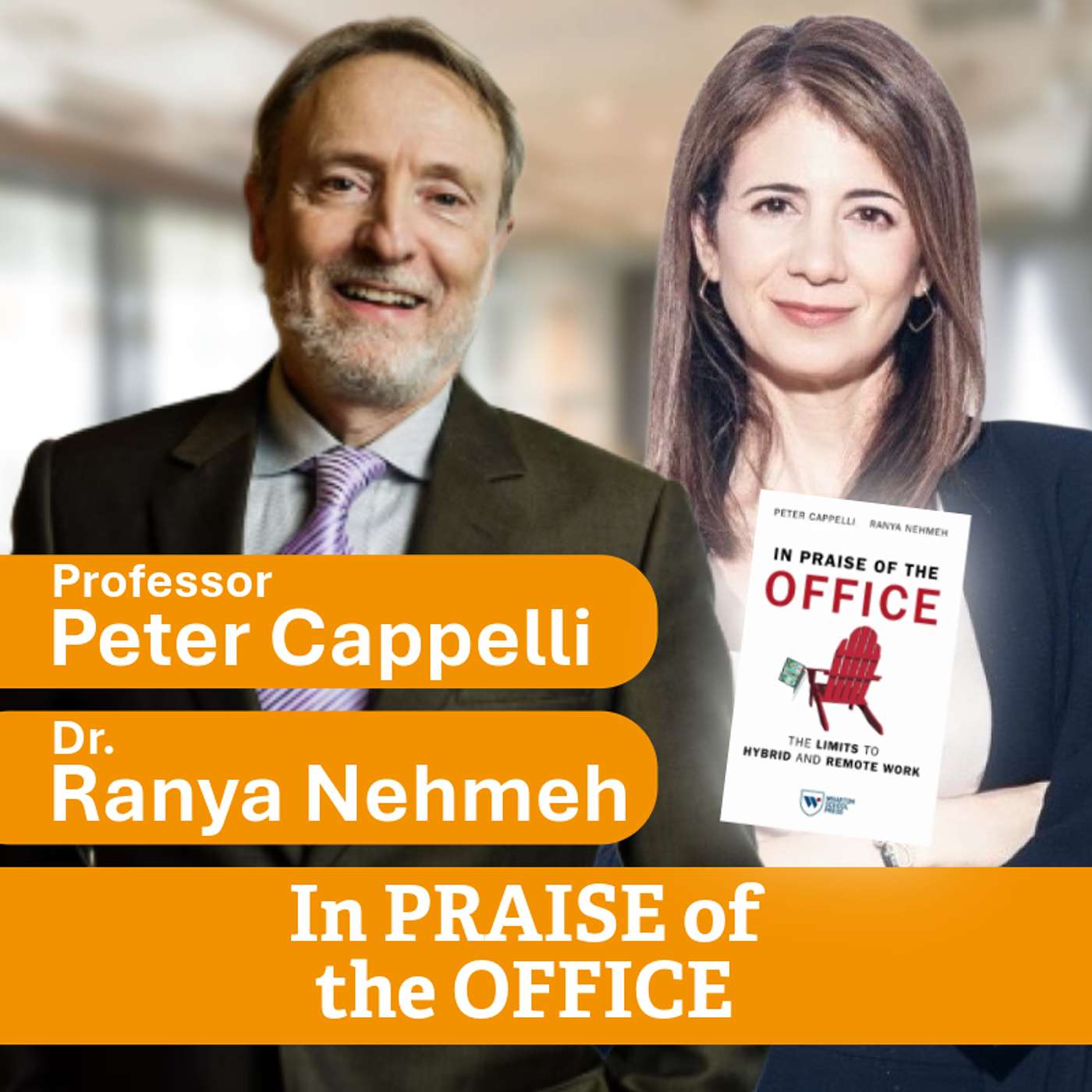 In PRAISE of the OFFICE! with Dr. Peter Cappilla & Ranya NehmehLeadership BITES · on Hybrid work arrangements82 / 100
 "Justin, I built a SaaS!"Build Your SaaS · on Remote work flexibility74 / 100
 Leadership in 2026 With L. Michelle SmithLiving Corporate · on Hot-desking67 / 100
 Neurodiversity in the Workplace - Stop Fixing People, Start Fixing Work with Paula BrockwellThe Elephant in the Org · on Remote work flexibility62 / 100
 Special Audience Q&A Episode S1 Finale: Career Shifts, Taking Risks with AI in a Volatile Job MarketHere's the Deal · on Remote work flexibility57 / 100
 Why Employees Reject Managers, Return-to-Office Rules, and Even AI Rollouts with Matt Bertman, Nick Bloom and Ram SrinivasanFuture Of Work Podcast · on Remote work flexibility55 / 100
 Remote Work Isn't Over, But Leadership Must Evolve with Kevin Eikenberry51 / 100
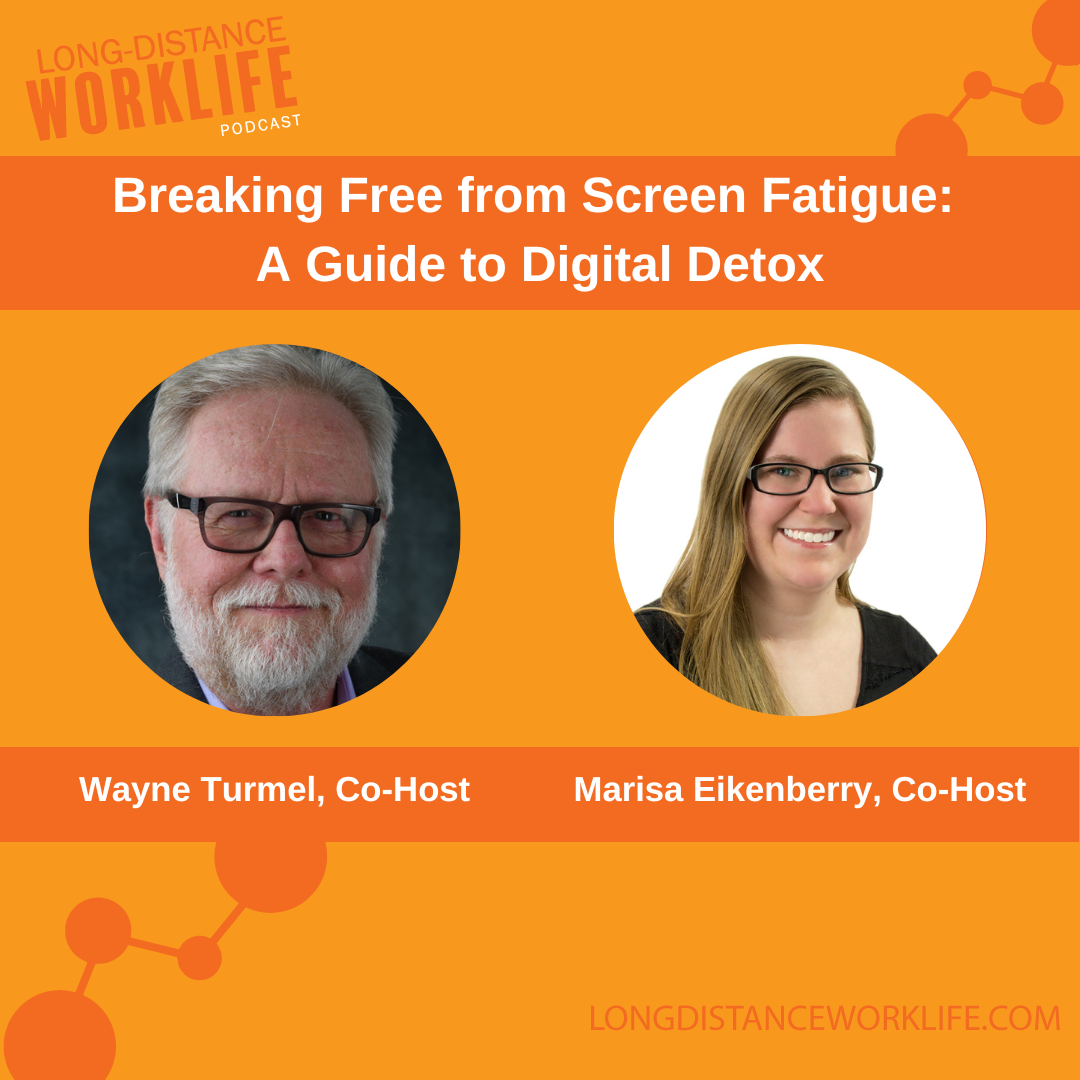 Breaking Free from Screen Fatigue: A Guide to Digital Detox55 / 100
 The Remote-First Revolution: Building Borderless Teams with David Nilssen76 / 100
 Adaptability and Execution in Global Remote Teams with Enrico Menichetti76 / 100
 Use Your PTO! The Holiday Guide for Remote Workers45 / 100