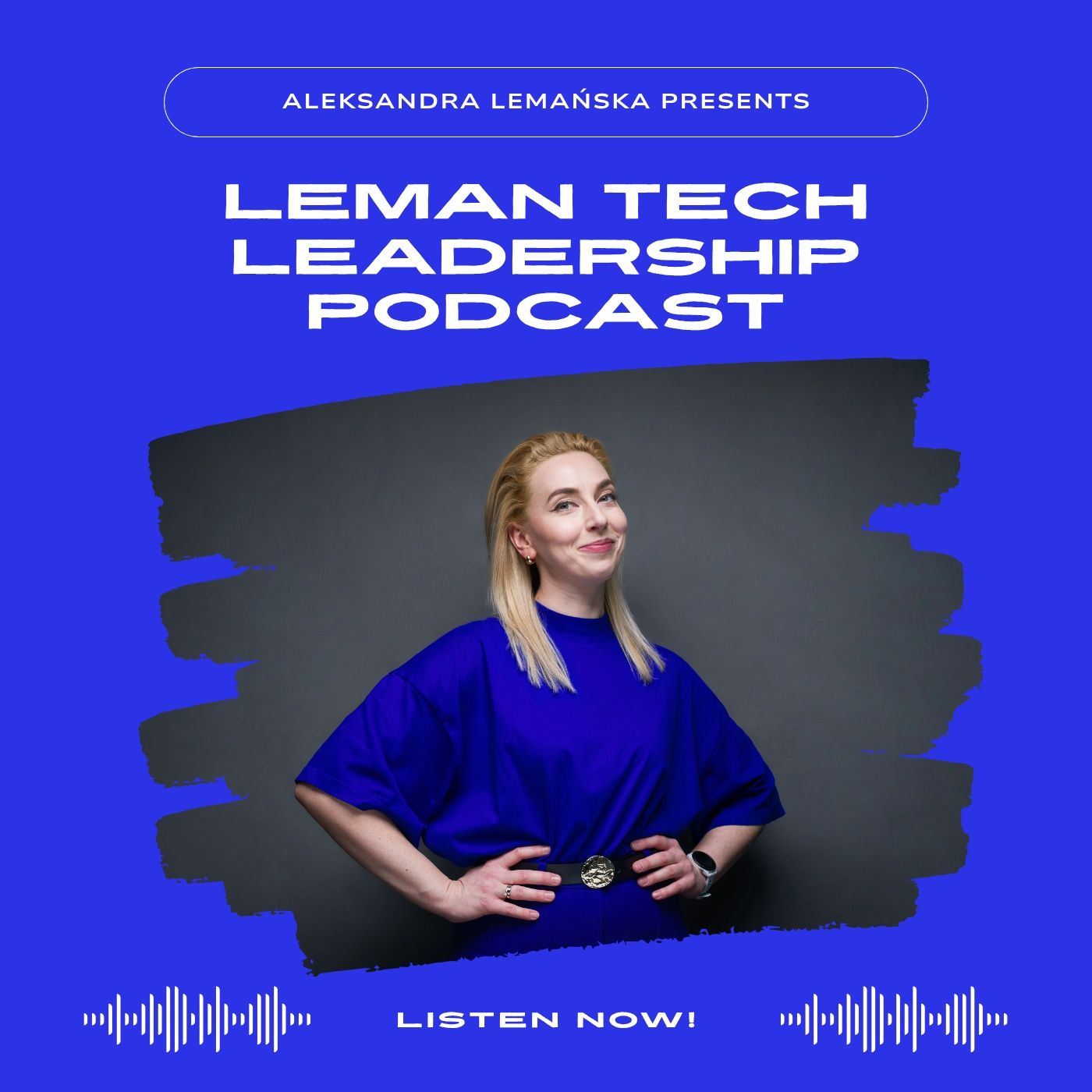
Leman Tech Leadership Podcast · 2026-06-16 · 22 min
Key moments - from our scoring
Substance score
14 / 100
Five dimensions, 20 points each
Alexander Leaminska uses this episode to officially announce his completed book "From Code to People," launching July 30th with a masterclass and book tour across organizations. The book distills a decade of observations working with technical teams - software engineers, data science teams, cybersecurity teams - into a practical system addressing the repetitive leadership challenges he's seen. Rather than another generic leadership framework, Leaminska presents the Seeking Communication Intelligence (SCI) Leadership Method, combining the Process Communication Model, contracting principles, conflict resolution tools, and his own frameworks into a unified system designed specifically for tech leaders facing constant change and burnout. The book includes a case study of a software engineer promoted to team lead who burned out within three months - a pattern Leaminska has witnessed repeatedly. Inside, readers find chapters on communication intelligence, self-awareness, personality superpowers and stress responses, contracting (which Leaminska claims resolves 80% of conflicts), change management, and burnout in tech. The book includes calculators, checklists, printable tools, exercises, behavior examples, and KPI/OKR guidance. Available in paperback, hardcover, Kindle, and audiobook formats, with bonus access via his email list at lemonskills.com/pulse.
The book officially launches July 30th with a masterclass attached to the launch. Early access and updates are available by joining Leaminska's email list at lemonskills.com/pulse, which provides weekly wisdom, tools, and resources for leaders.
The SCI Leadership Method combines the Process Communication Model (for understanding personality types), contracting principles (establishing clear agreements), and conflict resolution tools into a unified system designed to help technical experts lead without burnout.
Yes - the book includes a dedicated chapter on burnout in tech with a Burnout Safe quiz and practical framework, treating it as a distinct leadership challenge beyond generic burnout advice.
The book is highly practical, including calculators, printable checklists, daily-use tools, behavior response examples, exercises, and a change management checklist designed for immediate application by busy tech leaders.
The book will be available in paperback, hardcover, Kindle, and audiobook formats, with the audiobook planned for summer 2025.
Our reviewer’s read on each dimension, with quotes from the episode.
The episode is almost entirely promotional content announcing a book launch with minimal substantive insights. While the host mentions some frameworks (Process Communication Model, Contracting, SEQ Leadership Method), these are merely listed without deep explanation, examples, or actionable detail. The episode lacks novel thinking or non-obvious claims that would teach a B2B operator something they haven't heard before.
I see a lot of patterns. And when I create another offer, or I design another workshop, or I create another keynote speech, there are so many things that are extremely repetitive that sometimes I had this thought that I'm talking about the same things. Over and over and over again.
the information is free in it everywhere. But the system is what is the most important
The content relies heavily on existing, well-known frameworks (Process Communication Model, OKRs, KPIs, change management) without fresh perspectives or contrarian takes. The host acknowledges using pre-existing tools and simply packaging them: 'the information is free in it everywhere.' No novel thinking or counterintuitive arguments are presented - just a repackaging of standard leadership advice into a book format.
as a combination of different tools that I've already known
the information is free in it everywhere. But the system is what is the most important
This is a solo episode with no guest. The host is a speaker and consultant promoting their own book, not a practitioner with hands-on operational experience at scale in a specific domain. While the host claims experience working with teams, there is no evidence of deep technical or operational leadership credentials that would qualify as high-caliber for a B2B audience.
This episode is going to be special, and I am not going to be lying to you that I recorded it for me
My name is Alexander Leaminska. I'm a former violinist turned management engineer, turned organizational psychologist, speaker and PCM leadership mentor and facilitator
The episode contains almost no specific data, named examples, metrics, or concrete numbers. One generic case study is mentioned (a software engineer who burned out as a new team lead), but with no names, companies, timelines, or measurable outcomes. The book chapters are described at a high level without substantive examples or evidence.
Brilliant software engineer that was promoted to be a team lead and he went into burnout within three months. Guess this is something that happened.
you can count it on around and you'll see your numbers
This is a monologue, not a conversation. The host delivers an uninterrupted promotional pitch with no guest to interview, no questions posed to challenge assumptions, and no back-and-forth dialogue. The episode explicitly lacks the conversational elements that define the podcast format it claims to represent.
This episode is going to be special, and I am not going to be lying to you that I recorded it for me, And don't get me wrong, I am not going to be completely selfish here
I just wanted to share it with you
Computed from the transcript - who did the talking, and the words that came up most.
▶︎ #169 | I Wrote a Book: "From Code to People"! In this solo episode of the Leman Tech Leadership Podcast, Aleksandra Lemanska makes an official announcement she has been building toward for over a decade: her first book, "From Code to People: The CQ Leadership Method That Transforms Technical Experts into Leaders Teams Actually Want to Work For", is done. The premiere is July 30th, 2026 - and this episode is her way of celebrating it with the people who have been part of the journey. Alex is candid about what drove her to write it. After 10-plus years of working with tech leaders, engineering teams, data science, cybersecurity, and AI organizations, she kept seeing the same patterns repeat. The same breakdowns. The same blind spots. The same moment where a brilliant individual contributor gets promoted to team lead and loses themselves within months. She wanted to give leaders a single, practical resource they could reach for - not another abstract leadership theory, but a blueprint grounded in real case studies and the frameworks she uses every single day.
Transcribed and scored by The B2B Podcast Index.
Welcome to the Lemon Tech Leadership Podcast. My name is Alexander Leaminska. I'm a former violinist turned management engineer, turned organizational psychologist, speaker and PCM leadership mentor and facilitator. In this space, everyone is invited to the table where we have real, eye opening conversations about tech leadership.
Two keywords utility and real life implementation. Knowledge tools, frameworks, ways of working, dos and don'ts. Taken from my personal experiences as a leader in the experiences of others is what you are going to get from every single episode. This is the Lemon Tech Leadership Podcast.
Okay, so let's go and take some action. Hi everyone, and welcome to another episode of the Lemon Tech Leadership Podcast. This episode is going to be special, and I am not going to be lying to you that I recorded it for me, And don't get me wrong, I am not going to be completely selfish here, but I'm so excited that I've decided that i will share it with you. So, as a lot of you know, for the last ten plus years, I was working with different organizations, different leaders, different teams, especially in tech and IT engineering teams, data science teams, network ad means teams, cybersecurity teams now AI and engineering in in it, and.
I see a lot of patterns. And when I create another offer, or I design another workshop, or I create another keynote speech, there are so many things that are extremely repetitive that sometimes I had this thought that I'm talking about the same things. Over and over and over again. And for the last ten plus years, nothing actually changed when it comes to human behaviors in tech.
So I thought about it for a long time. But finally in the last quarter q Q four twenty twenty five, I decided to write a book. And this this was an interesting process because I've I like to write, and this is that the writing process is not an issue for me. It's not like I don't know how to write or I don't know what to write about, because I have all of those things that I want to write about.
But it was about consistency, and it was about the plan, and it was about accountability. So I've decided to ask my friend to be on accountability body for me. I've created a whole spreadsheet with the timeline and I just I just stopped start working on it, and I today I just want for you to have the information that the work is done, and it took more time than I thought because I had some some legal risk management to do and some things needed needed to be changed in a book.
But right now it's done, it's ready. So official announcement on a podcast that from Codes to People, the seeking leadership method that transforms technical experts in leaders teams actually want to work for. Is going to be available soon. The premiere of the book is on July thirtieth, so if you're listening before the day, say to day, there's going to be a masterclass attached to the book launch in the whole book launch book tour as well that I'm organizing in different organizations that are close to close to my heart and my brain, and I just want to share it internally in organizations as well, to give organizations and teams and access to it with a special discount and book signing as well as well as a fireside chat with me.
So I have this plan to do it this year, that's for sure. So the book to for twenty twenty six is officially on. But I just wanted for you to have this information from me directly on podcast because I know how important it is to celebrate the efficient work and value that we create, and this is something that I appreciate. That's why I have decided to record this episode because yes, I'm bragging a little bit because I'm so proud of what I've done and I hope that it's going to be extremely useful for all of you that are listening.
And at the other hand, I just wanted to share it to just show you that if you put your mind to something, if you design, that this is important. And this is something that I want to do because it is like a summary of everything that I've talked about over and over again, and I was doing it for years, and I see how it works for people during the workshops, during the growth path, during the one of our mentoring sessions, how people are talking to me after keynote speeches that I give and they say, hey, Alex, this is amazing.
I never thought about it like that. So I just wanted for you to have like a one step shop and a blueprint for how to meet teams in technology without burnout, without going into distress all the time, to understand why people behave in a certain way. This is all about. This is what that seeks you communication intelligence leadership method that I've created combining different tools process communication, model, contracting, will of conflict together with different tools, different checklists that are part of all of the pieces that are connected with the leadership intact and overall.
So the goal of the book is for you to have one step shop, very practical based on a real life case study of a. Brilliant software engineer that was promoted to be a team lead and he went into burnout within three months. Guess this is something that happened. And I know a lot of those examples, and I'm sure that you had this moment in your own career.
I know I had. I'm not an software engineer then became a team lead, but I know that I've I've lived through being a fresh team lead without any preparation whatsoever. Nobody taught me how to lead others, not to mention lead the organization because right now I'm an entrepreneur and this is completely different level of leadership. So my intention is for you to have this very practical checklist, tools, space for exercises.
Some pages are just one that you can print and just use in a daily basis. Examples of behaviors and responses that are more accurate than you use explanations of the patterns that people are in because if you understand something from the rational perspective, you can have this Oh okay, that's why a certain person behaves in a certain way, not because they are just jerks or they are just want to there's a ruin my day. But. They don't know how to do it differently, or they have just have patterns that are n't conscious.
And this is about communication intelligence, this is about leadership, This is about to change, This is about burnout, and at the end of it, you're going to have to have the whole framework and blueprint as I mentioned, to lead others without burnout, without going into so high level of frustrations that you just want to quit your job. And other people will learn from it too. So it is something that I see all the time. People start to learn this and then they pass it and other people model what they do as well.
So this is why I wrote this book to give it to you and to for you to have it. So what is inside the book little sneak peek before the whole launch events and everything is going to start, and the book is going to be there on Amazon, and you're going to cat and can have it in a video version, slash kindle version and the paper paper rag them hardover if you want it, it's going to be there. I'm going to be recording an audiobook as well. This is a plan for the summer.
So then the underbook is going to be there as well. If you are preferred to listen to your books, it is going to be possible. But regardless of the medium that you're going to use, what is inside of the book. So chapter one is about why we should even care about the situation of leadership, of leaving tech teams, of what is happening in a work right now when it comes to building organizations, building teams that actually work together, don't quit, don't hate their jobs, don't hate their bosses or their organizations, and they know what to do.
So there's a calculator that I created to so you can count how much does it really cost to have pro communication in a team. Pro communication costs a lot of money, a lot of time, a lot of different KPIs. So you can just go and count it on around and you'll see your numbers. And then I'm introducing the communication intelligence as a missing piece in the leadership excellence.
So it is more about what the seeke you actually is about and what are the components of the communication intelligence as a phrase, as a thing in a wrong. Then we are going into the seeky leadership method that I've created again as a combination of different tools that I've already known. But the truth is that the information is free in it everywhere. But the system is what is the most important For all of you that are extremely busy.
You don't have time to read all of the books, to listen to all of the podcasts, or to have all of the digital courses on your computer. So I've got it for you in practice lessons learned, so I see what works what doesn't work, so you don't need to invest like thousand or hundreds of hours of your time to recognize it. I did it for you, So this is why I've done it. So this is about introduction the SEQ.
What are the components of SQ, What is the importance of self awareness, adaptability of liful learning, especially right now, and about the integration SQ to the daily leadership practices that you already have, because it is not about building something new, It is about connecting the dots between what you already are doing as a leader and what you can do better, different and the more effective and affecting in an efficient way. Then we go into understanding yourself and I am introduced in process communication model as a framework that I love and I believe in and I work with it every single day.
So this is about introducing it. The next part is about superpowers and dark sides of every single base of personality that you can have on a team. So we are going into what can you do with this resources in a team? How can you use it?
And then there are distress sequences and how people actually behave under stress under pressure when they're out of the energy, out of the resources, and what can you do with it, and how you can build trust by speaking the language and how it is not a manipulation because this is something that I have a conversation about all the time with different teams, So tailoring your communication is not about manipulation, It's about speaking the same language. Then we go into the will of conflict, so the whole tool connected with contact management and how actually we can use it and how to spot and earlely the signs of miscommunication so you can address it as soon as possible to not do the damage control afterwards, to save time, to save energy, and sometimes.
The people that can leave your team if you. Are not aware enough and fast enough in finding the right element and who encovering them with the right solutions. Then creating the collaborational part of the contracting part is there. So if you know me, if you work with me, if you have there, if ever been my workshops, you know that I'm obsessed with contracting because it actually is the solution for eighty percent conflicts.
So we are introducing the contracting tool with three levels of contracts and examples, and we are actually doing a future to two questions, is everything clear and do you have any questions? So this is a part of the chapter Takes that I love because it is about how how badly strict the artist questions and what we can do instead. Then we go through change, guest. Change management is like the constant task on the Leadership Daily task list.
So I have like a blueprint for you how to lead through change. And it is very concise. It's not a huge change management framework that has a root goes or the roots are in the last century. I built you the lists, the checklist that you can actually use in different situations, but especially in tech where things are changing all the time.
It's super fast. There's transition after transition, transformation of the transformation. People are scared, so we want for them to be less scared. This is the goal.
And then there are some habits of mine that I'm I'm sure with you, together with active listening and feedback, because I want it for you to have something practical and making seek you automatic is something that you can actually do to make it easier because a lot of times I hear Alex, this is so complex, this is so hard, I cannot remember every single thing. It is not the case. The case is that you start doing it. You tailor it to your lifestyle, to your personality structure, to your habits, to your the country that you're living in, to your values.
So this is not about being something someone different. It is about being you and the best shape of your life. Then we are talking about measuring and sustaining your secret growth because I also hear a lot that this is not measurable acts How can I measure my progress as a leader in those skills. So we're going to talk about KPIs O KRS and the learning style that is just a match to your wiring.
And last, but not least, is burnout in tech. So this is something that I talk about a lot, So if you ever saw me talk about it on stage or somewhere, it is not going to be new, but it is something that I've just decided to put there as a chapter can gives. I believe that it can be another book about burnout in tech itself, but I decided to put it as a chapter one chapter in this book because I believe that it deserves a place. In this book with my first book.
So it is about research, It's about categories of burnout in tech, the quiz, the Burnout Safe quiz, and also also it burnout framework that I've introduced several times now, So what can you actually do in practice to go outside of the burnout zone of yours? And there there's a summary in the Future of Tech Leadership, so cull to actions. So this is it. This is the work that I've done for the last months, and actually this is the work that I've done for the last ten plus years.
But I believe that it is so much need to have thaying the book or the edgible that you can read over and over again, you can listen to it. You can just use one part of one chapter because you are in a situation that you need a certain tool or a certain piece of framework. And this is why I've done it, and I cannot wait for you to have it. So I am going to.
Email my leadership Lemon Leadership post lists about every think that it's going to happen around the book. So if you're not on the list yet and you want to go there and most importantly to have once a week them the polls with some wisdom, some questions, examples, some books, some podcast episodes, some links. As a one step shop to being a better leader every single week, just go to Lemon skills dot com, forward slash polls, p U l S E and just join a join a MAI link list. There is going to be information on the website about the book.
I'm going to email the is the email list is always the first to know. It is going to be all around LinkedIn and so on. But I'm always emailing for my people, So just go and just leave your email and you're going to be there. And if you're annoyed with.
Myself with email with everything is always subscribe, So no hard feelings. I know how it is, and the mail books is full of everything, so I know, I just wanted to share it with you, and I am extremely curious on your feedback. What do you think about the book from what I've said to you about the structure of it so far, So just leave me a comment or a DM on LinkedIn. I would love to hear from you, because this is for you.
I've I've done it because I I have sow so many partners and I want to help as many people as I wants as I can, and the book is always something that is very much more scalable that my time, like me and me and me being on stage, me him being on one of our processes, me being in workshops because we can start with this. So just let me know. I'm extreme curious, and thank you for listening because I'm extremely excited and I cannot wait for you to have it in your hands. So just you know, didn't try just follow the follow the news and uh, and thank you for being here.
It is this is for you and I cannot wait for for for it to be mm hmmm useful. This is the most important thing always, so thank you so much for today. I hope that it was interesting, something completely different than all than than before the last solo episodes forever, but uh, I just wanted to share, so just just let me know. How how how do you think, uh it's going to work out?
And uh yeah, be great, be a great year in a season.
Other episodes covering the same guests and topics, from across The B2B Podcast Index.
 Ep. 107 - From War Zones to Break Rooms: What Healthcare Leaders Miss About Change (ft. Dr. Loubna Noureddin)Working Healthcare · on Burnout75 / 100
 The Cognitive Revolution in Leadership: Why AI Demands a New Human Operating ModelDisambiguation · on Burnout73 / 100
 29 - Ueno: making technology more humanPrivate View · on Burnout63 / 100
 109: Career Reinvention Isn't Reckless: Tamara Gestetner on Pivots, Burnout, and Finding Your Real CallingThe Digital Marketing Mentor · on Burnout63 / 100
 How to avoid "Wellness Washing"This Working Life · on Burnout58 / 100
 From Fax Machines to AI Agents: The Productivity Trap We Keep Falling IntoAI for HR Weekly Podcast, brought to you by Barry Phillips · on Burnout in tech58 / 100
 #189 | How to Lead Engineers Who Don't Want Your Career Path?62 / 100
 #174 | A-Players, Task Monkeys, and the AI Reckoning w: Francis Brero (VP AI Strategy @HG Insights)69 / 100#173 | Tech Leadership Q&A: How Do I Get My Team to Just Do Their Job Without Checking on Them Constantly?46 / 100
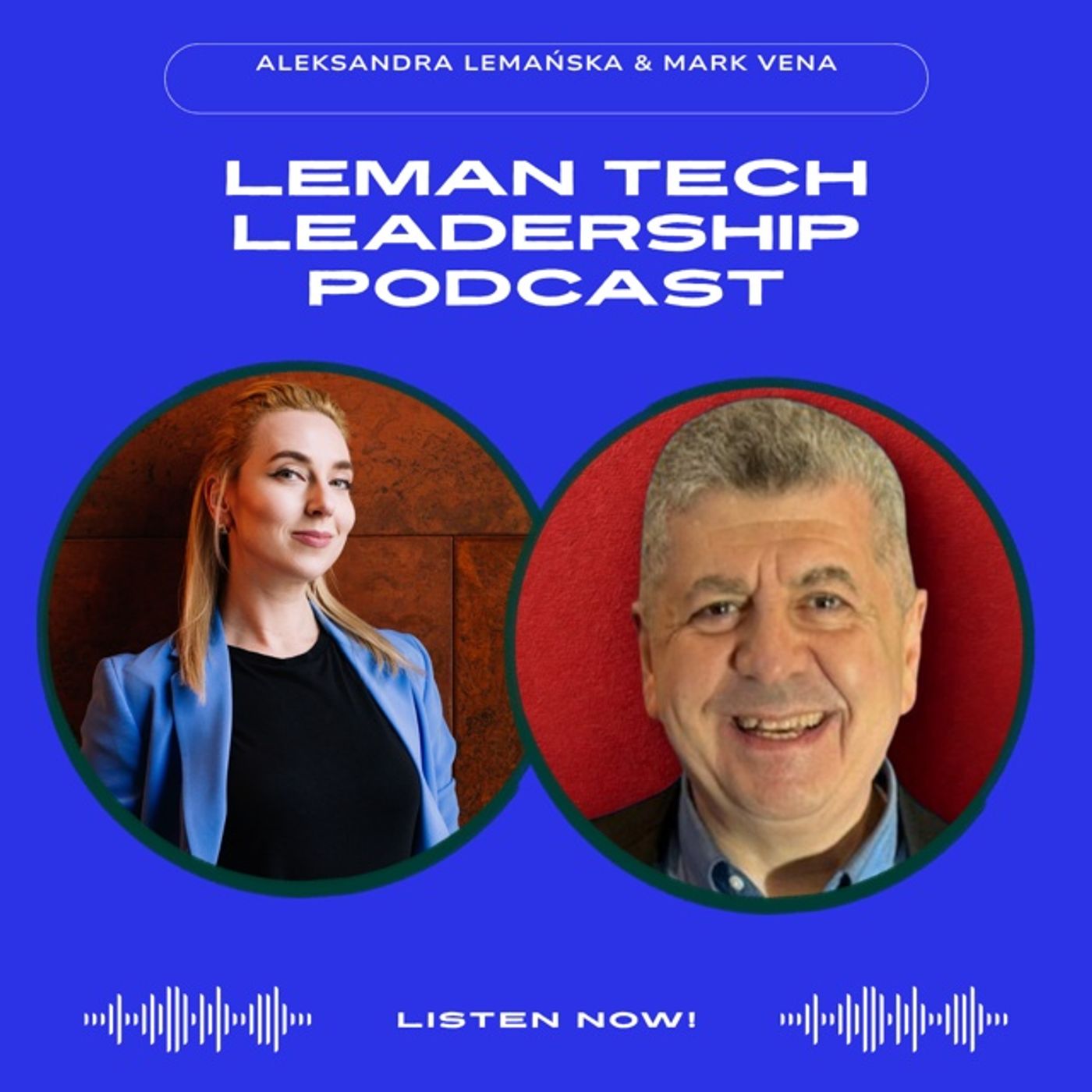 #172 | What Silicon Valley Taught a Tech Analyst About Marketing, Authority, and Never Burning Bridges w/ Mark Vena73 / 100#171 | Tech Leadership Q&A: Am I Actually Good at This… or Did I Just Get Lucky?47 / 100