
Leading Her Introvert Way · 2026-06-24 · 14 min
Key moments - from our scoring
Substance score
30 / 100
Five dimensions, 20 points each
Dr. Nicole Bryan challenges the widely accepted professional advice that you should leave your personal life at the door - a narrative she argues was never designed for Black women leaders in the first place. She makes the case that the personal and professional are inseparable: your sleep deprivation, relationship stress, emotional state, and past workplace wounds directly shape how you show up as a leader, whether you acknowledge it or not. Rather than advocating for oversharing at work, Bryan defines integration as conscious awareness - knowing what you're carrying and making deliberate choices about how it shows up in your leadership instead of letting it run unconsciously. She describes the cost of enforcing false separation: leaders who are emotionally disconnected, white-knuckling professionalism, or so suppressed they've lost access to their instincts, empathy, and creativity. The episode is essential listening for ambitious introverted Black women in leadership transitions who find themselves exhausted by containment, struggling with the manager-to-executive shift, or unsure why their leadership presence isn't landing despite hitting deliverables.
The conventional wisdom to "leave your personal life at home" and stay objective at work was designed for a version of professionalism that was never built with Black women in mind. This advice fails because you cannot actually separate your personal and professional self - you are one person - so suppressing personal experiences quietly affects your leadership, team dynamics, and career advancement without your awareness.
Unprocessed stress - sleep deprivation, relationship conflict, or past workplace wounds - occupies mental bandwidth and emotional energy, leaving you depleted, short with your team, risk-averse, or emotionally disconnected. Your team feels this lack of presence and energy, which influences how they experience your leadership and advocate for you in rooms you're not in.
Integration is not about oversharing in one-on-ones; it's about awareness and making conscious decisions about how your personal state shows up in your leadership. It means recognizing when you're not at your best and strategically protecting your team, postponing meetings that require full capacity, or processing stress in appropriate spaces like coaching, therapy, or journaling so it doesn't spill out unconsciously.
Leaders who integrate their whole selves become more present, powerful, and effective. They build better teams, earn more trust, learn more, and advance further. Integration is framed as advanced leadership and intelligence - something the most effective executives master - rather than unprofessionalism or weakness.
Our reviewer’s read on each dimension, with quotes from the episode.
The episode has a clear and coherent thesis but repeats the same core point - personal and professional life cannot be separated - across most of its runtime with limited new ideas added per pass. The three failure archetypes (checked-out, white-knuckling, disconnected) and the brief practical prescriptions add some density, but the intro/outro advertising overhead and constant restatement dilute the idea-per-minute rate.
All of their energy is going toward containment, towards holding it together, toward keeping it all in, toward making sure nothing bleeds through. And containment is exhausting.
it looks like you waking up on a hard morning and saying, okay, I did not sleep. I am not at my best today. Let me be strategic about where I put my energy.
The 'bring your whole self to work' concept is well-established in coaching and leadership literature; framing it specifically for Black women inside a systemically exclusionary professional norm adds modest novelty but does not constitute a genuinely fresh or contrarian argument. The three failure-mode archetypes are a useful organizing device but are not original frameworks.
That advice was never designed for someone like you. It was designed for a version of professionalism that was never built with us as black women in mind.
You cannot coach around these things. You have to coach through them.
This is a solo episode; the host is a psychologist and self-described former Fortune 500 executive turned leadership coach, which is a legitimately relevant practitioner background. However, the episode itself does not demonstrate deep domain expertise - no advanced frameworks, research, or hard-won operational insight surface to validate the credential claim.
I'm a leadership coach, a psychologist, and a former Fortune 500 executive.
the most effective executives that I have ever worked with or worked alongside have mastered, even if they have never called it that.
The episode relies almost entirely on a single, fully anonymized coaching client anecdote with no named companies, no research citations, no metrics, no timelines, and no dollar figures. All advice remains at a high level of abstraction, making claims impossible to verify or operationalize without further context.
I've recently started working with a new coaching client
The relationship stress she was carrying was sitting right on top of her ability to think clearly in high-stakes meetings.
This is a solo monologue with no guest and no dialogue, so the dimension is evaluated on host craft alone: the episode is well-structured with a clear thesis, three illustrative patterns, and a concrete example, but there is no intellectual pushback, no co-constructed thinking, and the rhetorical questions to the listener are generic rather than probing.
What have you been telling yourself doesn't belong in your professional life?
Now, I want to be really clear about something. I am not saying go into your next one-on-one and unload everything that's going on at home.
Computed from the transcript - who did the talking, and the words that came up most.
Every leadership book says the same thing: leave your personal life at the door. Show up professional. Stay objective. Keep it separate. But what if that advice was never designed for you? In this episode, Dr. Nicole Bryan breaks down the myth of separation - the deeply ingrained belief that your personal life and your professional life can and should exist independently of each other. The truth is, you are one person. And the sooner you stop pretending otherwise, the more powerful you become as a leader. In this episode you'll hear: Why the advice to "keep it separate" was never built with Black women in mind - and what it has quietly been costing you The three ways women leaders pay the price when they try to enforce the separation What integration actually looks like in practice - and why it's advanced leadership, not weakness The coaching conversation that reveals what most women have been conditioned to believe about their own development If you've ever white-knuckled your way through a hard morning telling yourself you were fine - this episode is for you. You already know something needs to change. Book a call with Dr. Nicole and let's figure out exactly what that is:
Transcribed and scored by The B2B Podcast Index.
SPEAKER_00: Hey lady leader, welcome back. Or if you're new here, I am so glad that you found us. My name is Dr. Nicole Bryan, and I'm your host and your biggest, biggest cheerleader.
I'm a leadership coach, a psychologist, and a former Fortune 500 executive. And I created this podcast specifically for you, the ambitious, introverted black woman who knows she is meant for more. Here on this podcast, we talk about getting you promoted to the executive level, growing you into the leader that your title requires, and building a team that actually performs. And we do all of it without you having to shrink yourself, pretend to be extroverted, or hustle yourself into the ground.
Now, if any of that sounds like what you need, then stay tuned. Now, before we get into today's episode, especially for anyone who is new here, I want to take a moment to share exactly what we do and who we do it for. I work specifically with ambitious black professionals who are introverted women and leaders. And the work I do with them centers around three core problems.
The first problem is getting you your next executive level promotion. Because that path is not always clear and it is almost never handed to you. We build the strategy to get you there. Problem number two is closing the skill gap between being a strong manager and being a true executive leader, because those two roles are very different.
The transition requires new capabilities, new thinking. And problem number three is setting up your new team or your new department for high performance. Because getting the executive seat is only the beginning. What you do once you're in it determines everything that comes next.
If any of these three problems, these three challenges that I described are what you're facing right now, then you are in exactly the right place. Now let's get into today's episode. Okay, so today is going to be short and sweet for us because I want to talk about something that I think we all know to be true, but we don't always say it out loud. And if we do say it out loud, we don't always believe it.
You cannot leave yourself at the door. And what am I talking about? When you walk into your company, when you log on to your computer, when you show up at work, you cannot leave yourself at the door. Now I know, I know.
We've been taught the opposite. We've been told show up professionally, be objective, leave your personal life at home, and don't bring your emotions to work. Keep it separate. But here's what nobody has told you.
That advice was never designed for someone like you. It was designed for a version of professionalism that was never built with us as black women in mind. And it has been costing you, lady leader, quietly, consistently, in ways that you may not even fully recognize yet. So today we're gonna talk about why the personal and the professional are not two separate things.
They never have been, and what it actually looks like to stop pretending that they are. Let me start with a story. I've recently started working with a new coaching client, and like I do at the beginning of every coaching relationship, I spent our first session explaining how our coaching together would work, what she could bring, what we'd work on together, how we'd move. And she asked me everything.
Everything and anything that feels like a challenge you are facing. If your baby's up all night and you came to work running on two hours of sleep and you couldn't think straight in your nine o'clock meeting, bring that. If you had a fight with your husband and you're sitting in back-to-back meetings, physically present, but mentally somewhere else entirely, bring that. If something is living in your head and taking up space that should be going toward your work and your leadership, that belongs in our coaching.
And she paused and then she said, Really? Yes, yes, lady leader, really. Because here's the truth. You cannot separate what is happening in your life from how you show up at work.
Full stop. It's not possible. You are one single person. You do not have a work brain and then a separate home brain that you can swap out at the door every morning.
You bring all of you, your energy, your mood, your stress, your joy, your anxiety, your confidence, all of that comes with you every single day. The question is not whether your personal life affects your professional performance, because we know it does. It always has. The question is whether you're aware of it and whether you are dealing with it, or whether you are pretending it isn't happening while it quietly runs the show.
Now, let me tell you what I see when we as women try to enforce the separation. What I see is leaders who are physically in the room, but they are emotionally somewhere else. They're going through the motions, they're hitting the deliverables sometimes, but there's no energy behind what they're doing. And people, they feel that.
Your team feels it, your peers feel it, your boss feels it. And nobody's gonna say it out loud, but it affects how they see you, how they experience your leadership, and ultimately how they advocate or don't advocate for you when your name comes up in rooms that you're not in. Now, I also see women who are white knuckling it, like gripping so tightly onto the professional mask that they have no bandwidth left for actual leadership. All of their energy is going toward containment, towards holding it together, toward keeping it all in, toward making sure nothing bleeds through.
And containment is exhausting. It leaves you depleted by 12 p.m. It makes you short with your team.
It makes you risk averse because you just do not have the capacity for anything else. And then I also see women who have completely disconnected so completely that they've lost access to what made them a great leader in the first place. Their instincts, their empathy, their ability to read a room, their creativity. All of it gets dulled when you spend years suppressing the personal in service of the professional.
None of these are the leader you are trying to become. And all of them are a direct result of trying to maintain a separation that was never real to begin with. Now, I want to be really clear about something. I am not saying go into your next one-on-one and unload everything that's going on at home.
That is not what I'm saying, and that is not what this is about. What I am saying is that integration is about awareness. It is about knowing what you are carrying and making conscious decisions about how that shows up in your leadership rather than letting it run unconsciously in the background, completely unchecked. So, what does that actually look like in practice?
Okay, so it looks like you waking up on a hard morning and saying, okay, I did not sleep. I am not at my best today. Let me be strategic about where I put my energy. Let me protect my team from my own frustration.
Let me postpone the conversation I was gonna have that requires me to be at my full capacity. It looks like you recognizing that the tension you are feeling in a particular work relationship is being amplified by something that has nothing to do with that person and choosing to address the root instead of letting it fester and damage the relationship. It also could look like you having a space, whether that's in coaching or therapy, a trusted friend, or even just your journal, where you actually process what's going on.
So it doesn't back up and spill out in places that cost you. Integration is not weakness. Integration, my friend, is intelligence. It is advanced leadership.
And it is something that the most effective executives that I have ever worked with or worked alongside have mastered, even if they have never called it that. Now I want to come back to that new client for a moment, because her question, what can I bring to coaching? It revealed something a little deeper. She had been conditioned to believe that certain parts of her were not relevant to her career development, that her life outside of work was separate from her growth as a leader, that the personal stuff was just noise, a distraction from her real work.
And that belief, that belief, it was keeping her stuck. Because the things that she thought were irrelevant, they were the whole story. The way she was managing her energy at home was directly affecting how she showed up for her team. The relationship stress she was carrying was sitting right on top of her ability to think clearly in high-stakes meetings.
The old wounds from a previous job, from a manager who dismissed her from a team that didn't value her, were still shaping how she moved in her current organization. You cannot coach around these things. You have to coach through them. And the first step is giving yourself permission to acknowledge that they actually exist and that they matter.
So let me ask you, lady leader, what have you been leaving at the door or trying to leave at the door? What have you been telling yourself doesn't belong in your professional life? What have you been suppressing and managing and trying to contain that is quietly affecting how you lead, how you advocate for yourself, and how far you are willing to go? Here is what I want you to take from today's episode.
You are not a professional who sometimes has a personal life. You are a whole and complete person who also happens to have a career. And the sooner you stop trying to make those things strangers, the more powerful, the more present, and the more effective you are going to be as a leader. Your experiences, all of your experiences are data.
They are information about who you are, what you need, and how you operate. And when you bring awareness to that, you don't become less professional. You become more human. And more human leaders build better teams.
They learn and earn more trust. And they go further consistently. In the next couple of episodes here on Leading Her Introvert Way, we're going to be going even deeper on this. We're going to talk about what it costs you when protection starts masquerading as professionalism.
And we're going to talk about reclaiming the joy in your work because that is yours and nobody should be walking around with it. Now, if today's episode resonated with you, share it with another black female leader who actually needs to hear it. And if you want to understand exactly where you are on your journey to the executive level, I have something very special coming your way. I'm going to be releasing my new quiz, which is going to help you identify where you are on your journey to the executive level.
Because the number one problem that I hear people telling me is they don't know how to figure out what they need to be doing differently to get their promotion to the executive level. They're getting feedback from all different places. The feedback is either conflicting with each other or it doesn't ring true, and they just don't know where to start. So I created this quiz that you can fill out in three to four minutes and you can pinpoint exactly the two or three things you need to start working on right now.
It will help you identify your current stage and exactly what to focus on next. So until next time, lady leader, keep going. I am rooting for you. And keep leading your introvert way.
Other episodes covering the same guests and topics, from across The B2B Podcast Index.
 217: How to interview a company before you take the job (The Martech job hunt survival guide, part 3)Humans of Martech · on Emotional intelligence in leadership83 / 100
 AI in Learning & Leadership: Why Human Skills Still Win with Priscila Bala and Michelle KingThe LeaderLab: Powered by LifeLabs Learning · on Emotional intelligence in leadership82 / 100
 Leading in This Moment! w/ Julia RockLiving Corporate · on Black women in corporate environments78 / 100
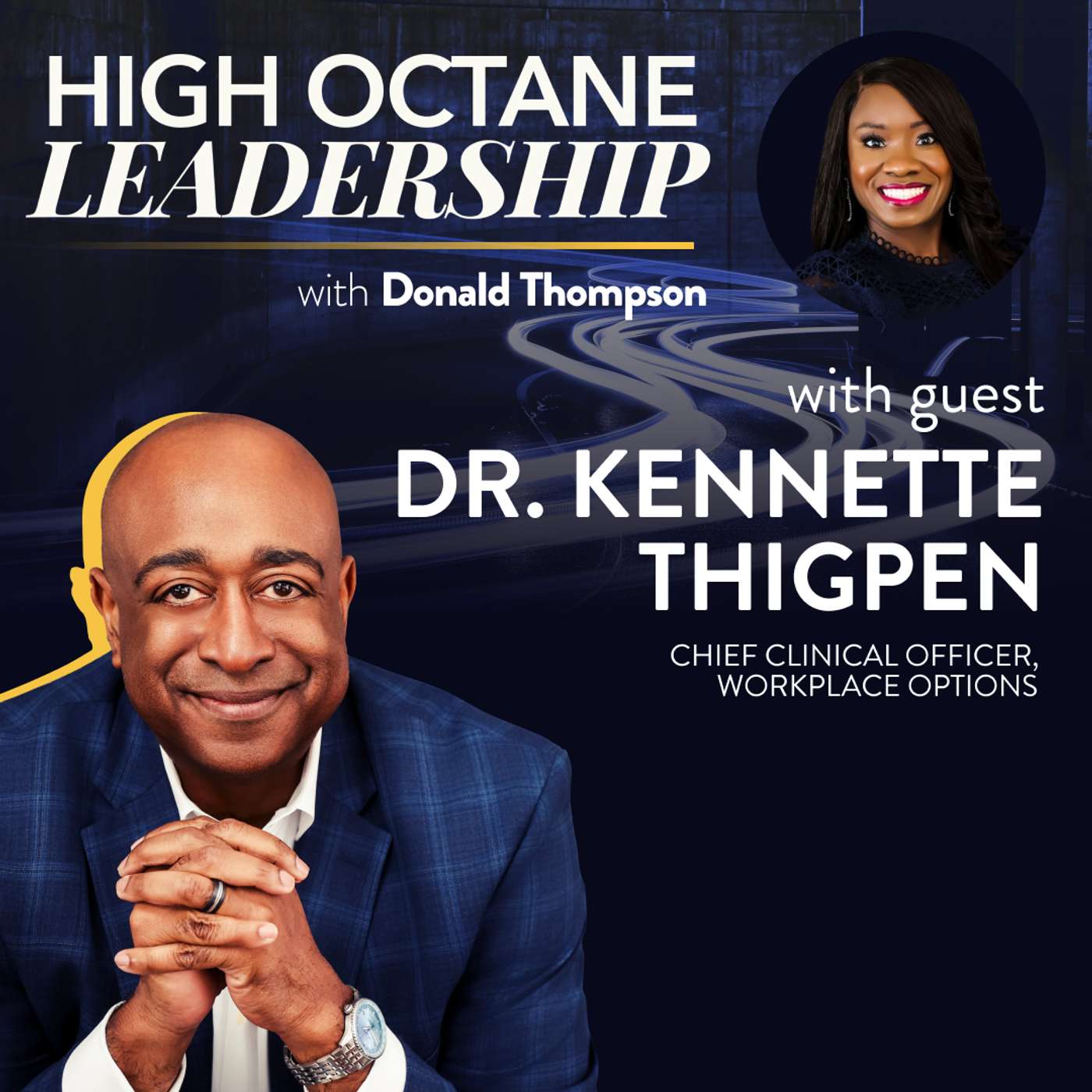 Why Leaders Avoid Mental Health Conversations | Dr. Kennette ThigpenHigh Octane Leadership · on Emotional intelligence in leadership73 / 100
 Why Grit Is Killing Your High Performers And What Elite Teams Do Instead | Dr. Amy AtheyFrom The Top with Chad Hesters · on Executive leadership development62 / 100
 Leadership Lessons from a CEO Coach | Ft. Surabhi ShenoyManage Better with Anshuman Tiwari · on Emotional intelligence in leadership62 / 100
 147: Five Excuses Your Company Is Using To Keep You Hopeful, But Not Promoted51 / 100
 143: Black Women Leaders Can Have The Soft Life Too58 / 100
 139: Why Black Women Leaders Get Overlooked (Even When They're the Most Qualified in the Room)59 / 100
 137: The Seasons of Your Career: How to Stop Burning Out and Start Being Strategic This Summer44 / 100
 136: After the Salary Negotiation: What Black Women Leaders Do Next To Keep Winning57 / 100