
Leadership Clearly Podcast · 2026-07-27 · 27 min
Key moments - from our scoring
Substance score
14 / 100
Five dimensions, 20 points each
Julie Wagner tackles the identity crisis beneath leadership - the whispered question "Who am I to be leading?" that most leaders never say aloud. Drawing on her own experience refusing a worship pastor role before accepting it, Wagner argues that the self-doubt plaguing competent leaders is not evidence of misfitting but evidence of the humility that keeps leaders humble, teachable, and God-dependent. She anchors this in Moses's objections at the burning bush (Exodus 4:10-12), where God doesn't inflate Moses's confidence but redirects it: the qualification was never about Moses's capability but God's presence. Wagner distinguishes fear-based objections (self-focused, isolated, loud) from wisdom-based reservations (objective, counsel-driven, peaceful), and explains God's pattern of choosing the unqualified - the younger brother, the fisherman, the woman at the well - so that his power, not human brilliance, gets the glory. The episode is for anyone in ministry, business ownership, or team leadership who feels like a fraud despite being trusted with responsibility.
According to Wagner, calling is based on God's presence and promises, not your personal qualification. Take the question to trusted, godly people who know you and ask plainly if they see the calling in you; wisdom grows in counsel, not in isolation. If what remains underneath after honest prayer and counsel is fear (panic about failure or being seen) rather than genuine wisdom about role fit, that fear is likely a burning bush moment, not a stop sign.
Moses objected that he was not good with words, that his words got tangled, and he was the wrong person for the job (Exodus 4:10). God responded not by inflating Moses's confidence but by asking who made his mouth and promising to be with him and instruct him in what to say, redirecting the question from Moses's adequacy to God's presence.
Fear is loud, self-focused, and grows in isolation; it says "I will fail" and thrives at 2 a.m. alone. Wisdom is quieter, objective, and grows in counsel; it looks at genuine fit and season and comes with peace, not panic. True wisdom brings relief and clarity; fear brings escape dressed up as discernment.
God chooses the overlooked and unimpressive on purpose so that when something remarkable happens through them, the credit points to God's power, not human brilliance. This is God's deliberate strategy to prevent boasting and to make his strength visible through human weakness.
Wagner's example with Moses shows that the feeling doesn't fully go away and was never supposed to - Moses kept objecting even after God's promise. The requirement is not feeling ready but being willing to move forward while unqualified, and God supplies the rest often through the people he puts around you to support you.
Our reviewer’s read on each dimension, with quotes from the episode.
The episode is almost entirely composed of well-worn Christian leadership platitudes, personal emotional anecdote, and a very commonly cited biblical passage. The single framework offered (fear vs. wisdom discernment) is broadly useful but generic and underdeveloped, with no novel claims a B2B operator would not have already encountered.
The feeling of being unqualified is not a disqualification.
God is not looking for qualified people... He's looking for available people. People humble enough to feel their inadequacy and brave enough to go anyway leaning on him.
The core thesis - God calls the unqualified, Moses is the proof text, weakness is a feature not a bug - is arguably the single most recycled message in Christian leadership media. There is no contrarian angle, no first-principles reasoning, and no reframing that departs from the genre's standard repertoire.
Moses is not the exception. He's the pattern.
Your sense of being unlikely, um, overlooked. Not the obvious choice. That is not evidence that you are outside of God's pattern. That is the center of God's pattern.
This is a solo monologue episode; there is no guest at all. The host identifies herself as a worship pastor at a Celebrate Recovery ministry and an entrepreneur, but presents no documented operational track record at scale relevant to a B2B audience.
I am Julie Wagner and this is the show where we clear the noise so you can lead from your real voice with clarity, with conviction, and with Christ at the center of it all.
I am the worship pastor at our Celebrate Recovery ministry at my church, and I get to lead on the weekends as a worship leader.
There are no named companies, no metrics, no timelines, and no dollar figures. The only concrete evidence offered is a personal anecdote about feeling nauseous before a church meeting and two Bible verses cited by chapter and version. Everything else is assertion and abstraction.
I had gotten a call from one of our worship pastors, our main worship pastor at my church, and he said, you know, hey, um, can you come into the church early on a Friday?
This is Exodus 4:10 NLT version. Oh, Lord, I'm not very good with words.
The episode is an uninterrupted solo monologue with no guest, no questions, and no pushback mechanism whatsoever. The host uses rhetorical questions directed at the listener, but these serve as motivational devices rather than any form of intellectual probing or genuine dialogue.
So grab your drink. Maybe you're drinking an Aulani Nu just like myself.
How many callings die in the car before the meeting, killed by a feeling that we mistook for a fact?
Computed from the transcript - who did the talking, and the words that came up most.
Who am I to be doing this? If that question has ever whispered at you, or shouted at you at 2 a.m., this episode is for you. Because that exact feeling of "who am I" is not proof that you're not called. Very often, it's the fingerprint of the very people God tends to call. Julie opens a 3-part identity series with the question underneath all the other questions: am I even supposed to be leading, or am I just faking it until someone figures me out? In this episode: Why feeling unqualified is not the same as being unqualified The most famous "I'm not good enough" conversation in the Bible, and what God's answer changes Why your calling was never based on your qualification, but on His presence How God chooses the unlikely on purpose, and why How to tell the difference between fear talking and genuine wisdom that a role isn't yours Scripture anchors: Exodus 4:10-12 and 1 Corinthians 1:27 (NLT) Your one thing this week: stop answering the calling question by trying to convince yourself you're qualified. Answer it the way God answered Moses, the question was never whether you're enough. It's whether He's with you. This is part 1 of 3 in our identity series: Calling → Confidence → Rest.
Transcribed and scored by The B2B Podcast Index.
Speaker A: Okay, I've got my pink slew in hand, and I want to start today with the question underneath all the other questions, the one you have probably never said out loud, because seeing it out loud feels like admitting that something's wrong with you. Who am I to be doing this? Who am I to be leading this team, to be running this ministry, to be building this thing, uh, standing up front in front of people, having people look to me for answers. There are people more qualified than me, more experienced, more confident, more put together. People who didn't cry in their car before the meeting. Who am I to think I am supposed to be the one leading? If that question has ever been whispered at you or shouted at you at 2, uh, o' clock in the morning, this episode is just for you. Because I want to tell you something that took me years to believe. That question, that exact feeling of who am I? Is not proof that you're not called very often. It's the fingerprint of the very people God tends to call. Let me show you what I mean. Well, hey there. Welcome back to leadership Clearly. I am Julie Wagner and this is the show where we clear the noise so you can lead from your real voice with clarity, with conviction, and with Christ at the center of it all. We have spent the last few episodes deep in the hard mechanics of leadership. Difficult conversations, pushback, protecting your team. Today, I want to go somewhere different, somewhere deeper, somewhere quieter. Underneath all of the how to of leadership is a question of identity. And if we never settle it all, the tactics in the world, they just sit on sand. The question is simply, am I even supposed to be doing this? Am m I called to lead? Or am I just faking it until someone figures me out? Here is where we are going today. First, the feeling of unqualified and why it is so common among exactly the people who should be leading. Then the most famous I am not good enough conversation in the entire Bible because God has heard this exact objection before and his his answer, it will reframe everything for you. Then how to actually tell the difference between fear talking and genuine wisdom that a role is not yours. And then how to walk forward when you still feel unqualified because spoiler alert, the feeling does not fully go away and it was never supposed to. So grab your drink. Maybe you're drinking an Aulani Nu just like myself. Or you're grabbing some coffee or something, some water or tea. Grab your note taking device or your journal and let's dive in. Let's start by naming the feeling honestly, because I Think a lot of us are carrying it in secret and we're assuming that we're the only one. You feel unqualified. You look around at other leaders and they seem so sure of themselves, so natural, so obviously meant for it. And you feel like you're holding it together with some tape and prayer. You're waiting for the day that someone taps you on the shoulder and says, hey, we figured it out about you. We know you do not actually belong here. There is even a name for this that has floated all over the Internet and I'm sure you've seen it before. Imposter feelings. This sense that you're a fraud who has somehow fooled everyone. And I want to say this clearly, having felt every bit of this, uh, myself, feeling unqualified is not the same as being unqualified. Those are two completely different things. And guys, we tend to constantly confuse them. Here's what I have come to believe, and it's almost the opposite of what the world tells you. The feeling of being unqualified is not a disqualification. Because you know who scares me as a leader? The person who has never once questioned whether they should be leading. The person with zero self doubt, total certainty, no sense of the weight of it. That person is often dangerous. Because leadership without humility, guys, it becomes ego. And let me tell you, ego wrecks people. The very self awareness that makes you feel unqualified is the very thing that will keep you humble, keep you dependent on God, keep you actually listening to the people that you lead. Your sense of your own inadequacy held rightly is not a bug, it's a feature. Think about the leaders who have done the most damage in companies and churches and families. Almost none of them were undone by too much humility, okay? They were undone by too much certainty. The confidence never checked itself. The leaders so sure that they were right, they stopped listening, stopped growing, stopped being reachable. Meanwhile, the leader who quietly wonders, oh, am I getting this right? Who stays a little uneasy with the responsibility, who keeps asking God and asking others, that person tends to stay safe to follow. So when you feel the weight of who am I to do this? My friends, don't despise that, steward it. Well, that weight is part of what makes you trustworthy in other people's lives. Now, I don't wanna romanticize, uh, crippling self doubt. We're gonna deal with, uh, the confidence side of this in the next episode because I think that chronic self doubt is real and it really does need to be addressed. I need you to hear this one foundational thing, the fact that you feel too small for this does not mean you are wrong for it. Some of the most gifted leaders I know feel the most unqualified precisely because they take the weight of it seriously. Do not read your humility as a verdict. Let me tell you about one of the days that this got real for me. I remember sitting in my car before a moment that I knew I was being called to. I knew that God had something big and exciting for me, and he'd been nudging me towards this for a long time. And this is a part of my testimony. Okay. Uh, this is. This is something that I'm very open about talking about with people. I had gotten a call from one of our worship pastors, our main worship pastor at my church, and he said, you know, hey, um, can you come into the church early on a Friday? I need to sit down and talk with you. Okay. Mind you, I knew he was stepping into a larger role, so he needed some people to fill positions to support, like, other ministries in the worship aspect. So, I don't know, I just didn't feel excited. I was. I was really nervous. I actually felt nauseous. I get nauseous a lot whenever I get nervous or I'm uneasy about something. So I had a list. I literally had a list in my head that was running constantly of every reason why I was the wrong person for this worship pastor position, if that's what he was going to offer me, that I didn't have enough experience, I didn't have enough social media followers or I just wasn't polished enough. I was. I'm. I'll be very frank here. I used to be a larger lady. I was. I've been on a weight loss journey for the last almost two years now, so I'm down a lot of weight. Thank you, Jesus. But, you know, I was a big girl. I was. I was a big girl. And I was like, I'm too fat to be on stage, to be leading. I was fine with, you know, leading a song here and there and stuff, but leading actual, like, team of people, like what? I knew other people were doing it better. And the fact that just kept running through my brain was, who am, um, I to add my voice to the pile? Right? I actually said that out loud, by the way, in the car alone. Like, who would listen to me? Why would anybody listen to me or want me to be their leader within the ministry space? The. The marketplace space was whole different story because I had already established myself for so long, but the ministry space. Different. Different story. Which is weird because I don't know why it would be different, because I've been at this church at this point for my gosh, like nine years at this point. So, yeah, I almost turned my car around. Not gonna lie. I. I really. I really almost let that feeling of the unqualified make the decision for me. And here is what I know now that I did not know then. That feeling was never information about my calling. It was just fear. And fear is a liar with a very convincing voice. If I had let it drive, I would have missed the very thing that God actually had for me on the other side of the parking lot, on the other side of those church do. I am the worship pastor at our Celebrate Recovery ministry at my church, and I get to lead on the weekends as a worship leader. And I have to tell you, I don't take that lightly. That is not, uh, me going on and singing a song. I lead a team of people that I pastor for and I care for and I love them. There's so much that's encompassing when you have a team that you lead in the marketplace. Maybe you own your own business, but it's totally different when it comes to volunteers. That is a whole nother podcast we should probably get into at one point. I gotta think about this, right? How many callings this. I want you to think about this. How many callings die in the car before the meeting, killed by a feeling that we mistook for a fact? I want you to sit on that for a second. I'm gonna let you in on a little secret. God has already heard these exact objections. We are not the first people to object to a calling. Here's what I find so comforting. The feeling of, who am I to do this? It's not new, it's not modern, and it's also not a sign of weak faith. Okay? I want you to remember that it's right there in scripture, in the mouth of one of the greatest leaders that ever lived in a conversation with God himself. So I'm going to set the scene for you. We're going to be talking about one of my favorite figures in the Bible, because he's not a character. He was an actual person. Moses. He was standing in front of, uh, a burning bush. God literally had just told him he was going to lead an entire enslaved nation out of Egypt, out, um, from under the most powerful ruler on the earth at that time. And how does Moses respond? He did not respond with confidence. Not with, yes, here I am, um, send Me Listen to what he actually said. This is Exodus 4:10 NLT version. Oh, Lord, I'm not very good with words. I never have been and I'm not now. Even though you have spoken to me, I get tongue tied and my words get tangled. Do you hear that? Is the calling question. Three and a half thousand, uh, three, three thousand ish years ago. I'm m. Not good enough. I don't have what this requires. You've got the wrong person. Notice the specific thing that Moses is insecure about. Communication. His words. The exact thing God was calling him to do. Stand up and speak. Is the thing he feels the least qualified for. And if you've ever felt the least equipped for the very thing you're being asked to lead, you're in extremely good company right now. Now, I want you to watch how God responds. He doesn't say, you know what, Moses? You're right. Let me find someone more polished. He also doesn't say, come on, you're great. Believe in yourself. You've got this. Look what he actually says. This is Exodus 4:11 12 NLT version. Who makes a person's mouth? Who decides whether people speak or do not speak? Hear or do not hear, See or do not see? Is it not I, the Lord? Now go. I will be with you as you speak, and I will instruct you in what to say. Guys, this is everything. God doesn't answer Moses's insecurity by inflating Moses. He answers it by redirecting Moses off of himself and onto God. Who made your mouth? I did. The very limitation you're pointing at, I made that too. And I'm not surprised by it. And it doesn't disqualify you because the qualification was never supposed to be you in the first place. And then the promise, that changes everything. Now go. I will be with you. I will instruct you. Here's the reframe I want you to carry out of this episode. Okay? Your calling was never based on your qualification. It was based on his presence. Moses was not qualified because he was capable. Moses was qualified because God would be with him. And that means the entire question shifts. The question is not, am I good enough for this? The question is, has God called me to this and will he be with me in it? Because if that answer is yes, then your inadequacy is not a problem for God to reject you over. It's a canvas for God to show up on. And I love that God didn't scold Moses for the question. Look at the tenderness in it. He doesn't say, how dare you doubt me? Get it together. He meets the fear with promise. I will be with you. I will instruct you in what to say. God isn't annoyed by your who am I? Okay? He answers it gently with himself. If you've been afraid that your self doubt is offensive to God, that He is up there tapping his foot, waiting for you to muster more confidence, my friends, let that go. The God of the burning bush meets honest inadequacy with patience and presence. He always has and he always will. And one more thing about Moses that I don't want you to miss. Even after all of this, Moses still argued. He kept objecting. And God, in his everlasting patience, gave him his brother Aaron to help him. So even moving forward, Moses was not suddenly feeling amazing about himself. It was Moses, uh, obeying while still shaky, with God's support provided, of course, which means you do not have to wait until you feel ready. Ready is not the requirement. Willing is the requirement. And God supplies the rest, often through the people he puts around you. Moses is not the exception. He's the pattern. Look across Scripture and you will find God has a striking habit of choosing the person nobody would have picked. The younger brother, the shepherd boy, the ex persecutor, the fisherman, the woman at the well. Over and over, God bypasses the obvious qualified, impressive candidate and reaches for the overlooked one. And Paul tells us this is not an accident. It is God's deliberate strategy. First Corinthians 1:27 says, Instead, God chose the things the world considers foolish in order to shame those who think they are wise. And he chose things that are powerless to shame those who are powerful. God chose things the world considers foolish, things that are powerless on purpose. Why Paul says a few verses later, so that no one can boast in his presence. Here is the logic to this. And it's beautiful once you see it. Okay. If God only ever used the most impressive, the most capable, obviously qualified people, we would all conclude that it was their brilliance that did it. But when God takes someone who feels completely unqualified and does something remarkable through them, there is only one explanation. And it points straight back to him. So sit with this. Your sense of being unlikely, um, overlooked. Not the obvious choice. That is not evidence that you are outside of God's pattern. That is the center of God's pattern. He's been calling the unqualified since the beginning precisely so that his power shows up more clearly through them. Your weakness is not in the way of what God wants to do. Through you. In God's economy, it's often the very doorway. And I, uh, want to name something very gently here because it hides underneath the calling. Question For a lot of us, okay, sometimes when we say I'm not qualified, what we're really doing is protecting our pride. I want you to think about it. If I wait until I feel fully qualified, fully ready, fully impressive, uh, before I step out, then whatever happens next, the credit is partly mine. Look how prepared I was. But God's way, calling the unready and showing up in their weakness means he gets the glory, not us. So sometimes our insistence that we're not ready isn't humility at all. It is the last hiding place of a self that wants to be the hero of the story. Real humility is not refusing to lead until you feel adequate. Real humility is going while still inadequate, so that when it works, everyone knows whose strength carried it. Now I want to talk about how to tell the difference between fear or wisdom. Okay, we're going to be really honest and I want to be really careful here because I don't want to hand you a spiritual bypass. Sometimes the feeling of I should not be doing this is fear. And God's answer is go, I am with you. But sometimes that feeling is genuine wisdom telling you that a particular role is not actually yours. And a mature leader learns to tell the difference. So let me give you a few honest ways to discern between the two. Because let me tell you, they can feel really similar from the inside, but they are not the same. I promise you that. So the first, fear focuses on you. Wisdom focuses on the fit. Fear says, I'm not good enough. I will fail. People will see right through me. It's all about your inadequacy, your image, your performance. Now wisdom. Wisdom is different. Wisdom looks at the actual role and the actual you and asks honest questions about the genuine fit gifting and the season. Fear is loud and it's more self focused and full of dread. Wisdom, um, is quieter. It's more objective. It's less about panic and more about clarity. If the voice is mostly about you looking bad, that's probably fear. Fear grows in isolation. Wisdom grows in counsel. Fear thrives when it's just you and your thoughts. At 2 o' clock in the morning. I know you know this. I know you're going, Mm mhm. Yep girl, I feel it. 2:00 clock in the morning, your head's spinning and it's fear. It's not good. Thoughts my friend. Drink some water. Go back to Bed. Stop thinking about it. Wisdom shows up when you bring the question to people who know you love you and will tell you the truth. So do not discern this alone, okay? Take it to trusted godly people and ask them plainly, do you see this in me? Am I running from something that I'm actually called to, or am I sensing something real? The people who know you well can often see your calling more clearly than your fear will let you see it. And if you're thinking, I don't know who I would talk to, I want you to think about this. Think about a best friend. Think about your spouse. Think about your parents, if you have a really good relationship with them. Um, even your kids, if you have older children and you have a good again, you have a good relationship with them. It could be someone as simple as your daughter asking your daughter, who's maybe 15 or 16, right? So the last fear says never. Peace says not yet or not this. There is a settled peace that can accompany a, uh, genuine noise. A sense of this is really not mine to carry. And that's okay. It does not come with panic. It comes with relief and clarity. Fear, on the other hand, does not feel like peace. It feels like avoidance dressed up as discernment. If you're honest, you usually know the difference in your gut. A, uh, true no brings peace. Fear just brings an escape. And here's the key that ties it all together, okay? If you take it to God and to wise people and what you keep finding underneath is the feeling of fear, the fear of failing, the fear of being seen, fear of not being enough, then my friend, that is not a stop sign. That is a burning bush. That is the exact moment God says, I know who made your mouth, now go. I'll be with you. Now, I want to take a quick pause for a second here because this episode connects directly to something I've built just for you. So much of the calling question comes down to identity. Knowing who you are and whose you are so clearly that the feeling of the unqualified cannot knock you off your feet. And that is exactly the ground. My flagship course, the Leadership Clearly Foundations course, is built to help you stand on. It's a five day course built around the Leadership clearly method. And it starts by clearing the internal noise, the self doubt, the borrowed voices, the, uh, who am I? So you can lead from your real God given voice. If this episode stirred something in you today, today that course is where you do the deeper work of settling it. So the link is in the show notes. It's over at Julie Wagner Co. Okay, now let's go ahead and close this out. Here is your one thing this week, your one challenge that I'm going to give you. Just one. Because clarity means less. Done deeply. Okay, this week, when the calling question whispers, who am I to be doing this? I want you to pause and answer it differently than you ever have before, okay? Do not answer it by trying to convince yourself that you are qualified. You might not be on paper. And, um, that's fine. Answer it the way God answered Moses. Say the question was neither. I want you to say the question was never whether I'm enough. The question is whether he is with me. And if he has called me here, then he is. So I will go, unqualified feelings and all because the one who made my mouth is going with me. Write this down if you need to journal it before the next meeting you're dreading. My adequacy was never the point. His presence always was. Here is the truth I want you to hold right now. God is not looking for qualified people. If he were, the whole Bible would read very differently. Okay? He's looking for available people. People humble enough to feel their inadequacy and brave enough to go anyway leaning on him. That kind of leader, the unqualified but available kind, is exactly the kind God has always loved to use. And that, my friend, can absolutely be you. So in the next episode, we're going to go one step further. Once you know you're called, how do you actually lead with confidence when the self doubt keeps showing up? That is the confidence gap. And I will see you there. So keep leading because clarity is an act of love. I'll see you next week. One quick sec before you go. If this episode helped you, the most valuable thing you can do is leave a review. It's how new leaders find this show on Apple podcasts. Open up the leadership clearly show page. Scroll down past the episode list to ratings and reviews. Tap the stars to rate and then write a review to leave a few words. It takes about 30 seconds and it genuinely helps my my friends. Clarity is an act of love. I will see you next week.
Other episodes covering the same guests and topics, from across The B2B Podcast Index.
 The Business of Learning, Episode 98: The Psychology of MotivationThe Business of Learning · on Imposter syndrome75 / 100
 Katherine Flechaus- What’s Really Holding You Back Isn’t Skill - It’s Belief And, You Can Fix It!From The Ground Up Show · on Imposter syndrome75 / 100
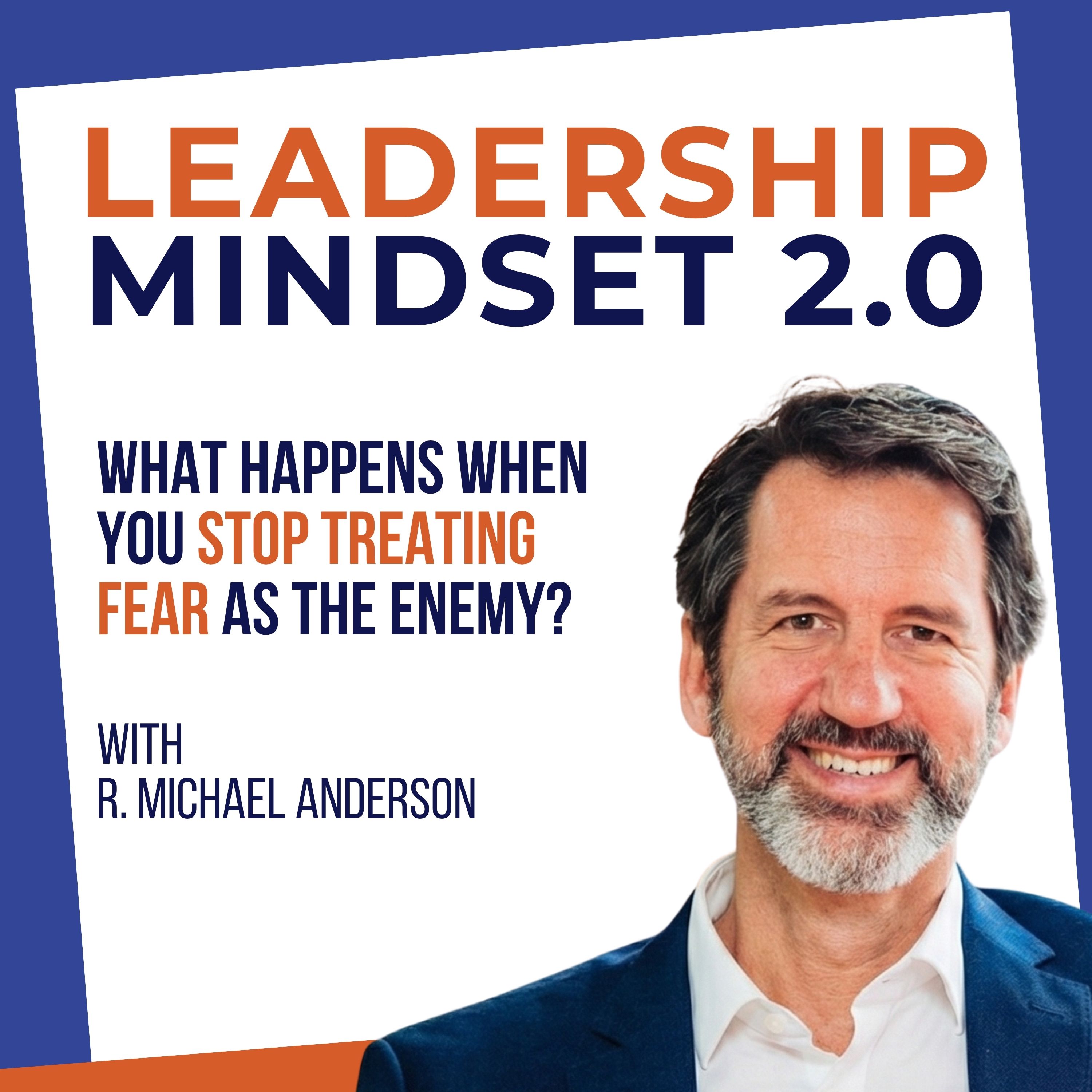 What Happens When You Stop Treating Fear as the Enemy?Leadership Mindset 2.0 · on Imposter syndrome71 / 100
 E56 Stop People-Pleasing, Get Fear-Optimized, and Finally Set the Boundary You Have Been Avoiding, with Amy GreensmithLead with Spark · on Imposter syndrome71 / 100
 Closing the Confidence GapLeadership Powered by Common Sense · on Imposter syndrome67 / 100
 Productivity Expert: Stop Procrastinating on What Matters Most | Jon AcuffCraig Groeschel Leadership Podcast · on Imposter syndrome67 / 100
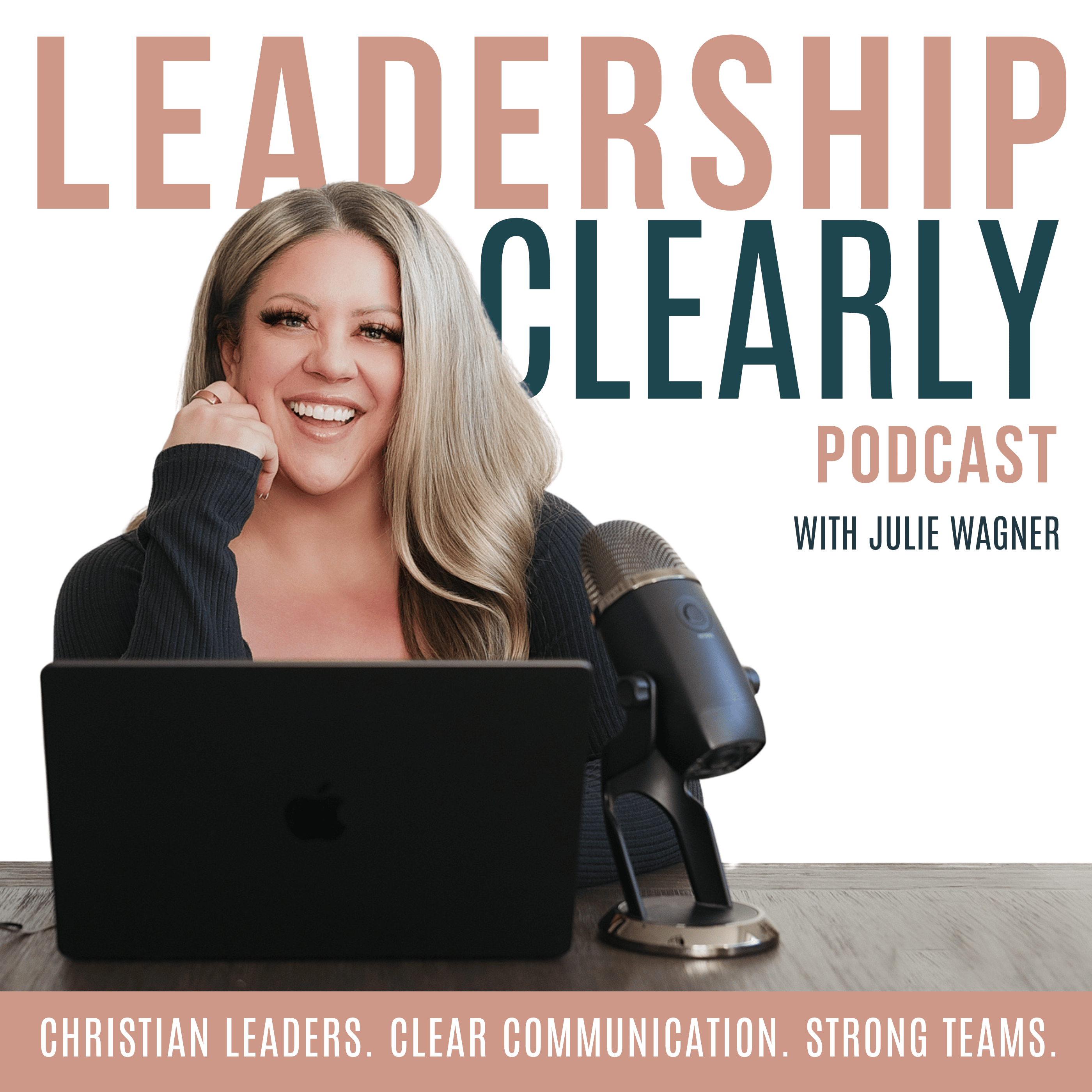 When They Push Back | Staying Clear and Calm With the Defensive, Unhappy, or Insubordinate Employee57 / 100You Are Not the Hero of Your Team's Story | What Donald Miller's StoryBrand Gets Right About Leadership42 / 100Rest is NOT a reward: Overcoming Christian Leadership Burnout and Reclaiming Sabbath Rest40 / 100What I Wish I'd Known About Leading Women55 / 100Clarity Is Protection | Why Clear, Documented Communication Protects Your People, Your Team, and You