
King Dems Podcast · 2026-07-07 · 1h 45m
Key moments - from our scoring
Substance score
52 / 100
Five dimensions, 20 points each
Arthur Carmazzi, widely recognized as the world's foremost culture and leadership expert, traces his journey from a "disturbed" child labeled "special" in school to founding a framework now used by 980+ licensed trainers across 29 countries. His breakthrough came not from early success but from failure - after moving to Singapore with borrowed capital, going half a million dollars into debt, and landing a corporate job where he became the very problem he despised: siloed, blaming others, and disengaged. Rather than blame the environment or people, Carmazzi realized the issue was systemic communication breakdown. He developed Directive Communication Psychology by studying how the brain's ambiguity relief process (a genetic mechanism for how people seek clarity) creates friction when different cognitive styles collide in teams. The Colored Brain Model identifies and measures these patterns, enabling leaders to predict which team members will be motivated or unmotivated, sometimes within a seven-minute interview. His framework helped one conglomerate save $17,000 weekly in wastage. For B2B operators building high-performing cultures, Carmazzi's work offers diagnostic tools for understanding why talented people underperform in certain environments and how leaders can adapt their own identity rather than copying others.
The Colored Brain Model identifies and measures each person's ambiguity relief process - how their brain naturally seeks clarity - which determines how they approach tasks, interpret others, and function in groups. By understanding these patterns, leaders can predict within a seven-minute interview who will be motivated or unmotivated on a team.
When a person's cognitive style and way of working misaligns with the team's communication system and norms, they unconsciously adopt the same siloed, blaming behaviors they initially despised, creating friction and reducing performance regardless of their actual capability.
After becoming an underperformer in a corporate role despite previous success, Carmazzi studied why he and his peers had different standards and behaviors in that environment. He discovered the brain's genetic ambiguity relief process and combined it with organizational psychology to create a framework explaining how communication breakdowns cause culture failures.
Directive Communication Psychology is a body of work combining the Colored Brain Model with insights on why and how people behave in groups; it's now licensed through 980+ trainers and coaches across 29 countries for organizational culture and leadership transformation.
Neurodivergent people often need environments that recognize and value their cognitive strengths, such as pattern recognition and problem-solving ability; one teacher's intervention - allowing Arthur to compete in front of peers rather than hiding his struggles - shifted his identity from "stupid kid" to capable learner.
Our reviewer’s read on each dimension, with quotes from the episode.
The episode contains some useful frameworks (colored brain model, culture evolution assessment) and specific operational examples (Emirates case study, 7-minute team prediction claim), but is heavily padded with personal anecdotes, life stories, and philosophical tangents that dilute insight density. Long stretches cover motivational self-help territory rather than actionable B2B operator knowledge.
we can literally, uh, in a seven minute interview, if we interviewed a team, we can literally predict what will happen within that team, who will be motivated, who will be unmotivated
within the scope of two weeks, the people of a company can create a culture and see very, very visible results within two weeks
The frameworks (colored brain, directive communication psychology) are presented as original, but the core ideas - matching communication styles, understanding personality differences, bottom-up culture building - are well-trodden in organizational development. The guest rehashes familiar personality-type frameworks without deep differentiation from Myers-Briggs, DISC, or similar models. The emphasis on 'authenticity' and 'finding your true self' is particularly conventional.
there are actually specific genes that are the same genes that will potentially give you certain disorders
if you're green brain and you try to be red, you're trying to literally be something that you are unable to
Arthur Carmazzi has built a consultancy with 980+ licensed practitioners in 29 countries and claims measurable ROI ($17k/week savings cited), suggesting real operational scale. However, the transcript reveals limited hard evidence of Fortune 500 client work at depth, and much of the authority derives from self-promotion rather than demonstrated track record of scaling teams or companies. He is a thought-leader/methodology vendor, not a practitioner who built and scaled organizations.
we have over 980 licensed directive communication psychology trainers and coaches in 29 countries
the processes that we use, we actually guarantee success. That means that companies don't pay if we don't meet certain KPIs
The episode offers some named examples (Jean Francois and Karina at Emirates, the University of Thailand neuroscience partnership) and one quantified metric ($17k/week savings), but lacks concrete data on scale, timeline, client outcomes, or comparative benchmarks. Most claims are anecdotal or aspirational (e.g., '7-minute prediction accuracy,' 'two-week culture change') without supporting metrics, sample sizes, or documented case studies. Heavy reliance on storytelling over data.
we saved the company $17,000 a week in wastage
in 2017, we teamed up with the University of Thailand Neur. Uh, Science department
The host (Speaker B) asks broad, softball questions and rarely pushes back on grandiose claims ('predict motivation in 7 minutes,' '2-week culture transformation'). The guest dominates airtime with lengthy anecdotes (stabbing in Puerto Rico, high school rejection, early life struggles) that entertain but don't deepen the business argument. Few challenging follow-ups, minimal evidence-gathering, and the host often pivots to personal validation or agreement rather than critical inquiry.
Amazing, amazing. And of course, uh, just to butcher your point as well
What an amazing story. And I see a couple of parallels between your story and my story
Computed from the transcript - who did the talking, and the words that came up most.
Sponsored by BetterHelp. Start your growth journey with a credentialed therapist and get 10% off at Most leaders believe culture comes from the top. Arthur Carmazzi explains why sustainable organizational culture is built from the bottom up through psychology, communication and shared ownership. Learn how great leaders create high performance teams, improve workplace communication and unlock innovation without relying on outdated leadership models. Arthur Carmazzi joins Ademola Odewade for one of the deepest conversations ever recorded on leadership psychology, organizational culture, communication, neurodiversity, AI and business transformation. As the creator of Directive Communication Psychology and widely recognised as one of the world's leading culture experts, Arthur shares practical frameworks that have helped organisations across the world improve engagement, trust and performance.
Transcribed and scored by The B2B Podcast Index.
Speaker A: The next question to ask is how am I affecting people? Now if I understand myself, I understand who I am in relation to the group dynamics, now I'll be able to see the effect that I am having on these people and also more importantly, the effect, uh, that those people are having on me. Because once I go into the environment, I can see, uh, okay, this person is, you know, doing this, this person's doing that. And we can, we can literally, uh, in a seven minute interview, if we interviewed a team, we can literally predict what will happen within that team, who will be motivated, who will be unmotivated and everything by having that awareness. That's the first part of course, understanding why that's happening. Why are you being affected? Why are they being affected with your way of doing things? Now once you have that awareness and then you can create your own ideal leadership identity based on who you actually are rather than trying to emulate somebody else.
Speaker B: We are live. Ladies and gentlemen, you once again, welcome to the Kingdoms podcast and Diary of a cfo. And today I've got with me a very, very important guest fighting out of the United States of America. Big welcome Arthur, the world's number one culture thinker, Kamazi. How are you today? Arthur, you weren't expecting that. That was not on your cookie for fortune cards, right?
Speaker A: Except I'm not in the United States. I'm actually in Bali. Wow.
Speaker B: Bali. Wow, wow, wow. Amazing.
Speaker A: Indonesia, Bali. Yeah.
Speaker B: Wow. Wow. What takes you, what takes the after to Bali?
Speaker A: I grew up in the United States, so thus the accent.
Speaker B: I see, I see, I see. So uh, my tradition basically is to give people their flowers while they are still alive. So please sit back while I read the carefully curated introduction that I crafted for you. So champions you. Welcome back to the Kingdames Podcast and Diary of a cfo. Today we have the privilege of hosting a global authority whose work has transformed how organizations think about culture, communication and leadership. Our guest is Arthur Kamasi, widely recognized as the world's foremost thought leader and culture that is the number one culture thinker in the world. A, ah, best selling author, a creator of, um, Directive Communication Psychology and founder of initiatives that have helped organizations across Asia, the Middle east and beyond build engaged, innovative and high performing cultures. His work sits at the intersection of psychology, leadership, communication and organizational transformation. In terms of psychology, he has the deep understanding of human behavior and organizational dynamics. In terms of communication, he has the Directive Communication Psychology framework. In terms of leadership helps to build cultures that outperform expectations globally. And in terms of transformation, he has spearheaded organizational Change across Asia, the Middle east and beyond. Uh, over the next hour or two we'll explore what separates thriving organizations from struggling ones, why communication is often misunderstood, how leaders can build cultures that outperform expectations, and what it really takes to build credibility and become recognized globally. As a trusted expert author, it is an honor to welcome you to the podcast. Whoa. That was actually a moment.
Speaker A: Thank you very much.
Speaker B: You're welcome, you're welcome. You're welcome. So uh, let's take you back to the origin right before the awards for the books, before the global recognition, who was young Africa Mazi. And what experiences shaped your fascination with human psychology and leadership?
Speaker A: Wow. Well, you know, it is a well known fact that people that are totally screwed up seek psychology to basically find a way to fix themselves in the process of, you know, becoming you know, psychologists or uh, motivational speakers or whatever. So I am no different in that respect. So I, I used to be a disturbed child and uh, having but a very ambitious disturbed child. So uh, the uh, even from university I got a whole bunch of university students together to come to try to create this AI type of automobile with the technology of the time. And, and we actually did some really cool stuff but uh, it never worked out. But there you know, and all kinds of things. Actually I even bough my first car uh, in eighth grade by selling bubble gum to a captive audience of uh, children who at that time there was no place to buy anything sweet. They, you know, the only thing you could buy was the hot lunches and all of these things. So I've been kind of doing entrepreneurial things and uh, and, and then one day in college, in university I, I took a class on organizational. They, they called it organizational psychology. And from there it was like wow, that was uh, that was my, that was my calling. I knew that you uh, know that the understanding how people worked and why they were working and, and from there I just, you know, went off onto uh, trying to figure out and learn all kinds of things. But ultimately the, the end result of, of or uh, the, the thing that really pushed me into where I am today was because at one point in my life I was reasonably uh, successful because I was the managing director of this consulting company in Korea and all of the things that I did worked. Unfortunately that also you know, added to the whole ego thing and I just basically thought like I am so awesome. And uh, that didn't really quite work out because well you know, I mean I, I was kind of an asshole. And, and, and that didn't uh, didn't go over very well in, in many situations. But, uh, so I thought, wow, you know, I'm so awesome. I'm gonna take all, you know, some of my ideas. And I'm gonn. I moved to Singapore and I, you know, took, uh, all of my money and I borrowed another half a million dollars. And within a year and a half, not only was I broke, but I was a half a million dollars in debt, which, which really sucked. Do not try this at home. And, uh, so I, I, I needed to get a job. And so I got this job in this, uh, conglomerate as a department head in product development. And I mean, you know, I thought, wow, okay, because I am so awesome. I'm going to be able to do all these really cool things and, and, and, and help people and everything. And, and, uh, you know, and then people, I notice where everybody's blaming everybody, and, you know, they're like, you know, saying, oh, uh, you know, the finance departments like this, and the marketing guys are, you know, and the salespeople are like this. And of course, you know, everybody blames hr. And so I thought, no problem. I can do things. I can make things happen. And, you know, I, I came up with these cool ideas. Have you, have you ever had cool ideas?
Speaker B: Uh, come on. I'm also neurodivergent, so, uh, I spin cool ideas every day.
Speaker A: I know, right? So, so, so I, like, I thought, wow, I'm gonna come. You know, I tell these other department heads and everything, you know, how we could come up with all these things. And, you know, they'd say, look, we understand you're new here, okay, but, you know, we're very busy. You do your thing, we'll do our thing. And I'm like, oh, man, what is wrong with these people? But four and a half months later, you know, what happened? Without even realizing it, I started blaming people. And then, you know, uh, people would come up to me and say, hey, Arthur, can you, you know, come over and help us with this? It's like, look, you know, I'm very busy. You do your thing, I'll do my thing. I got sucked in. I became the same problem that I despised. And then I found myself doing busy work. And I still, you know, I found myself feeling like I knew I could do more. I mean, I really knew I could do more, but I just didn't feel like it. It just felt, you know, like I was tied up, like I was stuck, and I didn't like it. It was affecting me in my personal life and my work life. And I was an underperformer. Um, and you know, one day I just decided, wait a minute, I'm going to go and talk to these bad people, these people that are making my life difficult. And I found out something very unexpected. I found out that they actually had real standards, they really wanted to do things. And, and they were actually very similar to me. And uh, so that was one of the key things that kind of started making me think, okay, it's not the environment, it's not the, or it's not the people, it's the environment. It's like, you know, why is it that in, you know, before, in a different company I was a super performer and in this company I am an underachiever, underperformer. And these people also, you know, had all these stories. And so it's like, okay, so it's not the people, it's the environment. So I started, since I was doing busy anyway, I started doing all these things related to trying to understand why I was like this. I wanted to fix myself. And uh, and that's where the whole thing into culture. And, and so I started to practice some of these things. I found out, you know, I, I, I tried to understand personality. And this like personality is way too complicated and there's too much stuff out there that is so different. And so I tried to find the common den between various personality and genetic things and all this stuff. And I, I found the uh, what was later to be called the ambiguity, the brain's ambiguity relief process, which is a genetic process of how your brain gets clarity. So, and then you know, so we created the colored brain model to identify and measure your ambiguity relief process which, you know, how you do things affects how you approach things and how people will interpret you and how you get clarity and what you need and all of these things that create misunderstandings and friction. And uh, and then we uh, trying to understand why people do things and then, you know, combining all of these different things you have why and how and, and you know, and also these other little factors that affect you specifically in groups, right? Why is it that, you know, in one group you can be awesome, in another group you can, you know, doing the same thing, you can just be a total idiot. And so later on this ended up being the uh, we ended up saving the company $17,000 a week in wastage. And the foundations of what I came up with essentially started, uh, it became known as the directive communication psychology body of work. And um, then uh, I started doing that. And uh, then I started franchising or licensing that so that now we have over 980 licensed directive communication psychology trainers and coaches in 29 countries.
Speaker B: That, that is amazing going down this rabbit hole of psychology, right. It's interesting that I'm speaking with somebody who is also a social scientist. Like my background, A, uh, lot of people know me for being a chartered accountant, a cpa, right. But my background is in social sciences. I did study economics, definitely took courses in psychology, in sociology and anthropology, political science. Right. And listening to you, it feels you, you, you putting it all together, right? You're putting the social sciences together. That's the practical application of the social sciences. Right. So I can very much relate to, you know, these things, like you're saying, right? Part of that rabbit hole, right. And of course you talk about the why, because a lot of people act as though they are on autopilot, but they don't even take a step back to, to think about why do I act the way I do. Right. There's this book by Tim LaHaye, uh, why you act the way you do. I'm sure you've definitely, you know, consumed that, that material, right. And of course, you know, looking at like, the different psychological models, like your Myers Briggs and you know, different behavioral, ah, models, right. A lot of people don't even understand. And of course, you know, talking about the culture, a lot of people don't understand how heavily influenced they are, uh, by the culture. So speaking of the bellwether effect, the bandwagon effect, right? So stripping a person away from a culture and putting them in a different environment can help them achieve, you know, a different result. And of course, you know, I want to touch back on you being a neurodivergence individual as well. Like, I discovered it quite late that I had adhd, right. And, you know, you are different. You are, uh, different from the regular person. But I think one thing that helped, uh, a person like myself was the fact that I took an IQ test as a teenager, maybe around the age of 16. And I saw my score was like 138 at the time. So I knew from a very young age that I was a gifted individual. But being a neurodivergent person, right, because you don't, your brain doesn't process information like the rest of the population. So sometimes people tend to look at, you're stupid. How did you cope with that? And how were you able to bring yourself to become the superstar that you are? Because myself, I've had my own journey as well, right. And even today I, uh, Only say normal is overrated. Where are those people who think they were normal?
Speaker A: Priceline negotiator. It's me, the Priceline negotiator.
Speaker B: Uh, we don't need the jingle twice.
Speaker A: What about a third time?
Speaker C: Stop it.
Speaker A: This is about vacation inflation and how Priceline negotiates amazing deals on hotels, flights and rental cars. Seems like they decided. Yeah, uh, but I didn't mention that you can save up to 60% off hotels in the Priceline app. Time to be the timeline.
Speaker B: Fine.
Speaker A: No one deals more deals than Priceline. Please stop Priceline. Touche. Priceline.
Speaker B: Priceline.
Speaker C: When it comes to what your family eats and drinks, you know, your choices matter. You're the expert because you know what fits your life. And getting it right starts with good information. That's why America's beverage companies are sharing more information about our ingredients@, uh, goodtokonofacts.org no spin, no judgments. Just the facts straight from the experts. For more than 140 beverage ingredients, visit goodtonofacts.org
Speaker B: this summer, soccer is here. And so are the Watch parties
Speaker D: and Uber Eats.
Speaker B: Uber Eats has your game day essentials covered. Everything you need to keep your crowd happy delivered straight to your door. Get wings, pizza, chips, dips, fresh ingredients and more. Keep the soccer going and all your game day essentials flowing. Order in so you can lock in for the games. Only on UberEats for a limited time.
Speaker C: This episode is brought to you by Perfect Bistro Cat Food. Hey, guys. Today I'm interviewing my cat about his Perfect Bistro food. Percy, you seem to be a big Perfect Bistro fan. Care to comment? Totally. What do you like about it? You love the high quality ingredients and the delicious flavors, of course. Yeah, that makes a ton of sense. Listen to percy. Guys, visit perfectbistro.com to try it for your cat.
Speaker A: Well, first of all, I mean, I also discovered I had ADHD at, uh, a later stage.
Speaker B: So it.
Speaker A: But. But that journey started, uh, when I was in first grade. You know, the, uh, the teachers, you know, were always comparing me against the other kids, actually, second grade. And I really, I just didn't compare. And, uh, so they called my parents Mr. And Mrs. Carmazzi. Your son Arthur is special. Okay. Which was code word for stupid. And, uh, so we would like to put him in a special children's class. Okay, so they put me in this special kids class. And there's this teacher, Mrs. Kelly. She's so. And she's always, you know, smiling, and it's like, wow, you know, I mean, she just made me Feel like it was so cool to be stupid, you know, because she just gave me so, you know, the more stupid that I acted, the more attention I got. And guess what? I like attention. Right. So you know, and then after a while, then they said, oh, sorry, yeah, before you can go to high school, uh, you actually have to have an algebra class. I was like, what? Algebra? No, you know, that's like math for smart kids. I can't do that. But they said I had to go. And so I, I went. And so in this algebra class, what do you think I got on my very first report card?
Speaker B: Zero.
Speaker A: Yeah, basically, of ah, course I got an F. It was, yeah, I was a stupid kid. So, so here I am. And um, the teacher, though this is a totally unexpected direction that, that really shaped part of my life. The teacher, Mr. Backus, he had this like super shiny bald head and uh, you know, these thick glasses and he always wore this brown corduroy coat. I don't know if it was the same one or if he had like lots of them. But uh, he stood, he said, he asked me to come up after school, after the class, and he put a simple algebra problem on the board. And he says, arthur, can you tell me what this is? And of course I do what they tell you, right? I started to take a piece of chalk and show my work because they tell you to always do that. He says no, no, no, no, no, don't show your work. Just, just see if you can look at it and tell me what you think the answer is. I say, okay, well, I think it's this. He says, well, that's right. Okay. So he put another simple algebra problem on there. And he says, okay, what do you think the answer is? And I said, it's this. He says, well, that's right. Arthur, how would you like to get some extra credit? And I'm like, well, yeah, I want extra credit. I mean, I want to go to high school. And so he took this, uh, he says we're going to have, every Friday we're going to have this competition and all you have to do is volunteer and we're going to have this exact same game, but in front of the whole class and other people. You're just going to compete against other kids in the class. And I think he'll do really well. So he was like, wait a minute, I'm like the stupid kid and you want me to stand up in front of the class to do this game? And he says yeah. And I says, uh, okay. So I, I, I started volunteering for this little, for this game every Friday. And it turns out I was really good at this game and I was good at it in front of all of my peers. And after about like three weeks of being good at this game, some of the other kids would come up to me and say, hey, Arthur, can me with my homework? And I'm like, oh my gosh, these people think I'm smart. And I'm like, no, no, you know, my mom's waiting, you know, something. But then Lynn Pachowski, this beautiful 8th grade girl, comes up and says, arthur, do you think you can help me with my homework, please? And I'm like, yeah. And I learned to be smart. And it was, it wasn't that I, you know, because before that, you know, the belief in myself, in my academic ability was very limited because I was in the stupid kids class and everybody had basically just branded me as the stupid kid. And I believed it. And I was never a straight A student or, you know, even that much, but I was, I. From that point forward, learning had a different meaning and I wanted to learn more and I wanted to get better at everything. And so that's what started me in that direction of being neurodivergent and, you know, kind of messed up a little bit and, you know, wanting to be better.
Speaker B: Hi there. Uh, are you a professional or business owner teaching investors or sharing big ideas, but your presentations just are not keeping up with your vision? That's exactly why I use Gamma App, our proud partners. Gamma is an AI powered platform that helps you build beautiful decks, documents and web pages in just minutes. No complicated formatting, no design headaches, just clean, modern presentations that communicate your ideas clearly and professionally. If you want to present like a pro, sign up today using the tool stack link in the description below and start creating smarter with Gamma App. What an amazing story. And I see a couple of parallels between your story and my story. But uh, for me it's interesting that I only got to discover that I had ADHD during my working life, that is way after university. Right. And I think about it like, how were you resilient to have, you know, to have ADHD and still be academically successful? Right. Because I wasn't good at math as well. Right. But when, uh, I was almost completing high school, I think in the last year of high school, that was when I had a good mathematics teacher, but it was too late last year and,
Speaker A: but you know, what that gave me
Speaker B: was an understanding that mathematics is actually principle based. And you know, when you're neurodivergent right. You have this unusual ability to connect the dots and uh, usual ability for problem solving in an innovative way. But it was quite interesting. Do you know that I, I had a good grade in further mathematics, but I failed mathematics. It's all so. And I had to, I had to repeat the exams for mathematics, I think like twice before I was able to get into university and get into university to study economics, only to discover that economics had mathematics courses online. My goodness. And then if you fill the mathematics courses, you're going to have an extra year. And in my head I'm like, I don't want to spend an extra day in this university. I just want to breeze through, you know, breathe in and breeze out. And then I, I met this uh, girl. Yeah, that, that's her name. And you know, I was humble enough to learn from a girl, my classmate. And she taught me for a week, just one week of coaching. And I had a C in mathematics. I'm like, okay, okay, we're heading somewhere. And then the next semester I, I worked really hard, you know, I went for tutorials, paid for tutorials, and I had a B, the mathematics course. Then in the second year and the first semester, right, I had an A in the mathematics course and in statistics I had the highest score in the whole of my faculty. And then it occurred to me that you know, in life you, if you put your mind to anything, you can actually achieve it. And I think that's one of the reasons why I have this quote. You know, conceive, believe, strive to thrive and achieve and also being a person of faith. Right. At the age of 16, my parents sent me to Bible school. I read the whole of the Bible Bible. I graduated, you know, as a Bible scholar. But my favorite Bible verse was Philippians chapter 4, verse 13. I can do all things through Christ, that strengthens me. So regardless of whatever anybody says, right. I don't care, right. Uh, I don't care about people's opinions. I only care about, you know, the opinion of God about me. And I think that single Bible verse always motivated me regardless of whether, you know, people see me as stupid or people see me as smart. But you know, as you grow older and you, that is considered the stupid one keeps outperforming this the so called normal smart people. You know, for me it always, uh, put a chip on my shoulder. I always come with a chip on my shoulder because I want to show that uh, being normal is overrated, you know, for me, I don't know, I don't Know what really drives me, but I think when people doubt me, it motivates me. Like, if you want me to do something, just tell me I cannot do it, and then I will go all out to show you that it is. It is possible that I think also that curiosity, you know, being a child, I told you before started recording, I always, you know, read a lot of books in my father's library. You know, even the ancient philosophers, contemporary philosophers, the Nobel laureates, right. But I think another thing that really helped me was self development books. You know, the very first book that my father ever gifted me was Think and Grow Rich by Napoleon Hill. And, you know, I also read, um, a book from. I can't remember the gentleman's name, but I remember the name of that book is a setback, is a setup for a comeback. And that book really influenced me. So I think I read a lot of motivational books, a lot of books for motivational speakers. Right. So being an adult, you know that a lot of things, you know, that motivational speakers say are overboard, right. Or maybe delusional. But I feel like it's a, It's a good deluli. Right? Like the Gen Z would say, the Lulu is a new Solulu. Right. Delicious is a good solution. Like, it's. I think it's a good thing to be positively delusional about yourself. And of course, you've been a psychologist. I think you might agree with me that, you know, once you, you play a positive lie in your head, right. For so long, it becomes a truth. So, uh, I like for you to, you know, speak to people out there who are neurodivergent and struggling with acceptance. Right. Because for me, the main purpose of setting up this podcast is to achieve two goals. To educate and to motivate. Right. So I, uh, like for you to give some inspiration and some motivation to neurodivergent individuals out there and how they, they can accept themselves and, you know, compete favorably in that, in the global space.
Speaker A: Well, you know, it was interesting that you would, you would say that. Remember I earlier I had talked to you about how, um, you know, that, that part, uh, of the research that I had done was related to how we get clarity, how our brain gets clarity. Because personality is way too complicated. But how we get clarity is not your behavior and it is not your personality. It's just one thing in the process of doing that. Uh, so originally we just did focus groups and all kinds of stuff. But, uh, then in 2017, we teamed up with the University of Thailand Neur. Uh, Science department. And, and we discovered that there are actually specific genes that are the same genes that will potentially give you certain disorders. So, for example, just, uh, just a, uh, a real quick lesson in genetics. Like eye color, it's not a different gene if you have blue eyes or brown eyes. It's just a different length of the same gene. Okay. So the amount of neurotransmitters that are released in certain parts of your brain for getting Cl. Is different lengths of the same gene. Okay. So one of the things we found is that some disorders, for example, adhd is an extreme version of one process of how people get clarity and another case. So that one, it's called chaotic processing, which basically nothing is connected. You get clarity through action, and you start kind of moving and shaping and reshaping as you go along. And of course, people judge you as changing your mind because they don't understand what you're doing. But you think you're not doing it. You're not changing your mind. You're just sh. Reshaping it. Right? And so then you get this, the, uh, this process by which, because nothing is connected, you can have these ideas like, oh, hey, I just saw a spoon. I have an idea for a new app. Okay. And, and, and. And you create these things from nothing. Now the other. Another type of process is called linear processing. And this is. And, and this process, the extreme would be ocd, okay. And it's how it, it works through structure. You get clarity through structure. If there's no structure, you get a little bit frustrated to, you know, or. But you got to create the structure to get clarity. And of course, that's the opposite of, like, the first one, because, like, the first one, you need to take action to get clarity. This one you need to get. Find the structure before you're. You take action. And so there can be some conflicts, some, Some stuff like that. And the other one is the purple, uh, brain, or what we call relational processing. Relational processing gets clarity through data and information, more data, more information, creates various options that appear, and then they will basically kind of compare the options and make decisions that way. Okay. And then the final one gets. Is called intuitive processing, which is blue brain. And this basically is, uh, the extreme on that one is clinical depression. And, uh, on some cases, you know, you have this ability to really empathize and connect with other people because you have this sense of what's going on that other people just don't pick up on. And this process, you need to get clarity through reflection. And see, the thing is that many people, okay, Regardless of whether they're on the extreme side being neurodivergent, or on the individual side where they are, uh, you know, just kind of in the normal frame framework, what ends up happening is that they will end up sometimes trying to be something that they're not. So they're trying. For example, a green brain who is chaotic processing is going to sometimes think, I need to be red in order to be better. But see, that's where the mistake happens. See, if you're green brain and you try to be red, you're trying to literally be something that you are unable to. That isn't natural for you. So by being natural, by using your natural talents, whether it's the chaotic processing or whether it's the linear processing or the relational processing, all of these, by just being true to your own nature, you have more potential to succeed than trying to be a different ver. Uh, a different one. And that's the key. See, so some, you know, it's not about trying to be that other type or trying to work in that way and trying to train your mind to be like those other people, because your brain isn't that way. And it's genetic. It's. You can't change it, okay? You can change your personality, you can change your habits, okay? With, you know, uh, neuroplasticity. You can even change your beliefs, but you can't change the way you get clarity. The process is the process. And so it's the same thing. Let's say, for example, if you analyze things, okay, for example, you are an accountant and you have to analyze things. But the way that you analyze things isn't structurally. The way that you analyze things is. You're making these little stories, you know, and kind of connecting things. And even though you're dealing with numbers, it's still about, what do the numbers mean? Rather than here, this boom, boom, boom, boom. Okay? And, and, and, and it's. So if I'm a red brain accountant and you're a green brain accountant, if I'm linear processing and you're chaotic processing, then what ends up happening is that I look at you and I say, man, what are you doing, man? And he's like, you know, how can you possibly do it that way? That's, you know, and, and you look at me as like, what? You know, uh, why are you doing it that way? It just takes too long. And so we end up creating friction because our common sense isn't other people's common sense. And then we try to beat ourselves up sometimes because, ooh, we should be more like them. But we're not and we can't be. So why not just find people around you who have a different version of how they get clarity and then respect their process and synergize. That's really the key. Uh, this episode is brought to you by Google Chrome. You think you know a browser, but Gemini and Chrome?
Speaker D: That's new.
Speaker A: It can help you with practically anything on the web, like restoring a vintage motorcycle from a 50 page restoration block. Or finally break down that long article you've had open for weeks. Gemini and Chrome is here for it, ready to make anything online make sense. There's no place like Chrome. Check responses Setup required. Compatibility and availability varies.
Speaker C: 18 hey babes, it's Paris Hilton. So I was checking my points balance in the Hilton Honors app the other day and yeah, I've got about a billion, which feels excessive even for me. Just kidding. You can never have too many Hilton Honors points. And I want to do something iconic this summer, so I'm giving away all my Paris points. Just find somewhere you've always wanted to stay, then go to my socials or Hilton's and tell me about it. Just make sure you're a Hilton Honors member and I might be sending you Paris points. Because when you want points that make your summer even hotter, it matters where you stay. This episode is brought to you by Accenture. When your advertising operations fall out of sync, everything else follows. Spotify and Accenture are working together to reinvent the rhythm of ad sales using automation, analytics, and smarter workflows to simplify campaign delivery and access better data across the business. The result? Less time spent on operations, more time connecting brands with the moments and fandoms that matter most. Learn more@accenture.com Spotify Spotify this is a Bose moment. Uh, you've been there before. Somebody's apartment. Small talk that's going nowhere. Plastic cup that's almost empty. It's not great. Then someone hits play on a Bose speaker. Heads nod, feet tap. One person dances. Then everyone does. Awkward becomes electric. When Bose sound fills the room, you don't just hear the music, you feel it. Your life deserves music.
Speaker D: Music.
Speaker C: Your music deserves Bose. Find your Perfect product@bose.com when you need to build up your team to handle the growing chaos at work, use indeed sponsored jobs. It gives your job post the boost it needs to be seen and helps reach people with the right skills, certifications and more. Spend less time searching and more time actually interviewing candidates who check all your boxes. Listeners of this show will get a $75 sponsored job credit@ Indeed.com podcast. That's Indeed.com podcast. Terms and conditions apply. Need a hiring hero. This is a job for indeed sponsored jobs.
Speaker B: I really very much appreciate these analysis that you have made. And of course, you know, talking about like different kinds of accountants.
Speaker D: Right.
Speaker B: I did work with PwC, KPMG. Right. The, the big four accounting firms. And uh, during my day I did get to meet different people, different approaches. Yeah, very smart, uh, intellectual individuals. Right. But I think one major concern that I have has been with people that are in management. I did leave at mid management and you know, I always ensured not to be that manager that, you know, I did not like when I was an associate. So I uh, would like for you to speak to people that are in management who try to talk down on, you know, people who process information differently from them. Right. I have literally seen a lot of my colleagues that are accountants lose their self esteem because they're being labeled as, you know, stupid by people who don't even know what they're doing. Right. Just because you have more experience. And I also have met, you know, really amazing managers who would help you accept yourself as well. But a lot of toxic managers do not realize the impact, the extreme negative impact they have on people's lives. Right. Because when you kill a person's self esteem, it has ripple effects that are unexpected. So uh, I'd, uh, like for you to speak to, you know, applying that leadership psychology and what leadership philosophies are actually optimal for collective growth and development. I like for you to touch on a leadership approach or you know, management approach. That is awesome. Right. That actually helps to inspire, you know, people rather than pull them down.
Speaker A: Got it, got it. Okay. So, so first of all, I don't believe in a standard leadership model. Okay. You know, there are all these leadership trainings and they're all, oh, if you do this, you do this, you do this, you'll be a better leader. Well, yeah, but uh, that doesn't work if you're not like that. Okay? So what ends up happening is that sometimes people will go to these leadership classes and they'll try to be this leader in a different way, you know, that they've learned and it's just not part of who they are. They become inauthentic. And because they become inauthentic, they don't really get the results that they want and then they just go back to their own way of doing things. Okay. Because it's not really so the Concept of what we're trying to achieve here with our leadership development is by creating an awareness of how and why people do what they do in groups and then taking this back to you as a human person, a person that has feelings, that acts, that reacts, that wants to get things done, all of these different things, all these desires, objectives, et cetera. So the question, the first question that people, once you understand how and why people do what they do, then the next question to ask is how am I affecting people now? Okay, so if I understand myself, I understand who I am in relation to the group dynamics, now I'll be able to see the effect that I am having on these people and also more importantly, the effect that those people are having on me. Because once I go into the environment, I can see, uh, okay, this person is, you know, doing this, this person's doing that. And we can literally, uh, in a seven minute interview, if we interviewed a team, we can literally predict what will happen within that team, who will be motivated, who will be unmotivated and everything. So by having that awareness, that's the first part, aware of who you are in the group, how people are affecting you in the group, and of course understanding why that's happening. Why are you being affected, why are they being affected with your way of doing things? Now once you have that awareness, then you can create your own ideal leadership identity based on who you actually are rather than trying to emulate somebody else. Okay? And that is the foundation of how we have developed very successful CEOs and uh, and, and people who really lead culture, uh, because they, they, they, they have these, these models and all kinds of stuff on what they should do. But it's not about them and it's not about them in relation to their culture. See, a lot of times people end up thinking that if I have, uh, if, if I, if I'm a good leader, I can apply it to this culture and that culture. It's not the same. If you're the CEO of Citibank, okay, you're gonna, and they've, and somebody puts you as the CEO of Google, well, it's not necessarily gonna work out, right, because the culture, the environment is different. Who are you in relation to the culture? What type of leadership is required from who you are in relation to the culture?
Speaker B: I uh, love that, I love that. And of course, uh, just to butcher your point as well, you know, there are skills that are transferable across environments. And of course there are also skills that are not transferable. And I love uh, the, the book of Marshall Goldsmith, where he says, what got you here will not get you there. Right? So a lot of people tend to think, you know, what brought you here is going to keep you going. No, it doesn't always, you know, work that way. But, you know, coming back to you as a person, like, what would you say have been, like, the biggest, uh, failures or setbacks or difficult moments that have shaped your leadership philosophy?
Speaker A: Wow. So many failures, man.
Speaker B: A previous guest on this podcast, you know, gave an acronym for failure. It says it is the first attempt in learning. So failure is the first attempt in learning.
Speaker A: Yeah, yeah, yeah, yeah, yeah, yeah. That's, that's actually quite nice. I like that. But, uh, you know, the, well, here, uh, it. There. It goes back to another little story. When I was in high school, there was this, this girl I liked. Her name was Linda Kinkle, and she was in my science class. And she was really smart and really pretty. The only problem was that I was a nerd, okay? And, you know, I practiced literally for a week on how to ask this girl out. And so one day, you know, it's right after the science class, in between the classes, I go and, and, you know, I, I, I. She goes out of the room. I go and, uh, follow her, and I say, hey, Linda. And she turns around and says yes. And I froze everything that I was thinking. Everything was just, like, completely just like, yeah, uh, you know, you know, I, I, I, I, you know, and I just couldn't get it out. And finally, finally, I just asked her, well, you know, I was thinking maybe we could go see a movie. And you know what she said? She didn't say anything. She just started laughing uncontrollably. And I'm, like, very optimistic, right? So I'm thinking maybe, maybe, maybe she'll kind of, you know, stop laughing and say yes, right? But she just kept on laughing. So I slunked away, and she's still laughing in the background. But that wasn't the worst part. The worst part was by the end of the school day, everybody knew. So about a couple of years later, I had this image of this old man sitting hunched over this old wooden table in a little dark room with a little light going, uh, and the old man was me. And I thought, oh, my gosh, I don't want to be like this. I'm going to be old and alone. I don't want to be like that. So I thought, okay, maybe. All right. What I need to do is I need to. I need to change the meaning of failure. If I If I, you know, ask a girl out. And I thought, okay, so if I ask a girl out and she says no, it's not meant to be. But, you know, uh, that wasn't really a very strong anchor. So I thought, okay. Oh, wait, wait, wait. If. If it's, if it's. If I ask girl out, she says no, it's not meant to be. That means I also save time because I don't go on a date. And if I don't go on a date, I also save money. So I was really excited about saving time and money if a girl said no. So I was like, okay, I can, I can, I can jump on that. And so then the next thing I needed to do was, you know, redefine what success meant. So it's like, success can't mean getting the date because then you still don't know, you know, you won't get very much success. So I thought, okay, success means having the courage to go and ask super pretty, smart girls, okay? Because I, I had to set the standard high for a date. The girls that everybody else is intimidated by, I'm going to ask them out. And if I have the courage to do that, I have succeeded regardless of what they say. And so I started asking all these, okay, they weren't all smart, but pretty girls out, and they would reject me. And I would say, wow, I saved time and money and I succeeded because I had the courage. And, you, uh, know. And then after a while, an interesting thing happened. I started to get a lot more confidence in just asking girls out. And the more confidence I had, the more girls started saying yes. Of course, then I had to figure out what to do on the date, which is a totally different problem. But the, uh, the, the thing is that I started to. I, I started from a 0% success rate to about a 70% success rate simply by redefining the success and failure of this action. And so that kind of guided me into the philosophy of, of where I am today. Because it's like no matter what I do, it's okay, you know, because I will learn from it. Okay. The, the, the, the definition of failure is not. Well, it doesn't. It's the, the concept of failure for me is more a stepping stone to success. Right? And success is learning from anything that I actually do that doesn't quite work out in the way that I thought it would.
Speaker B: You are validating the concept of the first attempt in learning. Right. Uh, it's amazing. And of course, you know, yeah, definitely hearing you speak about this Thing it reminds me of something I say, like, the more you do, the more you learn. Just like driving. The more you drive, the better driver you become, right? So just like yourself, the, the more you, you put yourself in that line of fire to, to make that ask, right? You started having an increase in success rate. And uh, you and me both being social scientists, right? I'm taking this conversation into the view of culture as a competitive advantage, right? Look at the art behind you, right? Yeah. They say, put your money where your mouth is. Like, you can never separate art from culture. And of course I love the art behind you, right? And of course, uh, having the privilege to speak with the number one culture thinker in the world in my time, for me that is success. So. But as, ah, a scientist, it's always important to define the terms that you use, right? So let's have you define culture in practical terms. What really is culture? We've been talking about culture, but the audience can be looking at us like, what are these two nerds talking about? Right? Uh, really?
Speaker A: All right.
Speaker B: What is culture in practical terms?
Speaker A: So I mean ultimately culture is the way that people act and react to each other based on the group dynamics that is created. So that's, that's the thing, right? You know, the, you can have all kinds of policies, you, uh, can have toxic bosses, you can have all kinds of things that are going to affect how you act and react. And of course when you act and react, that's also going to affect other people around you and how they act and react. And this whole mirage of people acting and reacting to each other ultimately creates a culture. But the thing is that most cultures are not defined. They just happen because of the people who are there. And one thing that a lot of people say, well, you know that the top will define the culture. There is some truth to that. But that's definitely not the only thing that defines the culture. The processes that we use, we actually guarantee success. That means that companies don't pay if we don't meet certain KPIs. And the reason we can do that is because we do a very specific bottom up, uh, process that means that senior management supports the initiative. And actually before we even started, senior management will have a very clear idea of a predictable idea of what will happen. And they've already pre approved everything. But ultimately it is the process of helping the people. The, you know, everybody from the janitor to the secretary to the manager to, you know, the driver to everybody, you know, the salespeople, all of these people to come up with the culture that they feel supports them. And we have a very specific process for this and by helping them to identify first of all what they say, what they believe is the ideal working environment. And I can assure you that even though you may think that it's very different from everybody, it is very similar. Most people want very similar things in their working environment. They want teamwork, they want trust, either to be able to trust other people or to be trusted. They want clarity, know what they need to do in order to be successful. They want a, uh, supportive environment so they're not bogged down with bureaucracy and so they can actually get things done with other people. And they want something that is related to fun, okay? They want to enjoy their work. And if you actually take those five things, we already know what they are and we help people to discover them rather than telling them what they are. And then we show them with DC Psychology how they can actually achieve it. So that means that within the scope of two weeks, the people of a company can create a culture and see very, very visible results within two weeks. Okay? And in order to make that happen, everybody has to be involved. I mean everybody. And that's where sometimes, you know, the, the, one of the criteria is that, you know, there will be a, uh, disruption over a two week period because most people within that company will have to spend at least 10 hours of their, during that two week process to be part of this initiative and add to it. But when the people come up with their own culture and they create a club around it and they create an identity around it and they have their own methodology and language and everything to make it work and the way that they want and solve their problems. And then they present this to senior management to say, this is the culture we want and this is how we're going to be and this is how we're going to act towards each other. And when senior management just says okay and signs it with no, you know, no questions asked because they already knew what was going to happen in advance, then people are going, oh my gosh, you know, they didn't say we have to think about it. They didn't say, you know, we have to study it.
Speaker C: They just did.
Speaker A: They just accepted our ideas and then they feel empowered. And then this starts the perpetuation of the culture, uh, sustainability. And that's because the people now have figured out how to be better with each other, understand how they are acting and reacting and basically creating an environment that will set them up to be the better version of themselves before we
Speaker D: dive back into today's conversation. I want to share something important. This episode includes a paid partnership with with BetterHelp, a platform designed to make starting therapy easier. I know from my own journey as a leader and entrepreneur that life can sometimes feel overwhelming. There are seasons where stress, uncertainty and pressure build up, and you need a safe space to process it all. That's where therapy comes in. Therapy isn't only for people facing clinical challenges. It's a space to reflect, grow, and find better ways to manage stress, relationships, and personal goals. It takes courage to seek help, but it's also one of the smartest investments you can make in your mental and emotional wellbeing. That's why I'm proud to highlight BetterHelp. With BetterHelp, you simply fill out, uh, a short questionnaire and get matched with a credentialed therapist in just a couple of days. If the first match doesn't feel like the right fit, you can easily switch therapists at no extra cost until you find someone who truly connects with you inside the platform. You'll also find tools like journaling and group sessions on different topics that can support your growth. And with over 7,000 reviews and a 4.5 Trustpilot Reason, BetterHelp is a platform you can rely on. So if you feel like you'd benefit from talking to a therapist, visit betterhelp.comkingdames that's betterhelp.comkingdames to get 10% off your first month of therapy. Once again, this is a paid partnership with BetterHelp, and I encourage you to take that first step. If you've been thinking about it, sometimes the best investment you can make is in yourself.
Speaker C: This episode is brought to you by Subaru. You know that place? Your mind always wanders to the lake, the mountains, the homes of the people you love most. The completely redesigned 2026 Subaru Outback is built to help you get there. With legendary capability, standard symmetrical all wheel drive and the confidence to go further, the 2026 Subaru Outback love never looked so good. Visit subaru.com outback to learn more. Chronic migraine is 15 or more headache days a month, each lasting four hours or more. Botox Onobotulinum Toxin a prevents headaches in adults with chronic migraine before they start. It's not for those with 14 or fewer headache days a month. It prevents, on average, eight to nine headache days a month versus six to seven for placebo.
Speaker A: Prescription Botox Botox is injected by your doctor. Effects of Botox may spread hours to weeks after injection causing serious symptoms. Alert your doctor right away as difficulty swallowing, speaking, breathing, eye problems or muscle weakness can be signs of a life threatening condition. Patients with these conditions before injection are at highest risk. Side effects may include allergic reactions, neck and injection site pain, fatigue and headache. Allergic reactions can include rash, welts, asthma symptoms and dizziness. Don't receive Botox if there's a skin infection. Tell your doctor your medical history, muscle or nerve conditions including als, Lou Gehrig's disease, myasthenia gravis or Lambert Eaton syndrome, and medications including botulinum toxins as these may increase the risk of serious side effects. Why wait?
Speaker C: Ask your doctor. Visit botoxchronicmigraine.com or call 1-844botox to learn more.
Speaker B: Amazing. Amazing. And you know, I love how you talk about leadership being responsible. Right. For validating the culture. Right? So if leadership are, uh, responsible for validating culture, approving. Ah, culture. So what are the biggest culture mistakes that leaders are making in today's world?
Speaker A: They top down, they think they know everything and they come up with, these are our values. Okay. Learn the values, live them, be this way, and then you will be part of our team. Okay. Hello. Okay. Uh, you know, people look at this as like, yeah, okay, yes, sir, management, yes, we're going to do that. Right, okay. And, and, and it's, you know, it, you can't, it's kind of like, you know, you can't force people to feel a specific way by telling them that they should be that way. But if they create their own, if they are responsible, if they are the ones that, you know, that, that, that take it on their own and make it happen, different story. The biggest mistake is leadership thinking they know better than the people and trying to impose their culture on it. Now, I'm not saying you shouldn't have certain elements of certain principles and uh, branding guidelines and what you're about, okay, those are important, Certain values are definitely important. But to tell people, be like this, do that, be like that, it just doesn't work. And they try to do things that take a year. We're not that patient anymore. After Facebook came out. Now we're in the post Facebook era, PFB era, right? Okay. We're not patient. Okay. We got instant messages. If I don't, you know, if I send somebody a WhatsApp and they don't send me something like immediately, it's like, oh my gosh, what's wrong with these people? Okay, so we need instant feedback, we need to see instant results and if we don't have those instant results, we just drop it. So these six month, six, you know, five two year culture initiatives, they don't work because, you know, every time you make a little progress, it just gets dragged back into the regular thing and then may, you know, and it loses its momentum. Okay. You need to see visible, fast results. And when you do see those fast, visible results, it's very easy to maintain rather than to build.
Speaker B: We are in the post Facebook era, if you like, call it the meta era. Right. But you be. You being an organizational psychologist, I hope you agree with what I'm about to say. I strongly believe that there is a positive correlation between culture and performance. So what are the warning signs that. Culture.
Speaker A: Culture and what?
Speaker B: Damaging. Um, culture and performance. Performance.
Speaker A: Yes, of course, of course. I mean, think about it, okay? If you are in an environment where you personally feel valuable and successful, you will just do better. Okay. The moment that you start feeling undervalued and you feel that you're not really successful and you feel that it's an uphill battle, then you end up basically just giving up, becoming an underperformer, you know, just, just being a, uh, yes, man. Yes, sir. Okay. And this happens in organizations, it happens in relationships, it happens in, you know, anytime there are multiple groups of people.
Speaker B: Human social dynamics. Right. And of course, that's why when I think back, I love the fact that I studied the social sciences. If I were to go back to university again, I think I would still be a social scientist because it's a very, very sweet sport. People who started the pure sciences think, oh, they have this ego or we are, uh, the STEM guys, right? But social sciences helps you to appreciate human interaction, right? Economics, looking at the human financial behavior, sociology, human social behavior, psychology, you know, the, the, the study of the ma. The human mind and how it operates. Right. But you know, coming back to, to that social dynamic, which is culture, you know, how people act and react, you know, within, you know, social settings. Right. So I always say there is a difference between the good and the great. And for a person like myself, I, I, uh, I think there is an enemy called average. I don't ever like to settle for average. Right. I want to be the best or nothing. Right. And of course, you know, I don't want to be good. I only want to be great. I'll give you an example. So yesterday I was speaking with a friend and I told them, oh, on the Apple podcast rankings, I was number two, you know, in a particular country, right. And okay, I was Number two in Swaziland. Right. And I was like, why am I number two? Like that I have to be number one. And then you were like, oh, like, I'll be grateful to be number two. I'm like, nah, that's not the clothes from which I am caught. I, if I'm not number one, I don't, I don't want to see the rankings. Put me at number one, guys. Right. So. And of course, shout out to, uh, the people from Swaziland. Right. Amazing people. So what separates the good from the great when it comes to organizational cultures? Because you have been able to help a lot of organizations to improve engagements, innovation, and, you know, their organizational culture. So what, what really separates a good culture from a great culture?
Speaker A: Well, there's the model. The culture evolution model that, uh, we developed is based on different levels of culture evolution. The ultimate level is what we call the leadership enriched culture. So the idea on a leadership enriched culture is that you, it, let's say you are the janitor, but you have a very, you know, you're very passionate about a specific idea and the idea is reasonable. It's, you know, it has potential. Okay. That means that now as a leadership enriched culture, no matter what your job position is as the janitor, you now are the head of that project. Okay. And people that support you support you as the head of the project, not as the janitor. So that means that people have to kind, uh, the great cultures are where people are so comfortable with themselves within that group that they can just be authentic without ego and support each other because they are also being supported.
Speaker B: I, uh, love authenticity. You can never over estimate or overvalue the role of authenticity, at least for me. Right. I don't know about other people, but, you know, it's, it's just difficult being another person. Every other person is taken. Right. But when you're authentic, you are comfortable in your own skin, right. You can, uh, you can actually get to achieve the impossible. Right. So if you were brought in as a consultant, say today or tomorrow in let's uh, say a Fortune 500 company or even any organization, Right. What are the first three things you would assess before making recommendations?
Speaker A: Well, the first thing that we do is, uh, we use the Ocean Tool, the organizational, uh, Culture Evolution Assessment Navigator. Okay. So the Ocean tool identifies what level of organizational culture these people are at all. Right. The other thing that we would do is we assess motivational fit. So we've got these cards and uh, we, we do interviews, we ask people very simple questions. What would you do if somebody gave you $10 million, okay. And, uh, you know, from there they will pick five cards based on, you know, they're, they're just. The cards just have images based on what they would do if they have $10 million. From that, we can identify primary motivators and motivational fit within the organization. Okay. Because sometimes, you know, you've got all these, uh, initiatives where people are supposed to be innovative, but most of their people are very security oriented and don't want to try new things, right? So, so that would mean that would potentially create a problem. So you got to figure out what, what the motivational fit is and then how to work around it. So then the other thing that we would understand is also going to be connected back to the communication processes. So what are the different processes of the senior management, the middle management? Uh, so, you know, like using the colored brain model, we would be able to identify where some of the miscommunications are coming from and why they are happening. And so those having that information, we would get a very clear understanding of what needs to happen in order to change that culture quickly.
Speaker B: Now, looking at your, your model, your framework, right? You created directive communication psychology. And if I'm correct, I think it is aimed at solving a specific problem in how leaders and their teams interact. Right. For me, I strongly believe that communication is the most important soft skill. Right? And it's not just a soft skill, it is a power skill. Right? So, and of course, in terms of communication, I also believe that there are four major communication, uh, skills to master. That is reading, writing, listening and speaking. But I feel like the most underrated skill is listening. Right? So I'd love for you to, um, unpack, you know, the, the framework and given the fact that you are a master storyteller, right. Give us a transformational story, you know, from the application of that framework and, you know, what's your advice, you know, to, to leaders in this modern, uh, times?
Speaker A: All right, so I'll give you, I'll give you a, uh, from when we, uh, when we, we did a, uh, program with Emirates, okay. And uh, one of the main managers, his name was Jean Francois, okay. And, uh, so when we had talked to other people, because first of all, it's important in the culture evolution process. You have to find what are called key influencers, okay. Other people may say they want brand, uh, culture ambassadors or change ambassadors. We don't believe in that because usually the people that people are getting as culture ambassadors, they're the ones that are always excited about the culture. And they're the high performers and everything. And they're freaking annoying because, you know, they're like all up here and it's like an insurance salesman trying to sell you, hey, let's change the culture, okay? And you just kind of like. But a, uh, key influencer can be the secretary that's just always supportive. It can be the tea lady and has been that just listens really well. It can be, you know what, the guy that's always making jokes and making fun and making you laugh when you're stressed out. So all these different key influencers have influence already. People trust and respect them. Uh, the thing is that, you know, they, and regardless of whether they are high performers or not, the point is people trust and respect them. So one of the things that we ask, who are these key influencers? Now there's also negative key influencers. People that absolutely affect others in a negative way. And in this particular organization, Jean Francois just happened to be on the negative side. Everybody's pointing this like, this guy is just, you know, he makes everybody stressed out, okay? And then he had uh, this woman that was under him that uh, you know, was in charge of all of the, uh, high end stuff, uh, related to the food and all of these different things. And so they were always, always, always, always at each other. Okay. And um, when we talked to Jean Francois, we asked him the, you know, these questions about who they think the, you know, positive influencers are. And, and then we asked him, well, what do you, you know, who do you think are, you know, some of the negative influencers? He says, well, to be honest, Artur, you know, I think that one of the negative influencers could be me. And I was like, that changed everything. Because he is aware it wasn't attitude problem, it was a strategy problem. And so we brought him in to be part of the positive key influencers who essentially worked with everybody else in order to create this culture. And uh, and then what happened was, uh, you know, Karina, his, his, the, the, the lady that was working under him, she was in a different class, the one that was after him. And she came, uh, she, after we did the colored brain test and they figure out what it was. Karina, hey, boss, boss, guess what? I'm green. And he says, ah, yes, does make sense. I am red. And both at the same time said, that's why. And so it turns out that before they found out what was going on, see, Jean Francois would go and tell Karina, Karina, would you come into my office please? And so Karina would come in, and so then, you know, he would say, I want you to do this, and I want to do like this, and I want to do that. And it has to be like this and this and make sure this is like that. And so then, you know, she's like, you know, because she's smart and, you know, the moment he says, okay, I want you to do this, she's ready to go, right? Green brain make take action and, you know, figure it out in the process. And though. So now what happens is that she's getting really frustrated. Oh, uh, he doesn't trust me, doesn't respect me. All these little voices in your head. And of course he says, oh, uh, she doesn't respect me because she doesn't listen. And so, you know, there's this whole thing. And then they would just get into arguments, but now they have this new awareness. And so now he says, karina, would you come into my office, please? And he says, I have this task for you. Do you have any question? And she might ask a few questions, okay? And then she would come back and instead, you know, of saying, okay, it's done, she would say, okay, boss, I did it this, and I did it like that. And this is what I did, and this is how it ended up. And this is the, uh, you know, the result in this situation, and this is the result in this situation. And they, their relationship was completely transformed, okay? Not because they were doing something, not because they were different, but because now they understood each other, understood each other's communication processes and what was important for their own egos to accept, okay? And the ability to respect each other was the key factor in that communication. And so that's where now they, they, they, they literally became the poster, poster, uh, boy and girl for actual change and, and, and positive productivity and, and transformation.
Speaker B: Amazing story. I love that story. And you know, human transformation is important, but of course, you know, there is an elephant in the room that has been affecting human transformation and human interaction. Drum roll. That is AI. AI the elephant, or whether you like to call it the giraffe in the room. And I know, right, from, you know, appreciation of your body of work that you have actually been exploring the intersection of AI psychology and organizational development through global mentor exchange and HR metaverse initiatives. So speaking of AI and leadership, so how do you see AI reshaping leadership over, you know, the next couple of years?
Speaker A: Okay, so, I mean, yes, you can use AI tools to make work easier and hopefully not make you stupid, but that's not the Focus, okay? The focus is that AI can acquire human data, okay? How you're acting, how you're reacting. So we have a game behavior gamification app called Team Play, right? So it's teamplay work. And so this work, gamification gets real time data based on behaviors. The idea is not to gamify objectives because objectives take too long. And by the time if you don't reach the objectives, you haven't got any feedback on how to achieve them. Right? But if you reverse engineer objectives into behaviors, then you can get feedback that'll actually help you to reach the objectives and you can create opportunities for everybody to essentially win even lower performance performers, okay? Which of course remotivates them to basically be better performers. So what happens now is that all of this data, whether it's your brain, uh, clarity, getting process, ga, perception gaps of how you see things compared to how other people see things, all of the, you know, and, and of course, behavior, instant behavior gamification, um, which takes you 14 seconds, uh, to give you a, takes, uh, 14 seconds to give a com. A data point. Okay. AI can take all of this information and combine, you know, and understand with our predictable psychology models. It'll predict how you are with this team member, how these, uh, what kind of a group will be better suited to achieve this objective? What kind of a team do you need to work with? Or, you know, who do you need to put into the team or who do you need to take out of the team? All of this stuff can be done by AI if you give it the human data of what people are doing, how people are acting and reacting, and what they're learning, what they're developing, you know, giving it access to people's emails so that it can understand how you know, their tones and everything. And then you'll be able to literally get AI to help leaders be better leaders by understanding their people more effectively and understanding themselves.
Speaker B: Amazing stuff. Amazing stuff.
Speaker A: Right?
Speaker B: But what aspects of leadership can AI enhance? And what aspects must remain deeply human?
Speaker A: No, but see, see, that's the thing. It's all human. The only thing. See, okay. Have you ever, have you ever had a girlfriend?
Speaker B: Absolutely. Yes.
Speaker A: Okay. Now, did you always understand her and know what she was thinking?
Speaker B: No. No.
Speaker A: And, and she probably let you know that you didn't understand her.
Speaker B: Yes.
Speaker A: Right. So here's the thing, okay. It's not that easy for us to really understand each other as human beings, but if we have more understanding of how and why we're doing things, okay, it is easier for us as humans to make decisions and work with other humans. So the data from AI is simply creating an opportunity for you as a human, as a leader, to understand the people you are leading, understand how those people are being affected by each other, so that you can make better human decisions.
Speaker B: But you know, there are a lot of doomsday prophets about AI and of course there are a lot of professionals right now that are literally afraid of AI. You know, a lot of people fear that AI will be to use opportunities, you know, job losses, you know, but what opportunities do you think people are currently overlooking when it comes to AI?
Speaker A: I mean, it, it all depends on how you use it, right? I mean, if you don't, if you stop thinking and just let AI do stuff for you, well, that, that is gonna have an effect, right? But uh, the, that, that's, that, that's not. I, I'm not into the whole AI ethics element. But here's, here's what AI can do is, is AI can interpret data about humans so that you can understand yourself and others better. The other thing that we've got, for example, is in the same, in that same thing with Global Mentor Exchange. The concept there is, see, people will learn better in a real scenario rather than a content based training. Even if it's an experiential content based training, you learn better from failing. Now in the real world, it's scary to fail because there's a lot of consequences to failure. And sometimes you just don't try stuff because you might fail. So maybe you go to some leadership program and you try to learn how to be a good leader, but you try some of these things that you learn and it doesn't quite give you the same effect that you thought it was going to. So you just stop. Okay? And that's not even including all the stuff that you've forgotten, uh, that you're not even applying. And of course the stuff that you want to apply, but you're just too busy. Okay, so let's say for example, now you have an AI model that will create a scenario based on real life scenario that you're having. Maybe people at work are not being like your, your team is not motivated, they're just kind of like playing with their phones all the time and you can't really get them to do stuff. Okay? So now you tell the AI, in our case the librarian in this metaverse, to create this, uh, this scenario. And now you've got all these people in there. Now you go in to this metaverse, you try to communicate to these People so that they will be motivated. And of course you still don't know how to do it, so you fail. But now you've got an AI coach of your choosing based on real human processes and, and, um, and, uh, like, uh, you know, methodologies and models. Okay, so if you, let's say you pick Marshall Goldsmith, of course, you know, you'd probably pay the Marshall Goldsmith AI for using his methodology. But, uh, see, the thing is that now you've got this Marshall Goldsmith AI coming over to you and telling you, okay, uh, this is what I noticed. Okay, why don't you try this and then you try that, and it still doesn't really give you the same effect. But now the AI coach will still give you this idea, understanding, okay, try this, do this, okay? And every time you try it, you fail. But you learn something. And there's no consequences for failure until finally you get it. But you're doing it in your own way. It's your own process based on the AI mentorship of this, of this coach for the real scenario. So now when it comes to the real world, now you can go ahead and really apply it with competence. And competence, because it's your own way, not somebody else's way. And it. And you've already succeeded in advance. So more implementation of real world scenarios for practical applications in better leadership, communication, sales, whatever.
Speaker B: Interesting, interesting. You just struck a chord, right? For me, this is the third time within a month somebody's mentioning Marshall Goldsmith on this podcast. Right. And of course, Marshall Goldsmith is a dream guest of mine. So, uh, thank you again for, you know, making reference to Marshall Goldsmith. And of course, you know, I'm manifesting this again. Marshall Goldsmith, we want to see you on the podcast soon. See you soon, Mashall Goldsmith. So when it comes to preparing your teams for the use of AI, right? So how should leaders prepare their teams for a future where AI becomes deeply embedded in the workplace?
Speaker A: They should teach them how AI will help them to be better humans. And you can, you can literally program an AI to coach you on a regular basis. And now with bots that you can have, uh, the AI agents you can have running around in your computer, they can do all kinds of things to really help you be a better version of yourself. And they can take away some of the tedious work and replace that with personal development work.
Speaker B: Interesting, right? So when it comes to this AI era, right, we understand that certain skills are becoming obsolete. Right? But what skills do you think are going to be relevant for the future?
Speaker A: I mean, AI is not going anywhere. And it's getting better, okay? So if you try to ignore it, you're just going to be left behind, okay? The real thing is, how do you use it to not get stupid and improve who you are?
Speaker B: I like that, I like that. I don't know if you saw, uh, a video that went viral recently, right, of somebody making a speech at Harvard for the graduating students and some Asian guy and he was like, F A I. And I'm like, what? Excuse me, I don't understand. I need to investigate that video really well. It was like comedy for me. I'm like, what? But he had like really, really valid points, right? Was like, AI is making a lot of people stupid and you know, stuff like that. But I have not even been able to ascertain whether that video is real or not. But I just saw it last night, you know, scrolling through Instagram. But he gave me a really good laugh, right? But it actually also, as much as it's funny, right, it is the truth. A lot of people are getting like really stupid from over dependence on AI, right? Because an AI tool, any tech tool, is only as good as the, the human behind the tool. So remember they say garbage in, garbage out. And of course, like also talking about the generational wars, I feel like I am in the sweet sports because I'm a millennial, right? We have the baby boomers, Generation X, my Generation Y, or called the Millennials. You have the Gen Z's and of course you have the Gen Alphas, right? But being a millennial and of course also coming from Africa, being born and um, bred in Africa, I've been privileged to see the evolution of technology, right from the days of using the video cassettes, you know, the vhs, the bcds, to your Symbian phones, to your Android phones, your iPhone, you know, JavaScript to Python, now you know, to AI, right? It's, it's a lot of evolution, right? But one thing I have seen in fact, like when I was younger, like we literally used to use the typewriters right before the main M computers came in and of course the laptops, right? But one thing I've seen with technological evolution is people who do not adapt get left behind. That's, that's the only thing I can say with the evolution of technology, if you don't adapt and adopt, you, you get left behind. So I think a word is enough for the wise when it comes to the audience. And of course, you know, I'm going to get back to you, right, as a person because I, I really appreciate your body of work. And of course, I want you to inspire the audience. And speaking of the audience, we have a highly educated audience. The data par graphonic says that over 40% of the people who listen to this podcast have minimum of a first degree, and over 20% of the people that listen to this podcast have minimum of a master's degree. So it's a highly educated audience that is comprised of, you know, career professionals and entrepreneurs. Right. And you are somebody who is a good example, an inspiration to the up and coming generation. Right. And of course, you are recognized globally as a leading authority on culture and leadership. So this only comes with credibility. But what are, uh, the deliberate steps that you took as a person to build that global recognition as a leading authority in, in your field?
Speaker A: I think the first part was stop being an asshole. That was the, that was the first thing I had to do, and that required me to put my ego away. And, uh, and, and, and that was that, that, that, you know, it, it doesn't, it's not as easy as it sounds.
Speaker B: Uh, uh-huh. Huh.
Speaker A: But the, the, the thing is that what, like my, you know, a lot of people say, oh, I'm really good at this. I'm really good at this methodology. And, you know, this is my thing, and I want to be able to, you know, and I want to be the only one and everything. Well, and there's still many people who have these great brilliant ideas and processes and methodologies that are doing it by themselves because they, they, they, they don't want to, they don't want to give it up. Right? It's their thing. And they, they are the, the, the, you know, the, it's, it's part of who they are. And, and for me, I looked at it and it's like, well, okay, yes, I mean, but, you know, I, I am, um, I have come up with these ideas, and yes, I'm really good at it, but if I just keep it to myself, I'm very limited. So the idea here was to license to create this opportunity for other people to also use my stuff. And everybody's saying, oh, you're just going to create competition for yourself? And I said, well, I don't think so, because from my perspective, I am building my brand. So Arthur Karmazzi is the founder of DC Psychology. Okay. And the 980 plus people who are using DC Psychology right now are also using. Are also building my brand as Arthur Carmazzi and DC Psychology and all the little models within it, like Colored Brain and Management Mirror and team, uh, Play. So by helping other people and creating opportunities for other people to use my stuff and more importantly, succeed in it. Because, you know, there's. It's very easy to sell a methodology and. And, you know, but what we want people to do is be successful, right? So that means we also help them with the marketing and we help them to build their own brands and, you know, because the more successful that our licensees become, the more tools that they're gonna buy online and offline in order to basically transform companies and. Or relationships or whatever. You know, their focus is schools, and that has been instrumental in building my brand globally by helping other people, my stuff and kind of letting go of my ego and helping other people to be even better than me if they can.
Speaker B: Amazing. Amazing. And something that really resonates with me when it comes to you is that generosity, right, of impacting people, positive impact. It's. It's something that is very dear to me. I think recently, like, when I was scrolling the Internet, I just googled my name and I saw, like, way back, I think, think when I was a teenager, like around 2008, right. I saw that I. I had this ambition of becoming a motivational speaker. And the brand I created was called Positive Impact Initiative. So it made me sit back and see, wow. So this has always been your authentic self, right? Imagine a, uh, teenager coming up with the three letters, the three words of Positive Impact Initiative, right? So that is what I appreciate, right. And that is why I have, you know, persons like yourself who also align, ah. With that philosophy. It's the. The apple doesn't fall far from the tree. Now, coming back to the debate of expertise versus visibility, right? A lot of people feel like, oh, my work will speak for itself. But we. We understand that, especially in this age and time with, you know, know, uh, the attention economy, right? You need to put yourself out there. You need to be visible, right. As well as being credible. So at what point did you realize that expertise alone is not enough and that disability matters and it's very important as well? Wow.
Speaker A: Yeah, that, uh, probably when I got stabbed and almost died.
Speaker B: Whoa, whoa. Uh, do you want to talk about the experience?
Speaker D: Please.
Speaker B: It's. That's life changing.
Speaker A: All right. Okay. So, all right. Anyway, I was in Puerto Rico, and, uh, I like to explore, right? So anyway, I ended up in a place where I probably shouldn't have been. And so these guys, uh, you know, said, hey, can you help my friend? And I'm like, uh, uh, okay. You know, he went over here and I. He just Fell down. And so I go over there and there's nobody there. And, uh, there's another guy comes up behind me, grabs me. And then the guy in the front grabs my hands and I'm like. Immediately like my brain just starts kind of. The, uh, the guy from behind, there was another guy came up and swung this two by four against my head. But my adrenaline is going so much right now that I just couldn't, uh, I just didn't really feel it. And so the guy in front, okay. Then comes out and he takes a knife and just, boom, Stabs me right here. Okay. Here's the wound right there. Okay. And, uh, you know, when you get stabbed, it, you. It doesn't actually hurt. The. But what happened was at that time, I like, I just felt. It was kind of like in slow motion. I just felt this, this warm feeling just coming down, all the way down, you know, like my shirt and everything else. And as I looked down, my entire shirt was covered in blood. And the worst part, it was my, like my favorite shirt, right? And, uh, so, you know, I somehow managed to get away. And as I got away, I run over to this populated area and people are freaking out. Oh my gosh. You know, and so some guy comes in a, in a car and says, get in, get in. And I'm like, oh my gosh. You know, I'm not gonna get into the car with these people. There's probably friends of these people. They're gonna finish me off because they know I can identify them. And so, uh, then another car comes in. You know, it's kind of like an El Camino. So there's a guy and a girl in the front, and there's like a pick pickup truck bed on the back. So I thought, okay. And they said, get in the back, get in the back. Okay. So that one I could kind of trust a little. And so they go, you know, driving, driving, driving. And so, you know, then they bring me up to, to this place. It looks like this mini warehouse storage place. And I'm like, oh my gosh, they're going to like, put my body in a mini warehouse storage. And uh, so then what happened is I, I jumped out of this thing as they're going up the hill. But then they stopped in front of this warehouse looking thing. And as I looked at it, it's like o hospital annex. And so I walked up there and, and, and, and it was an actual hospital annex. And then they wanted to cut the shirt, so. No, no, no, no, don't cut the shirt. It's my favorite shirt. And uh, so, uh, they, you know, then they, they kind of took me to the hospital, did some stitching. And, and while I'm in this hospital, there's, you know, they just kind of put me in a corner. They put an IV into my arm and they put me in a corner and I'm like, you know, I'm, I'm, I'm. I just got stabbed. Is anybody going to look at me? And you know, and, and uh, you know, I'm, I'm not really that patient when I get stabbed. And so I went, I took the IV out and I'm going around trying to find somebody. And then that's when it started to happen. This whole blackness just kind of started coming like this. And I'm like, no, no, no, don't die. I'm not going to die. I'm not going to die. I'm not going to die.
Speaker B: I'm not going to.
Speaker A: And everything just went black. And uh, I didn't die.
Speaker B: But.
Speaker A: Okay. But uh, it turns out that, uh, the, the knife had missed my carotid artery by 2 millimeters. And uh, so what happened was, uh, you know, the, you know, the. I'm, I'm waking up and there's this nurse with this smelling sauce. I was like. And she wasn't really very pretty.
Speaker D: Okay.
Speaker A: And, and, and I wake up and then they, uh, they, they kind of, you know, do all this stuff. But you know, it was just the uh, the idea of almost dying and thinking that I was going to actually die. That's what really kind of, you know, changed my direction and, and, and you know, my at least becoming less selfish. I can't say that I wasn't selfish. I'm still selfish, but, you know, less selfish.
Speaker B: Whoa. Thank you for sharing, you know, that near death experience, you know, and it's crazy how yourself and myself, like, we've had like different lives with similar experiences. I've had my own near death experience as well while I used to work at PwC. Like, uh, there was a day in the morning like, yeah, I was driving my favorite, my favorite vehicle, a Mercedes suv, right. And that morning to work and you know, had this accident, a car, some assaulted, you know, and I know that I could account for probably about 30 seconds of my life.
Speaker D: Life.
Speaker B: I felt, I felt like I was going downhill in this very dark path, right. Only for me to realize it was the cast somersaulting. But it's crazy how. And you know, now looking back, I know God had actually has a Purpose for my life. Because if the car had gone somersaulting to the left, it would have gone down the bridge, but it decided to somersault to the right. And I can remember, like, I was drenched in blood, right? And. And I had. Alice had this fire extinguisher in the back, so it came to the front. I don't know whether it hit me in the head or something, but I smashed, uh, the windshield. And I remember people saying, oh, is he still alive? Is he still alive? I'm like, okay. But, uh, one thing I like about myself is regardless of situations, I'm, um. I have this uncanny ability to always stay calm. So they were trying to open the. Force the door open. And then, you know, I opened it by myself. And then they unlocked the seatbelt. They dragged me out, put me on the ground. And it's crazy. There was a guy who came to me, uh, yeah, you feel woozy, right? There was a guy who came to me. I was asking me, do you have any valuables in the car? Do you have any valuables in the car? And then there was this pretty lady as well who came. I was like, oh, can I take you to the hospital? But I. I wasn't asking anybody, but I remember I had my favorite perfume and my favorite shoe in the car. Car. And then this guy is asking me, do you have any valuables? And I'm like, you might do. Do you think I'm gonna tell you, right? But, Arthur, do you know the crazy thing, right? The night before that morning, I went to the fuel to the gas station to fill up the tank. And then I saw the fuel dripping. Like, it's so petty, right? I wasn't concerned about the car. I was considered like, wow. Like, the field I bought the previous day is wasted away. And, you know, it was back in Nigeria. We usually have this periods, what you call feels Cassidy, right? So it's. It's like a war to get, you know, gas in your tank. I was like, wow, the gas I bought, you know, yesterday, you know, and, you know, it gives you a new perspective about life. Like, you hold on to material processions, but it can, you know, life can be taken from you in. In a snap, right? And of course, it made me see life differently, right? So I really appreciate you sharing that, you know, near death experience. Uh, when. When you've seen. When you've come face to face with death, right? It makes you think differently. Like, you don't think about yourself alone any longer. You start thinking about your impact, your legacy, right? Because this life a, uh, borrowed time. No. Is it Dido. That said, uh, this life is not my own. This life is for rent. Right, yes. Uh, so we're actually tenants.
Speaker A: Yeah, yeah, yeah.
Speaker B: On the surface of the earth. Right, yeah. So thank you very much once again for sharing that, you know, a deep personal experience. But coming back to, you know, disability branding. Right. What, what roles would you say that books, speaking engagements, media appearances and, and thought leadership has played in building your personal brand?
Speaker A: No, I mean, it, it has to. You have to have the books. And of course, this was all before Ty and, uh, you know, they had 16 books. And uh, you know, the, but, uh, the but the books are, Are important for you to be a thought leader, and then you have to do all the stuff to try to at least get them to be bestsellers as best as, as much as you can. And you know, the, the, the speaking engagements, I, uh, mean, they're. There's often. I've spoken for free at various places just so that I would be able to be, uh, in front of the right audiences so that I can, you know, get the, get more notoriety and also even get paid work.
Speaker B: Uh, interesting. I'm going to put you on the spot now. Of course, you know, you talk about different platforms, and I know that you're quite selective with the platforms that you appear on. What made you say yes to, to this podcast?
Speaker A: Because you're, you're, you're, you actually have a, uh, real following. And, uh, and, and it's, it's geographically diverse, which is one of the really cool things. So that's, uh, that's what I really like about your podcast.
Speaker B: Wow. Thank you very much. Thank you very, very much. It's, it's, it's interesting how I have never been to the United States before, but the United States forms the largest audience, you know, uh, demographic, uh, in my, you know, audience. And of course, next, next year, my people, the United Kingdom. Right. So it's, it's quite interesting. And you know, like, if you, if you, if you put out, uh, good work, you get appreciated across the world. And I think as of yesterday when I was checking, we are now in more than 120 countries. I'm like, wow, wow. For context, There are just 197 countries in the world. So I think as of yesterday, the count was, yeah, 121 on. Yes. Uh, you know, I'm grateful. I'm super grateful and, you know, putting on your big brother heart. Right. What would be your advice for, you know, the entrepreneurs, the consultants that are listening to us today who want to become recognized as trusted authorities in their field.
Speaker A: You know, I mean, what I've discovered, okay, is that there are lots of people out there. I mean, I get tons of these every day. People telling, you know, sending me, oh, hey, we can get you more bookings. We can get you, you know, you know, more gigs. All of this stuff, it's like, you know, I don't want to be that busy. I have developed this methodology, and because I've licensed it, I have the freedom to essentially build, uh, things like I built, you know, Avalon Castle here in Bali, and, you know, the lost city of Lemuria, which is really cool if you want to. If you want to at something really epic. I mean, we built this entire lost city carved into this volcanic stone mountain. And in all these natural pool with crystals and stuff, you can just look up Lemuria, the lost city. Okay. And, um, I can do that because I have used my methodology to support others. So if I was going to talk to consultants and everything else, it wouldn't be about how to get more gigs. Gigs, because that's just going to make you busy and tired, which. And I'd been there. It would be how to license your methodology and your brand and get other people to build your brand for you so that you have residual income so that you can choose the gigs without having to have them to essentially develop financial wealth. And then you can take your financial wealth because you have more time and, you know, build shit like castles and cities.
Speaker B: Interesting. Interesting. I. I just saw an image of the Memorial city. I must say, again, the art. The art. It is the art for me. Uh, I don't know. I'm such a sucker for.
Speaker A: For. No, it is Lemuria, the lost city. And you can just. Lemuria, Asia. So you can, you know, there's. We got all kinds of stuff going on there. It's really fun.
Speaker B: Okay, so in terms of building credibility, I. I, uh. I believe there is a triangle of consistency, expertise, and visibility. Which one of them would you say is the most important? Credibility. Expertise and visibility.
Speaker A: Wow. I. I mean, yeah, you can't really say one is more important than the other. I mean. Okay, here. Here's the thing. Expertise doesn't mean anything if everybody else or if there are lots of people that have the same expertise, it's. How do you differentiate your expertise that really matters? How do you make yourself special compared to everyone else? And, uh, that is going to connect back to maybe the visibility element. You know, unless your expertise is just like everybody else, in which case then it won't help.
Speaker B: Um, yeah, differentiation is actually very, very important. Like, and trying to relate it to myself as well, I think about it, there are. There are other podcasters out there, there are other, you know, chartered accountants out there. Right. But what makes you different is for. For me, I know that I've had a unique journey through life. Right. You cannot, you cannot replicate that. And also, like, the values that I leave as well. Right. You know, in terms of personal values or core values, kindness, respect, hospitality. Right. I realized that those things are very basic, but it differentiates you. And of course, also like that professional value of, uh, mindset, skill set, tool set. So for me, when collaborating with, you know, anybody, what I evaluate first is the mindset before, you know, evaluating the skill set. And I know, because mindset is the most difficult to teach, anybody can learn skill sets, right? And of course, you know, know when you give people the right tool sets, they. They can accomplish things. So the mindset is very, very important for me. And of course, I think it. It is the core of what forms your identity. And of course, that is what actually helps to shame up personal transformation. But looking at yourself, you've actually written extensively about identity, about leadership, right. And, you know, you being a psychologist, an organizational psychologist, you've been able to. To explore the inner game, you know, of, uh, beliefs, habits, you know, behavioral patterns, self awareness, and you understand what separates exceptional leaders from. From the rest, you know, just like I love to say, the good from the great, right? So when it comes to identity versus skill, how much of success is driven by identity versus skill? And what, what would you say from your research and experience reveals about this, you know, this dynamic?
Speaker A: Well, you know, as I guess the closing statement on this podcast, I mean, identity is actually something that we have already kind of identified within us. It's just. And when we were younger, we had these ideas, these dreams, and as we develop, you know, the thing is that. That there's things that pull us away from this core identity, this core identity of who we want to become. Okay, because you remember when we were younger, we were much more altruistic than we became later as adults, and we wanted to do much bigger things. The problem is that, you know, this happens and then you go off on a tangent away from your core identity, and then something else happens and you go in different tangents. So, uh, the whole point is to find, to rediscover your actual core identity and understand where the decisions came from that took you away from it. See, the thing is that people make decisions based on what they think they're going to get often rather than making decisions based on who they are. Because if you make a decision based on your core identity, on who you really feel that you. You can be and will be and are deeply, you will ultimately get whatever you desire in. In that direction. But sometimes we think, oh, uh, you know, if I, this is a shortcut, or somebody will kind of, you know, do something wrong, and then we go outside of our core identity with maybe anger and vengeance or something, and we do something else. And, you know, and then every decision we make is going to ultimately take us to either the best version of ourselves or a version that has been distorted. That. And because it's distorted, we become less joyful in our lives, less grateful in our lives, because it took us away from who we really wanted to be.
Speaker B: Uh, so when it's all said and done, what do you want your legacy to be?
Speaker A: Legacy is ultimately that, um, I am leaving behind software and hardware that will help help people to find the better version of themselves and will help others to perpetuate that element of helping others to be better versions of themselves. By licensing. We're still licensing more people in more countries who actually want to make that impact and make some money. You, uh, know at the same time that you don't have to. Money's not bad, right? Okay. It's okay to make money and help people at the same time.
Speaker B: Time.
Speaker A: And, you know, if you can win, they can win. The org, the people can win, organizations win. It's a threesome of, uh, winning. It's really cool.
Speaker B: Interesting. And of course, there's something I always say that money is not everything, but before you earn the right to say that, you have to earn money before you earn the right to say money is not everything. So I feel like, you know, words are actually inadequate to express my appreciation, you know, for your time on the podcast today. But before I let you go. Right. We have a tradition on the podcast. You have to tell me one person whose work you admire that you would like to invite to be on the podcast.
Speaker A: Marshall Goldsmith, of course, I mean, has been
Speaker B: amazing. Uh, you are the second president. Wow.
Speaker A: Wow.
Speaker B: Well, do you know him personally? Can you put in a good word and tell him? Him?
Speaker A: Yeah, yeah, yeah. I do know him personally. You know, we, uh, you know, we've met each other at the Global Gurus events, uh, every year. We, you know, I. I've done a few things with him on, On. On different, uh, different occasions. Uh, speaking on the same stage. Yeah, it's, you know, he's, he's really, I mean, a, uh, down to earth, amazing human being. I, you know, it's just. Yeah, yeah, he just has this foundation of goodness and the ability to help others really transform. I mean, he only does one thing, which he basically helps leaders to essentially be better leaders in, you know, in themselves, better versions of themselves. That's, uh, he doesn't do strategy. He doesn't do this. And he's very specific. This is the only thing I do. And he's really brilliant at it. And he continues to.
Speaker B: Speaking of being impressed, I am personally impressed with his body of work. And yeah, at some point I think I did send him a message on LinkedIn and he was like, oh, send me an email for us to set it up. But I've not gotten a response to that email. I don't even know if I, I sent the correct email. So I think we'll take that off, uh, you know, after the podcast. Right. So the quick fire round. Five questions and five with quick answers. Are, uh, you ready to rumble?
Speaker A: Okay. Okay.
Speaker B: Uh, number one is. Let's go. Number one is, what is one single word for great leadership?
Speaker A: What is one what?
Speaker B: A single. A, uh, single word that describes or defines great leadership.
Speaker A: For you, a single word that describes flexibility.
Speaker B: I like that. I like. For me, I think it would be authenticity. I. I need to make a ride with you. Flexibility. Authenticity. I think we are in line.
Speaker A: Right.
Speaker B: So, uh, number two, uh, what is the best piece of advice you have ever received?
Speaker A: Best piece of advice. Don't be an asshole.
Speaker B: Interesting. Interesting. I like that. Number three, what is one book every entrepreneur should read?
Speaker A: Need besides your own, influenced by Cialdini.
Speaker B: Okay. Yeah, great take. Great take. Number four is, what is one leadership myth that needs to disappear from the conversation forever? What is one leadership myth that has to disappear from the conversation forever?
Speaker A: People are only using 10% of their brain.
Speaker D: Okay.
Speaker A: People actually use all of their brain. It's just a matter of how you can help people to be better versions of themselves instead of just assuming that they don't have the capacity.
Speaker B: Interesting. So if you could place a message on a billboard to be seen by every leader on earth, what would that message be? On the billboard?
Speaker A: Wow, that's. That's a, that's a more difficult one. One message, huh? Is it a sentence, A few words? What?
Speaker B: Yeah, a, uh, billboard. Right. So you, you, you want to make it concise, right? So, so, so it's, it's catching on the billboard Right, right. A billboard.
Speaker A: Every leader on earth, find your ideal leadership identity. Call Arthur now.
Speaker B: We never saw that comment, but it's
Speaker A: always the sales guy, right?
Speaker B: Uh, yeah, I never saw that comment. You know, I always tell people that. You know, anyways, for me, right, Moving from being a corporate great professional, being an entrepreneur, you learn real fast that everybody must learn how to sell. If you don't sell, you don't eat. Every entrepreneur less that really, really, really fast. Right. I love that. I appreciate that. And of course, you know, from me to you, it's a very, very big thank you, love and massive respect to you. Uh, I can love to say anytime a person shares their time with you, they share their life with you. Because the SI unit for measuring life is time. And of course, course, uh, an attitude of gratitude is good attitude. So I don't take it for granted. Right. I very much appreciate you sharing your life and your time with us on the podcast today. And how can people connect with you? Right? Any resources, any, you know, links we should drop in the description and what it's.
Speaker A: Well, you can look me up on Google. I'm, I'm everywhere. The, the main thing is, uh, you know, look in how to spell my name. But, uh, yeah, you can find me. So, but uh, if you want to go to direct website or a direct email that will get to me personally and not to my team, it's Arthur Carmazzi.net and Karmazi spell the same way as it is like right here on this little thing there.
Speaker D: Okay.
Speaker B: Uh, yeah, definitely it's going to be on the title.
Speaker A: Yeah, yeah, yeah. And you know, find me on LinkedIn. Uh, I don't read Instagram messages. That's all done by my team. And you know, but, uh, but LinkedIn messages I will read. So, uh, or, or send me an email. That one I also will read because that one is, is generally reserved for clients. Uh, and of course, if, uh, if you're interested in becoming part of the DC Psychology family and uh, licensing all of the materials and tools and marketing and methodology to create organizational culture change and change in organizations, then, you know, contact me for that too.
Speaker B: Um, amazing, amazing. It's amazing talk and of course, you know, to the audience. You guys, you know what to do. Uh, if you enjoyed this episode, there's more where that came from. So go like, you know, subscribe, share with your network. Yeah, don't be an share. Sharing is caring. And of course, till I call, till I call your way again guys, conceive believe stripes with right and go achieve. It's goodbye from me and of course, from the man, the myth and the legend, Arthur Kamazi. It is goodbye.
Speaker A: Dun Dun.
Other episodes covering the same guests and topics, from across The B2B Podcast Index.
 How Great CFOs Build High Performance Cultures and Better Leaders | Arthur CarmazziDiary of a CFO · features Arthur Carmazzi75 / 100
 AI Adoption Needs Culture First: Why Technology Fails Without Behavior Change | Jamey Lutz | S1E12Alt-Consulting · on Culture transformation77 / 100
 The Future of Work is Putting HR at the Center of Business Strategy - Dr. Peter Fasolo, Former CHRO, Johnson & Johnson | Boston UniversityThe TechEd Podcast · on Organizational psychology74 / 100
 Part 3 - The Future of HR - Beyond TechHR Fresh Take · on Organizational psychology67 / 100
 Mental Health at Work Is Smart Business | Melissa Doman | 722Leveraging Thought Leadership · on Organizational psychology66 / 100
 #299: AI Can (Help) Build the Dashboard. It Can't Build the Buy-In.The Analytics Power Hour · on Organizational psychology66 / 100
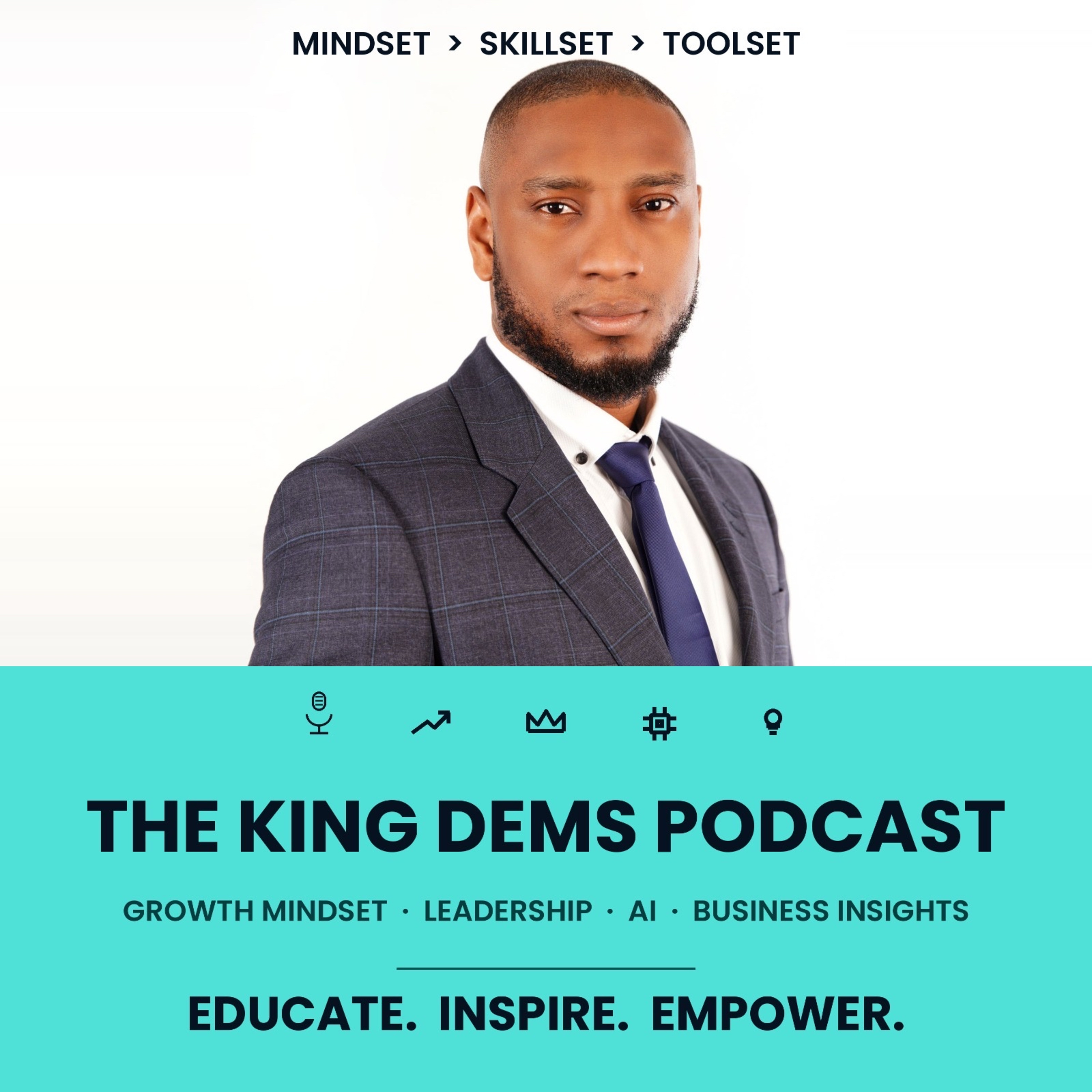 Business Valuation: Why Buyers Ignore Your EBITDA Multiple - Mark Mills, OBE85 / 100Will AI Replace Investors? A CFA's Answer | Eric Chu59 / 100Most Leaders Get This Wrong About Motivation | Dr. Lance Secretan68 / 100Africa's Biggest Economic Problem Isn't What You Think | Eyvonne Anthony-Eleko52 / 100AI, Democracy & Britain's Future: Will AI Replace Leaders? | Steve Endacott65 / 100