
ImpacTV · 2025-07-25 · 44 min
Key moments - from our scoring
Substance score
58 / 100
Five dimensions, 20 points each
Lam Research is one of the five largest semiconductor equipment manufacturers globally, specializing in etching, deposition, and cleaning technologies critical to semiconductor production. Dr. Lutsch explains how Lam Capital operates as a strategic CVC investing off-balance-sheet with a corporate investment committee, focusing on startups that can eventually partner with Lam's direct customers (TSMC, SK Hynix, Micron, Samsung, GlobalFoundries) or become integrated into Lam's solutions. Unlike Bosch Ventures' more independent financial VC model, Lam's approach emphasizes early relationship-building between startups and the corporation, considering non-recurring engineering deals, joint development agreements, co-marketing arrangements, and even equipment partnerships. The firm invests stage-agnostically (seed through Series B) while maintaining under 20% ownership to avoid regulatory reporting requirements and fiduciary conflicts. Lutsch highlights Industry 4.0 initiatives - including lights-out fabs, smart and self-aware equipment, automation, and internal AI deployment - as investment areas aligned with semiconductor industry trends toward three-dimensional integration and higher wafer layer counts. For deep tech founders, Lam Capital offers technical expertise beyond capital, drawing from Lam's decades of complex hardware-software integration experience.
Lam Research is a Fortune 500 semiconductor equipment manufacturer (WFE), one of the five largest globally alongside ASML and Applied Materials, specializing in etching, deposition, and cleaning equipment. As AI demands more semiconductor capacity and complexity, Lam benefits from industry movement toward three-dimensional chip integration requiring more layers and advanced manufacturing processes.
Lam Capital provides NRE (non-recurring engineering) dollars for custom development, enters joint development agreements where startups become suppliers, facilitates go-to-market partnerships with Lam's foundry customers (TSMC, SK Hynix, Samsung, Micron), and can provide core semiconductor equipment expertise to help startups avoid reinventing manufacturing apparatus around their core IP.
Maintaining sub-20% ownership avoids triggering regulatory reporting requirements and fiduciary duty complications that arise at 20% or higher thresholds, allowing Lam to focus on strategic partnership value rather than control and reducing legal complexity in corporate-startup relationships.
Bosch Ventures operated as a more independent financial VC with its own fund structure and carried interest, while Lam Capital invests off-balance-sheet with a corporate investment committee - more strategically integrated but with what Lutsch describes as a smoother approval process and clearer partnership expectations.
For Lam Research, Industry 4.0 encompasses making semiconductor equipment smarter and self-aware, automating fab operations toward "lights-out fabs" by 2030 requiring minimal human intervention, deploying robotics for maintenance, and using AI internally to enhance equipment design and field technician capabilities.
Our reviewer’s read on each dimension, with quotes from the episode.
The episode contains moderate substance on CVC structure, strategic differences between Bosch Ventures and Lam Capital, and semiconductor equipment manufacturing basics, but much of the conversation involves personal banter (running, marathons), acknowledgments of limited knowledge (university partnerships, specific exits), and repetitive framing of concepts. The depth on investment mechanics, value-add structures, and 3D integration is useful but not densely packed; significant portions are throat-clearing or tactical discussion rather than novel insights.
We are one LP off balance sheet. We have a certain budget per year, but whether we are using it up or whether we are shooting over our target, all is possible.
Everything grows in the third dimension. Transistors are become are already like FinFET. It's already a three d structure.
The discussion recycles familiar CVC playbook concepts (strategic vs. financial focus, co-investment syndicates, deep tech patience, startup team experience requirements) without introducing genuinely fresh frameworks or counterintuitive perspectives. The observation about optical compute and quantum sensing arriving too early is sensible but not novel. Much of the commentary confirms conventional wisdom rather than challenging it or offering new angles.
We are much more strategic. We are investing off balance sheet, and we have an IC, which is corporate.
I think you need experienced people in the team. You need people who knows what it takes to bring, you know, an idea into real chip design to tape it out.
Yvonne Lutsch is a legitimately qualified investment director at a Fortune 500 semiconductor equipment manufacturer (Lam Research) with seven years prior experience at Bosch Ventures, recognized as an emerging CVC leader by GCV. She has hands-on experience with deep tech investing and strategic corporate partnerships. However, she explicitly admits limited personal exit experience at either firm ("I don't have a very personal example"), which slightly diminishes her practitioner credibility on that dimension. Still, her operating context and seniority in the CVC ecosystem are substantive.
Director of investments at Lam Capital
You're recognized by GCV as one of the 50 emerging leaders in the CVC space.
The episode includes some concrete details: Lam Research is one of five largest semiconductor equipment manufacturers (alongside ASML, Applied Materials, KLA, Tokyo Electron); 40+ years old, 40 years on NYSE; expertise in etching, deposition, cleaning; four exits out of 17 investments at Bosch; mentions of specific portfolio companies (Kornami, D Matrix); and descriptions of specific corporate customer relationships (TSMC, SK, Micron, Samsung). However, many claims lack numbers or supporting data: no specifics on check sizes, valuations, revenue metrics, or concrete examples of value-add beyond a vague "NRE dollars" mention. The semiconductor details are more technical context than investment-specific evidence.
We are one of the five largest semiconductor equipment manufacturers, WFE's, in the world alongside ASML... Applied Materials, KLA, and Tokyo Electron.
Four out of 17 is a pretty good ratio.
The host (Jack Crawford) asks structured questions but frequently allows the guest to veer into tangential territory (personal fitness routines, sunrise running, podcast recommendations) without redirecting to core investment substance. When the guest explicitly admits knowledge gaps ("I'm not in detail familiar with it" on UC Berkeley partnerships, no personal exit examples), the host does not press for alternative insight or comparative context. The conversation reads more as a friendly colleague catch-up than a probing deep-dive. There are few follow-up questions that test or challenge Yvonne's claims, and the interview structure doesn't build cumulatively on themes.
Okay. So I know you're a bit of a fitness fanatic like me. Are you still out there running and getting it done?
I'm not in detail familiar with it because there's a specific group within Lam Research that is dealing with the university relationships
Computed from the transcript - who did the talking, and the words that came up most.
Join Dr. Yvonne Lutsch and Jack Crawford as they dive into the corporate venture capital (CVC) industry. Dr. Lutsch shares her journey to Lam Capital and discusses collaborations in Industry 4.0, AI, and semiconductor manufacturing. They explore deep tech investments, startup value, exit strategies, and co-investments. Discover insights on successful startup traits, university support, and future investment sectors. The episode wraps up with rapid-fire questions and closing remarks. (0:00) Introduction and marathon discussion (1:10) GCV recognition and CVC industry insights (2:14) Transition to Lam Capital and overview (6:00) Industry and university collaborations (11:09) Industry 4.0, AI, and semiconductor manufacturing (14:25) Deep tech investments and adding value to startups (18:09) Exit strategies, investment stages, and success stories (26:39) Co-investments, CVC structures, and strategic focus (31:07) Traits of successful startups and entrepreneurs (33:55) Support from universities and the venture ecosystem (36:03) Future investment sectors and problem sets (40:35) Rapid fire: Morning routines and resources (43:32) Closing remarks and acknowledgments
Transcribed and scored by The B2B Podcast Index.
Welcome to Impact TV, a corporate venture video series through a partnership with Impact Venture Capital and the Kaufman Fellows. Hi. I'm Jack Crawford, a founding general partner at Impact Venture Capital. And alongside my colleague from Impact, Pat Bumpus, and my coach and my co chair from Kaufman, Alessandro Santo, we're excited to welcome to the show doctor Yvonne Luch, director of investments at Lam Capital.
Yvonne, it's great to reconnect. Thank you, Jake. It has been a while. I'm looking very much forward to this conversation.
Okay. So I know you're a bit of a fitness fanatic like me. Are you still out there running and getting it done? Because I was gonna try and convince you to start start doing triathlons with me at some point.
So well, you know that I did triathlons twenty five years ago, but I'm running my next marathon actually, and I'm not prepared for that. I'm running my next marathon in October, and it's the Chicago marathon. And I'm still fundraising for a very good cause. So I will probably send you the link afterwards, and maybe you wanna participate and support me.
Please do. Please do. I'll look at that. I will see what the weather is like in Chicago.
I'm interested to see what what time of year. It's in October. It can every weather. It can be super hot.
It can be super cold and windy, and I had everything already. I try and avoid snow in the triathlons that that I participate in. It's a it's a it's a rule of thumb by. Yeah.
I wanted to I wanted to also make sure to highlight that you're recognized by GCV as one of the 50 emerging leaders in the CVC space. So now with this tenure that you had at Bosch and now at Lam, you're you're becoming a bit of an industry icon in the CVC space. So congratulations for that. I hope so.
Thank you. Thank you, Jake. No. And it's and it's super exciting.
It's super exciting to be recognized. I was recognized as a rising star couple of years ago, and the next step is the emerging leader. And changing CVCs and seeing others, of course, I think that, you know, enhances my repertoire. And but I also want to mention that I got kind of lucky because this announcement and everything was kind of in between the roles.
And so I saw that, you know, both colleagues from Lam, but also ex colleagues from Bosch were also recognized, which was very, very nice to see. Can you talk a little bit about the transition from Bosch to Lam and just sort of maybe how the organizations are a little different and how your role has changed from one organization to the other? Because there are there are some similarities, but I'd I'd love to hear about the differences. Yeah.
There are some there are some there are some differences. So at Bosch Ventures, where I was, like, for seven years, we are were they are pretty much financially focused, more like a financial VC, of course, with what with some strategic relevance of the corporation, otherwise, CVC doesn't make sense, but pretty independent. Their own fund structure, carried interest, the partners make the decision on the deals. And that's actually very different at Lam.
And in the beginning, I have to say, I wasn't sure whether I should be scared or, you know, or or excited about it. That at LAM, we are much more strategic. We are investing off balance sheet, and we have an IC, which is corporate. But I have to tell you, this is the smoothest ICs I ever had.
So there's good things about it. And and because I was at Bosch before and I was with a large corporation also before, I just know about the value a entity at a corporation brings to the corporation when this entity is introducing start up innovation to the entity, to to the corporate, and overcoming this non inventive tier field. And we do that as at at LAM as well and also in a very professional way. That means we are always very considerate.
Do we do something good to the company with the additional investment in conjunction with the cooperation? That's the ideal case. Not always we have, like, a cooperation in place. Sometimes we have a cooperation.
Probably, we see an opportunity further down the road, and it just makes sense to invest in the startup early and bring them to a stage where the cooperate cooperation is actually willing to cooperate because the startup is more mature, because they have some early customer traction from somewhere else. And the startup and the corporate also have a chance to get known to each other, which is, I think, super important. And sometimes people are, you know, undervaluing or not valuing, you know, the people factor.
Because it's a large corporate and it's a small startup, and that can be intimidating for the startup. It can be confusing for the corporate. And if they know each other already for a little while, even before they start to cooperate, and even the corporate just knows that there is the startup we have invested in and they can see them growing and succeeding, can help a lot. Well, my guess is that your experience is helping with with sort of how Lam is interacting with these with these startups because what you described was not only a streamlined sort of process for developing a relationship between the startup and and Lam Research, but also a streamlined investment committee process, which is, you know, pace, speed is always required, when interacting with startups as these rounds of financing come together.
I'm finding that most people don't know. I mean, Lam Research is a Fortune 500 company, very large very large company, major player in the semiconductor ecosystem, but many people don't know much about the company. Can you just provide maybe one extra level of detail about about Lam for those who are less familiar with Lam Research? Yes.
And maybe maybe it's my personality that I'm drawn to humble companies. I mean, Bosch is also relatively humble in terms of, you know, what areas they are working in. So Lam is LAM Research, and the name is already confusing. We are a tech company.
Right? We are not a research facility. We are around for forty five years. We actually celebrated our fortieth years on the New York Stock Exchange this year.
And we are one of the five largest semiconductor equipment manufacturers, WFE's, in the world alongside ASML. Everyone hears about them nowadays. Applied Materials, KLA, and Tokyo Electron. So we are the five largest players.
LAM has is particularly strong in etching deposition and cleaning. And that means, like, whenever there is layers, you know, in a semiconductor or a memory chip, like logic and memory, that's the both areas we are very strong in. The more layers you need, the better for us. And, actually, that's also one of the reasons why I thought, well, it's actually probably a good idea to join LAM because all the semiconductor industry goes more and more into three d integration.
It it all goes in the third dimension, So you need more layers. You you have to stack layers on a wafer. You have to stack wafers, and that's actually where we are having a lot of expertise and where we can we can grow as a company as well. And we hope that we or we think we can grow stronger than the market because of that.
Can you talk a little bit more about Lam's sort of industry collaborations? Like, how do you collaborate or how do you work with companies, you know, major companies like TSMC? Or, you know, what's what's your relationship with NVIDIA? You know, talk about sort of your place in the ecosystem with regard to these other major players that, you know, I think are well positioned to take advantage of what's going on with this AI, you know, innovation wave what's going on in the semiconductor industry?
How do you interact with Yes. Those organizations? So, I mean, as an equipment manufacturer, we are definitely closer to our direct customers than to the customers of our customers. Right?
And our the big customers are also the big foundries. TSMC, GlobalFoundries, the three big memory players, SK, Micron, and Samsung, and and a bunch of other players, of course. So we are very strong with them, helping them to develop processes that are crucial for the next generation of semiconductor development. But, of course, we also have to build and we do build relationships with their customers to have a better understanding of what will be the requirements for the Gen plus two product to to make ourselves to prepare ourselves as much as we can.
So it's it's an ecosystem play. But definitely with our direct customers, we are working very closely. In researching and preparing for the interview with you, I was sort of looking around at what's going on between sort of CVCs and universities. We're, as a venture fund, constantly paying attention to what's going on at at at UC Berkeley, at Stanford.
And more and more now, there's amazing things. I'm actually down in LA now. Amazing things happening on USC's campus as it relates to a you know, innovation and in the semiconductor industry and and beyond. I noticed a press release of of activity around Lam Research and UC Berkeley looking at, you know, a combination of academia and and industry collaboration.
Do you know much about about that that partnership and that collaboration, and and should we expect more from Lam Research with other other universities in The US? So I'm not in detail familiar with it because there's a specific group within Lam Research that is dealing with the university relationships, but it's definitely useful in in different ways. Right? There are universities who help us in, you know, developing the next critical process steps, and we fund them.
We, you know, we we can provide them with equipment. We also work with IMEC. We work with CALADDI. So we work with all these institutions, but that is less that is more from a corporate side, less from an investment perspective.
And because there's always this trade off, right, if something is very early in university research, then probably some little piece of that innovation can be directly integrated in a Lam solution, but it's not necessarily an investable startup. Makes sense. Yeah. And and because an investable startup, on the other hand, has also have to has to have a certain maturity to work with a corporate.
So it's but but, of course, we are we are doing both. And and so in addition to that r and d sort of collaboration with with universities, let's now switch gears to talk a little bit about investments by industry sector. You know our strategy, we're looking at AI applied to security and finance and digital health. Historically, you and I have talked a little bit about some of the activities at at Kornami.
We'll have to we'll have to give you an update you know, now that they're preparing for shipping servers and generating first revenue this calendar year. So some exciting things happening there. But most of the world is paying attention to sort of this massive wave around AI. And Mhmm.
Thinking of it is, you know, the, you know, the Internet, the iPhone, and AI may be the three major innovations of our lifetime. And you're, at Lam Research, incredibly well positioned with the focus on semiconductor and what you call industry four point o to to to provide, you know, additional capability and in effect tailwinds for what's happening with AI. Can you talk a little bit about what what does industry four point o mean at Lam Research and how you're positioned to take advantage of the AI wave of innovation?
So when we think about Industry four point zero for from an investment perspective, we are rather thinking about raising ourselves and preparing ourselves as LEM Research as the corporate to be, you know, digitally ready for anything that's going to happen, but also our products. And that includes, you know, making our equipment smarter, self aware, because everyone is also talking about the lights out fab in 2030. I mean, fabs are today already highly automated, but usually only in cases when everything runs smoothly.
But if there is maintenance, if there is unplanned downtime, then still people have to come in. And the goal is at some point, this is all automated. And that's where, you know, all aspects of industry four .0 or call it maybe five .
zero, I don't know, but all these aspects come together. Right? Equipment has to be smart. It has to be self aware.
You have to have automation and robotics in place to do the maintenance. But also our for for our internal operation itself. Right? I mean, AI is and that's not necessarily industry four dot zero, but it all comes together at some point.
We are utilizing AI internally to make, you know, ourself, our designers, and even our field technician smarter. So that's also an area we are looking at, and we did also some investments already there. But it's I mean, we are building very large machines, and so there's still a lot of handmade included. And and doing this as proficient as possible.
Of course, there's a lot of industry four point zero solutions capable of helping that of helping to to do this, you know, in a more, how to say, in an even more industrialized way. Yeah. It's really helpful to hear that about sort of the industry sector focus and how you're thinking about that. Let's talk a little bit about many CVCs are figuring out unique ways to add value to the startups that they collaborate with.
Let's talk a little bit about your ability to add value beyond capital. And I would imagine with the technical capable I I know about, obviously, your your skill set, but I can't imagine the the the the technical people that are around you and the ability to add value beyond capital with with startups. Is that mostly co development efforts with startups? Is that nonrecurring engineering dollars that are supporting it in addition to investment?
Is that you know, if a startup thinks about working with with Lam Research and and taking in an investment from from Lam Capital, how should they think about sort of a collaborate collaboration on the technology side while still, you know, wanting to retain the intellectual property Yeah. Startup itself? It can be anything. Right?
And it depends very much on what what kind of startup and what the capabilities of that startup are. Right? If it's an AI solution, then it's a platform we are probably integrating, and we are simply becoming a customer, which is good. Right?
Because customers are the most important thing for startups to grow. There are cases where we are paying NRE dollars and where the startup develops a particular subsegment of their technology that is, yeah, very useful for us. In some other cases, we do JDAs to ask the startup to develop a solution that is where we are becoming then the customer. Like, they become a supplier basically to us because their current solution is not exactly what we need, but a customized solution is something we would we would consider to acquire to buy as a customer.
There are others where we can even do, like, co co marketing, go to market agreements together where we help the start up, you know, to get better penetration in our customers' markets. And we, you know, we also can appear you know, we we could not appear. We are delivering a better solution than without the start up. That's another case.
All of it. So it it and and that's also the case. I I don't personally have a good example, but I think we are always thinking about it because, of course, our core is semi equipment. Right?
And there might be a start up that has a unique process technology, and they want to build equipment. I mean, we should help them to build the equipment. Right? It's not about the IP, the the the specific things that happens in a chamber, but, like, the whole apparatus around, including the vacuum and whatnot.
That is something we can do very well. And it would be a waste of the investors' money to let the startup doing that by themselves and reinventing the wheel. So that's another another aspect where we think we we we should bring and we will bring a lot of value beyond money. I'm always impressed with your understanding of the entrepreneur's mindset.
So, yeah, I appreciate those those comments. I think many times if you, you know, if you've spent, you know, ten or fifteen years working for a large Fortune 500 companies, you don't understand sort of the mindset of the entrepreneur and how to sort of add value to them. And so I think you're actually well positioned to add significant value beyond capital because of your experience and interactions with startups. I know that both you and I at our organizations are big fans of deep tech.
And we, as you probably know and we may have talked about before, when we think about deep technology, whether it's AI chip space or networking technology or interconnect technology, you know, we we look at those with some excitement, but there's also capital intensity behind those types of businesses. Sometimes there's a longer time horizon to actually complete the hardware and software solution and actually get the company all the way to a successful exit. So we balance all that with our enthusiasm about, you know, some of our companies have 80 issued patents and an incredible IP portfolio.
Right? And so they maintain a a sustainable technology advantage because of that IP portfolio. What's what excites you? I mean, that those are the, I guess, the positives and and and the challenges with deep tech.
What excites you about deep deep tech? Because you've you've spent your entire professional career for the most part thinking about deep tech and as it relates to sort of startups. Talk about your enthusiasm for the space. I mean, first of all, I'm a physicist by training.
So it's just what comes natural to me. I'm not a computer scientist. Of course, I I did my my own part of coding in in the past, but, of course, nothing to compare with modern tools. I think I I am so excited about Deep Tech because a little what you mentioned, I can understand and appreciate and acknowledge how hard it is for the entrepreneurs and how long it might take to bring an idea into, like, a real product.
And then also, like, in mass production, and that's a part I learned at Bosch the hard way. So understanding how hard this is, but also feeling like I probably can help them to to not make every mistake, I think that's that's what intrigues me because it's just it's just a a space where I feel more confident than others. Even though it's, you know, it's a harder way to make money. Right?
SaaS is probably at least it looks like if you know the right people, if you know the right matrices, it's it's almost like a cookie cutter thing. It's more about the idea itself, like, what you know, where can I improve a process flow or where can I being a data platform or something like that? That's very different in SaaS, but I think it's about appreciating and having your patience with deep tech founders. Agreed.
That makes us, you know, special. Mhmm. Okay. So we've talked a little bit about industry sector and deep tech.
We've talked a little bit about investing and adding value beyond capital. Let's talk a little bit about exits. Right? Sort of the end of the the process.
You've had some success. If I were if I was just looking back and doing the the research that our team did, it looks like around 17 investments made with four exits. We're we're from a seed stage investor standpoint, I think we've now invested in more than 40 companies, and they all started very, very early. And now we're you know, we've got two exits so far, and we expect a couple of more in the coming years.
So things are starting to heat up, but I I always love hearing about success stories. Can you share one where you kind of engaged with an entrepreneurial team as an investor and then sort of, you know, took it all the way through sort of a a successful exit either at Bosch or or Lam? I have to admit, not really. Because I you know, at Bosch, I left before, and at LAM, I started only recently.
So I don't have a very personal example. But I think I mean, one thing is, yeah, four out of 17 is a pretty good ratio. Partially, it might be because, you know, as an insider, as a CVC, you you can evaluate technologies probably better than others. But I have to say it's also a big part of of luck, of good luck.
And, you know, there were the 20 2,000, 21, 22. There were you know, this was high times when all these back exits happened and other exits were also happening. This was definitely a time we could we could harvest from, and we are all hoping that these times are coming back. But I don't have actually, I don't have well, I have another I had another company at Bosch that also went public through a spec, but specs are hard.
So they can be successful, but they don't have to be. But, of course, it's always super exciting if you see your company going public. And it the thing is, what I realized, it changes your your mindset totally. Like, you know, before as an investor with an exit like an acquisition, you know, you get the money and things are done.
If if the company goes public, you are checking your Yahoo Finance account, like, 100 times a day. I don't know how healthy that is, but definitely changed your perspective. I think we we've done a little bit of research on, you know, taking companies public and looked at some credible spec teams out there. And, you know, clearly, you have to have capable management that understands what it's like to run a public company.
You have to have predictable revenues. You have to, you know, have have a lot of good news coming. And I I think in the right scenario, it could make it could make sense. At the opposite end of sort of exits, let's talk by stage how you're investing now.
Are you, you know, at this you know, we're at the pre seed and seed stage level. I mean, oftentimes, it's ideation, and we're finding companies with a minimum viable product and maybe the beginnings of product market fit, maybe some early revenues, but not always required. And we like that because evaluations are oftentimes less than 10,000,000 a $10,000,000 valuation. So our ownership interest is a little bit larger as a seed investor.
How do you think about sort of check size and ownership percentage as you're making investments? Yeah. I I would say ownership is less important for us. And as a CBC, there's always concerns about fiduciary duty towards the startup and conflict of interest.
So it's actually, you know, our lawyers live better if our ownership is lower. Let's say it like that. And and it's not about having control over the company. It's more about, you know, supporting them with a check if we you know, if you also want to work with them, as I as I said before.
We actually invest pretty stage agnostic. We would probably not invest in pre seed because then it's it's hard for us to actually do a technical due diligence because it's so early. But we invested in cup in a couple of seed stage companies where there was already a product. But we can also invest relatively late.
We invested in series b rounds before where, you know, the companies at it as is at an inflection point where we think now they are developed enough that the partnership or a, you know, cooperation with the corporate makes sense, and then we only invest. So we we are actually stage agnostic. And since we are off balance sheets, you know, there's the good and the bad. The good is that we are totally free and agnostic of the check size.
Right? We don't have to be concerned about skewing a fund with a large check-in one particular company because we are, at the end, you know, fund not fund based, but off balance sheet based. So if we see if see a good reason for a large check, we can do a large check. Regardless of the size of the check, you're always under 20% ownership.
My understanding is that corporates have additional reporting requirements if they're 20% or higher, so you're always under 20%? Yes. Yes. Exactly.
Yep. Okay. And then, from a co investment standpoint, you may know that we've now, been successful in co investing with, Intel and Applied Materials and Qualcomm and Zoom and a bunch of other corporates. Right?
Big part of our strategy is seeding these early technology companies and then finding the most relevant corporate player by industry sector and by stage. How do you think about sort of co investments and collaborations with either other CVCs or with traditional venture capital firms? Yeah. I mean, first, I think, first of all, I'm a true believer in strong syndicates, whether CVCs or VCs.
And, I mean, the semiconductor industry is a pretty small industry, but that's also the beauty. So, you know, we are good friends with all the other corporate VCs in that space, whether this is Hitachi, Micron, Samsung, Qualcomm, even Applied. We are also talking to them even though a co investment with Applied might be a little bit more difficult because then, you know, it it just can become messy. We are probably not very keen on that, but everything else is is, you know, very valuable for us to share ideas, to share deal flow, to share opinions on investment opportunities we see.
And same applies to other financial VCs who are active in this space. Again, the ecosystem is pretty small. We know each other. We do deals together.
We know each other for years. And it's actually a very it's almost like a big family, or we are just all for from different companies. Whether it's VC or CVC, almost doesn't matter. You're very familiar with the various structures out there with these CVCs, right, because of your network of of relationships.
It's been interesting from from, from our perspective to see, you know, Intel Capital now spinning out to become an an independent VC. Well, I think Ipoutan has a last say there, and I I heard rumors that he actually wants to bring it back. Okay. So changes in real time.
Okay. So breaking news. But but maybe maybe that's just gossip. I don't know.
But because, I mean, he's a VC, and he I think he loves to have I I would not blame him. I think he would love to have Intercapit close to him. Sure. Sure.
I mean, it's it's it's amazing because they've been arguably the largest and most significant, you know, CBC in the world. Yeah. And so for them to go through that fundamental structure change, it was one thing for, you know, Google Ventures to go to GV or people start to rebranding. But to bring in, you know, outside LPs into a firm like that, it's it'll be interesting to see if they if they decide to retain it.
Yeah. How are you structured at Lamb Capital? How how Yeah. Yeah, I mentioned already briefly.
So we are one LP off balance sheet. We have a certain budget per year, but whether we are using it up or whether we are shooting over our target, all is possible. It's more opportunity driven. And as I said, since it's off balance sheet, we don't have carried interest.
But in the public company, you get stock, and I'm still wondering which is better better. The jury is still out there. So there's always and, you know, if you think about it, stock in the company is a different kind of carried interest because you make the corporate successful with this partnership with the start up. If you make the start up successful and they return a significant amount of money, of course, it's a small drop and a big pond, but still, it's it's a kind of very indirect carried interest.
Does that mean the team is more focused on sort of financial returns that drive the stock price up, or are there some mission elements or strategic elements that you're also focused on? It's more it's more on the strategic side. The the financial element is more through, you know, if we are helping Lam to, you know, to become a better company, to to be able to create new product products groups earlier or faster or better than the competition. I think that's that's the biggest leverage we have inside Lam.
Yep. Okay. This video interview will be distributed out through the Kaufman Fellows channel to 900 investors around the world. It will also effectively likely be picked up by the National Venture Capital Association and that investment group.
But it's also watched quite frequently by startups who wanna understand a little bit more about what corporates are focused on by industry, how they can add value. So a lot of the information that we've talked about so far is highly relevant to the entrepreneurs that are starting their companies. Can you talk a little bit about character traits and qualities of of startups and and and of entrepreneurs specifically that you're targeting something that that that draws you to them and and highlights that they're relevant to Lam Research or someone that you'd like to work with?
The thing is I mean, like, principally, if you are in the semiconductor space, particularly if you're if you're like a a product company, you know, like you invested in Kournami, you invested in D Matrix, you invested in others, if you really do hardcore semiconductors, even though you might, you know, you might be a young entrepreneur with with a part of technology innovation, you came up with in in your PhD, in your in your academic research, that's fine, but it's I I don't think it's sufficient.
I think you need experienced people in the team. You need people who knows what it takes to bring, you know, an idea into real chip design to tape it out and to, you know, to bring it back from TSMC to test it properly and to re spin. And until this goes into a product to a customer, that's a long way. You rather have someone around either in your team or an adviser you're talking with very closely to to guide you how to do that and also to have the right relationships.
I hear this all the time, you know, then there is this entrepreneur, and because they have connections, they get a hot lot at TSMC. And hot lot means, you know, they don't have to wait twelve weeks for the wafers to come back. They get them in four weeks. And, I mean, that is super, super valuable.
So having a strong team and, I mean, you hear this all the time as entrepreneurs with industry experts, I think, is super valuable, both on the engineering side, on the operation side, and eventually also on the go to market side. I was at dinner last night with my with my son who's doing a lot on USC's campus with regard to professors in the in the engineering group in a in another VC, and we were talking about a professor starting companies. I wonder if you have a view because to your point, sometimes you you start with an innovation, but you also have to understand how to transform that innovation or idea into enterprise.
Yeah. And you may know USC has launched a Techstars, program on their campus. And more and more, I think that it's gonna be a blend of accepted participants of graduate students and professors who might go through that mentoring program. Do you have a view on on how I I don't know if there's things going on at UC Berkeley or Stanford or or other universities.
Do you have a view on sort of how university professors might might sort of advance their ideas in enterprise, how they might get the support from all of us working in the venture ecosystem in a way that transforms their innovation into enterprise? I mean, I have some personal experience there. I don't know how much I wanna share. You wanna share it all?
You actually wanna share it all? There are professors that are very professor y, and that's not always good because I and I think that's what I forgot to mention also for the for the young entrepreneur who's not a professor, who is a, you know, just a grad student. If you appreciate what you don't know and ask for advice and help for the things you don't know And also as a professor, it's more a personality thing. Right?
Even though you have tenure and you are doing this for many years, your idea, your technology might be exceptional because you're working on this for so many years and you get grants and whatnot. That's undoubted. But bring it to the market, making it a product, building a company, that is different. So if if the professor or your entrepreneur is aware of that and is willing to listen and to learn, then 100% welcome.
But that's something you know, there is a tendency that younger people are more coachable than more experienced people, but I want to I don't want to put people in doors. But that's that's the only thing I would be just I I would be just be careful about. But, of course, I mean, there's because we are a deep tech investor, we want to see unique technology. And, of course, they had all time over the world to develop this.
Right? So that's something we should we should and we are appreciating. There's yes. And there's there's definitely some amazing talent with with university professors, and they may be better, you know, advisory board members than they are founders in some cases.
In some cases. Yes. Yep. And so so taking advantage of the incredible amount of intellectual property that's happening on US universities across the country, and there's probably happening globally.
I'm just less familiar with that, is definitely an opportunity and something we're paying attention to. Let's finish by talking a little bit about what excites you most about sort of by industry sector or about what's going to happen in the next sort of three to five years. Is there any sort of if we at Impact Venture Capital were looking to co invest alongside of of Lam Capital in the next couple of years, what industry sectors would you point us to or what problem set would you would you highlight?
Is there anything that's kind of captured your attention and that you're specifically targeting in the next year or two? So there's definitely the whole space of, you know, AI and the AI data center, and there are still many problems that are not 100% solved yet. And it's and it all comes down to efficiency and power reduction eventually, whether this is, you know, optical interconnects, at some point, optical compute. There was the first wave of optical compute a couple of years ago, and then people realized that's actually not that easy.
And the the positive effect you're getting by doing the matrix multiplication in the optical domain is eaten up by other disadvantages somewhere else. But I think optical compute, for example, is definitely something we should look at. On the other hand, I believe for the quantum computing, I also believe that semiconductors can have a big time there because you can build them in a very reproducible way, and you can build a quantum computer with semiconductors because you have to have a lot of, you know, physical qubits to get a large enough amount of logical qubits to actually do meaningful calculations.
I personally think, you know, the the the quantum computing domain, but also quantum sensing is super interesting, and we see interesting companies there. It's probably too early for us to invest in that space because there's you know, we cannot really participate there because there's not enough quantum chips produced today. Ten years, that might look very, very different. But I think the whole compute ecosystem, I think, is super interesting where we can we can spend more time and money.
And then if you if you say compute, you also have to say, and I I mentioned this in the beginning, it's about the three d integration. You know, in the past, we had Moore's Law, and everything becomes just smaller, smaller, smaller, smaller, and you became more efficient and and more powerful. This is kind of this is I mean, people say Moore's law is over. Others say it's not.
In terms of shrinking in the two dimensional space, it's actually limited because physics come into the way. But now everything grows in the third dimension. Transistors are become are already like FinFET. It's already a three d structure.
The next one is all around. It's even more three d structure. Memory is stacking layer over layer over layer. And there's a lot of super, super deep tech but interesting technology.
And we call it advanced packaging because you have to stack wafers together in a new way. You have to stack wafers of silicon together with wafers of photonics, or you do it on a chip basis, and you have to do in a in a meaningful way, in the most commercially viable way. So sometimes it's better to put wafer on wafer. Sometimes it's actually cheaper to put chips on wafer because you only put the good chips on the wafer.
So that's something that all this space, I think, is is that's where we are probably spending the most of our time. We all have a lot to learn from you. I I I love hearing your comments about high performance computing and and sort of low energy consumption. And and some of those areas are highly relevant to cybersecurity and building out the next wave of AI infrastructure.
Many people are focused on sort of applications, but there's AI infrastructure that is gonna advance dramatically. And so I think your experience is directly relevant there. Yes. And I'm I'm I'm actually also very curious and and and excited about, you know, inference at the edge.
People are talking about this now for ten years. But through, you know, the large language models, this actually becomes more and more reality. I mean, there is a lot of AI on the edge already, but it's actually, we have to do more, and we will be doing more there. So Alright.
We're at the rapid fire portion of the program. I've got our last two questions for you. If you don't mind, I wanna ask a couple personal questions. I when I went through the Kaufman Fellows program, I may have mentioned to you that I did this, thesis project on strategic planning for life, and a portion of that was researching how people start their days.
What is their sort of morning routine? I'm envisioning you out, you know, sprinting around the block getting your run done. Exactly. Can you talk a little bit about how you launch your day to to sort of optimize, sort of results and and fulfillment?
So the point is, you know, especially back at Bosch where we had, you know, so many connections back to Germany, I had to be at the office at 7AM groomed and showered for a video call. So and I had to get in my ten, twenty k run before. So sometimes I got up at 04:30. I'm not doing this anymore.
The trick is if you get up so early, it's still dark, and you run-in darkness. And, you know, later in the day, you don't even realize that you did a workout already because I think I was sleep running. So sleep running is actually a very good approach. So I love to start my day like that.
And then if you're lucky, you see sunrise, and if you see a glorious sunrise, then you have achieved already most of your goals before 6AM. Thanks for sharing that. I appreciate it. Last question for you.
Favorite blog or podcast, anything that that you're listening to that's sort of maybe out of sort of the normal lane of, you know, the all in podcast or some of the other things that we all sort of listen to or or read? Is there some any any sort of niche publication or something that you pay attention to quite closely that that you'd like to share? Yeah. It's not actually a niche, but so I I cannot listen to the to the All In podcast anymore, unfortunately, but that's my it's a very personal thing.
I love to listen to the Huberman Lab podcast. I love to listen to Peter Attia's The Drive. And there are a couple of other podcasts, and they are all about longevity, nutrition, running versus strength training. And I just like to, you know, to to prepare my body to be as capable as possible.
So that's why I love to listen to this podcast and better understand how my body works and how I can make the best out of it. I've gotta add that Peter Attia podcast to my, to my playlist. Yeah. Positive five.
Centurion, right, is is, what what does it take to live to 100 and and be intellectually agile and physically agile? He talks about things like grip strength and other and things that are important for just getting around. I'm fascinated by that. Well, behalf of Impact Venture Capital and the Kaufman fellows, thanks to Doctor.
Yvonne Luch for spending time with us today. Thanks, Yvonne. Thank you, Jack. Thanks for having me.
Bye bye. That's a wrap.
Other episodes covering the same guests and topics, from across The B2B Podcast Index.
 Why Hardware-Software Co-Design Is AI's Real 100x: Dylan Patel of SemiAnalysisTraining Data · on TSMC95 / 100
 DeepSeek's $50B Round, OpenAI's Delayed IPO, and the GP Stakes Market with CAZ Investmentstrading places · on Micron86 / 100
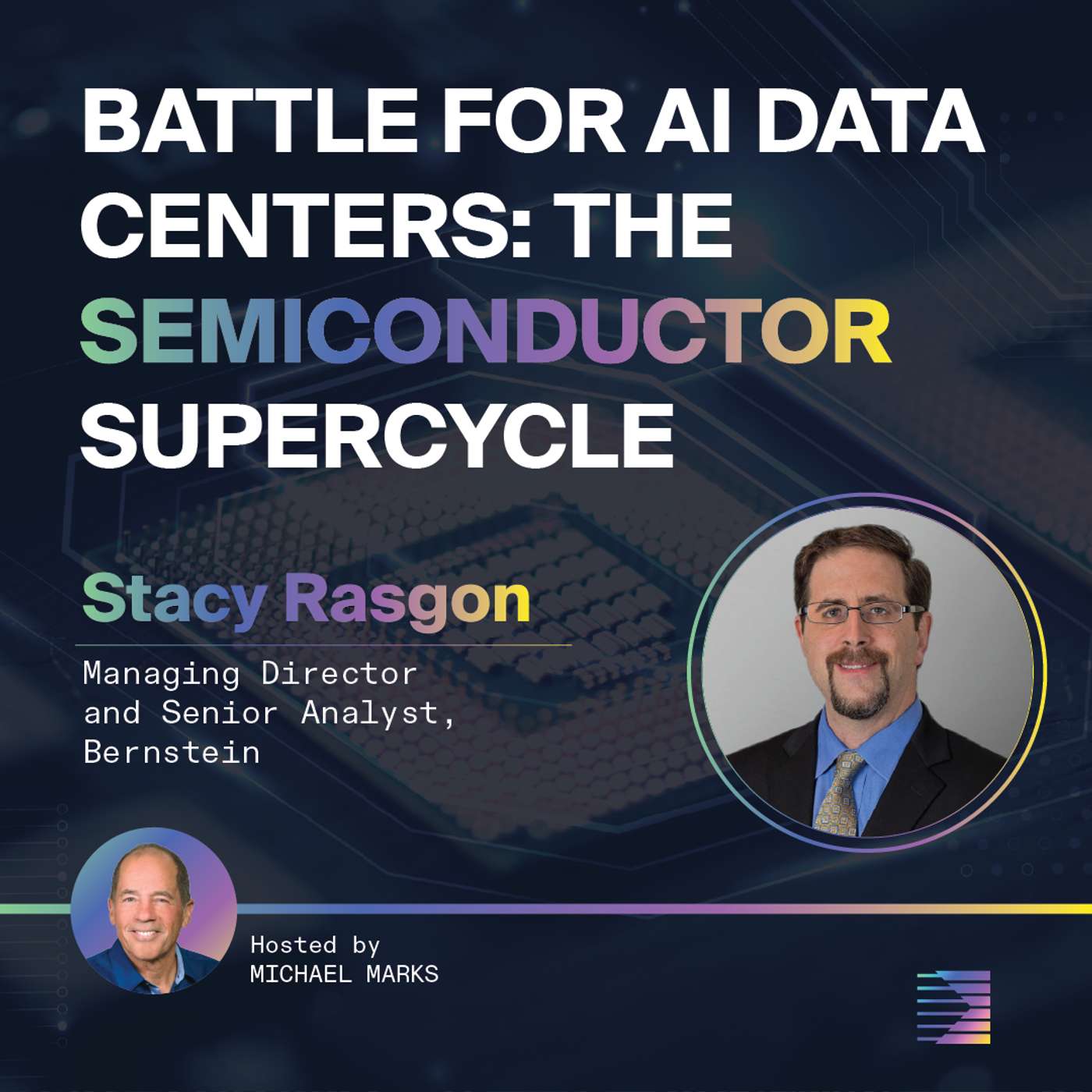 Battle for the AI Data Center: Deep Dive on the Semiconductor SupercycleTechSurge: Deep Tech Podcast · on TSMC84 / 100
 Lessons from 3 Exits and How to Implement AI in Your Business with Andrew Brooks (#76)Exit Algorithms · on Samsung82 / 100
 The Stock Market Is Rewarding the Wrong Companies Right Now - Here's the MathThe Acquirers Podcast · on Micron82 / 100
 Will Rhind, GraniteShares - Leveraged Single-Stock ETFs & Autocallable StrategiesLead-Lag Live · on TSMC80 / 100
 SK Hynix58 / 100
 Nationwide Ventures73 / 100
 Intel Capital with Jen Ard E 3769 / 100
 Honda Xcelerator Ventures85 / 100
 Niterra Ventures74 / 100