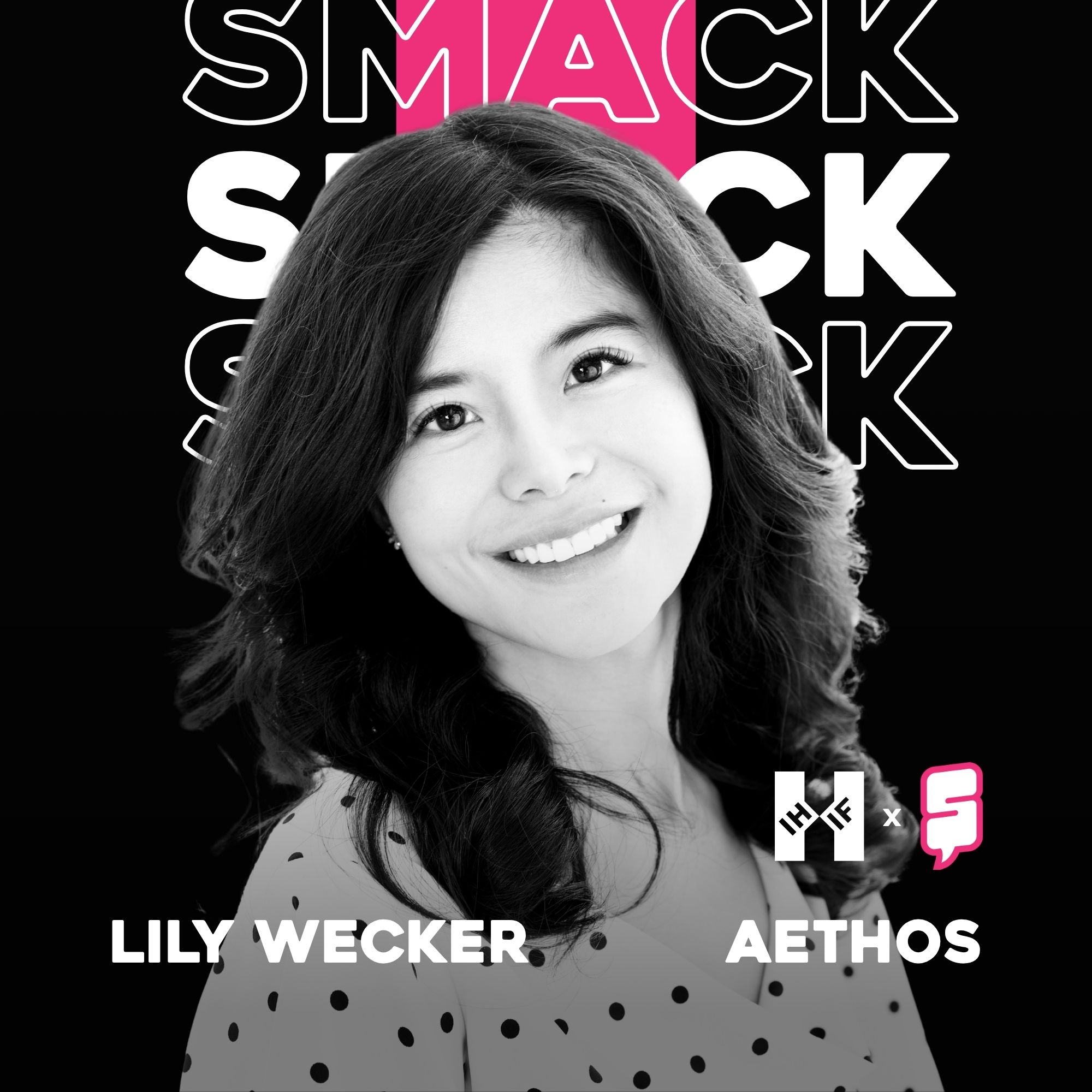
Hotel Moment · 2026-07-29 · 21 min
Key moments - from our scoring
Substance score
47 / 100
Five dimensions, 20 points each
Lily Wecker, CEO of the experiential luxury brand Ethos, challenges conventional luxury hospitality thinking by arguing that the future belongs to properties built for human connection rather than exclusivity. Drawing from her background at Mandarin Oriental and informed by a personal health crisis that led her to mindfulness and therapy, Wecker explains how Ethos deliberately designs high-density environments - like their Milan property with its intentionally-placed Doping bar and meditation corners - to create serendipity and meaningful guest interactions. Rather than following the low-density privacy trend championed by brands like Aman, Ethos believes luxury should evoke emotional belonging and internal validation, not external status. The brand's marketing reflects this philosophy: emotion-led campaigns showcase feelings of joy and connection rather than rooms and amenities. Wecker notes that Gen Z and Millennials, who've grown up saturated with social media and experiencing modern loneliness, strongly resonate with this approach. For hotel operators and brand leaders, this conversation offers a counterintuitive strategy: building community spaces and peer-to-peer service models creates stronger guest loyalty and employee satisfaction than traditional hierarchical luxury service.
High-density properties with well-designed gathering spaces create opportunities for serendipity and meaningful guest connections, which Ethos believes drives emotional belonging better than the privacy and exclusivity of low-density models like Aman.
Luxury has shifted from external validation (owning exclusive things to show status) to internal validation (experiencing genuine connections with yourself, others, and nature that lead to a fuller, happier life).
Gen Z and Millennials represent over half of Ethos's guests and members, likely because they grew up with social media saturation and are seeking real relationships to counter modern loneliness rather than more curated content.
Ethos leads with emotion rather than product, focusing marketing content on the feelings they want to evoke - like joy from sharing a meal with family - rather than highlighting hotel fixtures, rooms, or amenities.
Ethos hopes guests leave with a sense of belonging and feeling deeply seen, which Wecker identifies as the core emotional legacy of the brand experience.
Our reviewer’s read on each dimension, with quotes from the episode.
The episode covers general concepts about experiential luxury, emotional connection, and low-density design philosophy, but lacks specific operational insights, data points, or novel frameworks that would materially help a B2B operator. Most claims are aspirational rather than instructive - e.g., 'luxury is internal validation' and 'create spaces for serendipity' - without concrete implementation details or evidence.
luxury should be ultimately meaningful and genuine connections with yourself and how you exist in this world as well
we actively design our projects to be high density and we call it high emotional density to create spaces that are close to each other and gives you an opportunity for serendipity
The core argument - that modern luxury is experiential rather than material, and that emotional connection beats exclusivity - is increasingly mainstream in hospitality discourse. The counter-positioning against low-density/privacy-driven brands is somewhat fresher, but the underlying philosophy mirrors existing trends (wellness travel, community-focused design) widely discussed in the industry.
a lot of consumers really are now seeking experiences as real luxury, are seeing luxury as something much more internal validation
we actively design our projects to be high density and we call it high emotional density
Lily Wecker is CEO of Ethos and has relevant luxury hospitality experience (Mandarin Oriental), making her a credible practitioner rather than a pure thought-leader. However, she is primarily discussing her own brand philosophy and vision rather than hard-won operational lessons or data from large-scale deployments. Her background is solid but not exceptionally senior (e.g., not a CEO of a multi-brand mega-group or a founder with a proven track record across multiple successful concepts).
Lily Wecker, Chief Executive Officer of Ethos, a next generation hospitality brand focused on experiential luxury
Lily's background spans luxury hospitality brand development and growth strategy, including leadership experience at Mandarin Oriental Hotel Group
The episode is sparse on concrete data, metrics, or specific examples beyond the Milan property and London restaurant opening. Claims about Gen Z/Millennial resonance ("over half of our guests and members are younger than 40") lack context or comparison benchmarks. No revenue figures, occupancy rates, pricing strategy details, or measured ROI on design choices are provided.
We had our latest opening in London, a, uh, standalone restaurant called Mitsu East London meets East Tokyo just less than three months ago
Over half of our guests and members today, so majority of them are younger than 40 years old
The host (Dylan Cole) asks reasonable questions and makes a genuine effort to probe Lily's philosophy, but largely accepts her framings without pushing back or requesting specifics. Softball moments include the favorite hotel question (relationship-building rather than substantive) and lack of follow-up on how 'high emotional density' actually translates to measurable outcomes or revenue. The host does not challenge contradictions (e.g., how privacy + connection trade-offs are actually resolved operationally).
So when you look ahead, what do you hope hospitality feels like in five to ten years from now?
And do you see that, like, in the feedback that you get too, where a lot of employees are mentioned by name?
Computed from the transcript - who did the talking, and the words that came up most.
In this episode of Hotel Moment, Dylan Cole, Managing Director, EMEA, Revinate, sits down with Lily Wecker, CEO of Aethos, to explore how a next-generation hospitality brand is redefining luxury around connection rather than exclusivity. With a career spanning management consulting, luxury hospitality, and leadership at Mandarin Oriental Hotel Group, Lily brings a distinctly personal lens to how Aethos designs experiences, markets its brand, and builds culture.
Transcribed and scored by The B2B Podcast Index.
Speaker A: A lot of consumers really are now seeking experiences as real luxury, are seeing luxury as something much more internal, validation. And this is very much something that Ethos and myself believe in, where luxury should be ultimately meaningful and genuine connections with yourself and how you exist in this world as well.
Speaker B: Welcome to the Hotel Moment podcast presented by Revinate. I'm Karen Stevens, Chief Marketing Officer, joining you from sunny San Francisco, California.
Speaker C: And I'm Dylan Cole, Managing Director of Revinate Europe, calling in from Amsterdam.
Speaker B: This is the podcast where we explore how technology shapes every moment of the hotelier's experience, and more importantly, how the right technology delivers real outcomes for hotel teams and guests alike.
Speaker C: From revenue strategy and guest communication to operations and marketing, we sit down with the people transforming hospitality around the world.
Speaker B: Depending on the conversation, sometimes it'll just be me behind the mic and sometimes
Speaker C: it'll be me bringing a European perspective and stories from across the global hospitality industry.
Speaker B: Whether you're a hotelier, a tech enthusiast, or just curious about where hospitality is
Speaker C: headed, you're in the right place. Let's get into it. Welcome to the Hotel Moment. Today we're excited to welcome Lily Wecker, Chief Executive Officer of Ethos, a next generation hospitality brand focused on experiential luxury, meaningful connections and wellness driven travel. Lily's background spans luxury hospitality brand development and growth strategy, including leadership experience at Mandarin Oriental Hotel Group. Across her career, she has focused on building brands that go beyond simply selling rooms, creating experiences that feel deeply personal, emotionally resonant and culturally connected. Today, she joins us to talk about the future of hospitality, human centered luxury storytelling, guest connection, and how hotels can create experiences people genuinely want to be a part of. So, without further ado. Hey, Lily, thanks for joining me today. I really appreciate you coming on the podcast. How are you?
Speaker A: Thanks for having me, Dylan. Great to be here.
Speaker C: It's our pleasure. And how's life? How's things?
Speaker A: Yeah, it's going phenomenal. We had our latest opening in London, a, uh, standalone restaurant called Mitsu East London meets East Tokyo just less than three months ago. And it's making headline news. It's generating a ton of buzz. We're seeing a very strong pickup, so we've been keeping busy and then doing really well.
Speaker C: I know, I feel like I gotta get a closer friendship with you. I saw the pictures online. I need to get my invite. It looked really cool. I saw all the photos you posted on LinkedIn.
Speaker A: Thank you, Dilly. Well, you're in Amsterdam, so visit us anytime. Our doors are open.
Speaker C: I'll, uh, have to take you up on it. But no, it really did look cool. And congrats on the new opening. So I always like to start off with one question. This is kind of a personal thing. I hope the audience likes it too. But outside of your properties in your portfolio, which you have a great selection of properties, what's your favorite hotel in the world and why?
Speaker A: That's a tough one. There are so many. I think if I have to pick one, and I don't know if the hotel is still open today, to be honest, Dylan. But for my honeymoon now, almost 10 years ago, we went to the Maldives to an, uh, independent local hotel called Ozen. It was shortly after business school. My husband and I were over the moon. And after three different weddings around the world, we finally earned our honeymoon in the Maldives. Maldives. And, um, it was exceptional because of how we really embraced that holiday. We were fully present for two weeks for each other to experience the island. As you know, Maldives, generally a single island resorts. And I had some of my best memories made there, you know, going back to Experievin Esperential and what you really remember, it was exceptional.
Speaker C: They do know how to put it on with hospitality in the Maldives like no other. It's a, uh, very special place. Not a cheap vacation either, but definitely worthwhile for something like a honeymoon or something special like that.
Speaker A: Exactly. It's once in a lifetime. You swim with the little sharks, um, the safe ones. And you feel like your life experiences are all of a sudden that's opened up to a wilder spectrum when you're in that kind of environment.
Speaker C: Cool. Well, thanks for your answer on that. I know I put you on the spot.
Speaker A: No, no, it's all great. It's a good question because I do get asked a lot. I tend to recommend ethos.
Speaker C: That's why I always put the caveat of like, not in your portfolio, so that I can take that pressure off of you.
Speaker A: And our hotels are actually Sardinia in particular host a lot of honeymooners. So I expect very similar sentiments and memories being made in Sardinia, for sure.
Speaker C: I've stayed at your property in Milan, by the way. I had a wonderful stay there. And I went there with my family and my wife and I had a nice date night in the bar that evening. And it was a really good experience. And it was a great part of town too, for being able to walk around and shop as well.
Speaker A: Thank you, Dylan. Absolutely. I call it like the sexy dating spot. Right. Uh, no matter how early or late you're going back to your room, you have to pass by the doping bar. That's how the hotel was built. That's what we would like you to do. And it's absolutely a great melting pot for our guests and our members.
Speaker C: Yep, uh, I can attest to it. And so I wanted to shift a little bit into kind of your experience. And I mean you've worked at some iconic luxury brands. You now work more like next generational experiential brand. You've worked in different settings within hospitality. But what drew you into hospitality in the first place?
Speaker A: Well, I started my career in management consulting. So I've always from the very beginning traveled heavily. I used to travel m Monday to Thursday every week to client site and spends majority of the week in a, uh, hotel. I always have this natural curiosity for learning about a new location. You have that intrinsic curiosity and appreciation for hospitality wherever you go. And that's initially what drove me into the industry when I had the opportunity. Now I think over time it has become a lot more meaningful and special, more purpose driven for me to see hospitality as a platform to create real change.
Speaker C: And when you think about that, what did drive you to start recognizing that it was more than just rooms and service? The rooms and service are maybe the platform, but like the rest is experience and all the other things you can build upon it. So was there a moment or something that brought you to that realization?
Speaker A: So a few years ago I had a bit of a health challenge that forced me to slow down and take a step back. I also at that point started therapy and it's when I discovered mindfulness, mind body connection and the fact that there's bigger things in life than accomplishing the next thing, that goal seeking mentality. And I think that kind of triggered essentially a internal process, the reflection process, to think about what I can do with what I know now through what I contribute at work and wherever I am. This is even before my current role. That's when I started thinking hospitality differently. It's when I started thinking how I was able to implement certain aspects of say introspection or community building into designing the products so that the product is not just a brick and mortar. The product can lead to something more like a sense of belonging, so something more emotional and less physical and tangible. And I think that that's essentially started a few years back after that period of break.
Speaker C: Sounds like you had an experience that probably wasn't that enjoyable for you, but you've taken it and have turned it into something quite positive in your life and is actually now driving you in your current role. It's pretty admirable.
Speaker A: Thank you, Dylan. I would say it's a realization that you can do more to prevent somebody else falling off the cliff. Right. If you're operating so close to the cliff, you're always pushing boundaries, then at some point somebody, if not yourself, but people around you, will fall off the cliff. And some people don't recover. You see individuals who experience burnouts that never recover from it. I would say I'm very fortunate that I'm in a position to come back to the industry, to actually be in a position to do things differently and follow my new purpose.
Speaker C: So, Lily, I want to segment a little bit, but if I just think about your career and you've worked in different varieties of hospitality, but now with your brand's big focus on mind, body and soul, how would you say maybe your definition of luxury and hospitality has evolved throughout your career and where are you at with it now?
Speaker A: Great question. I certainly have evolved as a consumer and I think that my experience over time, my relationship with how I experience luxury very much resonates with how the world over time has experienced luxury in the past few decades. I think in the beginning, we seek luxury as some kind of material gain a sense of ownership of stuff. It can be a bag, a car, a watch and whatnot. And it's really around owning something that other people want and can't have. And it feels feeling that you're superior than person next door. It's ultimately tied to external validation. If you think about that relationship you have with the world, we have in a lot of papers and reports validate that we have experienced this change in the world where a lot of consumers really are now seeking experiences as real luxury, are seeing luxury as something much more internal validation. And this is very much something that ethos and myself believe in, where luxury should be ultimately meaningful and genuine connections with yourself and how you exist in this world as well. So with nature, with your friends and family, and with new friends that you will meet down the line, that kind of internal anchor, peace with your full self, I would say, is our new definition of luxury. And it's what ethos wants to bring to this world.
Speaker C: I love it. I think about the pressure in the world today and maybe it's slowing down with new generations, but it's always been, especially with social media, look at my vacation. I mean, is this vacation for you or is it to show off to your friend? And after a while, I think that stuff starts to become stressful and it makes it not enjoyable. And the idea of actually paying to be in a better state of mind and to feel good after the vacation, to actually feel like you had a
Speaker A: vacation, it's exhausting me, right? Seeking external validation that instant validation that you get from the likes on social media platforms, it's exhausting and you're spot on. Dylan, you think if you instead focus on internal validation as a source of joy, then luxury is about those moments where you have your truly present and you have that connection with yourself.
Speaker C: I love it. Are there like certain demographics of people or age groups or just different folks that you're seeing more lately that are starting to light up to this type of experience? Like, have you seen anything that the audience would find interesting on that?
Speaker A: No. So we welcome everyone. We're family friendly, life friendly, you know, all stages of life welcome. What we have found is that our products resonate very well with Gen Z and Millennials. Over half of our guests and members today, so majority of them are younger than 40 years old. And obviously this is a hypothesis, but our belief is that this Gen Z generation that grew up, you know, that was over, that had a lot of saturated content on the Internet and grew up with social media in their, I guess, childhood and teenage years, this group of people are particularly feeling this modern loneliness, this idea of constant comparison of a lot of information, but very little real relationships. You can have a thousand friends on Facebook, but how many friends can you call to take care of your cats, water your plants? Right. And I don't use Facebook anymore, but I think that's the evolution I myself have gone through.
Speaker C: Yeah, that's cool. Really interesting. And, uh, your brand does a great job with marketing. It's very well done. And I wanted to ask you, first of all, I know you have a great marketing team, but I'm sure you're quite involved in how the marketing looks and the branding positioning. And as somebody who is involved in this, do you have an opinion on marketing in this industry? Is there anything that you think that some others might disagree with?
Speaker A: A few other brands follow our philosophy, uh, but not the majority. I would say Ethos treat marketing very much emotion led. So we very much focus on the emotions that we want to evoke first, then the products that we're trying to sell. Because if you think about Ethos philosophy and our mission to bring more people together to connect better, that end product, that end goal should be a, uh, feeling rather than a room or great meal. So, yes, you see rooms and food in our campaigns, but they are frequently not the main highlights of our imagery or of our Video content. Majority of our marketing content is built around this feeling that we're trying to invoke an uh, emotion. And that emotion can be about a sense of joy by having a sharing a great meal with family. And that image can be a family having a great meal together. I happen to be having that at an Ethos property. But the feeling is more important than highlighting the fixtures of that restaurant. Same with rooms.
Speaker C: Thanks Lily. It's been great so far. So I wanted to ask you. We've started to see sort of a shift with lifestyle luxury brands moving towards larger spaces, maybe fewer rooms, and trying to drive more of a privacy driven experience for their guests. Why do you think we're seeing that in the industry? Is there any kind of reason that comes to mind for you where we're starting to see that direction?
Speaker A: Yeah. So density is a big subject and it's something that I would say initially probably started with Amman, um, leading the way. But many traditional luxury brands today are not following going lower and lower density. There is absolutely a sense of privacy and exclusivity that comes with being in a low density development project in a low density space where you feel that you're secluded, that you're in a little cocoon and you get that privacy when you're staying, say with your family, for instance. Now that logic very much applies to certain segment of travelers, but it's actually against what we are trying to promote at Ethos when it comes to connecting people. So we actively design our projects to be high density and we call it high emotional density to create spaces that are close to each other and gives you an opportunity for serendipity. An example being the lobby area should be open and there should be an F and B outlets in the lobby area so that people can engage with the space and can meet new people. Another example we discussed Milan earlier. Another example is the Doping bars location at Ethos Milan. It's intentionally set in a location where you have to walk by the Doping bar, you have to say hi to Nicola, our brilliant bar manager and maybe consider a nightcap before you go back to your room. It's place where a lot of people from different walks of life mingle. In Milan we also have a private members club, so members also meet there. And ah, we want to create spaces indoor or outdoors that allows people to just meet and gather. And you don't get that kind of opportunity if your main offering is all about privacy and exclusivity, being at a low density.
Speaker C: Right. So it's like striking that balance like you get that privacy when you need it and when you want it. But to kind of get to your privacy, you do need to walk through these more community areas and get people connected, but then they have their space when they need that, right?
Speaker A: Totally. Some of our space design includes meditation corner. It's not actually like you go and meditate only, but it's more like a space where you can pause a little, you can rest, there's, uh, a lounge, it's comfortable, you can have refreshments. We call it meditation corner. But really it's just a space for
Speaker C: you to be, be you and get what you need. Yep, I get it. So I want to ask you maybe a few closing questions here. So when you look ahead, what do you hope hospitality feels more like in five to ten years from now? And not just for guests, but also for employees too? What does that look like?
Speaker A: So for guests, and I would say the general public, ethos exists because we believe in experiential hospitality, experiential lifestyle. However, experiential lifestyle is still very much limited to a niche audience today. In five to 10 years time, if ethos does well and our competitors do well together, our hope is that experiential lifestyle, this ability to enjoy experiences beyond a bed and a, uh, table, will allow people to learn more about themselves and have a happier and fuller life. That's the end goal. So that experiential lifestyle is no longer a niche, an option for anybody to access at different price points as well. So it's not only a luxury product for our employees, something that we genuinely believe in and very much practice is a human to human approach. So we're, uh, proponents. I mean, this is very much rooted in our core values. We're a proponent of peer to peer service and relationship between employees, members and our guests. A lot of traditional brands and of course countries and cultures in the world value hierarchy as part of their social construct. And we acknowledge and respect that. But at Ethos, we very much embrace and embody that sense of diversity, inclusion and equality. And that really shows when, say, an employee feels comfortable and confident to walk up to you and strike a new conversation based on what you're wearing. An example is at one point I was having a dinner wearing flip flops with Brazilian flags, and an employee came over and said, oh, I'm from Brazil, have you been to Brazil? And then that's how we started talking. And that happens to everyone between employees, guests and members, because we want to create again that emotional density, the space for people to meet and learn new things and explore.
Speaker C: And do you see that, like, in the feedback that you get too, where a lot of employees are mentioned by name and like they're actually calling out these, like, interactions?
Speaker A: Yes, absolutely. I mean, if you look at the publicly available, the Google reviews, Expedia reviews, absolutely.
Speaker C: All right, Lily, I have one last question for you. So if guests leave one of your properties and they could only have one feeling or an emotional takeaway that they bring home with them, what would you hope that is?
Speaker A: I have to say, it's a sense of belonging, feeling of being seen in a deep way. I would say all.
Speaker C: Uh, right. Lily, thank you so much for joining us on the podcast today. I've really enjoyed the conversation. I hope you did as well.
Speaker A: Likewise, Dylan, thanks for having me.
Speaker C: Absolutely. And best of luck with your busy season and talk to you soon.
Speaker A: Thank you. You're welcome to visit us anytime. Dylan, thanks.
Speaker B: Thank you for joining us on this episode of Hotel Moment by Rev. Our community of hoteliers is growing every week, and each guest we speak to is tackling industry challenges with the innovation and flexibility that our industry demands. If you enjoyed today's episode, don't forget to subscribe, rate and leave a review. And if you're listening on YouTube, please like the video and subscribe for more content. For more information, head to Revinate.com HotelMomentPodcast until next time, keep innovating.
Other episodes covering the same guests and topics, from across The B2B Podcast Index.
 Recast: Sky Mitchell on succeeding in modern hospitality70 / 100
 Keeping an authentic voice when AI can't read the room75 / 100
 How hotels turn data overload into profit growth50 / 100
 The AI booking shift: What hoteliers need to do now56 / 100
 Recast: How Swiss Deluxe Hotels redefines luxury hospitality with tech | with Wilhelm Luxem56 / 100