Hardware to Save a Planet · 2026-05-07 · 53 min
Key moments - from our scoring
Substance score
45 / 100
Five dimensions, 20 points each
Andrea Santy, program director for XPRIZE Wildfire, explains a four-year, $11 million global competition designed to accelerate technology solutions for detecting and suppressing wildfires. The competition uses two distinct tracks: space-based detection using satellite imagery to identify fires within one minute and deliver actionable intelligence to fire managers in ten minutes, and autonomous wildfire response where drones and other systems must detect, navigate to, and suppress fires within ten minutes across 1,000 square kilometers. Testing occurs in real-world conditions - prescribed burns in New South Wales, Australia for Track A and Alaskan wilderness for Track B - with teams evaluated by expert judges from fire management, satellite remote sensing, and GIS backgrounds. Santy emphasizes that while technology is critical for early suppression of destructive wildfires (which account for 80% of damage despite being a small fraction of total fires), solutions require a holistic approach including land management, prescribed burns, community mitigation, and policy. The competition draws teams motivated primarily by mission rather than prize money, with over 300 initial applicants from 50+ countries narrowed to a dozen finalists across four countries.
Track A focuses on space-based detection using satellite imagery to detect fires over an area the size of a country or state, with teams required to identify every fire within one minute of satellite overpass and deliver usable data to fire managers within ten minutes, with updates every 15 minutes. Track B involves autonomous wildfire response where teams must detect, navigate to, and fully suppress a fire within ten minutes across approximately 1,000 square kilometers without human intervention.
The competition has an $11 million total prize pool divided across two tracks, with milestone prizes awarded throughout the four-year competition and $3.5 million awarded to each winning track. The prize money is relatively small compared to the capital teams must raise to participate, making the mission - not the monetary incentive - the primary motivator.
XPRIZE conducts live testing events with real fires rather than paper submissions. For Track A, they work with the Rural Fire Service in New South Wales to conduct approximately 20 prescribed burns over two weeks, with expert judges evaluating whether teams can detect fires and deliver actionable data to firefighters. For Track B, teams must suppress actual fires set in Alaska within the 10-minute timeframe.
Destructive wildfires, while representing a small percentage of total fires, account for approximately 80% of damages. By focusing on early detection and suppression of fires with the potential to become destructive, the technology aims to prevent the most damaging events while allowing natural, beneficial fires to remain part of the landscape for ecosystem health.
Santy emphasizes a holistic approach is required, with technology addressing destructive wildfires as part of a larger solution that includes land management, prescribed burns, community mitigation (like defensible space around homes), and policy. Technology is essential for early suppression but not a silver bullet for the entire wildfire problem.
Our reviewer’s read on each dimension, with quotes from the episode.
The episode contains a handful of genuinely useful data points - response time windows, prize structure, scale of the challenge area, and the Australian data on early detection savings - but large sections are spent on competition logistics, background biography, and platitudes about holistic approaches that yield little actionable insight for a B2B operator.
destructive wildfires, while they're a small number of wildfires that start, they account for 80% of the damages
The Canadian wildfires put more CO2 in the atmosphere than any other single event that year
The framing around good fire vs. bad fire and the rationale for the two-track design are mildly educational, but the overall thinking is conventional - technology needs policy, holistic approaches are needed, competitions breed cross-pollination. No contrarian or first-principles arguments emerge.
the past hundred years, we've been really good at fire suppression, but that has then led to more potential fuel
the reason why your laundry detergent has blue is because the toothpaste manufacturers found out that adding some blue would help make your teeth look whiter
Andrea is an experienced global competition administrator with deep conservation credentials, but she is not a technical practitioner, engineer, or operator who has built wildfire-response technology at scale. Her expertise is in running programs, not in the underlying hardware or AI, which limits the depth she can offer.
I always knew that I wanted to do something for the planet
I've done global competitions, but there's nothing like an X Prize, definitely in a category of its own
The episode includes real numbers - 10-minute suppression window, 1,000 sq km challenge area, $11M prize purse, $3.5M per-track winner, Lockheed Martin's $1M detection bonus, 20 prescribed fires over 14 days - but key evidence is sometimes cited loosely ('I think it was $80 billion,' 'about four years ago'), reducing confidence in the data.
1,000 square kilometers for autonomous response track, which is about the size of San Antonio, Texas
Lockheed Martin has put in a $1 million bonus prize for detection
The host asks some genuinely probing questions - pushing on technology vs. policy trade-offs, the definition of 'destructive wildfire,' and reliability across environments - but never challenges the guest's optimistic framing, lets vague evidence pass unchallenged, and the final questions default to soft, standard podcast wrap-up fare.
How much do you think technology is the right way to address this or the solution to these problems versus other mechanisms like policy and land management practices
Is there sort of a concrete definition to that? And can you identify which wildfires are to be destructive wildfires when they start?
Computed from the transcript - who did the talking, and the words that came up most.
As climate change intensifies the frequency and severity of wildfires, the need for faster, smarter response systems is becoming urgent. Andrea Santy, Executive Program Director of XPRIZE Wildfire, is leading a global effort to detect and suppress fires within minutes, preventing environmental and economic devastation at scale. In this episode of Hardware to Save a Planet , host Dylan Garrett speaks with Andrea about how satellite networks, AI, and autonomous systems are reshaping climate resilience. She explains the competition’s dual-track approach, the challenge of real-time detection across vast ecosystems, and the ambition of fully autonomous suppression within 10 minutes. The conversation explores how cross-border collaboration, scalability, and equitable deployment are essential to building solutions that can protect forests, communities, and the global climate system.
Transcribed and scored by The B2B Podcast Index.
We have the space Based Detection and intelligence track which is looking at using satellite imagery to be able to detect fires when they're really, really small. So we're in each xprize you have a winning team statement. So for that teams have to detect every fire over a vast area about the size of a country or state. Hardware to Save a Planet explores the technical innovations that are giving us hope in the fight against climate change.
Each episode focuses on a specific climate challenge and explores an emerging physical technology sol with the person bringing it into reality. I'm your host, Dylan Garrett. Hardware to Save a Planet is brought to you by synapse. Make sure to click subscribe so you don't miss any future episodes.
Thanks for listening. Hello and welcome to Hardware to Save a Planet. I'm very excited today to be joined by Andrea Santi, the program director for XPRIZE Wildfire. This is a global competition designed to improve how we detect and suppress wildfires.
I think this is an important and fascinating topic because it addresses both climate change adaptation and mitigation. We need to be able to survive more frequent wildfires that come with climate change and their near term effects, but they also release massive amounts of carbon dioxide, reduce the Earth's natural carbon sinks. So it's an important part of solving climate change and making us more adaptable to it. This xprize is a four year competition ending this year in 2026.
So I'm excited to learn from Andrea what kinds of solutions are being considered in the competition. She comes to this role after four years at the Smithsonian Institution and before that 18 years at the World Wildlife Fund. In those roles, she led programs focused on sustaining Earth's biodiversity and reforestation, among other things. And a common thread in her career, if I read things correctly, seems to be managing competitions to support individuals in tackling some of these big, gnarly global challenges.
Andrea, it's an honor. Thanks a lot for joining. Thank you so much for having me, Dylan. Yeah, and I'll caveat.
Yes, I've done global competitions, but there's nothing like an X Prize, definitely in a category of its own. Oh, cool. Well, we'll definitely get into that. I wanted to hear just a little bit more about your background though, because it looks really fascinating and different from a lot of the guests we've had on the show.
It seems like you've always been focused on kind of helping people tackle some of these big problems we face globally. I'm curious, what got you headed down that path initially? That's a great question. So I would say I always knew that I wanted to do something for the planet.
And I've always had a real focus on global challenges. So I was really fortunate. Like, as a young kid, I got to travel and did some study abroad focused on my background. Like, my studies focused on Latin America.
And I think that just being. Having this international relations interdisciplinary training was something that really allowed me to see that there's so many ways that we need to address problems in an interconnected way. And so that's part of what's really been the through line for all of my work. No matter where you go in the world, there's a lot of really similar challenges that people are facing.
And if you can support them and connect them and be able to look at the problem at a global level, it really does that. Global to that, local to global is what I've always really focused on. And we were just talking for a second about how competitions have been a bit of a through line. And it sounds like XPRIZE is kind of in a league of its own.
But I'm curious how you feel like competitions kind of fit into the whole landscape of various mechanisms we have to support this kind of innovation. Yeah, xPrize. One of the things that really drew me to XPRIZE was the ethos. Anyone, anywhere can be part of the solution.
And I think that that's been a big piece of what's driven me towards these types of competitions and different formats that really allow individuals from many different areas to be able to come together and look at how they're solving a problem. I think that we often, you may see this. You work in your silos, and while that's beneficial at times, you really need to have those other ideas and the different ways of thinking to be able to come together so that you can have just the best approaches.
We've seen throughout. You know, there's different examples, you know, the. Like. The reason why, why your laundry detergent has blue is because the toothpaste manufacturers found out that adding some blue would help make your teeth look whiter.
And so I think that cross fertilization from different sectors really can add to the end goal. And that's what we see a lot with xprize, is that you bring people together who don't necessarily, you know, they see a commonality in their desire to contribute to the end goal, but they're all going about it in such unique, different ways. And without, without a kind of global competition like this, they might not end up getting. Getting a platform, getting discovered, or getting the opportunity to collaborate in this way.
Yeah, absolutely. We have teams. We started out with over 300 teams from 50 plus countries. We're now down to a dozen teams, more or less, from about four different countries.
And so it starts to whittle down, but it's really that idea of casting that big net and seeing what. What happens and who has the best ideas. And the fun thing of an XPRIZE is that it's not just a paper submission. You know, we do this live testing, so you have to not just say you can do it, you have to be able to show you can do it.
Yeah. And. And is there an aspect of the competition that promotes this kind of cross fertilization among the teams as well? We do.
We have team summits and then we have testing events. And so those different pieces, plus just conferences and other events throughout the life of a prize brings the teams together, and xprize facilitates that as much as we can. We did team summits for both of our tracks at the very beginning and brought everybody together in person, and it was just a great way. One of the things that our teams talk a lot about is it's a competition, but it's also a collaboration with.
We're all working towards the same goal. And so many of them report back that they've either their teams have merged, they've started to work together, they've created friendships, and it's wonderful to see how that community really is built and then thrives throughout the competition. Yeah. Can you say more about the sort of top of the funnel?
So you have 300 applicants initially, I think you said, you know, sourcing from all over the world. That feels like a big effort. Is it that XPRIZE has enough of a brand name and reputation at this point that. That people come to you, or is there.
Is there kind of a proactive outreach and sourcing effort to. To fill the funnel? Yeah, we absolutely do a lot of recruitment. XPRIZE is usually launch, and so there is the brand recognition.
We do quite a bit of promotion, but then we go all around the world trying to make sure that we're at the right events and meeting with different individuals to be able to put ourselves out there, but also ensure that teams from around the world have heard about it. The window to apply kind of depends on which prize you're part of. Some have a longer window. Oftentimes we allow teams right up until the very end.
It just depends on which prize. But we do quite a bit of promotion and recruitment, especially that first year. And do you think, from what you've seen, are these teams motivated to enter for the monetary prize at the end, is it about something less tangible about being part of the program or the sort of credibility boost they get? What's motivating folks?
Yeah, we hear, I mean, having a carrot at the end with a nice prize purse is definitely a nice incentive. But the amount that especially for X Prize, wildfire, it's an $11 million prize person that's divided across two tracks and then it's also divided across different milestone prizes. So the amount we're awarding out at the beginning is actually like relatively small. And then the prize purse for the winners is going to be 3.
5 million each. So the money, I guess to say no, the money is really not the driver. The teams have to fundraise quite a bit to be able to prod participate in a X prize. So it really is the mission.
It's being able to come around and address one of these global challenges. Wildfire, they're more frequent, more intense, happening in places where wildfire is not part of the natural ecosystem. And then talking about climate. The Canadian wildfires put more CO2 in the atmosphere than any other single event that year.
And so they're playing a much bigger role in the climate conversation. But also just for communities, many more communities are being impacted. And so we have found that a lot of the teams either have a personal connection to Wildfire and that's why they're in it, or they just have seen that it is a growing problem and really want to be part of that solution. So I think much more for this prize specifically, it's more of a passion prize and then the prize first at the end is really nice to have.
And as well, it's a really great way to be able to use the technology that people are developing towards a really great mission. Yeah, yeah. But yeah, to your point, I mean if we're developing, if these companies, teams are developing novel technologies, there's going to need a lot more money than that likely to bring something fully to market. Right?
Yeah. Both of the tracks are pretty significant investments. Yeah. Well, tell me a little bit more about that.
It sounds like there's two tracks and then these kind of milestones along the way. How are things structured? Yeah. So xprize is a four year, $11 million competition.
We have two tracks. We have the space based detection and intelligence track, which is looking at using satellite imagery to be able to detect fires when they're really, really small. So we're in each xprize you have a winning team statement. So for that it is teams have to detect Every fire over a vast area, about the size of a country or state, they have one minute from overpass and then 10 minutes to be able to process the data and deliver it in a usable format, format down to the fire managers so that it can be.
So that there can be a response. And then they have to continue to provide updates every 15 minutes. And testing, we will do testing for about 12 hours over multiple days. So that's track A.
Track B is our autonomous wildfire response track. In that track, we are looking at how you can address fires when they're really small, being able to respond to them as well and put them out before they spread. So for the autonomous wildfire response track, teams have 10 minutes to detect a fire, navigate to a fire and suppress a fire fully autonomously. So while there is a human to be able to have like a turn off if something goes wrong, we're asking them to do this with full autonomy.
So that requires quite a bit of challenges in terms of being able to detect it, having your systems communicate to each other, being able to be really accurate and where you're going to deliver your suppressant, delivery of the suppressant. So it's a lot of both software and hardware problems that they have to overcome. Excited to hear more about that. They're both very fun.
Yeah. So those are in some ways fairly kind of specific problem statements. I imagine there was kind of a whole world of tracks you could have defined. How did you land on these two specific tracks?
Yeah. So Xprize goes through a whole design phase for each of their prizes. We spend a good bit of time speaking with experts from across the industry to understand as well as the innovators to understand kind of what are the problems that are not being addressed. And this really came out of those conversations that we've got, you know, our core problems.
Time. Wildfires happen much quicker than they were have in the past and that's very climate driven. You have steep terrain, so you'll see in a lot of places where if wildfires are going to burn quickly, it's because you have a real change in the terrain, especially when you have uphills. The fire is going to run up those hills really quick.
Environmental conditions like more fuel on the ground. So there's a whole bunch of different ways you can address the fuel on the ground component. But the more vegetation that's drier, a lack of managing our forests and thinning have all contributed to more potential, you know, vegetation that can burn. We also have the integration of the sectors so, you know, we can get into some of the nitty gritty.
But when you're addressing a fire, usually most fires are still identified by someone calling 911. And so the time it takes for that citizen to see the fire call 911, then 911 emergency response has to come and get on the fire. They need to make sure that they have the right equipment. Depending on where the fire is, it could be on municipal like a state land, it could be federal land.
So there's a whole bunch of different pieces that go into addressing it. So especially for this autonomous response track, the goal is to be able to really reduce those silos. And if you have a system that is watching and monitoring areas and being able to say okay, a fire is detected, confirming it's a fire and then suppressing, the goal is to be able to do it in 10 minutes over really big areas. The challenge is 1,000 square kilometers for autonomous response track, which is about the size of San Antonio, Texas.
So imagine like watching that whole area finding fires and then being able to have to go out and suppress it with no human Within 10 minutes. Within 10 minutes. It's challenging. So we're doing our testing.
Well, we can talk more, but we're doing our testing for that track in Alaska. And so really trying to introduce some of those environmental conditions so that the testing is. It can be. You have confidence in the testing and the technology to be able to overcome the barriers that you need.
I guess the question I'm having is you've kind of zoomed out and shared sort of the complexity of the problem. How much do you think technology is the right way to address this or the solution to these problems versus other mechanisms like policy and land management practices and community action or whatever it is. That's these sort of non technical approaches. Yeah, we believe you absolutely need a holistic approach.
So you need it all. The problem is big and there's no one approach that's going to be able to solve it all. And so you need the communities, you need them like California just is. Many cities are passing regulation to be able to have your like zone zero that five feet around your house, really making sure that that's cleared.
You need to have the land management and the thinning and the prescribed burns to keep the land that we have, you know, especially if it's fire adapted, making sure that it's, it has fire more regularly on the landscape. But you destructive wildfires, while they're a small number of wildfires that start, they account for 80% of the damages and so if we can really address those potentially destructive wildfires, that is where our technology is aimed towards fitting into the solution.
And if you can get it when they have just started, it is still a small fire. And it. Absolutely. It's not, you know, you need a whole big picture to understand that.
You need to understand what's the landscape, what's your fire risk, what's the terrain look like, what's the fuel. So there's a whole lot of other pieces that, that fit into that puzzle. So we, you know, there is no silver bullet to be able to address destructive wildfire, but we, we think that the technology is absolutely going to be a part of the solution. And is, is destructive wildfire?
Is that, is that, is there sort of a, like a concrete definition to that? And can you, I guess I'm wondering, can you identify which wildfires are. Are to be destructive wildfires when they start? And then does that also mean that you're allowing the kind of natural, you know, the healthy wildfires that are a natural part of our sort of evolving ecosystem?
Yeah, so we, we really try to work around destructive wildfires in part for the. To ensure that we really keep good fire as part of the conversation. Like you said, you really, you need to have fire on the landscape. We, you know, centuries ago, there was a lot more fire on the landscape, and indigenous communities regularly used wildfire to be able to manage the land.
The past hundred years, we've been really good at fire suppression, but that has then led to more potential fuel. You know, vegetation, trees that can burn. And so when you see fires that escape and then they're in an area, they can, you know, with, if you have strong winds, if you have, again, the, you know, different vegetarian, different landscapes and altitude, it can, it can lead to these really destructive wildfires that we're seeing. We are focusing on destructive wildfires.
It is for the autonomous wildfire response. How the technology is being developed is can we meet the goals of the competition, which is speed, accuracy, precision, being able to reduce the number of false positives. We don't want drones out there going and putting out a barbecue. You know, they really need to be able to understand what does a moving fire look like.
And so the teams will have to test on a fire that's actually moving and can they suppress it. But for, you know, fire managers and individuals who have been doing this their whole lives, like, absolutely, they can tell when a fire has the potential to be destructive. And a lot of that is the conditions. And if you look at reissue, not us but it's issued each time.
Here's our fire risk and so you can look at where the fire risk is higher and that's going to be able to tell you whether you have a more, greater likelihood of a fire becoming destructive. Yeah. Okay. So yeah, what do these tests look like that these teams need to pass or that you're using to evaluating their solutions?
Yeah. So there's the two different tracks and the competitions look entirely different. For the space based track, we actually leave in two weeks to go to Australia. We will be working with the Rural Fire Service out of New South Wales, Australia.
So it's the state where Sydney is located and Rural Fire Service is going to be putting out about 20 different prescribed fires over the course of about two weeks. And the teams have. Oops, sorry. Teams have satellite data.
They could have their own satellites or they're using open, you know, public satellites or they're using, they're purchasing satellite data or getting private satellite data. So they're pulling in the satellite data and we will be documenting really, really specific ground truth information on the fires. So we're going to know exactly when they started, we're going to know where they started, we're going to know when they spread, how they spread, what's the fuel. We're working with lots of partners to be able to do this, to be able to have beyond rfs, there's other partners who are helping us to be able to have like drones over the or drone data over the fires as well as like mapping the orbits of the satellites.
So the teams are going to have to find those fires with their data, deliver it down and they have to deliver it to the firefighters in a usable format that's actionable. So you want data that you can then respond to. So we have judges who we bring on. They're all volunteers.
They have a whole, you know, excellent skill set from across fire management to satellite experts to GIS experts and you know, remote sensing experts and beyond. So we bring them with us to these testing events and they will be there on site with the teams. Some of our teams are remote, so we also have some remote judges and they will be observing all of their data and looking at what type of solutions they deliver. Yeah, so are those, to what extent are those solutions about kind of processing of satellite data?
It sounds like that's part of it. That's a big piece of it at least. And are there also teams developing some kind of imaging equipment or something that's on the satellites themselves or in space doing the imaging that are giving them an edge. So kind of yes and no.
So at the beginning we had a bigger pool of teams and we had more satellites teams that had their own satellites. Our timeline for XPRIZE is really aggressive and so being able to have your satellite launch make sure you've got your sensors tested. We ended up with a cohort that is some have satellites and they have their sensors, but most are not testing brand new sensors. They're testing the sensors that they've had.
And then much of it is about the data processing. How do you get data down to the ground as fast as you can. And then lots and lots of AI and machine learning has gone into your solutions. Right, cool.
Tell me about the other track. So the other track is maybe like the more XPRIZE Y track because you've got the drones and you're flying around trying to find fires and put fires out. So for that track, we will be in Alaska in June and the teams will be coming up, they'll have about two weeks to deploy their technology. Again.
It's approximately 1,000 square kilometers of wilderness in Alaska where they're going to be setting up their tech which has a whole bunch of, you know, that's a job almost in and of itself is just making sure they do that, they do it safely. Alaska is known for lots of, of wilderness and so, you know, there's some risk out there. So we've been talking a lot about that and then. Well, you mean like bears and stuff?
What, what? Yeah, we're. Okay. Bear spray.
Like an episode of Alone. Okay. Yep. Yeah.
Bears, moose, wolves. Yeah. Are kind of the key ones. The.
And then the teams are going to be testing. So actually during testing the teams is, will mainly be off with us in a hangar because the technology has to work on its own. So they'll have had their time to set up all of their sensors. It's going to be a variety of different types of approaches.
So a lot of different types of sensors and cameras for the detection piece and then cameras and sensors on drones. So some will be fixed, some will be flying through the air. There's the potential for some high altitude solutions. So balloons are still working through some regulatory pieces and then the teams are going to be testing each on their own day and we will start the clock.
They'll have several different fires. We want everything to be repeatable. So just like for Track A, there's 20 fires over 14 days. In this case they have a whole day but multiple fires.
And we'll be determining, you know, can they get. There are they able to do it in the 10 minutes. So they have 10 minutes to find the fire, navigate to the fire and suppress the fire and we'll be starting fires. So we've shared with the teams a video of kind of what the fire looks like so that they can make sure that they are developing in the right trajectory and lots and lots of different interesting components.
So we'll see, we'll see how, you know, X prizes the. You never know if you're going to have a winner. It really depends on like how the teams, how the teams are able to perform and whether they're able to meet these requirements. But you know, we're, we're really hopeful and optimistic that we'll have a winner for tracks.
I see. So. So to have a winner they have to actually meet meet the requirements as set forth by the competition. It's not just the, the best of the pack.
They have to actually meet the, meet the requirements. They have to meet the requirements of the competition and the judges are the ones who really determine like did they meet those requirements, were they able to complete the different components. The way that the winning team statements are written aims to be solution agnostic. So we do not say here's how you have to do it.
We say here's the problem statement, tell us how you're, you know, bring your solutions to come and solve the problems. Some kind of, you know, the satellite one, we did say it had to be from space, so there were limitations for the autonomous wildfire response track. While we didn't say you had to use a drone, just the nature of the area and the vastness lends itself really well. But you know, if the high altitude balloons come into play, you know, you start to see a different, a whole bunch of different days and the fixed cameras.
So what I'm most excited about is really being able to see like how does the technology, which technology works best, under which scenarios explain how the high altitude balloons would work? Is that just for detection, the detection portion of it or that's just for detection? So they have a separate suppression? Yeah, they have.
So, so the systems are going to need to talk to each other. So if you have a camera or you know, a fixed sensor, they have to communicate back to your drone to be able to then deploy. But the idea is, you know, from kind of sky down the balloons have the biggest range, so they're not going to have as great as precision, which is our same problem we have with satellites. You know, you're going to be farther away, so you can't see things at the same granular scale, but you can see a lot of.
Then as you get closer to earth, when you start to put up your cameras and your towers, you're closer. And so you can see that finer scale, but you can't see as far. Yeah. So you need more kind of on the ground infrastructure to cover the whole area.
Do you have a sense for what these teams are tackling that is the most kind of. That requires the most like innovation and charter. Tackling new ground technically versus sort of putting pieces together that have existed before? Yeah.
So it is a lot of it is putting pieces together that have existed. A big challenge is the pieces are usually not designed for wildfire. And fire is so different depending on where it's located, what's the fuel? So if you have sensors that are, you know, particulate sensors, being able to determine, like what's that fuel?
You know, different things burn with different. Different. Different things burn. You know, depending on what it.
What it looks like, you can kind of, you know, determine the. The. What the smoke looks like. So it is really trying to determine it for wildfire.
And so much has been. A lot of teams have put on both tracks quite a bit of work into really making sure that they are training their systems to be able to detect the fires. So because you have to remove the false positives, you can't just look for a heat signature because then you could put out the barbecue. So they really have to be training their systems to be able to have that nuanced understanding of is it a potentially destructive fire.
So I think that's one of the big components. There's just not a lot of data out there for teams to be able to just easily pull on. So a lot have to, you know, they have to go out and find data in a bunch of different places. So that's one of the pieces to be able to suppress a fire, no small task, especially from a drone.
And so that is really a place where we're at the forefront of really what's possible. And the teams being able to determine there's different approaches. Some are using water, some are using powder, different delivery mechanisms. So all of those have been, you know, they're testing out different approaches and we'll see which ones work the most effectively.
I'm curious, and you talked about cross pollination before. This definitely feels like a place where you could sort of break the problem up and say, okay, this team's got the best detection approach. This team's got the best suppression approach. Let's put Those together is that kind of thing on the table.
So teams have worked together and definitely there's, you know, that picking and choosing. Oops, I'm frozen. Picking and choosing some of those pieces. As they're trying to develop their teams, many of the teams are not just one company, they are a consortium of companies that have come together.
And so you'll see that where you'll have like a drone that's, you know, heavier lift and they're trying to get there, but then they also have cameras because the drone alone isn't necessarily going to be able to detect the fire at the speed that they need. So you do see some of that merging and collaboration. Lockheed Martin has put in a $1 million bonus prize for detection. And so if a team is really, really great at detection, but then doesn't necessarily have all of the strength to be able to come and put the fire out, there's a chance that they would win the detection and somebody else would win the actual prize.
So. So there are different pieces in there. And I would say, like, the one thing that we're not really testing, which is a super crucial part, and it had originally been part of it, but it was very complicated to test, is wind. So, you know, destructive wildfires are often.
It's the wind that's really pushing them. And during our semifinals for the autonomous track, we did have 30 to 40 mile per hour winds at almost every single one of the testing events. It just, we, we testing was all around the world. We went to the teams, they set up their, their testing and we observed it and documented it and we'd like randomly, you know, there'd be perfect, like a whole week of perfect days and we would get there and it would get windy.
So we saw some of that in our semifinals for finals. We're not anticipating a whole lot of wind, but that's been kind of a challenge that I think still needs to really have some more rigor towards it is being able to say, how do you equitably do that? When at the beginning there were just so many different types of solutions, different sizes, different quads and fixed wings and different shape, big, small. And so it's hard to find one environment that can really fully test all of them.
Yeah, it's related to a question I was going to ask, which is that what I've learned in doing technology development for my career, product development is that it's one thing to make something work once, but it's a very different thing to make something work reliably over and over again in different environments and different weather and all this stuff. I imagine that's something you're thinking about but would be maybe tough to evaluate in this setting. Yeah, it's absolutely where we're thinking and where we're going next after finals is with an.
We're launching an impact phase for that exact reason. Like you said, you know, we're going to have one scenario and this really gets you to like a TRL8 where you're looking at how do you test in a very real world situation. But we need to be able to have it integrated so that we've got fire managers, firefighters that are using the technology in different landscapes under different conditions so that we can improve our understanding and be able to really like look at how is the technology going to work for the space based track.
Most, I mean, every fire agency around the world is using space based technology. So integrating that technology I think is not going to be much of a hurdle. If teams do really well, I think that they're going to have a really, really nice pathway to commercialization. If they're not already commercial.
Some of our teams already are existing companies for the autonomous track where we also have, you know, some big companies in there. There are regulations that still need to be, you know, looked at. So currently you having a heavy lift drone, having drones that fly beyond visual line of sight, having a drone in the airspace with a manned plane, all of these things still are to be overcome. And there have already been tests not by us, but by others that have addressed these issues.
But I think it's. We're just at the very beginning of being able to really look at how you can use drones towards this. But we're saying, you know, grubhub is delivering food, I think in Arizona or New Jersey, was it Newark? I forget where they.
So if you're going to get your food by a drone flying through the air, you know, would you want a drone flying through the air determining if a fire spreading, you know, without. Without a pilot behind it. And so I think that, I think the comfort level of just, you know, citizens and fire agencies is going to continue to grow. Many, many more have drones part of their toolbox at the moment that are piloted.
So it's the autonomy and being able to really feel that you have trust in having these systems, cameras and sensors are already regularly used and again, much lower risk. But when you start to look at integration of drones, that's going to be a piece that needs additional pilots and testing and deployment. How are you feeling going into Alaska about their, their chances, I will say I've been very optimistic. So we are not the judges, we develop, you know, the, we, we run the competition.
So I like that position because I get to cheer on all of the teams and you know, I think we, we definitely are, are hoping that they all can meet, meet the goal if, if all teams are able to go out there and meet the goal. To me the success is that, you know, our judges and the fire community are going to have much greater faith in the potential of the technology. So it's not about winning the competition, it's really about how do we help advance technology that's going to be able to and destructive wildfires reduce the chance that a wildfire that is just, you know, a fire that's just lit if it's in a place and it's conditions that you do not want that fire spreading.
We have the tools and technology to be able to go and respond immediately and put it out or at least get it under control until a fire, firefighter gets on, on, onto the site. Yeah. So that to me, I mean my, my hope is that they could all do it. Yeah.
And then I leave it to the judges, they get to battle it out of who would actually win. Right. So even if multiple meet the requirements, there will be one winner. There's one winner for each track.
What about the kind of business viability side of these solutions? Do you look at that as part of the evaluation criteria? We do. So one of the, it's a little bit different on each of the tracks.
For the space based track, really looking at global accessibility is one of the components. And so the judges are going to be evaluating the teams to be able to say is this a solution that could work anywhere? Not just like does the technology work? I mean they're satellites, so yes, it'll work everywhere.
But is it something that could be in the hands of a fire agency, you know, in Peru, in Kenya, in, you know, Indonesia. Do do. What is that? What is that business model?
So the judges will be taking that into consideration. For the autonomous track similar we're asking like what's it, what's, what's the price point going to be to be able to monitor such a large area? It is, you know, it's not inexpensive or insignificant. The amount of technology that the teams are planning to bring to Alaska.
So to cover 1000 square kilometers with really still new technology is going to in some cases be multiple cameras, multiple drones. And so as you start to look at, well, what's the cost and how, what's the effectiveness? So those are things that the judges are going to be taking into account, looking into the future a little bit. What's the.
And maybe you can look at past X prizes as an indicator of this. But, like, what do you think the future has in store for these companies? So I will say that I think, you know, totally biased because it's the prize I'm on. I think that this is one of the, you know, it's just, it's addressing a challenge that's really crucial and it is impacting individuals all around the world.
And we already have fire agencies everywhere. And so I think that the potential for the technology to really move quickly and be able to reduce the number of destructive fires has huge potential. So I'm so excited about that. We work really closely with fire agencies and with partners who are also looking at different ways to address the problem.
So my feeling is that the teams that advance, like the teams that win, will have a huge potential to be able to get, be deployed and get, you know, utilized by fire managers. We're going to have, we're inviting a lot of fire chiefs to the events so that we can make sure that we have the right people with their eyes on the technology. Yeah, and I guess those would be their customers eventually is kind of the model. The number one customer for the technology is the fire agencies.
But as they're deployed, as they're developing, we're hearing more and more different uses. So PG and E is one of our sponsors and so being able to explore, like, what other uses could there be? So being able to just, you know, monitor other areas for the space based. We have a good number of also insurance companies that are sponsors and looking at that data, being able to understand, well, how would, how would it help us ensure we have the best information and the best chance to be able to address a fire before it becomes destructive.
If you can get a fire. There's research out of Australia National Union University and at. It came out maybe like four years ago. And they said that for Australia, if you were able to find a fire in the first 10 minutes, you could save, I think it was $80 billion in losses.
And so that was, you know, not long after the Australian Black Summer, where they had really significant, you know, losses. And just being able to, if you can find them when they're small, that is the best time to be able to address them. Your resources are going to be a lot fewer. It's less costly and you can save lives and homes and properties and wildlife and in the case of Canada, those are kind of a whole different aspect because a lot of lightning caused, but still being able to think, how would some of these heavy lift drones be able to get into remote places, maybe preventing, spread and preventing those fires from starting, Especially when you have smaller fires that are starting off the bigger ones.
Zooming a little further out. I'm curious what you think about, when you think about kind of the future of wildfires on this planet. Do you see us as getting to a place where we have this under control, maybe thanks to technology and all these other methods that you've talked about, or is this something we'll just always be fighting as a society? Well, fire is natural part of the landscape, so we always want to have fire.
And more fire helps us have less destructive fires and less intense fires. So always doubling down on good fire is good and we want fire. And even those really big fires, like having those area burn and then you have your replacement come back after that, after that ecosystem comes back. Are things that are just.
They will be part of the earth and have always been part of the earth. I don't think. Yes, and should be. But we know that, you know, humans are going into a lot of different places.
And so as we start to be in different parts where there is fire, even where, where we're creating fire, because most fires are started by people and things we've built, being able to address it so that you've got those, you know, essentially eyes, ears on what is happening so you can make sure that those fires that should not be starting are managed as soon as they can be. But I would say, yeah, I mean, I do think that there will continue to be destructive wildfires. And I think that the trajectory we have right now is probably the next 10 years will, will be harder to change than maybe the next, those 20, those 10 to 20 after.
I think technology and just better management practices and all of the different efforts that are going into wildfire management will very soon start to deliver better results. And it's different everywhere. I mean, there's a lot of much bigger focus on the Amazon and places where we have really, really important forests that are burning and where fire is not a natural part of the landscape. And yet, I mean, I'm sure you've read about all the fires down in Bolivia and Brazil, Colombia, being able to really look at how do we start to address that and the technology.
I'm a total practical person. It's going to be hard. I've worked in all of the countries. It's Going to be hard to bring the technology to really remote places quickly.
But I think that's what makes me optimistic about the fact that XPRIZE has two different approaches, because the satellites are going to be a huge beneficial tool, especially in places that are really remote and where you don't necessarily have the infrastructure to be able to support drones going and flying around. Yeah, you can get a lot more coverage that way. Very cool. So I usually wrap up with three questions for everybody.
I'm ready to do that. Unless there's anything you wanted to hit that we haven't talked about yet. No, probably something a little bit more optimistic than my, like. Well, maybe we just add a.
All right, so I have three final questions for you. The first is, how optimistic or pessimistic are you about the future of the planet and why? So you may have seen in my bio, I worked for initiative called Earth Optimism, so I would say that I tend to gravitate towards optimistic. There are amazing things that people are doing every day to benefit the planet, and I think that Xpress Wildfire is one of those examples.
It's a very fast competition, and so being able to see the way that we can pivot so quickly towards new solutions makes me so optimistic. And, you know, I like to be a believer that people are going to use technology for good. And so I do think this is a great example of where technology really is being used to solve a major challenge, and one that we need to have all of our resources addressing. Who's another company or individual doing something to address climate change that's inspiring you?
Oh, that's a great one. Gosh, so many. I will say that kind of at the local level, really like the citizen groups that are working so hard to protect the resources that are in their communities, in their backyards. I think that that is a huge challenge.
And we don't always appreciate how much time and effort individual citizens put into really being able to sa the wildlife and the nature that we have left. And so I'm a huge champion for local conservation initiatives globally. Gosh, there's just so many. I think that it has been really inspiring seeing so many major companies really look at how they can be part of this problem.
I've really enjoyed being able to work with our sponsors, which are such a collection of different actors across different industries, and really just their sincere desire to want to address the problem. And with destructive wildfire, there's a shared desire by everyone to not want more destructive wildfires. And so I think that that's one of the things that really unites this community so closely. And it is a really, it's a really, like, supportive and collaborative community.
Everybody wants to be able to get to those goals of we want to save lives, we want to save property, we want to save communities and ecosystems. And so really, to all of the, all of the, you know, players out there who are doing it, it's a pleasure to get to work with them. Love that. What advice do you have for someone not working in climate today who wants to do something to help?
I would say, you know, you, I'm sure you've had multiple, multiple people on, but I, I think it starts with your, like, daily actions and goes all the way up to, you know, how you engage in your community, how you engage with at a global level. But I, I mean, I would say start, start with just reflecting on what you do every day. Can you, you know, eat more, more, eat less meat? Can you, you know, drive less?
Can you take some of those personal actions? Can you make sure that before you think of recycling, you're thinking of reducing? I think that those little actions really, really add up in a way that it's easy to say they don't because it lets people off the hook for being personally responsible. But, and I will say, like, there's a lot more that I can do.
I'm, I'm not a perfectionist. There are people I really look up to who, who live very simply and, and have committed their lives in a, in a way that is, is really profound. Totally. Andrea, thank you so much for your time and for what you're doing.
I'm excited to watch the next stages of the X Prize, see what happens. Yeah, well, thank you and yeah, please follow along xprize.org/wildfire and we will be sharing out again. I said in two weeks I'm going to be in Australia, so you can, you can basically, like, follow along on social media and on our website.
We'll be doing updates regularly throughout the competition. Yeah, exciting. All right, thanks a lot. Thank you.
Hardware to Save a Planet is brought to you by synapse. To find out more about us and how we develop hardware solutions for the world's most ambitious companies. Head to synapse.com and then make sure to search for Hardware to Save a Planet in Apple podcasts, Spotify or anywhere you like to listen.
Make sure to click subscribe so you don't miss any future episodes. On behalf of the team here at synapse, thanks for listening.
Other episodes covering the same guests and topics, from across The B2B Podcast Index.
 Image Generation and Visual Intelligence with Black Forest LabsPractical AI · on Machine Learning86 / 100
 Microsoft Fabric: The Platform That Turns Data into Competitive AdvantageLeading IT - APAC Insights · on Machine Learning85 / 100
 How B2B Marketers Use Predictive Lead Scoring for Enterprise SalesB2B Marketing with Fexingo · on Machine Learning85 / 100
 Navigating AI Risks with Trevor Horwitz from TrustNetB2B Automation Spotlight · on Machine Learning79 / 100
 The Robot Is Waiting on Your Data.AI Proving Ground Podcast · on Machine Learning78 / 100
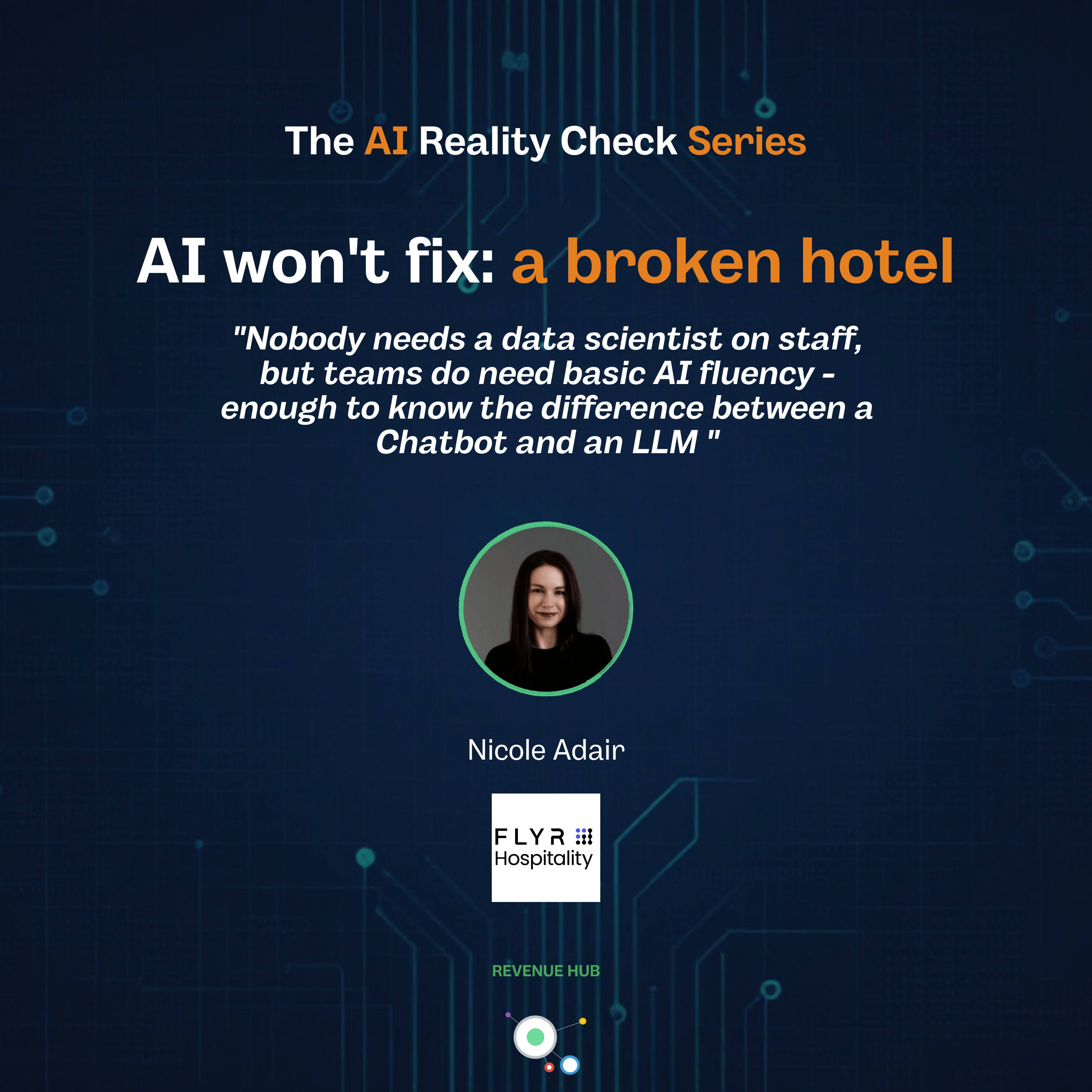 Wanting to Adopt AI Is Not a Problem But Lack of AI Fluency in Commercial Teams IsRevenue Hub · on Machine Learning77 / 100
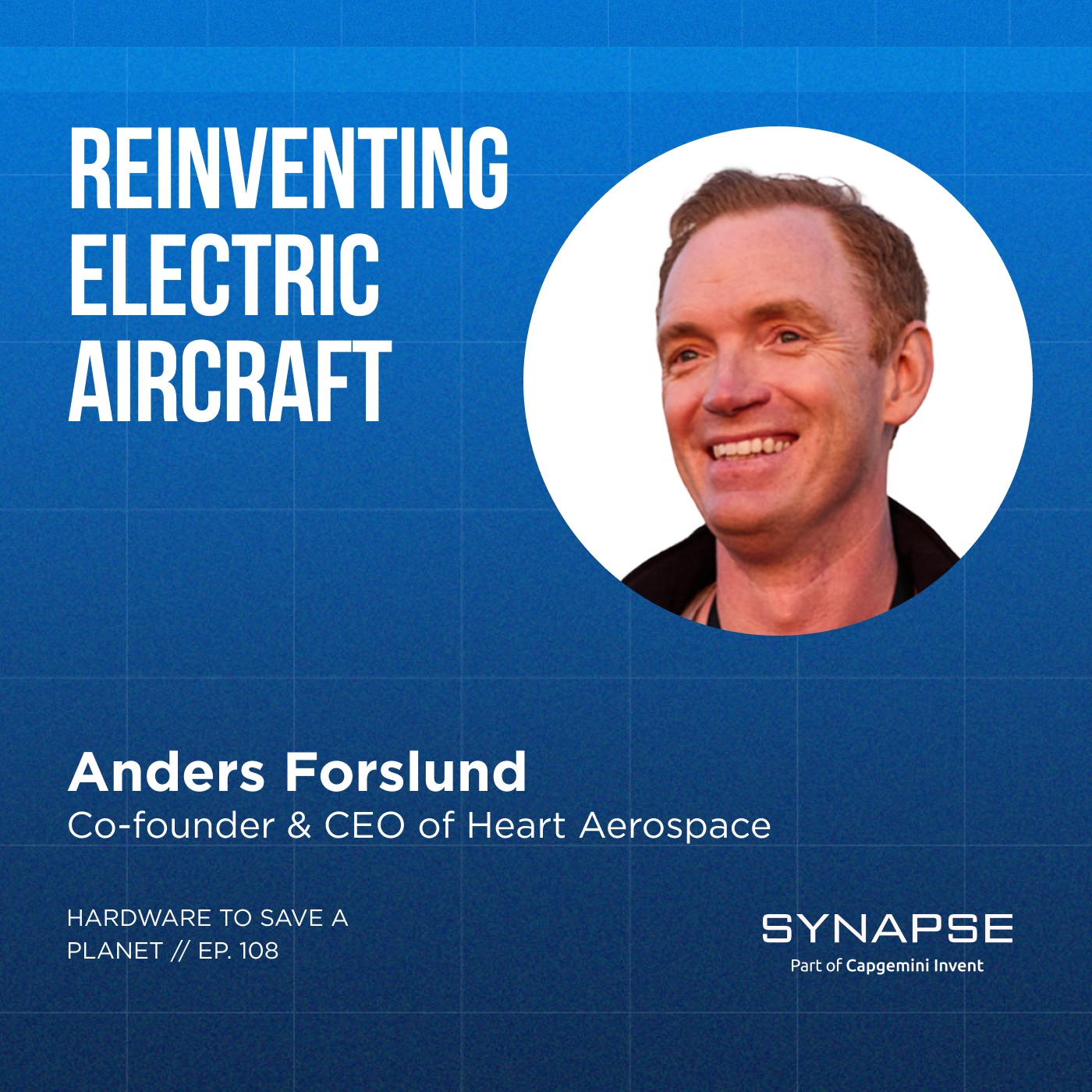 Why Electric Aviation Is Finally Becoming Possible | Anders Forslund97 / 100
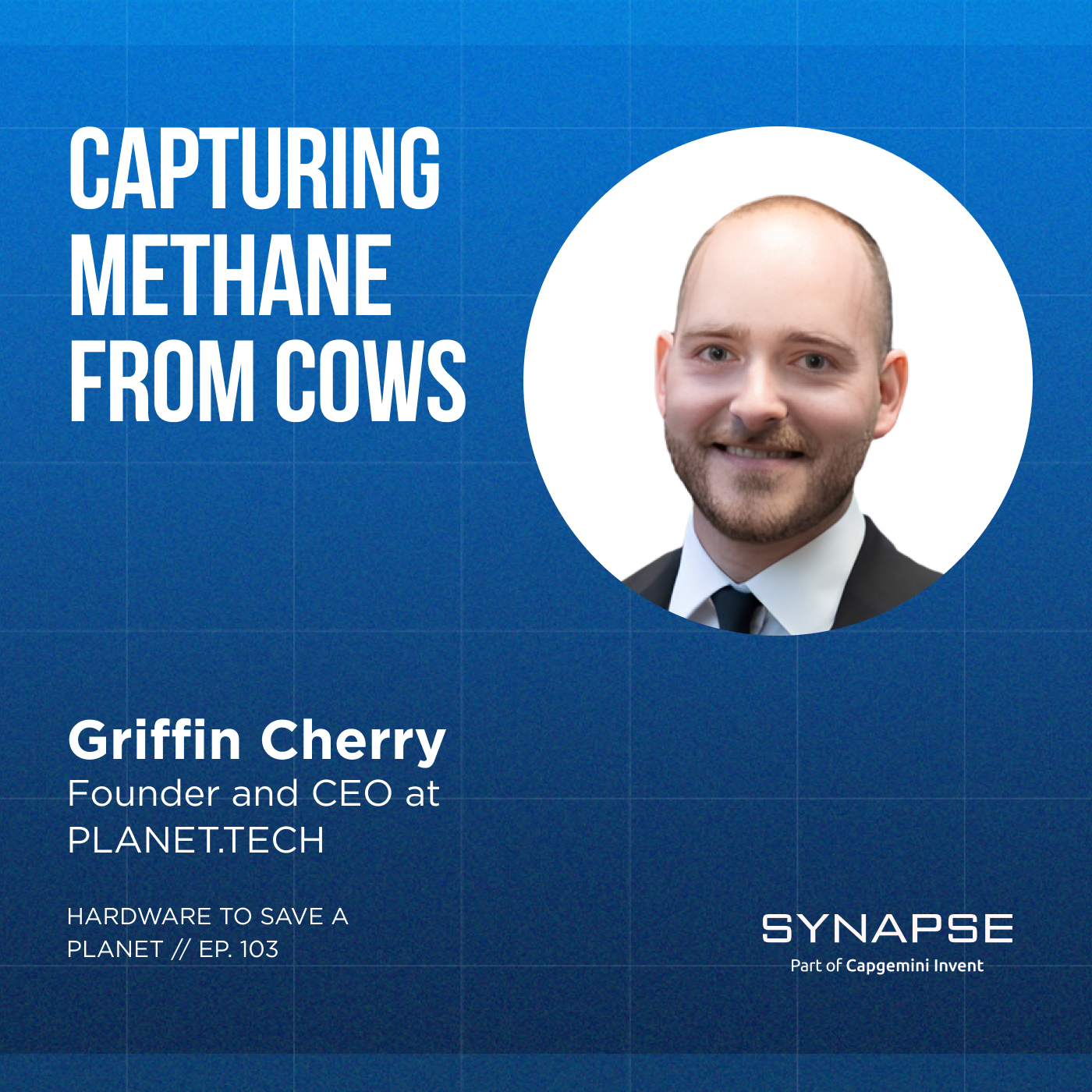 Turning Cow Burps into Clean Energy with Griffin Cherry85 / 100
 The Race to Replace Plastic: 2026 SF Climate Week81 / 100
 Why Solar Deployment Speed Is the Real Climate Bottleneck with Deise Yumi Asami77 / 100
 30% More Power, 20% Lower Costs: Scott Graybeal on Solar’s Step-Change Moment86 / 100