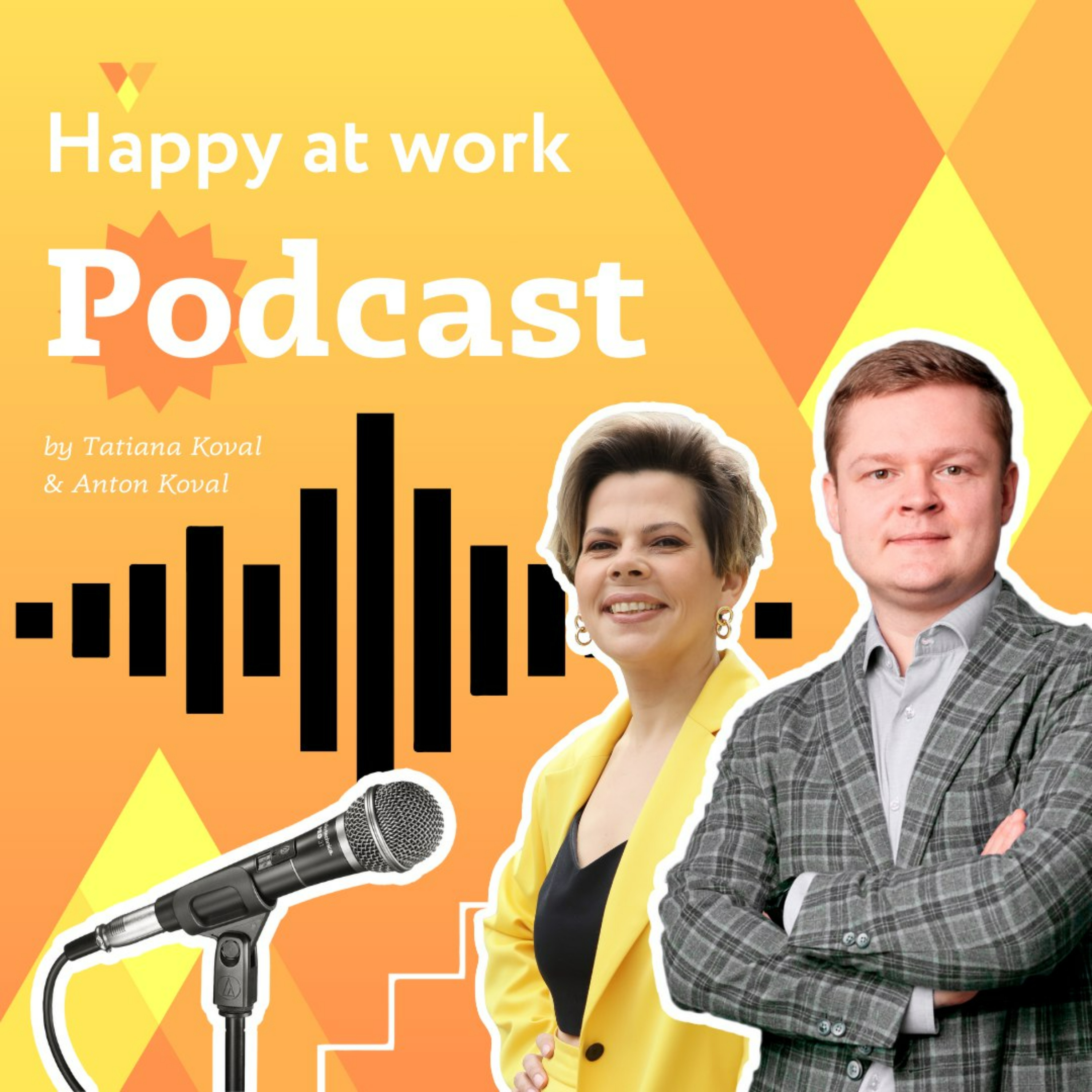
Happy at Work · 2026-07-01 · 36 min
Key moments - from our scoring
Substance score
40 / 100
Five dimensions, 20 points each
Raz Mitzna, founder of an employer branding agency, challenges the traditional view of employer branding as primarily a recruitment tool, repositioning it as an organizational development initiative centered on retention, employee engagement, and leadership buy-in. He argues that employer brand implementation requires mapping critical touchpoints across both organizational efforts (communication, events, media) and managerial influence - where actual employee experience occurs. The conversation explores why managers are the most difficult stakeholder group to engage, how to secure C-level sponsorship, and the importance of discovering gaps between what companies offer and what employees actually perceive. Rather than manufacturing differentiation, Mitzna recommends identifying authentic company assets - mission, people, environment, salary - and communicating them truthfully. He emphasizes that transparency about work realities (long hours, office requirements, industry challenges) actually attracts aligned candidates and prevents costly mismatches. For B2B operators scaling globally, the episode provides frameworks for internal activation, change management, and moving beyond generic employer brand campaigns toward genuine organizational culture transformation.
Show managers examples of peers at other companies acting as company presenters, involve them in pilot programs where they see measurable results (more CVs, conference speaking opportunities), and secure C-level commitment with real budget allocation so they understand leadership takes it seriously.
Manager engagement is the hardest touchpoint because you cannot control what they communicate one-on-one with employees, yet they own most of the employee experience; training and inclusion in messaging framework development are essential.
You don't need to advertise weaknesses - they'll be discussed anyway - but do communicate your authentic strengths and explicitly state what you are and aren't as an employer to attract aligned candidates and reduce mismatches.
Early metrics include recruiting pipeline improvements (more prospects, faster hiring) and reduced time-to-fill, but employer branding ROI extends beyond recruitment to retention and internal engagement, which takes longer to measure.
Understand your organization's current state through research and roundtables to identify gaps between actual company offerings and employee perception, then focus interventions on closing those gaps rather than creating fictional differentiators.
Our reviewer’s read on each dimension, with quotes from the episode.
There are a handful of legitimate practitioner insights - gap analysis between company offerings and employee perception, the organisational-vs-managerial effort split, and the anti-differentiation argument - but they are buried under heavy filler, repetitive phrasing, and meandering monologues. The insight-to-padding ratio is mediocre for a 36-minute episode.
we are like uh, moments architecture. We need to architect the moments
Weaknesses don't need pr, don't need marketing. Uh, we've been working long hours. Hey, they don't pay as much. You need to understand the advantages
The flat rejection of differentiation as a goal and the pivot to creative execution as the real lever is the episode's most genuinely contrarian moment. Everything else - Shackleton job-ad reference, 'start from the inside', ambassador programmes - is well-worn employer-branding canon, and the guest even admits he shows the Shackleton ad at every conference.
I don't believe in differentiation and I'll tell you why
the differentiation came from the creative. But culture story, you know, has many.
Raz is a credible 11-year practitioner running a small employer-branding agency, giving him genuine hands-on experience; however, he has not demonstrably scaled this work inside a large enterprise at a recognisable company, and the episode positions him primarily as a consultant and community figure rather than an operator who has owned P&L or headcount at scale.
I've been in the employer brand domain for the last 11 years. I have my own agency which we help companies uh, to develop their employer brand
as a consultant, when they invite me to meet a new company and see m whether we can work together, one of the first things I try to understand is
Concrete evidence is almost entirely absent - no metrics, no timelines, no budgets cited. The one named client (888/Eightsters) gets a brief creative anecdote, while all other client stories are anonymous and impressionistic ('a true success story in the pharma business', 'not very long time ago'). The '40% of employees' figure is stated without any source.
a company I work with is called, uh, 888 and we call them the Eightsters now
the company is a true success story in the pharma business. They sell, they develop and they sell and the worldwide operation
The host's questions are long, grammatically fragmented, and self-answering; she expresses agreement after virtually every answer and never pushes back, probes a claim, or introduces productive tension. The interview functions as a monologue with prompts rather than a genuine dialogue.
I certainly agree with you
Yeah, I uh, agree with you and um, I really like you to talk about ah creation
Computed from the transcript - who did the talking, and the words that came up most.
Is your brand narrative a lived reality? In this episode, Raz Mitzna reveals how to bridge the gap between high-level HR strategy and everyday moments that unlock candidate experience and employee happiness. Employer branding is no longer just about clever messaging - it’s entirely about the real experience. The true power of an employer brand isn't found in your marketing guidelines; it is revealed in the small, everyday moments where employees and candidates interact with your organization.Today on Happy@Work, I’m sitting down with global expert Raz Mitzna to map out exactly how companies can bring their identity to life across the entire employee journey. Raz shares brilliant, practical insights on how to align your brand, culture, and day-to-day employee operations so your company values are actively lived, consistently activated, and seamlessly scaled across channels, teams, and international markets.
Transcribed and scored by The B2B Podcast Index.
Speaker A: Foreign. Good evening, Good afternoon for everybody. My name is Tatiana Koval and this is podcast Happy at Work. Usually in my podcast I meet with experts from different countries. Today we discuss a very important topic. What to employ a brand. It's not about recruitment, it's not only about communication, but it's about retention of people and working inside the organization and how it's important to uh, engage your leaders and how it's important to focus on this uh, touch point as leaders who work in place inside the organization. It's really important we discuss an interesting topic about differentiations. It's not about findings from the research, it's about creation which you could do, uh, inside the organization and how you uh, tell your stories and which stories uh, you decided to tell inside and outside organization today. My guest is Rasmi, is the best employer branding expert, uh, and the leader of employer branding community. But I hope you could tell a little bit more about you for my audience who could follow you after our conversation on LinkedIn, at least for sure.
Speaker B: So thank uh, you for inviting me to your uh, show. It's very nice to be here. I always like to talk about employer brands. So as you said, my name is Razor and I've been in the employer brand domain for the last 11 years. I have my own agency which we help companies uh, to develop their employer brand. And when I say to live and celebrate the company, they are right inside and out. With a small team of experts from organizational development, HR and of course the creative side and designers. We help companies attract and retain using marketing knowledge and uh, skills. So that's my experience and I hope to share as much as I can with you on this uh, show.
Speaker A: Yes, M. We decided to discuss today very interesting topic about uh, how to implement your EVP in all touch points, in all candidate and employee experience. And firstly, my first question is for you. What could you recommend to companies who really start to implement new EVP or maybe just recreate an ADP in their process? Um, in the process, in the communications and so on we should focus on.
Speaker B: Sure. So of course the first questions we have to ask ourselves what is the goal? Who is the target audience? Are we looking more to the inside on the outside? Now I can share with you, Tatiana, that on my journey it has shifted a lot. Employer brand was conceived and considered something that you use externally. But uh, I think that these days, employer brand, everybody knows it starts from the inside. So I kind of answered the question that most of the times the target audience will be employees. And after doing that once we have our evp, which is what we offer. Right. What is the deal? Why should employees come to work for us? You know, we have an important mission, we are growing, it's a very, uh, flexible environment, etc. Many offerings. Right. The next, the next thing we should do is think in two main, uh, efforts. First is the organizational efforts. The, the things that we control, uh, the communication, uh, the events, uh, the media. Right? This is something the organization can decide what to do and where. And the other main effort is through managers and employees. So because they uh, actually own most of the employee experience. Employee experience happens, you know, on a Tuesday, on 3pm when someone wants to go home and there's a client calling there. It happens. And how the manager reacts and what can he do? Does he help or does he not? Does he make time or does he not? It doesn't mean that he have to let the employee go. That's, you know, work is work, but how he performs is the employer brand. So what do we do? We look in these two efforts, the organizational effort and the managerial effort, and we map the most significant touch points. We want to intervene because sometimes you have this fantasy that once you know what you want to say, people come for us because they can develop themselves. Okay, we're going to implement it. And the truth for professionals like ourselves, we know that you cannot implement it at once at every touch point. So we decide where to do. And that's, you know, when you do the research for the EVP research, why do you come to work here, how do you tell your friends and what are you proud of, et cetera. That's great. Another big part of the discovery phase is to understand, uh, where do you learn about the company. What happened that made you believe that you can apply for a job in, within the company because in those moments is the key to influence them in the next time. Because as a general way of thinking about it, we are like uh, moments architecture. We need to architect the moments. So most of them, most of the time will uh, have our narratives, our offerings for employees. So that's the general offer. Map their organization and touchpoint and then sit with managers and understand how their day, during the day they have interactions with employees.
Speaker A: Um, I certainly agree with you and um, I know what sometimes it's um, Usually we don't have big problems with mapping, but sometimes they have. And also we have some problems, uh, to implement in some points. And my next question for you is, uh, I want to back to a leadership role, but also uh, to ask you about which uh, type of touch points from your experience is uh, much more important and much more difficult, uh, from a perspective of implementation, your evp. Sure.
Speaker B: Um, so I would begin that the most difficult ones are with the managers because you don't control what they say. You know I have another thing that I learned along the way. You don't control what people say you can influence. And it's the same thing with managers. You cannot control what they will have in the one on one session, in their team sessions. And you know what, that's good thing because you don't want to be all day with managers. Right. So this is the most difficult and I think that everyone that operates an ambassador program will reason it will resonate with them because ambassador program, I think it's the most advanced utilization of employer brand because you're not doing it yourself. So the most difficult is managers. And afterwards we can, we can share how, how can you train managers, how you can work with managers in order to speak about the things that make this company a good company to work for. Uh, another difficulty is once you have an EVP and you want to start to uh, put the story out there on the media, on your career side, on the social media, suddenly managers in the organization pay attention to what HR employer brand professionals are doing. Because before that it was mostly enclosed uh, rooms and have everyone has something to say. And HR as professionals they know a lot about relationships and processes and implementations. But sometimes it's very hard to sustain the story with all the critics that coming along. I see it when they suddenly start to post stories on LinkedIn and there's a fuss in the organization. So it's sometimes very difficult to, the way to manage that is to include the managers. When you develop the messaging framework, when you develop what are uh, the assets that you're going to talk about, what are the narratives. So people are included and this is something HR knows how to do to include other people in the process. But it's very important in order so they can see themselves as the outcome and support. Um, I think it's also very difficult because it comes with a uh, price, a budget you really need in order to do employer brand that someone notices you need a budget. Now there are two things that makes it hard. First HR doesn't have the resources that marketing has now. Employee brand is a lot about marketing. So that's a difficulty. Another one is it's kind of a new money because we didn't have this uh, budget before, do we need it now? So you must prove RNI first and it's very hard to prove ri uh, on the employer brand in the first six months, one year, you can find some shortcuts. When you do recruiting, you have more prospects, you have, it takes maybe a little less time. But as I said, employer brand these days it's not mostly about recruiting. Uh, so uh, you asked about what is difficult. I think that first it's difficult everywhere. Right. But each domain has its own difficulty. Because when you want to implement inside the organization, budget is not a big issue. The issue is attention. Can you have attention of the leadership? Can you have attentions of the managers? Because everyone wants to make a workshop, right? It's very important. So what should we do it about? Maybe we should do it about how to implement AI newest capabilities. You should. So you need to make a room in order to work with the managers. And that's also something that is not very easy to do.
Speaker A: Mhm. And my next question is very interesting. From my experience, uh, absolutely, when I talk about the managers, what we need to include them. Sometimes it's about budget, but uh, also from my experience, we have situation. Other people said, oh, employer brand, it's uh, responsibility of hr. Why should I visit these workshops? Why should I participate in focus groups? What should I implement in my life? It's responsibility of hr. So my next question is, what is the best way to sell the idea? What employer brand is the responsibility? I uh, think all of leaders of the organization, how to engage them in this process and make them our ambassadors,
Speaker B: um,
Speaker A: different, uh, things maybe could you share some experience? What helps you?
Speaker B: Sure. So that's also a difficulty. As we said, there's a lot of difficulties. And you know what? That's a good thing because otherwise they wouldn't need humans like us. Right. Machine can do everything. So the way I approach it, I have uh, several things that I try and I see what works best. Okay. First we show them what other companies are doing. Right. Because we see other managers are being like presenters of the company. It is so important. Uh, it is so nobody can really develop a relationship with a company. You can develop a relationship with a leader. You say, hey, I would like to work with him. So there are leaders out there, they're doing the work and I'm a little bit, ah, annoying and poking. Look what they're doing. You're not doing that. Okay. So that's one way. The other way to do it, you can always find some managers that understand that, understand that in these days, uh, uh, uh, uh, recruiting and employee branding, it's a company effort. It does not belong to HR because it happens everywhere. And then when you can find those two, three managers, you work with them and you do pilots with them and you show success. Success has many forms, right? It can be like making them show up on uh, job ads and showing how it makes people approach more, send their CVs and improves the candidate pipeline. Or you can put them on stages, on meetups, on conferences, and people start to look and say, okay, I can understand better. And employees start to talk one to each other. So finding your cooperation within the managers, it's also a very good starting point. And of course if uh, C level executives are on board, that's a key success indicator. Because you know, a company can say it is very important for us, we would like you to, but if they don't put people and budget on that issue, it's not really important. People understand that. They're not stupid. They work in the organization and they understand. So, you know, as a consultant, when they invite me to meet a new company and see m whether we can work together, one of the first things I try to understand is, okay, uh, I'm meeting with you in your office. Who else is with us on this? Who else cares? Who has a pain that the employer brand doesn't work very good and people are not as happy or the pipeline is not as good? Because what I've learned, if there's no pain, it will be very hard to do something significant. It will be very hard to do something that is not a marketing project, is an uh, organizational development project. Because employer brand, and that's something I've learned also, you know, after three or four years, it's not a marketing project. You have new language, you have a new way of introducing yourself as a company. Everyone needs to follow along. And, and that makes it something that is organizational and not some kind of aspect of a marketing campaign. And that's, that's the way I approach this very difficult question. Uh, you, you, you just showed to me is how do you recruit the managers to be a part of that? And you know what, another thing, you need to be passionate about it, right? I hope I can transform the passion I have for this subject. So as a manager within the organization, if you're passionate about it, you will find an interesting way to storytell what is employer brand, how does it work for us, what is it good for us and how it can influence the company. And it creates momentum, uh, and it creates like a magnet that people want to be part of it. And that's I think the things that help us uh push employer brands into a uh, manager's agenda.
Speaker A: Mhm. Uh, and I really appreciate and the managers of the company, they understand why, why employer brand is important and what impact has on the reputation ah on the company. Uh, but uh, I want to ask you about another question so absolutely agree with. Now we stop to uh, watch uh, uh to look at uh employee brand only as a marketing tool only uh as a tool for recruitment because it's much more deeply. On the previous week I published the uh article on LinkedIn. What. And now we have a new reality and retention is much uh more important. It is a new recruitment day. It's not only uh, uh uh, to keep people inside the organization but also about ambassadors program about referral uh, program uh so for me um, next question about if we talk about employer brand and not from a perspective of recruitment outside the organization but from a perspective of retention and I think inspiring our employees engage to be a part of the organizational change uh of the organization. What should we do on which part of the processes maybe in which part of our communication we should focus if we talk about uh, internal audience.
Speaker B: So as a consultant I would say for sure first you need to understand the organization. Right. There's no one fit solution for every company. And the key for that is to understand where the company is dripping. Right. What's what offerings the company has and that employees don't see or don't understand. Right. I met companies, you know not very long time ago that the company is a true success story in the pharma business. They sell, they develop and they sell and the worldwide operation and a uh question I love to ask in um, those roundtables is is the company successful and employees were, you know. Yeah, I think so. I'm not sure. So this is a gap that we must lean into. Okay. Because there is a true potential of engaging employees but something doesn't let them feel they're part of the success. Now what we did with this specific uh client is that we were we, we shifted the success story to the employees. So if you see this, the kind medicine developed and shipped overseas, it's probably thanks to okay and big posters and the employees are presenters and suddenly they feel proud. So I think that what I'm trying to say, of course this solution doesn't fit every company but look for the gaps in other companies it might be, you know, you sit with one roundtable, yes. You have opportunities, yes. You have development. Uh, and you sit with another roundtable, no, you don't so the offering is not distributed equally within the company. So the key is to understand those gaps because we have to be a little bit modest as employer brand, uh, leaders of course we want to tell the company you must have a very important mission to save the whales. You must uh, uh, have many opportunities for people to advance from within. That's very nice, but put it aside. You need to discover the gaps between what company has today and is not perceived in the employees life, daily life, life cycle and press on that because that's the advantages of the company as a uh, as a product. Now of course in the long run you can develop more things that will uh, go inside and develop more plans. But that's. We are looking for those gaps and how to make them live. Uh, the experience.
Speaker A: Mhm.
Speaker B: Yeah.
Speaker A: Uh, my next question uh, for you is um. It's about uh, to say the truth when we talk about the company. I remember Ty, when more than 10, 15 years ago when uh, I started working this sphere and employee branding. The most part of the companies try to uh, show themselves from the best side of them. So uh, especially externally, uh, but now we have situation what. Uh, it's absolutely clear for everyone what's happened inside the organization. Uh, but it's a difficult moment uh for people to start to say the real truth about for example overtime, uh, or uh, about certain difficulties in our job. Uh but it's important for the company uh, for outside, for attracting people who have a real expectation and also outside uh, because people really know in this reality sometimes it's a really difficult reality. Uh, what could you recommend? What could you recommend for the companies who really. To build a strong and attractive employer brand. But another way uh, to build authentic and real employer brand.
Speaker B: Sure. So first I can recommend as much as I want. It's very hard for companies to tell the truth. Long hours, it's a big effort. The stock is not very high right now. Right. So it's hard. You know, also as human beings. Right. When you go to a bar, when you go to a party, only to your closest friends you feel open enough to tell. Uh, I had a really bad day, I don't know what to do. My girlfriend left me. Right. You don't just spread it around also in social media. So, so my first thing I want to say, don't tell something that is not true. Okay. If you stick to the truth, you don't have to talk about the weaknesses. I uh, will address it shortly because there is advantage to talk about the weaknesses. Right. But, but you don't have to. You, you can shift the conversation. The thing that happens between people, your weaknesses, people will talk about anyway. Weaknesses don't need pr, don't need marketing. Uh, we've been working long hours. Hey, they don't pay as much. You need to understand the advantages, you know that I meet some companies that are very uh, they're not self secure about their offerings. And look, you have 2,000 people working for you. You're doing something right, let's find out what it is right and start, and start talking there. And they're also afraid to talk about the things that are going right because they will be very cynical. Uh, I have a news flash for you. People will be sinko everywhere, all the time. It's cross cultural, right? Yeah, that's the way. Don't let that hold you back because what happens when you don't talk about the things that do happen? You know, in some industries the fact that you pay on time, that uh, it's a clean environment, that managers don't shout on you, I'm sorry to say but in some industries it's an advantage. Talk about that. That's okay, that's your offering. Because what happens when you don't talk about the advantages? You don't let the 40% of employees that kind of like or they accept the deal to feel good about it. Because everybody all the time is. So that's the first thing I want to say. Put the advantages out there, don't be afraid, people will be cynical. So what if you tell things that are not true that will backfire on you. But if the things that you have and you have a research, don't invent them in the boardroom for sure. The other things that come in mind. Are you familiar with the most uh, known uh, job ads from the old days of Shackleton? Shackleton, yeah. Yes, right.
Speaker A: It's one of the famous uh, advertising ever.
Speaker B: Right. Because he went on an expedition low, low wage, cold nights, not safe return glory. If you come back and you will remember this ad today and ah, probably in every conference we see this. I also showed it at my conference. Right. So there is a magnetic power in also telling the things that you are not. And that's okay because people appreciate it. And you know there's another thing I want to say that sometimes it's very hard for companies and HR leaders say who you are, say who you're not. It will become the right people to join you. Because if you are working in a certain domain and that's the domain you Work in. And if you want to tell a different story like uh, we use a lot of AI which you don't. People will discover it shortly. Or another thing that I heard very recently, you know, with the COVID and other things. The work from home issue is also a big issue in Brazil, I presume.
Speaker A: Mhm.
Speaker B: Companies that offer flexible hours company did not I say to, to. To leadership. Look, you make your decision. If you think that for your kind of company you want people to see each other every day because of the relationships, because of what you need to be doing. I don't judge you. But say that. Don't pretend something else. Understand the price. And there's enough people that might think that that's a good offer for them because they don't like to work from home because they love their relationship. You know, younger generation, they're missing a lot if they work from home all day. Because I made so many relationships and friendships meeting colleagues in the workplace. So that's okay. Now of course if you uh, uh, facing uh the reality that people don't want to work for you, okay, so change the product. But otherwise you have. You believe in something, you say it easier said than done. We know that as a practitioner. Uh, but we try to push and to educate and to facilitate and do whatever we can because otherwise it's very generic. It's not interesting. Mhm.
Speaker A: Um, my next question uh, I want to ask you also it's about differentiating. Um now we talk about self truth and now uh I remember to a lot of I think two or three last universal research shows us what differentiation now is a really good challenge for a company. Uh because in the previous um. Because we talk about not about reality but about our best part of try to be the better. Now we need to differentiate our brands from other brands for employees uh, for other the people outside. And also it could be a reason to say at least it help us to find the reason uh for the candidate employees um to answer the question why do you want to work for us? Because it's very funny until the company fire this answer. They try to ask a candidate so I do one for us but it's only the social oriented answer. So uh, what could you recommend to the companies who really want to find this differential point and make this a selling point for the employees who answer why do you work for these companies? And also for candidates. What should I work for these companies?
Speaker B: So I'm going to surprise you, right. I don't believe in differentiation and I'll tell you why And I'll tell you what you can do. So if you're curious, stay along. I will tell you. First, listen, company, you know, I talk about employer assets. It's not endless, right? It's a mission. It's the people, it's the environment, it's the office, it's the salary and 15 more, okay? There's our 20, 30 main offerings that company can make. And there's so many companies in the world. You know, it's not like manufacturers of other, uh, merchants stuff that you can sell. So actual differentiation is very, very hard to prove. And also to obtain, I put aside companies like, you know, Elon Musk. He flies spaceships to the, to the moon. Okay? You have one or two companies like that, so put them aside. Because most of companies. No, my second argument is most companies that stick to we want to be are companies that have done absolutely nothing in employer brand and they want to be different. Join the effort, begin your employer brand journey. Move from, uh, being on, um, one to being a five to being a seven, and then let's think, you know, curb your enthusiasm after saying that. The way that me and my team address this issue is not by the message, by tone and style, by creative, by how does it feel? Okay, because there are so many stories you can tell, right? You can tell a story about the mission, you can tell a story about the culture, you can tell a story about tech. You know, there are so many stories that companies put as the main story. The differentiation comes from the creative that is noticeable. You know, a company I work with is called, uh, 888 and we call them the Eightsters now. It's a culture story. Okay? Many companies have this kind of culture story. But the differentiation was that in the creative, we took the eight and put it, you know, like this, huh? On every advertising, they had these eight like superheroes. And it was very much recognized as their language. So the differentiation came from the creative. But culture story, you know, has many. So. So that's my take on differentiation. First, it doesn't exist. But if you want it, let's be brave on the creative and make people feel something about you and remember you. Because that's, that's the issue. You know, when someone applies to a job, here's a news place for sales. It doesn't apply just for your company. He applies to many companies. Now the contest is, who will he remember which company? Will he wait three more days or even a week to give to to, uh, to the offering? Which company will he be willing to, to get 10% less compensation but he will choose to come. P.S. this is the power of employer brands. Not like consumer brand. When you want to pay more for m for a product in employer brand you are willing to earn a little bit less in order to work for this, this company. So that's, that's the actual contest and this is where we're trying to help ah companies and of course make employees proud. Hey, I'm an eggster, look at me. Right? So that's, that's the journey.
Speaker A: Yeah, I uh, agree with you and um, I really like you to talk about ah creation because it's also the way for understanding you better. It's um, and I remember like on one conference that told people uh, uh, in employer branding people uh, should not be just not a teller uh of the stories but creator of the stories inside the organization.
Speaker B: Amazing.
Speaker A: That's the best rest. Uh, the time is coming so fast and I have my last question. It's uh, questions which I usually use for all my guests in the end of conversation because we have mentioned a lot of important things during a conversation. And my last question for you is based on our discussion. What three main tips could you give to the companies who want to build, build a strong employer brand? What should they focus on?
Speaker B: Pre manager, you have to start bottom up. Really, really, really understand your company through your employees eyes and voices. There's all other ways they are not um, they are not you know, you cannot work with them for the long time they don't have. You cannot reinforce them. That's, that's the first thing. Uh, the second thing, employer brand is not an HR thing. If it's an HR thing, you're actually not doing employer brand. You're doing some kind of a campaign, some kind of an initiative. If you cannot create some kind of a committee which has other C levels, executives, managers that are your main customers within the company, you're not doing employer brand because you cannot control experiences around and within the company. And if I have to choose, the third one is don't wait for the perfect evp, for the perfect creative, for the perfect social um, post how much time companies waste. The main thing and I just had this conversation, we were really client that I really love. And sometimes you know when you're on LinkedIn, you see what other companies doing, you get jealous. And I tell her listen, that's okay, don't worry about that. What we need to see that we are better today than we were last week. If that's true, we're on the right path and that's my tip for employer brand managers and people who want to, to manage employer brand within companies. Because we know it's not only employee brand managers see that you're always improving and moving forward, and that's the most important, uh, thing.
Speaker A: Yeah. For us. Thanks a lot for participation in, um, our podcast.
Speaker B: Thank you very much.
Speaker A: So this is podcast Hair Bedrock. My name is Tatiana Cohen.
Speaker B: Stay connected, Sam.
Other episodes covering the same guests and topics, from across The B2B Podcast Index.
 Ep. 151 | Why Most Subscription Brands Fail (It’s Not Retention)The Unstoppable Marketer® · on Retention Strategy95 / 100
 187: Recognition as a Learning Tool Sarah McVanel & Lisa AnsteyLearning Uncut · on Organizational development80 / 100
 Workplace Bullying Risk with Mary CullenHRchat Podcast · on Manager training76 / 100
 EP 219: Building Talent Programs at Hulu, Activision, and Take-TwoThe Breakthrough Hiring Show · on Employer brand74 / 100
 HR Leadership in Gaming: Marina Jónsdóttir (Head of People at Starbreeze), Joseph Wilson (ex-VP People Experience at EA), Keith Caswell (ex-Hasbro, EA, Microsoft)The Talent Game Podcast · on Organizational development73 / 100
 "Be the change you want to see" - Charles Newnam of PerceptyxLand and Lead · on Organizational development72 / 100What Happens When Leaders Stop Treating Exhaustion as Individual Failure | with Dr. Kat PageThe Serendipity Mindset: Christian Busch on How to Engineer Your Own Good LuckBeyond Yoga Classes: Building a Corporate Culture That Cultivates Happiness | with Laura PutnamKeeping your workforce engaged when repetitive tasks are handed over to algorithms | with Rafael UribeHappy Hiring: How to Build a Human-Centered Recruiting Strategy | with Kara Dennison