
Grow Your B2B SaaS · 2025-12-09 · 20 min
Key moments - from our scoring
Substance score
58 / 100
Five dimensions, 20 points each
Glenn Miseroy shares his framework for rebuilding go-to-market motions in 2026, moving away from generic lead lists toward intent-driven, multi-person thought leadership strategies. Rather than relying on founder-only visibility, he advocates enabling customer-facing teams across the company to build reach on LinkedIn through consistent, audience-aligned content creation. AI plays a supporting role - helping ideate content themes, identify awareness-stage pain points, and personalize outreach timing (like reaching out to newly hired heads of sales in their second month rather than day one). The core insight: thought leadership creates compounding pipeline reach, signal capture operationalizes that engagement into intent scoring, and precise timing plus personalization determine conversion. Miseroy demonstrates how Expandy uses tools like Scribe to reduce friction - automating content calendars while keeping humans in control - and emphasizes that storytelling matters more than feature-focused messaging. For founders at 0-10k MRR, he recommends lean, founder-led LinkedIn thought leadership as the cheapest growth channel. At scale (10k-10M ARR), the priority shifts to defining a tight ICP and aligning all messaging and positioning to that segment, supported by teams sharing knowledge rather than just founders.
Intent signals include website visits, LinkedIn profile visits, post engagement, connection requests, and follows across your company pages and personal profiles. They're captured from distribution channels like your website, blog, LinkedIn, webinars, and events, then used to build outreach lists and time engagement when intent is highest.
Multiple people sharing thought leadership increases overall reach, targets different buyer personas, and captures intent signals from more touchpoints across your company. A team of 10 people posting creates broader visibility than founder-only posting and signals team expertise across the market.
AI helps ideate content themes aligned to awareness stages, conducts interviews to brainstorm topics, generates 30-day content calendars, learns about prospects before outreach, and personalizes both timing and messaging - but humans retain final approval and posting control.
Month two is ideal - after they've gotten acclimated to their new company and are starting to explore optimization opportunities. Day one outreach is premature since they're still onboarding.
Story-driven messaging that positions the buyer as the hero ('You struggle with X - here's how we help you reach 10x meetings') resonates better than outcome-only claims, because it explains the journey and starting point, making it relevant to buyers at different stages.
Our reviewer’s read on each dimension, with quotes from the episode.
The episode contains several actionable frameworks (thought leadership → signals → outreach, multi-channel intent detection, timing-based personalization) and practical advice on GTM rebuilding, but is hampered by repetition, generalities, and filler. Key ideas like 'catch signals instead of using lead lists' and 'personalization timing matters' are solid but not densely packed - there's significant throat-clearing and obvious advice ("LinkedIn is where your buyers are") that dilutes substance per minute.
Literally if I have to rebuild my go to market motion in 2026, I would kick off with uh, defining a couple of people within the company who should be doing thought leadership
lead lists don't work anymore. Right. So instead of using lead lists, you have to catch the signals in order to build your lead lists
The core thesis - employee-led thought leadership as a distribution channel feeding intent signals into outreach - is moderately fresh but not groundbreaking. The framing of thought leadership as 'phase one' and signals as 'phase two' is sensible structuring, but the underlying ideas (content → engagement → sales outreach, LinkedIn as a sales channel, storytelling over feature-selling) are well-worn in B2B SaaS discourse. The specific angle on timing (month 2 vs. day 1 after job change) is a minor original insight.
What I do see changing in 2026 that is not only the founder but also the people who actually within the company doing thought leadership
imagine, uh, you have a new, uh, head of sales. We join a company. People, uh, could filter that out on LinkedIn. Right. And the moment they do that, they're going to reach out immediately to those people that just entered their job in their first month
Glenn Miseroy is a credible founder-operator: CEO of Expandi (scaled 0→$10M ARR in 6 years, 45-person team) with direct GTM experience and skin in the game. His perspective carries weight because he has executed the strategies he's recommending at meaningful scale. However, he is not a household name in B2B SaaS, operates in a relatively narrow vertical (LinkedIn automation), and the interview doesn't probe deeper operational or financial nuances that would distinguish exceptional guest caliber.
co founder and CEO of Expandy, one of the fastest growing LinkedIn automation platforms scaling from 0 to 10 million AR in just six years
we are ready to create that growth look the Only thing is, it becomes more important the type of message you send
The episode lacks concrete data, named customer examples, metrics, and timelines to back claims. Glenn mentions Scribe as a tool but few specifics on what it does or results from it. The '3 months to kick off thought leadership' timeframe is vague. No revenue figures, churn rates, CAC comparisons, or case studies of companies executing this motion are provided. The advice on timing (month 2 job change outreach) is specific in concept but not validated with data. Most claims rest on assertion rather than evidence.
It would take at least three months to kick off. Right
We use Scribe, which is, um, uh, let's say a content, uh, SaaS, which helps you with, uh, doing thought leadership on LinkedIn
The host asks reasonable setup questions ("What will change in 2026?", "How will AI reshape GTM?") but rarely pushes back, probes deeper, or challenges Glenn's assertions. Follow-ups are often clarifying rather than testing. For example, when Glenn says 'lead lists don't work anymore,' the host asks if this is the same as ABM rather than pressing on evidence or exceptions. The host also allows vague claims ("AI will help ideation") to pass without demanding specifics. Conversational flow is natural but lacks intellectual rigor.
And when we talk about signals, is it then, uh, people opening up emails, going to the website, uh, doing certain actions in the app? Like, what do you mean with signals in this case?
Well, like a lead list for you, is that already, I guess like uh, just all the people who came in and filled out a form and became a lead? Or is it more as in companies you target?
Computed from the transcript - who did the talking, and the words that came up most.
How SaaS GTM Will Change in 2026? In this episode of the Grow Your B2B SaaS podcast, host Joran welcomes Glenn Miseroy, co-founder and CEO of Expandii, a cloud-based LinkedIn automation solution. Over the past six years, Expandii has grown to a team of 45 and scaled to 10 million ARR. The conversation digs into how go-to-market motions will evolve by 2026, why employee-led thought leadership will become central to growth, how AI will reshape ideation and timing, and why signal-based, intent-driven approaches must replace traditional lead lists. Glenn also shares how he would rebuild a go-to-market motion from scratch, how to operationalize signals across channels, and what founders should prioritize at different revenue stages - from zero to 10K MRR with founder-led growth to scaling toward 10 million ARR with clear ICP and aligned storytelling.
Transcribed and scored by The B2B Podcast Index.
Speaker A: Welcome back to the Grow youw B2B SaaS podcast. Today I'm joined by Glenn Mizroy, co
Speaker B: founder and CEO of Expandy, one of the fastest growing LinkedIn automation platforms scaling from 0 to 10 million AR in just six years. In this episode Glenn breaks down how go to market motions will change in 2026. Why companies must shift from needless to signal based, intent driven go to market and how employee led thought leadership will become a core growth channel.
Speaker C: We discuss how AI will reshape go
Speaker B: to market by improving ideation, personalization and timing. And why companies need multiple people and not just founders building reach on LinkedIn.
Speaker C: Glenn also shares how he would rebuild
Speaker B: a go to market motion from scratch, why thought leadership creates compounding pipeline and how to operationalize signals across channels and what founders must do at different stages. So going from 0 to 10k Mr. With founder led growth to scaling towards 10 million ARR with clarity on their ICP and storytelling.
Speaker D: It's going to be a super tactical
Speaker B: episode for SaaS founders who really want to scale smarter in 2026. So let's just dive right in.
Speaker C: Welcome to the Grow your B2B SaaS podcast. Could you quickly introduce yourself? Who are you and what do you do?
Speaker D: My name is Glenn, I'm a uh, co founder of Expand, currently in the role as a CEO. Expand is a LinkedIn automation solution and the cloud. We exist over six years now, we team of 45 people and we were able to grow our company to 10 million A within six years.
Speaker E: Nice, nice.
Speaker C: So you know uh, a thing or two about go to market. We're going to look at go to market strategies in 2026. Like uh, I mean you have product led growth, sales led. Will uh, hybrid motions become more important? Like what is your vision for 2026?
Speaker D: That's a good question. A lot of people talk about, let's say founder led growth, which is something which is hot I think beginning of this year. What I do see changing in 2026 that is not only the founder but also the people who actually within the company doing thought leadership, for instance on LinkedIn, uh, share their, let's say uh, expertise, uh, share knowledge about the company and that actually helps uh, for new go to market motion.
Speaker E: Yeah, yeah.
Speaker C: So really I guess help having the people within the organization to go more out and actually share things about the market.
Speaker D: Yeah, I think the people become more important not only to express themselves on LinkedIn but also it shares more like for uh, instance different awareness phases of the problems that people are having and I think that's one of the main things that right now a lot of companies are undervaluing, slowly making that transition. But, but I do think that's the future for 2026.
Speaker C: And I mean, it's funny that you mentioned it, people, because a lot of, uh, companies and people are looking at AI. How do you think AI will reshape, I guess go to market, will then help the people to be more active or.
Speaker D: Uh, yeah, definitely, definitely. Like people, uh, doing thought leadership on, for instance, LinkedIn. Let's take that as an example. AI can help you, let's say, ideate or brainstorm about what should be the thought leadership, about what different type of awareness stages. And as soon as, let's say people start publishing content on LinkedIn or doing the thought leadership, AI can actually help you transform that into, let's say, the right signals, Getting the right signals and using that in the pipelines to do, for instance, outreach.
Speaker E: Yeah.
Speaker C: And when we talk about signals, is it then, uh, people opening up emails, going to the website, uh, doing certain actions in the app? Like, what do you mean with signals in this case?
Speaker D: It's a very good question. What do I mean with signals? If you look, for instance at. You have different, let's say, distribution channels, right? Your website, your blog, LinkedIn could be one of the distribution channels. Webinars, co webinars, partnering events, all those distribution channels. So basically, imagine you have all those signals, like from the website, the website visitors, LinkedIn visitors. So you have, uh, a company page on LinkedIn, you have your personal page on LinkedIn, a data signal. So basically people visit your profile pages, but people could also engage on a post, or they could, for instance, send you an inbound connection request or send you, let's say they started following you.
Speaker C: It's almost like turning the signals into intent.
Speaker D: Exactly, yeah. To, to, to get a certain level of intent from those signals and then use that in, uh, let's say outreach.
Speaker E: Yeah, yeah.
Speaker D: And so, uh, you reach out to them at the right time.
Speaker E: Yeah, that's it.
Speaker C: Because, like, I guess, like, there's so many things people take action from. Like they follow you, engage with your content, go to the website. So you can kind of capture everything in, I guess, like, uh, the full funnel and then figure out who should you actually reach out to at the right time with the right message.
Speaker D: Yeah, definitely, definitely. And with all the platforms limiting, let's say the amount of outreach that you can actually do, the types of signals and how high is the intent actually becomes more and more important every Day.
Speaker C: Yeah, yeah, because I think that's also a big challenge, right? Like you can automate a lot, you can use AI a lot, but then actually becoming, having like an efficient go to market, like this is what you kind of mean, right? Like using the intense signals which are already out there to make sure you reach out to the right person at the right time.
Speaker D: Yeah, I believe it starts with let's say doing thought leadership first in order to create awareness that will get you actually reach. With that reach you actually have to define like what is important and then you get actually to the intent signals. Right. From the intent signals you create a full, let's say full funnel motion where you can also do outreach or do multi channel.
Speaker C: Let's take it one step back. So you guys are now, uh, you grew from zero to 10 million AOR, uh, pretty quickly. Like if you could rebuild your go to market motion from scratch in 2026, what would you do?
Speaker D: Literally if I have to rebuild my go to market motion in 2026, I would kick off with uh, defining a couple of people within the company who should be doing thought leadership because they are, let's say the entrance to the, to the entire market in that sense. So I would define, let's say a set of customer facing roles who start doing thought leadership on LinkedIn on different awareness stages of the pain points that we actually solve. Right. So for instance, we help people catching the signals from people who engage on posts. Um, if that's one of our pain points, we would actually be talking about what are, let's say good posts or good topics to post on LinkedIn within your company. So if you basically start with thought leadership as a first phase in order to create reach, you could literally, you could boost a post on LinkedIn with paid ads or you could actually with a team, start engaging on each other to create a better reach in the beginning if that really resonates with your target audience, uh, the amount of, let's say impressions you get, but also the amount of engagement you get will increase over time. But it's a long game. It would take at least three months to kick off. Right. That will be phase one. Phase two would be to catch all those signals that we get from multiple people within the company. Because if you do only found a let only the founders stop posting about their journey. But if you do it with a team of, let's say 10 people, of course your reach will be bigger and the audience will be different. Right? Different uh, types of companies. As soon as you catch all those engagement and the intent, I would actually funnel that to sales teams to reach out at the right moment. Because I do think that a lot of companies right now are doing that wrong. And this is what I would do different. 20, 26 lead lists don't work anymore. Right. So instead of using lead lists, you have to catch the signals in order to build your lead lists.
Speaker E: Yeah.
Speaker C: And when you talk about lead lists, like um, I mean we all know tam total addressable market, often what companies do is have like account based marketing campaigns where they target certain accounts and then they could catch the intent. Like is that the same as you
Speaker A: refer to lead lists or is that something else?
Speaker D: Uh, you mean account based marketing, how that would be different?
Speaker E: Right, yeah.
Speaker C: Well, like a lead list for you, is that already, I guess like uh, just all the people who came in and filled out a form and became a lead? Or is it more as in companies you target?
Speaker D: I think it goes deeper. It could be companies you target account, uh, based marketing. In that sense, I wouldn't exclude it only because I think also on the other side, a company could show multiple intents. So multiple people within a company who could be your ideal client profile could show multiple uh, uh, intent signals. So one person within that company could visit your profile or the same person could visit someone else's profile within the company or it could even engage on someone's a different person in the company's post. Right. And that shows a certain level of intent. But that's more on the inbound side. On the outbound side, I do think you could target companies and you could actually pose and create awareness and start building relationships first. So connecting to people. And if you then would connect with multiple people within your company to people within their company, there's a higher chance that one of the awareness posts could actually trigger them to show a certain intent.
Speaker E: Yeah.
Speaker C: So it's not going to be cold reach out anymore. It's going to be warm, even hot sometimes. If people listening are now thinking like, hey, we definitely want to start doing this, like it's almost a new growth channel.
Speaker B: Right.
Speaker C: Like how should they treat this? Because you mentioned it takes three to six months to probably see some uh, results. Like how can they start doing this without losing too much focus on actually growing the business as well.
Speaker D: Yeah, we notice within our company it's really difficult to do because the people who you actually want to be posting on LinkedIn, those are the ones exactly. That are actually in the trenches.
Speaker B: Right.
Speaker D: So Those are ah, department leads where you actually want to post on LinkedIn that's not the main focus. The focus is to actually run the department to make sure everything goes fine. So we try to enable them with providing some tools. I, uh, don't know if I can mention any tools, but.
Speaker E: Yeah, go ahead.
Speaker D: Okay. Okay.
Speaker B: All right.
Speaker D: Um, we use Scribe, which is, um, uh, let's say a content, uh, SaaS, which helps you with, uh, doing thought leadership on LinkedIn. So they basically they would divide it in, uh, from top of funnel to bottom of funnel and the different types of topics you want to discuss. They can do online interviews with your people with AI to actually ideate across certain ideas. They would just do an AI interview and shape up multiple topics around that. As soon as that's ready, they can actually create a content calendar for you for 30 days. So in that sense they only need to approve the post and it will be posted automatically. And that is like, I would say a stick behind the door on the other end. They still need to actually post that. So they need to either copy that or schedule it, but they need to press the button to post it. And that is actually a bottleneck still.
Speaker E: Yeah, yeah.
Speaker C: Because are people then afraid to put themselves out there or what is it,
Speaker D: I think for everyone if you start posting, you think you want to do it perfect. Right? At least we all, we know we have an audience on LinkedIn. Our friends, our family, but also business colleagues are all on LinkedIn. So if you post something, you know that all of them are going to see it. So that's like the first, I would say like some kind of a board or like a bump you need to go over. You simply shouldn't care because every first post is maybe, you know, not the right post and you will get better over time. And you know, like, you shouldn't care about all the people that read it that know you personally. It's more about what is the message you're trying to bring. I think that is the most important because it doesn't matter if a lot of your audience, let's say it matters if your audience likes it. Right. If your audience can learn something from that and not if your family members are seeing that or, uh.
Speaker E: Exactly.
Speaker C: I think the audience. And then your ICP should get it. Because for me, for example, a lot of my friends from soccer or my family have a lot of fun things to say about my post. I don't care because it's not my ICP. The ICP I have actually, uh, understands it.
Speaker D: Yeah, 100%. Often when I'm at birthday parties or meeting Friends, literally the message is like hey, I've read your story like now 15 times already. And uh, simply I don't care because let's say my audience, my ICP is reading it and they start following me and start liking those posts because I can teach them valuable lessons over and over. And the family, yeah, uh, it's not my audience.
Speaker A: Are you already running an affiliate or referral program? But it's not really driving growth. Reddit is the affiliate and referral platform built exclusively for B2B SaaS. Combining an in app referral program, an affiliate network of over 20,000 SaaS affiliates and AI powered recruitment that finds new relevant affiliates for you. Migrate for free. With our White Glove service, affiliates can keep their link and you can start managing both programs from one single place with tracking, payouts and fraud detection all handled for you. You can start building a uh, scalable growth channel that compounds without high upfront cost. Want to learn more? Check out getreadytiz.com you talked a little
Speaker C: bit about AI and automations I guess to create the content. Like how will it impact scaling when we look at AI, will it start reducing headcount or will it just change the type of people we're going to hire in 2026?
Speaker D: Uh, that's a really difficult question. I do believe at the end it could reduce headcount. I think we're in some kind of a transition phase where we try to optimize all processes within the company and help the people to be actually more effective. Right. That's what we're doing now. At the end it could reduce headcount. But what do you rather have? Like you, I think you rather have company growth and then you still need people to manage certain things. So I rather like keep headcounts but enable them as much as I can to free up that time if we scale up.
Speaker C: So using AI to leverage people or to make sure people enable them to do their work rather than replacing them.
Speaker D: Yeah, to do the work more efficiently.
Speaker C: Let's say if we look at uh, 2026, what is one growth loop you think will going to be really be powerful for SaaS companies?
Speaker D: Well I do, I have already some m examples that are really powerful. Uh, one of the examples is for instance uh, we started with founder led growth. Right. In that sense we did thought leadership on LinkedIn which got a certain level of engagement that could actually keep filling our uh, let's say as the um, our sales team's pipelines. Right. So we are ready to create that growth look the Only thing is, it becomes more important the type of message you send. And I do think AI is an important factor here to use. Not only, let's say, people that show a certain level of intent, but also that could learn more about them before you reach out to them. And I do think this road loop already exists, but I think in 2026, the personalization is more key and the timing as well. Going to give you one example, imagine, uh, you have a new, uh, head of sales. We join a company. People, uh, could filter that out on LinkedIn. Right. And the moment they do that, they're going to reach out immediately to those people that just entered their job in their first month, the first, getting used to the company, getting used to the processes. In the second month, they start looking for different options, how to optimize certain things. And I think that's the right moment and not on day one when they switch their job. Right.
Speaker E: No.
Speaker C: Congrats with the job. Do you want to buy our service?
Speaker D: Yeah, exactly. Yeah. I'm still getting used to the company. Right?
Speaker E: Yeah. Nice.
Speaker C: We're gonna start wrapping things up. So, um, we're gonna have two questions regarding revenue stages. For a founder who's just starting out, going from 0 to 10k monthly recurring revenue, what kind of advice would you give him or her?
Speaker D: Try to do it as lean as possible. Try to get your, uh, let's say your amount of impressions. And I would say LinkedIn is a very good go to market channel. Not because we offer LinkedIn automation at scale, but more in general. LinkedIn is a very good go to market channel. I mean, your buyers are there. The only thing is you have to be a little bit vulnerable in how you set up yourself and actually showcase what you're doing, which problem you are solving. And it's a long game, it will take a little bit longer. But I do believe this is one of the best, um, let's say not expensive at all. You just need to invest your time. Same like if you're bootstrapping a company or you, you know, like, are we talking, by the way, about bootstrapping companies?
Speaker C: It could be anything.
Speaker D: Yeah. Okay. Regardless, LinkedIn is a good channel. It's cheap. Uh, thought leadership is actually, uh, free. The only thing is you need to invest your time.
Speaker C: Right.
Speaker D: I think this is one of the best things to kick off with and then, um, properly try to catch all those intense signals, um, and learn from them. And if you ask me, like, what kind of growth is this? Is this product led? Sales led? I think it's still founder led. And from 0 to 10 you should be doing founder led. Founder led motion. Also, you have to dive into every call with your clients as well.
Speaker C: Then let's assume we now pass 10k mor and you made that journey towards 10 million AOR. What kind of advice would you give other SaaS founders here? You can chop it up, you can do however you want.
Speaker D: If you scale up from 120k ARR to 10 million ARR. I think what's um, most important is to get a clear icp. Your software, uh, doesn't work for everyone. So I think until you reach 120k ARR, you have to figure out which part of the total addressable market of your ICP is working best. In the beginning you can pioneer, you need to sell because you need to see what actually not sell, but more test. I think if you pass that certain stage, you need to scale up. Right. So you need to make a decision. Your messaging should align, everything should align to that. Let's say ICP that you defined, everything should align to that. And one of the most important things in both scenarios. So if you, if you want to scale like uh, from 0 to that stage or from that stage to 10 million ARR is storytelling. People don't want to buy the resolution. You need to make them, you, you need to make them feel like they are the hero and uh, you are helping them to get to that resolution instead of just sending that resolution. Simple example is for instance 10x your meetings. Yeah, that's a great entry result. But what do you do for me to reach 10x my meetings? Right. So you need to tell them, explain them. And storytelling, I think becomes more and
Speaker C: more important because I think you actually have it on the website.
Speaker B: Right.
Speaker C: 10x your meeting.
Speaker D: Yeah, it's wrong. You should adjust the message.
Speaker C: No, but it could be the end message. And then you take them on a journey, you tell a story on how to actually get there.
Speaker D: So it could be, I rather believe in, okay, you are uh, this person. So you're a salesperson. Right. And you struggle with this, this and this. We see that you struggle with that. And this is how we going to help you and transform to let's say the 10x meetings. Right. Which part of the journey do we help you with? Right. I believe more in that than just selling the end result. 10x more meetings. Because at the end everybody's interested, everybody that sees that is interested in how. Right. How are you going to do that? And if it resonates, people need to understand what is your starting point, right? Instead of just 10x your meetings. That's nice. If somebody already has a, uh, sales team, everything in motion, set up, and then we can 10x their meetings. But what say if you're just a starter? Like your first question now, right? If you're a starter, what would be your advice? 10 x more meetings when everything is not set up. Doesn't make any sense. It doesn't resonate.
Speaker B: Right?
Speaker E: Yeah, yeah, makes sense.
Speaker C: If people want to get in contact with you, Glenn, how can they do
Speaker D: so if people want to reach me, they can, uh, they can just book a meeting with me on the Expandi website, or they can, uh, reach out to me on LinkedIn.
Speaker E: Nice. Thanks.
Speaker C: Thank you for watching this show of
Speaker A: the Grow your B2B SaaS podcast. You made it till the end, so I think we can assume you like this content. If you did, uh, give us a thumbs up. Subscribe to the channel if you like this content, Feel free to reach out if you want to sponsor the show. If you have a specific guest in mind, if you have a specific topic
Speaker C: you want us to cover, reach out
Speaker A: to me on LinkedIn. More than happy to take a look at it.
Speaker C: If you want to know more about
Speaker A: Reddit, feel free to reach out as well. But for now, have a great day and good luck growing your B2B SaaS.
Other episodes covering the same guests and topics, from across The B2B Podcast Index.
 Episode #30: Building on Fundamentals: Why GTM Strategy Drives PE Returns w/ George de los ReyesThe LAB: Value Creation in Private Equity · on Ideal customer profile (ICP)82 / 100
 ambush on air: Stop Marketing to Markets. Start Talking to People.ambush on air · on Ideal customer profile (ICP)77 / 100
 Best of LinkedIn: Social Selling CW 29/ 30Best of LinkedIn: Strategic B2B Marketing · on Thought leadership76 / 100
 GTM Alignment: Sangram Vajre on Trust, Systems, and Modern B2B GrowthBeyond B2B Marketing · on Ideal customer profile (ICP)76 / 100
 #109: Why top-of-funnel content is crucial to building pipelineSaaS Marketing Weekly · on Ideal customer profile (ICP)75 / 100
 5 Keys to Partner Account Management Success with Carmen SoriceSales Game Changers · on Ideal customer profile (ICP)71 / 100
 S7E23 - How to grow your B2B SaaS to 10M ARR? Advice from 21 experts53 / 100
 S7E22 - How to grow your B2B SaaS to 10M ARR? Advice from 21 experts45 / 100
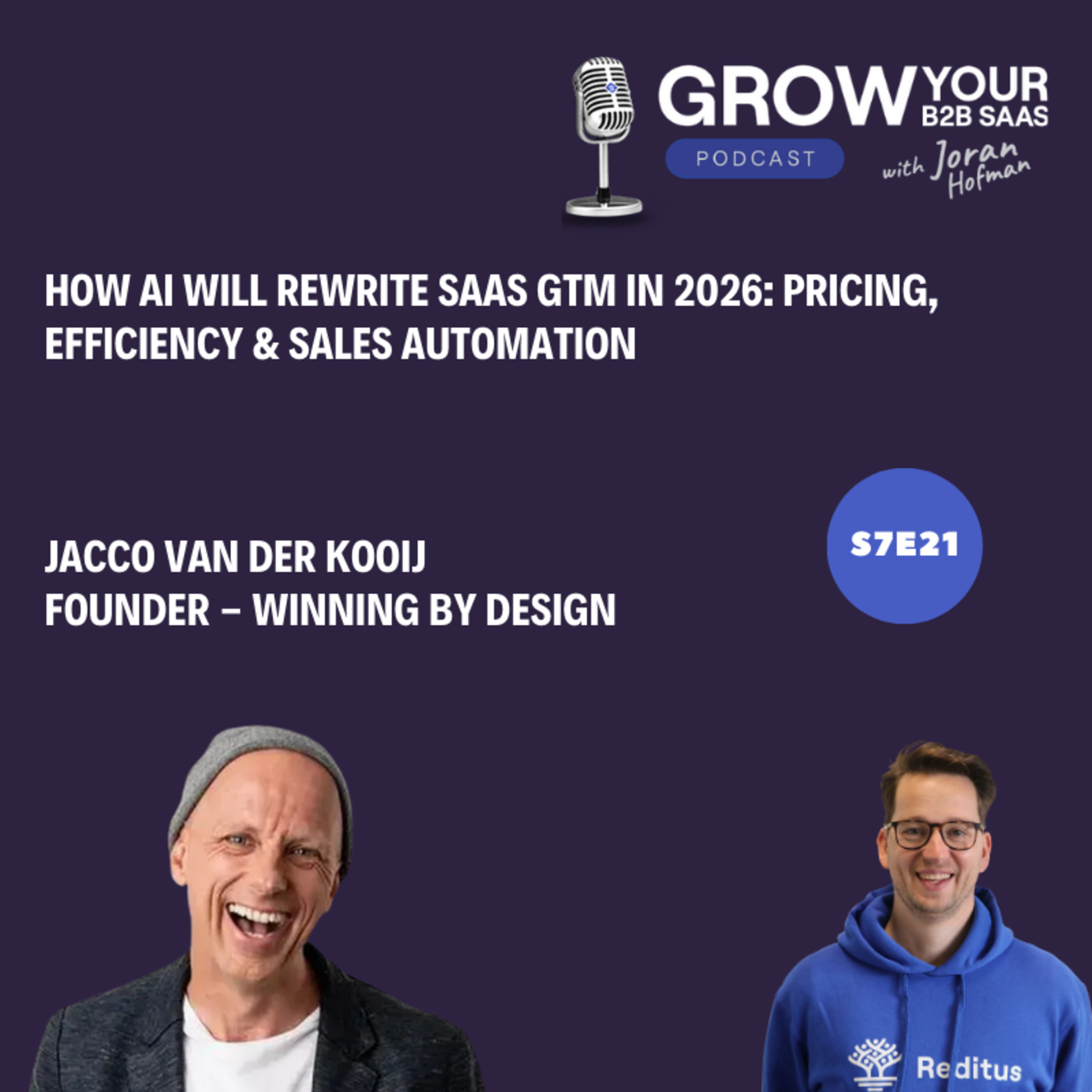 S7E21 - How AI Will Rewrite SaaS GTM in 2026: Pricing, Efficiency & Sales Automation with Jacco van der Kooij67 / 100
 S7E20 - How SaaS Companies Will Scale in 2026: GTM Efficiency, RevOps, and Word-of-Mouth Growth with Koen Stam78 / 100
 S7E18 - Preparing Your SaaS for an Exit: Valuation Drivers, Buyers & Metrics That Matter with René de Jong73 / 100