Geeking Out with Adriana Villela · 2026-06-09 · 1h 0m
Key moments - from our scoring
Substance score
30 / 100
Five dimensions, 20 points each
This episode brings together four Gen Z developers at different career stages - from a senior AI engineer to fresh university graduates and undergraduates - to challenge Adriana's initial assumption that AI coding would be an easier transition for digital natives. The panel discusses their formative programming experiences (Logo, Turing, Python, Roblox Lua) before diving into how tools like GitHub Copilot, Claude, and ChatGPT have changed their development workflows. A consistent tension emerges: while AI handles mundane tasks like formatting, API integration, and boilerplate code efficiently, it creates what Vikasha calls the "80/20 problem" - where the tool gets 80% of the way but struggles with the final 20%, often hallucinating with confidence. Stella emphasizes the importance of maintaining ownership through code review. Amrita worries about over-dependence eroding critical thinking skills needed in engineering. Rachel describes the loss of the satisfaction that comes from troubleshooting and overcoming challenges. The panel also touches on how AI has raised baseline expectations - what once took 20 engineers months now takes two developers and AI a week - creating new pressures for Gen Z professionals entering the field.
AI tools like Copilot and Claude quickly generate 80% of code but struggle with the remaining 20%, often making the same mistakes repeatedly and hallucinating confident incorrect answers rather than admitting uncertainty, making it faster to just hand-code the remaining portion.
Work that previously required 20 engineers and months to complete now takes 2 developers plus AI and one week, raising baseline expectations across the industry and creating pressure on junior developers entering the field.
Heavy reliance on AI for full project implementation reduces developer ownership, eliminates the learning and problem-solving satisfaction that comes from troubleshooting, and can erode critical thinking skills needed for quality engineering work.
The panelists used GitHub Copilot in VS Code, Claude Code (especially for React/Expo projects), ChatGPT, and occasionally cheaper models, with varied preferences based on use case and level of control over code generation.
Not necessarily - while Gen Z adjusted to the tools quickly, adoption didn't make them easier to use effectively; the real challenge is avoiding over-dependence while maintaining the learning and satisfaction that comes from solving problems independently.
Our reviewer’s read on each dimension, with quotes from the episode.
A handful of mildly interesting observations surface - AI compressing timelines without reducing complexity, the raised floor of junior expectations, the 80/20 problem with AI completion - but they are buried under extended first-programming-language reminiscences, off-topic tangents about OSAP and AI voice banking, and repetitive consensus-building phrases. A B2B operator would find very little that isn't already circulating widely.
it hasn't entirely eliminated uh, junior roles. It has raised the floor of what junior actually means now
AI hasn't reduced the complexity, but actually compressed everything into much smaller timeline and amplified everything else
There are a few memorable framings - 'AI native vs AI dependent,' 'time borrowed from your future self,' 'use less AI while you're still learning' - but the bulk of the conversation (AI sycophancy, hallucinations, vibe-coding security holes, dependency risks) is thoroughly recycled territory that dominates every tech podcast from 2024 onward.
we should not confuse being AI native with being AI dependent
there's no like, time gained when you skip understanding the code you're making with AI. That's just time you're stealing and borrowing from your future self
The panel is composed almost entirely of students and fresh graduates - one second-year undergrad, two recent McMaster CS grads, and one early-career AI engineer with four months in Toronto. Their lived experience is genuine but there is no practitioner who has operated at scale, led teams, or built and shipped consequential systems, which severely limits B2B operator takeaway.
I just completed my final year of computer science at McMaster. And so I'll be starting at Manulife, uh, in Toronto as a platform engineer
I'm a second year integrated engineering student at Western
The episode is almost entirely anecdotal, grounded in personal school projects and social-media impressions. The few specific claims - AI halving team sizes, Reddit freelancers cleaning up vibe-coded repos - are unattributed and unquantified; no data, studies, timelines, dollar figures, or named product incidents are substantiated.
it takes like for two developers, uh, and AI and a week to do the same thing
I've seen so many, uh, people coming out, especially on Reddit, uh, telling that, you know, they're freelancing, uh, as a cleanup
The host creates a comfortable panel atmosphere and lands one genuinely useful reframe ('is that a fair assumption?') but defaults to sustained affirmation rather than probing, allows long tangents (Logo/Turing/OSAP/deepfakes) to consume significant airtime, and never meaningfully challenges a single claim made by any panellist.
I had made the assumption that it would be an easier transition for you. Now, is that a fair assumption?
Yeah, yeah, yeah. I'm totally with you on that
Computed from the transcript - who did the talking, and the words that came up most.
GenZ are in a unique position in the Age of AI, because they are coming up "AI native"...or are they? Join us for a special LIVE episode of Geeking Out, in which host Adriana Villela speaks with four GenZ-ers to get their perspectives on how AI is disrupting software development, and their future careers. Featuring Divyasha Pahuja, Stella Gu, Amrithaa Logeswaran, and Rachelle De Man. Key Takeaways A great way to use AI is to use it to do all the mundane tasks for you (e.g. formatting code) When you tell AI to do something for you, you're slightly losing the ability to do it yourself. When using AI, trust, but verify. Don't use AI for everything, because it takes away from why you're doing the project in the first place. Using AI to help you code makes things possible that you couldn't have necessarily done on your own. It brings to life ideas that have been in the back burner. GenZ-ers don't want AI to agree with them. They a partner challenge and brainstorm with, just as another human would. AI takes away the opportunities and joys of overcoming challenges in coding.
Transcribed and scored by The B2B Podcast Index.
Speaker A: Foreign.
Speaker B: Hey, everyone. Welcome to a very special edition of Geeking Out Live. I am your host, Adriana Vilela, coming to you from Toronto, Canada. Now, if you've been watching the show for a while, you might have noticed that last episode I had a lovely panel of Gen X and millennial guests talking about what it was like to code in the era of AI assisted coding. And as it turns out, um, you know, it's only fair to ask the Gen Zers what it's like for them, um, because I had made some assumptions initially. M on, um, you know, Gen Z have an easier time with vibe coding. Um, so as it turns out, I was at this Intuit meetup, um, I would say end of May. It was part of Toronto Tech Week, and, um, I was giving a talk on AI and a group of Gen Zers came to talk to me after my talk, and we got to chatting and I thought, hey, wouldn't it be awesome to have them on the podcast? And so here we are, another special live edition of Geeking Out. And I'm very happy to bring on my lovely panel of Gen Z guests. So let's bring them onto the stage.
Speaker A: Yay.
Speaker B: Super excited. Welcome, everyone.
Speaker A: Hi.
Speaker C: Um, hello. Um, hello.
Speaker B: So nice to have you all on. Um, well, as we get started, so first of all, let's do intros.
Speaker A: So, hi, I'm Vikasha. Uh, I'm essentially an AI engineer. Uh, I started out, uh, as a software engineer, uh, back in India, and then moved to the US for my master's, and have been in the AIM space since. Uh, been building things like, you know, LLM pipelines, agentic systems. You know the drill. Um, I've been. I, uh, am. I'm in Toronto now. It's been only four months, and it's been nice. It actually got me to you guys. And honestly, this, uh, podcast might generally be my highlights of Toronto. Yeah, and I'm a front runner. Gen Z, like the OG Gen Z, if you may.
Speaker B: Awesome.
Speaker D: Hey, everyone. I'm Stella Gu, and I'm based in Toronto. I've always been based in Toronto, and I just completed my final year of computer science at McMaster. And so I'll be starting at Manulife, uh, in Toronto as a platform engineer. And I'm really excited to be here today.
Speaker B: Awesome. That's so cool. Fresh grad. Amazing.
Speaker E: I'm Rachel De man, and I'm also newly graduated from McMaster University, based in the GTA. I've done a lot of, like, web development, testing, security. I've interned at places like Okta Vidyard 1Password and Google. And I'll be returning to Google as a junior in the fall.
Speaker B: Awesome.
Speaker C: And last, uh, I'm Amrita Logeshwaran. So I'm a second year integrated engineering student at Western. Currently going into my third year. I've done a lot of project work specifically with Aero Design and I also do policy work on the side with the provincial government. So I'm working on SAVE OSAP London which is basically advocating for students to get their OSAT back. So that's what I've been doing currently.
Speaker B: And for folks who are outside of Canada, uh, outside of Ontario. What is osap?
Speaker C: OSAP is basically like a needs based way of funding your education. It's specifically divided in loans and grants. So a lot of like uh, low income students generally like go for osap. It just helps out with funding for post secondary expenses.
Speaker B: Great. Well, so nice to have all four of you on. I'm very excited for uh, for this panel and uh, I can't wait to hear everyone's uh, perspectives on AI assisted development and what it has done for you. Um, but first, uh, let's go back to the beginning and uh, tell our audience. Um, what was your first programming, uh, language? Let's start with Divyasha.
Speaker A: Uh, for me it was Logo. I don't know if you remember, it was one with the turtle.
Speaker B: Uh,
Speaker A: like I think you would all remember because it was a universal experience. We used to go to computer labs and drive that turtle around, make different shapes. Uh, it actually used to be one of the highlights of my day. Uh, I used to have so much fun moving it around like it used to move at my work and I was eager to crack the code while it was moving. That's actually what got me into programming. Well, now we are all here, uh, developing systems that are, you know, AI driven. Now I, uh, don't know if it's poetic or if it's terrifying, but here we are.
Speaker B: Fair enough. That's so cool. That's, that's a blast from the past. I did not expect Logo to be here.
Speaker A: Your first, I'm expecting everyone knows that because everyone used uh, to go to the labs and play around with it. I don't know if, I mean it was for us at least that way.
Speaker B: That's awesome. Very cool. How about you, Stella?
Speaker D: Yeah, I don't think I've actually heard of the language you use to Vyasha. But um, my first programming language was Turing. It's like a Canadian programming language. And I Think I started in grade 10, so that was my first experience working with a programming language. And I remember for my first project, I created this online store selling ice cream. So that was fun.
Speaker A: I mean, what does a kid want to do?
Speaker B: Yeah, that's awesome. Um, wow. You know, you're. You're in Toronto when you say that your first language is Turing, because that is a very quintessentially, like, Toronto high school experience. Because I don't think anyone outside of the area has heard of Turing.
Speaker A: Yeah, honestly, I don't think I've heard of it. I think it's. We all have very different cultural experiences.
Speaker B: I think it's so cool. Uh, how about you, Rachel?
Speaker E: Uh, I feel like, you know, with all these niche languages, I'm coming out here. My first language was Python. A lot more standard and, you know, kind of basic of what you would expect. Also, my first encounter was in a high school class. I feel like a lot of Gen Zed girls, or Gen Z people in general have it that way just because, you know, that's our first chance of really, like, seeing into it. And I remember my first real assignment was like, a really simple, you know, choose your own adventure game meant to teach about print statements. And it was supposed to be a few hundred lines, but, you know, like many thousand lines later, I was going crazy. I was like, there's so much you can do with it, like randomness, mini games, timings, all that. So that's what really got me, you know, to fall in love with programming, was just the freedom that you get with, you know, I think that's m.
Speaker A: Me still every day. Oh, my God. Hey, I can do so much. Recording can do so much. Oh, my God. I can make this. I can make that.
Speaker B: Absolutely.
Speaker A: Um.
Speaker B: I know, right? It's so magical. It really is. I think that was my thing was like, I can automate a thing to do another thing. What? Like, the first time I got my computer to, like, play a little music thing, I was like, what is this? And, uh, how about, uh, how about you, Amrita?
Speaker C: Um, so I got into coding because of gaming, actually. So I don't know if you guys. I think you guys might have been around for this for all the. For the Gen Z people here. But, um, it was either Lua, like Roblox Lua, because I wanted to make my own, like, five fighting, like, RPG game, but I needed to script things and I was like, I don't know how to script this. Let's just go on YouTube and figure it out. So that's how I got started. I also learned how to use scratch in like third grade. So yeah, that was a more Mississauga. That might have been like a GTA thing. Scratch or Roblox Lua I would say. But a lot of people I see program also kind of came from like game development from what I've noticed.
Speaker A: That's actually true. That was my dream as well become a game developer. And that's, that never happened. That's where I started off.
Speaker B: That's funny. I remember when I first got into programming, I and this was like in the 90s. Uh, I'm like, oh, it'd be cool to be a game developer. And then I got a book on game development. I'm like, ah, no thanks.
Speaker A: Okay.
Speaker B: Okay, so, uh, let's get on with our first question. Um, so you know we talked about our, our magical experience with like a programming language and hand coding. Um, what about like your first experience with AI assisted coding? What, what was that for you? How did you go about it? Uh, let's, let's start with Stella.
Speaker A: Yeah.
Speaker D: So I think my first proper experience with AI system coding was during my final year project and I was working on this back end portion of a, uh, mobile app. I used GitHub Copilot in VS code like the integrated thing. And I really liked how it could access all my files without taking too much control from me. I know there's other applications where it has more control over all your files and does things for you a lot more. And yeah, so overall I did feel like it was a positive addition because it was able to do all the mundane tasks, like for example reformatting things and making sure everything is implemented with the same structure or method and formatting to standardize everything. Because I was working a lot with APIs, it was able to help me find format the input and outputs according to all the requirements that are already available. So I could just like tell it to follow this and then it would get it done for me. And even like the supporting functionality, I feel it was able to do a lot of that and I feel like because it was like more of a, it was a project on something that I've never worked with. I could also ask it for suggestions like whenever I was like, oh, do you think this will be better? Or if that will be better? And then I could ask it for further clarification or like evidence of why it was choosing one option over the other. And then I would also like do a Google search just to uh, make sure everything it was Saying was like actually valid. But yeah, I feel like overall it's a positive experience. But something that, like to keep in mind while using Air or like how, what I do when I keep, when I use AI is that it will sometimes mess up the code base. So always make sure that uh, it's like not taking things too far and that I always have a copy of like something working beforehand. And I feel like it is important to realize like how much AI is doing for you because I feel like whatever I tell AI to do for me, like I'm slightly losing the ability to do myself. So then like I make sure to read over everything that it's doing and
Speaker B: yeah, I love, I love that. So you're, you're basically a trust but verify and, and abdicate like the, the, the boring stuff that you don't want to deal with kind of person when, when working with AI. Yeah, yeah, I like that. Yeah. And I think you make a really good point that the, the more stuff you let AI do, the more stuff like you start forgetting yourself. Um, yeah. Other, other thoughts. Uh, Amrita, how about you? What, ah, what was it like for you?
Speaker C: Um, for me I first started using. Wait. I first used Claude code to help me out in second year. So in second year we had like a business time, a business and design class like at Western that we had to take at least for my degree. And basically at the end of it we needed to make like our product was we wanted to make an app for like roommates that like who, who match, who have like similar lifestyle preferences they can match together. And then based on a couple of questions like hey, um, you left your food in the fridge in this section even though it's mine. And that's like, that was the whole gist of it. And um, for me I used Claude code specifically for Expo for Expo Go. I don't know if you guys have heard of it, but it's like that one coding language where um, you can like demo it on your mobile app. So that's what I used along with the group member. And um, for me I just use cloud code to double check everything. I was like, is this right? And if it's not right, please explain this to me in five year old terms. Super simple, super dumbed down, am I right? And it worked like it was pretty fine for the most part. But my group member ended up just using cloud code for like the entirety of the code, which worried me a little bit because I was like, it's a bit wonky but I mean I'm not a programmer personally, so I'm only an engineer, so I can't really speak from experience, I guess, but that was my experience for the most part.
Speaker B: But your, your instinct was still like, you don't want to use. You don't want it to do everything for you.
Speaker C: I didn't want it to do everything for me because I feel like that takes away from why I'm doing this project in the first place. Like, yes, I am not the cr. I'm not the coolest, uh, I'm not the coolest programmer in the world, but I feel like if I at least know how to code like one single line of the thing I'm making, I think that's okay in my opinion. Like, as long as you use AI to double check your stuff, as long as you're right. And like, if you really don't know, like, and you can't find any tutorial on YouTube or on the Internet how to code this thing, I think that's justifiable to use AI but it's like a really hit or miss. Like when my groupmate used the used cloud to like code the whole app, uh, I was like, okay, that's. I'm, I'm frightened that it's all right. I'm a bit frightened personally because I spent like hours like trying to actually code it. So it's like I, I feel like, less gratified that I just make Claude do my whole project. Not too sure though.
Speaker B: Yeah, I feel that. I feel that I. It's not that same sense of accomplishment.
Speaker A: I think we can all agree we just need the direction AI to review it, but in the end it should be you doing the stuff so that, you know, at least you know you had your part in it.
Speaker B: Yeah, yeah, yeah, I'm totally with you on that. And, and do you. How about. So, Divyasha, what about you? Like, uh, uh, your, your experience? Like, uh.
Speaker A: Yeah, I think it has to be copilot as well. I think for a lot of developers it was. And I personally loved it. Uh, mostly because it got me through my homework. But what I genuinely like about it is that it makes things possible that I couldn't have reached on my own. Essentially the ideas would just be in the backlog on the back burner. Uh, but now it has made it possible. It basically raises your ceiling. The other thing is that which people really don't talk about enough is that it's incredible, especially for my ADHD brain, I just have a lot of ideas haphazardly Running so that a lot of modules of code. So it helps me collect my thoughts and actually structure them into a system. But I also don't like a few things about it. Uh, like first, I don't like the way it's deeply psychophantic. It will agree with me on everything and everything.
Speaker B: Yes.
Speaker A: Like, I don't need that yes or attitude. I want someone to be, you know, brainstorming with me and critiquing if I'm doing something wrong. Uh, and then, but when it does it, it hallucinates with a lot of confidence. So you're either, you know, getting flattery or fiction. Both are dangerous.
Speaker B: Yeah, definitely. I, I, I agree with, with you. Yeah. The sycophantic part of it I think is, uh, I'm like, I don't, I don't need someone to pat me on the back. Like actually I had, I had a really funny thing happen the other day. I was using cloud code. I had started with um, uh, with co pilot as well, and I was using a cheapy model and I was using cloud code with like Sonnet. And I was asking it a question and it goes, honestly, I don't know. Here are the things that you can look into. I'm like, finally, it's not making up.
Speaker A: Yeah, I mean that's, that's the hardest part, to not let it make up. You like, uh, explicitly tell it again and again. Please do not.
Speaker B: Yeah, exactly, exactly. So I was surprised because I didn't even say don't make up. It just like naturally I'm like, oh, thank God. Someone, uh, that in as like a, as a directive. Um, how about you, Rachel? What, what was your experience like for Vibe coding the first time?
Speaker E: I'd say for, for Vibe coding, it was pretty conflicted because back when, back when AI was dumber, I kind of really loved it because it was like I could just click tab and it's like it's reading my mind. I don't have to manually type out all my stuff. But that was like the extent of it. Now that AI is a lot more capable, I am, I am like kind of conflicted because it is undeniably way faster, especially way more efficient for, you know, know, us who are starting in our careers and might not be able to go through all these things as fast. And it's great. I love how like once again mundane work, you can just skip by it. And I've also found it's really great for like, like niche, easy to encounter bugs that'll bring you down like a rabbit hole for the next several hours. Like those can just be bypassed. But it's a double edged sword as well. I feel like it really, the biggest thing for me, I don't like about it is like, you know, I think, I think Amrita, uh, mentioned a bit earlier like, like it takes away the opportunity and the joy of overcoming the challenges in coding. And that's something I don't really, I don't really love about AI. Like I really enjoy the process and it's changed a lot with how AI is. And then on top of that AI can really easily misunderstand and overcomplicate and go off on things that you don't know unless you really clearly communicate with it. So it's, it's a bit complicated.
Speaker B: Yeah, I, I totally agree. Like I, I was uh, on Friday I was building out this project that uh, and it was, it was doing it in Node JS for me. I don't know JavaScript anything. I just, I don't want to. And so first of all it's building out this thing for me in a language I don't know. And then I was um, I was like, I spent so long trying to communicate the requirements to it. I was like, God damn it. You know, if I knew this language I could actually save some time and try to code it myself rather than actually try to communicate my requirements. Like, and even when you get it working, it's a different sense of satisfaction than when you've hand coded it because it's like I didn't troubleshoot it, I just told it how to do the thing better.
Speaker E: Absolutely.
Speaker B: I've just felt so dumb.
Speaker A: Even when you have to tell it, I've, I faced this uh, I like to call this the 8020 problem, uh, where it'll get you the 80 of the way super fast. Uh, but, but the remaining 20%, it just keeps circling over and it keeps making the same mistake. You just can't get through it, through to it to, you know, actually do the stuff for you.
Speaker B: Yep, yeah, totally, totally.
Speaker A: So in the end just feels like, okay, let me. I could have just learned the language and hand coded it myself.
Speaker B: I know I would have felt a lot more accomplished.
Speaker D: I feel like when something's like completely vibe coded, like I almost can't feel like I can take ownership over. It's like I can make something but like I don't know if I really
Speaker C: did or did I just like get. Or is it like a chat GBT rapper? I feel that sometimes.
Speaker B: Yeah, yeah, I feel that too. Like uh, on the one hand, you know, I, I forget which one of you mentioned it and I so related to it that it's like, it's great to get like your projects off the back burner. Um, but like, so yeah, I'm working on a thing that I would have never worked on before because I wouldn't even know where to start. Um, so great. I can work on side projects. I, I used, I used it to help me like finally launch my, my website. I've had a domain parked for like 25 years and finally launched my website. Um, but I, there's like zero sense of accomplishment, man.
Speaker A: For me. I think it helps, uh, at least especially with the front end because I don't really like to dabble with it. But uh, yeah, in the end it's like you really don't know what's happening and you just didn't make it yourself. Yeah, I mean, it's either getting things done or getting that satisfaction. It's, it's a speed versus satisfaction in the end.
Speaker C: Yeah, like, I feel like it's like it takes away from the learning experience like that, like the, like the very glimmer that I once had of coding because I was trying to make like a really bad RPG fighter game. Like it takes away that shine because I'm not the one who's really putting in. So say the work or so say like the most of the code in. Because I had to ask Claude how to do this. And then I also tend to be like, make it super duper easy to read so a five year old can understand actually. And it's like I don't feel that sense of accomplishment when I just use Claude. Like when I use it to code in that way, even though it is technically more efficient and it's technically like if you were, if you were like a super cool businessman, you must be like frothing at the mouth because of AI right now because, oh my goodness, I can fire all my software engineers because I don't need to pay them because clock can do it. And it's like, well, what's the point then? You know? So I guess that's.
Speaker B: Yeah. And it won't necessarily be great quality. Um, which, which is, which is the other thing. Um, maybe, maybe we'll get to that point. I, I, yeah, um, I have mixed feelings too. I feel all your pains. Uh, and I think one thing that I want to ask is when I came into this, I had this assumption that you're all gen zers. Um, you have probably come up more AI native than old farts like me, Gen Xers, um, and I had made the assumption that it would be an easier transition for you. Now, is that a fair assumption? Fox feelings?
Speaker A: Um, that's a difficult question. Uh, it's not an easy transition, obviously. I, I feel like it has actually elevated the bar for you now. So now before what was expected out of you? Uh, before it took 20 people, uh, team and months of work to build a system and now it takes like for two developers, uh, and AI and a week to do the same thing. So the baseline is higher now and so are the expectations, which makes it quite a difficult transition, honestly.
Speaker C: I would say when it comes to trans. Oh, not to cut anyone off. When it comes to transitioning into AI, it depends on who you ask because we're a bunch of people in the tech space. I would say it didn't take me that much time to get adjusted to ChatGPT, but I initially used ChatGPT for like the, like I never touched AI in high school ever, until I came into university. And for me it was ChatGPT first and then I switched over to Claude and I found that first when you start using AI, like at the very start, you get like a little too defend dependent on it. Like I personally felt that I was getting way too dependent on it and I was like, hold on, where are my critical thinking skills that I need as an engineer to make sure my bridge does not collapse anytime soon? So that's a bit worrying. But also you talked like, I talked to a lot of engineers. Like I'm like in my engineering community, I know, like civil software, chemical engines, mechanical engineers. And I would say most of them adjusted really easily to AI because again, you're getting tortured by like seven different courses of like doom and despair. So it's in your benefit to use AI, uh, it's in your benefit to use it, but when you get too over dependent on it, then that's kind of a tricky and slippery slope because I found it very easy to adjust to ChatGPT and Claude. I think the hallucinating part was the weirdest part of it all. But again, I treat AI like, do this for me, that's it. Do this for me, that's it. I don't really put feelings into it in my prompts, unfortunately. But there is the real thing of AI psychosis where some people do get emotionally invested in the chat bots, which is, I don't know how that happens. I know it can happen, but again, I found it easy to adjust, but I Can't say the same for everyone else.
Speaker E: I think something important to consider when you're thinking about how Gen Z is adapting is that a lot of our first experience with code wasn't that long ago. My very first print put, console, log, whatever was about eight years ago. We are a generation that has always grown up, I feel like on unstable ground. Things have been changing at a very rapid rate, like throughout all the time that we've been learning code. So in a way I feel like the foundations that people should need to be able to use AI code like, you know, AI programming to its fullest are something that we just don't have at this time. And because of how AI is so much more able to like, do things at our level as, as a junior in this field, you always have to sit and ask yourself, you know, how much of my potential growth will I sell for a faster fix? If AI can already do this, am I going to put in the 5, 6 hours to code it and make sure it's good and learn this process? Or do I do it in 30 minutes with AI? But I don't really know like how, how do you know to trust the AI if you don't have that experience back? M.
Speaker B: Yeah, I so agree. Sorry, go ahead.
Speaker D: Uh, I think I have like a similar sentiment where it's like, because we're still young and like we, we have AI like early on in our career, it's pretty like it's easy to adjust, at least for me to use AI in like my workflow. But the part that I find hard to adjust is like when companies, or like how to adjust to companies like sort of pushing AI a lot of, or like maybe even forcing their employees to use AI. Like I'm not really sure how to adjust to that. Or like when, um, like the higher ups, for example, expect you to produce work faster because you have the help of AI. But I don't think it's like that straightforward. It's like me plus AI equals faster.
Speaker A: You know what I mean?
Speaker B: Yeah, yeah, yeah.
Speaker A: I mean I think that's the problem. Like at first glance everyone thinks that, oh, uh, you know, uh, it's AI has made things easier. But you know, we're churning our code at a much higher rate. And now that means we have to review the system design and find, you know, failure points debug without even knowing what the actual internals are. So. And uh, we have to do that at the same rate. So it's just AI hasn't reduced the complexity, but actually compressed everything into much smaller timeline and amplified everything else for us especially.
Speaker B: Yeah, that's a, that's a really good point. And I, I just want to go back to, to something that was mentioned a little bit earlier. Um, especially for, you know, ah, Rachel and Stella, you just graduated university. Um, Amritha, you're, you're still in university. Um, all three of you probably like, what, what have you seen? What have you experienced in terms of, you know, we talked about workplace expectations of using AI to, to create software. What about school expectations? What, especially in, in like engineering programs. Um, what, what, what are the rules? Because I like, my daughter has just graduated high school and they, they've been like, she's even been in some classes where they're like, you can't use a computer. You have to do like, uh, you know, you can't, you can't use AI to help you with your assignments. But when you're going to university and you're, you're studying, um, you're going into a field that is going to be like, is an AI where AI is a thing. How, how has that been? Like, what have you noticed?
Speaker C: I would say from the perspective of somebody who has been on student council and has worked with professors as well as part of student senate at my school, I would say academic or in this case bureaucratic inertia is a real thing where there's a lot of red tape around the processes of how institutions move. And because education is just, it's a very not, it does not like adapting to anything for the most part. Like, we've tried to implement AI policies and it's like, it's been a really big debate even in like post secondary unis as well. Like I worked like, um, like last year I was a part of like USA's delegation, which is basically like the Ontario equivalent of McMaster, um, Western, uh, Master Western, U of T. Like a lot of Ontarian post secondary schools. Like we were having the same discussion, like all the student unions, we were like, what is an AI policy that like universities can agree to? And like, again, we can't really come to a good agreement because do I want my lawyer using ChatGPT and being like, trust me bro, I can get you out of jail. I, I, if I would feel a bit worried if my Lawyer was using ChatGPT, but do I have like the grounds to say that when I'm using AI in my work? Because it's, it's technical, it's more efficient. Yes, but where do you draw the line? And I think most Universities just don't know where to start drawing that line. Which is why it's so easy to just ban it. Like ban it to the ground. Like don't use AI in this class or if you use it, academic probation and everything elsewhere. It's very easy to just slap a band aid and be like, don't use AI at all in any of your classes. Even in first year we had a programming intro to Java class and I think at least a good chunk of those people definitely use ChatGPT in their code. And I could tell because I kept seeing EM dashes all the time. Yeah, like, but I would say institutions, like academic institutions just don't know how to adapt. So the easiest solution is to just ban the thing itself. Like they've tried their best, I would say, but it's like um, like the AI checkers just don't work because you can't tell itself. Right. I can't, I can't accuse someone who's been using, who's been using their writing with.
Speaker A: Now you're using ChatGPT, you're using AI, let's say as well. You can't just really say that because a lot of people used to before.
Speaker D: I feel like.
Speaker E: Oh, sorry, were you going to say.
Speaker D: I guess I'll go first. Um, I feel like uh, I sort of have like a different experience like based. It's very like Prof. Dependent. So some of the profs will say like, don't use it in my class. Like that is like academic dishonesty to use AI in your like any of the work you submit. And I've also had profs that are like, you know, like, you can use AI because like I see that it'll be something that you'll like use in the future and work or something. But then it's like declare what you used AI for, like tell me exactly what parts you've used AI to help you do your work. And I feel like, I feel like that's like, it's nice to have those profs that see it as ah, something we also need to figure out how to use properly.
Speaker E: Yeah, I was going to say something actually pretty similar. I feel like on an institutional level education is slow, but we also have to consider these professors whose curriculums four years ago were perfectly fine and now especially with earlier classes, like they have to redo everything because AI can solve it all in an instant. I feel like, like for earlier year classes it's a lot more like don't use AI at all. Which I think is a good Thing you really need to know those foundations and AI can do them so easily. But as you get into like higher year classes, professors, it really is more professor based, whether or not they're able to update their curriculum in time or what their thoughts are on in AI in the industry. Because I think everyone knows that our future will have AI in some shape or form no matter what. So a lot of the more like, you know, like forward thinking professors are the ones who are saying, here's an assignment. I intend for you to use AI or I encourage you to use AI or just make sure you know how what you know how you're using your AI.
Speaker C: It's really hard as well because like I, like I speak from like the more institutional side of it.
Speaker D: Like.
Speaker C: And again even the Prof. It like depends professor to professor as well. Like your, your professor. Like my professors were all like use AI as needed. If you have a question, just email me M M. But just use it as needed. Like you shouldn't. Like if you're using AI to do all my labs. That's great. My 60 kill class final written in person will kill you anyways. So it's all. It solved itself. But again, it depends course on course. Because if you have like a writing assignment or like something else, I don't really know what you do there, to be honest. Because like we have a bunch of final exams. So if you don't, if you've been using AI for the past six months, don't worry. My final exam will get to you personally.
Speaker B: That's true. The final exam will like determine uh, whether or not you've actually picked anything up. Because you can't. You can't AI your way out of this one. Um, how about you, uh, Divyasha? What? Uh, I know you've been like, um, you're. You're probably like our eldest. Uh, you even mentioned your, your eldest, Gen Z. Yeah.
Speaker A: The Sun Center Gen Z. Yeah.
Speaker B: What's uh, you know, like did. Did you even um, like in your. In your schooling, did you. Did you catch like the tail end of. Of that? What did you experience?
Speaker A: Yeah, I did. I mean there were a lot of regulations, uh, to not use AI. Professors were trying to adapt their courses, um, according uh, to the AI world. Because now they knew that a lot of students uh, were using AI with their assignments. So either um, as Amrita said, uh, they would just um, plan the use of AI because M. They can't adapt to it right now. They are having a hard time not letting the students use AI. Um but some professors had, um, realized the fact that we're going to anyway do uh, it, uh, so they made the assignments harder. They made something like an open book test that you can refer all AI you want, but in the end you're going to need to use this part of your body to actually get to the answer that I want. So I think with the now what they, how they adapted to it was that, you know, let's um, see, test their thinking out more than actually the ability to, you know, write the code or just get a straightforward answer they made. So some of the professors that I had, they adapted to it by making it more subjective, actually thinking behind it.
Speaker D: Yeah.
Speaker B: That's so interesting. Uh, you know, this is all stuff I didn't have to contend with when I was in, in university. And now these are, these are things like, like when you brought up the point of like professors having to adapt their curriculum to like now incorporate AI, that's just, it's wild. And, and, and to realize that, you know, a curriculum that would have worked for years and years and years and then all of a sudden it's being completely, completely disrupted. And now they're, they're being forced to like, rewrite their curriculum, which is kind of making me laugh a little bit because I don't know about you, but my professors in university, oh my God, um, I was lucky if I, like, I don't know, I, I feel like they, they would rather do their research than actually teach a class. And now to force them to switch up their curriculum, like, oh my God,
Speaker C: not again, too much work even for them.
Speaker E: I feel that's the thing as well, like, you know, as much as we say force them to do it, some of them just choose not to. And then the class just is absolutely up in arms because they just haven't updated anything. And yeah, you know, times have changed.
Speaker B: Yeah.
Speaker A: And I have to, uh, now adapt to it because we know that, um, we will, they know, we know that everyone is going to use AI now. And it's important that we actually let them use it and actually elevate whatever they are doing. Like use it as a tool and not the end goal.
Speaker C: My strife with AI when it comes to like, like when professors allow students to use AI is more like where and when are you supposed to use it? Because if it's like a programming class and you updated uh, the curriculum to be like, hey, I used AI for this part, this segment of code, my formatting was off. I can understand that. But I only understand that because I Code a little bit. Like, I don't claim to be like the. Create the coolest coder ever. Um, I can get the bare minimum done. I can do that.
Speaker A: Right.
Speaker C: But it's like, do I start using AI in let's say a visual arts class? Is that acceptable? Can I use it in my science or my chemistry class? Is that acceptable? It's the. Where do I use AI and is it acceptable to use AI because again, it varies between professors and it varies if they cared enough to update their curriculum. Like, it's very, very dependent, I feel like, when to use it.
Speaker B: Yeah, that's a really good point. You know, I was, I was looking at this like purely from like an engineering, computer science viewpoint. But it is, it is interesting, um, for, for other like, other areas of study, like the arts, the humanities, um, it turns these things onto their heads. Uh, the visual arts one is always one that um, that gets me a little bit because like I, I'm not an artist and for a really long time, like when I was pre prepping talk slides, like, I think from 2023 onwards I would use like, um, AI to generate like fun images for my talk slides. And I'm like, oh, this is hilarious. I can get it to do like capybaras with like superhero capes.
Speaker E: And.
Speaker B: And then after a while I was like, oh, this feels so icky. I feel like. And I've got a number of artist friends and they're like, this is, this is so gross. And I would feel really bad for them because like, it does take a lot of like, planning and effort and time to like, you know, put together artwork and. And then here I am like just writing a prompt and is drawing stuff for me. So I've like taken to more creative means of, of generating slide art that aren't, you know, I don't feel are taking away now from artists.
Speaker A: Yeah, I just say that, you know, uh, AI should assist us with the uh, tedious and boring tasks and let us do the art, uh, instead of the other way around. I don't know how, uh, done it in the reverse way. It uh, should have been like that. But.
Speaker B: Ah, well, did you hear there's like a film that's come out where it was like entirely AI generated. Like I heard of that. I like, it's just wild. I'm gonna, I'm gonna look forward and put in the show notes, uh, after. But like, it's just wild that like what, you don't even need actors anymore. Like, you just like create AI avatars. I Was watching a video yesterday on like, um, I wanted some help explaining, like, how to use this, uh, this tool called, uh, Paperclip. And, and I started watching the video and the guy looks real and he's like, hi, this is so and so's Avatar. I'm like, oh, my God, it's not a real person. It was a dude in a mic, like a human guy at a mic. But it was like AI generated. I'm like, what the hell is happening?
Speaker D: Yeah, I feel like even so, even as, uh, someone who like, grew up with tech, it's becoming very hard to tell apart whether something's like, real or like AI generated. If it's like the visual or like the audio, it's like a real challenge these days.
Speaker B: Yeah, yeah, totally. And, and I will say on that, like, this was a beef that I have where like, some banks are like, trying to um, have this like, voice authentication. They're like, oh, can we.
Speaker A: We.
Speaker B: Do we have your permission to use your voice print for, um, for authentication next time you call? And it's like, how the hell, like, what protections do you have against like, AI generated voice prints? What the hell? And the person could not explain. Like, uh, oh, we just, we have security in place. I'm like, really? What, what do you have in place to be able to distinguish between like a human and an AI generated voice print? Like, just.
Speaker A: There is actually no security in place. And this has actually given, um, birth to a lot of scams now where people just, uh, call and try to get just normal information out of you, uh, so that they can actually clone your voice and then,
Speaker D: you know, leave
Speaker A: to your bank details.
Speaker B: Yeah, exactly. This is, this is why.
Speaker A: I don't care.
Speaker B: This is why you don't pick up, uh, calls.
Speaker A: Yeah, this is why I don't personally pick up.
Speaker B: Yeah, I don't anymore. I, I simply do not. Because, like, no, anything can happen in
Speaker A: this, uh, era of AI after AI world.
Speaker D: Yeah. This reminds me where, like, I think it came out recently where uh, one of, like one of the companies, big companies, they just use AI for their support. And then like they were able to like, ask the AI agent for someone else's password or like a way to reset someone else's account and like, it all went through.
Speaker A: It's crazy.
Speaker E: I think with meta as well, there's an issue where like, AI challenge.
Speaker D: It was meta.
Speaker A: Yeah.
Speaker E: Other people's accounts. And it's like, like these things.
Speaker B: Yeah.
Speaker E: Like the new, the new measures, like the voice authentication, all of that, it's like, are These really secure. Because our ability to imitate has improved drastically and we haven't, the security hasn't always really caught up.
Speaker A: Yeah, yeah, I think that's what we forget when we're uh, trying to make AI make code for us. Uh, AI itself obviously does not have that senior dev experience. You know, you know how to make a system and especially input security layer. But that's how we just, we are just pacing it out so fast that we've forgotten the actual, uh, element of security.
Speaker B: Yeah, yeah, yeah.
Speaker C: I remember because I think in one of the vibe, like, I think again, I saw a real on this. So take with whatever I say is with a grain of salt as usual. Um, I remember a lot of the vibe coded projects or like the apps that you might see online. They would have like the most, they would have like almost no security systems on them in the slightest, whether it came to APIs or just anything like bare bones. Holding on to your personal information with like a stick and a rock. It was really, really interesting to see and I was like, I'm scared.
Speaker B: Yeah, uh, yeah, it's terrifying. I think it's terrifying that like now like founders can, can be like, I don't need that tech person anymore. I'll just vibe code this thing.
Speaker A: Oh my God, no.
Speaker B: And then potentially unleash some crap into the world.
Speaker A: Yeah. Ah, I've seen so many, uh, people coming out, especially on Reddit, uh, telling that, you know, they're freelancing, uh, as a cleanup after. You know, a lot of startups just uh, bring their AI or white coded code and then they are responsible for the cleanup and they charge quite a lot. Honestly, nowadays, like that's an actual job people are doing. Cleaning up.
Speaker B: That's right. AI Di. That would be a great job.
Speaker A: I mean that should be a job. And I think it is an upcoming job.
Speaker B: Yeah, yeah, yeah, I, it is a job, but I think it's a way, um, way less fun title than Aid should have Fire. But the fact that that is like a real thing.
Speaker A: Okay. We can, we can start, we can start a company where we can call it that.
Speaker B: That's right. That's right. Um, I did want to, um, switch gears just a tad. Um, because we, you know, we talked about like AI use in education, but like in, in the workforce, you know, especially m. The, the four of you. Um, well, uh, you know, uh, preparing to enter the workforce. I know. Amrita. Um, you're, you're still, you still got a couple, a couple years till you're officially in the workforce. But um, what, what kind, what do you want? Um, what kind of support do you want your employers to provide to you to help you be successful? Especially as juniors and especially in an era where so many people are saying like we don't need juniors anymore.
Speaker A: Right. Um, I think this is probably the most critical question uh, in tech right now. Uh, because it is something that I genuinely uh, sit myself with. Uh, a lot of rules have changed that we didn't anticipate. Uh, so there's obviously as you said, there's a real conversation happening about AI taking over junior developers roles. And that's not wrong actually. Uh, that is happening. Uh, but I think uh, it hasn't entirely eliminated uh, junior roles. It has raised the floor of what junior actually means now. Um, which means it's hard to actually get an entry point in the industry. Uh, which is what we're all facing I think. And it's no longer about writing code, but system design is where it's at now.
Speaker E: I agree with you 100% there. Like it's, it's like, like for me the thing I think that I would want or need most from a company is the privilege of doing things the hard way. Everywhere you just hear velocity, velocity, ship, ship, ship, ship. And as a junior you need time to actually understand what you're creating. It's those fundamentals that let you do the system design. Like we may be like delegating the implementation but that design still needs to be done by you. And like uh, you know, I, sometimes I worry about you know, 20, 30 years in the future when us juniors are all the seniors. If we don't have the privilege of taking the time to understand this, it's just going to be such shaky foundations the ones who are teaching others. So yeah, it's just, you know, there's always this feeling I think as well, especially in this era of you know, juniors needing to prove themselves that they have worth and that you know, they shouldn't be replaced by AI, uh, or that they're, you know, that they're the ones who need to be there when there's so many other people who are really looking for jobs, layoffs and with you know, them decreasing the number of roles. So being allowed and being able by a workplace to take things a bit slower is absolutely I think like the way forward and the only way forward to ensure that we keep those skills we need.
Speaker A: Yeah.
Speaker C: I also want to say that a lot of companies like um, like I was able to work and um, this isn't really related I wouldn't say this is terribly related, but Dell Technologies has like a mentorship program which is basically for like women in stem. Like, are you interested? You like women and step and they pair you up with a specific mentor and you get to learn from them for a couple of months. Like corporate ish way. I would say something that really, that I wasn't too fond of at that moment was like, um, they had like an AI. They, for one of the presentations they had like an AI speaker on there, which was like a very interesting thing I would say. It was very, it's very slap in the face because again the speakers was an AI avatar. Yeah, it was, it was literally an AI avatar.
Speaker B: Oh my God, that's so gross.
Speaker C: Yeah, yeah. And it's like, it's very corporate. Like it's, it's corporate culture. Yes. And again, deviates from what I meant to say earlier. I think having time to actually learn what I'm making is the best thing ever. Because I remember throughout Toronto Tech Week when I like, I wanted to like get involved with startups and everything, um, hearing the words B2B SaaS and like LLM and like very, very terms I've never heard before in my life, it's very overwhelming at first. It's so overwhelming to like learn all this and they're expecting you to know of that at the start. I feel like just having the time to know what you're making is, it's great, it's great. It's gonna grace me because I can't tell you what B2B SAS means still. I still can't tell you unfortunately.
Speaker B: Yeah, I think you make such a good point and I think it's um, um, it, it's funny because it's, it's the same problem that you're facing now is a problem I faced when I graduated where it's like they expect you to know all this stuff and, but university doesn't prepare you for it.
Speaker A: Yeah. And I feel like now, now it's even more so, uh, because now they're expecting you know, a production level, kind of an expert for a junior entry level job, which is how, how are we going to get that kind of experience just straight out of university? Yeah, that far has definitely been raised.
Speaker B: How about you, Stella? What are your thoughts?
Speaker D: Yeah, I feel like it's definitely important for companies not to force AI usage. Like I've heard of stories from like people I know at uh, various companies where it's like, oh, you have to hit a token usage which is like it almost feels like it defeats the purpose. Like I want to be able to balance using AI for like something I actually want to use it for and then like learn for parts that are like new to me and like something that I want to do for myself. Like whenever I use AI to do something without properly like also learning with it, it's like I don't actually remember what I did. Like if I actually, if it's like more hands on and like I'm learning while using the AI, it's like, okay, I can, it's actually helping me, you know?
Speaker B: M. Yeah, I agree. It sounds like the, the, the consensus is like you crave to be able to do things on your own so that you have the base knowledge and you need that. You need it both from like the institutions that are educating you and also from your, your potential employers.
Speaker C: Yeah, I also just, I would just say it's way more stable as a company to let the very end of the people, like the very, the interns, the juniors, the people who might move up the corporate ladder to let them have that knowledge and to let them learn. Because if you, if you just don't teach them that and you try to like, yes, you can try to like condense the learning down to like two years to six months. It's more efficient. Yes, in the short term. But I think the long term is what matters the most if you want to keep your company stable and having your juniors or your interns just having that mentorship or that guidance of like, okay, I know how to do this, I know what this means. I think that's the bare minimum. And that's something that just from a company perspective, you should be allowing your employees to have so it just doesn't collapse already.
Speaker A: Right. But I think that's the problem. Companies are actually thinking about only short term goals, not actually. Yeah, they're not planning it out across for the future and like for what for them, what's important is the output volume. But volume isn't always value.
Speaker C: Oh, 100%.
Speaker E: It's like these issues won't really be at their, their worst until 5, 10, 20 years in the future. I don't, there's barely any companies I know are thinking we should do things the hard way now so that 15 years in the future, there's no world a company is thinking that so hard as.
Speaker A: I mean it's called corporate America or corporate culture for a reason.
Speaker E: Absolutely. So it's like we want to be able to make sure that we have the foundations we need to become seniors to be able to, you know, flourish in our field. But then you're feeling this pressure from all sides of being able to keep up with the flow of how everything is moving so much faster nowadays. So it's a bit of a balancing act and it's hard to find that middle ground.
Speaker A: Yeah. Especially for someone who's just fresh out of university. How are they supposed to find out that balance? I think that's where senior devs or your mentors, uh, come in to help you balance.
Speaker B: You know, the interesting thing too is of talking to so many senior devs and they're feeling overwhelmed with having to catch up with, you know, State, stay up to date with all the AI stuff. Um, which is quite interesting because I, you know, on uh, the one hand I think it's definitely important to have that mentorship from the senior devs and then, and then they're also being strained with the, oh my God, I have to stay up to date with, with all this stuff. Um, and so it's, it's a different, it's a different set of stressors and for you it's like, I crave mentorship. Give me the mentorship so I can be better at my job. And I need to keep up with all this AI stuff as well because it's just moving too f. Like I've had like so many bouts of like depression and FOMO over the, the last like few months because I'm like, I'm not doing enough, I'm not learning enough. Look at what my other like co workers are doing. Oh my God, look at all this stuff that they're doing. And then I talk to other people like, oh my God, I'm in the same boat as you or I'll suffer.
Speaker A: I mean, I totally relate to you as well because every day there's a new tool, there's a new thing that you have to try out and if you don't, you just, you, you, you feel like you are missing out on something. But it's like every day and how do you keep up with, you know, tens of hundreds of tools coming up every day? That's yeah.
Speaker B: Still those fundamental, and I think for you as gen zers, still making sure that you have those fundamental skills that you don't lose along the way or make sure that you gain along the way so that you can stay employable and, and will be future proofed into next generation seniors. Because you will, as you said, be the next generation of seniors at some point.
Speaker C: Point
Speaker A: that's true. We have to uh, build the fundamentals first and uh, not be AI native but not be dependent on it.
Speaker B: Oh, I like that. I like that. And with that, we're coming up on time. Um, this has been such a great discussion before we, we part ways. I want to just go, uh, through everyone and get your, your final parting words of, of wisdom on, um, any advice that you would give to Gen Z developers. M to survive in, in this AI assisted, uh, world of that we find ourselves in nowadays.
Speaker A: Um, it's funny how you're putting wisdom and Gen Z in the same sentence.
Speaker B: Hey, I, I'm a huge proponent. Like, I, I hate it when people like dismiss juniors as like, oh, uh, you don't know enough. And it's like there's so much to do.
Speaker A: I mean, that's true. We hate it too.
Speaker B: Oh much like I, it drives me bananas. Like some of my best, like when I used to manage teams, some of my best employees were, were my, my interns and I would give them harder work than some of my more senior people because like, they had like, really fresh perspectives and enthusiasm and like. Yeah. So yeah, I do not dismiss juniors at all. I think all of you are super important, um, to the future of development.
Speaker A: I think that's great to hear, refreshing. Especially in this, uh, wipe coding era where everyone thinks that junior coders are all live coders.
Speaker B: Oh yeah, yeah, exactly. No, and I'm glad that all of you have been able to come on and like, share your thoughts and what you've been feeling, um, in this because I don't think we get enough of that junior perspective.
Speaker A: No. Thank you for providing us a platform actually, because I think it's.
Speaker B: So who would like to go first with their final words of wisdom?
Speaker D: I can go first.
Speaker A: Yeah. Okay.
Speaker D: Yeah. I feel like it's important to have a well rounded view and understanding of AI and to be very intentional with your use, maintain your willingness to learn and don't outsource your critical thinking. Like, yes, AI is helping you code, but it really is only helping me and like you personally, if you're actually using AI to improve your own skills or understanding. Yeah, uh, that's my takeaway.
Speaker B: Awesome.
Speaker A: Very nice.
Speaker E: Yeah, I'd say something a little bit similar. It's that there's no like, time gained when you skip understanding the code you're making with AI. That's just time you're stealing and borrowing from your future self that needs that knowledge of what you're, you know, able to skip with AI now. So just be, be really conscious about how you're using AIs and do not sacrifice your fundamentals.
Speaker B: I love that.
Speaker E: Amrita.
Speaker B: Um, thoughts?
Speaker C: Okay, um, I would say stay curious. A lot of the times that's really important, especially in this kind of day and era. Um, second thing would be if you, if you're still coding and you feel like think of new projects, especially software stuff, try using hardware. I think a lot of people get very scared of trying to use hardware stuff, but I think software and hardware coding projects really do go hand in hand. And I think AI still does not know how to screwdrive things. And so I think you'd be really safe there. That'd be my advice.
Speaker B: Awesome. Love it. And Divyasha.
Speaker A: Well, um, as I said, I think, uh, we should not confuse being AI native with being AI dependent. Obviously, let AI help you. Uh, be AI driven but not depend on it. Rather learn the fundamentals first using AI. Uh, I think, uh, you have to counter intuitively, use less AI while you're still learning. Build the muscle first and then use it as a tool to amplify whatever you're doing. Uh, and the other thing is, uh, be the person who catches, uh, AI when it falls. Uh, as you said, uh, AI D shitters. We have to become that because everyone's just racing to use it faster, but no one's actually, uh, looking at when it's breaking. And um, that's actually where our focus point should be. And yes, as you said, the worst case, you can always become the person who the company's hired. Clean up after AI shifts.
Speaker B: Amazing. Well, thank you all so much for joining me today. I really appreciate it. And with that, peace out and geek out. Geeking out is hosted and produced by me, Adriana Villela. I also compose and perform the theme music on my trusty clarinet. Geeking out is also produced by my daughter, Hannah Maxwell, who incidentally designed all of the cool graphics. Be sure to follow us on all the socials by going to bio site Geekingout.
Speaker A: Um, um.
Other episodes covering the same guests and topics, from across The B2B Podcast Index.
 Paul Graham On Startups, Ambition, and Great FoundersY Combinator Startup Podcast · on ChatGPT88 / 100
 The AI-Native Law Firm, with Ryan Walker of General LegalMeeting of the Minds · on ChatGPT88 / 100
 How a solo founder used Codex and ChatGPT to launch a fashion brand without engineers | Yana Welinder How I AI · on ChatGPT82 / 100
 Six Sigma Pioneer Mike Carnell on Leadership, Data, and AIQuality Time With MoreSteam · on AI hallucination79 / 100
 John Suarez on How Businesses Should Actually Use AI Without Losing Human JudgementMarketing for SMEs · on AI hallucination78 / 100
 MicroConf Tactics: Start a SaaS From $0 in 2026MicroConf On Air · on Claude Code77 / 100
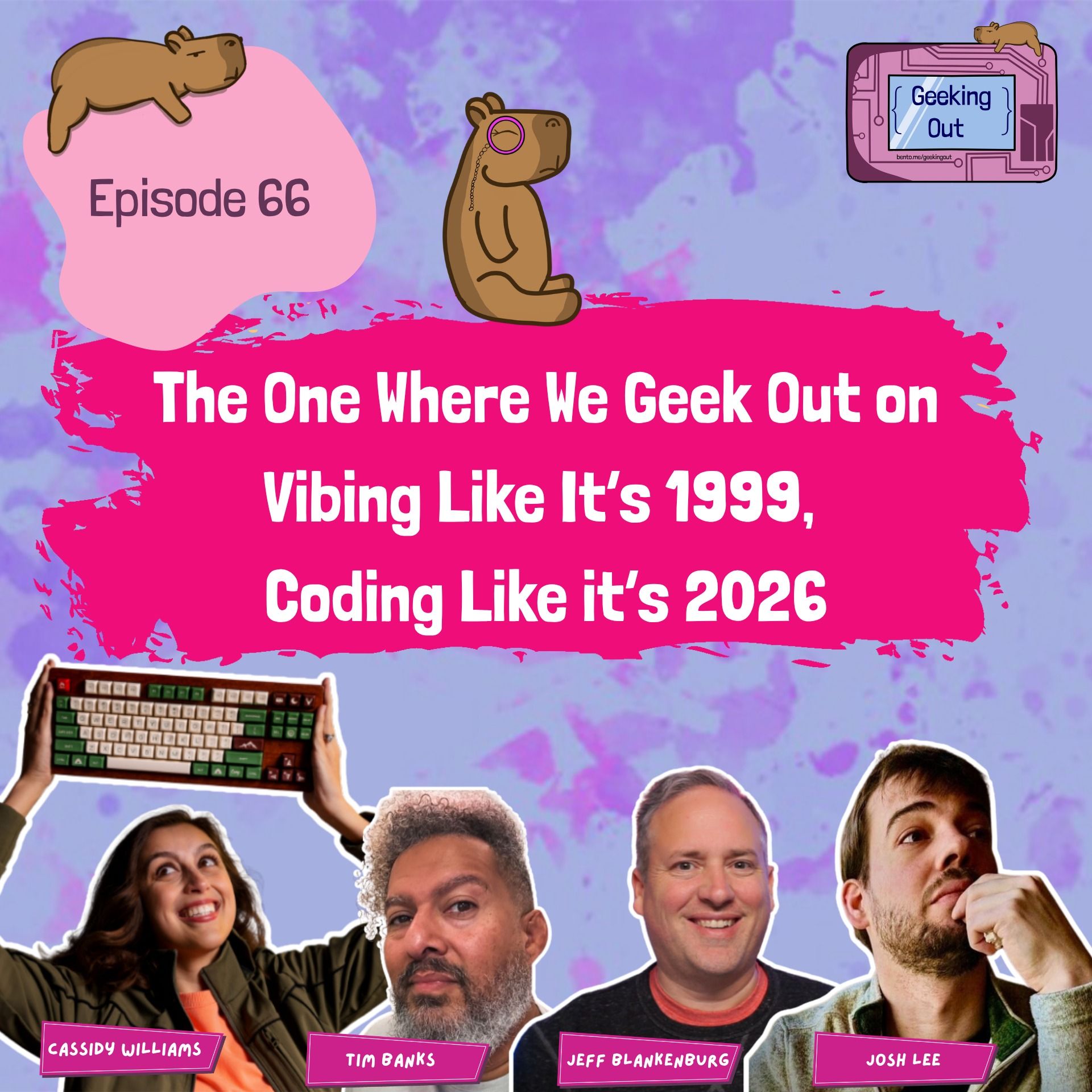 Geeking Out LIVE: The One Where We Geek Out on Vibing Like it's 1999 and Coding Like it's 2026
 The One Where We Geek Out on Vibe Coding with Jean-Mark Wright
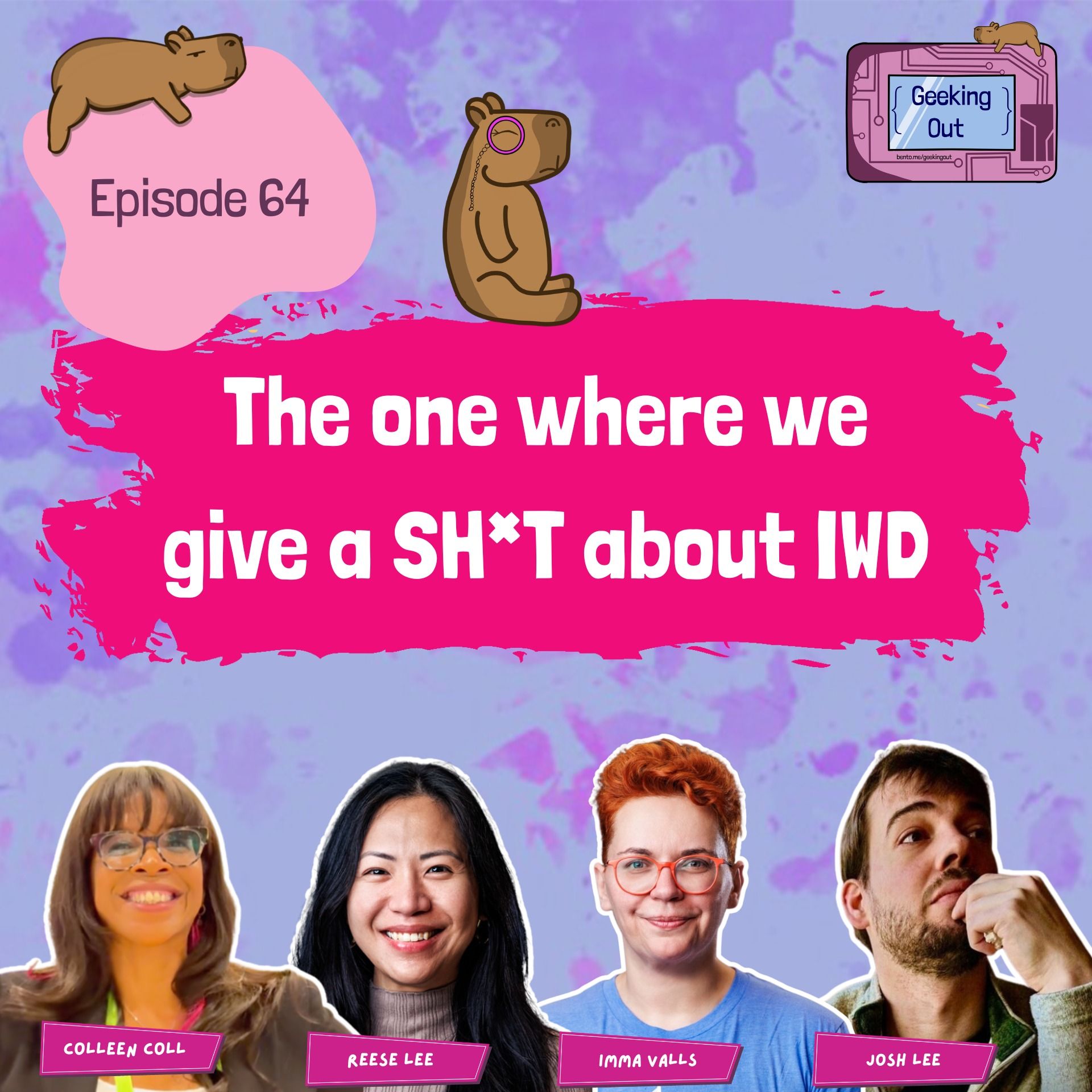 Geeking Out Live: The One Where We Give a Sh*t About IWD with Colleen Coll, Reese Lee, Imma Valls, and Josh Lee
 A Special Programming Note
 The One Where We Geek Out on the Plan from Which to Deviate with Diana Todea