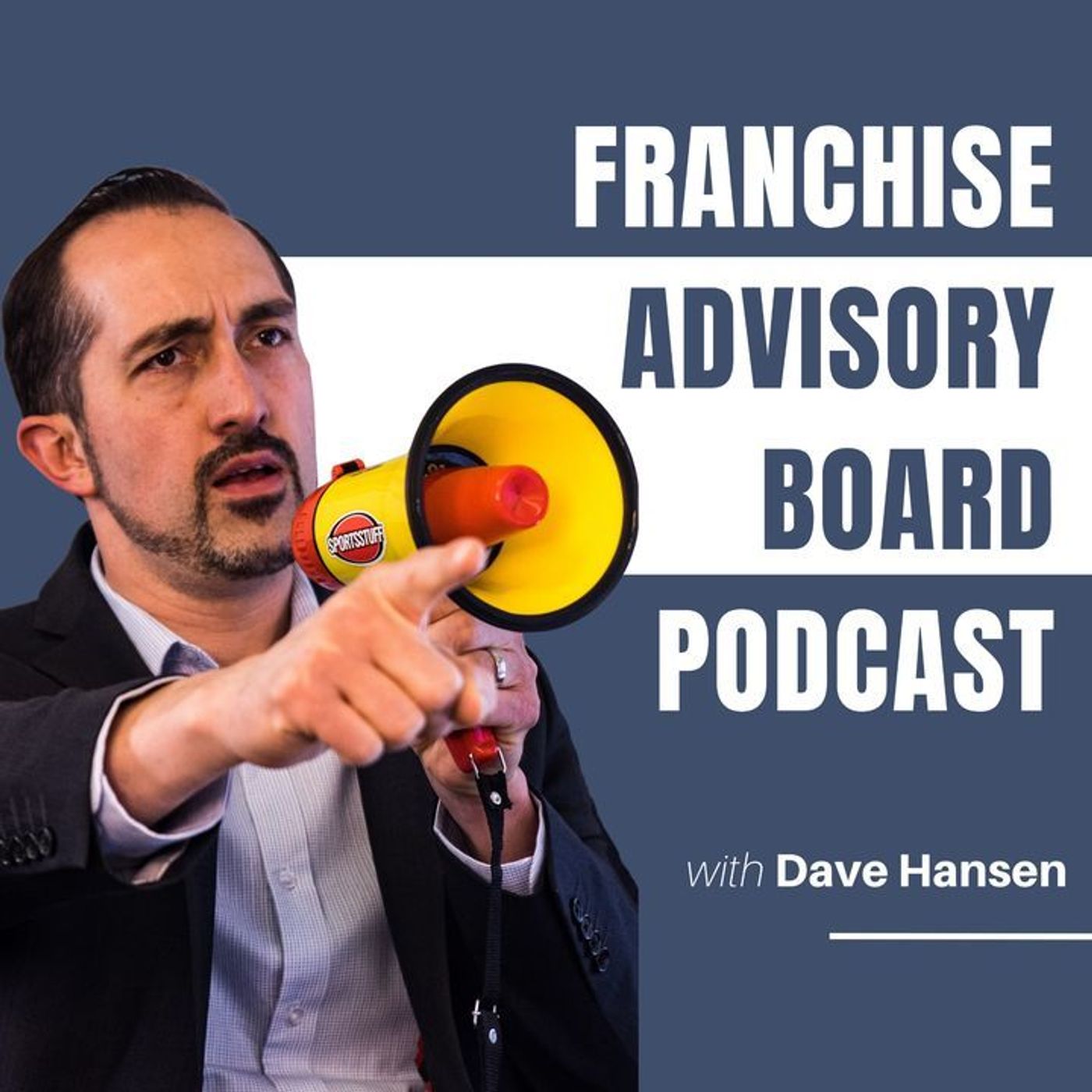
Franchise Advisory Board · 2026-06-23 · 44 min
Key moments - from our scoring
Substance score
48 / 100
Five dimensions, 20 points each
The AI shift represents the largest change to digital marketing since Google's introduction, but contrary to alarmist headlines, SEO is not dead - it's foundational. Dan Biddell explains that while AI-powered search results are cannibalizing some organic traffic (up to 40% in some cases), being discoverable in ChatGPT, Claude, and Google's AI results requires excellent SEO fundamentals first. High-intent searches (people actively ready to buy) remain Google's monetized sweet spot, where paid search and organic results still dominate. The real money left on the table, however, isn't in optimization strategy - it's in availability. Franchise brands and home services companies are losing conversions because they don't respond to inbound calls, forms, or messages within critical response windows. Data shows 25% of inbound calls go unanswered, 15% of web forms get responses (averaging 20+ hours), and callback times average 23 hours when they should be under 5 minutes. The gap between brands claiming they have "AI tools and automations" and actual performance is massive. Biddell and host Dave discuss how consumer behavior has shifted: people start research in LLMs but return to Google to actually transact, and they expect immediate response across multiple channels (phone, text, chat, forms). Brands winning in this environment combine solid SEO, paid advertising, and most critically, instant customer engagement infrastructure.
Data shows organic traffic declines of up to 40% can be attributed to AI search results on Google and other LLMs, primarily through zero-click searches where the AI result answers the question and the user never clicks through to a website.
Yes, absolutely. Google and LLMs have both stated that AI optimization starts with solid SEO - you will not be found in ChatGPT, Claude, or Google's AI results if you're not already ranking well organically.
Poor customer availability: 25% of inbound calls go unanswered, 85% of web forms never get responses, and average callback times are 20+ hours when customers need answers within 5 minutes to convert.
AI-assisted content is acceptable, but it won't help you rank if it's fluff - LLMs and Google's algorithms understand intent and expect authentic, authoritative content from your own voice that actually helps consumers.
Yes, the vast majority of people use LLMs to research and build familiarity with a topic, but then exit back to Google or other search engines to actually find and contact a specific business.
Our reviewer’s read on each dimension, with quotes from the episode.
There are some genuinely useful data points buried in the episode - 40% organic traffic declines, 25% of inbound calls never answered, 15% of web forms ever generating a text response - but they're surrounded by significant padding, mutual agreement loops, and personal anecdotes (truck dealerships, bathroom mold) that dilute the signal. The AEO citation-quantity argument is useful but not densely developed.
we've seen data that suggests as much as forty percent declines in organic traffic to websites
Twenty five percent on average of all inbound phone calls are never answered
The core advice - don't abandon SEO, build citations across Reddit/LinkedIn/YouTube, respond quickly - is conventional digital marketing adapted to an AI-search framing. The one mildly fresh angle is that responding to negative reviews with strategic keywords feeds LLM citation engines, but the rest recycles widely circulated frameworks without a genuinely contrarian or first-principles take.
the name of the game with LLM is the citation game
Even a negative review can be a blessing because it gives you an opportunity to say something about your brand
Dan Biddell is a genuine practitioner - 12 years running enterprise franchise marketing at a significant agency, backed by real client data - but he is ultimately a senior vendor/sales executive rather than a franchise operator who has done this at scale himself. His insights are credible but come from the service side, not from owning or running the brands.
I've been with Scorpion for about twelve years now
across all of the franchise brands that we support. Twenty five percent on average of all inbound phone calls are never answered
The episode has more concrete data than average for a franchise podcast - specific response-time statistics, a named IFA anecdote with a 5-leads-per-week figure, and rough LLM source-distribution percentages - but several numbers are loosely recalled ('twelve or thirteen percent'), and the most impactful claims lack sourced citations or methodology.
I've had five this week. Wow, I've leads this week from chatty petchers and they're high intent leads
LinkedIn, and eleven and a half or so just behind it was Reddit
The host frequently commandeers the conversation with extended personal anecdotes (Ford dealership saga, bathroom remodel, 'geo hoomies' group) and asks broad open-ended questions without meaningful follow-up or pushback. There is almost no genuine challenge to the guest's claims; the dominant register is mutual validation ('I strongly agree' appears repeatedly).
I strongly agree with you, Dave. I don't think it's a radical opinion
Man, I feel like it's time for a shameless plug for me, but I'm not going to do it
Computed from the transcript - who did the talking, and the words that came up most.
In this episode of the Franchise Advisory Board Podcast, host Dave Hansen sits down with Dan Bedell, President of Enterprise at Scorpion, for an eye-opening conversation about one of the biggest shifts in digital marketing since the birth of Google: AI-powered search.A huge thank you to ClientTether, our episode sponsor. Their franchise CRM and lead-nurturing platform helps franchise brands respond faster, convert more leads, and create stronger franchise development and unit-level growth.Dave and Dan dive deep into how AI Overviews, Answer Engine Optimization (AEO), and Generative Engine Optimization (GEO) are reshaping the way consumers discover local businesses and franchise brands. While many marketers are declaring SEO dead, Dan explains why strong SEO fundamentals remain the foundation for visibility in both traditional search and AI-driven platforms like ChatGPT, Google AI, Claude, and more.The conversation explores the growing impact of zero-click searches, declining organic traffic, and why franchise brands must focus on authoritative content, technical SEO, and a strong digital presence across multiple channels - not just their website.
Transcribed and scored by The B2B Podcast Index.
Guys, I'm want to welcome you to another episode of the Franchise Advisory Board, where we bring in experts from around the franchise community to share practical, actionable insights that can help you build memorable and long lasting, thriving brands. Now, I got a buddy mine with me today. You guys probably know Dan. If you don't Dan Biddell, he's the president of the Enterprise Group at Scorpion.
Now, if you don't know Scorpion, I don't know where the heck you've been. Scorpions one of the biggest digital marketing strategy groups in the industry. They do SMB and enterprise, which is franchise. But some of the things that you should know about Scorpions are they're hyper tech forward, like they really have developed a lot of their own tech.
They do a lot of their own things, but it's because they really are dialed into what's working in digital and how that landscape is rapidly changing, including things like AEO GEO, which is something we're going to talk about today. So real quick, If you don't know this about Dan, he's been a founder three times, he's done he's had ten x growth, he's been a COO, a CMO in emerging businesses and other in large businesses. He's just got a great background and which is why he's such a good advisor to franchise brands that are trying to figure out marketing strategy, marketing tech.
And also he's a guitar player, loves to go out and if he's not traveling, which he loves, he travels with his wife a lot. He's out playing with his son. They play guitar together in breweries throughout Texas. So love to have you on, Dan, tell us a bit more about you.
Tell us about Scorpion. Oh thank you, Dave. What a kind intro. I really appreciate that.
Yeah, you hit the fun parts, travel and if I can play a little guitar with my son. But I actually that's not the only fun part. I'm maybe a bit of a nerd. I love work that's always fun.
I get really, really really excited about about helping our clients grow. Maybe it's a little hokey, but I firmly believe that in the greatness of the American dream, which is fueled by the you know, economic opportunity, and when our clients succeed, it really warms my heart. You know, they're employing people and putting kids through school and and we're growing the economy this country. She won one franchise and small business at the time, and I just I can't tell you how much I love that Scorpion's been doing that for geez, coming up on twenty five years now.
I've been with Scorpion for about twelve years now, and you called out I've had a handful of roles there, but I do run the enterprise side of the business. And thank you also for calling out the fact of something that we're really proud of. There's a lot of there's a lot of places out there where where businesses and franchise franchises can can generate leads, for example, and that's not really what we are hoping to be able to do, although its part of it. We think it's far more important and I'm really happy to talk with you about this to help these businesses make money and to be able to make quantifiable money and validate what's working and what's not working versus just I think we can make the phone ring that to me is not very fun, so so appreciate the time.
These are some gonna be some great topics aio g io and that's what everyone wants to talk about. That's gonna be a great one too. Yeah, well let's te right in man, and so it's great Fu. I know you're crazy busy, so thanks for making time to get on of course, and you've been presenting about this recently, so guys, this is some pretty fresh content that Dan's been putting together and trying to educate the community about.
But let's just start with ground, ground level, like what is how is the AI shift impacting franchise marketing? And it's a lot so, but feel free to dive in and share some of the insights and data that you got around that and also what you're seeing in the space. Yeah, of course, I mean, I agree, it's the biggest shift that in my opinion, sort of the I've seen people talk about this the big three shifts in the digital landscape over the last twenty five years, like, for example, the introduction of Google, big shift, the advent of mobile and mobile first world secondary not quite as big as the advent of Google.
This to me is the next stuff in the list after the aiogio, the general AI realm. It's the introduction of Google, itself. It is literally changing everything. And I'm not here to tell you that people are going to stop using Google.
I don't believe in that, but I do believe that it's modified way that people behave online and whether it's the fact that people start a process of discovery off of Google now because of the you know, the so long tail nature and interactive nature of these llms, and we are starting to see some conversion there, but also the fact that we can get into that there's just so much cannibalization of organic search that has happened because of AI. So many of the people that we work with are seeing a lot less you know, organic traffic on the Internet, and there's a you know, AI of course is playing a huge part in that.
So we're seeing I've seen data that suggests as much as forty percent declines in organic traffic to websites, and we can attribute that to a combination of the zero click search. You do a search, even on Google, and you can get an AI result, and if that's has the answer you're looking for, well you're not going to need to go to a website anymore, are you. And Google will tell you that the high intent purchase based searches are still as strong as ever, and I would generally agree with that that that's the The dippin traditional organic is not really cannibalized purchasing, but it has cannibalized a lot of the organic components of it.
And we should probably at some point talk a little bit about the fact that the search engine results page has modified itself over the years. Little bit less organic real estate, a little bit more monetized real estate from Google Googles. Google's very good at a handful of things, and one of them is being able to continuously increase revenue. So there's a little bit less space for the organic now and a little bit more room for things like LSA and other advertising units.
Actually, let's not skip over that. I think we let's dive into it for a second and I'll share something because it's probably better fighter than if you do. I've got one of our partners that we've worked with this kind of managed our digital marketing for a while. He's really dialed and he's writing a book about this.
But the algorithm shifts in Google say what they may. The primary motive behind a lot of those appears to be disrupting organic. So that paid becomes more the people become more dependent on paid. You don't have to say anything about that.
I don't know. You guys are great Google partners, and I'm not trying to be critical. They have a business to run. However, this is architected disruption to the seo organic field because aeo geos cannibalize the first time ever, well first time in over a decade.
Google's had a legitimate competitor maybe fifteen years, twenty maybe ever, and so this aeo geo stuff is really cramping their style. So a lot of these algorithm changes which are disruptive, are also making people really dependent upon paid which is part of the end goal. In my opinion and my buddy's opinion. I strongly agree with you, Dave.
I don't think it's a radical opinion. You know, like all of us, Google is in business to make money, and they're still one of their primary, if not the primary channel for that remains the advertising revenue they're generating. And historically the way that they've been able to behave is as people use Google for all manner of searching, not just for purchase searches. Of course, the informational stuff has historically been free and the I want to buy something is where they've monetized.
And you know, in our business, we've always encouraged our clients to lean into the organic side of Google because it's it has staying power. And yes, you're not paying incrementally for clicks, but you usually are paying, of course to generate that organic presence ranking for the kind of keywords and the businesses that we support a lot of home services, health and wellness, pet daycare kits. As people are searching for those things, we certainly want them to be organically present when that's happening.
But over time, you are correct, And that's where I was saying, I strongly agree the lms are encroaching a little bit on how people are leveraging organic search. Google has cannibalized itself from the perspective of serving up AI results for a lot of that. I mean, they do need to monetize, and it's it's hard for us to argue that fact as we're all looking to mind to tie various things to in providing value. So, yes, you're right, and but we still and I think that we need to be very, very very candid on this topic.
Google has has been clear about the fact that AI optimization does start with solid se Oh, you will not be found by by by AI and the l ll ms if you are not doing se O correctly. So there's there's not a case where we say, oh, well, that's nice, I don't have to worry about that anymore. To scratch that expense off the off the ledger. No, unfortunately, that's not accurate.
I mean, if you want to be seen in chat, GBT or Claude or any others, or more importantly with the world we're talking about right here, if you want to be found in Google's AI search results, then it's utterly critical that Google can find you organically as a starting place. And then there's other a lot of other signals we can which we can talk about. But yeah, so that's what I'm saying. I very strongly agree with the summary that you provided.
We're seeing that directly for our clients, and it's a world that we have to acknowledge that monetizations only to continue across the lllms too. They're selling ad space there now as well. Yeah, no, I agree, Well, yeah, this is this is a key thing, and I don't want to I want to make sure we focus on it just just long enough. It's got to sync in.
I've seen a bunch of hype out there. I go, SEO is dead. SEO completely incorrect. It's completely incorrect.
You need to be writing better quality content. The bull crap that people were thrown out over the last couple years as LLM started to produce content. It's just lightweight, zero authority, zero quality. Like that stuff's not helping you.
But you've got to. You got to continue your SEO strategy like you would have five years ago. Authoritative, helpful, easy to digest content. I mean that I'm oversimplifying, but it's not that hard.
But you have to have that foundation. If you don't have that foundation, paid won't work right, and aeo geo won't work right. So so anyone who's thinking I can stop focusing on SEO dead wrong. And I just want to back up with Dan saying here, personally, we see it in our own company, but also the brands that we work with.
We don't do digital market, but we're on the receiving end. The ones that are still getting high volumes of leads, they've got that foundation really solid and it's helping them with the AEO GEO stuff. Yeah, yeah, again, strongly, strongly agree with that, and I don't think you're oversimplifying it. I think that that is even though we're living through a fundamental shift, it's just not something that we have the luxury being able to ignore.
You will not be found in aio g io without that solid organic presence, and even as more things get monetized that I just don't see a world where that goes away. And I think you touched on something really important there, Dave too, which is, you know, if we cast our minds back the earlier stages of SEO, I think that that, you know, it was it's even called search engine optimization, right, how do we optimize to be found by Google? And the early days was what tricks can we leverage?
How do we fool Google into into getting us higher on them? And they got real good at figuring out that, just saying something like, if you're looking for a salt Lake City based plumber because you live near salt Lake City, then this salt Lake City plumber is the best salt Lake City plan and just you know, keywords stuffing to make sure that you know. And we used to see that in the old days that obviously Google got smart and said we're not going to fall for that. We're going to make sure that only content that's relevant is what's helping.
Well. They've gotten better and better and better. And so the point that you just made about content for content's sake, AI written fluff and some of the AI garbages out there, that's not helpful. It doesn't help consumers, and therefore it's not going to help you organically rank, and it's not going to help you get found by l elms.
The lms are better and better, better understanding intent. So the beauty of this for the consumer and for any of the businesses that your company and my company helps support is that if you're a good business and you tell a good story that helps consumers, you will be found by those l elms. You know, again, assuming you're doing the technical SEO basics, but assuming that that's in place, then you will be found if you're saying things that consumers care about, preferably using your own voice.
Doesn't mean you can't use AI assisted content, but preferably using your own voice. That's the big shift. There's no there's no there's no fooling Google, and there's no fooling the lllms be a good business and tell your story effectively. Yeah, I'm with you on that.
It doesn't doesn't. It should be back to the basics really exactly. There are a lot of people who are trying to make a lot of money by being an alarmists and and you can ignore a lot of that bologna. You just focus on the core, blocking and tackling.
Man. It's it hasn't really changed other than where we put content, how we structure our kind of maybe the schemas are slightly different some of those things, but but otherwise quality of content still rains and there should have always been that way. I strongly agree with that as well. There's a look because we are living in a world of some disruption that that tends to come with the purveyors of snake oil and a lot of the alarmist headlines that you reference with SEO is dead and a lot of those are are.
You know, subtly, you're not so slowly positioning some some wonder ai solution that you know that's that's I wish that was true. There's literally no such thing, and i'd be any of your listeners, I'd be extremely cautious about believing that there's some way to get better AI ranking, for example, or AI visibility that does not rely on core, basic foundational things that have always been true, Like you just said, really good content, solid technical SEO. There is no shortcut for that, So I'd be extremely wary of those headlines and the people that sell those things.
Yeah. Likewise, well let's let's jump in, so talk to me a little bit more about there are key factors right where we're trying to impact our revenue growth and FRANDEV or unit operations. You mentioned your home services sweet spot for both of us, right, Like, yeah, Like, what are some of the key foundational things that people should be focusing on right now to drive revenue? Because you mentioned the word high intent, I want to go back to that, like, how do we draw high intent the seekers of our services of maybe you know, franchise candidates.
I know you guys do a great job with FRANDEV as well, not just unit ops. What are some of those key factors you're seeing at work right now? Yeah, on the high intent stuff, or sometimes we call it bottom of funnels, this is this is a you know, a de facto hand raiser. I'm going online to search for I want to learn about buying a franchise, and I'm trying to decide, for example, what vertical and brand I want to opt into, or I need some of the services that are home services clients provide to us.
I need HVAC services, I need plumbing, I need to put an electrical box in. Those are again people that are that are pretty certain that they're ready to buy. So, you know, from a traditional buying funnel of I don't really know what an electric car charger is and I'm just looking that up. Well, that might be a nice zero click search because you get an answer.
Oh, okay, question answered, fantastics go all of my day versus no, I'm ready to put one in now, I'm searching for someone near me that can do that. So in order to be there, in order to be that person, you know, we think in terms of the search engine results page and what's available there, even the people what we're seeing, the people that are using an LLLM to start that process, the vast majority appear to be exiting the LLLM when they're when they've done enough research and going back to Google or Yahoo bing in order to find the business, contact the business fill out the form, and I think some things that haven't changed there that remained the best practices are it's got to be really easy, really easy to find you.
It's got to be really obvious to choose you. And then it's got to be meaning like reputation. For example, why do I want to use this company? There's going to be a lot of other companies that offer what this company offers.
Why this one? Tell that story in the quickest, most succinct, but honest way is possible. Prove yourself with your reputation. And then the part that I actually see, Dave, interestingly, where most of the money is left on the table, is be available the moment that they're ready to buy.
I unfortunately talk to a lot of our customers and clients who will say things like, well, I'm really good at calling people back. That's really nice to hear they are down the road. I can tell you from my own experience. I purchase home services enough to know that if my HVAC unit is out and I get a voicemail, there's a zero percent chance that I'm leaving a voicemail, or if I do that, I'm waiting around and not making the name next call and for most busy professionals, even if it's not an urgent situation like broken broken AC unit in Texas summer.
I'm I'm in a buying mode now, so even if i need something a little bit less urgent, like I'm thinking about new flooring, for example, which I happen to be sort of thinking about. If I'm stopping what I'm doing and making a phone call, I'm buying now. I'm not buying an hour from now or tomorrow. And I see our our clients when when too often the challenge they have is that they're not available at the same moment that their customer needs them to be available.
And that's uh, it's just that's that's the number one money on the table problem that I see. Man, I feel like it's time for a shameless plug for me, but I'm not going to do it. I'm like, I'm ready to scratch the itch, but like you know, I just I looked it up right now, so like I remember a number, but I want to make sure is right. Eighty to eighty five percent of people who reach a voicemail will hang up immediately.
Yeah, service brand on a franchise development call like that put that number in your in your back pocket is real. It's been the same for probably maybe five to seven years. People don't want voicemail, they want answers. And this is where in availability.
We've all seen the Harvard Business Review data that came from the inside sales dot com guys. I actually shared an office with them when there were six people in that company and they exited for a billion dollars guy. So, but their founder went to his PhD work. He just used their own anonymous data, and that's where all these great points come from.
Like you have to be in touch with them within five minutes or less, and if you wait ten minutes then you drop, you're ninety percent less likely to ever have a convo. Right, all that data is still valid, and I just have to say, like, in this industry, we still have this weird playbook in our heads of four hours, like get in touch in four hours, total bull crap, Like it's garbage. So I'm like, a personal mission for me is to eradicate that silliness from this franchise industry.
Yes, but we did our own research on this, dude, because we're like, of course franchise brands. We would actually call like we would have. We have an internal team, they'll go on audit. Just responses felt real, like the web form with real data so people can reach out.
And the response rate fifteen percent of all the forms we filled out ever texted us ooh, and the average time that the text came was twenty hours. These are all servingful. Yeah, it's terrible. Callback time twenty three hour average time.
In fact, after we timed out at twenty four hours, we're like, well, we're not going to continue the clock. Guess what that means. Some people never call this bag and this is insanity, and this is today, and these are groups. These are franchise brands that will say no names not clients of ours, clearly, but like brands that were like, hey, we've got all these AI tools and call centers, we've got all these automations.
We're doing great. So I'm like, let me find out. And ninety percent of them, it's terrible, and their franchise owners don't answer the call in that moment where they should be converting revenue from their marketing spend. That's again, we're very much on the same page today, Dave.
Yes, Our internal data shows that across all of home services and I've done this across all of the franchise brands that we support. Twenty five percent on average of all inbound phone calls are never answered, and the number one we switch to forms or other contact forms goes way up, way higher than twenty five percent never get responded to if they don't come into the phone. So, and that's another really important component is customers want to be met where they are. And we've all heard anecdotally that the younger and younger folks would prefer not to be on the phone.
They want to either text or chat or message or form. And if you try to meet them not where they are, like hey, I got I got a form, I'm going to call them back tomorrow, that's not going to really resonate with a consumer. So it's it's also about being visible and available in all of those channels when the customer is in those channels. And that's that's a legitimate challenge, honestly.
You know, for a lot of brands who are if you don't if you don't have dedicated call center, if you don't have a lot of people, you know, the bigger ones, that's it's easier for the bigger ones, but the reality is with all the AI tools that we've got, and you know, speaking of shameless plugs, of course we have a we have a tool that you know, but there's a lot of them out there that can that can be responsive to whether it's phone if you even on rollover like, hey, I'm on the phone.
I only wanted to pick up when I'm on the phone, that's fine, or to answer inbound message requests. You should have that on. If you don't have that on, those are the kind of things that really stop that leaky bucket. Yeah, because well there are three factors there, and you and I are preaching the same doctrine.
But if you don't mind, I'm going to carry the torch a little bit here. So thanks for the handoff, got the baton That the what really happens to the consumer. Let's just think through our personal behavior when I, let's say I want to I'm looking at a car right now, we've just discovered a bunch of mold in our mastered bathroom. So we're in the midst of like an not an emergency, but like an unexpected remodel.
I'll just call it. That plumber is in here this morning. So we have been having a heck of a time. When I'm calling a guy for HVAC excited to move a ducty, I'm want to talk to the guy now.
And if you're not going to talk to me now, you are now your likely of closing me is now like twenty percent if you're not the first person to have a meaningful engagement with me, but a consumer, I'm going to get three to four. I'm going to call you four people. I'm reviewing three different quotes for the tile for the shower or the surrounds, like all the stuff. And I will tell you this, the response time is still one of the most important things.
You can't be a buffoon when you do. But it's seventy to eighty percent predictor of who's going to win is who's there, right, And I want to go back to what you said about channels. When somebody fills out your form, how many of you are asking for their birth date? Zero?
So you don't have a freaking clue who's filling out your form and their digital persona, unless, of course you've accepted your terms and you do some data enrichment with the pixel or something. But different discussion for another day. But people that are over the age of fifty want you to call them now. In fact, I just saw a franchise insight send an email this morning.
I actually kind of love their stuff, but consumer is their number one preferred method of contact right now. I think it's fifty eight percent phone call. They're probably serveying older people. I think there's a skew in the data.
If you're under the age of thirty five, you want to text, like you were saying, but oh, people don't know. Between thirty five and fifty, they're pretty if they're pretty ambiguous, they don't care like you and me, call me, text me. I'd rather call, so I want it's done. But I'm in meetings all day exactly.
That's what I was gonna say. I'm in a meeting, so and if I'm not, yeah, I want to talk about it and work it out. But if I'm in a meeting, I need to text. Yeah.
And what about you, Dan, You're a busy guy. If you have a lunch break or you got twenty minutes, say, dude, I got to get that window quote and I got a broken window. You're gonna tech, You're gonna fill the form or call somebody, right now when you have that fifteen minute window, and if somebody waits twenty minutes to call you, they just missed the window to talk to you. No pun and Dave, you just summarized one hundred percent of my home services shopping interaction is exactly that I have a call that ended early.
I'm going to try to knock this thing off my list. I'm going to call you or text you or what messaged you, whatever it is, right now, and if I can't do it right now, then it's not going to happen. The other thing that I think is really worth calling out is is the online schedule when we're talking home services. It's really helpful for a consumer.
And again this is my behavior, but it's not just mine. We have a lot of data on this as well. I want to be able to choose the time that you're coming, and I want to be able to see what's available and make my own selection whether I'm talking to you or not. I mean, if I don't have time to talk to you or one of the ways that I do consume a lot of home services.
And I'm making it sound like my house is completely falling apart around me, But we have been there for a little over twenty years, so I've done a lot of things to it. I want to be able on a Saturday or Sunday when maybe you're not open, or in the evening, when I have time to look at the calendar and select a time of my choosing when I want that home service provider to come out. I don't need it down to the minute, but I want to be able to choose the twelve to four slot on Tuesday when I know I've got better flexibility than trying to have to call you to your point because it's accurate when I'm in the middle of seven zooms on that Monday morning, and so we need to be able to again meet them where they are.
And online scheduling is a huge component of that. Agreed. A lot of the folks that we work with, they will schedule fifty percent of their meetings with Schedule or Form our platform or in another platform. Right, So that's a pretty consistent data point.
I've got buddies that run other platforms. They're slightly competitive, but we're friends. I don't care, but we share data and I'm like, yeah, it's about fifty percent across the board. Can you imagine if you don't have a digital scheduling.
If everyone else is getting fifty percent of their appointments scheduled, guess where those guys are scheduling, not with you? That's right. Yeah, and there is all. We're in the middle of a bunch of stuff now, but I can't was it a car thing?
There's something that we need. Just like a couple of weeks ago, all the places that I needed to talk to they closed at five pm. Ooh, And I was like, you morons, Like, I'm not available until sometimes six pm, but I can make time during the day maybe, But your type of service is generally speaking, servicing to somebody who's a business professional. You should probably up until six, six thirty maybe seven.
Coming to work at ten. I don't care. But I find that's nuts. But you're after hour stuff, the web chats, the online schedulers.
I just want to resonate what you're saying, and I also want to steer us back toward a AEO G E O. Right, So this is awesome and part of what we want to focus on. Because you're such a wiz of this. Let's let's shift the conversation back over to Okay, we talked about the strong foundation of SEO that never will go away.
You're going to always have to have that we've talked about. You know, you probably want to throw a little money paid. Google's including that in some of their algorithms, I'm sure, and put who gets raised the top. How do brands start to really leverage the power of AEO and GEO.
You've got to do some things a little differently beyond the basic of have a really good SEO platform. Yes, I think that this is an oversimplification, but my favorite way to think about when I'm talking with you know what I'm speaking or when I'm talking with clients about this is all the SEO will work done forever, and all the Google work that we've done for the last twenty years has always pointed the consumer to the website. Let's let's get them onto the website, and let's convert them onto our business.
The big difference from from the rise of the l l M and the AI world is the website is a source of information, but it's not the source. And as a matter of fact, the l tend to lean pretty heavily into well, how many different places, how many different sources am I seeing this brand because all the ais out there are selecting. Again, I think Google is sending you to a blue link. The AI is giving an answer, and it's answering with brand, and it's choosing a brand based on the strength of the outside places that it can find information about the brand.
And by outside places that I'm referring to is sure. You need to have accurate information about your business on your website. You need to know what kind of services you offer, need to know what territory you service, need to know when you're open. All that should be on your website.
Absolutely, A lot of that should be on your GVP too. Of course that's another source of information. How much of that is on your Facebook? Where's your reputation information that's all over the place.
Are people talking about you on Reddit? That's interesting if they are. Have you had newspaper articles written about you by your local media because you did something cool like phticipate in a parade on a weekend. All those are incremental sources and citations that AI is using to get information about the strength of your brand, so it can potentially recommend MENDU above your competitors when it's trying to when someone does that super long tail search about man.
This morning, I found mold in my master bathroom, and I want to figure out, you know, who the best kind of remediation company is? And what I really care about are these four things. That's the kind of stuff that we see typed into the LLMS. Now, the LLLM is going to go out and source answers from how many different places can I find information about this business versus other business?
If the answer is that business is a website, but this business over here has fifteen different citations, I promise you that business number two is going to be selected by the LLM. Yeah. So interesting fact about that. I've got a group of I called geo hoomies, some of my friends in franchise.
I should throw you in the group. You'd probably love that. Oh yeah, yeah, yeah, sign me up. Yeah.
So but we somebody in the group said, hey, here's the current LM distribution of where they gather the information. So originally, like I mean, when they first came out, they were pulled a lot of data from like Kora, I call them someone like the dead social like the almost the what do you used to call those the something boards? The boards anyway, like back in the day message boards boards. Yeah, but like I think it's twelve or thirteen percent of the data the lms comes from LinkedIn, and eleven and a half or so just behind it was Reddit, and so like there are a couple of these key pillars where the elms are digging for information to see like who's talking about you?
What are they saying? And if you and dialing into that, and what it means is you've got to become active. I always thought read it as a joke, but then I started finding the answers I needed for Like, yeah, I had a weed whacker that was just I was trying to trim the art and I couldn't get the thing off. I was like, what is going on with this super cool new like head on my weed whacker?
Found the answer on Reddit. Yeah, the plumbing thing I was doing a year ago. I found the answer on Reddit, and I was like, this is becoming. You know, YouTube's great, you know, it's all these social places, but that's I just want to what you're saying and also highly specifics that you know.
Almost twenty almost a quarter of all the LM search traffic that they're using to derive answers is LinkedIn and Reddit. So those are a couple of places we've got to be. You do have to be there. That's a perfect summary at the end.
Yeah, and the different the different llms lean a little bit more heavily into different sources of platform. We do see a lot of Reddit, we do see a lot of YouTube. I strongly agree with that. Yeah, LinkedIn as well.
But the point I think the most important one is and some of those are extremely authoritative relative to you know, don't I suppose you could come up with some extremely hyper local thing that no one really looks at and maybe not as authoritative. But that said, it's also the quantity and the quality of the citations available. So the more times that businesses are showing up and the more consistency the lllms can find about what's being said about those businesses, the better it's going to be.
And that's I think that's it's a real democratization, which is good for our clients, right, It's a real democratization of how you can be found. It's not only did I have the most money to spend on PPC and therefore I won, right, And that just kind of really handicapped the startup the smaller whatever, that's not true anymore. So I really think it's a really good news. If you run a good business and you get people to talk about you, you're so much more likely to be found in this world of AI and that's really good news.
Yeah. And here's the weird news though, is Reddit as a young person platform y thirty five and under. So if you're and that's way below the average age of a franchise owner in this industry's right, and especially in the trades and the home services. I mean average age is like forty five to sixties, like it's in the fifties for most of the trades.
How do you make sure that you're engaging? You know, you're not natively on that platform. It didn't exist when you might have considered being a platform like that, right, So how do you flip the switch and start to engage? Try to get your consumers that's the most important, other people talking about you on the platform.
That's the big question is how do you get that to start? Because I think a lot of people don't know And if you have any recommendations, I'd love to hear your thoughts on how do you get started with things like that? Oh I do. That's a great question, and what a great question.
So it's funny. I was literally just talking with the CMO of one of our one of our major brands recently, and she said something that I thought was fascinating, which is leveraging Reddit, which is just one example. You know, are are we looking in Reddit for topics that have to do with us? And what I would be doing if I was a franchise business owner is I would be leveraging my LLLM of choice to be scanning those those tools for topics that are within the services that I offer, looking for an opportunity to reply and and and you know, calling out I have.
For example, if someone is talking in a Reddit thread about I'm really looking for recommendations around painting, and you happen to be a painting franchise, it'd be nice to know that someone in your community was talking about that. It'd be nice to be able to follow threads like that and we're appropriate. It might be nice to drop in and be able to say things like, look, I live in the community. I offer this service.
It's a shameless plug, but I do want you to know that I'm here and if you are lucky enough to have seen your name mentioned in a positive way. It'd be wonderful to jump in on one of those and offer a thank you very much, because now you're engaging and you're providing some level of incremental content for the lms to find you. Yeah, I mean back in the day, the Google owned the channel for a service brand or a local band for reviews. But Reddit's like this weird hybridization and like you said, democratization of data where it's funny that it's the most used by most of the lll ms because it's also like the least reliable, except because anyone can say anything they want on Reddit.
They do have moderators, but not everything's moderated. My channels are moderated only because I don't want dumb stuff. It's supposed to be a do so but or threads. I forgot you call them subreddits?
Yeah, subredits right? Thank you? Yes, floundering here, thanks for bailing me out. But I'll share an example.
Like, I've got a brand that we work with frand dev really cool Upstart Young. It's a big, big format like play zone for kids. Oh nice, she and she inadvertently hijacked her aeo like, she had a bunch of young moms that live on Reddit and they were talking about how amazing the experience was with her brand. So she we're at IFA this this year and she's like, hey, check this out.
She showed me. She's like, this is another chatchept lead that just came in and hit client tether and I followed it. I met this event and had alread followed up. But check this out.
I've had five this week. Wow, I've leads this week from chatty petchers and they're high intent leads. People that are searching and llms are pointing them to her. She's like, dave I compete with I won't say I compete with this brand.
She's like, I talked to their CEO and he was mad at me because he hasn't gotten a single chat chepeta lead. And they're like, they have like two hundred locations and they're part of a huge platform company and I've got three locations and I'm getting five a week. That's the equivalent of what fifteen hundred dollars of lead spend to get right, But how did she do it? Inadvertently?
Because the right demographic was chatting about her brand online? The llms are putting everyone pushing them toward her for franchise opportunities. So I decided to should that because it's really indicative of how this can work if you're intentional. But also what if she wasn't paying attention.
That's right, people are saying bad things and reading about your brand. Like you got to watch that too. Now I would call I'm glad you mentioned it, because I was going to say a lot of the brands we work with get pretty freaked out when they see a bad review, for example, and we always tell them, first it's going to happen, but second, it's really an opportunity. I mean, you think about consumer behavior.
Everyone uses reviews. We know that you do need to have good reviews. In total, no one's interested in looking at the two point six star business when there's a four point eight star right next to it. But when people go to read the reviews in general, what they're looking for.
What are the people saying that they're negative? I want to know what the negative aspects of potentially choosing this business are, so they're going to scroll through and find the negatives. And I think the big opportunity there is has the business owner responded to those negatives and what do they say about it? Because what I want to know when I'm choosing, you know, a home services company, if someone said something negative about them, you know what was the negative component of what they said.
Was it that they showed up late, charged me too much and didn't do a good job. That's very disconcerting. Or if it's something that maybe I don't care about and then you know they should have. I really didn't like the way that they the guy commented the shoes tied.
Okay, that's completely irrelevant to my selection of a plumber, but that might have mental life. So that's what we're looking for here, and I think it's really important for the business owner to go Everyone's been told this, but the opportunity to reply to those is the chance to to not to argue. We never never, ever, ever do that. The reply is not for the person who posted the replies, for everyone who's coming later to read about the negatives.
So that's who you're talking to, and we always try to provide that coaching. Yeah, it's interesting. Well, we just had a service issue with our truck and we took it to the closest for dealership. We've had a couple of weird issues, but we were like, this is going to be great and total disaster.
Like they just it was such a simple thing, and they totally screwed the poots. They lied to us twice. He held the truck for two days unnecessarily told us they had the part. They didn't said it was three hundred bucks and it became eighteen hundred bucks, and were like, you know what, you guys like, you're a bunch of clowns.
Like if you told me it was eighteen hundred bucks up front, we would have just gotten to taken care of. Well, there's more. Turns out there's a little bit of like a warranty fraud other things going on, right because we took it to another Ford dealership and then they're like, yeah, we'll get it in. That's this part.
You have to do this, he educated my wife told me we need to be done. He's like, let me call your warranty guys. This is a new truck. You guys should have this taken care of.
You shouldn't have to fix your your mirror arm this early. And so he took care of it. So, but then I looked at the reviews of this dealership, and they had a pretty good review. I think they're like, you know, four to oh or something like that, so good enough.
But when I looked through it, all the good reviews were from the sales team and then all the servant like not from their sales We like about the. Salesman sales processes. Buy a car, and everyone's so happy when they buy a car. Sure, almost every review about the service department was like two or three several like they were terrible, and and I was like, well, this would have been good for us to look at.
But uh, to your point, they responded to a lot of them, and a lot of them were a little defensive, and I was like, dude, you guys, you're not doing this great. You're lucky you sell so many cars otherwise, you know. But but to the point of there's also an opportunity there. There's an opportunity there.
Good. I mean, talk to you know, market brand if you want to get into like negative review removal. They're wizards of that. Oh yeah, yeah, yeah, we always recommend mark and brand.
Yeah, if you don't know. What to do, that's right. We probably should say their brands so people know talk about But anyway, but there's also an opportunity to slide in keywords, key phrases like if you're and I just want to pitch this, and if you're responding to these reviews, you want to be saying thing like, hey, we're so glad you had a great experience using our franchise errum or like or and you're like thanks for using our franchise digital marketing services, whatever those keywords are, because the LMS are picking that stuff up too.
From the review dialogue. It's so yeah, I know you know that you'd probably say the same thing, I sold your thunder. No, No, you're hundredercent correct. I completely agree the LMS are looking for that information, so you have an opportunity.
You can't be overly salesy, which you said, and I strongly agree with that, but you do have an opportunity to be found again. And the name of the game with LLM is the citation game, so leverage that. It's really, honestly, it can be. Even a negative review can be a blessing because it gives you an opportunity to say something about your brand.
Yeah, exactly, both to the LMS and also to the consumers. Right, that's right to both, Yeah, I agree, Well, so where else? So people, I think you've covered a couple of great things like leveraging read and trying to engage in dialogue, managing your reviews. What are a couple of other areas And if people are serious about trying to take advantage of right the wave of AEO ge O for their brand, how else should they be engaging right now?
We mentioned YouTube, and like I've said a bit before, YouTube is important obviously, but like I've said a bit before, different llms lean a little bit heavily on different channels. But YouTube is a good one. As everyone says. It's the world's second largest search engine, and video content's important.
People do make comments and that's a that can be a bit of a tough one too for you know, for franchise owners, like what should you put there? Though that's always the question. Video content never hurts that video content, it's nice to have it on the website. How you know, we talk a lot about doing how to videos.
All those things are fine, but I do think if you have a presence there and you're comfortable doing it, then that can be a really good channel. If you've got in the home services businesses, if you've got technicians who are comfortable doing that, that can also be helpful to do. It does give their potential customers an opportunity to see who you are, which is nice because we talked earlier about the criticality of why do I choose this business over any other business? So put your personality into it.
You know, you and I have talked about having your personality on LinkedIn. I think it's also nice to see the personality of the business on YouTube if you're looking something up. So I'm not suggesting that's utterly critical drop everything and go create a bunch of YouTube videos, but I am saying that is an important channel when it comes to AI search. So you hit the I think you've hit the big ones.
That's That's just kind of the thing is, we do need to make sure that we're where our consumers are, and the LLLM world has opened that up a bit more broadly. So I don't want to leave you know, our prospective clients and our existing client's day thinking that man, I got to be everywhere all the time. That's too much to do. Yeah, I don't want that impression.
But what I am saying is that very few channels are bad channels to be on if you're lucky enough to choose, and of course you do want to lean into I always I have sort of this hierarchy in my mind that I talked to customers about, and it's you know, the GBP is utterly critical as a starting point for I think that's personally one of the most important things you could possibly do is get that optimized and then keep up with it all the time. The website's got to be correct and accurate.
All the form stuff has got to work, the phone numbers, all that stuff. And then secondarily, when you get off of those primaries, it's into the secondaries, which are also critically important for llms, and that is I agree with you. The LinkedIn, the Facebook, the Reddit, and the YouTube. Those are the kind of places that I would probably lean before the others.
Yeah, I'm with you on that, and I think that you know, as time moves on, it'll shift a little bit. The lllms will start to see that maybe content shifting or people are hijacking, and then they'll find other ways to get the data. But that's why to me, it's all about like incremental value, Like you can't stop if you just stopped everything. You made YouTube videos for four hours today and posted twenty seven YouTube videos in your channel.
They were all great content. It's not going to move the needle that much because it's like it's one blip. That's right, you have if you have a video a week that you put out a video every every every Tuesday and Thursday you post a video. Uh don't don't You might notice a pattern with their hip posts on LinkedIn.
There's at you post regularly enough that the algorithms picking up what you're over time. You'll you know, if you do two videos a week, it's one hundred years a year. That's plenty of content. Oh yeah, and we don't need you know this day, we don't need ten minute videos.
I mean people tend not want to consume those anyway. One minute there you go. Yeah. Yeah.
In fact, here's the crazy thing. It's gotten easier and easier and easier to play by the rules because guess what's what performs better the vertical videos, right, I'm holding my phone for these people listening to the podcast, but like the social content, like the YouTube shorts that people consume that all the time, and YouTube promotes the heck out of it. Because it's people on platform longer. So make make a video on your phone twice a day.
That's not that hard. Twice a week or twice a week. I mean, I mean, I wouldn't complain if someone has the time for twice a day, but that's most of them have to do a job to write. So you have to be content people.
Although somebody's making a living of that. I don't know how, but good for them, right, not our clients, Not our clients. Yeah, dude, Well so Dan, this has been fantastic. Just yeah, a couple of recaps for everybody.
You don't have to do it all today, but you have to have a solid foundation. So don't drop SEO. Keep dialing that in. Make sure you got the right schema, is the right digital partner, work with a scorpion, work with somebody who knows what they're doing in that space.
Uh. So you have a solid SEO, then you start working on the AEO foundation, the next layer up. And Dan gave us a whole bunch of great ideas about that today. Dan, if people wanted to listen, listen to more of what you got to say, or they want to get in touch and pick your brain what's the best way for a brand to reach out to you.
Yeah. I can be found on our website, but I'll happily tell you and we have regular contact information there. But please, I'm just Dan dot Bedell. That's b E D E L L at Scorpion dot co O.
But if you don't want to try to remember all that, then feel free. We have we have hopefully good contact forms on our website, which is also Scorpion dot co. They're not bad. We've audited you guys to just see you know, oh good, Okay, I can, but we haven't any Thanks for getting on the show.
Sure appreciate you, man, I appreciate you sharing all the details. It was great, excellent content. Love the topics today. Thank you so much for doing this, Dave.
You're very welcome.
Other episodes covering the same guests and topics, from across The B2B Podcast Index.
 Paul Graham On Startups, Ambition, and Great FoundersY Combinator Startup Podcast · on ChatGPT88 / 100
 The AI-Native Law Firm, with Ryan Walker of General LegalMeeting of the Minds · on Claude88 / 100
 How SSW turned AI into ½ their pipeline - Ulysses Maclaren, COO of SSWSaaS Stories · on Claude86 / 100
 How a solo founder used Codex and ChatGPT to launch a fashion brand without engineers | Yana Welinder How I AI · on ChatGPT82 / 100
 657. Waziri Garuba, CEO of Harlem Labs, Introducing G.R.I.O.TUnleashed · on Claude80 / 100
 Unresolved.cx - When Feedback Has To Matter - Paul TuckerUnresolved.cx · on Claude80 / 100Balancing Humans and Tech: The Formula for Building Consumer TrustWhy Your Franchise Is Growing Fast… But Running Out of CashHow Branding Fuels Franchise Growth (And Why Most Franchisors Ignore It)Where AI Should Replace Humans in Franchising (And Where It Never Should)From Guesswork to Growth: How to Build a Predictable FranDev System