
Fintech-X · 2024-09-16 · 44 min
Key moments - from our scoring
Substance score
45 / 100
Five dimensions, 20 points each
CBDCs represent a government-backed digital currency that operates independently of traditional banking infrastructure, making them fundamentally different from both unregulated cryptocurrency and physical cash. Rohit Pateria argues that CBDCs can democratize credit and reach India's 140 crore population by eliminating the bank account requirement - users can transact wallet-to-wallet through CBDC frameworks without accessing traditional banking networks. This addresses a critical gap where millions remain unbanked despite UPI's success. Sanjeev Kumar emphasizes CBDCs' role in financial disintermediation, particularly for cross-border payments where transaction costs currently run 5-6%, and notes that CBDCs force traditional banks to strengthen their core competency: assessing creditworthiness rather than relying on float income from deposits. The discussion addresses legitimate concerns about digital divide, with panelists arguing that smartphone and internet penetration across India's 600,000+ villages mitigates this risk. Privacy concerns are acknowledged - CBDCs enable government transaction tracking versus cash anonymity - but panelists suggest technical frameworks could make smaller transactions invisible while larger ones remain tracked, similar to current banking practice. The conversation frames CBDCs not as a threat to banking but as an evolutionary pressure that will push financial institutions toward innovation and efficiency.
CBDCs are government-issued digital currencies backed by the central bank and recognized as legal tender; cryptocurrency (like Bitcoin or USDT) is blockchain-based but not government-backed or legal tender; cash is physical currency. CBDCs function as digital notes in wallet form, while crypto relies on network acceptance with no government backing.
No - CBDCs are designed to enable wallet-to-wallet transactions without requiring a traditional bank account, allowing unbanked populations to participate in digital financial systems directly through central bank-issued wallets.
Banks will face increased funding costs as CBDCs reduce their ability to earn float income from deposits, forcing them to focus on credit assessment and lending to borrowers rather than relying on deposit spreads for revenue.
Operating frameworks for CBDCs can enable offline wallet-to-wallet money transfers without requiring internet connectivity, making them accessible across India's 600,000+ villages beyond internet reach.
CBDCs enable government transaction tracking unlike cash or crypto, but tiered frameworks could keep smaller transactions invisible while larger transactions remain tracked; this mirrors current banking practices with bank account linking.
Our reviewer’s read on each dimension, with quotes from the episode.
The episode covers foundational CBDC concepts (difference from crypto and cash, financial inclusion potential, privacy trade-offs) but relies heavily on general assertions without quantified evidence or novel mechanisms. While some specifics emerge (600,000 villages in India, 5-6% cross-border transaction costs, UPI adoption anecdotes), much of the discussion restates known benefits without exploring second-order effects or tensions deeply. The conversation lacks density of non-obvious insights per minute.
CBDC is the future. Um, it will definitely lead to um, financial inclusion.
The transaction costs are pretty high even today. So I think once we have this system which, which gets evolved properly and though international payments starts happening seamlessly through the CBDC network across the central banks, you know once they agree on these kind of mechanism this will uh really improve and it will help the international trade significantly because the transition costs in the international market which is 5 to 6% that can come down drastically
The discussion largely rehearses standard CBDC talking points: disintermediation of banking, privacy-security trade-offs, reduced need for bank accounts, and improved monetary policy visibility. Guest Pateria's point about CBDC as a substitute for cryptocurrency use in the informal economy has some novelty, and the micro-lending angle (monitoring loan disbursement and end-use) is moderately fresh. However, most frameworks and concerns (financial inclusion, cross-border payments, cyber-security risks as custodian) are already mainstream in CBDC discourse.
CBDC framework doesn't need a bank account. Actually unlike upi, you can still transit through you know wallet to wallet
people who are using crypto, uh, you know to substitute their cash transactions
Rohit Pateria (co-founder/CEO of a digital lending platform) and Sanjeev Kumar (executive director of a merchant banking firm) are relevant practitioners with operational experience, but their caliber is moderate. Neither operates at the scale of major fintech or banking leadership (e.g., top-tier bank CXOs, large-scale CBDC pilot operators). They offer practitioner perspective but lack the seniority or direct CBDC implementation experience that would elevate the discussion. Pateria's attendance at RBI's innovation counter suggests some proximity to CBDC development, but this is mentioned only tangentially.
co founder and CEO of Lark Finserve, which is a digital lending platform that provides instant access to funds by leveraging the power of mutual funds
executive director of Resurgent India Limited which is one of the largest, which uh, is one of India's largest merchant banking firms
The episode includes some concrete data points (5-6% cross-border transaction costs, 600,000 villages/districts in India, UPI's ubiquity) and real-world references (Janahan Yojana, Aadhaar, specific use cases like microfinance disbursements), but these are sparse and often anecdotal. Major claims lack supporting evidence: no data on crypto-to-USDT conversion volumes, no numbers on how many remain unbanked post-Jandhan Yozna, no case studies of CBDC pilots or their outcomes. The discussion is largely theoretical assertion rather than evidence-grounded.
out of 140 crore people, um, the bank would reach to 20, 25% of total population so far that include the Jandan Yozna also
In my recent visit to Mumbai, I made a point that I will not carry a single rupee in my, in my wallet. Okay. Believe me, six days I was continuously traveling. Um, and uh, I only used upi.
The host asks reasonable opening questions and attempts to guide the conversation through regulatory, technical, and entrepreneurial dimensions. However, follow-ups are often soft and accepting. When guests make claims (e.g., "operating frameworks are smartly built around it," internet not required for CBDC), the host doesn't probe for specifics or push back. There is little productive disagreement or challenge. The moderator occasionally restates rather than advances the dialogue, and opportunities to stress-test assumptions (e.g., actual adoption barriers, implementation timelines, security proofs) are largely missed.
Yeah, makes sense. And uh, I think it for the audience uh, you know, who might not be very familiar with CBDCs, uh because you used some terms around cryptocurrencies and cash and CBDCs. Right. So um, it might also be very quickly, it might be helpful to very quickly distinguish between what is like what is the difference between cash, CBDC and cryptocurrency.
Right. Um, so the other aspect uh, you know that um, we were discussing, right, which is people, people's intention and crypto being you know, kind of uh, non fiat etc, while CBDC is you know, fiat and you know, kind of backed by the central bank.
Computed from the transcript - who did the talking, and the words that came up most.
Central Bank Digital Currencies (CDBCs) have emerged as a transformative innovation in the financial landscape, promising to reshape the way we interact with money. One of the key areas of focus for CBDCs is their potential to enhance financial inclusion by providing secure, accessible, and efficient digital payment systems. This discussion explores the opportunities CBDCs offer to bring underserved populations into the formal financial system, the challenges involved in implementation, and the broader impact they could have on the global economy. Join us in this episode of FintechX with Rohit Pateria, Co-foinder & CEO of Lark Finserv and Sanjeet Kumar, Executive Director of Resurgent India, as they discuss how CBDCs can truly make financial services more inclusive, and what hurdles must be overcome to realize this vision?
Transcribed and scored by The B2B Podcast Index.
Speaker A: Hello everyone. Uh, welcome and thank you for tuning into the Credix podcast series. Fintech X. I'm Devang Mundra, Chief Technology Officer at Credex, which is India's largest supply chain finance platform. And I'm happy to be your moderator for today's discussion. Today's topic is can central bank digital currencies, which are also known as CBDCs, Enhance Finance Financial inclusion? Exploring opportunities, challenges and impact of CBDCs. So allow me to introduce the topic as uh, Central bank digital currencies gain traction globally. Their potential to enhance financial inclusion is of key focus. While digital banking and fintech have made progress, millions remain unbanked or underbanked, particularly in developing regions. CBDCs offer a uh, promising solution to bridge this gap by making financial services more accessible and affordable. However, their implementation also presents challenges such as avoiding the creation of new barriers or exacerbating existing inequalities. This discussion explores the opportunities, challenges and impact of CBDCs on fostering a more inclusive financial future. That said, allow me to introduce today's distinguished panel of speakers who bring a uh, wealth of experience and expertise to share on this topic. First please allow me to introduce Mr. Rohit Pateria, co founder and CEO of Lark Finserve, which is a digital lending platform that provides instant access to funds by leveraging the power of mutual funds. We also have with us Mr. Sanjeev Kumar who is the executive director of Resurgent India Limited which is one of the largest, which uh, is one of India's largest merchant banking firms. A very warm welcome to the two of you to FinTech X powered by CredoX.
Speaker B: Thank you.
Speaker C: Excited to be here. Thank you so much.
Speaker A: So now with a, without further delay, let's delve into our discussion. I would first like to invite Mr. Rohit Pateria to share his thoughts around central bank digital currencies.
Speaker C: Thanks Devon. Very interesting topic. Uh, CBDC is the future. Um, it will definitely lead to um, financial inclusion. Um, like out of, out of 140 crore people, um, the bank would reach to 20, 25% of total population so far that include the Jandan Yozna also. Now a lot many of these people who are making their, you know, earnings also, uh, they are not still within the net of bank. Now beyond banking there is the possibility of bringing them into the credit network also. Now CBDC is the potential, you know, instrument through which these unbanked people can also um, become part of the um, you know, financial activities, organized financial activities I would say. Now a CBDC framework doesn't need a bank account. Actually unlike upi, you can still transit through you know wallet to wallet and use effect effective use of cbdc. So this is how the CBDC can bring lot of kind of you know possibilities. Uh the biggest is financial inclusion and credit democratization. Actually that's, that is the biggest possibility now as upi, the ULI is also coming and you know the effective use of cbdc, uh, you know and using the you know the DPI framework, it can ultimately lead to a huge uh, you know financial inclusion covering lot many more people uh into the net. And you know not only the financial transaction which are right now, you know floating uh, using uh, floating cash can be, can be um actually root can be rooted through CBDC and uh become uh more organized. Uh this ultimately can lead to avoidance of cryptocurrency which is ultimately making inroads. And lot of people who are, who are dealing in CAs are using crypto as kind of medium of transactions between uh, people who are not using bank effectively. Actually this is, this is something, this a great change and um, the acceptability and adaptability is something which is. We need to be seen how easily we can kind of make the inroads, how we can make people to understand this. And since the, the hopeful situation is or the optimistic situation is when UPI can be accepted, you know widely transitions are happening almost on the daily basis on upi. CBDC is easy. Like you know I was, I was, I was in GFF in rbi set uh up their you know counter that was innovation. Innovation counter. Actually some of the banks were doing the live M demonstration there actually of cbdc. How the CBDC function. On the face of it looks a easy process actually. Right. The only thing is we have to, we have to, we have to make people who are not, who are not part of organized banking system start using it. Actually right on the face of it it looks a very easy process should be adopted and accepted by uh, people uh at large. Mhm.
Speaker A: Yeah, makes sense. And uh, I think it for the audience uh, you know, who might not be very familiar with CBDCs, uh because you used some terms around cryptocurrencies and cash and CBDCs. Right. So um, it might also be very quickly, it might be helpful to very quickly distinguish between what is like what is the difference between cash, CBDC and cryptocurrency.
Speaker C: Yeah, Question question is to me, um, either like let me explain you uh, like crypto, cryptocurrency is, is not a legal tender. Uh, it's not a fiat Currency either not backed by government. That means some currency which is developed in a simple term using the blockchain technology, actually where the smart contract can, can be kind of, you know, executed between two people and the, the currency can be, can be kind of, you know, floated. Uh, the, the currency which is accepted by the network is the only acceptance actually. It's not backed by any government and it's not legal tender either. Now the CBDC is digital, uh, currency. Um, in a layman term it's a substitute of cryptocurrency. The only benefit is it's backed by government, it's a legal tender. So in fact it made so uh, easy for public to understand. Actually in the wallet you have the exact imitation of the banknote. So when you open up your wallet, digital wallet, and using CBDC, you will find 10 rupees note in the digital form, 100 rupees note in the digital form and 500 rupees note in the digital form. That means when you are exchanging CBDC between two people, actually you are exchanging the digital note itself. Actually. So that is the. SO one, you have a digital currency that is backed by government. It's a fiat. So the minimum difference between uh, crypto and CBDC is that crypto is not backed by government, it's not a fiat currency. That is the only currency which is created out of blockchain accepted by the network here. The CBDC is issued by rbi, um, just to kind of make the easy use of, you know, currency. Exchange of currency between two people without using the banking network. That's a simple. And cash is cash means.
Speaker A: Yeah, correct. Anything, um, you'd like to add, Mr. Sanjeet,
Speaker B: to me, this is uh, taking forward the financial decision mediation concept. Uh, what we are witnessing with the introduction of CBDC is taking forward that concept. So in terms of credit, to some extent, with the uh, introduction of bond markets, some of those things has already happened. Something is already in progress in the payment side, uh, you know, with the emergence of upi, all these digital transition that is happening. So but with all of it being rooted through the banking system. So people who didn't have a bank account, they are being left out of this uh, entire payment mechanism. So CBDC is effectively allowing them that you don't need to have a bank account in order to do a digital transaction. I think to that extent it is a step towards a disintimitation which is a necessity. I mean as we, the economy doubles, progresses, the technology evolves, this was a necessity, which is, which is virtual Waiting I mean just to come in and uh, it's good to see that all banks, not just uh, in India the central bank RBM but all across the central banks are looking forward to this uh concept and somehow slowly this is picking up uh everywhere. The, the biggest benefit of it uh could be in the cross border payments. I think there the transaction costs are pretty high even today. So I think once we have this system which, which gets evolved properly and though international payments starts happening seamlessly through the CBDC network across the central banks, you know once they agree on these kind of mechanism this will uh really improve and it will help the international trade significantly because the transition costs in the international market which is 5 to 6% that can come down drastically and that will facilitate a lot. So you know one aspect I definitely look at from a cross border payments other is the necessity of the having a bank account. You know as you also said that so there are so many people who don't have a bank account and to that extent they are today being deprived of the digital transactions that is happening in India. So with the CBDC they will be able to get into the system, they will start transiting and a lot of time even today there are banking system is somewhat cheaper compared to the international market. In the international market there are many countries where owning a, having a bank account there is a cost involved so every service is charged. And some of these things are already happening with private banks where the minimum balance requirement, those charges are there. So it is maintaining a bank account can become a costly affair. So if you leave out that you don't need to have a bank account to be able to do a digital transaction that creates a lot of convenience. A lot of people who don't have uh access to the bank on can get into the digital transaction. I think that's already the, and that's the path. So it is clear that CBDC is the future. The uh, it will take some time to evolve gradually get accepted all across. But this is the path and I think the faster we move on this path the better it is for everyone.
Speaker A: Right. So one um point of discussion that is coming up is like with CBDCs um you know end consumers might not need to have bank accounts like they would probably they'll have some wallet equivalent kind of uh thing which is directly given by the central bank. Uh right. So the traditional bank infrastructure and Sanjitji you're saying like the financial intermediaries like the role might become lesser and lesser. Uh but at the same time today banks uh Perform a very important role in terms of providing credit and providing financial stability into the whole uh, economy and ecosystem. So as the traditional banks, like let's say the CBDCs do start to scale and traditional banks and their role starts to diminish, uh, who takes over this role of um, you know, credit availability and financial stability?
Speaker B: Okay, okay, let me address this. So you know, uh, this is the future, this is bound to come. So it is important for banks to accept it and do the key role that they are supposed to do which is to huh, identify the credit worthiness of the borrowers. So that is the key differentiate differentiator that they need to have, they need to develop. So you know, I must say that today a lot of banks are having easy money because a lot of these uh, flow data which is available to them, they are making money out of it. So you know, it will push the banking system to evolve, to actually leverage their true strength which is identifying the real credit worthiness of the borrower and lending to them and making money on it. So you know, effectively it is very likely that with the CBDC the cost of fund for the banking system will increase because the lot of these floor that they are enjoying today that might um, decrease how much we don't know. But yes it will have a negative impact on the floor that they are enjoying. To that extent the cost of fund for the banking system will increase. So the profit, the interest margin that they have, that will shrink. So in order to maintain that they will need to look at how uh, borrowers whom they can lend, uh, make sure that their NPAs come down. So if it is just about the banking system will have to be much more efficient in what they are supposed to be doing instead of earning from the float that they are today enjoying. So it is a good thing to have to make sure that the uh, system improves uh, with this kind of a uh, you know, impact which you will have and I think overall system will improve. Nothing, nothing to be really concerned about. It uh, this financial distribution, the way I say this is the normal part of the growth. Now that it is going to happen, the banks has to learn this and adjust it. There's nothing more to do.
Speaker A: I think there's a, after a long time there is some disruption in this whole ecosystem that is visible or you know, on the horizon.
Speaker B: Um, it is, I mean see uh, you know when the bond market although didn't, didn't develop much, but when that came in these kind of fears were there that you know, public will start investing in the bond of the corporates directly. What will be the role of the banks if that uh, reduces. But eventually banks manage to find a space. The bond market is also there and they have been able to create uh, a space for themselves. So today the lending by banks to AAA customers is lesser because most of those AAA customers are going to the bond market or to the some other routes. So that forced them to come down to lower rated entities and pick up, find those assets to lend to. So these market changes will force banks to different, create some differential for themselves to uh, increase their profitability. I think that's fine. It will just push them to innovate more.
Speaker A: Uh, cool. So Rohi, uh, um, you know, touching on one of the points that you had mentioned, right, in terms of uh, including financial, uh, improving financial inclusion. Right. So um, CDBCs are natively digital, right. And there is some expectation of you know, digital technology, digital technological awareness. It's so um, however, you know, even today there is a digital divide where you know, some segments of the population like, especially the underserved segment, like they are not um, that much into the digital ecosystem. Right. So could the digital divide potentially worsen and uh, the financial exclusion happen if CBDCs are not uh, accessible to everyone? And how can we mitigate, you know, a risk like this?
Speaker C: No. So there is no risk. Uh, let me explain you sir. The digital, the digital, you know, concept, uh, in general is now well accepted by the society actually. So there are 600,000 uh, you know, villages in India, 600 districts. And I, I don't think any of these districts or villages are now beyond the reach of Internet, uh, and uh, you know, smartphones. Now when we talk about extending the money using the cbdc, in fact Internet is not required. So operating frameworks m are smartly kind of, you know, um, built up around it actually. And there, there are, there are ways to kind of, you know, transmit you know, money from one wallet to another wallet without using the Internet also.
Speaker B: Mhm.
Speaker C: So, so I don't think it will increase the digital divide but it will ultimately play inclusive role actually and people will try accepting the technology as it is. Smartphone is something actually was limited to kind of, you know, uh, tier one, tier two cities that do with you know, top people. Understanding the nuances of technology using the smartphone becomes so acceptable and optimal uh, by every single person, um, beyond the kind of you know, like you know, any walk of life or you know, any, any segment of person, they are, you know, happy using uh, technology, uh, on the, on the smartphone. Now this will become more easy for anyone. Because now and, and let me explain you what. Who are the target people? So far as CBDC is concerned, there is a cash economy, okay. Where the people are very comfortable exchanging kind of, you know, goods or buying goods using the cash. I'm talking about people who are at the, the bottom of the pyramid actually. So they are only using cash. Mhm. Then you know, there are other people who are using crypto, uh, you know, to substitute their cash transactions M. You know, with bona fide intention, maleficent intention, God knows. But yes, it is happening. Not many people are converting their cash into usdt. This is also, you know, thing which are, which is there in the, you know, eye of government. Actually agencies knows about it. The floating cash is getting converted into usdt. M. Now USDT is again crypto right on the, on the, on the blockchain. And so there is no trace like you know, one bullet can, you know, transmit USDT to another wallet. And government has no, no clue about it actually that how Many, how many USDT are getting exchanged between 2, 2 people in India right now. Okay. Organization to organization converting their cash into usdt. So the CBDC first target is to at least um, you know, allow people to smartly use US cbdc uh, to avoid any crypto transition because that is illegal. One not backed by government. If anything goes wrong, nobody is kind of, you know, there to help. The second thing is of course people are still reluctant to open bank account because they are not finding value into it actually. So they are comfortable using the cash eventually when the cbd and not because they have some maleficent intention to use the cash. But since it is easy for them to, you know, transact. I am sure if the operating frameworks are easy, if the technology built around it is easy. And I'm um, you know, I'm confident about it that you know, the way the, the government is progressing towards, you know, building a digital, uh, easy to use infrastructure. CBDC framework will also be very easy to use actually. So, so the, the next target is to, to bring people, uh, who are bottom of the pyramid to into the organized, you know, transition system where they will exchange money through cbdc. Not directly, uh, you know, cash actually. And if they are, if they are only using cbdc, government can incentivize them in a different format to kind of go and open the bank account and start using UPIs and kind of, you know, direct bank transfer and other thing also. So multiple framework, multiple option for person to use like you know, from CBDC to UPI to direct bank transfer basis, the incentive basis, the requirement. People can kind of, you know, move from one, one platform to another platform actually. So the target audience I'm, I'm sure is very clear now. It can go beyond kind of, you know, that also as Sanjeev referred, a cross border payment. So there are two categories right now also retail, you know, uh, wholesale, B2B and those two category framework will be completely different. Retail is completely different and B2B is completely different. Actually of course the, the moment the cross border, you know, is allowed, uh, using the cbdc, that will open a complete uh, opportunity for uh, you know, government to government plus the business to business also. Right, that's from um, that is as per my understanding actually lot many things are still not very clear about uh, you know, the framework moment it is launched and you know uh, it is, it is propagated properly in the market that you know and see ultimately banks are not beyond uh, you know, cbdc. It is not RBI will never do activity directly. It is always through intermediaries. To my understanding, the payment bank will take uh, the charge, the telecom will take the charge, the bank will take the charge and there are other intermedes who will be actively involved in kind of you know, set, setting up the wallet and uh, you know, giving it to the people actually may play a vital role here because you know they have the biggest reach throw, you know, their network and Internet, uh, uh, framework so they can bring lot more, more people kind of easily on, in, in the framework by providing a wallet. And uh, of course they will, they will have some licensing framework actually around it to kind of you know, act as a service provider.
Speaker A: Right. Um, so the other aspect uh, you know that um, we were discussing, right, which is people, people's intention and crypto being you know, kind of uh, non fiat etc, while CBDC is you know, fiat and you know, kind of backed by the central bank.
Speaker C: Yeah, legal tender.
Speaker A: It's a legal tender but at the same time like the information also is in control of the banks. Right. So today cash can be anonymous but uh, you know CBDCs have a linkage and the transactions are noted. So uh, this will raise uh, the key privacy concerns around you know, the data. Data privacy, um, they transfer like and how do we ensure that there is uh, like transparency and security of the data.
Speaker B: Right.
Speaker A: So Sanjeeji, uh, if you can um, you know, share your thoughts around you know, some of the concerns of cbdc especially on the privacy uh side and also you know, cyber security Side because it is, you know, very much related to uh, in technology and digital transactions.
Speaker B: I understand that's a pretty valid concern. Uh, you know, one of the benefits of people using cash or cryptocurrency is that it gives them the privacy. So to that extent, how that goes away the moment it moves to cbdc, that is very clear. Um, I would say the element that it adds is it is much more secure because with the fact by the uh, blockchain technology, this is all transactions are noted recorded. So you know, there is a way to retrieve through any problem transaction, you know, keep control on it. So it is much more secure. But yes, the privacy definitely the RBA will know all the transition that is happening. To that extent the government can have access to it. So that is for sure. My sense is, uh, you know, uh, my understanding, I think this entire framework has to evolve. It is still possible that for some smaller amount of uh, transactions, some smaller tickets in our ticket size, you can make it invisible and the government can come up with those kind of uh, you know, technology. Technically it is possible that you can make those transition, uh, invisible or it cannot be, you know, clearly identified where, where it has gone. Uh, so to some extent, uh, the government or rba, well they're developing this framework, they can put those kind of technical, you know, capabilities that for a smaller ticket size transitions, they can make it individual. So that doesn't get tracked in any case, but larger transition. Of course even the government authority would like to track that and see that those transactions are, are taken care of. And to, and if moment you move to larger transactions, it is happening even today also with the moment you add your band number, your Aadhaar card number everywhere. So it is getting tracked. The government authorities are in the position. So to that extent, for a slightly larger transaction, you know, the privacy concerns are not very different from what it is today. Actually it might be much more safer because now it will be centralized entity at RB level who can control this and can regulate it, control it as to who can use this data. So the issue will be more about who can use this data, who can have access to this data, which the government RBA can come up with the guidelines and make sure that those are intended. These data are used only by specific set of people for specific purposes. And if it has to be used by anybody else, there is a consent from the user which is taken upfront. So some of these things can be done to mitigate the privacy concern. So I wouldn't say it is very different from what it Is even happening today also. So unless you are dealing in cryptocurrency that is different. But you know for major transitions that we do this is through banks, your banker. Now everything is there. You know government knows all the major uh transition that we undertake. So it is not going to be very different. Rather it is going to be much more safer that these cannot be encouraged upon by just anybody. Um you know they will be much better controlled with the government with RBI to in order to who can access it and. And the consent from the users can be built into the system to protect that. These are not shared with anybody any.
Speaker C: Got it would like to add here. Um. See government indent is very clear to bring people into the. The network. Okay and uh. Uh financial inclusion is something actually government is pushing really hard. There are, there are. There are reason for that actually. Uh different government schemes are you know uh running. They tried really hard to bring a lot of people into. Into you know banking network using the Jandhan Yozna. Now government is using Aadhaar and you know doing the direct transfer. So there is a direct transfer scheme also is still you know lacks of people are you know beyond. Beyond banking right now. And they can be. They can be brought into you know formal financial uh uh framework actually where the government can actually pass on the benefit to the people that is one to financial inclusion and you know passing on the benefit to the people directly so that you know there is no uh. Uh slippage pill phase in between. So there is one second government in business is very clear to get uh. Rid of cash in the economy. So this at least bring those small ticket cash into the you know, uh, organized informal kind of you know uh network and uh. Ultimately people will start using CBDC for their non normal transaction and they may be comfortable because a very, very pure digital form of um. Notes actually and like you know the. The interface or UI UI ux. The the people are kind of you know designing and working around is superb like you know layman. A person who is not even literate can kind of use it actually very simple. So that is the second requirement uh or target of the government to bring or to. To get rid of that. Get rid of rid of cash in the. In the you know system and economy actually. And third is definitely creating more option for people to use uh you know transition digitally because digital. We have seen how the entire kind of you know economy transform. Um the use of upi. So UPI is not only the. The uh money transfer mechanism but now the UPA is used for many other thing also now UPA is using lending up using kind of your collection. There are UPI based lending option. So since now transists are getting recorded, people are getting the benefit of uh, that also. Right? So there are people who never kind of, you know, had civil uh, score or credit score. Now using the cash flow, uh, you know, uh, to check the cash flow on upi. They are now getting kind of easy credit, small easy using the uh, UPI data. Now there is a UPI mandate also. So effectively it started with a hook where the people were allowed to transit between 2. But as CBDC is also starting as a kind of, you know, easy tool to exchange money. But ultimately it will lead to a different level of kind of, you know, benefits also the public and economy uh, at large actually. So.
Speaker B: Yes.
Speaker C: So so far as privacy, data is, data privacy is concerned, um, I think it will, it will, you know, it will not be any, any concern. It will ultimately improve with the, it is evolving also. The fresh uh, act is there. Government emphasis is very clear. As a digital lender ourselves also, you know we are subject to multiple audit. Um, you know, the, the data, the, the way we are storing the data, uh, the way we are purging the data, uh, we are exchanging the data or passing on the data to some, some other entities. We are subject to a lot of scrutiny and oversight right now. So I think this is progressing well. This is evolving better and ultimately it will lead to kind of better data management as a whole actually. So I don't think, you know, see there are always possibility of kind of, you know, sabotage and um, you know, cyber crime. But that is something actually, you know, subject to kind of, you know, prevention and subject to kind of, you know, uh, supervision. Yeah, but privacy will improve further when
Speaker A: there's a government level, uh, kind of backing to protect such, uh, data points. I think that like uh, as a, as a whole it will be better than what like uh, might be happening today.
Speaker C: Correct, Correct, correct, correct. We all are witnessing the kind of acceptability UPI got like just a lighter side of it actually. In my recent visit to Mumbai, I made a point that I will not carry a single rupee in my, in my wallet. Okay. Believe me, six days I was continuously traveling. Um, and uh, I only used upi. Only use upi. Every single, like Hot Row, Rixa, uh, taxi, small purchases everywhere. I use only upi. That means there is a wider acceptability of digital transaction and digital payment and CBDC will add, you know, it further. Actually, I think this will be a uh, great moment and uh, it will take time, it may take time actually. But yes, this is step ah in right direction.
Speaker A: So we spoke about government's um, you know, reason and benefits for the end consumer. So from a central bank's perspective, Sanjiji, what uh, how do you think CBDCs will impact the ability of uh, the central bank or RBI to manage monetary policies? Right. And what challenges could this present?
Speaker B: I wouldn't think of uh, challenges per se. Maybe it will be much more beneficial for the central bank.
Speaker A: Mhm.
Speaker B: Because a lot of data will be available to them, for them to analyze the kind of uh, transition that is happening. Which sectors, which products, where it is, who are the receivers. So the lot of enormous data which will available to them which currently is not there with them in cash transactions today, they, they know what is happening through the banking transaction. So you know to a large extent they can pick it up um, where the bank credits are going, where, so those data is there. Whatever is happening in the cash economy that RVA doesn't have a visibility to it, they don't have a great visibility. Um so if we are able to move out a lot of this cash transactions to Sigma, to CBDCs, that visibility will improve for them. So RBA will be able to see those, they will decipher some, pick up some strings from there and tell and make the monitoring policies to suit those requirements. So to a large extent it will help them, it will aid them to making much more informed decisions. Uh, uh, from a, you know I understand the credit market will definitely have a uh, you know the digital lenders like says, you know they will definitely be a beneficiary because a lot of these data will be available for them also to see the great history of it a lot of time. I mean even CBDCs uh, can allow for a targeted use uh, of funds as well. So you know it is possible that the banks or the digital lenders when they are lending to somebody, they can make sure that those are used only for a specific purpose. So to some extent you know the end use which is in an important issue typically in a, in a banking system that can also be uh, controlled uh through the CBDCs. So you know my sense is, you know overall uh, in terms of whether it is uh, the quality of the borrowers, you will be able to uh, do a much better judgment compared to the current situation. That will improve RBA's access to the data and ability to analyze, discipline which, which segment is receiving more where the payments are going. And in in order to tailor, make the market policies accordingly. That will definitely. So to me this is more, not really a challenge. It is actually going to be beneficial for them to understand the market better and customize uh, the monetary policy recording. Yes. There could be issues which RBA will have to figure from a security perspective. I think that is the one aspect from a, you know, cyber security issue which, because RBA being being ending up as a custodian of this entire framework. Yeah. They will have to think a lot, make sure that this is uh, from a cyber security perspective, this is foolproof. They will have to be a step ahead of the, the possible challenges. So from the challenge perspective, when you say I think this is an area, the challenge that uh, whosoever takes up the role of a custodian of this entire mechanism, they will have to in terms of cyber security because that is a real risk that something goes wrong and it thinks, oh, then the kind of impact that it can have on the economy and the entire system could be significant. So how do you make sure that such institution do not arise and even if it arises there is a backup mechanisms in place, you know, some alternate system takes over immediately and um, you know, creating those uh, cybersecurity mitigants, uh, is the challenge that we need to really think.
Speaker A: Right. Right. So uh, I think the impact of uh, any effect that needs to be done. Right. That becomes much, much more immediate because of the direct connect between like the central bank and the consumer. Right. Whether it is monitor policy, you know, that can be affected much more quickly. Right. But at the same time the risks will also spread very quickly.
Speaker B: That's, that's the real challenge.
Speaker A: Yeah. Cool. Um, so maybe we'll uh, end this conversation uh, with uh, you know, the questions on looking ahead. Right. Which is uh, so one in terms of regulatory and policy considerations. Right. What are some of the considerations that uh, we should be thinking about? Right. To uh, to ensure that there is a safe and inclusive implementation uh, of CBDCs. And the second from uh, kind of a product and uh, you know, business consideration. Right. Uh, how should maybe entrepreneurs be thinking about it? Uh, you know, people who are listening, like listeners who are um, you know, thinking about doing something in fintech. Like how should they be thinking about it? Um, and I'll leave it open like both questions, uh, or you know, maybe, you know, uh, if both of you can touch uh, base on both the points, that would be, that can also be good.
Speaker C: I can give my view on the opportunity side for entrepreneurs and fintechs actually because Framework. Um, no, no one has you know any choice actually. So whatever framework come up from the regulator side everyone has to kind of you know follow. But yes, there are opportunities for, for you know, fintechs, uh startups actually because now. Because this particular move will have far reaching impact. Okay and, and that too uh, you know uh, for a very very long time actually. Because whatever comes from government actually it always stay. So so now when I was studying about CBDC and its you know associated uh challenges. Interoperable operability between two different. Different kind of payment system is something will be the biggest challenge because you know everything has to be integrated and all the payment system should work in cohesion. Okay. So and so there is one opportunity where the uh TSP can come up and give different kind of you know situation. You know there can, there can be different bridges actually where you know the inter operate operability uh can be kind of an improved. The second thing is you know managing kind of different kind of you know uh wallet system, uh integration with different entities, giving solution to retail, giving solution to the businesses. Uh there can be multiple things and then there are numerous benefits or associated scheme with the cbdc. CBDC is only one way like you know exchanging money is not the ultimate aim of the government actually. So there are different kind of you know program associated with financial inclusion, credit democratization. Then you know like you know ULI is uh coming actually. So now when you are tracking someone about their transition and basis their cash flow, you are giving them limit will again be part of the actually of assessment of personal capability of generating cash actually. Okay, so there are multiple opportunities. It is not only a transition or wallet creation between uh two parties but there are associated benefits. And when we, when it comes to associated benefit there are multiple kind of you know schemes which need to be kind of you know devised and derived actually and startup and entrepreneur can play major role there. So I am sure there would be some kind of you know TSP licenses come coming up. There could be some kind of entity licenses which is coming up. So one, who is building the technology second who is propagating the know scheme. Third who is helping government or you know private enterprises to you know make use of CBDC for in a different. Different purposes in different manner. So opportunity need to be kind of you know carved out. Not very clear which all opportunities are listed. But of course you know on the face of it looks like there is a huge multi million dollar additional opportunities coming up and existing fintech and new people who can think about it can participate in this whole you know uh, opportunity process actually.
Speaker A: Right, great, that was inspiring. And I'm sure like there are a lot of ideas uh, you know for somebody to pick and start even thinking about it and building maybe some of the frameworks right now even before CBDCs become mainstream. Um Sanjiji, uh, over to you. Uh, like either again from um, a policy or regulatory perspective or from opportunities perspective or and both.
Speaker C: Okay.
Speaker B: So yeah, uh, to me cbdc when I look at, I'm looking at two different extremes. One is at a microfinance companies level, you know when they are going to rural sectors and they are, they are self help groups where they disperse money maybe thousand rupees, ten thousand rupees, five thousand rupees. So instead of paying them in cash which has lot of risk involved in it if they can start paying them into these digital currencies. So you're immediately, you are getting so many people getting onto the digital world. That's the first thing it's safe from a safety security and your, these microfinance companies can start monitoring the end use of those money that if I've given 10,000 rupees of no loan to a particular you know, farmer or somebody in the, in the rule segment where that money is going, getting utilized. So which these are data which is currently they don't get it. If they are getting it we don't know how much is truth or how much is being just fuzzed around. So you know, so the entire micro lending segment can benefit a lot from the CBDC in terms of disbursement, in terms of, in this form, in terms of recovery, in this form monitoring of all the transactions. The entire thing which is, which is slightly uh, half constrained with the lack of information that can really become much more transparent. So, so this is one end of the segment that I'm looking at where lot of positive impact can happen with the CDC and of course the other end of the spectrum when I look at the cross border transactions where there is going to be fundamentally fundamental change that can happen if we are able to eliminate or reduce that 5, 6% transition cost that can have that is happening that is required in the cross border transactions. So if you see there are two extreme you know uh, areas but each of these are uh going to be the biggest beneficiaries of the CBDCs once it is pretty much fully uh rolled out in the market.
Speaker A: Okay, great. I think um, that's a good point to end right which is I think a lot of the focus has been on the benefits of CBDCs. There are opportunities on the underserved areas, um, cross border, uh, B2B payments. Uh, there are some risks involved. Right. But I, uh, think the hope is that the regulators and the government would take care of, uh, that to a large extent. So, uh, with that, I think we can, um, bring this, uh, podcast to an end. Thank you so much, Rohit, uh, Ji and Sanjeev Ji, for your valuable insights and participation in today's discussion. I'm sure our, uh, listeners will find plenty of takeaways, uh, from, from today's conversation. We will be back very soon with another interesting topic. Until then, signing off. Have a great day.
Speaker B: Thank you, Devan.
Speaker C: All right. Thank you.
Speaker A: Thank you. Thanks. This is a great discussion. Thank you. Looking forward to staying in touch. Uh, 100%.
Speaker C: Thank you.
Other episodes covering the same guests and topics, from across The B2B Podcast Index.
 Mastercard CEO: The $15.6 Trillion Threat Most Investors Are IgnoringMotley Fool Hidden Gems Investing · on cross-border payments88 / 100
 EP 162: Demystifying Tokenisation, Digital Currencies, and the Future of PaymentsDave and Dharm DeMystify · on Central Bank Digital Currencies (CBDCs)83 / 100
 From Fannie Mae's first PM to Pathward Innovation with Suhas ReddyFintech Layer Cake · on Financial inclusion78 / 100
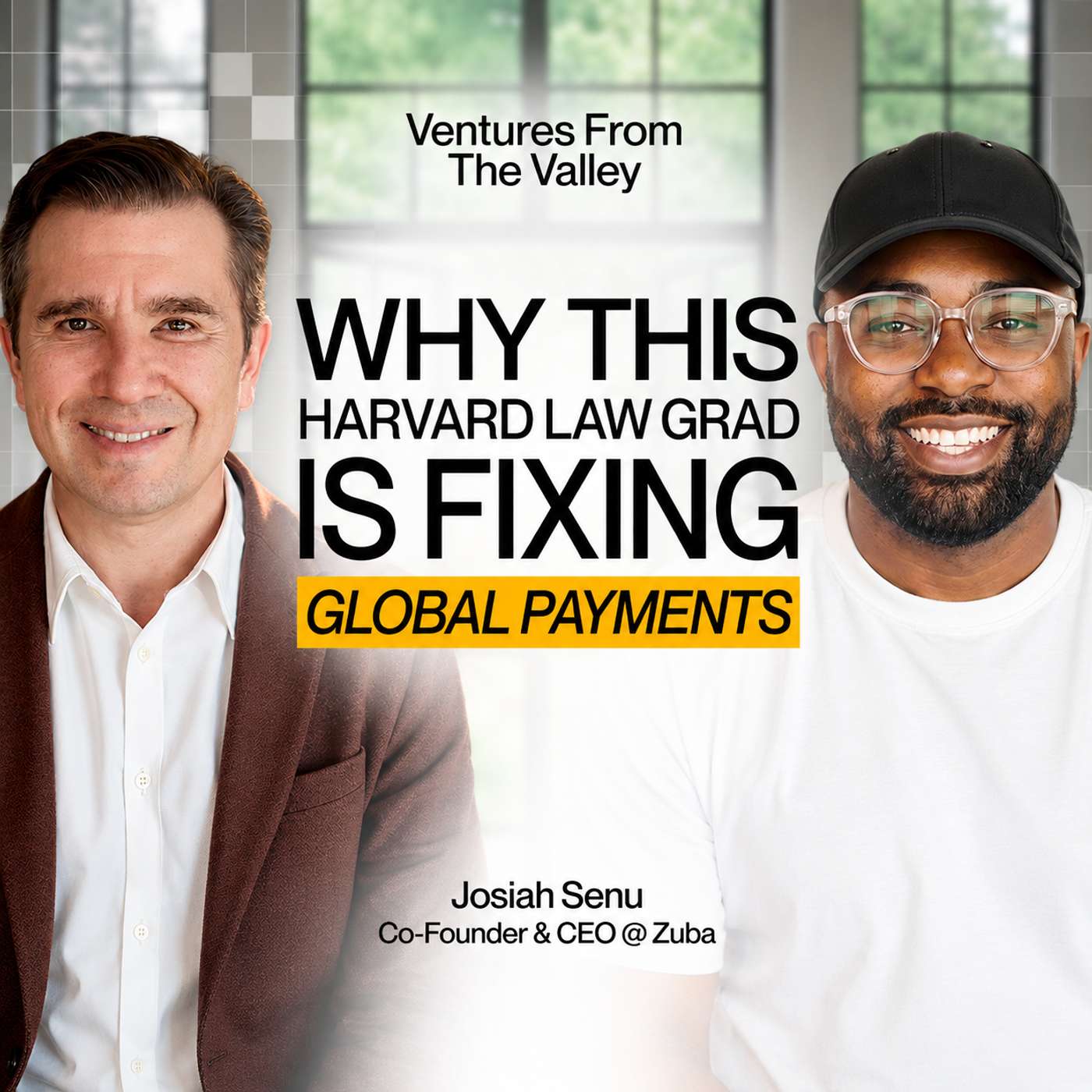 Stablecoins, Africa & the Future of Moving Money | With Josiah SenuVentures from The Valley · on cross-border payments76 / 100
 EP1036: Why AI-Ready Infrastructure Matters for GCC BanksIBS Intelligence Global FinTech Interviews · on Financial inclusion75 / 100
 The Secret AI Hack To Recover Failed Payments Forever - Matīss Maliks | Why Not Rely On Stripe & Shopify For Payment Processing, The Hidden Revenue Risks, Why Standard Gateways Fail, How AI Recovers Revenue, Why Global Sales Drop Approvals Rates (#488)Ecommerce Coffee Break · on cross-border payments75 / 100
 How to Scale to 30x: Srikanth Iyer & Vivek Mehta on "Wartime" vs. "Strategic" Growth Code63 / 100
 The Future of Fintech: What Lies Ahead in 2025?63 / 100
 The Growth of Embedded Finance: How It’s Bridging the Financial Inclusion Gap55 / 100
 IoT and Fintech: Pioneering Secure Transactions or Unveiling New Threats?61 / 100
 How Generative AI is Transforming the FinTech Industry70 / 100