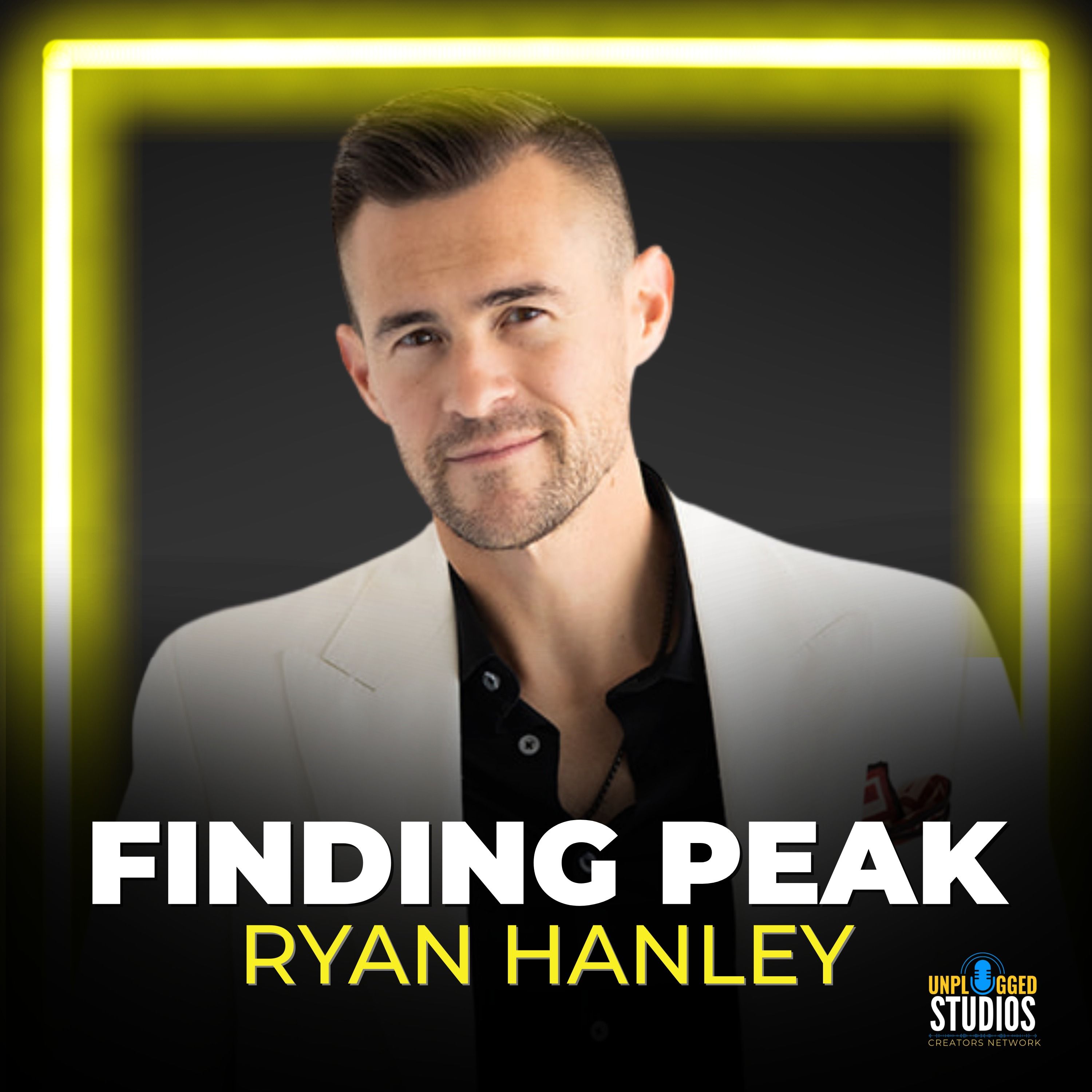
Finding Peak w/ Ryan Hanley · 2026-08-27 · 59 min
Key moments - from our scoring
Substance score
68 / 100
Five dimensions, 20 points each
Guffy Wright, author of 'Attach High,' challenges conventional sales wisdom by arguing that psychological manipulation tactics and pressure-based selling destroy long-term relationships and repeat business. The core insight is that most stalled decisions stem from three types of friction: cognitive (lack of clarity), emotional (lack of safety), and directional (misalignment). Rather than using persuasion techniques common in traditional sales methodology, Wright's V3 framework focuses on creating value clarity, authentic vulnerability, and validation aligned with the buyer's future ambition. This approach works particularly well for high-stakes consultative sales to successful business owners who immediately detect and reject manipulative tactics. The conversation explores how detachment - releasing the need for a specific outcome - is paradoxically what allows top performers to achieve consistent results. Wright discusses how high performers often struggle most with this skill because they're accustomed to grinding and controlling outcomes, making the shift to removing friction rather than adding pressure fundamentally difficult but essential for sustainable success.
Cognitive friction (lack of clarity about what's being offered), emotional friction (lack of safety or trust), and directional friction (misalignment between the buyer's values and the proposed solution). Every stalled deal can be traced to one of these three.
While pressure-based tactics may secure a single sale, they destroy trust and prevent repeat business because the buyer realizes they weren't truly clear, safe, or aligned - making them unlikely to work with that person again.
Detachment means releasing your need for a specific outcome and instead attaching to the client's best decision; it's not apathy but professional empathy that allows you to give genuine advice without commission breath, which clients immediately sense and trust.
Professional vulnerability means releasing the outcome and stating what you would genuinely do if you were the client, even if they don't work with you - it's not personal trauma-sharing but rather demonstrating that you're aligned with their success, not your commission.
V3 is Value (create clarity by co-anchoring your expertise to their future ambition), Vulnerability (release the outcome and authentically signal you want their best decision), and Validation (attach to contribution and detach from comparison or external validation).
Our reviewer’s read on each dimension, with quotes from the episode.
The episode contains several substantive frameworks and principles (V3, friction types, detachment, validation-as-strength) that offer genuine intellectual scaffolding for decision-making. However, delivery is often padded with personal anecdotes, throat-clearing philosophical asides, and repetitive emphasis of core ideas. A B2B operator would extract valuable concepts but must wade through considerable filler to reach them.
Every important decision, very important decision that you have, that you're stalled, that you know you should be doing, but you're not, comes down to three types of friction. First is not clear, so it's just cognitive friction, not clear. Second is a big one, Emotional friction, not safe. And third is directional friction, which is either not aligned or aligned.
Friction is not failure. It's just information.
The V3 framework (value, vulnerability, validation) is positioned as novel and attempts to move beyond typical sales manipulation advice, which is commendable. However, the underlying psychology (safety-seeking, decision avoidance, loss aversion) is well-established behavioral science. The reframing of 'validation' as 'making strong' is clever wordplay but not fundamentally new. The overall originality is moderate - not recycled boilerplate, but incremental synthesis rather than breakthrough thinking.
Validation is not agreement, but I'm making you strong in that decision.
This V3 does not compete with any sales process. It completes it.
Guffy Wright demonstrates genuine practitioner credibility: 25+ years in high-stakes consultative sales (insurance advisory), built a substantial book of business, trained sales teams, and authored a book embedding his methodology. He speaks from lived operational experience, not theory. His willingness to discuss failure (4 years of stagnation) and personal struggle adds authenticity. Caliber is solid for a B2B sales/decision-making episode, though not a household name or mega-operator.
I'm in the high stakes consultative sales business, selling to very successful people.
I had these four years of stagnation, which I argue is worse than failure, because failure gives you clarity.
The episode lacks concrete metrics, named case studies, and verifiable data. Guffy references his personal experience, his book, and one anecdote about a gym encounter (helping a family at Christmas), but no specific client wins, deal sizes, timelines, or measurable outcomes. The framework is conceptual; application examples (daughter's plans, vacation compromise, Elon Musk analogy) are illustrative but not evidence-based. This is a weakness for operators seeking actionable benchmarks.
I met somebody at the gym that we had helped their family for Christmas. It wasn't a lot of money. It was, it was like a hundred bucks or something that a lot of families gave to this one individual in their family.
I sell more new business in six months than I sold than my whole book of business was during those four years of stagnation.
Host Ryan Hanley demonstrates strong question quality and genuine curiosity. He asks clarifying follow-ups ('What does vulnerability actually look like?'), pushes respectfully on tension ('How do I marry detachment with ambitious goal-setting?'), and shares personal context to deepen dialogue. He challenges softly but effectively. However, some exchanges meander into long personal tangents (baseball story, golf anecdote) that pad time without advancing core material. The host doesn't aggressively probe contradictions or ask for hard metrics.
What constitutes reasonable and rational vulnerability? That. And obviously your relationship with that person matters, but let's say it's someone who you're meeting in a business context.
How do I set a proper target or goal when I am detaching from these outcomes? Like how do I, how do I marry those two concepts together?
Computed from the transcript - who did the talking, and the words that came up most.
I help founders & executives generating more than $10M in revenue find their Easy Mode. Start here: Watch this episode on YouTube: Pressure can produce a yes. It can also poison the relationship that comes after it. Guffy Wright, author of Attach High: How Elite Advisors Remove Friction from High-Stakes Decisions, joins me to explain why strong value still loses when confusion, fear, or misalignment blocks the decision. His V3 framework gives advisors and leaders a better sequence. Value creates clarity. Vulnerability creates safety. Validation creates direction. The point isn’t to corner someone into agreement. It’s to clear the path toward an honest decision. We talk about “commission breath,” why trust alone can’t fix directional conflict, and why detaching from an outcome is not the same as caring less. Guffy calls detachment the highest form of professional empathy because it demands that you attach to the client’s best decision instead of your own payout. The conversation moves beyond sales. I share the baseball lesson that taught me to stop pressing.
Transcribed and scored by The B2B Podcast Index.
Speaker A: What is it about us at our core that making decisions is such a scary proposition?
Speaker B: Our brain has two primary functions, safety and energy management. So because of that, we really fear making the wrong decision. But ultimately, friction is not failure. It's just information. And detachment is not apathy. It's the highest form of professional empathy. Velocity is not speed. It's directional movement once friction is removed. I almost quit this book because I didn't want to put myself out there.
Speaker A: Dude, I'm so glad you're on the show. You guys had me on your show, and then, um, you asked me to blurb your new book, Attach High. I absolutely love it. I love it for so many reasons. And frankly, you know, I just had to stop myself in the green room before we went live because I was, like, getting into it. I was like, wait a minute, we need to talk about all this stuff on the show. So, um, I want to. I want to start with. I want to start with this idea of we humans are afraid to make decisions. I want to know why you think we're afraid, and what does that actually mean for relationships, business development, sales. But at first, just why are we afraid to make decisions? Like, what is it about us at our core that making decisions is such a scary proposition?
Speaker B: Our brain has two primary functions, safety and energy management. So because of that, we really fear making the wrong decision. We love autonomy, we love freedom, but we don't love making the wrong decision. And quite frankly, all of us have been burned by making the wrong decisions in our life. And we know the cost, we know the price. Um, the older you get, a lot of times the less risky, um, you want to be because you've been hurt and you've been challenged. And so it's really an important distinction. Um, we take 20,000 breaths a day, Ryan. We make 35,000 decisions a day. So now, not all of them are high stakes, high pressure, but we are afraid to make decisions because we have it pretty good.
Speaker A: How do we get through the day then? Like, what is that? How does that operationally impact the type of decisions we make and how we make decisions?
Speaker B: Well, most of us wake up in default mode. The same. The same thoughts go through our brain every day. Um, how we start our day is crucial. But there are decisions and things that business owners and people want to make, and they know eventually they have to make, but ultimately they wait and they stall and. And that was the most frustrating thing for me in the insurance advisory business was when value was clear, when I was clearly better, but yet value didn't move and I didn't win. That was the most frustrating part of sales. And so I spent a lot of time, a lot of painful time, a lot of personal journey time and learning why decision, not just why decisions stall. Cause there's a lot of, um, behavioral science books out there that I respect and written by people that are great. But there's not a lot out there that teach you how to remove what's in the way. And what I teach is in the way is friction. There's three different types of friction that we can, we can get into if you want. But ultimately, friction is not failure. It's just information. And once you look at it that way, you don't try to persuade, convince, or influence people to make a decision. You just remove what's in the way and let value go to its natural conclusion.
Speaker A: So what are those three types of friction?
Speaker B: Every important decision, very important decision that you have, that you're stalled, that you know you should be doing, but you're not, comes down to three types of friction. First is not clear, so it's just cognitive friction, not clear. Second is a big one, Emotional friction, not safe. And third is directional friction, which is either not aligned or aligned. Um, you can trace every single stall decision to one of those three things in your personal life and also to a business deal that you are trying to guide someone through a decision. It is stuck in one of those three sequences. And so when you ask the question initially, like, how do we make great decisions? You flip those and it creates the environment to actually make a really good decision. The opposite of confusion, clarity. The opposite of, uh, fear or emotional friction, safety. And then the opposite of directional friction, which is alignment or misalignment. A, uh, no is great too. Um, and so this decision making framework that the book has, it doesn't get people to a yes. It gets people to either alignment or misalignment by just removing the crap in the way so they can make an excellent decision for themselves.
Speaker A: So that was one of the first things that I picked up in reading the book, was that so many sales books and the number of sales books that I've gotten two chapters in and have gotten right in the garbage because they're all, it's all like these, it's all these like, manipulative. And I don't even want. I'm not even saying manipulative in a bad way. Like, I'm not using that in negative context. But it's like these psychology games that you play. And I'm not saying psychology Isn't part of it for sure it is. But like so much of it is that's taught is like, say this and then here's a 3 response, you know, uh, uh, waterfall and whichever one. And then, then here's the objection, manipulation over that. And you know, and like it's all about just convincing this person to say yes. No part of what you present in this book comes off in that way. Right? Especially this idea of we're trying to get to alignment or not alignment or figuring out where we are on the alignment spectrum. Right. Like that is so much different. Why not? Just, why not? Isn't the book just filled with psychology hacks and manipulative tactics?
Speaker B: Because I'm in the high stakes consultative sales business, selling to very successful people. People that, um, if you try to manipulate or convince or if you have commission breath, they'll just walk you out the door. And because of that I thought, okay, there's a sales process. And like you, I've read all the sales books and some of them are great and written by people that I respect. And I've written buyer psychology books and behavioral science and I kind of came up with, well, there's a whole decision layer in there. What if you're just the most valuable in what you actually have to offer is better than what they currently have? Why can't. These are human beings that are very smart, run multimillion dollar businesses. Why not just remove all the friction through the V3 framework that I lay out in the book and let value go to its natural conclusion? Um, and it's worked well in my personal life, but that first V is value. And how do you create clarity with value? Is the right, is the right framing for when you're guiding someone through a decision or you're talking to a business owner? Because everybody values different things at different times for different reasons. I mean, if I asked you, Ryan, like, hey, you want $10 million of cash or an 8 gallon bot, 8 gallons of water, you're going to probably say cash, uh, money. Well, what if you're in the desert for seven days now? What do you want? Yeah, you want the water. Drink of water. And Elon Musk said the same thing. He became a trillionaire. They said, how do you feel? He says, I feel great, but if I was on a desert island, I'd rather have a cup of soup. Right? And it's the same kind of thing. So how do you know? How do you get there? And an exercise I do with our salespeople here that I train for Them to help understand how to gain clarity together with a buyer is I say, think of a dog, what kind of dog are you thinking of? When I say think of a dog, Ryan, and the listeners think of a dog, what kind of breed of a dog are you thinking of, Ryan?
Speaker A: I just met a beautiful golden retriever the other day. That's the first dog that popped in my head.
Speaker B: You're a golden retriever. I'm thinking of a Great Dane. Your listeners might be thinking of a hot dog for all I know. Right. And the dogs that they have. So now I just said dog, we, and there's cognitive friction between us. We're not talking about the same dog. So how do I remove that? You know, there's, there's a couple ways to do it. But if I said to you, think of a Dalmatian with a red collar and three legs scooting across a park, now we're thinking of the same dog. I didn't have to say a bunch. I didn't have to over explain and bore people. Um, with my company and my dog and all this stuff. Now we're on the same page. And then soon as you get on the same page, it's the, the best way to guide someone through a decision is ask them what they value in the future. They'll tell you everything they value. If I said, ryan, what does success look like for you in three years with the book you're coming out with, with your podcast with your consulting company, tell me what success looks like. You would tell me everything you value. And then if I actually have value, I would tie my expertise to that. And in the book I call it co anchoring. Now, we're anchored on your future ambition. Co anchoring means tying your expertise to that individual's or business's future ambition. Now if I'm not the guy that happens to help people consulting businesses or podcasting, uh, or even writing a book, if I were, if I were, I could tie my value to you. That would release a lot of cognitive friction and then we can start talking about, um, the next V and keep going down that decision layer process.
Speaker A: The thing that I love about this, ah, this, I'm going to call it a methodology. Just as a broad stroke philosophy. Everyone who leans on that, I know in sales, who leans on psychological hacks and manipulation again. And uh, guys, I'm not saying manipulation negatively. I'm saying using certain pressure points inside people's decision making process that if used properly, you can exploit, yes, you can sell that way and yes, you can Be successful, in my opinion, with one sale that way. But what you can't get that way is two sales, right? You can sell me one time. You. You come in and you wedge me and you bu.
Speaker B: Bu.
Speaker A: And you make me feel like crap for making my previous decision. And you know, and then you, you build me up on. On your specific thing and you, you, you know, I mean, you like, you. You get me to. To. To buy in and you know, you waterfall my nose and all this kind of. And now all of a sudden I'm like, okay, Guffy, I'll do it. Right? I'm in, man, right now. And then. But then it's not what I want to your point, like, I wasn't really clear on what I was getting. It wasn't really aligned with what I wanted. Right? Like, maybe I didn't feel completely safe, but. But man, you just. You put a bunch of tumblers in place and I got me to say yes. What I'm never gonna do again for you is say yes again. Because I'm gonna go, you know what? Like, I like, Guffey's a good guy, but like, uh, you know, I just, I don't trust him to like, do the right thing for me. You know what I mean? Like, you know, so it kind of feels like, sure, if you want to go down that path, you can be successful in sales with one sale using these, like, we'll call them, you know, Instagram ninja tricks. But if you want to be, to your point, an advisor, if you have any intention of retaining the business, if that's important to you, these things do not work twice. They just don't. And that's what I feel like. None of these sales books talk about. They talk about new business, one time purchases. Almost none of them talk about repeated sales, value driven sales, relational things where you want that person to be with you from 10 or 20 years. Not just that initial purchase. Does that, does that align with what you're talking about?
Speaker B: You gave me goosebumps, Ryan, because that's exactly what my intent was for this, for this book. And you know, the next voice is so v. It's called V3. Value creates clarity. The next V is vulnerability. And that expands and tests the safety that's already there. Okay, and you just, you just talked about that a little bit. And we talk about trust. And trust is foundational throughout decision making and throughout V3. It enables movement, but it is not the currency. It does not move decisions. I had a client call me one time and say, a past client. Now I Said, hey, we've done all these things for you. Um, xyz, aren't you happy with this? He says, guthy, I trust you. I'm just more aligned with this other direction where they can take my company. And that's when I had the aha moment when decisions actually get made. Trust is crucial and foundational. But if I want to build a house in New York and my wife wants to build one in la, what, we got problems, right? We can trust each other, but if we want different directions and we want different things, um, we have problems. And so now vulnerability and decision making, it's not just, I call it in the book vomit vulnerability. You don't just walk into a meeting and say, hey, Ryan, I just want you to know I'm here to do what's best for you. That is garbage. They'll smell commission breath on you. And that is car salesman stuff. Even if it's done genuinely, you have to earn the right to be vulnerable in that room. And so that's why first you have to present value, and then, yes, the best line you can say in vulnerability. And I've watched this so many times in meetings where I can actually see the nervous system relax, and it only works if it's delivered authentically, is if you say, hey, Ryan, this is what I would do for you. This is what I would do if I were you. Even if you decide not to go with us and mean it when you say that, that really expands, uh, and tests the current vulnerability between two parties. And then soon as you do that and you really serious about it, you're. You're doing it authentically, man, some. Some pretty amazing stuff can happen after that.
Speaker A: Can you go into vulnerability a little more? Because, uh, again, speaking to alignment, right? Like, that can mean a lot of things. Like, I could tell you about, you know, hey, Guffy, I got $50,000 in credit card debt. And, you know, I, you know, I got this thing and, you know, my wife and I are about to get a divorce. And now you're like, there's like personal. Sometimes people take vulnerability too far. Like, what is in this context in a business relationship and trying to, um, you know, uh, create a deal between two people will say, whether that's a business development or whatever we're trying to do, sell something. Um, what, what constitutes reasonable and rational vulnerability? That. And obviously your relationship with that person matters, but let's say it's someone who you're meeting in a business context. Like, what is that? What does vulnerability actually look like? How does that sound.
Speaker B: This is a great question. And I think some people get confused in decision making and helping and in business because, like, I love reading Brene, uh, Brown and a lot of her stuff on vulnerability and a lot of business leaders, and I think they're right and it becomes the most powerful force in the room if authentic and aligned with the business owner. But you have to provide value first. Um, in decision making, it's about releasing the outcome. That's vulnerability in decision making. So if you have a daughter that's trying to make a decision and go to college, but you're want to make sure she goes to, you know, usc, well, that's, you're not being very vulnerable with her because you're trying to manipulate her into where she wants to go. Um, it's truly releasing the outcome. And I'm not a natural empath, Ryan. Like, um, this is the skill I had to learn. And the way I do it is before I have any meeting and even before I got on this podcast, I just told myself, I'm here to give value. I'm here to do the best I can. And regardless of the outcome, I get to meet another human today and talk about stuff I enjoy. That's vulnerability. That's being able to release, um, the outcome. And the skill I call it in attach high in the book is called detachment. And detachment is not apathy. It's the highest form of professional empathy. It's when you attach to the client's best decision and detach from your individual commission. When you do that, you can become elite, because you can never be elite in sales or decision making. If you need the commission and you have commission breath if it makes you desperate, you could never be elite ever.
Speaker A: Dude, you know, you know what? I, so I, I could talk about this topic all day. I, um, I learned this firsthand actually, in my sports career. Um, I was a, uh, three sport athlete in high school, and football and baseball were in two best sports. And, um, I kind of realized that even though I was probably better at football, I, I didn't, I wasn't going to go pro. And the idea of having more head injuries in college, you know, with no chance of ever making any money off of my football career, I started pushing towards baseball and your junior. And your, your junior year is like the most important year for you in high school, um, when you're trying to play sports in college. Okay, so my junior year, I did what anyone who doesn't know what the heck they're doing does. I just pressed so hard and you know, I'm a starter my entire career. I'm, um, catcher, I'm, um, you know, captain of all these team. And my, I couldn't hit the, I couldn't hit a 50 mile an hour fastball if they lobbed it underhand and put it on in tee for me that year. Like, I just, you know, because I'm just pressing and pressing and I'm angry and I'm frustrated. And um, that summer I have, I had these two, um, coaches, uh, uh, probably the two best baseball coaches I've ever had. And they, they coached an American Legion baseball team which was like the top level summer ball in my area was this uh, Legion league. It doesn't really, it doesn't really exist anymore, but it was the thing back in the 90s. Uh, okay. And I show up and I'm just, I'm a wreck. Yeah, I just had the worst high school season I've ever had. I'm like, I'm screwed, you know, and, and this guy kind of grabs me and this is the kind of guy, and I promise there's a point to this story. This is the kind of coach who, you know, he would have a, uh, a lit cigar in his mouth down at third base while he's coaching third and the first base coach is ripping heaters out behind the dugout in between innings. Like that's the day that we're in. You know what I mean? And these guys are gruff, old school baseball guys. And he looks at me one day and he goes, what makes you think you have any control over what happens? And I go, what do you mean? He goes, you have, he goes, once you make contact with the baseball, he goes, you have no control over what happens. Zero control. He goes, all you can do is hit the baseball. He goes, after that, everything that happens is out of your control. Every single thing. He goes, you need to. His words detach from the outcome. And it took me that summer to figure it out, but I showed up my senior year and I had the best season of my career because I literally. And my friends would make fun of me like no one understood, right? I'd be like, I would strike out and I'd, I'd turn around, I'd tip my hat to the catcher or, you know, tell the catcher, hey, you got me that one. I'd walk back, come back, you know, I mean, like, not that I didn't want to be successful. Don't get me wrong. I was at this point after the junior season I had, I needed to have a Good senior season, or I was in big, big trouble. And, um. And it was just simply. I just. It's weird. It was like I wanted it so bad, but I also didn't care if that makes sense. And all of a sudden, it was like the skies parted. The ball became the size of a beach ball. Everything moved in slow motion, and it was like I couldn't miss. And, like, from that moment. Moment on, I've kind of had this thing inside me detaching the outcome. But, like, this is such a hard skill. I mean, this took essentially a year and a half of my life to. To. To. To, like, figure this out about the thing that, at that time was the most important thing to me, and this was the most important thing in my life is all I could think about. And, um. So, like, how does somebody who's sitting here and I. Guys, I apologize for that long story. But it felt relevant when I started it. Um, my point is, like, okay, someone's sitting here and they're going. I've heard people say this before. I trust Guffey. I know he's successful. You know, I kind of trust Ryan. I know he's a little crazy, but I'd love to get this, like, how do you start to develop this skill, this. This idea of detaching? Because I think it feels so foreign, particularly to ambitious people.
Speaker B: I was just going to say that it's the hardest for high performers because, um, we've been able to grind and get outcomes. We've been able to outwork other people and get outcomes. We've been able to do a lot of that stuff. And so when you can't, it really, uh, is difficult. And I'll share with you. You just talked about the whole thesis of the book. Attach high, detach low. How do you do that? That's what the game is. That's what the whole game is. Especially, um, in decision making. I took me four years. You're smarter than me. You took you a year and a half. I was in four years of stagnation, which I argue is worse than failure, because failure gives you clarity. Failure has a villain. It gives you information. Stagnation's like a leaky tire. You have to fill up every three months. And you always wonder why your car's swerving to the right. Okay, So I was in this mode. Cognitive friction. I, uh, was experiencing them all. But a lot of times, it's V3 in reverse. We distort value. We value the wrong. We are not vulnerable. We don't tell our spouse or anybody. Around us how bad we're suffering. And then the third V, which is validation, which I want to spend some time on with you, because what we think is validation is totally not true. But we seek external validation, which is garbage. And so how do you attach to contribution and detach from comparison? How do you attach high and detach low? There's no easy way. You have to do the work. You have to experience pain, and you have to take that pain and ultimately create something beautiful. Um, which I know a lot of top performers eventually do. But I wish if I could just collapse time like now, I sell more new business in six months than I sold than my whole book of business was during those four years of stagnation. And it's because of what you said. You have to do addition by subtraction. Don't add more things. High performers like to add things. Okay, if I just do this, I do this. Velocity is not speed. It is directional movement when friction is removed. That's what velocity is. All the top performers listening right now. Velocity is not speed. It's directional movement once friction is removed. So what's one thing in your life right now you need to remove the first thing you thought of? Go do it. Remove it. There's a lot I had to remove that was in the way. And ultimately, that's when I started having velocity in my business and in my. My personal life. Like those four years of stagnation when I thought I was so concentrated on my high performance and everything was about me. Like, I totally missed my wife's postpartum depression. 100% missed it.
Speaker A: Right.
Speaker B: Totally missed other things where it's just like, that's when you're really anxious and you feel like your stuff's more important than everything else. Right. And so, um, yeah, I'm passionate about attach high, detach low for a lot of reasons. But you asked the question, how do you release control? There's no easy way. You have to determine what you value, and you have to be vulnerable to go do it. And you will receive validation, which means to make strong. That's what validation actually means, to make strong.
Speaker A: First of all, you're like a walking the source of one liners that are incredible. And I love this. Um, velocity is not speed is. Is amazing. And the reason I like it is because. And this is. This is one of my, um. Actually, I was just talking to my kids about this. Like, we all have misses. I was just talking about them on the driving range. So my younger son has a baseball tournament this week. And so he's not going to any camp, so he's home with me. He was bored, so we went over to the driving range, okay. And he had a really, really bad time over there. And basically we were. I. I was trying to explain to him that, like, you know, he. His misses, he sways, he. He lets his weight move in his swing, okay? So if you're not a golfer, don't worry about it. My miss is exactly the same. And I said to him, dude, like, we all have things, like, for some people, we're talking about golf. It might be your setup, your alignment, right? For me, it's my sway. If I. I get a little anxious or I'm not concentrating, I start to sway, the ball starts spraying, okay? I was like, so we all have misses. My miss in business is that when I feel. When I am too attached to the outcome or I do get in that place of stagnation, I. I just start expanding. Well, maybe I can do this, and maybe I can do this, and maybe I can do. And Now I got 17 things going on, and I'm shitty at all of them. And now you're like, what the hell? Why am I not good at anything? What's wrong with. You know, I mean, like, all these crazy narratives start going in your head. How do you like one? Maybe what's your miss? If you. If you have one, like, thing that you have to watch, and when you feel that coming on, right? When you feel that friction entering and maybe impacting your velocity, what is your method for recalibration, for. For realigning yourself to. To this methodology? When you feel yourself getting off the.
Speaker B: My first word to myself is always my breath. That's the first thing I do, is I take a deep breath and I think. And then I have to go back to, okay, what do I value? What am I designing? Where is this? Ultimately, do I believe it's going to lead? Because confidence feels amazing. Courage feels terrible. And so you have to be courageous in order to say no to a lot of stuff. Because I think I could monetize a dozen things right now. Uh, I really do. And it's like, okay, how do I go back and realize what I actually value and why? And so I take a breath and remember, okay, this is what I want to do. This is why. And then you have to have the courage to feel terrible and go do it. Um, I almost quit this book because I didn't want to put myself out there. I didn't want to do a lot of. I hate asking people for help. I had no idea how bad I hated that until this book even reaching out to you and asking you for a blurb. You know, I delayed a month, right? And I just knew. I knew it. Um, but you have to be courageous to attach high and detach low. We all know what will bring us joy, fulfillment. Um, we just have so many things, so much friction in the way that we try to force our way around it, manipulate, persuade ourselves, tell ourselves lies, man. All progress starts by telling the truth. So, um, that's where I would begin. The truth of what you value and go from there.
Speaker A: Do you have a practice for it? Uh, and I'll give you an example. Like, I don't journal all the time, but when I find myself in a spot where I'm unhappy or I feel misaligned, I will journal for a season or for a block of time, like, and try to do it every day. And I find that just getting the ideas and it has to be handwritten, voice to text into something doesn't work like, it has to be handwritten. I find that helps me really clarify what those things are. Um, and. And where I'm missing at. Do you have a practice for staying on top of this? Or is it kind of like where. It's like a tool belt kind of thing?
Speaker B: I do have a practice. And then every once in a while I get really misaligned and I'm out of whack, right? And then I gotta. I'm like, man, I thought I was doing this. What happened? Um, gratitude and curiosity are the two biggest unlocks for me. So every morning I wake up and the first thing I think of is, I wonder what amazing things I'm going to learn today. And then two, Wow. I am so grateful, um, for all the wonderful things that God's blessed me with in my life. And how can I contribute, um, and add value to others to be more useful to others? If I stay in those two lanes, I seem to do pretty well, But I get out of whack a little bit over time. Things happen. You got to run your kids here. You got to do this. Then all of a sudden, a client leaves you and you get fired. And you could have, huh, issues in your marriage and political stuff at work. And, man, that's when it gets really tough. But those practices are crucial. So for me, um, gratitude and curiosity are undefeated.
Speaker A: Yeah, very similar. Very, very similar. Um, gratitude, I think, is universal. Um, not everyone is curious, which I think is okay.
Speaker B: Everybody thinks they're curious, though. I've never heard someone say yeah, I've never heard someone say, you know what? I just, I'm not very curious. Yeah, everybody thinks they're curious, but they're not.
Speaker A: Everyone thinks they are. I, I agree. Uh, it's a very interesting thing. And, and, and I, I'm one of those people who thinks that I am. I think this podcast hopefully proves that I, that I am actually curious because it's why I do it. But there's something that you said in there that I, I really think is important. And, and I know this may not sound like a sales business growth leadership kind of thing, but, but I do think it's paramount because if you're, if you, as the leader or as if you're a salesperson, whatever, like, even if you're the leader of your household, like, if your mind isn't right, it is, it is almost impossible to execute all the tasks that you need to in order to be successful either in your personal life, your business life, etc. And you said, you know, you wake up and you're excited for who you might meet or what you might learn or what you might experience. I have found, and I've done 500 plus episodes of this show. I did 500 plus episodes of my insurance show back in the 20, 2015 to 2018 range. Like, I've done thousands of podcasts, thousands of interviews, and I can tell you, even some of the most high performing people that I've had on the show don't wake up with that, uh, mentality that you did. Is that, is that born in, is that something you developed? And if it's something you developed, why, like what, what, what did you learn? What did you have to go through to decide that you wanted to wake up every day and be excited for what the day would bring and curious about all the various things that you could experience?
Speaker B: Yeah, the first one is, is on gratitude. And during my four years of stagnation, which really ultimately, um, was the first time I ever felt real depression. I met somebody at the gym that we had helped their family for Christmas. It wasn't a lot of money. It was, it was like a hundred bucks or something that a lot of families gave to this one individual in their family. And I did some small talk with him at the gym. Hey, how was your Christmas? And he looked at me teary eyed, said, guffey, it was the best Christmas of our family's life. And here I am with a good sized book of business, um, a good house, great family, and I'm miserable. And I thought, what is my problem and my biggest problem was a lack of gratitude. And that was a big unlock for me. That's gratitude. And that's why ever since then I don't leave my bed until I think about two or three things I'm grateful for. I will not leave my bed in the morning. You know the famous thing make your bed, I don't make my bed, I don't care about that. But I do think about two or three things that I want to be grateful for every morning. And then the curiosity thing for me was I had this, these self limiting beliefs that nobody could do X amount or nobody could do this or I couldn't do that. And then soon as I removed those, I realized and I went and accomplished a couple things. I thought what was the thing that helped me do that? And initially it was curiosity. Well, why is that impossible? It's impossible. Unless what? Unless I do this. Unless we do this. Why couldn't we do this? It's about challenging the status quo. And so the uh, that was kind of more reverse engineered. But that's how I came to the gratitude and curiosity. For me, I love it.
Speaker A: I, I'm an enormous. So one of the mechanisms that I use in my life almost every day are reframes. I find that reframing things and just as thought experiments, right? And, and it's funny, I, I've met and worked with different people in my life who sometimes find this very frustrating about me. But it's the only way that I configure like I approach everything like I'm a dummy. And I don't mean that like dumb like low iq. I mean dumb like even if I've done it a thousand times and have a pretty good feel for what the answer might be. I approach every new situation as if I have no idea. And I've had people go like, well, isn't that a waste of time? And I'm like, well, every scenario is different, right? Like you could look at two clients that are in your quote unquote sweet spot, right? Large, whatever they are. You know, I'm not 100% sure what your book is, but let's call them, um, large manufacturing shops that you really want to work with. And on paper they look exactly alike. And you could go to one of them and just your natural process knocks it out of the park. The process you've used for 20 years. And it just crushes and you get that client and you're feeling great and beaming and uh, hair's looking good and your shoulders are back and you walk into that next one and it bombs and you're like, what the heck just happened? And to me, that happens because taking process or stuff like that out and some of the stuff we've already talked about, I think right at. Before you even go in the door, that happens because you went in assuming you knew the answer before you got there, like you assumed. And so, you know, one of my big reframes is always like, like, especially when something feels impossible. It's like, well, and this is going to sound trite, but, but most people don't think this way. Let's just assume it is possible. Let's assume you can, you're, you've, you've never written more than $250,000 in new business sales in a month and you want to do a million. And you're like, I could never do a million. I don't have an assistant and my company doesn't give me enough marketing dollars. And, you know, I mean, you come. Let's just assume that it's possible. Let's assume that next month you're going to write a million. What does that look like? And, right. And then you, like you said, you work better. So what, do you have any reframes or mechanisms or thought experiments that you use, especially considering this, this V3 process that you have, et cetera, that you found to be, you know, lead to success over and over again? Yeah.
Speaker B: And it's just what you said, it's impossible. What else is possible? It's. I say it's impossible unless, dot, dot, dot, and then I start writing after that. Um, yeah. So I don't have much more to add to what you said other than I, that that's all I do is just say it's impossible unless. Or what would make it, what, what would have to be true in order to obtain X, Y, Z. I like.
Speaker A: What would have to be true? I like. Um, another one that I like is pretending that I'm someone else. I'll be like, what if I was Elon Musk? What would he do? Well, he would go buy a cot and he would live in there. Okay, well, I don't want that life. So that's not. Ah, so, okay, so I'm not willing to go is. And the other thing I find, dude, is it kind of like these thought experiments help you understand who you are. Right. Like, I love Elon Musk. I love him. I, I, I take the good and the bad and, and thankfully, I was born, uh, enough of a rational human with nuance and perspective. That I can understand that he's imperfect, right? And maybe everything he does isn't, isn't like right down the middle of the way people want. But in general, I love him as a businessman. That being said, I've done thought experiments as Elon Musk and I, I literally learned I don't want to go as far. I will never go as far as he. He will go, right? Most people wouldn't. The vast majority, 99.999% of people wouldn't go. But I'm one of those, uh, one of those people. So for me, and this is the part that I, where I think people get messed up, especially with going all the way back to detach from the outcome. I can't expect Elon Musk outcomes. If I'm not willing to. To go as far as Elon Musk is willing to go in his business, if I'm not willing to like, basically not have a relationship with my kids, not have a relationship with a spouse or partner, if I'm not willing, if I'm not willing to live in a, uh, sleep on a cot in the, in the floor of, of whatever business I'm working and work 24 hours a day on, you know, Adderall and Mescaline, then you know what I mean? Like, I'm never going to be Elon Musk results. So why am I trying to hold myself? And I think, you know, we, we sometimes like, uh, especially like newer producers, if we're talking insurance industry stuff or really sales in general. New, newer salespeople, they'll look at someone like you and the results you're having and they'll go, well, how, uh, what's wrong with me? How come I'm not getting guffiers? Have you built 25 years of, of relationships like Guffy has? Like, have you. Have you cultivated them the same way? Do you. Like, have you. Are you willing to go as far as Guffy and to think through and literally build your own philosophy and write books on it? So it's hard coded in your brain, right, to be as good as him. Like, you know what I mean? And, and I feel like if you're not willing to go that far, that's okay. But like now at least you know where you can start to, uh. Because if you. This is where I'm trying to go with this and I'm. I'm butchering this. But, but here's what I'm trying to ask you. Yes, we want to detach the outcome, but outcomes are still important. I think people have maybe heard versions of that before. And the part that I think is missed, and I'm really interested from you, is how do I set a proper target or goal when I am detaching from these outcomes? Like how do I, how do I marry those two concepts together? I want to do X in new business, but now Guffey's telling me I need to detach from the outcome to get there. But do I set a reachable target? Do I set a crazy target? Like, like how do I marry those concepts together?
Speaker B: I look at impossible goals and I think that's where I like to start. And I also like to uh, these, these big massive goals. But I also like to think, okay, if I could only work three days a week and I had to double my business or my family dies, what would I do differently during the same time period? And then that helps me kind of understand the things I need to give up and the things I need to start doing a little better. But I do like the massive, I do like the massive goal. I like to attach to, um, like a horizon. It's like an ideal you can never ever catch a horizon you can never, never, you can never arrive. But that doesn't mean you can't improve. That doesn't mean you can't become better. That doesn't mean you can't, um, do more. The truth is, if we attach to the right things in our life, we'll get way more than our little small single minded eyes can see on the outcome. And so I want to attach to the horizon. I want to attach to something higher. Um, I want to truly give value on the spot and to everyone because when I do, it comes back tenfold. So I don't want to limit myself. That's why I don't want to attach to an outcome. And if you are attached to an outcome, you are really, really in a tough spot where your identity is going to get messed with if you achieve it or you don't. Because when you achieve it, guess what happens? Nothing. Nobody cares. And so you look for external validation and there's nobody there telling you you're great. And so I think there are amazing things in our future that we can't even see. We like to think, oh, uh, what could happen? We like to think about the bad part that could happen. But. But yeah, I like to attach to the horizon. And I like to attach high and detach low in every way. Yes. Be passionate. Build a system that can support a players. Of course. Attach yourself to a standard and a system and a process for, for you and your company, that's, that's crucial. But if you don't have a massive ideal goal horizon, big, hairy, audacious goals, strategic vision. That's sexy. Like to me you gotta have both.
Speaker A: This is not my original thought, and I'm paraphrasing a little from the way I originally heard it, but it was essentially, arrival is in the eyes of others. Like, like if you're hyper ambitious to your point, even if you set a goal and hit it, you're still not going to feel like you and arrived. And if you do, you feel like you arrive for a moment and then your goal gets bigger and now you're working again. Right? So, but really what a rival is really just in the perception of other people of you. So you could feel like you're just grinding through another day doing what you do, you know, selling stuff. And to you it's just, I got, I got this horizon out here I'm pointed at and every day I'm working towards it and you know, I'm m not there yet, obviously. And to someone else you're like, holy shit, Guffey, you are killing the game, man. Like, you're everywhere. Your work is so dialed. Like everybody's talking about you. Like in your mind you're like, what? Like, so it's arrival is going to be in the eyes of everyone of some other. The point of that this guy was trying to make was like, arrival is a, is an external perception anyway, so why even consider that for yourself? Like it's, it's not even something you can internally achieve.
Speaker B: Now you're hitting the third V, which is validation. There's external and internal validation. And if you want we can go into the. You talked about a reframe. The third V in V3 is validation. So value creates clarity, vulnerability creates more safety, and validation creates direction. Now validation, I want everyone to reframe and understand what validation is. If, uh, it is not cheerleading, it is not affirmation. Validation is making someone strong. It comes from the, the Latin word validus, which means to make strong, to make value strong. So how do you validate someone and make them strong in their decision? And how do you have internal validation and measure that and feel that as. As opposed to external validation, which is just the applause and comparison of a jury that's never really ever going to judge you? Um, that is really, really hard to do when you're advising someone in making a decision. But it does sound like this. If you were making a hard decision and you had to say hey, Guffey. Um, I have to get with my team first and ultimately decide how we're going to go about this. I would validate you and say, ryan, it's really important that you get with your team. Um, even if I disagree that you need to get with your team to make a decision, validation is not agreement, but I'm making you strong in that decision. I think it's really important you get with your team and you help make this decision. And then as a salesperson, you can try to keep moving the ball down the path without pressure. Like, when do you guys think you want to make this decision? Do you have everything you need to make the best decision for you? Is there anything that you're missing in order for you to feel aligned in this direction with us? You know, those are a lot of different sales questions that people can ask to move the ball. But this is decision making we're talking about, and it's about respecting and then guiding someone through it to ultimately align or misalign. And that's what validation is, to make people strong. My daughter the other day, you know, she's got a boyfriend who, of course I hate. No, he's a good guy, but she, uh, has beliefs.
Speaker A: Uh, tell me you did the bad boys thing. When he showed up for the first time at the door, you're like, I
Speaker B: put the gun sideways to let him know I was serious. No, but I was talking to her, and she was telling me she's got all these plans. And when I first heard these plans, my first thought was to say in my brain, I thought, these plans are never going to work, and they're not very smart. Well, that's not validation. I said, you know, her name is Hallie. Hallie. It's really good to make plans. It's really smart of you to make plans. And then she goes, dad, well, what do you think about my plans? Well, if I would have led with just, your plans suck, all of a sudden, we have now directional friction that goes to emotional friction. And now it's just this bad thing. But because I validated her and made her strong and respected her and said, yeah, it's really good that you have plans. Plans are super crucial if you want to accomplish anything great in life. And she, uh, said, dad, what do you think about my plans? And I said, well, I think some of them are good, but we have a couple misses here that I can help you with. And all of a sudden, she came up with on her own. You know what? This is actually makes no sense.
Speaker A: Huh?
Speaker B: Huh? I said, yeah, I think you're onto something. And it was a great experience because I validated her. So if you value people, you show them value. You're vulnerable with them and you're authentic. And then you validate them. That's how you remove all the friction. So then decision velocity, which what I call it, is when the decision reaches its natural conclusion because there's nothing else in the way to stop it. That's V3. That's how you guide people in making excellent decisions. And you know when you talked about reframing, well, we have to reframe validation because it's not cheerleading, it's not affirmation. It's helping someone be strong. And you may not even agree with them. Think of some of your mentors. Maybe you came to them with an idea, they saw your passion, they didn't want to kill you. They just probably thought, you know, uh, what? They're still kind of confusing here, but he's got passion. Maybe I'll just say, hey, you should go. You should continue and search out this. You should get more clear on this. I think that you could maybe if you tweaked this or that, you could really have something. That's validation.
Speaker A: So one of the ways that we were able to grow my, uh, agency Roguerisk, um, so so fast was we wrote non standard small commercial, so everybody hates. So if you're not an insurance person, just know that every insurance person in the world hates non standard, uh, insurance because it's not like clean and simple. There's like 17 extra forms and like 43 additional hoops you have to jump through. And you know, when I was trying to grow, we had to put business on the books, right? Like I, I started a bootstrapped agency. Like we were, we were revenue in revenue out there, you know, I mean, there wasn' a stockpile of cash to, to make bad decisions or to like, wait for sales. And because no one likes it, it was very easy to obtain opportunities to sell. And so I started calling everybody I knew, people who did, uh, uh, everything from like, premium finance companies who dealt with that side to agencies to carriers. I m mean, all these people. And I just. And everyone said the same thing. Don't do it, don't do it, don't do it. And I said, well, what if I had to, like, what if there was no other option? What if, what if standard business didn't exist? How would you do it? And it was funny, like by, by asking that question. All of a sudden, like, everyone goes, what would Happen is everyone would stop for a second, it would be quiet for 30 to 90 seconds and they go, well, if you had to do it, you know, there's this tool and this process and I heard of this one guy and then all of a sudden, you know, now I, you know, now half our book of business is non standard. And it's a big part of how we're growing as fast as we are. And like, it's funny to your, to your point of what you're saying is like, wasn't a good plan at first, right? And it wasn't a great idea at first. But by continuing to reframe, by continuing to try to uh, uh, find clarity in the idea. And it's why I love this V3. I mean, I think this V3. I was so excited to chat with you today. And it's why we actually. So you guys know, we push the podcast up the recording because I wanted to talk to you. I was so excited. Like, I think that this, I, what I love about this is it isn't like, ask these five questions in a row. You know what I mean? And here's the, the fourth question. You throw this like, objection hook in. And uh, it's like, this is the framework to essentially not just sell more, which you can not just be maybe a great recruiter of people if you're running a company. It's literally a framework for making every decision in your life. And that to me, like, it, it's, it's incredibly valuable as a business tool. But I think even, there's even so much more extended value in it. If you think through this idea of, of value through clarity, vulnerability, which I also. And tell me if you think this is wrong. When I was reading it, I threw in like ego in this area around vulnerability, like removing your ego from the process and then getting this, this validation on the end where, you know, you start to, uh, you start to figure out like, what's real and what's not. You know, I just used the business example. But like, you know, there's all these personal examples where you can do this too. Like it's stupid stuff. Like where do you go on vacation with your partner or spouse, right? Like, you say she could want to go skiing and you could want to go to the beach or vice versa. And I want to play golf three times. Well, you know, how are we going to have a vacation together if you're playing golf three times? And I'm like, whoa, how do we make this work? You know, let's figure out how we, let's, let's talk about what, you know, it's so much valuable in that way because now you can adjust to every situation versus I have to find this right situation to put this right process in. Right. Is that, is that kind of the idea behind this, is this becomes a more universal way of operating versus just, you know, if I want to sell this widget. Here's the system in the set of questions.
Speaker B: Yes, I like to say this V3 does not compete with any sales process. It completes it. So you can layer it in any sales process that you have in any decision, um, you know, environment that you have when other humans are involved. And so, yeah, that's the goal. It's definitely going to, I think first, um, make its way through the advisory circles first because that's where I have the most credibility. And then from there, entrepreneurs, business owners, you know, anybody that's really, really cares about business acumen and emotional intelligence is going to dig this book because it's going to challenge your way of thinking in some ways, but it's also going to call you to attach to the things that will actually bring you joy and will help your identity and live a more fulfilled life. Um, and I know we were talking off air a little bit, but the title of this book came because. Came out of grief. You know, my dad, who was, um, a business mentor more than just, uh, a father, a friend, we enjoyed hobbies. He died and after about almost a year after his passing, I had this stagnant relationship with him because I didn't want to let go what we had. I had accepted his death, of course, but I didn't want to let go of what we had. But I felt like I was drifting away because he had passed away. And so I thought, okay, I need to attach high to a living version of him. Someone that's guiding me and helping me make decisions today. And I need to detach low from an earthly stagnant relationship. And so this book was born a little, a lot out of grief. And part of it is how he helped me make decisions in my life. And so whether you had an amazing dad or not, um, you know, that's okay. You can still be an amazing dad yourself. And this book will show you how to help your kids make decisions, let alone business owners and people in high, high stakes decisions. And so I'm really proud of it in that way. It's going to put some velocity, even more velocity behind my dad's legacy. Um, but yeah, that's, that's ultimately what I want this book to do, I want it to help the advisory space, help people make great decisions, but put philosophy behind my dad's legacy because, um, he was an incredible human being.
Speaker A: Well, one. You should be proud of this book no matter what. It's fantastic. Yeah. And. But more than the book or completing the book as a project, the ideas in this book are. These are timeless concepts. And it's why again, it's why I was so excited to talk to you. And I know I've said that a couple times, is like I read a lot and I, I'm one of those people who, you know, if I ever had like a financial consultant come in, they'd look at my Amazon book purchase budget and they'd be like, what is wrong with you? Just how many books I buy. And especially because. And uh, I actually got this, um. Although I feel like he's lost his mind lately, uh, I got this from Ryan Holiday, the author of um, you know, uh, Discipline is Destiny, Objects, uh, or Obstacles, uh, way. You know, he talks a lot about stoicism. He's written a bunch of other books that are really good. I actually really like him as a writer and I feel like regardless of where you stand on this, he acquired TDS and is like lost his mind about everything in life lately. But that being said, he's the one who kind of gave me permission, not explicitly. I was listening to him m. On a podcast to throw books out. So I'll, I'll buy a book. I'll spend 15, 16 on a book. I'll get two chapters in. I'm uh, like this book sucks garbage next book. Right. And a lot of that has to do with these particularly business oriented books that are either very hard line on a specific process that like doesn't feel like it has flexibility or they tend to be. And we were talking a little bit about this uh, beforehand, like this obvious, obvious, like obvious solution to an obvious problem kind of thing. And you know, when I dug into uh, attach high, I was like, this isn't like, you know, I'm kind of selling the book. I don't, I don't mean to be. I just enamored by it. Like, um, no, like I was, I, I said to myself, like, this is the kind of concept that I want to internalize and I do want to teach my kids. And to your point, you know, what your dad did for you, what I'm sure and you talked a little bit about it. Do for your kids. What I try to do for mine is one a really good way to get clear on what you believe is teach your core principles and values to your children. Like, just spend time with them when you're in the car. Like, pick one idea. And, uh, my kids probably get sick of it, but I don't care. They're locked in there with me, and until they can drive, they can't do about it. Like, I'll just talk to him about an idea. Like I told you today I was talking to my son about, we all have these, These things, these. These little things that, for them, like, this is what my misses that's what I call it. This is my miss. My missing this or my missing that, my missing relationships. My. And I was talking about that idea, and it's like just teaching these things to our kids and picking up a book and digesting an idea, like V3, and then sharing it with your children or sharing with a family member. Like, it locks it in your. It, uh, not only passes this very valuable, relevant information down to the next generation, but it also, man, it hard codes these ideas in your brain when you teach them. And like, I look, I look at this book and, you know, I read the PDF that you sent me. I'm gonna buy the. The hard copy once it's available. But, like, it's going in my library because I look at this as the kind of book and the kind of concept that is. This is like a tech. It's like, it's like a. It's a resource you want to pull out when you need it, right? Like, um, I'm struggling with this, with this decision, man. My decisions have been off late. Hey, I know Guffey talked about, let me pull Guffy's book out. Let me leaf back through it. Let me figure. Okay, now let me talk about this. Like, and finding those, Those resources and putting them in a place that you can reference them and then trying as often you can to teach them downstream to the younger generation, man, feels rewarding. I think it's also a responsibility to your point of being a good parent, regardless if you had a good parent or not. It's not an excuse for being a bad parent. And it also locks them into your brain in a way that you can never. You can never release them. They're in there. Then.
Speaker B: Amen. That was the point of the book, and I'm glad it challenged some of your thoughts. Um, I didn't want to put out something that felt like everything else. I wanted to come at, uh, business in a different way on the decision making layer and with a framework that's memorable. Um, giving my dad his, uh, props for what he, he rightfully deserves. And also to train our company to, within this language to help to help them transform. This is an identity book. It's not a sales tactic book. Um, it will make you better at sales, but it's not a sales book. It'll make you a better leader, but it's not a leadership book. And I didn't invent human psychology, but I did sequence it through V3 and I think it's repeatable. I really do.
Speaker A: Dude, I love it. Um, if you want to get deeper into your world, if you want to follow along, um, where do they do that?
Speaker B: Yeah, LinkedIn is the best place to find me. And also I have, um, a personal website that's on my LinkedIn profile where you can order the book and It'll be available. September 1st is launch day. And really excited about this. Um, it's been quite the journey to write a book and are, um, pre
Speaker A: orders live on Amazon and stuff or can they preorder the book right now?
Speaker B: You can pre order effective August 1st.
Speaker A: So, okay, so we will make sure that this goes out after August 1st. So guys, I'll have a link whether you're watching on YouTube, listening, wherever you listen, scroll down in the description. Um, we'll have a link to, uh, to pre order the book. If you're listening before September 1st or purchase after, or just go directly to Amazon, do it yourself. But dude, appreciate the hell out of you. I think you've put something absolutely wonderful together and, uh, I certainly am going to do my part to help it reach, uh, as many people as it possibly can.
Speaker B: Ryan, keep doing what you're doing. Yours was the first insurance podcast I ever listened to. Um, and so I really appreciate you, what you've contributed to the industry and keep doing it, man. It's awesome.
Speaker A: Thank you, brother. Be good.
Other episodes covering the same guests and topics, from across The B2B Podcast Index.
 #170 - Why Most Mergers Fail After the Deal Closes: David FubiniOutthinkers · on Decision velocity92 / 100
 Ep. 194 - The SaaS AI Trap: Fast Answers, Bad DecisionsSaaS Backwards · on Decision velocity76 / 100
 AA262 - HBR Says Consensus Is Dead (And Proved It With Consensus)Arguing Agile · on Decision-making63 / 100
 How to Manage Employees Without Being the One With All the AnswersThe People Side of Business · on Decision-making62 / 100
 Belkins’ Founders Open Up: Confronting Their Mistakes, Wins, and Regrets | Belkins Podcast Episode #21Belkins Podcast · on Decision-making57 / 100
 The FBI Agent Method: Build Belief That Sets Your Sales FreeOnline Business Breakthroughs with Faith Mariah · on Decision-making framework53 / 100