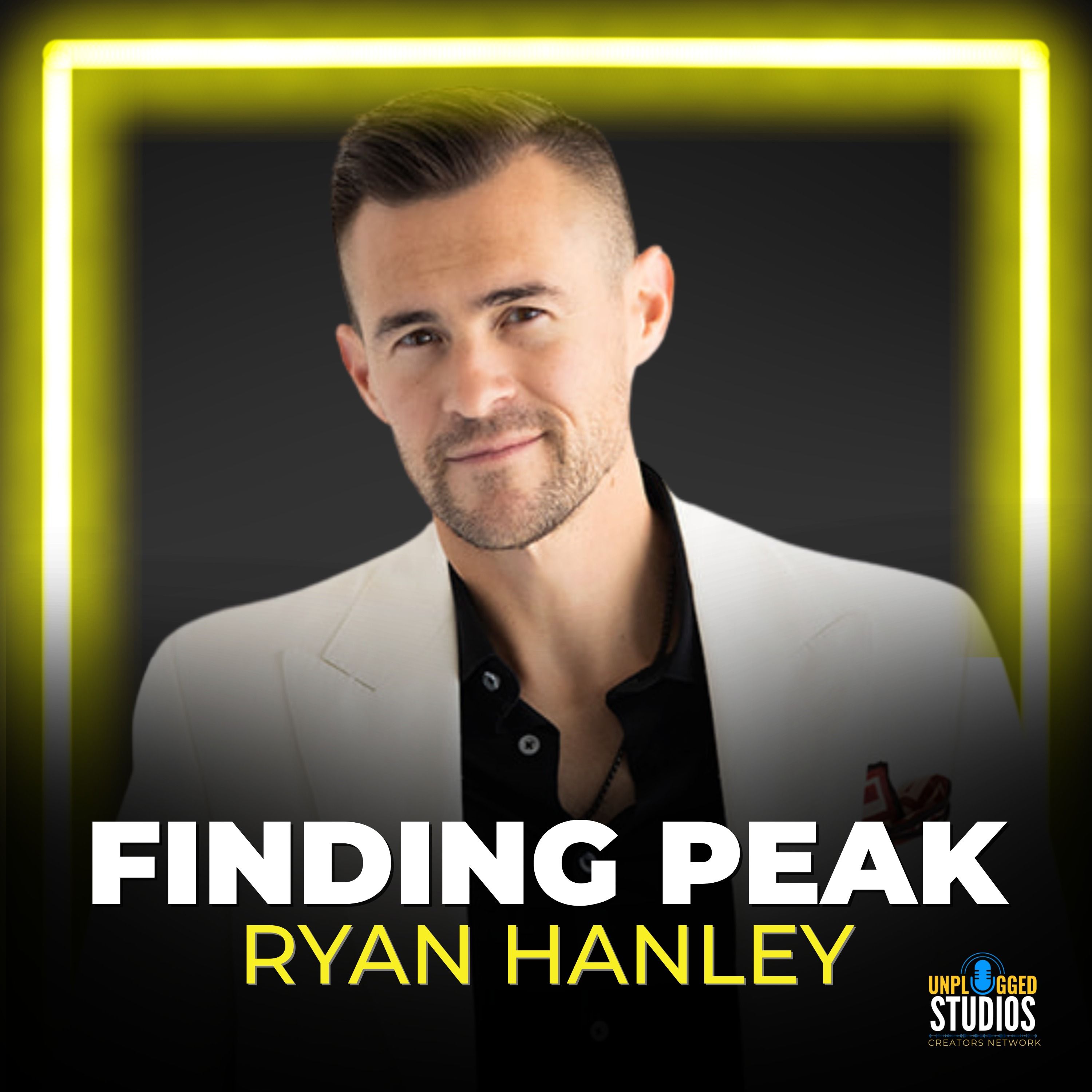
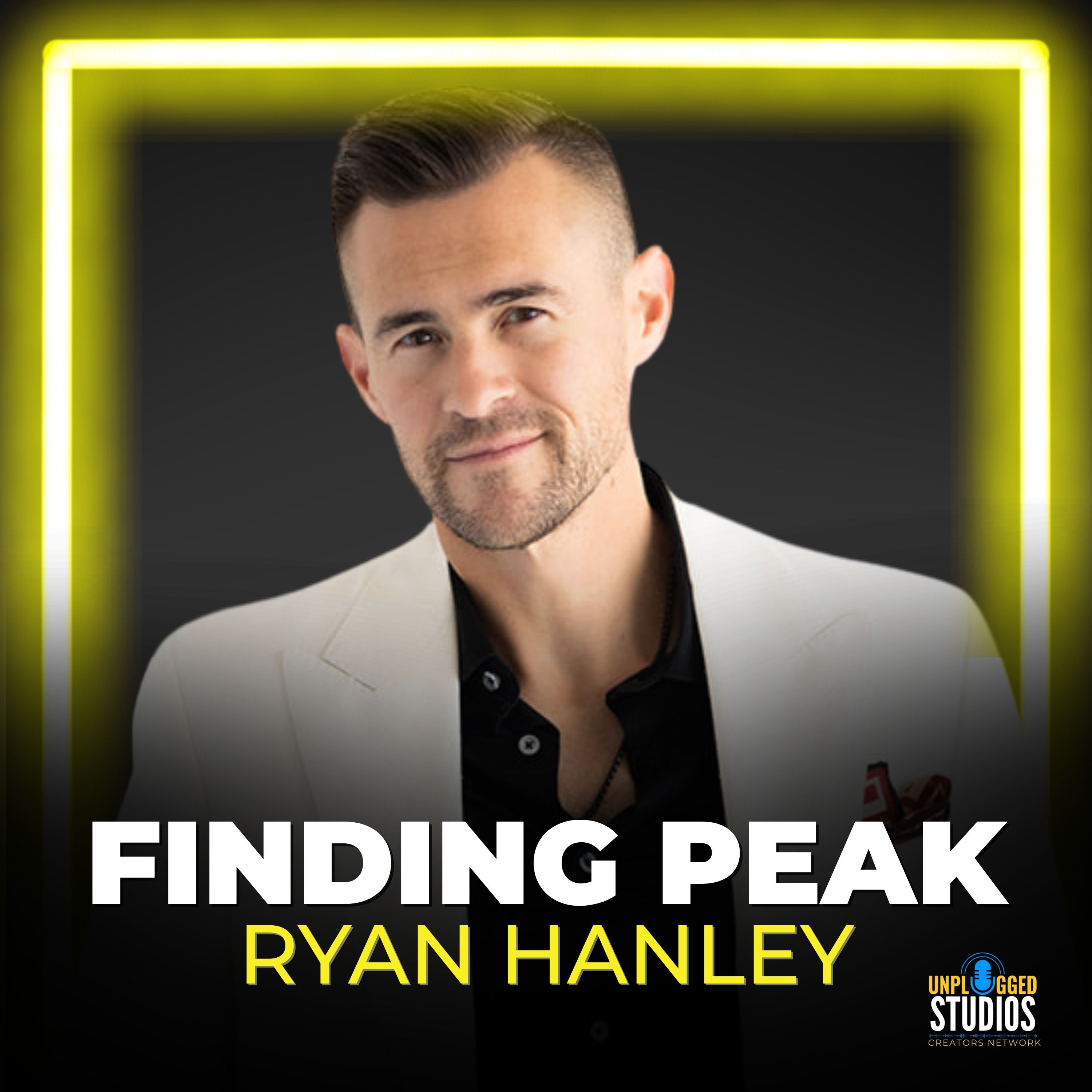
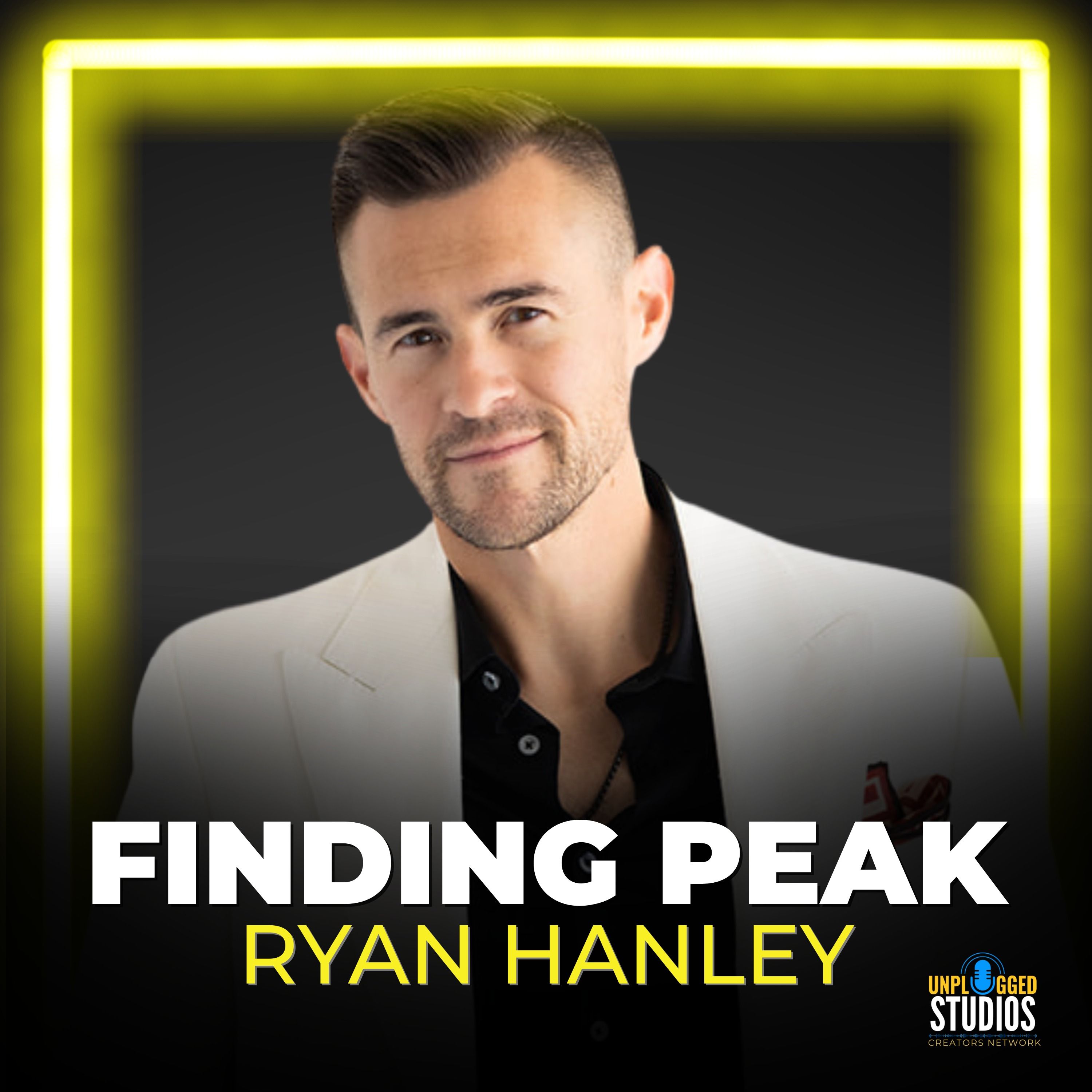
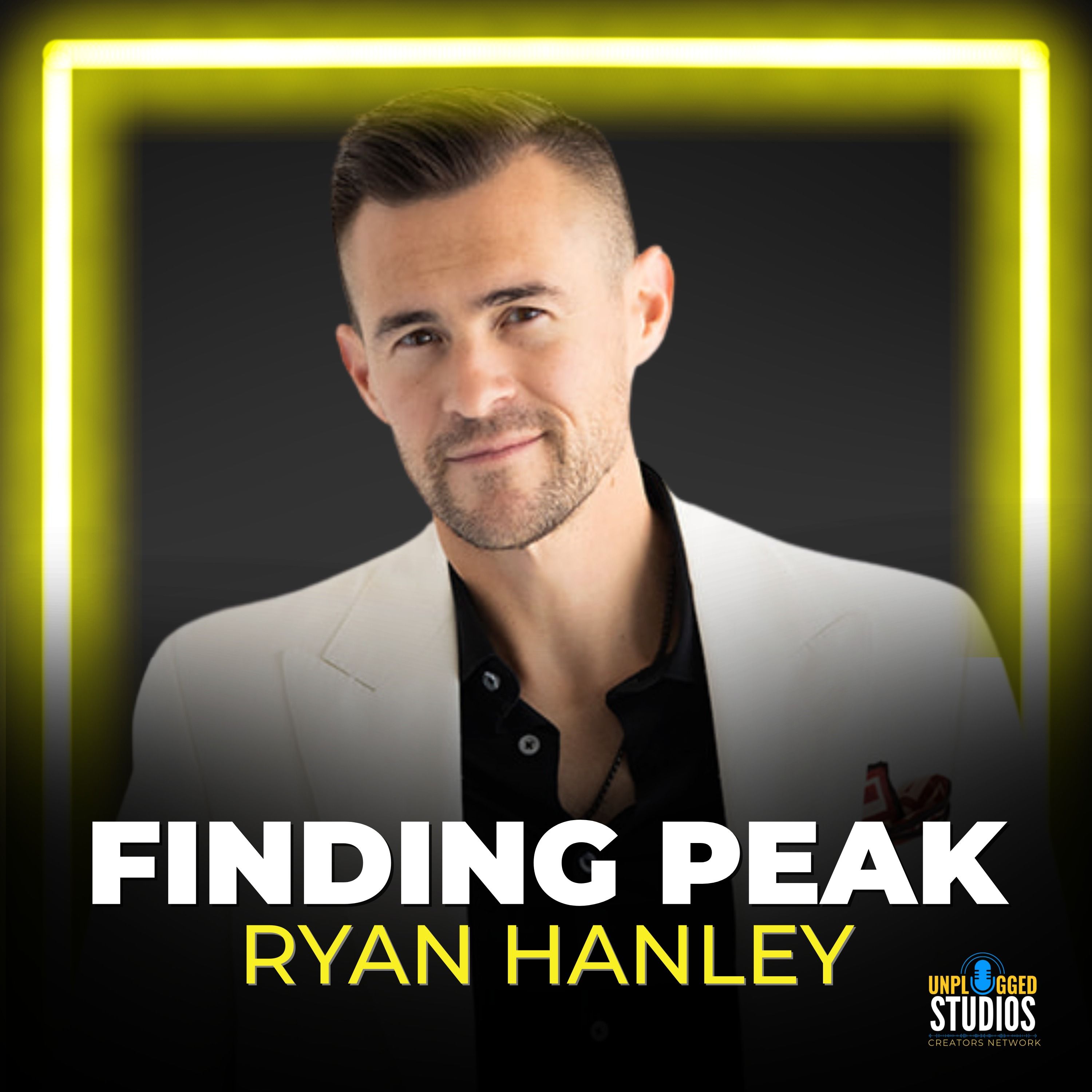
Finding Peak w/ Ryan Hanley · 2026-10-30 · 1h 12m
Key moments - from our scoring
Substance score
33 / 100
Five dimensions, 20 points each
Chris Paradiso joins Ryan Hanley to explore the philosophy of deliberately seeking hard challenges not for social media glory but for personal character development and family connection. When Paradiso's son left for Marine Corps boot camp at Parris Island, Paradiso undertook a 48-mile run over 48 hours - from his house to Chick-fil-A in Enfield and back - to metaphorically join his son in the "Hurt Locker" and demonstrate solidarity through shared suffering. Rather than viewing this as extreme for extremity's sake, Paradiso frames hard things as essential practice for resilience when life inevitably hits hard. He contrasts this with Matthew McConaughey's concept of constantly raising one's own ceiling, drawing on his grandfather's nine-month immigration journey and his father's hitchhike to Georgetown Law as examples of the real hardship previous generations endured. The discussion moves into why society pushes comfort and ease - potentially to maintain control - and how individuals who've been "knocked down" and gotten back up possess autonomy and independence that's harder to manipulate. Paradiso's book "Civilized Savage" encapsulates this balance: maintaining professional and social decorum while internally cultivating relentless grit and determination.
Hosted by Ryan Hanley. The show scores 75.0/100 on substance across its analysed episodes. See the full show profile.
He ran 48 miles over 48 hours to metaphorically join his son in the "Hurt Locker" and demonstrate solidarity through shared suffering, believing his son would know his father was enduring similar exhaustion and discipline during the same period.
Hard things prove to yourself that you're capable, build resilience for when life genuinely becomes difficult, and provide evidence that you can overcome adversity - making actual hardship feel manageable rather than insurmountable.
Prioritize people who have been knocked down and gotten back up, because they've proven they know how to recover; avoid people who've never faced real failure or hardship, as it's uncertain whether they can actually handle adversity when it arrives.
It's the balance of being a professional, integrated member of society - wearing suits, working in conference rooms - while internally maintaining relentless grit, discipline, and willingness to do hard things that others won't see or understand.
Only you determine your ceiling - not society, corporations, or institutions - and following Matthew McConaughey's model of continually raising your idol to "yourself in five years" means continuously pushing your own limits higher.
Our reviewer’s read on each dimension, with quotes from the episode.
The episode contains a handful of usable frameworks - the 168-hour balance reframe, the motivation→discipline→grit progression, and the 'scoreboard is zero to zero' daily reset - but they surface slowly amid extended personal storytelling, political tangents, and repeated mutual agreement. Insight per minute is well below average for a 72-minute runtime.
motivation has an expiration date. Ryan, we've talked about this. Everybody is motivated. Even the laziest SOB can be motivated at some time. Discipline comes in after motivation. We better discipline ourselves because if we don't, someone else will.
how many hours are there in a week? And if you can't answer that, then you have no idea what balance is in your life at all... There's 168 hours in the week. And if you work 40, that ain't balance, because 80 is not even 50. 50
The 'civilized savage' framing is a genuinely distinctive label, but the content underneath it - do hard things, don't listen to the inner voice, surround yourself with resilient people, write down your goals - is standard-issue self-help. The episode leans repeatedly on McConaughey, Goggins, Jordan/Kobe, Simon Sinek, Darren Hardy, and The Untethered Soul rather than generating first-principles thinking.
balance is nothing more than bs
You think Michael Jordan lived a balanced life while he was playing in the NBA?... Do you think Mother Teresa lived a balanced life? Do you think Jesus lived a balanced life? Where does greatness and balance meet? They don't.
Chris is a local insurance agency owner and first-time author who speaks credibly from personal experience as an endurance athlete and father, but the transcript never surfaces his business credentials, scale of operation, or practitioner expertise relevant to a B2B operator. He functions primarily as a personal-development voice rather than a senior operator who has built something at scale.
I go and feed the veterans every Friday
I wrote this book for my children
The episode offers genuine granularity on personal habits and biographical detail - accountability call structure, annual audiobook count, mileage logs - but almost no business metrics, revenue figures, or company-level data that a B2B operator could use. Specificity is personal, not professional.
Every Single Friday from 9 in the morning to 9:31, it's 31 minutes. He gets 15, I get 15 and we get about a minute of BS and we move on.
every single day it's a book. And I limit myself to a minimum of one hour of reading... every day I go through about 75 to 76 books a year
The host occasionally lands a sharp challenge - 'Like, so what, Chris? Why should I do a hard thing?' - and asks a genuinely probing question about whether fear ever goes away. But he frequently answers his own questions at length, veers into political editorializing, and defaults to sustained agreement, which lets interesting claims pass unchallenged.
if I can still be good at work and I'm still a decent husband and a decent father and I'm in okay shape, like, why do I have to do hard things? Like, what the hell?
do you still feel the fear every day? Do you still feel the insecurities and you just choose to move past them? Or have you, like, ascended to a level in which those things don't touch you anymore?
Computed from the transcript - who did the talking, and the words that came up most.
While his son was at Marine boot camp, Chris Paradiso left his house around 10 p.m. to cover 48 miles on foot, so his son wouldn't suffer alone. Sponsored by PFS Global. PFS helps independent insurance agencies with accounting, taxes, payroll, and commission reconciliations. Get an assessment: Find the work you're built for. Get your free Edge Finder assessment: Chris, founder of Paradiso Insurance and author of Civilized Savage: The Daily War Against Comfort, made his son a promise before Parris Island: "while you are in the Hurt Locker I want to visit the Hurt Locker with you." No water, no social post. "That was a me and Gianni moment." Full disclosure: Chris and I started an early version of this book together years ago. The finished book is his. I asked the question this episode answers: if work, family, and health are fine, "why do I have to do hard things?" My answer is rehearsal. Chris's answer is his because. We both hate the word balance. I offer harmony. Chris says the people chasing balance are chasing comfort.
Transcribed and scored by The B2B Podcast Index.
Speaker A: Balance is nothing more than bs. A civilized savage lives a lifestyle that every single day they wake up and the scoreboard is zero to zero. Uh, write it down and you will not negotiate with yourself.
Speaker B: If I can still be good at work and I'm still a decent husband and a decent father and I'm in okay shape, like, why do I have to do hard things? Like, what the hell? All right, my friends, quick favor before we get into the episode. I love doing this podcast. And if you're getting something out of it, hit subscribe or follow wherever you listen on YouTube. Give us a. Like, leave a comment, ask a question, share a story or experience, or explain why we're getting something wrong. I love hearing from you guys. It helps us reach new people, and it just means a ton to me and the team. This is the way m.
Speaker C: In a crude laboratory in the basement of a.
Speaker B: Chris, one of the things that you and I violently agree on is the necessity of doing hard things. I think some people get lost in, like, what constitutes a hard thing? Like, for you, when you sit down and you're like, I. I need to push myself harder. Maybe for whatever reason, you have a couple weeks where you're traveling and you just feel like you haven't. Like, what do you. What do you put in your brain? What do you consider? What is the filtering mechanism for you when you're like, I need a hard thing in my life, I want to get after. What does that look like?
Speaker A: Well, I just did one this weekend, and this isn't the perfect example, but, um, my son's away, um, at Parris Island. For those that don't know, that's the Marines he's at.
Speaker B: Congratulations.
Speaker A: So, um, proud. But I looked him dead in the eyes and I said, the next 48 hours, as you leave me, you're sworn in. They're not going to let you sleep. And I want you to know, while you are in the Hurt Locker, I want to visit the Hurt Locker with you. And I'm going to run 48 miles. And I told him, hey, from my house to Chick Fil A and Enfield and back. And he looked at me and he says, dad, are, uh, you all right? I said, gee, I want you to know I'm, um, with you. And when you're so exhausted, because that's their goal, is to exhaust you, to drain you, to bring you down to nothing, to build you back up. But as you're going down, I want you to know that your dad's going to be there and he's going to suffer with you. And there's, you know, a lot of people say, what sense does that make? But there's a connection that my son and I have, that we like to do hard things, whether it's dirt biking and jumping or, you know, sometimes people would say a little ridiculous because you're too old to be doing that. But, you know, those hard things, it's amazing on the connectability that I have with my son on being able to do that. And as I did that this weekend, um, you know, my wife met me out there. I left in the middle of the night. Yes, it was roughly about 10 o'. Clock. Um, um, and, um, she met me out there with some water because I wanted to add some, some difficult aspects to this. Ryan. I didn't carry water, so my good friend at one stop point left water out for me. And other than that, there was no water other than a gas station. And thank God my wife showed up out of the blue and said, you know, you're kicking butt. You're taking names. I can't believe how far you've gone. Do you need water? And I was dying. I. I was like, so thankful. It's 2:30 in the morning. I'm, um, four and five hours in, and, um, I need water. And a lot of people would say, that's stupid. Why would you do something like that? Well, if I'm going to put myself in the Hurt Locker, I need to test myself. And sometimes testing yourself means challenging yourself above and beyond what you think you can do. Right. So why do we do that? Why did I do that? I did that because I truly believed that, That I could accomplish something. And yes, I did want to truly visit the Hurt Locker. Um, and knowing that I told my son I was going to do what I was going to do, I didn't share any of it on Social. It was very personal. So I shot some videos. And the interesting thing is I couldn't tell you everything I thought about and what aspects of the run where I thought about certain things. I was so locked in from. You know, I took it in 12 stages out, 12 stages back. I knew landmarks. I got to get to this landmark. This is my time. I got to get to this landmark. This is my next time. Got to get to this next landmark. And I was so locked in that it went by like that. I have some beautiful video that I'm going to share with my son when he graduates. But it was, um, it was just so rewarding for me. Not that anybody else is going to ever know, obviously, if they watch your podcast, listen to your podcast, they'll know about it. But that was, um, a me and Gianni moment. So that's a lot of hard things that I like to do. Um, if it's not for my son or my daughter, which my kids are my everything, um, then you know what, it's for me. Um, you know, I love to take challenges and mentally m, make it my challenge. And, um, a lot of times I'll never share that with the world. Um, my wife usually ends up grasping it and usually grasping it to a point of getting it but not understanding it. But she says, I guess you are who you are and you're going to continue doing that. So I don't know if that's the answer you want. But
Speaker B: what does that do for you though? Like, you know, and like, why I get it. That was a hard thing. Very hard. I, I, you know, I am not trained at the point where I could do that today. I could probably get through it if my life depended on it. But
Speaker A: you could get through it.
Speaker B: Yeah.
Speaker A: If you were with me. And I'm not saying it's me. I think we're both very thick headed.
Speaker B: Yeah.
Speaker A: If we looked each other in the eyes and says we're gonna cry, I said, I don't care if I have to crawl, I don't care if I have to walk. And yes, I did walk. I, uh, mean there was some massive hills. And I said, you know what, I'm not going to, I'm going to run down the hills, but I'm not running up the hills. It doesn't make sense. And I'm still going to be able to get my time. I think I'll get my time even better if I walk the hills. Because, um, when I say they're massive hills, there's two massive hills, very long hills. So, you know, I, I think if you look me in the eyes and we said we're going to do it together, I guarantee you you would have done it.
Speaker B: If commission reconciliations, accounting, taxes and payroll are chewing up time and brain cycles you should be using to grow your agency. I want you to check out PFS Global. PFS has particular expertise working with property casualty insurance agencies. They understand the back office work that comes with running an agency. Hand PFS the accounting, tax and payroll work, and you won't be sorry. And I know this because at Rogue Risk, PFS handled our accounting and tax work. I saw their service up close and I can vouch for it firsthand and personally got more than 25 hours back in my month when I outsourced accounting. Go to pfs.ryan hanley.com or click on the link in this episode's description. Whether you're on YouTube or listening to the podcast, and learn more about how PFS can get your tax accounting and payroll work out of your brain so you can get back to growing your business. Yeah, I, I believe that. I, I agree because we're cut from the same mold in that way. Like when I did 75 hard, I did an extra like three or four days, just as an FU to the 75 days because most people, like, can't wait to have a beer or break their diet or whatever they want to do. Stop working out on that 76 day. And I was like, you know what? I'm going to not be, I'm not going to be, uh, you know, even though very few people relative do 75 hard, I'm going to be, I'm going to do an extra five days just, just to be someone who went beyond even that. Right? Like, we're so, we're cut from that. But I think for a lot of people who listen, who, um, like, they don't actually. What do you get out of that? Like, okay, you did this hard thing and you had this connection to your son, and it's amazing and the story is great and, and I can appreciate the connection and want to do. But like, so what? Like, like so what, Chris? Why should I do a hard thing? Like, if I can still be good at work and I'm still a decent husband and a decent father and I'm in okay shape, like, why do I have to do hard things? Like, what the hell?
Speaker A: I think you have to prove to yourself that you can do it. I think, you know, one of the most valuable things I can teach my kids is to believe in themselves. Nobody's ever going to believe you as much as you should believe in yourself. And I think knowing that my son read my book before he changed from the army to the Marines, and when he told me, dad, um, I decided to change to the Marines, and he had had, um, the layout of my book, and he says, you know, you told me growing up multiple times, and in the book you talked about how Nono said an easy life isn't worth living, and knowing that my grandfather took nine months to come to this country, within excess of four and a half months walking and just about four months on a boat in 1911 to get to the land of opportunity, to Ellis Island. Um, think about what I did this Weekend is nothing. It's simple compared to what my grandfather did. My father had to hitchhike from Connecticut to Georgetown Law. Just so you know that from Georgetown, I mean from Connecticut to Washington D.C. and he did it because my grandparents didn't drive. To the day they died, they didn't drive. Most of my aunts never drove a car. So what was he going to do if he wanted to do it, he had to man up and do some of the things that are difficult. And I just look at that and say what I am doing to prove to myself is very simple compared to what my father and what my grandfather did. Does it make sense?
Speaker B: It does. I think the way I think about these things when I'm going through them, right. And like, I just had a fairly tumultuous time the last few months, like in my career and different things with life and, you know, nothing systemic and, you know, most of those things, but like, um, but just not, not an easy time, right? Whatever. I, when I look at it and I go, when, you know, things like 75 hard, like getting to my deadlift number, you know, at 42, you know, deadlifting, uh, 465. Like, you know, the different things that I've done, um, you know, in my career, when you go, the. The reason I do those things is so that when I have a tough time, it's not hard, you know, like, even though this last couple months were tumultuous, I think there are a lot of people that would have given into drugs or alcohol that would have, you know, maybe just given up, gone into depression, started posting on social media. Woe is me. Why didn't this work? Why is, you know, why is it. Instead it was like, you know what? It's just solve the next problem. It's just whatever. This is just a, It's a season and it's a moment in time in life and we just solve the next problem, Solve the next problem, solve the next problem. Until you get to a point where here I am on the other side of it and you know, in part thanks to you, in part thanks to, you know, other people, like we're going to talk about the, uh, people you surround yourself with. It's like, uh, yeah, was it my favorite time? No, but got through it no problem. And on the other side, it's all, it's all green lights, you know what I mean? You're looking at up into the right and if you've never tested yourself, even to a small extent, feel like. And this is. We see this dude we talk about this all the time. Like, and I think this is. Unfortunately, a lot of the people that you see gravitating towards the left side of our political ecosystem is like, they've never faced anything hard. So the smallest hard thing becomes this, like, nuclear explosion, and they have no idea how to deal with it.
Speaker A: So I, I think you even need to back up 75 hard. Is it that hard
Speaker B: in the grand scheme of things now?
Speaker A: No. It's amazing what our head tells us.
Speaker B: Yeah.
Speaker A: What's hard? You know, And I think answering that or even talking about this conversation, when we talk about hard things. Do you think what I did David Goggins thinks is hard? No, David Goggins, that's a Sunday afternoon stroll for him. My point is, is our minds have something that you have tattooed on your arm that I think plays a huge role in my book. It's faith over fear. We allow fear to stop us. It's hard. So it's hard. I mean, a lot of things in life are hard. But do you know what? Uh, a lot of things that we think are hard aren't really as hard as our mind has made it up to be, because it's fear,
Speaker B: dude, to the comment you made before, people saying, chris, why would you run 48 miles, uh, in a weekend? You're too old. What is too old? I had people telling me I was too old when I was doing the. When I was, uh, going after my Deadlift number. Right. I mean, how many people have told you this? The things that you do physically, Chris. Well, come on, man. Like, what are you doing? You know what I mean? You're going to hurt yourself. Like, that's all just.
Speaker A: My chiropractor reminds me all the time,
Speaker B: but
Speaker A: you know what he says, but we'll get through it.
Speaker B: We'll
Speaker A: just
Speaker B: narrative. It's narrative. Right? Like, like I used to, I used to say in hiring, um, you know, and I meant this figuratively, obviously, but I was like, I wanted people who walk with a limp. You know what I mean? I want people who've, like, been through life. That doesn't mean that, you know, that could mean, you know, a hard thing at home. It could mean they were, uh, uh, professional, uh, or, uh, uh, athlete in college. It could mean they were in the military. It could mean insert hard things. But like, these people who come out with, you know, they went to the perfect high school, they had the perfect parents, they went to the east coast, you know, Ivy League or just below college, liberal arts degree come out, you know, everything's always been paid for for them, and now they want a job and you're like, I don't want that person. I don't care what that person scored on their SATs or what their GPA was or what degree they got. I don't want that person working for me because they've never actually been hit in the face with a sack of shit and found out what their response is. And like, I want to know, you know, with the people in my circle, it's why I think my circle is very small. And, uh, with people I work with, like, have you been knocked down? Because if you've been knocked down and got back up, that says a hell of a lot more to me than it does that you, like, just got good grades or, you know, had a nice SAT score or whatever.
Speaker A: What did Rocky say? Get down. Get knocked down eight times, get up nine.
Speaker B: That's right.
Speaker A: Point is, is always get back up. And I don't disagree. I think you're taking this a step even farther back. Is in the sense is Rocky says, get knocked down. Get up. But you want to make sure that you surround yourself with people who have been knocked down, because I can tell you I've been knocked down multiple times. And I would agree with you. I want to surround myself with people who've been knocked down because you know what, they know how to get back up.
Speaker B: That's right.
Speaker A: And if you've never been knocked down, my question is, will they get back up? Now it's a guesstimate. And you might say, well, I know Ryan Hanley. He's never been knocked. I know his person. He would get up. Still a guesstimate.
Speaker B: That's right.
Speaker A: I would rather see somebody be knocked down and realize that they've gotten back up. You know, if you've never failed at anything in your life, you know, what have you accomplished in your life? In my opinion, you've accomplished nothing. You know,
Speaker B: Chris, this is why I think, um, I'm going to put my tinfoil hat on here for a second. Um, you know, maybe in post I can use AI to put tinfoil hats on us real quick right here. But, uh, um, you know, it's part of the reason why I think the powers that be in our society today, both, you know, large enterprises as well as, uh, you know, the political system does everything it can to push, you know, cheap, easy, comfort free on us and the societal pressure that those things are what you should strive for because those individuals have no autonomy, no liberty. Right. If you're the type of person who can get hit in the face with a sack of shit and pull yourself back up, dust yourself off, and get back to work. You have autonomy. You have liberty. You have individuality. You. You are. You are independent thinker who is very hard to control because now not you can do to me, can stop me from pursuing my goals, my mission, you know, my. My purpose in life. And that is a scary thing for organizations either trying to monetize us as consumers or to control us from a. From a political standpoint. And as much as that might sound crazy to some people who don't think bigger about the world, when you start to see the way things are, are flowing and the messages we get and even the commercials that are put on us, it's all about, Chris, how do we make your life as easy, as thoughtless and as comfortable as possible? How do we do that in every aspect of your life? And I don't think that's because it's the way we are built or what is good for us.
Speaker A: And, um, if you answer one question of everything you just said, which was a mouthful, you answer one question. Who sets Ryan Hanley's ceiling? Only Ryan Hanley. Not society, not big companies, not big corps, not big Facebook. Only Ryan Hanley. And once you believe that anything is possible, you have to truly believe you set your ceiling. Matthew McConaughey said it in his famous YouTube commencement speech, and he talked about that, and he moved on. And he said something very important. He said when he was asked, who's your idol? It's me in five years. You know why? Because his ceiling every five years went up. And then he said, in five years from now, who's your idol? It's me. In five more years, the ceiling went back up. Ah. Only Matthew McConaughey could set his ceiling. Only Ryan Hanley can set his ceiling.
Speaker B: Who would have thought the all right, all right, all right. Guy and Dazed and Confused could have done Interstellar? I mean, think about that. From. From the progression of an actor.
Speaker A: Yeah.
Speaker B: Who in their right mind would have said the all right, all right. Stoner guy from Dazed and Confused could have done Interstellar, which is, you know, one of the best performances by a male lead in a science fiction story in history. I mean, it's phenomenal. Um, like it. To your point, like, he doesn't get there if he's not competing against himself. And that's kind of where I want to take my next question is for someone who does constantly seek out hard, who. Who wants to elevate themselves who, for no other reason than personal satisfaction, wants to get better. Like, how do you continually raise your own ceiling? What is that process for you?
Speaker A: Number one, it's all, you know, I think Mick Hunt says something, um, a question to every one of his interviewers that is masterful that, you know, we always talk about why from Simon Simic, but Mick talks about your because and m. My because is my everything. And that's where my inner strength comes from. Um, you know, why did I write this book? I wrote this book for my children, but why did I need it in a book form? I needed it in a book form because I learned so much from my father driving an hour and a half to the hospital for year after year after year. And once my mom passed away, it was just me and him. We had some pretty raw conversations. And I said, just as I said to you, I believe on a call a couple weeks ago, I said, you need to write a book for your children. There needs to be life. Uh, you know why? Because I do think some of us are different. I'm not saying it in a bad way. I'm saying it in a good way. Different is beautiful. Um, my kids said to me pretty early, dad, you're different than the other dads. I want them to really understand some of my life lessons, some of my failures, some of my friends failures, some of the lessons I learned through my friends failures in a form of a book. And that's really why I wrote what I wrote for that specific reason, and that's really why I can raise my level, is because of my because and ah, my because are my children, are my everything. And what more important in life for me is to teach my kids how to become a civilized savage. And a lot of people said, and I just got it this morning as I was signing a few books at a local restaurant which people had ordered, and out of the blue, they know I go and feed the veterans every Friday. And, uh, they were there. And the owner says, hey, I would love for you to sign this to my son. He's struggling right now. He needs this. Nothing more impactful. Now, I wrote it for my kids, but if I can impact other people, that the word civilized and savage means so, so, so very much to me that I know Ryan Hanley understands the title, but not everybody understands the title. And that. That because is my everything. And that that's. That's my. My formula for. For what's the next hard thing I'm going to do.
Speaker B: And I'm so glad that you stuck with that title, I mean, I remember, what was it, two years ago? You know, we were helping, you know, I was helping you kind of unshake some of the cobwebs in the book and it had stalled a little. And you know, I'm, I'm so incredibly glad that you got it across the finish line because it's just the stories that are in this book need to be told. They're so inspirational. And I love the title because look, like if you're standing on a con in a conference room floor and someone takes a snapshot of you, you're in a suit, you got a nice shirt on, you got a nice haircut, you're a freaking insurance agent. You know what I mean? Like, there's nothing more civilized than an insurance agent standing in a conference room in a suit. You know what I mean?
Speaker A: Yeah, maybe.
Speaker B: Yeah. Yet on the other side of it, they don't know that that morning you probably ran 15 miles at 3am in 40 degrees. You know what I mean? For, for no other reason than you, you wanted to get that working. And like, so, so there's this, there's this idea I think, and uh, unfortunately I feel like this is, um, you know, I don't hate on Instagram as much as other people do. There's certain platforms I don't like, but I think Instagram is a reflection of, of what you put into Instagram you get back. Right? Like, I don't get all the negativity stuff. I mostly get like nerdy science stuff, conspiracy theories, workout stuff. And now because I started the sports card business with Duke, I get some sports card stuff. Right? That's basically it. Um, like you see like the savagery side of it is like some big 225 pound ripped dude, you know, jogging and you know, doing pull ups or throwing weights around or you know, people doing, you know, crazy jumps with motorized vehicles and being yahoos and like, they think, they think savage. They think this, this like uncontrolled, uh, unbridled, you know, kind of stallion mentality that maybe has just as many downsides as, as upsides. And what I love about how you position this and, and you know, I'm pitching your book for you, but I, I, obviously I'm such a huge believer. I'm just so happy for you that you got this out. And I, and I love it, um, like that you can be an operational, integrated part of society who gets along and provides value and doesn't offend everyone and be an absolute raging savage at the same time. And like why do you like. To me, why do you think, like, that's so such a divorced idea? Why do we feel like you have to choose one or the other? And really, you're the first person that I've ever come across who's come up with an idea that combines those two things. And kind of what I hope this book does, and I'll shut up, I'm obviously just excited about it, is, um, I hope it gives people permission to be this thing that you are, that you embody every day.
Speaker A: I think it's, you know, I think it goes and starts from my grandfather. I mean, my grandfather had a third grade education, and if you looked at the way he dressed, he dressed very civilized. He was, yes, he was a barber. He always had a white coat on. Because back then in the early 20s, that's what they did. Um, but what they didn't understand is my grandfather came from no education and where poverty was beyond poverty. He came to America for the big O, and the big O is opportunity. He wanted to have a job. Why did it take him nine months to get here? Because that was the only option he had. Why did he, do you think he wanted to get on a boat for months and months? I can tell you there's only two times in his life he ever got on a boat. Number one was come to America, and number two was to fight in World War I. And what happened was when the war ended, he had to get back home, which he called Home America. And he had to get back on a boat and spend months at sea, coming home. And from that time, my grandfather fished every day. He could physically, possibly fish every day of his life, but he would never get on a boat. He fished from land. Uh, he bought a beach house, and he fished off the rocks from the beach, from around the lighthouse. So I tell the story because when you think about civilized and you think about savage, most people that know my father would say he's the most civilized, humble, human, quiet human being. Um, I even have letters that his professors sent to his mom and dad, and they're some of the most beautiful letters. My dad was definitely way more civilized than I am. I mean, he just, he had a law degree. He just, he knew how to say things elegantly. I, I, as my father said, chris, God didn't give you that gift. And there was a, you know, he didn't. But what my father went after, he went after different than the. It was different times. He was a savage. What he went after, you know, I talk about in the book My dad grew up eating squirrel because there was no meat. What do we think of that? He didn't want to talk about that because he was embarrassed. But my grandfather learned that we need to go and we need to hunt squirrel with throwing knives, not with a BB gun or at that time a, uh, 22 because it stressed the meat out.
Speaker B: So
Speaker A: think about all these little things that I now own an apartment building that my grandfather lived in that still my father grew up in, that still has the squirrel hooks that I will never get rid of because I look at those squirrel hooks and I know there was sacrifice. So when you see years of that, I just think it's just the way I was raised and the, the genes I got and the family I res, you know, I grew up in, I, I, I can tell you, um, they lived every single day, especially my grandfather. Like I said, Oli Savage, with a very limited education and grew up very poor and made everything that he got came from extremely hard work. And if you look at today's hard versus, you know, when my grandfather came in 1911, those, you know, when you say poor. Poor in 1911 meant they didn't know where their next meal was. Coming poor today just means I can't get a Starbucks coffee, but I can still afford a Dunkin Donuts coffee. It's very different.
Speaker B: You can work hard and still spend your life doing the wrong work. My new book, Easy Mode, is about finding your edge, building your life around it, and cutting everything else out. Out for leaders. It also shows you how to design roles so your people create more value by spending more time in their Easy mode. Go to EasyMode book.com for the free edge finder and join the list for book updates and selected cut chapters. Easy Mode doesn't mean doing easy work. It means doing more of the hard work you were built for. Visit EasyModeBook.com today. Take the edge finder. It is a free assessment to find your edge. Go there. Today I was in the car with my kids. Uh, on Monday, I was driving them out to my dad's house because they had a, a day off from school and they were going to hang with him. And we saw some turkeys in the field. And you know, I said, oh, look, turkeys. And I, I don't know why. To this day, anytime I see deer, turkeys, really any like, type of wildlife in a field when I'm driving, I'm still like, oh, look, you know, my kids are like, wow, whatever. I've seen turkeys before. And somehow the conversation Came up of like, it was not that long ago, 110 years, right, that you just mentioned. You woke up in the morning and you didn't have any food. Uh, there weren't refrigerators. Like you, you, you couldn't store meat. Like, you had to go out and figure out every day, what are we eating today? Now, granted, you know, in that time, if you were by a city, could you walk down to a market if you had a job? And yet, you mean you could go get food, but you're not storing weeks of food in your home. You know, there's not, there's not the dry goods that there are today. I mean, there was some canned stuff, but, like, you know, you're not, you don't have that ability. You, you had to go out and get your food like, every single day. Like, that was like, the first thing you did is, what are we eating today? And then the next thing was, what is all the other crap that has to get done to keep this place alive? And how do I, how do I go out and hunt enough food to feed my family, my children, if I have, you know, other family members living with us? Like that, that type of, like, I don't eat, if I don't go get food is just simply not a brain cycle that any American spins today, for the most part, except for, you know, unfortunately, some of the individuals who we've forgotten in some of, like, the more trailer park and inner city communities that we have. Um, but, like, realistically, there is no reason any American should ever have to think, where's my next meal coming from? And that was just a way of life 100 years ago, which is not that long, not that long at all.
Speaker A: I just think it's a different mentality today. What we think is hard is not hard. Um, what they lived is hard. And I'm just blessed with the right mindset to be able to challenge myself to do hard things. And at the end of 90% of the things that I do, I can't explain the goosebumps it gives me. Whether it's the 4 by 4 by 48, the David Goggins challenge, um, whatever it might be, um, it, it's a utopia for me and it's a, it's a feeling for me. But unfortunately, you know, I don't want my kids growing up thinking and being like society says today, where, you know, uh, you know, balance. I want balance in my life, you know.
Speaker B: Yeah. What do you think about this idea? Because I agree with you on the balance. I hate the word Balance. Um, I like to use the word harmony, right? We have to find harmony. Which means, you know, you're, you're, you're a husband, right? You, you, you need to at some point, I'm assuming, give attention, respect, appreciation for your spouse. It doesn't mean you 50% of your time has to be that thing or you know, I mean like, but there needs to find harmony. There's going to be times when you guys spend more time together because for whatever reason, that's what life, that's what that season, that's what that moment dictates. And then there's going to be times where you guys aren't as connected and, and there's this constant harmony that we're searching for. And what I like about that, and I'm just interested in your take, I'm kind of just hitting you with this as I, as I run through it in my head. But um, what I like about the idea of harmony is it gives me the freedom to say, you know what, like I'm gonna crank up the physicality. I'm gonna, Instead of doing 100 push ups a day, I'm gonna do 150 push ups a day and I'm gonna get after it and it's gonna cost me, you know, 20, an extra 20 minutes in my day that I need to carve out to make sure that I get that done. But it's worth it because I want to push myself or uh, I'm looking for a certain look or I just want to be strong or whatever, right? Like, and there's this harmony that we find where with balance, it's like if I'm not home at 5pm every day and completely locked into my family every day, and somehow I'm like a bad parent or a bad spouse or partner. And, and I just feel like balance puts too much pressure and it puts um, unrealistic or unnecessary guardrails on your life in a way that, or even shame or regret that shouldn't be there. Um, I don't know, how do you feel about that idea, this idea of harmony?
Speaker A: Well, I never thought of it in the word of harmony, but I thought of it in the word balance. Because there's a chapter in my whole, in my book on balance. And balance is nothing more than bs and I'll call it what it is and I'll explain it and there's going to be people that don't agree with me. I love to have people challenge me on this because I love the conversation. I love to see I uh, love to feel the conversation on balance, because I can't tell you how many interviews I've done, and they say, well, I'm looking for a little more balance in my life, Work, life, balance. I said, okay, so let me. My first question, Ryan, is how many hours are there in a week? And if you can't answer that, then you have no idea what balance is in your life at all. And most people can't answer that. And I will quickly say, if you're not unsure, no worries. There's 168 hours in the week. And if you work 40, that ain't balance, because 80 is not even 50. 50, and you're working half of 80. So let's talk about reality, of what balance really means. When people want balance. In my opinion, when people want balance, they want to figure out a way for more comfort in their life. That's why it says the daily war against comfort. And I don't want my kids thinking like that. I don't want my circle thinking like that, or else they will not be in my circle. Because harmony, as I, uh, uh, like I said, I haven't really thought of that word, but I like it. Um, I need to dig into it a little bit. But the word balance to me is bs. I don't like balance. I hate balance. I don't want balance. And then my next question, because I know most people know who Michael Jordan is, right? You think Michael Jordan lived a balanced life while he was playing in the NBA? What do you think?
Speaker B: Yeah. No. M. Not even close.
Speaker A: They're stuck. Like it's impossible. Do you think Mother Teresa lived a balanced life? Do you think Jesus lived a balanced life? Where does greatness and balance meet? They don't.
Speaker B: Here's. I got a question for you. I don't think most people even consider greatness as a possibility for their lives.
Speaker A: I hate to agree with you. I hate to agree with you, but I, I, I, I, I remind my, my daughter every single day at college because unfortunately, I can't communicate with my son, um, while he's at boot camp. Um, I remind my daughter every day. A good day and a bad day is a choice. A great day and a greater day is a choice. Choose wisely. If you ask my daughter how many times I've told her that, she's probably going to tell you so many times that it's probably I have to erase it because there's, the threat is so big. But I think we have to remind people greatness is a choice. You just have to choose it. Why do you not believe in yourself enough, Ryan? Did you always believe you could be great? I knew you when you were first an agent. I think you set your sailing lower than you've ever set your ceiling from as long as I've known you. Your sailing is very different today than 15 years ago when I met you, I can guarantee you.
Speaker B: You know, Chris, this is a really weird thing, man. And, um, you and I have never actually talked about this, but, like, when I was a kid, uh, when I was young, it was the best or bust. That. That was literally everything I did. If I got. If I got the second best score on a spelling test in sixth grade, I'd be pissed. I would come home and I'd tell my mom, and I'd be like, do not let me stop studying my spelling words until I can do them by heart. Cold. Like, I don't want it. I want 100. Like, I want the best grade. I want to get the extra credit score. The. You know what I mean? Like, it was all through high school.
Speaker A: Yeah.
Speaker B: And then some.
Speaker A: Did your parents put that on you, or did you put that on you?
Speaker B: No. No. I, uh. I grew up in a s. Situation where I saw two male role models who today are incredible. Step grandparent and grandparent. My dad and my stepdad are amazing, but when I was growing up, they were both absolute lunatic, alcoholic psychopaths who, like, I used as case studies for how I didn't want to live my life. And I grew up in a town where dude. And I. I write this in my own book, uh, easy Mode. That's that. I'm actually. I'm actually submitting the manuscript today, which is fun. Um. Uh, I write that I remember it being 12, dude. And walking through my little town of Nassau, New York, and looking around at 12. I remember this distinctly. There was one streetlight, three gas stations around the streetlight. That was it. That was the whole town. We used to say you could leave your doors open at night because the criminals lived in our town. They didn't rob in our town. Um, I remember looking around going, I have to get out of here. Like, uh, this can't be my life. Like, I can't be 30 years old living in a house, you know, down Church street, you know, in Nassau. Like, this cannot be my life. I have to get out of here. And the only way that I knew to do that was either grades or sports. So I just. It was. You know. And I was rarely the best, but that was my goal. It was for all things I wanted to be the best hitter. I wanted to be the best linebacker. I wanted to be the best at physics. I want to be the best at math. I want to be, you know, whatever I did. And then, dude, this is the part that I wanted that I've never shared with you, just because it's never come up. But, you know, as you're talking, I'm thinking about. I'm like, between college and the early years of my career, like, the really early years, like the just out of school years before I got into the insurance industry, I lost it. I lost it all. My life just became about, like, surviving. And what I mean by that is, like, I set my goals so low that, like, just making enough to make sure that I had money in the bank till the next paycheck was, like, good enough. Like, getting enough grades just to graduate was good enough. Like, you know, playing, working out hard enough so that I can continue to be a starter, but not necessarily the best version of myself as a baseball player was good enough. I mean, like. Like, how does that happen where, like, it took every ounce of energy and willpower and dedication that I had to get to college, considering my economic and home life. And then when I got there, it was like, all of a sudden I just. My mentality, I just downshifted and, like, became this, like, shell of myself. And then it's taken 10, 15 years. I mean, it wasn't till like, my early to mid-30s, like, after we had known each other for probably five, six, seven years. And, uh, like, I started to, like, punch it back in. And now. Now I live that life. But, like, that period is a very odd period. And. And, like, one, like, I guess, why does that happen? And for. And I know there are probably a lot of people listening who've maybe had similar situations or found themselves in similar. We'll call them, not necessarily depression in this emotional depression, but like a depression in your growth. Like, how do you start to pull yourself? How do you remind yourself of the savage that's inside? Like. Like, if someone's sitting here and they're going, fuck, like, I want to be a savage. Like Chris, Like, I know it's in there. Like, how do they start to pull that out?
Speaker A: Well, number one, a civilized savage lives a lifestyle that every single day they wake up and the scoreboard is zero to zero. So if somebody says, when I woke up Monday morning, after I ran Saturday into Sunday and there was a ton of miles put on, I woke up Monday and you know what I did? I hit it hard. Because the scoreboard was 00 on Monday. So how does it happen? I think it's in your case or in a lot of our cases. We lose vision. We lose vision. And how do you know? Darren Hardy says, uh, without vision, the people perish. Is that not a fact? We need to have vision. And how do we have vision? I think the easiest way to have vision is to have an accountability partner. Go get living your best year ever. It's a workbook by Darren Hardy. Huh. Find yourself. You don't have to pay for anybody. Find someone else who wants to live their life similar to you. Pushing the boundaries and hold yourself. I uh, just finished with my accountability partner. Every Single Friday from 9 in the morning to 9:31, it's 31 minutes. He gets 15, I get 15 and we get about a minute of BS and we move on. It's 31 minutes a week. When you have your vision and you work in a workbook because your goals and your aspirations need to be written down. Otherwise it's, it's, it's a dream. And what's a dream? A dream is nothing more than a cloud in your head that you see. But if you want reality, reality is you better take that book. You better. Your one day goals, your weekly goals, your monthly goals, your quarterly goals, your annual goals. I have every single mile written since I was age 40, when I started living this type of lifestyle. Mhm. And I won't say that I didn't live the lifestyle prior to that because I think back on college and high school sports and I was always the guy that was putting in the extra work. But maybe not to the level I am now. I know not to the level I am now. So I would tell you if you get the vision and if you don't have the vision, then I would tell you still get the workbook. And the first 60 pages of the workbook is helping you work through what your goals should be. That is critical. Otherwise what are you living for? What do you get up every day? Why does Ryan Hanley get up every day? I'm not sure a lot of people even know why they get up. Do you get up to make enough money for the weekend so you can go out? Do you get up enough to pay your bills? What do you get up for? What's purpose in life?
Speaker B: How many people do you think actually know the answer to that question?
Speaker A: My guess, and I'm only telling from the people that I, I've had this conversation with and just this morning it was interesting. My accountability partner Said, hey, this exact question. And I answered it like that. And he asked this. I, I would say, what is it? Maybe 5%.
Speaker B: What. What do you think the world would look like if 50% of people knew what their purpose in life looked like?
Speaker A: Oh, I think it would be different. I think we would then have a stranglehold on the victim mentality because there's a real societal problem with the victim mentality.
Speaker B: Mm.
Speaker A: Um, don't bring the victim mentality into my house because, um, my family knew what it was to eat squirrels. My grandfather came and fought for in World War I for the United States of America and barely spoke any English and died loving this country. And when he was on his deathbed, he looked me in the eyes and he said, I hope you stay in the most great. And he didn't speak proper English. The most greatest country in the world. This is the. America is the land of opportunity. He cried when he talked about America because America gave him a life that he absolutely dreamed of. And it came because of one thing. Hard work. Hard work. And we've lost that because we have a, um, victim mentality. Everybody owes us something. Nobody owes us anything. You know who we owe? We owe Jesus. And success is measured. And I write this in my book. It's the most important message of anything people take. What is success? Success is measured the day I die and I go in front of my maker because I'm a man of faith and I'm a believer. And I look him in the eyes and he says, chris, you left it 100% all out on the field. That is success. Anything short of that is not success. So where do hard things come into play? I have talent, but the good Lord has given me a lot of talent. I better not waste it.
Speaker B: I, I have a very similar, um, like anytime I have moral related issues or things I'm considering, I literally just say to myself, if I have to explain this decision to St. Peter, if I'm standing at the gates and on the other side is, is. Is heaven and my family and, and, and my ancestors and my friends and I got to explain to St. Peter why I should be part of that, that crew, that, that, that side of the fence, can I justify this decision? Like, can I justify this decision to him as to, as to why it allows me to be part of the kingdom of heaven. And you know, whether whether St. Peter's actually standing there or not is not the point. Like, I have. People will laugh at me when I tell them that. And I'm like, it doesn't matter if, you know, there's a physical manifestation of me standing on fluffy clouds with a, you know, a big door where, you know, and St. Peter's stand in front of her or not. The point is like, do you have a, A code, A, uh, a set of values, a filter system? Right. And. And I just find shocks. It has shocked me as an adult. I mean, it almost seems like. This is probably sounds trite to even say it, but even though I grew up the way I did and I saw the things that I saw when I was growing up, and to be honest with you, we ate squirrel too. I used to go squirrel hunting all the time, and my stepfather would barbecue and we'd have him for lunch. So I actually lived that life to a certain extent as well. Um, squirrel hunting is actually really fun, by the way, with a shotgun. I mean, the meat is definitely a little tore up, but it's a ton of fun. And for anyone that doesn't know how you squirrel hunt, um, well, there's a couple ways you can do it. But how we would do it is we would put backpacks on, and the backpacks would be filled with, um, 12 gauge, uh, buckshot, and we'd have rifles, and we would jog through the woods. And what happens is you kick up a squirrel and then the entire family of squirrels will run to their tree and, and you just start blasting away and get as many as you can before they get to their nest.
Speaker A: And then you're eat. You're eating a buck shot as you're eating.
Speaker B: That's right. But whatever, you know, that's what we did. Um, you got a lot more volume that way. If you won't go with a.22, you'll get. You'll probably get less, but the meat will be a little better. But, um, my point is, like, I, I just, I think. I think about, like, I just, I just feel like so many of us, we've acquiesced to the world. Like, we've started to believe things like I'm too old or I don't have enough money or I don't have the right friends or no one will invest in my company. And, And I have developed, and I know you're the same way. I have developed almost like a violent distaste for victimhood. Like the minute I smell victimhood on someone or they say something that is, that is meant to manipulate through them being a victim. Now, there are real victims in the world. Don't get me wrong,
Speaker A: there are.
Speaker B: But, but the vast majority of people that try to leverage this victimhood mentality are not victims to anything other than just their own laziness, their own insecurities, all these things, right? And like, so here, here's the question I have for you on this because, um, I was talking to a good friend of mine, professional speaker. Uh, we both know him, um, and he does a lot of gigs. And in the last few years he's done. He's. He's really moved up the ladder. He's been doing much bigger events, he's been doing international events. And I just said like, do you. Do you get nervous, right? And he's like, shit, yeah, I get nervous. He's like. He's like, I still don't even know why they. They invite me. And if you, you know, you look at his resume, you're like, what are you talking about? Like, of course they'd invite you to these things, right? So, like, I feel like. I feel like there's this. Most people who live in victimhood believe somehow their insecurity, their. Their um, um, like laziness there, whatever, right? That that's special or unique situation for them. And then there's this other group of people who are just blessed with no fear, no, you know, no discomfort. You know, they just. They just live their lives as if everything's going to work out. And I. But to me, that. That's not been my experience. Right? Like, I guess my question is like, do you still feel the fear every day? Do you still feel the insecurities and you just choose to move past them? Or have you, like, ascended to a level in which those things don't touch you anymore?
Speaker A: Pressure is a privilege, number one. And number two, you still absolutely, um. When I took a cat nap and woke up before my run, as I was getting literally. Because I'm the guy that throws the sheets off within a second. The alarm did have to wake me up because it was only a couple hours of sleep. Said, why am I doing this? And it ran through my head. The great thing is that it only ran through my head for less than 30 seconds. And I literally said, it's for my son. And when. When you. When your. Because is so big and so strong, it's easy to fight that. But don't. I don't care who it is, they're still going to have that discomfort, that fear, um, whatever you want to call it, anxiety. I still question myself. Am I going to accomplish this. Still ran in my head. The first large triathlon I did, I talk about it in the book. I Quit in that water a thousand times in my head. What made me keep going was I made a promise to myself. At that time, my kids were 2 years old, 3 years old. I actually put a picture and I made a promise to myself. I visually saw every training session, me crossing the finish line of that triathlon with my kids. It's one of the only pictures in my book, one of still the proudest moments. Not that it shocked the world. It wasn't millions of people could have done exactly. But I knew what I wanted to accomplish. And it coming in third place, fifth place, none of that mattered. I just visually saw one thing. Me finish that triathlon with my kids at the end, crossing that finish line. My wife ended up taking a picture and never told her. That was my dream. Every morning I woke up. That was why I went and got into the wise pool and swam. And I did not like it because it was freezing cold. And I would actually get to the Y an hour and a half early so I could get my run in and get back. Because if I didn't get to into the Y, be one of the first five people, that was only five or six lanes. I knew I wasn't going to get a lane and I wouldn't get my workout in. What did I visualize every single morning doing that. That finish line. And that's where I really get into the explanation of motivation has an expiration date. Ryan, we've talked about this. Everybody is motivated. Even the laziest SOB can be motivated at some time. Discipline comes in after motivation. We better discipline ourselves because if we don't, someone else will. But where greatness comes from, where Michael Jordan's come from, which in my opinion is the greatest basketball player of all time, nobody even comes close to him. The only closest is maybe Kobe Bryant, but still a far distance. But that's where grit comes in. And the definition of grit is you have to be so massively in love with the visualization of what success looks like. Maybe it's that island. For me, it was crossing that finish line. I visualized that a thousand times. A thousand times. That was what helped me fight. Chris just quit. Chris just quit. And that water was 60 degrees without a wetsuit. I ended up being in it 38 minutes longer because I didn't prepare properly. And that was also another life lesson I should have had. Uh, the. It was a USA triathlon, and with the usa, you have to gauge your wetsuits in order to qualify. Otherwise you'll be disqualified. And in my head, I was like, I'm not wearing a wetsuit because of buoyancy. And, um, that's cheating. It really wasn't cheating, but in my head, it was cheating. And let me tell you something. That water kicked my butt the end. When I accomplished what my. What that grit was, which. That, uh, I visual. I massively love that. That visualization and being able to have that picture forever. I can tell you the way I felt today, just as I felt that day when I crossed that finish line. And we need to have grit. And with grit, anything's possible, anything's accomplishable. Anything.
Speaker B: Um, okay, so I. I think when I think of this, I think you said, like, negotiating with yourself. And one of the things that I love about Kobe, like, I completely agree with you on the Michael, uh, Jordan, like, how Anyone can think LeBron is the greatest player of all time is like, a testament to how absolutely messed up our current diet. Um, I am an enormous Jordan fan. Um, I collect Jordan cards. Like, I just love. I love everything about mentality. And then, um, as I. And I will. I'll admit this. I did not appreciate Colby enough when he was live, um, posthumously. I've done a lot of reading and a lot of watching of his interviews and his work, and I absolutely love Colby. And part of the Mamba mentality. His mentality was he realized really early in his career that despite all his talent and his work ethic, he still. He still didn't have enough to be the best. And what he did. The Mamba mentality. And explains this in this interview. Um, man, I can't. I can't. I can fix the interview. I can't fix who the interviewer is. It may have been Patrick David who talks about, um, how he created the Mamba mentality as the third leg of the school. He was incredibly talented, and he had the work he was willing to put in the works. But what he didn't have was the mental side. And the Mamba mentality is literally created a new personality for himself. At. When he went into Mamba mentality, which he's like, when I'm home with my kids, I'm not in Mamba mentality. I'm, um, playing with the kids and flirting with my wife and, you know, cooking dinner and doing that, he's like, vote. The minute it was work time, I put on this mentality. And one of the keys to it that. That I like. This is something that I struggle with, that I have to fight through to, for me to be great, is this idea of negotiating with yourself. And he's like when I'm in Mamba mentality, I do not negotiate that Mamba. The Mamba mentality, I do not negotiate with myself. If I say I'm getting up at 3am, I'm getting up at 2:55 with my clothes on, I'm out the door at 3 and I'm at my workout, like, I don't. I do not negotiate with myself. It doesn't matter what happens. And like, just if you could, if you could just simply not negotiate with yourself when you tell. When you say you're going to do something like that alone,
Speaker A: why
Speaker B: can't
Speaker A: you.
Speaker B: You can, you know, and this is where my question comes from. I have two questions left for you. Um, but like, this, this not negotiating with yourself, like, this is something I ask my kid, my kids all the time, right? Because this is what I say to myself, right? What would your life look like if you just tried? If you just went your absolute hardest at everything you did, like, all like, what would your life look like? Would it. You. You would actually probably have more of the comfort that the lazy voice in your head is telling you to have, right? You. You'd be, you'd have a nicer car, you'd have a bigger, more comfortable house, you'd be able to take more vacation if you just went as hard as you could. If you tried to be the absolute best you could at everything you did, right? And you put in the effort and you didn't negotiate with yourself and you were disciplined and you surround yourself with great people. It's like you'd actually get all the things you wanted and you would feel like an absolute gangster. Yet instead we just dope ourselves with drugs, alcohol, comfort, Netflix and chill Instagram, death scrolling, you know, and all this, you know, it's all this other crap to feel good here yet then we, then we're saddled with all this anxiety and stress and it's like I, I just, I just feel. I. I just wish more people would realize there's. There's a great book. Um, I have it over here. Um, um, here, let me. I'm gonna grab it because I want to show. It's called the Untethered Soul. And I've talked about this on the show before. If you haven't read this, dude, you gotta read this. Um, you are not what this book teaches. Very short. You can read this in a day, in a. On a weekend at most. It's very short. It's a hundred pages, quick read. And the core idea is that you are not the Voice in your head, that voice. That voice that you hear, that is not you. And it's also. It's not God. It's not your. It's. It's. It, uh. That voice is not you. That voice in your heads has one goal, which is to keep you alive for the next second, right? So the reason that voice is telling you, chris, stop running. What are you doing? 40. 40. 40, 48 miles is nuts. Chris, stop at 20. You know what I mean? Like, you're too old. You've done enough. You. You work harder than anybody that's already. Chris, just stop at 20. You're good, man. You're doing great. Your kid's gonna love you no matter what, right? He's going to be impressed that you ran 20 miles, Chris. Like, you get all this, and we start to listen to it, and, uh. But what the untethered soul teaches you, teaches us, is that that voice is not you. You are this. You are this external thing. And that that voice we have to learn to use. That voice is nothing more than a data point. And that if we listen to that voice as if it's us, it will make us the worst version of us. We will. Everything will be about safety and comfort and laziness, because that's what your body needs for the next second to stay alive. Not the next 10 minutes or even the next 10 days. Right? The next second. That's what your voice is trying to get you. And if we can just stop listening to that voice, like, it's like the unlock to the freaking universe is, like, sitting right in front of us. And. But that battle is so hard. Like,
Speaker A: but it isn't that hard, except that voice is not real. And whatever it tells you, do the opposite. Have you ever thought about that?
Speaker B: I. I have. I fight. I fight it, though, you know, the voice. You know, again, I think we all fight. I guess what I'm trying to say is, like, I think I win the battle that you're
Speaker A: negotiating with yourself.
Speaker B: That's right. That's right. Is. Is. I do allow. And. And I can say this, like, at different times, I haven't. But there are definitely moments where I let that voice, and I have to remind myself. And it's why I think things like what you do read so much is so important, because if you're constantly surrounding yourself with people, surrounding yourself with good books, listening to good podcasts, right? Like, it's just these, like, people. I don't know about you, but people will. Will sometimes give me crap because I love, like. And we Send them to each other all the time, like these little inspirational memes or like Instagram videos or whatever. And like, ah, uh, you know, that stuff. Whatever, whatever. I'm like, dude, it's just a little micro reminder to, like, get after it. That's all it is. It's just a little reminder. Like, you can think it's trivial or you can think it's. I only
Speaker A: said it that I hope that it hits you at a time in need.
Speaker B: That's right.
Speaker A: And when I send those to you, uh, whether it's Marcus, whether it's David Keller or Mike Strom, Daniel song, whoever, I send those for one reason, and I can't. It's. It's a blessing. Sometimes I. Hey, I needed that today.
Speaker B: Yeah.
Speaker A: I can't tell you how many times I got that. I'm like, do you know how many times somebody sent me? And I just needed that today
Speaker B: because. Because the other side of it is the people in your life who are gonna be like, ah, uh, Chris, come on, man. You run enough. I just sleep in. Dude, what are you doing, man? Just, uh, it's a Tuesday. Have a couple beers, you know, go get a cheeseburger, you know, it's all good, man. You run so much, dude. You're fine. Like, what are you doing? You mean, like, so there's. Those things are constantly hitting us, and if we don't fuel our brain with the other side, then the only narrative we're getting is. Is the negative narrative. Right. So it's like, I just. I think. I wish people would. I wish people would open themselves up more to inspiration, I guess. Is. Is something. Is. Is one of the
Speaker A: things. But I think you can cut all of this out if you just write down your daily goals.
Speaker B: Yeah.
Speaker A: And. And once you write them down, you. You keep. You said this a couple times. It's not that hard. It's actually a simple equipment. Do not negotiate with yourself. Write it down and you will not negotiate with yourself. The only negotiation you have is what you wrote down you're going to do for the day, period. That's how I live my life. Some people would say it's, you know, uh, I can get a little edgy, especially if I'm up, you know, past hours, that I need to get my limited amount of sleep. But I'm not going to negotiate myself. I'm still going to get up, I'm still going to get my run in. I'm going to move to my bike, I'm going to move to my stretching. I'm going to move to my meditation and I'm going to finish with my lifting. And during my run, every single day it's a book. And I limit myself to a minimum of one hour of reading. And yes, that's audiobook. And at night I've now included 30 minutes of actual physically reading because you need to make sure that the most important muscle. And I see you boxing. My best friend was a professional boxer. I write about him in the book. I love, uh, Ray Fallon. But at the end of the day, the most important muscle is the muscle in between your ears. And why do we not work on that? First and foremost, we want to work on our muscles, our biceps. I want to work on this. Do I want to work on the rest of it? Yes, because it plays a vital and, uh, just an extremely important role in my life of having a good day. So the run is very, very, very specific. But you can remove the run out, but you can't remove the book out. So the book, the audiobook that I'm reading, whatever one it is. Because every day I go through about 75 to 76 books a year. Um, audiobooks. Every single day that I run, which I do not take a day off, it's another whole chapter. No days off. And I know people would argue about your body and this, that and the other. Happy to discuss that. It's a deep. But I m don't believe in days off. And, uh, that audio is vitally important. So that starts my day. As I put my headset on to go for my run, I don't even care about the miles I run. I can run endless miles because I'm so wired into my audiobook. And that took me years to get to that point. Because what do we want to do? We want to put on music and rocky and feel that I. I gladly have been at this over 13 years with audiobooks where it's music. I don't want to say I limited it out of my life, but I eliminated it out of my routine, which I need that routine in order to have a successful day. So there's no way I'm going to take a day off because I'm never going to take a day off of my audiobook. And I will not do anything to start my day without my audiobook and me hitting the streets and running. I don't care how cold, how much rain, how much snow. It does not matter. It does not get in my way. Nothing gets in my way because that audio book is taking care of the most important muscle in my body. Which is my brain. Now, that takes years. And I. My son, right before he left, he said two important things. Number one, dad, I'm going to make you proud. Tough. Number two, when I come back, I'm going to work on reading. Dad, I'm going to work on my mind because I haven't done a good enough job working on my mindset. And I was like, that brought tears in my eyes. Because he wants to grow. He wants a growth mindset. He wants to get better, he wants to get stronger. He wants to keep fighting. You know, mediocrity sucks. And I'll say it loud and proud. I'm not willing to allow my kids to be mediocre. Mediocre. God gave them too much talent, number one. And number two, they have talent within them. They just need to work hard. So, you know, average is okay for some people, but it's not okay for my kids. It's not okay for me. And I know it's not okay for you, Ryan.
Speaker B: Yeah.
Speaker A: I've had lengthy, deep conversations with you, and, you know, my inner circle. Being average is not okay.
Speaker B: Yeah.
Speaker A: And we're not that weird. And I know there's going to be mediocrity. You know, I always say, good hates great, and great hates good. They don't get along. You know who hates great, great? Hate's iconic. And iconic doesn't give a shit about great, good, or average. They only worry about being iconic. Michael Jordan was iconic because he did not care who was on the other side guarding him. He had one mission. And I had the privilege to ask a question to the, um. To the um. To the um. General. One star general who runs Parris Island. In April, I said, the Marines are called in. What's the first thing comes to your mind? He looked at me with his pearly whites and he says, win. And that's smile. It gives me goosebumps. I would have ran through that freaking brick wall for that guy. Because you know what? The way he said win, there was no doubt in his mind. He's the general. He's the leader. We have one mission. We win. Powerful.
Speaker B: The book is the Civilized Savage. Chris, uh, our relationship has been one of the most important and powerful relationships in my life. I appreciate the hell out of you, man. I'm so proud of you for getting this done. I'm, um, gonna push this thing everywhere because I think this is just a book that everyone has to read. It's filled with real stories. I know most of them. Um, it's just incredibly powerful. And I hope it inspires people to. To know that. That. That voice in their. In their brain that, you know, that deep down in them, that that's telling them that they have more to give, that they're not weird, that it's out there for them, and all they need to do is become a civilized savage. I appreciate you.
Speaker A: Thank you, brother. Much appreciated. And I hope it makes impact on people's lives. That's. That's the number one thing.
Speaker B: And I know. I know. Well, guys, if you're listening to this or watching on YouTube, wherever you are, uh, scroll down into the show notes or the description. I'll have links to the book or just go to Amazon, pick it up. Pick up multiple copies. Pick up copies for your entire team, for your kids. Like Chris said, he wrote it for his kids. So even if you have younger children, um, get this in front of them. Even if you read it to them or you. You. You read some of the stories to them if. If they're not there yet. Like, this is. This is going to change lives, dude. And I'm just so proud of you, so happy. And I, uh, wish you nothing but success.
Speaker A: Much appreciated, my brother.
Speaker B: All right, you badasses. Thanks for hanging out with us today. If you got something out of this episode, please share it with somebody who needs it. That's why we do it, to help people, to help them grow. And I want your take to, uh, ask a question, share an experience. Tell us where you think we got something wrong or we missed a refra. Love those conversations. Hit subscribe or follow if you haven't. And if you're on YouTube, give us a like. Honestly, that stuff really does help us reach more people. I appreciate you. Either way, this is the way. Oh, and go out and crush it today.
Other episodes covering the same guests and topics, from across The B2B Podcast Index.
 How Splunk Scaled to a $10B IPO: Tom Schodorf’s GTM Playbook for FoundersBuilt Not Born: The Startup Go-To-Market Podcast · on discipline78 / 100
 ERP131 - Health and Wellness in ITEvolved Radio · on 75 Hard challenge70 / 100
 S2 E13: Becoming Driven with Dr Doug BrackmannHoney, I Blew Up The Business · on David Goggins64 / 100
 Episode 330: Becoming a Leader People CHOOSE to Follow.Sales Leadership Podcast · on Motivation59 / 100
 Achieve "optimal" with Adam Courchaine - EMP417Entrepreneur Motivation Podcast · on 75 Hard challenge55 / 100
 Thoughts, Traumas, & Toxins with Dr Jesse jacobsFocus On Customer Experience · on 75 Hard challenge51 / 100