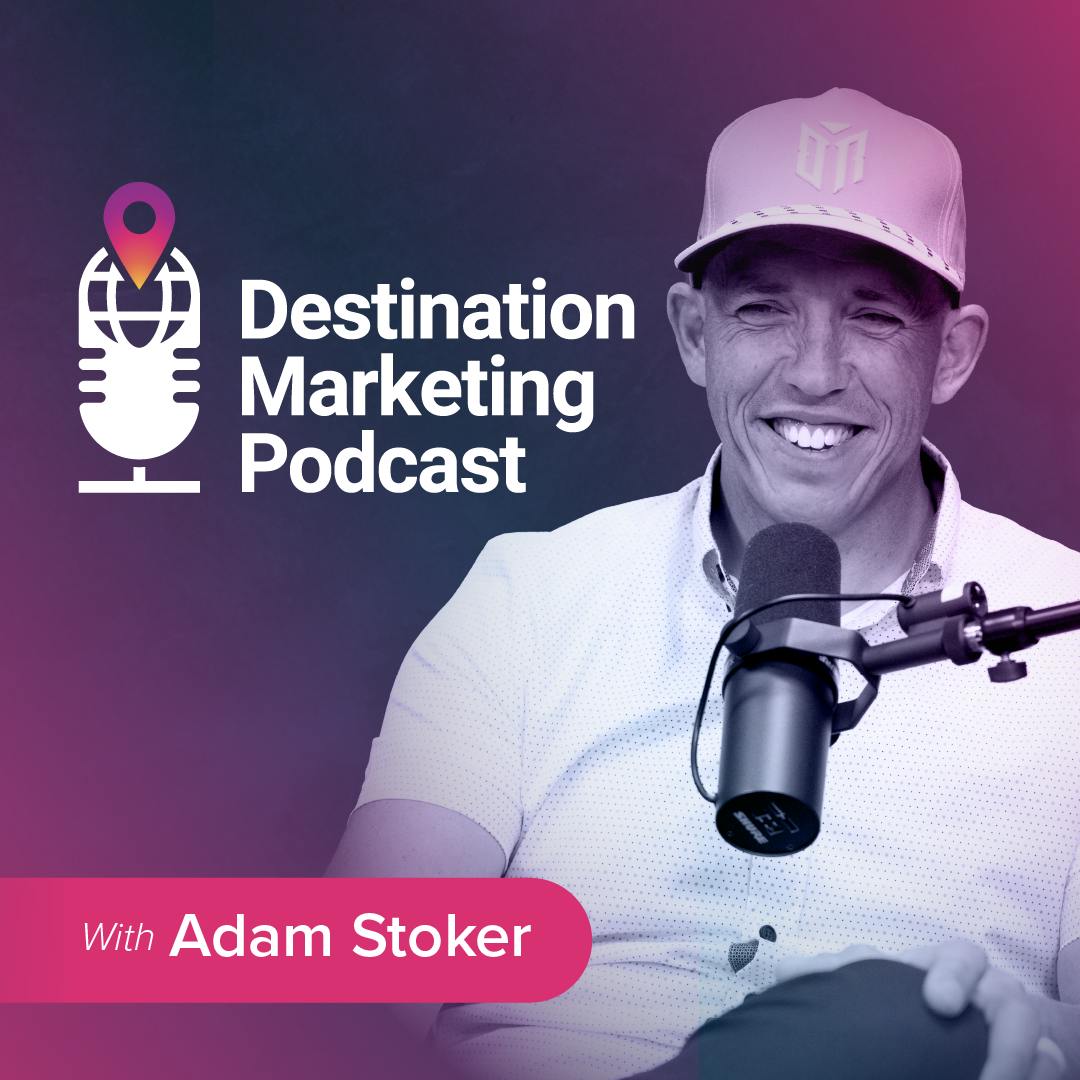
Destination Marketing Podcast · 2026-06-30 · 42 min
Key moments - from our scoring
Substance score
37 / 100
Five dimensions, 20 points each
Katie Conner brings a personal heritage in hospitality - her grandfather and father owned Burger King franchises and a select-service hotel - to her role leading destination development at the Virginia Tourism Corporation. After working in local government tourism for her home community and spending 11 years in various capacities at VTC, she was recently promoted to director of destination development, a position managing a team of six serving all 133 Virginia localities. Conner emphasizes that effective state-level destination support requires meeting communities where they are rather than forcing them into predetermined boxes. Her team leverages the broader VTC organization - including marketing teams, research, and 12 welcome centers - to extend their reach across the geographically dispersed state. She highlights work in communities like Damascus (following Hurricane Helene recovery, with assets like the Virginia Creeper Trail) and her team's deployment of marketing grant reimbursement programs that allow communities to extend existing budgets, try new strategies, and reach emerging markets identified through VTC research.
While the destination development team is six strong, they coordinate across the larger Virginia Tourism organization, which includes marketing teams, research divisions, and 12 welcome centers across the state. These broader resources allow the team to serve as boots-on-the-ground coordinators delivering resources and partnerships to communities.
VTC offers marketing grant programs that allow destination partners to leverage existing marketing dollars to extend their spend, try new strategies, enter emerging markets identified by state research, and take calculated risks on new audience segments without proportionally increasing their own budgets.
VTC leveraged existing trusted relationships in communities like Damascus, Southwest Virginia to provide immediate outreach and determine recovery needs. Team members then guided partners through feasibility planning and idea generation to repurpose spaces - like debris collection areas - into new community assets.
VTC works with destination marketing organizations (DMOs), Main Street communities, tourism councils (both volunteer and staff-driven), and visitor centers of varying sizes, ranging from small volunteer operations to teams of 10-15 people managing full marketing programs.
Our reviewer’s read on each dimension, with quotes from the episode.
The episode is heavily diluted by an extended host intro about a personal certification, two mid-episode ad reads for his own services, and a roundtable promotion - all before or during the actual interview. The interview itself yields a few operational specifics (6-person team covering 133 localities, marketing grant reimbursement programs, cooperative co-op structure) but most answers stay at a high, advisory level with limited actionable density per minute.
really just try to meet them where they are and continue the conversation
we have 133 localities in Virginia. We have some places that are closer to six or seven other state capitals than our own
The conversation recycles standard DMO frameworks - meet partners where they are, lead with authenticity, tourism and economic development are linked - without introducing contrarian or first-principles arguments. The talent-retention angle is the most interesting thread but it is dropped quickly without novel development.
being authentic to your, to your community and bringing the right people to the table
Tourism is the first state for economic development
Katie Connor is a genuine practitioner with 11 years at a state tourism office and a newly appointed director role, giving her credible on-the-ground experience. However, she is not a top-tier executive or someone who has driven destination strategy at unusual scale, and her institutional seniority is modest relative to the strongest possible guests in this space.
have been there, um, just about 11 years and have had an opportunity with a staff retirement and leadership and then another internal promotion
really meeting with them, uh, meet them where they are, I think is the biggest takeaway for our team
There are genuine specifics - 133 Virginia localities, a 6-person state team, 12 welcome centers, a named community (Damascus), a named trail (Virginia Creeper Trail), and a sunflower festival with 18-20,000 visitors over two weekends - but no dollar figures for grants, no ROI data, no program-level metrics, and most answers rely on vague process description rather than concrete evidence.
they average between 18 and 20,000 to their event, which spans over two weekends
We have 12 welcome centers in the state
The host asks a few structurally decent questions about the tension between state vision and local autonomy, but he frequently answers his own questions before the guest can respond, inserts a lengthy self-promotional ad read mid-interview that breaks conversational momentum entirely, and never pushes back on any vague or unsubstantiated claim.
Ever since we did CMO Jam at esto last year, my m inbox has been full of people saying, okay, when's the next one
if I remember correctly, you know, different. Different destinations are asking for different things from you guys. So I said if I remember correctly, but it should be, if I understand correctly
Computed from the transcript - who did the talking, and the words that came up most.
Katie Conner, Director of Destination Development at Virginia Tourism Corporation, joins Adam to talk about how a team of six supports 133 localities across the state. They dig into what communities actually need from a state tourism office, why proactive outreach matters, and how authentic local assets - from trail towns to sunflower festivals - become the foundation for sustainable destination growth.
Transcribed and scored by The B2B Podcast Index.
Speaker A: Foreign.
Speaker B: Hello, everyone, and welcome to another episode of the Destination Marketing Podcast. I'm your host, Adam Stoker. We've got a great show for you today. I'm really excited to bring our guest in in just a few minutes, but before I do, uh, I wanted to, I'm going to share a little bit of personal news today that's, that's not so much like a hot take on what's happening in the industry or anything like that, but it's a, uh, it's a pretty cool milestone that I've been able to hit that I wanted to share with you all. And I had the opportunity over the last few weeks to find out that I have finally achieved my certified Destination Management Executive Certificate through Destinations International. And I really, I'm proud of it. It's something that, you know, when I started the program, I don't think I realized how rigorous of a program it is. I don't think I realized, like, I saw it on paper and it didn't seem like that many, uh, conferences to attend. And adding a few days on the front end of the conferences to make sure that I was able to catch all the education. But in going through it, especially since COVID hit right as I was beginning the process, it really has been a long and arduous process. And it's kind of funny because we've lived so many lifetimes since I started my cdme. I'm almost like, man, I'd love to go back and take the first three classes that I took now. Now in the world we live in today versus the world we were in when I took my first class. But I wanted to start by thanking Destinations International for creating such, uh, an excellent educational program to help Destination Marketing professionals progress in their career and be prepared for senior leadership, uh, in the industry. And I really felt like the instructors that they chose, and I'm going to name a few of the instructors that I had, but the instructors that they've chosen are really great, uh, thought leaders in the topics that they provide education on. They were excellent instructors and it was very clear that they weren't just teaching something that they had read in a syllabus, but they actually had lived through a lot of the situations and topics that they were sharing with us in the, uh, CDME program. So I want to shout out a few of those instructors. I was able to build a close relationship with Tom Loftus. Um, Cody Chomiak was a great instructor. And especially as AI was starting to come on really strong, Cody was incredibly valuable and he's been an early adopter of AI Gary Sherwin. From a branding perspective, if you haven't talked to Gary about the work that he's done for um, the brand of the organization that he's in, uh, and the hard work that he's done there, uh, he's a branding genius, uh, and I don't say that lightly. Kelly Miller, who has since retired, since he started teaching uh, in the program and since he was my teacher, uh, he was an excellent uh, instructor as well. David Holder, he, uh, taught, he was my first teacher with strategic issues in destination management. He taught in conjunction with Maura Gast. And I mean the two of them, I can't imagine a couple of better people to learn from in our space. So I was really fortunate to have the instructors that I had to learn the things that I learned. And you know, as a vendor I think I was, you know, one of the early vendors that went through or at least that started the program. I think there was lots of vendors that finished before I did. But it was really fascinating to go through that program as a vendor and I was really grateful that I did because it really allowed me to get kind of behind the scenes and understand what a lot of my peers in the destination marketing industry are dealing with but without the kind of veil of not being inside the organization and not being behind the scenes removed. And, and so I was really able to learn and uh, get a lot of insight on why decisions are made a certain way in the space and maybe why, you know, if I've sent a proposal over, what are some of the roadblocks that happen on the other side that as a vendor I just am not aware of, Uh, I learned a lot about funding and advocacy and stakeholder engagement and it really just educated me and made me much more well rounded, uh, uh, as a destination marketing professional. So I don't know that I want to go on and on and on and on. It was just such a fantastic program that I was incredibly grateful for. There were a few changes that I made in my business as a result of the program. Number one is, uh, worked with an organization called Destination Corps to reimagine the destination website, uh, product because I just feel like based on where the industry is going and all the things that I learned, our websites today don't truly capture what, what they need to. They're, they're not the experience that they need to be. They actually need to be an extension of the literal experience that destinations are going to have. Uh, or excuse me, that visitors are going to have in our destinations. Um, and we've kind of lost that. I also changed the way I looked at being a support to the industry entirely, where I'm no longer just going to everybody and saying, hey, we want to be your agency of record. I'm instead asking questions about a variety of different problems that destinations need to solve. And as a result, we've been able to do some of the coolest projects that we've ever had. And the strategy projects that we're working on are very different than what you would imagine a traditional agency, uh, or marketing firm to do. And that's been incredibly valuable to both us and the clients we've been able to serve. And then, of course, in the process, we built Tourism iq because we recognize there is just a hunger for content and education and value in the destination marketing space. And since we built Tourism iq, we're coming up on a thousand users, a thousand profiles on, on Tourism iq, and I, I can't believe how many people are using that platform now. It's been really fantastic. So all of those are byproducts of the education that I through the CDME program. And I think that's the part that a lot of people miss is that the ideas and innovations that come from getting that kind of an education from the CDME program, it's just going to help us push this industry forward. It's going to help us progress both personally, professionally, and as organizations as we send people through the program. So thank you to Destinations International for such a fantastic education. I really appreciate it if any of you are going to Portland here in the next few weeks. Uh, I'm excited to see you all there in person. I'll be walking on stage and receiving my certificate, and I just can't wait to do that. So thank you so much to Destinations International for that opportunity. And it's an achievement I'm really, really proud of. And with that, I want to invite our guest. Her name is Katie Connor, and Katie is the director of destination development for the Virginia Tourism Corporation. And Katie, I'm so excited to have you join us on the show today.
Speaker A: Thanks for having me, Adam, and congratulations on your cdme. That's a wonderful, uh, a way to kick the. The conversation off.
Speaker B: Thank you. Have you gone through the program?
Speaker A: I have not gone through the program. I know colleagues who have, um, we have a, um, teammate that's going through it now, so just appreciate your takeaway and a lot of notes, um, that were hit on, that were very relevant to the work that we do in Destination development.
Speaker B: Awesome. Well, I would definitely recommend it to anybody that is debating whether or not to go through the program. It was fantastic for me, and I'm sure it would be for you or anyone else. So, uh, thank you. Uh, Katie, I'm really excited to have you on the show today. We're going to talk about a variety of different things, but what prompted me to reach out to you is you got a new role at, uh, the Virginia Tourism Corporation. And I wanted to reach out and kind of see what led to that change and what you were planning on in that role. So why don't you tell us a little bit about your background and how you ended up in this new role at Virginia Tourism Corporation.
Speaker A: Absolutely. Well, thank you for the chance. Um, hospitality and tourism is certainly in my blood. I was raised in a small business hospitality household, so my grandfather and my dad owned, um, Burger King restaurants, and then we had a select service hotel. So I was working at the front desk, ah, about the age of eight. Um, so really something that, um, has really stuck with me and then thinking that was going to be the future, that I would be working in the business. And then as things do, um, plans change and I did work, um, in that space, but we pivoted away from that and I ended up working in local government and was working for the tourism office for the community that I live in. And ironically enough, that was a, ah, class project in college of, uh, what is your dream job? What would you like to be doing? So when I interviewed for the position, I said, this is not only something I'm interested in, it's what's meant to be. So showed up with, um, my at the time, made up, um, brochure for the destination that I had created in college several years previous. And really the rest is history.
Speaker B: So it's. It's hard to say no to somebody who looks you in the eye and says, hey, by the way, this is meant to be. I'm supposed to work here.
Speaker A: Yeah, if you don't know it, I know it already. Right. So then was able to transition into, um, the state tourism office at Virginia Tourism and have been there, um, just about 11 years and have had an opportunity with a staff retirement and leadership and then another internal promotion, um, that allowed for this director of destination Development position to open and went through those channels. And I'm very pleased to now be sitting in that role to be leading the team.
Speaker B: Great. So 11 years in, you've had the opportunity to work in a variety of different capacities within Virginia Tourism Corporation, which Of the roles that you worked in prepared you most for this new role.
Speaker A: I believe just the continuation of working with the team that I'm now leading. And so seeing kind of those day to day, um, demands of either partner requests or just the ability to be able to pivot kind of at the last minute to meet a need that we all know comes up. Um, I think during COVID that was another space where we really became that, um, response team and then moved into, you know, being able to help in the recovery stage and then how do we then restore our destination? So this position has allowed for that. While the role has looked relatively similar, the areas have changed a bit. So the partners that I worked with in that position as a destination development manager look different over the years. Um, so having had a variety of experiences from bigger cities to more rural communities, um, is a really great positioning. Awesome.
Speaker B: I like that. So in the Virginia Tourism Corporation, your role in destination development, I think is a little bit different than a, uh, local DMOs destination development role would be. Right. And you probably have a little bit less control over what can be developed in individual communities. And I imagine that that ah, has some benefits to it, but also some challenges that come along with it. If you're over development but don't have that direct impact or influence over specific development within individual communities in the state, that's got to be challenging. So I'd love to understand how you balance your role with the state and your collaborations with the individual communities that you serve.
Speaker A: No, that's a great question. And it's true. It's being able to lead and to guide and to advise, but knowing at the end of the day, the community partner is then going before their council or their board to request that funding to move forward with a program. Right. So I loved in your intro just being able to help solve problems. And I think that's definitely at the forefront of the work that I'm passionate about, the work that our team is passionate about. And we really lead with that basis at the organization overall. Right. Having that integrity to help solve problems for our community partners and help them to really realize their tourism potential. So the balance of recognizing we are here to ideate with you, we are here to bring partners to the table. Um, and so that looks very different. You know, the day is very different for our team across the state. So we have 133 localities in Virginia. We have some places that are closer to six or seven other state capitals than our own. And so that also is a meaningful component of the Team, where we are so widely spread out, um, and trying to be able to navigate those conversations with partners, and then we come back together to be able to say this is my experience with the community. Others may benefit from that. And so we really utilize that team component as well.
Speaker B: Well, if I remember correctly, you have a team of six, right?
Speaker A: Yes, that's correct.
Speaker B: You have six people serving 133 different localities, likely with one, maybe two points of contact in each individual locality. I mean, how can a team of six have a big picture vision for the state and manage that vision all while serving the needs of the individual DMOs within the state?
Speaker A: We're fortunate, Adam, because while the destination development team is six strong, we have this huge organization of Virginia tourism professionals behind us. Whether that's through the marketing team research, our welcome centers. We have 12 welcome centers in the state. So it seems a bit daunting to say there's six covering these localities, but truly it's a team behind. We just happen to be the boots on the ground that are delivering the resources to the community partners. And so being able to, um, really tag team in that space. Our travel, um, counselors at our welcome centers are also engaging with the community partners, um, making sure that we realize and understand the true experiences that are in the destination. And they may come back to even our team to say, we, we see a need. Can you help fill that need? And that's really what's valuable about the organization.
Speaker B: Okay, I like that. I mean, I guess I want to get into the specific dynamic now between what you do and what the individual communities do. When we talk about your role, there's a vision for the state and where the state needs to go, the goals that the state has, and hopefully that goal is kind of the collective sum of all the individual visions of the destinations that you serve. What specific support are they looking for, and how do you decide how to prioritize the support that you give based on the vision you have for the state?
Speaker A: That's great. So of course, overall, the mission of Virginia tourism is really focused in, on expanding that domestic and international inbound travel and motion picture production. So it's about generating revenue, supporting employment in Virginia. And then when you drill down into the communities, you know, being able to really meet with them, uh, meet them where they are, I think is the biggest takeaway for our team. And not trying to say this is the only way that you can work with our organization. It has to fit this box or it's nothing. And I think our team does a really Incredible job about understanding a partner to say, hey, we just need help in this space. And we can respond and say, that's great. Here are some resources or here are some tools, um, to be able to accomplish that. And then we just kind of start, um, pecking away at, ah, well, what about this? Or here's this idea. Um, we're great about that. Continued professional development on the team as well. Um, it's ideal if we could kind of triage the need across the community. But oftentimes the demand, um, doesn't always match up with the need itself. And so you have communities that are volunteer tourism councils, and then you have some communities that have, you know, teams of 10 or 15 within the office that are managing a visitor center or managing a marketing plan. So it really just, it runs the gambit, and we really just try to meet them where they are and continue the conversation. Um, and just those touch points to be able to know that we are a resource and that we are here to help guide their vision. I, um, think that's another key element too. Um, Virginia tourism. We have our strategies and our plans, um, as a resource for them, but then also doing so in alignment with what the goals are of their individual destination.
Speaker B: Great. Tell me one of those supporting projects that you've worked on that you're most proud of, that your team was able to kind of mobilize and support.
Speaker A: So one is really hard. That's like asking, picking a favorite kid, favorite child, in my case, who's your favorite pet. Um, but, you know, really being able to have that response to organizations. Um, so many had the spotlight on, um, western North Carolina during Hurricane Helene, of course, um, and that continued, you know, restoration of those communities is ongoing in, um, a community in Damascus, which is in Southwest Virginia. Our team member there was really, um, intentional about that outreach in the destination. Um, we have an asset, an attraction there. The Virginia Creeper Trail. Um, Damascus itself is known as Trail Town, usa. It's where several trails converge, including the Appalachian Trail. And so Kaylin was really able to get in and have the conversations with the partners to be able to determine what that immediate need was. Um, and so the relationship that we already had in that community was really valuable because we were a trusted source coming in, knowing that we were bringing forward ideas for, um, that recovery space. So kind of moving on from the immediate impact. Um, and again, they're still in that recovery phase in that community. Um, but the resilience there was really something that shone through in the days, weeks, months, and now year, um, Afterward. And so going through that process, there was a space that was utilized for, um, debris. Right. Collection of that. And so it's this development of now, what do we do with this space? And so helping lead that team through, um, a feasibility plan of now. How do we create something out of destruction? How do we create beauty from that? And again, that's a small one Example in a statewide, you know, we have communities like Gloucester that really just weren't, you know, that's in the, um, eastern portion of the state, and you can fill them all in between. But, you know, really needing the assistance of our team. And so our team member there was able to just guide and assist through a variety of ways to bring them forward. And, and Laura's done a great job in that community. So again, we can talk for a really long time about the work that the team does. And I think that's the big piece of it is there's a lot of components and a lot of players at the table. Um, we just want to make sure that we're bringing the right folks to the table. And we also know that we aren't always the ones that have the resources, but the more that we know that we can bring forward, um, the better. And hopefully then that will make some change in that destination.
Speaker B: Well, and if I remember correctly, you know, different. Different destinations are asking for different things from you guys. So I said if I remember correctly, but it should be, if I understand correctly, that in that situation, you guys brought some data and experience, you brought, probably brought a little bit of funding, some m planning along with you. What are people normally asking for from you guys? Is it funding? Do people just want to get as much of the state money to their individual destination as they can, or do they. Do they want more of your resources and planning, or. Tell me a little bit about what those kind of interactions look like. Ever since we did CMO Jam at esto last year, my m inbox has been full of people saying, okay, when's the next one? When's the next one? When are you going to do the CEO Jam? When are you going to do Digital Marketer Jam? So on and so forth. And it's something that we've put a lot of thought into. And after seeing the success of the CMO Jam product last year, we wanted to make it more frequent, we wanted to make it more scalable, and we've been working on a solution to that. Right now, I'm looking for CMOs who want to participate in the CMO Jam that's upcoming uh, probably in the next couple of months. And, and I'm also looking for people who would like to be a part of additional roundtables. So CMO Jam was where I had 10 CMOS around a table and we talked about the issues facing our industry and how the destination marketing industry can move forward from a marketing perspective. If you're a CEO and would like to be part of a CEO roundtable, hit me up. Adamathebrandrevolt.com Same. If you're a CMO or if you're part of another group that you'd like to do a roundtable sitting around with your, uh, different peers and have me moderate a discussion that captures really good value for the entire industry. Something that everybody in the industry needs to hear. I really would love to have all of you participate in some of these roundtables that we're putting together. And I'm even working on something that's going to be more fun, bigger and more opportunity for you all to connect with your peers in these types of roundtable settings. We're all going to learn from each other. It's the only way we survive this thing is we all need to work together, help each other move forward and build for the future, Build an industry that's sustainable for the future. And there's too much one to many discussion going on. I want many to many discussion going on. And the way to do that is through these roundtables. If you want to participate, hit me up. Adamathebrandrevolt.com, we'll set up a roundtable. We'll get you involved in some of the ones that we already have planned. And I think it's going to be a great way for us to continue to push this industry forward.
Speaker A: Forward. Partnership is really key when we are building a relationship with a community partner. And again, it could be a destination marketing organization. It could be um, a Main street community. We have a really thriving Main street community through our Department of Housing and Community Development. So that's a really valuable resource. And the conversations as we build those relationships are how do we continue to drive awareness of our communities? And I think that's the piece where it's uh, it's not an or, it's an and we need this and we need, we need attention and we need funding. We're fortunate that, uh, at Virginia Tourism we have several marketing grant reimbursement programs. And so that is a tool that we are able to utilize for communities. To say, here's a way that you can leverage existing Marketing dollars that you are spending to either extend that spend and try something new. Right. Go out, take a little bit of a, of a risk with a decision, um, with a strategy, um, attract a new audience, you know, go into one of these emerging markets that our research is telling you are interested in your community, but maybe you don't have the bandwidth to be able to, to capture them with your current marketing budget. So the marketing dollars is a really valuable tool that we utilize. And then again what are the touch points with the visitor? So we have a really strong partnership marketing advertising program at our welcome centers. Um, and you know, the value of print, it does exist. The number of people, um, who still have that component and that interest is why our travel counselors, it's so important for them to be in the communities and getting that information. So it, the resources across the board, um, look a little bit different. We have a great marketing co op program, so that's another area is maybe bringing forward ideas that they did not consider as uh, an opportunity and then that helps them to test the waters with a little bit more of a low stakes claim, especially as we're contributing into that co op program ourselves to help buy down the costs for them.
Speaker B: Awesome. Yeah. And those cooperative programs are great because you essentially can put together a menu of offerings and then the communities on their own can kind of decide which one is the best fit for them. So that, that makes a ton of sense to me. But I also know that there's situations like what you dealt with, um, with some of the damage from um, the hurricane and stuff, that it's not always just pick from a menu and go. It requires some serious collaboration and stuff from your team. When you and I had our prep call, one of the things that stood out to me is you mentioned that with 133 different communities that you serve, it's going to be very difficult. If your expectation is, hey, I had this thing happen in my community, why hasn't the state reached out? And instead it kind of needs to be clear to destinations. If you want support from the state, of course they're doing their best and they're going to do, they're going to try to monitor everything they can and give you the support that you, you need. But the reality is if you need support from the state, you have to speak up, you have to reach out and you have to tell the state what you're struggling with. Because inevitably the people who have the most pressing issue and reach out on their own and are proactive are probably going to get the quickest attention from the state. And so it's really critical the destinations understand the need to communicate and not to just expect the state to anticipate their needs and support.
Speaker A: We are fortunate in Virginia to have the number of team members activated throughout the state. And I know that it looks very different in other states. And so I know kind of understanding the role and the responsibility of the state organization is really critical. I feel fortunate that our team, um, specifically the development managers, are engaged in as many groups as we are. Um, I think it's always, how do we continue that conversation? Um, to know that if there's a question from a local farmer who's interested in, you know, building out their agritourism experience, they know that they can reach out to the destination development manager or a marketing team member or a welcome center travel counselor and say, hey, this is an interest I have. I don't know what the next steps are. And so then we can pull the knowledge that our team has to say, okay, what is your inch? I mean, we get down into the. Does your insurance allow for visitors to your property? Do you have a website? Are you doing social media? Are you, um, you know, able to have, you know, take payments, you know, digitally versus just showing up with cash? There's a great story with, um, of a local, um, event that came to be because it was just, well, why don't we try this? It was a local farm. She said they were a dairy production. And she shared with her dad, maybe we should plant some sunflowers. And it was, well, why would anyone come to a field and walk through sunflowers? Right?
Speaker B: And they are clearly, he hasn't been
Speaker A: on Instagram and they are now 10 plus years in and they average between 18 and 20,000 to their event, which spans over two weekends. They have special events. And fortunately I've been able to see it, um, personally, just that it's in the community I live in. It's a, it's a friend. It's someone who's well respected in, um, the farming community throughout Virginia. But it was just, why don't we try? And I think that's a great lesson. And that's something that she shares across the state, um, with. Well, just try it. Just see what happens. And you can pivot from there if it doesn't work. And that was something from. I remember during COVID they had to establish dedicated visitation times, right? Same with restaurants. You know, you have to have this many people or you can only have this many people. And from that they were Able to really build out their ticketing system that they've continued to maintain because before that it was show up cash only. And so from that experience, they've now really built out and they do dinners in a field, they host, um, school days, they host senior days, they host special needs days. And it's really become a destination event, not just in the region, but truly in the state, um, and is really coined as the largest sunflower festival on the East Coast. And it's a great, it's a great piece. And, um, it's been really wonderful to watch.
Speaker B: What I love about that. And, and you said that like the, the starting point to that was why not try it, right? That there's essentially dormant assets all over every single state, that if somebody would just try something, who knows, maybe you could get 20,000 people a year coming to that attraction. Right? So that's kind of a destination development person's dream is if somebody starts asking that, why not give it a try question. Because now you're going to get another asset that you can promote as a destination. I want to get into one of the things that a lot of people, we think about it, but we don't like, really internalize it, I guess, is yes, destination marketing has a really important role for the visitors, but in a lot of these rural communities, and Virginia is no different, where tourism is the primary, um, I would say industry or revenue source for the community, you end up in a situation where because it's such a desirable place to visit, it gets more and more expensive and challenging for locals to stay in the area. So then talent retention becomes a really important component, uh, of destination development. So how do you think about tourism's role, not just in bringing visitors, but also creating an economy that allows us to keep the talent from our communities, in, in the community, to continue to perpetuate that visitor economy.
Speaker A: Well, it's the quality of life piece, right? People love where they live if they can get to the things that they love doing, right? And so we have this, the great brand of Virginia's for lovers that we talk about. You know, this is why you come to Virginia. But here is also a way that here's a reason to stay. Um, and so we see that with our community partners, whether it's a tourism, um, sole office or they're partnered with, with economic development, that they're really leaning in on this, um, sustainability piece for their destination. And tourism allows to create those thriving and sustainable communities where residents, um, experience the restaurants, the events, really those assets that are created with Maybe a visitor in mind, but they get to then experience it themselves on a more regular basis. Um, being able to see the talent piece, um, a little bit firsthand through, um, another role was really interesting and being able to hear about why companies come to an area. Right, okay. How quickly can my team members get on the trails? How quickly can their family members, you know, start to feel included in a community? And so we're starting to see a lot of these, um, events, or it's even beyond just like young professional groups. Right. Every community probably has some type of a young professional network that, um, they're able to tie into. But then it's even broader, right? It's. There's the broadening for those programs to say, here's the way that we're highlighting the assets that exist in our community and then utilizing that as an economic development incentive. And so that's the space where we kind of sometimes feel like we're in this gray area in destination development where it's visitor focus. But then there's also all of these economic development components, and they are, they're. They're tied together. Tourism is the first state for economic development, and we work closely with the economic developers both at the state regionally and in the local communities. Um, but it's definitely an asset that we're starting to recognize and is becoming part of more of the strategy conversation, whether it's through our statewide tourism, um, strategic plan, whether it's through one of the community tourism action plans that our team works with, um, destinations on, you know, who are the people that are experiencing these businesses? And then also are they loving the community enough that they want to contribute as a new business owner, as a new resident in that destination?
Speaker B: Yeah, yeah, I like that. Uh, I'm sitting here thinking about how can communities use destination development to kind of protect the, the talent, uh, and keep it in town. And I'll give an example. Here is, let's say agritourism. And we've got a lot of farming communities, I'm sure, all across Virginia, you know, got a lot of farming communities. And you look at it and say, okay, how do we retain the children of these farmers that may not want to do exactly what their parents did or whatever? And I've seen agritourism actually become a major destination asset, including in Virginia, I believe. And when you start to pull on that thread, it's like, okay, well, who are the residents of the community? Is there a big agriculture base? Okay, can we create analog events or owned, um, activities of some sort or even content that helps activate these people to want to be part of the tourism economy and want to stick around. And because somebody who may not want to be a farmer like their parents, maybe they want to own an event that brings people in to showcase the agriculture because that's a completely different skill set than harvesting the crops. Right. So I think if we start thinking about destination development that way, of what are the residents, uh, of the community, what do they need, what are their skills? And how can we create tourism assets that allow them to build a life for the future here It's a really interesting kind of different perspective on how we come up with which activities we're going to focus on.
Speaker A: There's the visitor sentiment, but then the resident sentiment is so incredibly important. And seeing kind of firsthand some of those always ensuring you always see the, I would say the child component of events. Right. Bring your families. Everything is very focused, um, family oriented in a lot of our Virginia communities. And so that's a really important aspect, um, agritourism specifically. Right. It's the diversification of what the farming life looks like. Right. We're just coming off of Virginia Agriculture Week. Right. Virginia is for farm lovers. Having that concept, um, appeal to ages of, you know, individuals of all ages is really valuable. But being able to have those conversations and just to the back to the point of, well, what if you tried this? What if this was a different component, um, you know, having people experience the farm in a different way than maybe our parents or our grandparents did, that goes back to the rich culture that exists in Virginia. Right. Whether it's Appalachian culture, whether that's water main culture, um, on the Eastern shore of Virginia and the Middle Peninsula, Northern Neck area, we have all of these cultures. Um, and of course on the um, cusp of VA250 with the American Revolution and all of the anniversary events that are happening, more eyes are now on our state and what the communities are doing and being able to experience that as a family. We know that the genealogical traveler exists. And coming back when I worked um, in the local community here, you know, we had a lot of genealogy visitors because the, the courthouse held records from seven present day states. So they were coming as far as, you know, Wisconsin and it reached to the Mississippi. And so we have that rich history that people are discover and getting back and you know, building off that nostalgia that I think is, um, very prevalent with a lot of, um, folks these days.
Speaker B: I love that. Well, as we kind of wrap up here, Katie, I'd love to know if you could kind of boil it down for the destination marketers that are listening into kind of your most important piece of advice, uh, whether it's how they need to look at destination development or just destination marketing or management in general. What's the best takeaway you would want somebody to have from this conversation?
Speaker A: Really approaching the attempt to create product, um, through what the demand in that community looks like. Right. Um, we talk about, you know, well, it would be great if we had this. This is working really well in this community, um, but really leaning into the authenticity of the destination. And if your state has a destination development team or your community has a destination development team, uh, making sure that they're part of that conversation. So knowing what resources exist to help support that challenge that you see is something that you're trying to, um, address is going to be really invaluable and really important. So being authentic to your, to your community and bringing the right people to the table.
Speaker B: Awesome. Katie, this has been excellent. The time flew by, of course, but if people want to learn more about you or some of the work that you're doing at Virginia Tourism Corporation, what's the best way for them to do so?
Speaker A: I'm active on LinkedIn, so please reach out there. It's, uh, it's my full government name. Um, so, Catherine R. Connor. But again, or email at, uh, K. Connor virginia.org um, of course, our website has all contact information, so Vatc.org is our industry page. And, um, appreciate the time.
Speaker B: Awesome. Katie, this has been a lot of fun. Really appreciate you taking the time. And congrats on the new role. I'm really excited to see you continue to develop in it in your destination development role.
Speaker A: Thanks, Adam. Um, I appreciate it.
Speaker B: Awesome. And thanks, everybody for listening. If you enjoyed today's episode, please don't forget to leave us a rating or a review. It helps us continue to bring you amazing guests like Katie. Thanks, everybody, and have a great week.
Speaker A: Week.
Speaker B: It's no secret that the advertising agency model is changing. I've talked about it a lot on this show, and it's no different for me and my organization. A year and a half ago, I went to my team and I said, we have got to change the way we think, uh, and we've got to change the way we're valued for our clients. We can no longer be valued for what we do because tactics are continuing to become commoditized and even achievable by AI tools. And so we've been working really, really hard to make that conversion from tacticians to strategists. And our team's done an incredible job of that. And in that process, we've had a lot of conversations with different destinations about what type of projects they need help with. Instead of doing the whole agency of record thing where we take all your media spend and all your different tactics that you're doing. Instead, we want to solve a specific strategic problem that destinations have. We've had one destination that had us build, uh, a corporate partnerships program for them, and we're in the process of that right now. We had another destination that really wanted us to build a Reddit strategy for them. We had one destination that said, we want you to solve LinkedIn for us. And we audited and built an entire LinkedIn strategy that's currently being executed on. And most recently we had a destination reach out and say, we just need help understanding where and how we should use AI across our organization and in our marketing activities. And we're working on that, and we're getting that finalized right now with that destination. So. So what we're finding is that there's all these problems destinations have that historically haven't felt like my marketing agency is the person to solve this or the organization to solve this. And that's created a lane where we're working, working with destinations of all shapes and size and sizes to help them solve these narrow strategy projects that maybe have been sitting on the shelf needing to be done for a very long time. If you have a project like that that you need solve a problem you need solved that you haven't yet been able to get to, let me and my team at, uh, Brand Revolt help you solve that problem, build a strategy, and execute on the solution in such a way that it changes your organization for the better forever. We feel like we can do a fantastic job of this. We've modified our model to be able to do that. And our team of strategists does an incredible job putting these things together for our destinations that we work with and would love the opportunity to put it together for you. So if you have something like that, hit me up adamathebrandrevolt.com and we'll get you set up.
Other episodes covering the same guests and topics, from across The B2B Podcast Index.
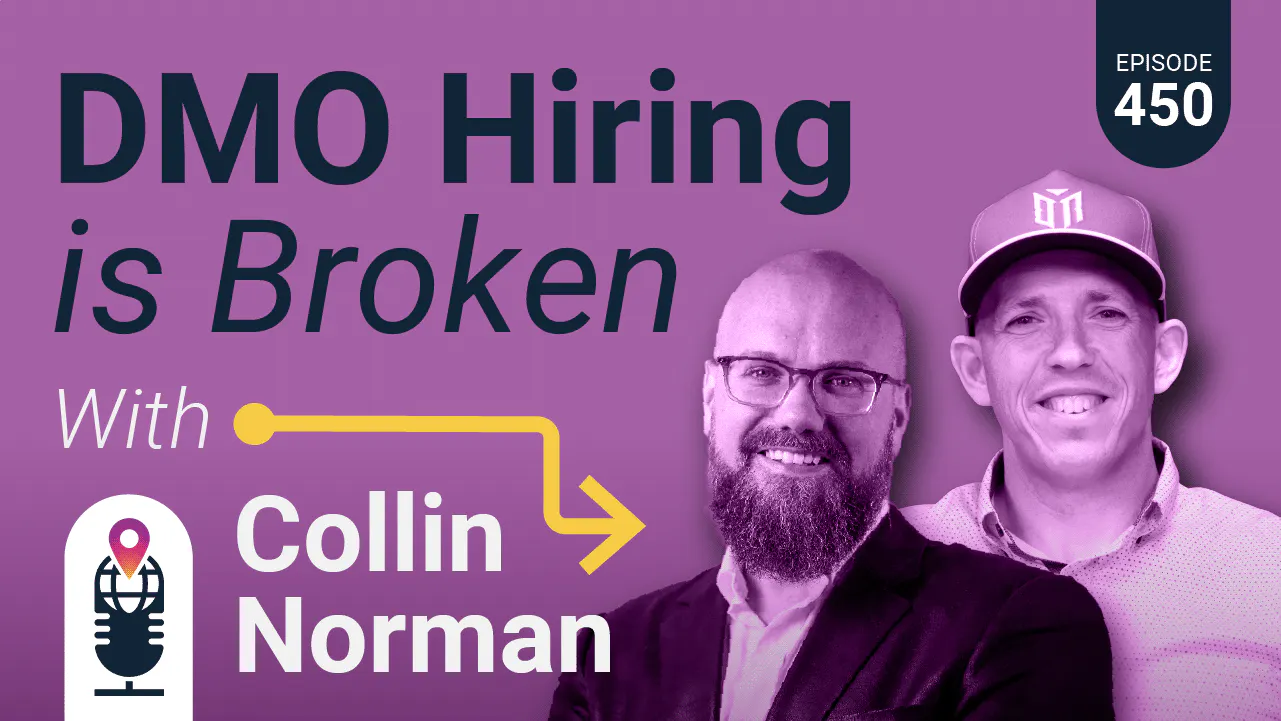 450: DMO Hiring is Broken with Collin Norman75 / 100
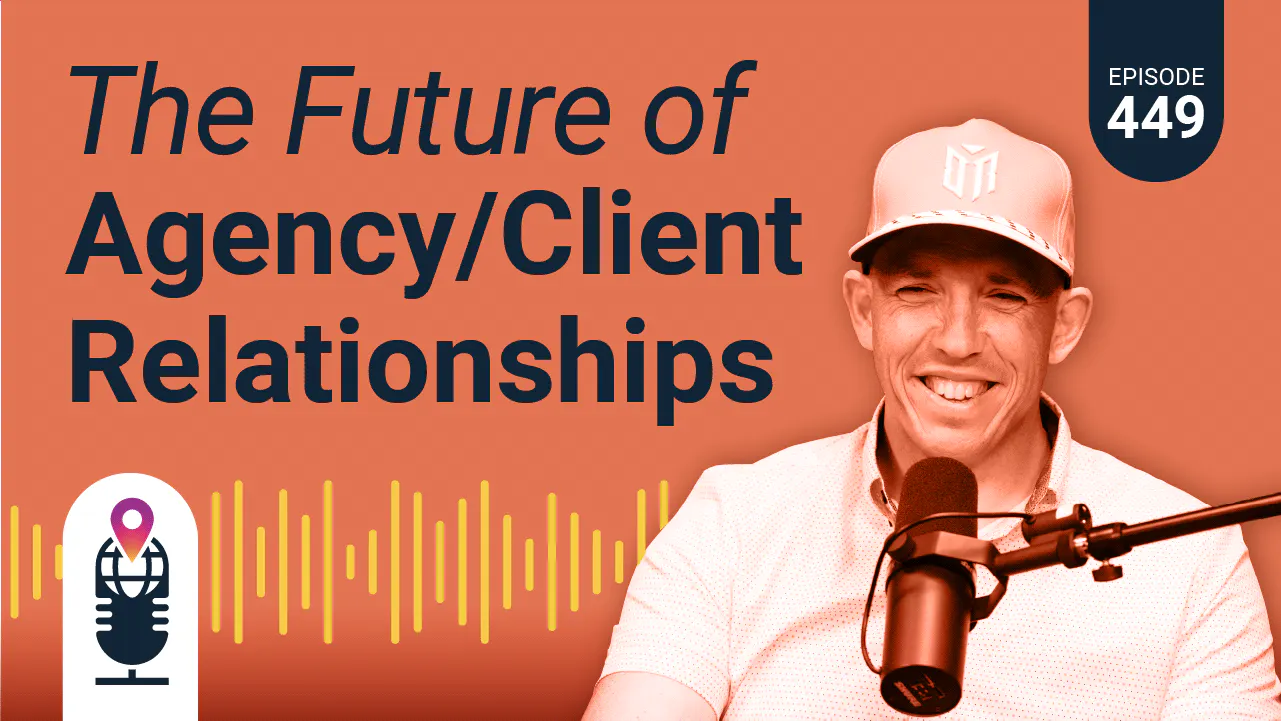 449: The Future of Agency/Client Relationships in Destination Marketing448: Travel Nevada's Keelie Cox on Turning Alex Honnold Into a Content Powerhouse447: Experience Ruston's New CEO Reveals the 3-Word Framework Every DMO Needs with Tori Davis446: How Visit Mesa Built a $60M Sports Tourism Machine with Lance Fite