
Designing Successful Startups · 2026-05-13 · 42 min
Key moments - from our scoring
Substance score
64 / 100
Five dimensions, 20 points each
Michael Krause spent 30+ years building systems for the Navy, architecting Microsoft's .NET Framework, running enterprise sales at Acquia (which grew from millions to $200M in revenue before a $1B+ exit), and advising startups through his consulting firm Dark Yeti. Now he's executing a rare playbook: bootstrapping Scorm Bench, an AI-powered validation tool for SCORM-packaged online courses, with his wife (Master's in Ed Tech) and adult children serving as architect, engineer, product lead, and customer success executives. The tool tests concurrent user capacity, content scoring, and objectivity before launch - critical for organizations like the U.S. Navy, which manages 600,000 sailors and 150,000+ courses. Krause emphasizes that his greatest successes (Acquia's explosive growth, mentorship under CEO Tom Erickson and Chief Customer Officer Chris Comparato) stemmed from exceptional team communication and aligned playbooks. His key learning: negotiating a blended strategy early prevents the compounding friction that derails scaling teams. He's intentionally benchmarming talent for future growth stages before needing them, a discipline borrowed from government contracting. For founders weighing team vs. solo paths, solo work, or building family ventures, this episode unpacks what separates winning execution from the burnout cycles plaguing most startups.
Scorm Bench is an AI-powered SaaS tool that validates SCORM-packaged online courses before launch by testing concurrent user capacity, content scoring accuracy, and training objectivity - allowing organizations to confidently roll out to thousands of users at once instead of micro-testing tiny audiences.
His wife (who holds a Master's in Education Technology) and his adult children, who collectively bring professional expertise in software architecture, engineering, product leadership, customer success, marketing, and sales.
He ran all enterprise business globally, scaling revenue from a few million annually to over $200M and building almost 200 enterprise clients before exiting in 2015; Acquia itself exited in 2019 for over $1 billion.
He leads with respect and mutual value recognition rather than authority, negotiates blended playbooks instead of imposing his own, and emphasizes that early communication about strategy prevents the compounding friction that derails scaling companies.
Not exercising a solo venture earlier and failing to communicate his playbook and drive alignment with co-founders from day one, leading to friction that may have prevented greater success in previous ventures.
Our reviewer’s read on each dimension, with quotes from the episode.
The episode contains some genuinely useful operational insights - particularly around team dynamics, communication as risk/reward, and the concept of bench-warming talent before you need them. However, a significant portion is biographical narrative and generalities (career trajectory, family background, how kids got passports) that don't land as actionable substance. The Scorm Bench product explanation is clear but niche. Most B2B operators won't extract 10+ takeaways.
Communication, when you're teaming is the greatest risk and the greatest reward
you've got to be benchwarming that next team, the whole, the whole process. Even before we launched Scorm Bench in August, we were having conversations with the talent
The bench-warming concept is a genuinely fresh framing for talent relationship-building. The family business angle and multi-generational startup approach is distinctive. However, the core frameworks - communication matters, play to people's strengths, align on playbook early - are well-known SaaS wisdom. The guest rehashes common startup lessons (right team/tech/timing, starting earlier, solo vs. team) without fresh counterintuitives or first-principles challenges.
you've got to be benchwarming that next team, the whole, the whole process
I would exercise a solo, a solo trip much earlier in my career
Strong operator pedigree: Microsoft .NET Framework architect, built federal platforms, ran enterprise at Acquia (grew it from low millions to $200M+), exited multiple ventures, now bootstrapping Scorm Bench. Real domain expertise in B2B SaaS scale and government/enterprise sales. Legitimately practitioner-level, not a pure theorist or podcast circuit guest. The Navy procurement validation and focus on operationally building something real (vs. discussing theory) raises credibility.
ran all their enterprise business from leads to subscription renewals. I would take them from a few million a year in revenue on their enterprise business and then globally build almost 200 clients and over 200 million annual revenue
we're in procurement with the US Navy
Concrete details on Acquia ($200M revenue, Chris Comparato/Tom Erickson, 2019 Vista exit) and Toast (public 2021). Scorm Bench described functionally (concurrent user testing, compliance automation for Navy's 600K sailors, 150K courses). However, most other claims lack numbers: no specifics on Dark Yeti revenues, exact timing of projects, details on Tabooti or other ventures. The family team roles are named but not substantiated with credentials. Missing data on product traction beyond 'procurement with Navy.'
took them from a few million a year in revenue on their enterprise business and then globally build almost 200 clients and over 200 million annual revenue
Navy has 600,000 sailors, over 150,000 courses
Host Jothy asks solid setup questions and context-setting queries (origin, career progression, mistakes). However, follow-ups are often soft and rarely push back. When Michael speaks in generalities (e.g., about ideas he didn't pursue), Jothy doesn't press for specifics or probe the real barrier. The 'would you do something different' question is good but doesn't get beneath surface answers. Host lets Michael meander through lengthy career narratives without tightening focus. No productive disagreement or challenging of claims (e.g., on family team capability or product-market fit).
But what I want to hear also is so what's the world changing idea that you would have if you had more confidence
Well, what's the thing that you just described? You know, some of the challenges. So what's the one thing you would do differently?
Computed from the transcript - who did the talking, and the words that came up most.
Michael Krause Bio Michael Krause is a technology founder, CEO, and Enterprise /Federal AI strategist with over 25 years of experience spanning military intelligence, Big Tech platforms, and high-growth SaaS companies. Michael’s career began in the U.S. Navy intelligence domain, where he worked at the intersection of mission systems, analysis, and national security. That early educational experience shaped a career-long focus on secure, scalable platforms and decision-critical technology across the defense and intelligence landscape. Following his military service, Michael became a design engineer at Microsoft, helping build and ship core components of the .NET platform, including early work on C#. He went on to serve in senior leadership roles across multiple software companies, including helping scale Acquia from under $5M to over $185M in revenue, and holding executive roles - CTO, Chief Growth Officer, and COO - at Tovuti, a global learning platform serving enterprise and U.S. federal customers.
Transcribed and scored by The B2B Podcast Index.
Hello. Please meet today's guest, Michael Krause. Communication, when you're teaming is the greatest risk and the greatest reward. And so if I look at everything that was right and amazing and I think of like the Acquias and the Taboutis and things like that, it was because there was really, really good communication.
What does it take to go from building data systems in the Navy to riding a billion dollar rocket ship at a company that helped launch Toast, and then walk away from all of it to bootstrap a SaaS startup with your wife and adult children? That's exactly what my guest did. Michael Krause spent decades in the trenches. From Microsoft's NET Framework team to building massive platforms for the federal government, to running enterprise sales at Acquia, where he helped grow revenue from a few million to over 200 million.
He's seen the perfect storm of right team, right tech, and right timing. But here's what makes this conversation different. Michael's now doing something most founders never attempt. He's building a family business, literally.
His wife, his sons, his daughters, each bringing professional level skills in architecture, engineering, marketing, and customer success. They launched their AI powered SaaS product scorm bench last August and they're already in procurement with the US Navy. In this episode, Michael shares what he learned from explosive growth at Acquia, why he wishes he'd gone solo decades earlier, and the surprising lesson about communication that separates winning teams from those that crash and burn.
Let's get into it. Hello, Michael, and welcome to the podcast. Morning, Jothy. Thanks for having me.
You bet. I always start this way, which is a context setting question. Where are you originally from and where do you live now? It's a great question.
I was born in Los Angeles. My dad was a California high patrolman, motorcycle policeman when I was born and early. Did they call those chips? They did.
CHP chips. He would be the Poncharello of the John and Ponch for those that are old enough to know what I'm talking about. I do, I do. And I was actually born at the UCLA campus hospital.
That's where his insurance benefits were. And that's where I arrived in deep fog in the middle of the night one time. And then now I'm in Boise, Idaho. The family actually eventually relocated to Idaho.
And in between then and now, I've. I've traveled the world and spent a good amount of time in D.C. doing civilian contractor work out of the Pentagon.
So it's been kind of a mobile journey the whole time. That's great. Why don't you walk us through a little bit of your career progression but especially focused on startups and you were just telling me before we came on the air that you've fallen in love with tech. So definitely want to hear something about some of those startups.
Sure, yeah. So early on, Navy veteran and was exposed to some technologies in the late 80s, early 90s through the Navy, which by today's standards are like, you know, rocks and sticks of course, but, but early stage it was fascinating to me to work with some of the communications and signaling systems and antenna based systems that were around in those days that would grow. I, I did some entrepreneurial things in my early 20s and actually weirdly through a severe head injury and a car accident, I, I discovered a passion for technology that led me to a computer science degree.
I was eventually recruited by Microsoft and really haven't looked back. I was part of the. NET Framework team from design and architecture through just prior to version 4 and then took all that technology passion and love back into the state of Oregon College systems and worked through all their colleges, both integrating, revamping their technologies. Did that for three years, then pulled into the federal space where we were building these massive platforms for federal government.
Love the experience and do through a mentorship with a company out of Boston, a company named Acquia. I would eventually be recruited into that company as it was experiencing tremendous growth and would travel the world for that company, ran all their enterprise business from leads to subscription renewals. I would take them from a few million a year in revenue on their enterprise business and then globally build almost 200 clients and over 200 million annual revenue and just experience that hockey stick rocket ship growth through that experience.
And then when I exited that started Dark Yeti which is a company that exists today. It's my consulting company. My wife and I do investments in startups. We've had a number of projects over the years where we were partnered with, co founded, invested and probably similar to your, your background there where I'm, you know, I'm both investor, founder, operator, sometimes technology builder, driving all these different things and spinning all the plates.
And then recently as I exited our last project which was tabooti lms.com we launched our own product, our own SaaS product, AI SaaS product in August called Scormadge. And so this is really our first solo where we're the, the solo investor. We're, we're sort of bootstrapping it and it's been a very, very exciting ride and I can't see a retirement in the future.
All I can see is more tech and more opportunities as we continue to scale these things. But that's my 30,000 foot. So you said that word quickly, say it slowly. Storm Bench, Scorm.
So it's a play on in the early 2000s, actually, right around 2000, the federal government created a portability policy around education courses online. At the time, there was just a few learning management systems and they didn't want vendor lock in. So it's, it's spread now for decades. And it's a standardization of packaging, sort of a remote HTML, JavaScript, CSS package of files as a zip that can then be ported between any online platform.
So these courses are now truly portable. And there's all kinds of variations of the original scorm, aicc, xapi, even JSON packaging for modern courses. And so our tool basically takes those packages before you launch to students. It validates all the different aspects of it, whether it's performance, how many concurrent users.
Also scoring around content and scoring around objectivity, is it actually hitting the source of what it's supposed to be training? And so we provide this sort of trifecta of scoring and performance prior to launch to ensure that it's going to work in the wild. And it's been currently well received by Navy, and we're in procurement processes with them currently. Okay, so I get it, get the connection to scoring.
Yes. And that's an acronym for the original package, zip file. So think of it like a test bench where you're going to put a course and you're going to test all these things, score all these things, and with a high level of confidence and even certification, you can launch these with predictability. Whereas today there's, there's no automation, there's no tool that can tell you that if you put 100 students on it concurrently, it's going to work.
And in a lot of cases, they don't work. And so there's an industry practice of rolling out to very, very tiny audiences, even like The Navy has 600,000 sailors, over 150,000 courses, and they spend all the resources just micro adjusting these tiny audiences at a time. And they're falling further and further behind on their compliance testing because the system just doesn't support it. So we're trying to help them get that absolute performance out of those courses so they can roll it out to tens of thousands or hundreds of thousands at a time and speed up their throughputs for compliance.
So right now, today, you're splitting your time, I guess, between the consulting, which is the Dark Yeti, that's like Yeti, the monster in the. That's right. Like, like Bigfoot but the snow side. Okay.
And well, the other thing that's a Yeti is those, you know, those big insulated cups. That's right. We've had some interesting IP conversations with the group and we're staying in our lane, but there has been some overlap there. We've gone through with, with the USPTO and such, but all good so far.
So anyway, you, you're splitting your time between the consulting company and this SaaS application that you're, you and your wife are doing. Is she involved with you on both businesses? Uh, yeah. So, so basically Dark Yeti has produced other products with partners and co founders and this is the first one where just Dark Yeti, my wife and I and our actual family are building and investing in this together as a true family business.
And so that's our, that's our experiment. Currently my children have grown professionally at the point where I've got, you know, architect, engineer, customer, executive success, you know, at, at the executive level as well as talent and marketing and sales. My wife has a master's in ed tech. So being an ed tech tool and in that industry and domain, she brings a wealth of value and information into sort of, you know, not just the product build out, but engagement with prospects, market and customers.
So we've got sort of this tuned family that just is just perfect for this capability right at this time. You know. Okay, but, but what's going to happen when you discover that there's a really critical role that you need to fill and you're kind of too old to have another kid. It's true, it's true.
So, and I think that's part of, you know, finding success as I have is that I can build in a simple teams very, very quickly. And so although I'm always interested in, you know, W2CO founding, you know, building other opportunities, I typically do a lot of micro consulting. So where I have this itch to get involved in all these projects, I typically restrict myself at that level to micro slicing. So I like, I'm on boards and as a board member and advisor, I get to sort of play that out with those young teams.
And so that's been very fulfilling. And then I think the other, the other side is even building Scorm Bench and Dark Yeti. The family and others are helping scale that. And so where I get to play quarterback and probably more sideline coach more and more these days, there's a very capable young generation team that's being built and scaled, scaling simultaneously.
So we're, we're really ready in the stages of scale. We've got, got people kind of hand picked out there that we'll be recruiting as we hit each stage of growth. And some of those are even joining us now as consultants and contractors and advisors that are helping. Whether it's growth, marketing, sales or even technical.
We've handpicked through our experiences collectively who those individuals will be and we're already selling them. So we're, and this is something I picked up in government business is that you've got to be benchwarming that next team, the whole, the whole process. Even before we launched Scorm Bench in August, we were having conversations with the talent that we see coming on over the next year to two years to help us take this to the next level. And is your family and your businesses, are they all centered on Boise, Idaho or are you virtual and spread out all over?
It's interesting. Our resources with the family are all here, but our partners, our clients, our businesses are global. I do a lot more business, I would say east coast and Europe than I do West Coast. And so it really is, we have the benefit of all the virtual capabilities today and with travel.
Right. Because I do believe in FaceTime and there's a lot of strategic value in getting FaceTime with the right people. And so I, I do spend some time on the road, but we are, we are housed here and we have, you know, a global impact. And so we don't have any local clients.
I'd love some, but it just hasn't worked out today. Well, I've, I've been to Boise, Idaho on my way to Sun Valley and it's a small town. I mean it is, it's a, it's a right place to live and raise kids. But you do have to make accommodations for business.
And a lot of us are, you know, operate on a more coast to coast or global stage. And so you have to be a little comfortable. Travel my. I may have calls at, you know, four in the morning and sometimes, you know, up until 10 or 11 at night.
But managing, managing that with flexibility is possible with a virtual world. And so we've, we've really benefited from that capability. Well, when you look back over what you just described as sort of your career progression, is there anything that stands out as like the greatest win you had? Yeah, I mean there's, there's probably quite a few, but one, one that stands out just because of the, the kind of, the breakneck speed of it would have to be aia.
I, I think that the right tech at the right time with, with top notch players across industry. I mean most of the people that I worked with and my, my, the person I reported to was twofold. I reported to like the chief customer Officer Chris Comparato and then Tom Erickson was our CEO and the company was so incredibly skilled at selling and marketing and outreach but also in raising money. Like it was just one of the machines that just phenomenal as I kind of measure everything against, you know, the, the capabilities of that team.
When I think about the other experiences and growth that I've gone through with other companies and startups. But Chris came from an exit and when he exited Acquia, he went on and started toast and they went public in 2021. So just I think that right team and the right funding and the right skill sets created this perfect storm. And that's, I think that's what investors and, and SaaS entrepreneurs are looking for is how do we create or recreate some of these perfect storms that were true rocket ships and had the billion dollar exits and had the explosive growth in controlled ways.
And so I strive for that in my work and I don't think that I've actually seen that level. We've come close to it on a few projects but that's what I'd like to see in our own project is that kind of explosive growth as we tune all the pieces in and we think the product is very mature at this stage but as we move into sales very cautiously, whereas other projects we're just knocking down every client possible, we're very strategically looking for the right early clients that are going to proof out our use case versus some of the startups.
It's like hey, we got a contract, we're washing a car with our sass, you know, kind of thing. And so we, we really are being methodical, taking all that experience and really what we want to see in the outcome. And we're, we're not feeling the a rush but we're feeling an intensity to be intentional on every contact we make for this product. And, and it's been very rewarding like we were learning every step of the way.
But that's that fine tuning. You're tuning your product and you're tuning the market and your sales motion all kind of simultaneously and sometimes those get rushed and people hit walls. Two, three years in, even post funding they can hit walls and we're really trying to avoid that with. With the lessons we've learned.
Sorry for the interruption, but in addition to the podcast, you might also be interested in the online program I've created for startup founders called who says yous Can't Start Up? In it, I have tried to capture everything I've learned in the course of founding and running nine startups over 37 years. It's four courses each one about 15 video lessons, plus over 130 downloadable resources across all four courses. Each course individually is only $375.
The QR code will take you where you can learn more. Now back to the podcast. Did. Did Acquia.
Is that the right way to say it? Acquia. That they had an exit, right? They did, yeah.
They exited in 2019. One point some billion. I think it was Vista. I'd have to go back and verify who that was.
I exited in 2015, so I had other projects I wanted to dig into and run with. But. But seeing their continued growth and final exit was awesome. Like just kudos to that team.
I have. I've seen them because I'm. I'm in Boston. Yeah.
Of course you probably know some of the players Underscore, which is Michael Scott, David Scott, the godfathers of SAS and SAS Metrics. If you cross their. Well, David Scott is at Matrix and Michael started Underscore. That's right.
Yeah. I know them both very well. Good people. Boston's like such a talented place.
Like I. You're in a good spot. Did you live here or did you. I frequented there.
In fact, one of the reasons I exited Acquia was because we were in Portland at the time, all my family's west coast and we'd been out on the east coast for about eight years and there was a desire to have me relocate to continue to grow with the team and I couldn't. I couldn't do that to family. So we. We broke up amicably and I went on to, you know, start Dark Yeti and our other projects.
But. But there is a homeness to. To Boston because I spent so much time there like every month. I was there for days to weeks for business and for.
For meetings and off sites and also launching off to Heathrow and the Europe trips that were happening so frequently. And yeah, Boston has a warm spot in my heart. Boston and dc, those are kind of where I spent probably the most of my career work side. Well, we're not having any warm spots right now.
No. This morning it was 8 degrees and we had fresh snow. And then this weekend we're Supposed to get a foot of snow. Oh my goodness.
One storm. I've been stuck in Boston before and didn't get to go home. Missed some holidays a few times. Okay, let's flip the last question around.
So talk to me about either mistakes or just, you know, lessons learned the hard way in any of the companies where the startups where you were heavily involved or a founder or, you know, both. Yeah, I think again, there's probably more on this one than there was in the last one. There's a lot of mistakes and learning opportunities through the process and most, as you know, most startups fail. And so there's lots of opportunity to learn.
I think for me it's kind of twofold. One is you, you gain confidence when you win. So when you go through successful exits and growth, you start to sort of build your, your playbook. And I, I, I've certainly built my playbook over the years.
And I think that one of the things that I have to remind myself when I'm teaming and most of my experiences have been teaming related, that they don't always share my playbook. So as confident and as passionate as I am about, we've got to do it this way, guys, I know it will work. There's still a negotiation and a compromise. And I think that in my experiences, I don't know that I dealt with those as well as I could have, you know, And I also think that it's driven me to do this solo project to really test my playbook without interruptions, without disagreements, without, you know, the, the feuding that can happen.
And I had a partner in one of my recent projects, the founder of Tavuni Troy, which was a brilliant guy, but he used to use this description of, you know, we're, we're building things and we're, we're leadership, we're the C suite, we're the growth team and we're, we're supposed to, you know, keep it smooth and calm and all that. But much like a duck under the water, we're paddling like mad. There's so much activity. There's, you know, countless hours where we were, we were having sync up as a leadership team almost daily, you know, hour to three hours a night, dealing with all the challenges and changes that come with a growing company.
We were doing rounds, you know, every year to 18 months for a period. All the due diligence that goes with that, all the legal challenges with, regarding to brand and IP and a growing team. So there's countless, countless pieces moving around and I think that for me, there was always a question of, gosh, if I could have executed my playbook, could I have been more successful? Could we have been more successful?
And so I think for me, a takeaway is that, you know, have confidence in the things that you're. You're doing, but also realize that if you're a team, you've got to blend the playbook. So if I was to go back to my younger self, I would say present your playbook to the team early, immediately from the beginning, and work through a blended playbook where everybody's operating together in unity versus trying to drive your playbook through the conflicts or the challenges and not really communicating.
Have a plan, right? Because everybody has a plan. And so I think that in senior leadership, those become the biggest challenges. Is, you know, are we really on the same page?
Are we really doing things the same way, the right way and communicating that? So I recognize I need to be a better communicator in a team scenario, bringing the playbook working for that compromise, blended solution for driving the business. And then also for me, now testing my playbook without any other interference. And I've got advisors, both involved, but as well, that are outside, that have similar experiences to you, whether they're heavy on the investment track or the entrepreneurial track, that can bring a wealth of wisdom into it.
And so getting that feedback is going to help me stay on track too. But that's the. That's mine, you know, is. Is you.
You gotta be a team player. Even if you're a solo founder, you still gotta be a team player. I still have to negotiate with my head of product, who happens to be my youngest son. Cause he is adamant about his architecture and technology solution.
And so there is a. There is a level of negotiations and compromise that are in every effort. If it's gonna succeed. That's my, My big takeaway is making sure that the very, very onset of these opportunities that you bring that, that awareness and willingness to really work through it together, that's the hard stuff.
So when you're having a, an argument or disagreement or whatever with, with him, your son, you don't ever say, hey, I'm your father. No. In fact, if I ever say that, it's to reset that, hey, I believe I want you to succeed. I'm coming from it with a good intent.
Don't take this as pure criticism, but it's that level right where I have to. They're all adults. They have successful careers. They're bringing their own weight and value to the scenario that without, we wouldn't be doing this.
Right. It works because all the parts and all the players and all the co investment is happening. I get the privilege of being able to share my thoughts and ideas and to negotiate those things. And I'm sure I get away with stuff because there's, you know, know a lot of mutual respect there.
But I have to lead with respect if I don't, if I don't respect my co founders and if I don't value what they bring to the table in every aspect. Right. And we all come with different strengths and it's as important as Isaiah to say, hey, I respect that you're, you know, a computer science architect, engineer, and you get it, dad, you get it. Right?
He gives me that benefit. But he also is in the last eight years, on the breaking edge of technology, neck deep in code, in stacks, in backend systems. And I have to trust that he's doing the research at a level that I could not dream of doing today. Right.
And so that mutual trust and value goes a long ways. But we are sometimes speaking, me from sort of a business executive level, marketing level, and him speaking from an engineering level. And how do we find the part where these fit together? But the wrestling of that is what makes a great product and a great opportunity, I think.
Well, what's the thing that you just described? You know, some of the challenges. So what's the one thing you would do differently? Wow.
I would, I would exercise a solo, a solo trip much earlier in my career. I think that I either wasn't confident or didn't slow down enough to really consider it, but I think that I missed opportunities to do something that was purely mine right early. So that's a definite change. I would, I would tell myself, don't wait, do your thing earlier.
You can. Right. And I, and I've learned through the years how to do that. And that's why the, the children right now are, are doing so exceptionally, because they're getting to start earlier, decades earlier than I really did on my own.
And I think the other is that I needed to communicate. I, I, I still think that communication when you're teaming is the greatest risk and the greatest reward. And so if I look at everything that was right and amazing and I think of like the aqueous and the Tabutis and things like that, it was because there was really, really good communication. And if I think of the challenges where there was pain or conflict or different focuses, it was the lack of communication.
So there is, there is something about being united and transparent in the communication process because you can solve a lot if you're willing to put it on the table with people and be respectful. But yeah, I think starting earlier, I think there was a hesitancy and some of that's, you know, you married kids and you, you want to provide and there's a lot of financial risk. So I think I was always hesitant earlier and it was easier to team, you know, I'll, I'll, I'll put some of mine and we'll put a bunch of yours and we'll do this.
But I also then wasn't getting but a minor reward when things went really well. So there's that payoff too, you know, is like if I invest this much, I exit in five or six years. What's, what's the reward payout for that sacrifice? And sometimes it was like, wow, that's amazing.
I can't believe it worked out like that. But other times it was like, you know, if I calculated down to the hours, I didn't do too well. And I think we've all, especially on the tech side, I think a lot of technology professionals and talent that get involved in startups, they're not always well represented and that's, that's something I've witnessed as a player that wasn't on the technology side. And a lot of the last, you know, 10, 15 years, somebody else was building the tech and noticing that they don't always get a good chunk of the, of the reward and some of the systems are built for that purpose.
And you see a lot more technology leaders, founding companies to ensure, you know, that I'm going to get my piece out of this. I'm going to be the builder and operator and I'm going to do this thing. Which is some of my motivation right now too, is that I've got all this energy to do do some more and I want to do it on my terms. Go back to that earlier self that you're trying to give some advice to about jump in with both feet.
But what I, what I want to hear also is so what's the world changing idea that you would have if you had more confidence to use your description of sort of the barrier for you. Did you have an idea? I mean, I'm just trying to get into the mindset of okay, yes, it's great to start something on your terms. In order to be successful, you have to have an idea that will change the world in some market, in some, with some product or service.
Do you know what it would have Been or is it too much in the cloud? The fog of the past? Hi, the podcast you are listening to is a companion to my recent book, Tech Startup Toolkit, how to Launch Strong and Exit Big. This is the book I wish I'd had as I was founding and running eight startups over 35 years.
I tell the unvarnished truth about what went right and especially about what went wrong. You could get it from all the usual booksellers. I hope you like it. It's a true labor of love.
Now back to the show. I definitely generate ideas. Like I had hundreds of ideas in my earlier days. As I was moving into technology, I was, and I was solving some of it.
I was, I was doing websites and I was doing integrations of, of things in the 90s when it was not supposed to be able to happen. And, and I, I, I did a lot of backend code in C and C, really building a data backend, which is why Microsoft recruited me in the first place, was that, hey, you know, you're operating outside the box. You're not, you're not delivering the typical, you know, HTML page or backend desktop application. I was building data architecture structures so that the front ends, wherever they were, would benefit from having a collection of data that was unheard of at the time.
One of the solutions that we built in the late 90s in the state of Oregon, while I was still a student, we, we basically created crosswalks to 26 different universities. Some were on Sybase, some Oracle, some Microsoft, like diverse divergent data stacks. And we were able to build crosswalks that, that ran for another 10 years. I mean, this stuff was running past 2010 when they began to do more consolidations on data and systems across the state.
But 26 different solutions, being able to have reciprocity. So a student could say, hey, I started at the community college and I'm going to go to OSU and all their credits magically work and they're already in the registration with, with what they have and where they need to go. And so at the time, as silly as it sounds like we were interviewed on television, you know, for the state of Oregon, like, hey, check out these guys. They did this weird, crazy thing and nobody really knew what we did.
I, um. Cause nobody really understood, understood it back then. But those kinds of things I was thinking about all the time. And there was countless opportunities to say, hey, I can do this and make this so much easier.
One of them was one of the earliest integrations between multiple listing services for real estate and John L. Scott Websites and so I, I built that in in like an eight hour session on a Saturday as a consulting contract. And they're like, here's five grand. That's crazy.
I can't believe all the houses are showing up when I turn the page on. And it's crazy. You know, I can search for real estate on my website now and I'm, and I'm not in the MLS system anymore. And so those early backend integrations were what made me attractive.
You know, companies like Microsoft and eventually the federal government was very interested in doing those kinds of things. But integration of devices and objects and analysis from that perspective and bringing that to a forefront from a red forces, blue forces and force capabilities and risk perspective. And so it evolved. But even at the very beginning, you know, thinking about building card games and converting board games to digital and doing those little projects left and right, I had stacks of applications I was, you know, throwing together on nights and weekends, but didn't take them anywhere.
So it's like, you know, it was, it was, for a while there it was like, hey, hey, I built that. And they just made $8 million on, you know, the first marketplace for Apple iPhone. Like, what the heck? Why didn't I push that out when I should have?
You know, and, and maybe you've seen that too, where it's like I was, I was playing with that and that guy. Wow. You know, I had a lot of that early on in my career and we all, I think about the opportunity lost. You know, it may not be completely lost because sometimes, let's say one of us had the idea for the first iPhone, but without the marketing power of an Apple, it wasn't going to go anywhere.
No. Maybe a better example, the ipod. Okay, so they launched the ipod with the slogan a thousand songs in your pocket and it took off like crazy. Right.
And the Sony Walkman was the competition. Well, a startup couldn't have done that. I mean, startups have a lot of trouble, I think, in consumer branding because it takes so much money. And so a lot of things that I saw big companies do and it's like, wow, we could.
I mean, usually I'm downplaying the advantages of big companies because yeah, yeah, they fundamentally can't, can't make decisions as fast and they can't move as fast as a startup. But when it comes to pushing something out into the market, if you, if you can at least as a startup, if you can at least partner with somebody that has that kind of oomph that is, that would be really helpful. Whenever I meet and talk to startup founders on, on this podcast or anywhere, we all see that, that startup people have to have grit or they couldn't do what they're doing.
I like to think of grit is being described by words like resilience and fortitude and drive, determination, stick to itiveness and most of all, courage. And normally I would say to my guest, you know, I would say you, but I, in your case, I have to say you and your whole family have got to have a lot of grit. And there's, there's gotta be an interesting story about where that comes from. I mentioned earlier that I've had a very mobile career.
I've traveled the world and back and forth across the US countless times. And the family was actually something that I was never willing to sacrifice. My wife and I were very passionate about. Hey, wherever we go, we're going to go together.
And that started at the very beginning. So interesting enough, our children, I think our youngest was six or seven, all had passports and they, they traveled internationally and they've traveled all over the US with my, my projects and my experiences and my consulting and it's, it's given them and they were homeschooled as a result because my wife wanted to be able to pivot and go when I could go. And so school became portable and education became portable. All of our children graduated early, they all had full ride academic based scholarships early on in their college experiences and they are lifelong learners.
I think I've got grit for different reasons. I had a more difficult childhood, spent some time on the streets as a kid, was an athlete, but also an athlete in between classes, defending myself and on the street. So I think I get grit from sort of more of a classic upbringing where life requires it. Whereas I think there was a freedom and a faith component for my, my wife and my children that their passion for truth and experience and learning and different cultures has given them such a unique take on life.
Now they have kids. I, I shared before when we talked, you know, I've got 10 grandkids, I've got eight under six. So we're in the prime, you know, grandbaby harvesting season right now, which is super fun and fantastic. And I, I, I think that I'm seeing that amazing, you know, resilience, but also from a point of passion in learning and discovering new things in all of them.
They're, I mean they're all like professional level writers, they've got novels. I, I shared before that. You know, my daughter published a A book on Amazon this year as an experiment. She has more planned.
They're all, were trained in technology early on, I mean grade school level. They were programming, they, they have a grasp of math at least from a financials perspective, if not more. And so we have these amazing capable kids. I mean they were, they were raised in environments where, you know, at our home we hosted large corporate meetings at times, especially in Portland.
And here we've got a house full of teenagers and we've got 60, 70, you know, professionals, you know, in the house, you know, networking and hanging out. And the kids were involved. Like they, they, they didn't excuse themselves to go play video games. They were engaging, you know, my colleagues and my peers at a very deep level and curious about business and curious about, oh, you're from New Zealand and you do business there, what's that like?
You know, what, what is your model of business and what is your product like? And they were very curious. And my wife was amazing at bringing that out. And then.
But I think there's different, different sources like you said that create that kind of resiliency. And it's not just, you know, hard knocks. It made me tough, made me fight. You know, some of it's out of a beautiful faith and a beautiful passion for, for curiosity that I think brings a lot of innovation and strength into our world.
And I see it in the kids. It's, it's absolutely humbling to see it, I think. I feel like you're about to open the side door and bring them all in on, on camera. They're not here.
I wish I could. They're all, they're all doing their own things right now, this morning, but that would be awesome. Bring the whole family in. And there's, there's a little clip about, about each of them on our scoring bench site because we really promote Scorm Bench as a family owned business.
And so you'll, you'll get a headshot and a little, little bio on them. Like my, my youngest daughter Brina that did the book, she also started a talent company last year called Talent Drift. So they're all just, you know, busy doing. I have to fight for their resources and attention.
But that curiosity brings them back. It's like, yeah, we want to be part of this. We're excited about what you're doing. So it's a, it's a team.
And don't forget, and don't forget to mention that they might be busy raising 10 kids. Yeah. And I get to help. Right.
So there's days where they're like, hey, I need, I need a day. So yaya and Pop up, here's the pile. Have fun and we'll take it. We'll take it.
It's the best interruption there is. Great stories and I think you've said a bunch of wonderful things that our audience will benefit from. So I want to, I want to thank you for being part of this. And thank you for having me.
It's. It's good to be able to share where I'm at now. Here are your three toolkit takeaways from today's conversation with Michael Krause. Toolkit number one Benchwarm.
Your next team before you need them. Michael learned this in government contracting, and it served him ever since. Before Scorn Bench even launched, he was having conversations with the talent he'd recruit over the next one to two years. Don't wait until you're desperate to start building relationships with the people who will help you scale.
Toolkit number two Communication is both your greatest risk and your greatest reward. When Michael looks back at everything that went right at Acquia at Tabouti, it was because of exceptional communication and every painful experience. Lack of communication. If you're willing to put issues on the table respectfully, you can solve almost anything.
Toolkit number three don't wait. Do your thing earlier than you think you should. Michael's one regret not going solo sooner. He had hundreds of ideas but held back due to fear and financial risk.
His advice to his younger self and to you? You can do this. Start earlier. The reward only comes when you're willing to take the risk on yourself.
Now go identify one person you want on your future team and start that relationship today before you need them. And that is our show with Michael. The show notes contain useful resources and links. Please follow and rate us@podchaser.
com designingsuccessful startups. Also, please share and like us on your social media channels. This is Jothy Rosenberg saying TTFN Tata for now.
Other episodes covering the same guests and topics, from across The B2B Podcast Index.
 The Future of Microsoft Partnerships in the AI Era with Jay McBainIAMCP Profiles in Partnership · on Toast75 / 100
 Building Trust, Driving Growth & Staying Customer-Obsessed with Amy Loh, CMO at PipeThe Fintech Marketers and Leaders Podcast · on Toast65 / 100
 Using AI as a Strategy Engine with Sophie BellCrossing the Axis · on Toast62 / 100
 How to Grow Your Restaurant Business with Michael BeckThe Restaurants Grow Podcast · on Toast55 / 100
 How To Get More People To Know About Your Restaurant Locally
Brand to Table · on Toast51 / 100
How To Get More People To Know About Your Restaurant Locally
Brand to Table · on Toast51 / 100 People Debt - The Hidden Cost Every Startup Founder Is Already Paying60 / 100
 The Security Bulldog's Jeff Majka on AI, Grit, and Fighting Human Nature77 / 100
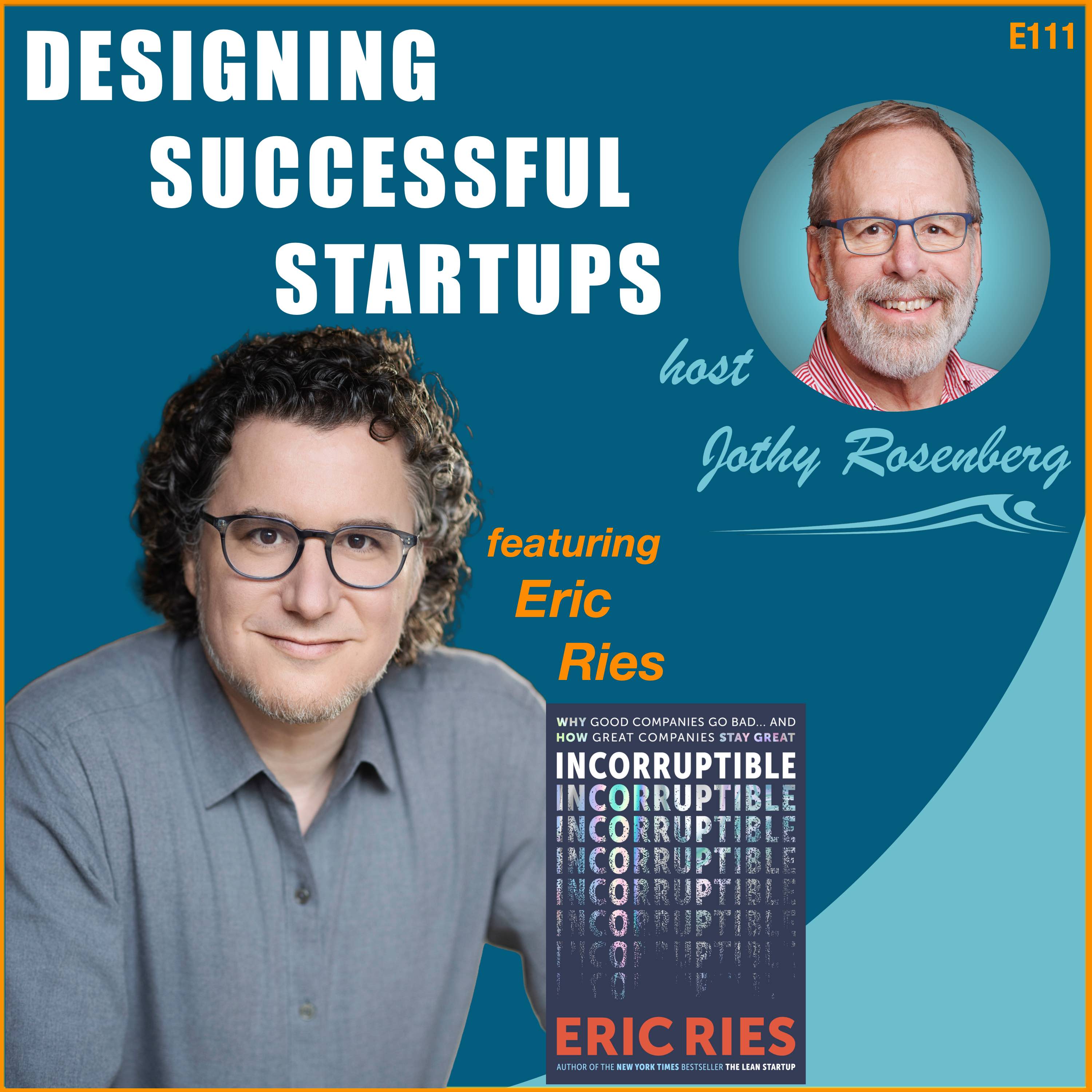 Incorruptible: Eric Ries on Why Most Startups Lose Their Soul - and How Yours Won't87 / 100
 No Code, No Problem - How a Speech Pathologist Built an AI Startup79 / 100
 Paper Walls - Jermaine Ee on Pushing Through the Limits You Think Exist75 / 100