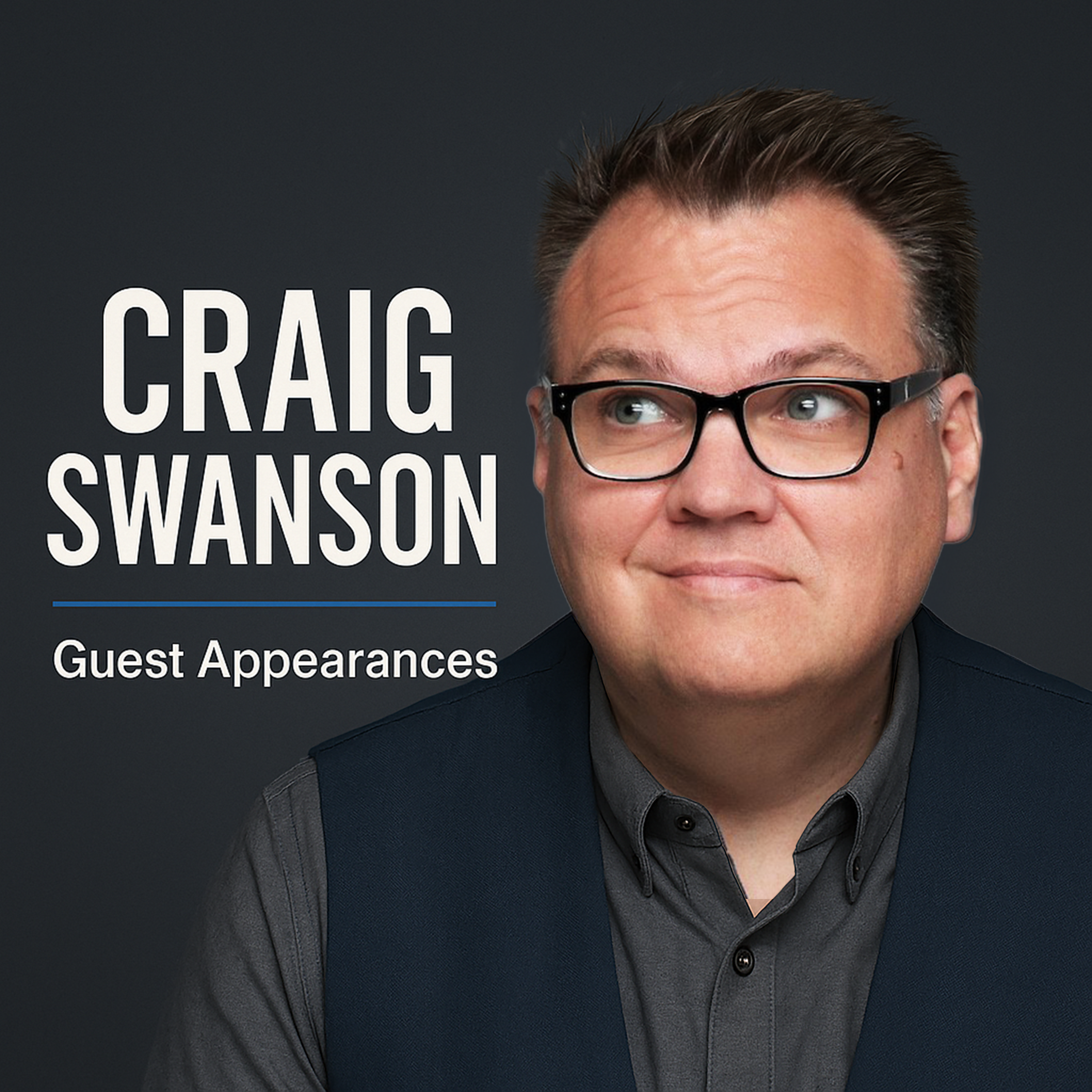
Craig Swanson Guest Appearances · 2022-08-08
Key moments - from our scoring
Substance score
67 / 100
Five dimensions, 20 points each
Craig Swanson shares the untold origin story of CreativeLive, the live-streaming education platform he co-founded with photographer Chase Jarvis. Starting as a hobby within his Seattle IT consulting business, Swanson experimented with online education before launching a free 10-week Photoshop course in 2009 that generated $35,000 in post-broadcast recording sales - enough to convince him the model worked. By 2010, Swanson and Jarvis formalized the partnership and scaled aggressively, recruiting marquee instructors like wedding photographer Jasmine Star and investing $30,000-$40,000 per event in production quality (including paying for a real wedding for a photography course). The platform grew to $14M in annual revenue by 2014-2015 through a deliberate strategy: give live broadcasts free, charge for recordings, share revenue with instructors, and never position the founders as the main attraction. Swanson explains why he rejected the founder-as-teacher model, how he used audience auditions via Twitter to build buzz, and what changed when CreativeLive eventually developed its own audience. The company's acquisition by Fiverr and Swanson's current work with online personalities rounds out the conversation.
CreativeLive broadcast classes live for free to registered viewers, then sold recordings afterward. Instructors and the platform split revenue from recording sales, with instructors receiving a substantial share (roughly 50-70% in early years after production costs). This gave instructors incentive to promote the live broadcast to their audiences to maximize attendance.
Swanson deliberately avoided teaching on his own platform because he believed founders teaching creates a ceiling on platform growth - people naturally protect their own stage. Instead, he built CreativeLive as a neutral stage to elevate instructors without competing for attention, allowing big-name teachers to shine without feeling threatened by a co-founder presence.
In 2009-2010, a free 10-week Photoshop course attracted thousands of students and generated $35,000 in recording sales, compared to roughly $12,000 the entire previous year of Swanson's training business. This success convinced him to formalize the model and recruit Chase Jarvis as a partner.
Early instructors like top photographers brought their own audiences to the platform and promoted the live events aggressively because they benefited directly from high attendance and recording sales. CreativeLive used Twitter-based audience auditions to create buzz and select in-person attendees. The platform didn't develop its own independent audience until about a year after launch, after major instructors had already poured their followers in.
The episode mentions CreativeLive was eventually acquired by Fiverr, though specific details about timing and terms are not provided in this excerpt. Swanson notes that every business he has touched continues to function today.
Our reviewer’s read on each dimension, with quotes from the episode.
The episode contains a solid cluster of non-obvious operational insights about the creator economy - the platform-owner ceiling effect, the equity-partner-vs-employee dynamic, and the 'positioning for the next raise vs. serving the audience' tension - but these are diluted by two full sponsor reads, considerable meandering, and a self-referential closing segment about Mixergy's own future.
as soon as somebody is creating a platform for themselves to teach on, I see that as them creating the ceiling for which that platform will go to
the energy needed to position the company for the next raise is not always in alignment with the energy for serving the audience we have
Several genuinely first-principles observations emerge from real operational experience - particularly the idea that an equity partner is structurally necessary to push back on a creator in ways an employee never can, and that validating beliefs against market data is more important than belief intensity - but the episode doesn't build a coherent contrarian thesis and some threads are left undeveloped.
I don't believe that just because I love it and believe in it that it's true. So I really look for creating proof in the market that my emotions are based on something
they need someone at an equity partner level to be able to negotiate with them where the business is going to go. Because if we're an employee, they can just tell us to go away
Craig Swanson is a genuine practitioner: co-founder of CreativeLive at $14M+ annual revenue, raised capital from Greylock and Social Capital, then built Sue Bryce Education to a low-eight-figure acquisition while running parallel creator businesses - this is deep, relevant operational experience rather than thought-leadership posturing.
my monthly target was a million dollars in revenue a month
I left the company in 2015 and have been working with influencers and celebrities since then
The transcript is unusually rich in concrete numbers - revenue figures, production costs, equity splits, email list sizes, follower counts, raise amounts, and timeline anchors - giving listeners genuine benchmarks rather than hand-waving; the only gap is that the post-funding decline and acquisition terms are deliberately left vague.
we were doing about $14 million a year, um, about midway, about 2014, 2015
in that 10 week course, we made $35,000 compared to probably a third of that in the entire previous year
Warner does push for specifics and numbers effectively and lands a few good follow-ups ('Where did that $30-40k go?', 'Give me a specific example'), but he lets Craig fully dodge the most important question about what went wrong post-funding, spends the opening at length narrating his own story, and burns significant episode time on two unrelated sponsor reads.
30 to $40,000 in production in what? Where did that money go?
So I don't really want to go into detail about like the behind the scenes on raise
Computed from the transcript - who did the talking, and the words that came up most.
The Mixergy podcast was one of the first tech business podcasts I followed. And I love how Andrew Warner pushes below the surface for a deeper understanding of how startups work and doesn't accept pat answers. In this conversation with Andrew Warner, we returned to the startup days at CreativeLive. - Podcast: Mixergy Episode: The untold story behind CreativeLive Website:
Transcribed and scored by The B2B Podcast Index.
Speaker A: Hey there, freedom fighters. My name is Andrew Warner. I'm the founder of Mixergy, where I interview entrepreneurs about how they built their businesses for an audience of entrepreneurs. I didn't even realize that I knew today's guest's business as I had no idea he was one of the co founders. He is the guy behind Creative Live, which for me I should introduce him. He's Craig Swanson. For me, your business in many ways was, uh, ah, uh, they're doing it better than I. I'm doing it. And that's the model I should have done or was doing and wasn't doing as well. Here's the thing. I started Mixergy not because I want to do interviews. I started Mixergy because I want to do online education. I felt that only entrepreneurs could teach entrepreneurs. Meanwhile, there are all these knuckleheads who knew how to write great books who are getting a ton of attention for teaching entrepreneurs how to build businesses when they've never freaking done one. And I said, okay, if I could work with these entrepreneurs, I could have them teach a thing that they're especially good at. I started out with interviews and my model was to move towards that. And I eventually did. I added master classes, which we made into a premium product. Then I watched from the sidelines, I guess maybe not from the sidelines. I watched from my peripheral vision this company called Creative Live Launch and Build up. And what CreativeLive did was they said, we're not focusing on entrepreneurs, we're working with creatives. These are people who are good at using Photoshop, good at taking photos, and kind of the model that I was going after for recruiting, they were offering their programs for free. Right. If you watched it live, which meant that there was a big incentive for people to register to watch live. And then if you didn't watch it live or if you wanted a recording of it, either way you got to pay to get the recording. And the instructor got a percentage and the program, CreativeLive kept the rest. That's the model. Craig is nodding. Craig, I had no frickin idea you were there. Because Chase is such a. He's like a one name personality. Uh, in this space he is the guy who created the phrase the best camera is the one in your pocket or the one that's closest. How did he phrase it?
Speaker B: The best camera is the one you have with you.
Speaker A: Uh, right, exactly. It's been so popular that it's been butchered and I've heard it a million different ways and credited to different people or to like the Universal. They did this. They said this. Anyway, I had no idea. You're the guy behind the guy. I checked you out on the site. You're there. And for some reason, I never knew that it was there. Meanwhile, though, the business blew up in a good way. Then I thought it blew up in a bad way and disappeared. And today I find out that it was acquired by Fiverr. I invited Craig on here, not knowing all this, but now that I do, I want to know what happened there, and I want to know how he's helping online personalities build their businesses. And frankly, from a personal point of view, I want to understand what I could be doing better. How big did CreativeLive get?
Speaker B: Um, so Creative Live. Well, I guess that actually is an interesting number you're asking about. Like, are you asking about how big was the audience? How big was the employee?
Speaker A: So at its height, what was the reven? I'd rather talk profits. But once you took, uh, funding, I felt like profits become less significant. So let's talk revenue.
Speaker B: I know really intimately the revenue, um, while I was running content and basically responsible for it. So we were doing about $14 million a year, um, about midway, about, uh, 2014, 2015, after funding, um, later on down the road. Um, that was after we had opened up the San Francisco office. So my monthly target was a million dollars in revenue a month.
Speaker A: And you were hitting it. The San Francisco office. I'd heard a lot about it. I think I was even in that space. It was a place to work and also a place to bring in authors and other creatives to have them teach, live. The thing that you did beautifully was you elevated the platform. You made it look good, so people were proud to be on it. Whose, uh, part was that, you or Chase?
Speaker B: I definitely think that is probably both of us. Um, first of all, making the platform look good, elevating the platform that is Chase. Chase drove the aesthetics, drove the quality of the photography. I, um, was very much focused on the audience engagement and creating the space that instructors could feel seen and could see both the people in front of them and also the virtual audience that was watching. So, I mean, if I were gonna. I would. I would give equal credit on both sides of that. I was building kind of the systems that allowed everything to connect. And Chase was really focused on the aesthetic, the feel of it, um, and creating that really warm opening space that had, like, a beautiful kitchen, beautiful area that basically people wanted to come and hang out in. Chase is cool. I'm not cool.
Speaker A: The thing is that you also would have like these robotic cameras, you had a live audience. That whole thing, that was you figuring out how to make it. That's Chase. Right.
Speaker B: So again, it is a mix. But I would say the live audience is really kind of the core of what I was driving from the beginning. So the idea of CreativeLive was incubated in my IT company that I was running in Seattle at the time. Chase was a client. I Basically was an IT company for about 20 years, supporting local ad agencies, design firms and creative studios. So my entire career has been being the support structure for creatives. And, um, I was developing inside of that an online education platform. But I was really unhappy with the way instructors and I felt when we were teaching on that platform because we were talking to a microphone, we were all alone, we were not giving a good performance. And I started to create this mix where we had a live audience that was in person, just like you have at the Tonight show or any other tv, live record TV show. And we were broadcasting simultaneously. And that whole energy was what I was really focused on.
Speaker A: Let's go back to the beginning. When you were doing this as an agency, what were you doing for your clients?
Speaker B: It. So if. Uh-huh. So for example, creative agencies, design firms, they have different needs in a lot of companies. They have really big servers, they have a lot of needs, but they're often Mac based. They have a lot of, ah, file asset management. So we were specialists in that. Um, Costco's in house creative department. Pretty much any Fortune 500 in the Seattle area that had an in house creative department was a client of ours. We worked with most ad agencies in the area.
Speaker A: And so then how do you make the transition from that to saying, I want to have online video?
Speaker B: Well, for me, the whole reason I worked with creatives is because I wanted to be in film when I started. I'm a very technical guy. I'm really attracted to technology. Um, and uh, effectively that's the way I met that need is I pursued technology, but I surround myself and I only supported artists and I supported commercial artists, photographers, creators, and that's all I worked with.
Speaker A: Okay, I see. And so you said, I'm going to help you do online video better, or was it, well, take me to the transition that became CreativeLive, the online education platform.
Speaker B: So really that was more of a hobby of mine. I had always been playing with online education, so I'd always been playing with education. I love teaching, I love being around teaching. And so, um, when my company got to the place that I had the Freedom, because the employees were largely running it and I had the freedom. I invested in my own little training company. I hired a full time trainer who was excellent, Jason Hoppe. Um, and we spent about two years basically playing with different ways of trying, ways of creating education. We were trying to like do 15 minute increments. We were playing with things, we were doing it online. And all these things were different experiments we were running. And we kind of narrowed in on this idea of simulcast a broadcast to the world while teaching it to a local audience. And at the time, I think we were using Zoom then, but Zoom was not what Zoom is today.
Speaker A: Um, um, but you were using webinar software, meeting software, to broadcast live to people. Were you charging for that or was that free from the beginning?
Speaker B: From m. The very beginning? Well, I guess I should actually back out a little bit. It makes it sound a little bit more organized and planned than it was. I loved the training company, but the training company was not making any money. Um, it was around 2008, 2009, when the economy tanked. We reached a place where my IT company could not support a do nothing executive that also had like this $100,000 a year training hobby. And I was doing all my Excel spreadsheets. I was trying to figure out what I'm going to do because I didn't want to give it up. It was what I loved, but it was not making money. And I remember one weekend just like poring over the numbers, figuring out what I could do with ads, how I could try to make this all work. And every time I came out, basically we were netting zero at the end. And I just said, screw it, let's just give it away for free at least. I figured we're just going to do one last blowout, do a free course, get as many people as we can to show up, um, and then shut it down. Basically, I wanted to go out with a bang. Um, and we did a free 10 week Photoshop course. I had a 30,000 person email list at the time. And then at the time Chase was. I don't know if Chase blasted out to his audience. I don't think he blasted out to his audience at that point. Um, but we got enough uptick and takeout for this that we first of all found out that Zoom only supports 1,000 people at a time. I had thought that was just a marketing number. I thought that the 1000 person limit was just a number that marketing put on to make it look real. But no, it actually blocked out. And so we, we Maxed out our Zoom feed. Uh, we were doing it free. We let people buy a copy of the class after the fact, which is basically the business model that CreativeLive like, like iterated on. And in that 10 week course, we made $35,000 compared to probably a third of that in the entire previous year of this kind of hobby training business.
Speaker A: Wow. Wow. And this was still you doing it as a side project to Creative Techs, your IT business?
Speaker B: Yes, exactly.
Speaker A: It did have, it did have a name at the time.
Speaker B: It was Creative Text. It was just Creative Text training.
Speaker A: Okay, I see it. By the way, um, you're so freaking understated. I'm sorry to interrupt, but you're so freaking understated. Even on your LinkedIn bio where you talk about Creative Text, you don't give yourself a title. It's just small business owner.
Speaker B: Um, you know what, I could work on that. Although I was a small business owner. See, thing is, I didn't call myself an entrepreneur until creative life because I always wanted to be an entrepreneur. But to me, an entrepreneur was someone who created, grew, and then sold businesses. I mean, someone who just runs one business for 25 years for me is a small business owner.
Speaker A: Got it. And that's what you did. You're 22 years at that business, according to LinkedIn, starting with 19. Uh, 80. Dude, you look great for your age then. I don't know how the hell you're able to do this for that long.
Speaker B: I started this. I started right out of high school. So I was one quarter into college and dropped out of college to start
Speaker A: that company because what did you see? It doesn't seem like there'd be a lot of money in this,
Speaker B: um, because I was a graphic design major in college. Um, the technology I had used in high school to publish our high school newspaper was the technology all graphic designers were starting to use. And it was only 16 months old. There was nobody that knew it better than me. And, um, apparently I was smart and I was good at building trust with people. And I followed through on what I said I was going to do. I had a couple clients take me under their wing. And I just worked it and worked it and worked it and grew until I had earned, finally made money.
Speaker A: Yeah, exactly how much did you earn at its height?
Speaker B: So I desperately wanted to be in the, uh, Young Entrepreneurs Club, which is a million for people I think under 40. I think they kept raising the number. I capped out at my IT company at $870,000. Um, in my final year. Um, then I sold it to the employees. It's still functioning today. Pretty much every business I've touched is still functioning today, which is kind of amazing to me. Um, my first year in Creative Live, so I sold it to the employees because we basically spun out that training company. Chase came in as a partner, it blew up and, um, we broke the million dollar mark on the first year in CreativeLive. I think I turned 40 that year. So I would have been able to get to the Young Untrews Club if I had planned it properly.
Speaker A: You eventually got in it, but wow, first first year of CreativeLive, you get to a million dollars. And it's all because this model that we just figured out, right, which is let's give it away for free. People want the recording, great. They could buy the recording of it. How did you hook up with Chase?
Speaker B: So Chase was a client of mine for I think about a decade, maybe more than a decade. Because remember, I was in Seattle, Chase is in Seattle. I support pretty much every significant designer or creative in the Seattle area. Um, and Chase, Chase had one of the most technically advanced photography studios out there. Apple was a client. He had a ton of Apple gear. And we, you know, my team was the IT team that support in the back end.
Speaker A: Okay, and then you did this online education, he and you maybe help promote it together. At what point did you say, this is our business model, we're going to go forward with this?
Speaker B: So there was never a time that we were Creative Live, that it was not Chasing me. So the rebrand and Chase coming in and us partnering to build this out, that happened in 2010. Um, and, and basically from 2010 we were just sprinting. Chase, um, lined up three of the biggest names in photography education that he knew. He basically recruited the first three instructors in photography and that took our, you know, our demo class where we were doing 30 to $40,000 over a 10 week period. Um, we were doing 60 to 150 million or not million, 60 to $150,000 over a three day weekend. And we really built CreativeLive in the initial days around photography and around that concept of a three day workshop, because that's the way a lot of photography was taught. And so we would teach these live streaming classes that were eight hours a day for three days. Um, and at the time there was not a lot of live streaming. I mean, the live streaming market didn't exist the way it exists today. Um, in fact, we weren't even sure that we could get a big enough picture to be able to Teach what we were teaching. Some of the innovations that we were playing with is, um, lowering the frame rate in order to be able to get a larger image area, and just trying to figure out how far we could push the small little pipe that we had available for live streaming.
Speaker A: Because you had to make it look really crisp so that people can see the details you're talking about. But at the same time, people's connections weren't very good. I remember talking to the founder of Twitch, Emmett Shearer. He. He had a similar issue. People, if they made the quality really good, people couldn't see it clearly enough. It became a real problem. Uh, people couldn't see the game. Let's go back then to where you were. So the next thing I want to know is you could have said, we're going to teach it ourselves. We don't need to bring in these professional. Why'd you roll your eyes when I said that? Uh, that's a model that you discard quickly. What was it about that model that you didn't like? And how did you find the model of bringing them in and sharing revenue?
Speaker B: So, and I think this may come a little bit from the fact that I was building it and I don't. And I was not building it for me, I didn't roll my eyes as that's a silly idea. But what I rolled my eyes at or that response was because as soon as somebody is creating a platform for themselves to teach on, I see that as them creating the ceiling for which, uh, that platform will go to. Um, it is very, very rare that somebody will build a platform for them to teach on that they will allow someone else to outshine. And at CreativeLive, Chase was not teaching, and I was not teaching. I was creating a stage to make the person on that stage as big as possible. And we could allow people to come in and shine as bright as possible without having any sense that they were taking a place that I wanted to be at. And so we were able to really create this opportunity for as many people. And it became a place that just talking to speakers, like, it became a phrase. Have you done your Creative Live yet? There was this of accomplishment of having gotten onto that stage. And in part it was because there wasn't a secondary person you're trying to get into. We weren't like the Oprah show where, like, there was Oprah. That was basically like the placeholder. We had the person on the stage. They introduced themselves generally, and, like, they held that stage for themselves, and we made it as warm and Welcoming as big for them as we possibly could.
Speaker A: Because from the beginning you said we are, it's not about teaching and making all the money for ourselves. It's about creating a plat to share revenue with them. Naturally we should not go in and take center stage and so on.
Speaker B: Exactly. And um, I mean, to be honest, we tried to, you know, we tried to work as the best deal we could for revenue for ourselves, but that really came down to creating something where they were also pushing as hard as they could. Um, when Creative Live started, we had no audience. We had, we had the 30, 30,000 people on my list. We had, we had Chase's audience. Um, but we didn't, we weren't, had a big audience. We brought on big name after big name. They poured their audience into us as aggressively as they could because they were creating something that they shared equity ownership in. Um, that they were creating, they were, they were going to like benefit and profit from that from that weekend event based on how big it was. And it wasn't until about a year later that Creative Life started having its own audience because we had had really significant name after significant name come in and pour their audience into us first.
Speaker A: So the way it would work is you'd have an author or someone who was known creatively come and teach. They would come to your studio from the beginning, it was in your studio and record in person. Right. They would come in, they would promote it to their audience and say, hey, I'm going to be on Creative Live. It's this beautiful platform and I remember them being elevated by it and owning that, uh, sense of elevation. Like, look at me, I'm going to be at this beautiful place. They would tell their audience to come watch live. Their audience would have to register to see them live. And as a result, your mailing list grew. And then you'd say, hey, this is live. You'd email that out to the list, people will come live. And then you would do the follow up sales. They wouldn't even have to sell. All they were doing was saying, I'm offering this for free.
Speaker B: Right.
Speaker A: If they wanted to, they could sell, but I don't think they even had to. And many didn't even do the sales part. They would just say, it's free and let you be the people to sell.
Speaker B: Exactly. And even beyond that, or in the early days, up until the first couple years, we would do about six weeks of reach out to their audience ahead of time for the people that were actually in the room with them. We would actually have people Submit videos to audition to be the audience in the room. And in order to submit those videos, they had to do it publicly on Twitter. So we actually created this buzz with a competition for just to select the audience to be there in person.
Speaker A: I had no idea. No wonder these people were talking to me about how they were in the audience. I thought it was just like, hey, I bought tickets to this show. No, it was them saying, I won. Wow. And I totally missed that part of it. Um, all right, that's pretty freaking impressive. What was your share situation? Uh, what was the split between you and, uh, the instructors?
Speaker B: So in general, um, in general, we started out kind of philosophically with a 5050 split, and then would carve out some space for production costs and other things. And so over time, the first year of instructors got a better deal probably than later instructors because they were more instrumental in making CreativeLive into what it was. And then CreativeLive eventually had its own audience that was able to negotiate a better deal. But in the early years, it was a substantial portion, um, because we were doing a lot. We were investing 30,000 to $40,000 on each event, and we were trying to make it a blockbuster in the process.
Speaker A: 30 to $40,000 in production in what? Where did that money go?
Speaker B: Um, well, in the early days, since we didn't have everything built out, there were a lot of things that we replaced with capital, with capital, capital investments later. So the studio became a lot better. Um, things got less expensive as we built out, invested more in the studio. So we were doing a lot of off site, uh, leasing of spaces. One of the things. So if you're not all that aware of the early days, the one thing that really put us on the map in the photography space, we hosted an online wedding course in 2011, 2010, 2010, where we had brides and grooms submit videos to be the couple that are married on screen.
Speaker A: Okay.
Speaker B: And then we produced and paid for a full wedding for those people so that our wedding photographer could teach a five day course leading up to the live wedding where she shot it live.
Speaker A: You, uh, know what? That's the thing that I admired most about your company, CreativeLive. It was that over the top at a time when people were very impressed if they could, expecting very little. Right. That they would even chat to the instructor and the instructor would respond back. Take that to, like the Hollywood levels with your production. They were moving cameras. There was a design sense. There was this sense that when I think Chase, did he have his own interview show that was Part of Creative Live, or was that still off on his own? It was part of Creative Live.
Speaker B: It was something he started separately, so he. He had his own Live Persona and live, um, program that he then did bring into Creative Live.
Speaker A: I'd interviewed Jason Fried and done some. Some really good interviews with him, and he posted them on his site. But it was a different experience. When the founder of Basecamp, Jason, tweeted out and talked about his Creative Live experience, it was, I want you to see where I was. I am worthy of being on this stage is the way most people handled it. You're smiling because you recognize that. Yeah, that was intentional.
Speaker B: Yeah, it was intentional and it was aspirational. So. And I would say the aspirations were on slightly different areas. Um, for me, I wanted. Because we also worked with the instructors leading it, so we would. We would do a lot of producing and prepping and work with them because they're going to be live for three days. And we try to give. We cannot carry the ball for them, but we tried to give them as much support as we possibly could. And especially in the world of photography, we, uh, are bringing in, uh, you know, we're sourcing models and locations and setting everything up so there's. There's an entire production happening separate from the production we're filming, because we are going to film the production that we're putting in front of the camera. Um, and also it is for instructors. I want it to be their high point in their professional career. We did not always hit that, and as we got bigger names, it became harder. But my personal goal was for everybody to experience their high point career moment at, uh, CreativeLive, at the point that they were giving Creative Live.
Speaker A: I saw that for authors. I remember because you were in San Francisco, when an author would be on or creative teacher would be on your platform, they would be in San Francisco. They knew I was there, and so they would come out for dinner or scotch at my office. And it was a point of pride and a little bit of nervousness. Did they create their own courses or did you do production for them?
Speaker B: They had to have the expertise. And generally we were not putting people on the stage that were not already teaching elsewhere. So we basically looked for people that were really good at teaching in groups or had done some. We weren't really looking for people who taught online. We were looking for people that are really good at teaching in larger groups. And if they're good at teaching in larger groups and they were doing. They had a really hungry audience, we could be a Multiplier of that. A significant multiplier of that.
Speaker A: All right, you were asking me about my sponsor, SendinBlue. Do you know about them or do you want me. What do you know about them?
Speaker B: Well, so actually, first of all, I was really curious about the name, so because sendinblue makes me think of like the iPhone. And the blue is always like the better way of connecting with people. And I believe they have sms. And I am running a small group entrepreneurs group in Seattle and I realize I need a better way of being able to communicate with these people. And I don't know anything about SendinBlue, but they were on my list. I was told I should look. Oh, that's interesting.
Speaker A: I think that for a lot of people, they don't come up because we have a handful of email marketing companies that we know and then, uh, that's what we focus on. And those companies are just spending a ton on advertising. I Hear1 on NPR a lot. Here's what SendinBlue does. They're a European company, which is partially why we don't know them, but also because they're based in Paris. They care a lot about design and fitness feel, and they're in a little bit different headspace than most of us. When we're thinking about online marketing, we think about will they do segmentation? And yes, they do. They think about that. But they say, can we make it look right and not, um, it doesn't really cost that much to send out this big jumble of tech. And so that's where they come from. They're also big on saying, look, email, it costs fractions of pennies. But once a company gets their clause in you, they just keep ratcheting up the price because they know it's hard to move out. Sendinblue says we're gonna start out low and then we'll keep our prices low so that our customers are happy with the way that we operating. And then finally, they do more than just email marketing and the segmentation, all that, like you surmised from the name, they do text messaging. They also create the landing pages, the opt in forms, the whole thing all in one in a program that just works and works beautifully. Many people who haven't heard about them say, well, uh, what's their staying power? Can I actually trust them? They're a huge company. Their latest raise, actually it's been two years now, was $160 million in series B. They're well funded. They are huge. Mostly in Europe, but also in the US and if you're considering them, I highly recommend signing up using my URL because frankly, I get credit for it and I want them to know that this is, uh, working for them. But also they'll give you a discount if you start by going over to sendinblue.com mixergy sendinblue.com mixergy and as always, I'm going to tell everyone else who's listening, people, if this isn't working for you, let me know. If it is, let me know. So far, people have been signing up and telling me they're happy. And so I keep running ads for them. But if it doesn't ever work out, I want to be the first person to know. My email address is andrewicksurgy.com I'm not just reading ads here. I'm talking about companies that I think you should sign up for and I want you to be happy with them. Thanks, SendInBlue by the way, look at this space. I feel like I finally am now starting to dress up my workspace. Are you someone who's pretty obsessive about this stuff or is it just. No, I just care about the business side of things. Let the designer handle it.
Speaker B: So I tend to have a very pared down aesthetic desire. I tend to want to execute only what we can execute really well. And so basically, I will often be basically stripping away things that feel like we are trying to aspirationally hit something we haven't earned yet. Well, I mean, in website design or logos or pretty much anything, um, I often work with creatives that get really big ideas on what they want to do and they'll end up like, filling in with, um, basically things that we haven't earned yet. And we were talking about this a little bit earlier. You saying I'm not using the best job description for myself. I do tend to understate everything that I do because I want to make sure everything that I do is accurate and like, lives up to the promise. And so I think that that invades my sense of aesthetic and everything else. I tend to not try to make a fuss about something aesthetically unless I really know what I want. I tend to never want to be performing. I tend to want to strip away any instinct in me that is performing for an outside world or trying to meet goals that other people are setting instead of me. And so, um, like, my aspiration in life is to pursue the things that are most meaningful for me, even if everybody else on the planet can't see it and is not interested in it. Um, And I'm getting no one else's reward. And I'm the only person that I'm serving.
Speaker A: Like what? Take me to Creative Live. I want to get to what you're doing today, but take me to CreativeLive and then help me understand how that played itself out. What did you want that maybe nobody else wanted?
Speaker B: Well, I would say with creative life, so with the direction of creative life. So CreativeLive for me was always about the audience. Um, so the audience was always what we were creating for. And as we started to raise money, uh, so here's a really great, very easy, tactical example. Once we started down the VC path, there was a heavy emphasis on positioning the company for the next race. And the energy needed to, to position the company for the next raise is not always in alignment with the energy for serving the audience we have or figuring out how to grow something and earning. So we are trying to convince a very small group of people that, uh, they should put a lot of money into us as opposed to a very large number of people that want to buy a small thing from us to change their life. And I would say, just as a really fundamental level, my instinct is to go to the large audience and make a small impact on a lot of people as opposed to try to convince a small group of people of my value.
Speaker A: I get that. I do too. I like having a large audience. There's something very satisfying about that. There's something very, um, safe about not having all your eggs with one basket. Okay. And still you raised what, seven and a half million from Greylock, right? You then didn't you raise from Chamath Polyhapatias fund? You raised how many millions of dollars?
Speaker B: I think they led with $25 million raise in the social cap.
Speaker A: So you had a ton. Here's my understanding that now puts a lot of pressure on you, but also a lot of opportunity. As soon as that happened, it gave you a lot of credibility. I started seeing more ads on Facebook for Creative Live courses, and then at some point it almost all ground to a halt. My understanding was you weren't able to raise the next round, which then put pressure on all expenses.
Speaker B: So I don't really want to go into detail about like the behind the scenes on raise. Um, but if you read. But if you read the news articles, there was a large layoff at Creative Life. And what I can say is there are a lot of choices leading up to that where if we had been focused on creating a stable, profitable business, we might have made different choices than if we were trying to look good for future investors.
Speaker A: All right, I think I've got a pretty decent analysis of what happened there. And by that you mean you spent a lot of money to get a lot of customers, so you can prove that there are a lot of people who care enough about your product to pay. Got it. All right. Then you left the company. The company was sold afterwards to Fiverr. You still had equity in the business. Mhm.
Speaker B: So I left the company in 2015 and have been working with, uh, um, influencers and celebrities since then. Fiverr acquired CreativeLive. Uh, it was either this year 2022 or it was late last year.
Speaker A: 2022. Last year. October 7th is the TechCrunch article on the sale. And so did you have equity at the time?
Speaker B: I did. So I was a common shareholder. I had a significant amount of common shareholders, as did, uh, any of the employees that had their stock options that they paid for or had converted previously.
Speaker A: My sense was that was not a big windfall for you.
Speaker B: Uh, to my knowledge. And I would know, nothing went to the common shareholders after the purchase.
Speaker A: Isn't that freaking frustrating?
Speaker B: I had made my peace with a long term. Honestly, the frustration for me, the area I think is most painful is for the employees that invested in those stock options. Because I don't know how well you know stock options. Presumably, you know, like deeply, but when you leave a company, you often have to make a cash payment to that company to hold onto your stock options quickly too. Yeah.
Speaker A: Okay.
Speaker B: And I, and there are a lot, and there are people that believed in the company that, that, that paid that money. And just, just based on the circumstances of how everything went down, you know, it was, it was not a bet that paid off. Now they, everyone should know that, like, you know, I treat any stock or equity option as a bet that is not likely to pay off, but can pay off. Um, so managing risk, I think is really important when you're playing these games.
Speaker A: I have the opposite approach. I treat it all as a potential big payoff, and then I get frustrated when it's not.
Speaker B: That is not how I'm wired. Part of that is the downplaying. I try to only. I only count what exists. And part of that was for me in Seattle, probably different areas. But in Seattle, I was in business in the crossover from 1999 to 2000. I had tons of creative companies and startups that were clients of mine during the first dot com bust. And I had a lot of friends that acted as if they had the net worth that a Stock certificate said they had. And when their companies went bustling or just were downgraded, that evaporated, and they were left with a lot of debts where they thought they had a lot of assets. I'm very conservative on basically keeping my family safe. And that's probably the biggest difference is, um, my goal is to make sure that my family is taken care of over the length of their lives. And so until I hit that mark, I don't see anything as free money for me.
Speaker A: And do you keep your money? What, in cash? Do you keep it in S and P?
Speaker B: Um, so I keep most of it. So most of my cash is in stock in mutual funds. So I have a firm that manages that. Um, but I tend to keep. Actually, this actually is a really good example for me. So When I left CreativeLive, I started my own little kind of mini venture firm, which is where I was basically investing in companies and becoming business partners and putting my. My effort into helping grow them. So I was not investing a lot of money, but I was investing a lot of time. And When I left CreativeLive, I set aside, not much, $250,000 for basically a series of bets on my next thing. And rather viewing that as one $250,000 bet on my next thing, I viewed it as five $50,000 bets on my next five things. And I put a lot of effort into. Into trying to create systems where I validate opportunities as opposed to letting my emotions and belief, like, run away with me. Because I do believe I'm a believer. I don't put my energy into something I don't love and believe in. But I don't believe that just because I love it and believe in it that it's true. So I really look for creating proof in the market that my emotions are based on something.
Speaker A: My sense was you left Creative Live because you and Chase had creative differences.
Speaker B: Yeah, I think that's fair. And also, the direction that CreativeLive was going was working. Just because we had different visions didn't necessarily mean mine was right. And When Chase became CEO, I started my segue out because CreativeLive was going to go where it was going to go, where it was going to go.
Speaker A: All right, take me through the way that you were thinking about businesses. What kind of businesses did you want to make those smaller investments into?
Speaker B: So for me, I was really fascinated. First of all, everything I've done has largely been the same business model repeated over and over again since 2010. I have worked with content creators and educators, and in some Fashion. We've used a mix of teaching, creating digital goods and a mix of free and paid to create as much value in the world as we can. Um, one of the things I was really fascinated with CreativeLive was the edges. How big could one brand become in Creative Live? Could we take one instructor? And if we weren't just focusing on that instructor as one of many, how big a platform could we build around one person? Um, that was really one of the things I wanted to experiment with is basically how big could we go if we were just focused on one content creator and just really gave them as much room as possible. And, um, in 2000 and in 2016, I became partners along with two ex CreativeLive employees with Sue Bryce. And that was probably my first big play outside of CreativeLive. Um, so that was an online photography platform that sue had started about a year earlier. Um, and we came in as basically the operational side to just really supercharge it.
Speaker A: She already had her brand name, she already had her content online, and she was selling online education portraits. The portrait system is what I see on your LinkedIn profile, she called it.
Speaker B: So she was actually one of the top instructors at CreativeLive. So she was one of the top instructors at CreativeLive from 2012 to about 2014. Um, she ended up in 2015 creating her own platform separate from CreativeLive, which was something we started to see at CreativeLive is basically other, other influencers, instructors were starting to create their own platforms and realizing that they might be able to like, get to market a different way. Um, and so she made a break with CreativeLive. And then when I left CreativeLive, she and I were talking and she basically invited me and George and Aaron in to be her partners at Super Ice Education. And we basically poured ourselves into that company from 2016. And it was just sold, uh, last year, uh, it was just acquired by, um, by a trade show company.
Speaker A: For how much?
Speaker B: Let's see, what is so 8, so super low 8 figures.
Speaker A: And then what was your share of that?
Speaker B: My share that generally. Um, in that case we, uh, had three partners on my side. So in my case, I was about a 20% stakeholder in that. So she was 50%. Generally, we roughly do 50, 50 deals with creators. Um, uh, and then my partners, we basically split the, uh, other half.
Speaker A: Okay. And so when you partner up with her, knowing that she can deliver the goods, what do you add? Walk me through what you did for her, because it feels like that's the model of what you do. With creatives that you work with now.
Speaker B: I mean, the first thing is we did a lot of work. She had basically built out a real scaffolding of a website, but it was having problems. She was having problems with, like, the daily production. She wasn't doing anything live. And we came in and started basically building out a weekly live delivery system for her. She would do a weekly soubreace live. Um, she didn't really enjoy selling herself, so the audience that she had sold to up to that point really knew her, but she was doing basically nothing to market or to sell. And so we came in and basically started building sales systems, started building a team, uh, got a studio, and pretty much allowed her to focus on being an extraordinary creative in front of the studio, in front of the camera, and did the financial, did the business management, did the marketing, did the Facebook advertising, did the, um, video production, the website development, all that in the back end to basically make the systems run.
Speaker A: That whole funnel of taking content that's free, adding layers onto it via email, and then offering a paid product that was all you. And then you say to her, can you get on camera, record this? Here's what we need for this landing page. And she does all that?
Speaker B: Yes, yes. Uh, it's a conversation. Basically. She is the visionary. She's a visionary of the company. She is basically setting a big picture of what she wants to her mission from a education and community standpoint. And she doesn't necessarily have the skills to manage, hire, or want to run a team. And it's also really hard to look at growth when growth may impact you negatively in terms of, like, some of the emotional stuff. So basically, we were a little bit less on the line emotionally and were able to make a lot of choices to grow the business that would be a little bit less comfortable for someone that is also choosing their own stage at the same time. So I partner with people that have, that have really built up a name for themselves, that have a large following, but they also have a very emotional relationship with their audience, with themselves. There's a lot in play. So I work with creatives that. I work with creatives that got where they are because of how good they are creatively, but not necessarily because of their ability to put a team together, to be able to build all the technology, build all the business pieces, to be able to view their creative relationship with our audience with a little bit of dispassion. Um, one of the most fundamental things that, um, comes up in the relationships I have, because most of what I do Tactically, a creative could hire and should hire a producer for or a growth marketer if they could. If they can replace me with someone, they can pay a salary, they should.
Speaker A: You know what? It's a different thing to think about, and maybe they could even do it themselves. But it's a real change from now. How do I create a funnel that upsells them and another product? And what software do I use? Am I right?
Speaker B: Although, honestly, the tactical stuff for me is just kind of table stakes. I think really what comes down to is more this whole. This whole statement I had earlier about me not believing my own truth just because I believe it, and I'm looking to validate that. It's really hard for someone who is out there putting their name on everything to not believe it 100%. But to run the business, I think it's really important to listen to the audience, and it's really important to validate whether we're headed in the right direction separate from belief.
Speaker A: Give me an example, like, tell me how that played itself out with her.
Speaker B: So for sue and for most of the people that I work with, they have an experience of a live broadcast or of a conference, or of their interaction based on how they feel as the presenter, how they felt on stage, what their emotions were while they were delivering it. And so they assume that the way they feel is the way the entire world feels. And often that is completely the opposite. Like, they will come off of something feeling really good about it, and we're missing something in the audience. Like the audience wasn't getting something, or they desperately want to create something in their life. They don't want to be known as the expert in X. They want to, um. They really want to follow their passion in a different direction, but it's not the relationship they built with the audience. I'm not saying that I tell them what to do, but they need someone at an equity partner level to be able to negotiate with them where the business is going to go. Because if we're an employee, they can just tell us to go away. Then eventually, the employees just start doing what they're told, and the business slowly starts to morph into trying to serve the needs of the creative instead of serving the needs of the audience.
Speaker A: All right, I'm going to talk about my second sponsor. I'd love for you to think about while I'm doing this. What's a specific example of something that she would have wanted to do that you, because you're an equity partner, were able to get her to say no, let's switch back. And, Lemon, for people who are listening, if you're looking to hire developers, they have phenomenal developers that they will match you with. It's not like a job board. They are matching you with somebody and making sure that that fit is right, and they make sure that the price is right, too. And one of the ways they do it is because they vet their engineers from, frankly, Eastern Europe and countries where the price of an engineer is lower than it would be in the US Lower, certainly than it would be in San Francisco. Even now that I'm here in Austin, I see prices are just rising for everything. And they let you work with them remotely. Direct relationship that they set up that they make sure works well. And I know how much they care because I introduced someone from my audience to them, um, and the founder jumped right in to make sure that that person had the right match. At the founder level, Lemon cares about making sure you get the right developers at a great price, which, frankly, right now is critical if you're looking to sign up with them. You can even get a lower price than everyone else by going to Lemon IO Mixergy. Lemon IO Mixergy. Look at this. I'm on their site. I could actually chat with Kate right now and see what I can get, see if there's somebody there available for me. All right, Love, Lemon. Were you able to think about a specific example?
Speaker B: Yeah, there's a couple. So I would say the big picture example is a really practical one. So almost everyone I partner with loves to create. And so at Superice, we've talked about this pretty publicly. We ended up allowing our desire to create to drive our production schedule. So we went from, um, we were up to, I make. I think we were making $6 million a year, uh, in top line, and our production budgets just started to balloon. We started to create based on our love of creating as opposed to our audience's need to consume or what our audience was interested in. And, um, for sue, there was a lot of freedom. She was able to do things she'd never been able to do. And so we poured a lot of money into creating a lot of stuff that was really for us and not for the audience.
Speaker A: M. I know that feeling. Yeah.
Speaker B: And ultimately, we ended up renegotiating all of our relationships with the business, um, because this, uh, is not just Sue. I was part of this. George was part of this. Aaron was part of this. We all had the luxury being able to pursue our particular interest because we had such a profitable business. We were able to pull From. And we ended up looking at what the business needed, and we ended up redefining our relationships and saying basically no partner needed to work in the business more than 10 hours a week. And if we were working more than 10 hours a week, we. We were probably serving our personal needs and not the business's needs, because the business was super simple and it didn't need that much. It did not need the volume of innovation that we could pour into it. And in fact, all that innovation was causing all these frequent turns that was burning out staff, burning up money and not creating value.
Speaker A: Like what? Give me an example of an innovation. What did you add that was too much? But we in the audience might actually,
Speaker B: rather than innovating around different things, we could teach the audience. There are all these sub business models that started coming up. So we started printing posing cards and shipping these printed posing cards, which are beautiful. We started developing a book that we never actually shipped. Um, I think we got a little bit into apparel. We basically started pursuing all these sub business opportunities. And logically, it felt like we were doing something that was business related. Um, but I think what we were really doing on all of our parts was we were pursuing our personal desires for entrepreneurship and creation without necessarily determining what the business needed first. Um, and so it's. One of the ways that I run my life right now is I have a portfolio of companies as opposed to one company, and the companies determine what they need from me and from the creatives in those companies, as opposed to me trying to pour 100% of my interest into one company.
Speaker A: How many do you have, Craig? I can't get a sense of it.
Speaker B: I, um, generally have three going at one time. So Subarice Education was just acquired. Um, I currently have. That was my three. So I have. As of last year, it was Soubreisse Education. Um, I have a online fitness company and I'm coming in as a partner in an online cooking school.
Speaker A: This is Homemade is the cooking and Quesa Fit is the Kaisa. Excuse me. And these are both based on individual personalities. Homemade based on Joel Gammaren. Uh, and Kaisa Fit is based on Kaisa Karenin.
Speaker B: Exactly. Good. Yeah.
Speaker A: Okay. Yeah.
Speaker B: And, um, same model.
Speaker A: They bring in the audience through online content. Are they using, um, are they using more YouTube?
Speaker B: So in. Let's look at case a case in that case. Um, so Kaisa had an audience of about 800,000 followers on Instagram when she and I met. And she, you know, as a personal influencer, she was one of the people that you know, brands were paying her $10,000 a day for posts. And she had had some exposure and experience with creating online digital goods, um, but really had not dialed into that. And in fact, um, had kind of like had had a couple successes but started to steer away from it. Um, we talked a lot, we talked a lot about values, direction, mission. Because I'm very mission oriented and I want to support people that are mission oriented because basically whoever I partner with, their mission is going to be part of what I'm going to be responsible for building. Um, and when I came in as a partner with her, we started building out in 2019 around a series of education programs that she had already created. And we built some new ones. Um, and she had a really strong belief of what was going to sell. And we created a series of tests. Um, and the thing that she did not think was going to sell was the thing that was, that sold like there was this throwaway little mobility program that, um, we sold for $19 that she said in an interview later she didn't even do her hair for the promo. That's how little she believed in it at the time.
Speaker A: Um, but this is the, um, it's kind of like the old Jack lalanne or what's her name, um, Jane, uh, Fonda type. Woodsell.
Speaker B: No, it's not that. It's the type of workout. So she is a badass athlete. She does amazing stuff.
Speaker A: I see her strength training on her Instagram. She's punching somebody in the stomach. A lot of weight. Right. And this is simpler. Let's just get you moving.
Speaker B: Exactly. We did a series of tests with three products that basically were different levels. And we all bet highly on her expensive, like higher end training. And the class that took off was this $19 mobility program that basically helped people feel better in their body and basically deal with mobility and movement issues in their legs. And we end up selling, we end up breaking a million dollars in sales of that $19 product in less than a year.
Speaker A: Wow.
Speaker B: And you were talking about audience. So for me, I start with my partner's existing audience as the seed. So like those 800,000 followers were on Instagram, that was not who we're going to make our money from. That is who we are going to learn who we could serve from. And then basically we built systems to try to reach out to exponentially more using her existing audience as the starting point and the learning point.
Speaker A: Got it. You figure out from her audience what works and then you say, okay, now there's an audience that likes this let's go see if we can find others out there. Of her audience. She had to give you a piece of her business. Half of her business she already had. Instagram already was producing revenue. She had to give you half of that in exchange for the belief that you would do more.
Speaker B: Yes, although. Although I built a lot of safety into that. So first of all, we end up creating an incubator company in the interim where we put in just enough for the education. So I'm not part of her Instagram company. She is still an Instagram influencer. She is still doing all the brand stuff. So what we own together, all on her own, is the. Is the digital education platform that we built together, which didn't exist before we came together. And so we own that thing together and then that thing together. We are trying to make as big as possible. And in the first year, she could have also removed me at any point. So I create a lot of safety for partners in that, um, honestly, if something works, they're never going to get rid of me. If something doesn't work, I'm not bringing any value anyway.
Speaker A: So why not create a platform like you did with CreativeLive? Like now you're going back to the thing that you said had a limit, which is how do we create an individual person, uh, an individual, a brand and a product based on an individual person. Why not create the new Creative Live, like a fitness Creative Live aimed at bringing in all the fitness stars and having them have their beautiful experience that they want to Instagram all day and then give them an ongoing share of the revenue. And then Unlike the previous, CreativeLive, maybe added it as a subscription, which I think is a new version of CreativeLive, or it's a subscription. Why not go to that direction? I feel like maybe you have considered it.
Speaker B: Well, I have considered it. The answer for me personally to some degree is I no longer see one company as the only thing I'm going to do. And so I get to have a number of at bats and a number of different companies at the same time. So I am not making one company my entire bet in what I'm doing. And the other thing is for both Sue Brice for Kaisafit and then I think with, uh, homemade cooking over time, the first year or two is very often just around that particular person and that particular brand. But in each case for Sue Bryce and for Kaizofit, we've started to expand out. So by the time we sold Sue Brice, Sue Brice's company, Sue Brice was not going with it. We were basically. We had created a platform for other instructors. We had created an entire separate brand called the Portrait Masters in which other instructors taught. And so we had expanded out and basically used her platform to start giving room for other people to be on the platform. And likewise with Kaiser fit.
Speaker A: And then do you share revenue with them?
Speaker B: And we do. And we do revenue share very similar.
Speaker A: You do based on how many people watch or M Minutes watched. Got it. And then I saw that you did that on Memberful, which is a membership platform that's now owned by, uh, what's it called? The Patreon. Yeah. So you can actually measure individual views and be able to distribute revenue using the Memberful platform.
Speaker B: Uh, first of all, we only use Memberful to control access to memberships for suburice. So we actually track everything separately. So all of our sites, our viewership and tracking is all separate. The other thing for Subryse Education is a membership platform and on Subryse Education she was the primary teacher. We had a separate company called the Portrait Masters which was effectively a photography education platform for everybody but Sue Price. And so those two end up being built in parallel to each other.
Speaker A: I'm so glad that you and I got to do this interview. Let me close it out with this. Actually, I keep meaning to close it out because we're now going way longer than we planned. Give me feedback. Craig, you're the guy who knows this business. What do you think I should be doing differently with Mixergy?
Speaker B: Well, actually, you know what? I don't know. I would love to stand for another hour and actually dig into that because when you talk about your masterclass, I would love to dig into how much you're making, how you're making it, where you're making it. Um, okay. But without. Without asking some really invasive questions. I don't know that I've got a really quick, short, snappy answer. I think you're killing it from the outside, but I don't know.
Speaker A: I got burned out last year and stalled and I didn't realize it. And then this year I finally took time away from almost everything except these interviews, which I can't get rid of. And I'm trying to think of what happens next. And so I wasn't planning on having a conversation with you that would kind of spark things, but you're kind of sparking things in my head, which I'm enjoying, when.
Speaker B: So right now, is there something you can sell that you're not part of?
Speaker A: Oh, that I don't do at all? Yes, I've done that. Um, where we brought in a producer to create. To create content.
Speaker B: I mean, literally, like, is there an equity? So is there a company? Can you sell your company and. Or. Or.
Speaker A: Yes.
Speaker B: Yeah. And it could go and create value, and they'd have the archives of you, but you could step away if you wanted to.
Speaker A: I think so. I don't know that emotionally I could, uh, that would be the challenge. I so emotionally connected in, like, preserving this collection of work.
Speaker B: I mean, I. I don't think we do it live, but if you would like to. I would love to dig in and, like. Like, really, like.
Speaker A: All right.
Speaker B: Give you an opinion.
Speaker A: All right, I'll follow up. I wish that we would have been able to do it here, but we are at the end. I got, like, another guest coming in. All right. I'd love to do it, and then maybe we can do this, But I'd be happy to answer anything that you want.
Speaker B: I would love that. We could always record it and decide whether you release it later.
Speaker A: Okay. All right, I'm down. The best place for people to follow up with you is to just go to craigswanson.com. right.
Speaker B: Craigswanson. Uh.org craigswanson.com I keep offering him money. He won't sell it to me.
Speaker A: You know what? Uh, browser auto fills it in, so I didn't even notice it. I guess it doesn't matter as much. Craigswanson. Org. Thank you, and thank you all for listening. Bye, everyone.
Other episodes covering the same guests and topics, from across The B2B Podcast Index.
Mastering Your Exit Strategy: Craig Swanson - Conversation with a Serial EntrepreneurSmashing the Plateau: How to Sell Your Expertise as a Consultant Featuring Craig SwansonAccelerate Your Business Growth: Step Back From Your BusinessesJoin Up Dots: How To Build Life And Business BalanceBuilt to Sell Radio with John Warrillow: Sue Bryce & Craig Swanson - The 8-Figure Expert