
ChatNAPT with A.I. Chatterbots Chuck & Howie · 2026-06-18 · 1h 11m
Key moments - from our scoring
Substance score
20 / 100
Five dimensions, 20 points each
Chuck Ellis and Howard Zion wrap up Season 2 of ChatNAPT, a podcast dedicated to metrology, with an expansive discussion touching on industry frustrations, generational economics, and upcoming celebrations. The hosts reflect on Season 2's lineup of C-suite executives and industry leaders, including figures like Mr. Price from Ansoft Bond, while Chuck expresses frustration with politics influencing business decisions in metrology rather than measurement results driving policy. The conversation pivots through broader economic concerns - Chuck, a 45-year veteran of the metrology community preparing for retirement, worries about political agendas affecting measurement quality and cites concerns about Gen Z spending habits and population decline echoing commentary from Shark Tank's Mr. Wonderful. Howard counters with data on inflationary real estate costs and tax burden increases from 20% in 1960 to 55% today. The pair preview the NCSLI Kansas City conference in Missouri and NAP's 30th anniversary party at John's Big Deck on July 26th, featuring North Pole cocktails and appetizers. Listeners will hear candid perspectives on metrology leadership, industry standards, and economic headwinds affecting the profession.
Chuck cites his inability to handle the political arena and what he calls the stupidity in the world, which he sees rolling into the metrology profession. After 45 years in metrology, he feels his mental stability won't hold if he continues witnessing politics influence business decisions instead of measurement results.
NAP is hosting a 30th anniversary celebration on July 26th at John's Big Deck in Kansas City, Missouri during the NCSLI conference. The event will feature North Pole cocktails sponsored by NAP, appetizers, and an open invitation to anyone who has ever participated with NAP or commented on the organization.
Season 2 targeted C-suite and C-level executives - those with titles including Chief Financial Officer, Chief Executive Officer, Chief Operating Officer, or Chief Sales Officer - representing leaders and successful achievers across different parts of the metrology industry.
Chuck states the total tax burden in 1960 was approximately 20%, while today it has risen to 55% of income, including federal, state, property, and personal property taxes combined.
The party venue was changed from a previously planned location to John's Big Deck because the original venue "messed up" the arrangements, according to Chuck.
Our reviewer’s read on each dimension, with quotes from the episode.
This wrap-up episode is overwhelmingly dominated by off-topic social commentary on Gen Z spending, tax burdens, LinkedIn complaints, and a Blue Origin rocket explosion, with only sparse and underdeveloped metrology-specific observations scattered throughout. The few actionable insights about PT providers and artifact handling are brief and not developed beyond platitudes.
If you're not doing proficiency tests, there really is no way to prove your technical competency by an independent body.
If our biggest problem is the inability for a CAL lab to receive an item, make measurements and ship it back to us, what does that tell you about the communities?
The episode recycles entirely familiar cultural complaints - Gen Z financial irresponsibility, rising tax burdens, declining social media engagement - with no contrarian framing or first-principles thinking applied to metrology or B2B operations. The one moderately interesting point (PT as the only truly blind proof of competency vs. accreditation audits) is mentioned but never developed.
they're, they're doing the door dashes. They're spending money on, on all these, you know, Spotify and all these other accounts. They've got lack of being able to
In 1960 the total tax burden I'm talking about, the entire tax burden was about 20%. You know what the tax burden is today for you and I? Our total tax burden, 28, 30, 55% of our money goes to taxes.
No guests appear in this episode whatsoever; it is exclusively the two co-hosts in an unstructured season wrap-up chat. While Chuck Ellis is a credible 45-year metrology veteran who founded NAPT, Howard Zion's role is largely as a supportive sounding board, and the absence of any outside guests severely limits the caliber ceiling.
we did mostly all know people that are the leadership of the metrology community, people that have started their own companies, senior directors
I'm Chuck Ellis. Like to introduce my co host, Howard Zion. Howard, how are you today?
A handful of specific figures are cited - NAPT's claimed 80% market share, LinkedIn impressions falling from 1,500-2,000 to under 500, and 50,000 metrologists in North America - but all are stated without sources and exist alongside vague season recaps that name guests without extracting any substantive data or metrics from those conversations.
we would get between 1500 and 2000 impressions. Now we're getting less than 500
there's no doubt that NAPT is the largest and the biggest. We control 80% of the market
This is a mutual-agreement conversation between two co-hosts with no guests to interview; questions are consistently rhetorical or leading, factual claims go entirely unchallenged, and the discussion repeatedly drifts into personal anecdotes and unrelated social commentary with no attempt to steer back to substantive topics.
Was he spot on? Was he off a little bit?
Oh, he was. He's spot on, in my opinion. He's spot on.
Computed from the transcript - who did the talking, and the words that came up most.
Season 2 of ChatNAPT brought together some of the brightest minds in metrology, calibration, quality, and accreditation to share real-world lessons on leadership, workforce development, innovation, and technical excellence. From CEOs and laboratory owners to NASA experts and quality leaders, our guests discussed the challenges facing today's laboratories and the strategies helping organizations stay competitive, compliant, and future-ready. The biggest takeaway? Success in metrology isn't just about measurements - it's about building strong teams, embracing new technology, developing talent, and creating systems that drive continuous improvement. Whether you're a laboratory manager, quality professional, technician, or business leader, Season 2 delivered practical insights you can apply to strengthen your operations, reduce risk, improve performance, and prepare for what's next in the industry. And stay tuned, ChatNAPT Season 3 is coming this fall, with new guests, fresh perspectives, and actionable insights to help you get even more from your proficiency testing program.
Transcribed and scored by The B2B Podcast Index.
Howard Zion: Foreign.
Chuck Ellis: Um, Hello, and welcome to another edition of Chat Nap with the AI Chatterbox, Chuck and Howie, a podcast dedicated towards metrology. Uh, I'm Chuck Ellis. Like to introduce my co host, Howard Zion. Howard, how are you today?
Howard Zion: Life is good. And how are you, Mr. Ellis?
Chuck Ellis: Oh, my God. I think that I'm going to be a complainer on our season finale. I have a lot to complain about, and as you're my sounding board, I get to complain to you.
Howard Zion: Before we get into that, I want to recognize two things. Number one, the shirt that we're wearing, of course, for our sponsor for the podcast. Right. Nct. Thank you for that.
Chuck Ellis: And also unplanned, by the way. Totally honest to God, unplanned. Um, that you'd wear your technical advisor shirt and I would wear mine today, too. It was just unplanned.
Howard Zion: Well, in addition to that, you notice a new background. We're in our home in Florida, and I brought down a bunch of clothes, right. And happened to grab this shirt and happened to pull it out today. So what are the odds, right?
Chuck Ellis: Yeah, exactly. Well, mine never fit for the longest time. I mean, mine actually, it's kind of big on me now.
Howard Zion: Yeah, exactly.
Chuck Ellis: It kind of. Kind of hangs.
Howard Zion: But, uh, and the second thanks is to all of our guests for this season, too. It's been a great season. Had a lot of incredible conversations, learned some new things for sure, not just our audience. I'm sure we did as well. I know I did. Uh, so thank you to those guests, and, uh, now you can take it away and complain to your heart's content.
Chuck Ellis: Well, we did two more episodes this year. As probably people know by now, this is our last episode. For season two, we did two more than we did for season one, and we actually wanted to do a couple more, but we just couldn't get them scheduled for our C Suite. We did mostly all know people that are the leadership of the metrology community, people that have started their own companies, senior directors, things like this. But we had, you know, several more that were lined up, but we just couldn't get the timing. You know, either something happened with us or something happened with them. So we do apologize to those. Those three individuals that we. We had planned. And we're gonna have to get them down on the. On the podcast later on, so hopefully we get them for next. Next season at some point.
Howard Zion: Would love to. That would be great. Okay.
Chuck Ellis: Well, my biggest complaint is. God, how do I even say this? Because I think the board keeps me in check. And maybe our listeners would like to know that, that there are a lot of times that I would love to go off the deep end. You know, off the deep end, um,
Howard Zion: fly off the handle, whatever you want to call it, were keeping you reined in.
Chuck Ellis: Yes, exactly. And now, you know, it's a good thing that I'm retiring full time after the party in Kansas City, but it's time. I just cannot handle the political arena and the, what I want to call it, the stupidity, you will of the world. And I see that stupidity rolling over into our profession, you know, and we're supposed to be a profession that is, you know, we dot our I's, we cross our T's, we make
Howard Zion: our measurements.
Chuck Ellis: Yeah, exactly, exactly. And I see politics now being influencing business decisions. And rather than the measurement or the results of the measurement, having dictation on the measurement, the policy, I see politics taking over and it drives me crazy. And, um, I don't know where that's going to take us. The inability for the industry to accept what it is drives me crazy right now.
Howard Zion: If you look at longer periods and cycles and trends, this too shall pass. Right. You know that you've seen it happen. But right now, in the middle of all that, it is a bit frustrating.
Chuck Ellis: It's, uh, to me, you know, like I said, I've been around a long time, going over 45 years, I've been involved in the metrology community in one way or another. You know, either my first, you know, introduction, uh, p. Mail, Obviously back in 1981, all the way up till now. But my point is, I just gotta walk away. Howard. I don't think that my mental stability is going to be in check if I continue to see this stupidity. It's not just, you know, mistakes being made. It is, it is stupidity that's being involved and drives me crazy.
Howard Zion: So let me ask you this. Had you seen this type of thing 15, 20 years ago, would you react the same way? Or is this an age related thing for you, that you're becoming less patient? Because I see that with older people, I'm, um, trying to, not trying to place full blame on that, but I see that happen. Right. People get older and they lose their patience little by little.
Chuck Ellis: Well, I'm sure there's some of that. But, you know, uh, I think that I still have enough of my brain where I'm totally not, you know, fudge and pudding where I realize the difference between, you know, let's go back 20 years ago. And as you know, there's, there's this fight that I've been fighting for 30 years in the proficiency testing, in the relationship with accreditation.
Howard Zion: Right.
Chuck Ellis: I've given up on that fight. I just said that. I fought that fight long enough. It's not going to get resolved. It is what it is. So, you know, with that, you know, conceptual idea that I can accept the fact that they can't change the world anymore and just look at it, I could say that. No, I don't think it's all my old age. I know I'm older. I get that.
Howard Zion: Okay, fair enough.
Chuck Ellis: You know, I don't feel older. But this is without a doubt that I have less patience today. But you know, I think the other
Howard Zion: time I've got less patience at my age than I had 15, 20 years ago. Uh, I think it's noticeable to me, probably to others around me. I'm a little less patient, a little less tolerant, uh, for mistakes that people make. And it feels like the world is dumbing down. I don't know if that's the fact or not. I'm not looking at trends to actually quantify that and measure it as we should. But um, I just feel like when you're driving on the road, people are being less careless. They're more distracted by a million things. Not just phones, but a lot of things. They're not paying attention when you go to a grocery store or a restaurant and people, you know, are interacting with you and they're supposed to be there to help you, take care of you and they are not getting it. They're not doing their job well. And there's examples of people that do their job, um, very well. Right. And I'm very grateful for those people. But it seems like more people are making mistakes or just not caring.
Chuck Ellis: Right.
Howard Zion: Complacency, that type of thing.
Chuck Ellis: Well, what do you think about this, uh, this new, uh, what do you want to call it, uh, flavor of the month socialism. How that seems to be taking, uh, place, uh, by our, our Gen Z generation here wanting to have, well, look cycles again.
Howard Zion: You remember the 50s McCarthyism that was, was all about communism and kind of went right. Everyone was being put in front of uh, Congress to testify and, and what their accusations were and you know, justify whether they were communist or not. That was a real thing. And people who didn't live through that. I didn't live through it. Right. This is history book stuff to me.
Chuck Ellis: Yeah.
Howard Zion: But holy cow, that's a Salem witch trial type of thing.
Chuck Ellis: Yeah. I'm hearing the fact that there is probably less than 1% of the Gen Z that even know who McCarthy was.
Howard Zion: Right, right. But these things cycle, you know, human beings are defective, whether it's mentally, biologically. There's a lot of things about being human that tends to cycle trends, you see, over time.
Chuck Ellis: Well, you know what I would worry about if I was a manager, if you will, of a Cal Lab. You know, there's a lot of talented people. You know, what do we estimate? There's 50,000 metrologists, you know, in North America. And are they making decisions on, uh, a measurement that they're making, that they're acquiring? Does any of their social background come into it now? Are they. Are they, you know, does it affect me? Well, I don't care what the measurement. I'm just going to report it, you know, I don't care.
Howard Zion: Are you asking if your personal life bleeds into your work life? Absolutely, it does.
Chuck Ellis: Yeah, exactly.
Howard Zion: Type of character you have is evident in both your personal and your work life.
Chuck Ellis: Right.
Howard Zion: And whether you cut corners or not, or whether you're willing to, or whether you. Whether you say absolutely not. Right. You can't be too far one way or too far the other. But you got to pay attention to protect the measurements for the end products that we all use every day.
Chuck Ellis: Yeah. Do you think that the inability to differentiate the two is going to affect the quality of the measurement being made by people who are questionable?
Howard Zion: Absolutely. Yeah. And is there a review process that catches that? Probably not 100%, but there's usually review processes in place that'll catch some of that.
Chuck Ellis: Yeah.
Howard Zion: What drives me crazy is when it gets to the customer, figuring it out, Right. They find something. And I just had this happen this week. Regular, uh, weekly meeting with a client. And they said, hey, this happened xyz. I asked for information back from one of your labs on this. Got no response. It's clearly evident that there's something wrong there. So we asked again. We got a different response, and it didn't look good. So I need to form a file a formal complaint. That happens to every company. And so we're chasing that down to figure out what happened, Right?
Chuck Ellis: Yeah.
Howard Zion: A tech clearly didn't do something they should have done. And we think we know what it is. But the point being either that was lack of knowledge or willful intent. We got to figure out which one it is.
Chuck Ellis: Yeah. Well, okay. So the end result is we have to. If I'm still a manager, do I have to be more concerned or do I have to put in place more controls so that the decision that they're making is. Is not affected by any political agenda that they might have.
Howard Zion: Yeah. Oh boy.
Chuck Ellis: I think I uh, get my trouble, I get in trouble there because do you know this, what's this, what's this guy's name, Mr. Wonderful on the Shark Tank. Did you happen to read the comments that he made about Gen Z's and why they're failures?
Howard Zion: No, I don't think I did.
Chuck Ellis: Okay, let me, let me give it to you. The, the short part about it is that he got in trouble for making a blank statement about what's happening with Gen Z's. You know how they're spending $28 on lunches when they're, they're only making a hundred dollars a day and they take it. He says, well, they're going to end up taking home 70 and they're spending $50 a day on food, on you know, food and you know, their social media and all this other stuff. And they live in the basement doordash
Howard Zion: services, Uber eats types of thing where they're getting fees on top of the food and they're like right down the block and just go get it yourself. What's the matter with you?
Chuck Ellis: Well, exactly, exactly. They're, they're, they're doing the door dashes. They're spending money on, on all these, you know, Spotify and all these other accounts. They've got lack of being able to
Howard Zion: budget and control your, your spending. Geez.
Chuck Ellis: But at the same time, then they're living in mom and dad's basement.
Howard Zion: Well, I've seen that.
Chuck Ellis: And, and they're not contributing. They're not buying houses anymore. They're not buying cars. They're, they're using Uber. They're not contributing. You know, Mr. M. Wonderful's position was that there are so many that are not contributing to the economy is part of the reason why the economy is the way it is.
Howard Zion: Yeah, there's a, there's a piece to that that I recognize and that is that the inflationary cost of real estate and uh, some other things in life are at an abnormal percentage of your income ratio than they were when we were younger. That has changed for the worse. So I do recognize that as part of the issue. Um, but I also see this lack of control of spending, budget control for your personal budget as a major problem. I've seen it with too many of my daughter's friends.
Chuck Ellis: Well, to your point about inflation, this is my biggest concern and I'm a moderate Republican. I am not a right wing radical nut. But this is a fact that you cannot argue. In 1960 the total tax burden I'm talking about, the entire tax burden was about 20%. You know what the tax burden is today for you and I? Our total tax burden, 28, 30, 55% of our money goes to taxes. Total tax burden. Not just what your income tax is, your state tax, your federal tax. I'm talking about 55% of every dollar you make.
Howard Zion: The real estate, property taxes, the personal property taxes in some states that you pay year after year for the same thing you've owned for years. Crazy how's that constitutional? But yeah, that does add to your total tax burden.
Chuck Ellis: Wow.
Howard Zion: 55% versus 20, 20, 1960.
Chuck Ellis: Yes.
Howard Zion: Wow, that hurts.
Chuck Ellis: In less than 70 years, this is what has happened. And government is so big right now, it's unbelievable. I mean, in California, the total tax burden has got to be more than 55.
Howard Zion: Yeah. I mean, their state tax alone is 13.3.
Chuck Ellis: Yeah. So I can understand how the younger generation doesn't have the money that they make because all their money is going to taxes.
Howard Zion: Right.
Chuck Ellis: You know, they go and they, they buy something on their Gen Z goes and does the DoorDash. You know, 4% of that goes towards taxes. Food taxes.
Howard Zion: Yeah.
Chuck Ellis: Anyways, I mean, I'm not here to give it a class on the economy, but, uh, so just back to Mr.
Howard Zion: Wonderful statement. Was he spot on? Was he off a little bit?
Chuck Ellis: Oh, he was. He's spot on, in my opinion. He's spot on. You know, and it's a fact that if, if the next generation doesn't buy houses, where are they going to live? They're gonna, they're gonna have to rent. They're, they're never going to be able to be under control.
Howard Zion: They're going to have inheritance taxes when their parents die and they leave it to them. Right. More tax.
Chuck Ellis: And they won't be able to keep the house because they won't be able to afford the tax on the house. So the house will be bought.
Howard Zion: Happens on a large scale. And of course, there's been studies on this, talking about the largest generation. Right. The, uh, baby boomers, as they retire and they were die off, then that creates a major real estate problem that they're predicting by 2035. I don't know if that's changed.
Chuck Ellis: Yeah.
Howard Zion: But by 2035, they're predicting that real estate values will tank.
Chuck Ellis: Well, between 2035 and 2050, we're going to have a major recession because that's when mostly all the baby boomers, like you said, will be either, you know, passed on or, uh, in their later stages in life and not in their own home or whatever.
Howard Zion: Exactly.
Chuck Ellis: So that that 15 year cycle is predicted to be very, very bad for the economy. And the point that Mr. Wonderful is making is that when that happens, you know, in 10 years from now, when it start, when it starts to happen in 10 years, our economy cannot absorb the loss of the baby boomer generation, that income that we're putting in the community now. And I'm a baby boomer and I'm retired. The economy cannot withstand the loss of our input.
Howard Zion: So what's the answer, Chuck? Have more babies.
Chuck Ellis: Yeah, exactly. That's what.
Howard Zion: There's a lot of people, you've heard it here. Get busy.
Chuck Ellis: Well, for the first time in what a generating generations, we, we're actually not improving. We're having less population growth than we've had ever in the history of mankind.
Howard Zion: Yeah, exactly.
Chuck Ellis: Which some people argue is a good thing because we're, we're overpopulated already. Whether.
Howard Zion: Well, you know, I don't know how this compares to the national average, but I'm the youngest of 11 children. Big family. Right. And a lot of my siblings only had one or two kids, maybe three at the most. Some had none. Uh, my wife and I had two children. One passed at birth, but, you know, one living child. That, that's reduction right there. We didn't produce the same number of people that we, we were.
Chuck Ellis: Right, right, right.
Howard Zion: So. Because I think there were a total of nine grandchildren and 11 of them. So. Wow. There's a shrinkage right there. Now, maybe that's the exception, maybe that's the average. But you're saying that the trend is that it's reducing.
Chuck Ellis: Absolutely. I think it's a trend because I'm, you know, as, you know, I'm the young, second youngest of 16 kids.
Howard Zion: Yes. And you had to one up me, didn't you?
Chuck Ellis: That's been the trend for 20 years. I've had to one up you. No, but you're. But even all my siblings, the average, you know, children that they had has only been two.
Howard Zion: Yeah.
Chuck Ellis: Uh, so. And technically that's the average. That's so, you know, there, there are many of my siblings didn't have any kids.
Howard Zion: So wasn't the population of the United states up around 350 million at 1 point?
Chuck Ellis: I believe so, yeah.
Howard Zion: And it's reduced from there.
Chuck Ellis: Yeah, I believe it is like 335 million now. You know, we could go on, talk about this. It's very sad. I think that what I, uh, want to try and move On. Because we've only got an hour.
Howard Zion: We've already spent 15 minutes.
Chuck Ellis: Yeah, exactly. So let's talk about the exciting news coming up next month. We're going to wonderful Kansas City, Missouri, Not Kansas City, Kansas. Right. Because that's the hotel and the conferences.
Howard Zion: It is in Missouri. That is correct.
Chuck Ellis: Yeah. So we're going to Kansas City, Missouri.
Howard Zion: So just for the listening audience, because I know we get this question a lot living in Kansas City. Kansas City is a city that is split, uh, by a state line of Kansas and Missouri. It's still one big city, but of course the taxes are different in each. But it is Kansas City. The airport is in Missouri, downtown is in Missouri, and that's where we're going to be. And then there's Kansas City, Kansas. A little bit of that. That, uh, houses like Kansas University, things like that.
Chuck Ellis: But isn't the border between Kansas and Missouri really close to downtown?
Howard Zion: Fairly close, yes. State Line. That's where my daughter lives. Right. On State Line on the Kansas side. She's looking at the Missourians, Uh, and she's maybe 15 minutes from down. 10, 10 minutes from downtown. She's very close.
Chuck Ellis: I remember years ago, going to mine, we had a branch office in Kansas City, Missouri. And on the other side of the road was Kansas City, Kansas.
Howard Zion: Yep.
Chuck Ellis: And I think it was Main Street. Is that still Main Street?
Howard Zion: There is a Main street there that crosses State Line. It's, uh, perpendicular to State Line. But State Line is the dividing line.
Chuck Ellis: Yeah. Okay. Is it, is it called the city, Called the street, called State Line Street?
Howard Zion: State Line. Yes.
Chuck Ellis: Okay. All right, Interesting. Because the same, the same thing happened in Tahoe where there was a street called State Line street that separated Tahoe from, um, the border between California and Nevada as well.
Howard Zion: Where I was raised in the Chicago area, the suburb is Lansing, Illinois. And there is a State Line Road at the edge of Lansing that goes into Munster, Indiana.
Chuck Ellis: Okay.
Howard Zion: That is the state. That's the name of the road. State Line.
Chuck Ellis: No kidding. Okay.
Howard Zion: I'm sure that's pretty common in a
Chuck Ellis: lot of states, so we're getting ready for that. I'm hoping that the NCSL gets a great draw. And I think it's a. Uh.
Howard Zion: Yeah. And we want to talk about the change in venue for the party because we thought we had it solidified for. Was it international? No, it wasn't that.
Chuck Ellis: We're not going to need who we thought it was.
Howard Zion: Yeah, it doesn't matter.
Chuck Ellis: Yeah.
Howard Zion: Point is, what we had said before has changed because they messed up. And so now we're going to be at John's Big Deck.
Chuck Ellis: Correct.
Howard Zion: And that is a pretty exciting place to be. So it'll be a lot of fun. I was looking at the menu by the way, and uh, I vote for the, of course $25 to $30 per person menu with the, you know, barbecued food. I'm sure you're not going to go for that.
Chuck Ellis: No, no. What the format of the. Once again we're having a 30th anniversary party and if you're going to NCSLI and you're a supporter of NAP, if you've ever participated, if you ever said a good thing about nept, if you said a bad thing about npt, you're welcome to come join us. We're going to be at John's big deck on the 26th of July. We're going to have uh, company North Pole cocktails on napt. We're going to have the ability to do that. We're going to order just appetizers so
Howard Zion: we look like good appetizers. Yeah.
Chuck Ellis: Uh, yeah. So we're going to bring out, I said bring out, you know, combination and we pick 10 different appetizers and as the crowd comes, they're just going to bring out appetizers and we'll talk about how great Napk is and where we started 30 years ago and where we are today. So I'm looking forward to be a good celebration so we'll be able to, you know, really enjoy the party and you know, have a little appetizer and a couple of drinks on NAP while you're socializing.
Howard Zion: Yeah, this type
Chuck Ellis: which we're missing out on, you know.
Howard Zion: Yes.
Chuck Ellis: I've actually this week I've had uh, a few things that I could have text instead. I actually, I made phone calls.
Howard Zion: Yeah, good.
Chuck Ellis: So, but I don't know, maybe I'm trying to get away from it so I can get rid of my phone. You know, I got a smartphone and I want to get rid of it. I want to get a flip flop.
Howard Zion: Going back to the dumb phone.
Chuck Ellis: Going back to the dumb phone.
Howard Zion: Yeah.
Chuck Ellis: So that's, that's my, my next changeover is I'm going to do that, get rid of my big old truck and buy a smaller vehicle because I don't need my big truck anymore.
Howard Zion: In the uh, new entranceway is decorative stuff, right. A couple of books on the side, on top of a little table, nice little lamp. And on top of the books is an old rotary dial phone. I'm going back to that.
Chuck Ellis: Well let's, let's, let's change the topics a little bit.
Howard Zion: All right, did it.
Chuck Ellis: Let's talk about season two.
Howard Zion: Season two.
Chuck Ellis: Season two. All right. We had all, uh, basically leaders of the industry, people that are, uh. What's the best way to describe them? People that have succeeds, achieved success, if you will, within the metrology community.
Howard Zion: Correct? Yeah. And the target was C suite or C level executives. Anyone that had a C in their title. Right. C. Chief financial officer, chief executive officer, chief operating officer, chief sales officer. That was the goal. Now we did have some mix in there of presidents and vice presidents. Great combination of people. But this was really a focus on leadership in the metrology industry across many different parts of the industry. Different.
Chuck Ellis: Uh, well, after we had our season opening, we had um, Mr. Price from anysoft Bond, which was a fabulous, ah, conversation. I got to learn a lot about exactly where he come from, how he developed any soft and where he's taken it. So that was, I thought was a great way to. Even though I knew Rhett, I didn't know him very well because you seem to never have.
Howard Zion: Yeah, he seemed like a bit of an enigma and it was really great to get to know him.
Chuck Ellis: Yeah, I really enjoyed it. And then we had. I go, I go ways back with Michael Walsh. He and I, uh, we love to tease each other and uh, I've been lucky enough to be on the golf course a couple times with Mike and always he's a good stick. And so it's a lot of fun to be able to converse with Mike. And we. A job he's done since we had him on. You know, when we had him on, he was the, you know, CEO of Esco Calibration. Right. Uh, and now, now he's, you know, went to the dark side.
Howard Zion: Oh, what, what Beautiful bright side, blue side.
Chuck Ellis: Transcat calibration since we had him on. And so he's now technically one of
Howard Zion: my greatest achievements, I might add.
Chuck Ellis: Uh, he's definitely now retired and he's enjoying retirement. I just got a email from him the other day telling me about, he's. What he's doing in retirement. So he's, he's enjoying it as he's probably should. Yeah. But, but just as a sidebar here, you know, the other person that we know that transcat acquired, he is bored so much. All he does is go fishing.
Howard Zion: Oh, does he want a job?
Chuck Ellis: Yeah. So. But no. Um, you know, transcat has taken over a lot of laboratories in the last 10 years.
Howard Zion: I mean that's part of our Acquisition. That's part of our, uh, strategy for growth. Right. Acquisition, growth, organic growth. And we've had good successes under Leewardo, uh, with the acquisition growth over the last 10, 12 years. Really good record of number of companies that we bought and the quality of companies that we've acquired. Great, great addition to our team with these, these people that we've brought in, which is incredible.
Chuck Ellis: Right, right. Well, getting back to our, uh, our guests, you know, that was a great conversation here with Mike. Same thing. We learned a lot from Mike in that podcast. So if you want to learn how
Howard Zion: to kind of behind the scenes guy. Right. He was never really. He doesn't like to be in the public eye, so. M glad that we were able to get him onto the show, uh, because that was a great learning experience for us.
Chuck Ellis: Yeah. Yeah. And then we had Henry on, which is, you know, we've had Henry. That's the second time we've had Henry on. And, uh, again, another great episode. You learned a lot from Henry. He's definitely taking his steps to make sure that the organization that he now leads is ready to go into the next generation.
Howard Zion: Yeah.
Chuck Ellis: So he's done a great job of that as well.
Howard Zion: And his son is taking pretty active part too. I noticed him, um, on LinkedIn quite a bit.
Chuck Ellis: Yeah. Well, he's ready to turn the rain, the reins over and, and I'm not sure I don't want to speak for Henry if, if he, the hair parents would be his son or not. I could answer that question.
Howard Zion: I'm not sure that he's ready for that quite yet, but I think he'll get there.
Chuck Ellis: Yeah, I, I had hoped that, uh, my eldest son would, would become more involved with nap, but he went to the dark side as well.
Howard Zion: Come on now. Glad to have Nate on board with us.
Chuck Ellis: Yeah. And, well, you know, give him a little bit of prop. You know, the trans cat is, is kind of like grooming him now to become bigger and, you know, more responsibilities. And he's excited about that and he's taking on a bigger role within.
Howard Zion: You know, um, kids just need to get away from the parents for a little bit and go out on their own and learn things. And it's good for him to have different mentorship.
Chuck Ellis: Yeah.
Howard Zion: It'll give him a different perspective.
Chuck Ellis: He's definitely learning that. And then we had John Sanders on from Adatel, which, um, same thing. You know, John is.
Howard Zion: Well, I've known John for years. Well, as I did.
Chuck Ellis: Yeah. Yeah. You know him better than I did. So, you know, it Was, I mean, your thoughts on the episode? I thought were. I thought it was a great episode as well.
Howard Zion: Oh, yeah, yes, yes, absolutely. Love to have John on. And we'll have him on again.
Chuck Ellis: Yeah. He definitely know for sure. That conversation we had to cut him off. I mean, we were going on so many topics. We never really got to even our question and answer period, if I remember correctly.
Howard Zion: Right.
Chuck Ellis: So then we had Patrick. Jeff Jester on. Patrick has become a. What do you want to call it, A player, if you will. You know, he left, uh, his previous employer and decided to hang his own shingle. And, uh, he's now the vice president of ncsli. He's taken on that voluntary role and he'll be leading that for a couple years here next. I think next year he takes over as the president and he'll be the leader for two years.
Howard Zion: That's great.
Chuck Ellis: And then we had a friend of yours on Tom Lilly.
Howard Zion: Yes. Uh, so Tom and I share, uh, the same set of clients, right. Life science clients that we support me through Transcad, him through his own software company. And so that was good to have him on board. A little different perspective on how to support those types of clients.
Chuck Ellis: Also good episode for people that want to learn something outside the box about. Not really metrology related, but there is that semi relationship between the metrology community and what Tom does.
Howard Zion: Yeah, yeah. Data management, document management.
Chuck Ellis: Then we had our newest board member. We could probably take this time in the podcast to talk about how we have a replacement on the board. Unfortunately. Yeah. Kurt Foster has been promoted and just got way too much going on in his day to day life with all the responsibilities he has. And he asked if we could find another replacement. We said, well, sure we will. And he said, well, you don't have to look, I got one for you.
Howard Zion: So I love it when somebody comes to us with a problem and a solution.
Chuck Ellis: I know. Isn't that. Wouldn't you wish that happened all the time in your life?
Howard Zion: Sure.
Chuck Ellis: You know.
Howard Zion: Yeah.
Chuck Ellis: Don't worry.
Howard Zion: Great, great replacement for Kirk. Kirk served us well. Loved that he was part of the board to get these things going. Steve is eager to get going as well.
Chuck Ellis: Yeah. Well, Kurt is not leaving nept. He's sticking around his technical advisor.
Howard Zion: Okay.
Chuck Ellis: And so you know, our current technical manager will have the ability to reach out to Kurt whenever there's a problem. And Curry is so well versed. I mean, you can occur for any discipline. It doesn't matter. He knows it all. He's. He's one of the One of the, like, the top five metrologists that I know that I. That I have so much respect for because they're so well versed. Yeah.
Howard Zion: And in depth, you can get in depth conversations with him on just about any discipline.
Chuck Ellis: Yeah. Yeah. So replacing him is Steve Doty, and Steve Doty is no stranger to the accreditation community. Right. I mean, his resume speaks for itself, doesn't it?
Howard Zion: Oh, absolutely. Uh, I don't know that everyone knows him, but that's why we had him on the show. Right, Exactly.
Chuck Ellis: Yeah.
Howard Zion: Get some exposure.
Chuck Ellis: Well, he's. He's, you know, he started out as you, as we talked about on the bench, and he's led all the way up to where he ran navlap. So he was a big, big time person with that organization. So he probably knows accreditation better than you and I do.
Howard Zion: Correct.
Chuck Ellis: So he takes over the government task, if you will. And so we're excited about that. And hopefully we can get, um, we can abuse him for a couple of years before he retires.
Howard Zion: Yeah.
Chuck Ellis: Because he's, um. He's, you know, he's. He's actually, I think he and I are, like, about three months apart in age, if I remember correctly.
Howard Zion: Okay. So, yeah, we're gonna have to get out to his place. We have that open invitation.
Chuck Ellis: Yeah. And then we did the reverse questions with Troy Thomas from Esco the last year. People might remember that we promised we'd have Troy back on to ask us, you know, 20 questions. And he basically came on, and I think as he asked all the questions that a normal participant would ask. Yeah.
Howard Zion: Uh, I mean, really excellent questions. Good foundational questions to get some answers out there for people who just don't know napt or don't know it well enough.
Chuck Ellis: I felt like I was being interrogated, to be quite honest with you. I felt like, you know, um, he
Howard Zion: did his job well.
Chuck Ellis: Most well. Most of the questions were geared towards, you know, what is nap doing? How does it do it? You know, how do you assign the reference value? How do you ensure the artifact is in a stable position? You know, all these things, you know, and so they're all good questions. I'm sure they're all questions that the community.
Howard Zion: What happens when it gets messed up and something gets damaged? That's a very valid question as well, because that's happened, and I think it happened here recently, in the last week or two. Right.
Chuck Ellis: It happens every day.
Howard Zion: Yeah.
Chuck Ellis: Which is funny, is our biggest problem is the artifacts being damaged by a CAL lab. So you think about that from the Big picture. If our biggest problem is the inability for a CAL lab to receive an item, make measurements and ship it back to us, what does that tell you about the communities? Uh, I mean, if I'm a client and I'm sitting in my stuff, it's the same process, the exact same process. And there's a high percentage of the item being damaged. Don't you think there should be cars written every single day on that?
Howard Zion: Absolutely.
Chuck Ellis: I mean, to me it's a huge, huge problem.
Howard Zion: Yes. So the integrity isn't just around the technician doing the calibration work. It's around the entire company and how they handle that equipment and process it and ship it and package it, ship it. All of that is very important. It's all part of controlling the measurements and protecting the measurements for the client.
Chuck Ellis: I remember one years ago where the client, the calibration lab, um, they had a meter plugged in overnight. They got halfway through it, they left it plugged in, and a janitor came in and caught the cord with a broom and knocked our artifact off the bench onto the ground, busting to a million pieces. And the lab couldn't have been more sorry.
Howard Zion: But you know what's worse than that? Not knowing that that was dropped and if it didn't get physically damaged where you could visibly see it put back on, the bench shifted and nobody knew it.
Chuck Ellis: Exactly.
Howard Zion: Yeah, that would be worse. Which we, you don't want either one, but that would be worse.
Chuck Ellis: I guarantee that happened because there, there are times where we've had a, uh, client say, make a measurement and this is a top quality lab and come back and say, well, we're, we're five counts off and our uncertainty is only two, what's going on? And so then we send it back to the pivot lab, which is one of our control methods. And the pivot lab says, yeah, this thing is drifted and so we don't know how it happened. Like you said, it could have been
Howard Zion: dropped, could have been physical, could have been overheating, it could have been a number of things that caused strain.
Chuck Ellis: I mean strain, especially strain gauge devices. They can zero shift really easy.
Howard Zion: Exactly.
Chuck Ellis: So yeah, so that was a great episode as well. So we had that and then we had one with the most knowledgeable people in management I ever met was, was Steve Stanley from Cummings. Man, does that guy adapt to his procedures in place and production, you know, methods down pack. That's what I took from that, that particular conversation.
Howard Zion: Yeah. That's another person I never knew before. I knew the name for Years and just had never really had time to talk with him. And that was a, uh, fascinating episode.
Chuck Ellis: Yeah. Big ntsli guy. Big. Big ntsli. I think he's. Well, he's the. The last year's Wild Hack Award winner.
Howard Zion: Yes. And wasn't he the brewmaster?
Chuck Ellis: He. You're. You're correct. He is now. He's retired now. He's also one of those baby boomers that has moved on, and he loves to brew his own stuff, and he's. It's a passion with him. So he's got a second career. So I think it's easier when you have something to step into when you retire versus just stepping down.
Howard Zion: Absolutely.
Chuck Ellis: Just for example, I mean, I'll be honest with you, when I talked about retiring, my goal was to play golf every single day when I retired. Now I can't play golf because of physical limitations. But, uh, so it's actually harder for me because now that I'm retired, I have to find something to.
Howard Zion: What you don't want to do is go cold turkey. Right. Because your work gives you purpose, gives you meaning. And to just stop that and have nothing is not good.
Chuck Ellis: No, not good at all. You know? Exactly. And that. That's the kind of dilemma that I made. It's my personal battle. And I'm hoping that, you know, I can get, you know, enough physical, uh, strength back where I can play golf again. Because I still love the game. I still love. I'm very passionate about it. But my. My point was that Steve's retired and a couple other people that we all know, they're retiring. And what I found with conversations with them is those individuals that have moved on to a hobby which become their life now, they're a lot happier than those that just are retiring or multiple hobbies.
Howard Zion: Right. So I'm not looking at retirement yet. I'm still enjoying work and. And being involved with our clients and our, uh, employees. And at some point, I will. Right. I'm not in a hurry to do that, but I'm starting to pick up other things. Right. Being in a band, there's three or four things that I'm doing. Oh, my auto, my automotive interests. Right. Just gaining new friends and doing things with them, traveling more, those types of things. So starting to slowly move into that. Here's what's possible for retirement years.
Chuck Ellis: Right. And I think that's fabulous that you're doing that. But you've always been pretty active, Howard, in doing other things besides just that. And you're a workaholic. Don't get me wrong, you are without a doubt a workaholic. You spend a lot of time on your profession, a lot of time. But you also push, you push all these other things into your life. You kind of like, I think just my opinion, but you, you, you just, you're so busy that that's kind of like an outlet for you to do These other activities, they give you balance.
Howard Zion: Yeah, they do. And let's not forget the Kansas City Barbecue Society. Right. Certified barbecue judge recently achieved that. That is something that, um, I haven't started actually judging contests yet. I'm going to start doing that. We had to get some things settled first, but, uh, that'll be something I start picking up on a little by little with my travels. Wherever I'm going, if there's contests available out there that I can judge. And this year's keynote address speaker is from the Kansas City Barbecue Society because it's in Kansas City. Makes perfect sense.
Chuck Ellis: Oh, really?
Howard Zion: I know that transcat is sponsoring that keynote address and I will be introducing that keynote speaker.
Chuck Ellis: Well, wonderful.
Howard Zion: As a certified barbecue judge. So that's fun. That'll be, that'll be awesome. Combining work and pleasure.
Chuck Ellis: Sure. Yeah. Wonderful. Well, getting back to our guest then. We had, you know, Ken Racine, who is taking on a, a huge role that he has a lot of personal interest in.
Howard Zion: Yes.
Chuck Ellis: He wants you to share with us what, what Ken is doing now.
Howard Zion: He is, uh, he has built the Metrology Institute and he's developing that to draw in all the resources available for training and educating in the field of metrology. He won't be the trainer company. He will draw those resources together as a one stop shop for everything available to get people into this industry and or through different disciplines as they want to grow and through metrology.
Chuck Ellis: So when you're at NCSLI this year for uh, all those people that are attending, I highly recommend that you go over and introduce yourself to Ken and talk to him a little bit about what he's doing that's going to benefit the metrology community. And this huge. And I m mean it's, to me it's a huge role of training people. Uh, especially because we don't have the ability to draw on the military anymore to get trained calibration technicians. The metrology community has to train its own people from now on. I think that's, we've kind of accepted that fact now. We're not going to get everything we want more from the military anymore. We're going to have to have some sort of Way to train our own people.
Howard Zion: Um, yeah. The need won't stop. Right. So we've got to fulfill that need.
Chuck Ellis: Yeah.
Howard Zion: And this is going to be a big step towards that.
Chuck Ellis: Next on the list, we had someone that I must have had. Oh, God, 50 plus conversations with during my time with Nept. With Danae Powell. But I learned so much from our conversation with Danae that I never would have guessed had we not had her on the program. Right.
Howard Zion: Yeah. And her career has taken some twists and turns. Some really good, uh, twists and turns. And I've known her and I've maybe spoken to her a couple of times at the NCSL meetings, especially with the healthcare committee meeting. She's vice president of, uh, a number of the committee, um, meetings that NCSL holds. So I've kind of interacted at a distance with her, but this was really good to get to know the details behind her. She's another one who doesn't really care for the spotlight, but she's worthy of it for sure. She's got so much experience and knowledge.
Chuck Ellis: Yeah, she was amazing. It was. I, I mean, I got even more. I mean, I always respected her before our conversation, but, you know, it was just raised another level of notch of respect that I have for her.
Howard Zion: Yes, it did.
Chuck Ellis: So, so then we had Keith on from the Tennessee. Tennessee Valley Authority, which. Another great interview. Um, someone that is passionate about training and, and passionate about leadership. Really, really great interview. If you want to, you know, get some, some, um, key points on how to run a calab, I definitely advise you going back listen to that podcast again, because that was really wonderful podcast that we had with Heath.
Howard Zion: Yeah, that was another one where I didn't really know Heath's name prior to this, but I was very familiar and aware of Tennessee Valley Authority, and it was just kind of off in the distance. It's like, yep, there's somebody running that show. Don't know who those people are. Have to figure that out someday. And it was great to have him on for, on the show for that reason.
Chuck Ellis: He really was. And then, of course not laughing at least. We had Bobby Figler on from Michelle. Yes, another great interview. We learned about how he started out and how he just went through the bottom of the barrel and worked his
Howard Zion: way up to the top family business that he's developed really well and, you know, really great attitude towards doing metrology.
Chuck Ellis: Right.
Howard Zion: And making sure that their customers are taken care of. Good leadership too. Great leadership discussion with him.
Chuck Ellis: Yeah. So I would remind all of our listeners that all these podcasts are available if you want to go look, listen to them, or even view them. They're available through the NAP website, www.proficiency.org. there's a tab underneath Resources. Go to podcast. You can listen to them or download them. Listen to them on the aircraft, listen to them while you're jogging. Or you can watch them on YouTube as well. I would. You know what the interesting part is? We just got an update to, uh, Howard. I don't know if I shared with you or not, but more people are listening to them than watching them.
Howard Zion: Yeah, I did mention that to me the other day. And there are some of the earlier podcasts where we were sharing screens and things like that, where it might be better to watch them so you can see what we're talking about. And I do like to use visuals. Right. Because those tend to get the point across. We're doing a little bit less of that now. But, uh, certainly if you listen to one of those podcasts and it's not quite making sense, pull up YouTube and take a look at it. That'll explain things. And if you like any of these, if there's some that you don't like at all, fine, whatever, that you don't have to do anything. But if you like them, click the like button, forward them, share them. That helps us to expand our audience. And, uh, we really want to expand this not to just the metrology community, but people who don't even know what this is. Help them understand what it is and draw people in.
Chuck Ellis: Right. And so I think. So bringing up now next year, since we kind of reviewed that, I think next year we're going to. Our platform is going to be mostly technicians. Is that correct? Technical people?
Howard Zion: Um, it is. We, uh, were going to look, I think, at customers. Let me, you know what, let me pull that up. Go ahead and talk about the next subject while I take a look at this.
Chuck Ellis: Well, I think our plan was to talk about with the technicians and to really get in depth about how to get a career in metrology. You know, where they started and what they're doing and to get into more about making measurements, somewhat of that. So.
Howard Zion: All right, let me take a look here. I've got Season two was the C suite. Season three, MAPT sponsors is what we were going to focus on there. We can change it up, but that would be.
Chuck Ellis: We said sponsored next year.
Howard Zion: Okay, Sponsors, NAP sponsors. Next year will be the focus. And then season, uh, four is probably going to be more of the technicians and technical expertise.
Chuck Ellis: Well, we really do need to do the sponsors. Because we, you know, we could not exist.
Howard Zion: Exactly.
Chuck Ellis: Without the sponsors. Yeah, uh, that's important. You know, it gets, you know, to my, to my point about, you know, how does NAT even stay in business? You know, because we don't, we don't charge a lot for enrollments. And, you know, off the record, I, I don't know how our, our competition does it because we get, you know, a fair amount of, let's call it free stuff. It's not really free because it's, you know, it's a donated item by our sponsors. We get all our Pivot Labs that, you know, donate literally 90% of our calibrations that we have on all our artifacts, you know. Right. You know, Pivot Lab can provide, perform four or five calibrations a year for us on, uh, a given artifact for different reasons, and then we get people that donate equipment to us, and we love that. But my point is we really couldn't do it without the support that we get from the metrology community and those sponsors, whether you're a sponsor of an artifact, you know, a kit, if you will, or you're a Pivot Lab that sponsors the calibration of the artifacts, that helps us maintain the artifacts throughout the course of the distribution of a kit, uh, my God, it's huge.
Howard Zion: So, I mean, this is really one of the reasons why this is a nonprofit organization. It's set up for that reason, because it is a self serving service type of thing where you contribute the artifacts, you contribute the calibrations for the Pivot Labs, you contribute for technical advisory, uh, support for people that have questions. We're a community that helps each other to make sure that we're proving our competence, proving our ability to achieve the uncertainties that we state we have. Even though you have an assessment in your lab from auditors coming in from the, uh, accrediting, uh, bodies, you're really proving this through a blind study test. That's the proficiency test.
Chuck Ellis: Exactly.
Howard Zion: And their laboratory comparisons. And that's really how you're proving that you can do what you say you do without bias.
Chuck Ellis: Right. You know, and we tease. You know, the closing statement I make pretty much on every podcast, that's, you know, we, we tease. If you're not doing proficiency testing, you're not doing, you know, proving your technical competency. You know, we kind of say that at the end, but we really should say that in the beginning because the truth of the matter is, Howard, that if you're not doing proficiency tests, there really is no way to prove Your technical competency by an independent body.
Howard Zion: Right.
Chuck Ellis: You know, yeah.
Howard Zion: Uh, even. Even though the assessors are looking at your certainty budgets, your, uh, training programs, your. All of the documentation that you have to control your quality system, that's all statements that. Yes, this is what we're supposed to do. The proficiency test checks you to make sure that you're actually doing it.
Chuck Ellis: Yeah, exactly. And, you know, all of our guests that we had in season, you know, season two, every single one, I think, made a comment about, you know, how great they love NAP and what NAP does for them, how they're personally involved with NAP and that kind of thing. They've seen. They've seen what NAP does. And so, you know, it being our 30th year, you know, when I started this hour 30 years ago, trust me, I had no clue what this would become.
Howard Zion: Um, I'm sure, yeah. Uh, you know, you knew that you were climbing a big mountain. You just didn't know how big.
Chuck Ellis: Well, you know, to. To give a little bit of background. You know, when I started nept, I had no intentions. I mean, I, I used to do. Run the ILCs for NCSLI. You know, I, I ran, I think, four of those before DAP even started. But it was just, it just took too long. And it wasn't a dedicated service. You know, there would be a couple of them that I ran. They ran for 18 months. You know, there, there's no value in running an ILC that takes 18 months to get response to get a result. You know, that kind of thing. So I went to all the different organizations. You know, I went to the NCSLI board, I went to asq, I went to, you know, different people and they all said, nope, we're not going to touch it. There's, you know, it costs too much. There's no, there's no value in it. Blah, blah, blah, blah, blah, blah.
Howard Zion: They didn't see a path on how to get from it, point A to point B. And you did.
Chuck Ellis: Yeah, well, a lot of trial and error, my friend. I'm sure there's a lot of, you know, there are a lot of mistakes were made.
Howard Zion: A lot of, uh, necessity is the mother of invention. And that's what you did. You went through the demand, the need, and you formulated how does this doesn't work. Let's try this until you figured it out.
Chuck Ellis: Well, the point that I wanted to get to is through all that trial and error, you know, the mistakes you made. If the metrology community, our sponsors, if you will call them that would do what they are. If I didn't. Wasn't able to convince all these people to step up and help nept, there would be no. Any.
Howard Zion: Would have never, never would have happened. Right, exactly.
Chuck Ellis: And that's. I, I kind of feel what Ken's doing right now with his, his project, you know, with the Metrology Institute. He needs help as well to make sure that what initiative is, you know, don't. So Ken, if you're listening to this episode, don't give up. You know, there's, there's, you can tap into the communities. It's just as much as other people.
Howard Zion: It does take a community effort to make that work.
Chuck Ellis: Yeah. So.
Howard Zion: And there's a lot of desire for that. There's a lot of need from every individual company, internal labs, they all need this. And they struggle with hiring and training.
Chuck Ellis: Yeah.
Howard Zion: And this is a way for us to fix that problem together.
Chuck Ellis: Well, to Nat's case, the sponsorship is needed even more than ever because with the cost rising, you know, we don't want to have to raise the price of enrollment for the kits. And the way that we keep the cost down is by the sponsorship that we get. You know, there's been some talk about actually going on for, you know, having cash donations, you know, try and get the, uh.
Howard Zion: It's a tax write.
Chuck Ellis: Yeah.
Howard Zion: Take advantage of it because it ends up supporting you in the end anyway.
Chuck Ellis: Yeah, I don't, I, I don't think that's going to happen, but
Howard Zion: I'm not too proud to ask.
Chuck Ellis: Well, you know, if it comes down to the point where we need the funding to continue, you know, then, then so be it. We have to do that. But I'll be honest with you. So, you know, I've been watching probably too much television, you know, the last two years. And one thing, I noticed it on this, this one called NextStar Media. They own a bunch of television stations. You know, they, they own ME tv, they own, you know, the laugh, they own the Western station. But what is really irritating is almost 90% of their commercials are what I call begging commercials. You know, you got the St. Jude, you know, all the different. Right, all that NCAA. Exactly. Every commercial is for $19 a month, only 63 cents a day. I mean, I've heard these commercials so many times.
Howard Zion: Napt. This needs a, uh, commercial that's $19
Chuck Ellis: a month, only 63 cents a day. You can support the heavy mission. So without your support, NEPT would have, you know, I could maybe we develop a commercial and we put it at the, the Beginning of our.
Howard Zion: What are you going to show on the commercial? Old dilapidated equipment that needs to be replaced.
Chuck Ellis: Exactly. Yeah. Or that, that uh, that, that meter that, that fell off the bench, that's in a million pieces. Yes, yes, that we want, we want to replace that. So anyways, so here we are. So that's, that's the review of season two, season three. We're going to wait until probably after the summer months before we start recording for that again. So if you, you know, tell our listeners, if you have anybody out there that you know, you feel should be on the podcast, drop us an email, you know, at Ellis proficiency.org or Howard proficiency.org and we've got a list, we've
Howard Zion: got a preliminary list, but that doesn't make the full season and we want to hear from you anyway. So if you have anyone that's an NAPT sponsor that wants to be on the show or you think should be on the show, even if they don't want to be, we'll convince them to get on the show on one of the episodes.
Chuck Ellis: Well, you know, as far as that goes, if you got any comments you want to, you know, share with us, whether you like it, you don't like it, if you, you think the format should change, should we spend more time, time talking about, you know, the uncertainty of a measurement, which I really don't want to do that. I don't want to do a.
Howard Zion: We can get into the technical details if we need to, but of course, uh, half the audience will be sleeping or just not watching.
Chuck Ellis: Well, I, I think that the other podcasts that are out there, their, their niche, if you will, is exploring how to make measurements. What.
Howard Zion: More details, right?
Chuck Ellis: More details about understanding the measurement. And ours is more of a broad based political format I think where we, we just kind of, you know, chew the, chew the cut if you will. So uh, okay, uh, so we welcome,
Howard Zion: we welcome your feedback for sure and your suggestions.
Chuck Ellis: So before we call it a day, you know, I, there's, there's, there's one topic that, that I want to get your advice on because as you know, we've already beat the death that I'm retiring. Right?
Howard Zion: Mhm.
Chuck Ellis: How do we nept now? How do we combat the outright lies that are out there about providers? You know, there's no doubt that NAPT is the largest and the biggest. We control 80% of the market. But it drives me crazy personally and professionally and it makes me want to go on a rant when I see the other providers doing unethical Things.
Howard Zion: How do.
Chuck Ellis: I mean, do I just forget about it, Howard, and say, you know what? There's nothing I can do. Customer beware is that whole theory.
Howard Zion: So it is. I mean, Phil Stein wrote that paper on, uh, customer beware, right?
Chuck Ellis: Yeah, right.
Howard Zion: And it was an excellent paper and it applies throughout time. It is timeless. It is just like anything you do in life. Take your car to the shop for repair. Are you getting ripped off? Are they telling you they need to replace things you didn't?
Chuck Ellis: Right.
Howard Zion: How do you know? And you have to be more knowledgeable. You don't have to be the expert. You got to be knowledgeable enough to know when you're getting, you know, uh, stuckered. And it's the same with this. You need to know just enough about the PT process and what's required for the reference value and how you get there. You don't have to know the formulas, but are they following the ISO standards that are required to do this correctly? Do they have the staffing in place to make sure this is monitored? And do they have technical advisors to help you throughout the questionnaire process? Are they operating out of the garage? Are they doing something that seems like it's just not right? Take a look under the covers. Make sure you know what you're getting before you pay that low price.
Chuck Ellis: Yeah, well, NAP does have part of its marketing program, you know, dare to compare, you know, blurb if you will. And maybe they, maybe I, I convinced the current leadership at napt that they need to emphasize, you know, that dare to compare, you know, philosophy more.
Howard Zion: It's a good campaign. Uh, if you recall, uh, I don't remember how many years ago, maybe 10 or a little bit longer. Agilent Technologists, which is now keysight. But Agilent Technologies had the Remove all Doubt campaign. I thought that was a fantastic campaign.
Chuck Ellis: Oh yeah.
Howard Zion: And their, their marketing material really dug into. Hey, have you thought about this? Have you looked at this with your current CAL provider? Are, ah, you making sure you're getting what you're paying for? Are they just doing one point checks? Are they doing this, that and the other? Doing the uncertainties correctly. Remove all doubts so you know what you're getting when you pay that calibration price?
Chuck Ellis: Yeah.
Howard Zion: So it's a good concept.
Chuck Ellis: Well, the board has advised me not to do what I want to do
Howard Zion: and we will continue to do so.
Chuck Ellis: Well, I feel like my hands are tugged, you know, in handcuffs sometimes because, you know, uh, well, there's a little cliche about, you know, me, Howard. You know, I put my size 13 in my mouth too many times. You know, I don't care. You know, they, they say that once you get 45, you tend to care a lot less about what people think about you that you do before you're 45.
Howard Zion: That's probably, probably true. Right. I, I don't worry about what people think or say, not me. Uh, and, and I can. I could spend my time worrying about this stuff. To do what? How am I going to combat it? And why am I going to waste my time on that stuff? Just keep doing what you're doing and being who you are.
Chuck Ellis: Yeah, but m. To me personally, I get. I mean, I don't care what people think of me. I really, I really could give a rat's ass what people think. But it bothers me that the other providers who are not doing what they should be doing. And how do I stress that fact with the accreditation bodies? You know, I've had this ongoing battle with the abs for literally 25, 30 years.
Howard Zion: Yeah. Uh, but it's not. Well, first of all, the ABs don't have enough staffing to police their own customers to make sure they're doing what they should be doing. Right. They go through the audits, do an assessment on the lab, check out that everything is kosher for the documents, or if I have their findings and get those wrapped up. But are they continually doing that when they're delivering the service to their clients? And they don't have enough people to police all that, nor is it their responsibility to police the PT process. Right. And can NAPT or any of the other providers do that? Not really, no. So all you can do is the buyer beware. Just make people aware of hearing. Here's the things you should be looking at. Here's the checklist of what you should be looking at to make sure you're getting the value for your buck.
Chuck Ellis: Well, it kind of then goes full circle because we started the conversation where we talked about the political end of it, you know, and the Gen Zs, you know, with their whole thing, it kind of. There's a relationship then to what is happening to the PT providers, you know? Um, okay, let me put it this way. PT provider, our competition. Listen, there's standards out there. Just do what you're supposed to do. Don't wreck our community. Don't shortchange your client. You know, do the right thing. That's all. That's all I'm asking.
Howard Zion: Uh, and if in doubt, get some help to, to make sure you're doing the right thing.
Chuck Ellis: Right? Exactly. Okay, so you're saying don't do what I want to do. Don't go, you know, gangbusters.
Howard Zion: It's probably not going to help. So here's my analogy to that. So you, you know, you have children, and it's not like after you raise them 18 years, they're off on their own and you no longer have anything to do with them. Right. That, that doesn't work well for the people who do that. They're always your children, you're always their parent. Uh, napt will always be your child, even when you retire and what you do reflects on that child. So.
Chuck Ellis: Oh, God, thanks a lot for that thing. Thanks a lot for that.
Howard Zion: For the rest of your life, it'll be that way.
Chuck Ellis: And here I plan, once I retired to go on LinkedIn and just, you know, badmouth every day until LinkedIn blocked me, you know.
Howard Zion: No, not a good idea.
Chuck Ellis: Well, you know, speaking of LinkedIn, you know, let, let's, let's address that before we call it a day as well. I am so disappointed in how the platform has changed. You know what I'm saying? I'm seeing, I'm seeing people are begging for money on LinkedIn as well.
Howard Zion: I haven't seen that.
Chuck Ellis: Oh, my God. It's. It's driving me nuts.
Howard Zion: Okay. It really is, uh, like gofundme type of thing or what?
Chuck Ellis: Oh, yeah, yeah, yeah.
Howard Zion: Wow.
Chuck Ellis: Uh, there was one that was on there. Just. Was it yesterday? The day before. And I'm not really going in there and checking it every day anymore because the platform has changed so much.
Howard Zion: I, I'll be honest, I still bring it up on my phone once a day and check things out.
Chuck Ellis: Once a day?
Howard Zion: Some things, yeah.
Chuck Ellis: Yeah. But you know, the thing is, I don't even scroll through my feed. I only look up my notifications because there is so much crap that is irrelevant to my feed, that's in my feed.
Howard Zion: You know, usually the first thing that pops up is relevant. And then I don't scroll any more to that. I, uh, do I, uh, go to my notifications. I go to my, you know, contact list. That's it.
Chuck Ellis: Yeah, there's, there's all these suggested posts now and these political posts and these people that are begging for money, you know, and it's just, I'm so. I call it, you know, facelink now is my new nickname for it.
Howard Zion: Not what the platform was intended to be. And it is LinkedIn's corporate, uh, job to police that and clean it up.
Chuck Ellis: Well, there's. I, I don't think so. Remember, we're not LinkedIn's clients. At the end of the day, I get it. It's a business and they have to, you know, get ads and they have to make money and I get it. But the way that they've done it is they've overdone the ads, if you will, and there's literally, you know, five ads that they place into every single, you know, post I get from my, my contact.
Howard Zion: Well, if it's to the point where it chases away your audience, that's not good either.
Chuck Ellis: Right? That's, that's what they've done. So. And there's a lot of proof to that. You know, I used to get, you know, when Napped makes a post, we would get between 1500 and 2000 impressions. Now we're getting less than 500. So that tells you people are not looking at not only the napped impressions. And our, our posts are informative. Usually 90% of our posts are informative. So people aren't even looking at our stuff anymore. And there's a couple of, you know, let's call them influencers that are on the LinkedIn that I used to follow quite often. And you could see they would get, you know, a couple thousand impressions as well. Now they're getting less than a hundred. So, you know, I just wonder if I'm doing that, why am I going to continue to try and put my stuff on LinkedIn if I'm only doing it for 100 people? You know, I'm going to spend, you know, 10 hours for, to, to talk to a given impression for 100 people. Um, in short, my target audience is not what it is anymore because there's no audience there anymore.
Howard Zion: That's right. Yeah, that's exactly right. All right, so switching to last topic that I want to bring up, and that is, did you see last night that blue, uh, Origin lost a rocket on the pad?
Chuck Ellis: I did see that.
Howard Zion: Their new Glenn rocket. Uh, they did a static fire test and uh, it exploded. Incredible explosion. And of course people saw that or heard it for miles around. Now we're about 80 miles south of there. 75, 80 miles. And uh, we didn't hear or see anything that I recognized. But, uh, this morning we woke up and there was a smell of smokiness in there. So that's probably drifted this far south. Yeah, so anyway, that was, uh, sad. I mean, that's part of the testing, uh, process and it's part of the results that can happen. And of course on Instagram, most of the comments are just leave it up to Elon, he knows what he's doing type of thing. Right?
Chuck Ellis: Yeah.
Howard Zion: Jeff, Jeff Bezos, right. Of Amazon, uh, who owns Blue Origin. But, um, anyway, you know, that's one of those things that happens and they're gonna have to pick up the pieces and learn from it and move on.
Chuck Ellis: Well, it can go without saying that Blue Origins is literally years behind SpaceX.
Howard Zion: Correct?
Chuck Ellis: Yeah.
Howard Zion: Ah, yeah, but this is all part of the commercial industry that NASA wanted to go to what needed to go to.
Chuck Ellis: Right.
Howard Zion: And uh, that's just part of that learning process of getting, getting to the point where they can have reliable launches, safe launches, and thankfully nobody was hurt. That was reported. It was an unmanned test.
Chuck Ellis: Right? Yeah, yeah, yeah. So that's your interesting point there, is that, uh, how do I want to say this is that do mistakes have to happen before we can actually really get a good product?
Howard Zion: Uh, I mean, that is part of the success, failure type of, uh, process until you get to success. It is absolutely part of it. Now could this have been prevented? That's part of the learning.
Chuck Ellis: Yeah.
Howard Zion: How do you make sure this type of thing doesn't happen? What caused it?
Chuck Ellis: Well, the reason I relate that, however, to a very small scale. Nothing. I'm not trying to compare NEPT to Blue Origin, Blue Origins, but there are a lot of mistakes that were made by nap, you know, 30 years ago.
Howard Zion: Yeah.
Chuck Ellis: Uh, so everybody makes mistakes is my point. You know, you know, thankfully there were no lives that were lost for, during this mistake or, or whatever happened that, that caused that explosion. It was a major explosion. I don't know if you saw the, the news, but it was huge.
Howard Zion: It did, yeah. Pretty enormous.
Chuck Ellis: Wow.
Howard Zion: Anyway, so I thought I'd bring that up as that point of discussion for social interests, business interest.
Chuck Ellis: So now, now people know. When we, we actually recorded this episode was the day after Blue Horizons blew up on a.
Howard Zion: Okay.
Chuck Ellis: Because it takes a couple of weeks usually by the time that we record something, send it over to post production and they, they put a spin on it and they, they get all of our, our bad words taken out of it and then they, they put it, you know, uh, up, up, up on the website.
Howard Zion: Is this the point where I can spit out all my bad words and they'll, they'll take care of it, they'll cut it.
Chuck Ellis: I, I don't want to cut my bad words because I want. Want them to know that I, that I have vulgar language and that you're passionate. I'm very passionate. I'm. I'm getting less passionate though, because my, my tolerance level is less. You know, but, you know, I will go to my grave saying this, that the people that are in this business there are literally, like we talked about this earlier, 50,000 plus that are making measurements every single day that are the backbone of metrology, you know, and thank goodness they're, they're a valid profession. They do a great job. But there's a small percentage that we just cannot tolerate when we find someone that makes bad measurements. When I say pencil, whip it or doing it on purpose, they need to be fired, they need to be kicked out, they need to be blackballed because it's too important. This, you know, again, let's just, you
Howard Zion: know, it doesn't matter if a technician knows what customer's equipment they're working on, which customer it is, or even if they happen to know, and they usually don't. But if they happen to know what it's being used on, for which products and which consumers are going to use, it doesn't matter if they know any of that. Right. You have to treat each one like it's the most important thing.
Chuck Ellis: My point that I wanted to, uh, correlate was, you know, it would be interesting to see what caused that accident yesterday because was it a bad measurement? You know, NASA has a history of failures because of bad measurements or unit
Howard Zion: Mismismatch or Unit Ms. Universion.
Chuck Ellis: Exactly. But, but simple stuff, you know, that, that we really need to be on top of. And NASA, uh, you know, they, they have, you know, check and double check and triple check and quadruple check, you know, their processes and they still make mistakes, but at the same time we, so we just can't make mistakes in our, in our profession. We can't tolerate. We're not attorneys. We're not, you know, we can't, you know, say things and not mean it. Which gets to my ethics, you know, my integrity point, which I'm so passionate about.
Howard Zion: That's why it's important.
Chuck Ellis: I said enough for today, my friend.
Howard Zion: Oh, that's good.
Chuck Ellis: So I think we should call it a day. What do you think?
Howard Zion: Yes, uh, we're a bit over an hour. I think with editing. We'll be right about an hour. Uh, but thank you for joining us. If you did join, if you haven't, you know, hopefully people are letting you know about it and you can take a listen and give, uh, us feedback.
Chuck Ellis: And obviously we want you to share the podcast, talk about us when you're at ncsli, you know, come up to us, Howard and I, and tell us if you like the podcast or not, or tell us if we should, you know, continue or not, or should we go away. Let us know how you really feel. Is that what I'd like to say?
Howard Zion: Yeah. Any format changes, we're open to it.
Chuck Ellis: Okay. Howard, any last words?
Howard Zion: No, I'm, uh, I'm good for the season. Thank you for all the fun. We had this this season. That was fantastic. Enjoy your summer and, uh, see you in July.
Chuck Ellis: Yeah. Well, I want to say thank you to Napt for another. Another season of sponsoring us. Without them, we could not do it. If you want to sponsor a podcast, let us know. We're thinking about, you know, putting your ad at the start of our. Our podcast and putting your ad at the end of our podcast so that we can afford to continue to do this. Right. That's what we said. We're going to. We're going to start begging for money. We said so. But on a very serious level, um, very serious point, folks. If you're not doing proficiency testing, you're not proving your technical competency. So either join a well established, well managed PT kit with NPT or do with another provider or even do it yourself. We have the tools that help you do it yourself, but you need to do proficiency testing. I can't stress that enough. It proves your technical competency when you do meaningful proficiency tests. It's that simple, folks. So, that being said, we'll see you, uh, next season and let us know how you like it. Like it. Take care, guys. Sam M.
Other episodes covering the same guests and topics, from across The B2B Podcast Index.
 #63: Workforce Risk - On Navigating Demographics, AI & the Changing American DreamThe Changing State of Talent Acquisition · on Baby boomers83 / 100
 Intel Capital with Jen Ard E 37ImpacTV · on Metrology69 / 100
 Episode 5: How do organizations truly engage all generations in the workforce, when they all want something different?Steps to Change: A Learning & Development Podcast · on Baby boomers68 / 100
 Generational Marketing: Episode 21Almost Productive: A podcast mostly about marketing · on Baby boomers66 / 100
 Leading Existential Change in Higher Ed: mergers, closures and other major institutional restructuring Podcast 6 of 7SPH Consulting · on Accreditation standards62 / 100
 The Aging Crisis: Leadership, Responsibility, and the Future of CareLeadership Reimagined · on Baby boomers
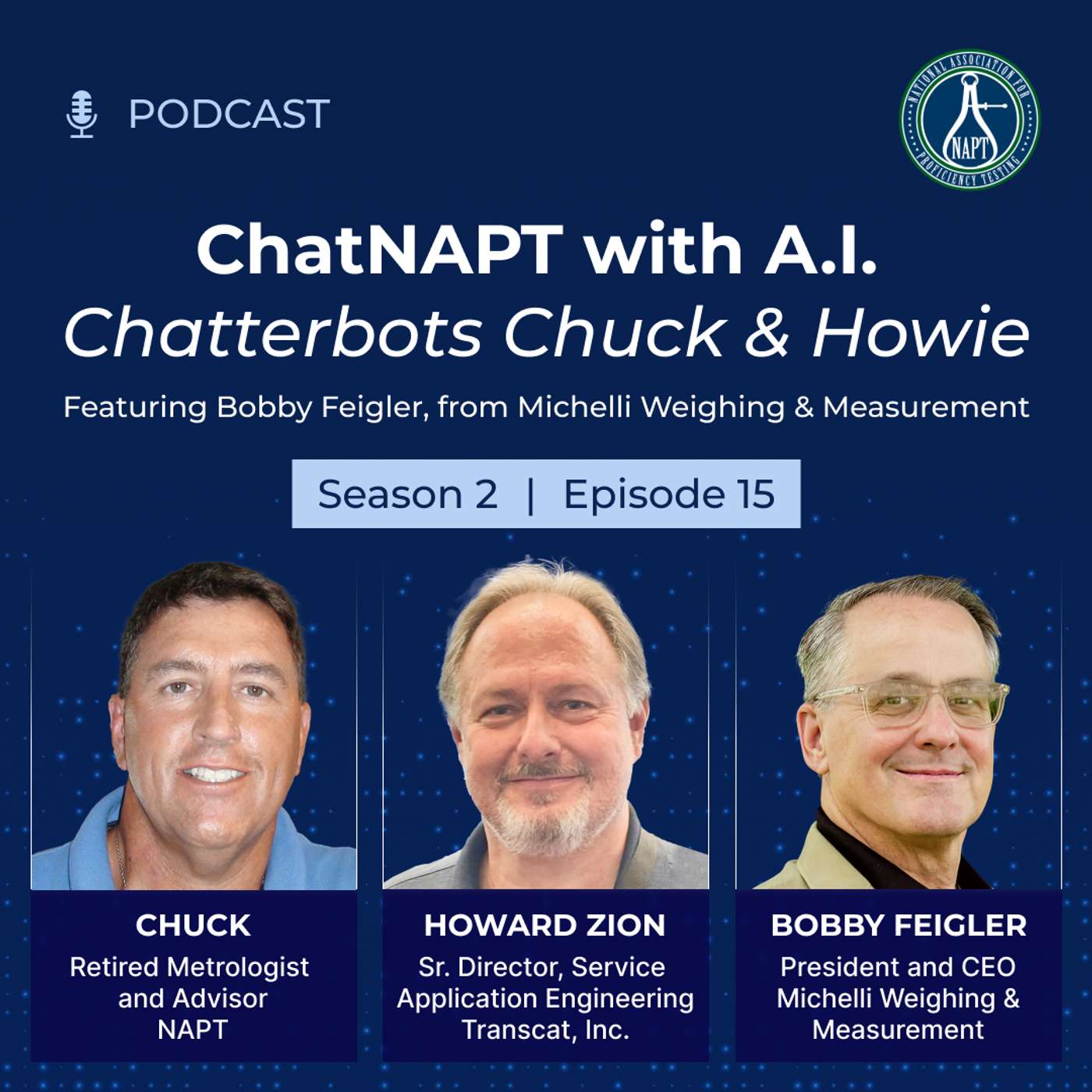 Season 2 | Episode 15 with Bobby Feigler from Michelli Weighing & Measurement63 / 100
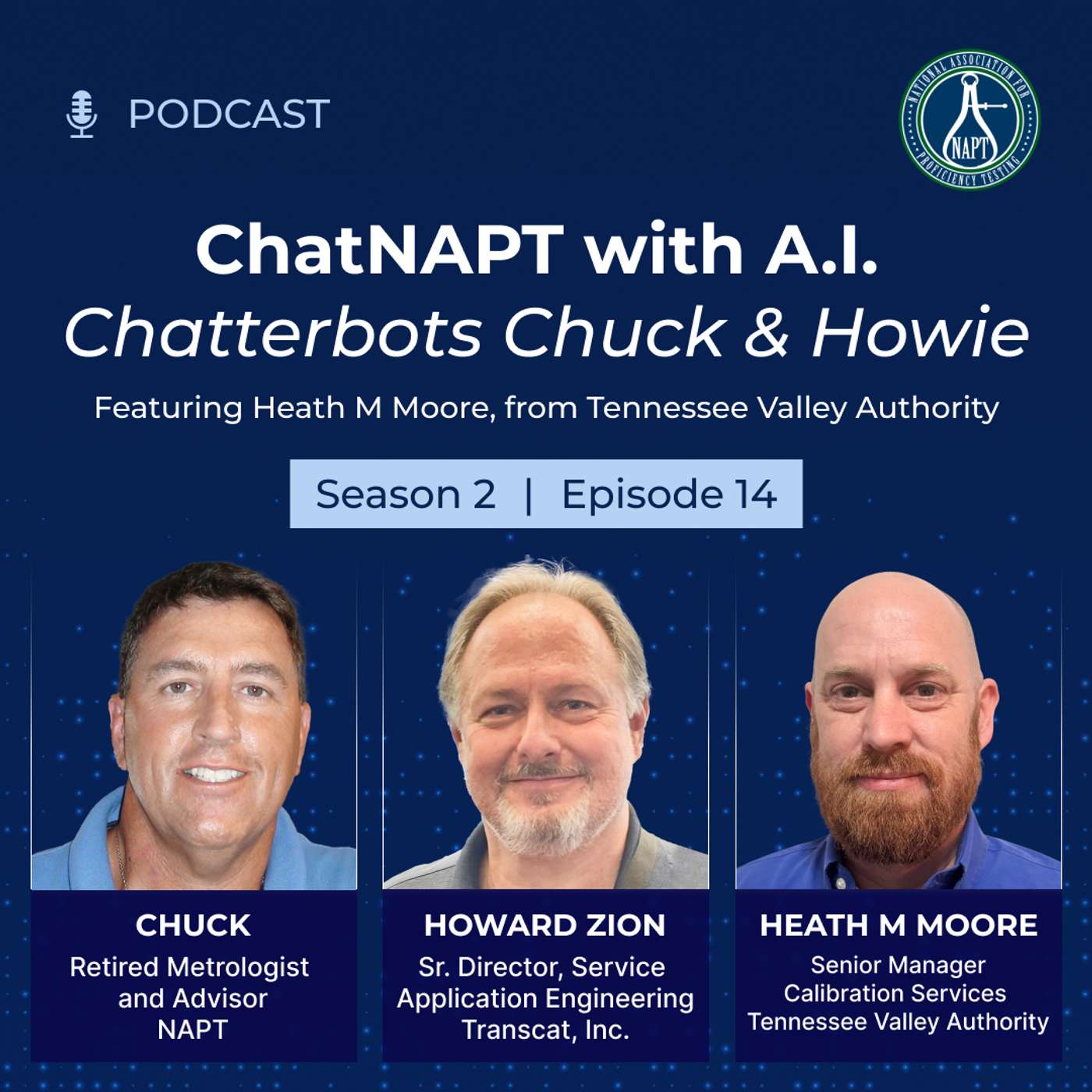 Season 2 | Episode 14 with Heath M Moore from Tennessee Valley Authority54 / 100
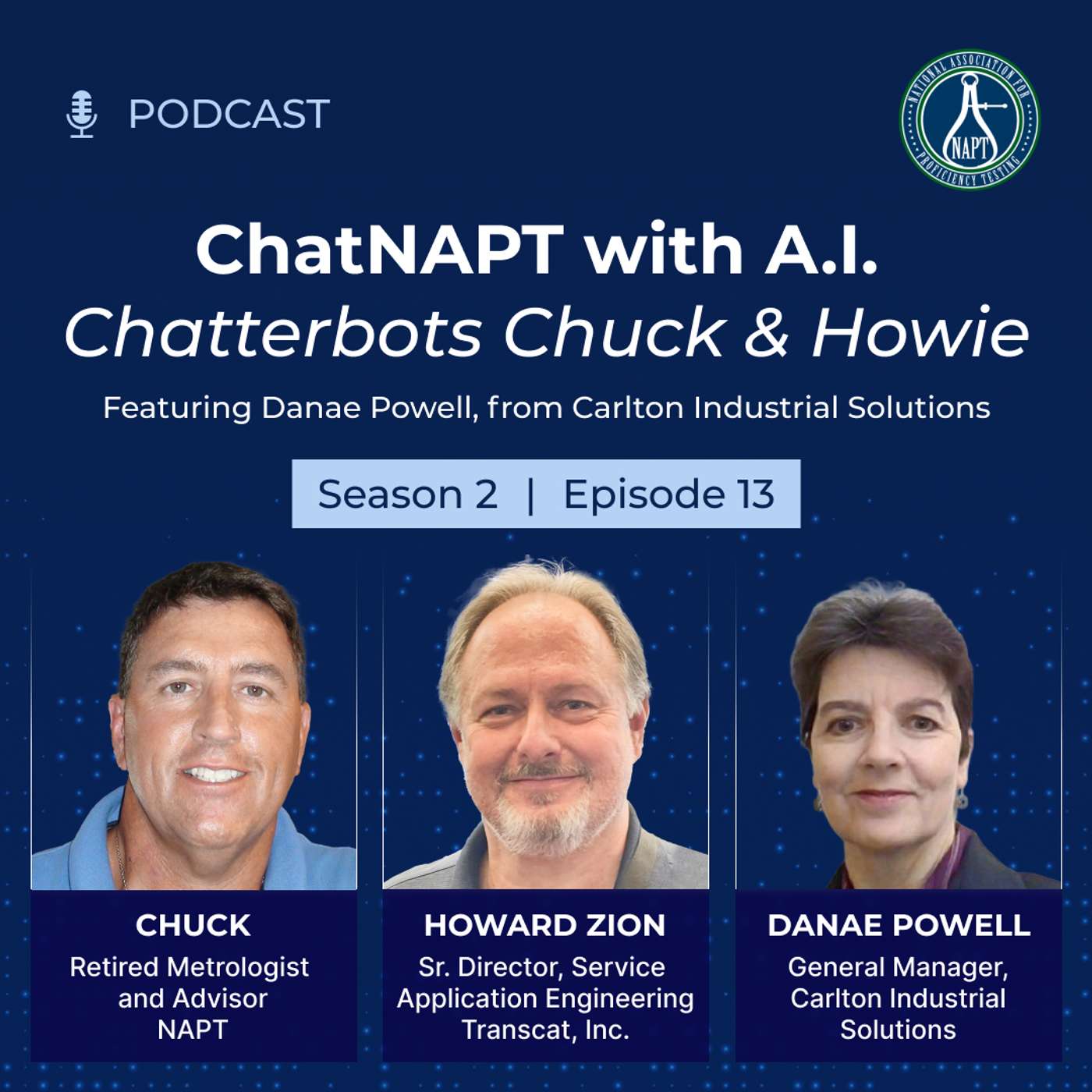 Season 2 | Episode 13 with Danae Powell from Carlton Industrial Solutions65 / 100
 Season 2 | Episode 12 with Ken Racen from Applied Technical Services, LLC73 / 100
 Season 2 | Episode 11 with Steve Stahley from Cummins, Inc.