
Cash Machines · 2026-04-16 · 38 min
Key moments - from our scoring
Substance score
54 / 100
Five dimensions, 20 points each
Tom Hunt discusses his non-linear path to building Fame, a B2B podcasting agency that has grown to $4.5 million ARR without raising capital. Rather than a single aha moment, Hunt describes multiple failed ventures (15 startups attempted, 25 businesses worked on) before discovering podcasting's potential while working at a SaaS company. The turning point came when he secretly built an email list of SaaS marketers and sold podcast services to someone on that list - a moment of desperation that became the foundation for Fame. The conversation explores why podcasting works for B2B growth beyond traditional metrics: it's a door opener to meet high-value connections, build relationships through emotional experience, and create learning opportunities. Hunt emphasizes emotional mastery as the key to handling failure repeatedly and advocates for learning from every attempt rather than viewing projects as mistakes. The discussion also covers relationship fundamentals - communication, empathy, and trust - with both speakers agreeing that vulnerability and giving 100% upfront accelerates relationship-building, though observing people's true colors quickly is essential. For B2B operators considering content or relationship strategies, Fame's approach demonstrates that podcasting serves as both a marketing lever and a networking multiplier.
Hunt was working as Head of Demand Generation at a SaaS company when he secretly built an email list of SaaS marketers and created a podcast for his employer. He then emailed his list offering podcast services; one person replied and became the first paying customer. His employer eventually became Fame's first client and remains one of their longest-standing customers today.
Hunt argues the true benefit of B2B podcasting is using it as a door opener to meet high-value prospects and partners who wouldn't otherwise take 45 minutes to meet with you. Beyond that, podcasting builds deeper relationships through the emotional experience of recording together and creates learning opportunities that enhance business insight.
Hunt started approximately 15 businesses and worked on about 25 total businesses (including collaborative ventures) before Fame. None of the first 15 are still operating today; Fame is the only one that survived and scaled.
Hunt acknowledges he defaults to low-trust responses (like requiring formal applications even from referred candidates) rather than opening conversations with people who reach out directly. He recognizes this may be preventing him from building relationships faster and identifying better candidates sooner.
Communication (including listening), empathy (feeling heard even when disagreeing), and trust. Hunt notes that trust emerges over time as a result of good communication and empathy rather than existing upfront.
Our reviewer’s read on each dimension, with quotes from the episode.
The episode contains several useful but largely predictable insights about entrepreneurship, failure, and business metrics. While Hunt shares valid frameworks (emotional mastery, trying multiple ventures, focusing on LTV over CAC), these are mainstream concepts circulating widely in B2B circles. The host's philosophy on the four Fs (family, friends, fun, food) and time segmentation is conceptually sound but lacks novelty or depth specific to B2B operators. Few concrete, non-obvious takeaways emerge per minute.
It's really emotional mastery. Right. Is the key to doing that. Because if you're scared of the emotions you feel when you fail or you don't enjoy them, then you're not going to do it.
I think retention is the foundation of growth.
Hunt's narrative - failing multiple times before finding product-market fit - is the standard Silicon Valley origin story. The host's discussion of trust, relationships, and metrics (LTV vs. CAC) recycles well-known concepts. While Hunt's specific journey with Fame is personal, the underlying frameworks and philosophy are not counterintuitive or contrarian. The podcast-as-door-opener insight, while valid, is not novel for B2B practitioners familiar with content marketing.
Failure is learning if you learn from it, it's no longer a mistake, it's a learning event.
People will pay you money to save them money. They will pay you money to save them time. They will pay you money to make it easier, more convenient.
Tom Hunt is a legitimate practitioner with tangible operating experience: built Fame to $4.5M ARR bootstrapped, managed 25+ business iterations, spent years in online marketing, and currently runs an agency with real clients. He is not a pure theorist or career podcast guest. However, his primary expertise is podcasting/marketing, not broader B2B operations, which limits relevance for a general B2B operator audience. He offers founder perspective but lacks the scale or diversity of experience of a multi-company operator or investor of significant caliber.
He has over seven years of experience in online marketing and has built Fame into one of the most successful global podcast agencies
Fame has grown significantly, reaching over 4 million in annual recurring revenue without raising external funding.
The episode lacks concrete data, metrics, and named examples to support claims. Hunt mentions Fame reached $4.5M ARR and had 250+ clients, but provides almost no specifics about what worked, customer acquisition numbers, retention rates, or timelines. The host briefly mentions a restaurant (Carmina) and one hiring example (Middle Eastern applicant), but little quantifiable evidence supports the business principles discussed. Claims about podcasting benefits, LTV vs. CAC, and emotional intelligence are asserted rather than evidenced with numbers or case studies.
Fame has grown significantly, reaching over 4 million in annual recurring revenue without raising external funding.
Maybe top 10 or first 10 out of 250.
The host demonstrates solid conversational skills: genuine curiosity, willingness to share philosophy, and some follow-ups (e.g., probing Hunt's trust tendencies, asking about his default hiring process). However, questioning lacks sharpness and rigor. The host allows Hunt to meander through philosophy and personal narrative without pressing for specifics about Fame's business model, customer acquisition, retention challenges, or competitive positioning. Few challenging questions are asked; the conversation reads more as alignment-seeking between two entrepreneurs than as investigative journalism probing for operator insights.
Why do you think that?
And why do you think that is? What was different with fame versus all the other ones?
Computed from the transcript - who did the talking, and the words that came up most.
What You'll Learn The Failure Rate Strategy: Why doubling your failure rate is the most efficient way to multiply your success. Emotional Mastery over IQ: How an awareness of your emotions enables you to survive the setbacks required to succeed . Podcasting as a Relationship Engine: Why the true ROI of podcasting is access to high-value people, not just content . Leading with 100% Trust: The strategic advantage of trusting partners upfront to reveal their true character faster . Marketing as Perspective-Taking: Why influence only happens once you step into your customer's specific self-interest . The Retention Flywheel: How focusing on customer lifetime value (LTV) causes customer acquisition costs (CAC) to decline naturally .
Transcribed and scored by The B2B Podcast Index.
Speaker A: So it's really emotional mastery. Right. Is the key to doing that. Because if you're scared of the emotions you feel when you fail or you don't enjoy them, then you're not going to do it. And so really that it's not like being clever or intelligent, it's an awareness of your emotions that could enable you to succeed.
Speaker B: Now this is a special episode for me. First, let me introduce you to Tom and then I'll tell you why it's special. This is Tom Hunt. He is the founder and CEO of Fame, a B2B podcasting company. He has over seven years of experience in online marketing and has built Fame into one of the most successful global podcast agencies that helps B2B businesses scale through high quality podcasts. Fame has grown Significantly, reaching over 4 million in annual recurring revenue without raising external funding. Tom is also the host of the podcast confessions of a B2B entrepreneur, where he shares insights on entrepreneurship and content creation. Before Fame, he experienced multiple business attempts and roles, including consulting operations, and he's also an angel investor in various startups. Why is this episode special? Tom's company, Fame is my podcast producer as well. And I believe, Tom, I was one of your first clients when you started out, is that correct?
Speaker A: You were very early. Yeah. Maybe top 10 or first 10 out of 250. So, yeah, you are, uh, you have a very special place in the heart of Fame.
Speaker B: Well, thank you very much. I feel like I'm kind of like at the, at the airline, checking in, you know, saying I'm going to get my upgrade.
Speaker A: Exactly. Loyalty points.
Speaker B: So, Tom, let's just start from the beginning. You know the deal. Tell me your journey and the moments that have led you to where you are currently today.
Speaker A: Yeah. So let's pick out the aha moments. There wasn't one. There might be two, and there definitely wasn't one. After school, like deciding what I wanted to do in my life, it was more just like I chose chemistry is what I studied at uni because I was like slightly interested in it. And so I spent four years studying chemistry and then I kind of realized in the final year, ah, I didn't really, like, enjoy being in a lab on my own, um, doing really detail orientated work. So was that an. Maybe that was the first one, but it wasn't that inspired in that the thing I went to I also didn't really like, which was management consulting. So I did four years.
Speaker B: Why did you go to chemistry to begin with? Something must have attracted you. What attracted you?
Speaker A: My dad studied Material science. My brother was doing electrical engineering and I was just quite like biology and chemistry and I was quite good at it. That's probably why I found it quite interesting like learning how things work. But then uh, a valid follow up question is why then choose management consulting? And that again it wasn't an inspired choice. It was more like all of my peers were either going into finance or they're going into consulting and I just wanted to like earn some money. So did four years of that, two years at two different places and again like learn a lot, enjoyed parts of it, but didn't like being employed basically. So that's probably the second aha moment. Like can't do like detail orientated work on my own. They don't like being employed.
Speaker B: I'm going to guess third. Can I guess the third please? You're a people person. You can't be locked up in a room with chemicals and things. But you like that. But it's not enough. That's my guess.
Speaker A: Yeah, exactly. Like I think I have maybe two unique abilities, like a thing that you're naturally really good at and I think marketing and management. And both of those are very like people focused. And so I think you're right there. Anyway, so Back to it's 2014, right? And I'm working at Accenture, the management consultant. And I set myself the goal of replacing my salary with a business I started on my um, own by the end of the year. And long story short, I essentially was able to hand in my notice in December of that year with a small Internet related business that I'd built. And so from 2015 up until today, I've really just been trying to make like a business work and I've worked on probably 25 different businesses. And then fame, the business you mentioned is anyone that's like worked like they all taught me a lesson, you know. But uh, fame is the only one that has objectively worked or is working.
Speaker B: And why do you think that is? What was different with fame versus all the other ones?
Speaker A: Well, I think it enabled me to harness my two unique abilities, marketing and management. Because we're obviously a marketing agency, we have to market ourselves and then being an agency we have to develop, like find and develop and keep people. So I think that that's the core reason. The secondary reason I think is the fact that I learned so much from being obsessed with online businesses for a decade prior to today.
Speaker B: I think you said something very key that a lot of times people forget and they often go through life and they make A decision and they come across saying, oh, I made a mistake and they're upset, they regret it. Sure, that's one avenue. But the other avenues, did you learn from it? So if you learn from it, then it's no longer a mistake, it's a learning event. To me, it's a mistake if you don't learn from it. What do you think?
Speaker A: Totally agree. I actually did a TEDx talk in 2014, I think I was still working at Accenture, uh, called Stop thinking, Start failing. All based around, like, it was a very cringe talk. We can link to it in the show notes still on YouTube. It was all based around the Michael Jordan quote of like, I fail over and over and over again. That's why I succeed. So, yeah, totally in agreement.
Speaker B: Well, that's the other thing. We've talked about this on this podcast a few times. If you want to increase your success rate, double your failure rate. Yeah.
Speaker A: So it's really emotional mastery. Right. Is the key to doing that. Because if you're scared, like, if you're scared of the emotions you feel when you fail or you don't enjoy them, then you're not going to do it. And so really that it's not like being clever or intelligent. It's about having like an awareness of your emotions that could enable you to succeed.
Speaker B: Sure. But this is another reason more basic to me. People only learn by experience. You didn't learn because your mom said, hey, don't touch the stove. Don't touch the stove. I guarantee you touched one time and then you say, yeah, I shouldn't touch the stove. That's how people learn.
Speaker A: Agreed.
Speaker B: So it's not a failure. Just learn. If you learn from it, you're growing. And if you're growing, you're gonna, you're gonna get it.
Speaker A: Yeah. That's the one piece of advice I would tell myself probably if I went back a decade because I was always like, so not anxious but like, just really wanted to make it work. And what I tell myself is to just keep going, keep like making all these failures because eventually you'll stumble on something that you can make good enough so that other people will want it. And ah, that's ultimately what happened with fame.
Speaker B: So let me just go back. You failed in how many businesses before
Speaker A: fame define failure as we have already. I have probably started 15, but worked on 25. So also like work with other people on their business.
Speaker B: So let's just say not failure, but which ones have survived on. Move on. We've tried 15. Not all of Them have. But famous definitely hit the mark for you.
Speaker A: I don't think today any of the 15 are still around.
Speaker B: Okay.
Speaker A: Famous the only one.
Speaker B: Okay. The reason I'm asking is because that shows something. I don't know what number it was. Maybe it was the first one. Maybe it was 15 month. I don't know. But at some point you came to a point you say, you know what, it doesn't matter. Throw anything you want at me. I will survive. And that's it. Key thing in life. And here's the thing, even when you come in that fork in the red, when you say everything's being thrown at you, you know the universe is just throwing everything at you. You have two choices. Are you going to laugh? Are you going to cry? And ah, which is correct. Which is incorrect. And I'll argue neither is incorrect. You can do either. But there's one for sure answer you have. You're going to end up doing either way. You got to move forward.
Speaker A: Yeah. Probably the last point in the journey which could definitely be deemed as a failure before I share that my biggest fear is having to get a job again. I worked out that I hated being employed in that four years anyway in 2018 or 19, one of those years I basically had to get a job. I ran out of money after five years of failing. And so I joined a company that I'd actually invested in. I knew the founder, uh, is head of Demand Generation and I spent a year, just under a year actually working there. Again, enjoyed some parts, hated being employed, but ended up creating a podcast that was really valuable for them and that enabled me to start Fame. My old employer, the company I was working for, became our first client and then are actually still a client today. I think they're one of the only customers that uh, have stayed longer than you. And so even in like uh, the, the lowest part of the journey, that was the uh, seed that sprouted into
Speaker B: fame all the moment that made you realize, hey, this is m the direction I want to go.
Speaker A: Do you know what it wasn't, it was more. It wasn't like uh, an inspired decision. It was more like I again realized that I couldn't be employed and so I had to make money to like live in London. And so I actually built an email list on the side, like in secret. I won't do that again. You have to, you have to tell your employer what you're building. I should build an email list on the side. And then because we had worked out how to build and grow that podcast in House. I just sent an email to that list because it's all SaaS. Marketers sent an email to that list being like, does anybody, anyone want to start a podcast? And then we had one person reply. And then I sold the podcast service to them without my employer knowing, uh, which is not the best thing to do. But yeah, it wasn't in aspired choice. It was more like, I have to leave. You know, I can't do this. I can't like be employed.
Speaker B: But I think you also told me when I first talked to you about doing a podcast that you learned it was a great door opener that leads. It's a lot more than just doing the podcast. Right. Some people want to do a podcast to, let's say, monetize it with advertising, whatever. But you said there's a whole nother benefit. Most people don't realize. So can you maybe expand on that?
Speaker A: Yeah, absolutely.
Speaker B: I.
Speaker A: So I actually think that I found a podcast for like four years. The biggest benefit for me is using it as a door to meet people that wouldn't you would normally meet. If you can like prove to that person who you want to meet that it's going to be worth like 45 minutes of their time to record something with you because you're going to expose them to your audience, then that's a very easy, like door opener to like get to know them and then ideally build a relationship from there if, if it's a fit. And so that could lead to you signing partners, finding customers, making friends, you know, and so that is like the undercover true benefit, I think, of podcasting along with all the other marketing upsides.
Speaker B: And I have to say that's very true. But there's another benefit too. Maybe it's for people like me. I absolutely love having conversations. And you just learn so much. So even if it doesn't directly benefit, like you and I do something, but you learn from it and it enhances your ability to analyze and look for other opportunities and uncover other insights.
Speaker A: Learning another key benefit, for sure.
Speaker B: Absolutely. I've learned a lot from the conversations I've had. Uh, a few moments in our conversations.
Speaker A: I. I can imagine how many guests you must be on, like, over a hundred guests now.
Speaker B: Yeah.
Speaker A: Uh, would you say that any of them now are like, friends?
Speaker B: Oh, for sure.
Speaker A: Like you've met in person and like you chat regularly.
Speaker B: Yes, I have met a few in person. Absolutely. And I do chat with them, but I've also met a few in person that I've put into the podcast.
Speaker A: Nice. Okay. Both Ways, you know, offline to online.
Speaker B: Yeah, yeah. So it's worked both ways. And that is also deep in the relationship because I met them and plus, usually those people are much more in proximity. Right. Uh, in terms of physical proximity, so that's even more. But I've met several that I met online but then eventually met in person, and several even when they came overseas, where I was, you know, overseas at the time.
Speaker A: Very nice. I have a theory about human relationships, right? And my theory is that the more violent the emotional roller coaster you go on with that person, the deeper the relationship. So if you think about my core friendship group now, they're all like the people I went to school with, all the people I went to uni with, and that's like a big roller coaster. And so that's why I like the podcast thing, is because when someone comes on a guest to your show, it is a bit of an emotional roller coaster. First they're like, maybe a bit nervous, then they get excited, and then they get a bit nervous. And then you go through the process, and afterwards you feel, like, really relieved and happy. And so he forms a bond. Right, I'll tell another quick story from my show. So I had a guy on his founder and marketing agency in Amsterdam. Cool guy, cool agency. I love the content his business produces. And then at the same time, I had another guy on the show who I'd actually known before, but then I wanted to get him on the show, a guy called Nathan Lacker, very famous in the world of SaaS. Anyway, fast forward to today, and I'm going tomorrow to Amsterdam to be in a conference. And then the day after the conference, I'm going to go to the office of the Amsterdam guy, and then that guy Nathan is going to come and we're going to create content together. Now, I think that would. I'd be able to do that without going through the podcast experience with them. So that's an example.
Speaker B: But I think you hit upon an interesting point there about relationships. It's kind of like, you know, the. The strongest the chain is only strong as the weakest link. Correct. You've heard that, right? It's similar in human relationships, right? The strength of a true relationship is not how you survive the good times, it's how you get through the bad times. Right. It's those shared experiences. And I found that you need at least three things to be able to do that. And I'd love to see if you agree or even add to it or change and swine with me. One, you need first of all, good communication, and that means not just talking but listening. And two, you need empathy. And that doesn't mean that you guys agree. It means even more specific that each of you feel like you're being heard. Even if you don't agree, at least you feel you were heard and the other person understood your point of view. And ah, even then you can agree to disagree respectfully. And the third is trust.
Speaker A: Communication, empathy and trust. Yeah, yeah, I think that's add to it. Would I change anything there? Communication, yes. Empathy. Understanding, yes. Trust, yes. Yeah, I think the first two definitely. I think the third one emerges over time. Like if you have good communication and empathy for each other, then that will build trust. So I think it's quite hard to have trust straight away with somebody. But that that comes as a result of the second theory, in my opinion.
Speaker B: Well, that's an interesting point you put up about trust, that is conversation. There's two ways people can go into a relationship, right? You can give a hundred percent and then say, okay, you can dial back, or you can give 50% and dial up to 100%. Which uh, is correct. Which is incorrect.
Speaker A: Interesting.
Speaker B: I find it easier. I give in 100% from the beginning.
Speaker A: But then to that risk I always know.
Speaker B: Well, there's always a risk. I mean, what are the two guarantees in life? Death and taxes. But after a while you do this, you learn, right? There's a learning curve. You learn, you keep fine tuning your gut, you fine tune your observation, you fine tune your communication. If you can establish communication, empathy and trust, then you're on the road, even if you don't agree or don't like the person. But if you have those three things, you can get through it. And I'm not saying which is right or wrong, I'm just telling you what I've thought about it. And so I've learned no matter what you give time, people always reveal the true colors. Then it takes a week, two weeks, 10 weeks, I don't know.
Speaker A: Then if you go in 100% with somebody, but then it takes them 10 weeks to show their true colors, then you have like when I say 100,
Speaker B: am I going to give them like thousands of dollars? No. Right? I mean even 100. I'm talking about trust. We're just talking about trust, right? I trust they'll do whatever you guys are planning or talking about and so on, but it's not going to be that long before you say, hey, they're not coming on time to meetings or they're not being Follow up. After all, you're going to see that, right? And what I'm saying is when you see the true colors, believe them. That's all. Don't think you can change it because you can't change it.
Speaker A: Oh, yeah, yeah. Uh, that's a good life learning, isn't it? Realizing that there's really no point in trying to change people.
Speaker B: The only way change happens is if they want to do it. Yeah, but here's the thing. Once you see your true colors, believe them. But then you only have one choice. Can you live with those colors you see or not? And that's when, if you can't live with them, you're done. If you can live with them, maybe you'll dial back the trust to maybe 80%. I don't know.
Speaker A: Yeah, nice. This is a good mental model for relationships. It does. Yeah. Maybe I need to be more trusting.
Speaker B: Well, I think you'll get to the truth faster. True. Because people aren't. People aren't dumb. If you don't trust them, guess what? They're not going to trust you. I mean, if you think you're going to like anything in life, if you think you're going to put in 80%, expect 100% back. It doesn't work that way. You're going to get out of anything what you put into it.
Speaker A: Agreed.
Speaker B: But you're welcome to challenge. Hey, I don't know, maybe we'll come to the new equation.
Speaker A: No, I think I probably am less initially, like, trusting than you maybe. And maybe that's holding me back in building deeper, uh, relationships faster.
Speaker B: Why do you think that?
Speaker A: Because, uh, like, let's say I have somebody reach out to me and they're like, I have a lot of people reach out to me to come work for fame, for example. And I, my default response is just go and apply on the website. Even though they've sent me all this amazing info on email. And so I'm almost like, not trusting what they're saying. I'm like, you go and just apply and the team will deal with it. But maybe if I was more open, more trusting, I would speak to them and realize, actually, yeah, this specific person is perfect for the team. Then I could probably fast track them through the application process and then we would have better people faster. So I think that's an example of that could be holding the fame back or me back from capitalizing, uh, on good relationships.
Speaker B: Well, you made me think. One example, we were hiring somebody for, as you know, I have a restaurant and we were looking for someone to help us with our digital marketing. Because I always have a digital marketing company. Because, you know, once you're in there, you can't just do one thing. It's an official, uh. It's an unofficial, official rule in India. If you're Indian and you do one thing, you're not going to be Indian for long. You got to do more.
Speaker A: You have to have. Well, you have to have side projects if you're Indian. It's like a national rule, I think it is.
Speaker B: But now it's a rule for everybody who doesn't have side gigs anymore.
Speaker A: Yeah, true.
Speaker B: Yeah.
Speaker A: Uh, true. The world is becoming more Indian.
Speaker B: Yeah, becoming Indian. But anyways, this guy came, and it's kind of interesting because, uh, young guy, hungry. And I was with my business partner, and we're quite different. He's a little bit more black and white than I am. And I don't mean that bad way. I mean, he agrees. We agree. And so this young applicant came, and we said, so what do you do? He said, I do everything perfect. I think you probably would have reacted the way my partner did. No one's perfect. I don't believe it. I don't trust this. I don't like it. So he went on talking about this and trying to give him a lesson, like, you don't do this, But I'm just listening. And then we found out, uh, he's from the Middle east, and I'm fortunate. I've taught, I've traveled. So I kind of know that chances are it's part of his culture. He's a bit, you know, boasting and, you know, putting his chest out. And so I let these two go for a, uh, while. And I asked the young guy, I said, what are you doing tomorrow? He said, nothing. I said, can you come here and make me three reels? He said, yeah, I'll pay you for it. He said, no. I said, okay, up to you. He came the next day, made three reels, and they were great.
Speaker A: Really?
Speaker B: They weren't perfect? They were not perfect. No, they were not perfect, but they were damn good. They were workable. And so my business.
Speaker A: Did you give him a job?
Speaker B: Let's hire him.
Speaker A: Yeah, nice to do it with me.
Speaker B: He's gotten better. We've gotten better. But he had something that it's hard to find, and that is he kind of had three things. He was a doer, he was hungry, and he was a thinker. Now, was it the right thinking, though? But then once I got to know him, he also had the other elements. He loves solving problems. But if I'd gone the normal path, and this happened a few times now, people, uh, that we've hired, and I've just learned everybody has a positive negative. As great as you are, Tom, as great as I am, trust me, I have negatives. You do, too.
Speaker A: What are your negatives?
Speaker B: Oh, come on. This isn't going to outlast the podcast. I have a certain image to uphold here. Of course.
Speaker A: Yeah, yeah, City. I'll give mine, I think detail and is a negative. And then also I think that, you know, I mentioned I did, like, 15 things in five years. I think I'm quite good at taking action and, like, doing stuff, but I'm not great at, uh, like, being strategic about what, where to work on. So it's like this lack of attention to detail, lack, uh, of patience, which basically. But it probably meant my journey was longer than it could have been if I was a bit more strategic. So those are two things that I, in the future, will need to work on, I think. Do you love hearing about people's aha moments? Is there a guest you would like to hear from? Or do you have a question for Darshan? If So, head to iResearch.com or drop a comment for us here. Better yet, leave us a review so we can keep bringing you stories and, and insights each week. And whilst you're there, hit that subscribe button M to ensure you don't miss any future episodes. Thank you for listening. Now, back to the show.
Speaker B: Look, I think even with positive negatives, right, you can have a positive today, and that same positive may work for you seven out of 10 times, but three out of 10 times, it's going to be a negative, right?
Speaker A: Yeah, true.
Speaker B: So they're relative. I mean, so it's not. They're like static either. Right. I think the thing is, just recognize everybody is positive next and they change. They can be great one day and bad the other day because of other reasons. Right. Same thing with me. You know, um, could be in a bad mood, and, you know, I'll come across differently than I was if I was in a good mood. So in general, everybody has positive negatives. And I've learned if you can try to tap in people's positives, your chances are you'll both move forward. That goes to another philosophy I've kind of learned over time is I try to create win win. So I'll give you a simple example of a win win. I meet someone new, I make them laugh, and I laugh. That's a win win. I meet four more people in the day, so I have five people I had a win win with. Now that's a good day. But secretly I might even try to shoot for six or eight birds with one stone. Why? Because that's my game. With time. If you think about your most limited resources, for you, me, everybody's listening is one thing, time. So I don't actually have any battle with humans at all. I battle every day is time. And what's interesting is Father Time will give you 10 minutes. And Father Time doesn't care if you do nothing or six things. It's still going to give you 10 minutes. And when those 10 minutes go, they're gone. You'll get another 10 minutes. So my game is what can I do to maximize the time I've given? And the thing about the laughter is I don't know if it's true, but I've always heard laughter is the best medicine. So I figured if I make five people laugh a day and I laugh, hey, maybe I'll get another 10 minutes down the line.
Speaker A: What's an example of like another win win that you've I guess with your business partner? Right. That's probably a win win relationship.
Speaker B: But we didn't meet on business, we met socially. But even now in business I try to create win win win. And you can have more than one win because at the end of the day everybody has self interest. If humans don't have self interest, why do we need money? So everybody has self interest. You can always try to align them in self interest. So I just think of analogy. If you and I have a self furnished we align ourselves, we find three more people. Hey now we got a bus. And if we can get a bus to a destination, it may not be fast or slow, it doesn't matter. But that chances are we might have better more success with four of us than one of us.
Speaker A: Yeah, I agree. I think this like a crucial like marketing skill is being able to take someone else's perspective because everyone is self interested and you're only then going to be able to influence someone or change someone's behavior if you understand what they want and you do that by taking their perspective. So that's uh, a very useful thing I think.
Speaker B: You bring up an extra point. Let's talk about marketing. What is marketing at the end of the day? What is marketing as bare essence?
Speaker A: Communication to influence.
Speaker B: That's one of it. I would argue it's the exchange of value. Right? I'm going to give you money for something, you're going to give me a value that I think is worth that money. Fair enough.
Speaker A: Well, I would say that's like the definition of business. And you use marketing to get to that point of where you do the value exchange.
Speaker B: That's true, but business is also cost control is, you know, keeping, uh, tabs of your business. I mean, there's many other things. I'm just talking marketing in its bare essence. It's the exchange of value. And in all honesty, most people don't care about your product, your service. They don't care about that at all. They care about what you're going to do to help them. And therefore, people will pay you money to do one of three things. They will pay you money to save them money. They will pay you money to save them time. They will pay you money to make it easier, more convenient. And I would argue if you can do all three, your chance of being successful increases. 3x. If you do 1. 1x 2. 2x 3. 3x. Gotta learn something different. Also, there's a fourth element. You know what that is?
Speaker A: No.
Speaker B: If you can evoke an emotion, now you're talking a whole different ballgame. You're talking 6x10x12x. I don't know. But I knew one thing. It's more than 3x at the restaurant. My team does two things, that's their only mission, delight our customers. And we try to get to wow with every dish. Uh, we're at a 4.8, so wow.
Speaker A: That's like when someone tastes a dish they think is amazing. So that's. Yeah, that's how you design a menu.
Speaker B: Yeah. Not the menu, the actual dish. Each dish. Obviously, I can't get to wow with every dish with everybody, I guess. What happens if you can evoke the emotion? What do you think is going to happen next? I think two dominoes are most likely to fall. It's been consistently proven that's pretty much the case. Which two dominoes are going to fall?
Speaker A: They're going to tell their friends.
Speaker B: Yep.
Speaker A: And they're going to leave a review
Speaker B: that's partly telling friends. They're going to come back. Yeah.
Speaker A: Uh, yes, you're right.
Speaker B: Yes. And in marketing, what is your best prospect? A new one or your lowest hanging fruit, which is an existing customer. Yeah.
Speaker A: Nice. Do you have, like, a loyalty scheme where people can, like, get lower cost or free stuff over time?
Speaker B: We do informally, but I'm working on a much more formal one. Yeah. And it's even. It's really kind of cool, actually. But I haven't released it yet. It's going to be released later this year.
Speaker A: I, uh, can't wait to come to the restaurant when I'm next in Bangkok. I'm coming.
Speaker B: You know, you've been telling me this for how many years now?
Speaker A: I have. I haven't been to Bangkok.
Speaker B: I travel all over.
Speaker A: It looks like I traveled all over.
Speaker B: Look, my account managers come here more than you.
Speaker A: Yeah, that makes me so happy, you know, when I saw the pictures of that. Anyway, the restaurant, which is the best selling dish, is it just like the roast chicken?
Speaker B: Yeah, it's the chicken.
Speaker A: Nice.
Speaker B: Yeah. And it's different because it's the only one available in Thailand.
Speaker A: Well, I roasted like that. Or, uh, roast chicken in general?
Speaker B: Well, one is rotisserie. That's one. But it's wood fired rotisserie. And two, it's Peruvian. So let's get the triple win.
Speaker A: There we go. Peruvian wood fired chicken.
Speaker B: That's the way you should do it. It's the best way to cook meat over a fire, especially wood charcoal. There we go.
Speaker A: Uh, didn't know that. And especially proven as well proven's quite special.
Speaker B: I got used to it in the US and I loved it to the point I'd get it once or twice a week. And amazingly it wasn't available here in Thailand.
Speaker A: It's not really available in the UK there. For cup of Peruvian restaurants, definitely no language.
Speaker B: See, that's what a podcast can lead to, man. You can have a relationship, have a JV done. Right on, right on the podcast.
Speaker A: Yeah. You can start, uh, a Peruvian chicken restaurant.
Speaker B: Yeah, you don't need to come. Come here. I'll come there.
Speaker A: What's the name of the restaurant again?
Speaker B: Carmina. C A R my N A. Yeah.
Speaker A: Uh, and what is, does that mean something in Peruvian?
Speaker B: It's a character we came up with, uh, Carmina. She's a cross between Amelia Earhart and Indiana Jones. And it's kind of related to what we're talking about actually. The, the, the concept is she's traveled the world. She's been a bit of a maverick and renegade. She is from South America, but she's wanting to learn a thing, having traveled the world. And I think you can speak to this because you travel a lot now. You find that people are more in common than not.
Speaker A: Uh, yeah.
Speaker B: And what you find. Go ahead.
Speaker A: Yeah, I think I found that out quite early on in my travels, you know. Well, uh, what would used to happen is I would come back and someone be like, how is Australia? Or how is Like Brazil. And I'd be like, well, the people are so nice. But then I would just say about every country, you know, like, and then you stop believing the news about how people in Russia are, uh, evil in it.
Speaker B: In any culture, you're going to find good and bad. In any person, you're going to find good and bad. Right. I guarantee. You have a devil. I have a devil. It's just a matter of what's going to trigger that devil. Right. If someone comes to hurt someone you love, you could become a devil.
Speaker A: Yeah, I agreed.
Speaker B: Right. But going back to traveling, one thing I've learned, let's just do this. We don't know our listeners, right? I mean, we know them, but we don't know them. Right, but you play the role of the listener and advocate for them. And I'm going to make some assumptions and guesses and you tell me if I'm wrong or right. Fair enough.
Speaker A: Fair enough.
Speaker B: Right. I'm going to assume you and I, as well as all of our listeners have 24 hours in a day. Fair enough assumption.
Speaker A: Yeah.
Speaker B: Guaranteed. Right. And I like the power three. Are you aware of the power three?
Speaker A: Just that, uh, when you're communicating, if you have three things, it can be more impactful.
Speaker B: Yes, but it does to many things. Which is more stable, a tripod or a four legged table?
Speaker A: Tripod.
Speaker B: Right. How many wishes does a genie give you? 3. You get the idea, right? I mean, you look at, you know, movies, Acts 1, 2 and 3, you look at religion, right? Using things in threes. Why? Because two is not enough. And when you go beyond three, it gets to be a little bit too much. For humans, three is a nice sweet spot. So if we go on the power of three, I would divide the 24 hours, the three eight hour segments equal, and I would argue the first eight hours for sleep. That's the fountain of youth. If you want Fountain of youth, that's it right there. Sleep. I mean, your body does amazing things. If it sleeps and you don't have to do anything, just sleep, it does, uh, healing. It actually does its own introspection. When you can't, it does it for you. How many times you go into bed and say, let me think on it, next morning, boom, you have clarity. How did that happen? You were sleeping because that's when your conscious subconscious realigned on its own. So that's the power of eight hours sleep. Yeah. Next eight hours, that's where you work. That's where you engage in the world to provide for you, your family and to live a life because we live in a man made world where money is the exchange of valued.
Speaker A: So far, yeah, I'm with you.
Speaker B: Ah, we're still a good advocate for the people.
Speaker A: Yeah, we have. What's the remaining eight hours for then?
Speaker B: There you go. That's the beauty. You tell me. I would argue that remaining eight hours that we spend 16 hours for are for the four Fs that don't. Don't go R X rated on me. Just keep it clean. Pg. What are the four F's?
Speaker A: I reckon fun.
Speaker B: Yep.
Speaker A: Friends?
Speaker B: Yep.
Speaker A: Family?
Speaker B: Yep.
Speaker A: Freedom. Food.
Speaker B: Yeah, that's it, man. Everybody. I don't care where you're from, you're gonna want those eight hours to be for family, friends, fun and food. And that's the basis of why Carmina exists for us. It's a place people can come together, have good food with their friends and family and have fun and have good conversation. Because good conversations are what leads to what you and I talked about earlier, connections with humans.
Speaker A: Wow, nice. You tied that very nicely.
Speaker B: Pretty simple, right? But we as humans, man, we can complicate life. Like you can't believe I can do the same thing. Don't worry. It's not like I'm immune from it, but at the end of the day, it's the pure simplicity of that. I mean, it's great to see your wheels are turning. Your wheels are turning.
Speaker A: Did you. So what do you think? That brand, that branding yourself or did you work with agency?
Speaker B: It's in my book. Well, getting at least before I. Before I. Yeah, you never read my book. There you go, Tom.
Speaker A: Oh yeah, yeah. I see it in the pipeline and
Speaker B: wow, you can bump it up the list.
Speaker A: Yeah, I will now because that's an incredible brand story. Do you have that? What I love about. I love restaurants where like either on the menu or on the walls, they like talk about the story. So do you talk about that on the front page?
Speaker B: I do. On the front page of the. Of the menu.
Speaker A: Yeah. There we go. Those are the best restaurants in my opinion.
Speaker B: But not every reason. Not really. You know, like I say. But it's part of our core. If you think, why do people go out to eat?
Speaker A: Yeah, I would say only a small proportion go for like just for the food.
Speaker B: Yes.
Speaker A: They go for the other. They go for the other. Fun, family.
Speaker B: I'd say it's definitely for food, but that's not the reason. Right. It's really going for, you know, actually, actually it's even more simple than that. They're Going for an escape. I mean, look how busy everybody's lives are these days. But you still got to eat. And you have a choice. Eat a quick meal, you know, alone, or take some time out. Go out at night, you know, with your loved one or your special someone or your group, your posse, whatever. Because at the day, you want to escape. But more than that, you want an experience. That's what people want. Because people aren't buying products anymore. They're buying experiences. And that's what we talked about a lot on this podcast, is talking to people who pursue experiences. But to get those experiences, you need insights. And when you have those insights, then you have the beginnings of differentiation, innovation, and ultimately loyalty. Uh, but more than anything, if you keep doing this, you keep learning. Insights turn into foresight. Now that's really powerful. There we go.
Speaker A: Yeah. Is this the final chapter of the book?
Speaker B: Actually, I have two books coming out soon. Let's see what I mean. M. I'm working on two books. One is called the We we need, and the other is I haven't had. I have a title, but it's going to. If you could pick two metrics to run your business, which two metrics would they be?
Speaker A: Or I think it would have to be retention rate and profit margin.
Speaker B: All right, so what if I. You. There would be clv, Customer lifetime value or lifetime value. Right. Ltv, clv, whatever you want to call it. Right. And the other is cac, Customer acquisition cost. Would you agree or disagree?
Speaker A: Well, I think I. I think I like mine better. Well, actually, I think lifetime value and retention rate, like the retention rate, if that goes up, then the lifetime value is going to increase. So actually similar acquisition, uh, costs again. If you're spending too much for a customer, then your margin is going to go down. So the margin will tell you about that as well. I think both of ours are connected, but I understand your reasoning.
Speaker B: They're absolutely connected. But let's just for argument, say, go with me on this one. Right? Let's say lifetime value and cac. Of the two, which is the most important lifetime value. Right. I would agree completely. Why?
Speaker A: Retention is the foundation of growth.
Speaker B: Yeah. Because we talked about earlier, who is your best prospect and lowest hanging fruit?
Speaker A: The existing customer.
Speaker B: Customer you already have. So if you have a happy customer and you can make them happier for longer, you've now extended your lifetime value of the customer. And as a result, they're going to do what they're going to recommend and they're going to be an ambassador for you. Now, you've also reduced your cac. There you go. That's, uh, a win win.
Speaker A: There we go.
Speaker B: But let's flip it around. Let's go after cac. Thinking CAC is going to lead to LTV or clb, whatever you want to call it. What's going to happen there? Because your goal is CAC is what? Cut costs, Cut it down. Right. As low as possible. Guess what's going to happen to your lifetime value.
Speaker A: It's going to go down.
Speaker B: Yeah. Because you're probably not going to get the right customers.
Speaker A: Yeah.
Speaker B: It's an interesting phenomenon, isn't it?
Speaker A: So you're saying we should pay more for customers if they're the right ones.
Speaker B: Obviously you need to target the right ones based on what you can afford and then cultivate them to replicate them.
Speaker A: Yeah. Nice.
Speaker B: Because there's an inverse relationship between the two factors. When LTV goes up, your CAC goes down, but it's not inverse the other way. This has been a great conversation, Tom. I really appreciate it. But I have one question to ask you before we wrap up. If you could have lunch or dinner with anyone in the world, who would it be and why? In fact, this is your question you gave me.
Speaker A: Yeah.
Speaker B: Yeah.
Speaker A: Ah, I love this question. Well, uh, so I'm, um, not going to say the obvious one and the most important one, which is obviously coming to the Carmina and having lunch with you, but aside from that, I think it would probably be. I think it'll probably be Peter Thiel, because I think he is like an excellent strategic thinker. And so, um, I guess I get an hour with him for lunch. Right. And so I would just try to dig into his current game plan of what he's trying to achieve and how he's trying to achieve it, because I think it'll be fascinating.
Speaker B: Nice. That'd be interesting. Yeah. He really is one of those people that's very involved and integral, but also very stealth.
Speaker A: Exactly. Yeah. He's like kind of behind the scenes where he's pulling all the strings. I love to understand why he's doing the things he does and how.
Speaker B: Yeah, that's interesting. Well, listen, Tom, this has been quite special. Thank you very much. And also thank you and your team for everything you do for the podcast. Appreciate it. And I hope to do this again with you.
Speaker A: My pleasure, Dasha. And maybe we'll do a live recording from Bangkok next time.
Speaker B: Why not? Let's do it. Thanks again, Tom.
Speaker A: Thank you.
Other episodes covering the same guests and topics, from across The B2B Podcast Index.
 637: How to Monetize Your Podcast (5-Level Framework)Podcasting Business School · on Email list building68 / 100
 #191 - Battling AI Fear: Storytelling, Technology, and Disruptive Change with Paul Roehrig, Chief Strategy and Marketing Officer at AscendionFinite By Clarity · on B2B marketing60 / 100
 How B2B Marketers Use White Space Analysis to Map Enterprise Account GrowthB2B Marketing with Fexingo · on B2B marketing57 / 100
 Embracing Authenticity with BūndukeThe Work-N-Play Podcast · on content marketing56 / 100
 EP382: Amazon seller search bias: waiting for the rules to pass is the wrong Amazon FBA move, and the takeaway is protect the brand nowHigh Voltage Business Builders Podcast · on Email list building54 / 100
 #498 Copy This AI SEO Strategy, It Will Blow Up Your SaaSBreaking B2B · on B2B lead generation54 / 100
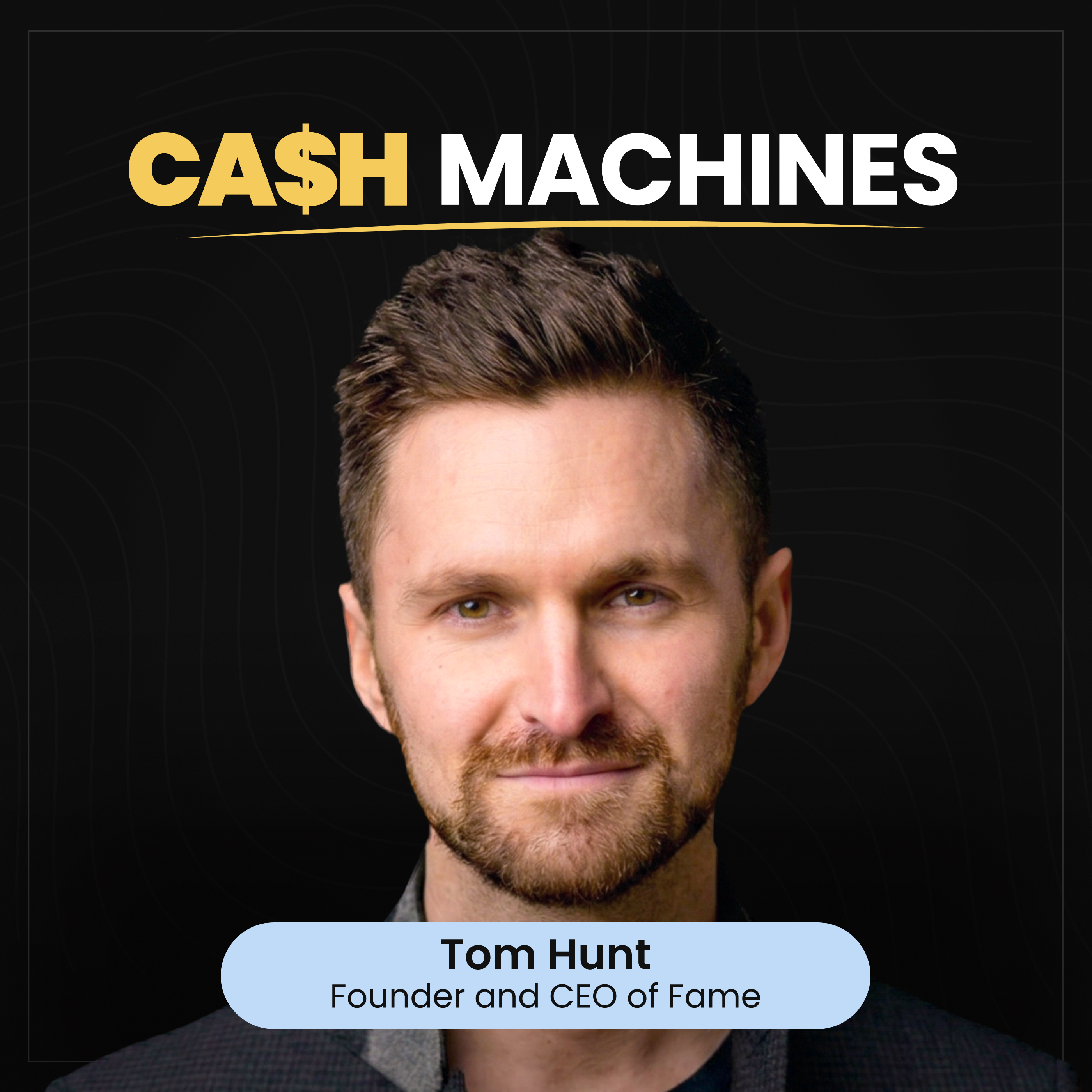 How to Build a B2B Podcast That Drives Pipeline with Tom Hunt (Growth Activated)82 / 100
 The "OnlyFans" Cash Machine56 / 100
 The "Flying V Group" Cash Machine77 / 100
 The "Software Finder" Cash Machine70 / 100
 The "Acquired" Cash Machine59 / 100