Business of Tech: Daily 10-Minute IT Services Insights · 2026-07-02 · 37 min
Key moments - from our scoring
Substance score
57 / 100
Five dimensions, 20 points each
Rich Freeman, founder of Channelholic and long-time channel analyst, breaks down two major industry developments reshaping MSP strategy. At PAX8's Beyond conference, the company challenged 3,500 MSPs to become managed intelligence providers - yet only 17 of roughly 600 partners interviewed by PAX8's head of AI adoption actually clear that bar today, up from 13 in November. Freeman contextualizes this not as failure but as evidence that the transformation genuinely is that hard; PAX8 spent a year building curriculum, the Managed Intelligence Provider program, and the Agent Gateway to help MSPs navigate token economics and dynamic pricing. Simultaneously, ConnectWise rebuilt its entire platform around an AI-native core (incorporating code from the Zofik acquisition), claiming 86% reduction in ticket escalations and 30% technician productivity gains. Freeman and the host debate whether ConnectWise's bet on owning the control plane actually works, or whether Chris Day's counter-argument - that first-party data is fragmented across Microsoft, HubSpot, QuickBooks, and Huntress - gives startups like Lexful an opening. The deeper threat: consumption-based billing and token economics are replacing the per-seat model everyone in the channel runs on, forcing MSPs to get smart about pricing, margin protection, and model routing.
Only 17 of roughly 600 MSPs personally interviewed by PAX8's head of AI adoption clear the managed intelligence provider bar as of the Beyond conference, up from 13 in November - though PAX8 views this as evidence of the bar's difficulty, not failed strategy.
The Agent Gateway tracks AI token consumption and costs, helps MSPs apply dynamic pricing schemes, and includes model routing to optimize which AI model gets applied to which use case - essentially making token economics practical for MSPs to monetize.
ConnectWise faced the risk of being disintermediated by AI-native startups; rebuilding around an AI-native core (using code from the Zofik acquisition) positions it as a system of action with 86% fewer ticket escalations and 30% higher technician productivity, not just a system of record.
No - ConnectWise's data lake is primarily PSA and ticketing-centric, but MSPs also need data from Slack, Teams, QuickBooks, HubSpot, and security tools, which is why startups like Lexful are positioning themselves as universal data aggregators.
Yes - consumption-based and token-based billing are replacing per-seat models across the industry, forcing MSPs to master pricing disciplines and margin protection strategies they've never needed before.
Our reviewer’s read on each dimension, with quotes from the episode.
The episode surfaces several non-obvious points - 17/600 MIP qualification rate, Anthropic's forward-deployed engineers as the real disintermediation threat, and model routing as an emerging MSP discipline - but these are diluted by significant hedging, sponsor reads, and the guest frequently qualifying with 'my sense is' rather than driving to conclusions. Density is solid for a trade podcast but not exceptional.
By the count of PAX8's own head of AI adoption, just 17 of the roughly 600 partners he's interviewed personally actually clear that bar today. That's up from 13 in November.
getting smart about which model and which version of which model to apply to which use case. Because you're really looking to optimize that AI spend, um, for your customers. And so that is a discipline called model routing.
The Anthropic-as-real-disintermediation-threat framing is genuinely contrarian relative to the PAX8/ConnectWise narrative dominating the event coverage, and the 61% no-AI-on-website stat is fresh original research, but most of the episode reprises familiar channel-media tropes: trust is the moat, per-seat is dying, MSPs are behind. No first-principles arguments are advanced.
Except maybe Anthropic. Right, Because Anthropic, it wants to come in and play the role you play as an MSP potentially with your customers
61% of all the MSP websites that we've looked at have no mention of AI of any kind
Rich Freeman has genuine, deep access - he was physically at PAX8 Beyond and ConnectWise's launch, interviewed multiple CEOs in real time, and has 20+ years of channel coverage - but he is a journalist-analyst, not an operator who has built or run an MSP at scale, so his insights are observational and synthesizing rather than practitioner-grade.
I had an extended conversation with Rex Frank, who runs PAX8 Academy
I mentioned I was talking to a startup uh an hour and a half ago and this topic came up
The episode lands multiple concrete data points - 17/600 MIP qualifiers, 86% L1-L2 escalation reduction, 30% productivity gain, 61% of 1300 websites, Lexful's $7M raise, Treeline's Andreessen backing - but many of these are vendor-supplied claims without independent verification, and the guest frequently retreats to 'my sense is' when pressed for hard evidence.
just 17 of the roughly 600 partners he's interviewed personally actually clear that bar today. That's up from 13 in November
They're claiming an 86% reduction in L1 to L2 ticket escalations and a 30% jump in technician productivity
The host asks several genuinely sharp structural questions - bridge vs. permanent provider, roadmap accountability, who wins the data-layer war between Ravello and Day - but he consistently front-loads his own answer before asking the guest, and the conversation stays collegial throughout with no real pushback when the guest hedges or goes vague.
Do you have a sense of where the line is between that being a bridge and that becoming PAX8 quietly becoming the provider while the MSP more slides back into being more of a reseller
you and I have both watched this vendor ship against its own roadmaps before. What's your take on that timeline?
Computed from the transcript - who did the talking, and the words that came up most.
The episode examines the ongoing shift in the IT services market from traditional managed services to “managed intelligence,” as vendors like PAX8 and ConnectWise attempt to reposition their offerings around artificial intelligence (AI). This structural change introduces increased operational complexity for MSPs who are being urged to adopt new AI-driven models, while facing evolving expectations regarding service delivery, pricing, and accountability. The mechanism at play is the transfer of risk and uncertainty from vendors to MSPs, especially as AI and usage-based billing models upend established business practices. One significant development highlighted is PAX8’s call for MSPs to become “managed intelligence providers”; however, according to PAX8’s own head of AI adoption, only 17 out of 600 interviewed partners currently meet that standard, up from 13 a year prior. In response to this slow uptake, PAX8 has introduced bridge services and a Managed Intelligence Program to support partners through the transition, including white-labeled AI services and a platform for tracking usage called the agent gateway.
Transcribed and scored by The B2B Podcast Index.
Speaker A: Modern enterprise is made up of a lot of moving parts and Comcast Business helps you orchestrate it all. With SD WAN working at scale to keep 150 hospital locations connected and working as one plus SASE and Zero Trust Security protecting financial data across a bank's 2000 branches and AI powered networking that optimizes traffic across five continents. No one does business like Comcast Business.
Speaker B: Capital One's tech team isn't just talking about multi agentic AI. They already deployed one. It's called Chat Concierge and it's simplifying car shopping using self reflection and layered reasoning with live API checks. It doesn't just help buyers find a car they love, it helps schedule a test drive, get pre approved for financing and estimate trade in value. Advanced, intuitive and deployed. That's how they stack. That's technology at Capital One.
Speaker A: Mhm.
Speaker C: PAX 8 stood in front of 3500 MSPs from 30 countries and told every one of them to become a managed intelligence provider. Here's the number that stopped me. By the count of PAX8's own head of AI adoption, just 17 of the roughly 600 partners he's interviewed personally actually clear that bar today. That's up from 13 in November. A full year of pounding this drum and the score went from 13 to 17. Same week connectwise tore up and rebuilt its entire platform around an AI core. And the one pricing model everyone in this industry now agrees is dying is the per seat model the whole channel runs on. So this week, the vendors are all selling MSPs a race. The question nobody wants to say to a microphone is whether It's a race MSPs can win or one they run while the vendors collect the winnings. My guest today has been in the rooms where this story is being written with a notebook open. Welcome to the business of Tech Lounge. This is where we break down what's changing in the IT services market, what IT means for providers and vendors, and what to actually do about it if you're running or supporting an msp. This is about making sense of the environment you're operating in, not just the headlines. Now, to make this conversation possible, a message from our, uh, sponsor. Here's what I'm hearing from MSP owners in the communities I watch every week. AI isn't making things simpler, it's creating new headaches. Clients are making bad decisions based on it. Tool stacks keep growing and every vendor is claiming to have the answer. PAX8 is different. They're not selling you another tool. They're building the platform that pulls it together. An intelligent cloud marketplace, curated vendors and education that maps how to monetize AI and build a scalable managed intelligence practice. If your goal is a cleaner, more profitable operation, not just more tech, that's exactly what PAX8 is built for. Check them out at pax8.com that's P A X the number 8 dot com. Rich Freeman is the founder of Channelholic, the weekly insiders read on the SMB channel, and was founding editor and executive editor of the ChannelPro network across 17 years covering this exact market. He's also chief analyst at Channel Mastered and co hosts the MSP Chat podcast. And he just came off back to back coverage of Pax8Beyond and ConnectWise's platform launch. Put it this way, if there's a CEO, channel chief or founder shaping where the AI money flows in this channel, Rich has probably already interviewed them. Rich, welcome to the show.
Speaker A: Well, thank you very much, Dave. Great to be back.
Speaker C: I love talking to you. And you've got all the latest, uh, chatter. So we've got to dive right into it at beyond. PAX8 spent three days telling MSPs to remake themselves as managed intelligence providers. Nobody in that room was really arguing about whether to offer AI. Your piece really put it well. The question has shifted entirely from whether to how. But I thought the how was kind of brutal. Chance Weaver told you that 17 of about 600 partners he's personally interviewed clear the managed intelligence provider, uh, bar up, uh, from 13. Their answer was a free MIP program to walk the MSPs through the journey plus manage intelligence services. The idea of white labeling AI delivery by PAX8 itself. They've also shipped the agent gateway. So I got to start with that. 17 of 600, they've been at this for a full year. Do you think that number is evidence the strategy is working or evidence the bar is just genuinely that high for a normal healthy msp?
Speaker A: So I think it's the latter. I mean, just to give you some perspective on this. So, uh, and I wrote uh, something about this in channelholic. After the beyond, uh, event, I had an extended conversation with Rex Frank, who runs PAX8 Academy, their uh, partner education and enablement group. And so, you know, he was there in the audience with a bunch of other people a year ago and um, Scott Chasen, the CEO of the company, said, we're going to turn this whole community of managed service providers into managed intelligence providers. And he said his first thought when he heard that I uh, mean, he was very excited, uh, about it because he had actually been contemplating retirement. And he's like, no, I'm sticking around. I want to be part of this. But his first thought was back to, um, you know, John F. Kennedy in front of a microphone saying we're going to put a man on the moon by the end of the decade. And, you know, there are all these engineers at NASA, like how that's our job now. We've got to go figure out how to make that happen. Well, um, Rex is in the audience. Scott Chasen says we're going to create an army of managed intelligence providers. And it was Rex and his. It was their job to build the Apollo program, basically. So, um, they spent a year on this, building the curriculum. That's what becomes the Managed Intelligence Provider, uh, program, uh, that PAX8 rolled out at the show. So, um, the uh, a year ago, PAX8 introduces the vision. Um, they know going in this is going to be a process, a journey for MSPs to learn how to um, sell, deliver, price, you name it, manage, uh, intelligence services. And they've spent the year kind of building up the resources that uh, that MSPs need to commence that journey, uh, essentially. So, um, from their perspective, and I'm putting words in their mouth just a little bit, I don't think they feel like they're behind the curve or that this past year has been kind of a bust. It's like we laid out the vision. It took us a year to get to a point where we could come to people, um, with the materials they needed to begin that journey. Because it is so new, this new model, um, that it's now that we're ready to go and because this market doesn't wait forever. Um, and MSPS really do need, whether it's uh, remaking yourself as a managed intelligence provider or adding whatever it is you need to be talking to your customers sooner versus later around AI and acknowledging that, that it's a journey to become an mip. It's going to take time now that the curriculum is available. That's where the managed intelligence services come from. Here's the bridge, the thing that you can sell through our professional services organization to your customers while you're educating yourself and getting yourself ready to do it on your own.
Speaker C: It's interesting, that bridge piece, because I've been. And I understand that their answer is this is hard, right? But, and so part of their answer is PAX8 delivering the AI work on the partner's behalf. Do you have a sense of where the line is between that being a bridge and that becoming PAX8 quietly becoming the provider while the MSP more slides back into being more of a reseller. Do you have a sense of how they're thinking about that positioning?
Speaker A: My sense is that they really do um, view this as a bridge. I didn't pick up, I did a Number of uh, PAX8 executive interviews show I didn't pick ah up a whiff basically of people seeing this as some great revenue opportunity for them. I think if anything, you know, you look at the managed intelligence services that are available now and this menu might grow a little bit but it's a relatively short uh, list of services that you can get um, through PAX8 right now. It tends to be low hanging fruit kind of stuff around Microsoft Copilot and so on. And if you think about the cost and the complexity of really kind of building out uh, a meaningful roster of service, I just don't think that's the business that they, they want to be in. Um, but I think that they uh, they're also worried about um, you know, them and their partners missing out on the near term opportunity in managed intelligence while they're kind of getting themselves ready to, to really go at it the uh, the right way.
Speaker C: And there's clearly a need here. I mean Dima's watching and ERE three and two of his partners over at Huntress have recently shared that their construction customers have been pacing their responses to RFPs into consumer and publicly open AI. And he follows up that, you know, even if not managed intelligence providers, the need for basic AI security guidance is real. You know I want to say like how much of this do you think is just we haven't even covered the basics and while PAX8 is really aspirational here, like is there more work to be done on the front end here
Speaker A: on the MSP M side?
Speaker C: Specifically the MSP side?
Speaker A: Yeah, I think absolutely. And I'm thinking back, uh, towards the beginning of May I attended Nerdio's uh, conference and you know I can't think of a vendor. It's sort of more plugged into Microsoft and the Microsoft cloud organization than the folks at Nerdio. And so I figured these are good people to ask about um, you know, the, a Microsoft based AI uh strategy and what are they hearing from uh, their MSPs and the, the message I got from them loud and clear basically very similar to the PAX8 message. It's not a question of should I, it's how do I and that is a real struggle um, for NERS partners right now. What is the strategy? I know I need to have a strategy. What's the strategy, uh, that will work, that will scale, that's repeatable, that delivers me margin. Um, and to me that all feels very much like initial upfront work. The basics, I think uh, as you were putting it before, that is still going on right now.
Speaker C: Yeah. Now the other thing they talked about was this idea of the agent gateway, this idea that they could start tracking some of that and they put a token on the invoice with the margins that the MSP gets to choose. I kind of want to get your take on this. For an owner who's looking at a lot of flat rate uh, contracts right now, changing to some of this dynamic pricing would be a considerable shift. Did the PAX8 leadership team talk a little bit about the way they're thinking about that with the, with their gateway offering?
Speaker A: Well I think from PAX8 perspective, I think they are well aware of the fact that there are a lot of different potential pricing schemes um, out there for MSPs. I don't think they have picked one, um, you know, one and one only that they're going to support and tell everybody that uh, they should use that. That whole area is, is very much in flux right now. Um, the issue and the thing that they're trying to address is a very important. It's funny Dave, uh, just um, like two weeks before the agent gateway gets announced, I wrote a quick little thing on Channel Hawk in which I was kind of talking about how whether they like it or not, whether they want to or not, MSPs are going to have to get good at token economics. Um, because this is how uh, AI services get priced. Um, and uh, you, your vendors, everyone is going to be downstream from some kind of usage based service and you're either going to have to figure out how to price around that and still somehow protect your margins, um, or just get really good at optimizing um, that usage based spend for yourself and for your customers. And at the end of that piece I said man, it would sure be great if there was a tool that could help you with that. And sure enough, two weeks later that's what the agent gateway is basically is that they're going to um, measure and monitor and track what the consumption is, what the cost is. They're going to help if you want to price downstream on a um, usage uh, basis they're going to help you uh, with that. They're going to help you with things. So getting smart about token economics, um, is going to, uh, increasingly include getting spark about which model and which version of which model to apply to which use case. Because you're really looking to optimize that AI spend, um, for your customers. And so that is a discipline called model routing. Uh, as people probably know, there's model routing built into the agent gateway. Um, so this is the, uh, issue that PAX8 is trying to address. They're basically trying to, to make it practical for the MSP to apply whatever pricing, uh, scheme they decide they want to do.
Speaker C: Gotcha. Now we're going to talk a little bit more about the way those fall out. I want to take a quick break and hear from today's sponsor. This episode is brought to you by control map. Growing MSPs are using control Map to build recurring revenue by expanding their GRC services. Starting now, Control Map is offering a free plan for MSPs. Looking to get started with providing compliance as a service. Create a free account and run an assessment. Track key items like policies, risks and evidence in one place. It's a practical way to prove value to a client. Before deciding to expand your compliance offering. Try Control Map for free today. Visit scalepad.comdave to get started. That's scalepad.comdave now, the other thing I gotta dive into then is ConnectWise. Right? So ConnectWise relaunches effectively its whole platform right around the same time. Right. And for me, the interesting, interesting part isn't necessarily the rename. It's kind of the fear that I find underneath that a little bit. They launched what they call the industry's first predictive intelligence platform, officially the Connectwise platform. As you reported, that's ASIO rebuilt around an AI native core, much of it the same code that came in with the Zofik, uh, acquisition just a few months earlier. Manny Ravello calls it ASIO 2.0. When I talked to their chief Product officer, he wanted to emphasize that it wasn't asio. So there's a little bit of confusion over the naming here, but it's the results that were interesting. They're claiming an 86% reduction in L1 to L2 ticket escalations and a 30% jump in technician productivity. They've been really lean into that. I looked at that and say the other piece that they revealed to me was the fact that they're looking at billing this not on tokens, but on tickets processed. I think that that's an interesting piece of the economics. I thought that the story you drew out was really important. Like you know, it's about strategic survival. ConnectWise was at risk of being dismediated, right? The AI native startups turning them from a critical app to just another data supplier. And so Connectwise's answer seems to be to be a system of action. Right? Not just the system of record, but of course top Down's Chris Day pushes back saying nobody owns all the first party data because it's split between Microsoft HubSpot, QuickBooks, HuntX or uh, sorry, Huntress. Which is why Lexful raises $7 million. I want to turn it to you with a question then. So Ravello says that the AI had to go into the control plane like that. His premise is that it could not get bolted on and that having the data there is ConnectWise's native advantage. But Chris Day says nobody has it all. Do you have a take on who's right and which one decides the strategy of the next couple of years?
Speaker A: Um, so I mean my sense of things is Chris uh, Day is probably closer to. So um, Connectwise has um, a big lake of data. Um, uh, if you're an MSP and you're a Connectwise partner, there's a big deep data lake there of very uh, valuable information for you. But it depends a little bit on how much of the platform you're using. But it's um, very PSA centric, um, ticketing centric in terms of uh, the portion of the data that they have. And if you think about the, you know, if you were to build the sort of ideal data graph um for msp, it would absolutely include all the PSA data. But I mean there's a lot more going on um, for the MSPS and their customers uh, right now. Right. I mean just think about everything that's happening on Slack and on teams and in QuickBooks and in HubSpot that what you really want is all of that PSA stuff. And if you're doing security through Connectwise, all that security data. But that becomes sort of the core of what, you know, the superset essentially covers all of these other data sources that um, your customers uh, are touching and using right now. And so um, that data is all over the place. And there's a real question, you know, um, there is a very young uh, vendor I've written about before called uh, Lexful. And right now the main thing that they do uh, for their uh, MSP customers is documentation automation via AI. But in the course of doing documentation they're collecting data from all of These different um, tools. So they're essentially trying to position themselves to be that kind of ultimate superset of data. And that includes the PSA data, but a lot of other stuff as well. I don't know what the future holds for, for them necessarily. Um, but there is, it feels like an opportunity. You know, the, the closer you can get to that vision, I would think, um, the better, uh, a position you're going to be in.
Speaker C: Now the thing that I've been thinking about though is, is the kind of the promise of mcp, of model context protocol. Right. The idea here of course is, and the vendors themselves are rushing to, to focus on that, right, Is to add that MC capability. It almost becomes a little bit irrelevant. If an AI agent layer just can get access to all of this and start pulling in the data as needed, the MSP themselves can start just pulling from their various sources. The promise of the old school thinking about psa. I mean Arnie Bellini would talk about the silos, right, the individual silos and the silos of chaos that you bring together. The biggest problem was we didn't have a way to pull that together. But in theory MCP solves the idea of doing that. If you just want to ask a question of your data, you can do that. Do you get a sense that the vendors are thinking about the way that that might be part of the Solution for the MSPs themselves? Or do you think that they're looking and saying we still have to deliver this component for our MSP partners?
Speaker A: Well, so it's a very uh, interesting and very strategic question for the likes of Kaseya and Connectwise, um, et cetera. Right. Um, because they do have this great big uh, pool uh, of data there and they all have um, MCP servers, um, so they're all kind of making that data available potentially to uh, agents. From a strategic standpoint though, and this is a question I asked like six months ago in a post. Do you want to just be the system of record, you want to be the data source, or do you also want to have that system of action layer that is more strategic to the MSP the MSP spends more time with and in. I mean it was hard for me to imagine six months ago that that was a good place, um, for a, let's call it, legacy managed services toolmaker to be. And sure enough, you know, just in the first half of the year we've seen a real um, push on system, uh, of action functionality, um, in those, those provide, you know, so Kaseya and then More recently, Connectwise, adding that ability, we're gonna, we're gonna have that whole use case for you. Um, uh, basically, um, uh, Enable, uh, has introduced an MCP server and said hey, look, if, if our msps want to just use some other system that they've written themselves or brought on board to access that, that's fine. But I, um, interviewed their uh, CEO and president, uh, just last week at the Roost Conference and they are working towards System of Action functionality as well because they absolutely know um, that it is a better. You're on the strategic high ground if you can do that as well as offer the MCP server and the System of Record back end. Um, so there are almost two questions there that you're kind of getting at, Dave, and one is what's best for the vendor and the other is what's best for the msp. The vendors would all argue, um, that there's a huge advantage for the MSP in getting the System of Action and the System of Record from the same company. And it's all sort of natively integrated. Um, all of that stuff is coming to you through the same interface and uh, it's all paid for on the same bill. There are some real efficiencies there. Um, what the uh, AI native System of Action startups out there would say, and I just interviewed one like an hour and a half ago basically and, and had this conversation with them and they would just say, and I'm putting words into their mouth but basically they would, we're better at this, we're better at this than they are. We've been doing it for longer, we understand it better, um, we're moving faster because we don't have this entire, ah, portfolio, this entire tool stack that we have to kind of bring along with us. Uh, and so they kind of feel like um, yeah, you know, it's two different bills and maybe uh, two different panes of glass. But you're going to come out ahead because we can help uh, you automate uh, and get more productivity um, than they can with their technology right now. So that um, is very much an open question.
Speaker C: All right, well I got to ask the analyst question here. Right, so Connectwise sort of ended the discussion by saying phase three, most of the work done by AI with human supervising by the end of the year. Now you and I have both watched this vendor ship against its own roadmaps before. What's your take on that timeline?
Speaker A: Uh, you know, and they gave themselves uh, a little wiggle room right where they uh, I Forget the exact wording, but I think what he said is, you know, most, not all. It's like, you know, they're not necessarily committed to 100%, uh, crossing that milestone by the end of the year. Um, I think back to it, Nation Connect last November. Um, basically where, um, to a great degree a lot of what you heard from uh, the executives on the main stage in the general session was mea culpa. Um, basically where we know, um, a lot of this stuff has taken a long time for us, uh, to get out to you. And we've spent most of the last year. This is them talking last November. We spent most of the last year fixing that. And you are gonna, it's gonna be different going forward. Basically. If we tell you this is when this functionality will be available, it will be available then, you know, give or take weeks, not like months or years. Um, you know, it's only been since November and we'll, we'll see. I, they are taking that very, very seriously. So it's, it's challenging to get to where they say they're going to be by the end of the year. Um, but um, I think they are much more, they're really trying to be much more disciplined, um, uh, about actually following through, uh, on promises like that.
Speaker C: Gotcha. All right, well, you brought it up a little earlier so I want to dive some more into the pricing and billing discussion. You talked about token economics being disruptive. I think this is worth a conversation. You talked with Lyrus, Elliot Hyman, Right. Who talked about the fact that he's seeing in his customer base healthy growing businesses with declining headcounts, which in theory would be very devastating to a per user consumption model. I've been talking about this on my daily news, uh, show and I've been arguing that a seat plus consumption model can actually be quite devastating to the msp model because MSPs built their business on this predictable recurring revenue and known costs and consumption billing turns their whole cost structure variable and unpredictable. By the way, we talked about Connectwise Atera when I had Gil, uh, Peckhaman on the show. Atera is specifically noting that they're absorbing that and that they're part of their go to market is that they will fully absorb that variability of AI. But I want to kind of get your sense. You're sitting in all these vendor rooms and discussing this. When I say that plus C plus consumption is going to be damaging, am I being really contrarian or are the vendors like aware that they're shifting this Risk onto the MSP and they're not talking about it. What's your sense of that?
Speaker A: I mean my sense for right now is um, they are very well aware of the fact that there is risk attached to any kind of usage based uh, pricing to MSPs basically who then have to kind of figure out what to do um, uh, with, with that. And so um, you mentioned Etera. Yeah, I've had that exact same conversation. I'll be writing about this uh, just within the next few days. I mentioned I was talking to a startup uh an hour and a half ago and this topic came up and it was like MSP shouldn't have to think about any of that. Any, you know, how does usage based pricing affect my pricing to the. We're going to absorb that. That's mostly what I'm hearing right now. Um, and no one, you know, it'll be interesting to see um, if that remains the case permanently going forward. But I'm not detecting yet that anyone feels like they can get away with that uh, right now about passing that burden um, onto the MSP so that the vendor has um, solid predictable margins and the only way the MSP does is if they can kind of figure out how to get the pricing right. I don't sense yet that anybody is looking to do that to their partners.
Speaker C: Gotcha. Now I've been thinking, I want to get your take on a gap that I've been thinking about and I'm trying, I'm just struggling to frame. Right. So the general pitch uh, that has been presented is the trust is ultimately the MSP's moat. Right? That they have the client relationship, that they're involved. But if we kind of break this down and we say well if PAX 8 delivers the service and Connectwise automates the tickets and providers like Anthropic, they're throwing their venture into mid market to uh, directly like work together and automate that. Like do you have a sense of what the M is the MSP just owning the client relationship? Does that survive? Is that enough to hold that if they only essentially could own just the phone number or is there an additional level of value that they're going to need to add on to continue to be relevant?
Speaker A: I still don't think anyone has come up with a good substitute for the, the relationship that an MSP has uh, with their clients. Um, and so I, you know, for the foreseeable future I think that there is a pivotal core central role that the MSP plays as the organization that best understands the customer, where the customer's at, where the customer is going, and can translate that into a set of services that they uh, are helping the MSP consume from outside the business. Um, but that's the trust mode, um, that PAX uh8 is talking about. And um, if you make the journey in the direction of managed intelligence as PAX8 would want you to do, um, you're going to preserve uh, that moat. The danger to the MSP is if they don't have the expertise to answer the questions that their SMB customers are increasingly asking, in which case the trust withers and transfers to somebody else who can answer uh, those questions. But as long as you have good answers um, uh, to questions that SMBs need uh, answered, I think you're still in a good place. That relationship is going to change. But I don't think you're in danger of being uh, uh, disintermediated by like PAX8 or uh, any of the companies you named. Except maybe Anthropic. Right, Because Anthropic, it wants to come in and play the role you play as an MSP potentially with your customers. Not because they, you know, they think you're in the way of some giant revenue opportunity for them, but because they really need to drive uh, adoption and consumption of their uh, model, uh, uh, so that they can get ready for the giant IPO that is probably coming at some point down the road. They need to get those numbers going. And uh, you know, the whole PAX8 story is about how well this is a process and it takes time and we're working on it. Anthropic is like we don't have time to wait. We're going to go talk to your customers and we'll do it um, through you know, with forward deployed engineers, uh, et cetera. If you're not going to do it, that would be the one. Um, you know, of the names that you mentioned there, the player in that uh, uh, set of companies that could potentially um, uh, put an MSP at risk is interestingly enough, uh, anthropic, uh, you know, depending on the degree to which they can scale that offering. And I have big questions about that,
Speaker C: you and me both. And by the way, OpenAI just announced their partner program too. So it's not that. So I want to get your take on something then because I've been, I've been, there's been struggles to get any good data around how MSPs are uh, kind of adopting AI or putting it force to the customer. So I'm going to on the show today, I'm going to give you a preview of something that MSP Radio and the business of tech are working on. So we've been working on trying to catalog a number of MSPs and we're so far through 1300 our target is to have a larger number that we've actually gone and been looking at all of their websites. And I can tell you now that we've crossed the 1300 mark. 61% of all the MSP websites that we've looked at have no mention of AI of any kind. And so what? And by the way, that means no mention. Not even like, you know, not even a hey we'll, we'll answer your questions. Literally it's not on their website. And this is where I'm, I'm a little bit concerned about this growing push of like hey, the market is talking about AI. We've got large competitors that are interested in this. We've got big vendors that are talking about that. But I think we, but if we're looking at the customers to say hey we, our customers trust to talk to MSPs, like the end customer is there. What is your take on that realistic ability to deliver with some of the MSPs that you talk to and the vendor channel chiefs thinking that their partner base is ready to deliver. Like is that gap getting worse?
Speaker A: I don't know that the gap is getting worse. It is very large. Um, how, how many people are in that position um, today. It's not enormous. And you know it's interesting. Um, I uh, mean I have a number of thoughts actually about the data you were just talking about there. But you know, um, you look at, there's um, a lot of attention in the media about um, just Microsoft copilot adoption. Right? Like what's the lowest low hanging fruit in uh, AI for MSPs right now it's driving copilot into their uh, customers. And you would think by now that the percentages would be pretty large around that and they really aren't yet. I mean that's an illustration of what we're talking about um, uh right now. And the other thing that occurs to me, uh, you mentioned um, ah, Lyra, uh, Technology Group and Elliot Hyman, the CEO of that uh, 120ish, uh, MSP organization. A very, very large uh, provider. And um, they you know Elliot said to me uh, within the last few weeks um, somebody I spoke with from Treeline, the Andreessen Horowitz backed uh, MSP with sort of Coast to coast aspiration. Both of these companies said they are getting that there's a lot of AI pipeline for them and it's inbound pipeline. It's not like their salespeople are outbound calling into SMB accounts and saying hey, let's talk about your AI needs. The phone's ringing and uh, SMBs are saying hey, I was talking with my buddy on the golf course over the weekend. They're doing this amazing thing with an agent. How can we do that? So that's far From Universal among SMBs right now, but it's growing. Um, and you can feel the appetite building on the end user, the SMB, um side right now and the skill set required on the MSP side to act on that uh, demand is still very much work in progress right now. That's a gap and it's going to take some time to close that gap and that is sort of the danger zone. Um, uh, when Scott um, Chasen, the CEO of PAX8 uh, walked on stage uh, at beyond ordinarily obviously somebody comes on stage, there's some uh, rock anthem at maximum volume blasting. Um, Jason walked on stage to the sound of a ticking clock. Just no music, just tick, tick, tick. And that sent a loud and clear message basically that there is a massive opportunity for you out there. And per some of the partners I spoke, the MSPs I spoke to at the event, it's growing. The SMB is looking for help with that. But the clock is ticking and you really need to um, move as expeditiously as you safely and responsibly can to act on that before other people do.
Speaker C: Well, uh, Rich, I'm going to leave it there because that is actionable insights and I'm going to add to that for our listeners. Go take a look at your own website, msps. If you're not even mentioning AI on your website, perhaps this is the time to make sure it's there. Rich, I know you're working on a couple of great stories. If people are interested in keeping track of what you're up to, what's the best way for them to get in touch?
Speaker A: Well go to uh, www.channelholic.news. that's where all the content appears. You uh, subscribe uh, there as well and if you want to reach out to me Personally, I'm on LinkedIn or just go ahead and email me@richannelholic.com.
Speaker C: rich, this is always great fun. I love having you on. We will do it again in just a couple of weeks and I think I will see you at channelcon.
Speaker A: Yes indeed. Yes you will.
Speaker C: Awesome. And I want to thank our sponsors for making the business of Tech Lounge possible. ABC Solutions if you're running an MSP and struggling to get clean financial visibility, that's profitability by client service line performance or just accurate books. They focus specifically on accounting for managed service providers and IT firms. They're@ABCsolidSit.com and Rhythms. If connectivity reliability is still a uh, constraint, especially in edge environments or for distributed teams. They deliver 5G solutions designed for MSP use cases where uptime and coverage actually matter. More on them at rythmz. M. If you're watching the recording and you got a question or a take, send it in@questionspradio.com or on YouTube. Put it in the comments below. We really do read all of them. And if you want to go deeper on the business of running an msp, not just the technology but the pricing, the positioning, the business model. That's what the business of Tech plus is for. Join us at BusinessOf Tech Plus. Thanks again to Rich Freeman for being here and I will talk to you next time. Produced by Picture this video.
Speaker A: Part of the msp radio network,
Speaker B: Capital One's tech team isn't just talking about multi agentic AI. They already deployed one. It's called Chat Concierge and it's simplifying car shopping using self reflection and layered reasoning with live API checks. It doesn't just help buyers find a car they love, it helps schedule a test drive, get pre approved for financing and estimate trading value. Advanced, intuitive and deployed. That's how they stack. That's technology at Capital One.
Other episodes covering the same guests and topics, from across The B2B Podcast Index.
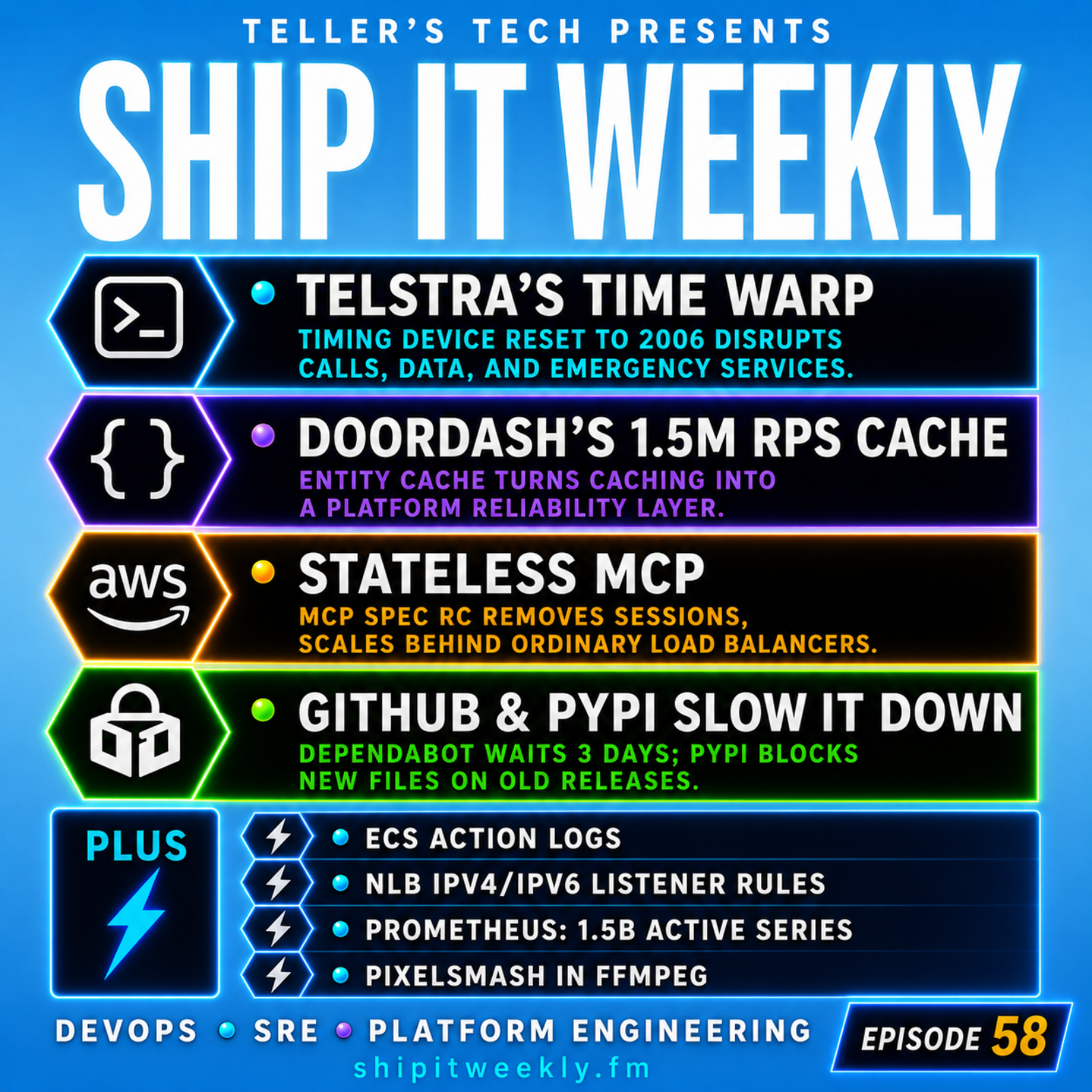 Telstra’s Time Sync Outage, DoorDash’s 1.5M RPS Cache, Stateless MCP, GitHub and PyPI Supply Chain Delays, and Why the Quietest Infrastructure Often Has the Biggest Blast RadiusShip It Weekly · on Model Context Protocol (MCP)97 / 100
 More Agents Than Employees: How Zapier Disrupted Itself Before AI CouldTalking AI · on Model routing90 / 100
 Late checkouts, AI agents and the future of guest communication with Cole Rubin of ConduitMatt Talks Hospitality: Real conversations for innovative hoteliers · on Model Context Protocol (MCP)83 / 100
 The End of Software as We Know It: How AI Agents Are Rewriting HR, SaaS, and Organizational DesignAI First with Adam and Andy · on Model Context Protocol (MCP)81 / 100
 AI Agents Are About to Move Off the Cloud. Here’s What ChangesThe Neuron: AI Explained · on Token Economics81 / 100
 Boilerplate in Seconds: AI Handles Setup, Engineers Handle Logic - Klaudia Dussa ZiegerSoftware Testing Unleashed · on Model Context Protocol (MCP)80 / 100Vendor AI Push Leaves MSPs Holding Liability as Courts Shift ResponsibilityMSP Risk: Continuing to Sell Predictable Execution as AI Removes Price FloorHybrid Endpoint Management Is the New Normal: Jake Mosey on Visibility and ControlNavigating Shrinking Seat Counts: How AI Pressures MSP Revenue Streams and Security OperationsMemory Inflation: Why All-Inclusive MSP Hardware Pricing Is No Longer Sustainable