
Business Flow Formula · 2026-02-23 · 8 min
Key moments - from our scoring
Substance score
17 / 100
Five dimensions, 20 points each
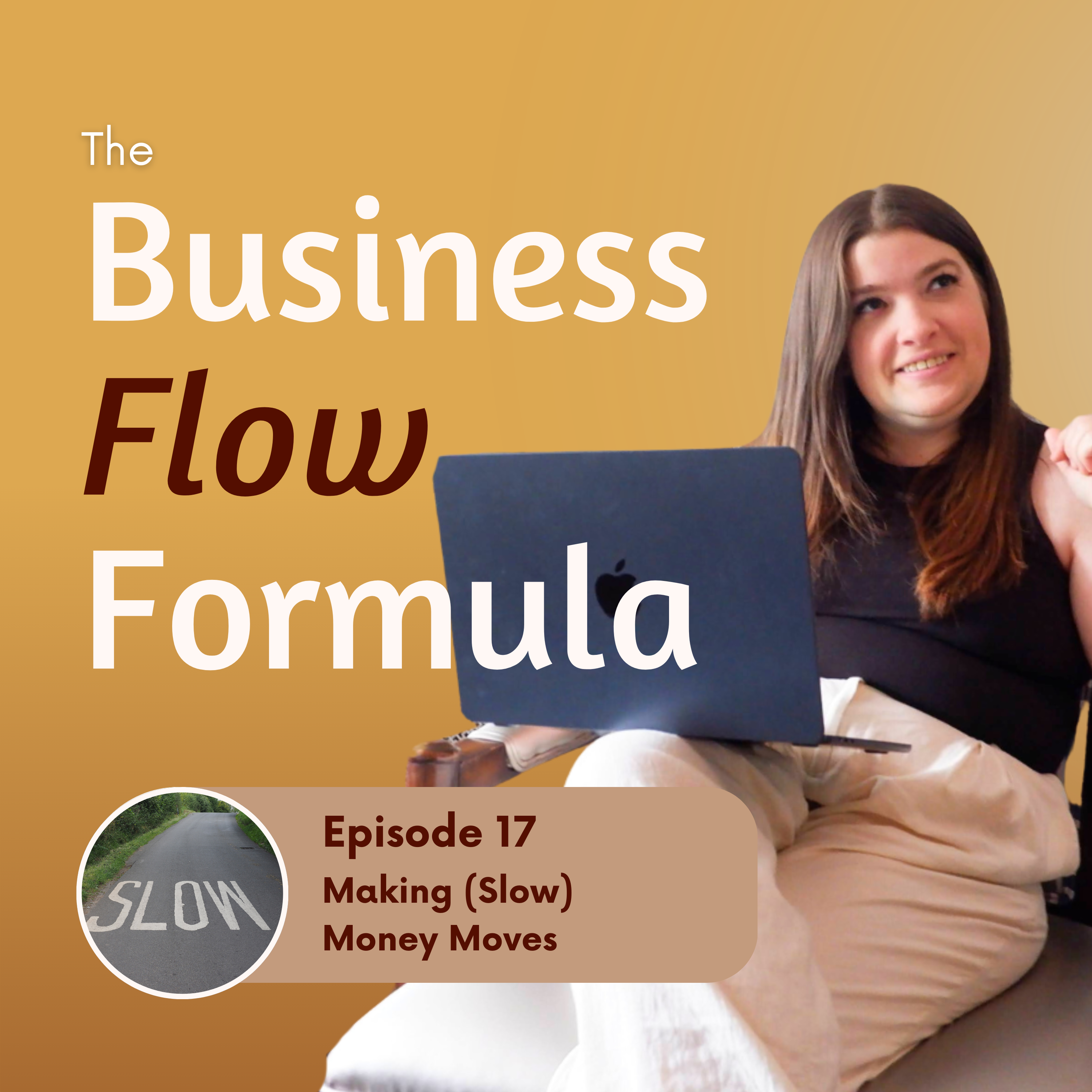
During slow periods - common across all industries - business owners have a rare window to tackle systems that have been causing friction. Erica identifies the emotional toll of slow seasons (inadequacy, boredom, comparing oneself to competitors) and reframes them as implementation time. The episode focuses on three concrete steps: auditing your business for cringe-worthy bottlenecks (project tracking, client booking, inventory management), evaluating CRM and project management tools like Xero (which combines accounting and project tracking), and shifting mindset around automation. She shares a personal example of implementing a $14/month calendar scheduler that eliminated back-and-forth timezone negotiations with clients worldwide, reducing no-shows and mental load. The core argument is that systems implemented now reduce stress during busy periods, freeing mental bandwidth for revenue-generating work and personal life. Business owners hesitant about automation, those managing multiple time zones, and leaders wondering what to do with sudden capacity should listen.
Identify systems that make you cringe - like difficult client booking processes, project tracking bottlenecks, or inventory management - and implement tools to streamline them. Slow seasons provide the time to audit and fix what's been frustrating you.
Erica estimates half a day to a full day for initial setup and evaluation, but recommends a three-month trial period: month one for implementation, month two for fixing bugs, and month three for deciding if it's worth keeping.
Xero (accounting software with built-in project tracking), CRM tools, and calendar scheduling software like the $14/month scheduler Erica uses that syncs time zones and sends automatic client reminders.
Belief that being busy equals productivity, fear of losing manual control, or feeling that computers taking over is bad - all false beliefs that prevent owners from automating repetitive tasks.
She implemented a $14/month calendar scheduling tool that allowed clients to choose their time zone and automatically synced to her calendar, eliminating back-and-forth timezone negotiations and reducing no-shows through automatic reminders.
Our reviewer’s read on each dimension, with quotes from the episode.
The episode is almost entirely composed of generic platitudes and self-evident advice - audit your bottlenecks, fix what makes you cringe, invest time now to save stress later. There is barely one non-obvious idea in the entire 8 minutes, and the content is padded with mindset affirmations and vague encouragements.
Time invested now into creating your systems means less stress later.
Letting go of the manual control in your business is a really good thing.
Every point made - use slow periods to improve processes, 'busy doesn't mean productive,' automation reduces mental load - is well-worn small-business coaching boilerplate. There are no contrarian angles, no first-principles reasoning, and no frameworks that go beyond what any generic business blog would publish.
Does being busy make you feel better about yourself? Even if you know busy does not mean productive?
Being able to have streamlined processes means more time for you to do the things you love.
This is a solo host episode with no guest at all. The host positions herself as a systems consultant but offers only modest evidence of meaningful scale or practitioner depth, and her self-credentialing is tentative at best.
Some would argue that I am kind of an expert on systems.
I have spoken many times about the systems to implement in your business.
There is exactly one concrete data point in the entire episode - a $14/month scheduling tool - and one named software product (Xero). Everything else is abstract and vague, with no client outcomes, no metrics, no timelines beyond a generic three-month implementation heuristic.
So I went into my website software, found out that there was a $14 a month scheduler that synced to my calendar and would allow for the client to choose their time zone and everything.
Our favorite accounting software, Xero, has project tracking in it.
This is an uninterrupted solo monologue with no interview dynamic whatsoever - no questions, no follow-ups, no pushback, and no productive tension. The delivery is loose and meandering, and the 'homework' framing substitutes for any real structure or depth.
So your homework for today is to find the one thing in your business that is making you so unhappy.
And so here are three shifts I want you to practice
Computed from the transcript - who did the talking, and the words that came up most.
If you're feeling like business is a little slow, now is the time to fix your systems? Where to start? How to choose? Sit back, reflect, and go find a spot to implement a new system to make your life so much easier! Links Mentioned In today's Episode Xero [ SignalEmber.com [
Transcribed and scored by The B2B Podcast Index.
Speaker A: Hello and welcome to the Business Flow Formula podcast. A podcast where I, Erica, talk about the behind the scenes business issues and how to overcome them. Here at Single Operations, we help business owners understand the signals that their business is sending them. Um, via finances, marketing, your team, or just general business needs. Something that I've been chatting with my finance clients about with lately is the slow season. Every business has this and every business goes through it regularly, including mine. Whether you're in a food service industry or business, to business, there's always slow periods and that's okay. Uh, today we're chatting about the system side of it. We've already covered finance in episode 17, but there's two other areas as well, so stay tuned for that. As a reminder, when dealing with the stress of slow seasons, I like to call it what it is. I call it what it is. It's a decline in revenue, a decline in profitability. It could also be boredom, where you're sitting there twiddling your thumbs or like, what should I do next? Those kinds of things. And then lastly, calling it what it is, where you might feel a little bit inadequate, like you're not good enough and you're comparing yourself a lot to other business owners. Slow seasons can really impact our moods. And feeling inadequate in our business feels like we're missing something or customers are turned off because something we've done. That's typically not the case. So let's dive into what you can do while you're experiencing a lull in business in the last six to 12 months. I want you to sit back now and look and see if there was something in your business that made you cringe whenever you got notified. Or maybe something that was a bottleneck that you've simply put up with and said, I'm gonna deal with that later when I'm less busy. Now is maybe the time for that. Has there been something else? Maybe there's something, uh, with your team that they've been feeling stuck on or that they always had to come to you for. Check all of your systems to see what is making you cringe the most. Making you be like, oh, that could be so much better. Moving on to the next, uh, thing is, I want you to ground yourself in a little bit of reality here. Of course it's great to dream big and really wonder, but I want you to be really honest with yourself. Do you have any limiting beliefs on your abilities to streamline your business? Does being busy make you feel better about yourself? Even if you know busy does not mean productive? And I Know, I, um, know it can sound a little harsh, but we got to be honest with ourselves. We can be the problem and we can also be the solution. So what is the one thing you feel right now needs to be streamlined? Are you tired of how clients are booking on your calendar? Maybe how you've been tracking projects? If you have inventory, maybe you can't stand how you've been doing that. That's something I hear a lot about is inventory or tracking projects and wondering what's profitable. You've been trying to do it the cheap way. Maybe a spreadsheet or a notebook. But it's to level up, I want you to take a look at three different CRMs or customer relationship management tools or project tracking tools. Our favorite accounting software, Xero, has project tracking in it. So you can have your finance and project tracking in one spot, which just makes sense from a finance and profitability standpoint. Or maybe you want to build out your onboarding pipeline. That time is now. I can guess it will only take about a half a day, maybe a whole day once you really dive into things and you want to check them out fully and completely. But hey, you're in a slow period. I want to share a quick story and it's a personal example, uh, kind of behind the curtain, so to speak, at Signal. So a few years ago I was in a pretty slow period in my business, both financially and just outside the typical intakes season of clients. It was driving me crazy though that I would have to go back and forth with clients or potential clients on um, when I was free and able to meet. And I work in all the time zones around the world, but at the time in Canada. And so it was, hey, are you available at 4pm Eastern? Are you available at 4pm Pacific? It was crazy and so difficult and not to mention that half my clients at the time were three time zones away from me. Yikes, it was bad. So I went into my website software, found out that there was a $14 a month scheduler that synced to my calendar and would allow for the client to choose their time zone and everything. That $14 a month at the time seemed like a lot for me, but in hindsight is the best spend I have ever done and will ever do when it comes to systemizing in my business. Also, it sends out reminders to clients to make sure that the no show rates significantly decline and I don't need to remind them to show up to our meeting. All right, the last thing to take a look at here is around our mindset Time invested now into creating your systems means less stress later. Imagine a day where it's busy, you're onboarding clients, you're in a million meetings and doing the work. It seems like having the right systems in place would allow for some of the mental load to be significantly reduced. You can show up to work at 8 or 9 or 10, whatever works for you, and know that everything is in place for your day. You know that clients are booking meetings when it allows for them. You know that potential clients are booking on your calendar at times that works for them rather than the back and forth and this is too complicated and they leave and go somewhere else. Mindset matters. And so here are three shifts I want you to practice Letting go of the manual control in your business is a really good thing. Letting a computer help you is not always a bad thing. We go into a whole rant about AI, but letting a computer help in some ways is not a bad thing. And being able to have streamlined processes means more time for you to do the things you love. Family time, friend time, read a book time, watch a TV show, exercise, go touch grass. I don't know. Anything that you love to do is better than the back and forth and cringe of having the wrong systems. So your homework for today is to find the one thing in your business that is making you so unhappy. Check out the solutions online and implement it. And try months. I say three months because the first month is implementation phase. The second month is fixing the bugs. What have you set up wrong in the systems? What have you set up right? How do you make it even better? And then the third month you'll be deciding if it's worth it or not. And I bet it will be because you've already spent two and a half months implementing it. So why change it? If you're needing any laser coaching, we do offer 60 minute sessions all about systems. Some would argue that I am kind of an expert on systems. I have spoken many times about the systems to implement in your business. It's not all the same as me. It's got to be what works for you. So be sure to check this out@signalember.com and subscribe to the Business Flow Formula podcast wherever you get your podcasts.
Other episodes covering the same guests and topics, from across The B2B Podcast Index.
 Xero’s CFO: Why Finance Is Taking On More of the BusinessRun the Numbers · on Xero82 / 100
 The Moment a Good Business Starts Becoming a Great One | Ep 254Strategy Meets Finance · on business strategy63 / 100
 From Data to Deals: How CRMs Align Go-to-Market TeamsGo to Market Coffee Talks · on CRM (Customer Relationship Management)45 / 100
 What to Do When You Want to QuitDesign Your Business · on CRM (Customer Relationship Management)42 / 100
 101: 100 Episodes: The Journey, The Lessons & What’s NextBeyond Your Business · on business growth
 Success Leaves Clues: Ep 303 - You Don’t Have to Be Ruthless to Be Successful with Scott Vanderwel, CEO at PointsBet Canada Success Leaves Clues with Robin Bailey and Al McDonald · on business strategy
 Episode 22: The Signal Software Systems46 / 100
 Episode 21: The Signal Finance Systems37 / 100
 Episode 20: People are the grounding that we need.39 / 100
 Episode 19: Don't Just Post - Plan: Marketing Through Your Business Slow Season45 / 100
 Episode 17: Slow Seasons and What to Do About It (Finance Edition)