Building Biotechs · 2024-11-08 · 38 min
Natalie Nairn shares her path from chemical engineering to biotech entrepreneurship, explaining how an early experience at a small startup fundamentally changed her career trajectory and demonstrated the impact possible in early-stage companies. At Cyclera Therapeutics, she and co-founder Zach Crook are developing Cipher, a next-generation protein degradation platform leveraging transferrin receptor targeting to actively cross the blood-brain barrier - something existing CNS therapeutics like lecanemab and donanemab cannot do efficiently. Unlike antibody-based approaches that require immune activation, Cyclera's catalytic molecules silently degrade target proteins without triggering neuroinflammation, positioning them for first-in-class disease-modifying therapies in schizophrenia (affecting ~1% of population), Parkinson's disease, and frontotemporal dementia. The company incubated Cipher within Blaze Bioscience before spinning out. Nairn addresses the dual challenges of early-stage leadership - managing the "fire hose" of CEO responsibilities while capital remains scarce - and highlights how the Tremere Foundation fellowship has been instrumental, providing both peer mentorship from fellow founders and access to industry experts in fundraising, partnerships, and go-to-market strategy.
Cyclera's Cipher platform actively crosses the blood-brain barrier and then silently degrades target proteins without activating the immune system, whereas lecanemab and donanemab struggle to cross the BBB efficiently and still rely on antibody function that triggers neuroinflammation. Additionally, Cyclera's molecules are catalytic, meaning one drug can clear multiple copies of the target molecule, improving potency and durability.
Cyclera is focused on CNS indications including schizophrenia, Parkinson's disease, and frontotemporal dementia because these diseases currently have only symptomatic treatments available with no disease-modifying therapies, and transferrin receptor is overexpressed on both cancer cells and the blood-brain barrier. While the company initially validated its platform in oncology (EGFR, lung cancer, colorectal cancer), CNS represents the highest unmet need and greatest differentiation opportunity.
Nairn studied chemical engineering and initially joined Carixa as a biotech employee. She then became the first employee at a startup founded by Carixa's executive VP, where she experienced the impact and speed of early-stage work. This led her to focus on early-stage companies, and she eventually became a lead person at Blaze Bioscience, where she collaborated with Jim Olson's lab at Fred Hutch for seven years on what became Cyclera's technology.
The Tremere Foundation provided both a trusted peer cohort that meets bimonthly for candid discussions about company challenges, and structured training from industry leaders including Johnson & Johnson's head of partnering and Mass General psychiatry experts. The fellowship also enabled introductions to relevant contacts like former CEOs and clinical experts in psychiatry and neurology.
The biggest challenge is managing the "fire hose" of simultaneous demands - science, business operations, fundraising, compliance, competitive analysis, and grant writing - while staying focused on strategy and long-term direction. In the current tough fundraising environment, this is compounded by the need to be capital-efficient and prioritize investments that deliver the highest long-term outcomes.
Computed from the transcript - who did the talking, and the words that came up most.
This week, I spoke with Natalie Nairn, co-founder and CEO of Cyclera Therapeutics. Natalie is also a Termeer Fellow, and listeners of this podcast know how much I love the Termeer Foundation. We discuss her transition from chemical engineering to biomedical applications. She describes her unexpected path into the fun and volatile startup space, which led to her founding Cyclera. Natalie explains the importance of focusing in biotech development, the promising applications of Cyclera's technology in CNS therapeutics, and the challenges and opportunities in the current funding landscape. She also highlights the value of the Termeer fellowship in her career, the contrast between Boston and Seattle's biotech scenes, and the essential aspects of leadership and team cohesion. Finally, Natalie discusses her future goals for Cyclera and offers valuable advice for aspiring biotech founders. Get Natalie's recommended book! The Book of Delights: Essays CYpHER: catalytic extracellular targeted protein degradation with high potency and durable effect | Nature Communications
Transcribed and scored by The B2B Podcast Index.
Speaker A: I got to speak with Natalie Nairn, who is the co founder and CEO of Cyclara Therapeutics. Natalie is also a Tremere Fellow, and you all know how much I love their Turmere Foundation. So it was exciting to talk to her about what this newest crop of Tamir Fellows is up to and how the scene from Seattle, which is where Natalie is based, differs from our Boston biotech startup scene. We talked a lot about her making the jump from being a biotech employee to now a founder and, and what some of the current challenges and opportunities are with the current funding landscape. She also highlights how valuable this Tremere Fellowship really has been. She loves how candid the conversations are in there and the great mentorship that she has access to. So I hope you enjoy this episode. It was a really nice, deep dive into the experience of a new founder founding a company right now in this climate. And I loved Natalie's honesty and willingness to share her experience. Welcome to the Building Biotechs podcast. Over the years, I've helped over 90 biotech, life sciences and venture capital firms strategize and hire thousands of employees to scale companies that impact human health. We speak with those at the forefront of growing biotechs to learn their tactics on building these companies from the ground up. I'm your host, Karina Klingman. I hope you enjoy the show. Thank you so much, Natalie, for being here today. I'm really excited for this conversation. I really like to start with a background so that everyone kind of knows who you are. But what did you want to be when you were 7? What are you now? And how did you get there?
Speaker B: Karina, thank you so much for having me today. So when I was seven, I think I wanted to be a farmer. I liked the animals. And there are some people who just know, you know, early on exactly what they want to be when they grow up, be it in high school or college. And I was not one of those people. And I just want to say, like, if that's okay too. There's a lot of people who actually kind of have to find their way. When I was in high school, I did not know what I wanted to do, but I was like, well, I'm good at math and good at science, so I guess I'll do engineering. But as I went into it, I studied chemical engineering. That's what my degrees are in. And I, you know, you could do petrochemical engineering or chemical processing, but when I heard about, you know, the biomedical aspects, that's what really excited me because now I can Be working on something that actually like makes a real difference for people and it can give me so much more passion because I'm going to be able to hopefully impact the health of other people while doing really, really intriguing science at the same time.
Speaker A: When we were having our discovery call, you mentioned that you never really expected to be in a startup, but yet now you are. Can you tell us how that happened and uh, what kind of inspired you to go small?
Speaker B: Yeah, so I think kind of the precursor to coming into the startup was my prior experience as a startup, which I also thought I would never do. When I was leaving Carixa, I thought I wanted to go to a big pharma company that was established and everything was really, I don't know, all the infrastructure and the funding and everything was there. But the executive VP of Crixa had lunch with me telling about this new company he was starting. I was like, gosh, it just sounds so exciting in every way. And so I ended up being the first employee they hired. So I was employee number one out of out of five employees that they had on the team. And I was just amazed at how much I loved it. It was so exhilarating. Every single thing we did was creating what the company would be, was creating the strategy. I mean, I remember a meeting where someone walked in with this gel, they just ran and we're like, oh my gosh, look at the result on that gel. You don't ever see fresh off gels in meetings now. Everything I did matter so much. I worked with someone else who had previously been at a large pharma company who said, you know, if I didn't get anything done for a year, no one would really like notice or feel the impact. Whereas everything I did, everyone felt the impact of that. And I got to do so many things so quickly, no siloing whatsoever. I learned all about all sorts of different technical functions, but also IP operations, et cetera. So that's what uh, made me realize how much I love early stage companies and made me after that focus on early stage companies. And then Cyclaire came out of specific projects I was working on. But that's what has made me focus in that area.
Speaker A: Yeah, I couldn't agree more. I love the early startups. That's just my space. I thrive on the uncertainty and the weird and the fast paced. But you know, it's not for everyone and you kind of don't know until you try.
Speaker B: Absolutely. It is not for everyone. And you certainly have to do a lot of create creative problem solving which is also something of course I love doing. But you know, you don't have all this infrastructure to call on all the time. You need to be kind of someone who's ready to do what you need to do to figure out how to get things done.
Speaker A: Yeah. And you sort of transitioned into the business side, I am assuming, through that. You just get to try so many things in a startup and then there's a need. Is, is that sort of how you ended up on the business side?
Speaker B: I would say that is exactly how it is, that there's a need basically, and you're the obvious person to fill the need and you're showing that you can do a great job filling the need. And so there you are. And I think again, at any small company, that's how people, uh, grow into new roles. So in terms of how Cyclara got started, my prior company, Blaze Bioscience, is developing a, uh, tumor paint imaging agent for use during tumor resection surgery to help surgeons know where the uh, tumor is as well as where the tumor is, not to help for a better successful surgery. We spun out of Jim Olson's lab at Fred Hutch Cancer Research center. And shortly after we spun out, he reached back out and said, I have ideas for doing therapeutics with this new modalities as well. He's working with these new CBP mini proteins. It's not a very explored space. And so we had a long collaboration for about seven years I think, uh, between Blaze and Jim's lab at Fred Hutch. I was the lead person on Blaze, you know, uh, coming in both to understand the science, but also how are you going to uh, which one of these things you can actually make a product or develop a company around. And then my co founder, Zach Crook, really creative, brilliant scientist, came up with a number of things along the way. He came up with a way for designing these proteins. He came up with a, uh, protein that binds transferrin receptor. But then he came up with this idea for our technology we call Cipher. And when he came up with that, uh, the whole world opened up. I was like, wow, I can just see so many things you could do with this technology. We have to develop it. Like there's just no question in my mind that this needs to go. And so we licensed it into Blaze, incubated it for about a year to get some initial data and then spun it out.
Speaker A: And uh, when you have a platform like that where you can see so many different implications and so many disease area indications, how do you reign things in and focus on just the ones that you need to get done, because obviously money is not limitless.
Speaker B: That is a fabulous question. And something we spent a lot of time thinking about is where do we really want to focus our effort? Our technology, we feel, could be used for all sorts of applications. But we also looked at other folks that were starting to delve into this space of actually cellular targeted protein degradation. And what, where did we stand out? What was different and unique about our technology? And we lean heavily again on transferrin receptor, which is overexpressed on cancer cells, and they can't downregulate it to escape your drug. And it also is expressed on the blood brain barrier, which keeps most drugs out of the brain. And so we felt like those were the two spaces where we're gonna shine the most, where our molecules can get places and concentrate more than all the other receptors that other folks were using. But at the same time, we felt that oncology, um, was going to be quickest to proof of concept. And so we did all our initial proof of concept platform validation in oncology indications. We did it with, um, EGFR and a lung cancer colorectal cancer application showing both efficacy as well as expected improvement on safety with respect to skin toxicity and so forth, focusing on the resistance that occurs in patients. But when it came time to actually talk about what we want to develop for our programs going forward, we really felt like CNS neurological is where we can just do things that no one else can do. The value proposition is so high. And as I dug into this space more, I realized so many diseases in the CNS space have no disease modifying therapy available for patients. All they have are drugs that treat the symptoms. So schizophrenia, Parkinson's disease, frontotemporal, uh, dementia, all these spaces that don't have anything to affect the course of the disease. And so here we have a molecule that can actively cross a blood brain barrier and then have greater potency and durability to clear targets on the other side. And this is where we make a huge difference for patients with first in class drugs.
Speaker A: So how do you see cyclairis technology really changing the landscape of, um, drug development and patient treatment?
Speaker B: We see cyclair technology as next generation technology for CNS therapeutics. You really see this taking it to a new level of what we can do for patients. We hope to have better efficacy, better potency, better safety for patients. All of these things are real issues with CNS therapeutics. Your first generation therapeutics, frankly, just recently approved your lecanemab, your donanemab For Alzheimer's disease. Very exciting that there's something for these patients now, but they really don't move the needle a huge amount for patients. And uh, a large portion of that we believe is because they don't have any way of actively crossing the blood brain barriers. You just give a giant dose to the patient, hope a tiny bit gets through, and you have all these side effects from this giant dose that you put in the patient. A lot of companies now are moving into the second generation space where they're using active transcytosis across the blood brain barrier, like Denali Therapeutics and others use a transferrin receptor. However, if you still want to clear your target, you need to have antibody function that sets off the immune system in your brain. And of course, as you can imagine, setting up the immune system in your brain now starts to have again other safety side effects and issues. With our technology, we actively cross a blood brain barrier and then we silently degrade and pull proteins out of that space without needing to activate the immune system. And our molecules are catalytic. So one drug can clear multiple copies of the target molecule. And so, uh, one drug can get so much done after it crosses the blood brain barrier, helping with potency and durability of effect. And so again, we're hoping to have, first in class molecules that are actually disease modifying for patients that have nothing but drugs to help them address their symptoms.
Speaker A: That's really fascinating and I will say that my biggest fear are neurodegenerative issues later in life.
Speaker B: Absolutely. And I know people who have loved ones of neurodegeneration and you just kind of see your loved one fade away even though their body is, is still there. Um, and, and to be able to address that is really important. And um, I'd also like to talk about schizophrenia a bit. Luckily in today's uh, world we talk about mental health a lot more. Schizophrenia affects roughly 1% of the population. That is a huge. Now that we're looking into that, almost everyone I talk to, uh, has someone in their life that has been affected. There are these antipsychotics again. They just recently had a new antipsychotic approved Prevent five. Fabulous. But, uh, it's still just an antipsychotic treating the symptoms. There's positive symptoms, negative symptoms, and cognitive symptoms with schizophrenia. People who are dealing with schizophrenia still have greatly reduced lifespan. 15 to 20 years less lifespan, really high suicide rates. The cognitive decline, which people don't think about a lot with schizophrenia, but it's actually a cognitive decline, is, is huge. And when I have Spoken with clinicians, they say really that's the thing that's affecting their life so much. And then of course the drugs have a lot of symptoms. And so again, if you can have a disease modifying drug that could actually help people to have better quality of life and live, uh, a fuller life. Schizophrenia starts in people, late adolescence, early adulthood. Schizophrenia is going to be the great majority of your lifespan.
Speaker A: I had no idea it was actually that large of a percent of the population. But you say that and yeah, I know several people who are affected by schizophrenia. Yeah, thank you for doing that work. That's really good work. I'm very hopeful that you are successful there because we definitely need a new class of drugs.
Speaker B: Yeah, I think I have to say once I have dug into this space, I've gotten so convicted just because of my, uh, appreciation for how great that need is.
Speaker A: Yeah, yeah. Couldn't be bigger. I love that. There's definitely a need there. Are you seeing differences in the availability of funding depending on whether you're going after oncology or CNS targets?
Speaker B: I would say actually CNS is much hotter right now than oncology. Uh, oncology, um, is very busy in the ADC's base and of course there's bispecific, car T cells, et cetera. So there's just a, it's a very busy space as well. But cns, I think there's really a lot of appreciation now with recent approvals, recent successes, including with the Karina drug CAR XT acquired by bms. People understanding that, uh, we can really make some good progress in the CNS space now. But also, uh, so I've worked in biotech for more than 20 years and everything comes and goes in waves. Things are in different trends. So right now CNS is very hot. But that means that I know five years from now probably it will be less hot. But that's just the world we live in.
Speaker A: It's so true. And it's kind of a shame because I don't think that those funding cycles necessarily reflect that patient need.
Speaker B: Exactly. And those funding cycles are much shorter than the time that it takes a company to develop a product.
Speaker A: Yes, very much so. In terms of how you're moving forward with your future funding considerations, it sounds like you want to be a little bit diversified there as well.
Speaker B: Well, we're focused really moving forward internally on CNS programs. We are definitely open to partnering programs in oncology. I feel like that's the best way to manage so that we can be focused on CNS greatest differentiation. But There's a lot of opportunity in oncology and if folks want to partner with us going forward, we can do that.
Speaker A: Yeah, I love the partnering strategy. I think a lot of biotechs are going for that now, which is nice to see. It used to be we'd build out full manufacturing for, you know, all of our pipelines.
Speaker B: Uh, yeah, I, I have to say I, I think actually my prior company, Blaze Bioscience, was more virtual before it became popular to be virtual. I mean, they weren't fully virtual. But just realizing how much do you need to build up internally versus what can you outsource? I think that's been a big change I've seen in the industry because, uh, it costs so much to build up all the infrastructure, all that equipment, all the people that can run that equipment. And then maybe, you know, for six months or a year you really need to do a lot of that. But then the next year you need to do more of something else. But you're still paying for that space, that equipment, those people. And instead in today's world, there's so much virtually that you can farm out so many things to CROs and then you're only paying for what you need at the time you need it and then have core staff inside, the key things that you really need, expertise over the things that you need to build a troubleshoot with your hand and to figure out what is your strategy, what is it you need to work on.
Speaker A: Yeah, absolutely. I think you're really smart about that approach. As a first time CEO, what has been the biggest surprise and the hardest learning curve for you?
Speaker B: The biggest thing that I've had to really adjust to is the fire hose of things coming at me. Now, of course, my previous, uh, positions, there's always so much work to do as well. But as CEO, the buck stops with you. So everything comes to you at the end and you're responsible for everything. I mean, if you don't manage your operations and make sure your business licenses are up to date, you're going to have problems. Even though there's very unsexy, unexciting work. But there's, you know, so many things going on. The science, so many things going on with the business. Do you want to spend your time on fundraising with VCs? You want to spend your time on grant writing? Do you want to spend your time on competitive analysis? Do you want to spend your time on planning the science and doing the experiments and just, uh, figuring out how to triage that fire hose of things coming in so that, you know, you deal with the urgent things right then, but you also make time for the planning and the strategy and so forth. And so I kind of have a top down planning approach now. I do, you know, kind of planning annually, planning quarterly, but also weekly and daily. What are my priorities, either because of the time urgency or because we really need to step back and take the time to make some good planning. So you're from a high level, going forward in the right direction.
Speaker A: What's been a challenge or a moment where you've really had to take stock in this new company? So I know you've worked at a previous small startup, but this is, you know, like you said, buck stops with you. What's been that challenge?
Speaker B: It's just a very tough fundraising environment. And so figuring out how you can be nimble and deal with a fundraising environment that you're in now, how you can work with the capital that is available to you and keep things moving forward at the same time, really being solid. So focused on what you're going to spend your money on, what's going to give you the biggest bang for the buck, what's going to give you long term outcomes from that. And, and that's really what I've had to focus on a lot.
Speaker A: Yeah, not surprising. That sounds like the biggest challenge that I hear a lot from founders. So you are working with the T Foundation, you're one of the T fellows. And if anyone has listened to this podcast for a while, you'll know how much I love the Tremere Foundation. You can go back if you haven't heard. We did a really nice interview with Catherine from the Tremere foundation and we've also interviewed Jason Cordero from MassBio and they have recently put on a, uh, partnership with their termer. And I just love these organizations because they provide so many resources to founders. Can you tell us a little bit about how that's going for you and what your favorite parts of working with them are?
Speaker B: Gosh, I have to tell you how excited I am about the work I'm doing with the TMER Foundation. So TMIR is very big in Boston. I hadn't really heard anything about it, but I had a couple people send me this thing on LinkedIn, say, hey, you might want to apply for this. So I thought, why not? Who knows? It has been fabulous and I really do not think I would be where I am today if it were not for my, um, tumor fellowship. The two key things are both my cohort and how we're learning and supporting each other. Together. And the second thing is the resources and the training, uh, they're giving us. It's just fabulous. We meet in person roughly every other month. And at our first session, we had a great moderator who was talking about, what do people want to get out of this? And I said, you know, I really hope today that we develop trust in each other. Oh, my gosh. After the first day, we had so opened our hearts to everyone that we can, like, ask each other any of those nitty, gritty, hard, difficult questions about what's going on with your company? And, you know, I can ask someone questions about, can you look at my slide deck? And you know, how my phrase things differently? And someone else can ask me, hey, what should I do in this contract? What should an FTE cost? Um, what kind of milestones should I put in there? So the cohort is fabulous for that resource where you can really ask those questions that you might not want to ask someone you don't know as well. And then the, the specific topics they have us work through, basically with all these fabulous firms that, you know, you couldn't go out and, and hire time with all of them to train you on fundraising, on media, uh, interactions. We had a whole, actually two days at Johnson and Johnson where they had their head of partnering and business development talking with us about how they see these things. And again, you could ask all those nitty, gritty questions that you might not ask any more. Public forum and in a mentor network, really, I just find if there's anyone I want to get an introduction to, I can. It's just fabulous. I really needed to talk with people in their psychiatry space. And so I connected with, uh, former T Mirror fellows that, uh, were CEOs of a, uh, neurological company. They introduced me to the head of psychiatry at Mass General, who then connected me to all sorts of other people in the first episode psychosis programs and really just enabled me to get introductions to whoever I needed to learn more and ask questions.
Speaker A: I hear nothing but stories like that. Really glowing reviews. So it's hard to get in to this fellowship. It's a competitive fellowship program. So, uh, kudos to your network too, because it sounds like even before all of this, they were urging you to apply. And I think that a lot of people don't know about it if they're outside of Boston. So that's another, Another win for networking, right? People even out there you go.
Speaker B: Yeah. And I know they're working on getting some more west coast present. They've had some, uh, events in San Diego as well, because yeah, I think this is really something that everyone should dig into. And really the motivation behind the foundation is just like Henry too, Mary's vision of until every patient has a cure. I mean, there's so many unmet needs out there. I personally in my own family saw how these diseases have, you know, affect you on the ground day to day. And that's what I think all of the fellows and all the people in the program are motivated about is actually getting these things to patients.
Speaker A: Yeah, absolutely. And they really put a big emphasis on developing really intentional leaders as well, which I think is really key in the biotech space. Can you speak to the leadership training that you're getting as well?
Speaker B: Yeah, we have just CEOs, top level VPs coming to all our meetings talking about, you know, how they've dealt with all the things you deal with at a company. You know, we certainly spend a lot of time, uh, talking about team building your team, guiding your team, helping the team grow. Because it's, it's, there's so much to do at your job. It's really easy to just be focused on the task that's in front of you. But if you don't have that intentionality about team, um, actually your company's not going to be successful. I worked at a previous company where I thought there was a lot of struggles that company had because it did not have a cohesive culture at the executive level. There was not trust, ah, in the team. And that just kept the company from, from being able to move forward.
Speaker A: Oh, absolutely. It's really top down and I think the more you're in it, the more you realize that. And then there's a shift where it's really interesting. People who have been in that top spot for a long time start to forget how this feels, this being in the trenches, because it doesn't feel any different for the folks as you move forward. But you will start to get more removed from it.
Speaker B: Right, right. Yeah. I'm very intentional when I ask someone to go, and can you go do, or can you just go measure that? Can you go do that experiment or can you go make the slide this way, make it that way. And I'm like, I recognize that that takes a lot of time. Like you're happily agreeing to, to it for me, but I understand this is taking a lot of time because again, I don't have to spend any time. Uh, the data just comes back to me and lands in front of me. But I remember those days actually in grad school. A, uh, professor who literally, however long he thought something was, take it took four times longer than whatever he said it was going to be. And so I always try to be conscious of that because people want to be appreciated for how hard they're working and the time that they put into what they're doing.
Speaker A: Absolutely. It's a good reminder to all of us who are leading teams. Hey there. Just a quick break. I wanted to let you know that if you're listening to this podcast because you are exploring careers in biotech, which it turns out quite a few of our listeners actually are, you might be interested in the Biotech Career Coach podcast. It is brought to you by our sister company, the Collaboratory Career. Huh Hub, which is our career development community. If you would like actionable tips on job seeking and career development, that is the place for you. It is a companion podcast to our Career Coach column that we write monthly in Biospace, but we go a little more in depth and sometimes we have special workshops and all of that good stuff. So if that sounds interesting, click the link in the show notes or search for the Biotech Career coach on Apple Podcasts or wherever you get your podcasts. Back to the show. How is the Boston Biotech network different from what you're used to in Seattle? Or is it.
Speaker B: Yeah, I, I do think it's different. And that has been a fabulous thing about Tumor as well, is just getting me more connected in the Boston network, like the west coast is something I'm much more connected in prior, I would say the Boston network, it just has this physical density. You know, I've heard people talk about, you know, just within mile of, you know, the Cambridge area. There's just everything right there. It does feel a little bit more old boys network of all these people that all knew each other and worked with each other before and they just keep on working with each other again. I will also say, Talking about the VC space, there are certain VCs I've spoken with that have actually said, you need to get a Boston VC and then I'll invest in you. Which I think is very shortsighted. And apparently if you can do your own proper diligence, you don't need someone else to do that for you. Whereas the Seattle area, it feels like a family because I think a lot of us, it's probably the same thing in Boston, but we, many of us now have cycled through various biotechs and you work with someone again. Um, the Seattle space is really heavy in the tech bio application. The tech application. So, uh, Institute for protein design with David Baker is there. It was already very impactful before he won the Nobel Prize. My um, co founder actually postdoc in David Baker's lab. So we're um, part of that as well. But I think the tech bio angle is much, much heavier uh, in Seattle than in Boston. Of course I'm sure there's plenty of it in Boston as well.
Speaker A: I would definitely agree with that. I see that of my clients that are working on the more tech heavy platform side, a lot of them are west coast or have west coast influence at least. So one of the founders is from the Bay Area or something. There's a little bit that mentality and I'm in a founders group for tech enabled companies. We have the same thing you were talking about for Tamir. Like I can go to anybody, I can get an intro anywhere. I can ask those hard questions.
Speaker B: Yeah.
Speaker A: And so I, I think that's so valuable and I, I'm glad we're seeing more of that come into the biotech space that was born out of that west coast sort of Silicon Valley hub style tech. Although Seattle's very entrenched in the tech, we've got Microsoft leading that charge up there.
Speaker B: Yeah. And um, so a lot of biotech Seattle and South Lake Union, um, that's where I had been in my lab space at Blaze and it is right next to Amazon, Google, all of that. Um, so we're really surrounded in that network. Um, the one thing I'll say as someone who's in uh, traditional therapeutic biotech compared to those who are in the tech space, I do get jealous because folks I know that are in pure tech space, the amount of money they need to raise is so, so, so small because they just need a few people and some computers. But you know biotechnology just costs a lot of money to make your materials to do your experiments and that's just what it takes. Um, but it's definitely, it's just a lot of dollars in and it's a lot of time before the dollars come back. Whereas again in tech you're, you can start having profitable company and revenue quite early. And so because a lot of early stage investors, angel investors as well as just VCs that are deciding where they want to put their money right now they know that tech money is going to come back much quicker. The biotech is a longer game.
Speaker A: With the perspective you have, what are you seeing as the biggest challenges and opportunities right now in biotech? Just as an industry companies, ah, at
Speaker B: all stages right now are really those that have cash are just trying to make their cash last as long as possible, really manage their burn. Those who need to do raises, really, it's struggling out there. It's just a tough fundraising environment. I was at an event that Alexander Real Estate sponsored in Seattle a couple of weeks ago and you know, CEOs of all these companies were standing at the front, very successful CEOs at successful companies saying it will get better. Right now is so hard. And I think that the trickiest thing is people have to be so lean with their money. And to some extent that is good because it really makes sure that you're strategic and you're spending your money on the most important things. I would say my company has done so much with such a small amount of money, it's really impressive. But at the same time, if so many companies running so lean, you really only have room to run the one big experiment or do the one approach or do the one target. Like if you narrow things in so much, there's not much room for error. There's not room to do something over again. And not everything is the right choice on the first shot. And so there's a risk that some, um, great technologies or drugs won't make it through just because people didn't have enough money to see them through. The other thing that I think really is impacting a lot of us, even in the foreground in the background is the Biosecure act in terms of when we think about where we're going to do our manufacturing. Once you start manufacturing with someone for your preclinical work, to do your ind, to do your phase one trial, it is a huge project to change from one manufacturer to the other. And so whoever you go with is who you want to be able to stay with for 10 years. Whether or not you will stay with them, you certainly may move on. And Wooshi is fabulous. So many people just love working with Rushi. They're really fast, they're efficient with their money, they have good quality. And I'm not just saying we should at other companies as well. Like we have to really look at, okay, who are we sure that we're going to be able to stay with? And so it just provides, it puts this unknown question mark in terms of how we're going to address manufacturing going forward.
Speaker A: Yeah, you're not alone in that. That's something that my clients talk about a lot right now. If we're starting a new program, where's it going to live? To your point, these are years long programs. You don't want to make a change. Yeah. So that's really tough. And you know, more to come on that what are you excited about for the future of personalized medicine and how are you fitting into that puzzle?
Speaker B: It's just really quite a revolution in how we're treating patients and we can find out so much about their genes and their protein levels and stratify patients, figure out who is most likely to be able to profit from your therapy, um, which helps you focus your clinical trials on the patient, um, that are most likely to show outcomes. So helps your clinical trials be successful but then also helps the doctors know which uh, therapy to give to a patient that's going to be most helpful to them. And also the fact that we can get so much of that data so we can actually do in vitro testing with this haplotype, with this uh, certain mutation, what have you and do those proof of concepts in vitro to validate where you think it'll be effective, where it isn't effective, and to help you understand and design your clinical or even understand your results and design your future studies.
Speaker A: Yeah, it's a really interesting era now in clinical trial design. It's, it's so fascinating to see how companies are using this big data, how they're sifting it, parsing it and I'm curious how you're finding availability uh, of the data. Are you able to access all of the data you would want to access in the public space?
Speaker B: Yeah, that hasn't been an issue for us. For us in particular, for instance, when you're looking at some of the oncology things, the Broad Institute cancer depth map database was just huge for us, really valuable in helping uh, us prioritize some of our targets and so forth. And there's just so many publications of a lot of top notch researchers like Steve Carroll that are doing those genome wide association studies. They're doing that hard work that helps identify what genes we might want to go after and then we can use that to, to prioritize what targets and programs we want to bring forward.
Speaker A: Yeah, I'm just going to double click on. You've just highlighted two academic, well broad is academic esque. Right. Institutions that are doing this um, really valuable work and putting this out in the public domain.
Speaker B: Another space that's the genetic space is in the protein space. I was at this event and David Baker, uh, was speaking. So there's obviously as we all know now, just this revolution in being able to actually computationally designed proteins like actually design ones that have decent potency, that bind the target specifically, et cetera. But he was pointing out that that is only possible because of thousands of researchers that have developed crystal structures over decades and decades and deposited them all into this database that then things can go in and use that to train AI to understand how sequence causes a folding structure. And if it wasn't all that worked, as people put in to those public databases, scientists who want to put them in funders that require putting them in journals that require putting it in, that allows that huge data space, uh, to uh, train models to do protein design.
Speaker A: Absolutely. I was one of those scientists. We were using MFold, the first, uh, generation of Docker. They're so much better now because of the richness of the data and the AI ML that's built into it. We didn't have that before and it was so, it was so fun. And also, you know, I look at that and I'm like, wow, the speed, the speed and the pace that we can get things done now is absolutely amazing.
Speaker B: Yeah. And really in the protein design space, it just even again from when my co founder was learning Rosetta and designing how to, how to design things on it, and then people were doing, uh, you know, all the more de novo proteins just from scratch, but they still had to go and do, you know, months of maturation to get the right affinity. And there's a lot of co founders I'm connected with in protein design companies that have spun out of ipd and like, even just compared to a year ago, what we can do is, is just monumentally better. And so the rate of change just by one year is measurable.
Speaker A: I almost wish I could go back to grad school and just like redo some of these things. What took me four years to do.
Speaker B: Oh my God. Yeah. Yeah. That's the other thing though is there's so much data, there's so much information, which is fabulous. But then, okay, how do you prioritize your time and what things do you dig into? Because you can't read at all. And so, um, figuring out how to hone and focus on what you're reading, what you're looking into, um, that's perhaps, I feel like the new challenge.
Speaker A: What advice would you give other folks that are wanting to potentially found a company during this, this era, this year or next year?
Speaker B: Yeah. And I think founding a company at any time, I think the biggest thing is you need to be ready to take on a lot of risk and you need to be really ready to ride a roller coaster. High highs, low lows, there's Nothing that you can predict. You're not going to know what's going to come and just be ready to basically take that leap. And I think it's also important to make sure your family or loved ones are on board with it as well because it's going to be a ride for everyone that's affecting everyone. The next advice I would have is get yourself some really good advisors. I have profited so much from so many people that provide me with fabulous advice. Some of them, you know, just a couple times, some of them are just have been meeting with me regularly for a couple years and that makes all the difference of people who've been there, done that, you know, seen it through before and then finally getting involved in founder networks. I talked about tumour. There's a number of groups in Seattle that I meet with as well. Also women in bio. All these events where you can touch base with other people who are dealing with the same kind of stuff you are. You can hear what they're dealing with, learn from their struggles, but also, you know, ask each other questions. Even just. I had someone recommend this lawyer that costs a third what other lawyers cost for just doing standard contracts and they'd work for this person. So I knew that this person would do a good job because I just wouldn't want to go to some random lawyer I heard about. That was cheaper, but that allows me to, to focus my resources better for certain activities or connections to people who can have new business development, et cetera.
Speaker A: Yeah, that's all great advice. Thank you for that. What are you hoping to achieve in the next 10 years with Cyclara? I know there's some big milestones coming up.
Speaker B: Within 10 years I hope we have molecules in the clinic and approved and actually treating patients again, making a difference, meaningful impact in their lives. That is our mission statement and want to make sure that we're not just a one product company, but we're actually. This technology is so powerful that we're involved in multiple programs bringing them forward. I would expect much less than 10 years from now that we hope we have an exit for our investors. Most likely an acquisition by a big pharma company that has the resources to do those late stage clinical trials you were talking about. All the infrastructure for your manufacturing and then as well as for commercialization and so forth.
Speaker A: Those are great goals. Yeah, I'm hearing that more and more as the exit. It used to be always we want to have our IPO and um, you know, that's not always the best path in this particular Climate. And I think that it's still an excellent outcome because you're now going to have the firepower behind the thing you built.
Speaker B: Right.
Speaker A: Those companies are just so easily able to go through that clinical trial and manufacturing machine. All right, I love to know what my guests are reading because you're all so smart and I always need recommendations. What do you have for me?
Speaker B: So a, uh, book that I enjoyed recently is called the Book of Delights by Ross Gay. And what it is is a whole bunch of short story snippets just about everyday life, going to the coffee shop and this lovely conversation he had with this new person or bringing this tomato seedling home with him on the plane. Our lives can be very intense and stressful in today's world. And I think it's just a great way to just hear little snippets appreciating the day to day things in life. For me, it's a great kind of just retreat from all the deep, heavy things to keep my perspective in line. Because when it comes down to it, we're all just living our lives and you know, our lives will be finite. So let's make sure that we're living our lives in, in a full way that focus on what matters to us.
Speaker A: That sounds delightful. That sounds like an absolutely delightful read. Thank you for that recommendation. For folks who want to learn more about you, we're going to link some things in our show notes. Your LinkedIn. How else can people reach out to you?
Speaker B: Yeah, LinkedIn is definitely the best way to reach out to me. We just had our platform publication come out in Nature Communications. There's a link to that in our website if people want to learn more about our technology.
Speaker A: Great. We can link that in the show notes as well. Amazing. This was such a nice conversation. I'm so excited for you. It's a really cool company, a really cool therapeutic, and I'm excited to watch you move through this Tamir Fellowship and beyond over the next few years.
Speaker B: Thank you, Karina. I'm so excited about, um, everything that's coming down the pipe and I can't wait to bring things further forward.
Speaker A: Building Biotechs is brought to you by Recruitomics Consulting. You can find Building Biotechs in Apple Podcasts, Spotify, Google Podcasts or anywhere else podcasts are found. Make sure to click subscribe so you don't miss any future episodes and join our mailing list for a weekly dose of biotech news and a podcast overview. And if you need to install a recruitment engine that saves time and money for your growing company. Reach out for a free strategy session. I'm always happy to share my expertise and show you techniques to simplify your hiring process and maximize returns. On behalf of the team here at Recruitomics Consulting, thanks for listening.
Other episodes covering the same guests and topics, from across The B2B Podcast Index.
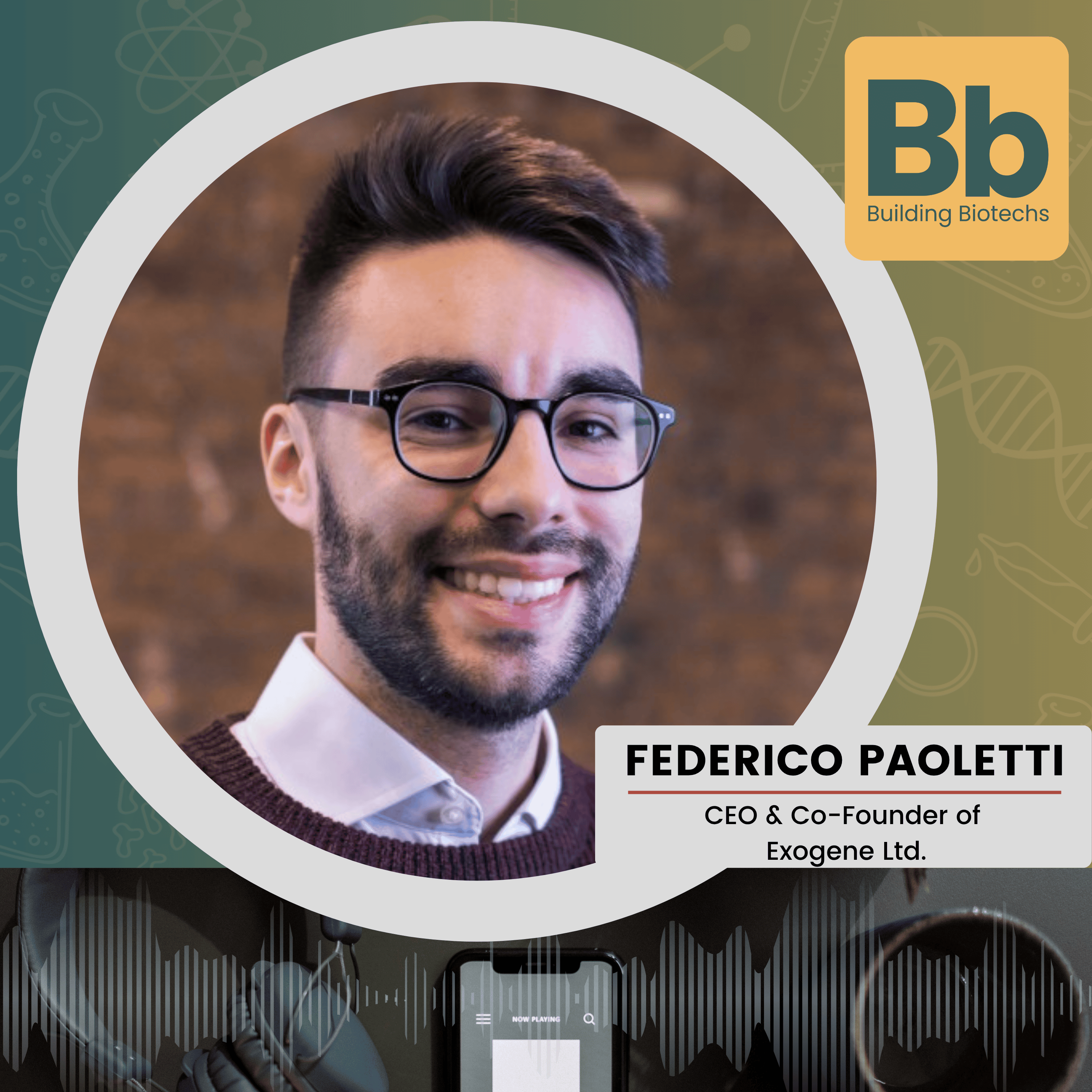 Putting the “Tech” in Biotech: An Unconventional Path to Building a Therapeutics Company, with Federico Paoletti, PhD72 / 100
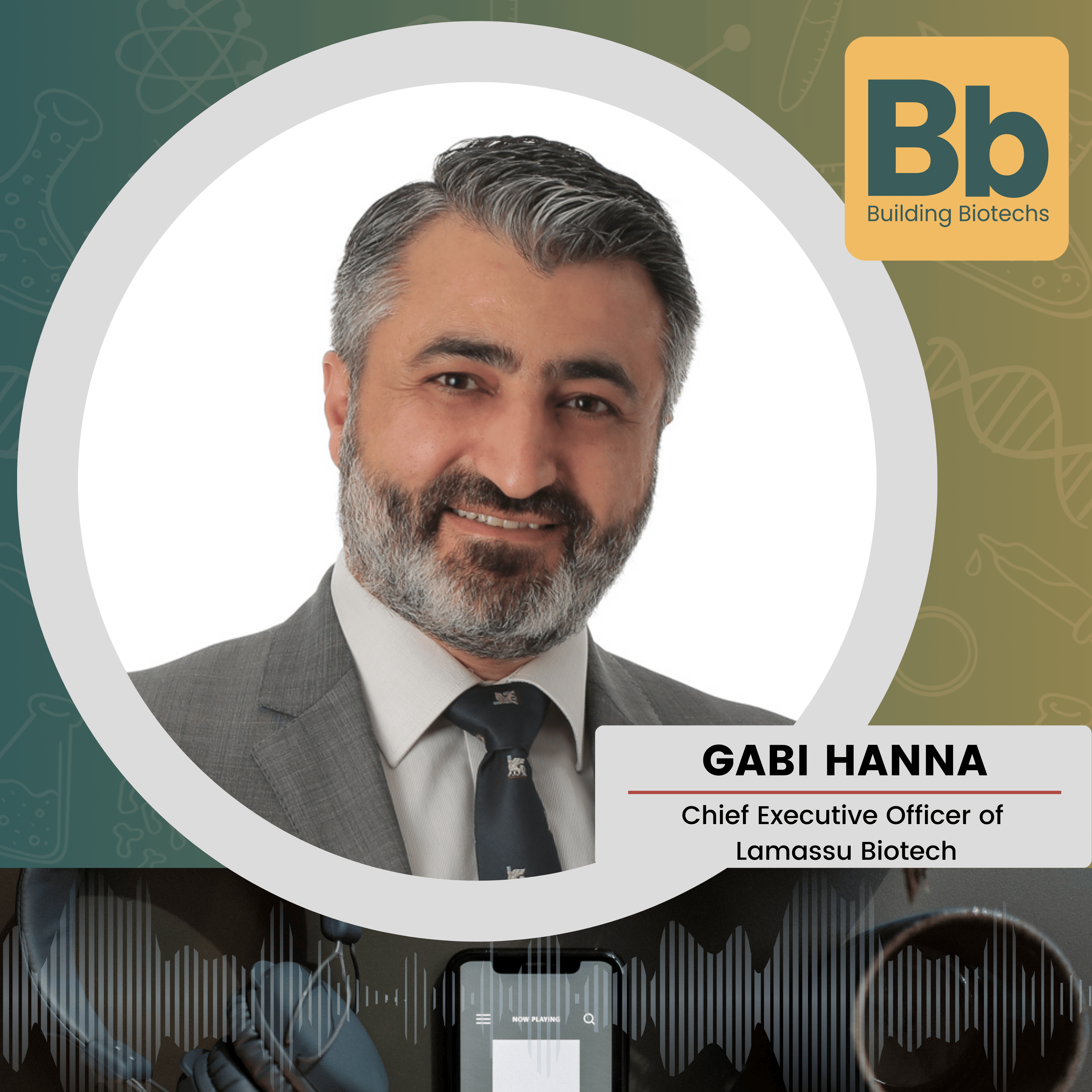 Accelerating Drug Development is a Moral Imperative with Dr. Gabi Hanna, MD
 Biotech, Blockchain, and Building Companies with Russ Peloquin, Managing Partner of LifeSci Catalyst Partners
 Funding, Partnerships, and Growth: Strategies for Startup Biotech Success with Fractional Chief Business Officer Renee Williams
 The Science of Success: Transforming Scientific Concepts into Marketable Products with Stacy Frye, co-founder and CCO of Stimulus Bio
