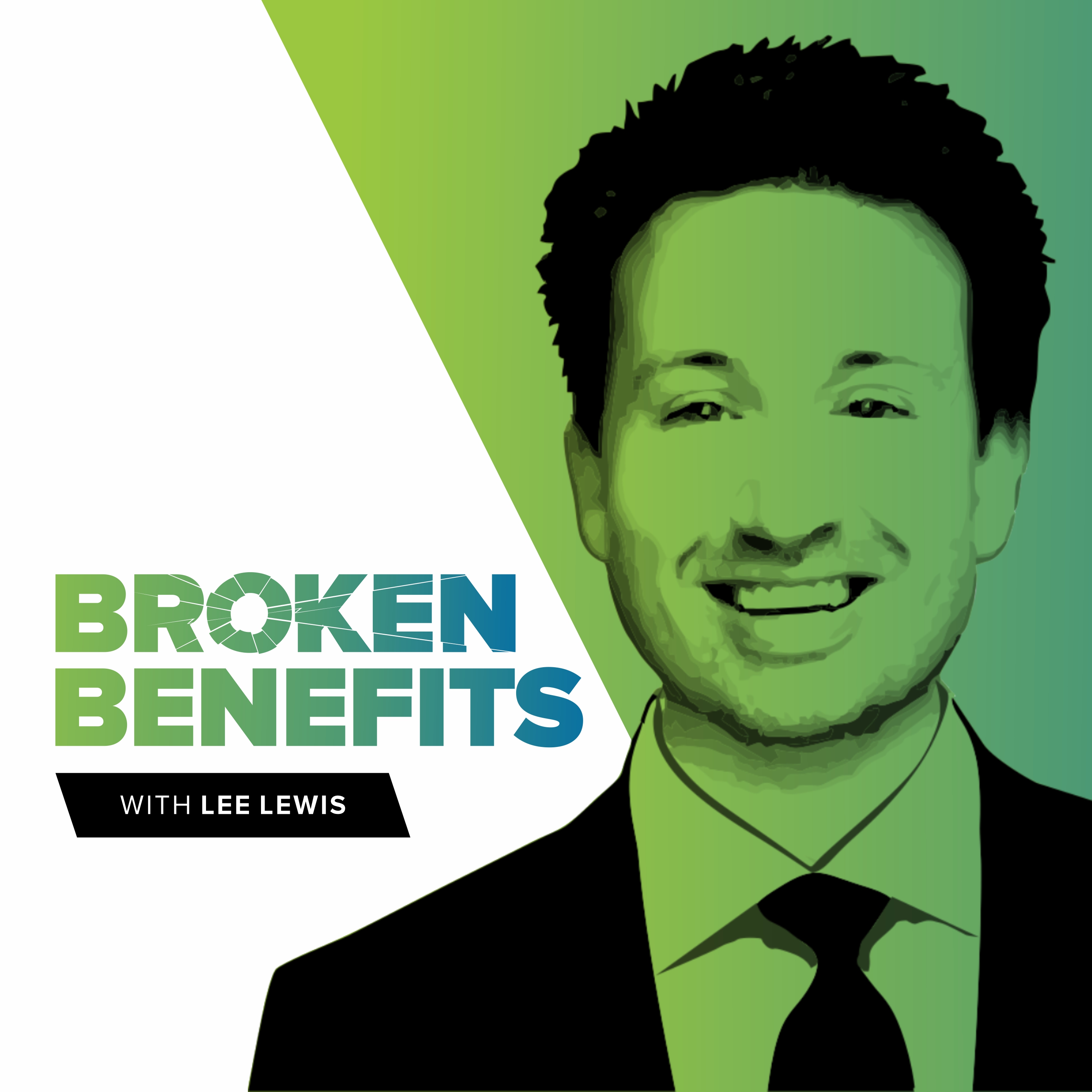
Broken Benefits · 2026-06-17 · 50 min
Key moments - from our scoring
Substance score
52 / 100
Five dimensions, 20 points each
Dr. Lowell Fernander, VP of Benefits and Chief Medical Officer at Rocket, brings a rare perspective to employer healthcare: training as an internist in the UK and Europe combined with hands-on experience running benefits for a major national employer. This episode explores how international healthcare systems - particularly Europe's philosophy of healthcare-as-a-right versus America's market-based approach - can inform U.S. employer strategy. Rather than declaring one system superior, Fernander argues the real differences lie in care delivery and access, not quality. He unpacks the parallel challenge of building trust in both rural and urban access deserts, where provider turnover and system instability undermine patient engagement. The conversation centers on primary care as a linchpin strategy: employers should shift investment from specialty care toward integrated primary care models (on-site clinics, telehealth, care navigation) that function as gatekeepers and reduce unnecessary ED and urgent-care utilization. Fernander shares how Rocket's multi-service on-site approach - primary care, behavioral health, musculoskeletal, pharmacy, care management - combined with digital delivery scales access without requiring clinics everywhere. His argument: benefits design must be tightly aligned with clinical engagement; giving employees an insurance card and telling them to figure it out leaves money on the table and erodes trust.
Europe generally treats healthcare as a right with universal coverage, while the U.S. treats it as a privilege delivered through market mechanisms. The quality of care is comparable, but delivery methods and access models differ significantly.
Both struggle with provider and system instability - clinicians leave after short tenures, breaking continuity of care and eroding patient trust. The root causes differ (housing, education, transportation in rural areas; different systemic pressures in urban), but the trust-building problem is similar.
Employers should lean heavily into primary care engagement (on-site clinics, community partnerships, telehealth) as a cost and quality lever, rather than maximizing specialty access. Patients engaged with primary care generate significantly lower claims and avoid unnecessary ED and urgent-care visits.
Success depends on workforce demographics, geography, work location (hybrid/remote/on-site), and clinical scope. Clinics with integrated services (primary, behavioral health, pharmacy, musculoskeletal) and blended physical-plus-digital delivery drive engagement; clinics limited to minor acute issues underperform because they lack scale and don't address downstream referral management.
Align benefits design with remote clinical services: leverage telehealth for behavioral health and pharmacy, care navigation and management, heat-map network adequacy across the country, and partner with carriers to ensure equitable access regardless of geography rather than concentrating on dense population centers.
Our reviewer’s read on each dimension, with quotes from the episode.
There are genuine operational nuggets - criteria for on-site clinic viability, layering ancillary services to boost utilisation on the same real estate, avoidable ER as a priority outcome metric - but they arrive slowly and are surrounded by extended platitudes, meandering biography, and high-level philosophy about healthcare as a right. The ratio of insight-per-minute is mediocre for a 50-minute episode.
we look at our top five claims, um, and we determine, hey, these are claims that um, are high cost, high spend year, um, over year. Uh, and clearly we need to look uh, at how we approach uh, providing care for that population
if I'm in clinical practice and I have a patient that I send to a specialist, one of the first things that my team would do is ask them how was their experience. Not even the clinical component, how was your experience scheduling
The dependent/spouse on-site access strategy enabled by an adjacent employer-run daycare is a genuinely underreported tactic, but the bulk of the episode recycles well-worn benefits orthodoxy: primary care lowers costs, trust matters in underserved communities, concentrated workforces suit on-site clinics. Nothing challenges a smart benefits operator's existing mental model.
we have formed such a great partnership uh, with all of those services, um, and on site, um, amenities that we have. Um, and so it acts as a nice uh, funnel for um, uh, dependents and spouses to be able to come into our clinical space
the idea that um, there is a significant difference in the quality of care, I don't think that there's much. Um. I just think that how we deliver care and the access to care is what's very different
Dr. Fernander is a legitimate operating practitioner - a trained internist who became medical director via Premise Health, then VP of Benefits and CMO for Rocket Companies, overseeing hundreds of millions in healthcare spend. He has genuinely done the thing at scale, not just written about it. Credibility is real, though the depth of what he shares doesn't fully exploit his vantage point.
I started doing deep dives into a lot of their claims data and that's how the relationship was formed, uh, to get me where I am today as their vp, ah of benefits and the chief Medical Officer for Rocket, uh group of companies
when I started doing that I really had an opportunity to dive deep into the data um, of this integrated care model, um, and really understood how uh, organizations could benefit from on site care but also the barriers
The episode names Rocket Companies, Premise Health, Wayne State DMC, Detroit's primary care access gap, and gives a 2,000-employee minimum threshold and a 2019 clinic launch date. But hard ROI figures, actual cost differentials, claims percentages, or utilisation rates are conspicuously absent throughout - the guest consistently describes direction of effect without quantifying it.
at minimum, I would say about 2,000 employees. Um, I just, Yeah, I just don't think that you can, that you have the capacity to scale and for you to see a real roi, uh, with a small population
roughly 160 million Americans, um, are being covered by their employer, um, uh, uh, coverage
The host asks several legitimately sharp follow-ups - catching the ambiguity in 'community cost vs on-site cost' and pressing for clarification, and surfacing the spouse/dependent topic at the right moment. However, the host frequently answers his own questions, monologues at length before asking anything, and rarely pushes back when the guest stays abstract or gives a non-answer.
Let me pause right on this point. You just said that the cost in the community versus the cost on site, there's a big difference. I can interpret that either way
Tell us about that. Because nobody does that.
Computed from the transcript - who did the talking, and the words that came up most.
What happens when a practicing physician steps into the world of employee benefits? In this episode of Broken Benefits , Lee Lewis sits down with Dr. Lowell Fernander, a physician-turned-benefits executive whose career has taken him from healthcare systems in the United Kingdom and Europe to helping lead healthcare strategy for one of America's largest employers. Drawing on his unique experience in clinical medicine, health informatics, provider strategy, and benefits leadership, Dr. Fernander offers a rare perspective on the challenges facing healthcare today. From the philosophical differences between healthcare systems around the world to the realities of employer-sponsored healthcare in the United States, this conversation explores what employers can learn from global approaches to care delivery. Along the way, Dr. Fernander shares why benefits leaders have an enormous responsibility in shaping healthcare outcomes, how data can uncover opportunities for better care, and why collaboration across the healthcare ecosystem is essential if we hope to improve outcomes while controlling costs.
Transcribed and scored by The B2B Podcast Index.
Speaker A: Wherever you go in the world they're going to have challenges. Uh, they're just different problems um, in a lot of uh, instances uh, in Europe, ah, generally speaking I think the philosophy around uh care delivery and healthcare is just different. Right. Um, do we believe uh, that healthcare is a right or is it a privilege?
Speaker B: Welcome to Broken Benefits. I'm your host Lee Lewis and this is a podcast where we learn from top employer experts on how to fix our broken benefits to save lives, save dollars and save your talent.
Speaker C: Welcome back. So excited about today's guest. Dr. Lowell Fernander is an um, industry leading innovator in the area of clinical and provider strategy within health and benefits. He blends medical knowledge, uh, physician, uh knowledge and benefits program expertise to help lead healthcare programs for a major national employer uh, with hundreds of millions of dollars in healthcare spend. And we're so excited to have HM him on the show today. Lowell, thank you so much for joining.
Speaker A: Thank you so much for having me Lee. I appreciate the introduction and uh, I again thanks for thinking uh, of me and thinking of Rocket, um as an innovative uh hub in the benefits and health space.
Speaker C: Yeah, absolutely. So first thing for people who don't know you very much, would love for you to tell us a little bit about your story. It's very non traditional about how you're not only are you a physician but you have experience in other countries as well and how in the world you winded your way into running a health and benefits plan.
Speaker A: Yeah, very interesting uh story indeed. Um, so I'm an internist by training, um and uh, over the last uh, you know several years of my career uh I have transitioned from a uh clinical space to a hybrid and administrative space to an almost completely uh administrative and um executive space at this point. Um, how I began that journey though was uh very or is very interesting I should say. Uh, I did uh most of my training um in the UK and particularly uh at Queen Mary's University, uh uh on the east side of London, um did a lot of clinical work there and some research there and subsequent to that did some research in different parts of Europe with uh, regards to uh health systems um, and understanding the systems more so uh than just doing clinical work, uh fast forward, uh, I did my residency uh in Detroit, Michigan and uh, at the Wayne State DMC program there. And then uh, just after that started doing some work in rural medicine and rural healthcare near uh to Lansing, Michigan so just outside of Lansing, um, uh there I was able to just hone some of my skills, got more interested in uh, aco, uh, type of work, um, and then pretty much went into health informatics very informally um, and just by chance and uh, began to explore that space ah a bit more. Loved uh, the feel of it, loved uh, what we were doing with data, um, and really supporting the community, uh, driven by the data that we were gathering. Um, I then had an opportunity through Premise Health, uh to be a medical director for a practice, an on site practice, um, at one of their major clients in Southeast Michigan which uh, is a Rocket group of companies. Um, and again had the opportunity to really engage with this integrated model of care. Um, and so uh, when I started doing that I really had an opportunity to dive deep into the data um, of this integrated care model, um, and really understood how uh, organizations could benefit from on site care but also the barriers that organizations still have, uh, whether it be on site care or community care or hospital care. M and so um, the organization that we were partnering with, Rocket, they became very interested in the work that I was doing um, and I started doing deep dives into a lot of their claims data and that's how the relationship was formed, uh, to get me where I am today as their vp, ah of benefits and the chief Medical Officer for Rocket, uh group of companies. So um, it has been a whirlwind over the last couple of years. I never imagined that I would be uh, in this position or in this role, uh, but here I am and uh, I'm loving it.
Speaker B: Everyone. Now just a quick word from today's sponsor.
Speaker A: Lemonade for 50 cents.
Speaker C: It's for a good ah cause this
Speaker D: situation seems terrible, right? Well, what if I told you it actually happened in the United States in 2021. These are the families of people who work for companies just like yours. Give your employees 100% medical coverage with Catalyze Health.
Speaker A: M
Speaker C: as you think about what it was like practicing medicine in the UK and then transitioning over to the United States, what are the things maybe break down especially for people who haven't experienced healthcare in other countries. What are some of the pros and cons? Just high level of the US system versus uk? It's interesting. Some people believe oh America's awesome, like ours is the best ever of anywhere. And others think oh ours is the worst and every other place has it figured out. And I don't think either of those perspectives is accurate.
Speaker A: Yeah, no, that's a great question Lee. And I would say wherever you go in the world, they're going to have challenges. Uh, they're just different problems. Um, In a lot of, uh, instances, uh, in Europe, generally speaking, I think the philosophy around uh, care delivery and healthcare is just different. Right? M. Do we believe uh, that healthcare is a right or is it a privilege? And I know that that's a loaded statement or question to have, uh, depending on where you stand, uh, in healthcare. But uh, by and large in Europe it is considered a right. Um, and so in most uh, uh, cases you'll see, uh, that countries have universal healthcare. They're not always perfect. But I think the premise and uh, philosophy um, of uh, those governments or nations, um, is that uh, everyone should at least have some basic level of care here in the United States and some other parts of the world. I believe that to be true as well. I think that we've just gone. Gone about it in a different way or taken a different approach to it. Um, and so the idea that um, there is a significant difference in the quality of care, I don't think that there's much. Um. I just think that how we deliver care and the access to care is what's very different in my perspective.
Speaker C: Makes perfect sense. Um, what about when you came over to the United States and started working within benefeds, uh, how did your medical degree and your medical background impact the way that you manage health and benefits within an organization in a way that many of your peers who are more HR generalists may not possess?
Speaker A: Yeah, yeah. And I can answer it in this way. Um, when I uh, uh, really began to have an interest in benefits, uh, I was at a point where I was seeing um, patients who were just getting sicker and sicker. Right. Um, or patients who truly uh, needed uh, access or needed care or needed to have uh, support in some part of the health ecosystem and they were just not getting it. And I realized that there was a lot of finger pointing. There was systems to blame, there were uh, carriers to blame. There are PBMs to blame. And I started to look at it from the perspective of. Is that we're all to blame. Uh, this ecosystem has to function, um, synchronously, um, so that uh, patients can get the care that they need. And so my leanings towards benefit was that look, none of this works if we don't have the right benefits, designed if we don't have uh, the uh, right access, uh, from a benefits perspective. And you know this Lee. I mean the reality of it is roughly 160 million Americans, um, are being covered by their employer, um, uh, uh, coverage. Right, Insurance coverage. And so, you know, uh, as benefits, uh, leaders, uh, we play a significant role in how majority of the country or a significant portion of the country, um, is receiving care. Um, and so I saw it as an opportunity to say, look, you know, we, we should really be thinking about this ecosystem more broadly and not in such a siloed, ah, siloed way, um, and approaching and tackling the problems, um, in a collaborative way versus it being, you know, we're trying to just solve for you know, this narrow, uh, part of the ecosystem, whether it be uh, PBMs or whether it be carrier and cost and so on. Uh, we really have to look at uh, the system as a whole and figure out uh, how we uh, can all play a part in to make sure that patients receive the care that they need.
Speaker C: I love that, I love the sort of not wanting to pass the buck in terms of fixing it. Something that we talk about sometimes within HTA is look, we want to transform the American system. We want to, we want to make it better and deliver better value and reward those who are doing the right things and realign those who are not. And the, that's overwhelming. You can't fix the whole system. But you know, what if for the people who work at your company, you are American healthcare, and if you can fix care for your company, for those families, you fixed American health care. And so whether you're 100 life employer or 100,000 life employer, if you can fix or find a way to realign the incentives within your health plan, you have fixed American health care for those families. But that does require sort of taking that yoke up. And a lot of people don't think about that. So I love that. One thing that I'm fascinated by that I want you to talk to us about is within social determinants of health. We discuss all the time, uh, you know, if you live rural, if you live in a food desert, if you're in a transport desert, uh, if you are housing insecure, these are all things that are obviously going to cause your health to be worse, whether it be through just food that you're intaking the environment, or even just swimming and cortisol. But one thing I haven't heard is what is the difference in the similarities between socially disadvantaged rural and socially disadvantaged urban. And I'm curious how those in some ways couldn't be more different. But my hypothesis is that there are some similarities there as well. And you're the only person I've met who's been a doctor and a benefits leader and has experience in both.
Speaker A: Yeah, yeah, yeah. No, it Is an interesting, um, dynamic, uh, to experience. Uh, and I think, uh, from my uh, scope and experience in both spaces is that we're solving the same problem ultimately. Right? Um, uh, access is a challenge. Um, and the biggest component to access, I feel is that um, when folks don't feel that they uh, can trust health systems or they can trust uh, the health communities that they're engaging in, um, or engaging with, uh, then it becomes a challenge, uh, to provide the kind of care that they truly need. And so as an industry, um, and as um, players in the industry, we really have to work on building trust within the communities uh, that we're in, whether they're rural or um, uh, urban areas. And so a big component of what we tried to do is to ensure that we have partnerships with um, you know, our friends in the community, health practices and so on to ensure that, you know, we have a level of trust. We don't want, uh, folks to have a bad experience when they go, uh, to those local uh, health centers. And so, um, it really is important to build that trust.
Speaker C: Is that trust an issue, uh, is it similar in rural as it is in urban? Or do you have more of a kind of a breakdown, uh, in one or the other in terms of their willingness to trust the healthcare providers?
Speaker A: Yeah, no, I think that uh, it is quite similar. Um, and when I say. Yeah, and when I say that it's not even necessarily the providers, but I think it's more so systems. Right? Um, and trust doesn't always mean that, um, or lack thereof, doesn't always mean that, uh, they've had a poor experience or a bad experience. But uh, for example, in rural communities, um, people leave, providers leave, right? They stay for a year, they stay for four years, three years, whatever, and then they leave. And then folks are back to square one where they're now looking again for a new primary care provider. And so there's this vicious cycle for folks, uh, whether it be in rural or urban communities where uh, clinicians and services are there one day and gone the next. Um, and so they feel left out. And I really feel that that is a system problem where, you know, we are leaving, um, a very large portion, uh, of our population behind, uh, because we are not investing in other ways in those communities that would allow for systems and for providers within those systems to want to stay. Um, and so it's all the other things around it, you know, like education and housing and transportation and you know, all of the other elements of your of.
Speaker D: Of.
Speaker A: Of life that um, would uh, Be helpful in building and ensuring that patients ultimately have trust in the system.
Speaker C: Now putting on your benefits executive hat. You're not going to change the, the culture of rural America to make doctors stay there. Probably. But what are some of the tactics that we can use so that we keep our staff and their families in those communities healthy with at least minimum viable resources and uh, able to be able to stay on their feet because we need them as staff and employees. We want to take care of those families but we're not a fairy godmother who can turn a pumpkin and a mouse into a clinic and a doctor.
Speaker A: Yeah, yeah, I absolutely hear that Lee. And again this is a challenge for many um organizations. Um our organization is not immune to it, particularly as we grow and we become more diverse and more dispersed at some point. And I'll use Rocket as a, as an example. Um we were Southeast Michigan uh centric, right? A uh very significant portion of our population um lived in the surrounding areas. We had um, a handful of team uh members across the country, um post acquisition. Um we now have a significant workforce outside of the Southeast Michigan area and many of them fall within the cracks uh, um so to speak of um access issues or access deserts. Right. Um, and so this problem for us is uh at our doorstep. It is real. Um, and the way that we have approached this is to really think about the current design and strategy of our on site services, our actual clinically engaged services uh with the organization. How do they support uh the lift uh of this for us, right? Um, how do we uh incorporate telehealth and digital services and care navigation and care management um and all the features that we have uh within our ecosystem to support those team members. So that's one way of doing it. Um the other way is to ensure that we have a uh benefits design um that really supports um a broad based network. Right? And so that really means partnering with our carriers to determine when we do a network analysis are we looking at it through an equitable lens, um to ensure that we are not just looking at where majority of our populations um are but we are looking across the country um and ensuring that we are um, uh providing access to um, to uh team members wherever they are in the country. So we take that seriously, we look at it very closely, we heat map um on a regular basis to see if there's any migration or trends that we need to pay attention to. Um but uh, going back to the initial point that I made, uh, we feel that the keystone to um a lot of this work is to ensuring that you have um, ah, primary care or a model of care that is closely aligned and linked to your benefits design. Um, because otherwise you're just giving folks insurance card or carrier card and just telling them to go out in the community and figure it out on your own. That's not what we want to do. We want to curate that experience, um, um, from start to finish. And uh, yes it is, uh, a lot of work. Yes it is a lot of hand holding. Uh, but in the end the experience is awesome, uh, for our team members and that's what we want to do. We want to change the healthcare experience, uh, for our team members, uh, for them to realize that healthcare uh, should not feel like it's a burden or navigating the system should not feel like it's a burden for you.
Speaker C: So a couple themes here I'm hearing, hey, access is a problem in rural and urban. Uh, trust is an issue in the system and the systems that we provide. As a benefits executive, if you are trying to reach and serve these populations, you need a number of good systems that can operate virtually around care management, around primary care access and also navigation. Because if you can nail the member experience there, that helps to build trust and it makes it so people can get to the right place. Uh, one theme that I want to start positioning into now is, and where you have a ton of expertise is primary care. Most countries spend way more on primary care than the US but they spend less on everything else. And we're the mirror opposite of that. Uh, it seems to be a theme. How should benefits executives. So there's lots of benefits executives listening to the show. How should we think about primary care both as an investment and a strategy. Um, especially because we're in many cases we're going to need to spend more on primary care. But right now we're already bursting at the seams like we can't spend any more at all.
Speaker A: Yeah, yeah. And I think that a lot of the data, um, speaks for itself that's out there. Uh, when we look at uh, you know, the cost of care for patients, ah, or for team members, we know that uh, those that are engaged in uh, primary care or with a, with a primary care provider, um, you know, the cost is significantly lower for that population for a number of reasons. Right. Um, uh, one there is the entry, I guess, uh, to care or cost of entry to care is much lower in the primary care space as compared, period. Two, specialists here uh, and there. Again that's for a number of reasons. Uh, but the other Thing is that um, when we think about how team members are engaging with the system in general, the healthcare system that is, uh, in many instances it's very sporadic. Um, and so they're either going to an urgent care or they're going to an emergency room. And so they're using those sites of care as their primary care. And so the data is there for that. We see uh, so much of it and that's where those are our biggest cost drivers. So for us we think about it and say, well look, we don't want folks to go to the emergency room or to urgent care for a headache. Uh, we don't want folks to go to the emergency room or an urgent care just for, you know, for the flu or you know, uh, some other condition that can be treated, uh, you know, very, very easily. And so we have uh, really uh, invested and thought about how do we get team members uh, to engage with primary care, whether it be at our on site practices or within the community in a seamless way. Um, and uh, that again it impacts our cost and our claims. Right. Uh, so we've thought deeply about that and from my perspective, uh, organizations should really think about leaning in to uh, engaging with primary care more, uh, so that they are able to support their benefits design, uh, versus uh, having a heavy investment in ah, access to specialty, specialty care. And that's not to say that you should do away with uh, access to specialty care. I'm just simply saying that um, I think that there should be better partnerships, um, with uh, organizations, particularly large organizations, uh, with lots of covered lives because it will impact uh, your claims, it will impact um, your experience and access for your team members.
Speaker C: Yeah. What about uh, let's talk about on site clinics. So I see a broad array of opinions and outcomes on this. I have some of our, uh, some of my employers, these are all Fortune 100 employers. Some of them have shuttered dozens of on site clinics and said this was a total waste. This is basically a glorified, you know, school nurse. Right. The only people who come in are people who are already here working, who have a very low grade thing. And if somebody's really sick, there's no way they're coming to the office to see that clinic and their spouses and kids don't come in. On the other end of the spectrum, I have others who are like. It is core to our strategy. We manage all of our downstream, uh, referrals out of our on site centers. We get better diagnostics and avoid surgeries. Through these centers we are Using them to get better engagement with our point solutions. I mean, there's very few areas where there were smart people fall this far apart. Help me, Help me unwind. Unwind this knot.
Speaker A: Yeah, that is, uh, a really tight knot to unwind.
Speaker C: No, you're supposed to make it easy for me. Tell me the what.
Speaker A: And, you know, you're absolutely right. Yeah, they're the methodologies that are, um, utilized to understand the value or unlock the value for on site, uh, clinics, uh, is varied, um, and it really is dependent upon your population. It is dependent upon your, uh, setting. And it's also dependent upon ways, uh, of working. Right. And ways of working, if you will, um, is, you know, uh, is your workforce hybrid? Uh, is your workforce remote? Is your workforce a blend of, you know, all of those things? Uh, and so, you know, there, there is this, uh, dynamic that takes place where you have to really think about your strategy around, uh, the demographics of your workforce, the, uh, you know, geography of the geography of your workforce, um, and how you want to shape the services, uh, for that workforce using your on site tools. For rocket as an organization, we have a full suite of, uh, services, uh, meaning that we have, um, integrated care, so we have primary care, behavioral health, we have musculoskeletal, uh, services and on site pharmacy care, navigation, care management, uh, clinical pharmacy, uh, and so all of that is, uh, uh, we have a physical presence, but we also have a digital presence, uh, for some of the elements of services. And so we know that we don't want to put brick and mortar, um, everywhere. We can't, it's just not scalable. Um, but we, uh, recognize that if we can, um, you know, better utilize our clinical pharmacist for someone in Texas or someone in Arizona, then why not do that? If we can. If we can, uh, you know, utilize our behavioral health team for folks that are remote and they can do video visits, why not do that? Um, and the same thing with our musculoskeletal team. Uh, we have chiropractors and we also have a physical therapy team. And so, you know, when you think about the cost, uh, in the community versus the cost, uh, of those, uh, that we have, um, on site. It's a significant difference. And so the big factor in all of this is, uh, engagement. How do you continue to drive engagement in your population?
Speaker C: Let me pause right on this point. You just said that the cost in the community versus the cost on site, there's a big difference. I can interpret that either way where it m sounds like you're investing a lot, you're offering a ton of services. This is not a school nurse. Ton of different services. Does that mean that you're investing and spending a little more here or are you saying that the community cost is actually more expensive, that even with more services you end up saving?
Speaker A: Yeah, yeah, the community cost. Yeah, the community cost is more really, Even with a number of ways.
Speaker C: Services that you're offering?
Speaker A: Yep, in a number of ways. Um, it is uh, more one, uh, going back to access, we think about access. So if there's delay in access because the community does not have appointments, uh, or folks are not able to get in, then whatever that health condition is has the potential to worsen. Right. And so your costs go up from, from that standpoint. So it's an opportunity cost, uh, there if you will. Um, the other component, uh, that from a cost standpoint is that when you have this integration of services, you can better control um, your referral cost. Right. So if you are referring, um, from your primary care to a physical therapist in the community, the cost of variable. Right. Um, depending on where you go. Um, but within our ecosystem that cost is at steady state. Right. Um, same thing for our behavioral health, same thing for pharmacy and so on. Um, and so there is a, um, upfront cost that I would say, or higher upfront cost to build out these services. But over time with engagement and utilization, you'll see those costs, uh, come down and you'll see a return on that investment.
Speaker C: Okay, I love this. So if we're talking to a panel of Fortune 500 employers, uh, and you were giving us advice, what are the attributes of the employers who should not do on site clinics and what are the attributes of employers where you'd say, hey, that, that lines up that this might actually be a good, a good deal for you?
Speaker A: Yeah, yeah, I would say, you know, if you don't have a, A ah, concentrated workforce, uh, or a hub, um, I think it would be very difficult uh, to, to do on sites. I mean it just. You're not going to see a return on that investment. Uh, pure, uh, digital adoption or telehealth adoption I think is, is you know, it's very challenging. Um, um, alone. So I would say if you have a dispersed workforce, no significant, uh, you know, there's no critical mass, uh, I would not, uh, suggest doing an on site, um, if you do have hubs, uh, if you have um, uh, an engaged population and you know that uh, your organization is, I guess, health forward, if you will, and the leadership has leaned into it Um, I would certainly say yes, it's a benefit. The other thing to be mindful of is looking at uh, the environment in which you operate. Right. It would perhaps not be of value to build an on site m near to um, or in the midst of uh, cities or locations that have a significant health footprint that has access. Not just a significant health footprint, but that has access, uh, because there are some cities, um, Detroit uh, being one of them, um, there's a lot of health systems around us, but from a primary care access standpoint it's limited. It's limited. Um, and so you really have to pay attention to those three things, uh, I think before you um, know, make that decision. But certainly, um, it has to do with your workforce, um, with the hybrid nature of your workforce or the remote nature of your workforce. And what is the compelling argument for them to come into um, a physically present um, health center.
Speaker C: So, copying back, so if I'm an employer where, if I'm very hybrid, very remote, people come in sporadically to the office, that's not probably a great marker for one that would be successful here. But if I have a hub where a lot of people come together and my workforce is pretty well engaged, they, if we send them emails, if we make a service available, they tend to respond well to it. If I've got a bunch of people who just maybe they all come together but they're all kind of doing their own thing. Maybe they're really highly paid so they don't, you know, maybe they're not paying that much stuff. They've got their own things all figured out. Maybe less. Less m likely. And then, and then third, if the region and area where my hub exists doesn't have a lot of other access, these seem to be the attributes that say, okay, I could have a really successful on site clinic strategy here.
Speaker A: Yeah. Yep. Exactly.
Speaker C: About how many people would I want to have in a hub like that where it probably makes sense.
Speaker A: Yeah. Um, again, it really depends on your workforce. I can't speak for um, uh, Primus Health at the moment. Who is our uh,
Speaker C: generally non vendor specific?
Speaker A: Yeah, no, so that you know, I, I would say, you know, when you, at minimum, I would say about 2,000 employees. Um, I just, Yeah, I just don't think that you can, that you have the capacity to scale and for you to see a real roi, uh, with a small population. Um, so yeah, you really have to have some mass, um, to be able to see benefit in the investment that you're going to make Everyone.
Speaker B: Now just a quick Word from today's sponsor.
Speaker A: Hey dad, have you seen my PlayStation?
Speaker D: People who work for companies just like yours are desperate for any way to pay their medical debt. Support your employees by giving them 100% medical coverage with Catalyze Health.
Speaker C: So now let's talk about some of these advanced capabilities. So you invested more and said hey, we're not just going to offer a good physician experience, we're going to bring in some of these ancillary areas. How should we think about I guess the ROI of some of these? And are there some of these capabilities that are surprisingly helpful that maybe employers might have overlooked?
Speaker A: Yeah, the additional or supplementary services uh, to primary care. You're absolutely right. There has to be a uh, a strategy around um, what those services are going to be because not every service line um, is beneficial, uh, from a quality and clinical standpoint, uh, and uh, certainly not from an ROI standpoint. So there has to be some strategy around your population, what you're seeing in your claims, um, and that uh, then informs how you uh, want to shape the integration of those services. Uh, we uh, look at our top five claims, um, and we determine, hey, these are claims that um, are high cost, high spend year, um, over year. Uh, and clearly we need to look uh, at how we approach uh, providing care for that population experiencing um, uh, those conditions. And so then we then go about uh, looking at the services and the offerings, uh, whether it be point solutions in addition to our on site services, uh, that can support um, you know, driving down the cost in those areas and increasing the quality of care for our team members. Um, and so when we think about an roi, it's not only from the integration standpoint uh with the primary care, but we think about it holistically because there are some team members or uh, employees that uh, may not use the practice or use the uh, the primary care component of the practice, but they are using the mental health or behavioral component.
Speaker C: So we get a lot better engagement on the same footprint of real estate.
Speaker A: Exactly.
Speaker C: If I've only got a doctor, then people who maybe use the doctor, great. But if I also have physical therapy, I'm guessing you also use that for workers comp and things like that and then also got behavioral health. And so within the same investment I can now maybe double or triple the number of people that can get services.
Speaker A: That's exactly right.
Speaker B: Have you found success getting kids and
Speaker C: spouses to come in?
Speaker A: Good question, Lee. You know it's interesting. When we, when this practice was launched in 2019, um, the, the decision was made not to uh, engage with spouses, uh, and dependent. Because the data at that time didn't, didn't, didn't support um, you know, their utilization. Um, and the highest spend was not in that category. The highest spend was within our team member category. And so uh, the focus was there. Um, and then the second component to that was because of the type of institution that we, that we are a financial institution, um, there were just some guardrails and some security risks that you know, we couldn't, couldn't just have a general population walking into the, uh, walking on site. Um, you know, just recently that that changed and now we are able to see. Yeah. Really? Oh, that's.
Speaker C: Tell us about that. Because nobody does that.
Speaker B: I mean it's very, some might make
Speaker C: it available but it's, it's very rare that, that they get much engagement there. So.
Speaker A: Yeah, yeah, keep going. It really feeds right into uh, the philosophy that Rocket has. Um, and really it is to take care of, of our people. Um, and uh, we do that in a number of ways. Um, and so just to set this up or frame this up for you, uh, we have an on site gym. Um, we have, and this is a full, full full gym, um, with you know, uh, sauna and steam room and all the other amenities that are there. Um, and then we also have um, an on site uh, uh, daycare which is you know, uh, through a vendor partner, but there's a daycare that's, that's also also there. So just framing, framing that, that suite of services and availability for, for um, for our team members. We know or we knew that. Look, you know, if kids and the daycare is right there, then kids are bound to get sick. We know that that's gonna happen. That means that mom and dad have to take off time from work and take them to the doctor. And so we have formed such a great partnership uh, with all of those services, um, and on site, um, amenities that we have. Um, and so it acts as a nice uh, funnel for um, uh, dependents and spouses to be able to come into our clinical space and engage. Um, and then the second component is, you know, relates to one of the first things that I mentioned. Uh, we weren't initially seeing a significant claims, um, burden from the dependent espouse population. Now we are. That's changing a little. Um, and the primary reason that that is changing is because you know, our average age has gone up a little bit from from you know, 2019 to now. Uh, and so uh, you're going to have more health uh, ah, issues, um, and challenges. Right. Uh, with age. Um, and so uh, we made that decision to say we really want to have uh, spouses and um, dependents to be able to access the same services that um, our team members are having. And there was a big ask, uh, team members asked almost every year, um, if their spouse and uh, uh, kids can actually come into the practice.
Speaker C: It shows you're doing something right. I think, uh, at a lot of these, especially the clinics that maybe aren't driving high roi, nobody's asking to use them. They're not offering and people aren't asking. So if you're doing it right, if you've made an amazing experience, yeah, people are going to start asking. And that makes perfect sense. So you are a doctor, you're around uh, benefits people all the time, conferences and maybe on your own team and boards and things like that. What are the blind spots that American benefits professionals have about health care that you're able to see clearly with your medical training and background?
Speaker A: Yeah.
Speaker C: And also just generally your background may not even have anything to do with medicine. But I'm so curious here because people uh, who I interview a lot of times feel like fish out of water around most benefits professionals. I'm sure you fit into that category as well. And I'm curious, what are some of the areas that we're missing?
Speaker A: Yeah, I would start um, from this I um, guess foundation. Um, I truly believe that as an industry, uh, uh, benefits, uh, leaders and um, organizations have to think about the metrics, uh, that we are uh, imploring to benchmark, um ourselves against. I uh, think that the playbook, uh, that has been established over many years for benefits is to look at per team member per month or per team member per year or you know, some of the, the you know, traditional metrics, uh, that we look at. But do we really look at uh, outcomes in a serious way, um, and in a way that impacts the quality of life of the people that we serve. Um, and so I think that when we, when we frame our approach to benefits, frame for our workforce, we have to think about it from uh, the downstream, um, uh, impact and effect. It's not only about them, it's about their families. Um, it's not only about um, the pmpm, uh, it is about how do we look at making our benefits designed more equitable, even uh, across the board for, for team members. Because the reality is you're going to have um, uh, a workforce where you have uh, some on the higher end of the income spectrum and some on the lower end of the income. Right. Um, and are we really traditionally the same? Yeah, yeah, exactly. And so, you know, the equity, um, lend has to be on, um, as we are, uh, designing and thinking about benefits plans, um, and again going forward, our metrics for measurement, um, and understanding the true value of the work that we do in benefits has to shift a little bit. And I'm not saying that you don't look at your cost. I mean you're not going to, you're not a, um, sustainable model or a sustainable business if you don't look at your cost. But I think you also have to think about it, uh, for the long term. Because the reality is if you don't take care of those things, your claims, they're going to whack you in the end. Right? So one way or the other, uh, you're going to, there's going to be cost to the organization.
Speaker C: So this is around, you're at about 10,000ft. What I'm hearing is, hey Lee, I think a lot of times within benefits we get obsessive about what's my pepm, pnpm, uh, how much am I spending? You know, do I have like a few outliers? Those areas, that's fine, but we, we can't leave out real outcomes. Are we actually getting value for that money that we've spent, regardless whether it's high or low? But did we at least get something good? And second, how equitable is it? Let's go maybe from 10,000ft down to around 1,000ft. What are some of the really much more specific KPIs that we ought to be looking at? And how do I do that? Because outcomes is super ephemeral, especially if I'm not a doctor. So help make that easy for me.
Speaker A: Yeah, yeah, know, I, I, I can, can completely uh, understand where you're coming from. And you're right, I mean most employers where we, we um, you know, we kind of, we drown ourselves in, in, in these utilization metrics. Right. Um, um, but the outcome metrics that have true impact, um, I wouldn't say that we ignore, but uh, they are not at the top of the uh, priority list. And so there are a handful that I really think, uh, about. Anchor, um, anchor, ah, on, um. And you're familiar with some of these. One is the um, uh, avoidable ER utilization because we know that your costs go up significantly. It's not a great experience for team members. The whole nine yards when someone goes, no one wants to go to the emergency room.
Speaker C: Stay out of the ER Unless absolutely
Speaker A: for a number of reasons. Um, so that's one, um, that I hang my hat on. The other one is again going back to customer, um, service and satisfaction. I honestly feel that in healthcare in general, uh, we have not really paid attention to the hospitality component and level of service that we provide, uh, for patients, um, and for uh, employees. And we have the power as uh, benefits leaders and large organizations to shape and impact some of that. I'll give you an example. Um, if I'm in clinical practice and I have a patient that I send to a specialist, one of the first things that my team would do is ask them how was their experience. Not even the clinical component, how was your experience scheduling, how was your experience, uh, when you walked through the door, uh, was there adequate follow up? Um, because if they didn't have a good experience, I won't send them back there. Right M. And so you truly have the ability uh, to guide and navigate uh, your employees through uh, better healthcare experiences. And so that metric for me is more so benefit, satisfaction, um, and then the perceived value. Right. Um, and so those two are top of mind uh, for me because I feel like experientially um, and from a cost perspective you get uh, bang for your buck if you focus on those areas. Um, and so you know, again coming down from that 10,000 foot view, um, looking at it, um, with a closer lens, um, those two are the big ones that I look at. And of course, yeah, there's going to be things like preventative care completion, uh, rates and that kind of stuff because I believe that prevention is better than cure. We have the ability to really uh, support people before things become um, uh, bigger problems.
Speaker C: I love this. Uh, what a terrific way to, to wrap things up. Uh, a lot of people are going to want maybe to reach out to you or connect with you. What's, what's a good way for them to do. So I don't know if LinkedIn is preferred or somewhere else.
Speaker A: Yeah, yeah, uh, yeah, certainly on LinkedIn, I'm, I'm, you know, I answer messages so feel free to reach out and uh, connect and we can talk about uh, a number of things in industry and um, you know, my experiences thus far in this role. Um, and then uh, again if Lee, if you want to share my email, I'm happy to um, you know, respond to emails as well. So those would be the two primary ways to connect with me. I'm happy to have a conversation.
Speaker C: That sounds perfect. Well this has been wonderful. Thank you so much for joining us today. On Broken Benefits. And, uh, thanks everybody for listening in.
Speaker B: Thanks for joining us on Broken Benefits. If you enjoyed today's episode, please subscribe to Ah, our YouTube channel or on your favorite podcasting platform. Also, please share today's show with a friend or colleague. It's free to do, and it helps us spread the message to as many people as possible. Until next time,
Other episodes covering the same guests and topics, from across The B2B Podcast Index.
 The Perverse Incentive Trap Hidden Inside Value-Based Care - and What to Do About It. EP512Relentless Health Value · on Social determinants of health90 / 100
 202: The State of AI in Healthcare and how to know when AI Is ‘Good Enough’Alter Everything · on Social determinants of health89 / 100
 How Three Brothers Built and Sold Truebill for $1.275 BillionVested Capital · on Rocket Companies87 / 100
 Neighborhoods as PatientsRelocalizing Health with Dave Chase · on Social determinants of health84 / 100
 Inside the Rural Health Transformation Program w/ Dr. Tim Ferris, InterSystemsHealth Care Rounds · on Social determinants of health75 / 100
 800 Lives a Day: How AI Is Rewriting Maternal HealthFinancial Forward · on Social determinants of health75 / 100Stop Paying. Start Leading: Taking Control of Healthcare Strategy (Feat: Paul Dumas)95 / 100The Business Case for Better Benefits (Feat: Scott Kirschner)From Accounting to Innovation: A Different Mindset for Better Benefits (Feat: Brian Duclos)No More Excuses: A Hard Look at Healthcare Reform (Feat: Chris Deacon)Beyond the Status Quo: Unlocking Opportunity in Benefits & Healthcare (Feat: Milt Ezzard)