
B2B Vault: The Biz To Biz Podcast · 2026-07-03 · 29 min
Key moments - from our scoring
Substance score
43 / 100
Five dimensions, 20 points each
Dre Baldwin, former professional basketball player turned entrepreneur and business coach, shares how his decade-long athletic career - including college and professional play in Europe - directly translates to business leadership and operations. He breaks down his four-pillar mindset framework (discipline, confidence, mental toughness, and personal initiative) and explains why discipline isn't a personality trait but a structure-dependent behavior. The conversation focuses on practical business challenges: why accountability starts with the leader holding themselves first, how to communicate differently with different team members based on personality, and the critical importance of money collection systems. Alan Koppelman shares his experience running multi-million-dollar kitchen operations and how restaurant management principles apply to payments and cash flow. Both emphasize that motivation is unreliable compared to disciplined systems, and that business owners must take payment collection seriously as a full-time responsibility rather than waiting for invoices. Baldwin's book, The Third Day, addresses showing up when unmotivated - the behavior that separates professionals from amateurs. The episode targets business owners and team leaders struggling with execution, cash flow, and building credible authority within their teams.
Motivation is inconsistent and unreliable for building professional careers, while discipline is consistent because it's behavior driven by following a structure, not feelings. When you follow a structure, you automatically execute disciplined behavior every day.
Collect payment upfront via credit card instead of extending net terms, since 30 days often extends to 45+ days and the business owner becomes a bank for the customer, which can tank the business. Even with credit card fees, it's cheaper than financing customer debt.
They haven't held themselves accountable first, so they lack credibility. As Michael Jordan demonstrated, you can only credibly demand accountability from others if you're visibly holding yourself to the same standard.
Discipline (showing up daily to do the work), confidence (putting yourself out there boldly), mental toughness (continuing when success hasn't arrived yet), and personal initiative (making things happen rather than waiting).
Some players improve when called out publicly, others are mentally lost if embarrassed in front of the team and need private correction, and still others understand the message better when it's communicated indirectly to someone nearby. A leader must read the room and adjust.
Our reviewer’s read on each dimension, with quotes from the episode.
The episode delivers scattered practical observations (discipline through structure, money collection systems, reading team dynamics) but frequently retreats into platitudes and general advice. Many segments - particularly the lengthy anecdote about the host's daughter and basketball skills - add color but minimal new insight for a B2B operator. The most valuable material (systems for accountability, payment processes, communication calibration) is thin and underdeveloped.
discipline is available to everyone at any anytime, as long as you're following a structure
accountability is all about making sure that whatever is supposed to be executed actually gets executed
Baldwin's four pillars (discipline, confidence, mental toughness, initiative) and the framing of discipline as structure-dependent rather than personality trait are mildly fresh, but the episode largely rehashes well-known frameworks: show up every day, know your craft, sales is crucial, read the room. The AI section is generic boilerplate ('AI compresses time'). The host's personal stories about his children and Dale Carnegie training feel disconnected and don't advance original thinking.
Discipline is available to everyone at any anytime, as long as you're following a structure
artificial intelligence basically takes the same stuff that humans would do, and it compresses time
Baldwin has built a coaching practice and published books, positioning him as a legitimate practitioner in mindset and business coaching. However, his credentials as a B2B operator are soft - he's a former international basketball player turned author/coach, not a founder, operator, or executive who scaled a significant business. He speaks with authority about coaching and sales philosophy but lacks the gravitas of someone who has built and scaled a company at scale.
for the last 10 plus years, I've been working with entrepreneurs, business owners, team leaders
I have some coaching clients who are literal accountants
The episode lacks concrete data, named examples, metrics, and timelines. Discussions of accountability, payment systems, and AI remain abstract. The host mentions coaching clients who are accountants and examples of people owed 'over a hundred grand,' but provides no specifics: no company names, no real numbers, no case studies showing how discipline or structure actually transformed a business. Baldwin's anecdotes stay general ('athletes have days they don't feel like working').
I have some coaching clients who are literal accountants
I've helped people that are owed over a hundred grand before
The host asks open-ended questions and occasionally probes deeper (e.g., 'tell us about accountability'), but rarely challenges Baldwin's claims or explores contradictions. The conversation meanders - pivoting to the host's family stories, Caitlin Clark, and culinary background - without forcing Baldwin to ground his advice in specifics. Follow-ups are polite but surface-level; there's no productive disagreement or pressure testing of ideas.
So tell us a little bit about yourself
So what did you bring from basketball over to business
Computed from the transcript - who did the talking, and the words that came up most.
What does it take to build lasting success in business? In this episode of B2B Vault - The Biz To Biz Podcast , host Allen Kopelman sits down with entrepreneur, former professional basketball player, and mindset coach Dre Baldwin to discuss the habits, systems, and leadership principles that drive high performance. Dre shares how he went from sitting on the bench in high school to playing nearly a decade of professional basketball overseas before building a successful business focused on mindset and performance. In this episode, you'll learn: Why discipline beats motivation every time The four mindset pillars every entrepreneur needs How accountability creates stronger leaders and teams Why cash flow and payment systems are critical for business growth Leadership lessons from professional sports How AI is changing the way businesses operate Why lifelong learning is a competitive advantage Whether you're a business owner, entrepreneur, executive, or aspiring leader, this conversation is packed with practical strategies you can apply immediately. Like, Comment, and Subscribe for more conversations with today's top entrepreneurs and business leaders.
Transcribed and scored by The B2B Podcast Index.
Speaker A: Welcome to the Biz2Biz podcast, your number one source for all business news.
Speaker B: You're now watching B2B Vault, the Biz2Biz
Speaker A: podcast, hosted by Alan Koppelman.
Speaker B: Powered by Nationwide Payment Systems, the number
Speaker A: one solution for payment processing. Hey, everybody. Welcome to Today's episode of B2B Vault, the Biz to Biz podcast, sponsored by Nationwide Payment Systems and our new Gateway NPS1 with smart invoicing. For more information, go to nationwide paymentsystems.com and book a strategy call. So today we're going to dive into work on your game with Dre Baldwin. And we're going to talk about all kinds of stuff about business and entrepreneurship, because that's what B2B vault is all about. Welcome to the show, Dre.
Speaker B: Thank you for having me on, Alan. How you doing?
Speaker A: I'm doing great today. So tell us a little bit about, um, yourself.
Speaker B: Sure. Come, uh, from Philadelphia Penns now based in South Florida. Always played sports growing up. Got to basketball around age 14, which is pretty late if you want to go somewhere in the sport like college or pro. Uh, sat the bench in high school, the one year that I played, walked on to play college ball. Hustled my way into playing college ball at the Division 3 level, which is the third tier of sports. That's not where the pros come from. Hustle my way into playing pro ball. Built a nearly decade long career playing basketball, mostly internationally, mostly in Europe. At the same time, Alan started publishing videos to this new website called YouTube. This was, uh, 2005 when I first started, and this was before YouTube was YouTube. But I started to build an audience through that, just showing people how to practice basketball. A few years into that, about five years in, the players started asking me questions about mindset. I started talking about mindset. People who didn't play sports heard those videos and they started reaching out and saying, hey, that way you just, you describe mindset and where you break it down. Andre is useful for people off the court. It's useful for people who don't play sports. So that's what I knew how I knew what my transition would be from sports to the next thing. Because a lot of people don't realize this. Athlete careers are very short and we usually do something else after we stop playing. So I stopped playing in 2015. And for the last 10 plus years, I've been working with entrepreneurs, business owners, team leaders. Not just on the mindset pieces, but as I worked with more entrepreneurs, I learned they also needed the strategies, the systems and the execution layer. And that's really where I've been focusing, uh, since then.
Speaker A: So tell us a little bit about the mindset.
Speaker B: Sure. So the four pillars that I started with, even with the athletes, and kept it as I moved away from just athletes, were discipline of, uh, showing up every day to do the work, confidence to put yourself out there boldly and authentically, the mental toughness to keep going, keep showing up even when the success expected to achieve is yet to occur, and the personal initiative to go and make things happen instead of waiting for things to happen.
Speaker A: Yeah, you definitely, you know, persistence is super important when you, you know, if you're a business owner and whatever you're doing, you know, I tell that to my kids. You know, you want something, you gotta, you know, you've got to make it happen. And, uh, you know, that's the only, that's the only way to do it. And you have to have that, that mindset. My dad told me, he goes, you get a job, you treat the job like it's your business, you know, treat it the way you want to be, you know, like you would want people to treat your business. And that's how you're going to be, you know, successful in business because you want to, you know, that's what you, that's what you need to do. It's important to have, have a mindset. And like you said, don't give up, because if you give up, then that's it, you know, then you're defeated. Nobody wants to be defeated.
Speaker B: That's right. I agree. You're going out there and selling yourself.
Speaker A: Yeah. And, you know, you have, you know, and I tell, you know, all the time, when we were, before we got into the podcast, I was talking about sales. And, you know, especially in sales, you know, you have to have, you know, every business involves sales. So either you're doing the sales or somebody else is doing the sales. And in the beginning, you're usually doing the sales as the owner. And you have to, you know, you have to have that mindset, you know, to go, go, go every day.
Speaker B: That's right. Because if nobody is selling or marketing, then no business can be getting done. So that is the most important aspect of the business is the marketing, which builds the relationships and starts the conversations and the sales which closes it and brings in the money. So that's the biggest part of any business for everybody.
Speaker A: Yeah. So when, you know, we're also talking about, like, accountability. So m. Talk about that a little bit. You know, like, I'm sure when you're an athlete. You know, not everybody's, you know, Michael Jordan or, you know, the. Of basketball and, you know, he's famous for. And other people are famous in basketball for being very intentional about what they're doing and holding their teammates accountable. So it's the same thing. Uh, you know, when you're owning a company or leading, you know, a team leader, you have to hold everybody accountable. Talk about that a little bit.
Speaker B: Sure. So that accountability, I mean, people just think of an accountant that we were just talking about selling. The accountant's job is to do what is count all the money. All, uh, Right. Make sure the money that was supposed to come in did come in, and the money that went out is the right amount that went out. And if there's a dollar missing, the accountant goes and finds out where that dollar is and why there's a discrepancy. So accountability is all about making sure that whatever is supposed to be executed actually gets executed, and then offering, uh, correction and enforcement for any discrepancies. Any non compliance. We were talking about that. Any non compliance to whatever the system is. So accountability is, yes, a boss or a leader or owner making sure that everyone on the team is doing their job. But even before that, upstream from that is the boss, owner or leader has to make sure that they are holding themselves accountable. Because if they're not accountable, then they're not credible when telling someone else on the team to be accountable. So you got to hold yourself accountable first, and then you can hold everybody else accountable. Just like, uh, Michael Jordan and that documentary he put out a few years ago about him, uh, in the Chicago Bulls. He said, I never asked my teammates to do anything that I wasn't doing. So because he was holding himself accountable, he had the credibility to tell the same thing to his teammates. And they listened.
Speaker A: Yeah, but same thing when, you know, I take that I want somebody to do something, they got to see me, that I'm doing it.
Speaker B: That's right.
Speaker A: So that they're going to follow suit. And it's important, you know, some things, uh, you know, when you brought up accounting, one of the things I see a lot of business owners struggle with is collecting money. And it's like, easy to go make the sale, and then you don't ask for the money, you know, and you don't get paid.
Speaker B: And it's a bad thing to struggle at when you run the business.
Speaker A: Yeah, well, you know, sometimes I help people with that. Like, they'll come to me and they'll be like, well, what what, what do you, you know, what's going to make, uh, your payment system? How's that going to help us? I said, well, how much money are you owed right now? If somebody tells me they're owed a lot. You know, I've helped people that are owed over a hundred grand before. And I'm like, well, what's the situation of why you're owed over, you know, a hundred thousand dollars? What's stopping you? It's, what's stopping you is we were just talking about they didn't have a system on how to enroll people so they could get paid on time and not have all these, and not start chasing after money. Because that can destroy a business.
Speaker B: Oh yes, it will destroy a business. And I have some coaching clients who are literal accountants, so they tell me about this stuff and how big companies get really behind in collecting, uh, those accounts receivables, not receiving the money that they're supposed to receive. And nobody seems to have any sense of urgency about, hey, are we gonna go collect this money that we are actually owed? That is literally what makes the business run and how you pay your team. So, uh, that money collection issue needs to be handled, uh, upfront and it needs to be somebody's full time job.
Speaker A: Yeah. I always tell businesses, I'm like, you know, you have to have, you have to have a plan of uh, you know, b. People will say to you, oh, I want to get, uh, 30 days. Okay, you can have 30 days. We'll take your credit card and your bank will give you the, the float. You know, don't, don't be the bank for your companies, don't be the bank for your customers. Because I've seen that tank a lot of businesses, you know, because then all of a sudden, you know, the business starts, they can't pay their bills or the owners got to start putting in money to the business or you're borrowing money and it's a lot cheaper to take credit cards even though people don't like the expense of it.
Speaker B: Yes, I agree. And as long as you pay the credit card back before the, the statement rolls over, then doesn't cost you anything.
Speaker A: Right. So, you know, but I'm saying a lot of times customers want 30 days to pay. So, you know, you have to think about that. Do you need to give them the 30 days? Because 30 days could turn into 45 or she just let them put it on plastic. Because if you take, give somebody 30 days and then they put it on a credit card after 30 days, that's costing you double the money.
Speaker B: Yeah, exactly. And it's costing you time, but you can't recover. So I suggest to business owners that I work with you, collect your money up front and let them deal with how they got that money and whoever they had to pay back. But don't be the person that is owed money.
Speaker A: Yeah, that's a good. That's good advice. Don't be the person that owes money.
Speaker B: Right.
Speaker A: Uh, so you told me you wrote several books. So, uh, what's your favorite book that you wrote?
Speaker B: Favorite one is always the last one I wrote. But I would say my most. My most popular one is this book called the Third Day. And it's right behind my left elbow over here, if you're watching. And Third Day is all about how you show up and give your best effort when you least feel like it. And it's my most popular one because that book is really about what most people call discipline. Because we know that motivation is not enough to drive a professional career. It can get you excited and put fuel in your tank every now and then. But motivation is inconsistent. You can't rely on motivation to build a professional career or professional business. But you can rely on discipline because discipline shows up consistently every day. But a lot of people get it wrong.
Speaker A: Alan.
Speaker B: Um, where discipline comes from, a lot of people think that discipline is a personality trait, such as, I, uh, am a disciplined person or I'm not a disciplined person. But that's actually not true. Discipline is available to everyone at any anytime, as long as you're following a structure. And when you follow a structure, the structure already tells you what to do. As long as you follow it, then your behavior is disciplined. So behavior is disciplined. Behavior is also confident is another thing. That's not a personality trait. They are byproducts of carrying yourself and executing in a certain way. So when you follow structure, the behavior is disciplined. And that discipline. Behavior is what people call, oh, uh, that guy must be disciplined. And discipline also produces confidence. That's the thing most people really want is confidence, not discipline. So the Third Day is kind of like the doorway to the thing that everybody really wants, which is a higher level of self esteem.
Speaker A: Yeah, definitely. One thing I learned when I was, uh, a chef and before I got into the payments industry, I was young, 30 years old, and I was sitting in a meeting, and I wasn't saying I would just. They would just come. Oh, so, chef, what's going on in the kitchen? I didn't say much, and my boss one day said, well, we're gonna have to send you to Dale Carnegie. And one of the things I learned at Dale Carnegie is whatever your job is or whatever your, you know, job function is, you have to view yourself as the expert. And it's super important to know that, that you are the expert and feel confident in that you're the expert in your field. So somebody comes and asks me about payments, or sometimes people ask other people a question in payments and they'll be like, oh, talk to this guy. He's the, he's, he knows a lot. He's an authority on this subject. And I think a lot of people that gives you, if you can have that mindset that can give you a lot of confidence as long as you, you know, you exude that, right?
Speaker B: Yes. And as long as you are actually good. Now, if you're telling yourself that you're an expert, you need to actually be the expert and know your stuff. So I'm assuming you can have that mindset because it is backed by something real. It's not you just, uh, telling yourself that and sprinkling pixie dust. But if someone was to ask you a question that you actually could answer it, and someone brought you a challenge, you could actually address it. That's what really makes you the expert. And because you know that to be true, then you naturally carry yourself as the expert and people believe it.
Speaker A: Because I tell people, there's my. When I was going to culinary school, one of the chefs said, sometimes people will try to baffle you with bullshit or dazzle you with brilliance. So you can't always people, because sometimes you're trying to bullshit a bullshitter, and that doesn't work, Right?
Speaker B: Yes, Right. Uh, knowing who. You got to know who you're talking to. And also, again, if, if what you're saying is real, then you don't have to worry about that.
Speaker A: Yeah, exactly. Like, you know, you know what you're talking about. Don't over. You know, I always tell people, you know, the worst. You know, is there a bad question to ask? Yeah, the one that you didn't ask, you know, and I, uh, don't know the answer. You know, there's nothing wrong with saying, well, I don't know the answer. Like I tell sales reps all the time, oh, you don't know the answer to the question. Don't tell the person. You're going to get back to them in a few days. They want to know the answer. Right now that's when you pick up the phone and you call me and you say, hey, Alan, I need Help. I'm talking to this customer. They're asking a question. I'm not sure about the answer, you know, so know where you can get the answers from is super, super important.
Speaker B: Yes. And knowing your products, knowing your services inside out. Every time somebody asks you a question that you can't answer, now that goes into your mental Robodex. Next time somebody asks you that question, now you have the answer.
Speaker A: Yeah, it's, it's important, you know, you have to, you have to learn your craft and, and, and own it. You know, that's what's the most important thing. So what kind of lessons did you learn from, um, basketball, besides that? You wrote all these books, which I'm impressed by working on my first book right now. So congratulations. So, uh, so tell me, like, what did you learn? You know, I, in my book I talk about like, things I learned as a chef that took me into business. As a lot of people think a chef is just, oh, you're just creating and cooking and doing all this stuff and make the plate look pretty. But in actuality, if you're the chef of a hotel and you're running two, three restaurants plus a bank, banquets, you're running a, uh, multi million dollar monthly operation that's doing two, $3 million in sales and you're purchasing food, beverage products, running payroll and things like that. So it's a very large business. And you know, I took that, you know, into, into, into this business. You know, that whole, all that knowledge and all of that. You learn how to work hard when you work in the kitchen or in a restaurant. So what did, what did you bring from basketball over to business and several things.
Speaker B: So number one, when you play a team sport, you deal with all different types of people. You deal with all different types of team teammates and team members, some good, bad and ugly. So you have to learn how to deal with different types of people and personalities. Also where you are in the totem pole of a team, because sometimes you may be the best player, you're the leader, so that's, there's a certain responsibility you carry there. Sometimes you're what they call in sports a role player. You're not the star, but you play an important role and you have to fulfill your role to help the rest of the team. And sometimes you might be at the end of the bench. You are not, you don't really have a serious role. You're on the team, but you're kind of, uh, on the fringes. And one day that call may come in where you need to step up and play a role, maybe even step up and be the star. And you need to be prepared and stay ready just in case that call comes in. So that's one thing just as a team member. Another thing is when you play team sports, you deal with all different types of leaders. So you have the coaches and the trainers, and again, you see the good, the bad, and the ugly. You learn that leaders sometimes make mistakes in communication. Because when you play a sport, uh, anybody who watches sports knows you see coaches yell at players in games or you hear about it when you're a leader. You find out, though, or even when you're a member of a team, because I saw this as a player. There are some players who you can yell at in front of the whole team. They'll take it and they'll play better. There are other players who, if you yell at them in front of the whole team, you would mentally lose them. And you'll get nothing out of them for the next two weeks because you just embarrass them. And they can't take it that way. You. That's the kind of player you have to take to the side and pull aside and talk to them. You don't call them out in front of everybody. There are other players who you don't call out at all. You give the message to the person next to them, and they get it indirectly. But your job as the leader is you have to learn how to, as we say, read the room and, uh, know who you're talking to, know how people are receiving your message, not just you giving the message. Because a lot of people think that communication is just about what you say. It's not about just what you say. That's only half of communication is what you put out to other people, but it's also how you say it and is also how other people receive it. Then the other half of communication is you receiving back from others their communication. Not necessarily what they say, but also their nonverbal cues, the things that they don't say, their body language when you're talking to them. You have to notice all of these things and calibrate your communications to dealing with them. So all of those things, just those are things that I learned from sports, just on the people side. Now, on the mindset side, Alan, uh, the things that we talked about, athletes have to show up every day to practice, to training, to games. And believe it or not, those who are sports fans, if you haven't played, there are days athletes don't feel like going to work the same way that chefs have days, you don't feel like going to work, business owners have days they don't feel like going to work. Your favorite band or singer, sometimes they have a show, they don't really feel like doing the show, they don't feel like rehearsing. Everybody has those days, they don't feel like going to work. That's what the third day is about. How do you show up on those days? Because that's what separates the pros from the amateurs. Then you had the mind, the mindset piece of the confidence in sports. You're in a performance business and every time you do your job, there's a whole bunch of people watching you. Ah, unlike most jobs, uh, people may get the result of your work, but they may not see you doing it in sports. Every time you play, every time you're at work, people see you doing it. So you can't really hide, you can't really lie about what you're doing. And a bunch of people who you don't know are going to have opinions about how you do your job, even though they've never done the job. So that's a, is a unique position to be in. The third piece is that mental toughness piece, which is, uh, you're going to lose games publicly. In sports, when you lose, you lose in front of the whole world. Everybody saw you lose. You get dunked on or something, you get knocked out in box and the whole world saw you get knocked out. So how do you show up the next time knowing that they know what happened to you the last time when you didn't do so, so well? And can you bounce back even not only from the losses, uh, but also from the successes? Because sometimes when people succeed, they get, they get casual, they get compliant. Not compliant, but complacent. They kick their feet up and they take their foot off the gas. Can you keep going even though you got success the last time? And that initiative piece was specific to me. Not every athlete necessarily needs it, but I did because I wasn't a highly recruited athlete. I wasn't a sought after athlete. I had to go in, sell myself to even get my chance to play professionally. And I, from using that skill in basketball, I realized this skill can help me everywhere because I saw even other athletes who were at my level, meaning they were good enough to play pro. But it was so many of us that not all of us was going to get a chance. I saw that most people, even when they have the opportunity or potential to do something, they don't ever make it happen simply because they don't have the, the, what do we want to call it, that go getter energy to go and create opportunities out of nothing, which is literally what I had to do. And I said, you know what? A lot of people don't do this even outside of sports. And even to this day, in a lot of work I'm in now, I see people who have talent, potential, skills, useful stuff that somebody would benefit from if they would go sell it, if they would go find a prospect, but they don't do it. They don't do the work to get themselves seen, heard and known. So those are all things that I learned in my experience in sports. I could, we could talk an hour just on that alone. But I'll stop here and see what you want to say.
Speaker A: No, I get, I get all that. It's like my son, he was, you know, he works in retail now. He's a general manager at a clothing store. And when he was first starting out, you know, he's like, oh, I should be the manager. I'm like, why should you be the manager? And he goes, because I'm working hard. I'm working hard. And I'm like, no, you have to learn the manager's job. And he's like, well, then the manager sitting around doing nothing. I said, well, you know, if you, you know, if they don't have a training program for you and they're not going to help you be the manager, go work somewhere else. And that's what he did. He went to a different store and then they, you know, saw his, uh, potential and he became a general manager. And you know, that that's just what you have to do. You have to put in the work to get to the, to the job that you want. And I see that with a lot of young people. They just think like, oh, I graduated college, now give me 150 grand. What do you mean, give you 150 grand? What have you done?
Speaker B: What are you gonna do?
Speaker A: What are you gonna do for me? Is there some special, special sauce? Like you know how to, uh, you know, some special thing you're gonna do. You're gonna come in, I should just pay you. And we don't know if you can make a sale or not make a sale. You know, that's, that's how that is. And you, you know, you have to do, you have to do what you want to do. Same thing with my daughter. She went to college. She went in as a chemistry major. Calls me up one day Says, dad, I changed my mind. I want to be a meteorologist. So she went down and talked to the school. She goes, they don't have meteorology. I said, there's a meteorologist at the University of Florida somewhere. And, um, and that she met the meteorologist and she was on her way. And now she's the chief meteorologist at a TV station in Cedar, uh, Rapids, Iowa. And she's a big Caitlin Clark fan. So I learned Caitlin Clark all the time from my daughter, Cait Clark. Caitlyn Clark, Caitlin Clark. Because it was, uh, on. Every time I would watch her on the news, that's what they were talking about. And I had to go see Caitlyn. I got to see Caitlyn Clark play college.
Speaker B: Okay.
Speaker A: Yeah. It was like, the most unreal experience that it was like, literally, I thought I was going to see Dwayne Wade and Shaq in the playoffs.
Speaker B: So, yeah, that's how big she was.
Speaker A: Yeah. So, you know, everything in life is all about, you know, pushing yourself forward. You know, pushing yourself forward and. And doing. Doing things that are so you can better yourself. And you have to. You have to be a student, you know, like, I'm a student of payments. Okay. I'm a student about sales. I'm a student about whatever's going on. Like, everybody's talking about AI. I want to learn about AI. So to learn, to learn what it is, what's going on with it and things like that. And that's what's important is learning, uh, how all learning about what is going on around you in the world.
Speaker B: Yes, very true. And just taking that initiative to go find somebody who might have the information that you want or have the experience that you're going to need in order to make yourself better and then making yourself valuable in the marketplace. That's how you are able to command at some point. Maybe at first negotiate, maybe at first accept. Then you get to negotiating, then you get to commanding what you want, because you've actually built the value. You have proven value, and there's a cost to losing you, and that matters as well. People have to understand that in business, that if there's a cost to not having you around, then your value goes up. But if you're easily replaceable, then, uh, you're replaceable, your value goes down. It's just how it is. Yeah.
Speaker A: And I like your thing. The, um. You know, your analogy about the third day, it's just like, you know, I remember when I was a chef, guys would go out and get hammered the next day. Listen, you got to show up to work, you got to shake it off, and you gotta, you know, you gotta do what you gotta do. And it's just like anything else in life. You know, you get up in the morning and one day you might be tired and things have to get done, and you just gotta get it done. That's what I say. My dad used to say, pull up your bootstraps and get to work.
Speaker B: Yes, same concept. And a lot of people have lost that these days, I think, because technology makes things seem so instant and so easily accessible without much effort. But all that does is level the playing field for everyone to do certain things. But the thing that still is going to separate people is one, can you create actual value? Number two, is there a cost to you not being around? And number three, when you are around, do you actually make the needle move? Do you make money move? Can you make results move? Can you make some tangible, positive effect happen in a company, in an industry, in a space? If you can do that, then again, people will start calling you. People start saying your name without you even being in the room. But you have to build that up and do the work.
Speaker A: So what technologies do you see, like today that are important for people to learn in order to be successful in business today? Because definitely business is changing. The way people search. The Internet is changing, the way people find things online is changing. What, what, what technologies you know or you know, do you see that are important for people to learn today?
Speaker B: Well, of course, artificial intelligence is the, the wave, the thing that everybody needs to start learning how to use right now. And artificial intelligence basically takes the same stuff that humans would do, and it compresses time. It makes it easier to get the same things done, but a whole lot faster, a lot more efficiently, and usually a lot more effectively because the computers don't go and break. Computers don't get headaches. Computers don't have bad days. No go on vacation. So for, uh, learning that AI technology and then asking yourself, how can this apply in my business? What can I do in my business that will make my business, business more efficient? Or how can I better serve my clients and customers with this use of technology? What am I doing now that takes 30 minutes? What can I make happen instantly? Or what usually takes a m. Month? Can I make it happen in two or three days with the, uh, advent of this new technology? So everybody just needs to learn the technology or connect with someone who understands the technology. And this is where I think there's a great opportunity for younger people. Let's say somebody who's under the age of 30 and they've grown up on computers. They can go to people who are over the age of, let's say, 50, who never really got into computers, but they have a business and there are some inefficiencies in their business that could be solved by artificial intelligence. Uh, that is an opportunity. Same way that social media was the same opportunity 10 years ago is the opportunity now with technology. So anyone who understands that technology, go find people who are technology inept or technology ignorant and go help them out with your knowledge. You'll make their business more efficient. That helps them make more money, and they'll pay you for it. So it's an easy business deal for them because they see where you're helping them make money and is giving you a percentage of that.
Speaker A: Yeah, it's definitely, probably one of the biggest opportunities out there is, uh, definitely with AI and learning how to use AI is definitely big. I'm continuing to learn how to use it. I use it myself and I learn about it either by self learning or from talking to other people. So if people want to get more information about you and your books, uh, where should they go, Dre?
Speaker B: Well, they can get a free copy of this book third day that we talked about. Can I tell them where to get it? Yes, yes. Just go to thirddaybook.com if you're watching on video spelled out the word word. Third daybook.com book is free. We just ask that you cover the shipping and we will ship you a physical copy of this book. The decision that separates the pros from the amateurs. Other than that, you can find me on any social media platforms. Just look up m my name, Dre Baldwin. And, uh, our, uh, homepage is work on your game dot com.
Speaker A: All right, great. I want to thank you for joining us on the B2B Vault podcast today. And thank, thank you for everybody for listening and I hope everybody enjoyed the episode. We will put Dre's information in the, uh, show notes so you can find his website, his social media links, and the link to the free book. And thank you for joining us today. Dre.
Speaker B: Thank you for having me on. Alan. I appreciate you sharing your platform.
Speaker A: Thank you.
Other episodes covering the same guests and topics, from across The B2B Podcast Index.
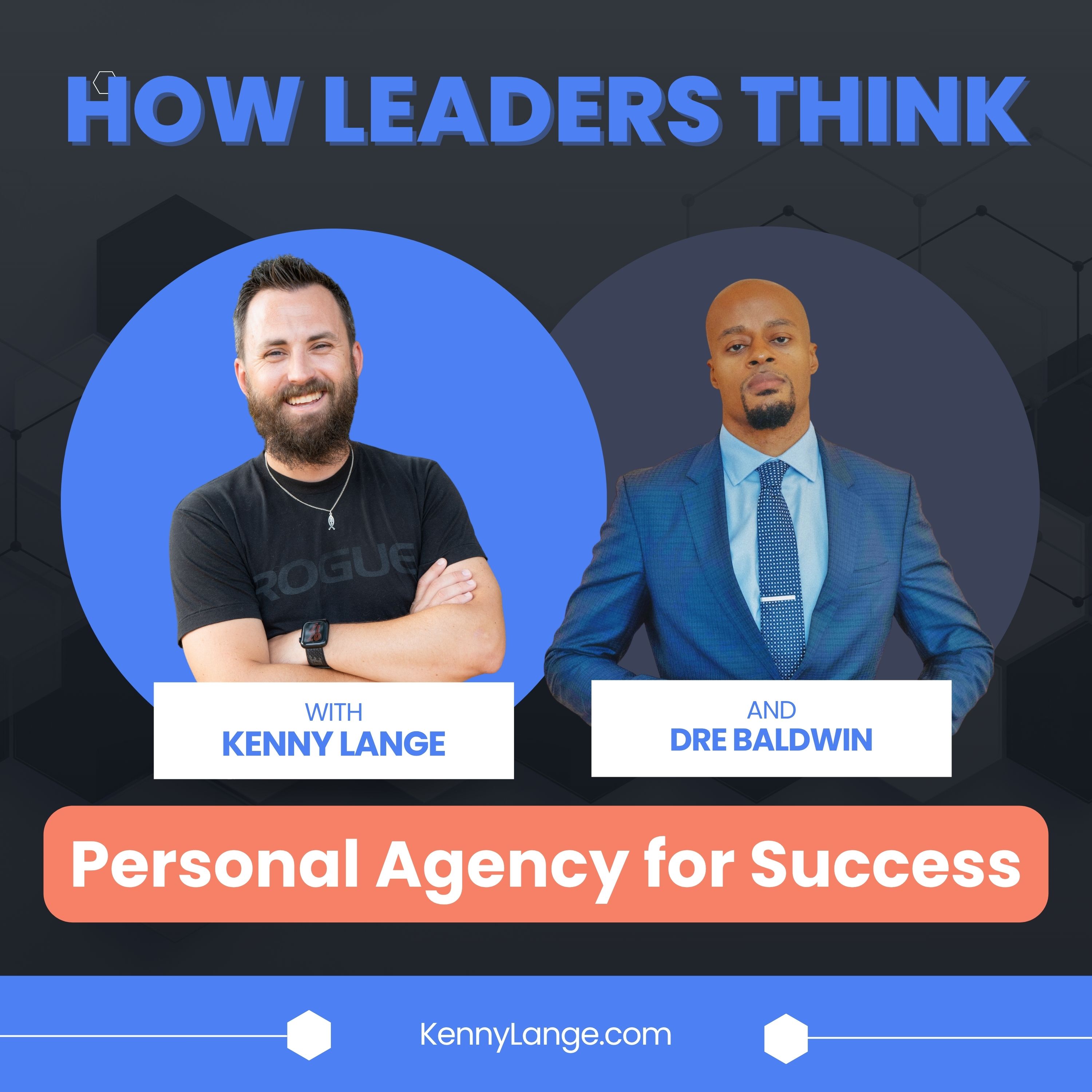 How Dre Baldwin Thinks About Personal Agency for SuccessHow Leaders Think with Kenny Lange · features Dre Baldwin69 / 100
 In Conversation - Dre Baldwin Top Five Tips For Eliminating Execution Drift in Growing OrganizationsBusiness Excellence - TOP 5 Series · features Dre Baldwin54 / 100
 How Senior Leaders Use Reverse Mentoring to Stay CurrentExecutive Careers with Fexingo · on Leadership communication79 / 100
 #164 - The Missing Ingredient in Customer-Centric Leadership: IdentityThe Trusted Guide Podcast with Mark Slatin · on accountability systems74 / 100
 Finish Writing Your Book: Tips to Avoid Writer’s BlockSelf Publishing for Thought Leaders · on accountability systems70 / 100
 It's Not the Workload, It's the Thought Load with Dr. Liane DaveyThe Remarkable Leadership Podcast · on Leadership communication69 / 100
 Peptides, Telemedicine, Pharmacy & Compliance: The Future of Peptide Healthcare65 / 100
 How B2B Companies Can Turn YouTube Into a Lead Generation Machine | Featuring Samu Kovacs62 / 100
 Marketing, AI & Personal Branding: What Every Business Needs to Know with Jaki Kackert42 / 100
 Stop Being Your Customer’s Bank: Smarter B2B Payment Strategies That Improve Cash Flow72 / 100
 Stop Being Your Customer’s Bank: Smarter B2B Payment Strategies That Improve Cash Flow69 / 100