
B2B SaaS Marketing Snacks · 2025-10-29 · 15 min
Key moments - from our scoring
Substance score
50 / 100
Five dimensions, 20 points each
The discussion centers on the evolving return on investment for MBA programs in 2025. Hendrikse completed a traditional MBA at Kellogg and an alternative MBA through Alt MBA, while Graf earned a full MBA and specialized in marketing and finance. Both agree that MBA programs excel at creating well-rounded business professionals who understand multiple disciplines, but deliver minimal tactical, applicable knowledge - Graf learned roughly 10% of marketing fundamentals in his MBA versus what he gained from reading T2D3 alone. The core tension emerges around three traditionally valuable MBA outputs: communication, data analysis, and strategy. In 2025, AI now handles generic communication (emails, reports, slides) better than humans, making the human side of these skills - empathy, primary research, behavioral psychology, risk-reward analysis - far more valuable. Both speakers argue that on-the-job learning in marketing outperforms classroom instruction because real-world shipping, market feedback, and iteration cannot be replicated academically. However, they acknowledge MBA networking value persists at elite schools, and the program serves long-term career progression (executive roles, startups, multidisciplinary leadership) rather than immediate job placement. For specialists pursuing deep expertise in a single domain, Hendrikse recommends building a self-directed "mini-MBA" using industry-specific books, primary research, and hands-on shipping rather than traditional enrollment.
It depends on your goals: if you want long-term executive roles, multidisciplinary leadership, or founding a company, an MBA at an elite school offers networking and breadth. If you want to become a specialist in marketing, finance, or another domain, on-the-job learning and self-directed study (books, courses, primary research, shipping) now deliver more value faster and cheaper.
MBAs excel at creating well-rounded business people who understand multiple disciplines and can navigate conversations across functions. However, AI now handles generic communication (emails, reports, slides) and competitive research better than humans, so the real value lies in human-centered skills: primary research, empathy, behavioral psychology, strategic risk-reward analysis, and understanding how industries will evolve.
According to Brian Graf, who specialized in marketing in his MBA, the program delivered roughly 10% of the marketing fundamentals he learned from reading T2D3, a single book, making classroom marketing education largely academic and untactical compared to real industry resources and on-the-job shipping.
Marketing fundamentals require shipping real campaigns into the market, observing how the world reacts, iterating, and failing forward - a feedback loop that cannot be replicated in school. Academic campaigns produce no real-world market feedback, making hands-on, paid employment superior if you can find a mentor willing to invest in teaching you.
The Alt MBA is a six-to-seven-week intensive program that emphasizes daily shipping, public writing, goal-setting, and prioritization rather than traditional business disciplines. Hendrikse found it produced more immediately applicable skills (like building Kalungi, his marketing agency) than his traditional Kellogg MBA, though it sacrifices breadth for depth and shipping discipline.
Our reviewer’s read on each dimension, with quotes from the episode.
The episode contains some useful framings - particularly the distinction between generalist MBA knowledge vs. specialized learning, and the observation that AI changes what 'communication' and 'data analysis' mean. However, much of the discussion is narrative reflection (stories about their own MBAs) rather than novel claims about the MBA decision itself. The core insight about specialization beating generalism in 2025, or AI making MBA job placement weaker, are observations stated without supporting data or deeper analysis.
I would say that I I specialized in marketing and finance in my MBA and I learned probably about 10 % of about marketing in my MBA as I learned in T2D3
Nowadays, I don't even know if I would recommend it for the career switching...the hiring of MBA grads has slowed, right?
The main contrarian claim - that an MBA is now better for long-term executive trajectory than immediate job placement, and that specialization beats generalism - is moderately fresh but not deeply argued. The comparison to Alt MBA and talk of learning 'on the job' is reasonable but well-trodden ground in startup circles. The AI angle is mentioned but not explored with original thinking.
Taking the MBA is like a, or even the Alt MBA, well, no, probably just the MBA...It's almost more about taking, playing the long, long term
I do really feel like working on the job is the best place to do it. But the big catch there is that you have to find somebody who's willing to invest in you
Brian Graf completed a full MBA and runs marketing strategy; Stijn Hendrikse has founded a company and worked at Microsoft at scale. Both have executed at a level above pure theory. However, neither is a world-class operator at mega-scale, and the conversation is largely personal reflection rather than drawing on deep, hard-won expertise from high-stakes decisions. The caliber is respectable but not exceptional for a B2B audience.
I started my MBA in 2017
I did an alternative MBA, the one that said code in large, the alt MBA
The episode contains almost no concrete data, metrics, or examples to ground claims. References to 'MBA hiring has slowed' lack numbers. Comparisons between T2D3 (a book) and an MBA say 10% knowledge transfer but no evidence. Personal anecdotes about Alt MBA and Kellogg are named but not detailed with outcomes, timelines, or measurable results. The discussion is largely abstract and unquantified.
the hiring of MBA grads has slowed, right? And just the jobs that MBAs would have done
I learned probably about 10 % of about marketing in my MBA as I learned in T2D3
The host asks reasonable setup questions ('how are you thinking about that?', 'what do you think is the trade off now'), but rarely challenges or pushes back on claims. When Brian makes assertions like 'hiring has slowed,' there's no follow-up asking for data. The conversation flows naturally but lacks the sharpness of real inquiry - it's more two smart people agreeing and riffing than one pressing the other for rigor.
Let's now fast forward to now we're in 2025, right?
And what do you think is the trade off now between learning these things on the job versus learning these things in a school setting?
Computed from the transcript - who did the talking, and the words that came up most.
Is an MBA still worth it for marketers in 2025, or should you learn by shipping work in public? Schools still broaden your network and expose you to many disciplines. The catch is that the tactical skills age fast, and AI is eating a lot of the output that used to signal competence. On the job, you can publish, get feedback, and adjust in real time. In this episode of B2B SaaS Marketing Snacks, host Brian Graf and Kalungi founder Stijn Hendrikse compare a traditional MBA path with “ship-every-day” alternatives like the altMBA, and what that means now that AI is everywhere. They share where formal study helps, where it falls short, and how to build your own playbook with T2D3. You’ll hear a practical way to decide: school, work, or both. And how to stack real skills that compound for years, not months. The format follows our podcast intro template to keep things crisp and useful.
Transcribed and scored by The B2B Podcast Index.
Stijn Hendrikse (00:07.884) You did your MBA and you look at probably eight, nine years ago and you look back at what part of the MBA were most useful for you. Yeah, I started my MBA in 2017 and I do, I look back on it. It's weird.
I look back on it and I do think it's a fantastic decision for me. I'm very happy that I did it. I often give people the advice that they should not partake. So I have both sides on the coin, I guess, in my view.
I think really what I enjoyed the most about it was the, the, how it made me a well-rounded business person, right? It gave me a view into a lot of different disciplines of business. And now I feel relatively confident that I can speak the language of just about any of them, right? And be in the room and be understood and hear, you know, what's going on.
Definitely doesn't make me an expert in all those areas, but, but it allows me to get in the room. and have the conversations and connect all the dots and take a broader view, much broader view than I would have before. That being said, I think one of the things that surprised me, I think throughout the program was like the lack of tactical knowledge that it gives or really like applicable. There was no hubspot, there was no ad buying, was no even like, you know, to do hotspots.
Brian Graf (01:41.186) Copywriting there wasn't like none of that really it was also and it could have been just the classes that I that I chose and everything like that But it was all just so academic That it It really Didn't do a ton I mean like not to Not to pump up t2d3 too much but like I would say that I I I specialized in marketing and finance in my MBA and I learned probably about 10 % of about marketing in my MBA as I learned in T2D3. Right. And T2D3 is just a book.
So there's there are pluses and minuses for sure. Stijn Hendrikse (02:31.276) Yeah, I, so I never did a full MBA. So I did two and I didn't finish high school either, by the way, nor a normal college degree.
So most of, because I started coding when I was in my teens, right? And ended up working at Microsoft. Those were the days where you still could pursue a career like that. But then I made up for some of that later in my career and I was part of a Microsoft organized executive MBA at Kellogg, right?
One of the top marketing schools in the world. That's where I learned marketing at Microsoft and two. programs like Kellogg and Marksons and many other sort of marketing programs where you learn on the job. And there I learned all the things that think are probably going to be similar to what you learned in your MBA.
Brian, things like around product marketing, And pricing and packaging and strategy and all those things that go into the more, I guess, traditional way of thinking about market segmentation and all those things. And that was absolutely useful. And I used a lot of that in my job at Microsoft. But then around the same time you did your MBA, I did an alternative MBA, the one that said code in large, the alt MBA.
So I was in the seventh cohort out of, think, some of them were almost a hundred of these. So I was one of the earlier ones and the things I learned there were very different. We were in a group of, I think it about 60 or 70 people doing this super fast paced program. was six or seven weeks in total.
Four or five of those were very concentrated and there was a couple of weeks that were spread out like later to follow up on things and did some prep. We learned to ship. We had to ship almost every day. You were on the hook to actually publish something and there was no nothing counted unless it was actually live on the internet.
We had to actually publish it and it had to be seen by the world, right? So that was real shipping. And then you had to do it every day. So you got into this habit of writing every day.
So yeah, didn't learn, nobody was teaching you how to write, but you had to do it. And of course there was a group of 60 people following your writing, right? And looking at it, or at least you thought they were, then someone looked at it, someone didn't. But you had to publish it, right?
It had to be live, public. And it also taught you to be super uncomfortable in that environment, right? And to lean into your, how do call it, your insecurities. And then Seth had a whole long list of Stijn Hendrikse (04:57.
538) Like every day we had almost another prompt and another piece of homework that included reading a couple of books and watching a couple of TED Talks. And it was so much, right? And then you had to learn. You couldn't consume all that content.
had to pick. Some things you had to scan or you had to make sure you got the signal out of the noise from whatever books you wanted you to read or video you wanted you to watch. And it sort of taught me a whole set of different skills. And what was interesting because your time is the most valuable asset.
I really learned in that... It's more of a course than an MBA, of course. In that course, learn things like setting real clear goals and really prioritizing effectively. And then of course, shipping and shipping, even when things were not maybe 100 % finished or 100 % perfect.
And if you think of the company that I then founded and that you became an early part of, Kalungi, a lot of the principles we used there, and Kalungi is a marketing agency, right? We're coming out of what I learned at the Alt MBA, much more than from what I learned at Kellogg, right? Or at Microsoft. And things like asking what's it for and who's it for and shipping, right?
And building things that maybe were not perfect, but they were good enough for the startup that needed marketing, right? So yeah, it's interesting sort of to hear your experience versus mine and how we both applied some of those. And both are very valuable skill sets. Let's now fast forward to now we're in 2025, right?
And there's certain things that now are like more scarce, hashing skills than maybe they were 10, 15 years ago and things that are now being. AI? How are you thinking about that? I don't know.
think my comment after leaving and learning about T2D3 and everything through you would have been that if you wanted to switch careers, you go get an MBA. If you want to get good at marketing, you do an all-time MBA, you read T2D3, right? You do things like that. You go closer to the source.
Nowadays, I don't... Brian Graf (06:59.094) I don't even know if I would recommend it for the career switching. It still is a fantastic networking opportunity, right?
It still will broaden your horizon, but you shouldn't do it, I don't think, with the expectation of getting an amazing job as much, right? Like now, I don't know what the stats are. I'd have to look them up, but the hiring of MBA grads has slowed, right? And just the jobs that MBAs would have done, I think a lot of them can be...
by AI and Alhams now, right? And then certain schools, when you think of networking, will be certain schools where your network will be, the value of your network will increase more than at other schools. Yeah, absolutely. So that is something that is absolutely an X factor in all this, right?
But I do think that... Now more than ever, would almost just push on and it's hard to know when you're early in your career, but push on just getting really good at the strategy behind something or getting really know as much as you can about a certain industry. And again, like going back to Syntropy, but get as much signal as you can about the area where you want to go, right? Read all the books, listen to all the Ted Talks, listen to, consume all the content, right?
And take any courses that are very, very specific to that. Brian Graf (08:22.594) I think if you do that, then you've set yourself up pretty well, but you almost need to build your own mini-MBA program for yourself. You don't necessarily want to be as much of a generalist anymore as I think you want to be just very well-versed in the arena that you're playing.
And then the tools and everything else, that will come. If you're curious enough and actually take what you were just talking about, take that kind of... ship early, get embarrassed, know, plant your first tree kind of, kind of a mentality, all that will come and you'll find the right place, you'll find the right role. But taking the much more general approach and then trying to compete with somebody who's been doing that is a really tough, it's a tough challenge.
I think also the devil is in the details a little bit. There was an article that I read at some point that the three most important skills that you learned at business school were kind of communicate that the employers value a communication data analysis strategy. And those things are still probably true. But what they mean is very different.
Communication used to be, and maybe you're very good at writing a very compelling email at an executive level, or you're really good at writing a report, or really good at writing, building great PowerPoint slides, right? None of that is going to be valuable anymore, right? AI is going to be much better at that, faster, more detail-oriented, more beautiful looking, better written, right? All those things.
With what you communicate. and how you lean into the human side of communication, right? And empathy and the context and all that. That's good.
You have to get very good at that. That's what syndrome is about, right? Data analysis, same thing. think doing primary research is going to be far more valuable than it's ever been because LLMs cannot do that.
Right? When you do real research with AI, you get just whatever is already written somewhere, right? Or has been... Stijn Hendrikse (10:20.
206) learned by these algorithms. But if you want to really interview people and go observe a crowd who's kind of entering a train in a train station and kind of look at their behavior, et that's something that still there's probably human research who will do that better than and that's primary research, right? Or when you're a journalist doing really deep interviews and asking the uncomfortable questions, let's do the work, all these things that great journalists do. So when you think of either communication or data analysis or even strategy, then the third thing.
the human side of that, the things that AI cannot do. Strategy, for a lot of people strategy is partly doing some competitive research in an LLM and figuring out, hey, what are our capabilities that others can do as well, right? And LLMs are gonna be better at that. But there's other parts of strategy that are kind of what are the risk reward kind of trade-offs of doing certain things?
How does behavioral psychology enter into that, right? How do we think certain parts of the world will evolve, right, over the next 10 years? Those are things, of course, that are very... much harder for LLM to do.
So I think you can maybe still think of the same areas of impact that an MBA can really help you with, the way you do that, what you learn, how to communicate better, how to do better research, how to be able to do really great strategy, has changed a lot. Yeah, that's a great point. I, because I do have to recognize my bias and all this, right? And I don't, I don't want my head to get too big, but I feel like I went into the MBA actually with a decent amount.
Like communication was pretty good strategy, pretty good analysis, pretty good, right? I started my career in data analytics for television advertising. So I was very happy with numbers, very happy in Excel, happy with charts. had a, you just made me think of a a course that I took in high school called American Studies that was half history, half, well, a third history, a third English and a third debate.
So I had to get very comfortable presenting in front of people and making arguments and things like that. So I came into that program with all those skills, but really lacking a lot of the hard skills that I think I would have needed. So it'd be interesting to ask somebody who had the hard skills maybe, but lacked the other intangibles, how things ended up working out. But I see like, Brian Graf (12:35.
618) Taking the MBA is like a, or even the Alt MBA, well, no, probably just the MBA. Taking the MBA is a long-term step, right? Like it's almost less about getting a job now, right? That's why I thought I was doing it.
I wanted a better, more strategic job. It's almost more about taking, playing the long, long term, right? And saying like, I want to be an executive or I want to be somebody who is taking a really multidisciplinary approach or I'm starting my own company or something that requires you to be able to. have your hand in many different pots versus I just want to be a really good marketer or I just want to be a really good accountant or wherever, right?
That's where I feel like the decision tree. If I were to do it again, that would be what I would need to consider. Stijn Hendrikse (13:22.136) And what do you think is the trade off now between learning these things on the job versus learning these things in a school setting?
Especially after COVID, schools are not all in person anymore. That element is not even maybe as strong anymore as it used to be. Yeah. Learning on the job is better.
I'll just, I will say it's, a, you're getting paid for it. So that's nice. That's that's a good first step, but B there's, and maybe it's different for different disciplines, but I felt like in marketing, you're the whole learning in marketing is like we were talking about in our previous podcast is shipping something, putting it out into the world and having the world react to it. Right.
And then learning from that. And then iterating and doing it again and again and again until you start to get traction and can lift from it. Right. You can't do that in school.
Right. It doesn't matter even if you create a set of ads or create a campaign. It's not going to be you'll never know. Right.
How how well it actually would work in the market except for on an academic sense. And so I do really feel like working on the job is the best place to do it. But the big catch there is that you have to find somebody who's willing to invest in you, Like take a shot and teach you, right? That you can get underneath and really learn from.
Or you have to be really good with ambiguity and just love testing, right? Those are your kind of two options there. If you can find that environment, then I think, and you have the hunger and the drive to go test and fail and fail forward, then I would say... 100 % learn on the job.
it's, it can be hard to find that, right? Without the right connections, without the right resume, etc. So at least with the school, you can pick where you're going, right? To a certain degree.
Other episodes covering the same guests and topics, from across The B2B Podcast Index.
 121: What Hostage Negotiators Know About Winning Conversations w/ Derek GauntNo Limit Leadership · on Communication Skills95 / 100
 Open-Source Start-up Marketing Strategy: Sometimes you need to poke the snake (episode #147)How I Made it in Marketing · on primary research90 / 100
 ONE STRATEGY STUDIO - JONATHAN WILLIAMS (FOUNDER). PART 2. Why bootstrapping often beats chasing VC money. Addressing client concerns on AI; and why even with SaaS they often still want you to press 'the button' for them.Insights, Marketing & Data · on primary research86 / 100
 108 Years In: What It Takes to Lead in the Third Generation with Jaclyn Leibl-CoteBuilding Unbreakable Brands · on MBA education77 / 100
 Customer Success Playbook Podcast S3 E65 - Jake Mckee - Community VS Data Driven Road MapThe Customer Success Playbook · on data analysis76 / 100
 Executive Presence Decoded: What It Really Is & How to Build It (in the AI Era)Here's the Deal · on Communication Skills51 / 100
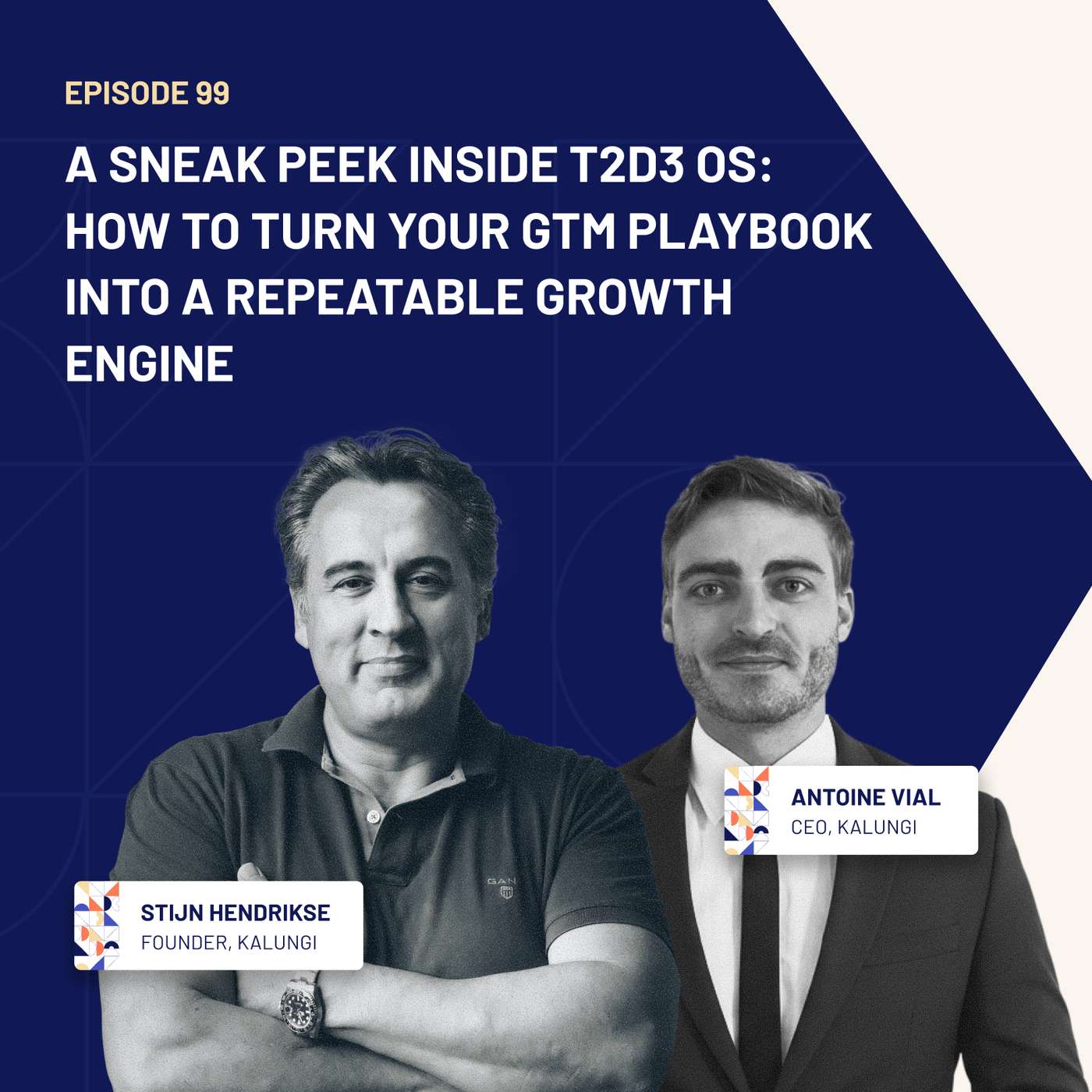 99 - A Sneak Peek Inside T2D3 OS: How to Turn Your GTM Playbook Into a Repeatable Growth Engine46 / 100
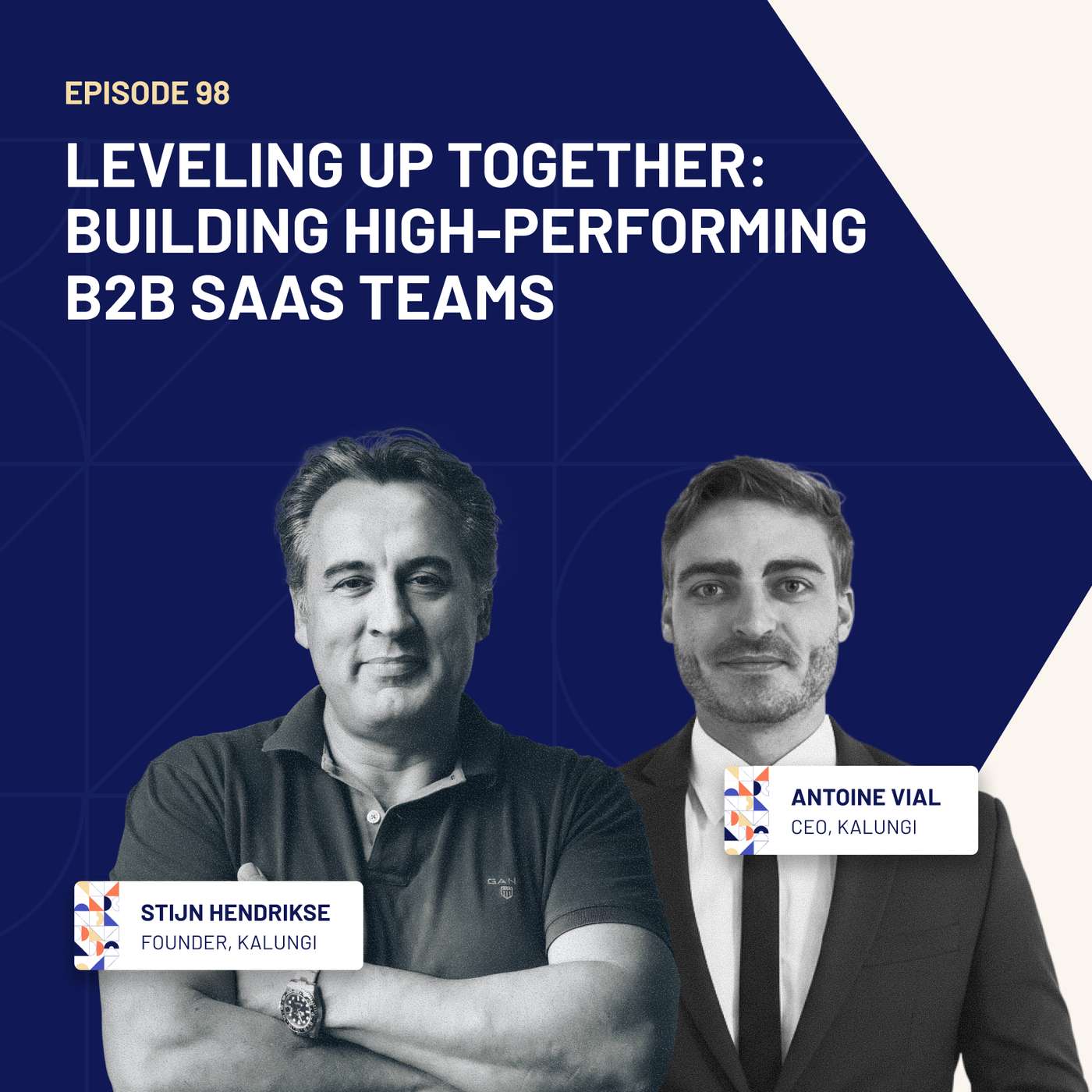 BSMS98 - Leveling Up Together: Building High-Performing B2B SaaS Teams40 / 100
 The Death of the MQL: Shifting Focus from Quantity to Pipeline Value69 / 100
 BSMS96 - Signal-Based Marketing and the End of Broad ABM69 / 100
 95 - Unlocking Warp Speed Growth through PLG + SLG with Wes Bush75 / 100