
B2B SaaS Marketing Snacks · 2026-03-04 · 1h 12m
Key moments - from our scoring
Substance score
55 / 100
Five dimensions, 20 points each
Wes Bush and the host dive into the convergence of product-led growth (PLG) and sales-led growth (SLG) as a new framework for achieving 'warp speed' business growth - companies going from zero to $100M ARR in under 12 months, exemplified by GenSpark AI's rapid ascent from $100M to $155M ARR in a month. Rather than choosing between PLG and SLG, the discussion reveals that B2B companies increasingly operate on a spectrum, with 97% of buyers wanting to try before they buy, yet enterprise deals still requiring sales conversations as ACV and complexity grow. The conversation covers how to blend these motions: maintaining a strong product-led foundation while enabling human-touch sales conversations that add genuine consulting value - not just conversion tactics - and how to avoid the "mystery is margin" trap where enterprise pricing and packaging complexity actually undermines the frictionless user experience both speakers advocate for. Bush draws on his experience at Vidyard, where a chrome extension that reduced friction drove from zero to millions of users, and his books on product-led growth and the product playbook, while the host references his T2D3 framework and Microsoft Office 365 pricing decisions. Essential for growth operators, product leaders, and marketers wrestling with blending go-to-market motions.
97% of B2B decision makers prefer to try the product before speaking with sales, according to a study of 200 decision makers cited in the episode.
All of them have a PLG motion, all deliver value in 60 seconds or less, and the best-in-class ones go from zero to $100M in less than 12 months.
When Vidyard launched a free trial that initially flopped, they discovered users weren't uploading videos. After launching a Chrome extension to make uploading easier, adoption exploded to 100,000 people in the first year and millions thereafter.
True product-market fit means having 10 customers who won't want you to take the product away, renew their subscription, and unprompted tell others about it - creating a flywheel of organic word-of-mouth growth.
Yes - the difference isn't whether you have sales conversations, but whether your DNA focuses on delivering high-value interactions and genuine consulting rather than using sales calls as aggressive conversion tools.
Our reviewer’s read on each dimension, with quotes from the episode.
There are genuine operational ideas scattered through the episode - the three-bucket PQL model, the 'win preference' threshold beyond product-market fit, and the shift from eliminating steps to eliminating workflows - but they're heavily diluted by the host's rambling tangents (the Microsoft Office 365 story, Seinfeld references, remote office chat) and mutual validation loops that consume large stretches of runtime.
a sales. A company is easy to get started, started harder to scale, whereas a product company, it's very hard to get right, especially initially
it's not about eliminating steps anymore. It's about eliminating workflows. And a, uh, workflow has a lot of steps
The 'warp speed' framing and the SaaS→Work-as-a-Service→Results-as-a-Service pricing evolution are genuinely interesting constructs, but the bulk of the conversation recycles established PLG discourse that Wes Bush himself codified years ago; there is little that challenges conventional wisdom or offers a truly contrarian argument.
the next evolution is work as a service so you get specific things done and then the final one...it's like results as a service. So it's like okay, great, uh, if you can book m me 50 meetings, I'm going to charge $50 per meeting
Win preference so that you do not like, go back to the old way it feels obsolete
Wes Bush is a legitimate practitioner-author who wrote the canonical PLG texts, built real consulting experience across 400+ companies including ZoomInfo, and grounds his claims in hands-on implementation details; he is the genuine subject-matter expert, not a circuit-rider thought leader.
Vidyard at that time there are about like 10 mil inner army and they're just growing super fast. But we were like, oh, our competitors have like a free trial, so well, let's try one. And we launched it. It completely bombed
we launched a chrome extension and that just like completely like wildfire just took off. There was like 100,000 people the first year
The episode contains real named companies (ZoomInfo, Missive, Vidyard, GenSpark, Gamma, VMware), concrete ARR figures, and a specific 97%-from-200-decision-makers stat, but many examples are anecdotal, the study is unreferenced, and the Brex-50 methodology ('credit card spend, a few other variables') is vague enough to undercut its evidential weight.
when we booked the interview he was at, I think it was, they just cracked 100 mil. ARR. And by the time we're having the interview a month later, uh, he's at 155 million ARR
I was talking to this one founder, the founder of Missive, he's at like seven and a half million RR and he doesn't have, he just hired a marketer and uh, like just recently it's so it's like it's been him doing it all and it's like 18 developers on his team
The host asks a few genuinely useful structural questions (readiness criteria for PLG, what to update in the book) but routinely buries them inside multi-minute self-monologues, never meaningfully challenges any claim, allows the guest to stay in comfort-zone territory throughout, and loses significant time to off-topic tangents and repeated ad reads.
And I think one of the things I learned early in my marketing career and before that I ran sales for part of the marketing organization, part of the Microsoft organization. And there was this saying called mystery is margin. Right. Where you. We literally actually. Should I share this with the audience?
I recall how hard it was for me to write T2D3. It took Covid when I was sitting at home and I couldn't go anywhere to actually finally kind of like spend the time
Computed from the transcript - who did the talking, and the words that came up most.
With content getting cheaper and noise getting higher, which parts of the old playbooks still hold up, and which ones break? Marketing-led growth keeps getting pricier, and “more content” is no longer a moat. So you end up staring at the same fork in the road Stijn calls out here, keep leaning on sales, or let the product do more of the heavy lifting. In this episode, Kalungi founder Stijn Hendrikse sits down with Wes Bush (author of Product-Led Growth ) to talk about where product-led growth and sales-led growth actually meet, and why most B2B teams land in the middle. You’ll hear what “try before you buy” really means in 2026 (and what happens when you don’t offer it), how to think about getting users to value fast, and where friction still belongs. In this episode, you'll learn: You cannot skip the MVP stage in SaaS. Product-market fit definitions have evolved over time. AI is accelerating the achievement of product-market fit. Understanding your business model is crucial for growth. Different go-to-market strategies suit different business models. Product-led growth relies on the product being the main sales driver.
Transcribed and scored by The B2B Podcast Index.
Kalungi: Hey Wes, thank you again for doing this. I think the topic is getting so timely for us and I know it's been on your mind for many years, but we are really trying to figure out how do we pair our, I guess, very costly growth model, sales led growth and a lot of marketing. Led marketing, led growth. By the way, getting costlier every day, right? With everybody being able to pump out, ah, cheap content and run cheap ads on many channels with all kinds of robotics, um, that there's really only two places to go, right? Product led growth and more sales. Like doubling down on getting these extremely expensive people who come with a Rolodex and you can only wind them, dine them in person, right? So there's nobody else who can match that with whatever marketing message or. So love to make this episode about how you see kind of that journey, like when this product let's grow the sales growth meet and how like the friction, etc. Is that a topic that you think would be good?
Wes Bush: No, I'm super happy to chat about that. I think one other thing, uh, a little controversial, but uh, it's like so T2D3, like the triple, triple, double, double, you know, better than anybody else. But, um, just thinking about that, I'm like, is it really enough these days when you think about, I've been studying the top, fastest, like, uh, AI companies. First, all of them have PLG motion. Second, second, all of them have like value in 60 seconds or less. And third, the best in class ones, they all go zero to a hundred million in less than 12 months. Which is like insane, right? And it's just like. But that's. I call it like warp speed. I'm like, it's a new playbook. It's crazy how fast, uh, kind of companies are growing and hitting that. Like we're, uh, interviewing when the founder of genspark AI the next, uh, week on the product LED podcast. And when we booked the interview he was at, I think it was, they just cracked 100 mil. ARR. And by the time we're having the interview a month later, uh, he's at 155 million ARR. Just like, this is nuts. Uh, what is going on here? So, um, yeah, that to me is like super fascinating to kind of talk a bit about that. Um, it's like a new framework I'm working on as well of like, how to unlock warp speed.
Kalungi: But I think it's really like Framework. Yeah, that is a great title. Have you figured out how much of that is an anomaly versus really like I guess you can, you can codify it or put it in a bottle.
Wes Bush: Yeah, I mean not everything is codifiable. And there's always going to be like, hey, there's these other outside factors that had a really big impact on that. Um, but I'm really good at finding like what is the 80% of stuff that, that was always true in all of the different cases. And so, yeah, I'm not a fortune, uh, teller, but I can find some patterns that are repeatable of like, they all did this. Uh, either you do it or it doesn't work. And so that's where I come from.
Kalungi: I'm a big, um, Alex Hormozy fan as well. Uh, oh yeah. And a lot of his things of course, are not always applicable to B2B, but a lot of them are. And so this one notion, which by the way is nothing he came up with new. It's basically the bedrock of marketing. He just used some new words, but that you have to be in the right market with the right offer before you can optimize your execution. Right. And if you do that in the wrong order, you're in the wrong market. You can have the best offer you could come up with, but you're not going to sell any. Right. And if you don't have the right offer, you cannot execute, uh, out execute whoever has the right offer with the right solving the right problem with the right solution for the right price. And that then goes to that warp speed phenomenon. Um, right. It almost speaks to product market fit now has these because one of the T2D3, the clear insights that I've always found to be true is that you cannot skip the product market fit base. Right. That's also why I use the baseball analogy that you can pour so much money onto something and so many resources, but if you haven't really hit product market, and that's of course product LED growth is partly, ah, a doubling down on that. Like you have to like the product problem grow, uh, fit. Right. And all there's all these other fits,
Wes Bush: but this actually one of those, uh, 80% pieces there that you touched on already. It's like, you know, a lot of people think like product market fit is like, okay, we built a, a business that it shows people are paying us, they're getting value, uh, they'd be a little disappointed if we didn't exist. But, but I'm kind of arguing it's like the first W of the warp framework is like actually winning preference so that you do not like, go back to the old way it feels obsolete. Like for instance, using, uh, gamma. Uh, I love it because I created a lot of presentations. So I'm like, okay, uh, like prompts, go ahead, create me m a presentation on this topic. Or if I have good notes on it, I'll throw it in and then it creates the outline and then it creates all the slides. And I'm like, wow, that is like days faster than going through Google Slides, editing all of the stuff. And then I'd have a designer come in and do the last little steps. So I'm like, you know, that workflow is completely different. I'm not going back because it's so much better and faster than the other alternatives.
Kalungi: Yeah. What's great about that example, it's not because we always have. I always ask this question, are you an aspirin or a vitamin? Right. And even if what you described is still vitamin level of convenience, it doesn't mean it, it's very valuable for you, right? Yeah.
Wes Bush: It's not nothing.
Kalungi: Yeah, absolutely. Yeah. But yeah. And that sort of product market fit and then how that kind of has evolved. Like one of the first things I learned from Seth, God, I was a huge fan of him. Did the alt MBA early was product market fit. Used to be this is when you were not even born, probably Wes, but it used to be you need a thousand clients that pay you. That was one of the earlier definitions probably 30, 40 years ago.
Wes Bush: Then our generation came around. It's a thousand true fans, right?
Kalungi: Yeah, you got, you got fans.
Wes Bush: Same thing.
Kalungi: Yeah. There's a lot of variations of that. But then at some point, what set Godin said, he said it's no longer about volume. Right. It's about, do you have 10 people who not only have bought your product and are voting with their feet. Right. They don't want you to take it away. They're voting with their wallet. They pay you for it. They stay. They pay you again when the renewal comes up. But more importantly than anything, they say so to order. So I. There's some kind of flywheel that's driven by them being loyal fans to tell others without being prompted. And I thought that was always very powerful. So I've been using that as a rule. Right. When I have companies that are ready to go T2D3 that say I have product market fit. And uh, I sometimes show them, by the way, the Seinfeld ugly baby video to ask them. I don't know if you ever see that episode. Are you, are you really sure that your baby is as beautiful as you think it is. Yes. But then remember m. Beyond that, like the basic question, are you. Are you aware of what your customers really? Then I do ask, have 10 customers, 10 told others about it? Right. And has that led to 10 new clients? And that's just a better version of product market fit in my world. But then of course, product like growth fixes that in many other ways. But people don't use it right if they don't get value from using it. Um, but yeah, so we dove right in. Uh, thanks for being back on our, um. Well, thanks for us being back talking with each other. You haven't been on this show before, Wes, so thanks for doing that. Thanks for having me. Really excited to have you here. Columbia, of course, was grounded in more the marketing led and the sales led growth world. That's where we come from. That's how we've helped clients to achieve T2D3 growth. And there's still a lot of, a lot of room, um, for that. But of course, a lot of that has been complemented and sometimes replaced completely with a product led growth motion, which just has better economics and it's sometimes the right thing for specific. Especially, you know, more newer markets where you're doing a lot of market education. Right. Which is just too expensive. You can, you can't really educate people with content marketing anymore without, uh, it just. The economics just go off the rails at some point. One of the things I wanted to ask you just kind of, where are you on the journey of when your product led growth motion is really getting traction and customers feel that they're getting a lot of value, but their ACV also starts to grow. Right. And the complexity of those clients starts to increase. And sometimes you do need sales conversation just because the ticket value goes up. Right. And when people spend millions of dollars on a solution, they may want to do that in a different way than just having their user make those, um, decisions. How is that sort of where in the journey kind of does your product like growth Motion meet those other go to markets and how do you solve for that?
Wes Bush: Yeah, so one of the initial things, when I started talking about product LED growth in the early days, I was always trying to paint a picture of like, which camp are you in? Is it sales led or is it product led? And I try to paint a picture of something black and white. And then I realized three years into that I'm like, I'm doing a little bit of a disservice to this market because at the end of the day it's not one or the other. It's a spectrum. So if you think of like two sides of the picture, it's like there's pure product led, which it's like people sign up, get to value, they upgrade without talking to you. And then there's like pure sales led, which is like, let's say you don't even have the marketing engine that could. It's like, it's literally just like people uh, whining and dining at the highest level for enterprises deals. And it's like, okay, you have those and in the middle you kind of have this sweet spot of like you have really strong marketing. You have a product LED motion that's powering this business. People can get started if they want to reach out to people though, they can book a demo if they want. You're giving them choice. And what we're seeing in the market in the data is actually most people still in B2B, at least they, they do want to be somewhere in the middle where you have a product, it's easy to use, you can get set, and yet you have this beautiful product LED sales motion which if you're a bigger company, or let's say you have a good amount of people in your company using this product, it naturally kicks off the sales cycle of like, okay, great, let's uh, accelerate this or let's help them get uh, like roll this out to the rest of the organization and then great, once we've done that, let's figure out, okay, what does this contract look like? How do we maybe do annual building or something else, uh, that the enterprise wants at the end of the day. And so that is where I think a lot of people need to realize is like which flavor of product that are you and the market wants it. When we recently did a study on this, uh, pulling like 200 decision makers, we found like 97% of people, they just want to try before they buy versus talking to someone in sales. So like is right off the bat when they go to your website, that's what 97% of people want from your website today. Now if you don't offer that, they're going to take the option that they, that you have, ideally, if they're really interested. Um, but they might also say, okay, let me go to G2, see if you had any other competitors. Oh great, uh, this other one did and I'm going to try their product and go from there. So it used to be a choice for a lot of software companies where it's like, hey, do you want a Product growth motion or not. And now it's the expectation. And so that's what's really shifted over the last seven years. Talking about product led growth,
Kalungi: that's a great insight. There's almost like two types of buyers, right? The people who are looking to fulfill a need that they've already pretty much. They know what problem they're trying to. That's what we often talk about. You're not really generating demand, you're channeling it right to whoever is the right solution for the problem that someone already acknowledges. And then you have the people who really want to talk with someone who are figuring who want that trusted advisor. And, and sometimes that can be provided in a digital fashion. Right. When you think of D2 Crowd and all these other kind of tools that allow people to make decisions on, on their own, but without speaking with someone, but still getting a lot of the guidance through some form of content. And then you get people who really actually just want to have a human interaction. How often does that actually happen with your own company? Bass, when you're, when you're selling your, selling your marketing, you're. You're providing your product, that growth vision and your solution to your clients, how often do they end up wanting to speak someone?
Wes Bush: Yeah, so I struggle with this because, you know, when you're like preaching something for all software companies, you're like, great, everybody wants to try before they buy. And then you're like a service business and you're like, oh man, uh, is it the same? How can I do that? And the reality is, at the end of the day it looks different. If we're a service company, how it works is your ip, it's like, great. If you want to DIY it, go ahead. We have our books for free. Uh, you can do that. You can learn everything, uh, that we give out online. We were super duper generous, probably even too generous at the end of the day. And then there's like, if you want to do it with us, it's like, okay, you could still kind of purchase something on your own from our sites without talking to us. But if you really do, like at our higher end, um, that's where it's like, great. We have to have a conversation to even know if this is the right fit for you or not. And a lot of times that is, it's still, although it's a call, it's still high value at the end of the day. So this is the weird part where a lot of people don't think too much better, where it's like you can have a sales call and still make it product led. It's like, what? And you can still have a free trial and be completely sales led. And the difference there is your free trial. If people treat it just like a conversion tool where I'm like, hey, Stein, set up for our free trial. And guess what? Uh, you get bombarded with emails, our sales reps are reaching out to you, and it's impossible to get to value. That is a very sales like company trying to trick you that they're product led, but they're absolutely not. Their DNA is not that. Whereas, like, when I'm sure you talk to a potential client or somebody like that, there's no way. You're like, all right, let's uh, see how I can milk them for the biggest amount of contract or something like that. It's like, no, just your personality, the nature of talking to you every time it's high value. You walk away with insights. And so, uh, as a consultancy, it's like, that's the game that you got to do. So. Yeah, I love that question.
Kalungi: Yeah. And I think what you and I and our companies both have in common was we don't like to play the game. Right. We want to really provide value. And I think one of the things I learned early in my marketing career and before that I ran sales for part of the marketing organization, part of the Microsoft organization. And there was this saying called mystery is margin. Right. Where you. We literally actually. Should I share this with the audience? Yeah, why not? Why not? Ten years, it's a while ago when we designed the Office 365 pricing. Right. Pricing and packaging. And Office, of course, is one of the biggest SaaS products in the world. World. Guess what happened, Wes? I was responsible for public sector and small and medium business. That was my market segment. So I was doing product marketing for Microsoft Office. So my team owned that part of the market and there was someone else who owned Enterprise. And one of the challenges we had with Office365 is that we of course had a very have had Microsoft still does. I'm not there anymore. But a very profitable business with the Microsoft Office platform. Right. And productivity suite. So you're sitting there and you say, okay, we have this huge opportunity. Opportunity with this new set. This was Office 365 was new. Right. This new product that will allow us to sell this to people who today maybe are pirating the software or don't have access to it, cannot afford it all this large part of the market, not called Enterprise So we loved it. And guess what my team wanted to do? Keep it simple. Make it product led. Right? Make it easy for people that already were using Word, whether illegal or some form of a free trial, to turn that into something they were willing to pay a little bit for. That was our agenda. Guess what my enterprise marketing peer was saying, well, if you do that, we're taking away a ton of opportunity for all the hundreds of salespeople in the world and partners to get clients exactly what they need and charge a premium for that. Right? Because Office, of course, it sounds simple, Excel, Word Power, but there's hundreds of features, capability that you can package in many different ways and have someone pay you more for things they actually need. So you're not cheating anybody, you're just saying, hey, if you're actually using this enterprise security feature or all kinds of advanced collaboration, that's worth something, you can pay for that. So you get to this notion, mystery of margin, that that enterprise packaging and pricing usually is served best by complexity. Good. Allows your sales team to add value, but then goes against exactly what we want to do, of course, help clients to get to that value experience as fast as possible, with the lowest friction, etc. Which leads me to then react to something. You, you, you use the word consulting a lot, right, Wes? So maybe when you're ending up on that conversation and it's not just product led growth anymore, you're not really selling, you're consulting, right? You're basically the only reason, I think you're allowed to have that conversation with your audience. Because you're adding value, right? Value that they somehow, that you couldn't just all package in the books and in the frameworks and the free content, but because I think what we both have in common through our books is that we try to give away a lot of that because neither of us wants to spend time actually explaining the same thing five times, right? And it's lovely that people can do that on their own. But then there's always this little sliver of anxiety, uh, discomfort. People thinking often and sometimes are unique, right? They have unique needs. And how do you have a conversation about that? But then you're consulting. And I think the trick for companies like us is where do you, where do you kind of start charging for that? Because we are a professional services business, right? So some of that time has to be compensated for. And where do you allow that to happen because you can just turn it into better content? Uh, it's a really cool, it's a really interesting topic and it will never get boring. Hey, it's time. I just wanted to pop in for a second and let you know about something we've been running. If growth has started to feel a bit inconsistent and it's hard to know where to focus next, we're doing something called the T2D3 Growth Workshop. It's a 45 minute working session where we look at your go to market approach and build a custom plan for driving pipeline and growth. You can scan the QR code on the screen or head to colungi.comworkshop to apply. All right, let's get back to the episode we jumped right in. I actually forgot because my audience may, I think most of them know you because you're very famous in the B2B sales world. But maybe just a quick intro. Before you started product led growth, you wrote the book, uh, you worked on a wide range of SaaS companies right at different stages. Maybe just the quick, you know, what patterns that you felt kept showing up that led you on the path where you are now. Um, building a very successful company and having an amazing publishing career, definitely.
Wes Bush: So it was about 10 years ago where I started working in SAS and it was that, uh, one of the first companies, the second one was Vidyard. Uh, that's actually where I got a lot of the exposure to product growth. Because Vidyard at that time there are about like 10 mil inner army and they're just growing super fast. But we were like, oh, our competitors have like a free trial, so well, let's try one. And we launched it. It completely bombed. But we learned something interesting. We're like, okay, nobody's uploading videos. I wonder why. Well, let's make that easier. We launched a chrome extension and that just like completely like wildfire just took off. There was like 100,000 people the first year and then millions the next years and stuff. So it was really my like plg to Jesus moment where I like, oh, okay. This is very, um, interesting when it comes to just what do people want? They want to try free products. They, they like using them and if you can figure out how to convert them, it is so much faster to grow your business. Because what we were doing previously was like I was promoting like white papers and guides, uh, spending hundreds of thousand dollars per month like promoting these. And it was just like, this feels like an uphill battle versus give a free product or create something amazing. They'll share it with other people. And then ever since then, that's what we've been doing. So, yeah, the first Book product growth was really just, what is it? Is it right for you? And then I wrote the product playbook, which is really just okay, assuming it's right for you, how do you actually do it? And making it really practical for people to actually implement inside their business. And then that's what we do on the consulting side is literally implement the playbook, but it's customized like we talked about.
Kalungi: I recall how hard it was for me to write T2D3. It took Covid when I was sitting at home and I couldn't go anywhere to actually finally kind of like spend the time in the document to get it into a book.
Wes Bush: Don't make us go through that again for your next book. Okay.
Kalungi: What was your trigger to kind of let me sit down and actually do the. Put in the blood, sweat and tears to get this thing published.
Wes Bush: Yeah, so every book's a bit different. But the first one was literally, I remember I did a course on product that growth. This was for like CXL way back. And I remember going into that teaching that course being like, okay, here I got all this video art experience. Plus I had at that time like 5 other PLG companies I was consulting with. And so I was like, I feel like I know this topic really well. And then I remember coming out of teaching that and I was just like, I know nothing. It was just like, you know, when you, you have that expertise, you're going into something very confident. Then below you're like, wow, okay, I guess there' much more to explore below this iceberg. And so I write to understand and really deeply understand a topic. And so, um, that's, that's the first book that was really trying to answer that question. It was very timely. Like nobody had written a book on product or growth. So I was like, okay, let's, let's do this. And then the second one was really, because after we helped a lot of different clients, I still couldn't answer the question of like, what is, is the difference between the companies that really see success with product led growth versus the ones that don't? At that time we were really helping companies with onboarding, pricing, uh, understanding your user and your overall strategy. But I'm like, there's some stuff missing, like, what else is missing when it comes to the breakout growth companies with product growth versus the ones that, you know, they implement something and it just kind of dies. It doesn't work out that well. And so that was the second one, which, the second one was way harder because, because it's a really Difficult question. And uh, it took a while to kind of come to the conclusion of like, okay, there is these specific nine things that you gotta do different. And that's, yeah, a lot of trial and error to figure that out.
Kalungi: What are the nine things again for the audience?
Wes Bush: Yeah, so the first one is your company level strategy. So is this something like you bolt on to your business ideally not like it's your business asked to have some of that product led DNA built into the strategy. So is it going to be a moat in your business of like how you're going to differentiate? Um, is it going to be maybe the main reason why people choose you because maybe you have the easiest used product? Um, so the strategy, the first most important part, but then the second is the ideal user. So who is going to be using your product? And this is very different than the ideal buyer because the buyer is, yeah, the one who's going to make the decision, but the user is the one actually of course using it. So you got to know them very well. Where do they get stuck? What are their pain points? Uh, understand them better than anybody else in the market. You have to do that. And then what that allows you to do is the third piece which is your model. So what do you give away for free that actually gives people enough value where they feel like my goodness, this product is very cool, I have a new capability and it's usually not always time based because some products you're like, I can't do that in seven days. So it has to give them enough time, enough features to actually do something. And once you have those first three, that's like your foundation of how do you actually build a product LED business. But then the next three are really on like your go to market motion, which is very simple. It's like you gotta have a good offer, onboarding's gotta be on point, get people to value as soon as possible. Your pricing's gotta be self serve and they can figure it out by just looking at your pricing page in 5 seconds or less and be like, ah, uh, yeah, yeah, I'm the pro plan and that's the one for me. And there's no vagueness like right now in AI. It's so interesting because everybody's trying to use credits because you know as you get this many things you can do with a credit, but then it's like, oh, it's really hard to know, isn't it? Like how much am I going to get charged? You have a rogue agent and it's like what it did that many API calls. Crazy. Um, so that's the first six and the last three are literally just how do you scale this up? So it's like you got to have the right data, understand where people drop off, then you got to have the right growth process. So launching experiments every single week to tackle whatever the biggest bot nugget is. And then the last is his team. It's a capability thing. So, uh, you got to make sure you have world class people at each stage of, uh, your business to really take it to the next level. So that is the, the overview in the fastest version I've ever done. But yes, I wanted to give you the, the tldr.
Kalungi: Love it. And you said some profound things there. I think the old credit comment, uh, everybody has been seeing the last couple of years that pricing and packaging is really moving away from user based to really value based. Price and value sometimes is counting users because that might be the best way to count how much value you accrue from using something. But a lot of companies are trying to get to some form of utility, right? Or how much use do you have using bandwidth, using transactions, et cetera. And credits are of course a great way to kind of make that tangible and kind of communicate the value. But to your point, at what point are we creating an extra currency layer? Right. At what point are they saying, oh, this is like you're, you're selling, um, how do you call that? Um, a credit card, uh, equivalence. Right. With, uh, gift cards is the word I was looking for.
Wes Bush: It's like, uh, you just made me think of like Star wars when, uh, they're like stuck on. I think it's Tatooine. It's like, you will take Puppy Credits. It's like, I will not take Puffy credits. It's like that's what everybody wants to say. It's like, you want to give me this system. And I'm like, I don't want your credit system. Sorry. Um, so yeah, it's.
Kalungi: This is a whole joke separate podcast Apple. But I'm thinking because we used to do that. Well, I still think of this when they do packaging and pricing, like how do you allow customers to prepay for certain amounts of credits? Right. Which is another way of locking in price. Right. And there's all these things that at some point probably, uh, some lawyers are going to think about, where is this crossing into? You're building a new currency and you have to adhere to certain rules, et cetera.
Wes Bush: Yeah, well, one interesting thought on that. Pricing is all it is it's evolution of what is going to change and how we price. Right now it's all traditional software as a service, but the next evolution is work as a service so you get specific things done and then the final one where some people might be able to jump there real quick. Not all SaaS, but it's like results as a service. So it's like okay, great, uh, if you can book m me 50 meetings, I'm going to charge $50 per meeting. Does that work for you? Like if it's like really expensive or hard to get like CMO or something, maybe it's uh, a 200 and it's like that's it doesn't matter. The API calls, everybody understands what that is and they value it highly. And how you figure it out with the AI tool, it's like I don't care, just I'm going to pay 200 bucks and that's, that's what I'm willing to do. And if you can meet that, book me a hundred meetings.
Kalungi: Yeah. At Columbia we price basically, uh, we are a professional service company, right? So you hire us, you get our time, so we need to get paid for that time. But we've made part of our retainer Variable based on OKRs, Objectives and Key results which of course often mean number of sales meetings booked, right. Customers that actually converted out of those salesmen. And it's tricky and we're never going to be able to have all our work being paid like that. But we're absolutely trying to as much as possible, um, back to something um, maybe a little more controversial. I really don't know the answer. So I'm really interested in your insights here. At what moment does uh. So what question would you ask to see if someone is really ready for product led growth or they should really just stick to sales led or marketing led growth. Because I've just seen companies struggle with okay, product led growth is the greatest thing ever, right? I have all these unit economics that I can go count on and now I don't need to invest as much in marketing and sales etc. But then maybe they fall into the trap that the cost just moves to. They create a new problem for their company, right? Maybe they're not able to build the product in a way that has the right experience, etc. What are your kind of test questions or assessment to see if someone is really ready to do it the right way?
Wes Bush: So one of the very important pieces is just who's the founder of the business? What are their core skills, capabilities I haven't really found many successful product LED founders where it's like the person who's doing, uh, is the CEO is like a salesperson. They're through and through. They're like, I just this. Because you're naturally going to gravitate towards what you're comfortable with and they would have a exceptional lead. Good time building a sales LED company because they get it and it's like, great. Now the ones where uh, and that's not to say you can't transform and learn new skills, you obviously can, but it's just like your, your natural ability is going to be going in that direction anyways. So, uh, we do have a lot of conversations with founders just like that. I love them, but it's very hard for them because you're like, I'm going to tell you, you're like a 10 out of 10 here on sales led and you're a 1 out of 10 here and you're gonna have to stay at 1 out of 10. Maybe we can move you up to 2 out of 10 next year. But you're gonna feel like a junior like the whole time and it's gonna feel like really hard for you to, to kind of get up to that 10 out of 10 level. Uh, so that's one thing. The market doesn't matter as much as it used to. The like before. If you asked me the same question five years ago, I would say, yeah, like most markets, like some, it's going to be like, okay, they definitely don't want plg. And now it's like, actually everybody wants plg. And this is.
Kalungi: When you say market, you mean like the average contract value or what they're able to price? Things like that.
Wes Bush: Um, more like, okay, if you, let's uh, say you're selling to plumbers or you're selling to doctors, like, do they want a product LED motion or do they want a sales LED one? And before I would say, okay, some are definitely a lot more privy to like, okay, you definitely want a sales LED approach. But more and more I'm like, I've just been disproven every single marketer. I'm like, this one's going to hold out. It's going to be sales lead for a while. And then it's like, no, actually somebody else figured out with a product LED motion now where I think the last piece, where it still actually is a good, um, place where sales that will always be is just if you're solving for complexity. So when I was talking with VMware one uh, of their uh, one best salespeople was like, I don't see product networking in this place. And he was obviously right. He's like, imagine our product, it's kind of like the heart of the organization. Like if it stops beating, everybody will be fired. The whole thing breaks down. And um, he's like, I don't see a trial working here. And I'm like absolutely not. It is not. Because he's like, yeah, we gotta integrate this product with this product and this one and this one. And I was like, like you are just incredible. You're like an architect creating an amazing solution, providing an insane amount of value. That is something that uh, even in the discussions with him, it's like you are um, having or giving a ton of value through the whole process. So back to the consulting piece we were talking about, like that is providing value and that is his version of a free motion. But it's not uh, from the product side side on that end. So that is one thing. If you're solving for complexity, that is where I think it still makes a ton of sense. You will always have um, enterprise sales and that is, it's going to be booming, uh, and it still will always be a massive part of the market. But if you're solving for simplicity and you want to make the easiest to use tool and serve SMBs, even mid market as well, and eventually work your way up to enterprise, you almost have to be product led on that end. So I think those are the three factors where I would say look at these like your market, who are you serving, uh, are you solving for complexity or simplicity? And then what is your DNA as a company? Because it's not just you, it's the culture, the capabilities you have to do, to do this really well. Because it's not like, oh yeah, let me just hire an okay UX designer. It's like no, no, that's, that's not going to work. People might cringe at your software still. It's like it has to feel like really good. It's got to get people to value really quick. And uh, enterprise company will probably have better capabilities for selling and solving complex problems, adding new features pretty quickly to kind of make those deals work. But a product company will say okay, no, it's got to be self serve, we don't do it sometimes sense.
Kalungi: Yeah. What you're also laying bare is that some enterprise sales led growth models are just hiding the fact that they're not able to really communicate value. They might not be even adding the value and uh, the product led growth sort of um, test is almost sometimes a little uncomfortable because of that. Because they can kind of get away with, with adding a lot of layers, maybe even artificial complexity that allows them not to answer the question. I loved how you thought you talked about ideal user versus ideal buyer. So in our methodology we separate Personas and what we call P1, P2, P3 a little bit more aligned with the customer journey. Right. The people who use software who are the beneficiaries of the solution, but then the people at P2 who are in the middle part of the consideration and conversion stages of the are really making the decisions. And B2B that you completely different person and you're basically saying you cannot really have a sustainable business unless you cater to that user very, very well and you understand how you're creating value long term. Um, and there's no longer a way to hide from that. I have one other angle to this question that is more I was playing around with some of. I've seen some clients that have said, hey, we treated product LED growth a little bit as a shortcut, as, hey, um, we don't have to do these five other things which partly include making sure you add value, um, because we can just hack our way. And then they end up finding out it's not a free lunch. Right. The dollars that they were spending on marketing or sales commissions have now moved over to a lot of R and D or other capabilities that they just didn't have, sometimes making the product actually valuable. How have you kind of manage that? Like the expectation that someone have when they start the product led growth journey where they have to be ready to invest and where they also have to be careful that they don't think of it too lightly.
Wes Bush: Yeah, this is probably something I still have to work on too in educating people because I do focus a lot on the benefit of product LED growth. But then there's the cost of product LED growth. And I think the best way to frame it is a sales. A company is easy to get started, started harder to scale, whereas a product company, it's very hard to get right, especially initially. Yeah, yeah, it does. And so you gotta be willing to like bite that bullet. But there's two things that like prevent most founders from actually going through this, like if they know it's right for them. But, uh, they're not. They don't have the right conviction of okay, I'm like really committed to this. I can fully see how it aligns with our vision, our strategy as a business and I have the commitment to go through with it and backing that up with the resources you talked about, like hey, investing in great product analytics, investing in great user experience, great product marketing. Also maybe having a growth uh, pm somebody dedicates towards this. Um, also making sure we increase shipping velocity because we do need to focus on our product a lot more. So you'll typically find it's not uncommon to have a 15 person product company where 12 of them are engineers and developers. And so it's because um, they, they just focus on the product. Like I was talking to this one founder, the founder of Missive, he's at like seven and a half million RR and he doesn't have, he just hired a marketer and uh, like just recently it's so it's like it's been him doing it all and it's like 18 developers on his team that are really focused on building the best product. But you know, it helps that product go up against fronts which is their biggest competitor. It's like their product's better. They're the absolute best alternative to anybody that's using front. So it's like yeah, they invest differently. It's a lot less um, marketing and sales. You still gotta have great marketing though. Like let me tell you, we, even when I talk to people who are like potential clients, I'm like we won't help you that much at all if you don't have any signups. Like who cares if your onboarding is amazing, if your product delivers a ton of value, if you can't get the word out, you don't have uh, a channel that you can really scale up up. Those are like basic fundamentals which is why like how you mentioned at the beginning there's like kind of an evolution of like sales led to marketing led to product led. But it's like you can't lose the, the learnings from each of those stages of evolution. It's like you gotta learn how to sell, you gotta have that backbone too. But you gotta also have marketing and be really clear of what your value is and how you communicate it. Even more so in a product like company because, because people don't talk to you, they're just going to sign up and see uh, what your product does.
Kalungi: Yeah, and I've used a slide a lot where product led, marketing LED and sales that go are on this spectrum almost according to the value of a client. Right. Acv, if you, if you're and there's nothing else than just validating where you go to market is going to have, you know, sustainable unit economics. If you, if you have a really low ACV, if you're charging say $80 a month, there's no way you can afford a sales organization. Right. So that's kind of how I've always used that framework. And marketing led growth was kind of in the middle. You need a couple thousand dollars at least ACV to be able to support running ads or investing in content. But I'm almost thinking that that model is a little outdated. There's really only product LED and sales led growth. And if you think of the definition of marketing is not whether you're spending money on ads or building content. Totally right. The definition of marketing for me, uh, as a kind of an original product market then turned into what I do now. Marketing is about changing people's behavior, uh, making someone do something or wanting to do something or people's beliefs. I think those are the two things we really do as marketers. And that is of course just as applicable to product led growth as it is to sales let go than as to any type of kind of communication and positioning. So when you, when you look at your clients, Wes and some of the other great product led growth stories, many of them added sales led growth later. Right when they became big, they started to sell into the enterprise. The Atlassians of the world and all these. I slack even. How do you kind of, when that becomes kind of a dual go to market motion, uh, how do you think about the compatibility and one sort of not only strengthening the other but also not, not being too different. Right. And from a positioning perspective and how you pay people, how you price.
Wes Bush: Totally. So we have like two main kinds of clients. There's the ones that are going from sales that are product line led and then the ones where they're product led but then eventually do create that hybrid motion. And so both of them are actually quite different as far as how you would roll that out. So like a sales at a product led one like uh, example with like zoom info. So when they came to us it's like great, okay, we have a very successful sales motion. I mean they're amazing at that part.
Kalungi: But for multiple years and yeah, yeah,
Wes Bush: ah, I mean they're definitely good at that part. But when it came to their product led motion it's like ok, you don't have that many people or in uh, their case they had the grand majority of signups that were just really small businesses. So it's like all our salespeople are spending a lot of time on these businesses that probably won't convert and they're actually wasting a lot of their time. So if they click the box in the signup form of like we're below a certain point, boom, they get the self serve experience and there's ways of showcasing it, ah, integrating it which is really seamless where they don't notice anything but it's like great. I am going to be able to get started with the free motion and then it's all self serve. And then for the product LED companies which are going and integrating a sales LED motion, where it really starts is in the data layer where you're looking at, okay, each of your signups, like let's say out of 100 signups, how many of them are uh, you know, in that box where it might make sense to you know, have this as an enterprise person? Let's say it's like, like two, two or three, uh, and we're trying to like rank them in three buckets. So there's like bucket one is completely no touch. So it's like great. They're just going to go to the product, they can use it on their own. If they don't upgrade, whatever, it's not the end of the world. We tried our best with that onboarding experience. We'll still reach out with them with emails and stuff to try and help them but it's pretty self served. Maybe that's somebody signs up with a Gmail address is a perfect example. Then there's like, like this like low to mid touch little zone which is really where you're trying to understand okay, um, this could be a really good account. So maybe we put somebody in charge of overseeing these accounts and so they're gonna just kind of do whatever they can with maybe a hundred or a thousand of users at a time every month. And they're gonna reach out, try and uh, if they can hop on a call, they'll be the person person kind of sending them messages in the in app tools. But they're really just trying to at scale help a lot of people. These could be businesses that are between like 10 and let's say 50 employees. And then there's at the higher end, the high touch, let's say Microsoft signs up and you're like wow, that's amazing. And that gets a dedicated person where they might only get you know, 50 people that they're looking at at any given time. They can really expand that account and really even hop on calls, give them the VIP onboarding experience and really go above and beyond, send them personalized onboarding, emails, all that stuff. And what is the prerequisite for that is good profiling questions when people sign up and the only question becomes then is well what questions would you have down ask for you to know that and understand that like there's a lot of enrichment tools but they're not all that good still. And so you still have to double check something. So it's like well if we get first party intent data we, we could learn something pretty quickly to put them in those buckets and serve them accordingly. So that's uh, how we think about like how you would integrate that sales experience on that ends, but how you would roll it out from a product LED company, company that's going to integrate like product led sales and have that usually if they have somebody in sales already, you pick the best salesperson and you're like, hey, we're going to hand you some hot leads that have used the product. Your whole goal is to figure out how to accelerate the deal cycle. They figure out that whole process, they teach the next person and then rinse, repeat, you got the process built out and it's usually very successful from day one if you do it that way, way very unsuccessful if you just say hey sales team, uh, we got some more leads in the free bucket here. Um, go, go ahead. And they haven't got to value or anything else like that. And so they haven't defined the word is product qualified leads for the business. And so um, when that doesn't happen it can get quite messy and actually turns away users because they're like, oh my goodness, I'm getting sales reaching out to me so frequently they're calling me. I uh, haven't even really gone into the product yet. So it's a little frustrating for them.
Kalungi: Hey, it's time. Quick note. Before we keep going, I just wanted to mention something we've been working on and are offering for founders who are thinking seriously about growth and pipeline this year. It's called the T2D3 Growth Workshop. It's a focused 45 minute session where we review your go to market approach and build a custom go to market plan so you're clear on what to prioritize next. If that sounds useful, you can scan the QR code on the screen or head to klungi.comworkshop and apply. All right, let's get back into it. So building on that in the in the book product LED draw, you emphasize time to value as a critical driver, right? So in practice, especially given some of the examples you just walked Us through. Where do teams and sales teams that are making this transition often misjudge what value actually means to users?
Wes Bush: Yeah, so a good example, especially internally for a lot of companies is they might say uh, like I'll take a sales tool that we consulted with. So when we started working with them, the um, activation for them was they put the script on their site and they integrate their email. And so it's like that to them was like activation. They're like great. Users are getting devalued. Then we come in, we're like what did they do? Like they, they set up your software but, but what's the outcome? Like what can they do now that they can't do? And so it is surprising like a lot of companies just don't think that clearly about that. And because they don't think that clearly on like, okay, what is meaningful activation? Like a meaningful first strike in the product. Then the onboarding experience is all over the place because they're like oh yeah, we want to showcase our product. It's like no, no, they didn't come here for the grand tour. Uh, they came here to, to do something. So let's figure that out and then only do that and you'll see a lot more people come back. So that's uh, the next piece of kind of education which we go through.
Kalungi: Yeah, that's great. You also bridge to that word activation. Right. Being more important than acquisition of users or customers. What tends to break when self led organizations try to kind of retrofit activation into an existing funnel. You had a great example there else that you see that just goes wrong.
Wes Bush: I mean the, I think the metrics piece is usually where it's not that uh, it like goes wrong. It's just like it's been going wrong for a long time. And the founders usually will be looking at like their free to paid conversion rate obsessively. They'll be like okay, great, free trial
Kalungi: to a pay trial or something like that.
Wes Bush: Yeah. And they're so focused on okay, we want to see that, that work. And so they're like okay, maybe if we added more upgrade calls to action, that would do it. Maybe we send more uh, like deals for like okay, discount codes or something like that and they just try and like optimize it as much as possible and then they don't track what percentage of people are actually getting to value. Because the concept of a, you know, a free trial or freemium motion or just being product led in general, it's not that it's a conversion tool, it will convert from free to paid, but it's actually about giving first, giving value, delivering value first. And so if they miss that part of the equation, the product doesn't really convert at all. And some people will if it's like a cheap product. And then if they can't get the value, they will churn. And in the first 90 days, I can almost guarantee it. But that's the piece where I think a lot of founders get wrong. It's like one, they don't have that definition of activation. Two, they don't measure it and they don't have specific owners who. That is their job. And it's a core team problem. It's not your growth team, it's a core team function. And somebody who's wicked smart M is working on that part because it's arguably the most important part of your entire product, that growth motion. And so when you see like the AI companies nowadays where they're growing at these warp speed, um, you know, run rates, that is their core team doing activation. It is not. Oh, uh, yeah, let's, let's hire that out.
Kalungi: Yeah, that's actually a really good example. I think when you, um, when you interpret product LED growth just as removing friction, um, you tend to maybe forget that value is, is really, how do you call it, is valued in the eye of the beholder. Right. And putting yourself in those shoes, um, is really important. We did touch earlier, I used the term mysteries margin. Right. Are there areas where you think friction is actually useful? Especially in B2B?
Wes Bush: There, there is always some places where I think like, some friction is, is helpful, but where, if it's in qualification, I don't think it's really there. Like, do people really want to go through, um, that part of like, okay, I gave you my company details, I gave you all that part where friction. I think it's the only place where it still makes a ton of sense. It is in the initial onboarding, when you're asking targeted questions where initially it's friction. So like an example with, um, let's just use Gamma. They don't do this yet. But like for presentations, if they asked, hey, Stein, like, can you tell me, um, what is, like, what do you do for work? It seems arbitrary, but then you might say, oh, I do consulting work. I write books. Okay, fantastic. Interesting. Now let's say you pick the book one. Okay. Now, um, what is the like, main goal for your book? Is it to just be really short? Is it to um, or like, what is the next step for your Book, like build a presentation around it, do something around, like a document around it to make a pitch proposal. But it's all specific to what you just told me. And then you're like, actually that's very interesting. I don't really have a, uh, book proposal for a publisher or something for this, this upcoming book. Why don't we do that? You click it. It's got the template of the best practices of just that. And now you're not starting from square one. And you have a template, uh, that's going to be really good. The onboarding is personalized to you and it' horizontal product. But because they asked you those questions, it is so much more helpful. And so that is a perfect example of like, yes, it's positive friction, but you're going to leave that experience being like, oh my goodness, this is really catered to me and this, I see why you did that because you were the expert of how to get me to value the fastest. Um, and although if we just took away the, those steps, it would be a lot of cognitive load for me to define that within the product.
Kalungi: Yeah, yeah, those are good examples. When you, um, when you meet a founder and they, they ask you, should I fix my product experience first or to go to market experience? Like the people going through the gates of basically finding you and at some point trying to, how do you help them think through that without oversimplifying it with.
Wes Bush: I love oversimplifying. So here's the version of that. But I would say now more than ever, especially when you're looking at just all the AI native products, like there's a, uh, huge gap right now between traditional SaaS and AI native SaaS. Where you're looking at how do you onboard people, how do you get people to value? If I were a founder today, what I would focus a lot on is what is the pervasive pain of the industry? What is the problem I'm trying to solve? I want to, uh, get zero friction to value. In order to do that, I need four things. So one, that pain we talked about, like really getting clear on like what is like if we're making a proposal or something like that, I want to know what is all the pain of doing that whole process? Uh, why haven't people been able to do that in 60 seconds or less? And then what we need to do is create a better workflow. So win preference. So what are the things that we have to do in order to get people to that outcome in like blazing fast speed? And then it's like okay, can we activate instantly and actually roll this out? And what are, what is the repeatable leverage that we can provide in this tool? So people don't want to learn new stuff like uh, how to make a world class proposal. People don't want to learn how to do that. But I could build an AI agent that studied the top hundred proposals that have 90% close rates. And if your proposal doesn't have some components, I'm going to coach you on that so you add it into your product. That's repeatable leverage that I can now use and deploy my product. So I would focus a ton on that because nowadays it's like that is the biggest opportunity in the next 18 months is going to every single industry that has, you know, the big players already established and just say, hey, like their work flow kind of sucks. It's a long, long time to value. So let's, let's go through that, let's uh, fix the product and make it extremely easy for people to go through. And right now, because AI is new, because it's still a bit of a wow factor. What we were talking about, that distribution of just people referring products, it's a lot more open ended. But that door will close in the next 18 months. Like we look at the App Store way back, it's like everybody was excited, excited to try a new app. They were like, you've got an app for that Stein? What? It's like, okay, sign me up. And then people start signing up for them, then they start paying for some of them. And then like, oh, like now if I told you, did you know there's another LLM, um, it's like called Deep Sync 2 +O or something like that. I'd be like, I don't know if I really want to do it anymore. Like it's already kind of saturated. Right, right. And so now more than ever it's like we have this opportunity to really capitalize on that. So I would absolutely focus on getting users to value like zero friction to value in well established industries and go from there.
Kalungi: Really, really cool. I'm going to pivot a little bit building on this. But I worked at uh, Microsoft first half of my career and I had a very controversial uh, CEO while I was there. Although Steve Ballmer took over in my last couple of years. But Bill Gates is famously known for many quotes, but one of them was that um, he said we spend our money creating products, not sponsoring golf tournaments. Right. And it was, and this is not external, but I think internally he usually Said things like, hey, if you have a great product, you don't need marketing. Right. Which is of course it's related to some of the things you do very successfully. Right. In your class. He also said that word of mouth is a primary thing for the Microsoft business. Right. And advertising is there to spur word of mouth and get people to really talking about something is also about uh, sort of enabling that conversation. Which gets me to pr. Right. So if you think of a really good product led growth motion, um, and you don't necessarily need the marketing muscle or the sales muscle to get people to get economic value and then turn that into your paying subscribers and loyal clients, where does PR fit in that is there? Especially when you see that flywheel get going. How much is PR an effective way to still add some of that, I guess, to use Bill's terminology, per word of mouth, if you will.
Wes Bush: Yeah. So like traditional pr I don't see working that much. I think the modern version of pr, I'm curious if you would agree, but it's like employee generated content. So I think that piece is still very um, like it's still the wild west. There's huge opportunity. There's companies where they have that human component, like you know, the founder or you know, somebody on the team. They're, they're posting consistently. You see that it builds trust. It builds something where even in a world of a ton of alternatives, I trust that company a little bit more because I maybe they shared something a little personal on uh, a post or something like that. I bonded with them over that. It was a similar interest or something like that too. And so I think that is still absolutely a way of really leaning into it. A lot of the AI companies do they have a ton of uh, communities. Not like a ton, but they, they each usually have their own, whether it's a discord or something. And that's actually where they activate a lot of the users again and again and they spur up that word of mouth where they're like, hey guys, look, we just launched this feature that you requested and uploaded on this. And it's like what, you guys did that so quick and they're shipping multiple times per week. And so it really builds that momentum of like, like get, we're building something together. This is something you get to be a part of together as a community that is all kind of rowing in the same direction. So I think that's the new version of PR for a lot of the faster growing uh, companies where it's just, yeah, community mixed with you know, employee generated content. But I'm curious, what else are you seeing on your end?
Kalungi: Employee generated content. That's a great, great one. Um, love that because it's kind of user generated content and applying it to the B2B, um, sphere. Yeah. I think it goes back to what do you call pr. I think great PR is a combination of understanding your audience better than anybody else. It gets to the Alex Hormozi. If you're in the wrong market, your offer doesn't matter. If you don't have the right offer, you can execute, you can't execute your way out of that. And pr, I think is a great addition, uh, tactic if you are in the right market with the right offer, uh, to add to your execution toolbox. And I think after you've made sure the experience is really good and the value gets created and you can validate what people are actually, you know, spending money on, your solution because they get value, then I do believe, given that the world is so noisy, that the right PR is often the only way to then, in addition to what your product led growth motion can do to make sure you drive some awareness in areas where it's dealing with just very hard to be seen. Right. And whether that's a certain social media channel, it's on YouTube or video channels, or it's in some communities like Reddit or Quora, wherever those, um, the people that you service hang out. Right. Because every place is a little noisier now that with AI it's so much easier to create content. But it has to be the new way of pr. Right. Being relevant, making sure it adds to your reputation, doesn't damage it. Right. Being genuine, adding value, all those things that you and I try to do every day. So you've helped over, I think 400 companies by now, Wes, with their product led growth transition. Amazing. Congratulations. Um, you wrote the book at the start of that journey or close to the start of that journey. What is maybe one thing that you feel in hindsight, an assumption that you made when you wrote the book, that now you see people either misapply or that it's being oversimplified to use that word again. Yeah, Anything that you feel, hey, in the second edition of the book, that's what I would really write differently.
Wes Bush: Yeah, it's fun. You mentioned that too. So we're rewriting the very first one right now. So, uh, part of that is because you know what, when I wrote it, PLG was very much so a choice for a lot of companies where it was like hey, like if you're, you're, you want to do sales lead and you want to target like mid market, like, hey, that could work. But I'm like, nowadays I'm like, the choices are a lot more limited. If we analyze like the Brex 50 plus fastest, uh, growing companies right now, every one of them had product LED motions. And it was just like, have you validated every single one? And I was just like, how do
Kalungi: you, how do you get, how do you define those 50, what's, what are the criteria?
Wes Bush: Uh, so it's based on um, like their credit card spent. So that is. And a few other variables. But I can send you the report as well. But I was just like, this is fascinating. And it's like a lot of them are also like AI companies too. But the world has kind of changed as far as just what are expectations from users when it comes to how fast they want to get to value. The other part of the books where we are going to definitely update is on onboarding. Like we, that is like one of our core skill sets internally as far as like, okay, people, like eliminating steps, getting people to value faster. And now I'm kind of going back to the drawing board and be like, you know what, it's not about eliminating steps anymore. It's about eliminating workflows. And a, uh, workflow has a lot of steps, like to build a presentation. There's a lot of steps within there. But how can I turn this workflow into two steps or like a prompt and AI agents doing the majority of the heavy lifting. And so it's completely changing on that part really fast. And so I don't know about you, but it does feel hard to keep up with, uh, the pace of change, uh, when it comes to just how our company's evolving these days versus, um, it felt like the last eight years it was a little easier, slower, there was changes, but it was like, okay, we can handle this now it's like warp speed for everybody.
Kalungi: Yeah. And there's a little bit of that winner takes all effect that is only amplified by that, right?
Wes Bush: Definitely.
Kalungi: Yeah. I love, by the way, your post on uh, today, I think on LinkedIn where you talk about the reputation, right? It's still time is all we have to spend where we never can get it back. But the value that it creates is usually measured in the form of a reputation. I, uh, love the LinkedIn an article on that. You're still running a people business mostly, right? With a lot of people who add tremendous value as part of the way you help your clients. How's the new office working out?
Wes Bush: Uh, the new office. I. I still work remote, so my office.
Kalungi: Were you building something? I. I thought I saw you post that you had invested in a new space.
Wes Bush: The only offices I invest in are, uh, ones away from the Canadian winter. Because I. I'm a very bad Canadian. I don't like winter. And so I am going to be wherever it's warm. So, uh, yeah, that's. That's where we are. We are a completely remote company, but we do, um, like have the leadership come in like a few times a year where it's like, we'll meet up in a city that's pretty close by. Um, so that's. That's where we definitely have. Have people for sure.
Kalungi: Great. Yeah.
Wes Bush: Uh, oh, no worries. But is your team all in one place?
Kalungi: I have no offices. No. We used to have. In downtown Seattle, we used to have a place for about 20, 25 people. And then at some point we had 15. And then after Covid, we had a couple people come back to the office, probably 10. Uh, and usually on Fridays that was good. But then that died down again. So at some point we were just Brian and me and maybe some. One or two other people. So at some point we were. We, um, you know, we. We ended the lease. So I. I have an office, but it's just for me because I like to be, uh, away. A little further away from the kitchen at some point. But. Yeah, I thought. I thought you had, um. We'll cut this piece out. Of course. I thought you had opened something that I saw on a LinkedIn post. Maybe it was for your annual meeting or something like that.
Wes Bush: Yeah, I think that probably was it for the annual meeting, since we did like meet up in person. Probably look like an office, but, uh, yeah, I'm like you and like having an office. Um, yeah, maybe at some point we'll. We'll do that, like for the media stuff and everything. But I do like having my writing space and I'm sure you, you do too, where you're like, okay, zero distractions, put on the headphones or something and just have that piece.
Kalungi: No, I'm here. I'm in Kirkland, close to Seattle, and I have a nice kind of, uh, set the here. So I like to be here, but only it's two desks, so I sometimes have guests here, but it's usually just me being able to concentrate. Yeah, that's very nice.
Wes Bush: Nice.
Kalungi: Well, thank you for a great conversation. Anything else that you think we should know? It's January 2026. Oh no, sorry, we just moved into February. Uh, so we're one month into the year. Any big trend that you see that we should be aware of? Any closing word?
Wes Bush: Yes. So the warp speed formula. I know you don't want oversimplification here,
Kalungi: but warp speed is a lovely word. Yeah.
Wes Bush: But to grow exceptionally fast in 2026, you got to do two things. So first figure out how do you get to zero friction to value. People want to experience the value of your product. 60 seconds or less. That's never actually been easier to sell solve than it is today. And I think that's like this is the, the gold rush. If you can figure it out in your industry and be first and win preference first, where people prefer your tool because it's generally way faster than any alternative, then you can unlock the next piece, which is PLG, which is 0 friction to scale. PLG is just a multiplier at the end of the day. And the reason why it's zero efficient scale is because you don't necessarily have to hire people to, to to grow. Your product can onboard people, your product can sell people, it can expand everybody. And so when you have zero friction to value and zero friction to scale, that's actually what helps you unlock that warp speed and move really, really fast. Uh, but without that, if you don't have like a, let's say a 10 out of 10 on zero friction to scale, it's like it's going to feel very hard to keep up with the demand if you create it on that. It's your friction to value piece. And so um, yeah, have to dive more into that. But that is probably my big takeaway there is just make sure you keep those two things in mind. But right now the core focus, just figure out how can you get people to value as soon as possible.
Kalungi: That's amazing. Warp speed, zero friction to value. Zero friction to scale. So you said 60 seconds or last on the value part. What is the number for a zero friction decision scale?
Wes Bush: The number.
Kalungi: What is the equivalent of here or there?
Wes Bush: Oh man, I wish I did have a good number for that one. But like you have some best practices
Kalungi: like people could aspire to. Exactly.
Wes Bush: Oh yeah, totally. I mean the, the big thing is you got to have a product that sells itself. So like can people sign up, get the value, upgrade, expand all without talking to you.
Kalungi: That is cost of scaling goes down, right?
Wes Bush: Yeah, uh, yeah, absolutely. So those would be the big ones on that one. I'll work on that though because I know you, you're much better than me. And we're doing frameworks and stuff, so I got to refine that piece.
Kalungi: No, I love it. You know what, the other thing again is not going to go into podcast, but we are also always working with people. Right. So how do you figure out that the people that were adding value in one way before that you're to not going can automate or scale etc. That they figure out new ways to add value because there's usually other problems that still haven't been solved. Right. And that's another great lever, I think you figure out how people are incented to reduce the friction because that allows them to do these other five things that we want to do for our clients. Right. Um, great talking with us as always. Thank you so much.
Wes Bush: Yes, thanks so much for having me on. I always love our chats and yeah, ah, you're a deep thinker about a lot of topics and uh, especially your latest book too, that was awesome going through that. So thanks for having me on.
Kalungi: Thank you, Wes. All right, that's a wrap. Thanks so much for watching and sticking with us through the episode. We really appreciate it. And just one last reminder, if you're looking for a client, clear a plan around, uh, your go to market strategy and where to focus to drive pipeline and growth. The T2D3 growth workshop is available. It's a short working session where we'll review your approach and build a custom go to market plan for your business. If you haven't already applied, scan the QR code on the screen or head to colungi.com workshop. Thanks again for watching and we'll see you next time.
Other episodes covering the same guests and topics, from across The B2B Podcast Index.
 The Future of Growth Is Product-Led with Wes BushTip Top · features Wes Bush82 / 100
 The PARTNERNOMICS® Show - Wes Bush: Episode 70, Founder & CEO of ProductLedThe PARTNERNOMICS Show · features Wes Bush63 / 100
 Three Money Stories You Need To Tell | Rich MironovProductized Podcast · on Product-market fit83 / 100
 He sold his $10M business to bet on a side app - then grew it to $20M ARR. | Andrew Antos, Co-Founder & CEO of WithinA Product Market Fit Show · on Product-market fit82 / 100
 Navigating AI Risks with Trevor Horwitz from TrustNetB2B Automation Spotlight · on Product-market fit79 / 100
 What I Wish I’d Known About Sales With Tom HappeB2B Sales Playbook · on Product-market fit79 / 100
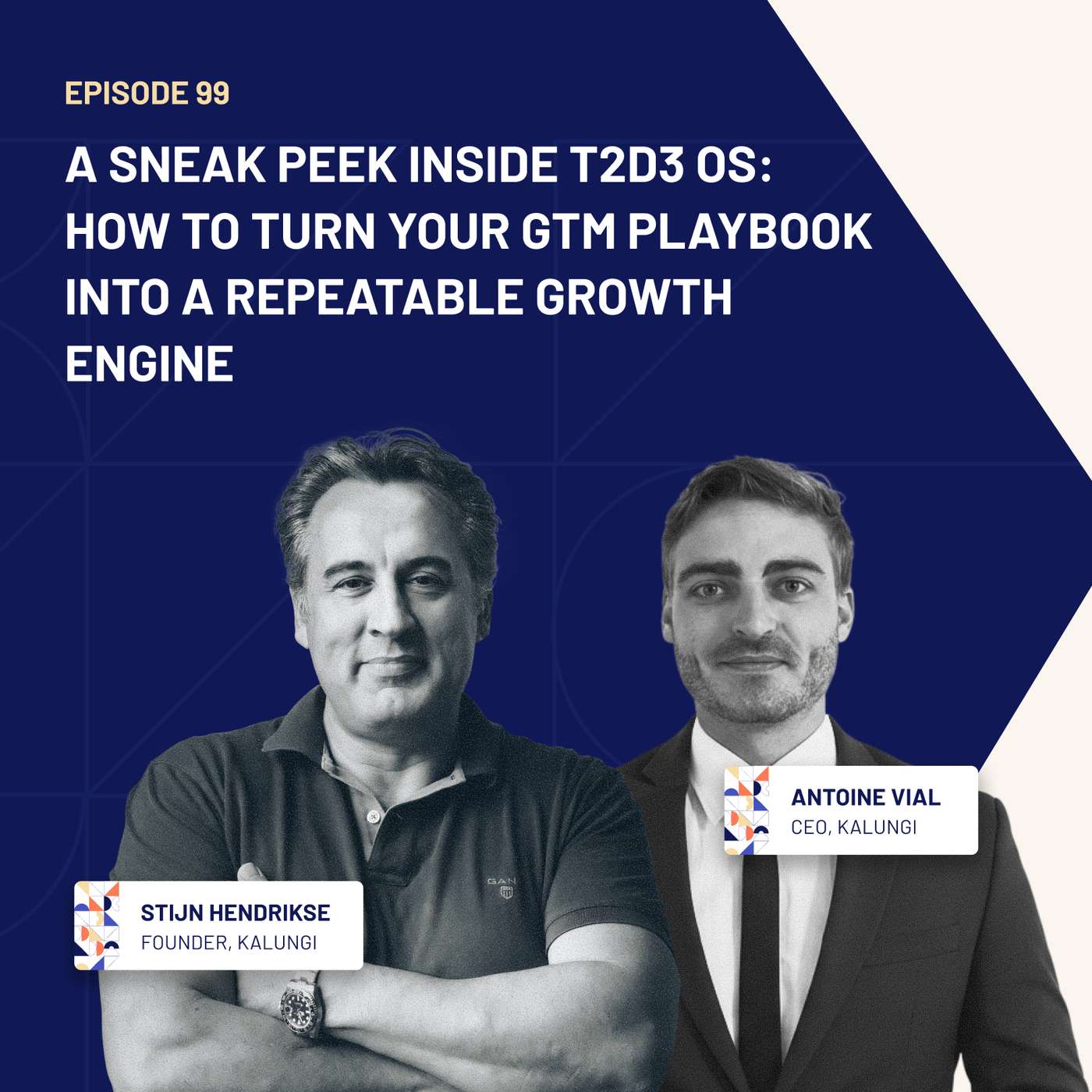 99 - A Sneak Peek Inside T2D3 OS: How to Turn Your GTM Playbook Into a Repeatable Growth Engine46 / 100
 BSMS98 - Leveling Up Together: Building High-Performing B2B SaaS Teams40 / 100
 The Death of the MQL: Shifting Focus from Quantity to Pipeline Value69 / 100
 BSMS96 - Signal-Based Marketing and the End of Broad ABM69 / 100
 94 - How modern SaaS teams build scalable growth systems - With Alex Laventer63 / 100