AI at Work · 2026-04-21 · 57 min
Key moments - from our scoring
Substance score
52 / 100
Five dimensions, 20 points each
Elijah Szasz and Kevin Williams examine the practical reality of building AI-driven productivity systems, from personal dashboards combining business metrics, health data via Aura and Whoop rings, and frustration meters based on profanity frequency in Whisper Flow dictations. They discuss the distinction between "main quests" and "side quests" when deploying AI tools - a framework from Jesse Hanley's Bento email platform - and explore emerging patterns like monothread architectures that consolidate email, calendar, tasks, and AI assistance into single ongoing conversations with tools like Claude and GPT's Codex. Kevin addresses the current friction in setting up these systems, particularly limitations with Apple ecosystem integration and Microsoft Copilot's business-plan restrictions, suggesting June 2024 will see significant improvements. The conversation pivots to a striking observation: Elijah has begun dreaming about interacting with AI assistants, which he attributes to voice-based interaction through Whisper Flow fundamentally changing how his brain processes work compared to traditional keyboard-based knowledge work. They explore this shift toward oral communication in AI interfaces and touch on Claude Design's impact on design tools like Figma and Canva, discussing how AI-generated design systems could reshape the creative software landscape.
A monothread is a single persistent conversation with an AI assistant that pulls information from multiple sources (calendar, email, tasks, Slack) and maintains memory across interactions, allowing you to handle a full workday without switching between apps or losing context.
By counting how many times you curse at or express frustration with Claude or other AI models - this can be tracked through dictation tools like Whisper Flow and overlaid against calendar and task data to correlate work activities with stress levels.
Humans are built as oral communicators over hundreds of thousands of years, so voice-based interaction with AI assistants may trigger more personal relationship dynamics in the brain than keyboard-based work, potentially even appearing in dreams as a sign of deeper cognitive integration.
Apple ecosystem (iCloud email, calendar) and Microsoft domain authentication create the most friction; Google and Gmail connectors work most reliably; Microsoft Copilot agent functions require business plans rather than personal 365 accounts.
Claude Design ingests brand systems and applies them consistently across multiple products at a system level, whereas Figma focuses on collaborative iteration of existing designs and Canva operates as an output-focused tool for marketing collateral.
Our reviewer’s read on each dimension, with quotes from the episode.
The episode packs substantive ideas about monothread architecture, chief-of-staff workflows, and practical AI tooling into a 57-minute format, but is punctuated by extended tangents (oral communication dreams, sci-fi parallels, design tool ecosystem) that dilute density. Solid operational insights on API security, pricing dynamics, and tool selection are offset by meandering storytelling and self-indulgent exploration of side quests.
just because you can do it doesn't always necessarily mean you should
what is the main quest that you're on as far as how you're trying to deploy these tools in your business? And what are side quests that are kind of fun and nice to have?
The hosts articulate some fresh contrarian angles (Claude Design as design system destroyer, Canva as CMS for art, oral communication changing subconscious AI engagement), but largely recycle established frameworks already circulating in AI-first communities (monothread concept, main quest vs. side quest from external source, multi-model strategy). Limited truly novel first-principles argumentation; mostly applied commentary on existing trends.
solution looking for a problem rather than I really need to solve this problem and now I've got the solution
Canva is turning into the de facto place where all that stuff lands, like almost like the CMS for art programs
This is a two-host conversation with no external guest. Both hosts appear to be practitioners building AI-powered tools and advising clients, which provides some operator credibility, but the episode format and self-directed nature significantly limits the dimension. No third-party expert or high-caliber operator is brought in to challenge, validate, or expand the analysis.
Kevin Williams: Hey! How's it going?
we're advising companies and leaders of, how to figure this stuff out
Episodes includes specific product names (Claude Design, Bento, Whisper Flow, Aura Ring, Whoop, Figma, Canva, Codex, Notebook LM), pricing ($13.95, $20/month, $100/month, $200/month Claude plans), and concrete personal usage data (1.3 million words dictated, 40 weeks, five hours of Claude Design usage). However, lacks named client examples, precise metrics on business impact, specific revenue data, or timelines. Claims like 'Figma stock dropped 7%' are stated without verification or source.
I'm 40 weeks into it with my 1.3 million words
You receive a note late last night that one of my stripe like credit card connectors had been surfaced
The hosts demonstrate comfortable back-and-forth banter and occasional follow-ups, but rarely push each other into productive disagreement or challenge claims rigorously. Questions are often open-ended and exploratory rather than sharp or skeptical (e.g., responding to the 'dreams about AI' tangent with encouragement rather than scrutiny). The conversation meanders into personal anecdotes and tangential threads without discipline; hosts validate each other's side quests rather than focusing discourse on core business implications.
And I encourage you to chase this. So oral process mapping versus like typed process mapping, it's a totally different brain function.
And I think that will persist, but they've made it frictionless.
Computed from the transcript - who did the talking, and the words that came up most.
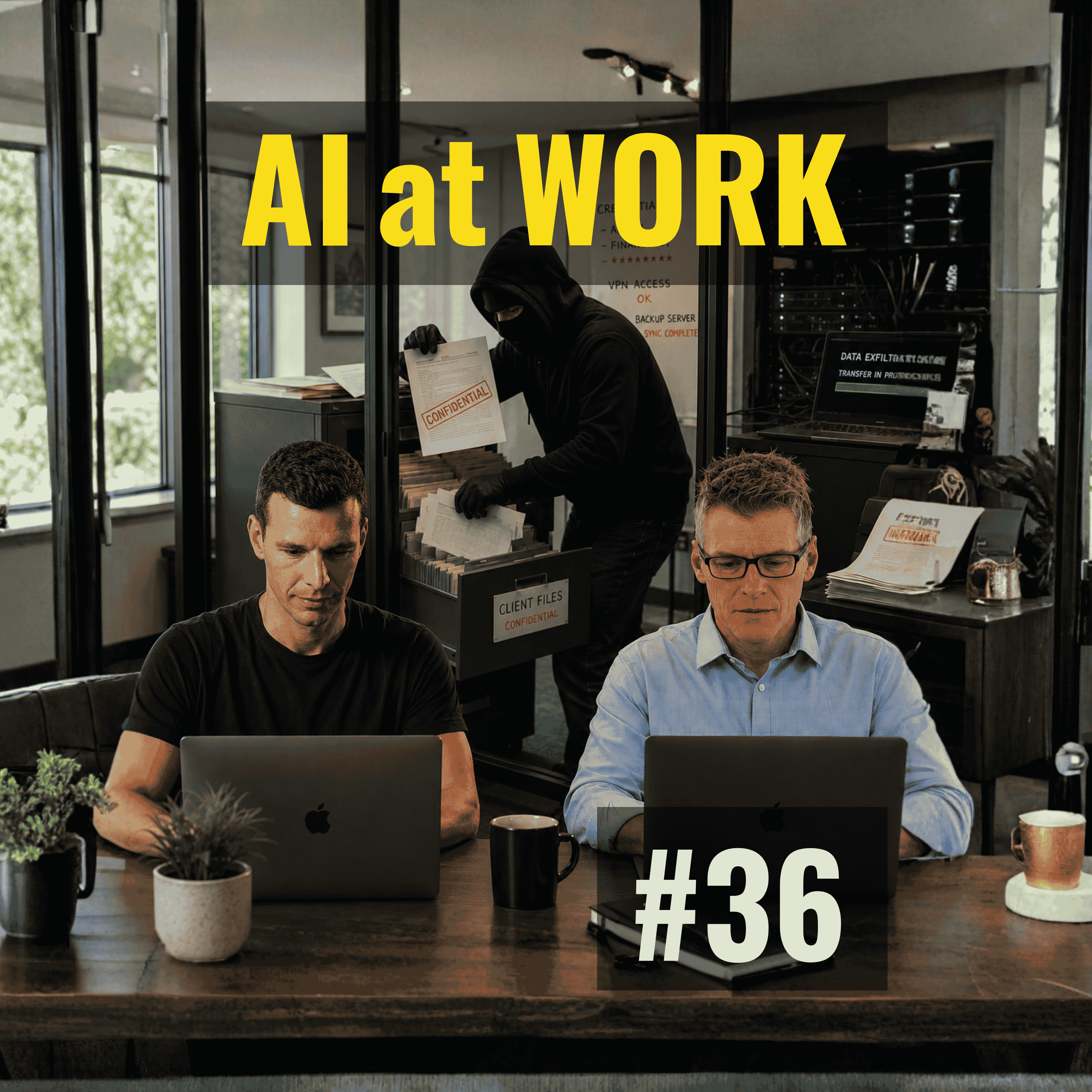
What if you could run your entire workday through one AI conversation? Kevin and Eli explore the emerging 'monothread' format that's revolutionizing how teams operate - plus the hidden security risks that amateur AI builders are creating. In this episode, we dive deep into how the monothread approach eliminates app switching by connecting your email, calendar, tasks, and CRM into one continuous AI conversation. But we also cover the reality: it's still janky to set up, the security vulnerabilities are real, and most organizations aren't ready. We also discuss Claude Design's launch that sent Figma's stock tumbling, why Canva is positioned to survive the AI design revolution, and the critical security practices every AI experimenter needs to know.
Transcribed and scored by The B2B Podcast Index.
Elijah Szasz: Kevin, what's up, buddy? How you been sleeping, Kevin Williams: Hey! How's it going? I don't think as AI guys were allowed to sleep in April of 2026.
Elijah Szasz: By April, you mean ever. I mean, you've got the aura ring and everything else like, yeah. you feel like your sleep is degrading or getting better? Because we've been talking about building all sorts of chief staff health monitors slash Hey AI, please ⁓ fix entire life for me type of products we've been experimenting with.
Kevin Williams: Ever. Ever. Elijah Szasz: And so I feel like maybe you've been keeping a closer eye on that stuff. Like how's your sleep then?
Kevin Williams: You know what? I think that part of my chief of staff may have broken and it just like fell to the wayside on top of everything else because I am pulling everything into a dashboard. and you know, you have business dashboards that will of course have like marketing performance and ⁓ performance ⁓ then bring in, ⁓ deliverables and, ⁓ tasks and things like that. So you can see things at a glance.
Elijah Szasz: Mmm. Kevin Williams: and then there's a personal aspect of it and the two pieces of the personal bit would be the health check, like, am I doing with my aura ring ⁓ what's my level of frustration? And I have to give you a little bit of a nod on the level of frustration. because what you figured out ⁓ and told me over the weekend ⁓ was whisper flow are, you our dictation tool that we're both using.
Elijah Szasz: Mmm. Kevin Williams: actually stores all of those dictations locally. So you can take those stored dictations, which, I'm dictating thousands of words a day use that as source material as far as how you're feeding into whatever your chief of staff is. But that's not the cool part for me.
The cool part ⁓ gauging my level of frustration by the number of times a day that I curse at Claude. ⁓ Elijah Szasz: Totally, I have a similar meter running that I told you about. And of course, just my idiocy then pushed me into trying to also overlay that on top of my calendar, so how I'm spending my time, my task list, what I have backlogged versus what I'm actually doing, and then the data from my biosensor, I use Aura, I use Whoop. I mean, it tells a story of...
the way that you're spending the time, the things that you're tasking yourself with, how are they affecting your general mood by the number of bombs that you're dropping every day, or just the perceived frustration that you have, because I would say that most of my input to Whisper Flow is going to prompt models. Like that is the majority of text that's running through there, right? And how I talk to those models is probably a direct reflection as to how my mental health is doing at any given time, right?
So yeah, pretty funny. And that brings up two different threads I want to pull on. start with the first one because you brought it up with this ⁓ that building. And we've built many, many things.
And I started to have not a realization, but just a reality check on this idea of building things because you can versus them being useful and how that's probably also happening in the workplace as well. just because you can do it doesn't always necessarily mean you should. And even if you peel back all of the cool layers that we put on top of Aura or Whoop, even that by itself, when I wake up in the morning, just like a junkie, I grab my phone, I look at it, how are my sleep analytics?
What is my recovery? And I don't even really need those numbers because I know if I slept like crap, like I know it. I know if I slept well. You know, I know if I feel good enough to go run into the gym and do a heavy leg day versus like, yeah, maybe today's just going to be a walk because I am beat, right?
And very often the number that it gives me isn't a really good representation of how I'm feeling. And I catch myself doing the same thing with building all these AI products where I'm like, wow, now I can crunch all this data and have these insights, but do I really need? all those insights? the answer is sometimes yes, you do, right?
But other times, it's you're just creating so much noise. And we've talked about this, right? Like just the amount of noise that you can pump out with AI right now, it's pretty wild. Kevin Williams: Yeah.
So I listened to an interview with, Jesse Hanley, a couple of weeks ago, he's the founder of Bento, which is a cool little email platform. And the guy's totally living his best life in Japan somewhere with like no staff and, the that ⁓ Bento, yeah, ⁓ but, he's pretty well in sort of like lean startup type circles ⁓ and the way he phrased it. Elijah Szasz: What's the name of the product? Bento.
Okay, cool. China, Japan, yeah, okay. Kevin Williams: was main quest versus side quest, like in a video game. And I know I texted you that this morning, like out of context a little bit, but it's been what's running through my head.
Like what is the main quest that you're on as far as how you're trying to deploy these tools in your business? And what are side quests that are kind of fun and nice to have? And I'm personally trying to keep my side quests like my frustration-o-meter. Um, which has a different term in my dashboard for sure.
Uh, it's just so smooth. Yes. Um, but you know, I, it is part of our job to stay in front of this because we're advising companies and leaders of, how to figure this stuff out and sort of suffering the slings and arrows of. Elijah Szasz: And a different marketing name, because that just rolls right off the tongue so smooth.
can see the Facebook ad now for it. Kevin Williams: of disappointment and frustration as we go through it is arguably part of the main quest. But if you can spend your scarce experimentation hours pointed at the things that are also, that are actually going to solve some of your business challenges, then that's probably what you should be pointed on. So, you know, ask yourself, is this a main quest or is this a side quest?
Elijah Szasz: Yeah. That's where I feel like the line gets blurry sometimes because when these features drop then I inevitably get an idea around that feature, I start entering that territory of a solution looking for a problem rather than I really need to solve this problem and now I've got the solution. And very often it does turn into, wow, now I can make these ⁓ real-time and visual analytics. Amazing, Anthropic.
Where can I stuff that into my organization? Like, wait a minute, I was doing just fine yesterday before that feature dropped early. I need to go spend a day building this all right now, right? it gets interesting.
Kevin Williams: Even so the flexibility of these connectors and obviously we've been talking about Claude co-work for weeks and it's hard to not talk about it right now. Codex, which is GPT's version ⁓ Claude code. Well, ⁓ would dispute that I'm sure, ⁓ it's the same sort of idea is now rapidly chasing very similar ideas. So ⁓ if listening and you're on GPT, ⁓ a you're probably paying less than we are.
⁓ on code and on cloud code, and you can do most of the same things. And the form factor that's coming together, that's worth hitting, that I think both of us are seeing is something called the mono chat or the mono thread. So ⁓ starting to run your entire day through a single ⁓ exchange. ⁓ pulling the right information from different sources around your organization ⁓ allowing you to react to them.
So it gives you a morning briefing. You respond to the morning briefing. You update some employee who needs to be updated. You check into the progress of whatever, and now you're in your day.
And you might craft an email. You might do a little proposal, et cetera. And it's all in just one monster thread. Elijah Szasz: Yeah, and I think a lot of this started when we go back to our open-claw conversations.
And one of the things that made that so interesting for so many people is that it had this perpetual memory. So in other words, you weren't just launching a new thread without any context every time or creating new project that lived in silo. You were having this ongoing conversation and it remembered most of what you were saying would pull the context from that. And while there's nothing really native outside of some of these co-work tasks that make that incredibly easy to set up.
There are a lot of workarounds that we found to have that same kind of experience. And ⁓ there's workarounds on top of the workarounds as we continue to iterate on this. So that part of it as well opens up all sorts of things. And in addition to the things that you are doing, I will also get an email brief where it will give me a summary of the things that I must reply to today, right?
It will look at all of my open tasks that I have and what's overdue. then look at my calendar schedule and figure out when is the best time to do those tasks and actually put them on my calendar and even include links in the calendar description to the task itself so that it can get marked off, which at this point, one of the amazing things about a monothread like this with all the connectors is that you do have the single portal you can go into instead of tapping through a dozen different apps, including your email, your calendar, your to-do list, your project manager, all this stuff.
and instead just have a singular conversation. And when the task is done, you say, hey, my assistant's name is Pepper. Hey, Pepper, I did that thing. amazing, I'll cross it off for you right now.
It calls a tool, it crosses it off. And then the next time that I ask, well, what do I have to do? That thing is already done, right? So ⁓ it's That's starting to be a real useful utility that I'm in every single day and I'm moving more and more of my workflow to it.
So you'll probably listeners be hearing more and more about this concept of a monothread. And that's what it means. Kevin Williams: So also this is super early days in this and we can't overstress that enough that it is pretty janky still to set a lot of these things up. ⁓ platforms, well, Anthropic and OpenAI are definitely telegraphing their vision for this, which is something to do with the monothread.
And things happened in the last couple of days because of just the pace of change ⁓ that should be aware of. on the Codex side, so GPT's Codex, if you've downloaded the app, ⁓ added something they call heartbeats to threads. ⁓ a heart, that term actually comes from OpenClaw, which we don't need to go down that rabbit hole, but that was one of the brilliant unlocks of OpenClaw is that ⁓ heartbeat is where it pings an information source every 15 minutes, every hour, every five hours, whatever it is, ⁓ it proactively feeds information into your system.
⁓ by building that right into your chat, that mono thread becomes more useful because there are things that are happening around you that if you're not focused, you're going to miss. So tasks are getting updated, emails are being sent, HubSpot's getting updated, whatever. So by firing a heartbeat, you get that update right in your thread. Claude's version of this, they're calling it live artifacts it should have...
If you updated your Claude code or your Claude desktop app, it should appear in your left bar. And this is supposed to do something a little bit similar. And it's trying to make this chief of staff or daily operating system a little bit more transparent for people to build. I've built with it just last night, ⁓ found to be a little bit disappointing because I'm trying to do a bunch of things that aren't just check my calendar, check my email, ⁓ Slack.
So, for people who are trying to get started, it's definitely worth a go. The other caveat that ⁓ that a lot of this stuff doesn't work particularly well outside ⁓ the ⁓ universe, which is sort of ironic, but Google tends to play better with these connectors ⁓ certainly Microsoft. And ⁓ I Apple can be problematic as well. Yeah.
Elijah Szasz: Apple is a wild garden through and through. Yeah. Kevin Williams: So there you are. you're, if you're running an Apple, iCloud email address ⁓ you waltz in there and you think, ⁓ cool.
I'm going to connect my calendar. I'm going to connect this. I'm going to connect whatever ⁓ the moment. It's really, really hard that it'll change.
Yeah. So in Microsoft, well, even worse, I was, I was meeting with a client yesterday and, and he couldn't use. Elijah Szasz: Hello, copilot. Sorry.
Here you go. Copilot. Kevin Williams: co-pilot to do what he wanted. So co-pilot is the Microsoft solution.
He was using a personal but paid Microsoft 365 plan and you couldn't do the agent based functions in co-pilot unless you were on like a business plan, which he was perfectly happy to pay for. But then his domain was connected to the wrong part and he was going to have to re-authenticate his domain. And I basically said, you know what? Let's just schedule another meeting in June.
Elijah Szasz: Hmm. Kevin Williams: And a lot of this stuff will have sorted its way out by then. But I feel like a lot of the work I've done in the last two or three weeks is it was formative. It was educational.
It was interesting. And then somebody who opens this door around June 1st is going to have a very different, much more straightforward process. So if you're kind of feeling the FOMO here, I think that some of this still has a little bit more time to bake. And if you're not.
Elijah Szasz: Yeah. Kevin Williams: like really geeky and willing to get into the fiddliness, you might be better off just waiting a second. Elijah Szasz: And by June, you mean two weeks. You know how people are inherently poor at being able to plan time for tasks.
If you heard about this, like the one and a half rule, like if you think something's going to take you a week, you better plan a week and a half because our brains are just predisposed to underestimate the amount of time something takes flip that whole thing with AI. you think something's going to take two months to actually come to market just Kevin Williams: Yeah. Elijah Szasz: go ahead and reduce 50 % of that as a rule of thumb for now. And then pretty soon it'll be like, take 75 % off that, take 90 % off that because the rate that things are shipping right now, like open AI, I was just kind of shrugging my shoulders thinking, yeah, I don't know.
Maybe I don't need to pay too much attention right now. Then all of a sudden a ton of stuff dropped there that is actually really useful, a lot of utility and features that we're not seeing in the other frontier labs, right? So yeah, it's all moving so quickly. Before I lose this thread, Kevin.
going all the way back to the reason why I asked you how you were sleeping, ⁓ had one of these really weird AI moments and it actually came from sleep. I realized that, ⁓ don't know if you, do you remember your dreams very often? Like when you wake up and maybe you look at, you know, usually this cast of characters, it's people from your life, you know, maybe you had dreams and your parents are in there, your siblings or your spouse, children, your friends. it is strange people that you don't recognize, but for the most part, you have ⁓ crew that shows up in your dreams.
I woke up two nights in a row from very vivid dreams about AI, actually interacting with AI. ⁓ started thinking, I've been in knowledge work for a very long time, very long time, I don't know, 30 years or something. ⁓ been. pecking at keyboards and in computers and spending a lot of time pushing pixels around the screen, yet I don't have any real memorable dreams about doing so.
Like I have very funky work, travel dreams, and I'm missing flights, and I'm stressed about meetings and stuff like that, but not actually interacting with the tools. And I'm having these vivid dreams about interacting with the tools. And I had a realization, and you threw me a meatball when you immediately brought up dictation and whisper flow. For the first time ever, most of the time that I am spending interacting with my machine, my machine is through voice, right?
And we've talked so much about how we inherently are just, we're born oral communicators. It's how we've been doing this for hundreds of thousands of years, right? And now we're doing it in our knowledge work. And all of a sudden, I think my subconscious mind is picking up on this and that it feels more like a personal relationship.
Kevin Williams: ⁓ wow. Elijah Szasz: than it does when I'm just pecking on my keyboard. So I'm like, it's in my dreams. I'm having dreams about like my assistant, you know, this monothread thing that I built with all these connectors and my interactions with it.
So I'm talking to it all day long, just like I'm talking to you right now. Kevin Williams: Okay, that's really cool. And if we happen to have any neuroscientists in our audience, they should about this because ⁓ is chaseable, right? And it feels like this is a side quest for sure, but it's super interesting.
⁓ Elijah Szasz: Oh, it's a big side quest. Yeah. I don't know. I'm in the space of mental health.
You know, I've got a clinical therapy practice and maybe maybe maybe this is going to be my main quest for a while is going chasing this rabbit. I don't know. Kevin Williams: Okay, so I encourage you to chase this. So oral process mapping versus like typed process mapping, it's a totally different brain function.
that, it's interesting. Yeah, too bad that's not our show, but like ⁓ you should that. ⁓ Elijah Szasz: ⁓ I I still had to bring it up because I mean, listen, when we sit down with somebody who's very new to AI, which we do pretty often, right? Like, yeah, this is a custom GPT.
This is a gem. This is how you go from prompting to just reusable work that you can like, you know, shave hours off of your day and all that stuff. One of the things that we always circle back to is the fact that you can talk four times faster than the best typist in the world. And if you're not doing that today and you're looking for just fast productivity unlocks, is probably one to start with for 12 bucks a month.
You know, like that's ⁓ that's huge unlock. And the that it's also changing how your brain is processing that work. And I think I've got some pretty strong, albeit anecdotal evidence now around that. really, ⁓ just a really interesting thing to think more about as you enter your workday and you're setting up your workflows or you're composing emails or ⁓ ⁓ content, whatever it is you do about how ⁓ can now do that with your voice.
And it really changes the way that your brain approaches those problems. Kevin Williams: cool. ⁓ cool. Because my TED talk is ⁓ more the sociological ramifications of returning to oral-based communications.
And ⁓ I think that's positive because it's the way that we're built. Even if those tribal or story-based communications are with our digital assistants. ⁓ our brains might be more amenable to that. anyway, all right, TBD, ⁓ I endorse this side quest as a main quest for you and you should report back on what you learned.
Elijah Szasz: Yeah, yeah, for sure. Well, listen, I think we both established that both of our favorite film genres of science fiction and it just happens to be that science fiction that has AI in it somewhere because most of it does. out of all of it, you know, I ⁓ hope that the future isn't any of the Terminator franchise. And I more realistically see it going is that movie Her where, ⁓ know, There is a dude in the movie walking around with a single air pod in his ear and he's got the device in his pocket that it's connected to and he's just having a conversation all day, every day with this operating system that's an AI.
And I really feel like after this last, I don't know, how long have we even been using Whisperflow? Has been like a year that we've been doing this? We started around the same time. Kevin Williams: I mean, I just looked, I think I'm 40 weeks into it with my 1.
3 million words. Elijah Szasz: Okay? 40 weeks, what's been that long? Okay, so yeah, it's coming upon a year.
And it has dramatically changed the way that I work, the way that I get information into my machine, right? And I just, you you can't help but draw some of these parallels to science fiction and be like, oh wow, that part of the science fiction is here. And we're living it and it's in our workplace. It's pretty wild.
Kevin Williams: So bringing science fiction back to science fact, it's sort of science fact, ⁓ looking at one of the other big launches of the week, which is Claude And you want to explain Claude Design for our listeners? Elijah Szasz: What's there to explain? You just type a prompt of what you want into a box and then it designs it for you. But it doesn't design it in the way that Canva's like broken AI generator makes you some weird humanoid figure with 15 fingers.
This thing is doing high fidelity to design in all sorts of different aspects like. I want a mobile app. I want an animation. I want like this text thread where the text that I put in is popping up and then the whole screen is going up.
I want this like really intricate and complex loading animation. I mean, I looked at it and just within the first two minutes, I thought, wow, what are these actual art tools gonna do? Like what is gonna happen to the Adobe Creative Suite? What is gonna happen to Figma?
I think Figma's stock dropped like what, 7%, like within minutes of the announcement, right? Wow. my goodness. That is so wild.
so, ⁓ yeah, you know, once again, ⁓ features, like ⁓ that in mind, right? These, ⁓ could call them products, but these are really features from these frontier labs that are dropping are erasing tens, if not hundreds of million dollars of market cap off of Kevin Williams: Yeah, they're down almost 60 % on the year apparently. Elijah Szasz: companies that only do that one thing. It is wild.
Kevin Williams: So there's a different, so Canva, it's interesting, the founder of Canva, the CEO was cited in the releases and Canva doesn't necessarily view this as a giant threat to them because they're sort of in the place where they can be the catcher's mitt downstream as far as your marketing collateral and the stuff that you're already doing. That's pretty good. It's giving people that streamlined like environment that allows them to do more dynamic things. And then Canva is going to receive that.
Elijah Szasz: Yeah. Kevin Williams: The difference is that Canva tends to be more, ⁓ output design versus system design. So of these years that people have been spending money on like brand books and things like that. And don't get me wrong, that's important from a branding perspective, but they're really expensive to do ⁓ it pulls together all of these brand elements from a system perspective, ⁓ then make sure that your design is consistent across that system.
⁓ Functionally, of the big unlocks in Claude Design ⁓ its onboarding process where it helps you ingest what your brand system is. ⁓ it's ⁓ your website, it's putting your brand book in, et cetera, ⁓ it will help you define that in terms that are more LLM readable, ⁓ then you can apply it down the ladder to everything else you're doing. ⁓ You know, both of us have all of these apps. Some of them are internal.
Some of them are external and you did one this Saturday and one two months ago and like There's a lack of consistency of design between most of them unless you were paying really really close attention to that ⁓ and you can ⁓ Really apply that design system across all of those bits ⁓ and iterate on it This is the other cool part Elijah Szasz: Yeah. Kevin Williams: is like, this is what killed Figma and everybody likes Figma. Figma is one of those companies that, that we've all like really enjoyed working with and it's good.
And it's like, sorry guys, you're, you're going to be in trouble here, but Figma can take a current design and everybody can collaborate on it. What Claude design can do is give you three, five, 15 different iterations of that design replicates all of the animation and different type styles and whatever. ⁓ you go from. concept to basically you'd call it a contact sheet back in the day where you have 15 different concepts right there in like, you know, 20 minutes.
And then you package that up and design files, which you can literally just click to Claude code. ⁓ now it shoots over the other way. ⁓ it is amazing. Like it really is.
⁓ Elijah Szasz: how to build it for you. It's so wild. It is so absolutely wild. I think what you mentioned about how Canva fits in that mix and why they're a little more protected, like why there's a little bit more of a moat there is that when you look at all of these art programs out there and the ones that might be in trouble, a of it comes down to complexity.
Like the amount of work it takes to get an output from these art files. And I've worked in these things for decades now, right? So when you kind of go to the Adobe Creative Suite, a lot of people, even though better, more efficient, and less expensive tools came out over the years, never left simply because the barrier to get in there and to really understand it and to get a good output from it is so incredibly arduous that once people got in there, they're like, yeah, I've spent literally years, like, honing my skill of working through on the all these convoluted nested menus to be able to get the output that I want that I'm not going to leave Illustrator or Photoshop or anything else.
Like I'm staying here. So you can almost think of the Adobe Creative Suite as like I need a PhD art programs in order to use this thing. And then Sketch came out and Sketch was this Mac only product and it was supposed to be a web and mobile first product really for designers that are focused on that. And it was a lot easier to deal with.
And a lot of people move there. And then Figma came out and Figma kind of hit that sweet sweet spot between Sketch the Creative Suite ⁓ everybody. like every designer I know and I employed tons and tons of designer. Everybody was on Figma.
Like just the way things were shared across teams, its ease of use, its templates, everything. it's still not like a pick it up and just start using it on day one type product. Figma is more of like, you don't have your PhD, but you've got your masters, right? you've got Canva.
Canva's kind of like the, hey, you got a GED from high school, come over here, guys. We'll get you right in and get you started right now. And has enough, it has enough utility. Like you can have your brand style guide in there.
You can have your templates. The organization is kind of rough. The sharing is pretty good. but it's so fast.
It's so fast. You know, I want to remove a background on something. I do it with one click and I don't have to have any plugins or additional tools or skills. It just works and it works almost flawlessly, right?
So for things where you're having to pump out tons of content all the time, which is most people right now who doing any kind of content marketing, Canva is just amazing. And they've done a really good job embracing AI, not only with the tools that they're building internally, but also the connectors to these other frontier labs. So They've just made it really good to be able to pass stuff back and forth. And for that reason, you know, it's kind of like, a long time now we've been able to spin websites really fast with generative AI tools, right?
But none of them are truly a CMS, right? Nothing is really managing all that content. Like, ⁓ now I need to sign up and spin up this blog management tool and ⁓ this is where my podcasts are. You ⁓ you're to kind of piece all this stuff together.
So. Kevin Williams: Mm-hmm. Elijah Szasz: In today's age, even with the best AI stuff for building websites, you still need a CMS somewhere, whether it's WordPress or Squarespace or Wix or whatever you want to use. And it's the same thing with art, right?
Like even though you can generate all this amazing stuff with Nano Banana, I still have to put it into Canva to take off the Gemini watermark and maybe put my logo on it and do all this stuff that these native AI art generation tools can't quite do. And canvas seems to be turning into the de facto place where all that stuff lands, like almost like the CMS for art programs. Kevin Williams: Well, I think embracing it's the right move. It's much cheaper than the other platforms that are out there.
It knows that. So it falls into the category of cool. Why not? This is doing the thing people like using Canva.
It adds a lot of flexibility. It is fast. So for those of us who live and breathe in these AI systems, sometimes you end up doing small things in them that is like, goes off and thinks and ⁓ a lake in the Midwest. Elijah Szasz: Oh, it's cheaper than all of them.
Yeah, I think it's like $13.95 per month or something. Yeah. Kevin Williams: Like maybe I just should have done this manually somewhere else.
And I think that will persist, but they've made it frictionless. And I think strategically they're thinking about this better, but they can do that at 20 bucks a month or whatever it is per seat. And whereas if you're Adobe, you're thinking, oh, wow, $150 a month for some of these seats or more. Like it's going to fundamentally change the way that your business works.
Elijah Szasz: Totally. Yeah. Kevin Williams: And you kind of have a fighter. So I have this conversation a lot lately with, with, with SAS products that are trying to figure out how they persist in this new environment.
And it's, well, the first thing they react to is I'm going to add all of these AI features essentially let my product do what it was always supposed to do, but was never able to do. ⁓ then I'm going to go out and charge my customers more for that. And. Guess what?
It's not working because the customers say, great, cool. Your product is very nearly almost working the way that it was supposed to when you sold it to me. I know that AI is saving a lot of money, or at least I think it is. So how about instead you cut my annual rate by 30 % and there's gut check internally ⁓ because they've increased their variable costs because they are adding AI to it.
It does cost money behind the scenes and they've put development dollars into it and they've made this investment. And then the customers just defect anyway, sort of quietly because it's so easy. Like the barriers to exit have shrunk to almost nothing with most of these platforms, right? So going to be really, really challenging for people to figure out where they play in that world and what their value proposition is going forward.
And you don't really want to be the SaaS that's like, cool, we still have Elijah Szasz: Yeah. Kevin Williams: A thousand customers left and they love us and they're going to stick around but they're sort of slowly shrinking. ⁓ Elijah Szasz: Yeah, yeah. think worth mentioning is there's different horses for different courses too, right?
And if you talk to really serious ⁓ UX or UI designers or graphic designers of, hate saying this, I really don't even know how long all three of those roles are going to be in existence. Like they're just going to be managing tools like cloud design. But those people really poo poo on something. like Canva because Canva doesn't offer you the same level of fidelity to really adjust art files the way that these other programs would, right?
But kind of back to the thing we were talking about how, know, am I just a solution looking for a problem or the other way around? I think one thing that Canva has pivoted on and done a really good job is instead of having ⁓ chat where, you know, I can basically try to have a little... mini nano banana inside of Canva and generate some original image or something. And it just, it never went well.
Right. And I think a lot of that has to do with they're leaning on models that aren't very expensive because we're offering this whole thing for 14 bucks a month. Right. So it's like, first of all, they give you very limited generations and then generations that you get aren't very good.
And they, they, they switched that to do some things that I use every single day. Right. Like if I have a, a of art, that I know has to be a certain aspect ratio, but Nano Banana generated it in a different aspect ratio, I can drop it into a Canva canvas and just say, expand. Just hit the magic button that says expand and it will fill in all the edges and do a really good job using AI to just blend that all out and save what would have taken somebody many, many hours to do as an illustrator, right?
Like that's one example. Another feature that I think this just dropped last week was that know, Nana Banana and some of these other models are good at not only the image generation, but putting labels on top of those images. So say you had a complex Venn diagram with a bunch of little labels and arrows and everything else, and you're like, ⁓ this is so cool, except just ⁓ one it put on there misspelled something. Like now you're ⁓ down track of trying to get it to generate again, almost the same, but just that one label.
And sometimes that's almost impossible. Well, now you can drop that whole thing into Canva. You hit the layer button, and in about five seconds, it has just peeled apart everything in that art file. And I can now just type in the right label, flatten it, export it, and I'm done.
So again, it's almost like this ancillary tool for all the amazing things that we're seeing getting pumped out of the Frontier Labs in regards to art generation. it's your assistant that then just kind of cleans it all up afterwards and lets you share it with people and lets you download it in different file formats. Really, really cool. big, big, big fan serious artists still hate it.
Every single one I talked to. Kevin Williams: Okay. So from the pragmatic practical aspect, you know, most of our listeners aren't necessarily like visual marketers or whatever. It's, definitely still worth playing with.
You there by Claude.ai forward slash design. Oddly, it's sort of hard ⁓ to but ⁓ enter in style guide and play with it a little bit. But from a practical, just normal business perspective, it does really good PowerPoint.
and they're not like the Notebook LM absolutely beautiful graphically intense outputs, ⁓ they're very clean, they're aligned with your style, you can create them really, really quick, and then you can download them into PowerPoint and you can actually edit individual things in them so you can tweak them. So ⁓ as a small unlock, I think ⁓ that's great way to use it. And just, is something that's worth playing with. The note is it is extremely expensive with tokens to use.
Elijah Szasz: It's just good. was just going to say that the other difference between that notebook LM is that notebook LM isn't quite as energy hungry. Kevin Williams: This is, so it is a little unclear how they're, they're tolling this because they've added a new bar to your usage in clod and, ⁓ mine's a hundred percent used and I won't be able to touch it again until Saturday at one. I did a lot with it.
I mean, I used, I used it for probably five hours. Elijah Szasz: And you, and you made a flyer. I wondered how hard you beat up on it to, to max out your usage. Yeah.
Kevin Williams: I did, and I'm on the $200 a month max plan. I probably had, but I probably used it for five hours or so. And I did do some pretty cool stuff with it. So I'm pleased.
I'm a little annoyed that I can't even buy my way out of jail because there's a couple of things that I'd like to extract from it, but I'm like twiddling my thumbs until Saturday. ⁓ I have this conversation a lot with people who are getting into this, who listen to us as a matter of fact, they get into Claude code and they're like, Elijah Szasz: Okay. Yeah. Kevin Williams: One prompt, two prompt, done.
That's all you can do. we have talked about this before, but essentially if you are going to start basing ⁓ activities and productivity, ⁓ less something like a mono thread or using Claude design ⁓ coding things or using cowork at this point, you pretty much have to be on the a dollar a month plan. Otherwise it's going to be an exercise in frustration. Know that GPT has not caught up there yet.
So I have numerous friends who are quite cheap. And they're like, ah, couldn't possibly spend $75 more for this magic machine that does everything for me. Okay, guys, come on. But you can use GPT in Codex in particular, and you can do a lot of these same things.
And at least at the moment, it isn't that expensive. So your normal paid $20 a month plan will give you access to plenty of access such that you can start playing with some of these things. Elijah Szasz: Yeah, you know what? This might be worth talking about too.
Unless you're a developer, which you probably aren't if you're listening to us, there's a lot of pretty wild automation in systems and another feature that Anthropic just dropped as well with actual dedicated automations that are doing the same kinds of things that like Zappi or N8M would be doing that would all be part of your subscription, right? Kevin Williams: You Elijah Szasz: So even if you are paying that $100 a month, the amount of mileage that you can get for model usage from that $100 a month compared to if you were just calling the developer API for your account and just paying in tokens is wildly different, but wildly different.
So for a hundred bucks a month, if you kind of space out these scheduled tasks that you have, especially around hours of the day or night where peak usage isn't as sought after, can probably get, I know, man, I ⁓ have just throw a number out there, but based on conversations I've had with people, maybe a couple thousand dollars ⁓ worth utility that you would be paying in tokens out of a hundred dollar a month plan by just ⁓ using tools inside of the actual cloud desktop app. So, Again, I, and this kind of goes with everything that we talk about AI that is in this window today.
We have no idea when that's going to change or when they're going to turn the dials and say, yeah, guess what? We're changing usage restrictions on this. Um, or open AI could do the same thing, right? And like all the mileage people are getting out of codex that could change tomorrow too.
Right? All of these things are just, uh, a little dial turned away from somebody behind the curtains at any of these frontier labs deciding. what they are going to charge for these different parts of the product. Kevin Williams: So we've talked about this before, but it's a race between all of the platforms, customer acquisition and adoption, and then embedding these processes into their workflows.
there are capitalists on the Hill who are giving a weather eye to how these systems are becoming. ⁓ And they're really embedded and they're really starting to provide value, That's when I think the dial is going to start being turned the other way because if they do it too early, they'll drive away adoption. They'll frustrate people, et cetera. And if they do it at sort of the right time, it'll frustrating, ⁓ but lot of us will probably happily pay for it because we're seeing the value in ⁓ our work.
And it means that we're not necessarily having to staff for certain things. ⁓ We've costs elsewhere, et cetera. So, you know, I'm not necessarily going to begrudge it. And then the, the, the, the other race is with just the technology itself.
And we talked about this a couple of weeks ago, but the commoditization of the models is real. So you're going to get, you're going to end up with tiers of service. Like it's okay to be on today's Opus four seven it turns into sonnet and it's a little slower and it runs. ⁓ Elijah Szasz: All depending what you're using it for, right?
All depending on the task. Yeah. Kevin Williams: And some people will be willing to pay a ton a month. I mean, I truly wouldn't be surprised if you saw a dollars a month, multiple thousands of dollars a month for premium subscriptions that are really fast, that are doing really critical analysis day long.
⁓ but that's not Premier mortals. Elijah Szasz: Yeah. I mean, that's not too hard to imagine because there's enterprise companies out there that are paying millions of dollars for tokens to run their products or their organizations or to take the place of 30 % of their human staff that used to have, right? Like that's a very real thing that's happening.
So it's not a stretch to carry that out into more of the general consumer market where somebody's getting thousands of dollars a month in real work utility out of something that they were just paying. Kevin Williams: Mm-hmm. Elijah Szasz: you know, a hundred or 200 bucks a month for, and then all of a sudden, once that is really solid and it's not quite as brittle and janky and you're having to do little fixes and work around. like, you know, I looked through our text thread and half of it is just, well, how do you get around this?
Cause I can see how this would work, but what's the little hack? Like what's, what's, what's the chewing gum and spit that I need to apply to this workflow to get it to work. Once that stuff starts going away and it becomes really robust. and you're really hooked on it because it has solved actual problems that you have in your workplace, it's not unreasonable to think that all of a sudden the price tag would then go up as our product matures.
So hope not selfishly ⁓ I don't like ⁓ tons and tons of money for software, but you see how we're gonna get there. ⁓ And that's something I wanna talk to you about, Kevin, is that way back I remember talking on our show, ⁓ about those people who are newer to AI or really trying to get it embedded in the workplace. And it does feel overwhelming, right? If you just look at one of these labs like Anthropic, you know, we talk about how there's this little button on the left-hand side of your desktop app that pops up many times a day that says, relaunch, we've got updates.
what folks, these aren't just security patches. Like there's now a whole bunch of new features every time, right? That's a lot to keep up one lab. So what we'd often advise people is as you are dipping your toes ⁓ the water, trying to find real AI solutions to the problems that you have at work, pick lab.
⁓ Pick lab. Like, okay, I'm mostly in Google's infrastructure and I could get a lot of utility out of Notebook LM and some of these other tools like NanoBanana's Image Generation or VO Video I'm just gonna go and I'm gonna get really proficient at that and that's what I'm gonna do, right? And that's probably enough. But you could say the same thing about OpenAI.
You could say the same thing about Anthropic. And it really reminds me of back when at our agency, when we're building lots of software, a project management tool like this piece of SAS that you had was really, really important. Like you had to get it right. You had to use it right.
And it was kind of this, the cohesive glue that held together the whole project from a stakeholder sentiment to the designers, to the developers, to issue management, and it all kind of centered in this tool. And the problem was you really had to pick one. You couldn't have some projects running on different project management tools. Your project managers had to be complete ninjas at this one tool that you chose, and there's a lot of them out there, and I've used a lot of them.
And I would just agonize over, oh, gosh, I really want this feature or like this big client wants everything produced as this Gantt chart showing a timeline over months and the different deliverables. And I love everything about this other product, but it can't do Gantt charts, right? And then, so you have to pick the thing that works best for your workflow and what you happen to be doing at work right now or what your clients want or what your boss wants, whatever it is. And I started feeling like that about AI as well.
And I just wondered if you had any thoughts on that because it just becomes so easy to start diving into all of the different products and features of the Frontier Labs that are leading this race right now. And it's also pretty exhausting. And it also starts to diminish this idea of having something like a chief of staff, right? Like you can't have a real mono thread or chief of staff if your information is living across three or four different labs products, right?
So what are your thoughts on that, Kevin? Like, what do you think of that or what do you advise people to do at different stages in their business with all of these choices out there right Kevin Williams: Okay, so the first stage is yes, choose a platform. probably either Anthropic or OpenAI for shareability, being able to connect to a whole bunch of different sources. ⁓ Elijah Szasz: Before I lose this man, not Google?
Why not Google? Why would you say those two? Because I've thought a lot about this and I feel conflicted. Kevin Williams: ⁓ So I don't want to necessarily go into the minutia of it, but if you are an individual and you're running like a bunch of Gmail accounts or something like that, think Google's a great choice.
But they've had to make Microsoft type choices as far as data availability in the pro paid accounts that I find just absolutely impossible to navigate. As far as Elijah Szasz: high level. Kevin Williams: being able to share documents between people, having persistent memories and chats and gems and things like that. They've done it deliberately because they're worried about they're becoming too much permeability of information within a corporate environment, such that oops, accidentally somebody in HR shared the executive salary schedule and now it's just available in broad table.
Elijah Szasz: Or who they plan to replace with AI in the next month. Kevin Williams: Whatever it might be, but I don't want to over index on it, but I will tell you that for clients who have leaned into Gemini, it has been very, very painful for them to, ⁓ been very limiting, particularly if ⁓ of them started, frankly, all of them that I can think of started in GPT. ⁓ then you go from the GPT kind of easy to use environment ⁓ this much more constrained environment. Okay.
Elijah Szasz: Like limiting, basically. Kevin Williams: So that's why I still say choose Claude or choose GPT, lean into it from a skills basis, knowledge sharing your team, do some training, like, you know, do hackathons, whatever it is to get people up and going with it. Cool. but as you, your needs evolve, at least at this point of time, I frankly think that you need at least one of those two.
You don't necessarily have to have both GPT and Claude at the moment. ⁓ but you probably do need Geminis. If you're doing anything that is a little bit broader, involves bigger context. So how much information comes in.
If you're doing anything that involves images, NanoBanana is great. VO3 is now that Sora is dead in OpenAI, is the most accessible video creation tool out there. And big weakness that people don't necessarily understand about Claude is it actually isn't an image generator. GPT has an image generator that's built right into it and can build images.
But when Claude develops an image in like a PowerPoint, it's actually coding that image. It's not generating that image. And that's a limitation. the coalescence continue in terms of features.
⁓ Claude totally add an image generator. will have more, possibly, yeah. Elijah Szasz: Maybe by the time we get off this podcast call. Kevin Williams: But at the moment, if you're serious about it, you really do need those.
Plus I would say that deep research as a Gemini feature is excellent. ⁓ You could use perplexity instead, if you wanted to, you could use open AI instead, but any of those are better than Claude's deep research, right? So I find myself needing them all. internally, we need GPT less than we did.
I do use Codex to sort of double check Claude. Elijah Szasz: Yeah. Kevin Williams: And kind of get a cheaper view on it sometimes, but you know, in a year, yeah, you're going to kind of lean into a universe and you're going to be able to connect all of these pieces and they're all going to have comparable features. Claude today definitely writes better still.
Like it's dramatic to me, the difference between Claude writing and GPT in particular and Gemini. Like I just don't like the way that either of them write. So unfortunately, we don't have like an ultra subscription. So that's the $250 a month subscription.
I just maintain like ⁓ seat ⁓ ⁓ so that I can do the things I want to do. And I ⁓ Notebook LM. I think it's a fabulous tool. Elijah Szasz: Yeah, yeah.
head is spinning a little bit thinking about a couple of things. One of them is this idea of instruction that we've spoken about before. And it's becoming more and more real now, right? So when we talked about this kind of chief of staff product that we're building or having this mono thread, it's ⁓ not just perpetual memory that really changes the game, which is something that ⁓ OpenClaw made popular.
but it's this idea of having instructions for what that project or what that specific thread is going to be doing for you and being able to iterate on those instructions really easily. by doing so, it not only makes it easier to keep this thing working well over time and when it does mess up or when you have a new idea, you can rapidly iterate on those instructions. But if all of a sudden OpenAI drops something where you're like, the secret sauce I've been waiting for, this is gonna change my whole organization, it's time to jump, you have a whole system of files with the instructions that you were using from the other lab, right?
So that's ⁓ thing we talk about is it's not just the tools you use, it's how you organize those tools and the instructions for those tools in your organization. that, and this now happened, I think with All the labs probably except for Google, can't recall any like massive Gemini outages that I've experienced at least, but both OpenAI and Anthropic have just gotten dark for periods of time. And I don't mean like, my desktop app isn't working. Like, ⁓ wait, no, it's not on mobile.
wow. All the API hooks are now disabled. Like the whole thing is gone. Huh?
It's probably just a minute. No, it's been 20 minutes. It's been 40 minutes. Like, is this an all day thing?
Like you don't know, right? So if you are enterprise ⁓ you are relying heavily not only for just the productivity of your entire staff on one of these tools, but maybe even tools that you've built that are sitting on top of those labs, having that redundancy, ⁓ means also having the portability of those instructions to be able to move around easily is becoming more and more important, I think. Like that's something I've been thinking a lot about. Kevin Williams: Yes.
And with stability of models as well. So Claude has had, or Anthropic has had just a huge surge of interest and it's made their, their backend strain. Basically they didn't invest quite as heavily as open AI or Google did in that infrastructure. And now it's catching up with them.
And the way that it's catching up is it's breaking a lot of our toys in really unexpected ways. And when you start thinking about architecture from a multi-model perspective, Stuff gets complicated in a hurry, for sure. Elijah Szasz: It really, it really, it really does. It really does.
And I mean, I would say that, you know, and this happens across all of the labs. Like you aren't necessarily getting a consistent product every day. Like, you know, we'll mess each other and say, wow, have you noticed that sonnet just got really dumb today? Like it's hallucinating or making a bunch of mistakes.
do I have to switch to Opus for these mundane tasks because Sonnet just can't do them correctly today and then I go through my usage and then by the afternoon that has changed again, right? Or somebody will report the same thing with GPT just being overly sycophantic out of nowhere and then all of a sudden that changes by nighttime, right? So there are literally engineers and researchers at all these labs like turning dials all the time that we're not aware of. And it's not like there are release notes coming out for this stuff.
It's happening in real time as you're using the tools, which is, it's challenging. It's challenging. So it's nice to have backup plans. Kevin Williams: Yep.
It's okay for you and I, sort of. mean, we go on side quests and whatever, but we're learning as we're going and some of our more like really savvy people. But as you're trying to dip your toe into it and you're being told that this is this magic machine that solves all of your ills, it has become really clear to me as I work with extremely accomplished, very smart people who are AI beginners, that it still has a ways to go. such that it's intuitive in a way that people are expecting.
And I think the labs understand that. The other piece, as far as sort of the amateur layer of this that we have to bring up, feel like this always happens in our shows at some point, but it's They are usually around the 50 minute mark. This is where we do a note of caution. Last week it was about passwords and everybody needs to change their password passwords because mythos through anthropic is out there in the live and apparently it can pretty much crack anything.
Elijah Szasz: Yeah. Usually, you're around the 50-minute mark. Yeah. Kevin Williams: Well, we don't know if it was mythos, but there was a big data leak this week and through Versel, which for those who were listening, who are launching their own apps, you can, you, when the app gets surfaced at the end, Versel is one of the platforms that people use to do that.
And what happened basically it was cracked and we talk about APIs and connections and things like that. But API's can also go to like. banking records. So in my own world, I received a note late last night that one of my stripe like credit card connectors had been surfaced.
No fraud had occurred or anything like that, but it had been surfaced out there, which meant that I had to rotate those credentials. I was thinking about that for a second about just how many tens of thousands, hundreds of thousands, probably millions. of apps that people have launched in the last like four months since all of this stuff started happening. And these are people who have never built things before.
And they're just sort of blindly following the path of, I've got this secret and the secret connects to Anthropic. And that's going to allow me to use an AI to power this thing. And now I'm just going to add that to Versel and it's all rosy. Well, if somebody gets ahold of that API key, Elijah Szasz: Mm-hmm.
Kevin Williams: they can just, they can use it and they will use it to rack up a really big charge. So first defense is anywhere that you have an API that's connected to like an LLM. So it's connected to Gemini, it's connected to OpenAI, it's connected to Anthropic. Make sure that it has a cap on it that it can't spend too much.
So you put, you know, a hundred dollars a month or something like that. So if somebody does get ahold of it, like, okay, it's going to cost you a hundred dollars, but it's not going to be the end of the world. If it's open capped, you could legitimately get a charge for $50,000, $100,000 or something like that. So put a cap on Elijah Szasz: Yeah, or until it hits your credit card limit.
It really is the equivalent of just like throwing a credit card with a hundred thousand dollar limit on the floor of Grand Central Station and being like, here you go. know, it's, it's, it's out there. It's out there for anybody to use. And it's, it's real, you know, it's, it's interesting because like, as I would build stuff in different models and I'm getting fatigued and a little lazy and I'm just like moving code around, you know, I'd grab an API key and I'd be like, give me the code with my, know, with this key in there.
And it would, it would. often yell at me and say don't ever ever put your API inside of this chat you know that's so dangerous I'm like yeah I'm tired scolding me and just do it ⁓ Kevin Williams: I think I've typed literally that I'm tired. Stop scolding me. I trust your terms of service and you're not going to leak it.
Elijah Szasz: Totally, yeah, yeah. If it gets exposed, it's a risk I'm willing to take. I have limits on it. Like, I don't want to cut and paste this API key into like this little line of code that I have to find, right?
But that is, ⁓ just illustrates how important it is that even all of these models, the very basic prompt replies that it gives you, ⁓ to be very, very careful about that information. So. Kevin Williams: Well, and just, you know, from an exposure perspective, are building things they've never built and they don't understand a lot of these risks out there. ⁓ on your own team are building things that they don't really understand as far as the level of exposure.
⁓ you're. Yeah, ⁓ it's happening. mean, I'm seeing stuff like that, which cool for that dude, right? But.
⁓ Elijah Szasz: Right. Your person from the mailroom who's now your lead VibeCoder. It's happening. know.
Yeah. Kevin Williams: But like there does have to be a level of rigor in it as far as understanding what has access to what and what security protocols are in place. And, you know, it is totally the wild west out there and it's going to be like the best year ever for organized crime as far as like being able to crack all of this stuff because there's more surface area, there's more stuff and most of that stuff has been built by people who don't really know what they're doing.
So like. stuff's gonna really start breaking. So the other practical tip is on a schedule, need to rotate those keys such that if they do creep out in some way, sort of like the one-time passwords, you need to rotate the keys that are stored in Versel or Cloudflare or wherever it is that you're deploying these things in case it's cracked. So.
Elijah Szasz: Yeah. These are relatively, these are relatively easy things to do that everybody should do. It's just good housekeeping. How you keep your voice, Kevin, from being cloned by some fraudster who then calls your mom and asks her to wire a couple hundred thousand dollars to them.
I don't know how to fix that yet. We'll let you know when we figure that one out. it's like, yeah, for every bit of innovation, there's innovation in crime as well. And we're starting, we're starting to see it with at first these tools for hacking and It is going to be the wild west for a while.
It's pretty crazy. Kevin Williams: I mean, I'm not sure if my mom still listens. We may have gotten too technical for her and she drifted off, but if you are listening, my mom does have a, she does have a code. I'm not gonna tell anybody what that is, but we have a code.
So you need a code. Everybody needs a code. So. Elijah Szasz: It's a really good idea.
Yeah. It's a, it's a really good idea. Yeah. Yeah.
Your mom probably knows exactly what an API is now in an MCP and everything else. Kevin Williams: She might, she might. regardless, you know, this podcast is getting a lot of downloads is what we discovered this week. So ⁓ now have to start doing that thing of, know, if you're listening to this, please give us a like, forward it to some other people.
We're really having a ton of fun doing this. And the sort of feedback getting ⁓ is really pretty good. So. By all means, reach out to us if you have questions, but we'd definitely appreciate that like and maybe even a review.
Elijah Szasz: Yeah. And whisper flow. know you're in San Francisco and you're probably listening to this and just dying to sponsor us. So, you know, Kevin and I use it a lot.
Just, just saying, just saying, no saying. Kevin Williams: Just say it, just say it. A little affiliate commission would be nice. All right, sir.
Great pod. Elijah Szasz: Totally totally. All right, Kevin good stuff man. Talk next time.
Other episodes covering the same guests and topics, from across The B2B Podcast Index.
 Optimize, Master, and Scale Your SEO in the Age of AIModern Marketing Messages · features Kevin Williams58 / 100
 The Myth of Model Wars: Open vs Closed AI in 2026Practical AI · on Claude and Claude Design65 / 100
 The Simple Habits That Can 10x Your Business and Life (with Dan Go) | Ep 48The SaaS Academy Podcast · on WHOOP band65 / 100
 How AI Reduces Your Cognitive Load as a Founder with Monica BozinovStrategy Sprints · on WHOOP band57 / 100
 Why Your AI Pilot Is Just a New Steam Engine68 / 100
 Why Claude Code Has Nothing to Do With Code69 / 100
 The Microsoft-Claude Connection That Actually Works76 / 100
 When Your AI Budget Hits Your Salary82 / 100
 When Your Curiosity Becomes Your Biggest Business Risk