AI at Work · 2026-05-13 · 38 min
Key moments - from our scoring
Substance score
56 / 100
Five dimensions, 20 points each
The episode centers on Microsoft's Claude add-on for Office 365, which Kevin positions as a genuine productivity breakthrough despite years of skepticism toward Microsoft's AI efforts. Unlike Copilot's chat-only interface, Claude's integration creates lateral connections across documents - allowing users to reference an Outlook email in Word, pull that context into an Excel project plan, and push it to PowerPoint, all with persistent connections to external tools like ClickUp. Kevin emphasizes that while the connector occasionally requires reconnection and lacks full organizational context awareness without external knowledge bases, it eliminates significant administrative friction within teams. The conversation then expands into comparative analysis of frontier models: Claude excels at design and creative work, GPT-4 dominates image generation and agentic workflows (with easier agent-building than custom GPTs), and Gemini remains useful only for video creation and NotebookLM. Both hosts discuss degradation in Claude's recent outputs for creative writing - particularly instruction-following and the return of M-dash formatting quirks - and debate cloud-based agent deployment versus local machine control, touching on security risks from open-source tools like Open Interpreter. The episode targets B2B operators deciding on AI integration strategy, with practical guidance on team licensing, analytics dashboards, organizational context-setting in Anthropic, and choosing between complementary subscriptions versus consolidating around one workhorse model.
Claude enables lateral cross-document linking - you can reference an Outlook email in Word, pull that into Excel, and connect it to PowerPoint with persistent context - whereas Copilot only offers a chat interface within individual documents without document-to-document connections.
It's mostly stable but occasionally requires reconnection due to Microsoft's separate access points for each app; the main limitation is that Claude doesn't retain context across your full organizational knowledge base unless you connect external tools like ClickUp or Obsidian.
Claude Anthropic's team plan costs $500/month while OpenAI's GPT Business plan is $125/month per user, though GPT's team licensing offers advantages in shareability and analytics that justify the higher cost for AI-forward organizations.
Yes, Kevin reports noticeable degradation in recent weeks - Claude is ignoring formatting instructions, returning M-dash symbols despite explicit prohibitions, and adding unnecessary antithetical framing to responses (e.g., 'You're not just talking about X, you're discussing Y').
OpenAI agents run in the cloud so your machine stays under your control, whereas Open Interpreter requires a Chrome extension and takes full machine control while running, creating unresolved security risks of accidental file deletion or system damage if something goes wrong.
Our reviewer’s read on each dimension, with quotes from the episode.
The episode contains several useful, actionable insights about Microsoft-Claude integration, model selection criteria, and legal/liability issues around AI adoption. However, substantial portions consist of meandering conversation, repetitive points about trying different models, and extended tangents (e.g., M-dash behavior, wife using em-dashes). The signal-to-noise ratio is middling; a B2B operator would extract concrete takeaways but must filter through considerable filler.
if you open that sidebar and you say, go look at Outlook and pull the email from Eli, you can then open Word and reference the Word document to create a project plan
if you get sued and you've destroyed that transcript you're going to be in trouble and if you kept that transcript and it comes up in discovery then it can appear
The episode rehashes well-worn comparisons between Claude, GPT, and Gemini with standard evaluation criteria (cost, speed, integration, image generation). The legal liability angle around AI transcripts and discovery is relatively fresher but delivered without novel frameworks or contrarian takes. Most claims are observational rather than first-principles or counterintuitive.
the answer right now is they're all pretty dang good
you have to try all of it
Kevin Williams appears to be a practitioner with direct experience integrating these tools into real workflows and consulting with organizations on AI policy and legal risk. He discusses concrete client work and has consulted with lawyers on liability. However, the episode is a two-person casual conversation rather than a traditional guest format, and his specific title, company scale, or depth of domain expertise is never established, limiting caliber assessment.
I spent a good chunk of my day with lawyers on an entirely different risk front
companies are definitely thinking about this and they're thinking about it from a policy perspective
The episode provides some concrete details: Claude add-on availability in Microsoft apps (Word, Excel, Outlook, PowerPoint), pricing ($125 vs $500 plans), lateral document linking, and specific AI behaviors (em-dashes, antithetic framing). However, much of the discussion lacks hard numbers, named clients, measurable outcomes, or specific timelines beyond vague references ('May 12th'). Legal risks are discussed abstractly without citing cases or concrete policy examples.
if you're a small business, you have five people, and you're looking at, OK, do I switch? You need to ask yourself if you're willing to spend $500 versus spending $125 for a GPT business
you do occasionally have to reconnect. I think this is pretty typical of these things
The hosts engage in friendly, natural back-and-forth but with limited incisive questioning or productive disagreement. Follow-ups are mostly confirmatory or seek elaboration on the same topic rather than challenging claims. There are few moments where one host pushes back substantively; instead, they largely agree and riff. The conversation meanders frequently and lacks a clear line of inquiry or arc.
Have you noticed any differences like in the last few weeks of either ignoring instructions
have you played around with this?
Computed from the transcript - who did the talking, and the words that came up most.
Kevin Williams breaks down the Microsoft-Claude integration that's transforming productivity workflows, plus the legal risks and model competition shaping AI adoption decisions. The Claude add-on for Microsoft Office enables something most people haven't seen yet: lateral document communication. Your email can talk to Word, Word can talk to Excel, Excel can talk to PowerPoint - all seamlessly connected. Kevin explains why this integration matters more than having the smartest AI model, and how it's changing his perspective on Microsoft's productivity suite. The conversation also covers the current state of AI model competition, why different models excel at specific tasks, and the emerging legal liabilities around AI agents making autonomous decisions in organizations.
Transcribed and scored by The B2B Podcast Index.
Kevin Williams: Amen. Happy Tuesday. Elijah Szasz: Hey, what's up, Kevin? Happy Tuesday.
Yeah. Wow. Is it Tuesday already? I've lost track.
jumping in a little later in the day and it just feels surreal. Why it ⁓ not outside right now while we're talking to each other? ⁓ What's on? Why is it so hot out?
Why am I sweating profusely? ⁓ Kevin Williams: It's just another day ending in D.A.Y.
You Elijah Szasz: So yeah, what are you working on big guy? What's the latest and greatest? You dropped me a little text about Microsoft and Anthropic, which you seemed enthralled about. I don't really touch any Microsoft product right now.
So you go to town and tell me why they you so happy. Kevin Williams: You know, I've been a Microsoft hater for pretty much as long as I can remember. ⁓ think like most companies, I've always used Word, Excel. They their place for sure.
And I think that they're pretty well in superior in some advanced functions to Google Workspace products. And I tell you the last, just even the last couple of weeks have really crept up on me as far as how effective Microsoft Suite has become, not because of Copilot. And I find that really interesting because Copilot has sort of been like the Clippy of the AI era ⁓ yeah, okay, does it really do anything? It's pretty expensive.
⁓ kind of hard to use. Elijah Szasz: Bye. Like the Clippy, I thought it was Clippy. I just thought it was Clippy re-imagined.
I thought it was just Clippy 2.0. Kevin Williams: Yes, different graphic. Different graphic.
is the promise of AI in a productivity suite? ⁓ It ⁓ the to generate, right? But it's also the ability to reference and to be able to create a central knowledge base of information and share back and forth and whatever. And ⁓ of problems with copilot has always been that it didn't have necessarily the brain connected to it.
Okay, you the human are the brain, but the brain in terms of context wasn't really connected. ⁓ people to ⁓ Copilot as a chat interface ⁓ the road that was supposed to be that brain, but adoption was really slow. Some organizations leaned into it heavily and have ⁓ libraries and things like that. ⁓ it kind of sort of started to work.
But the switch that flipped was Microsoft allowing Claude add-on ⁓ in all of these apps. And frankly, a business, I'm just amazed that it was Anthropic who got here first, ⁓ given OpenAI and Microsoft have this long standing partnership and yada, yada, yada. But at least at this second, which is ⁓ May ⁓ 12th, there no bona fide OpenAI connector that does the same thing as Claude. So backing up for a moment, if you are a Microsoft user and you are an Anthropic user, do not pass go.
Go into your Microsoft account and click on add-ins, add-ons, and then search for the Claude add-on. And you have to do it across each of your apps. So typically you need to add Outlook, you need to add Word, Excel, and PowerPoint. Okay.
Was that due? Well, it opens a chat bar, which I think we're all kind of familiar with the idea of a document having a chat bar. Copilot's been doing this. So you have some big memo.
Hey Copilot, tell me about this. Yeah. Elijah Szasz: Right. And German has been doing this too, right?
Like, I mean, we've already been seeing this in the whole Google suite for a long time now. Kevin Williams: So the difference is that the documents are actually linked like laterally. So if you open, let's just say you open Outlook and you have some email sitting in there, you can then open Word and say, hey Word, there's a email from Eli about this scope that we're working on. Can you contextualize that and pull in all of the information?
And it goes away, it says sure. It pulls in that information directly to Word. And then you say, ⁓ you know what? I need to turn this into a project plan.
So I'm going to open Excel and then have Excel reference the Word document to create a project plan. And then, ⁓ I need this to be PowerPoint for my boss. you open PowerPoint and you reference any of the other documents and you connect them all. And now it's connected.
And then from my own use case, I would then connect like click up to the Excel document and just say, hey, update my project plan on this marketing sprint, Eli to all the work. Something along those lines. Elijah Szasz: Interesting. you found these to be pretty stable, like these aren't breaking asking you, like, if you could, like, let it always connect, then it doesn't just keep asking you to connect.
Like, it's, ⁓ seemed it's pretty robust up to this point. Kevin Williams: case. So weaknesses. So far, so good.
You do occasionally have to reconnect. I think this is pretty typical of these things. Microsoft being Microsoft, each of them has sort of their own access points ⁓ and ⁓ So can be a little unstable. The other issue that hasn't been resolved yet, again, May 12th, we'll ⁓ see long this takes, ⁓ is creating sort of your own little universe there.
So when you open that sidebar and you say, go look at Outlook and pull the email from Eli, ⁓ ⁓ It doesn't have the rest of your context and the other things that you're working on. So ⁓ knows about the email ⁓ ⁓ can help you write that document. ⁓ unless you're using something like ClickUp or Monday or whatever it is or Obsidian, some central source of information that you can tie into, ⁓ not necessarily going to know enough that it can complete the task on its own with in our case again, ClickUp being fully integrated, it's pretty easy for me to call on ClickUp, say, hey, this is the project set we're working on, add to your context, and then be able to develop from there.
Elijah Szasz: Okay. So out here, I feel like now you're back in love with Anthropic ⁓ I you do have a lot of clients like on Microsoft, like in the Office 365 suite. It was a before. Honestly, like ⁓ I have been deliberating going back ⁓ GPT.
⁓ I feel like I've just had so much regression, especially on the creative side, especially with writing with all of the cloud models right now. Have you noticed any differences like in the last few weeks of either ignoring instructions, not giving you outputs based on how the projects are structured, some of the connector tools? I feel like it's in the last two weeks, especially since we spoke last. It has just been in a nosedive and I don't want to make, and I do this constantly.
We both talk about this, like jumping from one lab to the other. And you've got all these workflows that are attached and systems and processes. yeah, I just, I just keep hearing more and more about all the improvements and how. Like this new model from open AI ⁓ is as good, if not better than the biggest baddest thing that, ⁓ Anthropic has to offer right now.
Have you played around with this? Kevin Williams: have. Okay, to answer your first question, have I ⁓ noticed going downhill with Claude? I have.
⁓ It that the tasks that I'm working on right now don't have as much of that like qualitative edge to them. ⁓ So it been a real big deal to me. And I actually haven't had that much instability as far as connectors and things ⁓ behind scenes. So I sort funny, ⁓ sort of tracking doing the work.
as opposed to the work being experimenting with what the work can be just at the moment. And it's still working fine for doing the work. If I was pushing the boundaries, yeah, I'd probably run into the same sort of challenges. As our listeners know, ⁓ I've subscriptions for GPT and Gemini.
I actually ⁓ am almost resentful I have to open a Google Doc because ⁓ I think, ⁓ gosh, I have a Gemini conversation with this, but that Gemini conversation is going to be so limited ⁓ and sort of Whereas if I was in a Word document, right now I'd be able to deploy clod and like make things happen really fast. So I'm not particularly tempted. I keep meaning to carve out a weekend to basically recreate a lot of what I'm doing in Anthropic and GPT all the right reasons. It's more stable, it's less expensive, it's just good to experiment in new ways.
⁓ this one, was completely shocked when I discovered... ⁓ that there's no similar connector for OpenAI into the Microsoft universe yet. And somebody might want to correct us. Maybe it's hiding out there somewhere, but I certainly have not found it.
There are a bunch of like aftermarket type things. once you can do this like lateral communication across documents thing, you realize just how much of like administrative work is that. It's like transferring from. ⁓ Elijah Szasz: Yeah, that's a superpower.
And yeah, and when you say you haven't noticed any degradation, what you're talking about with lot of your workflows is doing stuff like moving data from ⁓ into another workflow, take this transcript, put it into the CRM, summarize this, as opposed to really benchmarking against ⁓ kind of creative output, for example, right? Kevin Williams: Yep, yeah, exactly. yeah, hasn't particularly mattered to me much. But the other place where GPT has become instrumental for me, and we've talked about this in the last couple of shows, is ⁓ in creation.
It is absolutely off the charts good right now. And Anthropic is not going to catch up there. So I don't want to listen to this show and be like, ⁓ they're totally fickle. They're recommending this and that.
And it can be on Gemini. You can be on Chatchie P.T. ⁓ Elijah Szasz: It's so good.
We got to try all of it. We got to try all of it. Yeah. Kevin Williams: We have to try all of it, but the answer right now is they're all pretty dang good.
there are special use cases that exist. Actually, it's funny, in all three of them, ⁓ I Claude design is absolutely amazing if you're doing that sort of creative work. ⁓ I that the image out of GPT is absolutely amazing and being able to create workflows that are easy using Their agent tools to do that is great and outside of some of the Chinese models It's pretty much impossible to beat Google as far as video in terms of either video creation or video interpretation so you're doing these multimedia Type things and you're kind of pushing the boundaries You going to need more than one subscription But leaning into one of them is your workhorse and learning how to use it most people aren't us they want to wake up do their job and you know, get ahead, not necessarily constantly shift back and forth.
And I really don't think you could go wrong with any of them. Elijah Szasz: Yeah. Yeah, I was trying to think. mean, they all do have their specific offerings that there's not always an equivalent on the other side.
So for example, you know, we both use notebook LM a lot with Google. I'm actually starting to wonder that the new image gen with GBT is so good. Like is notebook LM the only thing I'm really using? there's, ⁓ also been a lot of rumblings out there with everybody in this model race and the models is getting better and better that Gemini has fallen kind of stagnant as far as its performance and its output.
Are you still using Gemini for anything like in your daily driver suite or is it really video and notebook alum at this point? Kevin Williams: It really is just video and notebook L.M. in the daily driver, right?
I'm constantly experimenting with things, but are the killer tools that are like, ⁓ these are the things I want to do, then have nowhere else to go but there. Elijah Szasz: I really am. Yeah, totally, totally. Yeah, yeah.
I mean, yeah, I kind of feel like it's Google. almost have the sense of waiting for the other shoe to drop, you know, because it seems like this is what we've been seeing in the industry ⁓ somebody breaks away as the clear leader. For while, especially beginning of this year, there was a lot of speculation as to if anybody was ever going to catch Anthropic at this point with just the lead they had taken in coding abilities and creative writing abilities, everything. Like, wow, this is a runaway model.
And we are, trying to weigh the pros and cons of... Because really do want a daily driver, although I will continue use all of these frontier models. As far as tying it to all of my different systems, all the connectors, all the workflows, I really would just... prefer to lean into one because things do break.
And you do have to do some maintenance. And there are always, always ways that you can improve things. And trying to approve them across a bunch of different workflows versus one, it does start to eat up into hours of your day. I'm almost wondering if any week now we're going to hear a bunch of news that, ⁓ my gosh, look at the new Gemini model and look at all these new capabilities.
Because it's Google. Like, because it's Google. Like, I don't know. Maybe they're the sleeping giant right now.
But I want to ask, too, since you are more of a GPT user than I am right now, as far as the agentic capabilities, good is that? Like, have you been able to play around with any of that or build anything that you had also been building in Cloud with cowork in that? Kevin Williams: So though the the current status of GPT agents, and that agent term kind of drives me nuts a little bit, is almost an evolution from custom GPTs, but being able to do something that has more steps to it with greater ease.
And it is click, click easy. So the example I gave, I think, on the show last week was taking images and taking a one by one image and creating an agent that's then going to Elijah Szasz: Right. Kevin Williams: rejigger and recreate for five different sizes for advertising on meta or Instagram and You know there are other ways to do that But building it was super easy the results were really easy And now the files just to end up on my desktop where they're still difficult to use a meta perspective ⁓ be honest, but ⁓ yeah ⁓ we're not we're not talking about meta yet.
They've got a they've got a little ways to go as far as integration Elijah Szasz: Yeah, a little bit of catch up. Kevin Williams: ⁓ But haven't had the chance to lean in and recreate like my Chief of Staff, which has bloated and ridiculous because of all the sort of playing that I do with it. ⁓ you know, now I'm going to connect my aura ring and then ⁓ I'm to figure out how my smart scale connects to it and click up and my calendar. And it's like, OK, come on, ⁓ I've to like simplify ⁓ more to break.
Yes, exactly. So. ⁓ Elijah Szasz: Aw man. More things, more things to break in my experience.
⁓ Yeah. Yeah. Kevin Williams: I'm looking forward to having a good sprint so that I can recreate some of this in GPT. But hey, look, effectively, if you're a small business, you have five people, and you're looking at, OK, do I switch?
You need to ask yourself if you're willing to spend $500 versus spending $125 for a GPT business. You should be using business because of the shareability, but if If your people are really leaning into things, you will be on the $100 plan. And that's real for people. So ⁓ GPT catch up in pricing?
Probably. But at the moment, at least, there's an advantage there. ⁓ it's as It is faster. Its coding is better in a lot of ways.
It has images. It has a bunch of things. So sort of choosing if you're going to have like a clod seat on the side to use design and maybe some specialty co-work type things, other pieces and your main operation being GPT or vice versa. I mean, I'm sure people are gonna are kind of going both ways on that.
But one of the key questions there is, are your people actually using it? ⁓ of the things that we haven't talked about too much ⁓ ⁓ the difference between like individual plans and team So ⁓ the keep changing terms. ⁓ Elijah Szasz: Right, right. And then also like, are they using it for?
Right? Like, what are they using it for? That's the big determination right there as to what's going to be a better choice. So yeah, the team plans versus these individual plans, little bits of unpack right there.
Yeah. Kevin Williams: Yeah, and it's valuable to understand that one ⁓ hey, business leaders, ⁓ have an analytics dashboard in Anthropic and in GPT, ⁓ and can see who's using what when. And ⁓ not when. Actually, you can see kind of a curve of when, ⁓ but you'll how many chats people are actually creating.
And if you're an AI forward organization and you're like really trying to lean into this, that number should be pretty big. And it can tell you who on your team is sort of lagging behind a little bit as well. And it can tell you who deserves a license and who doesn't use a license because if not using it, why spend the money? But then you also have, particularly in Anthropic, the ability to set organizational context.
which is really cool, so that you can go in there and you can build a shared context layer across the organization such that when you have a new employee ⁓ they have their own little baby clod, when they come into it, at the very least, it's going to know about the organization, sort of its brand style, its history, background, et cetera, ⁓ it can draw on ⁓ the context starts to develop. Elijah Szasz: Yeah, I think one of the big differences that I was seeing is this difference between running all of this like co-work on your machine where the computer has to always be on so that your chief of staff does all the things with all of its connectors and sends you the message and everything versus what's happening with these GPT agents where it's all cloud based, right?
You don't have to have a dedicated machine running this. or even with computer use. now, computer use right now still feels kind of clunky. I'm having some success with it in cowork, but it requires you to install a Cloud Chrome extension for to do anything whatsoever.
Where again, with OpenAI, ⁓ it's amazing to see a secondary mouse going and doing things on your computer without any extension installed while you're still using your computer when when cowork grabs your machine, it's like hands off, you no longer have any command over that machine, you gotta let it do its thing or you'll just be fighting for the cursor and the keyboard. But with OpenAI, it's worked around that. So that's another thing is I kind of think about the evolution of like personally, what are a lot of the use cases that I would go to for AI every day.
It's ⁓ what I need to get done? and what model seems to be doing that better right now. yeah, kind of like the idea ⁓ not my machine taken away from me for certain tasks. I like idea of not having to have it run 24-7 so that whatever cron job it's doing to give me my little report, it doesn't matter if it's happening in the cloud.
So yeah, as talking to different organizations, And you're also considering that, like, is that something you think about as far as cloud-based versus what I think was a lot of people kind of chasing the open-claw model of the mad rush for Mac minis and having a dedicated machine running all your AI tasks? Kevin Williams: I mean, ⁓ a mistake to chase this stuff because it is a point in time ⁓ it's always going to evolve. And there are certain form factors like that, which I feel pretty justified of bypassing the whole open-cloth thing.
⁓ But it out not to be a great focus at the end of the day. ⁓ But I'm not... Elijah Szasz: Yeah. Kevin Williams: get it.
⁓ a lot of risk in that. And I think that it's poorly explored risk, to be honest, that don't really understand what it's doing. once ⁓ browser-based has control of your computer, like I'm not saying ⁓ like somebody's take over your computer, but I'm not saying that they won't either. ⁓ And it opening itself.
Yeah. ⁓ Elijah Szasz: mean, with open cloud, are tons and tons of cases of that happening, right? Of people's inboxes getting deleted and unrecoverable, just ravaging, you know, their hard drive of like getting into system files and deleting them. Like really, really bad stuff.
I mean, and again, I was really hoping that you had gone deeper on the OpenAI agents because I wanted you to go and make all the mistakes first this time. Kevin Williams: Hahaha! Elijah Szasz: me burning an entire weekend installing open-claw on a machine and then realizing that it just wasn't going to do the thing that I wanted it to do. But because of that, yeah, because of that, I do find in the fact that it is not living on my machine and taking control of my machine, even though do find a little bit of solace in the fact that it is coming from one of these reputable frontier labs instead of...
random skill that I downloaded from GitHub ⁓ I'm just letting it have out my computer. it's really quickly ⁓ and it becomes difficult to strike that balance ⁓ of much do I extend? How far do I push the boundaries in order ⁓ to get result that I want? Kevin Williams: Yeah, I mean, it's sort of worth the pause because you've got to ask yourself what you're trying to accomplish.
lot of what we've been talking about so far today is very much in just the daily workflow. getting clawed into your Microsoft tool suite is not reinventing your business. It is by its nature, like just eliminating some friction as far as communication. And if I can like get on my soapbox about project management, like it's enabling very rapid and clear project management within organizations such that there are fewer meetings, there are fewer like alignment calls and like all of this other stuff so that you're clearing more time to do more things.
And that's what bridges us into kind of what we're talking about with these agents is, okay, now that you're spending less time doing like TPS reports or whatever it is that you don't love doing because you have all this stuff integrated and it's pretty straightforward. When you're not having to tell other people on your team like updates and whatever, now it's okay. What are these new capabilities that we can create that can do new things? And are they...
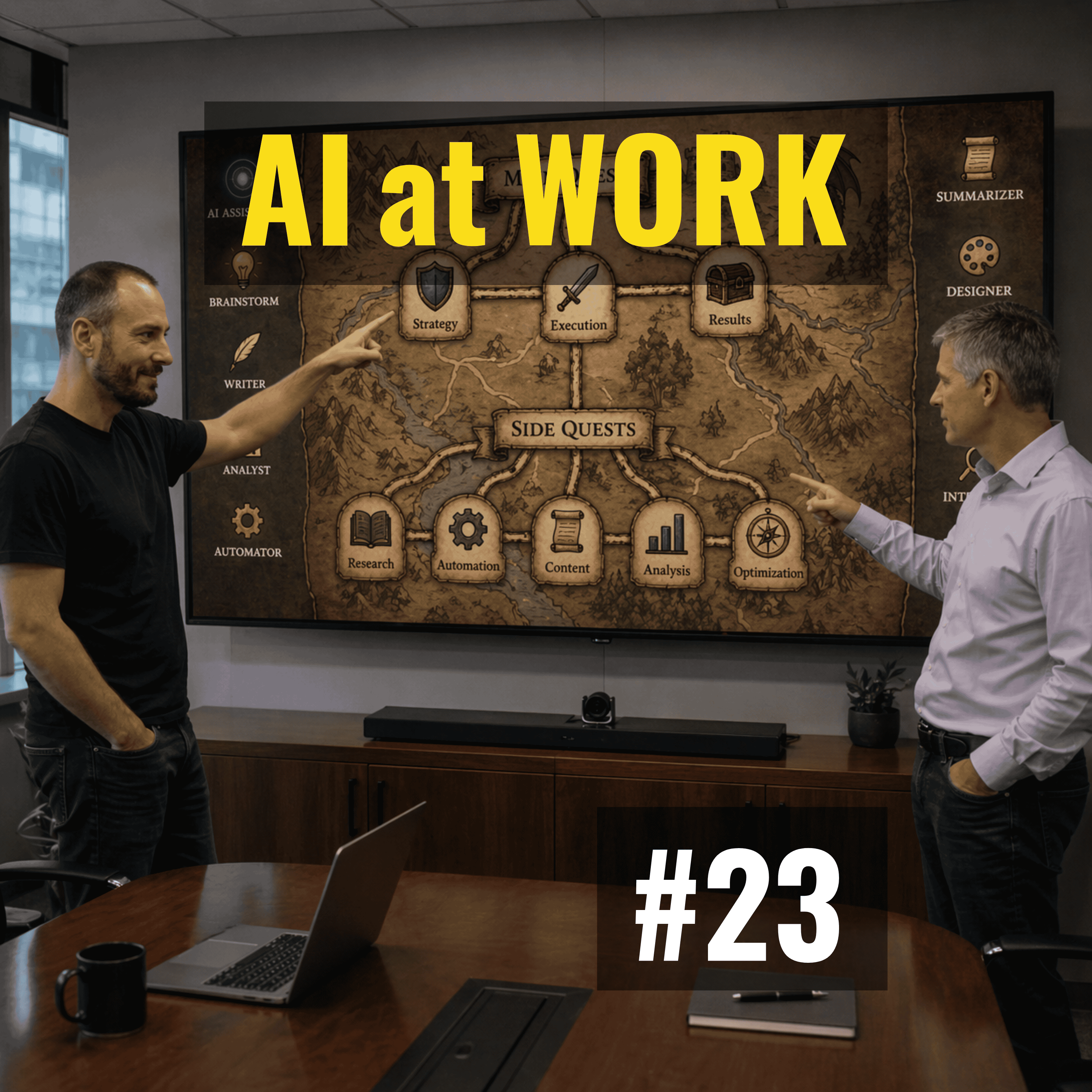
⁓ from a few weeks ago, are they main quests or are side quests? So like, is the main quest in your role? What is the main quest in your business? And how can you deploy an agent in a way that it's gonna start accomplishing things in that space?
And does that agent need to access stuff in the cloud? Okay, just to get data, fine. Does it need to control things in the cloud? As in it's going to have to go operate a CRM.
Elijah Szasz: Right. Kevin Williams: Or does it need local files and the ability to control local apps? you need to decide ⁓ that all works in your universe ⁓ your risk tolerance. ⁓ there's ⁓ really less risk in ⁓ an agent your logins to your CRM and saying, go forth and use the CRM ⁓ there is giving it access to your local storage.
one just might have a better chance of getting if it gets nuked. Elijah Szasz: Right. Yeah. And those, those core use cases, ⁓ like a lot of people will use these models for writing or writing assistance or help them drafts lot of content production.
I've personally seen a massive, ⁓ just degrading of capability from all the entropic models lately on grid writing. ⁓ One it's, it's funny. Everybody talks about the ⁓ dash, right? How it's just an AI tell if you send an email that has an ⁓ dash in there.
It was like, wait a minute, did that guy just send me something that was summarized from chat GPT? What's going on here? And there was a long period of time where you couldn't train the M dash out of any model. Like it didn't matter how many times you said, don't ever, ever, ever do that.
If you had some custom GPT or a project, it would just still do it. And then I felt like we arrived at this time where it actually listened to instructions like that. And. Not only are M-Dash is back in full force, it just completely ignores it, but this antithesis framing, where everything that it writes or every response that it gives you will start with, hey, Kevin, you're not just talking about AI at work.
You're discussing a revolution of productivity. It's not this. It's that. I have gone through.
a couple times this week, ⁓ I've just been so busy, but I wanted to screenshot some of these and send them to you, but also not bother you with all this trivial stuff at the same time. But where I will have a conversation that it'll be like round seven. I'm like, you did it again. That's an antipasic frame.
⁓ got me right. And it just refuses. And I'm talking about like opus is doing this. It's just, it's come it's completely wild.
So Yeah, I'm always thinking about not wanting to jump prematurely because I get super frustrated with a core set of utility that I'm getting out of something because in another week the dials could turn again behind the curtains and then all of a sudden that behavior goes away. But think that's part of this conversation as I'm talking to people about integrating it into their workflows. The things are talking about summarizing and moving data and updating CRMs and taking this transcript.
are pretty bulletproof, right? Being able to talk across different applications in your whole Microsoft Suite, pretty bulletproof stuff. But when you start getting into more of these nuanced use cases, which maybe aren't that nuanced, like I think a lot of people use this as a writing assistant, that's where I start getting model of like, ⁓ man, do I have to move all this stuff over here and start doing this again? So I don't think you're doing as much of that on your side, are you?
with the content production and creative writing. Kevin Williams: No, I'm not. again, this is a point of time. And you think back to ⁓ and we were.
excited because it got better. It's going to add in flow, but the direction is still heading in the right, at the right angle. The other point I'll make is that most people's jobs are not doing anything that's really creative writing. Like if you are a marketer or you are an author, then you spend a ton of time doing creative writing.
So if that's your output and it's degrading, like obviously that's going to be a huge deal for you, but I don't know, it'll be kind of. Elijah Szasz: Right. Kevin Williams: live like you can't you can't abdicate like this isn't we're not quite in the era of auto automatic like full on syndication without human in the loop and although you know we all kind of want that to be the case that's also not really a good thing as far as the hastening of what they call the dead internet right you want Elijah Szasz: I was just going to say, right, we're just speeding up the dead internet.
Like it's what ends up happening. Yeah. Yeah. Yeah.
Kevin Williams: So define the dead internet for our listeners. Elijah Szasz: Yeah, dead internet is basically an entire ecosystem of robots talking to robots. If you've spent any time on LinkedIn lately and you really look at a lot of the content, then the comments on that content and then the replies to comments on that content feels a lot like the dead internet. It's just basically AI talking to AI and there's no humans involved and it's just basically spitting a bunch of stuff out into the ether.
for the sake of it being there. Sometimes that might be to try to game SEO, other times it might just be content production, but then even the interaction with that content is just other bots. So it's basically looking at this entire digital domain without any people in it, even though it's supposed to be benefiting users, like real human users. Kevin Williams: So the magic content machine gets to the point where ⁓ of your content comes out sounding human.
⁓ aligned and well formulated and then it gets syndicated and you have that and I have that and Joe the plumber has that. That is the age of the dead internet. So you should actually embrace the suck a little bit in that this is your opportunity for the human differentiation while the human differentiation still matters. And when you think about more formal communications, I ⁓ at some of the emails that I create and I think, ⁓ Elijah Szasz: Totally.
Kevin Williams: That's a little AI-erific, and yeah, there's some ⁓ dashes in there. But from a form, I've just been talking to AI exactly. I've mentioned this before, but my wife actually does use ⁓ dashes, and she takes exception to this entire conversation, because now she feels like people are judging her, ⁓ she actually just uses AI. ⁓ Elijah Szasz: And then you realize it was you that wrote it and you've just been talking to AI so long, you now write like AI.
⁓ that's right. Yeah. Everybody thinks she's a bot. you Kevin Williams: torn, but for our listeners in particular, like...
you're not doing that cutting edge experimentation, ⁓ you do need to watch it, it needs care and feeding, but ⁓ is a point in time. And I think in another three months, six months, whatever it is, like we're to be over some of these humps ⁓ and, Opus 47 is going to be like the baseline of bad and it's going to be sonnet, whatever the new sonnet is, ⁓ and going to be able to rely on it even more. Elijah Szasz: Yeah, yeah, totally agree. ⁓ was just thinking about how, you know, writing your own emails or writing your own content or your own social media posts are going to be like the cool kids who are ⁓ Polaroid cameras and vinyl records.
It's already turning into the throwback ⁓ era. But you're right. Like it is, is, ⁓ is a way to stand out right now as you see more and more of that out there. Kevin Williams: Well, it's our Elijah Szasz: Even with meta, like on Instagram, ad creation, it's actually favoring, it's favoring AI generated video.
Like it will push that out further. It's getting more clicks. It's getting more conversions. But again, like you always say, a point in time, how long is that going to last?
And then will it just kind of ⁓ bounce to, this is really frowned on and organic content is where it's at. So again, it's all on a big continuum. Kevin Williams: Well... You know, it is funny, even in internal communication, since everybody on my team is using Claude and they're using Claude to manage their day and then they're shooting updates to Slack, I'm finding just sort of the ooziness of the language to be really pretty annoying.
And when it's my Claude response to my guy Benson's Claude response, some point we should just be communicating to each other in bullets and move on and not be like, hey Benson, I was thinking about yada, yada, yada. ⁓ Elijah Szasz: Right. Kevin Williams: then no, it's just like the key part of the message or like the bullets in the middle. And I'm not removing friction in clods to add weight in the communication in Slack.
That's kind of foolish. So there's gonna be some re-standardization, I think, as far as ⁓ communications patterns. Elijah Szasz: Yeah, that part is so interesting. I really wonder which way that's going to swing.
We've also talked about how verbose it can be in just the amount of communication and content that can pour out of these models when you have these workflows set up. And if a human is reading it on the other side, if it isn't just your co-worker's clod replying to your clod, it becomes a ton to sift through. I mean, it really is. Like, it can just produce a staggering amount of output right there.
I don't want to go too far down the agentic rabbit hole here because I know that it's not completely widespread, even though inside of our little bubble, it feels like the only thing that people are talking about. And I think it is important enough that ⁓ OpenAI made it a really big deal when they released those capabilities. corporate departments ⁓ are to a bit of a panic button around, you know, Kevin Williams: Hehehe. Elijah Szasz: this liability, right?
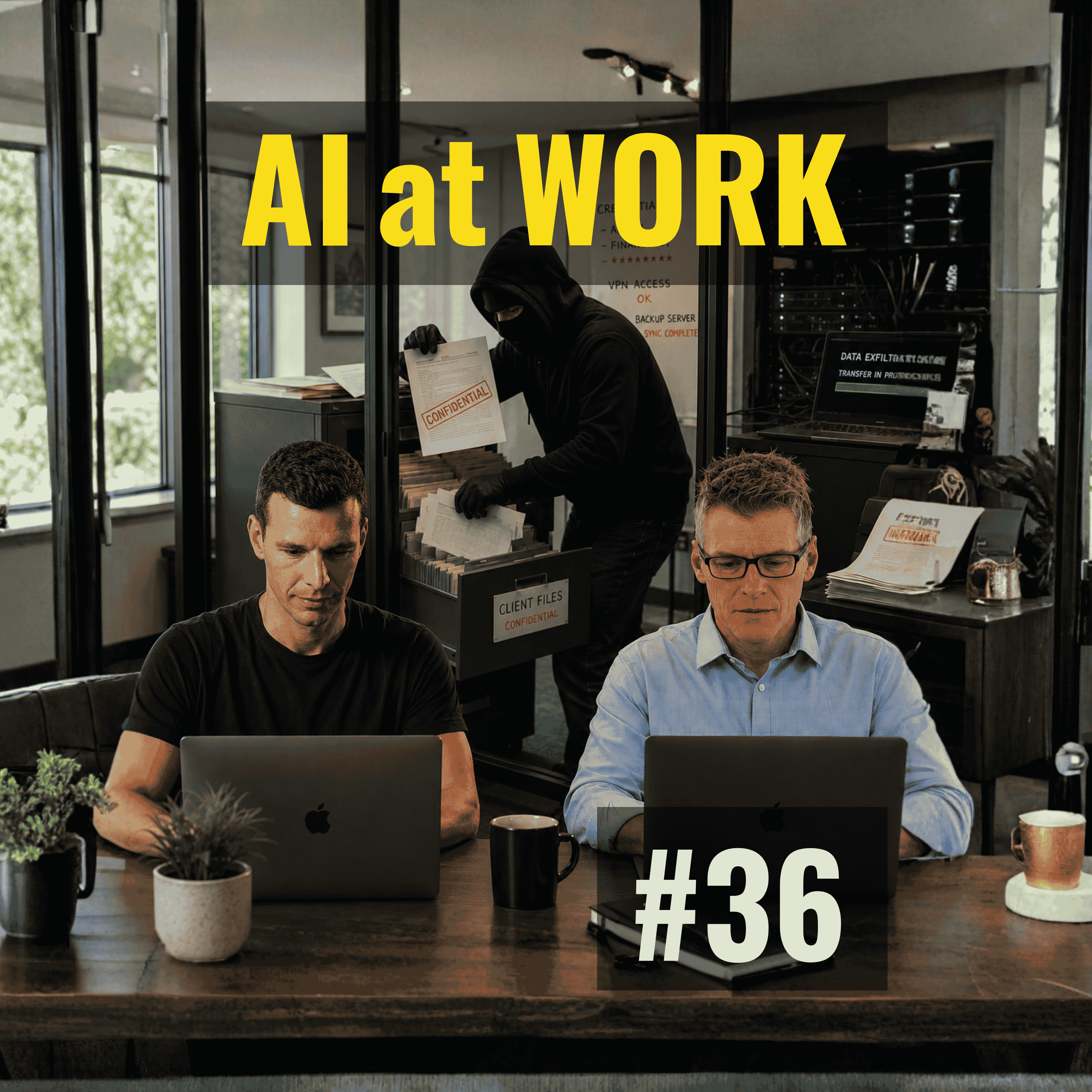
This agentic liability, if they're giving middle managers ⁓ AI systems the authority to autonomously negotiate, I don't know, vendor contract or to screen hires, right? know, I'm starting to hear some news about courts starting to see lawsuits demanding to know, well, who's liable? Like who pays for this when the agent goes and makes some discriminatory decision or a financially disastrous Mistake. So I feel like maybe it's starting to change the game when it comes to what we call shadow use, like people using AI work without actual company authorization.
this whole like bring your own AI era might be nearing an end as the agentic use cases start to bump up and the IT departments are kind of starting to lock down what autonomous tools employees are allowed to just run with in the workplace. are you addressing this? when you're talking to ⁓ and they're asking you about this, are you just saying, ⁓ don't do it? ⁓ Kevin Williams: Wow, this is funny because I spent a good chunk of my day with lawyers on an entirely different risk front, which is...
⁓ Elijah Szasz: ⁓ wow, okay, different risk. Kevin Williams: Yeah, so we need to talk about both of them. is the overall liability that's being created in organizations through the absorption of context. ⁓ that you I love ⁓ using meeting transcripts and things like that, ⁓ but if you were the, ⁓ remember the lawn darts?
What a idea. We're gonna throw a spike in the air and then it's gonna come down and ⁓ what terrible gonna happen. ⁓ Imagine having, have a meeting ⁓ Elijah Szasz: What could go wrong? Kevin Williams: and you're talking about like possible liability and now you're recording all of that and because you're recording it that transcript is being stored somewhere and if you get sued and you've destroyed that transcript you're going to be in trouble and if you kept that transcript and it comes up in discovery then it can appear but it even goes farther than that like what if you're the product manager who's like interacting with Claude about potential liability around a product, like you're kind of doing your job and you're using it as a thought partner.
And now you're, you know, you get sued ⁓ they subpoena Anthropic and lo and behold, it turns out your product manager was talking about all of these potential liabilities that come this way. So companies are definitely thinking about this and they're thinking about it from a policy perspective. Shadow IT is really high on that list for all of the reasons that you gave. but also prohibited uses.
hiring, same example that you can't just dump a pile of resumes into one of these systems and say, choose the best candidate. If you get sued, you won't be able to prove why you hired that person and what the discoverability, ⁓ no discoverability in the process. ⁓ Yeah, so ⁓ is important. Elijah Szasz: Right.
Yeah, none whatsoever. Yeah. Kevin Williams: And what's funny is people have had these AI policies, any decent sized company has had an AI policy since beginning of 2023. Like, okay, there are a bunch of these boiler plates floating around and they were kind of dumb.
And now everybody's looking at them again and they're like, ⁓ wait a second. Yeah, what does happen when somebody uses this? What are the consequences? So we are seeing a lot more calls to take a closer look at.
not just the amplification uses of technology, also the avoidance and things like that. And we're not lawyers, but we work with lawyers who ⁓ frankly struggling to understand this themselves. Elijah Szasz: Yeah. So where are you seeing that fork in the road as far as this is having, having these transcripts, like just assuming that everybody is going to be running AI transcripts for everything and every meeting and every decision, especially as it involves any sort of potential liability and that that is going to be mandated.
Or do you see it being a choice ⁓ Hmm, ⁓ we just don't want to implement this in because it's going to open up a can of worms that we're not really ready to address. Kevin Williams: I mean, think it is companies already have policies about, know, formal or informal about what gets written and what doesn't get written. And, you know, I don't want that to sound nefarious, but old adage is never put anything in an email that you wouldn't want to see on the front page of the New York Times, right?
Like, the same ⁓ a text message, like, you know, I tell my teenagers this, right? ⁓ Elijah Szasz: or a text message. Now I should have to think of some of the text messages I've sent you. boy.
I never get subpoenaed. Kevin Williams: generally about robots. ⁓ So there's a lot of common sense in there, but what's gonna happen is the plaintiff's attorneys are gonna wake up and they're going to recognize that ⁓ this actually an opportunity. The smaller, the more decentralized, the more tech-forward the company is.
Elijah Szasz: Yeah. Kevin Williams: the more likely they are to actually be recording everything. And if they're recording everything, then it can be subpoenaed and discovered. So, lot of things, at the end of the day, the lawyers are gonna win.
Elijah Szasz: Totally. Yeah, yeah. Well, Kevin, it's going to be a short one today. I know we both got to jump to our next obligation here, but yeah, good stuff.
We'll catch you next time and talk about further legal liabilities, running local models, got a long list of things to go over. Kevin Williams: you There's so much to talk about, All right, cool, next week. Elijah Szasz: Thank so much. We'll catch you next time.
See you.
 Why Your AI Pilot Is Just a New Steam Engine68 / 100
 Why Claude Code Has Nothing to Do With Code69 / 100
 When Your AI Budget Hits Your Salary82 / 100
 Why Your Chief of Staff Dreams About You72 / 100
 When Your Curiosity Becomes Your Biggest Business Risk