
A Podcast About Leadership · 2026-07-30 · 1h 13m
Key moments - from our scoring
Substance score
64 / 100
Five dimensions, 20 points each
Ken Roberts and CEO coach Jamie Ramsden examine the often-overlooked leadership skill of making high-stakes decisions with incomplete information. Ken shares his experience managing Delta Faucet's supply chain crisis during COVID, when he made a counterintuitive call to halt 15% of products despite having no analytical backing - a move that succeeded because his team needed decisive direction over perfect data. The conversation explores the tension between being the subject-matter expert and building teams smarter than you in specific domains, drawing on frameworks from Gerald Farson's Management of the Absurd. Ken articulates his leadership philosophy: eighty percent of the time, operate with humility and facilitate team debate; twenty percent of the time, make unilateral calls when the situation demands it. Jamie adds critical context about self-awareness, coachability, and the risk of leaders defaulting to their natural preferences without understanding the organizational wake they create. The episode addresses how leadership is substantially nurture-based - trainable through feedback loops - rather than innate, and raises the thorny question of how leaders maintain effectiveness when context shifts after they've achieved mastery in one environment.
Ken cut 15% of Delta's SKUs for 120 days during supply chain crisis with no analytical support because his team was overwhelmed and needed direction; he relied on supply chain experience and gut feel, then owned the decision with confidence to rally the team, even though privately he hoped it would work.
Humility and decisiveness operate in different contexts: about 80% of the time, stay open, facilitate debate, and empower your team; about 20% of the time, read the situation and make unilateral calls with confidence. The hidden skill is knowing which mode the moment requires.
Ken operates as 'an inch deep and a mile wide' - he can intelligently engage on any topic but recognizes that within his executive team, someone will be smarter on each specific subject. He empowers those experts while orchestrating systems and holding accountability.
Leadership is substantially nurture-based; most skills can be taught through self-awareness and coachability, though some people have natural predispositions similar to innate athletic talent. The requirement for success is willingness to honestly assess gaps and make context-appropriate adjustments.
The episode raises this as unresolved: leaders often struggle or fail when context shifts after achieving mastery, because they default to the systems and approaches that worked before without realizing the organizational wake they create or adapting to new demands.
Our reviewer’s read on each dimension, with quotes from the episode.
The episode contains several substantive leadership insights, particularly around decision-making under uncertainty, energy management, and context-dependent leadership. However, much of the content consists of storytelling and framework-sharing that recycles familiar concepts (Covey's Seven Habits, Good to Great's 'genius with a thousand helpers,' etc.). The energy management section and the distinction between problems and dilemmas offer newer value, but these are interspersed with considerable throat-clearing and obvious advice.
The hardest part that no book prepares you for, I've never even seen it mentioned anywhere, is energy management
going from managing problems to managing dilemmas...you have two customers...you can't do that. That is not a problem you're never gonna solve
While Ken offers some fresh framing (energy management as distinct from time management, the 'last hundred days' vs 'first ninety days' inversion), much of the episode relies on established frameworks and well-known business books. The advice on triangulation, context-switching via 'seek first to understand,' and building collaborative teams reflects conventional wisdom in executive coaching. Jamie's four leadership types framework is presented as original research but lacks novelty relative to established leadership models.
The last one hundred days...what's the legacy I wanna leave
energy management...different things you do with your time have vastly different energy drains
Ken Roberts is a legitimate operator with 30+ years across GE, Masco (30 years), and now as President of Atlas Roofing - a $1B+ company with 33 plants. His progression through functional roles to GM to president demonstrates real scale. Jamie Ramsden is a former CEO turned executive coach with published work. Both are practitioners, not pure thought-leaders, though Jamie edges toward the coaching-circuit side. Ken's depth of actual operational experience (supply chain crises, P&L responsibility, multi-business leadership) is genuinely valuable.
thirty year career at Masco Corporation prior...president of Delta Faucet, president of Masco Canada, and vice president of international sales
Ken is the president of Atlas Roofing Company...thirty three plants and counting in North America
The episode includes concrete examples: the Delta supply chain crisis during COVID (cutting 15% of SKUs for 120 days), software scheduling degradation (1 hour to 8 hours), 20,000-item catalog, ~350 people at Masco division, 180-person operation in Canada, introversion scoring in the 1st percentile on an assessment. However, many claims lack numbers: 'very good team,' 'significant transformation,' strategic initiatives mentioned without metrics. The roofing/shelter framing is illustrative but vague.
we got to a point where...we're gonna take about fifteen percent of the items that we make and we're not gonna sell them for the next one hundred and twenty days
the software...normally for an eight...it takes about, let's say, an hour for the software to create the schedule. Well, all of a sudden, it was taking eight hours
Jonathan Kirschner asks solid follow-up questions ('What's the hardest decision,' 'Walk us through your journey,' 'How do you adapt?') and challenges gently (acknowledging the temptation to run old playbooks). Jamie adds texture with his coaching perspective and probes Ken's framework application. However, the conversation lacks real push-back - no one challenges Ken's conclusions, and soft spots (e.g., whether 'one company, one voice' stifles dissent, or whether his introversion framing is reified too much) go unexamined. The dialogue is collegial rather than intellectually combative.
And I think back you know, I'm I'm a CEO myself, and I think about decisions that I've had to make
Well, this is actually the second time I've worked with Jamie. So I'll I'll just give you the reason for both because they're two different reasons
Computed from the transcript - who did the talking, and the words that came up most.
What separates a great leader from a merely competent one? According to Ken Roberts, President of Atlas Roofing (and a 30 year veteran of Masco Corporation), and executive coach Jamie Ramsden, the answer isn't intelligence, charisma, or having all the answers. It's humility . In this episode of A Podcast About Leadership, host Jonathan Kirschner sits down with Ken Roberts , president of one of North America's leading building materials manufacturers, and CEO coach Jamie Ramsden , author of Let's Go: How Great Leaders Shape the Future, to talk about why humility is the leadership skill most executives overlook, and why it's so often mistaken for weakness. Ken shares the story of the hardest decision of his career: a gut call made during the COVID supply chain crisis with zero hard data behind it. That moment taught him a lesson that's stuck with him ever since. If you're the smartest person in the room, you probably haven't built a great team.
Transcribed and scored by The B2B Podcast Index.
Hello, everyone. Jonathan Kirschner here. This is a podcast about leadership, and I'm here today with Jamie Ramsden. Surprise.
He's become a regular on the show, which I'm delighted. And we have Ken Roberts, who is the president of Atlas Roofing. With a podcast about leadership, we could obviously talk for several hours, probably daily about our fascinations with leadership, theory of leadership, leadership science, and some of the incredible research that's going on around leadership. But this is a podcast that talks about applied leadership.
We wanna hear from actual leaders who are in it. And so we have Ken here today who is in it. And Ken is the president of Atlas Roofing Company. So it's one of America's leading building materials manufacturers, thirty three plants and counting in North America.
And and Ken's had a thirty year career at Masco Corporation prior. He served as president of Delta Faucet, president of Masco Canada, and vice president of international sales and Asian business. He started his career at GE's aircraft engine division and holds degrees from Rose Hallman Institute of Technology and Northwestern University. He's also serving as president of ARMA, the Asphalt Roofing Industry's National Trade Association.
And then, of course, we have our household name here, Jamie Ramsden, who himself, a former CEO turned CEO coach and coaches many CEOs and senior executives. We have the pleasure of working together at AIR Consulting. And Jamie is the author of of a really, you know, well known book, Let's Go, How Great Leaders Shape the Future. And, it's fantastic to have you here, because in addition to being a great guy, you're also Ken's coach, which is just fantastic.
So thank you, Jamie and Ken, for being on the show today. What's the hardest decision, Ken? The hardest decision you've had to make since taking the helm at Atlas? Okay.
It's a two part question. Hardest decision you've had to make, and what has it taught you about leadership? Sure. By the way, first of all, thanks for thanks for having me.
This is this is a first time thing for me. I'm really looking forward to it. I've been fortunate. There haven't, so far we haven't had to make a lot of gut wrenching decisions at Atlas in my time there.
But during my time at Delta, we did several and probably the one that comes to mind as it relates to leadership is during the follow-up to COVID when supply chains became just a complete snarl, we got to a point where, we were just so backlogged and backed up in our our supply chain that we could hardly get anything through. Our lead times were stretched out. We couldn't service our customers. And we were working on it.
And I usually like to delegate to the subject matter experts on my team. And we kind of got to a point where they were just looking at me saying, Ken, we don't know what to do. And so that was a really hard decision, but what we ended up doing is I said, okay, what we're gonna do is we're gonna take about, we're gonna take about fifteen percent of the items that we make and we're not gonna sell them for the next one hundred and twenty days. No new orders.
We had, and it was hard because we had no data to suggest that this was gonna be the right approach or how people would react to it. It was just kind of a gut feel coming from my experience, having worked in supply chain earlier in my career and just seeing that people, we needed a direction. And so we did it. And it ended up working out.
Our customers respected us because we just kind of went to them and said, look at, this is something, we're gonna do something to fix this thing. But the part that really taught me about leadership was it was a moment where my people were, despite having all of their best efforts, were looking at me saying, we're out of gas, we're out of ideas, and boss, we need you to help us. And even though I had no data and no analysis and even within a company like Delta, which is very much into structured problem solving and analysis based decision, I just had to kind of make a gut decision in the moment and then own it.
And and to go forward then and say, and by the way, this is gonna work. I'm highly confident even though behind the scenes, I was kinda like, I really hope this works, because the team just needed something to get rallied around, and and that helped in the end. Yeah. Oh my gosh.
I love that example. And I I think back you know, I'm I'm a CEO myself, and I think about decisions that I've had to make. And when you have the luxury of different data streams and being able to write up a thesis and saying, here's the evidence for why we're going to do what we're going do. And here's and to be able to to to show that to everyone and to rally around that plan, that's that's one kind of decision.
And the other is like, okay. I've got about, you know, fifty five to sixty percent of the data I need. I'm maybe if I spend another, you know, four months, I can get, like, another fifteen percent. But, like, I'm not getting above seventy percent of of data.
And so, ultimately, I'm gonna need to I'm gonna have to make a call and lean into my experiential wisdom and my intuition. And that is a different type of weight on your shoulders than being able to say, here's here's the thesis. Right? The the data driven thesis.
Jamie, if you supply chain is I mean, you were immersed in supply chain back in the day. Yeah. It just makes me think about this. You know, I always think about that there's a couple of times where you really where leadership being in a leadership role really forces you to have courage.
And I think this is what we're talking about. One is the courage of decision making, where you might be in a novel or a new situation, you don't have all the information, and people are looking to you as they invariably do and saying, 'Okay, well where do we go from here?' That in itself, even if you have a clear eye of where it's going, you can't control all the variables that are at play. It does take a certain amount of courage, especially if you're trusting your instincts, if you're trusting your lived experience that may not apply here.
There's another one that I sometimes think of as well, which is the courage once you've set something in motion and it isn't going the way you think it is. And I'd be interested to see if that happened in in this particular case, but where you have the courage to stick with something that you've already done. And I think those are two areas where just hearing Ken talk that made me think about the courage that's required sometimes to be in a leadership role. If the trajectory is in the right direction, the courage to say, no, this is the right choice.
Yeah. And in your case, that played out. It did. No.
I see that with, you know, some some of our clients where they're they're putting together a transformation plan. And then, you know, the quarterly earnings come out and, you know, stocks tanked, it's like, we need time. This can't just happen immediately. Next quarter comes out, stock takes another hit.
It's like, this is our long term plan, and it's a it is such a pressure cooker for leadership to stand by a committed strategy, but also know where to adapt as well. There's also a piece around that. So where to stay firm, where to adapt, you know, especially when the results don't don't quite you know, it takes time for the results to come. Sometimes it takes time.
And the other thing that came to mind for me is indecision. Right? So when there isn't the sort of adequate level of courage, we can just say, we're not gonna make a decision. And that that could be pretty dangerous.
Delta has a very deep catalog of products that go across luxury to commercial, etcetera. Over at that time, I think, probably twenty thousand items in the catalog going from memory. So a lot. And as and the supply chain for, like, for most companies stretches all the way across the ocean to China.
And so what was happening is with all of the disruptions, you had back orders of all of these products, and it just got to where people didn't know what do we make first. You know? What and so you can imagine everything's trying to go through, you know, you think about it, logs going over a dam. All the logs were trying to go over the dam at the same time, so none of the logs were going over the dam.
And to a good example is, Delta had at that time a piece of software that scheduled the factories. And it normally for an eight for the for each shift, it takes about, let's say, an hour for the software to create the schedule. Well, all of a sudden, was taken eight hours for the software to create the schedule for the next eight hours. And I was think I was starting to think, well, what happens if it takes ten hours to get it?
You can't get the schedule done. So it was just it was just this huge log jam. And so by by doing this, we what we basically did is we just took that huge long tail and just cut it off and said, those logs are no longer gonna try and go over the dam. And we're just gonna focus on the high volume items that most people need.
And the theory that that that should help to just get stuff through and then eventually you can get things cleaned up. And, like I said, it was very difficult for me to do this because as a trained engineer, you know, I'm trained to like look at data, do analysis, you know, maybe simulation, but there was no time for that because as I mentioned, our whole team was saying, we need action. And I realized that some action that made sense right now was gonna be a lot better than some really elegant analyzed plan later.
And so that's why I just went with kind of the gut. So I can when you think back, you know, you roll back over the past, say, year career. Right? You were at GE, thirty years at Masco running various businesses, now at Atlas.
Walk us through the journey and what were the inflection points you know, where you became a a fundamentally different leader? Maybe you could help us understand that. Sure. I I would yeah.
I'd love to. So, yes, I started it out of undergraduate, out of engineering school. I started it at GE, And I was part of what some people, most people would know as the Edison program if they know GE, although that wasn't exactly what it was called, where you rotate through. GE was a great company to work for.
They poured training into me. I was there for three years and decided I wanted to go back to graduate school. And that was if you remember the Berlin Wall fell and you remember the peace dividend. I like to tell people I'm a walking example of the peace dividend because GE started ramping down when defense spending ramped down and they were offering people a package to take a voluntary layoff to go back to school.
And I wanted to, so as a match made in heaven, I left GE and and I went to Northwestern. And so out of, Northwestern, then I landed at Masco at Delta Faucet Company, a division of Masco, and that's where I was for the next thirty years, basically. But I'll I'll put I'll key in on three transitions that I think that had the most impact on me as a leader. And the first one was my first coaching assignment.
So I was a very, I'd like to think a diamond in the rough, but very in the rough when I was say a thirty year old. And the first turning point for me was actually where I got asked if I would like to work with a coach. And I said, of course, I said yes. And part of that was at that age, I was actually not apolitical.
I was anti political because I just felt that doing things that politically oriented was so dirty that if something came up that might become political, I would do something opposite of that just to avoid the appearance, you know, which and so one of the key things was kind of learning learning to compromise a little bit. My coach said, hey, look, Ken, this is the reality. Politics are a fact of working in an organization and you don't have to like it and you don't have to engage in it.
But if you don't do some a little bit, you will limit where you're gonna go in your career. Actually, that was one of many things that he said that caused me to think a lot and to think deeply, but that was probably the biggest one because I had to go home and do some soul searching, and I created my rules of engagement on how I was gonna engage in politics without compromising what I felt was my soul. How's that? And so that was a major turning point in life.
The second one was I had an opportunity. I spent the first ten plus years at Delta in supply chain and operations. And the president at the time pulled me aside and said, Ken, I think you could lead a business someday, but you need commercially facing experience. And so we would like to offer you a sales leadership role.
I'd never worked in sales. So I stepped into a role where I was leading a group of veteran salespeople who obviously knew way more than me, and I had to figure out how to deal how to do that, and how to gain their respect and trust and then to go on to lead them. And that taught me so many things about, you know, how to engage with a culture that's different than yours, how to how to establish followership, and so many other things. The third one was my first GM role where you you can feel like I had relatively large jobs as a as a functional leader, but there you know, the old saying, the cliche, it's lonely at the top.
Yeah. That's where you started to feel it at the GM level. Yes. And on top of that, you start to feel the weight of you really do start to kinda feel the weight of the business because before I was responsible for making sure I did my job right.
But when I became a GM at this business, Masco division, which was was smaller, but all of a sudden I had about, I think, three hundred and fifty people who wanted to have a good career and a, you know, a secure employment. And to a certain extent, their fates were riding on my shoulders. And, you know, you start to feel that keenly when you're in the big chair. So, you know, there's this, I think, misnomer or or misconception that leaders sometimes have that they need to be the smartest one in the room.
That they need to be the ones that the clear alpha. And yet, we've talked a lot about humility on this podcast. And I'm curious, what's your perspective on humility, and how does it fit into leadership? Sure.
Well, I've I've like to maybe preface that with a a more philosophical statement. Actually, one of the best business books I ever read was by a gentleman. I think his last name is Farson. It's from the nineties.
The book's called Management of the Absurd, and it really plays off of the the contradictions that are involved in being a leader, the contradictory things that are involved in being a leader. But I wanna go back to that. But what I mean by bringing that up is, and I'll before I answer your question directly, is I believe that leadership is very context dependent. So you don't ever get to just be one way.
So you're talking about being the smartest guy in the room or kind of being, I'll call it alpha versus maybe more reserved. And I would say, I believe sometimes you have to have to play that role. Like I said, you know, this time when we had this supply chain thing, I I didn't solicit input. I, you know, I I didn't solicit input.
I didn't go around and build a coalition. I saw the team was struggling. I stand up stood up and said, we're gonna cut off a bunch of our SKUs and we're gonna make this happen starting in whatever next week, and we're gonna do it for one hundred and twenty days. You know?
Anybody in the room that can't live with that? No? Okay. Great.
Go execute. Right? That's not my default state by by a long shot. I believe, though, the eighty twenty rule, the eighty percent of the time, one is I fundamentally all the time believe that if you're the, in any specific topic that you're addressing with your team as the CEO, if you're the smartest guy in the room, you have not done a very good job building your team.
How's that? I like to tell my team, look at guys, at this point in my career, I've done a lot of stuff, so I'm an inch deep and a mile wide. So anything you want to talk about, I can intelligently engage with you. But any topic that comes up, like in within my executive team, somebody in the room is gonna be smarter than me about that topic than me.
And I I think that's a a fundamental truism of being an effective leader. If you're the smartest guy in the room, you probably haven't done a great job hiring. I I I think that's quotable. It's beautiful.
I'm gonna write that, down somewhere on my desk. I just wanted to add into that as well. This can't you know, I just wanna differentiate or define maybe between humility, which you can have if you are still the smartest person in the room. It's just how that would show up for you, how it would show up for the people around you.
And again, we make this mistake sometimes as leaders of thinking that we think we can see the outcome and we might just be leading people there, but genuine humility is, well, let me stay open to this idea. Let me actually start a debate or a conversation and actually facilitate it and see where we might end up. We might end up with a better solution than I would have come up with on my own. But I also want to just talk specifically about Ken because he's incredibly humble.
And I would say my work with him has shown that he's somebody who's intrinsically motivated. And I think that would be really interesting, like how you're working with salespeople who are generally, as the archetype or the stereotype would say, extrinsically motivated. They want to ring the bell and high five and get the watch in the car parking spot and all that. Whereas, so I would imagine that would have been a very interesting challenge for you.
It's like how you're having to operate out of type. And I think it just reinforces the point that Ken has made is that you'll have preferences and predispositions as a leader. If you don't see them, you'll just default to them and there will be wake in the organization that people will have to navigate you may not even see. But if you are then able to be aware about, number one, your cognitive capabilities, whether I am the subject matter expert here and how do I compensate for that or mitigate for it?
Or in the team dynamic, what my role is, what the situation is calling for. That self awareness then allows you to step back. You don't have to feel like the obligation. You still feel the responsibility.
If you're conscientious, you will. But you don't necessarily feel the obligation to do the work. You can step back and take a beat and organize and orchestrate systems and mechanisms or processes that will lead you to a successful outcome. Yeah.
You know, it just triggered for me the word sense making, which you talk a lot about in your in your book. And, you know, obviously, that's, like, an important faculty that you have to have throughout your life, and that's what we do. We make meaning. We make sense of things.
But probably, you know, as it pertains to what we're talking about right now, and like, so imagine you are the smartest guy in the room, but being able to read the context and know when is it appropriate for you to chime in versus empowering your teammate, you know, or or or how to leverage. And I do want to talk about team and your philosophy on team at some point because, know, very, very interested in that topic of of building high performing teams. But how to be a sense maker in real time and be very selective about what aspects of yourself you're actually exerting versus restraining, right, I think is a really interesting you know, that's a that's a muscle actually that I would say you ought to build as a as a leader.
There's a whole question in the sort of leadership sciences, if you will. You know, are you sort of born a leader, or are you you sort of made a leader? And, obviously, I'm sure there's some combination of of nature and nurture. But what would you say to people who think you're either born a leader or not?
Yeah. Like you said, the old nature nurture. So, you know, I was a runner in all through college, and and I was a respectable runner. I ran division three at a division three school.
Right? It was a combination. I had some talent, and I worked hard at it, and I became respectable. But I was, I think, two and a half minutes slower on a five ks than the current world record holder.
So I could have practiced twenty four hours a day and never have beat that world record because at the end of the day, that person has inherent capabilities he was born with I don't have. So that being said, that's the nature part. But but I do believe leadership is more nurture than nature. It is the a lot of these skills can be taught.
I do believe, though. I would say, though, to a certain extent, if you're some people that are natural born leaders, of course, it's like some people are naturally bored to play basketball. You just put a ball in their hand and they're good. But for people who are not, I think something that is a requirement to learn that, to go through the nurture successfully is is to be have some self awareness and coachability.
Because you're gonna have to spend a lot of time looking in the mirror honestly saying, where am I where are the gaps in my leadership skills, and and what am I gonna go do to to, fill those? I've worked with hundreds of leaders all over the world, and one thing that really defines or delineates Ken diff differently from them is the ability to be able to take on feedback and to make the adjustments, really. Even amongst the CEOs that I work with. I'm chuckling because the first time when we first started working together, said, oh, what sort of what kind of assessments do you have?
What kind of psychometric or other And you had like a dozen that you had gone and solicited from the organisation or they'd given to them. I was like, oh, wow, I've never really seen this much.' So we had so much data to play around with. And during our process where typically people are going to say, okay, well, I'm successful.
I'm ambitious. I'm driven. I've got my own systems and processes that work for me. And so, you know, what what do I need coaching for?
What do I need to be better for? And at the end of the day, still to this day, Ken will be like, well, what's the feedback? What's the adjustment? Not in a way that is, like, you know, sort of centrally anxious driven or, like, you know, I'm worried about something, but just I would love to be the best that I can possibly be.
And to his credit, he does it even to this day. And I think that to anybody who's, you know, listening to this or watching this and thinks about how am I gonna be successful if they're early stage career or mid stage career. It really is that willingness to go and find out information about yourself that you may not like the sound of and to make an appropriate context appropriate adjustment in order to be able to lead better. Yeah.
Okay. So here here's where, so say you do all of that. Right? You, you're you're open and humble and coachable and, and eager, right, to grow.
And then you become a successful leader in a certain context. Right? So you come into a various contexts. It could be a turnaround context.
It could be, like, a maintenance context. It could be like a low growth context. It could be like we're scaling context. It could be Highly political context.
The highly political context. It's gonna be a volatile context. It's happened. But but you you achieve somehow as and, know, you obviously see this all the time.
I see this all the time, you know, as an executive coach of leaders. And and the leader achieves some degree of mastery in that context, and then the context changes. And the leader either falls on their face, or or just goes sideways or becomes, like, increasingly vulnerable to some sort of, like, ineffectiveness or derailment at at the extreme. So, you know, what I'm what I'm curious about is, especially Ken, given like the various contexts that you've been in, how how do you adapt your leadership as you go from context to context?
You know, what's the help us understand how you did it. Well, if I were gonna put a bumper sticker on it, I would say it's the old saying, what got you where you are won't take you where you wanna go. And so when you drop in so I'm very intentional when I step into a new role. Actually, another one of my favorite books, I don't know if you'd call it a business book, but one of my like, I have a a list.
I have a group of about five books that are really meaningful to Essentials. That are the essentials. Yeah. I'm not a huge business book reader, but one of them is seven habits of highly successful people.
I think it's timeless. And, you know, one of the one of the first few habits in there is seek first to understand. And to me, in a nutshell, that's that's how you manage context switching is when you step into a new role. I mean, I will say if you step in, if you step in, if you're taking over as captain of a new ship and the ship's just been hit by a torpedo and it's taking on water and it's on fire there's planes there, you get attacked by airplanes, you're not gonna have time to do a seek first understand.
You just gotta be a wartime general. Right? Yeah. But generally, that's not what happens when you take over in a leadership position.
And therefore, I would say first job job one in a new role is to go in and understand what really are the levers that drive the success of this role, and how are they similar or different to what you did the last time, and learn those levers. And that's, know, that's, I mean, kind of in a nutshell, what I'd say philosophically. Well, the interesting thing is how tempting it is not to seek to understand and to prove yourself right out of the gates because, you know, here, you've gotten this this fancy job and everybody's counting on you.
And so I'm gonna run my playbook that worked for me in my previous context. To me, that's like nine times out of ten, you know, maybe six times out of ten. There's a there's a high degree of a failure rate there. It's very tempting.
And actually, I I remember there was a book that explicitly said, hey. Look. What you need to do when you step into a new leadership role is you need to accomplish something in the first sixty days that you can put on the board and say, look at what Quick win? Yeah.
Is that what it's called? Quick win. Yeah. Yeah.
And and Really? Yeah. Right. Well, I mean, I can but I can I I can see why?
Right? Because you're a establisher, and you're I mean, it is extremely uncomfortable to go into an organization, say, for ninety days. I remember reading the first ninety days. You know, at the time, you know, when I walked into our organization, we were in crisis.
And so this idea of sort of taking time and speaking to people and This is back when you were in the hot seat. When I was in the hot seat. Yeah. And I was like, okay.
That that doesn't apply to my current context. And I think that sometimes when we think about sort of framing that we get or sort of themes and patterns that we can see from the consulting worlds, they can be very valuable, right? If situation is normal. My flip on that, and this is something that I used when I was in my role, was the last one hundred days.
And that really helped me to, again, we come back to the courage to be able to push back on the organisation because everyone's expecting you to jump in and make your mark and leave a stamp and all that kind of stuff. But actually it does take courage to be able say, Well, hang on a minute, folks. And I don't know when that last one hundred days might be. It may be in one hundred days' time.
Yeah. But but for me, what was grounding for me when I stepped into the role is to think about, well, what's the legacy I wanna leave? And, you know, how do I want to have affected the people that I've worked with? And if I can do that, then everything else that happens will just happen.
Yeah. You know? It was a very it it could sound like it's, you know, okay. Well, you're you're thinking about almost like business mortality.
Like, you know, at some point, you're not gonna be here. But actually, it was very, very liberating for me to be able to say, what is my last hundred days gonna look like? And then you can sort of reverse engineer What are the things that we need to do today? And we'll do those.
What are the things that we don't need to do today? Because not because they don't need to be done, but because there's a sequencing or a prioritization behind that. And we will get to that when the time is right. And actually sometimes as you evolve through your ninety day cycles, those things actually drop off and they're not relevant.
And you didn't see it at the time, or you weren't aware of the time, or circumstances evolved. And so that actually allowed us to create a sort of essentialism around the work that we did too. So that was one thing I was going to say about- I love that. Last hundred days versus the first ninety days.
The second thing I'm going to say, which I think we may have skipped over here is, Ken, you talked about the GE program, which for me is always the the absolute benchmark of the greatest leadership program that I have seen. Is it at Crotonville? And it's the six month rotation. Four different places, four different functions.
Right. Okay. GE used to do this. Some organizations still do it today.
Don't know if GE does. No matter where you sit in the organization. You go through six month rotations, four different places, four different functions. So you might be in Singapore doing marketing for six months.
You may then go to, you know, Australia to do operations. You might go into supply chain in Canada anyway. And so that is a very sound grounding. But even if you don't go on that program, GE at the time was one of the best places to learn about leadership, without a doubt.
But then also the second thing, so if people have had that kind of experience, because that does force you, it's a forcing function. Even if you're not in a turnaround, it forces you to say, Okay, now I'm managing a sales group and I'm not a salesperson. So what do I have to do differently? Or I might be managing people who are ten, fifteen years older than me, then what do I do?
And these are almost forcing functions that accelerate your leadership learning in a way that you wouldn't if you stayed in the same division. We'll also add to that the second thing that I see. So if people have had that kind of experience where they've gone outside of their function at early stage, that builds the ability to make better decisions as you move up because you can see the context. You can see all the variables that are in play.
Even if you're not the subject matter expert, you can see different aspects of why people are coming from where they're coming from. And then you can understand which one takes priority and make better organizational decisions as a result. The second thing would be most of the great leaders that I have worked with have had some experience outside of the country, because managing in Asia is not the same as managing in the US, or even managing different parts of the US is not the same, or in Canada.
What you see in those circumstances, and this really actually at a physical level, this changes your neuroplastic. It changes the way that your brain is not just the way you think, but actually the way your brain is constructed, which is you look at transportation. I'll give you an example of like transportation, if you go to work in Brussels versus going to work in Washington DC. Okay.
You go from work to home and home back again. But the transportation network, the ecosystem is completely different in those two places. Right? One might be car based, one might be trans you know, one might be, trams, one might be trains, one might be rail.
The same thing with groceries, like when I buy my groceries. The same thing with education, where do I train my and so what we see is that there are many, many different ways to get the same thing done. And that in a way changes the way that you think, so it makes you a better problem solver. It makes you a better decision maker, I think.
Those are the two hallmarks of great leaders that I have worked with, is that they typically have gone through some kind of rotation that put them out of their comfort zone early on, and that they've spent some time outside and then come back in again. There's a piece of research that talks about accelerating into the CEO role, one of them is that people took on assignments that either something that's broken or something they needed to turn around or something that was completely outside of their comfort zone.
Typically I have the stereotype or the phenotype of a salesperson, then people think, well, you're to be focused in sales. And you might run that pipe all the way up to a certain point where you realize you've missed out all these other dimensions. It could be operations, supply chain, finance, marketing. And a great organization, the decision making either in the lower levels or at the top of the organization needs to take into consideration all of those things.
And then help us just understand, like, what's the value of of of a coach at this stage, know, when you're president. Yeah. Well, this is actually the second time I've worked with Jamie. So I'll I'll just give you the reason for both because they're two different reasons.
So so by the way, so I'm I'm a, by nature, a highly introverted people person. Actually, one of these assessments they did once was this company. It was I don't remember it was it wasn't plan nine. That's a bad movie.
It was something like the ninth house. It was ninth house is the main ninth house. Yeah. They went they put us all through that, and they did this big assessment.
And and in their database, I scored in the oneth percentile for extraversion. Yes. So my point being, I For introversion. For introversion.
So the I was one yeah. So I'm totally on the end of the scale for it, for being an introvert. Point being, I therefore, I much prefer and am best at building relationships one on one. Like, if I can get you off and go have dinner with you, we're probably good.
By the same token, I'm highly uncomfortable in trying to get to know people in a large group setting. It's my worst scenario. The cocktail party is my worst scenario, right? So I went from Masco, Canada, where it was, like I said, it was about one hundred and eighty hourly, one hundred and eighty salaried.
So I had about one hundred and eighty people. And, you know, there's this saying that in a village of one hundred and fifty people or less, you can build relationships just by knowing everybody. And that's what I did. But then I went to Delta, which was over two thousand employees, and I recognized there were gonna be a whole group of people at Delta that the only thing they the only way they ever got to know Ken Roberts was through what they saw in the town halls.
And I recognize that was that was my backhand. So actually that was a big part of our first engagement was, hey, help me, Jamie, help me to learn how to to never be great, but how can I be better at breaking through and creating a connection with people when all I'll ever do is be able to be in these large group settings? So that was that one. The one that I'm what we're working on now is I'm actually in a position where I actually, the at Atlas, I really have four four businesses reporting to me, and each one of them is run by a general manager or Okay.
Almost a a president of that business that has and those GMs have full p and l responsibilities. So I'm finding my in a new position where previously I was president where I had all the functions reporting to me. Now I'm in a position where my title's still president, but it's really almost like a CEO role because I have GMs reporting to me. And so that's and it's putting new demands on how I lead because I no longer have that kind of direct control over those functional decisions.
I don't wanna drive my GMs crazy by looking over their shoulders. Also, an a mentor earlier in my career said, Ken, there's a big difference between delegation and abdication. Oh. You know, you should do one, not the other.
So I also don't wanna be so disengaged that I'm basically abdicating my role as their effective leader. So so that's really our focus area right now. So this is, you know, balance you gotta strike between trust and staying engaged. Yeah, exactly.
Which different than, I guess, a previous context you were in. Right? It is. How do you harness the power of of a team to to accomplish what you're driving towards?
Because I feel like over the last several years, I've learned a lot about that through the school of hard knocks and by making mistakes. And I like to tell people my way of my my path to success is to make a lot of mistakes one time. How's that? That's a good one.
I like that. And and behind that then is the idea behind that is the idea that in order to be able to make a lot of mistakes, they have to be small ones because big ones, you don't survive. And and then also, if you make them one time, it means you're not making many mistakes two times. So there you go.
That's that's my With the primary implication being that you learned something very important. And then you don't do it again. Right. So there you go.
There's my there's my leadership mantra to myself every time. I every morning I get up, I tell myself, let's just make a lot of mistakes one time. One time. So so as it relates to to building teams, yeah, I so part of it, I think, goes back to what's your fundamental leadership philosophy, and mine is the best teams are collaborative teams.
Not everybody thinks that. I mean, some people think, hey. Look at just point you know, you become some people believe, I think really, I think it was good to great. Good to great actually said one of the leadership things they saw in there they felt was not effective was the genius with a thousand helpers was the term they used.
And to me, that's where the CEO is controls it, and he just sends each individual team member off on the mastering. Exactly. Yeah. I don't believe that's the most effective.
It's my philosophy. I like I said, I believe that most effective teams are collaborative. So that means you want as close as you can get, you wanna break down silo walls. You wanna you want boundary boundary less collaboration.
And then actually, I'm not talking out of school because my current team, if they were sitting here, they would acknowledge this. When I came into Atlas, it was a very good team, but they were to a certain extent operating in independent silos, which is not all that shocking when you understand there's really four different businesses there. So we've been very intentional there at Atlas about building, we call it, you know, one company, one voice, one Atlas. And we did that by I established regular staff meetings.
And the team, they previously, they had staff meetings, but what it basically was everybody showed up and did are just a report out on their financials. It's the group of individual. Exactly. So we changed it.
Now our agenda is really about wrestling with strategic issues that affect the whole company, you know, and so we established those. We also established an annual off-site where, which is, you know, lots of companies do this. I'm not, not starting something new there. And also just being very intentional about telling the team, hey, look, my expectations are we're one team.
So and some of the way to reinforce that is to win if some I I I refuse to be triangulated. So when that happens and somebody, you know, Joe comes and says, hey, Ken, we really need to do this. And I was like, okay, well, did you talk to Tim about that? Because that's really gonna impact him.
Well, no, not really. Okay. Well, you go talk to Tim, then you and Tim both come back. Let's talk again.
You know? So, I guess that's my way of of driving teams. I would say the other thing that I've learned through the school of hard knocks is just how to be much more militant about policing non teamwork. Oh.
So and I don't mean, like, I don't mean really hammering people, but just simple things as simple as I'm sitting in a staff meeting and I see that the team's just kind of starting to circle where they've, you know, they've gone, they're just going around and just to jump in and say, Hey, you know, let's just cut this off right now. I think we're not going to make more progress today. We can afford to wait. Here are the assignments.
You know, we're going to do this, this, and this as follow ups, and then we're going to come back in our next staff meeting, make a decision. I love that. So I love I love the word militant because it it expresses just how intensely important it is to to cut off or to extinguish behaviors that are contrary to team effectiveness. Right?
That's I will also say triangulation, that is a real concept that you do not learn in business books. I've seen I mean, we've both seen CEOs and a CEO that, you know, literally came to his fall through a protracted triangulation. And you think you're adding value when you're in a triangle. You're, yeah, oh yeah, I can You think you're being part of a problem solving scenario when in fact you're just perpetuating and emboldening the problem by being in this triangle.
Takes a lot of dis takes a lot of awareness and also, I would say, kind of resilience or fortitude to say, no. You guys figure this out. I'd add to that, Jonathan, is that's just great parenting advice. Yeah.
I mean, happens there too. Right? We've got eleven kids, I think, between three of us. So, you know, great parenting advice is avoiding being triangulated.
Avoid being triangulated. Most of my leadership lessons came from having four kids. But that triangulation, okay, that sounds like a great idea. Have you spoken to this person about it?
And so the second thing I think is the point I wanted to make, building on what Ken said, is this idea that sometimes as a leader, it's really easy for us to get frustrated when people aren't collaborating or aren't being seen to collaborate. And yet the systems and structures and processes, the ecosystem in which they exist, is all geared towards incentivizing individual performance. Yeah. So are not If they're in the ecosystem and they say, Well, I've got my function.
If my function does well, I look good and I make my boss happy and I keep my job. Right? What's my incentive to go and step left and right and make sure that my peers are doing okay? And really, that's part of the system that the leader can see and adapt and mold and make a difference on and be militant about if they have to, about saying, hang on a minute.
When when one wins, we all win. When one loses, we all lose. And so how can you break down? Or how can you catch that early?
How can you catch that early in ways that create systems that reward Yeah. Collaborative behavior? Because most of our organizations don't. Alright.
That's taking it to the next level because it it's one thing to just catch it To enforce it, but to build a system through a reward structure Sure. That goes beyond just rewarding individual performance to also rewarding collaboration and team performance. Yep. And what that ends up doing, you know, and we've seen this a lot of times, which is you end up with sort of conflict in in the group that's hard to resolve because they they can both justify.
Both people or all people can justify their own position. We just simply react to people who don't seem to be getting on and saying, Okay, that will take care of itself. Oh, you got to take care of that. Or, I'm going to make a decision that puts you on one side or the other.
What we don't think about, and again, this is to your point, this is advanced level leadership, which is seeing what are the systems and structures that would encourage this behavior to happen? And how can I not just react to it at the end or even see it earlier, but actually get ahead of it and make the adjustments so that people are incentivized to collaborate and to see around corners and to help each other out? Right? That's part of, again, sort of we have beginner, intermediate, advanced level leadership.
That is part of the advanced level leadership. So one of my favorite parts of Let's Go is the four leadership types. Right? So you have the future shaper, sense maker, community builder, and the role model.
Okay. So when you work with Ken, you know, leadership type comes to mind? Yeah. These are the four dimensions of leadership that I have seen through the history and research I did back twenty five years ago about leadership, why it exists, why it is common in all cultures and all civilizations, why it has existed or persisted through time, and why even when we talk about AI and tech and all these things that are going to be non carbon life forms.
At the end of the day, if you're a carbon based life form leading other carbon based life forms, these four things are necessary. The expectations of your followers are that you are a role model, you're a community builder, you're a sense maker, and a future shaper. Why? Because they tap into underlying needs that we have as human beings to have a sense of self, a sense of belonging, a sense of meaning, and a sense of purpose.
That's the high level theme behind the book. As it relates to Ken, think we've been working together now for six years. It's been quite a while under two different guises. And I'd say when we first started working together, again, was in pandemic or I think we were in the pandemic.
So that was a surreal Alice in Wonderland world that we were all living in anyway. But there I think, when I surveyed the team, we then did that feedback just for Ken first, and then we actually ended up doing a team session too, which I'll talk about. But that first session with the feedback was they clearly saw him as somebody who had integrity. Like he really is humble, he has integrity, he's not trying to steal the show, he isn't trying to one up people.
And they saw that he had a very clear perspective on the organization, the industry, and the strategy moving forward. What we saw then was, if anything, just this introversion playing out in a couple of areas. So there was a pull from the organization that said, We want more from Ken than he's currently giving us today. And I think either just, you know, like, I'm busy, I'm responsible, I'm conscientious.
I'm also introverted. I've only got so much energy to go around. And so we spend a lot of time saying, how do we refuel? How do we restore?
How do we refresh? So that you have energy to deploy where it's needed, not where, where you think it's wanted or warranted. Does that make And so we pulled that out. So really, it wasn't that there was any deficiency in any of the four areas, if that's the right way of describing it, or any of the four areas that weren't.
It was really just a double click in a couple of areas. So they saw him as a role model. They saw him as a community builder in that Ken was able to create the container for people to get on well together. But sometimes when there was conflict or sometimes when they were looking for something from him and he had in his mind had said, yeah.
Communicated that. So, you know, if you're like me, he's incredibly good at getting things done. Like, his whole philosophy is around being able to accomplish at a very high level and then step away and say what what great work that was, not what a great person I am. But there was a pull from the team to say, well, we want to be able to get to know you more, want to be able to get to know each other more, we want to be able to celebrate our wins.
And that is part of the community building. So it wasn't that it wasn't there, it was just that second step that took a little bit more energy. Likewise, the strategic vision was very clear and very comprehensive, but there was just this other thing that leaders have to do. And again, both of these things are sort of moments, the golden moments, as I like to call them, where you're just taking that extra pause or the extra step or the extra thirty seconds, two minutes, five minutes with somebody to build the bridge between where they are today and where they're going.
And so in the community builder, it's about relationships. It's about taking an extra step to build connectivity and connection and collaboration across the team. And then in terms of the strategy, it's actually building it back from, it was clear, but what does it mean for me today? Where we're going is really clear, but what's my next step?
That's where we started. Today, I'll say to Ken's credit again, he's just amazing at sort of taking on feedback and adapting and evolving. We don't have any issues around that. Today, it really is about how do we lean into the strategic, future proofing the organization.
Wow. And I'm going to use it I've been working on this one because we're talking about roofing, which is you need to fix the roof while the sun is shining. So that's while the sun is shining. That's an old business cliche.
And so we are literally thinking about what does the next step strategically look like? Like, where can this organization go? What is the potential? If we unlock the potential in those four divisional presidents, where could we go from here in a way that's sustainable, in a way that could be transformational, in a way that's really meaningful?
What's the hardest part of leading? What have you found in in in all these years leading? What's the hardest part of leading that that nobody prepares you for? Like all those books you mentioned, like Good to Great, you know, What Got You Here Won't Get You There.
Upside Management. Yeah. What the first time yeah. Let's go.
Like, what what what you know, what's the hardest part of leading that nobody or no book prepares you for? Sure. I I I'm gonna start with one and then maybe add a couple more on too. The first one, I would say the hardest part that no book prepares you for, I've never even seen it mentioned anywhere, is energy management.
People talk about time management, which is which is part of energy management. But the reality is, you know, everybody wants some of the people want a sum of your time, but not as a leader, different things you do with your time have vastly different energy drains on you. Correct. Like you said, for me for me, going to going to whatever, let's say, the a an industry cocktail party where I need to go around the room and and check-in with all of my main customers, etcetera.
That may that may be a one hour cocktail party, but that's more tiring than four hours spent developing a strategy paper. Right? And so so to me, that's that would be the key thing is understanding. And for a long time, sorry, for a long time, I just thought, you know, look at I'm I'm invincible.
And so whatever energy I need, that's what I've got because, of course, I can do anything. But maybe as especially as maybe as I get older and some of the realities of physiology start to catch up with me, I have to acknowledge more and more I have twenty four hours in a day, but I don't have twenty four worth of doing tasks that require maximum burn, you know? Like a ****, I can't do a, I'm not Deadpool. I can't make, I can't do maximum effort the whole time.
So I think that would be, if I were gonna be saying to people that are like maybe starting that part of their career where things start to go like this, would be to start thinking about that now. Hey, what are the things that give you energy? And then with the things that take energy, what's the relative burn rate? And how can you try to structure your commitments and time so that you don't find yourself in a mission critical event and you have no energy to rise to the occasion?
Well, it's interesting. I think we conflate I think we naturally conflate time and energy until we have this realization that that one hour task just, like, put me out of the game for the rest of the day. You know? It's it's it's really like it's it's almost like there's two fuel tanks that you need to be mindful of.
One is the time tank, which is fairly straightforward. But then the energy tank is not straightforward because it relies on your underlying structure of what energizes you versus what de energizes you, as well as what might be generically I'm going add a third as well because The three fuel things? Ken will know this. What's the three?
We talk about time, space, and energy. Time, space, and energy. Okay. And so time, personal and professional.
Yes. So it's really interesting. It's very important to think about how am I spending my time personally and professionally? What's giving me energy and what's taking energy away?
Then there is energy management, which is what are my natural biorhythms? When do I do my best work? And sometimes we forget that. But I remember one transformational coaching conversation I had with somebody who literally their best work was between eight and twelve.
That's when they were on. And they worked in a bank. Very, very you know, lots of, assets under management, very important. But they would actually AM to twelve PM?
AM to twelve PM. Yes. So that's more out of distinction because for me, it's eight PM to twelve twelve AM. Right.
I was gonna say. I know when I text Jonathan, I'll get a text back between eight pm and twelve, between midnight. But this but the person just literally, we shifted their decision making. So if it was a complex decision, complex decision making meeting that had lots of variables in it, it went in that slot.
And again, we just decided this as an experiment. And then the afternoon would be for one on one small group meetings, reading emails, writing emails. And it sounds so basic and fundamental, but the person was fortunate enough to be able to put things in that slot that were complex, but that were energy draining. Again, somebody who was also an introvert.
And this person said to me, literally, that's the biggest, effective change I have made in my twenty five year career, is just simply putting things in that slot. And so we can't overestimate the power of thinking about time, your energy, your rhythms of energy, and then also the space that's around you. So I think that sounds peripheral, but we normally, most people now, whether they want to or not, may have a working space and they may have a space inside their home that they work at as well.
So thinking about how does the space serve me? Is it organized? If I'm high aesthetics, is it aesthetically pleasing? Is it something that gets me to do my best work on a sustainable basis?
And so we think about time, space, and energy personally and professionally. Those for me are the three legs of the stool. I think when you're younger, you'd say, just going to beat it to death with hard work. I'll just work my way through this, and that becomes a badge of honor.
And I think that is helpful knowing what your boundaries are, understanding what your boundaries are because they evolve. But at some point you have to think, if I'm going to be sustainable and without oscillating through making sure that I'm emotionally regulated, I don't have boundaries around that, I'm more likely to be dysregulated if I'm not centered, grounded, if I don't have good sleep, nutrition, exercise, if I haven't thought about time, space and energy. And so for people who are sort of mid stage career now thinking about how am I going to make this last, wherever I may be, I would urge them to think about time, space, and energy personally and professionally.
Yeah. Yeah. So I there's there's two more topics I wanna cover before we we wrap. So at Atlas, I know it's a cult the culture is products with purpose and people with passion.
So products with purpose, people with passion. How do you make sure those aren't just words on a wall or on a fancy booklet? Sure. How do you make it happen?
Me personally? Yeah. Yes. As the leader?
As the president? I guess the bumper sticker answer would be intentionally reinforcing those. And to put a little bit more description on what does that look like. So for example, products with purpose.
I in town hall, we'll I'll talk about it. So we do basically quarterly town halls. They're they're they're mixed virtual in person so that everybody around all of our North American factories can join in, but I tie it to something real. So for example, I've used before, I've said, hey.
Look at you. You know, maybe it may not look like our products. We're making shingles. We're making insulation board that may not look as sexy as developing the next AI model or, you know, I said, however, you know, you look at you look at Maslow's hierarchy of needs, the base of the pyramid is shelter.
One of the bases is shelter. So nobody's gonna nobody's developing that self driving car if the roof's leaking. Right? So stand up, you know, hold your head high about making shingles because we are the base of the pyramid, you know?
So let's just say stuff like that, things with people with passion. We've in one thing that we've that I've implemented since I started at Atlas was being more intentional and vocal within the company about what we're doing with community involvement just to show and not not just that Atlas is writing a check, but here are the people at Atlas that are involved in driving these things and just reinforcing that to people. Hey. Look at here are the people with passion at at Atlas.
This is what passion looks like here. It is really interesting to think about the the, you know, sort of, you know, roofing material. You know? It's like nothing is more unsexy and important at the same time than and and by the way, we we had, you know, a few months ago, Steve Bell, who is the president of Brickworks North America.
And they make bricks. Right. Also, super unsexy, a brick, and yet, like, super essential to, civilization. Right?
And so it's just it's inspiring just to think about what you go to work every day building and scaling is literally protecting humanity at the, I guess, the bottom level of Maslow's hierarchy of needs, and how important that is, like shelter, right? And how blessed so many of us are to have it, right? And yeah. And so one is I think you have to keep that in front of people.
I think a lot of times is not I don't think I know as leaders. We think that everybody. I think this is just human nature. It's not just leaders.
Generally, it's human nature to assume that everybody is kind of like you are, and that probably everybody has the same perspective as you do. And so the way that plays foul for us as leaders is things like your strategy or your mission statement. You're involved with it all the time and you just assume that everybody's involved with it all the time, but they're not. So therefore we have to be much more cognizant of leaders to talk about that stuff until I tell peep I tell my team, look it.
If you're if you've been talking about this strategic initiative to your your team enough that you personally are sick to death of this thing, you're probably just talking about it enough for it to stick with the per the average person who's who's off here working their their their normal eight hour job and don't see that every day. You know what So Sage advice. Which is actually something I learned. That's a carryover from from when I was in sales because we were out.
We would go out and I was shocked. We'd be out in front of customers or plumbers, contractors, and we were presenting products that had been in our portfolio for ten years. And I'm thinking, why are we talking about this is so old, like this is so I'm so sick. And over and over again, like, really?
You you make that? You know, what you know? I thought, hey, wait. If that's the case there, it's gotta be the same, and it turned out to be true with employees and things like strategy and your your mission, vision, values.
I love that. What if you're almost sick, that means you're, you know, doing it basically enough, maybe enough. So when you step back and reflect on your career as a as a leader, Ken, What advice would you want? Jamie, I would love to hear from you as well.
Like, what advice would you want to impart and share with our audience? I would say if I'm talking to somebody who's earlier in their career and they're making that maybe they're making that first step from being an individual contributor to leading the team, being a first level manager, is keep in mind you probably got promoted because you're the best on that team at doing what you do, which ironically and paradoxically means that you're now leading a group of people who are gonna do a worse job at something than you would do if you did it yourself.
And so you need to learn how to judge them by not what you would do, but what is considered good good enough for that particular task or role. Or else you will find yourself falling into, I need to jump in and help them and get what they're doing, where all the muscle memory lives. Right? Exactly.
Wow. That's great advice, especially for somebody who's stepping into a new leadership role, or maybe a first time leader, know that there are forces that are going to want to pull you back in, namely because you're going be leading a bunch of people doing the thing you are most comfortable doing. I mean, somebody who's moving into an executive or especially a GM role, you probably got up to be in a director level leader because you're really good at solving problems. But when you move in, when you become the lead of your whole function like a VP or even more so a general manager, you more and more are gonna find that you no longer have problems to solve.
You have dilemmas to manage. And success looks like maybe making that a little better or not letting it get worse. And I'm gonna, and let me just use one, for example, like a real life example. You have two customers.
They're both very important. They both want to be your they both want you to, fire the other customer and and give you all of their attention. Well, you can't do that. That is not a problem.
You're never gonna solve for like ten years from now. You're gonna still have both of those customers pulling on you that way. And as an executive, you need to find a way to navigate that tension effectively without letting things fly apart. So going from managing problems to managing dilemmas.
Yes. Yeah. Where you're choosing between like sort of multiple bad options in some cases. That's right.
And in the interest of full disclosure, I didn't come up with that idea. I like to tell people I'm not a, I don't consider myself like, super creative in terms of you give me a white sheet of paper and I I I paint it on it. But what I'm I consider myself pretty good at is, knowing how to grab stuff from other people. And I think there was a book called, like, is it, like, steal like an artist?
I think I think there is a book called steal like an artist. I think the I think the concept in that is that most artists don't just truly start with no ideas in their head. They they pick and choose from things that they to synthesize and integrate it. Exactly.
So that's that's my thought. And important. And apply it appropriately to the context. Yeah.
That's, I think, is the differentiator. Gravity will pull you down in an organization. Just by the very nature of the organisation. Something will flare up and it will seem like it's urgent and important.
And so you will constantly be The opportunity is there for you to gravitate back down into roles that felt comfortable or things that you did that feel familiar or where you think, Nobody can do this the way I can. And so part of, if we're thinking about building or architecting a career, the first one is about how do I develop that capability in things that aren't me? And it can be in your team, it can be in people in your team, but it can be other ways too, but to mitigate and compensate for that possibility is to drag you down.
And if you do the time space energy audit, you'll see where you're spending your time. There are opportunities for you to build an ecosystem or to architect a world in which somebody else can do it for you. And someday when you get there, you might find that they are able to do it better even. So that would be my first thought, which is find the anti gravity boots, however you might find them, wherever you can locate them.
The second one is this, which unless you come in from the outside, this kind of builds on what Ken was talking about. Unless you come from the outside, once you become a leader, many of the people who were your peers now become your direct reports. And I have yet to read a book about that, but it's visceral. So the challenges that you have had as a peer among peers, as a first amongst equal, if you like, how you treated those folks or what you did or how you're perceived by the team who were your peers now become your direct reports, that can make or break you.
And so we will tend to think in our silos and we might throw elbows or we might try and think this is a zero sum game. What I have found in the work that I've done with leaders is that if you're able to not do that, to collaborate, to get ahead of the curve, So we talked about this on the last podcast, which is looking left and right. How are my peers doing and looking up and down? How can I be a servant to my organization?
Looking out and in, how can I bring disruptive ideas and steal like an artist, bring things in from the outside and adapt them to the context? But particularly thinking about, if I do this well, my peers become my direct reports. What's that going to say about me? Like how are they going to treat me?
Are they rooting for me? Do they want me to win? Or are they silently dragging their heels? And that should inform, maybe it can inform the way that you operate today.
Yeah. This is two well, three because we got a two for from Ken. Three really solid pieces of advice. I actually love the advice you shared earlier.
So this is a Ken Kenism. Make many small mistakes once. Would you would would you say I would. Yeah.
Yeah. But and and the once piece being really important because that means you've used that mistake as or that that failure, if you will, as a learning opportunity to propel yourself forward. Right? Ultimately, it becomes, you know, that lemon turns into lemonade.
Right? That becomes sometimes the thing that that propels you forward. So, what what if what a rich podcast episode on leadership. Again, this is not, this is not a, you know, master class, on leadership philosophy and theory and research.
This is leadership in the trenches, building roof shingles Going around the world, managing supply chains, making mistakes, and somehow moving everything forward along the way through great leadership. Ken, it was just such a privilege to have you here. Thank you so much for coming on the for having me. Yeah.
And and Jamie, of course, my sidekick. Always a pleasure to be here. What a great great conversation about leadership. Until next time.
Other episodes covering the same guests and topics, from across The B2B Podcast Index.
 Ken Roberts - AGI changing the entire advertising industry and popular belief systemsChampagne Strategy · features Ken Roberts
 From Farm to FP&A: How California Dairies delivers 17 billion pounds of milk each yearFP&A Today · on SKU rationalization85 / 100
 Radical Transparency, Predicting Buyer Behavior, and the Science of Sales with Todd CaponiRevenue Science · on Northwestern University83 / 100
 Sound BITES: E48 - Daniel Myers | Flair.coSound BITES · on Northwestern University78 / 100
 DelCam Capital, LLC - Private Equity Redefined: Transparent Investing in American ManufacturingATLalts · on Supply chain disruption77 / 100
 Marta Sylvester: When Conscience Becomes Your Business PlanFounders' Forum · on Supply chain disruption71 / 100
 From Have-To to Want-To: What 50+ Years of Leadership Looks Like with Peter Arthur Smith60 / 100
 TOPGUN Leadership: Lessons from Naval Aviation's Elite64 / 100
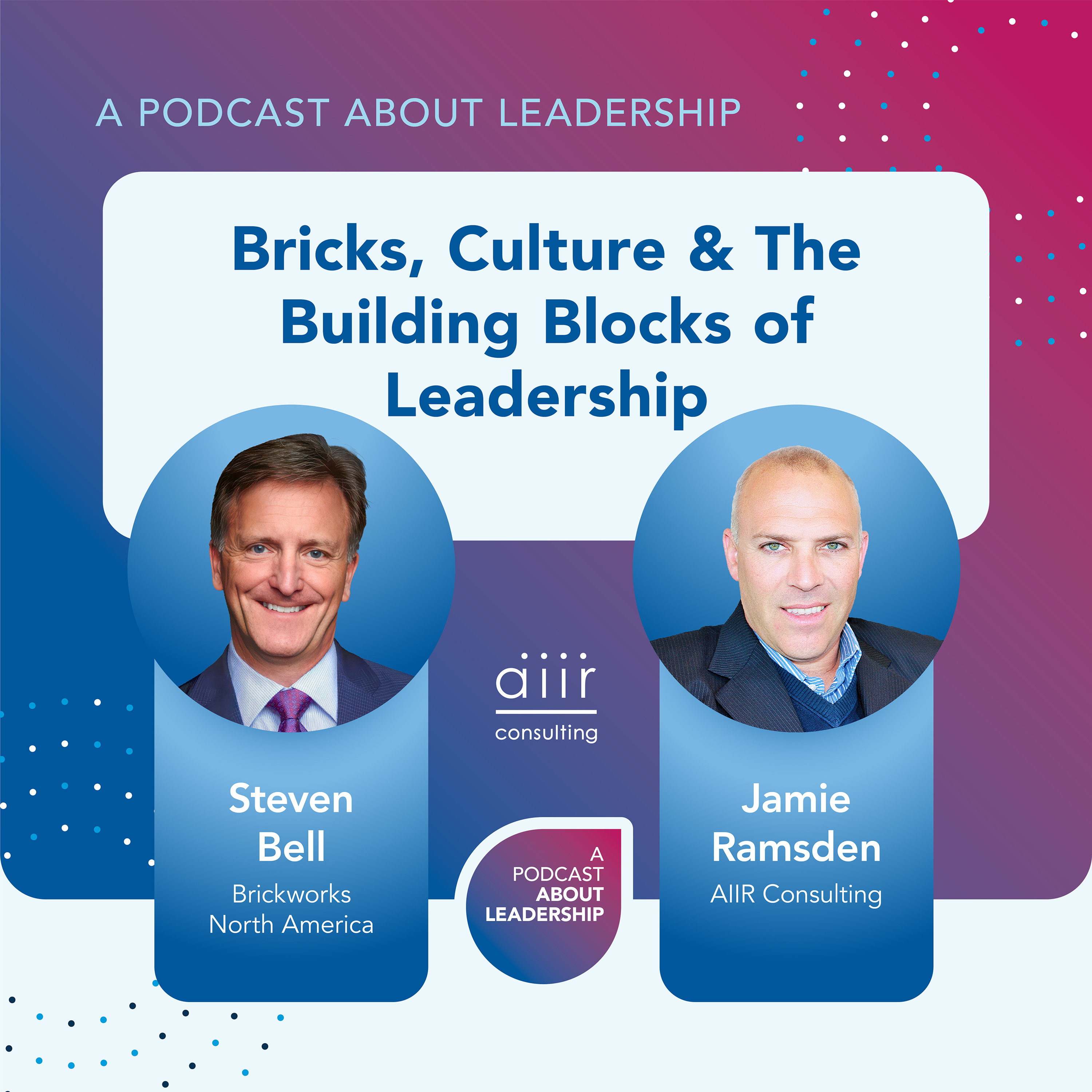 Bricks, Culture & The Building Blocks of Leadership with Brickworks' Steve Bell & Jamie Ramsden63 / 100
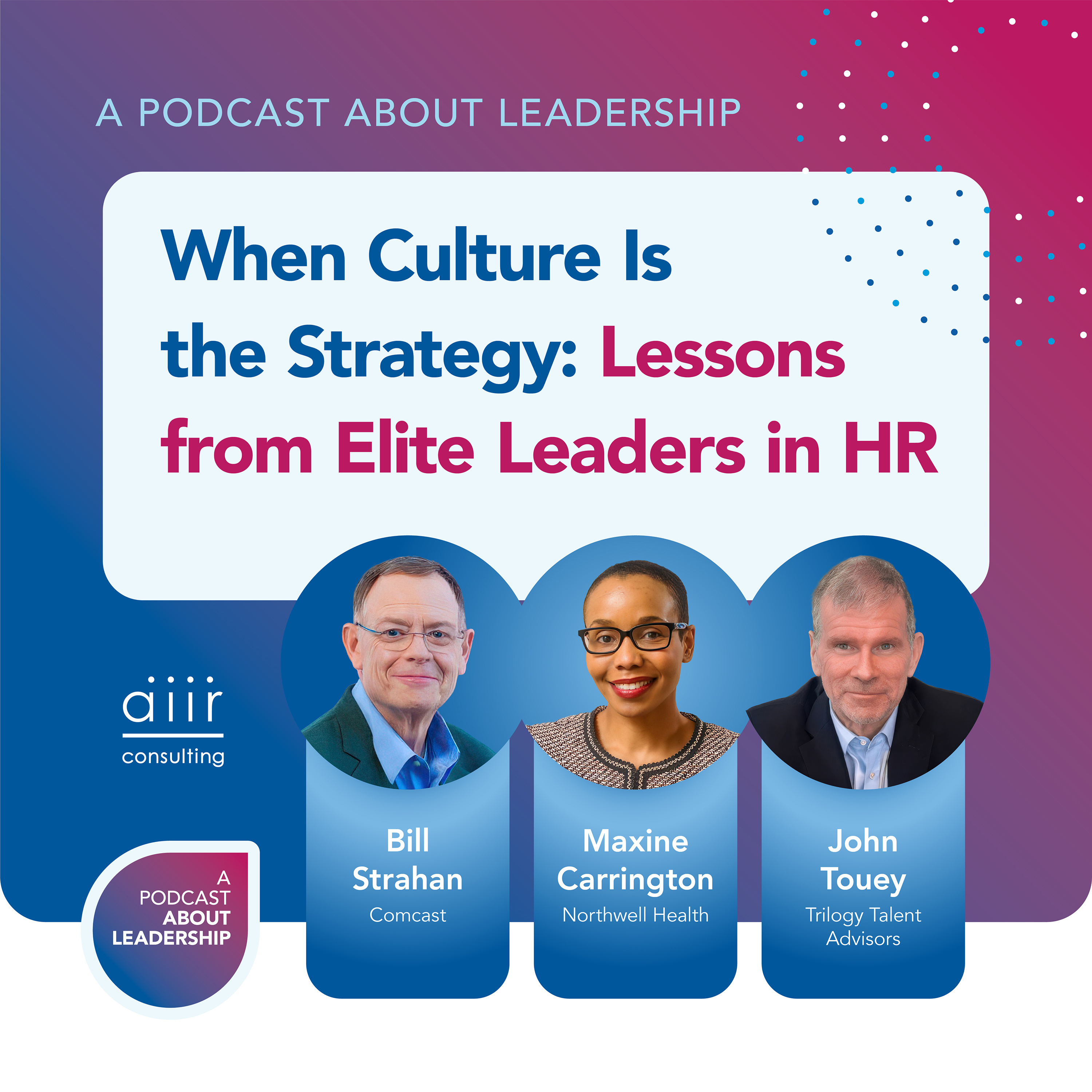 When Culture Is the Strategy: Lessons from Elite Leaders in HR72 / 100
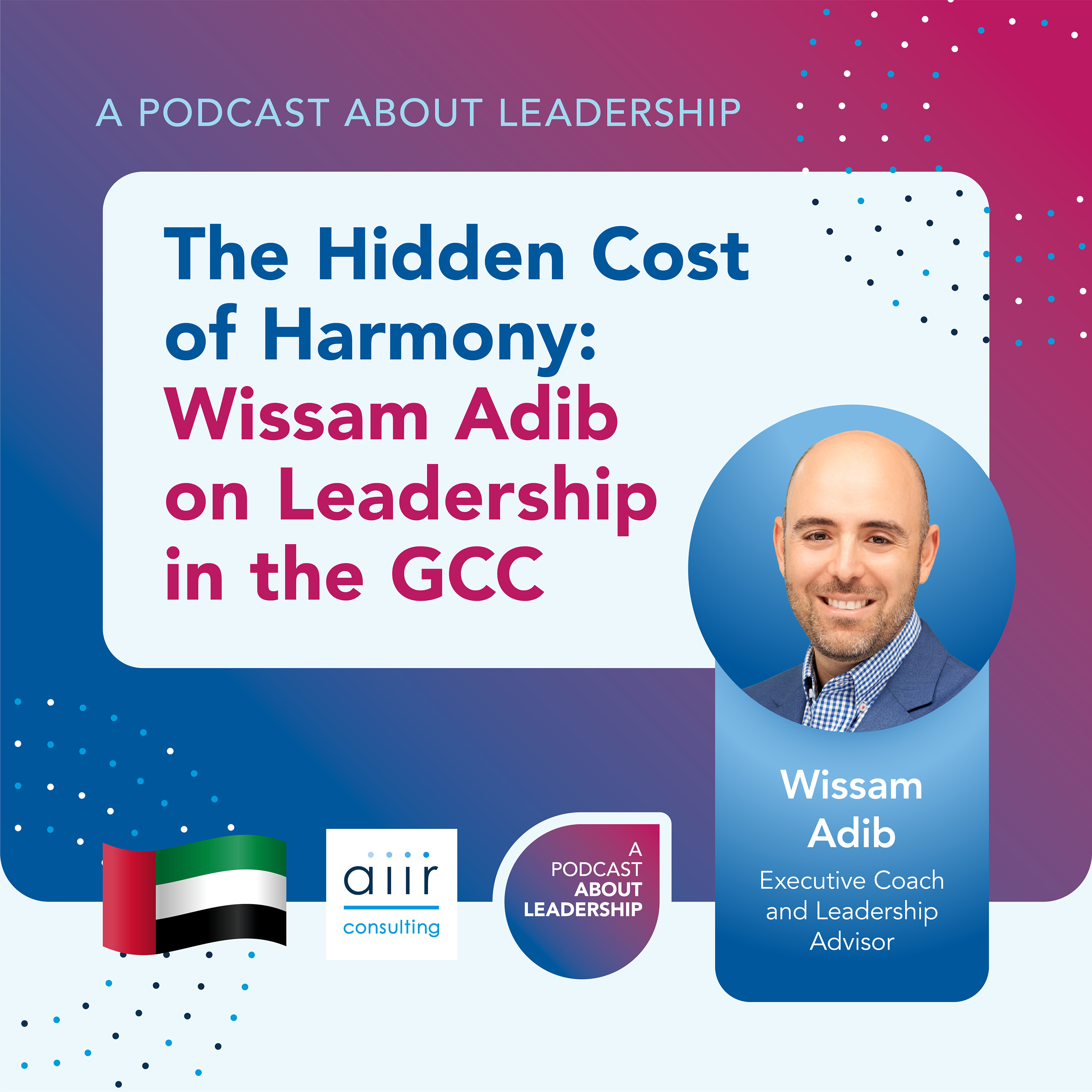 The Hidden Cost of Harmony: Wissam Adib on Leadership in the GCC67 / 100