Wing It · 2025-01-09 · 24 min
This episode captures two marketing leaders reflecting on 2025 trends at the tail end of 2024. The conversation centers on three interconnected themes: the maturation of AI from experimentation to embedded business workflows (Microsoft Copilot, Google Gemini, and LinkedIn's campaign tools), the growing importance of text content as AI systems scrape websites for context in response generation, and the shift toward focused, verticalized targeting with tight marketing-sales alignment. Butler and Turksani argue that organizations must move beyond "arm's length marketing" - where sales and marketing operate independently - toward shared accountability on specific audiences and clear process handoffs. They cite the decline of traditional SDR/BDR models as buyer behavior shifts toward self-directed research, peer reviews, and demands for product experts rather than junior outreach reps. The discussion covers practical implications for local versus enterprise businesses, the challenges of AI-generated ad units, and the strategic necessity of content indexing by AI agents. Both speakers emphasize that successful 2025 marketing requires formal AI strategies, clearer internal processes, and ruthless prioritization - doing fewer things exceptionally well rather than many things adequately.
2025 will move beyond ChatGPT experimentation to real AI adoption embedded in enterprise tools like Microsoft Copilot, Google Gemini, and platform-native capabilities that enable concrete actions like rebooking meetings and creating action items directly in business systems.
AI chatbots like ChatGPT index text content from websites to generate responses, and voice-enabled AI systems process text behind the scenes to provide context - meaning your website content must be high-quality even if users aren't directly reading it.
No - AI SDRs only work effectively with heavily processed, bulletproof BDR approaches and show rapid performance drops; they can augment but not replace capable humans, especially as buyers increasingly demand product experts rather than junior outreach reps.
Verticalized marketing means deliberately focusing on specific target industries or audiences (like insurance or trucking) with deliberate personalization and core ICP targeting, rather than firing on many low-impact marketing cylinders simultaneously.
Teams must document clear processes for how marketing interprets and communicates buyer behavior signals to sales, establish specific handoff points between functions, and ensure overlap to maintain continuity and timely prospect engagement.
Computed from the transcript - who did the talking, and the words that came up most.
Transcribed and scored by The B2B Podcast Index.
Speaker A: I think 2025 is going to be the year of kind of like AI real AI adoption. So we're talking about um, you know, not just people messing around with chat GPT or some of these tools, but I um, think you're going to see a lot more coming into the business tools, whether it's uh, Microsoft copilot for a lot of the enterprises that we work with that are already on Microsoft Gemini becoming a bigger thing within Google's environment. And generally speaking, people, I think part of this driven by Apple and Google, some of their features and Microsoft that are coming out where you're going to be able to do things, take action. Like I want to rebook this meeting. I want to understand and create action items on demand in my system. I think this is going to be the year where not just marketing teams are, are thinking about AI, but business is going to start to understand. Wow, we can actually like use this stuff and it can be beneficial. Wing it podcast goose digital.com Episode 101 who Do we have? Kevin Butler, Michael Turksani. Here we are.
Speaker B: All right, 101. We are officially clear in a way of the triple digit podcast count.
Speaker A: All right, great. Uh, we're into the triple digits now. We just need to get to 200. Oh my goodness. It's going to take forever.
Speaker B: It's going to take about three to five years.
Speaker A: Yeah, no, we got to up the pace. That's why we did this today, uh, before we take off for our client meeting. We're doing it. We're doing it and we're getting it done. Um, uh, reflections, what do we call them? This is another unhinged. Is this an unhinged or is this.
Speaker B: It's unhinged and a bit of a look forward to 2025. What we're already seeing and hearing at the sort of tail end of 2024.
Speaker A: Okay. So you've got your kind of whole area of like focus and stuff like that. Why don't we kick it off with AI and then we'll come to your section next. So, um, I think 2025 is going to be the year of kind of like AI real AI adoption. So we're talking about um, not just people messing around with ChatGPT or some of these tools, but I think you're going to see a lot more coming into the business tools, whether it's Microsoft, uh, copilot for a lot of the enterprises that we work with that are already on Microsoft Gemini becoming a bigger thing within Google's environment. And generally speaking, people I think part of this, driven by Apple and Google, some of their features and Microsoft that are coming out where you're going to be able to do things, take action. Like I want to rebook this meeting. I want to understand and create action items on demand in my system. I think this is going to be the year where not just marketing teams are thinking about AI, but business is going to start to understand, wow, we can actually use this stuff and it can be beneficial. So I think as it relates, kind of bringing it back to marketing, I think if your agency. We'll just talk a little about internal teams. Internal teams. If your internal team isn't really got an AI strategy, probably some sort of an AI, uh, acceptable use policy, how are you leveraging it within your day to day to ultimately do more, you know, do higher quality, do more with less and or your agency isn't bringing that to the table. I, uh, think that you are probably already behind the eight ball and you got. And this is again more than just, hey, we're playing with ChatGPT. Like I think you should have a formal strategy, a written strategy on how you're thinking about doing more with less leveraging AI. What do you think?
Speaker B: Yeah, I agree. If you look at the mass introduction to AI was 2023 and then 2024 has really been the year of experimentation as far as like, how can I inject aspects or capabilities of AI into in this case our marketing world? Then Yeah, I think 2025 is probably the maturation of how it actually can help. It won't be without setbacks or sort of realizations. I think in a lot of the conversations that I have that we have with whether it's clients or peers, I think the initial view was, oh, can AI change everything right away? And the answer was no, really. AI can help come into these little pockets of what you're doing and make change. And I think that's what we've been learning in this experimentation stage. Moving forward though, I do think whether it's marketing technologies or um, media platforms and things like that, they've sort of embedding AI into workflows and capabilities too. So we're. Some of. That's already happening today. So that's kind of the first thing. And then on these sort of like whether it's your internal marketing team or like an agency that you also collaborate with, I would wager a guess that AI is already doing things today, whether you're aware of it or not. Maybe it's like basic productivity, maybe it's like you're fully aware it's actually helping support content creation to some degree, but I think it probably will in one year's time, towards the end of 2025, take a big step forward as far as how it's really contributing to a, uh, marketing program and just day to day functions.
Speaker A: Right. Yeah. And we haven't seen too much from the media or from the networks yet, like the Facebooks, the metas, the linkedins. I think what we have seen, their algorithms have improved, their use of AI has improved, particularly in places like Meta and in LinkedIn where the reach has improved, both the paid and organic reach has improved.
Speaker B: I mean they are talking about because fortunately for us, these companies are publicly traded. So some of their recent earnings calls have reflected better margins in part because of some AI capabilities and capacity. Right. So I think we are seeing some of that sort of more on that side of the business. Some of that I think will trickle into on um, on sort of the, the marketing marketer world next year.
Speaker A: Yeah, exactly like I, I do. I would imagine that there'll be a lot more tools that'll be brought down to a small business level where sure, you can start to develop ad units right out of prompts. Right. Right now with text and images not being kind of 100%. I think some of that isn't really. And I've played with a bit of it, it's not great. So you end up with like a bunch of kind of garbage.
Speaker B: Well, we played with the LinkedIn one. Right. Like the campaign creator.
Speaker A: Yeah.
Speaker B: I forget what it's called and it was okay. But I could easily see the next time we open it up it being a lot better.
Speaker A: Yeah. And I think if you're, if you're a smaller business, especially if you're um, like a local business and you've got a geo that you're working with, so you're probably not spending massive ad dollars. I could see that part of the market really being gobbled up by these tools. Right. Where a business owner can set something up, get it going, spend $50 or $100 on it. I think when we looked at that LinkedIn example very quickly, it was going to spend a lot of money. If you were uh, if you were a business that maybe sells across the country or into the US or across all of North America or globally, like that thing would not be optimized and you absolutely still need to have uh, a demand gen or a LinkedIn expert that knows what they're doing. So that's interesting.
Speaker B: I think to that Point though, the one interesting thing about our as a society, forget even just marketing for a minute, but just as a just people in society. When you think of AI adoption like an analogy to me is like if a picture is worth a thousand words, like what's a video? It's exponentially more. And then so you transition that thought to, well, as we got used to search engines, that's one thing in a box. But then AI is an entirely more exponentially large box too. And I think not only do the applications have to improve and incrementally they are, but I think how the users are using them also has to improve. Like, you can't just type into ChatGPT today, can you fix my LinkedIn program? Go. So it's more like, well, how do I guide it better with better prompts, better direction, how do I slice it down into multiphase steps to do that? And then I think you're starting to see, okay, now it can help actually infuse components of a campaign that would then improve the overall performance rather than, hey, one broad sort of command. Here it goes.
Speaker A: Yeah, for sure. And, um, you know, you made me think of, when we're talking about AI and marketing, that if you don't have your strategy figured out to begin with, you know, leveraging these systems kind of becomes a garbage in, garbage out scenario.
Speaker B: It's like working with like uh, a graphics specialist or something. Like they're only as good as the direction that they're given. And that's exactly what we're seeing. And pivoting to some of the trends that we're seeing in AI, like this here is kind of on the marketing and marketing services side of the equation, maybe tooling. We've seen the rise of like the AI SDR or bdr. And I think like, I've kind of been watching from afar and there's a few, what seem to be stronger vendors in the space. And it's not perfect, but I think like the notion of I can replace, uh, a team of five or six BDRs with this AI SaaS product I don't think is really totally viable. You have to have a heavily processed, bulletproof approach to how you do BDR work for it to have any chance. And I think it's kind of like the early results are, hey, this is great. The output's about the same, but really quickly it drops off.
Speaker A: Right.
Speaker B: Because how could it really be as good as actual capable, smart, uh, bdrs today?
Speaker A: Yeah. And I think the, when I reflect on, you know, our experiences there and our, and our customers that have rolled out that strategy. It is interesting, I think where companies have really struggled is having skilled enough BDRs that can, you know, they're probably decent relationship people. Uh, but the knowledge of the platform, the m knowledge of the use cases, the knowledge of the intricacies kind of quickly falls down and you kind of get into this mode where. Well, I'm actually not paid to answer those questions. I'm paid to simply book the next meeting and get that started into a demo. So it's interesting, I think, you know, because of the poor customer service experiences that I think we've all had and probably the less than stellar SDR BDR type of experiences that we've had as well, where it's like, I'm just trying to ask a few fundamental questions. You're pushing me into a demo. I wonder what uh, that'll transition to. Does it become a hybrid search kind of a scenario where it's not quite, you know, it's more knowledgeable about, about what the system can do. So you could basically say, look, I'm not going to really get into a demo unless I can understand these five things, kind of at least at a high level. Yeah, that could be interesting. Where then there's an unlock to say, oh, wow, okay, great. That's actually useful for me because I don't want to waste an hour only to find out, you know, And I think a lot of these, as a lot of these processes that we've been through and we've seen, they really hold back the information. Right. They want you to get into multiple sessions. Right. So you don't even in the first demo. You're not necessarily getting the breadth of info. You're getting a lot of kind of first call deck, little bit of this. I think I understand your needs and probably not a lot of the system at all until the second meeting.
Speaker B: Well, it's like that sort of like early 2000s, we're not even giving you pricing till the third call. Some of those walls have come down. Right, right. In this new era of more transparent marketing and putting everything sans gates and all that stuff. So I just think like the whole BDR sdr, um, function needs to be rethought because like it really exploded and blew up coming out of the whole MQL Marketo is here and we're going to surface 100 leads every month for you, regardless of how big your total addressable audience really is.
Speaker A: Right.
Speaker B: Ah, and now I think what's happened is like the buyers have taken control of the sales process. We've all heard, read and seen stats like 70 to 90% of the sales cycles being done in the dark or sort of without these organizations reaching out to vendors, they no longer trust the vendors themselves for like quality feedback or like insight into how they can make a decision. So what do they do? They go to uh, peers, they go to sort of ratings and reviews. They do their own research that they trust a lot more. And as a result the STR functions kind of come down and on top of that the buyers are more sophisticated and they're like I don't want to talk to what we perceive to be a non product expert or someone who's junior. I just want to talk to someone who really understands my problem and I'll focalize what that is, what my challenges are when I'm ready and very far down the research path.
Speaker A: Right, yeah. Which then also goes to the, you know, the whole point around come bringing it back to AI and then let's move on to your point around focus areas. The um, you know, the chat GPT knows to, or you know these systems need to know about your website now there's you know, answer engines, this concept, um, there's web searching. So I think things will change in that area as well. To your point like if people are doing research, they're using the chatbots to do it and you're not publishing enough content to be known. I mean these things have already indexed the entire Internet. Right. So what they're indexing next is the content that you're publishing. So it's really interesting when you think about as the business, as people in business get more comfortable using these tools in their day to day lives, you know you're going to see a shift in traffic. I mean there was that one company, I think it's called Chegg. Have you heard about that? Right, you heard about that one where you know they just took a massive hit. They're claiming chatgpt kind of ruined their life because uh, of you know, the fact that so many students leverage it now and I think that's a major behavior change. Right. And if we start to see something similar in business where oh wow, now our business is using Microsoft Copilot, our business is using Gemini. Our company is allowing us to have OpenAI accounts and we're using it to streamline our own processes. Oh my goodness. Including research on our agency, research on uh, our customers, research on next vendor man, you better be there. Uh, from an AI point of view
Speaker B: but also just on this last note here, I have one client I work really closely with. Visual. Whether it's images, imagery or video is so crucial to how they tell their stories and services. So the challenge is we've been looking really closely at uh, well, how many website visits are they getting from ChatGPT. And each month it seems to be going up. It's like uh, it's going up between 50, uh, and 100% month over month. Recognize we're starting out very small six months ago. So it's not a meaningful part of their monthly traffic to date, but it's growing. And I think the concern here is it's going to force them and many other organizations like them to rethink how they approach content and storytelling without visuals. If those answers are coming straight through into OpenAI, ChatGPT or any other solution, well, how do we, how do we articulate a value prop.
Speaker A: Yep.
Speaker B: Or like levels of experience and all the things that video and image that really blow us away. Well that's not there anymore. And so it's a bit of a, it's going to be a challenge.
Speaker A: And by the way, like I think people have. And then we got to move on to your focus areas that people have kind of scoffed at text for a while now. Right.
Speaker B: Like blogs.
Speaker A: We're writing blogs. But the other thing is that I don't know about you, but I've been playing a lot more with using the tools, with the voice enablement. Right. So you're actually talking to these chatbots. Right. Well guess what, behind the scenes they're indexing text and using the text coming back from your website as part of their responses. So it's really interesting. It's almost like people may not be reading this stuff. ChatGPT is reading it in order to get context. Uh, and then you're talking to it order to get what we need.
Speaker B: So let's move on to big time prediction though. Text is going to be a big focus point of 2025 and I kind of love it. It's going to really force marketers to get right back down to basics.
Speaker A: Yeah, for sure.
Speaker B: Think about that.
Speaker A: So, so that, that I think leads us to like getting back down to basics, getting to focus areas. That leads us to your point for Next point for 2025.
Speaker B: Yeah, a lot of conversations about 2025 planning and, and what's going on in marketing programs. I think across the board what I see is either um, marketing budgets are staying the same or they've been decreased a little bit. And so to me, what the Conversations are about focus, what are the things we can cut and trim from previous budgets and what are things we need to keep. But also then focusing in on what are those core and strategic audiences we're trying to go target. And that's really been the push. So organizations that historically wouldn't be jumping on to, you know, digital marketing trends we hear and read about on LinkedIn every day, like ABM, they're talking like that, but not from a. We need to do abm because that's the new thing. What they're really approaching it as. They're not even calling it abm, they're just calling it like verticalized pushes or just focusing in on core audiences, wherever those are. And it really kind of works back to ABM. It doesn't have to be some fancy thing with 200k of martech in the background. It's really more about what's a deliberate personalized push to a very small audience that represents our core icp. And that's really the big thing here. And it doesn't have to be mounds and mounds of process. It's just how are we getting out to these people and what are the basic insights that we can derive that would note engagement and interest and perhaps then doing something to mobilize some level of, you know, intent or hand raisers or just, you know, contacting.
Speaker A: Right.
Speaker B: So yeah, that's really the big theme this year is how it's a, you know, tactical way we can be a lot more focused in reaching our target audience.
Speaker A: Yeah, I think it's, it also includes, oh, we got our, ah, our things going on for. We'll pick that up in the background. Um, to me it's, it's a focus area, but it's also uh, what I might call like arm's length marketing in the past where you'd have had like a sales team over here, a marketing team over there. There's a ton of things going on in marketing that may or may not be totally aligned to what the sales organization or the business is trying to achieve and or even if it is high level aligned, it's not, I guess, really wrestled to the ground in terms of how it's fully deployed, fully integrated into um, the program. So I think what we're seeing is teams that are saying, okay, look, we used to fire on a thousand cylinders and let's be honest, not all those cylinders were big enough and, or strategic enough and or uh, well rounded enough. Let's bring that down. And as a group we've got shared accountability now.
Speaker B: If we're going to go out to
Speaker A: you know, a vertical, call it, you know, uh, an insurance vertical or a trucking vertical or whatever it happens to be. Let's look at doing that. Well, what are the exactly the messaging that we're trying to use and get, and get very detailed around that so that you don't have this arm's length marketing where hey, we all said we were going to do something. But then when you actually go back and really look at what happened, uh, ah, there were holes here. There were holes here. That sentence could have been a little tighter. That graphic really wasn't exactly aligned. And did we do something? Yes. But did we execute it the best that we could have as a group? Probably not. And I think that's another big part of what we're seeing.
Speaker B: I think as well like that the alignment's key. We've been talking about marketing and sales alignment for years. This is going to force that even more. And I think on top of those nuanced details that you're bringing up, it's going to be about process. Like how does marketing interpret behavior, how does it communicate behavior amongst this target audience with sales and what does sales do about it?
Speaker A: Mhm.
Speaker B: So there's that like that space in between the two functions that's really going to have to be figured out in order for these focused programs to actually function properly. So it is a less is more, but that's a really critical component. So just like we're seeing text and text focus is going to be a big part of 2025. I also think 2025 is going to be the year of marketing and sales alignment, specifically in process and identifying where is that baton handoff. So that's kind of the secret sauce to me. And a lot of these ABM like conversations I'm in, we're talking about process and where one function ends and the other begins and ensuring there's some layer of overlap to ensure continuity, quick movement and getting to those prospects when they need to be getting to.
Speaker A: Yeah, yeah. Okay. Well I think those are good couple two broad 2025 predictions. What we're, what we're planning to uh, work with our clients on. For sure. Goose Digital AI is coming out shortly. We bought the domain. We've got a strategy, I've got a digital avatar. So uh, we'll see that, we'll see how that rolls out.
Speaker B: Customer service AI play perhaps?
Speaker A: I think so. I think there's definitely uh, one of the platforms we work with is launching a chatbot. Right. An intelligent chat bot. So we'll see. We'll see how that works, but I don't think we're ready to turn our entire website into a chatbot yet.
Speaker B: But will my avatar have as hard a time getting your calendar. Your avatar's calendar. As I do yours today? We'll see.
Speaker A: Oh, yeah, yeah. My avatar's calendar is going to be booking meetings with your avatar, and then they'll just be meeting. So that'll be interesting.
Speaker B: What did my avatar say to you?
Speaker A: Hopefully, we get those notes and we get those action items that come out of there. Um, okay, good. Well, 101 under the belt.
Speaker B: Done.
Speaker A: So we'll, uh, we'll be back for 102 soon. Cool. All right, later. Peace.
Other episodes covering the same guests and topics, from across The B2B Podcast Index.
 Episode 029 AI and the Rise of the Superpowered SoloAI Tools for Practicing Lawyers · on ChatGPT88 / 100
 Wins Above Replacement: The New Way to Judge FoundersVenture Unlocked · on ChatGPT88 / 100
 Paul Graham On Startups, Ambition, and Great FoundersY Combinator Startup Podcast · on ChatGPT88 / 100
 The AI-Native Law Firm, with Ryan Walker of General LegalMeeting of the Minds · on ChatGPT88 / 100
 How a solo founder used Codex and ChatGPT to launch a fashion brand without engineers | Yana Welinder How I AI · on ChatGPT82 / 100
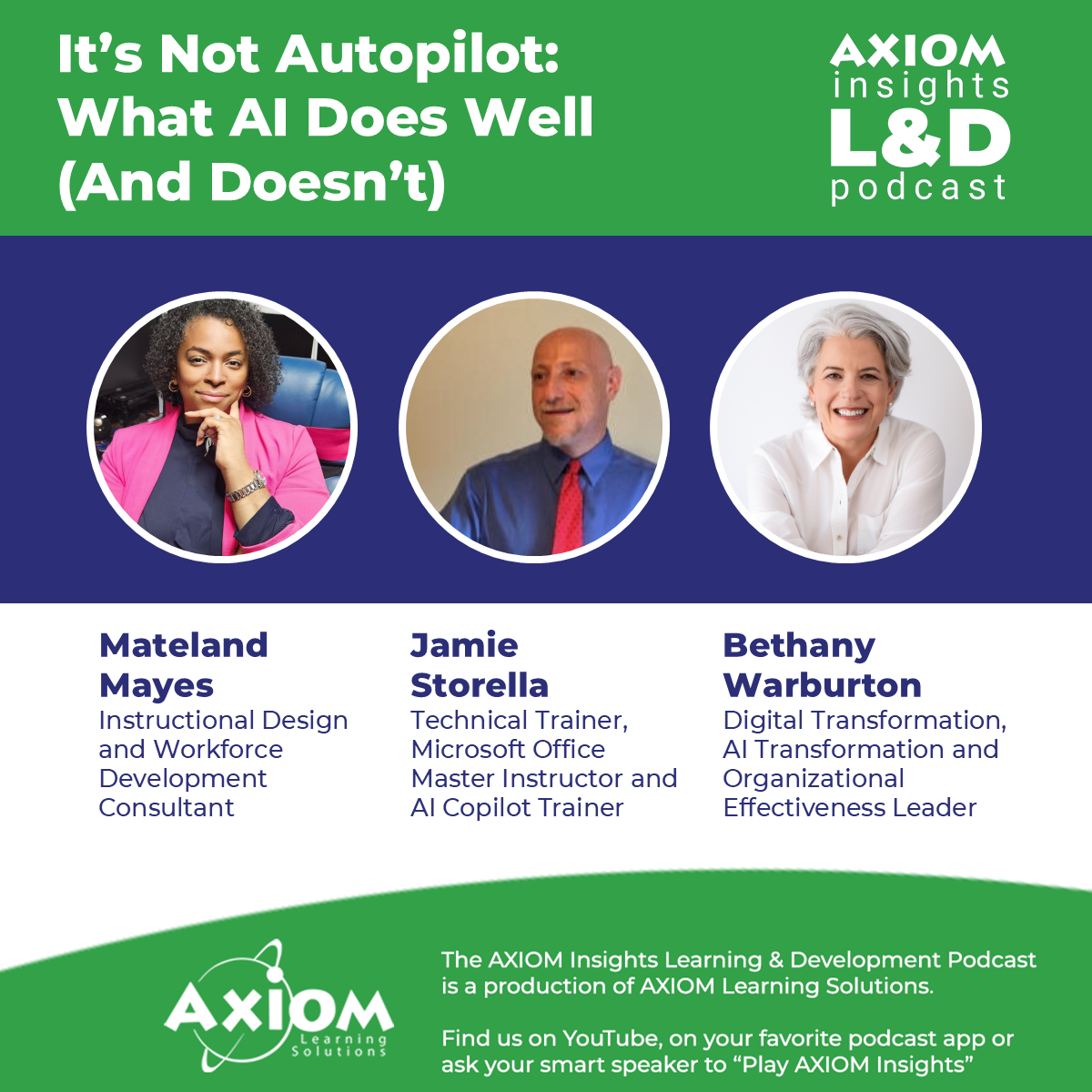 It's Not Autopilot: What AI Does Well (And Doesn't) - AXIOM Insights Learning & Development Podcast #46AXIOM Insights Learning and Development Podcast · on ChatGPT79 / 100
 Redefining Success for Modern Marketing Operations - Wing It Podcast Ep 10457 / 100
 Ep 103 - Founders, Funders, and the New Rules of Growth
 Wing It Unhinged - All About Intelligent Marketing - Wing It Episode 102
 Wing It Unhinged - Agency Personality Matters - Wing It Episode 98
 More Markets, More Services, More Success. Goose Digital + MoreSALES. - Wing It Episode 100