
What's Next! with Tiffani Bova · 2026-07-02 · 30 min
Key moments - from our scoring
Substance score
39 / 100
Five dimensions, 20 points each
Caroline Stokes, author of Aftershock 2030 and a Thinkers50 Radar Honoree, joins Tiffani Bova to explore leadership in an era of accelerating change. Rather than focusing solely on AI adoption, Stokes argues that the real challenge is how leaders adapt themselves to navigate the collision of technological disruption, economic uncertainty, and societal shifts. She references Alvin Toffler's Future Shock prediction from 1970 and positions today's environment as the 'Aftershock' - where change is happening at unprecedented speed. The conversation centers on why leaders must stop and reflect before implementing transformation, the danger of AI-driven isolation in organizations, and the need to bring teams along during change initiatives rather than working in isolation. Stokes discusses how curiosity, psychological safety (drawing on Amy Edmondson's framework), and playful experimentation with tools like Claude and GPT are essential. She shares a case study of a leader who went from AI-avoidant to building sovereign AI products with VC funding in 18 months. For B2B operators managing teams through constant disruption, this episode addresses the emotional toll of change, the addictive nature of AI work done in silos, and practical approaches to 100-day transformation sprints that actually stick.
Leaders often rely on the playbooks and behaviors that got them to their current position, but as Marshall Goldsmith's principle states, 'what got you here won't get you there.' Stokes emphasizes that stopping to reflect, rather than operating on autopilot with old OKRs and KPIs, is necessary because the operating system and customer priorities have fundamentally changed.
AI provides constant, non-judgmental feedback loops that can become addictive, causing leaders to work in isolation and develop ideas that their teams don't understand or see the connective tissue for. Without bringing teams into the exploration collaboratively, there's a broadening gap between leadership's AI-accelerated thinking and team comprehension, leading to alienation and slower rollout.
Organizations often lack clarity on the actual mission and KPIs, with CEOs saying 'everybody should do this' without defining what success looks like. This leads to wasted tokens and effort. Alternatively, some are too cautious and need to approach AI with curiosity and small, playful problem-solving rather than waiting for perfect strategy.
Research shows it takes 66 days for humans to change a behavior. When organizations push multiple changes simultaneously without spacing them out, employees max out on change capacity and cannot adapt, making the pace of technology transformation (now over 10 per year) extremely difficult to manage without psychological burnout.
Yes - tools like Claude can connect to calendars to analyze weeks and flag missed emails and follow-ups - but only if leaders remain intentional about human connection. Tiffani Bova emphasizes that AI should offload administrative work to free time for joy and human leadership, not replace the human interaction that management by wandering around requires.
Our reviewer’s read on each dimension, with quotes from the episode.
The episode surfaces a handful of genuinely interesting data points - Salesforce's Einstein in ELT meetings eight years ago, Lloyd's boardroom AI experiment, Will Marshall's shrinking prediction horizon - but most of the runtime is filled with vague exhortations to 'stop,' 'be curious,' and 'have a mission.' The ratio of novel claims to restatements of the obvious is low for a 30-minute runtime.
he can't predict more than three months
everybody's wondering why they've got a $500,000 token bill
The episode leans heavily on borrowed frameworks from named others - Toffler's Future Shock, Goldsmith's 'what got you here,' Nadella's 'learn-it-all,' Amy Edmondson's psychological safety - without meaningfully extending or challenging them. The 'Aftershock era' framing is novel in name but not rigorously developed into a distinct, testable argument.
it was first predicted by Alvin Toffler, uh, in future shock back in 1970
What got you here won't get you there. I know Marshall Goldsmith wrote a book about it
Caroline Stokes is a credentialed executive coach and published author with a Thinkers50 recognition, but she is fundamentally a consultant and thought leader rather than an operator who has scaled a business, led a transformation, or built product at meaningful size. Her specific examples are secondhand ('I haven't seen this in action') and her background is advisory rather than practitioner.
I haven't seen this in action. It was. But I'm imagining I'm going to use my imagination
I have worked with somebody that has transitioned his organization
The episode does name concrete examples - Salesforce Einstein in board meetings ~8 years ago, Lloyd's Insurance boardroom AI pilot, Planet Labs/Will Marshall's forecasting horizon - but most are treated as anecdotes rather than evidence: no metrics, no deal sizes, no outcome data, and the Lloyd's example is explicitly imagined rather than verified.
Marc Benioff had Einstein, which was Salesforce's AI and still is, um, in his executive leadership team meetings every week and the board meeting eight years ago
Lloyd's, um, insurance, uh, in London, they, quite recently, I'd say it's three months ago, they decided that in the board room they would have AI assist them
The host adds genuine substance from her own experience (Salesforce, the 66-day behavior-change stat) and her questions show real domain familiarity, but the questions are frequently long-winded and pre-answer themselves, leaving the guest to agree and amplify rather than be pressed. There is no meaningful pushback, no challenged claim, and the bullish/bearish opener is pure fluff.
it takes 66 days for a human to change a behavior. Right. And I get five and they all affect me
don't get caught in the trap that you can manage your business now and AI can make you more, you know, efficient and effective and, and productive. And forget that leadership really hand
Computed from the transcript - who did the talking, and the words that came up most.
Welcome to the What's Next! Podcast with Tiffani Bova. My guest this week is Caroline Stokes, a leading strategist, executive coach, Thinkers 50 Radar honoree, and author of AfterShock to 2030. Her work focuses on helping leaders navigate reinvention in a world where the old playbooks may no longer apply. While we spend a lot of time talking about AI, disruption and transformation, Caroline argues that the real challenge may be something deeper: how leaders adapt themselves before they try to transform everyone else. THIS EPISODE IS PERFECT FOR…leaders navigating the changes of our world who want to stay relevant, help their teams adapt, and build confidence in an increasingly uncertain future. TODAY'S MAIN MESSAGE…many leaders are focused on transforming their organizations, but Caroline argues that the real challenge is transforming themselves first. As AI, economic uncertainty, and societal shifts accelerate simultaneously, old leadership playbooks are becoming less effective. Caroline explains why curiosity, continuous learning, and self-reinvention are now essential leadership skills.
Transcribed and scored by The B2B Podcast Index.
Speaker A: Hello, everyone, and welcome to this episode of what's Next. I am your host, Tiffani Bova. My guest today believes we're entering what she calls the Aftershock era. Um, a period where technological change, economic uncertainty, and societal shifts are colliding all at once. Caroline Stokes is a leading strategist, executive coach, Thinkers50 Radar Honoree. Congratulations. And author of Aftershock to 2030. Her work focuses on helping leaders navigate reinvention in a world where the old playbooks may no longer apply. And while we spend a lot of time talking about AI More than I'd like, disruption and transformation, Caroline argues that the real challenge may be something deeper. How leaders adopt themselves. Because before they try to transform everyone else. Caroline, welcome to the show.
Speaker B: Thank you so much for having me.
Speaker A: All right, well, we are going to start off with something, uh, I call bullish and bearish.
Speaker B: Okay.
Speaker A: Um, bullish, you are for it. Bearish. Uh, you are against it. Are you ready?
Speaker B: I am ready.
Speaker A: All right. Four day work weeks. Bullish or bearish?
Speaker B: Bullish.
Speaker A: All right. Time travel. Bullish or bearish?
Speaker B: Bearish.
Speaker A: Really?
Speaker B: Oh, that's not gonna happen. Okay.
Speaker A: Uh, don't be a literalist. I don't even know if that's a word. Let me try again. Time travel. Would you do it if it was available?
Speaker B: Would I do it completely? I would do it right now, yeah.
Speaker A: All right. Forward or backward?
Speaker B: I'd go forward.
Speaker A: Okay. I don't know. I don't know. All right. Uh, and then, um, taking a sabbatical every seven years. Bullish or bearish?
Speaker B: Oh, I would definitely do it. Do it, do it, do it, do it. In fact, more often. I think seven years now is just like, it's too long. It's like we have to reinvent ourselves every three years right now. So I think we need more than once every seven.
Speaker A: I would agree.
Speaker B: I would agree.
Speaker A: Yeah. I sort of, you know, with your European accent, I would say Europe has figured it out.
Speaker B: Like, they have. It's too bad I've been living here for 20 years. Yeah. Yes.
Speaker A: But, you know, they figured it out, right? It's like, oh, no, you know, call me in 30 days because I'm going to be on holiday. It's like, wait, what? Yeah, nuts. Uh, all right. So one of the things, uh, that really interested me when I got the opportunity to have you on the show is you and I are aligned on something right out of the gate where you aren't really talking about technology for technology's sake. And I always tell people who are in the technology industry, if they're selling it or building it, that we don't really sell technology and make technology, but we sell change and make change. Like people did something a certain way and technology now allows us to be able to do it another way. You can argue it's better or not better, like, but it's still the. I used to call you on a landline phone, now I call you on a cell phone, right? Like I used to drive my car, now it can drive itself. Like pilots used to have to carry 72 notebooks and now a lot of it is automated. Like, I mean, you know, technology's just changed how, how we do things. Um, but with every major shift, know whether it's, you know, AI now economic uncertainty, organizational change, um, it's, it's understanding how we need to change. And, and I'd like to start there, like how we need to change with all these things colliding. Because I think those listening to the show, I rattled off four in sort of the intro of all these things colliding simultaneously. But some people might feel like dozens of things are colliding for me simultaneously
Speaker B: and they are all colliding simultaneously. Uh, it's the biggest tsunami of change we've ever had since it was first predicted by Alvin Toffler, uh, in future shock back in 1970. Uh, reason why I call my book Aftershock is because we're now at that point, we've just been so shocked into all of these environments that we're in now, um, from an environmental, from a, um, from a, from an economical. Etc perspective, technological, etc. Etc. Etc. That we, it's. We've. We've had the ultimate whiplash. And to change how we are, number one, I always suggest that people educate themselves as much as possible. And I think we have so much at our actual fingertips with AI now that we are able to learn everything all at once if we want to. Um, I think the great thing about AI is that it's been democratized when we can actually have access to that data. We no longer need to go and sit in a course for a year or two years to get a qualification. If you're hungry and you want to be scrappy about it, you can do a deep dive, um, trying to avoid psychosis in the meantime in AI to be able to get to that point. But for the majority of people it's. There's a huge amount of grief that we're experiencing right now because of the, the whiplash that we're experiencing. And it's a lot, it's a lot for people to be able to take. And what I like to say to people, and I was talking to um, a major newspaper about it the other day and uh, they said what, what, what do we all need to do? And I said we all need to stop. And I'm not talking about AI leaders saying, you know, stopping the brakes there because then the argument is, well, China will, you know, over overtake us, etc. That's like stop and work out really what we need to do next. We're about to hit net. We're going to be passing over the net net zero goals, which is a huge problem that we're going to have major migration issues everywhere, uh, thanks to the Global South. Everything we do impacts the Global south and that's why we're going to have huge migration. People, uh, are going to be homeless, um, you know, in that Global South. So, uh, so economies are going to be changing. Everything is going to be changing. So it's behooves us to just go to stop a second, even if it means jumping in the bath, nice hot bath for an hour to go. What do I really need to do for the next five years? What do I need to build? What do I need to create that will enable me, my family, uh, my business to be able to sustain itself?
Speaker A: Yeah. And I think there's a few things. There was some research that was done from my previous, uh, life where it literally showed, um, let me just hone in on technology. Like you were saying, this kind of, you know, it's not just about AI, it's not stopping AI, it's just stopping kind of like to just absorb, think right, think, absorb, reflect, make a decision. Um, that it used to be like an average of, you know, three, five big quote unquote, 10 technology transformations in a year.
Speaker B: Yeah.
Speaker A: And not everybody would get hit that. And this was 15 years ago.
Speaker B: Yeah.
Speaker A: And now that number is way over 10. And, and the, the receivers of all that change is the, is the human, is the employees. And not everybody like you might make a change in the HR department that no one else feels. Or in finance that no one else feels. Or sales and marketing that no one else feels like. I understand that not every enterprise transformation or business trans. Is felt by every single employee. I understand. But even if it is three to five, let's call it five, it takes 66 days for a human to change a behavior. Right. And I get five and they all affect me. I maxed out now on all this change and Or I'm not given 66 days in between each change, or maybe two or three come at the same time.
Speaker B: Exactly.
Speaker A: And so I feel like. And really where I wanted to start is, you know, why do leaders wait so long to actually look at themselves and reflect on how are they going to reinvent themselves in this new pace of change we're all faced with? Because the sort of frantic response of, I'm not going to prioritize, I'm not going to have people focus, I'm just going to throw things over the fence and everyone's going to catch my Sunday night thing or my Monday morning thing, um, because they're the ones that actually do the work. And so it gets difficult. So how do you get people who are listening to this, who might be leading a team and they might be the ones pushing all this change without actually understanding the impact.
Speaker B: Oh, and I'm so glad you brought this up because the issue is obviously that when a leader, let's say it's somebody who is a, you know, wanting to move into the VP space or uh, somebody that wants to, uh, set up their own company, or they're in this environment already, how do they navigate that? And it. And it really is about stopping and being able to say, okay, what? And uh, I remember hearing you say this. What got you here won't get you there. I know Marshall Goldsmith wrote a book about it and so on, but the like, we have to radically reinvent ourselves. And how do we do that? We know that we have AI at our fingertips. We know that we have certain skills that, you know, we're all individuals that have skills. We have desires on what we want to do next, uh, where, where we want to go with something. So channeling into that and having very candid conversations with your team about, look, guys, people, this is our mission now. And I know you would be working with this as well, which is if an organization doesn't know what its mission is, they're not going to know what they're doing. They're going to be working on old OKRs, old KPIs, old behavioral trends and what have you. So it requires that stopping and listening and thinking together and to acknowledge that it's going to be a really uncomfortable time. Really uncomfortable. Because people will say, well, I thought we were doing this because they're not able to make the change. They're not able to, uh, change internally, their own internal wiring because they're working in the old operating system or the old paradigm, or let's say they see a Different future. And, you know, maybe they're not going to be the right people to work with the organization anymore. Um, but it does require, you know, you just mentioned this, which is that kind of inner work. And it's never too late. It's a constant work in progress. It can be that, oh my goodness, eureka moment in the bathtub. Uh, it can be that, oh my goodness, while you were having a walk and realizing, actually what we're doing here, nobody's buying it. There must be a reason for this. Why aren't people buying it? Well, because the consumers or the customers have different priorities now, or the pricing is wrong and you have to adapt something. What is it you need to adapt? What is the problem that needs to be solved? Um, it's really having more of those conversations. And as you know, the issue is the majority of people are thinking, oh, we need AI to do it, but really you need to collaborate with AI as a team, collectively, to understand what all together at the same time to be able to move, to move across at the kind of light speed that we now need.
Speaker A: Well, I think there's a few things because, uh, often my ending of keynotes is I say, look, the one thing you can control is kind of how you show up. We can't control all this change. We can't control what our bosses tell us or our companies or what we're paid or what, you know what I mean? Like, there's very few things we can control in our quote unquote work world. Um, unless you run your own business, that's different. But, um, if you work for somebody very hard, um, more difficult, let me say more difficult. And so how you show up is you have to stay curious. So like, if you're listening to this and it's like nonstop, AI, AI, AI, AI, you is, you know, figure out where could I apply it to my day to day. Could I set a little thing, 15 minutes a day where I get on AI and I ask something I'm curious about. I want to be better at managing time management and follow up after calls. How do you suggest I do this? It might say, you know, as long as this is okay with your company. So make sure you check with your company. But. Right. Having Claude connect to your calendar and analyze the week and help you set up for meetings and looking through for things that have fallen through the cracks or what emails have you not responded to that are actually top priority and really help and becomes your assistant, if you will. In, uh, if I want to really spend more time doing what I find joy on. I have to offload some of this. And so can I use AI to do that? I don't know if the answer is yes or no. I don't know if you're going to find anything, but if you're not willing to even try to go find it, um, and really making that time for it. But I feel like people are so worried about being wrong so much versus becoming irrelevant. Like, you're irrelevant because you're not using new tools. You're irrelevant because you don't have a point of view of how and where to use AI in whatever it is you do. Or you're, you're going to become irrelevant because you're, you're not willing to adapt to change. Like, are you going to become irrelevant because of a decision or decisions you're making, not because your job, because becomes Right. Right.
Speaker B: I'm so glad you're saying that because, uh, when I was, when I did my TEDx in um, Brooklyn back in 2019, before the pandemic, uh, the, the, the TED talk was really about emotionally building, emotionally intelligent organizations in the age of AI, the incoming age that was coming along. And um, and it all happened very quickly. I had published my book Elephants Before Unicorns just a couple of months before and I could see that things were accelerating, Everything was accelerating. And then Covid distracted us. And you know, all the AI gods were doing whatever they were doing and, and accelerating what they needed to do, uh, which was just fantastic. But the point that I was also saying, which is what you just said, which is we need to have the curiosity, we have to be playful, we have to experiment with the technology in front of us. And I have worked with somebody that has transitioned his organization. He was completely AI avoidant about, I'd say it's 18 months ago now. So AI avoidant did not want to go near it. And I said, hey, this is how I play with it. Why don't you have a go? I'm not kidding. 18 months later, he's got three different projects going on, uh, to create Sovereign AI, uh, for all sorts of different organizations and uh, institutions. So it's one of those things that once you start putting one foot forward on one day, you're able to accelerate and move a lot faster. Uh, and it's such a game changer. So he went from a complete AI avoidant, really dismissing and looking down his nose through to now being a super user that is actually building, building products, building business and getting VC funding. So I think that's the difference you just have to start. Just put one foot forward.
Speaker A: Yeah. The one thing I want to caveat here, uh, and I've heard this a lot is, is, and you may agree with this that AI may actually increase loneliness and, and in isolation and already with, you know, pre pandemic, post pandemic, here we are, a lot of people are working remotely. And so the, the office is not the same as what the way the office was when I started my career. Like, there was no negotiation. You showed up at 8 and you left at 5. Like, if you weren't at your desk, where were you? Right. Like, okay, and, and, and all those skills and everything happened there. And I started working from home, um, all the way back in, uh, two, uh, thousand four. So I, I've, I've worked, I've worked from home for like. But I'm on the road all the time. Otherwise it wouldn't work for me because I would be, I would be very lonely. Like it would, it wouldn't work for me. Um, and so don't get caught in the trap that you can manage your business now and AI can make you more, you know, efficient and effective and, and productive. And forget that leadership really hand. I'm going to use Tom Peters. Right. Management by wandering around like you have to go see the people, engage with the people, hear what's really happening, listen in, like really be present and don't let AI take over that human interaction.
Speaker B: 100%.
Speaker A: Right. But, but I would also say that the flip of it is this emotional side of all the change that's happening. Like people feeling insecure or overwhelmed or burnt out. And it's still, while it got a little better during COVID of being able to feel, you could have psychological safety. Amy Edmondson. Right. That, that you could have these conversations still, I think AI is now putting another layer into this emotional isolation and not understanding and, and feeling these feelings and not feeling like you have anybody to go talk to to say, like, I'm really insecure about this or I'm scared about this or I don't know where to start. Like, right.
Speaker B: 100%. The. And um, I'm actually in the middle of having an article approved by chief executive specifically on AI exacerbating loneliness in the workplace, uh, especially for the C suite and for people within the organization. For the simple reason that when people are put into that scenario where, oh, you're using AI, you're missing the sounding boards, you're missing the mirror neurons happening, you're missing that, that opportunity to connect and to Build together. So you need to collaborate with AI as a group, um, much like the moderna people did when they um, uh, produced the um, solution for uh, Covid. And you know, there, there's, there's a lot that has to be said about the. And I, I've already mentioned it, but the kind of psychosis that AI can create, it's a real thing. Once people get hooked onto it, it is an addictive substance because you're being, you're getting the feedback. You're getting this constant feedback loop that doesn't judge you. It. And this goes back to Amy Edmondson, Psychological Safety. If you communicate what you want to communicate to a, to uh, a colleague, they're going to say I don't think so or I don't know. I think you're, I think you're a bit delulu right there because you're constantly creating, you're imagining different scenarios and outcomes and you're, you're, you're stress testing various options with it with a uh, GPT, for example. But the issue is, is that you have a broadening gap. So let's say I'll give you an example and I gave um, my favorite uh, description of how this works is that if I'm working on building something, if I don't bring my people along with me, they're going to look at me and go, where did you come up with that idea? How did. I don't understand the connective tissue with how that's going to evolve. So you know, a CEO or you know, somebody will work on an AI and you know, fade complete on Monday morning. Here I have this thing that I want to present to you that's been done in isolation, which you get anyway with boards, you know, and they say we've decided to take this strategy and it takes anywhere between three months to two years for it to roll out and be fully understood because they're expecting HR to do it or a Chief Information Officer to do it or whatever. So my point is that you've got to bring everybody along with you so people don't um, don't think that, that you've really lost the plot. So you're able to create this back and forth. You're not um, uh, alie people from the actual strategy that needs to be implemented and to be able to create that kind of dissent communication, um, and to challenge the opinion so you're able to move forward. And uh, so the description I have in mind is that AI can be used, I'm sure you use it as well. And you're able to jump across the giant, you know, Grand Canyon very quickly with AI compared to how we were five years ago, for example, unless you bring people along with you on, you know, and to collaborate and to think together as a group. Um, and you're able to do this now, uh, you're able to bring people in and collaborate on a GPT to, so everybody can ideate together. And you've then got, not necessarily consensus, but you're able to then understand exactly between each other how it might work. So you're able to get to the conclusion a lot faster.
Speaker A: Yeah, absolutely. And I, and I think, you know, what I, what I also want to make sure we spend time on before we've run out of it is, you know, you're looking at the landscape, you know, 20, 30, let's just call it. Right. Um, and things are moving so fast, it's even hard. If, if I asked you where do I think you're going to be in 2030, it's like, oh, I mean, that's such a loaded question. Like, where do we think we're going to be next week with AI? Because it's moving so much more quickly. And Michael Dell said something at a, at an event a number of months back where he literally said, you know, AI will, um, only move as slow as it does today. Like, you know, it's kind of like it's just going to get faster and faster and faster and faster. Like, if you feel like it's fast today, it's just going to get faster. And so many organizations are looking to really use it to build these meaningful transformation sprints. Let's call it 100 day sprints. Um, where do you think, where do you think people go wrong in doing that in maybe the first 30? But is it in the strategy side of it? Is it in the execution side of it, is in the collaboration side of it, is in the fact they're not using enough, you know, AI, um, you know, or other technology? Um, but everything we just said is about not just transforming, but do meaningful transformation.
Speaker B: To do meaningful transformation. If nobody has done it before, let's, let's just use. Because everybody's on a different part of the terrain. If we, if we talk to Anthropic, their conversations are going to be on a completely different stratosphere. It's going to be insane. We may not be able to keep up versus potentially people who are just in the curious, or maybe they've been playing with AI and they're quite comfortable with it. But they're realizing that it's disappointing them. It's not providing them with the solutions. They're doing something agentic. They're doing something that's, that's supposed to be programmed for overnight delivery or they've done something that's supposed to be fixed fixing qa and it's just not. It's there. People are in like the, the trough of disillusionment right now. So there's going to be like, with anything, we're going to come across various, let's say archetypes will come across a CEO that just says, everybody should do this right now, but nobody knows what the goal is. So somebody needs to put their hand up in the air and say, what are uh, we, what is the actual mission here? What do we need accomplished? What, what should the KPI be for all of us to understand that we're all on the same page? That would be the first one when you've got a CEO that's saying, hey, let's just everybody go for it. And then before you know it, all the tokens have been used up and you know, everybody's wondering why they've got a $500,000 token bill. So there's that. And then the other aspect is potentially, if people are particularly shy, very cautious, you need to be, as you mentioned earlier, focusing on curiosity. And that's where people need to be able to say, okay, what little problem could we solve? How could we do something in a really playful, creative way and see what we can create here based on some of the problems and to just create these little hubs, uh, within the organization to see what can be created. You might have, um, a sprint. One week of, um, you know, for the entire organization and then to see what comes up, comes up with it. And then in a very safe way, nobody is pushed a side saying, that idea is terrible. Oh no, you can't do that. It's just a case of going, okay, what did we learn? What might we do based on, again, this mission? We need to be very mission based now. Um, so everybody can all work on the same, uh, page. Um, so I'd say those two, based on who I think will be listening, are they going to be the most important, um, points. But then I'll add a third which is Lloyd's, um, insurance, uh, in London, they, quite recently, I'd say it's three months ago, they decided that in the board room they would have AI assist them. So I haven't seen this in action. It was. But I'm imagining I'm going to use my imagination. They would all sit around a table, giant table, and they will each have their little AI assistants giving them guidance on. And projections are based on the data that they would have because it's an insurance company. Especially when you think of what Earth observation information is coming through from satellites, from Planet Labs, um, that hitches a ride on StarLink, sorry, um, SpaceX. What information are they providing? Where is the trajectory? Uh, to ensure that they're making the right insurance decisions so they don't go bankrupt, because that would just create an economic collapse, um, and things like that. So when I hear that boardrooms are using AI, I like to be generous in my thinking, which is that they are using it in a way that will enable them to think outside of the box and away from the old paradigm that, you know, and the old systems that we would have just been so accustomed to.
Speaker A: Yeah. So I'd say I had the wonderful honor and pleasure of working at Salesforce and Marc Benioff had Einstein, which was Salesforce's AI and still is, um, in his executive leadership team meetings every week and the board meeting eight years ago, maybe now. Wow. Yeah. And so, you know, he would be like. And it was, you know, really around sales numbers. Like, let me get super specific. Like, okay, leader A, you say you're going to hit X and Einstein says you're going to hit M X plus or X minus. You know what I mean? And then, so let's walk through what. Where is the disconnect? Right? And so it was more pressure testing. And then as it got better and smarter and like, you know, it got more developed internally. I'm still talking internally here. Uh, you know, we would make it to what's the strategy and what are we trying to accomplish and what would AI tell us to. And, you know, it's very different today than it was then, obviously. Um, but, you know, there, there are which. Which really puts me kind of at this last question is, um, when you look at leaders like Amarc or, you know who you just said, Lloyds of London, and doing this at the board, you know, who are really saying, look, I want to make sure we are successful in 2030. So the things I'm doing right now are going to have that. What do they understand? What are they seeing and understanding that maybe others are still resisting.
Speaker B: Yeah. I think the issue is even the leaders right now don't know the people that are driving forward the amount of phenomenal change right now. I listened to, um, a podcast episode with my favorite Person Will Marshall of Planet. Um, his is the company that does the Earth observation innovation. Every single day, 24 hours a day they take photos of, of the entire planet so they can see where, how things are changing, um, from a climate collapse perspective. So every single business that potentially gets that data is able to identify how they need to adapt. And even he says, and he came from NASA, uh, tech, he was able to predict two to five years ahead. Now he can't predict more than three months.
Speaker A: Yeah.
Speaker B: So it would be foolish of me to say, oh yeah, this is what's going to happen by 2030. All I know and I did a prediction last year, uh, when X, uh, stroke Twitter was folded into X A I and then folded into space X. I made the dramatic sweeping prediction that we were entering a new civilization and it wasn't being built on land. And then obviously SpaceX happened, this SpaceX, um, uh, IPO happened this year. So and I predicted that this would happen by 2026, latest 2028. So right, right now I'm on time. And then last night I was thinking what is next? And I sat for about two hours, which is a crazy self indulgent thing to do. So what is next? What is next? And Obviously yesterday, um, SpaceX acquired cursor so they can compete with anthropic. So the bottom line is like, okay, things are happening faster than fast. All you can do right now is think about what you stand for, what you really want to move forward with, how you can, as uh, Satya Nadella would say, learn it all. How you can develop a learn it all mindset. And it is never too late, you know, whatever you can learn and see what interests you, what you're passionate about. So you're able to go through curiosity versus fear.
Speaker A: Well, and I love that it's. You said it four times. What's next? What's next? And you're on the what's Next podcast. So with that, Caroline, thank you so much. It was such a fun and thought provoking conversation. What really stood out to me is that the future may not belong to leaders with the best strategy, the most data or even the best technology that we know for sure. It maybe belong to the leaders who can keep learning.
Speaker B: Mhm.
Speaker A: Adapting, reinventing themselves as a world changes around them and individual contributors as well obviously. Because transformation isn't something that happens to organizations, it happens through people. Thanks for listening to what's Next. Until next time. Keep asking, what's next? Thank you so much Caroline for joining us.
Speaker B: Thank you so much Tiffany. It's a great time.
Other episodes covering the same guests and topics, from across The B2B Podcast Index.
 The AI-Native Law Firm, with Ryan Walker of General LegalMeeting of the Minds · on Claude88 / 100
 How SSW turned AI into ½ their pipeline - Ulysses Maclaren, COO of SSWSaaS Stories · on Claude86 / 100
 Stop Asking What AI Can Do. Ask What Your Staff Hates to Do.Small Business Big AI · on Claude84 / 100
 The End of Software as We Know It: How AI Agents Are Rewriting HR, SaaS, and Organizational DesignAI First with Adam and Andy · on Claude81 / 100
 657. Waziri Garuba, CEO of Harlem Labs, Introducing G.R.I.O.TUnleashed · on Claude80 / 100
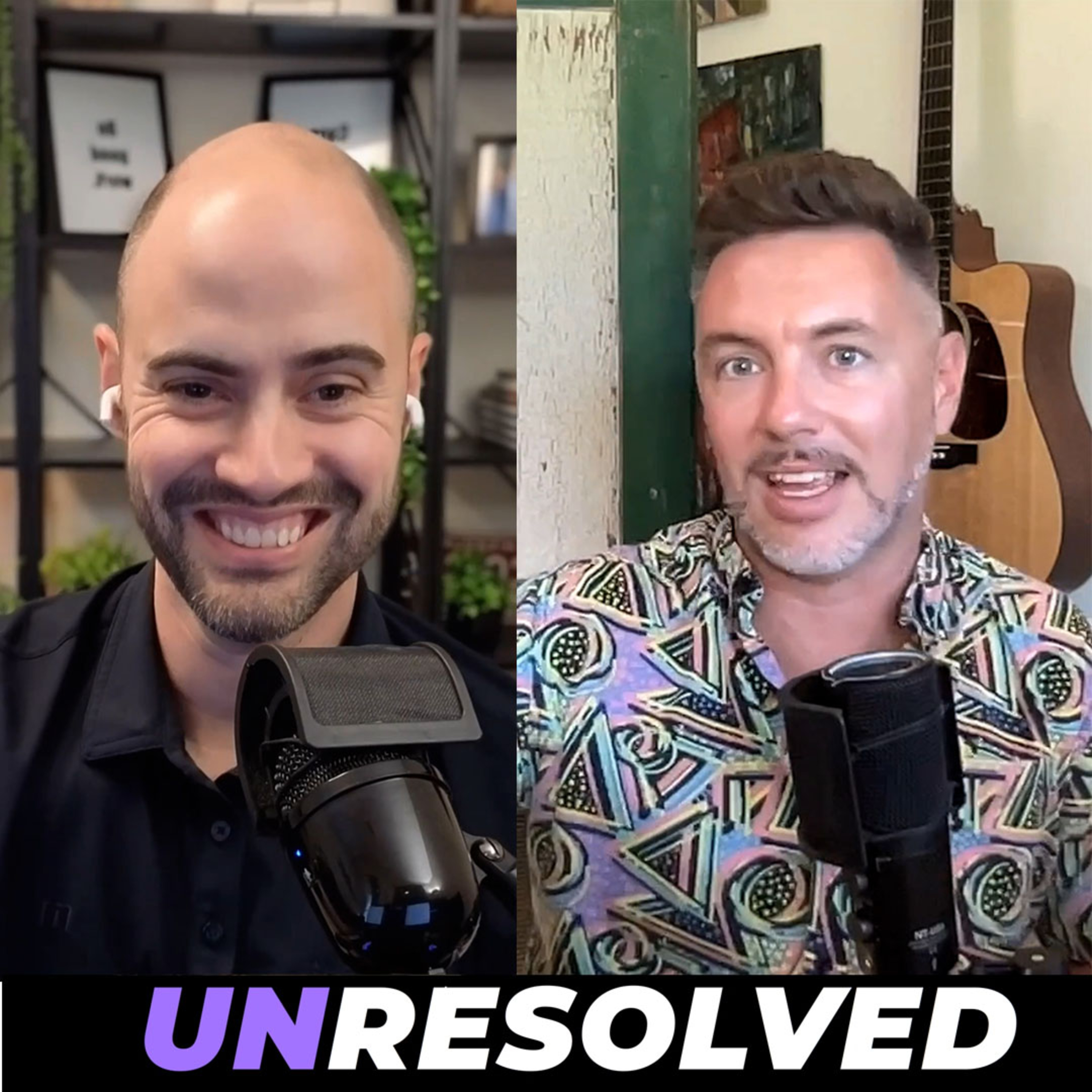 Unresolved.cx - When Feedback Has To Matter - Paul TuckerUnresolved.cx · on Claude80 / 100
 Becoming More Adaptable with Phil Le-Brun and Jana Werner
 How To Learn Strategic Thinking with Roger Martin
 The Discipline Behind Hypergrowth with Denise Persson
 Sometimes Wrong But Never in Doubt with George Barrios
 How Great Companies Stay One Step Ahead with Roger Martin