
Visionary's Pursuit · 2026-06-17 · 27 min
Key moments - from our scoring
Substance score
21 / 100
Five dimensions, 20 points each
Carolina Suleta explores why some people procrastinate until the last minute through the lens of neuroscience, specifically the Goldilocks zone concept - the balance of dopamine and norepinephrine needed to take action. She distinguishes between different pacing styles: sprinters (like herself) who need high pressure to activate; steady pacers who work consistently; starters who begin strong but fade; and U-shaped workers who start, dip, then finish. Rather than shame-based explanations, Suleta frames procrastination as brain chemistry, then provides practical tools grounded in temporal motivation theory to redesign these patterns. She introduces the VECT framework (Value, Expectancy, Closeness, Temptation) and implementation intentions (if-then plans) to help leaders and entrepreneurs increase motivation, reduce distractions, and become more intentional about how they work. This episode is essential for founders, CEOs, and team managers struggling with their own productivity patterns or managing others with different work styles.
The Goldilocks zone is the optimal balance of dopamine and norepinephrine in the brain needed to take action and focus. Too much creates overwhelm and anxiety; too little creates flatness and indifference. Different people need different amounts of these neurotransmitters to operate effectively.
Sprinters wait until urgency creates energy (deadline-driven); steady pacers distribute effort consistently throughout projects; starters begin with high excitement but may struggle with details or finishing; U-shaped workers start strong, disappear in the middle, then surge again near deadlines.
VECT stands for Value (why this matters), Expectancy (can I do this), Closeness (how soon is the reward), and Temptation (what will distract me). By improving each variable - clarifying importance, breaking tasks down, creating shorter deadlines, and reducing distractions - you increase the dopamine and norepinephrine needed to act.
Implementation intentions are if-then plans that tell your brain what to do in specific situations. Research shows that using phrases like 'if it's 9am, then I will open this document' makes you significantly more likely to achieve your goals than without them.
When managing others, waiting until the last minute and improvising means you don't plan well and don't set your team up for success. She was sending team members urgent emails at 10pm for next-day tasks because she hadn't planned ahead, which negatively impacted them.
Our reviewer’s read on each dimension, with quotes from the episode.
A handful of real frameworks appear (temporal motivation theory, Goldilocks zone, implementation intentions) but each is explained at a surface level and padded heavily with personal anecdotes about bed-making, MBA deadlines, and a Colombian CEO. The ratio of actionable new ideas to filler is low for a 27-minute runtime.
In the temporal motivation theory, there's four variables that are impacting our motivation. Those are expectancy, value, delay, and impulsiveness.
And me hearing my mom admire that in him, it became a quality that I want to develop in myself.
The episode repackages well-known self-help and productivity concepts - neuroplasticity, implementation intentions, the Pomodoro-style sprint - without adding any contrarian or first-principles insight. The 'VECT' framework is simply temporal motivation theory renamed with a new acronym.
I created a quick framework for this, and it's called vect. Value, expectancy, closeness, temptation
In coaching, we call them if, then plans
This is a solo episode with no guest. The host identifies solely as a life and business coach and offers no evidence of having scaled a B2B operation, led a large team, or built a significant company - limiting the practitioner credibility relevant to a B2B audience.
I'm a life and a business coach and your host for this podcast
I'm gonna be telling you some things I've learned and that I use with my clients around this
The only concrete specifics are personal anecdotes (11:57pm MBA submission, managing 8-12 people, 10pm emails to a team). No studies are cited by name, no companies are named, and no metrics or outcomes are provided to validate the frameworks presented.
I submitted my application to the MBA three minutes before the deadline. And I think the deadline was midnight. So at 11:57
the first job I had that I managed a team. I think it was between eight to 12 people
This is an uninterrupted solo monologue with no guest, no interviewer, no follow-up questions, and no pushback on any claim. The narrative meanders through childhood stories and personal asides with no sharpening mechanism to keep ideas rigorous or on-topic.
And this has been me, I think most of the projects I did in high school and in college. I was working on them the night before at, uh, 2:00am
Can I be honest? I've never met anyone who's like that and it amazes me. That blows my mind.
Computed from the transcript - who did the talking, and the words that came up most.
Episode Summary This week we're talking about the neuroscience behind why we put things off, even when we know exactly what to do and how much our future selves would thank us for starting. The central idea is around what neuroscientists call the Goldilocks Zone, the level of pressure that is set just right for action. Too much of it and we tip into overwhelm and avoidance but too little and we go flat and reach for the nearest distraction. I explain the roles dopamine and norepinephrine play in getting us moving, and why some brains need barely any pressure to engage while others, like mine, do their best work with a deadline breathing down their neck. Key Takeaways Procrastination and avoidance tend to come from how your brain regulates pressure, reward, and motivation, which means they can be understood and redesigned rather than judged There is a level of internal pressure that is set just right for action, sometimes called the Goldilocks Zone.
Transcribed and scored by The B2B Podcast Index.
Carolina Zuleta: Welcome to Visionary's Pursuit, a podcast where we explore what it takes to turn your bold and inspiring ideas into reality.
Carolina Zuleta: I'm Carolina Suleta.
Carolina Zuleta: I'm a life and a business coach and your host for this podcast. I'm thrilled to have you here. Hi.
Carolina Zuleta: Welcome back. This is episode 89 of the Visionary Pursuit podcast. I, uh, really enjoy connecting with all of you, and I want to start by sharing a story. About 10 to 12 years ago, a friend of mine who's also a coach invited me to spend four days in Minneapolis in a convent with these two women who were studying the connection between neuroscience and coaching. Since I discovered coaching in 2008, anything that has to do with our brain, our emotions, and the central question that has really been the guiding force, the thing that I've wanted to understand the most, which is what? Why do we do the things that we say we don't want to do? And instead, we don't do what we know it's best for us. It's taking us to our goals, right? All of us humans experience that inner conflict. I'm sure you've seen it happen in your life. So, anyway, I decided to go for these four days and study with these two women. And it was fascinating. Everything I learned about our brain was amazing. And it really helped me remove shame around some of my own behaviors and to understand that these things like procrastination, perfectionism, um, not doing what we said we were going to do, are simply part of our brain chemistry. But today, I want to focus on one of the topics we learned there that is based on the fairy tale for kids. So you might have heard it. It's called Goldilocks and the three Bears. And the story of Goldilocks goes like this. There's this little girl who, who is walking through the forest, gets into a house. This house belongs to the three bears. The three bears are not there in that moment, and she starts trying their things. First she tries their porridge. And, uh, the first bowl was very cold. The second one was very hot, and the third one was just right. And then she tries sitting in different chairs. And the first one was too hard, and the other one was too soft. And the third one was just right. And the idea of the story is that she only liked what was just right. So in neuroscience, they use that term, goldilocks, to name a zone in our brain or a chemistry that has to happen in our brain that has to be just right in order for us to be able to take action and to do the things we want. To do that are driving us towards our goals and our vision. So basically, we have many different neurotransmitters, but there's two specifically that when we have the right amount of them, we take action. But when we have too much of them, we feel overwhelmed, anxious, scattered. We all know those moments where we're gonna try to sit down and do some work and we don't know where we begin, and we feel like we can't think straight. And sometimes that drives us to get up from our chair. We look at our email, we check social media because that overwhelm feels so big that we cannot focus. But. But when we don't have or we have too little of these chemicals, then we also feel flat and foggy, indifferent. It's that feeling of, oh my God, I don't want to do this. And therefore, we also use not the best coping mechanisms. We check email one more time, we go into social media. We also have experience when we have the right mix of these chemicals that we're like, okay, I'm going to do it. And we can focus and we can get work done and we become super productive and efficient and creative. Creative. In order for us to be able to take action, we have to be in what neuroscientists call the Goldilocks zone. But the interesting thing here is that not every single human being needs the same amount of these neurotransmitters or the same level of activation. Some of us with very little activation, we feel overwhelmed immediately. We're going to this place of, oh my God, this is too much. And typically those of us who are in that category is because we don't do well with pressure. If we're having pressure, we feel like we can't think straight when there's too much work or when the deadline is too short or when the task we're doing feels too hard. We go into overwhelm. And then some of us, which actually I, uh, belong more to this second category, we need a lot of this mixture to be in the right zone to be in the Goldilocks zone. And those of us who belong to this category, we usually procrastinate and wait and we do it in the last minute. And this has been me, I think most of the projects I did in high school and in college. I was working on them the night before at, uh, 2:00am finished writing, in fact, story that I'm not very proud of, but it's true. I submitted my application to the MBA three minutes before the deadline. And I think the deadline was midnight. So at 11:57 I remember perfectly, I was sitting on the couch in the living room with my laptop on my legs, reviewing one last time the essay. It was a real read through. Oh my God, is it good enough to go? And then throughout my life that worked. And in many ways that is a skill I have because when everyone gets very stressed, I can be very calm in those moments under pressure when there's high stakes because my brain can tolerate a lot more amount of dopamine and norepinephrine, which are the two chemicals I was talking about, than maybe other people. But the bad thing is that, yeah, sometimes I am um, you know, running to the last minute trying to finish something. But this became a big problem the moment I started managing a team. Because when you are working with other people and you're not planning well, you're waiting to the last minute, you're improvising, you are not setting up your team for success. And I remember the first job I had that I managed a team. I think it was between eight to 12 people. I had a lot of issues and people actually complained because I was sending them emails, you know, at 10pm for something we had to do the next day because I hadn't planned. And that's not a good thing. So I worked hard in the last, you know, 12 years on, um, learning how to be more organized, getting coaching. So I learned how to manage this chemistry of my brain so I can get myself to the Goldilocks zone when I need to. And I'm gonna be telling you some things I've learned and that I use with my clients around this that I think would be helpful. But anyway, the concept I wanted to start with is this idea or the understanding that science has already shown us that, that all of us need just the right amount of dopamine and norepinephrine in order for us to act. And it's important to understand if we are the type of people that need a lot more of it, right? So we're waiting till the last minute. We're really good at, ah, working under pressure and we're also really good at improvising or we're the type of people that need less of it because we can easily get overwhelmed and not be able to think straight. So let me explain a little bit more what the neuroscience is here. So dopamine, which is one of our most important neurotransmitters, helps with telling our brain, hey, this is important, pay attention to this, this is worth pursuing. It also is the part that rewards us and make us feel good when we accomplish something. Norepinephrine helps with alertness, urgency, activating us, moving us. So it's a combination of these two that gets us in the zone. It's not necessarily that we need to learn how to put maximum pressure on ourselves to get things done, but we need to understand what is the moment in which each of us operates at our best. For me, understanding this was so big because it removed a lot of the shame I had for being the person who would procrastinate until the last minute. Because now I understand that it simply means that my brain needs a lot more dopamine and norepinephrine than maybe other people. So, which is what I'm going to share with you towards the end of the podcast, how I've learned to, you know, put enough pressure on myself or activate these two neurotransmitters so I can do the things I want to do, not only in the last minute, but when I need to do them. In business school, I learned there's three different pacing styles. Deadline action, steady action, and U shaped action. Deadline action are those people like me who we put most of our effort close to the due date. Steady action people are those that distribute their effort equally throughout time. If they have a project that lasts 10 days, on day five, they've done 50% of the work. Can I be honest? I've never met anyone who's like that and it amazes me. That blows my mind. And I'm just jealous that your brain has that ability to do that. And then there's the U shaped action style, which means that those are the people who put a lot of effort at the beginning, have a lull in the middle, and then they finish. But usually also this type of people might have a hard time finishing. Right. There are the people who, halfway through the project or 70% into the project, they lose motivation and they're trying to figure out how they get to the end. They might be be perfectionists, they might be putting too much pressure on themselves to make it perfect, and then they never get to actually completing it. You can think about it as, you know, having four different people. The sprinter, those are again, me. We wait until urgency creates the energy for us to go and take action. The steady pacer, the miracle people who create enough structure to work consistently. And the starter, the people who begin with a lot of excitement and action, but may struggle through the middle or the final details. And, um, U shaped worker, which they start strong, they disappear in the middle and Then they. They finish strong again. So another way of thinking about it is through this framework. The sprinters like me, we need to wait until urgency creates the energy and the motivation for us to take action. The steady pacer, which is who I strive to be every day more. And it's those people who know how to create enough structure to work consistently throughout the entire project. The starter, which are the people who start with a lot of excitement, a lot of energy at the beginning, get a lot of it done in the first days or weeks of the project, but who may struggle through the middle or the final details. And sometimes those are the people that never complete projects or. Or also the U shaped worker, which is the person who starts strong, disappears in the middle, and then comes alive again near the deadline. But I think the key thing why I wanted to bring this up is because some of us have shame because of the way we are. But we need to understand that our pacing style is not our identity. It's a pattern we have, probably connected to the Goldilocks zone. But it's also something that we can redesign the that today, by the end of this episode, I want to share some of the ways that you can redesign your pattern so you're not rushing at the end or having a hard time finishing, but that you can actually work consistently and get to the goal. So until now, I've been talking about how our brain works and why I love understanding how our brain works is because it separates us when we're acting in a way we don't want to be acting from our worthiness or our identity. And we just simply understand that there's brain chemistry and patterns that are happening. But why I love coaching is because in coaching, we always believe we're not stuck with the chemistry that was given to us. We're not stuck with the patterns we have been practicing for years that we can always change and adjust and grow. So every day we are operating more like the person we want to be operating, the CEO we want to be, the leader we want to be. And in fact, this is also supported by neuroscience because one of the biggest discoveries in neuroscience in the last 15 years has been neuroplasticity, which basically means that our brain changes throughout our entire life. For many years, they thought we were born with a brain brain. It developed through our childhood and then we were stuck with that brain. But now we understand that by what we do, how we eat, how we we act, we are constantly reshaping our brain so we can reshape our brains so we can Be more like the person we want to become. Right. That new identity we're developing, that new self concept we are evolving. And so we can become better leaders, better CEOs, better entrepreneurs. As I've said, we've created a PDF, so I'm going to explain it here, but you can download it and have it with you. So you have tools to increase your motivation when you need to. In the temporal motivation theory, there's four variables that are impacting our motivation. Those are expectancy, value, delay, and impulsiveness. So one of the things we need to know is how to increase expectancy when we're feeling lack of motivation. So expectancy has to do with the question, do I believe I can do this? And when we're feeling lack of motivation, it's because we feel we can't do this. So there are some questions we can ask our brain. Right? That coaching is really asking our brain better questions to have the answers that will help us move in the direction we want to move. So for example, we can break it down. Instead of feeling like, uh, I don't know how to do this, we can say, okay, let's see what parts of this feel uncertain. What would make this 20% easier? What could be a first small step I take, Can I go do a, uh, bad shitty draft? You know, Elizabeth Gilbert talks about this in her book Big Magic, and I think she calls it the first shitty draft or something like that. And it's to allow our brains, our perfectionist brain, to say, hey, settle down for a moment. It doesn't have to be perfect from the beginning. I'm just gonna do my first draft, I'm gonna do my rough draft. Let me comes out in this. So it's when we tell our brain, the brain that wants to do it perfectly, that wants to do it right. Hey, hold on a moment. I can make a rough draft. I can start by doing something, whatever comes to my brain, and then make it better from there. So this conversations, the uh, inner conversation we're having with ourselves can make us feel less capable of doing something or can help us break a task down, lower the quality threshold so we can actually take action. The second variable is value. So in this section, what we need to think is how do we tell our brain that this task matters right now? One of the exercises we can do is travel to the future and understand the impact of doing something right now. So for example, for many years I lived by myself in a one bedroom apartment. And every morning I had the option of making my bed or not Making my bed. I didn't have anyone outside of myself having an opinion about how or when I made my bed. So I could easily not do it every day. But every morning I would ask myself or for an instant think about coming back from work when I was tired and how much I appreciated coming into a clean apartment. And one of the things I felt like made a huge difference in my apartment was making my bed. So that thinking about my future self, I think it also came honestly from my mom when she would tell me, like, making your bed is giving your future self a little gift. But I would actually think about that. And I was like, yeah, I'm gonna make it now, because I know it's gonna feel so good when I come back. So to increase the value of doing something right now, you can ask how your future self will feel about. You can also think about the feeling. We all experience that, like, oh, my God, if I get it done, I know I'm gonna, like, lift this weight off my shoulders and I'm gonna feel a lot more freer. You can ask yourself, who's gonna benefit from this being done calmly? For example, that's a place where I would think about my team. Okay, if I get them this ahead of time, how is that gonna impact them? And sometimes even connecting it to your own values or the identity you're wanting to develop. So if you're wanting to develop an identity that more efficient, more effective than reminding yourself of that. And yeah, it matters, because this is the person I'm wanting to become. And this is another small story, but these are the little lessons that you don't value when you're a kid that your parents give you. But I remember one of my parents friends was the CEO of a big coffee company in Colombia. And my mom would always make remarks on how efficient he would be. So my mom was a volunteer for a foundation in Medellin that would help unhouse kids.
Carolina Zuleta: And.
Carolina Zuleta: And she would call him for a donation or to give her some coffee for this. Bingo. They were doing or something like that. And my mom would say, I would talk to him. And within the next hour, his secretary was calling me, asking me for the address. Everything would be planned and organized so well. He is so responsive. And me hearing my mom admire that in him, it became a quality that I want to develop in myself. That when people ask me for something, I'm on top of it. I got it done. It's figured out. So connecting what we need to do right now to the identity will also help us increase the Value, increase the why it matters to do it right now and therefore increase our motivation. The third variable is delay, which is answering the question, how far away is the reward or the consequence? When will this actually start feeling real? What we need to do there is bring the reward or the consequence closer to this moment. So maybe asking ourselves, what is the due date before the real due date? Or breaking a project into smaller tasks so we can start having visibility to progress. How will I know I'm making progress towards this? One of the ways I apply this is, you know, with Andrew. We come up with a marketing idea and we say, we're going to publish this state. And when we backtrack it and think about all. All the things that need to happen in order for that project to go live, then we have smaller deadlines throughout the month or the several weeks we're planning a marketing initiative and then it's easier. Okay, this week I just need to do this outline this week. You know, we have to design the sales page or whatever it is. So if you can break a project into smaller steps and feel like you're getting a reward for each step, then you'll also gonna feel better, gonna feel more motivated to do it. And the last one is about impulsiveness. So it's when we have competing rewards, when there's other things around us that are calling for our attention that we know will give us dopamine in an easier way. Social media, reading, email. In this world, we have so many of those around us. So one of the ways I apply this is I think about what are the things that are gonna distract me? What are the things that are gonna feel so tempting that are gonna move me away from the task I'm working on? What are the types of environments in which I thrive? The best doing the work versus those that, you know, distract me or are harder for me to focus and listen. Here's where we all have to have that loving parent, but strict parent within ourselves that says turn off all notifications. Creed, I do not deserve. Put your phone further away. What are the things that you can do so you are not so tempted to do these things that are going to distract you from the task at hand. You know, one of the things that for me works is when I have to do this type of deep thinking and all that is to go to a place where I'm far away from the destructions of my house, right? That I don't have a kitchen, I don't have my husband nearby or the kids nearby. So I usually like to do a lot of the thinking work in a coffee shop. Because one of the things I've learned about my brain is that my brain works better when there's a low level of distraction around me. So I do better work at a coffee shop than in a very quiet library. I think it's also important for you to figure out, like, where is it that I can do my best work? Some people need the quiet library. Nobody even saying a word for me. When it's too quiet, my brain starts wandering more. But I, uh, also, when I'm sitting down to do this work, I put my phone in silence, I turn off all the notifications I create, and do not disturb, you know, the thing on your computer. So no phone calls or, uh, emails or notifications are going to come in. And it really, really helps. Another thing that might help is creating sprints. So if you're thinking this is going to take forever, you decide, okay, I'm going to do, you know, 20 minutes, and here's my timer, and I'm going to really focus on those 20 minutes. So again, in the worksheet, we're adding a lot more tools that you can use. But the idea here in Impulsivity is to understand how you can reduce the number of distractions that are competing for your attention. I created a quick framework for this, and it's called vect. Value, expectancy, closeness, temptation, value. Why does this matter? Expectancy? How can I make this feel doable? How can I increase my level of confidence in that I can do this? Closeness? How can I make the deadline or the reward closer to this moment? And the last one is temptation? What will pull me away and how do I reduce it? This is the simplest way you can understand temporal motivation theory and apply it. And again, it is related to what I explained at the beginning, right? Because by increasing the value or by making a shorter deadline, you're creating more dopamine and norepinephrine so you can be in your Goldilocks zone. And when you do this with intention and determination and you just not let it happen as an old habit or an old pattern you have created throughout the years, then that's when you start being more in control of who you are, how you act, and becoming the person that you want to be. M. Okay, so I'm going to give you one more tool before I sign off today that I learned in this neuroscience class and that has a lot of evidence research behind it, and it's implementation intentions. In coaching, we call them if, then plans and what, uh, they say is when you talk to your brain by using an if then phrase, it's going to operate better. So how it works is like this. You're going to tell yourself, if it is 9am, then I will open this document and write down five bullet points. If I'm getting distracted, then I am going to put my phone in a different place and I'm going to turn notifications. If I'm feeling lack of motivation, then I am going to print this PDF from the Visionary Pursuit podcast and I'm going to see which of the variables is lowering my motivation and tell myself a better story. When you create a plan to do something and you include if then intentions, if then phrases, what the research says is you are going to be a lot more likely to achieve that goal that you have in mind. Okay, so to finish this, the one thing I want to say is that in order for us to live the life we want, to grow our businesses, to be the leaders that we care about, to be the business founders we're proud of, it really requires this superhuman power because our humanity is gonna leave us procrastinating, being overwhelmed, not doing things. And it requires us to transcend that, to use our prefrontal cortex in order to achieve those things. But we need to do it with love and compassion because the moment we start shaming ourselves is the moment we get stuck in those old cycles. So I hope that today, by understanding a little bit of the neuroscience about different styles we all have in working, that there's research behind this and using the tools I am sharing, it will make it easier for you to every day practice becoming the CEO, the business founder, the leader that you hope to be. All right, my friends, I'll see you next time. Bye.
Carolina Zuleta: If you're currently pursuing a big, bold idea and would love some support, let's talk. In my coaching program, I'll teach you how to manage yourself, your own thoughts and emotions, as well as your team and your money so you can turn your beautiful idea into a reality. Go now to carosuleta.com consult that is C-A R O Z U L E T A.com consult and complete the form
Carolina Zuleta: to book a complimentary call with me.
Carolina Zuleta: See you there.
Other episodes covering the same guests and topics, from across The B2B Podcast Index.
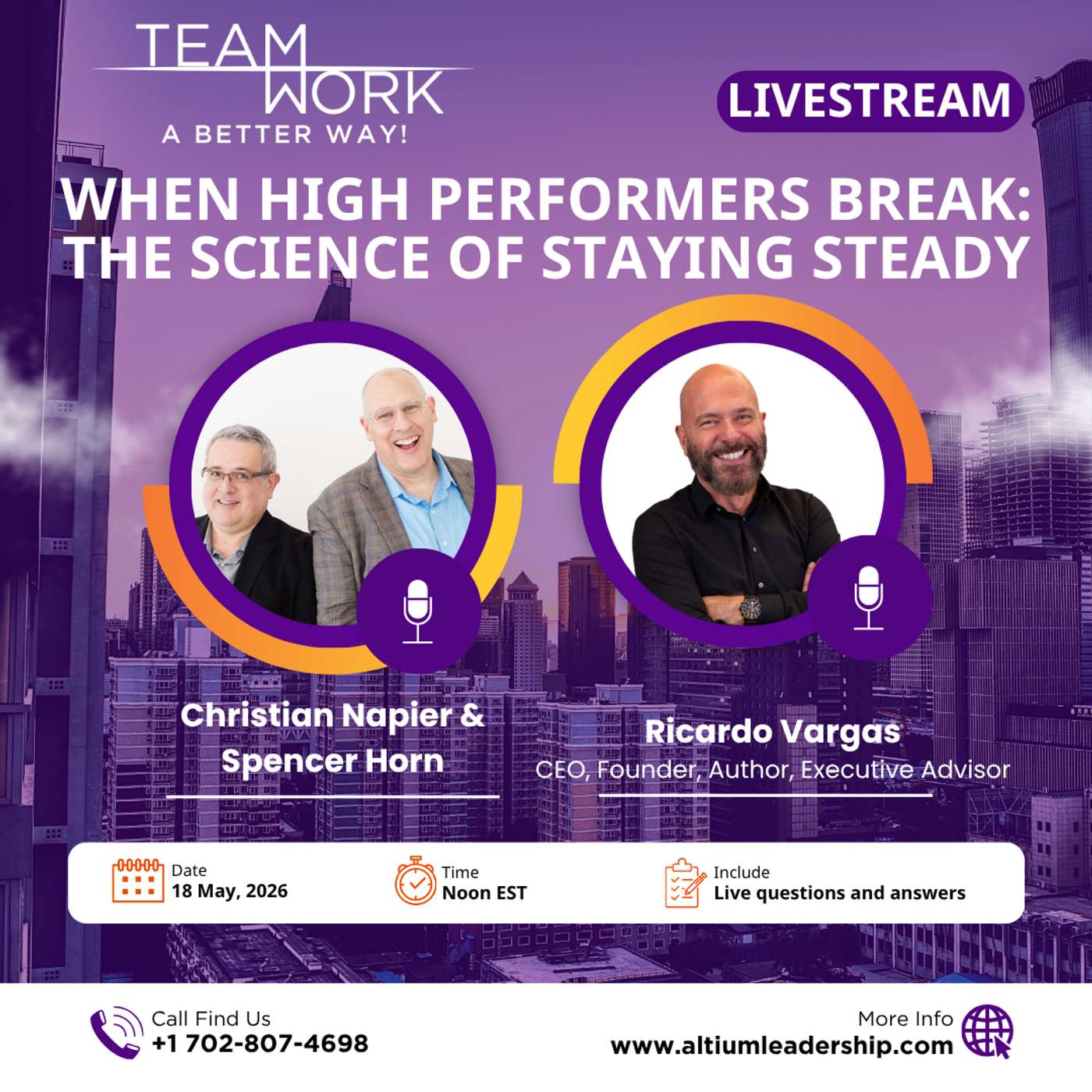 When High Performers Break: The Science of Staying SteadyTeamwork - A Better Way · on Neuroplasticity85 / 100
 "I Learn, Therefore I Evolve": Rethinking Human Learning in the Age of AI (ft. Dr. Barbara Oakley)2050 Investors · on Neuroplasticity78 / 100
 Aneesh Raman: AI won't decide the future of work - unless you let itWorkLab · on Neuroplasticity77 / 100
 S:8 E:2: Neuroplastic AI modelsIoT Unplugged · on Neuroplasticity75 / 100
 Psychedelics Might Be the Future of Mental Health | Althea CEO, Niko SkievaskiBoundary Breakers · on Neuroplasticity73 / 100
 How Revenue Marketing Makes the CMO a Business Growth DriverThe B2B Revenue Executive Experience · on Neuroplasticity71 / 100
 93. The Stories That Keep Us Stuck55 / 10092. Your Conviction is your Best Persuasive Asset43 / 100
 90. When No One Thanks You for Your Wins33 / 10088. How Many Times Are You Willing to Try?45 / 100[Encore] Is Your Capacity Holding You Back?