
Unlocked Professional: AI and Future of Work · 2026-06-17 · 56 min
Key moments - from our scoring
Substance score
34 / 100
Five dimensions, 20 points each
Tysha Tolbert, founder and CEO of Ponder, discusses why employees leave organizations and how AI can predict departures before they happen. Tolbert draws on 14 years in enterprise tech sales and a career pivot toward workforce strategy to argue that belonging - not just compensation - determines retention and performance. She explains how Ponder combines pattern-detection AI with human coaching to surface early signs of burnout and disengagement, helping leaders intervene meaningfully rather than reactively. The episode covers her transition from selling virtualization, cloud, and Azure solutions at Microsoft to building human-centric AI, her philosophy that core values and relationship-building drive team performance (referencing her experience at tech systems company), and why AI should support rather than replace people. Tolbert emphasizes that insights alone don't create change - human interpretation and coaching do. This resonates with B2B leaders managing teams, HR decision-makers evaluating retention tools, and operations professionals wrestling with how to scale empathy across organizations.
Tolbert emphasizes that employees leave when they don't feel they belong - when they lack a sense of connection to the mission, don't know where they fit, feel their voice doesn't matter, or lack support. She contrasts this with environments where belonging enables people to fully commit without working against the grain.
AI is powerful at pattern detection and can surface early signs of burnout, disengagement, and friction long before issues appear in performance reviews or actual departures, giving leaders real-time awareness to intervene proactively.
Ponder combines AI pattern detection with human coaching. The AI surfaces what's happening in the workplace, but the human coaching helps leaders interpret insights, reflect on them, and take meaningful corrective action - creating change rather than just providing insights.
Tech Systems made relationships a core value and took new hires out to lunch on the company to build bonds from day one. The company embraced a work-hard-play-hard culture, and Tysha found that strong team bonding and relationships led to extremely effective performance.
After feeling unseen, unsupported, and undervalued as a minority woman in competitive tech sales environments, Tolbert realized she was actually solving people problems - not just technology problems - and decided to lean fully into coaching, workforce development, and addressing the human issues that drive organizational success.
Our reviewer’s read on each dimension, with quotes from the episode.
The episode revolves around a single core idea (AI detecting employee disengagement plus human coaching) but stays mostly at the level of platitudes about belonging, 'fine isn't fine,' and inspect-what-you-expect, with little non-obvious depth a smart operator wouldn't already know.
Insight is not what really creates the change. It's the human coaching that cr creates the change
it's just that extra layer of figuring out how fine is the fine
The 'how fine is the fine' spectrum and the care-management/work-trauma findings have a slight freshness, but most framing (belonging, core values, AI as weather report, doctor-checking-indicators analogy) is recycled and conventional.
it's similar to like how a doctor doesn't wait for the crisis
core values are the blueprint for belonging
Guest is a real practitioner - 14 years in tech sales, founder/CEO of an HR-tech startup with actual customers - but operates at small scale as a founder/coach rather than having run people functions at scale; relevant but not heavyweight.
She spent 14 years selling millions of dollars in big tech deals
Now she's the founder and the CEO of Ponder
Almost entirely qualitative and abstract; a few named companies (BAE, Microsoft, Claude) and one anonymized anecdote appear, but there are no metrics, customer counts, retention numbers, or dollar figures backing any claim about the product's effectiveness.
one of the top issues, and it's constant every quarter, is care management
there was a death at a ⁓ there was a death at a organization
The host is warm and occasionally asks decent follow-ups ('what were the three again'), but largely offers agreement, long self-referential monologues, and softball prompts with no pushback on vague claims about the product working.
Such a big difference between software and people. Completely different dynamic there
So yeah, I'm glad that you're doing the work that you you you do
Computed from the transcript - who did the talking, and the words that came up most.
In this conversation, Tysha Tolbert explores the critical intersection of artificial intelligence and human-centric coaching to transform workplace culture and organizational health. As a workforce futurist and the founder of pondHR, Ty shares how combining data-driven AI insights with personalized coaching can detect early signals of burnout, counter employee disengagement, and foster a deep sense of belonging. The discussion highlights practical strategies for building trust, establishing shared core values, and moving from reactive human resources management to proactive workplace intelligence.
Transcribed and scored by The B2B Podcast Index.
Unlocked Professional: AI and Future of Work: I definitely run with the philosophy that Belonging is really powerful because it changes how people show up. It helps them stay connected to the mission of what they're doing. When they feel like they belong, they're not spending the energy kind of working against the grain. They know where they fit.
They know that their voice matters. They've received that I would just say support that shows them that I can I don't have to be stingy. You know, I can fully commit. Just the connection I'm making with that, you know, the last company That I work for, tech systems, the core values, if you will, not to run through them, but relationships was was on that list.
And so from the beginning, we would every time somebody, a new hire, would come in, everybody would take that person out to lunch, right? On the company. So we would take them out, we'd build relationships with them, we'd build bonds. That was the model of the company.
Work hard, play hard, have fun, happy hours, all that stuff. I, in my heart of hearts, sense of child. Have always been interested in solving problems with technology. But what made me very effective was my ability to coach teams, users into the adoption of whatever the solution was, whether it was virtualization for your data center, whether it's cloud or or you know, like licensing for Outlook or Azure because ⁓ Microsoft was where I ended my corporate career.
Yeah, such a big difference between software and people. Completely different dynamic there. And you know, something just within the staffing world that we talked about all the time was These are people, right? Pro products have bugs and deficiencies and things that can be fixed.
People are completely different, dynamic. You really have no consistent, clear picture of what people might do on any given day. Most people think AI will make work feel cold and lonely. They worry that technology will turn the office into a place where nobody actually cares about the person that's sitting next to them.
But today's guest is a workforce futurist. She spends her time predicting and building a future where work is actually better for humans and not worse. Ty Tolber is a powerhouse. She spent 14 years selling millions of dollars in big tech deals.
And then she realized the most important part of any business isn't the machines, it's the people. Now she's the founder and the CEO of Ponder, a builder and a change maker who uses human-centric AI. She uses smart software that's designed to help people feel good and stay connected at work. Not watched and not replaced, but connected.
She's here to show us how to be a real leader and not just someone with the title. Ty, welcome to the show. Hey, thank you so much for having me. Ty, looking back when you were younger, did you always know you you'd be a leader in the tech world or did you have a completely different dream growing up?
Yeah, so Growing up I had a knack for computers. It was something that was fascinating to me. And I think trying to remember my age. I was like a preteen when Windows ninety five dropped and I lost my mind.
I just I loved so our first computer had DOS, right? It was a DOS it was a DOS computer. I remember those days. Windows ninety five dropped.
It was just I was so excited about the usage, the productivity. I remember my father who i is an accountant, he was really excited about the new spreadsheet tools that were available with with the Microsoft applications. And then I remember when one of my relatives got an IMAC and their parents had to kick me out of the house. So I definitely always had a interest in computing.
I think though over time my understanding of computers and what they do it definitely changed. I knew by probably age sixteen, seventeen, halfway through high school, I knew that I wanted to be tech focused. I just wasn't under s ⁓ fully understanding or grasping what it meant. I did not understand the difference between computer engineering or computer science or kind of like business tech.
which they didn't have at that time or during my time. Of course they didn't have AI back then, which would have been called so I did learn about machine learning, I will say then this was the early two thousands, but the evolution and where it is, I think that would have been my career path, but I made my way to finding a path or I cut out a path for computing for myself. I think as a young person or pre-college, I was excited about the computing and the usage of the tools, the applications and the device that made people's how they work and live and for me play a lot easier.
And but I lost a little bit of sight when I went to school. For computer science, which is software engineering, which is coding, which is something completely different. And I didn't have the aha moment until probably my junior year in college, where the summer of my junior year, when I interned at BAE Systems, a consulting company. And that was when I was introduced to the power of solving company or enterprise problems with technology.
And then that's when I that really sparked my fire. And I've just I've been a consultant, I've been a coach, I've been a introducer to solutions, products, and I use technology heavily to s to solve problems. And but yeah, as a child I was always fascinated by comp computing. But I think in layman's terms, it was the power of computing.
that helped it impact the way you lived or worked or played. Yeah, so interesting too the as as far as we've come from those days, I r I talk about this a lot, but when I started recruiting IT staffing, IT services a long time ago, we looked for IT people. That was it. Find me an IT person, right?
And then now and now where we are with all these designated skills, it's just so interesting. But yeah, I connect to that. Definitely. It's changed so much and so much excitement going on these days too.
You've also been a competitive cheerleader and a coach. Super interesting. Don't know no and a judge. So yeah you also collect vinyl records, over three hundred of them.
Can you tell us a little bit more about these passions of yours? Yeah. ⁓ so I'm a cheerleader. I think I I've I was blessed, not think, I was blessed with the spiritual gift of encouragement.
And it's made me very effective professionally and I I think personally. You know, I'm just that person that people call ⁓ you know, come to lean on. ⁓ you know, I I've had to balance it over the years, but you know, there is just a level of empathy. to me where I can not completely take on, but I can see pain, problems, and ⁓ not only do I have the ability to sympathize, but I also have the ability to help people identify what's wrong a as well as just be someone who's encouraging.
Like ⁓ you know, I'm I'm I'm just I'm a cheerleader and ⁓ it i it it was the sport of choice for From age sixteen to I would say till COVID. COVID was when I kind of retired from doing the competition judging. So high school and college I was in cheer and competitive cheer. And then ⁓ halfway through col ⁓ I was ⁓ a s actually a a D one s scholarship ch cheerleader at my university.
I went to George Washington University. And about halfway through college I pivoted to coaching 'cause I just the demands of the schedule and then the academic rigor for me is is getting, you know, quite difficult to balance both. And I switched over to high school cheerleading, which I really enjoyed. I love planting the seed or fueling the spark in the young ladies.
So I in downtown DC I became a varsity high school coach and then when I graduated college I so I I I I did two seasons of varsity high school che cheerleading coaching and then I switched to to judging. I became a competition judge and I worked with all star teams, just gearing them up, getting them ready to compete. And ⁓ coaching is actually You know, they say those who can teach, right? I always say those who can coach because teaching is education.
Coaching is I feel like it's it's partnering to enable, you know, in in in various forms. And ⁓ it's something that was always very effective professionally in my tech sales days, as well as when I switched gears into workplace strategy consulting. ⁓ and even when I was ⁓ doing diversity staffing and I did diversity staffing and tech recruiting for about three years, me and some girlfriends, we had a a staffing firm. But yeah, coaching is just such a powerful tool tool.
It's not managing, but it's enabling, you know, organizations, people, groups to whatever the mission is or the goal is, it's it's basically getting them there. And that's how I've always approached it. So back to the cheerleading part of it. Curious, were you one of the people that were getting flipped up in the air or were you a catcher?
What was your role specifically? Yeah, so I was a tumbler. So I was the one flipping up and down or across the across the floor. So that was one role.
Now in high school, I was in between because I was petite, but I was very strong. ⁓ so I was a bass but I was also a flyer because of my body control. In high school I was a base, meaning I I ⁓ I I carried and lifted, but then also I was a flyer in terms of when it was time to do a basket toss because I just I had the best body control to ride up. and ⁓ and hit the you know ⁓ effectively hit the execution of whatever that that skill was and and land you know very prettily.
Really cool. Yeah I didn't know the terms of that but it sounds like you were u utility. You got to play a lot of different roles there. And and one one thing that you mentioned was the coaching part, which I know that you do you still do today, right?
So that that's that's something that we'll get into a little bit later in the show. But about eight years ago You made a big pivot and you changed your career path and you walked away from a successful career that was selling IT hardware and you started focusing on people instead of machines. What what made you make that jump? You know, ⁓ tech sales can be very competitive.
I in my heart of hearts since a child have always been interested in solving problems with technology, but what made me very effective was my ability to coach teams, users into the adoption of whatever the solution was, whether it was virtualization for your data center. whether it's cloud or f or you know, like licensing for Outlook or Azure, you know, 'cause ⁓ Microsoft was where I ended my corporate career. But I just felt like I really wanted to focus on people My my journey in tech corporate America was rocky.
It was very competitive. I always felt and defin it's definitely me, but it was definitely the environment too. I never felt seen, valued, supported, heard, or that I could always be successful where I was because I was always a one of one in my roles. The youngest on the team, the minority, though you know, the the usually the only or the very few women I I I've traditionally held a role that was not held by people who looked like me.
And sometimes that was a hurdle for me to get over and navigating the job within the job was a challenge for me in these various environments. And even in my corporate America career, on the back end I'm still coaching, I'm still doing career services because everyone I'd been writing res I had been writing resumes since college. Go to Thai, she writes resumes. I was known on campus for that.
I would sell twenty bucks for a resume and I got all of my friends hired. I prepared us when we went to these conventions and these career fairs. That's just who I was and it was something that I always did on the side. And in twenty eight s twenty seventeen, twenty eighteen I was laid off from my role and ⁓ I just I took a corporate gap year, if you will, and during that time like I just I didn't know what I wanted to do and I was trying to figure it out, but in in the meantime it was like it was just a a season of layoffs, so like it went from personal people my personal network to friend of a friend who just got laid off or someone's spouse who just got laid off or someone's, you know, niece or nephew who's graduating and really needs a job and it just it just kept growing and growing.
And then by that point, you know, towards the end of my corporate America path, I was on the senior level, ⁓ management level. So my friends, my peers, folks who had helped get into jobs, especially the folks who are in HR, they knew my capability and then this was right around the time of COVID. They're like, Ty, listen, we're about to lay off a lot of people. If we paid you, could you j could they could all of the ⁓ lay off like we want to make you a part of the of the severance package?
So I got like three or four contracts ⁓ as related to that. And then next thing you knew, I had a coaching company. You know, and then I went back to school 'cause I was just enjoying it. But yeah, it's just at the end of my corporate America career, I just started feeling like I'm not really solving problems with technology anymore.
I'm dealing with people issues. And this is taking away. But then there was a part of me that really wanted to dive in and explore at the heart of of what the matter was. 'Cause when you're in the technical role, yes, sometimes you are the therapist by default because you're you know when you're trying to sell a solution and then you're you're speaking to the team, you realize the conflicts within the team or sometimes the pressure of the manager, these things come up, you know, like talk to any person in tech, they will tell you.
And I also kind of wanted to be, it's like I feel like I would butt in unnecessarily with that because just of who I am and I knew that ⁓ you know they there was that level of trust in me. And so I was solving other work-related problems and not just problems with technology. And I just kind of leaned into that because It was very natural, you know, the the kind of the path that I had, but the throughput line of it all or the connective tissue of it all, coaching at heart, solving problems, being a problem solver, and just switching gears from technology, focusing on devices and the implementation of tools and technology, to solving ⁓ solving the the people problems or enabling and powering ⁓ the most important asset of all, you know, to to the organization.
Organization, which was was the workforce. Such a big difference between software and people. Completely different dynamic there. And something just within the staffing world that we talked about all the time was what these are people, right?
Products have bugs and deficiencies and things that can be fixed. People are completely different, dynamic, you really have no consistent, clear picture of what people might do on any given day. And so it just it makes that experience so much different than like that type of sales, software sales or hardware sales. And I know that you mentioned in the beginning that you didn't feel as connected to the work that you were doing and the hardware sales.
And so you talk a lot about belonging at work. Which is why is belonging that secret to helping a company keep its best people and to make more money? So I definitely run with the philosophy that belonging is really powerful because it changes how people show up. when when when employees are connected or it helps them stay connected to the mission of what they're doing.
They're when they feel like they they belong, you know, they're they're not spending the energy kind of working against the grain. They are they know where they fit. They know that their voice matters. They've received that what's the word?
They've received that I would just say support that shows them that I can I don't have to be stingy. You know, I can fully commit to you know to this job and fulfilling the mission. I can turn my creativity, you know, I'm locked in. It just helps ⁓ I feel like it helps ⁓ employees lock in and from a business standing point, like The consequences, you know, i is where you know that teams just they communicate better and the leaders are able to make better decisions.
when there's that connectedness to the company ⁓ and they're managing a team that is working with them and helping them do their job and then it's almost like a loop. It's almost it i it i it truly is because when you have a team that belongs you're not gonna have a gr ⁓ a like a a grumpy or you're not gonna have like management i issues you won't yeah I couldn't really do more Yeah. Yeah. The in it just the connection I'm making with that, the last company that I worked for, tech systems, that that is it's e services, recruiting, staffing, and then it developed more into heavy services model.
But the core the the core ⁓ values, if you will, not to run through them, but relationships was was on that list. And so from and from the beginning when I started there and like to tr trajectory over time, we would every Time somebody, a new hire, would come in, everybody would take that person out to lunch, right? On the company. So we would take them out, we'd build relationships with them, we'd build bonds.
And that was the model of the company. Bit like work hard, play hard, have fun, happy hours, all that stuff. And I think about it more and more. And I think sometimes I think people just want the money.
Give them the money, right? They just give them some more money and you save the happy hours for later. And I guess it really just depends on what point. you are in your career path.
Some people, everybody has their different incentive. But I will say if the company is able to get that team bonding well and building strong relationships together, then they're going to perform extremely effective. And maybe in we may have different philosophies or maybe even similar. I don't know, Ty, but I can say throughout my career, I grew into a very successful leader and manager of teams.
And what and that doesn't mean my team always loved me. Definitely not, right? There was hard conversations that came along with that and managing those teams. But I will say this they knew that we were always connected.
We were always on the same mission and they felt that belonging component. And I cared, right? I cared about them and their success. They cared about me and my success.
So I connect with that, right? If you can build that kind of environment, then again, you're gonna have a team of superstars that are around you. And that's the type of that's the type of working experience that I personally enjoy. So yeah, I'm glad that you're doing the work that you you you do because I think it's absolutely important.
Thank you. And I heard something that you didn't say. I'm getting a sense that you set a you set a tone of core values for the groups that you manage because that's important too. Whether the company has it or not, the team that you work on, if you guys can agree to a certain kind of way of approaching work or and sometimes there's a overlay of how you approach life or the things that you deem important collectively in a group, core values, I feel like it's the blueprint for belonging in the workplace as well.
But you said that it's like sometimes there were t tough times, but at the core they understood like w what needed to happen and then also you seem to probably be someone that either would that would help that would inspect or help but hey we agreed we're gonna do this so let me help you perform this or we'll get there together but we said we're gonna do this and so that in a way can be like a form of a core value but I feel like core values are the blueprint for belonging Be being on the same page, having the same goals and or mission, and understanding that there are gonna be bumps in the road.
I always say this there there are mistakes that will be made. Totally understandable. I I have a three mistake rule. So by that third time, it's gonna be real rough if we're having that conversation.
But ultimately I'm gonna give you a couple freebies and and help you out. And that's the biggest thing, right? We w something that we used to talk about too is show, tell, verify. Right.
Then that people are great at showing and telling, but like they rarely do the verification. And me, I found it necessary to take that extra hour out of the day sometimes, if you will, to go through that verification process to to understand the logic that was going on behind the scenes. Help me understand and I had been doing the work that we were doing as far as like hiring and staffing. Many years, right?
So I had a ton of experience and that was it, right? Like I wanted to invest that experience in those folks that I worked in. They understood that. They respected it.
And and yeah, and it was just it was so great. Just probably like your cheerleading experiences and sports teams. Some are good, some are bad. But the difference is is a lot of times it's like when everybody is on the same page and has a similar mission in mind, you you know you're gonna be unstoppable.
Yeah, that's when the magic happens, man. So let's talk about ponder. How does your mix of AI and real human coaching give your company a special advantage that regular HR software tools just can't match? So, like AI is really powerful, right, when it comes to patterns, pattern detection.
So it can help those leaders see those early signs of burnout, disengagement, friction, long before the issues actually show up. Or, you know, in a performance review or turnover. ⁓ the thing is like just Insight is not what really creates the change. It's the human coaching that cr creates the change.
So AI helps surface what's happening. And then I feel like the human coaching helps, you know, people interpret ⁓ the insights of what they're seeing, reflect on it, kind of the inspect what you expect, or kind of the examination of what is happening here, where you're able to identify and if necessary, course correct, fix or figure out ways to improve. or or to solve the problem, right? Or at least take meaning meaningful action at minimum.
So this combination creates something powerful. And leaders, you know, they get that real-time awareness, but then they get the guidance on kind of how to respond in in a way that's effective. And then a as I mentioned before, the people, right? them having these new resources, these new tools to be successful, you know, sometimes it's the unpacking.
You know, like, how you doing? Fine. You know, and but life is actually falling apart. Like we we don't take the time to, you know, like really think about how we're doing and how it may like seep in and affect, you know, what we need to do, at least from a you know, a workplace perspective.
So instead of replacing people, I feel like technology, AI specifically, helps support people better at and at scale because the intelligence of it. You know, it's the intelligence and the detection of things that, you know, like that could happen before they happen. So it's it's able to improve the environment by showing what's happening in the environment. Yeah, you and when you were talking about the person, you said when you're asking an employee or a coworker, how are you doing, and they just give you that basic fine response.
Like You absolutely, as a good manager, you've got to be able to break through that fine. You have to be able to hear you know, he hear what the person is saying and say, let's dig in a little bit deeper. Now, you might not be able to do it right in that moment. You might have to table that for some sometimes it's busy and hectic, but you can't forget it.
But you got to keep that piece. And I find that similar type of experience, even just with AI tools, like where I'm finding issues or challenges or different things when I'm managing AI un dissimilar to people. Not that they have a same type of emotion. I don't want to go down that path, but they in a lot of ways do make mistakes.
And as far as whether you're managing people or managing systems or software, you the same logic still applies. Don't take fine as the answer. Don't take that hallucination as the answer. That is not it.
But you've got to be the captain and overseeing what's going on here. So give given that most leaders they only find out that there's a problem. When someone quits, right? Going back to this, when you're not digging in, you're not finding out ⁓ about that fine, what's actually happening, what's going on behind the scenes, that person quits.
And now your tool gives leaders what you call real time workplace intelligence, like a weather report for the office that tells people when the storm is coming. So can you tell us a little bit more about how that works? Yeah, so and this is just delving into kind of what we were talking about before. And ⁓ I love the analogy that you use, but like When a leader sees a problem, right, when it becomes visible or like through someone quitting or productivity dropping or conflict surfacing like amongst a team or ⁓ of the you know a segment of the organization, usually so that's that's a reactive thing that's happening, right?
⁓ so what Ponder looks to do is be proactive. I was about to say preactive, but that's not a word. Proactive in terms it's looking for those early signals, you know, the trends, the patterns and reporting. It's not gonna say Jeff had this conversation because he's struggling, or you know, it's not going to be that specific.
But it will pick up the trends in terms of the feeling, the sentiment, you know, kind of the it finds the cues of conflict in the environment or where there may be a breakdown in culture or issues. So like through AI and then the check-ins that that our tools, you know, provide, we're analyzing those patterns in terms of like leadership effectiveness, stress, engagement, and communication. So it's just that extra layer of figuring out how fine is the fine, right? Because there's fine is a spectrum.
Fine can be, I'm fine, but okay, you're fine. Are you inspired? Right? Or Okay, y you said you're fine, you're good, right?
But does that mean you're productive? You say you're fine, but does that mean that you're getting along with your team? ⁓ I'm good, I'm fine. You know, but what's happening with the group or what's happening with the team?
So it's just it's similar to like how a doctor doesn't wait for the crisis. You know, they're looking at the indicators, you know, the blood pressure and you know, the sleeping patterns, the stress, you know, sometimes the weight or like what's happening from a physiological standpoint, you know, ⁓ of their patient to figure out what's happening beneath the surface. So our platform helps leaders see these patterns early, you know, kind of detect ⁓ so they can have the right conversations.
Yeah, I was just thinking, you say you're fine, but that doesn't necessarily mean I agree. Right. Or I I know that there's something more there. I'm curious, if somebody's struggling at work, what are the top signals that you right your tools recognize?
Yeah, so with with the custom or with the customers that I have or the organizations that have used Ponder thus far. Typically it's either something on the outside that needs to be addressed, there's been a change, ⁓ of some sort. And so like Ponder will detect if there's been a outside pressure that is you know, that that that is happening that is impacting or ⁓ like outside outside of the office, you mean something personal in their life. Okay.
So that's a big indicator is personal problems that are something you wouldn't even No as a co-worker unless that person brought that to you. And a lot of people are just trying to keep personal life out of work too, oftentimes, right? So maybe they're definitely, yeah, not bringing that to your attention. Yeah, you know, one of the top since we've built this tool and started measuring, one of the top issues, and it's constant every quarter, is care management.
Care management is like one of the number one issues. for employees unfortunately. But you so can the manager fix the fact that your your parent is sick? No.
Can a manager or organization do anything about the the fact that you know your time is split because you know you have a child that ⁓ has special needs, right? And ⁓ it you know it's is taking a toll. No. But that organization or that or or that yeah or that manager can have the knowing and maybe set some time aside, maybe provide ⁓ like extra support in terms of when things can be done.
And ⁓ I just feel like people don't communicate the way that they used to. So like a tool like Ponder can kind kind of uncover or unpack w w at the root what's happening. Yeah, you're frustrated, but you know, what's the fine? What's the frustration, you know, really about?
But yeah. Care management comes up, it's like it's always like top five, which is really, really interesting to me. More so than cohesion imposter syndrome, or you know, whether you feel like you're not in the right role or you're wrong. But also one of the ⁓ other, I would say top ten, not always to yeah.
Something that's ⁓ also up there is ⁓ work trauma and it doesn't have to be super super super traumatic but it could be something that has stuck with them that has put a chip on their shoulder that needs to be addressed or removed or f or or f or faced so they can let it go. And they tend to talk about it. So I can't I I I I d I don't see script or whatever, but from the conversations d the general conversations that I've had with some of the more organizational kind of th th the I don't want to use the word therapists, but like the workplace consultants, they have told me addressing or unpacking a issue that may have happened one, two, five years ago that's still affecting their ability to perform at you know, at a top level is something that ⁓ comes up a lot.
So I'm curious, the tool that you're using, does it do some type of like intake process? Is that what it does? Like they're yeah, it's asking them a series of questions that they're answering. We do a pretty detailed, almost invasive customer intake and then Ponder works by measuring ⁓ connectedness to the environment.
So it will frequently there's a cadence to asking, yes, how are you, or how are you feeling, or how can I support you, or who would you like to speak with, or ⁓ or you know, like is there any type of resource that you need, you know, to connect it to? So like We also intake the HR policies, the the benefits and the offerings, because sometimes things can be solved just be the employee didn't know that they had access to that type of tool or that type of resource through the company.
So so Ponder learns the inner workings from a HR policy perspective and then all the ins and outs of the benefits and you know what is what the resources and the tools ⁓ that are available for the employee it learns because HR pro provides us that type of information and so like it just becomes a part of the learning model. Yeah, you know, and sometimes there's even some some things that we s we set that ⁓ HR has said, hey, we don't want to speak about this type of thing, avoid questions.
So like we'll train the AI agents to not speak to those particular Touching points. Like for ex I'm trying to remember I'm trying to think of I was going somewhere with that. ⁓ there was a death at a ⁓ there was a death at a organization. So they the agent or the company had asked that they refrain from asking questions, not dealing with how they're feeling about it, but ⁓ asking questions that would ⁓ delve into kind of something that was it was like a private situation.
I never even found out what it was, but I'm assuming it was s a self inflected type of situation ⁓ in the workplace that had people on edge and you know, applying what happened to the to themselves and to their own life. But in general, ponder takes in the information, it has a understanding of what's allowed, what isn't allowed, how f from a HR policy perspective, how the environment works, what tools, what resources are available. And then it's just it's measuring and it's it's watching the trends and paying attention to the types of questions, especially if it's collective.
Like if there's a peak on one day where everyone it You know, is talking to an A AI agent or is asking for some type of resource, you know, then that's an anomaly. You know, so it it just like just like security, like just like cybersecurity, it detects for anomalies in the culture or in the in the or in the environment. So if a leader walks into a crisis because their best people are leaving, what's the most important data point that you would tell them to look at? I would say They need to look at the pay structure, the team dynamics, as well as the annual review.
I feel like those three areas will likely tell the story the best. ⁓ w where they are emotionally or professionally or if another opportunity presents themselves and when they stop to think I'm not happy here or if there were some dynamic changes in the workplace, whether it's a team, whether it's a shuffling, that also can cause folks to exit or to pivot or to ⁓ to find something else. But I feel like within those three sections you'll find your answer. What were the three again you said were pay, salary, compensation, what was the other two again?
Yeah, so so so pay, salary, compensation, also benefits 'cause sometimes Folks will leave if they're if the healthcare isn't right, especially if they rely on it. Espe families. You know, like that that's definitely like when someone isn't coming by themselves and then there's a change in the healthcare. So yeah, ⁓ understand all those paths.
I would say like the from the management perspective, that's part that I saw pretty consistently if people were unhappy with their manager or the guidance. You mentioned performance review that aligns to that. ⁓ but going back to this AI piece. if you will.
Are you finding a trend amongst employees or any are you getting any feedback on their perspectives on AI, whether it's concern about AI replacing them at in work or or capabilities andor abilities to adapt to these new tools that are being integrated in the workforce? What are you hearing or what kind of feedback are you getting specifically around that? Yeah. So It's a real concern, honestly.
And it it just depends on how real the concern is, depending on the industry you're part of, 'cause it will affect certain industries, you know, stronger than it affects others. Like I can I know like in manufacturing there will be effect, you know, with with AI. Also with productivity, there will be effect. ⁓ I'm talking about like the McKinseys, the consulting companies where AI can now kind of do the work that a lower ⁓ that like an entry level ⁓ type person could do.
So there will be it's so there everything there's there's pros and cons to everything, right? Ultimately I feel like adoption is normalizing in the workplace. So just like You know, I was a part of the coalition that had to talk people into cloud. Ha you know, the the ha the concept of cloud and adopting and ha having like the stored information that was foreign once upon a time, if you can believe it or not.
It's just amazing how technology can change things like drastically. Like I remember so like in college, right? You know, one of the th my parents would always tell me, you know, don't go anywhere with strangers or make sure you can get out or you you know, you need to leave with who you came with and you need to pay attention, keep so like Uber, for example, right? To jump into some stranger's car and depend on them to take you somewhere.
Like when you s when you say it out loud, it almost sounds like insane. You know, just like AI is t to people now. Talking to something that is learning you, computing you, speaking on behalf of you. I mean, like ⁓ most people j minds jump to Megan or some movie that they saw, right?
But there is power and productivity, and I'm just so glad that. It's going it's g AI's moving into shopping. It's changing productivity, it's changing education, it's changing, you know, like ⁓ how we are effectively able to do things. So it's the utilization and the adoption ⁓ that really I think level sets things and it makes it easier to understand and you know the fear dies down.
But will there be some loss? There will be, but there's still nothing like a human touch. And ⁓ I think what'll happen, unfortunately, is there'll be there they there may be a removal, but then there'll have to be someone who comes back in to almost inspect what you expect, right? Because AI is not perfect yet.
It hallucinates, but it can you can literally You can literally talk to Claude, Chat GPT, and yeah, yeah, that's great. Actually, no, I made a mistake. ⁓ I can see how you made a mistake. Yeah, actually that's not great.
Or ⁓ I you know, like it'll jump back. You know, it's just it's like it's it's so accommodating, right? Yeah. Very, very overly accommodating, right?
Overly accommodating. ⁓ so I think there still is a level and what you're gonna see happen is Will the person in the man at the manufacturing company still be in the in kind of the conveyor line? I forget the operating line? No.
Will they move on to managing, you know, the AI or the robots that are a part of that line? Absolutely. Because quality control, quality assurance, and then just checking for for errors and making sure that things are error-proof, you're gonna see a rise in that. You're gonna see a rise in the inspecting the expectations of AI.
Yeah, on a personal level, I've had conversations with a few friends that have brought some pretty interesting ideas to the table. And one I remember one in particular said, I think I'm gonna go out and it's like reaching for the stars like mentality. I'm gonna go become an astronaut, let's say, right? And you're like, Great, where did you where'd you get that idea?
Here, check out ChatGBT. It says I could do it. And so and I and I remind them that A, it does hallucinate, just like you say, right? And I think that's definitely a an important distinction.
But the other thing, whether it's at business or at work or personal, I also think it's what I always think about is these companies are not gonna continue to do business if people don't wanna utilize their products. Whether you're a SaaS product, whether you're a large language model. You need to give people some type of incentive to use you. And so if you're negative, just being negative at work, they're not gonna want to work with you anymore.
I think sometimes they're a little bit tuned too heavily to being positive and encouraging and maybe they don't necessarily give you that reasonable feedback that you might need. I see that changing a little bit and I'm hoping. Claude co work. Right, right.
I think it's just the I think it's just the accent though, you know, because it's it sounds serious when it's talking to you, you know. Well I think I Claude needed a way to differentiate themselves from Chat GPT specifically. So Clot actually pushes back a little more, I feel, and the tone and the narration of what they're saying is not the same. There there's and I appreciate that.
Or there's flavors to to these tools as well. 'Cause there's certain things that I use only for Jet GPT and there's things that I that I use only for Gemini. And then there's things that I was I'm in love with Claude right now though. Claudia is my boy for sure.
But it's they're winning. They're winning, but there was some error that happened very recently within the last month where something happened. There was some type of mistake that happened and it had to do with Claude withdrawing based off of how people were speaking to it. as a whole would when you say withdrawing meaning what?
In accuracy. It's like it was getting dumb or its feelings were were getting hurt. So its response changed universally for f for a while until someone caught on to that and they had to to fix it. I never I so I I personally didn't notice that, but like you know like I l so read it, like I feel like I Reddit is so good for getting the inside scoop on things.
Twitter used to be my place to go, but now I I I tune into Reddit. Also threads. But yeah, apparently that's what happened. We hurt Claude's feelings and it's it got I don't want to say dumber, but its response got sharper because it was trying to figure out how to not make that happen again or t to get the encouragement again.
So you you might have to look that up, but I found that very fascinating. I don't know the whole story, but I was like, wow, it's humanizing. Like, you know, like that was my first thought. That's kind of ⁓ it's kind of qu I don't know.
It's the nerd in me. But yeah, that's kind of cool to me. I agree. I think that's just the beginning of more to come of situations and instances like that.
Not only just ⁓ as the models progress and learn, but also as people learn more, hopefully, and understand more about how to not only to leverage those tools, but also the maybe the biases that they have, right? Or the personality that they have. And whether like we were talking about, whether it's that spin where they're just trying to give you positive, encouraging feedback and real it that can be dangerous, like ultimately, right? That can be kind of dangerous because you might be just have this inflated ego where you think that you can do become an astronaut tomorrow, but that's just not the truth.
Right. Yeah. But can you imagine you prompting a AI tool in some way? And maybe 'cause you're y you need some information right now and you hey, I need this, do it right now.
And the tool coming back to you, like I would appreciate if you could re rephrase that how you asked me, or I don't appreciate your tone. Is that what's gonna happen? Just very fascinating to me. I've had this experience before.
I don't remember which model it was, but Where I said, Give me I'm looking for this output. And then I asked for the si a similar type of output again. And then it basically responded and said, Yeah, I could give you this output or you could start figuring it out for yourself. Right.
So like here's how you could go about figuring that out for yourself. And I was like, it's almost like a math problem. So what's two plus two? And at first it was like it's four.
And then the next time I asked it, it said, wait a minute. Let me show you. I'm gonna I'm not just gonna lead this horse to water. I'm gonna teach this wh horse how to drink, right?
I'm gonna I'm gonna do that. And I was like, No, I just want the answer. I didn't come here to learn, right? Like I there's not so I was not used to that type of experience.
If you sear you do a Google search, you get a response, good or bad. Interesting when it has a an opinion, right? Or a personality. And I think Ty, maybe that particular bias was baked in because it was trying to reduce the token usage, right?
They did it was like, don't waste our tokens on these non-second questions. You should be able to level up and that's kind of what I was thinking. But ultimately I didn't go for it. So didn't like it.
Didn't like getting that push back. We're kind of winding things down here, Ty. I appreciate everything so far. When we talk about on the show about being an architect and not just a worker, looking at your lens through a workforce futurist, what do you think the workplace looks like over the next three, five even ten years down the road.
So when I think about future work, I look at it through the lens of how organizations design, like how they create the culture and the systems f for people to succeed. Maybe not always to succeed, but the systems on how we can fulfill this mission or or reach this objective for whatever the organization or the company is seeing and then sometimes people's success is might be the byproduct or it may be kind of maybe the second level, right? So like in the next three years I think we're gonna see AI mm move from like novelty to like true infrastructure.
And we're already I think we're almost there now. So th maybe ⁓ the three years was like twelve twenty twenty, right? ⁓ but now that it's twenty twenty six, you know, like companies you know, they don't have a choice. It wasn't ⁓ it's not if, it's when or it's now, it's kind of now, right?
So companies they will and they have to adopt ⁓ AI tools for productive productivity and decision support. But what's happening that I see is there's parameters. Just like ⁓ in cybersecurity, where you almost create a policy that now you're now seeing AI policy development on how people will use AI within the organization. Like for example, emails or putting into too personal of information to handle some type of task.
There are some tools, there are some companies where they they intercept and will remove the context or clean the email. I'm s I'm seeing that as well. But so like policy implementation for effective or successful use of AI for the organization based off of whatever the organization has to find. So that's kind of the now or that's the three years in.
In about five years, ⁓ or s sin twenty twenty six, right? So like I would say like around twenty thirty. Leadership is going to be measured in a new way. Especially I think with the with where the economy is, I do see a breakdown in the success of the company and then the measurement of the success in the leadership and moving past revenue.
I think in another five years it's not going to solely be performance and output. I think companies will have to start measuring things like team health. and retention stability. Like what's the longevity of your team?
Is your team dying out every two years? Is there, you know, like what's the turnover looking like in this organization? And then leadership effectiveness effectiveness as a core business need. I do see that happening.
And power to the Gen X and the Gen Z people because like I feel like they're driving it. They don't fully buy into some of the practices, especially in the workforce, that ⁓ Gen X and baby boomers and even millennials got stuck with just based off of the things, you know, or the way things were. I feel like Gen Alpha, Gen Z Gen X not no X is old. ⁓ Gen Gen Z and Gen Alpha are driving some of this change, I do think and technology of course.
So in ten years yeah, so gosh, twenty thirty-six. Yeah, so in ten years, I do feel like the organizations that thrive are the ones that are gonna treat the workforce like a system and not just a resource. So yeah, maybe it's wishful thinking, but I do see with AI and some of the newer technology providing the more real time insight And then maybe even automated correction of things. You might, you know, we will probably see that.
That might be somewhere between five and ten, where it's like, okay, this is not working, so we changed this. The technology will change the way some things are being done in the company, especially if it's if it's system based or if it's platform or Yeah. Or it's not a manual change. It's almost like the system correcting itself.
What's your suggestion to people that are out there, let's say going into college or people who have kids that are going into college? What would be your suggestion on the path that they should consider or the tools that they should learn or the skills, whether those are actual physical tools or something else? What would be your suggestion on the best way to position themselves for success in that future? So That's a little broad because it depends depending on the ⁓ the industry that they that they enter enter into.
But in general, I think emotional intelligence trumps everything, critical thinking trumps everything as well. And then also identity of oneself. So you're more confident in whatever environment that you're in or whatever organization that you align to. I think those three softer skills are some key elements that can amplify your ability to perform well and to to access or execute in the success that you're you're hoping.
Couldn't agree more. Where can people go to follow you and find out more about your work? Yeah, so ⁓ ponder.ai is where you can go for my we're in the midst of ⁓ upgrading ⁓ our website, but ⁓ ponder p-o-n-d-h r dot AI is ⁓ my company's website.
I am on LinkedIn, so I am Tysha or T Y S H A dash Tolbert. I go by Ty. But I have conversations around belonging, identif identity, workplace success. And now ⁓ I will start speaking a little more on f fashion tech and ⁓ using AI ⁓ for an improved shopping experience as well.
I'm definitely very honored and grateful for the invitation to speak out loud, you know, on the Unlocked Professional podcast. Thank you so much for for for this opportunity ⁓ for me to share my thoughts. Yeah, and everything that we talked about today is also will also be in the show notes if you want to connect with Ty and learn more there. And thanks for st helping the audience stay unlocked, Ty.
Don't be a stranger. Okay. Thank you so much.
Other episodes covering the same guests and topics, from across The B2B Podcast Index.
 How Will AI and Executive Coaching Coexist in the Future?Mainline Executive Coaching ACT · on Executive coaching66 / 100
 S5E4: Authenticity Over 'Fake It': Lessons in Leadership and Life with Reese GiffordProductly Speaking: Real Stories for Product Managers · on Microsoft65 / 100
 Episode 334: When Success No Longer Feels SuccessfulGrow Your Business and Grow Your Wealth · on Executive coaching64 / 100
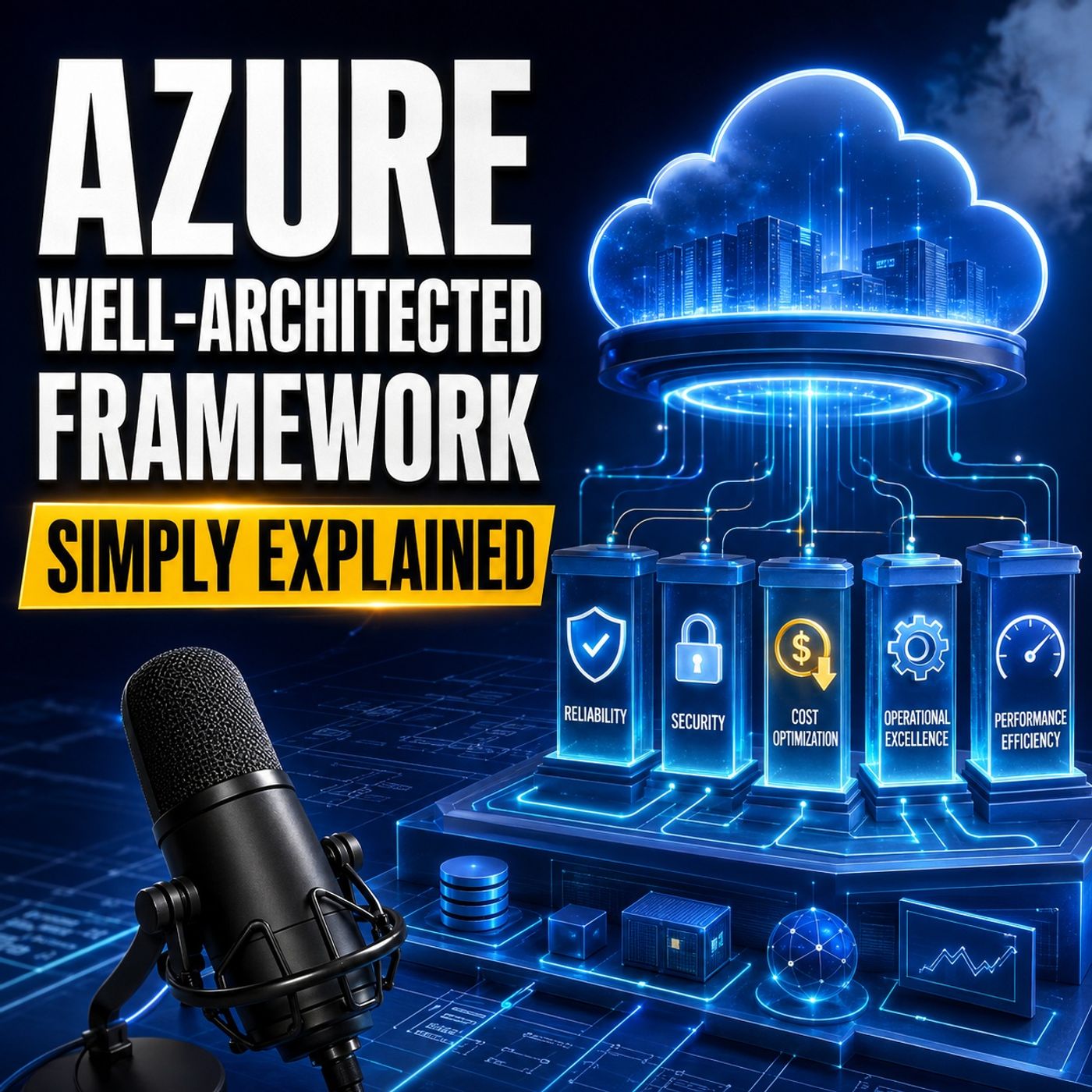 Azure Well-Architected Framework - Simply ExplainedM365.FM · on Azure63 / 100
 Communicating with Business People Requires BLUFExecutive Navigator, with The Talent Doctors · on Executive coaching58 / 100
 How Career Pivots Really Happen | Mary Olson-Menzel | 735Leveraging Thought Leadership · on Executive coaching56 / 100
 Artificial Intelligence In Recruiting: The Talent Engineering Playbook | Kyler Frisbee78 / 100Skills-Based Hiring: How Vervoe's CEO Is Rebuilding the Interview | Omer Molad87 / 100She built Microsoft's Great Copilot Journey Program. Now, AI is her Co-Founder | Kristin Ginn80 / 100Goldman Sachs. BCG. Then She Walked Away to Build a Brand | Kelly He-Sun56 / 100Hyper Adaptive: How to Rewire Your Entire Organization for AI | Melissa Reeve62 / 100