
the un# podcast · 2026-07-22 · 16 min
Key moments - from our scoring
Substance score
54 / 100
Five dimensions, 20 points each
Circle is positioning itself as the next-generation financial internet platform, leveraging USDC stablecoin as its foundation while adding functionality across the tech stack. Chandhok outlines three major convergences happening simultaneously: the imminent launch of MiCA regulations that will make stablecoins "real money," the intersection of AI agents with blockchain payments creating novel business models, and the development of Arc, Circle's Layer 1 blockchain launching this year with 100+ partners where USDC serves as gas. Beyond the core stablecoin, Circle is building out the Circle Payments Network (CPN) for institutional payment flows and providing direct settlement capabilities across 65 geographies in under a second. The company is clearly positioning itself as more than just an asset issuer - it's building platform economics. However, Circle faces headwinds from OUSD, a stablecoin consortium launched by major traditional finance players who are actually existing USDC users and planned Arc partners. Chandhok frames this as natural market evolution in a $22 trillion (M2 money supply) market where USDC's current $300 billion represents early adoption. He emphasizes that Circle's competitive moat is liquidity - USDC is a top-three traded digital asset globally - and that they will be the first MiCA-compliant stablecoin by January. On international expansion, particularly in high-adoption regions like India, Circle's strategy hinges on direct primary market liquidity provision (mint/redeem at par) once regulatory conditions permit, contrasting with Tether's store-of-value positioning.
MiCA (the regulation referenced in the episode) is going into effect in early 2025 and will establish stablecoins as legal money rather than speculative assets, representing a major regulatory milestone for the industry.
Arc is the first L1 where USDC serves as the gas token for transaction fees, which provides novel benefits like lower friction for USDC users and alignment between network utility and the stablecoin ecosystem.
CPN is Circle's application layer that enables payment companies to execute novel payment flows without rebuilding their own crypto infrastructure, and it has been growing rapidly in its first year.
Tether has had a four to five-year head start on Circle in product development and has built stronger network effects, plus it offers a store-of-value use case that doesn't require the primary market liquidity infrastructure Circle prioritizes.
Circle plans to compete on product merits, liquidity (USDC is already a top-three traded digital asset), regulatory compliance (first MiCA-compliant stablecoin by January), and building additional platform functionality that makes USDC more useful than competitors' stablecoins.
Our reviewer’s read on each dimension, with quotes from the episode.
The episode contains some useful business strategy insights (platform evolution beyond asset issuance, competitive positioning, international expansion mechanics via primary market liquidity) but is padded with defensive talking points and high-level positioning. The guest covers broad themes rather than drilling into novel, non-obvious mechanics that a B2B operator wouldn't already understand. Several responses devolve into generic platform ambitions and market-size framing.
We are more liquid than most money is in the world
the way we grow internationally is we provide primary market liquidity. And when I say primary market liquidity, I mean you can come to us directly, you can mint USDC and you can redeem USDC
The framing of stablecoins as money, the multi-chain strategy, and the liquidity-as-competitive-moat argument are all well-rehearsed takes in crypto finance. The discussion of USDC-as-gas and the Arc L1 is somewhat novel, but the guest treats it as aspirational rather than offering first-principles reasoning or contrarian insight. Most claims recycle standard Web3 investor narratives without fresh perspective.
Our ambition is to be the next generation of financial Internet platform
Tether has a store of value use case. We also have a store of value use case. Tether also has a head start on circle
Nikhil Chandhok holds a relevant senior operating role (CPTO) at a major institutional player in regulated stablecoins, giving him legitimate practitioner credibility. However, he is not a founder, executive chairman, or primary decision-maker (Jeremy Allaire is mentioned as such), which limits his authority to speak to strategic choices. He speaks with insider knowledge but operates within organizational constraints that may limit candor.
head of product and technology at Circle
I really really really like bitcoin when it first came out because I started distributed systems in school
The episode lacks concrete numbers, timelines, and named examples beyond broad market-size references (22 trillion M2, 300 billion stablecoin market, 70-80 billion USDC current). The guest avoids specific metrics on growth, user adoption, regional penetration, or Arc testnet progress. Claims like 'top three traded digital asset' and '100 plus partners' go unsubstantiated. The discussion of OUSD remains vague - 'their product is not live' prevents any substantive competitive analysis.
If you count it as just M2 dollar money that's 22 trillion
USDC users. They are on Circle's platform
The host asks decent framing questions and attempts to probe competitive threats and growth strategy, but rarely follows up hard on evasive or vague answers. When the guest dodges specifics on India (regulatory uncertainty) or OUSD impact ('their product is not live'), the host moves on rather than pressing for detail or alternative hypotheses. The conversation reads as a polite platform tour rather than a genuine cross-examination of strategy assumptions.
Beyond a stablecoin issuer, what is Circle evolving into?
But there are certain headwinds as well
Computed from the transcript - who did the talking, and the words that came up most.
Circle started as a Bitcoin payments app in 2013. Today it issues USDC, settles dollars across more than sixty countries, and has grown into a financial internet platform. In part one of this conversation, Nikhil Chandhok, Chief Product and Technology Officer at Circle, gets into what the company is becoming, how Circle thinks about new entrants in a market it helped build, why liquidity decides which stablecoin wins, and the road from $77 billion to $150 billion, including the opportunity in markets like India.Part one of three.Chapters: 0:00 Introduction 0:32 Four themes on Nikhil's plate 5:25 What is Circle evolving into? 9:07 OUSD and the competition question 13:50 The road from $77B to $150B 14:12 Why USDT leads in IndiaDisclaimer: The information presented is for educational purposes only. Views expressed are those of the speakers, not necessarily the channel. You are responsible for your own research and decisions.Copyright: © 2024 Aarna AI Pte Ltd, Singapore. All rights reserved.
Transcribed and scored by The B2B Podcast Index.
Speaker A: StableCoin are going to become real money.
Speaker B: Beyond a stablecoin issuer, what is Circle evolving into?
Speaker A: We are more liquid than most money is in the world. Our ambition is to be the next generation of financial Internet platform.
Speaker B: We all know of Circle as the Stablecoin company, the issuer of usdc. A lot of things happening at Circle, including some headwinds where a consortium has just announced the launch of ousd. Let's delve into this with Nikhil Chando, the head of product and technology at Circle. Nikhil, welcome to Unhashed.
Speaker A: Thank you for having me Nikhil as
Speaker B: uh, head um, of product and technology for uh, a bellwether company in the space Circle uh, and uh, more specifically not just broader crypto digital assets but more specifically for regulated uh, institutional uh, digital asset where the whole industry has been heading. In the last um, year, two years we've seen what goes on in your head as ah, head of product and technology. What goes on in your head, what keeps you awake? What are the kind of conversations you have with uh, uh, Jeremy Allaire for example.
Speaker A: Uh, maybe we can talk about this moment in time. Uh, and I think a lot of different uh, threads are converging uh, at this moment in time. So first I think we are a year since Genius passed. I think actually passed like today, uh, today one year ago or tomorrow one year ago. So it's almost a year anniversary and I think Genius um, goes into effect uh early next year. So there is this imminent uh, milestone where Genius um is going to go into effect and uh, stablecoins, stablecoin are going to become real money. And so I think we should see more stablecoin money around the world. So that's like one thread um, that like is happening. Second uh, is a lot of what is happening in the AI space that is also intersecting um, stablecoin, uh money uh, I think everybody understands that like AI agents are a novel uh superpower that has been unleashed on the Internet over the last like year, a year and a half. And so we are potentially looking at a new way of doing things on the Internet. And that's not just payments. It's just like novel business models that can emerge because payments, novel payment methodologies are possible. So that's another thread that is like live and active. Uh, third I'd say we have uh, ARC or L1 uh even if we're launching this year hopefully. And um, so we have 100 plus partners on it. We are in testnet, uh, we want to get to Mainnet and we're Busy, uh, like building features, uh, making sure that uh, the chain is what it needs to be. But we have stablecoins USDC as gas and like it's a novel L1 architecture. There is no other L1 versus USCC is gas. And there's some nice benefits to USDC being gas, uh, that we can get into if we can. Um, so ARC, L1, um, agents and yeah I think broadly the adoption of uh, our payments network as well like cpn, which is uh, growing by leaps and bounds. Uh it's only a year old and we uh, want to make sure that we can stay ahead of the growth essentially and make sure that we're building products that server customers. I mean these are broad themes. There's um, there's a ton happening in this space as you, as you're probably aware and I'm sure I'm m missing some things. So these things don't keep me up as much as like these things I am, are things that I'm actively working on and they take up most of my day. I, I sleep pretty well. So that's, I think I have, I have, I have, I have all the literature on good sleep. So.
Speaker B: All right. Okay. So you, you spoke about kind of three, four broad um, uh themes and it's interesting in Surfer's evolution as a, as a company, um, you know I uh, you know Circle started out as a Bitcoin uh, app way back and then of course the whole crypto digital assets world and now the financial markets, uh world. Everybody knows uh, Circle as this stablecoin company. Um, but the arc of uh, the um, direction that Circle is taking is taking it beyond what a stablecoin uh issuer would generally be. So what is Circle evolving into?
Speaker A: Yeah so our ambition is to be uh, on the next generation of uh, financial Internet platform. And that means having uh, having using the core stablecoin network that we have built using usdc, leveraging that and then adding functionality both below the stack and above the stack that essentially makes it possible for users of USDC to benefit from like the platform features that like Circle has to offer. Right. So uh, you can use USCC across 30 plus chains today. Uh, once Arc gets launched, there will be novel features on ARC that uh, we think will be beneficial to USDC users. Uh, paying gas with usdc, uh, is a great example of that. And then, and then we think of CPN or Circle Payments Network as our application on top of our stack that allows for payment companies to engage in novel payment flows without having to rebuild an Entire crypto ecosystem. Uh, a lot of what we do is also we interface with the traditional financial system. So we were very clear eyed about the needs of the traditional financial uh, uh ecosystem and how those needs intersecting the blockchain ecosystem. And so uh, a lot of the benefit of our platform is sort of this clear interrupt with traditional financial system but also not just delivering a stable coin but also delivering settlement functionality. Delivering uh, making it so that you can settle in like um, less than a second and make it so that like if you have a payment flow we know how to terminate it in, in 65 geographies around the world. And so all of that together makes us more like a platform company uh and less like just as an uh, just as an asset issuer. We were an asset issuer to begin with. From there we built a stablecoin network. And like in many ways we think of our business as these holders, people who hold USDC and are willing to like transact in USDC and from there for large enterprises or even smaller enterprises for that matter and end consumers to adopt us further we need to add more functionality and that sort of builds out the full platform we have.
Speaker B: But there are certain headwinds as well. That circle has been um, facing uh, you know, m more uh recently especially at a time when the old space has been taking a uh, regulated uh institutional direction and where Surfer has been well poised to take uh, advantage um of now we see ousd which has been launched by an industry conglomerate. Exactly the sort of partners who you would have liked uh to adopt uh usdc, uh much deeper. Exactly the sort of uh, consortium who you would have probably liked to be on arc. And these would be exact uh, you know, are probably your testing partners uh on the testnet. So how do you see this? Is this part of natural market evolution or did this come as a sort of surprise? Ah, and how does it impact uh the plans that you have A circle?
Speaker A: Look, it's a large market, um, depending on how you count it. If you count it as just M2 dollar money that's 22 trillion. If you count it as cash money that's uh, just dollars, uh, that's 2 trillion. Um and then there are other ways of counting electronic money that puts the market at 100 trillion. When you have such large markets I uh, think it would be really foolish to imagine that nobody's going to compete for uh, uh, like market share. So first like I think like just look at the scale of the market and that is what brought me to circle initially because um, you can call me. What is like a Bitcoin maxi, right? Like I really really really like bitcoin when it first came out because I started distribute systems in school and it just was a magical thing to see um, bitcoin come about. But it also became clear that like the at scale product is going to be a stable coin. And so we are still on that thesis. I think uh, the 300 billion some market is still very very early. Um, so I'm not surprised that like more entrants want to participate in the market and I think we should welcome them because they will have a unique point of view on how to do things. And like the more money becomes stablecoin money uh, the easier it is for us to compete because we are more liquid than most money is in the world. Right? There's of the, we're a top three traded digital asset in the world. Um, and so while new entrants can participate eventually uh, you have to achieve functionality for your users and that functionality shows up in the form of liquidity. Uh, and there is a whole set of uh, companies that have tried uh, over the last like three or four years. And these are named companies that have like really good like execution records. And it's been hard not to say that they are not good at their jobs. It's really hard. So OUSD can come in. Like I think uh, all the people who showed up, a lot of the people who showed up in the OUSD announcement are USDC users. They are on Circle's platform. They are in fact uh, uh they are going to be as part of arc. Uh so in this space I think like there's a lot of coopetition as well. People uh, like build some things and then they uh, compete on other things. So um, what does it mean? I think it's great. I think it's a positive that it is happening. Um, we will compete on the merits of our product. They will compete on the merits of their product. And does it change anything for Circle? I don't know yet because like the pro, their product is not live. I don't know how it works. Nobody's using it. So when we know what it is then maybe it changes. I mean we will use the information to figure out like how we compete with it. But right now I think we are still uh a top three liquid asset in the world. We have excellent on off ramps around the world if you want to. We will be the first uh, genius compliant stablecoin in the market. The most liquid genius compliant stablecoin in the market come January. Uh, if you're building a business on top of stablecoins, uh, we're a pretty good bet.
Speaker B: No, so no, very uh. I mean 300 billion is a small number for money. I mean that's essentially where so, so definitely uh, you know the vector is clear uh, for that USDC has been in the sort of 70 to 80 billion uh uh range. I, I would tend to think uh, what's, what's your sort of um, uh projection for that to double? When, when will USDC be 150? I mean I'm, I want to kind of look at it in two ways. One is obviously the US Market having deeper uh, uh, you know, adoption institutions driving. That's one part. But how are you also thinking about the regional uh, uh, adoption? You know one specific example for uh, instance is India, a large uh, crypto, uh market, uh base a lot of uh, users. Uh, I mean if one goes by stats Mode, more than 100 million UM users. There's regulatory ambiguity around uh, uh, you know, which, which we're well uh, aware of. But somehow usdt, uh is, is the stablecoin, uh which is deeply penetrated in that market. And um, I'm guessing there would be several other regional markets like uh, that. So in, so from. In A, how are you thinking about taking the 7075 to doubling it to 150? B. What's sort of regional uh thinking uh and uh, around wider adoption at a individual uh level?
Speaker A: Yeah. So look, the way we grow internationally is we provide primary market liquidity. And when I say primary market liquidity, I mean you can come to us directly, you can uh, uh, mint USDC and you can redeem uh USDC $4. Uh, I think in market like India it's very hard to do that. Uh at least so far. When it changes we will be there. Like uh, we have a very active team, um, um that watches these developments very keenly. Um, and so I can't predict when. I mean you will probably know this better than me in terms of like when there will be more opportunity to offer that kind of facility in India. Uh and then this primary market liquidity is how we expand like around the world as well. Like I think we do the same in markets like Japan. We're doing the same thing in, in other markets around the world. And people come to us because we have excellent rails and excellent liquidity. And that's how we're growing the regional markets. Uh, Tether has a slightly different use case. Tether has like store uh of value use case. We also have a store of value use case. Uh, Tether also has a head start on circle, I think like four or five years uh in terms of product, uh, and it speaks to their network effects and uh, what we have grown share and we have taken share because we built out functionality at least from my perspective. As we build out more of our platform we should start seeing more share shift because there's just more to do with usdc uh than you can do with Tether. So yes, present, present case an example like India, uh, tether is um, more liquid, um, but in like you know, three years, five years time. As we add more primitives to what you can do with usdc I think you want to hold the more useful product. Uh and I'm very optimistic that we will be able to sort of uh, move and like take up more share in the market. We are the enabler for the entire ecosystem, like you know, the whole ecosystem. There's a two and a half, $3 trillion ecosystem at least based on current sizing. And a lot of it comes like works because USDC has excellent rails and so we provide a valuable service to the ecosystem and we want to keep doing that.
Speaker B: So do you want to place a um, uh, kind of a time horizon on when you think the next 75 billion of USDC liquidity will come in?
Other episodes covering the same guests and topics, from across The B2B Podcast Index.
 Why AI Pilots Fail: How to Escape AI Pilot Purgatory and Scale Enterprise AI with Ronnie Kwesi ColemanUsing AI at Work · on AI agents92 / 100
 PMs Are Fintech: How Column is Rethinking Property Management BankingThe Profitable Property Management Podcast · on AI agents89 / 100
 Inside Felix's Stablecoin Remittance Playbook w/ Manuel GodoyMoney Code · on Stablecoins85 / 100
 Why Moving Faster Starts With Slowing Down | ClearBank’s Emma HaganLondon Fintech Podcast · on Stablecoins83 / 100
 Inside an AI-powered personal dashboard | Matthew TiemannPossible · on AI agents83 / 100
 90% of AI prototypes never reach production (w/ Temporal's Samar Abbas) | AI BasicsThis Week in Startups · on AI agents81 / 100
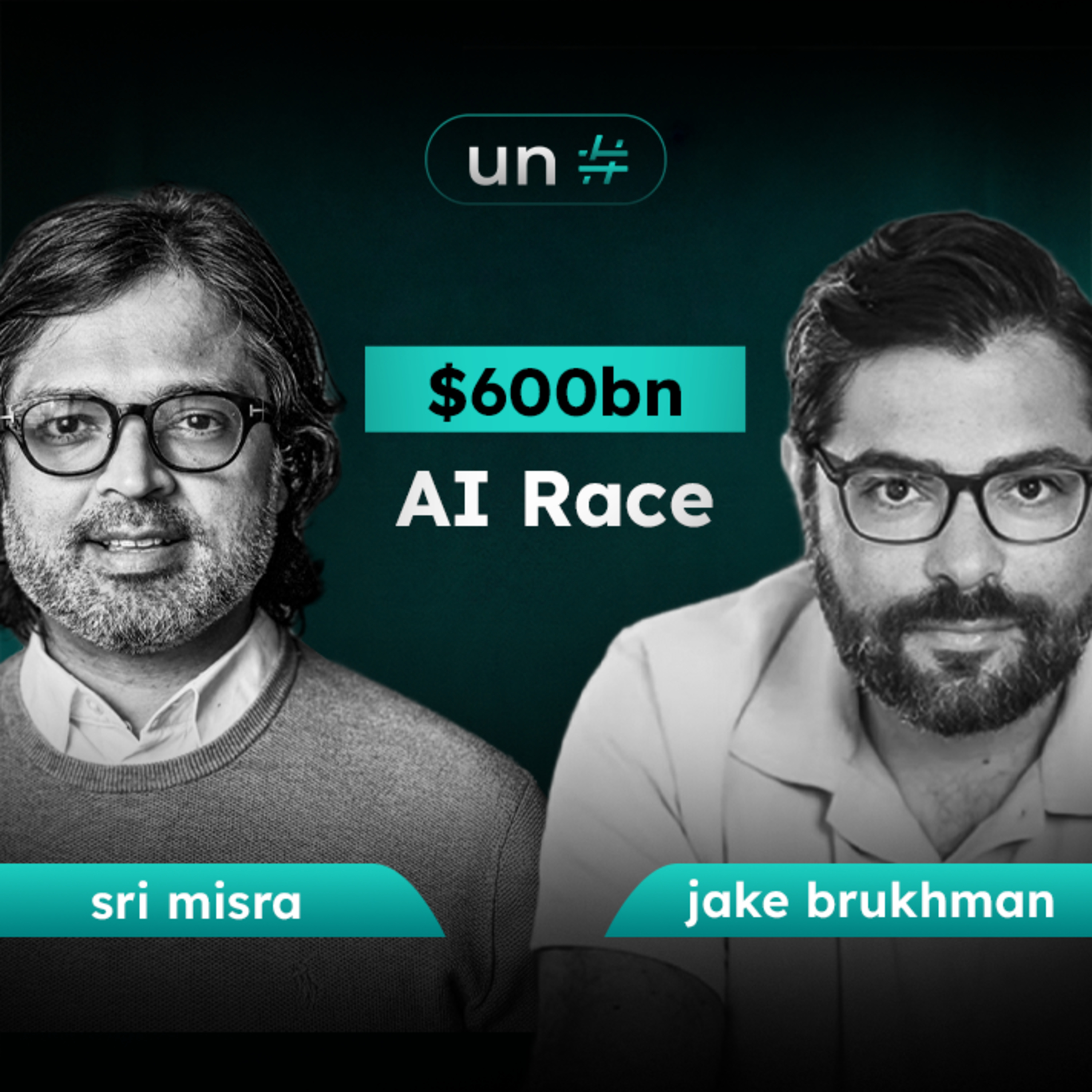 Jake Brukhman (CoinFund) on Anthropic Fable 5, Agents & Asymmetry in AI 79 / 100
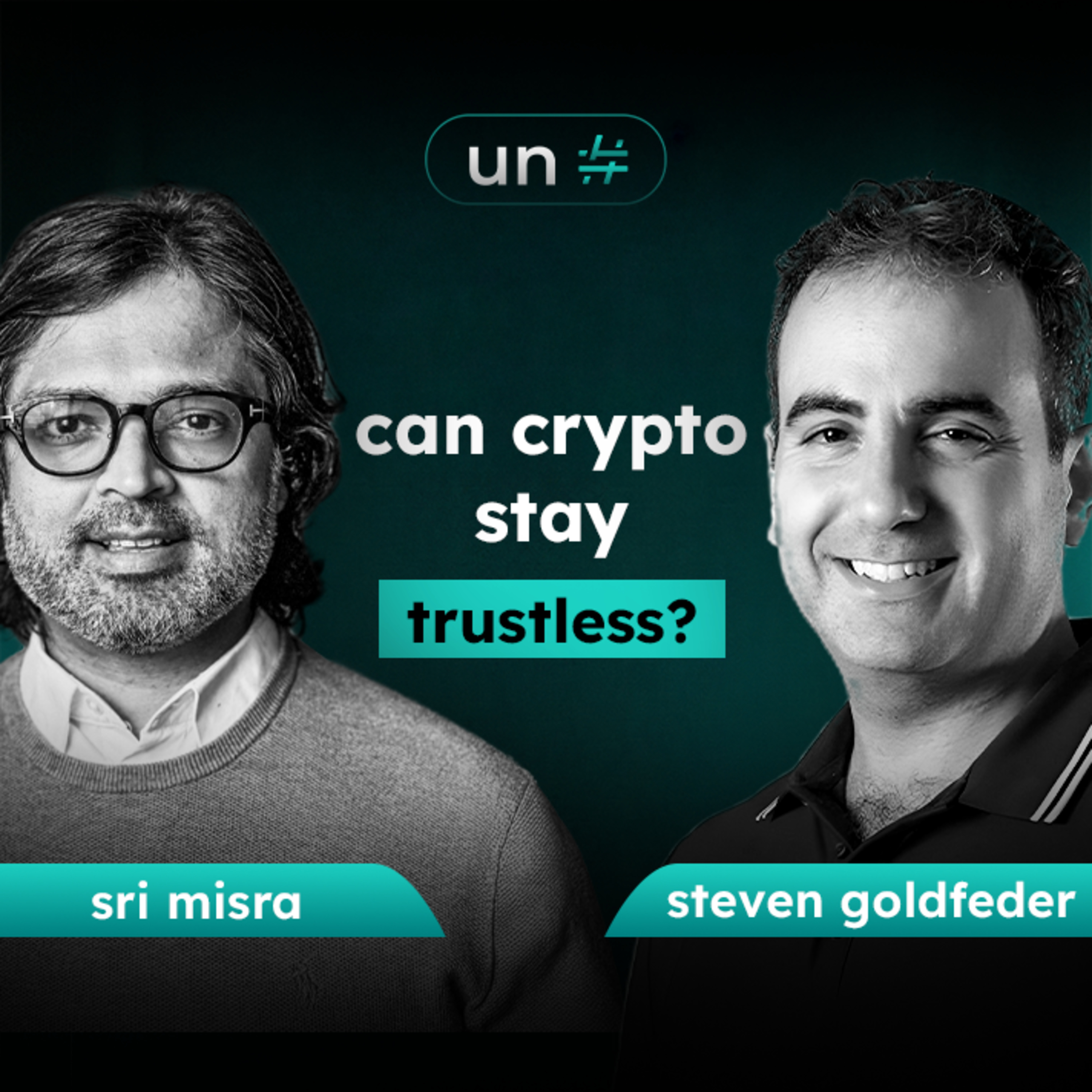 Steven Goldfeder(Arbitrum) on Why the World's Biggest Institutions Are Coming On-Chain76 / 100
 Inside the Centralized Database Holding Trillions of Dollars48 / 100
 Why AI Agents Aren't Ready to Manage Your Crypto Portfolio Yet64 / 100
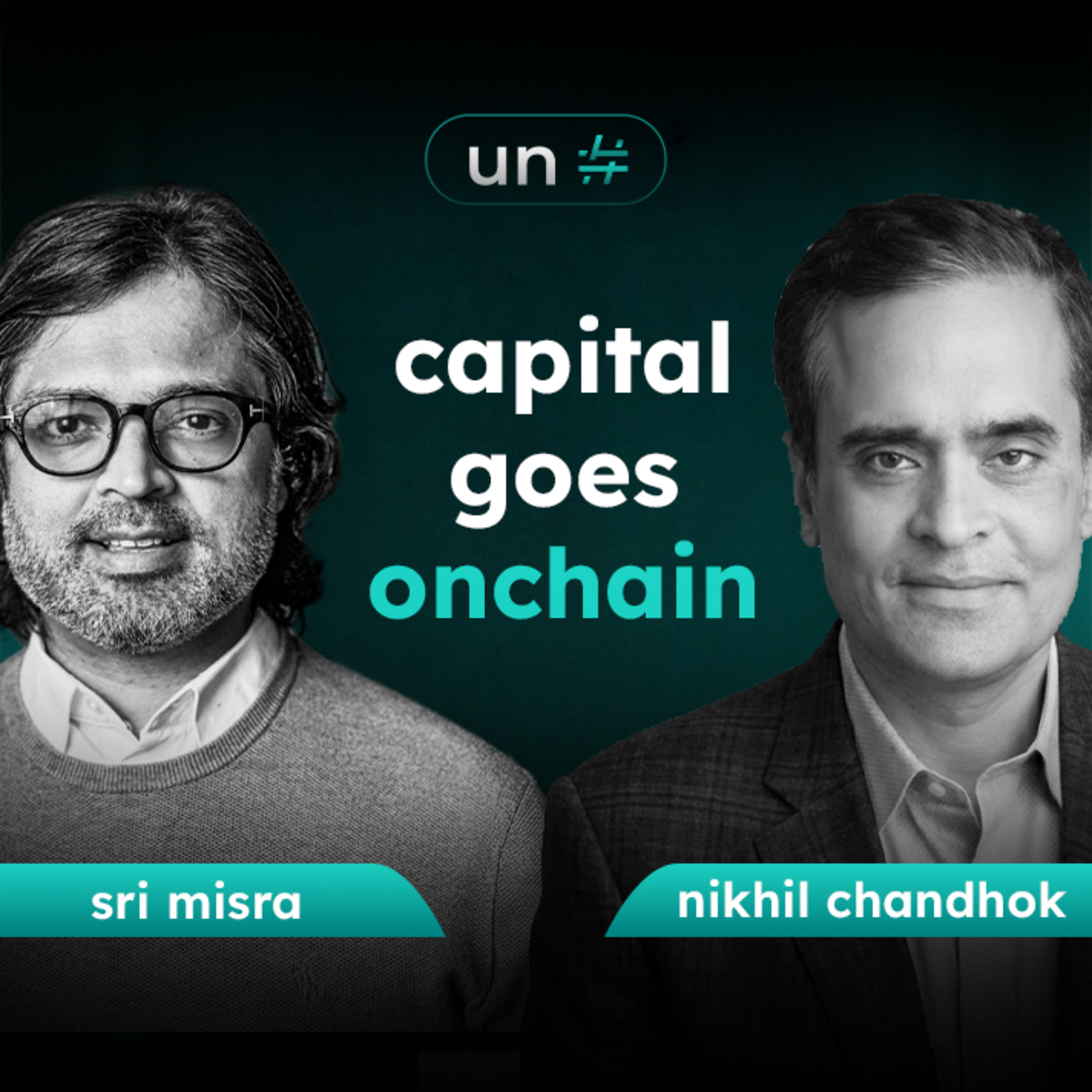 The Internet Is Becoming a Capital Market | Nikhil Chandhok