The Startup Junkies Podcast · 2026-06-29 · 11 min
Key moments - from our scoring
Substance score
26 / 100
Five dimensions, 20 points each
Zak Morris, a Bentonville native with 13 years at Walmart, shares why he became involved with Fuel, an accelerator supporting early-stage companies across sectors from cybersecurity to healthcare AI. He describes mentorship as a two-way street: while providing subject matter expertise to founders implementing advanced technologies (like agent-based AI for documentation processing), he simultaneously gained startup vocabulary, learned organizational structures, and observed common pitfalls. Morris emphasizes Bentonville's underrated competitive advantage - a density of world-class technical talent, accessible relationships, and institutional knowledge concentrated in a smaller geographic area. Unlike larger tech hubs, founders can meet experienced operators and suppliers within days rather than navigating multiple degrees of separation. He highlights concrete wins, including advising a cybersecurity compliance company that resulted in a board position, and connecting Ignite program interns to health tech ventures. For potential mentors, Morris advocates attending Fuel events and leveraging what he calls the "nutrient-rich" local ecosystem. His key insight: relationships and connectivity matter more than feature parity in accelerator success.
Morris was approached to provide subject matter expertise while helping early-stage companies, and saw it as a two-way opportunity to learn startup fundamentals and vocabulary while contributing his own experience in healthcare and technology domains.
Bentonville has an unusually high concentration of world-class technical talent and institutional knowledge with direct accessibility - founders can meet experienced operators, suppliers, and mentors within a block or days rather than navigating multiple degrees of separation like in larger cities.
By connecting with a cybersecurity founder whose language and product vision aligned with Morris's enterprise experience, he provided clarity on strategic direction, which evolved into an ongoing advisory relationship and formal board seat.
Attend Fuel's public events (mixers at the beginning and final presentation days), review online resources about the program, talk to alumni companies and existing mentors, and apply if you believe you have relevant expertise or network to contribute.
Founders realize the accessibility and 'potency' of the local talent ecosystem and relationships they can build - advantages not easily replicated in other markets due to the concentration of knowledge and the proximity of experienced operators.
Our reviewer’s read on each dimension, with quotes from the episode.
The episode is predominantly promotional material for the Fuel accelerator and Bentonville's ecosystem with almost no actionable takeaways for B2B operators. The opening glimpse of AI agent architecture is the only substantive technical observation and is immediately abandoned.
we're implementing chains of agents to help you process documentation on the inside for this very specific purpose
you're going to grow and you're going to have to learn to edit. Some darlings are going to hit the editing room floor like any good movie, script, or film
The small-city accessibility argument is a mildly interesting counterpoint to startup-hub orthodoxy, but the episode never develops it into a rigorous or counterintuitive thesis, quickly retreating to generic ecosystem boosterism and flywheel metaphors.
I don't think you get that in some of the big cities. I think there's a lot of there's more degrees of Kevin Bacon that you have to navigate
Ideally, it acts as a flywheel where it's the entry point, right? The gateway experience that pulls more and more novel and meaningful companies here
Morris has real practitioner credentials - 13 years at Walmart plus hands-on AI/ML and cybersecurity work - and has earned a board seat through demonstrated value, but he has never founded or scaled a company and the interview fails to extract the depth his background could warrant.
13 years at Walmart served me really well from the relationships perspective
I'm now on the board of that company
No named portfolio companies, no metrics on cohort outcomes, no dollar figures, and no quantified claims about Bentonville's talent density. Every example stays anecdotal and vague, which makes assertions about world-class density impossible to evaluate.
I was able to connect some local interns at the Ignite program to some health companies
I know exactly who you should work with. And you can go meet them for coffee right away
The host asks exclusively open, promotional questions - essentially guided testimonial prompts - with no follow-up probes, no challenge to vague superlatives like 'world class,' and no attempt to quantify or stress-test any claim Morris makes.
Tell me about some standout moments you've had working with Fuel
What are some practical baby steps they can take? Let's say they're kind of standoffish, not standoffish, but they're not unsure, but they want to participate
Computed from the transcript - who did the talking, and the words that came up most.
What happens when a mentor gets more out of an accelerator than the founders do? Zak Morris joined the Fuel accelerator as a subject matter expert in AI - but quickly realized he was learning just as much as the companies he was advising. In this episode, Zak breaks down how working with startups across cybersecurity, AML, and healthcare sharpened his own thinking, why Bentonville's density of world-class talent is an underrated advantage, and how one early conversation with a founder led to a permanent board seat. Whether you're a founder, a seasoned professional sitting on the sidelines, or someone who's never thought of themselves as a mentor - this one's for you. ️ Startup Junkies is a podcast celebrating the entrepreneurial ecosystem of Northwest Arkansas and beyond. Subscribe for more! -
Transcribed and scored by The B2B Podcast Index.
I think previously it was like, generally speaking, we're going to try to make healthcare better. Here's kind of how we're thinking about doing it, and it still wasn't terribly clear what AI was even helping them do. Now there are, oh no, we're implementing chains of agents to help you process documentation on the inside for this very specific purpose. This is the Startup Junkies podcast.
All right, Zach, what made you want to get involved in an accelerator like Fuel? So interestingly enough, like I had never started a startup before and I knew I wanted to. And I wanted my lab and my studio ideas to eventually follow that path. But I'd never made one before.
So when I was approached with just, hey, can you provide your subject matter expertise in this space? I saw it as kind of a two way street. Not only was I able to come in and provide some knowledge and augmentation of capability for a company that really needs it at a certain space through the channel of fuel, but I was also able to get in orbit of companies who are further down the track than my own company was and learn the ins and outs, learn the language. There's a vocabulary to startups that I did not have two years ago.
It's a whole other language. It's a whole other language at a time that large language models turn knowledge in context into function. So I was able to glean the language of startups and all their pain points and processes as I'm translating them with my expertise into internal form and function. It's how I learned what agents I needed around me for the roles I didn't have.
right it was how I was able to avoid some pitfalls as I helped learn from other mentors or watched presentations and understood what some of the feedback was so I can tune my own to that kind of quality level so it's like an interesting thing I'm helping them level up in a certain way but I am getting to level up at the same time yeah a lot of the value add you were giving them at the same time like you said just it was almost like you were a part of the cohort as well, which you are.
Yeah. Yeah. In our way, we are kind of infused, right? And then you get to know some people in kind of a meaningful way on a journey that I'll be taking myself before long.
Tell me about some standout moments you've had working with Fuel. Oh, boy. So let's see. I've been through cybersecurity to AIML, and this is my second healthcare right So there been a broad spectrum of topics I think one of the very The very first cohort I did I connected with a it was the cybersecurity cohort and they were basically putting compliance on Rails But there was a lot of emergent signals and paradigm shifts going on even two years ago now that was really throwing in some questions of direction and what the next steps were.
and they were at a bit of a pause because they knew the next steps were going to be really important. The founder and I, the language clicked right away, right? It was very clear. I knew what I was talking about.
I understood what they were building because it was similar to some of the project work I had recently done at the time and said, oh, no, this thing has wheels. I can tell you because enterprise at this level is doing some of this stuff. So, like, you're not off base. Let me see if I can help you through some of the next steps.
and I'm now on the board of that company. So there was a sense of, oh, there's some alignment, some immediate value of let me just clear up some of the fog for you with some of these decisions and functions and how a few tricks that I learned from that they were able to apply to how they were developing some of their product and concept out. And then that led to a more permanent advisorial, like I'm in their orbit and a part of their board now as a persistent presence that they can leverage.
So it was a very natural fit right away. And then all through mostly conversation, that fuel basically sets us up for to let that chemistry happen. It turned into a very meaningful and prolonged relationship. The Startup Junkies podcast is brought to you in part by Arise.
Arise helps Arkansas tech and tech-enabled startups grow with no-cost coaching, capital navigation, and expert connections so founders can scale faster. Learn more at AriseArkansas.org. Nice payoff for both parties involved, I guess.
I think that's the idea, right? You come here and you go through this and you're going to grow and you're going to have to learn to edit. Some darlings are going to hit the editing room floor like any good movie, script, or film. Of course.
And you're going to get tuned up, but you're also going to get tapped in. And I think number two would be I'm a Bentonville born and raised native, so I have a lot of network here. And 13 years at Walmart served me really well from the relationships perspective. A Bentonville native is rare.
Oh, I know. So I take that four leaf clover effect and when they able to come here and have such I call like a talent and experience nutrient rich area that very accessible and connect those dots You know, anyone can help tune up some features and functions, but really those aren't so distinct anymore. It's going to be the relationships that you can get them connected to. And during the last healthcare cohort, actually, I was able to connect some local interns at the Ignite program to some health companies, and they were able to leverage some young talent but very bright for their concept.
There was some connections into the supplier ecosystem I was able to facilitate just because I know a person and said, I know exactly who you should work with. And you can go meet them for coffee right away. And I don't think you get that in some of the big cities. I think there's a lot of there's more degrees of Kevin Bacon that you have to navigate.
And here it's like, hold on. Do you want to talk to the CEO or a person who's done it for 20 years or, you know, another similar startup? By the way, they're a block away from here and I can we can talk to them tomorrow. So there's this sort of accessibility that the mentors, I think, get to act as like a tuning fork to kind of help focus and get people connected for more meaningful relationships that sort of even outshine any of the features and functions of whatever tool they're making.
Right. Because I know a lot of the top job seekers, you know, who just graduated, they're going to almost flee immediately. But if we have a pipeline to connect them and to nurture that talent, we can keep them here and we can have more Bentonville natives. Right.
And I think we've we've had a number of companies fuel has where they've decided to move their operations here after their experience. And that I'm not sure how typical that is of accelerators. But once they come here, I think they realize the accessibility, the potency. Right.
Right. Of the talent and people and relationships they can build here with a lot of there's a lot of tech savvy that you just don't get in a lot of Midwest areas without being in a city. So, you know, absolutely. Ideally, it acts as a flywheel where it's the entry point, right?
The gateway experience that pulls more and more novel and meaningful companies here. So for other mentors like you or potential mentors who are on the sidelines, kind of seeing what the ecosystem is producing, how should they get involved? What words do you have for them? Because I know there's a lot of talent here in Bentonville that is untapped, but would be a gigantic value add across the board.
Absolutely So yes we have a really like a density of knowledge here that is really kind of quite literally world class actually in a bit of an unexpected space. So I would invite, uh, anyone who feels they have unique knowledge, unique experience, unique network factors that they can help emerging ideas and meaningful innovation become real, then they should sign up. Right? And there's definitely mutual value you get as a mentor, a inside view of the edge of what's being made and what's to come.
And anytime you have some eyes on that horizon line, not only can you make better decisions for yourself, but you can start participating in that wave that's coming. And to me, at least for me, that has provided a very fulfilling way of working, right? It's diverse all the time. Every cohort's different.
So it changes up in your sense of possible. The yardsticks of possible keep moving just based on helping. And that's a pretty easy trade in my book. I think so.
What do you mean? What are some practical baby steps they can take? Let's say they're kind of standoffish, not standoffish, but they're not unsure, but they want to participate, but they don't know anybody. at these events?
You just recommend they come? Yeah. Well, obviously there's the fuel, uh, online resources. You can see what fuel is about, right?
And there is some information there that even kind of helps you understand a little bit of what to expect. Um, but overall, like come to the, come to the fuel events, right? There's the mixer that happens at the beginning. There's the final presentation at the end.
That's kind of open invite, generally speaking, right? Come find out what the final outcomes are and talk to some of these companies that go through it, right? There might be some outreach there so they can understand the experience or some of the other mentors, which I believe a lot of the mentors are listed in some of the resources that are out there. So, you know, it's an invitation to participate, right?
And if you think you have something to offer and you have a sense of getting involved would be meaningful to you, then you should absolutely do so.
Other episodes covering the same guests and topics, from across The B2B Podcast Index.
 Kelly Mahoney (Ulta Beauty) | Trust, Creativity, and the Superpowers of BeautyThe CMO Podcast · on Walmart78 / 100
 E-Grocery Just Surged 28% And Regional Grocers Should Look to Sweden | Fast Five ShortsRetail Fast Five · on Walmart78 / 100
 Retail’s Mid-Year Report Card With Ethan Chernofsky of Placer.ai | Ask An ExpertOmni Talk Retail · on Walmart75 / 100
 EP 125: Less Traffic, More Sales: Wyze's Counterintuitive Paid Media Playbook | Logan DunnAlways Be Testing · on Walmart74 / 100
 Scaling Financial Operations and AI Innovation with Rohini JainSecrets of Rockstar CFOs · on Walmart73 / 100
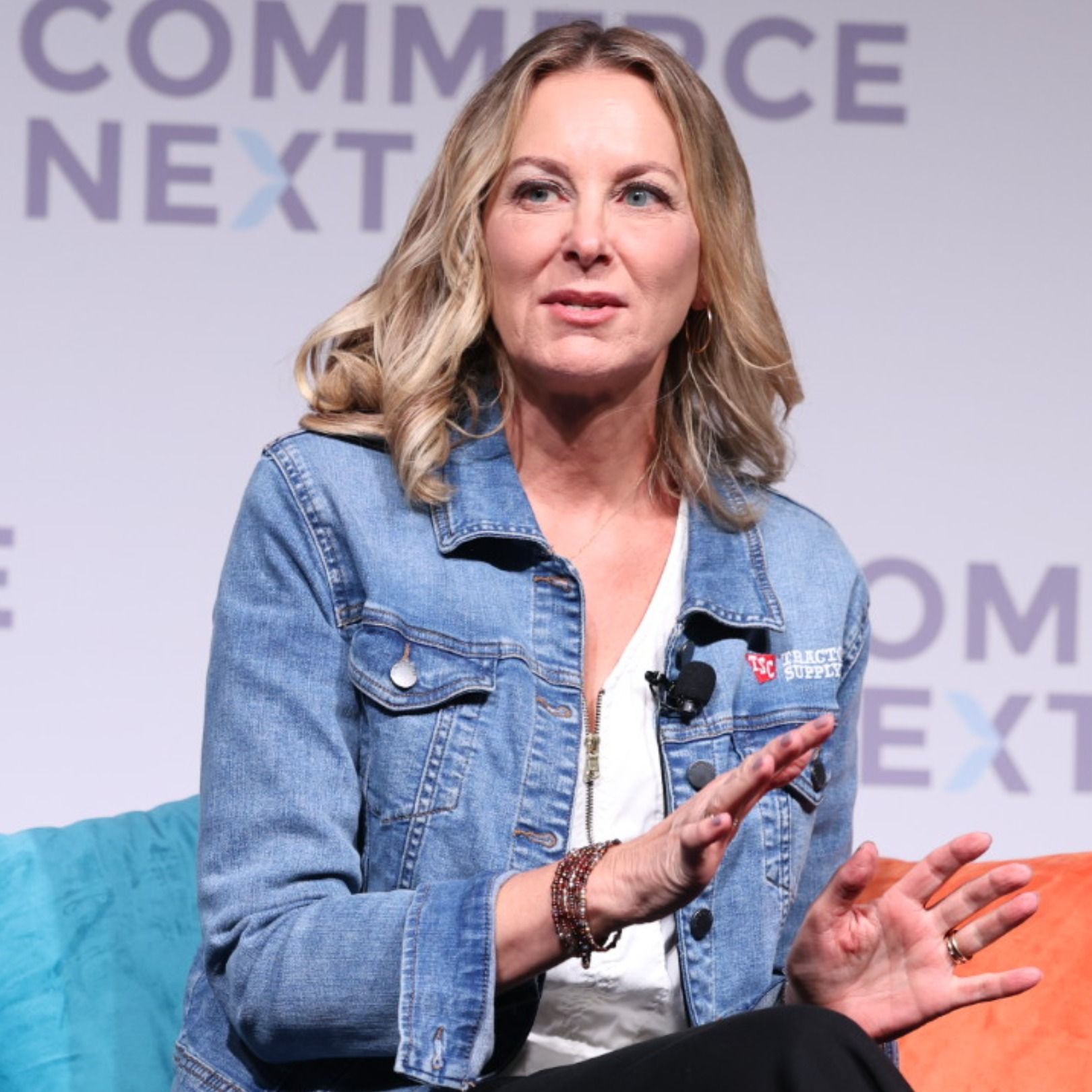 Tractor Supply CMO Kimberley Gardiner on the Power of "Life Out Here." PLUS The K-shaped Economy and Grocery's Shaky MiddleRemarkable Retail Podcast · on Walmart71 / 100How Stefanie Hammett Is Rewriting Consent Laws One State at a Time454: Why Aha Moments Are Less Instantaneous Than You Think453: The Power of Print in a Digital World452: Building a Culture of Fun and Community with Arkansas Track Club451: How a Northwest Arkansas Dad Transformed His Love for Water Adventures into a Business