
The Rainmaking Podcast · 2026-06-25 · 30 min
Key moments - from our scoring
Substance score
37 / 100
Five dimensions, 20 points each
Donna Griffith returns to discuss how professionals can identify and communicate their X Factor - the unique combination of talents, skills, and proven outcomes that make them distinctive in their field. Drawing from her experience consulting with organizations during acquisitions and coaching Stanford GSB students, Griffith introduces two frameworks: the GSBG (Goal, Story, Benefits, Goal) for job seekers and the GPSY (Goal, Pattern, Show Up, Why) for established professionals like consultants and business owners. She emphasizes that discovering your X Factor requires reflection on past successes, recognizing natural aptitudes that often go unnoticed, and identifying proof points where you've delivered measurable value. The episode includes a live coaching session where Griffith helps host Scott Love articulate his X Factor around pattern recognition, creative problem-solving, and trust-building in legal recruitment. She also introduces ikigai - the Japanese concept of what you're good at, love doing, what the world needs, and what you can be paid for - as a framework for identifying your genius zone and avoiding work that feels like drudgery.
The X Factor is a blend of your natural talents, acquired skills, and proof points of success told as a cohesive story. To find yours, identify a past success you own, list the talents and skills that made it possible, recognize how those patterns repeat across your career, and gather concrete examples of value you've delivered.
GSBG (Goal, Story, Benefits, Goal) is designed for job hunters - you lead with your goal second, tell a story that proves your value, then circle back to why you're a match. GPSY (Goal, Pattern, Show Up, Why) is for established professionals and consultants - you start with your goal, show the recurring pattern throughout your career, demonstrate how you show up, and explain why people should trust you.
Proof points are concrete examples of value you've delivered: placing partners at a firm, building a trusted network, launching initiatives that generated measurable results, or earning trust enough that people refer you or take risks associating with you.
Ikigai is the intersection of four circles: what you're good at, what you love doing, what the world needs, and what you can be paid for. Finding work in that intersection is your genius zone and helps you avoid 'icky guy' work that drains you - meaning you can pursue purpose-driven work without starving financially.
Ground your statements in specific outcomes and patterns rather than generic self-praise, use the frameworks (GSBG or GPSY) to structure your narrative like a story rather than a sales pitch, and focus on how you've helped others rather than highlighting yourself - people respect clarity about your genius zone.
Our reviewer’s read on each dimension, with quotes from the episode.
The episode delivers a handful of structured takeaways (GSBG/GYPSY frameworks, LinkedIn summary rewrite, proactive testimonial harvesting) but the bulk of the runtime is filler affirmations, a live coaching demo about the host's own career, and generic self-promotion advice a smart professional has heard many times. Novel ideas per minute is very low.
Just like 25 years experience doing this, this, this sort of a little laundry list and you miss telling the story
get over the I, uh, It's not polite to toot your own horn moment and know that in today with everything going on with AI and everything, if you don't, somebody will replace you
The GSBG and GYPSY acronym frameworks are proprietary names on otherwise standard narrative-structure advice. The ikigai concept is explicitly acknowledged as borrowed, and the core message - know your value, tell a story, use LinkedIn - is thoroughly recycled B2B personal-branding content with no contrarian or first-principles angle.
genius zone is. I mean, I know I'm great at storytelling
have you heard the, you know the term icky guy? I saw that name
Donna Griffit has genuine practitioner credentials - 16 years running workshops, a communication coach role at Stanford GSB, a published book on startup storytelling, and documented client work - but she is a coach and speaker, not a B2B operator who has scaled revenue or built a company, limiting her direct relevance to the episode's stated B2B rainmaking audience.
the past few years I've been a communication coach at Stanford GSB graduate, uh, School of Business during the school year
I had a workshop in Houston with 120 financial leaders for a very big software company
There are a handful of concrete data points - six partners placed, 450 LinkedIn testimonials, a Cisco acquisition context, a 120-person Houston workshop - but most of the episode is abstract framework discussion and a live coaching session on the host's own career, which replaces externally verifiable evidence with personal anecdote.
I was able to place six new partners at a firm. And these partners were not looking to go anywhere
I have over 450. They did not get there by magic
The host converts the interview into an extended live coaching demo about his own résumé, which is engaging but leaves listeners as voyeurs rather than learners; questions are leading and affirmative ('I love that idea'), there is zero pushback on any claim, and the three 'action steps' are solicited via a soft, pre-announced request rather than earned through probing dialogue.
I'm in the hot seat. Here we go
Ladies and gentlemen, you have seen magic happen right before you
Computed from the transcript - who did the talking, and the words that came up most.
You know you're great at what you do. But can you actually say it - clearly, confidently, and without sounding like you're reading a resume? That's the gap Donna Griffit has spent 16+ years helping professionals close. Donna Griffit is a corporate storyteller, communication coach at Stanford Graduate School of Business, and author of Sticking to My Story: The Alchemy of Storytelling for Startups. In this episode, she returns to the Rainmaking Podcast to share her X Factor framework - a method for uncovering your unique blend of talents, skills, and proof points and turning them into a compelling story that wins trust, rooms, and clients. This one includes a live, unrehearsed coaching session where Donna builds Scott's X Factor statement on the spot - and the result is something every professional in the room can learn from.
Transcribed and scored by The B2B Podcast Index.
Speaker A: Foreign m. You're listening to the Rainmaking podcast hosted by high stakes headhunter, author and professional speaker Scott Love. Um, you're listening to the Rainmaking podcast and my name is Scott Love. Thank you. Thanks for joining me, friend. I hope you get some exciting ideas from our conversation with Donna Griffith today. She was a guest on our show three years ago. Our topic title for today is the X Factor. Know your value and make sure they know it too. Now, Donna was on our show three years ago. Her topic title before was on creating pitch decks for organizations that are looking for funding. So if you're an attorney and you've got clients that are startups or they're companies that are looking for funding or they need to tell a good story, uh, I will put the link to her previous episode in the show notes. You can easily reference that and send that to them. Donna is the author of the book Sticking to my the Alchemy of Storytelling for Startups. She's a consultant and a speaker and an author based in the Bay Area in California and works with organizations across the globe to help them learn how to tell a good story. Now, thank you for listening to the show as always. This podcast is sponsored by SurePoint Legal Insights Free, formerly known as Leopard Solutions, turning legal intelligence into opportunity. The show is also sponsored by the Rainmaking Magazine for those who are intellectually driven and results focused professionals who want to be the number one professional service provider in their niche. Start your free 30 day subscription today with nearly 40 contributing authors, business development coaches and consultants providing curated content exclusively on business development for those in professional services. Visit therainmakingmagazine.com today to chart your course to greater Rainmaking success. Thanks for listening and I really do appreciate you coming along with me on this journey of growing in our knowledge about Rainmaking. I started this show during COVID over 300 episodes ago and I just really appreciate your commitment to the show. If you've got a minute, it would mean a lot to me personally if you could write a nice five star review, share the show with people that want to grow their books of business, and let's continue on in this journey together. And now here's my conversation with our guest, Donna Griffith. Thanks for listening. Hey, this is Scott Love with the Rainmaking Podcast. Our topic title today is the X Factor. Know your value and make sure they know it too with our special guest, Donna Griffith. Donna, thanks for coming back on the show. Yay.
Speaker B: So nice to be back.
Speaker A: You bet. And the last time you were here it was about three years Ago, we talked about creating pitch decks for those that are looking to get funding specifically. And by the way, we're gonna put the link to that episode in the show notes. But today we're talking about the X Factor. And let's get a working definition. What exactly does that mean when you say the X Factor? What is that, Donna?
Speaker B: Well, uh, those that might remember there was a TV show called the X Factor, Simon Cowell was there as well, searching for, uh, what they call the triple threat. People that could sing, dance and act. They have that kind of je ne sais quoi, that undeniable something that you can't quite put your finger on. And the reason that I call this X Factor is about, uh, 16 years ago, I, uh, had a big corporate client, and they were about to go through an acquisition. Cisco was acquiring them. And I'd been with them for, like, seven years, teaching workshops and presentations, business writing. And I could see the anguish and the fear going on, on with people, which, you know, is very reminiscent of what's going on now when companies do big slashes, because you never know if you're going to be asked to stay, asked to go, or what. And my then fiance, now husband, uh, suggested, well, why don't you offer them a workshop on a way for them to, you know, when they interview, when they're interviewed by the new company, convince them to make them stay, or the company giving them kind of the gift of how to interview out. So my husband, I always joke, he's the CEO, I'm the coo, so he throws out ideas, I go and execute. And that's exactly what I did. And over the years, it has, uh, evolved from like a full day workshop to a half a day, and I even have it down to two hours, where I go into organizations and help people find their X factor, which is basically a blend of their talents, their skills, and the points that prove it. Told in a way that it becomes like their story of when they're networking, when they're interviewed, when they're trying to get a promotion, a raise. So the X Factor is what is our unique DNA of our compilation of all the great things we naturally and inherently have, the things we've picked up along the way and the points to prove it in whatever field we're in. Wow.
Speaker A: Uh, that's great. Now, the next question I have, because I always say I can solve anybody's problem except for my own, you know, how do we ourselves dig in and find out? What can we tell people? What is it that you do with people that kind of brings that, that information out into that story.
Speaker B: I think that's something we all struggle with, myself included, because it's very easy to kind of look at a friend or look at a loved one and say, oh my gosh, they're amazing. Because A, B, C and D. It's not so easy to reflect on that for ourselves. It feels braggadocious. It feels, you know, not modest. Especially I find with women like we've been conditioned to think, oh, you know, it's not modest to toot my own horn. The thing is, if we don't toot it, nobody else is going to. We might have a wonderful champion at work or around that, you know, release tends at first. They might be gone tomorrow. A, uh, friend of mine just told me her husband's manager was just let go when their company had a big layoff. And suddenly it's like you're a ship without a port. So you must know how to do it and it's much easier. What I take people through is like, we'll look for an event or something you've planned that you've been part of in the past that you can own as something that you like. I have ownership that this was successful. It could be anything from a family reunion that you planned to somebody in a workshop, uh, said he planned a west coast of Taiwan bike for charity week long thing and he got it off the ground and raised a lot of money. All these different things. Because then it's kind of like we can look at that and break down what were the talents and the skills that helped us make that a, uh, fact and what were the actual outcomes and then start to see how that echoes throughout our life.
Speaker A: So let me kind of back this up a little bit. I like that. I like that idea of digging in that area. This X factor. Is this something that you're thinking of? This is the moment in time where we're making a new contact with someone, where we're giving a presentation, where we're interviewing for a job or uh, when there's a new manager and we're making that introduction of ourselves to that person. Is that kind of what you envision?
Speaker B: Yes, yes, yes and yes. It's everywhere. So the past few years I've been a communication coach at Stanford GSB graduate, uh, School of Business during the school year. They're off now. And one of the biggest struggles that I find the students have is creating something small talk during networking that leads to, you know, bigger talk. It's how they interview for Internships, how they talk to alums who can open doors for them about what they really want, what's unique about them. So usually the question of like, so tell me about yourself, which anyone could ask, is sort of met with what the typical pattern. Oh, well, I grew up here, I went to school there, I worked there, and now I'm at Stanford and I want to go there. Completely immemorable. No one's gonna remember that five minutes after they finished the conversation. And I've devised different frameworks which I've now incorporated with the X Factor workshop. When I do one on one work with people, finding what I call the Arts Factor brief, which is like an array of messages, whether you're a business owner, a startup founder, someone looking for work, a consultant. So I have different ways of putting it together and then the story just tells its self.
Speaker A: Okay, good, good. Well, let's kind of go into that then. Tell us about some of these frameworks that we can use to really define out what RX factor is.
Speaker B: Great. So there's several different levels of what I would ask to find. So the first thing, like I said, you can think of an event like, Scott, if you were to tell me something you can remember in your past that you feel you had a definite piece of success in that it could be starting a business, it could be then event, like I said, what would it be for you?
Speaker A: For me, I think it would be getting involved in a trade association for my industry, being on the board, uh, getting involved in helping to, uh, give insight to conferences. I started a podcast for that trade association. You know, for myself at least. That's the first thing I think of outside of the grind.
Speaker B: Great.
Speaker A: Yeah, okay, good. Okay, good.
Speaker B: Let's go with that. Let's go with that. So if I were to ask you, if I were to ask you, what were the talents? Now let me just open a little brackets here. People don't realize how many talents they actually have. It's very hard for us to conceive that things that we use every day are part of our talents. Like I know as a mom right now with two girls on break, I'm tapping into my juggling talent, into my planning, into my logistics, into my creativity, into my empathy, into so many things that people wouldn't call necessarily a talent, but they are these natural aptitudes. So if you were to think of some of your natural gifts that made success of that, of tapping into the trade, to the trade organization, to starting the podcast, to really facilitating that, what would you say your Top talents were.
Speaker A: I think it would be finding out what people want. Uh-huh. That can give them value. Something that we've done with this show in itself also.
Speaker B: So it's like intuitive. Is it being intuiting? Mhm.
Speaker A: I'd say creativity. Uh, being a creative. I'm an artist, I'm an author or. And I, I've written books, but I paint, I write poetry, I do calligraphy. I write poetry on my art in my own calligraphy called the Three Perfections. I'm the only artist. Yeah, I'm the only artist in the world that does that.
Speaker B: What else?
Speaker A: But, but I think using creativity as a way to bring value and ideas and solutions to other people, I think that would be the through line with what I did with that podcast for the national association of Legal Search Consultants. I created that podcast. I launched another one for the national association for Law Placement and then doing another one for legal sales and Services organization. I've kind of used that creativity to build a brand, but also to bring value to people that want to grow in the legal industry. So I think those are coming kind of the. In our little live coaching session here that the rest of the world can hear.
Speaker B: This is great. This is totally unplanned. I love that this came up.
Speaker A: I'm being vulnerable and I know people. Hopefully you all might learn. Learn something from, from the hot seat ear. So.
Speaker B: So it's also willingness to try new things.
Speaker A: Yes, that's right. Yeah. Make mistakes. My philosophy is that I'm ready to go when I'm 80% ready. I'm not a perfectionist because execution solves every problem. So anyways, I love that.
Speaker B: Okay. So intuitive is to what people want and need creative, creative solutions, creating value to help people grow and willingness to try new things to be vulnerable. I'm ready to go at 80%. Those are definite. Now if I were to ask you, like, do you recognize those patterns? You already answered me about the creativity because you do art. Ah. And. Right.
Speaker A: Yeah.
Speaker B: Uh, do you recognize patterns in other places in your personal life, in your professional life?
Speaker A: I do. I think with my kids. I'm married, I've got two kids. One's 25, one's 14. Kind of bringing creative solutions to challenges that they go through. And then even in my placement work, whether I'm doing a law firm merger within traditional legal, like lateral mergers, or the, uh, private equity MSO context, or my, my headhunting practice recruiting corporate and finance partners, it's creativity that finds solutions. So I think that might be the through line of using my creativity that finds solutions.
Speaker B: I love it. Wow.
Speaker A: How about that?
Speaker B: I love it. I love it. Okay, so then what I would say is I would think with you out loud, what are the skills that you need in order to do this? And skills are much easier to list. You could just kind of throw off, uh, skills that you've picked up. Skills that you have.
Speaker A: I'd say looking at pattern recognition is number one. Looking for themes and yeah, like I mentioned, pattern recognition and themes. Being observant as an artist. And when I started painting, I started with watercolors over 20 years ago, took lessons, only started doing oil about two years ago. I do a lot of landscapes, but just observational approach. Huh. To looking at my subject matter and studying it and noticing that clouds are not white. Sometimes they're gray, orange maybe, sometimes they're a little bit green. That you see that looking at what really is rather than what we think is there challenging preconceived ideas, pushing back a little bit on that, sorry, legal profession and uh, challenging what people might see as the norm with a creative idea. Then another, I think another gift is I don't care what you think about me. I really don't. I'm going to take a shot and I'm going to miss. And each time I miss, I learn something. I never fail because there's no such thing as failure. When you look at every disappointment as really feedback in disguise.
Speaker B: Wow.
Speaker A: So I think, I think looking at that as an artist, as a creative, doing placement work, but uh, doing deal work, I think those are kind of the themes that I see. You know, creativity by finding solutions that serve others, not being afraid to fail and taking action and um, observational.
Speaker B: Love it.
Speaker A: You know, paying attention to patterns, things like that.
Speaker B: So then, okay, so we've got your talents, we've got your skills. The next question I would ask would be proof points to show that these skills and talents have been brought to successful arenas. It could be what you talked about with the podcasts and the connections. What else, where else can you can you give me like, okay, I brought X value to this organization by doing y this solution?
Speaker A: Sure, sure.
Speaker B: Mhm.
Speaker A: So I was, I was actually meeting with the chairman of this firm two weeks ago in their office after we'd placed our sixth partner there in a short period of time. None of those partners were on the market, none of them were looking to move. And I earned their trust. And these are very sophisticated people with a very sophisticated firm, just like all of the firms that we deal with. So I think looking at proof of concept, I can get people to consider making a life changing move from a call from someone who initially is a stranger and earn that trust to get to do that. I think that's, that's proof point number one. Proof point number two, having people like you on the show, Donna, you know, having your trust to risk your reputation being associated with me by me having a track record of serving people. And that's why I realized with the show, it's not the Scott show, it's about the listeners, it's about the guests. So I think that's another proof point also building a brand that's. It's not about me. I don't like, you know, we don't like to talk about ourselves. Fortunately, I found a way other people can talk about what I do because they're guests on the show. But I'd say so I'd say number one would be the placement work. Number two would be the show. And then number three would be building a network. Building a network of people where I'm well connected. I know private equity sponsors, I know family office executives. I'm able to refer people to others. Being someone that's involved in a network and building that trust within the deal ecosystem. So those are just proof points that I've seen wonderful things that I've done,
Speaker B: Donna, and I hear that trust is there a lot.
Speaker A: Yeah.
Speaker B: Okay. We're kind of speeding through this because I want to get to. Okay, I'm going to actually give your X factor statement in a moment. I'm going to, I'm going to do what I called my Donna GPT moment and kind of speak as Scott. But before we do that, I will say, okay, so we've gathered all these treasures and then we put it into the framework. Now there's two frameworks I have. One is for job hunters, which I call the gsbg. Thanks, Stanford. It's goal story, benefits, goal. So the first goal is, okay, what's your stated goal in this conversation? Do you want a job? Do you want a connection? Do you want an introduction, a story from your life that kind of highlights that, uh, who you are, the essence of who you are and why you would bring something great to their table. So you don't state the goal at first. You have that in you, the benefits that that story proved that you have. And then, uh, Jean, back to the goal and why you would be a great match for this company or this client.
Speaker A: That's great. It ties it back together with when
Speaker B: it's Professional, like, uh, yourself. It's a slightly different framework, and I call it the Gypsy framework gpsy. So the G there is also goal, but we, we spin it a little bit differently. So we start off with the goal and what it is that you want to do in life. Then as you said, pattern P is for pattern. It's the pattern that's kind of been with you throughout your career. The stories that have that prove this and then you. How you show up and why people should trust you. So what I'm going to do right now is I'm going to kind of make a little magic happen. And just from our brief little conversation, I'm gonna give your GSBG Gypsy X Factor statement.
Speaker A: And these are part of what you mentioned as a framework. Is that correct?
Speaker B: Mm mhm. Mm mhm. So these are things that either in the workshop, I guide people to do for themselves and then help them shape it. I'll like, also call someone up in the workshop and they'll work in front like. I had a workshop in Houston with 120 financial leaders for a very big software company. And one of the participants came to me afterwards and he said, you know, I've been with the company for 20, 26 years. This is the first time I've stopped to think what the true value I bring to the company is. And to me, that's just like, it's this moment where you realize your greatness. So let me show you. You can listen now to the little, you know, impromptu X factor.
Speaker A: I'm in the hot seat. Here we go.
Speaker B: You're in the hot seat. And no, no running away. Uh, and I love that we didn't plan this. I was thinking, should I offer?
Speaker A: But I've been in depositions before. I can deal with it.
Speaker B: All right, let's. Let's see if you could do it. So this would be a conversation with a new client or with an association or an organization when they ask you. So, Scott, tell me about yourself. So we use the framework, but it doesn't sound like a framework. We release it like a cake that bakes in a pan. Then you take it out of the pan, and it just shows the beautiful cake. So I come from a legal background, but I also am a creative. I know that doesn't sound like it's possible. It sounds like a little bit of a paradox. But I think that it's the creativity and the observation that has made me very in tune with details. So I have, um, a naval background. I attended Annapolis. And then from there I went into legal recruitment. Now, being part of the law requires a very astute attention to details. But what I did with my ability to pattern match was also look at people matching. I am able to identify people that would be a perfect fit for a place they may not be at right now. I have been just in the past few months, able to place six new partners at a firm. And these partners were not looking to go anywhere. We're not looking for new opportunities. But I was able to match them. And I had the trust level to reach out and a bit of gumption to reach out to these people and offer them something that might not have been considered but could make their life that much better. So I'm always looking for creative ways to make people's lives better professionally and personally. And because of a trusted network that I have built over the years where I have connections with family offices, with private equity, and with attorneys everywhere, I know how to spot the patterns, connect the dots, and make people's lives that much better.
Speaker A: Yeah.
Speaker B: Wow.
Speaker A: Ladies and gentlemen, you have seen magic happen right before you. Well, thank you, Donna. I'm sold. I'm sold. Oh, thank you.
Speaker B: Thank you for letting me do that. It's so much fun because like, usually at this point, people will either be giggling or have their jaw dropped like, that's me. And I'll be like, this is you. This is just. And if we had longer, I would have gathered more details and painted it more. But I want everybody to be able to tell that. Did it sound braggadocious in any way? M. No, no, it's true. It's just, it's recognizing. And I think that people have a lot of respect when they hear people knowing where their genius zone is and where it's not.
Speaker A: So. Their genius zone?
Speaker B: Mhm.
Speaker A: Is that a phrase that you've coined?
Speaker B: Oh, gosh, no, no, no, no. That's like known and around. But I do firmly believe in it. For me, it's the X factor. But the genius zone is. I mean, I know I'm great at storytelling, I'm great at helping people, everything from writing speeches to writing pitches. But I'm not PR resume writing things that are too regimental. It's not me. I wouldn't enjoy it. I'm good at marketing for myself. I don't love it. I wouldn't want to do it for somebody else where I'm doing campaigns and outreach. So it's knowing the icky guy. Have you heard the, you know the term icky guy? I saw that name.
Speaker A: Uh, I think I have, yes. That's where, like, the pieces of clay fall. Lines.
Speaker B: No, no, no, no. A lot of people confuse this, but ikigai, if you look it up, it's. And maybe put it in the show notes, it's four concentric circles. And it's what you're good at, what you love doing, what the world needs and what you can be paid for. And that is the ikigai is in the middle of all of that. It's your reason for being so I k I G A I And it's such a beautiful concept because so many people feel like, well, I need to do something with meaning. And somehow meaning in their mind means, uh, like either not being paid or being paid a starving artist's, uh, salary. And for me, when I was starting out, that was. I was studying, uh, my master's is in drama therapy. And it's something I wanted to do my whole life because it connects my passion for being on stage and working with people. But I realized I didn't become an actress because I didn't want to be a starving artist. And I was setting myself to be a starting artist. So I had starving artists. I had to find that next level of how can I take my talents, my skills, what I'm great at, and find a way to be to what the world needs and to get paid for it. And that's when the storytelling and the, you know, the. The public speaking training and the presentation skills that all fit beautifully. When you put that intention out there of finding what fits for you, you never know. Nobody grew up when I was there saying, I want to be a storyteller, and go, I didn't. I didn't even know it existed until one serendipitous meeting after the other.
Speaker A: Well, let me ask you this, Donna. The people listening to the show. And by the way, thank you for what you did with me. I really appreciate that, and I hope for our listeners, I hope it gives you an idea of how you can have this done for you and possibly reach out to Donna to coach you through that. But let me pose it this way. The people listening to the show, most of them are in the legal profession, partners in big law firms. They're brilliant, always at the head of the class. Their children are beautiful, and they know everything. And m. So these are people that. Their intention is, how can I earn the trust of a prospective client? Uh, with that context? And I wanted to close our conversation here with our three action steps.
Speaker B: Okay.
Speaker A: Thinking of that context, these are people. They're successful in their firms. They've earned the trust of their colleagues and they're very successful, but they want to grow their books of business, they want to become known in the market, they want to have the type of name where they're the first ones to get the call. They want to have the type of opportunities when they pitch to a new client. They have a better chance of earning that for various reasons. And um, when I say they're, you know, smartest people in the world, they're brilliant, they don't know everything, of course. And I've noticed that those that are truly successful are those that are self aware and they know that business development is a core competency that I'm not a master of. I need to get better. So I think this is a perfect opportunity for them to start with their X factor and use that kind of as a structure to getting earning trust. So in that context, these are rainmakers. What would be three action steps these rainmakers can do to really start the process of understanding their own X factor.
Speaker B: Great. So first of all, one of the biggest and most underutilized potential for telling our story is on our LinkedIn summary. People treat it as a, you know, little, like what the little blurb you put in before resume, which I also think is underutilized and so is the COVID letter. So just like 25 years experience doing this, this, this sort of a little laundry list and you miss telling the story. So I would treat that as your X factor statement there. Look at your, and think of your patterns, your themes, of what you've done, what you've really brought to the table. I mean, so if you're a pattern recognizer and connector, start with that. It could even be in your title. Something interesting and unique that sets you apart. So rethink your LinkedIn summary, put it in first person and truly tell a story with some proof points in there. That's one very important one. Two, get over the I, uh, It's not polite to toot your own horn moment and know that in today with everything going on with AI and everything, if you don't, somebody will replace you. You gotta be able to sell yourself, get over the discomfort. Yes, yes, yes, we know you're modest, you're wonderful. Next, move past it. And I would say going back to LinkedIn for a moment, another very underutilized bit is the testimonials. I have over 450. They did not get there by magic. I asked for them when people obviously if they were happy with what I did. But I, uh, mean shocking that I'm not a center of their world to tell them, you know, for them thinking to put it there. But I am there to make sure that, like, if, like, uh, a client just wrote me yesterday, donald, we're so happy with the deck that you created. Thank you so much. I'm like, thank you. Would you mind putting that on LinkedIn? And I sent him a LinkedIn request. Sent a request, Boom, same day, had a great recommendation. So don't be afraid to ask for others to put evidence of how great you are, because like I said, tomorrow they might be gone, but the evidence stays. And LinkedIn is, uh, full. As long as it lasts, is going to be a great opportunity for that. And people go there when they look to do business with you, to hire you, they go to LinkedIn first.
Speaker A: Yeah, that's right. Well, Donna, uh, I want to thank you for being here. And, um, I know you talked a little bit about what you do, but if. If you could share with our listeners, what are the offerings? What are the resources? What do you do that you have and that you offer that you would like to share with them?
Speaker B: So, I mean, the easiest part, if you're a startup, is to. Is my book, which I think you'll have in the show notes, sticking to my story. The alchemy of story time for startups. It's the cookbook for a great startup pitch. Uh, diy. Uh, also, I mean, if you're interested, if any of this resonated with you, please reach out donnaonagriffy.com, which is my, um, site, 2F's 1T. There's a story that goes with that, but we'll leave that for the third time, we mean. And, uh, anyone mentioning that they came through, Scott loves podcast, the Rainmakers. Either way, whatever it is, you get a special discount on any of my services, so just know that that's there.
Speaker A: Well, I appreciate that gift, Donna. Thank you so much for that. And, um, just as a reminder for everybody listening, we're gonna put the link to Donna's first appearance on our show, which was related to creating pitch decks for those companies that are looking for funding. So if you're in the corporate space and you do that kind of work, you can share that with your clients and that will help them. Donna, uh, thank you so much for being on the show, and I look forward to having you back on again.
Speaker B: We'll do it three years from now or sooner. Uh, whatever it is, I'll be here.
Speaker A: Sounds great. Thank you for listening to the Rainmaking Podcast for more information about our, uh, recruiting services for international law firms, visit our website@attorneyssearchgroup.com to inquire about having Scott speak at your next convention, conference, sales meeting, or executive retreat, visit thereain Making podcast dot com.
Other episodes covering the same guests and topics, from across The B2B Podcast Index.
 How B2B Marketers Use Sales Playbooks to Accelerate Enterprise DealsB2B Marketing with Fexingo · on proof points79 / 100
 Hiring Great Talent: Erich Wolters on Mindset, Clock Speed, and Closing the Deal When It CountsPillar Talk · on Talent identification69 / 100
 Dreaming for a Living with Paul BarryThe Business Development Podcast · on Ikigai (Japanese concept of purpose)67 / 100
 275 - AI Made Writing Cheap, Listening Just Got More Valuable (Maitri Sheth, Hubspot)Building With Buyers · on pattern recognition64 / 100
 Beyond Translation: What International Expansion Really Demands of MarketingA Go-To-Market Perspective · on proof points60 / 100
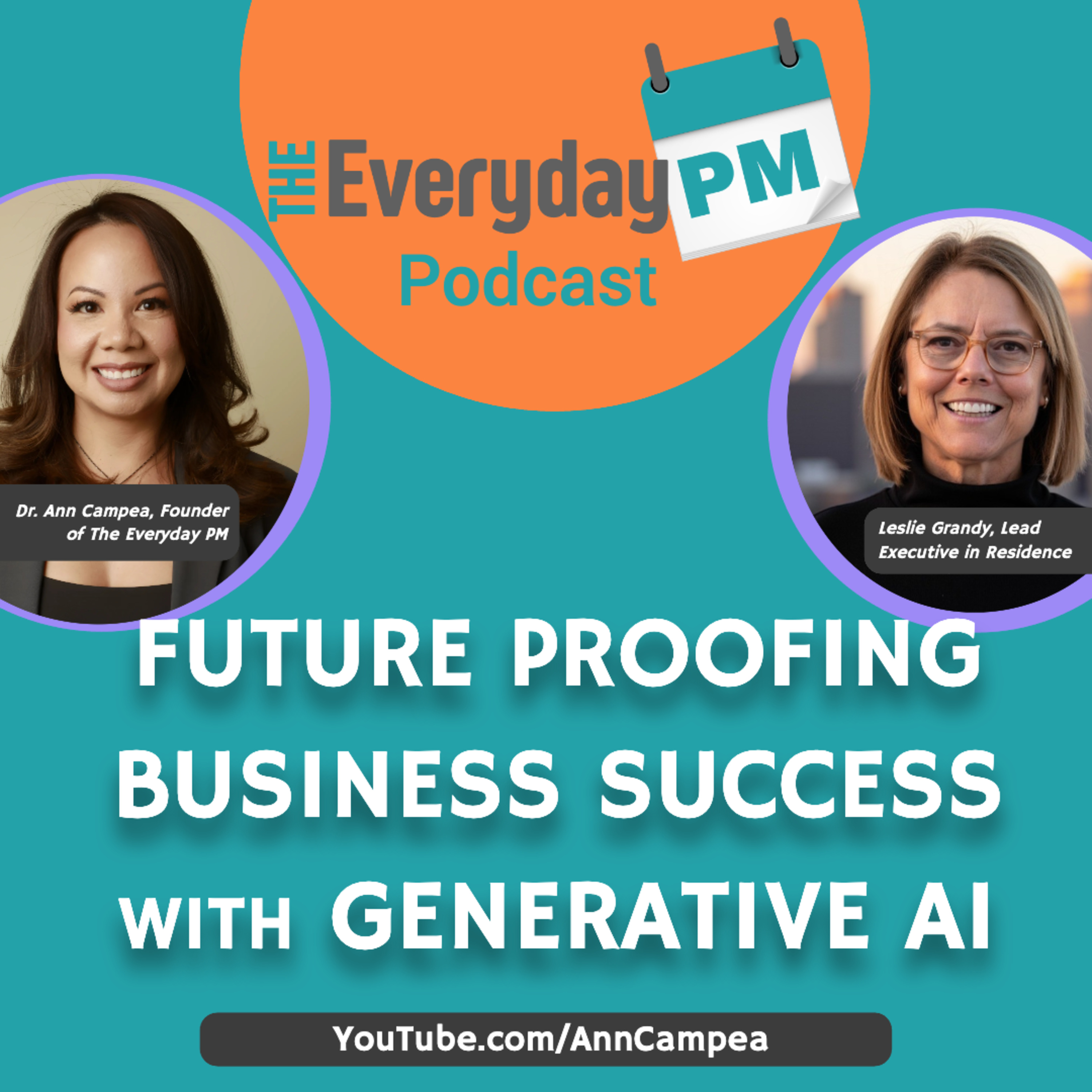 Future Proofing Business Success with Generative AIThe Everyday PM · on pattern recognition60 / 100
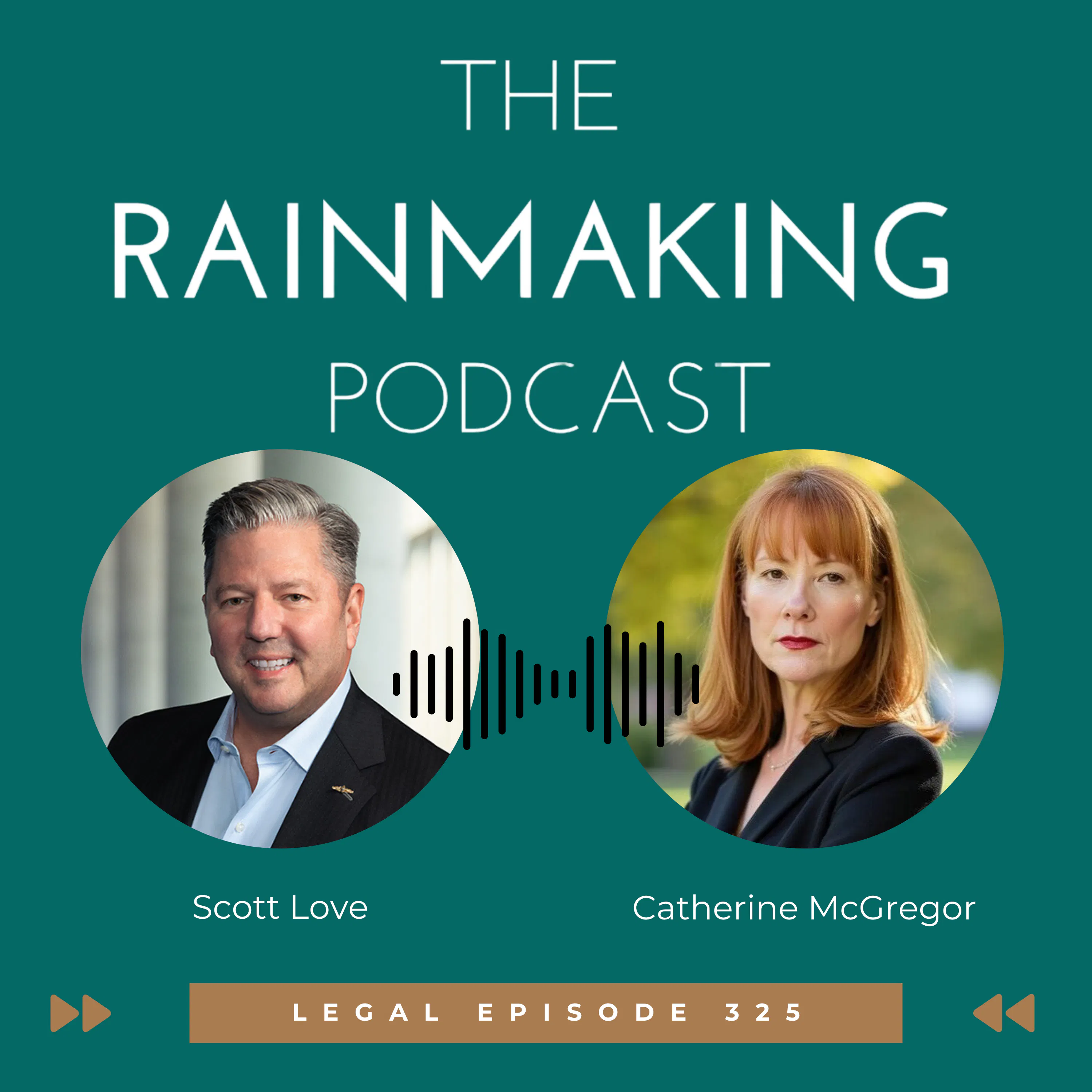 TRP 325: [Legal] Preparing Lawyers for Technology Transformation with Catherine McGregor
 TRP 324: Doubling Down on a Niche with Sharon Toerek
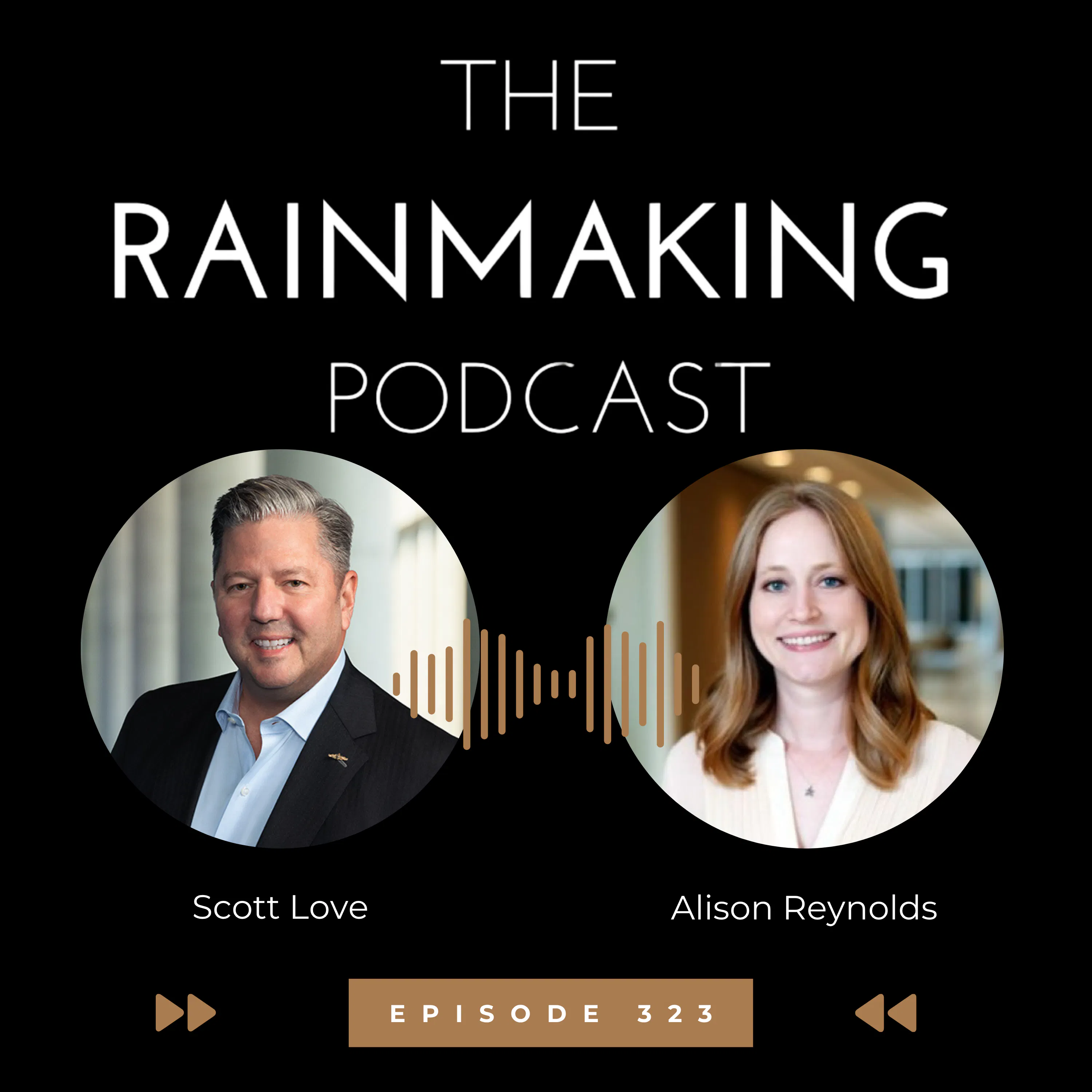 TRP 323: Website Redesign in the Age of Artificial Intelligence with Alison Reynolds
 TRP 322: Top 10 BD Tips from The Rainmaking Podcast with Scott Love
 TRP 321: [Legal] Intake Efficiency - How Law Firms Can Convert More Leads into Clients with Bernie Clark