
The Proffitt Podcast · 2025-08-12 · 26 min
Key moments - from our scoring
Substance score
30 / 100
Five dimensions, 20 points each
Crystal Proffitt details her behind-the-scenes approach to preparing a professional conference presentation for Podcast Movement 2025, where she'll speak on tools to help creators avoid burnout. Rather than jumping straight to design (her instinct with Canva), she emphasizes the importance of upfront planning: creating a detailed talk outline, identifying story opportunities using Claude and ChatGPT, structuring transitions between sections, and timing each segment precisely. She uses AI as a research and story-extraction tool, feeding it her content and audience context to pull out authentic narratives that validate attendee pain points. A significant focus is transitions - the connective tissue between topics - which she identifies as her biggest growth area. Proffitt maps the entire talk on a 11-page detailed outline with color-coded sections (slides, transitions, visuals, timestamps) before touching Canva. With 10 days until the talk, she's trimmed an oversized deck using ChatGPT word-count analysis, and practices daily by rehearsing aloud during neighborhood walks. Her methodology reflects three previous speaking engagements and a hard-learned lesson: meticulous planning reduces design and delivery burden, letting her focus energy on opening hooks, call-to-action clarity, and memorable closings rather than stage presence or polish.
Start with a detailed written outline and timeline immediately, allocate specific days for outline completion, slide creation, and practice. Proffitt had 37 days and front-loaded planning to reserve the final two weeks exclusively for daily practice and refinement.
Feed the AI tool your talk outline, audience context, and content, then prompt it as a public speaking coach to identify message gaps, story opportunities, and structural improvements. You can also export your full script with slides and ask it to estimate speaking time and suggest where to cut content without losing impact.
Saying the words aloud reveals timing, pacing, awkward phrasing, and transition problems that silent review misses. Proffitt credits two weeks of daily verbal practice as the 'secret sauce' behind her best Podcast Movement talk.
Cut ruthlessly from how-to sections and supporting examples first, preserving your opening hook, transition language, call-to-action, and closing. Use word-count analysis tools to identify which sections can be trimmed without losing the core message.
Finalize your talk outline, script, and timing first. Designing slides before your outline is locked wastes effort on visuals you'll later cut or restructure when you realize content doesn't fit your time allocation.
Our reviewer’s read on each dimension, with quotes from the episode.
The episode offers practical advice about conference presentation preparation but relies heavily on personal anecdotes and repetitive themes (planning > design, practicing daily, transitions matter) without introducing novel frameworks or surprising insights that a B2B operator couldn't reasonably deduce. Most value clusters around familiar best practices: timeline creation, scripting before slides, and spaced repetition through practice.
Spend more time planning because then everything else gets easier
I practiced for two full weeks every single day
The advice is conventional speaker preparation wisdom - outlining before design, practicing daily, cutting content for time constraints - with no contrarian angles or first-principles thinking. The use of Claude and ChatGPT for story extraction is routine application rather than novel methodology. The frameworks presented (timeline, script, slides, practice) are industry standard.
I typically jump straight to the design, because I love Canva
practicing every day for two weeks
This is a solo episode by the host (Crystal Profit) reflecting on her own conference preparation, not a guest-driven conversation. While she has speaking experience at Podcast Movement, the episode lacks external voices, expert practitioners, or credentialed perspectives. No high-caliber guests are interviewed or cited substantively.
I've spoken at Podcast Movement in 2021
I'm your host, crystal Profit
The episode includes concrete examples: Podcast Movement 2025 dates, specific timelines (37 days out, 10 days out), slide counts (11 pages), word-count revisions (10-15 minutes over), and named tools (Canva, ChatGPT, Claude). However, lacks data on efficacy - no audience feedback metrics, engagement comparisons, or outcome evidence that these methods actually improve speaker performance or audience retention.
It is July 12. And this is happening. I'm looking at their website August 12th through the 21st so just come along with me. It says I have 37 days
I have 10 to 15 minutes over what it should be
This is a monologue format with no guest dialogue, follow-up questions, or productive disagreement. The host addresses imagined audience questions ("where do you struggle?") but never engages with real pushback or counter-perspectives. There are no moments of intellectual friction or exploration of assumptions. The format is purely instructional narration.
Now true confession time
tell me, where is the piece of a talk that really stumps you
Computed from the transcript - who did the talking, and the words that came up most.
Send Krystal a Text Message. Preparing a knockout conference presentation doesn't happen by accident. It's a deliberate process that most audiences never see - until now. Join me for an exclusive behind-the-scenes look at my preparation journey for Podcast Movement 2025, where I'll be speaking about tools to help creators avoid burnout. Most speakers (myself included) are tempted to jump straight to the fun part - designing beautiful slides in Canva. But as I confess in this episode, that approach is like spending all day at a water park without packing essentials: you'll end up burned and unprepared. Instead, I'm sharing my methodical approach, from creating a detailed timeline to crafting transitions that elevate a good talk to a great one. The secret to my most successful presentations? Two full weeks of daily practice - speaking the words aloud, not just mentally reviewing them. You'll learn how I'm identifying my weak spots (those tricky transitions between sections), using AI to help surface story opportunities, and ruthlessly editing to respect time limits without sacrificing impact.
Transcribed and scored by The B2B Podcast Index.
Now true confession time . I this is the first time I've ever done this I typically jump straight to the design , because I love Canva . Who doesn't love Canva ? Who doesn't love designing a deck right ?
Like that's the fun part , that's the playground for my creative brain . But if you go , spend all day at the water park , right , and you forget snacks and sunscreen and water , like that's the planning piece of it , one I'm going to burn , like this is just me . If I spend all day at the water park , canva , for me , I'm going to burn . I'm not going to have all the right tools and all the right resources , I'm going to go .
I'm not going to have all the right tools and all the right resources . I'm going to go . I'm not going to have my phone to pay for things , right , because I was going to say cash like this is my millennial in me , when your parents used to like drop you off at somewhere like 20 bucks and they're like here , go , have fun for the whole day . Welcome to the Profit Podcast , where we teach you how to start , launch and market your content with confidence .
I'm your host , crystal Profit , and I'm so excited that you're here . Thanks for hanging out with me today , because if you've been trying to figure out the world of content creation , this is the show that will help be your time-saving shortcut . So let's get right to it . Shall we to it , shall we ?
Good morning , it is 7.03 on a Saturday morning and I was . I just got the email this week that I was asked to come speak at Podcast Movement 2025 , which is really cool . I've spoken at Podcast Movement in 2021 , was my first time with Buzzsprout .
I shared the stage with some of my Buzzsprout folks , which was so incredible to have like a joint session . That was really fun . And then in I need to go back and get the exact date . It was either in 2022 , 2023 .
I cannot remember right off the top of my head . Again , I haven't had enough coffee this morning , but I spoke at the podcast Movement Evolutions in Las Vegas , which was really cool , like super fun . And then this year I am doing a talk all about tools to help creators avoid burnout , which , if you've been around then you know I love talking about consistency and helping you just get the most out of your content in a way that helps you achieve avoiding burnout , like avoiding stopping your show , shutting down your creator business or all the things that come with that .
So I'm actually in the middle of mapping out my talk and I thought I would show you a little behind the scenes of what I'm doing , because this isn't my first rodeo . I've done this so many times so I know the most important things that I need to do to be successful . So , again , it is July 12 . And this is happening .
I'm looking at their website August 12th through the 21st so just come along with me . It says I have 37 days . I'm actually looking at the website right now . I have 37 days to get this talk figured out , but I think it's plenty of time .
I'm going to really break down more of my different talk pieces , but the most important thing right now for me to do is create the timeline , because it is so helpful to have that accountability for , okay , I need to have the talk outlined , then I need to create the slides . I need to think about the talking points that are going to be super impactful or audience engagement , and then I'm giving myself two weeks to practice , because this is what really helped me last time .
I felt like I gave the best speech of my life last time I was on stage at Podcast Movement and the secret behind that was I practiced every day for two weeks . Yes , every single day . I said the words out loud , it wasn't all in my head and I just felt like as soon as I got off that stage , I freaking nailed it and it was such a great feeling and I know that that was the secret sauce behind it . So I am really excited about this and , yeah , let's go .
Hello and welcome to the 23rd of July . We are officially , let me see , here . I have my timeline . We're four weeks out-ish from Podcast Movement 2025 , so I thought I would give an update on what I've been working on .
I realize it looks like I'm wearing the exact same thing Y'all . This is my like . Do you have , like your morning comfort like sweater ? Or your around the house sweater Like it's ?
It's 617 in the morning , so it's we're early over here , but I thought I would give an update . So what I did is I actually went through all of my talk outline , so I shared behind the scenes of what that looks like and I filled in all the gaps . And something I haven't done before but I'm really excited about is helping Chad , gpt and Claude really amp up what happens in between sections . So these are what you call those transition pieces , because when I think about how can I go from a good speaker to a great speaker this is something I've struggled with Like I know I can deliver a how-to , I know I can give you the three steps to do this , do that and then this other thing .
I know I feel very , do that and then this other thing . I know I feel very , very confident in that . It's those transition pieces where I'm like how do I go from this thing to that thing ? Because I wanted to feel like a really good segue .
I wanted to feel so natural and I wanted to feel like , oh , that was good , right . You've probably seen this too . When you watch someone on stage , you're like that was good , right . You've probably seen this too .
When you watch the one on stage , you're like dang , that was a good connection , or that was like kudos to them . They did an incredible job of just connecting the dots . That's what it comes down to . So I spent so much time with Claude the other day like how can I make this connection clear ?
How can I , you know ? So this is how I'm using AI . If you're wondering , crystal , how are you using AI to help you write speeches and write talks . I'm using my stories , my content , but I'm having ChatGPT or Quad in this instance , that I used exclusively almost for this talk is pulling out those stories .
So I kind of give a prompt of this is what I'm trying to do . This is the type of audience I'm talking to , like , I feed it all the content that it needs to understand who I am as a creator , right , who the audience I'm speaking to is , so that we can talk about pain points , we can talk about specific examples of what they're struggling with , so that I can tell a story of when I struggled with that same thing . So it's really been about pulling out stories and making sure that we have context for the audience .
Because , again , they could go watch a YouTube video on pretty much what I'm presenting , it's true , right ? They could ask , like , what are the three time management tools to avoid podcast burnout ? They could go find probably 500 videos on that , but what's going to make them walk away from this talk and say that was good . I need to go follow her , I need to go sign up for her course , I need to get on her email list , I need to subscribe to her YouTube channel .
Like what is that thing ? For me , it's helping them feel seen , validating what they're going through right now and showing them that there is a better way . So that's really part of the goal for me with this talk . But I'm going to show you behind the scenes of what I actually created so that you can see the really detailed outline that I have and how it's formatted .
So it could be helpful for you . So I thought I would give you some context what I did in Claude first , just so I know that prompting is really helpful when you can see behind the scenes . But I specifically called out and I said you are my public speaking coach , trained by Mac Pacquione , heather Sager and Mel Robbins , using their approach to speaking . Look at my talk outline .
Tell me where I have holes in the message , opportunities to share stories and the places where we might need to cut down , because I only have 30 minutes and I want to have 20 minute talk and 10 minutes for Q&A . Now I realize like that's a lot of information . It was meant to be and it's specifically because I have done this so many times that I don't want to have an hour long talk and then all of a sudden like oh , I only have 30 minutes , how do I cut this down to just 20 ?
So I love how it gave me major holes in my message , story opportunities where I could cut things , and then structural improvement based on the different speaking coaches that I have followed or speeches that I liked , and then you can see I go into like all the story development and everything . But I thought it'd be probably more helpful to show you what my talk actually looks like today . I'm not going to go through and read the whole thing , but this is still my talk outline .
I have not created any of my slides yet . I haven't started working on the deck , not just yet . I'm actually about to start doing that . But you can see here , like I have so many , like this is slide by slide .
Like the gray side on the left , that's meant to be a single slide . This orange here is the transition pieces . So remember , I was telling you like the transition is bigger than some of the slides that I have , but it's something that I really wanted to hone in on . So the blue here is the visual of what I'm going to use .
So when I do sit down to start creating this deck , it's going to be a lot clearer and I put some timestamps over here on the left to really show like , okay , this is how much time you can spend , because , again , have that 20 minute mark . Every piece of this talk is intentional . I'm intentional with the topic , I'm intentional with the timing , I'm intentional with the visuals , I'm intentional with the transitions , like this is the name of the game when you're trying to speak at a level where you're not just winging it and showing up , you're actually doing this from a professional standpoint , and that's where I want to show up for this talk specifically .
So , yeah , I mean , this is the whole thing . It is 11 pages from top to bottom and I'm really excited about the whole thing . So , next steps I'm going to start working on my Canva design and everything that I have there , so stay tuned for more . Okay , now we walked through all of that .
Let me know in the comments what questions do you have about speech writing or , better yet , where do you struggle ? Where do you struggle ? Because I used to struggle with the intro until I realized , oh , that should be the very last thing that I write . It's kind of like writing a book .
I've written two books and I know you don't sit down and start a book , like writing the book with the intro you don't Like . That's usually one of the very last things that you do , because it's so powerful and you need to make sure it's really , really good . So I struggled with intros forever and then I was totally vulnerable at the beginning of this video and told you that I struggle with transitions . So it's what I focused on .
So tell me , where is the piece of a talk that really stumps you and takes you a while to really figure it out or get it going , because we would love to know . So I'm in the middle of preparing for my podcast movement talk and I wanted to share a little bit of behind the scenes , and so what I've done is I've shared a little bit about the planning and creating the script and now I'm to the point of taking the script that I created and turning it into the presentation . Now , true confession time .
I this is the first time I've ever done this . I typically jump straight to the design , because I love Canva . Who doesn't love Canva ? Who doesn't love designing a deck , right ?
Like that's the fun part , that's the playground for my creative brain . But if you go spend all day at the water park , right , and you forget snacks and sunscreen and water , like that's the planning piece of it . One I'm going to burn , like this is just me . If I spend all day at the water park , canva for me , I'm going to burn .
I'm not going to have all the right tools and all the right resources . I'm going to go . I'm not going to have my phone to pay for things , right , because I was going to say cash , like this is my millennial in me , when your parents used to like drop you off at somewhere like 20 bucks and they're like here , go have fun for the whole day . Now I'm like I don't have my watch to pay for things or don't have my phone , like what am I going to do ?
But if I could have just taken a beat , laid out all the things that I need , which is what I'm doing in this planning process , things are just so much easier . Why do we make things so hard ? I'm calling myself out here , right ? I'm not even talking to you or trying to shame you .
I am literally giving myself this pep talk right now . Why have I made things so hard ? Because now , as I sit down to plan this talk , I'm reusing design work that I have worked on really hard or that my designer has previously created for me , and I'm thinking about well , how can I just repurpose this work that's already worked ? I've done so many webinars .
This isn't my first time to talk at Podcast Movement . This will actually be my third . So I have decks that I can reuse or repurpose . So I'm working smarter , not harder .
I'm going through the planning process and being so strategic because I said in an earlier video that the transition piece has been the thing that I really want to take to the next level . Like I want to unlock for this talk and by doing all the planning now and not spending hours and hours on the design . Like I know I can do the design , I'm fine , I'm confident in the design . I need that transition piece .
I need my opening to be incredible . I need my call to action to be amazing . I need my closing thoughts to be memorable . Those are the pieces I need to dial in , not my how-to , not the design , not my stage presence .
Like , yes , those are all things I'm going to consider and work on as I build this talk out , but it's not the most important piece of the puzzle . So I say all this to you , whether you're getting prepared for your first talk , your next talk , your first webinar , your first workshop , whatever it is that you're preparing . I encourage you and we talk about this in the PREPA method to spend more time planning . Spend more time planning because then everything else gets easier .
It does , it all gets easier if you spend just a few more minutes , maybe an extra hour , in the planning stage instead of just diving into what feels fun . So there you go . Well , hey , friends , I'm here for another update . It is officially August 10th and we are let me see how many days .
I always go . Look at my handy dandy wall calendar . So , podcast movement . I'm speaking on the 20th of August , so we have 10 days .
We're 10 days out . I have my deck fully done , like as of yesterday , and it's too long . So it's too long and this will probably be my last update until until we actually do the talk , and then I'll come back and do like a debrief of all the things . But I need to cut this thing down and then practice , practice , practice .
So this is really the secret . I think I already mentioned this , but my last talk at Podcast Movement was so good , like I felt so confident about it , and it's because I practiced for two full weeks every single day , and the two week mark has already lapsed on us doing this every single day for two weeks because I've been trying to refine this . So here's where I'm at . I'm about 10 to 15 minutes over what it should be , I think .
When I was originally planning my content , I was like I could plan for about 30 minutes and then I can shorten it the day of and like kind of like adjust for it . But I am over and I . Here's what I did , like for anyone that's like oh , you know , what do you do ? How do you trim things down ?
I actually went in and I'll put up on the screen . I went into Canva so I put all of my notes in Canva and this is basically my script , and I did an export of all of my slides with the notes , so it has the slide count and the script , and I loaded that into ChatGPT and I was like all right , here we go , this is what I have . How long do you think this would take for me to speak it out loud , knowing my pace of how many words per minute I usually speak ? And it was like oh girl , like you're over , you're over .
You need to , you need to calm down , because this is not going to work . So I asked it like where can I cut some pieces of this and not lose the meat of the message or lose the important , like this is the problem that you're having . Here's the solution or here's the obstacle , here's the challenge and here's how I would take it on if I were in your position . Because , let me remind you , this is the three tools to help you effectively avoid burnout , three tools to help you effectively avoid burnout , and it's all about time management .
So I went through all of these and I'm like gosh , I got to figure out a way to really dial in the pieces that need to be there , versus it's just fluff and it's not adding to the impact of the talk . Because , if there's anything , I've attended so many events where someone's just talking and talking and talking and you're like God , should I have gone to this session ? Should I have gone somewhere else ? Or you start looking at your phone , like this is the worst thing ever is to be on stage and you look out and everyone is just on their phone .
Everyone is just like you're , like you're telling yourself that they're like paying it , not paying attention , they're taking notes , but , come on , they're looking at Instagram , they're checking out their email , like they're they're doing all these other things . So my goal is to keep them captive , hold their attention and really execute a talk where I'm not just rambling on like I'm tying things together , making those transitions , because , remember , I told you in an earlier segment that that was the key for me is , I want to have really good transitions with the content this year .
So I will be sure to update you on how the practicing goes on , how you know , just working through some of these last little pieces of content . One thing that I've been doing is when I go on my walks so I walk like almost daily in my neighborhood and I , because I have Canva on my phone , I will go through the talk . This is my secret I put in my AirPod so it looks like I'm talking to someone , but I'm not . I'm just talking my talk out loud and I look a little less crazy if I have my AirPods in and I'm talking and not just talking to myself .
So there's a little trick of the trade . But yeah , it's definitely coming along . Um , but yeah , it's , it's definitely coming along . I'm gonna spend today really cleaning up some of the pieces that , um , just are those funky transitions , or cutting out some of the content .
So I will absolutely update you on what I end up using in the final version , because what will end up happening is I'll probably even give a version of this talk as a future video , because I mean , I created this thing Like it's . Why would you not repurpose and reuse it in some way ? But I was excited to share the behind the scenes of the creating of this because I think it could really help someone that maybe you're preparing for your next stage talk or your first stage talk and you wanted to see all the behind the scenes .
So I hope that this was helpful . Please let me know what you thought about this and , if you're watching , please leave me a comment and let me know if you're going to podcast movement or , if you've been before , what your experience has been . We have a few other videos about podcast movement that you can go check out the behind the scenes . I'll be recording some content while I'm there .
I have a few friends in the podcast space that are going to be there , so I'm going to see what kind of interviews I can get in person , because those are always super fun , even if they're just really short , quick pieces of advice for you . So I will be sure to update you for my whole experience . But that's it , guys . I got to go practice and make this talk even better than I think it's already going to be , but that's all I have for you .
So make sure you hit that follow or subscribe button wherever you are watching and listening and , as always , remember , keep it up . We all have to start somewhere .
Other episodes covering the same guests and topics, from across The B2B Podcast Index.
 Paul Graham On Startups, Ambition, and Great FoundersY Combinator Startup Podcast · on ChatGPT88 / 100
 The AI-Native Law Firm, with Ryan Walker of General LegalMeeting of the Minds · on ChatGPT88 / 100
 Stop Asking What AI Can Do. Ask What Your Staff Hates to Do.Small Business Big AI · on ChatGPT84 / 100
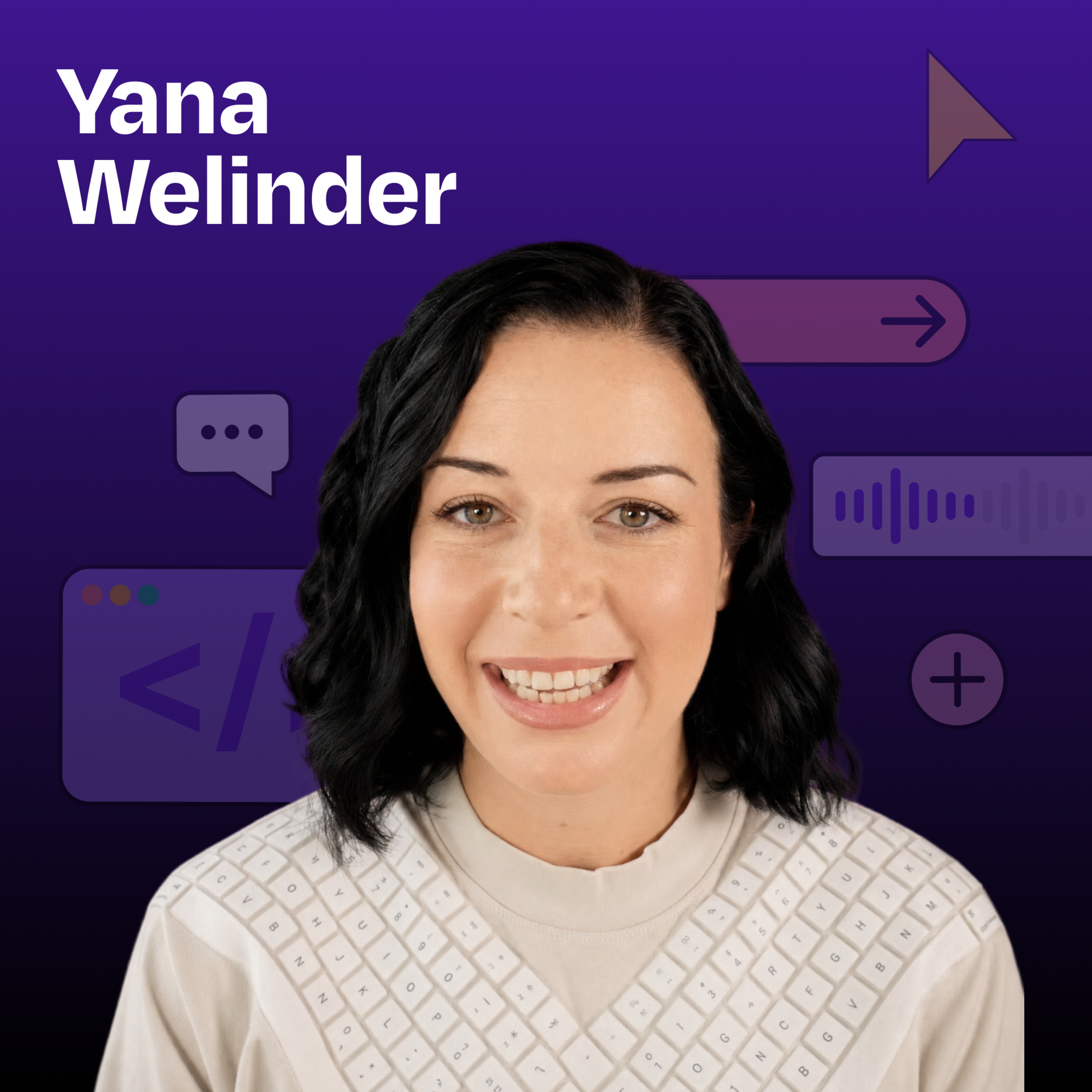 How a solo founder used Codex and ChatGPT to launch a fashion brand without engineers | Yana Welinder How I AI · on ChatGPT82 / 100
 Digital CX with Real Impact: Kat Kenny on DAP, AI, and Customer Education | Episode 108The Digital CX Podcast · on Claude AI80 / 100
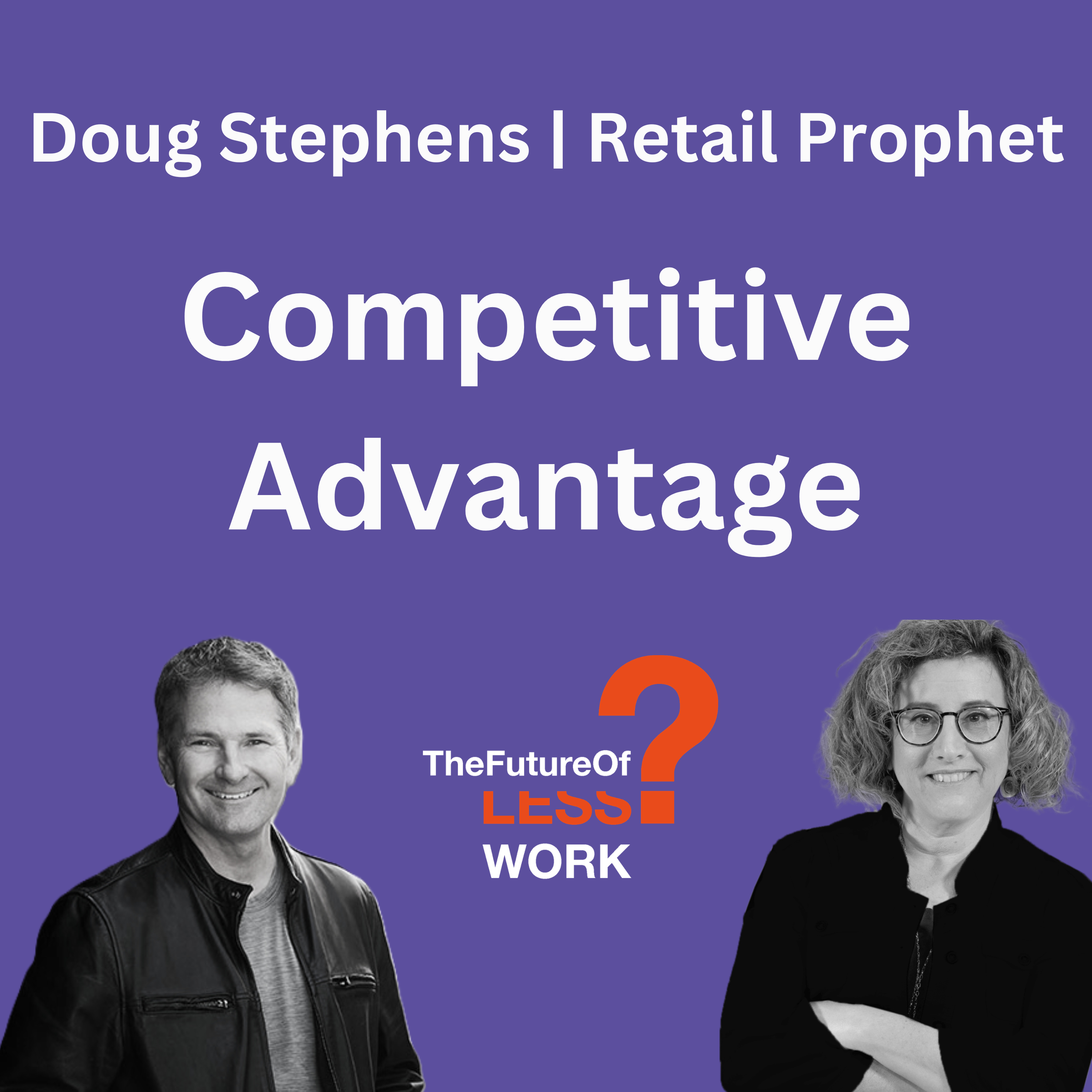 How AI Will Change Competitive Advantage with Doug StephensThe Future Of Less Work · on ChatGPT79 / 100Taking a Break24 / 100Behind the Mic: Honest Answers to Your Content Creation Questions52 / 100Viral Video Success Without Fancy Editing60 / 1003 Time Management Tools to Avoid Podcast Burnout - My PM25 Talk68 / 100Podcast Movement 2025: What I Learned Speaking and Why Practical Advice Beats Flashy Growth Stats37 / 100