
The NO BULL$H!# Marketing Podcast · 2026-05-05 · 7 min
The episode tackles a growing recognition in B2B marketing: AI-generated content sounds identical across companies and industries, making brands indistinguishable and causing audiences to tune out. Mastovich references the CEO Magazine article "Is Your Marketing Team Cheating You with AI?" to frame the hidden cost - not just the loss of brand voice, but also eroded differentiation, slowed growth, and damaged credibility when clients detect that even customer responses are being auto-generated via ChatGPT. He demonstrates the problem by describing a 45-second LinkedIn exercise where he routinely screenshots 3-5 posts with near-identical wording from different companies. The core argument centers on a single principle: meaning is determined by what others interpret, not what leaders intend. Therefore, leaders cannot delegate meaning-making to AI tools; they must personally author or heavily shape website copy, blog posts, social media, emails, and sales messaging to embed their authentic voice and vision. While execution can be delegated, the creation phase requires active leadership involvement - whether that's recording video, writing blogs, or drafting emails themselves.
Audiences have become familiar with how AI writes because they interact with it regularly; they now subconsciously or consciously recognize the same passive voice patterns, phrasing, and word choices that appear across different companies and industries.
AI sameness appears in website copy, blog posts, LinkedIn and social media posts, email responses to customers, and sales messaging - anywhere brands try to scale content production without personal voice.
No - leaders cannot delegate meaning-making itself, only some execution support; they must personally author or heavily shape their message across video, social posts, blogs, and emails to ensure authentic voice and vision come through.
Growth slows because audiences stop paying attention, tune out messaging, and don't perceive your differentiation or advantages, not realizing the cause is AI sameness in storytelling.
The speaker demonstrates spotting 3-5 nearly identical posts from different companies and industries within a single 45-second scroll, showing how pervasive and recognizable the pattern is.
Computed from the transcript - who did the talking, and the words that came up most.
AI is speeding up content, but at what cost? The hidden danger of “AI sameness” in marketing and how it’s quietly eroding brand voice, differentiation, and growth. If your messaging sounds like everyone else, you’re already losing attention. Learn why leaders must own their message, where AI overuse shows up, and how to fix it before it stalls your business. You're listening to the No B******t Marketing Podcast! If you like what you heard,
Transcribed and scored by The B2B Podcast Index.
Speaker A: What's the cost of AI sameness in storytelling? It's higher than you think, and most companies don't even realize they're paying for it. It's the no bullshit marketing show. I'm Dave Mastovich. Let's dig in. I've been talking about the AI sameness in storytelling for a while now because it's a pattern I've noticed and a problem that I've seen for clients, prospects, friends, colleagues, their companies, people in my network, and pretty much anyone that I'm reading consuming their content. And here's how it goes. The AI seamless of storytelling happens because of this. Many of us have become accustomed to using AI to solve problems. We've entered questions for AI and it's come back and given us answers and feedback and ideas. So now, either subconsciously or consciously, we know how AI writes. And so, either subconsciously or consciously, we're noticing that when we're consuming content that was generated by AI, and that's a problem, and there's a cost to it. Well, lately I just noticed an article from the CEO magazine titled, is your marketing team cheating you with AI? And this article from the CEO magazine talked about the cost. And it emphasized the cost of the very brand voice that you're trying to scale by thinking that you're able to get this story out there more quickly and produced more easily by using AI, but it's actually costing you that brand voice. I would go a step further than the article, and I would say the cost shows up not only in the very brand voice that you're trying to scale, but also I have four or five on this list. The first is you now sound like everyone else. You know what I mean? You can tell when people are using AI, they sound like each other. So you have no differentiation. And then people stop paying attention because you're not conveying your advantage. You're not making it unique to you. Then your growth slows down, and you have no idea why. I've seen it across enough companies to know that it's a pattern and a problem. So where does it show up? Website copy. One, um, of the first things you notice is website copy. If you go to look at someone's website, you can tell if it's in their voice created by them. Then if you go and click to a blog post, that's really where you can start to see this passive voice writing, this writing that sounds the same. It doesn't sound like we talk. Then on social posts, oh, my. I go to LinkedIn and every morning I start at LinkedIn and I do a little exercise just for fun. I click my stopwatch and I do 45 seconds and I go through. And during that 45 seconds, I do a screenshot of posts that are from different companies, different industries, different people, but are worded almost identically the same. And typically within 45 seconds, I can screenshot three to five posts that sound exactly the same. Where they say things like, here I'm reading from. Most professionals don't have this problem. They have that problem. When you see that same type of phrase, almost identical wording as you thumb through your feed, when you see it again and again, whether it's subconsciously or consciously, you know that that's not in that person's voice. So it comes in website copy, blog posts, social media, emails. I had a client say to me, we stopped using this other vendor because they could tell that they weren't even taking the time to write the emails to respond to questions from their client, which is also my client. So these people were taking that and popping it right into ChatGPT to get their response instead of just writing their own response. Another area, you see it in this sales messaging. Most of us get sold and pitched to all day long. You know what I mean? You can tell when there is the AI sameness in storytelling in a sales message, and what do you do? You tune it out. You ignore it. So the cost of AI sameness in storytelling is higher than most people think. And most companies don't even realize that they're paying that cost. Now here's the big key takeaway. Meaning is not what leaders intend, it's what others interpret. Meaning is not what we intend, it's what others interpret. So leaders have to own M meaning you cannot delegate. Meaning you can delegate some execution of your message. You can delegate some execution of your storytelling. I stress the word some because I think leaders need to still be actively involved in the creation of their message and even the execution of it. Leaders need to be doing video, leaders need to be posting on social genuinely themselves. Leaders need to write some blogs. Leaders need to write their own emails. Leaders can get help with the outline for their speech to the state of the organization or their speech to, uh, a group, but it still has to be them. So, um, meaning cannot be delegated. Meaning is what we as leaders have to build and convey. And it has to fit our personality, our vision, our story. It has to be real. And that is why it's so critical that we reduce or eliminate the cost of AI sameness in storytelling. If Your content belongs to everyone. It belongs to no one. That's why your story has to have your meaning, your voice, your personality. It has to be you and your story for both your personal brand and your company brand. So you have to work to reduce or eliminate the cost of AI sameness in storytelling. Thanks for listening to no Marketing show. If your growth is stalled, reach out. We'll accelerate it together.
Other episodes covering the same guests and topics, from across The B2B Podcast Index.
 Wins Above Replacement: The New Way to Judge FoundersVenture Unlocked · on ChatGPT88 / 100
 Paul Graham On Startups, Ambition, and Great FoundersY Combinator Startup Podcast · on ChatGPT88 / 100
 The AI-Native Law Firm, with Ryan Walker of General LegalMeeting of the Minds · on ChatGPT88 / 100
 Stop Asking What AI Can Do. Ask What Your Staff Hates to Do.Small Business Big AI · on ChatGPT84 / 100
 How a solo founder used Codex and ChatGPT to launch a fashion brand without engineers | Yana Welinder How I AI · on ChatGPT82 / 100
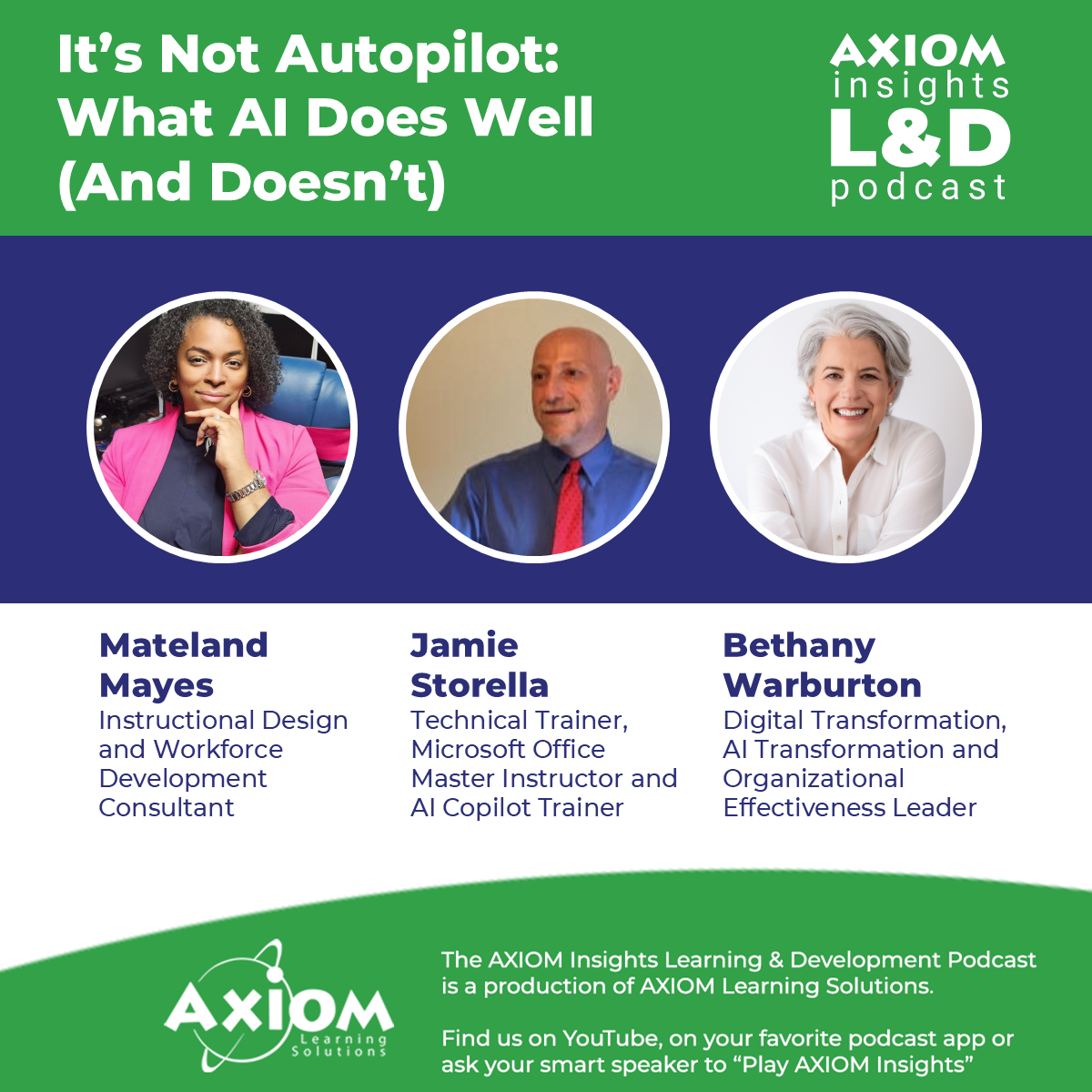 It's Not Autopilot: What AI Does Well (And Doesn't) - AXIOM Insights Learning & Development Podcast #46AXIOM Insights Learning and Development Podcast · on ChatGPT79 / 100
 520 You Don’t Have a Sales Problem. You Have an Insight Problem40 / 100Stop Waiting for Referrals: Build a Referral Growth System36 / 100Why Your Growth Is Stalled (And How to Fix It) | Ep 517March Madness Special: If Your Story Isn’t Clear You Don’t Even Make The Bracket | Ep. 516
 515 Why Marketing Doesn’t Work (Part 3): The Leadership Disconnect