The LetterStack Podcast · 2025-12-08 · 37 min
Key moments - from our scoring
Substance score
56 / 100
Five dimensions, 20 points each
TJ Larkin has built over 10 local newsletters serving suburbs across the US, starting with Round Rock and Leander in the Austin area about a year ago. He's developed a scalable partner model where local operators handle community relationships while his team handles backend operations using Beehive. The newsletters deliberately avoid crime and grim stories, instead curating hyperlocal events, new restaurants and businesses, and positive community news that readers actually want - not traditional city hall reporting. His distribution strategy focuses almost exclusively on Meta ads, achieving customer acquisition costs between 25 cents and $1 per subscriber, which undercuts alternatives like postcards. Beyond newsletter advertising, TJ emphasizes building complementary revenue streams: a digital marketing agency that upsells newsletter advertisers on web design and paid social, packaged multi-channel promotions combining newsletter ads with social media and website placements, and local business directories that become permanent discovery tools. He's experimenting with viral growth tactics like cash drops (partnered with local businesses) and green-screen restaurant reviews, positioning the newsletter as the foundation of a broader local media company rather than a standalone publication.
The core elements are hyperlocal events (curated to exclude distant offerings), new businesses and restaurants with stories, and 1-2 positive news stories per issue - not traditional crime or city politics reporting that traditional journalism emphasizes.
Morning sends between 6-7am work best because readers see it first thing; sending later in the day risks emails getting buried as people leave for work and don't check until evening.
Using Meta ads, subscriber acquisition typically costs 25 cents when starting, scaling to 50 cents to $1 per subscriber as the newsletter grows, making it cheaper than alternative channels like postcards.
Bundling newsletter ads with complementary offerings (social media posts, website banners, local directory placement) as packages significantly improves sales close rates; launching a second business like a digital marketing agency lets you upsell advertisers on additional services.
No - suburbs typically lack dedicated local journalism and residents want information about community events, new businesses, and positive news that affects their lives, not traditional reporting on city meetings and crime.
Our reviewer’s read on each dimension, with quotes from the episode.
The episode contains genuinely useful tactical data points - Meta ad CPL benchmarks, the 'second business' cross-sell strategy, and survey-driven segmentation - but is padded with host affirmations, generic research advice, and conversational filler that dilutes the overall density.
when you start out, you can get subscribers for like, call it 25 cents, um, you know, once you get more to scale. But, you know, depending on where you are, 50 cents, maybe 75. Usually at the top, a dollar
the best strategy...is having a second business...when I start pushing harder on sales is a digital marketing agency
The advice to build broad first and niche down via post-signup survey segmentation is a practical twist on conventional wisdom, and the Meta targeting cost-of-niche argument is underappreciated; however, most of the frameworks (morning sends, events content, Meta ads) are standard recycled playbook for newsletter operators.
the reason it's cheap is because it's easy for meta, uh, to target everybody in an area...If you say, well, I only want tech people in this little area...now you're making it Harder on them and they're going to charge you more
you want the biggest umbrella you can to start because you can always niche down later
TJ is a genuine practitioner operating at real (if modest) scale - 13-14 newsletters, 60k subscribers, 400-500 new subs per day - which gives his tactical advice credibility; he is not a thought-leader, but his network size is still relatively small and revenue figures are implied rather than confirmed.
I think we Uh, I forget we're launching two more um, this week or...So I think like 13 or 14
I would say I don't even know how many subscribers because we're gaining like how many we're gaining, I don't know, 4, 500 a day, maybe more. So I think we have like 60, 60,000 or something like that between all of them
The episode is stronger than average on concrete numbers - CPL ranges, a named $800/month package structure, subscriber counts, and named comparables like 6am City, Tiny Money, and specific Texas suburbs - but several key claims (revenue at scale, ROI of the directory) are asserted without hard evidence.
when you start out, you can get subscribers for like, call it 25 cents, um, you know, once you get more to scale. But, you know, depending on where you are, 50 cents, maybe 75. Usually at the top, a dollar
hey, let me send, sell, sell you a package where we're gonna do four newsletter ads...for $800 a month or something like that
The host asks reasonable topical questions that cover the main bases but consistently defaults to affirmation ('True,' 'Absolutely,' 'Awesome') rather than probing, and never pushes back on unverified claims like revenue figures or the scalability of the partner model.
Yeah, you have to spend money to get money.
True, true. Yeah. And I like the idea of doing it near a place of interest
Computed from the transcript - who did the talking, and the words that came up most.
What does it really take to build a profitable local newsletter network? In this episode of The LetterStack Podcast, Renga sits down with TJ Larkin, founder of multiple community-focused newsletters across the U.S., to uncover the secrets behind starting, scaling, and monetizing local newsletters. TJ shares how he grew from 2 neighborhood newsletters to 13+ across the country, serving tens of thousands of engaged readers, and what makes local newsletters a powerful business model in 2025. You’ll learn: How TJ got started in Austin suburbs and expanded nationwide Why local events, restaurants, and new business coverage drive the most engagement The content framework that keeps readers hooked Best subscriber acquisition tactics (Meta ads, growth hacks, giveaways) Smart monetization strategies for local newsletters (ads, sponsorships, directories) How to partner with local businesses and even launch spin-off ventures Why directories, family events, and community engagement are the next frontier Whether you’re planning to start your own hyperlocal media business or just curious about the future of newsletters, this episode is packed with actionable insights.
Transcribed and scored by The B2B Podcast Index.
Speaker A: Welcome to another episode of the letterstack podcast. Today's podcast is all about local newsletters. Now, as the saying goes, it takes a village to raise a child. To extend that metaphor, I would say that it takes a local newsletter, uh, to build a very local, engaged, thriving community. And who knows it better than TJ Larkin? TJ Larkin is one of the most prolific local newsletter operators I know. He has built more than 10 local newsletters in the US the US I'm guessing he has more on the way as we speak. So I got TJ to come onto the pod, spill some of the secrets of how to build and grow a successful, profitable local newsletter. So, without much ado, tj, welcome to the podcast.
Speaker B: Yeah, thanks for having me. Really appreciate it. Happy to be here and help, help any way I can.
Speaker A: Thank you. The honor is ours. Yeah. So I know, tj, we're going to talk about local newsletters. We are going to about, talk about all the stuff that you have done so far. But would you mind stepping a bit back and tell us what got you started into local communities and newsletters? I believe you spent a lot of time traveling as part of your early career. Did that in some way influence your decision to be able to go local?
Speaker B: Um, I think it's more of a. It's really a combination of a bunch of things. Um, so I've always kind of, well, I shouldn't say always, probably for the last six, seven years, had that entrepreneurial bug, you know, doing, trying to come up with unique ideas, unique, unique businesses. And, um, one of the things I'd heard about this model about three years ago, wanted to pursue it, but just didn't because, you know, it does take a lot of time. But I happen to live in one of the, if not the fastest growing part of the United States, which is the Austin, Texas suburbs. And so when I heard about this concept and um, my wife, my kids were going back to school, so my wife wanted kind of a side project, said, you know, you put these things together, she's got time. We live in the fastest growing part of the country. And I know about this model where most people don't. And it seemed like it was a worthy strategy. Another part of this is kind of the worst case scenario. You still succeed because now you have an audience locally and all these business owners will like you and appreciate you. Even if you don't make money from it, you still gained a lot of valuable skills and relationships from it. So it almost seemed like a, uh, win, win, like, even if you lose you still win. So that's why I decided to kind of to go after it.
Speaker A: Awesome. And I believe that's been. You said it was just over three years ago that you started out on the journey, and I believe.
Speaker B: No, no, I. So I heard about it about three years ago, and I almost pursued it then, but I wish I had, of course, but did, uh, something else instead. So we started officially, um, about a year ago now. So it's been about a year.
Speaker A: Awesome. And you started with which areas newsletter
Speaker B: in initially, uh, where I live, which is like the. The Austin suburbs. So I did one in the Austin suburbs and then kind of realized there was, you know, we're on the west side of the suburbs, and the east side is also growing very, very fast. And it was like we kind of go to. We visit both, we know both. Why not do it there too? So we basically have two in the areas that we live. So those were the first two. Learned a lot, made tons of mistakes. You know, this business is not rocket science, but it's also complex in that there are many, many, many steps. You probably know this when it comes to newsletters. So we learned a lot. And then, um, as I was telling some of my entrepreneurial friends about this opportunity, uh, you know, multiples of them were very interested, right. But they didn't want to do. They didn't want to learn everything. They didn't want to start from zero. They didn't want to be doing the grind day to day. So then I partner with them where me and my team on the back end kind of do a lot of the work. And then they only have to do the polish, yet they still get all the social benefits of being the local, you know, kind of mini celebrity in their town. Right.
Speaker A: So this would be Round Rock and, uh, Round Rock School and which other area again?
Speaker B: Leander. Leander is the.
Speaker A: The other one. Oh, yeah, the cat, sure. Yeah, yeah, yeah, yeah.
Speaker B: So those are the two that. Those are the only two that we have that I own outright. So all the other newsletters I have, you know, it's people who like my idea and like what I'm doing and think there's a lot of potential there. So they. They partnered with me to do them in. In their areas, basically.
Speaker A: Absolutely. Like I said before, it takes a village. So I'm glad that you're able to partner with others as well. So I believe, uh, for. For every suburb that you serve with a local newsletter, I get that it takes a huge lift from everybody else to be able to source accurate Data. Uh, and I know you have this running motto of no crime, no grim stories. But even to keep a cheerful and, uh, very good optimistic view on the local surroundings, I guess you will have to keep a pulse on everything that's happening in town. So how do you go about doing that? I understand you have a team, but do you have this team vetting out places of interest, events, news in town? How does that work behind the scenes?
Speaker B: Yeah, it's a lot of research, right? It's really just tons and tons of research, um, for the two that we do ourselves. You know, I'm already looking at the news, per se, or, you know, on my Google News feed, it'll have random stories about our area. Right. Now, again, a lot of them are crime, so a lot of them are not. Not interesting to us. But so we, you know, I already have a pulse on my area. And then our team is constantly doing research in all the stereotypical ways. Right. If I told you, go learn everything about Leander, Texas, what would you do? Like, that's what we do, like, constantly. Right. So it is, it is a lot of work now, you know, I'm assuming AI is going to make that easier over time. I don't. It sadly hasn't really yet. It has made it a little easier, but not as much as you think. There's still a lot of work. Um, but, uh. But yeah, so. And then our. Oh, go ahead.
Speaker A: No, no, go ahead, Go ahead.
Speaker B: I was gonna say, then our partners, they will do the same thing, right? They'll. They'll share with us, oh, you know, make sure you cover this. This thing, you know, is happening in my area. Make sure you cover it. And they'll just, you know, we're still trying to work on our processes of, uh, how we communicate and whatever, but right now it's just like they forward us an email. Hey, I want this event in the newsletter. I want this story in the newsletter. They'll write the, uh, some of the custom. We call it the editorial. Right. The very first person perspective writing things. Like, they'll. They'll send that to us and then we put in the newsletter. Right? Because they don't want to be beehive experts. They don't know how to use beehive. They don't want to use beehive. That's what we do for them.
Speaker A: Right? Yeah. Right. But I'm guessing there's probably a small core team which does the compilation and the query. There's probably a contributing team which does. On the ground, on field reporting is that something is. Is it?
Speaker B: We're not. So that is something that we're it. That's more of a longer term play. So here's how I think about this from a, from a business perspective right now, in most places, our competition for this is non existent. There is no competition. Okay. Nobody's doing this, right. In most of these areas because we're doing it in the suburbs. To be clear, this is not something I would encourage people to do in a city of millions of people. Because there are media companies in Townsville, right? So Leander, Texas has, you know, my area has 150,000 people. There's not really, you know, smaller suburbs like that don't really have good sources, right? So in most of these places, there's no competition. So people are starved for this. It doesn't have to be amazing. This is why a lot of people are getting into this right now is you kind of realize the path to success isn't actually that hard. You have zero competition and people are begging for it. Right. And you're not even charging any money. Um, so it's easy to get readers and it's easy to make them happy. And people are very excited about what we're doing. So we are not doing a ton of like what you would call reporting. And in some ways I don't think we need to, because I don't think what we're doing is like journalism, right? Like real journalism. I mean, first of all, real local journalism is a lot of crime. It's a lot of city politics. These are things people don't care about. So we are trying to change the game of saying, yeah, this has been the traditional way of doing things for 100 years, right? Journalism. You go to the meetings, you interview the mayor, you know, you do all these things. But the reality is, why are you doing that? Do people actually want that? And I think, you know, most people don't now. There are some that do. And it's a valuable service. I'm glad there are people doing it.
Speaker A: True.
Speaker B: But I don't want to do it right, so. And I don't think most of our readers want us to do it. They want to know what fun things are happening in town, whether it's restaurants, new businesses, events, you know, what matters in town to them, what affects their lives. That's what they want. So we just give them that. We don't give them what they don't want. Right. Just because it's tradition or, you know, it's a valuable civil service, that's not what our Model is sure.
Speaker A: And I believe to have that point of view is important in addition to whatever complementary journalism and news sources they already cater to, which totally makes sense. So let me understand, T.J. uh, now that we have spoken about, what's the mission behind building a local newsletter? What content formats do actually go into building a local newsletter? Like the Neander Scoop? Uh, is it classifieds, Is it events, places of interest? Or is it eclectic mix of all of these?
Speaker B: So we generally try to keep them mostly similar framework. Again, a lot of this stuff I think is good to have. You want to kind of build habits with people so they want to see the same. Now, that doesn't mean every single thing is the same. Some, you know, Tuesdays can be a little different than Thursdays, but we try to keep it generally feels and flows similarly. Similarly. But I would say that the building blocks, like the mandatory. So number one, it's events, right? What's happening in my community. Again, when you're in the suburbs, most of the media that you would see locally is for the big city, right? So I'm 30, 40 minutes away from Austin. If you look up what's happening in my area, it's going to give you a bunch of stuff 30, 40 minutes away. Most suburban people don't want to go 30 to 40 minutes to go to an event. So, um, so curating that, saying, no, we're only going to show you what's relevant to you, not all this stuff that you won't go to that is very valuable and what people really want. We polled them, we've asked them, I've asked them in 12 different cities. They all say the same thing. Everybody loves the events. So that's number one. Then to me, it comes down to the other big thing is like new, you know, new businesses, restaurants, what are cool places to go to and why. Giving them some stories on that kind of stuff. The. The one that I feel more strongly about than most people who are doing this. I talk to a lot of people who are not doing news. Like, they only want to do events and restaurants. And, you know, I think doing news is valuable even at a small scale. Like, we may just have one news story, one or two in an issue, because it helps. I think there are people who want to know what's happening in their town where a new restaurant, restaurants. It's not really what's happening in town. It's kind of cool. It's good information, but it's not like what's actually happening. And so I think adding in the news Is this positive news gives that feeling of like, I got to see what's happening, um, that I'm not going to go experience myself. Right. An event is what's happening. But that's for you personally, news is more like what's happening that I should know what's going on.
Speaker A: Right.
Speaker B: And I find that valuable to have in the newsletter.
Speaker A: Yeah. If nothing else, it becomes a conversation starter as you commute to work on the bus or on the train.
Speaker B: Yeah.
Speaker A: Right. So maybe that helps there too. Right. Yeah. So glad to know that these content formats actually work better. So how does the newsletter cadence work? What has worked well for you from a local newsletter perspective? Is it first thing in the morning, like 6am City or you know, probably at the end of the day, at the end of the world work day?
Speaker B: Uh, we send ours usually um, at like around 6:15. You know, we tried a few, so we've pretty much only tried the morning. I think we tried the middle of the day once and it was a little bit worse. So almost M. All local newsletter creators that I know and even the bigger businesses like 6am City, they send them in the morning because the idea is you want people to see it first thing. So even if they're not up at 6:15, if they wake up at 7 or 7:30, it'll be there waiting for them. Where if you send it at 8, if they left the house at 7:30 to go to work and they may not by the time they get home to look at it, maybe they're. You're at the bottom of the list. Right. So I do know of a few people. Some. Someone sends it at like 7pm I um, haven't asked him how, if that, if that works well, but he keeps doing it. So maybe, um, and I know somebody who sends it kind of midday, but almost everybody sends it in the morning between 6 and 7am M. Awesome.
Speaker A: Good to know. So this I believe is a great way to be able to put a lid on how the content is curated, created and sent out. Um, what has worked well for you for acquisition? Now I know there is meta ads. There's all type of ads that you would do to acquire customers as you would do it for any global scale newsletter too. But I'm guessing you are tapping into local or offline sources as well to be able to acquire more subscribers. Right. So, uh, any incentives apart from uh, just doing local ads or meta ads at this point?
Speaker B: Uh, T.J. no, I mean we, we are doing almost exclusively meta ads. Um, I, you know, between I Haven't tried a ton, but I know a bunch of people who have tried other ways. And I've also just kind of brainstormed a lot of this stuff. When you can get a subscriber for between, you know, when you start out, you can get subscribers for like, call it 25 cents, um, you know, once you get more to scale. But, you know, depending on where you are, 50 cents, maybe 75. Usually at the top, a dollar. Um, there's not many other ways to get subscribers for less than that. I mean, in the U.S. it's to send a postcard, I think is 50, 60 cents. I mean, you know, at that point it's, you know, for a lot of our newsletters are around 50 cents. The ones that are already past scale, I mean, we'd have to. Every single person who got one would have to. And we'd still lose money on printing the things. Right. So I. There hasn't been very many things that, that are as good as, as meta, even close. Now, that doesn't mean you shouldn't try some other things here and there or primarily do free freeways. Right. Like trying to get people to spread the word. Um, I mean, we can get into Instagram and social media, like content stuff. There's an angle there a little bit. But to really make this work, especially at the beginning, I think it's just, you just got to do meta ads. So, yeah, it costs money. It stinks. You got to spend money on it, but it is what it is.
Speaker A: Yeah, you have to spend money to get money.
Speaker B: So, yeah, that doesn't go spend money and build eyes. It's very low. You know, the way I like to think about it is almost anything else would cost you three X versus a. Ah, versus a local newsletter. Right. I mean, minimum. Minimum. I mean, obviously B2B stuff costs 100x, but, um, you know, when you're talking about the absolute lowest cost of acquisition that I can think of, it's hard to complain.
Speaker A: Right, true. And I also saw, you know, some of the growth hacks that you keep, uh, putting out on Twitter. I saw the cash drop ones that Matt Dean was talking about for, I think, the Baltimore newsletter. Yeah. And I think he brought that up on your podcast. So I was looking into it. I was just thinking maybe it's a great way, you know, you discussed it being doing a Mr. Beast kind of giveaways, but at a local level. So I like that part, but I don't know how sustainable is it? And I guess, you know, I don't know if it can be scaled across the board to be able to do it in a much more frequent scale. But I think it can. I'm sorry.
Speaker B: I think it can.
Speaker A: I think you can, yeah.
Speaker B: I mean the, the way. So there are already people doing this at scale very, very successfully. This is all they do. They just do cash drops. They don't have media companies. They don't, they don't, they just do cash drops and they make a ton of money and they get a lot of views and what they do is they partner with the businesses to, you know, whether they drop it at a business. Right? So now that's bringing people to the business to go find it. It shows the business in the video. And so um, you know, if, if it's being paid for by the business, why couldn't you keep doing it? Um, you know, again, you don't want to rely on that. Like you don't want to be the only thing you're doing. But as a supplement, like the way I think about it is we should just, as a local media company, you should just be doing all kinds of things. That's just one. And you should do, you should do ten other things, right? The green screen videos like Jacob does, um, you know, go in and talk to a restaurant owner. Restaurant reviews. Do like uh, do the um, do the news, right, like sharing what's new, sharing your events on social media, you know, um, you should do all of these things.
Speaker A: True, true. Yeah. And I like the idea of doing it near a place of interest. Like if you're going to do a cash drop at a Costco and it's in the parking lot, you're not going to stop at the parking lot. You're going to step in anyway, right? So nobody ever stepped empty handed after getting into a parking lot and Costco. So I guess that really works. Well, so that's a good point there. But yeah. So tell us more about uh, you know, you talked about content curation, distribution, we talked about acquisition. Let's talk a bit about monetization. Now we do have classifieds, uh, we do have job listings and we do have sponsored listings for local places of interest. Are there any unique, I would say monetization opportunities that you see only in local newsletters that people don't get to exploit, let's say on an online only newsletter letter, if I might put it that way.
Speaker B: Well, let me just tell you and um, what I think is the best monetization opportunity now, it's, it's very complicated and maybe a problem for some People. But it's still important to understand that I think the best strategy, well, I shouldn't say the best, but the unique strategy that where it can pay off very well is having a second business. Okay. So where you can promote your business, your other business in the newsletter or, or when you get these business owners who want to advertise with you, you can cross sell them into something else. Okay. So for me that's going to be. I'm doing it a little bit right now. I'm not focused on it. But um, when I start pushing harder on sales is a digital marketing agency. Right. So these people come to you like our most recent advertiser in one of my partners newsletters. Their website is. I uh, won't say who it is, but it's embarrassing. It's the worst website I've ever seen. So when we go to them and we say, okay, you want to give us money for ads and we send people, it works. We send you leads and they land on your website, they're going to close it. Like you need a better website. Right. And so yeah, now we can help them build them a website, they pay us again for something else for the website. Right. Um, and then of course, if it goes well, depending on the business, hey, let us, you know, we know how to do meta ads. We're getting subscribers for 25 cents. Why don't you let me run your meta ad strategy? Right. Um, and so that is how you can take something where, okay, maybe a, you know, on average, let's say most local newsletters, when they kind of get to scale, say they make between a hundred thousand, maybe on the high end, 200,000 probably could be higher than that. But let's say that's, that's normal. Well, if you have a second business, you could double that, triple that. I mean, uh, it depends on what the business is and the value, you know, so, and I know I'm um, A lot of people are coming to me specifically for this. They are current business owners. Like one of them is an insurance agent. Right. Who buys insurance? Everybody. If you're an adult in the US and you have a car and you know everybody's car, you buy insurance. So that means they, they can, they can market their insurance agency and every single reader is a potential client. Right. And they can make a ton of money per sale of an insurance policy. So it, that is the best way to monetize, which is more of an indirect strategy. And then I would say the other way. We're thinking about this. We haven't done it a ton yet, but we're working on it right now. Is selling more as packages, not just, oh, let me sell you a newsletter ad or a quarterly newsletter, you know, ad package. It's, hey, let me send, sell, sell you a package where we're gonna do four newsletter ads. We're gonna do, um, three posts on social media. We're gonna write an article about you on our website. We'll do a banner ad for you on the website for one week, and we'll put you at the top of our directory, our local, local business directory. We'll put you at the top of it so everybody lands there, sees your business. We'll do all of that for $800 a month or something like that, whatever it is. So that is a much better sales path because it feels, and it is so much more value to the business owner than just, oh, let me throw some ads in this newsletter and kind of hope it works. It's like, like, no, we're throwing everything at this. The close ratio is going to be much higher when you do that. Now, the downside is you have to do all these things. You have to have an active website, you have to have an active Instagram, you know, uh, you have to have a directory, which I'm working on building right now. So it's, it's harder to get it all done, but once you're doing it, it gets easier.
Speaker A: Yeah. Talk to me more about the local directories about dj, because I think you discussed this on your podcast as well. Uh, I don't remember the guest you talked to about this, but I do believe that that's an untapped opportunity for any local community. Building a Yellow Pages. But Yellow Pages may or may not exist anymore, depending on what kind of mix you have in your community. But it's always good to have the directory housed inside your newsletter because that becomes a great source for people to still drop in regardless of you have published a News Today issue in between that time frame or not. Right. So talk to me more about that. Are you thinking along similar lines or is it something else entirely?
Speaker B: Yeah, I mean, it's. It's basically like a hyper local Yellow Pages or Google. Google my business type of thing. Right. So the idea is to scrape, uh, scrape Google Maps or Google, you know, the hyperlocal Google things, the businesses, the phone numbers, all this. And then you put it in your own directory. And then, number one, you start getting SEO value when you do this. And if you do it well, right over time, you'll Start to get SEO. Number two, you can, um, push people to it from your newsletter and your website, right? So now you're, now you are pushing people there. So even if someone says, well, you know, is SEO kind of going away with AI? Probably not, but maybe a little. You, um, are pushing people there, right? But number three, and really, let's, let's just call it what it is, it's another thing to sell to businesses. It's, hey, like I told you, instead of doing one thing for you, I'm doing these five things for you. And so the directory is just another thing you're doing for them. The other reason the directory is a good idea is it allows. So one of the hardest parts about, you know, this business, of course, is sales, right? Selling to small businesses. And if you call up a small business and you say, hey, you know, I'd like to sell you some advertisement, you know, they're, they're going to hang up on you usually, right. It's different, difficult, right? But if you call them up or email them or DM them on Instagram and you say, hey, you know, I just built this local directory. Do you want to claim it? Like, I just for free? Like, just go ahead and claim it and get your stuff in there because I'm going to push you this and on SEO and in my newsletter and all that. And you just did something for free for somebody and they're gonna be like, oh, thanks, this is, this is really cool. And then they're gonna check it out and then they're gonna be like, oh, what's going on? And then you follow up a week later and you say, hey, you know, you, your directory is getting some hit or your, whatever your page and your director is getting some hits, you know, would love to talk to you about coming on my podcast. That's another one. Do a local podcast and then you get them on your podcast and then you start talking to them about advertising. Right? So it allows you an easy way to get your foot in the door, which is one of the hardest things to do is get your foot in the door. And now with a director, you can do it very easily.
Speaker A: Yeah, it's, it's a very low commitment of building trust. And I believe that adds, uh, up eventually to a point where when you have to sell, you don't have to really pitch it. People will come buy it. Right. So that totally makes sense. So at this point in time, TJ, how big is the Scoop network you have? 10 plus newsletters, I believe.
Speaker B: Yeah, I think we Uh, I forget we're launching two more um, this week or. We're working on it, we'll launch them next week. So I think like 13 or 14, something like that.
Speaker A: Wow. Um, that's not all based in Austin. I believe you have just opened up Scottsdale as well. Well, is that right?
Speaker B: No, no, Scottsdale is um. I uh, know John, he's been on my show. He, he, he does Scottsdale. But um, but yeah, I do have one in, in Arizona. But um, yeah, I have three in Austin and then the rest are just all over the country, wherever the people lived. My, my partner's like. So, um, yeah, I would say I don't even know how many subscribers because we're gaining like how many we're gaining, I don't know, 4, 500 a day, maybe more. I'm not even sure. So I think we have like 60, 60,000 or something like that between all of them. So a few of them are at 13 to 14,000 themselves. And then a bunch of the ones we started, we started seven of them in the last month.
Speaker A: Wow.
Speaker B: Uh, ish. Yeah, uh, maybe a month and a half. And they're ah, they're all about three to 7,000.
Speaker A: My God, that's amazing. I mean, you know, that's a great segue into my next question. How what does a typical day or a week look like at your schedule? Tj, I know running a newsletter itself is no mean feat, but running 10 plus of them and not losing your mind around it, especially it being a lot of high touch interactions too, where I'm guessing that's a sales team talking to local businesses all the time. There's a team which is curating news all the time. How much of your time is done with this? And I assume, if I'm not wrong, I believe you also have a AI consulting agency and a marketing agency running alongside. So how do you keep up with all of this?
Speaker B: Yeah, yeah, um, you know, the AI stuff is more just kind of on the side, just kind of connecting with people. I'm not really pushing that. I just kind of help people when I can and that's it. But um, so you know, my wife is essentially the manager, you know, operations manager of the content, essentially. So I don't really do very much of content itself, which is good because if I did I would, that'd be all I'd be doing. Right. So that's all she does. And then the team, she basically manages the two. Well, we have three people who um, help and then she manages them right in terms of writing the newsletter. So I'm not involved in that. I do more of all the high level businesses stuff, the high touch stuff. I'm work, I talk with the partners I'm working on, you know, right now, this week I got to build a bunch of Facebook pages and Instagram pages and ad campaigns for these new newsletters we're launching. Right. I manage the ad campaigns. Um, I'm talking to, you know, I'm building some software right now to help make doing local newsletters easier, to make it easier for my team and then hopefully if it's that valuable, we can sell it. Um, so I'm working with the development team to build that software and I talk, I do my own podcast right. About this topic as well for anybody interested in it. And I have a newsletter about this business model, like the working on the business. Um, so those are the kinds of things that I'm doing. Yeah, it is a little chaotic, but I have, you know, uh, a manager. One of the employees is like my manager and he kind of helps keep me in line and helps me with, with a lot of this stuff because yeah, I couldn't do it all by myself. It'd be too much.
Speaker A: Right. And that's, that's amazing. I'm glad that you have that all, you know, figured out this distinct roles to be able to run each part of the business. Now, you know that letterstack is all about new newsletter creators and uh, if you were to, you know, give some advice to any budding local newsletter creators who are looking to spin up not just a local or a hyper local community, but a hyper local themed community, let's say musicians in Austin for example. Right. Uh, how, how. What would you advise them to do in a 30, um, 60, 90 day timeline?
Speaker B: How to, you're saying like a niche down local thing, like parents of a town or something like that.
Speaker A: Niche down local thing. And uh, it's happening in a very specific area where let's say it's a college town and you have a lot of universities in the area. So how would you probably start, uh, a collection of that.
Speaker B: Yeah. So my general advice here. And again, every, every situation is different. Every location is different. It's, you know, there's good general advice, but it could be, you know, completely wrong for a certain area. So something to keep in mind, but I generally would advise people to not do that and to just start a broad local newsletter. And the reason is when you're first starting, when you go hyperlocal, you've already maxed out your tam by that population, right? So you know, if you were. So for example, if you're going to do parents, like I want to do a newsletter for parents. If it doesn't matter where they live, parents in the world or in the United States or something, that's a big tam, like you can, you can do that. But if you say parents in X little town or little area now, it's just a lot harder to acquire, uh, customers. So it's not undoable. I know people who do this and it, it works. I think it's working. But you're, you're just, you're not going to make a ton of money doing that. You would have to do that because you want to do it. Like the two people I know who do it, they both work for Beehive, right? They're doing it because they're in the newsletter business and they just want to do it for their life. They're not trying to make six figures with a parenting local newsletter. Um, so I would say yeah, yeah, yeah, he does one and another Beehive guy does something similar. So again, he may be crushing it. I don't, I don't know. But I'm assuming not. I think he's doing it because he wants to be. He wants to connect with local parents, which is cool. And if you want to do that, then don't listen to what I'm saying. Just don't do what you want to do for fun. If you're trying to do it for monetization, I think you want the biggest umbrella you can to start because you can always niche down later, right? So if you get 30,000 people of your area over a 12 month span, then you say, hey, I really want to get all the tech people in my area. And okay, maybe 2,000 of the people reading that of the 30 or tech people just start talking about that in your newsletter, say, hey, I'm starting a sub, a second newsletter for tech people. And now you have an easy, you can get those people from there, right? So when we talk about why this model, one of the biggest reasons it's such a good model is cheap acquisition, right? Well, the reason it's cheap is because it's easy for meta, uh, to target everybody in an area. You're basically telling meta, hey, as long as they're within these areas, go after it. Just give it to everybody, right? And they love that. If you say, well, I only want tech people in this little area, I only want parents or I only want, now you're making it Harder on them and they're going to charge you more. So, and your audience is smaller. So your opportunity to monetize them is smaller now if it's hyper valuable audience. So for maybe this is another example, do you know who Ted, um, Williams is? The guy in Charlotte. So he, he runs, and he runs a newsletter called Tiny Money. Um, and you don't know, you know that one.
Speaker A: Equate Ted Williams to Tiny Money. Yeah, I'm subscribed to Tiny Money.
Speaker B: Oh, are you? Okay, so that is a local newsletter, a local financial newsletter, um, in Charlotte, North Carolina, which is a very big city, and it's also a very big city for financial people. Banks are based there, so. And he's also a newsletter expert. You know, he did a local newsletter. Speaking of my plan, he did a local newsletter first.
Speaker A: Right.
Speaker B: So that can work. I think he's doing very well doing that, but he's not like an average entrepreneur just deciding, hey, I want to help, you know, local financial people in Charlotte. I, I, I don't think most people would be successful just doing that for the first, their first attempt.
Speaker A: True. But I guess you can always capture local subscribers cheaply and then look at the subscriber data and then decide to niche down how you do that.
Speaker B: Excellent point. So what you would do if, what I would do is if I said, hey, I want to, I want to be in with, um, parents. Let's say that M. Make it easy parents. I would ask a question in my survey. So after somebody subscribes, you have a survey, we do this, right? And we ask a bunch of questions. What city do you live in? Are you a parent? Do you own a home? You know, questions like this. Well, if I wanted a parenting newsletter, if they clicked yes to I'm a parent, you could set a segment that would send them an email and say, hey, I saw that you're a parent. I'm so excited. I really want to work with or help parents in the area. I'm a parent too. We actually have a special parenting newsletter or Facebook group or whatever. You should jump in on that. You know, click here if you want to jump in on that.
Speaker A: True.
Speaker B: Right. So now you are getting in front of those people for cheaper because you're just collecting everybody and then you're purposely sending messages to those people.
Speaker A: Absolutely. Absolutely.
Speaker B: Yeah.
Speaker A: Now that, that's really a good segue into. My last question that I want to ask you is that, uh, I know not all newsletters can claim to do this, but in a local newsletter, you can always spill Over a, uh, part of your online interactions with your newsletter subscribers and get it to spill over into the real world. You know, you could organize meetups, you could organize meets and greets. So has there been any kind of techniques or tactics that has worked well for you in your local news Twitter network?
Speaker B: So we have not tried that yet. So events. Um, you know, there is one person you probably know, Michael, um, Kaufman. Uh, he's in upstate New York. He is doing this very successfully. Um, I do think there is a lot of possibility for this. So I did do an AI training. So I have done that. Yeah, I did that one yesterday for high school kids. I did one a month ago. Business people. Yeah, yeah. So, you know, I was doing it for free, though. I wasn't charging. But I could probably in the future. Yeah, So I guess I have done those. But, um, to make money, like the way he's doing it and some others are. It is possible. I do think it's key for people to understand this is very specific to location. Right. So he is in an area with a lot of very wealthy people on vacation. Okay. So very wealthy people on vacation like to go to restaurants and wine tastings and things like that. I'm in a typical American suburb with families and people who are busy, who probably don't have money to go spend, you know, to do stuff like that. So it's not to say that there's no opportunity there. There definitely is. It's just the opportunity can depend on where you're at. You know, for me, it would probably be better to do, like, family events, like, oh, we rented out the bounce house place. You know, come to that. Right. And then. And then get a realtor to pay for it. Right, right. Have them sponsor it. Right. Like, these kinds of things are possible. The reason we're not doing it is because we're busy. Right. So this is. This is the downside of local newsletters, just in general. Even if you weren't doing 12. If you're just doing one.
Speaker A: Yeah.
Speaker B: Ah, there's a lot of things to be doing. Right. So you kind of have to. It gives you a lot of optionality, which is great. But also you can't do everything. So you kind of have to pick and choose or take one at a time. And we just haven't gotten to events yet. We've talked about it. We want to do this family event idea because you can get other businesses to sponsor it. And there's. It's going to be great. But we just. We got too many, too many things going on.
Speaker A: True, it applies for really large scale global newsletters too. You have so many channels that you could test out and acquire customers for cheaper or for free for that matter. But you know, it requires you to spend time on a attention in developing the channel. So um, I guess it applies equally for local and global newsletters too. But this has been an amazing conversation tj. Thank you so much for your time. And by the way, for the readers who are looking to build and know everything that you would want to know about local newsletters. TJ runs a uh, hub for content on local newsletter called localnewstutterinsider.com I'm going to link it out in the comments comments so that you're able to look at that and be able to visit and give a shout out to tj and you know, feel free to reach out to him on Twitter.
Speaker B: Yeah, definitely sign up for the newsletter and check out the YouTube channel. Same name for both of them. So let me know. I, you know, uh, this isn't that big of a space. Not yet anyway. So uh, I will definitely see anything if you send it to me.
Speaker A: Hey, it's a non zero sum game. So the more people join the better it helps. Like they say, a rising tide lifts all boards. That's right. Yeah. But thank you so much tj. This has been a pleasure. Thanks for having me.
Speaker B: Of course. Appreciate it. Thank you guys.
Speaker A: Thank you.
Speaker B: All right.
Other episodes covering the same guests and topics, from across The B2B Podcast Index.
 🟡NEW! Amy Porterfield! Webinars, Email, and Events! | Ep. 525Do This, NOT That: Marketing Tips with Jay Schwedelson · on Meta ads78 / 100
 Finding Value Close to Home - FencepostAn Agency Story · on Meta ads77 / 100
 Simple Ways To Make More Money In Your Dance Studio - Part 2Dance Principals United · on Meta ads77 / 100
 Why Your Meta Ads Are Failing (And How AI Fixes It) - Tiago Costa, Raphael Tomé | How AI Cuts Ad Costs, Why Scaling Ad Spend Fails, What Metrics Fix Brand Growth, How AI Find Audiences, Why Audiences Beat Ad Creative, What Drives Profitable Scale (#482)Ecommerce Coffee Break · on Meta ads77 / 100
 The Growth Engine - Series 2 Episode 7: How Seraphim Raised £137M by Marketing Space Investing to Retail Investors | Leah MartinThe Growth-Engine Marketing Podcast · on Meta ads72 / 100
 Stop Guessing on Launch Day: Meet Your New Message Testing Framework w/Shannon KearnsProduct Marketing for You · on Meta ads69 / 100
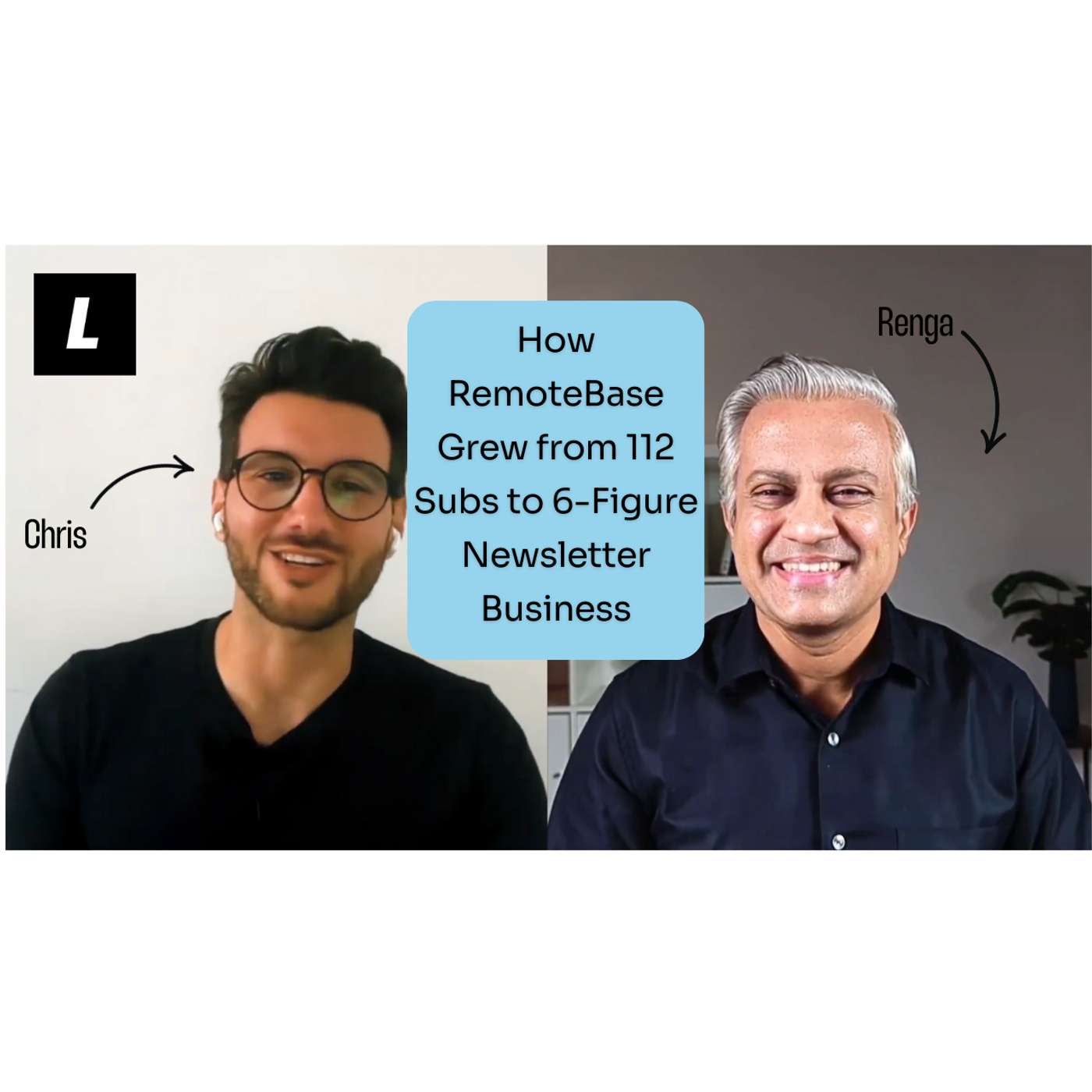 How RemoteBase Grew from 112 Subs to a 6 Figure Newsletter Business - Chris Cerra | Episode 5 | The LetterStack Podcast
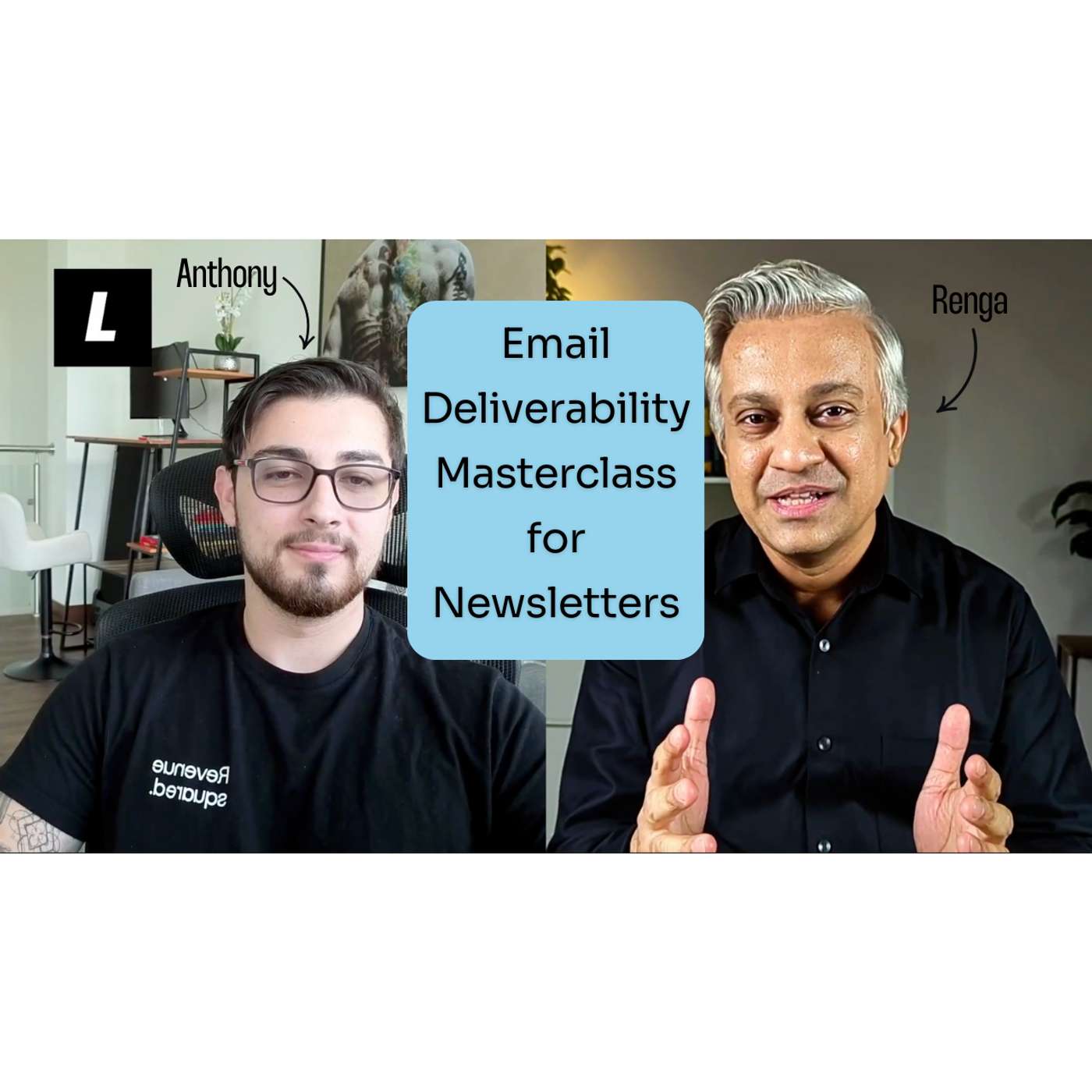 Email Deliverability Masterclass for Newsletters - SPF, DKIM, DMARC & Warm-Up with Anthony from Mission Inbox | Episode 4 | The LetterStack Podcast
 Unlock Newsletter Growth: How Understanding Your Subscriber Data Boosts Revenue with Niklas Wenzel | Episode 3 | The LetterStack Podcast
 How to Scale Your Newsletter: Nathan May talks newsletter advertising strategies | Episode 2 | The LetterStack Podcast
 Learn from Web3Daily: How to grow a newsletter from 0 to 55k in 28 months | Episode 1 | The LetterStack Podcast